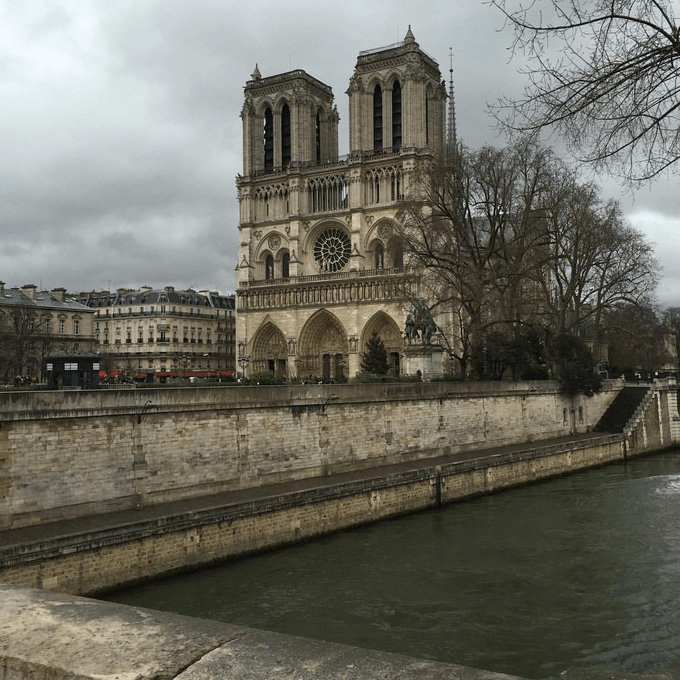
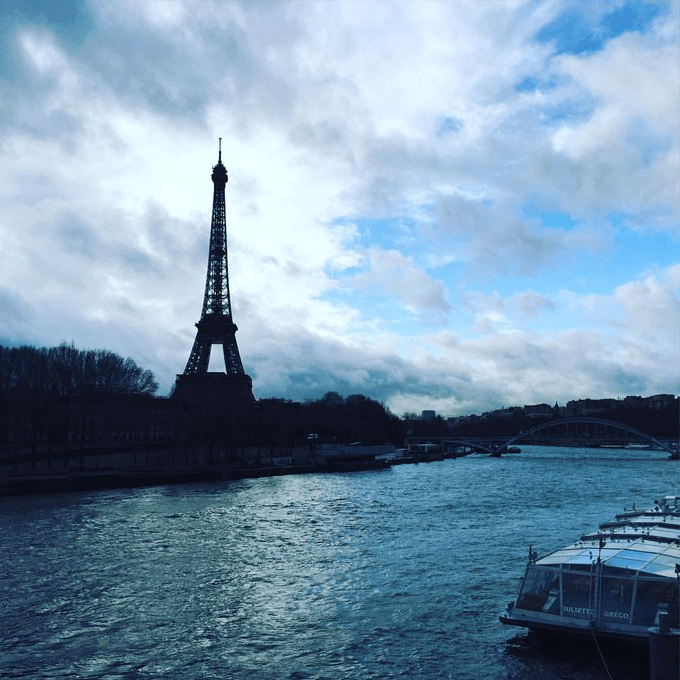
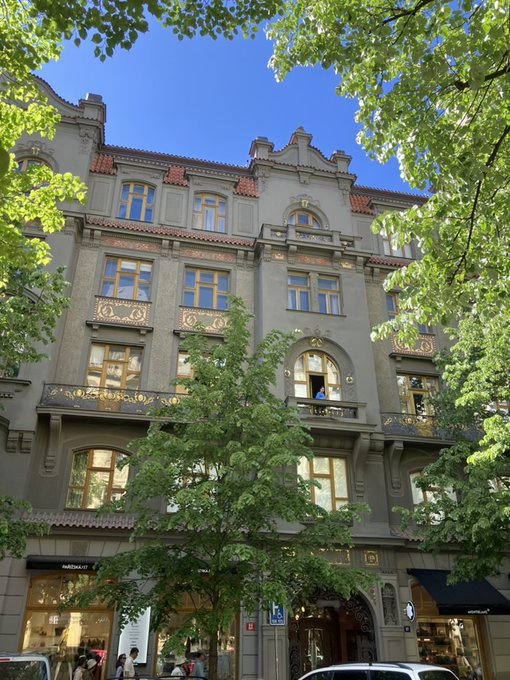
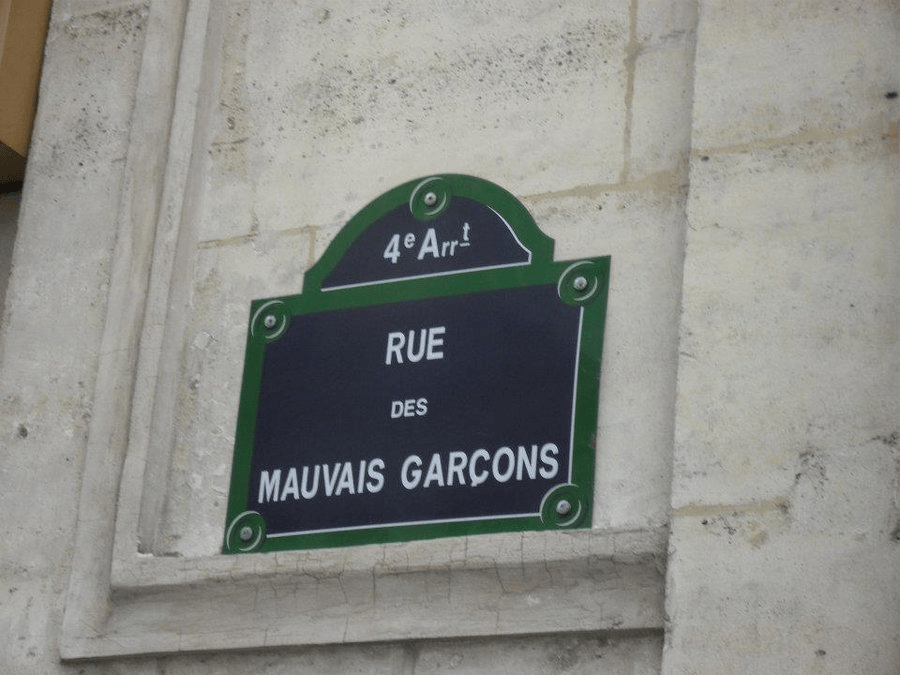
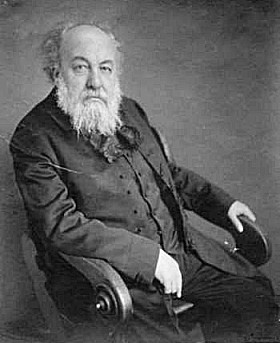
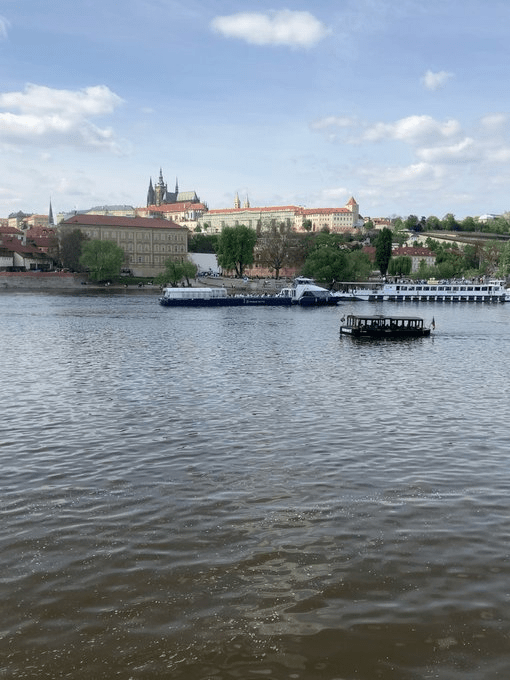
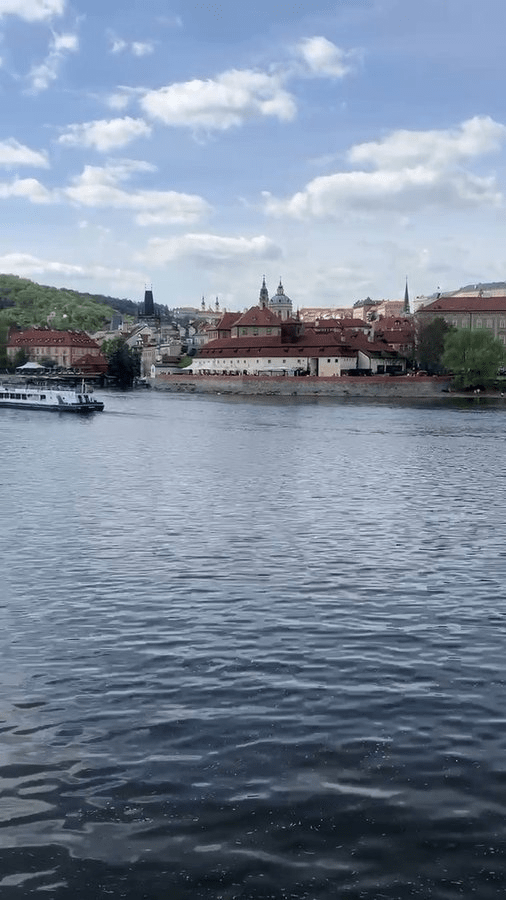
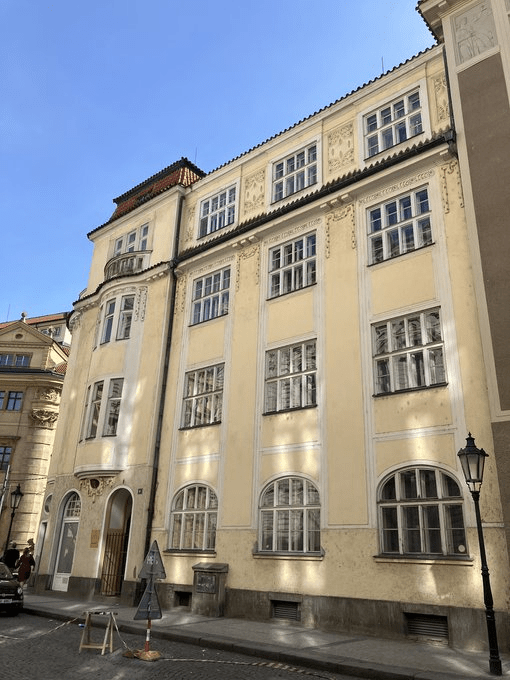
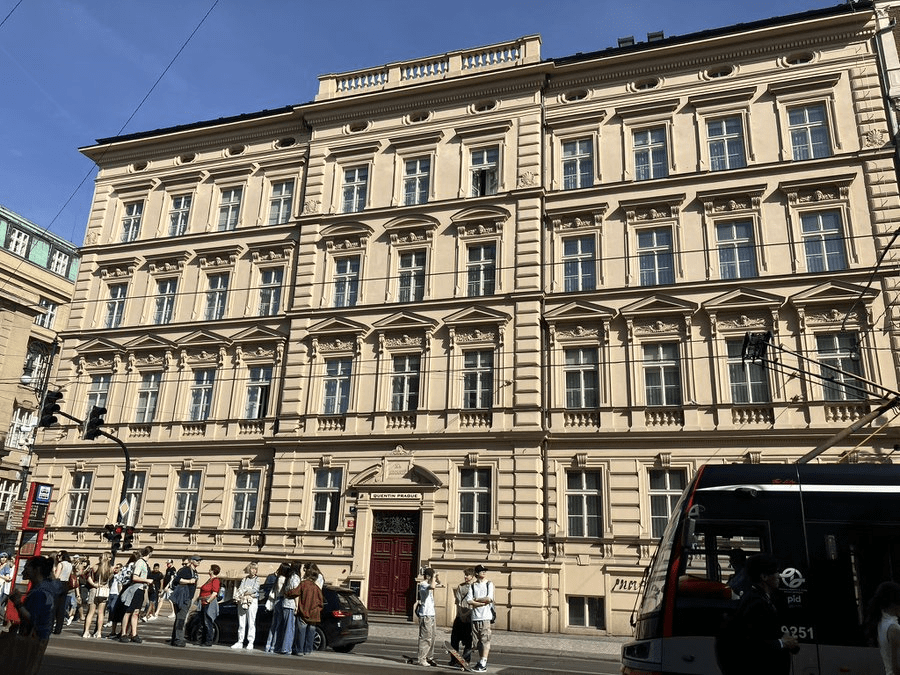
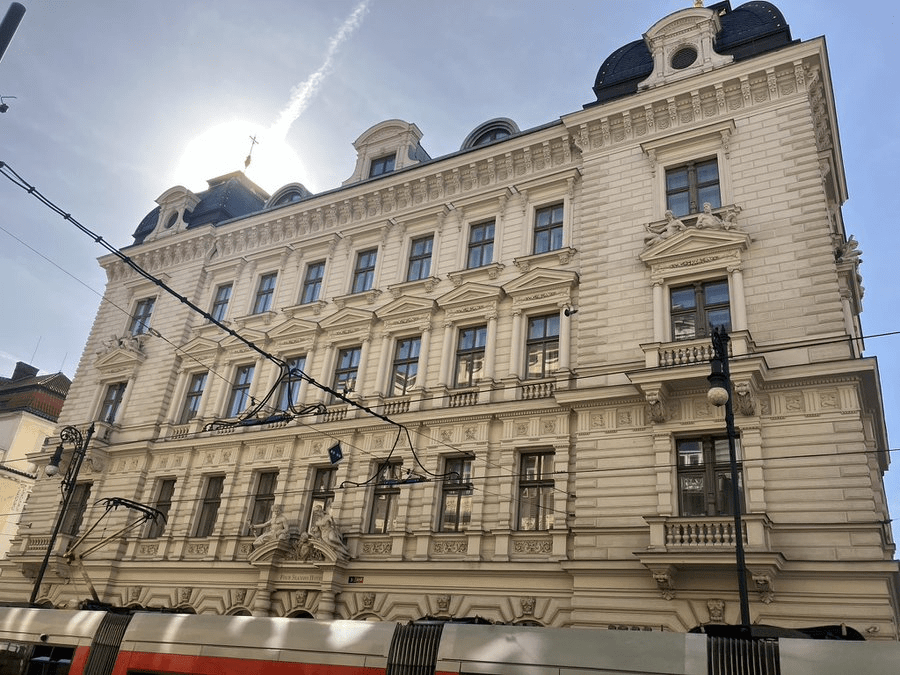
Paříž is the capital of Francie, and I’m now realising that I somehow haven’t been since 2016. Here are two photos from that day.
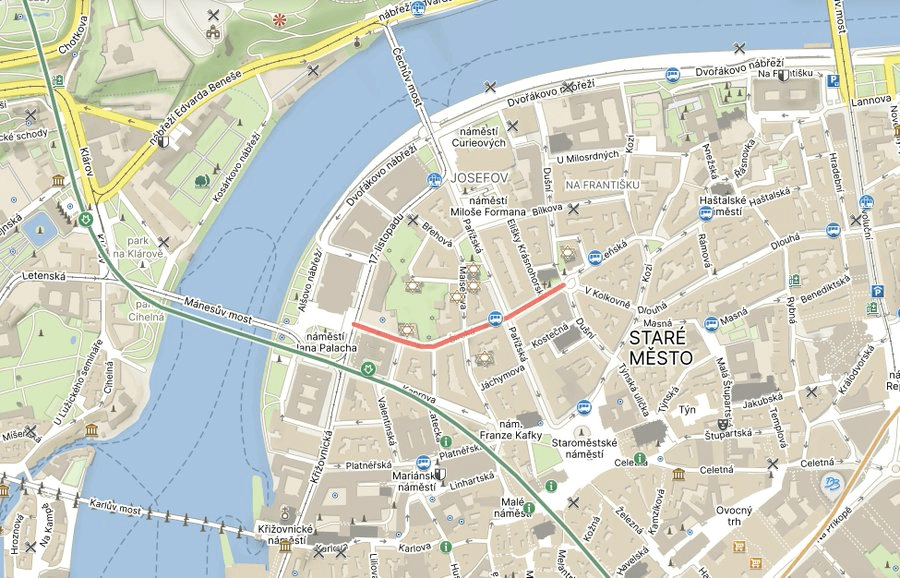
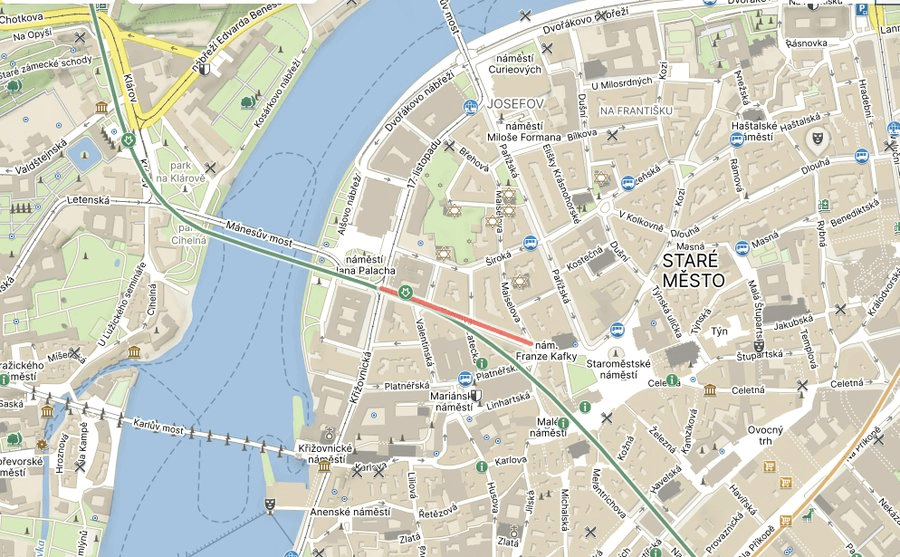
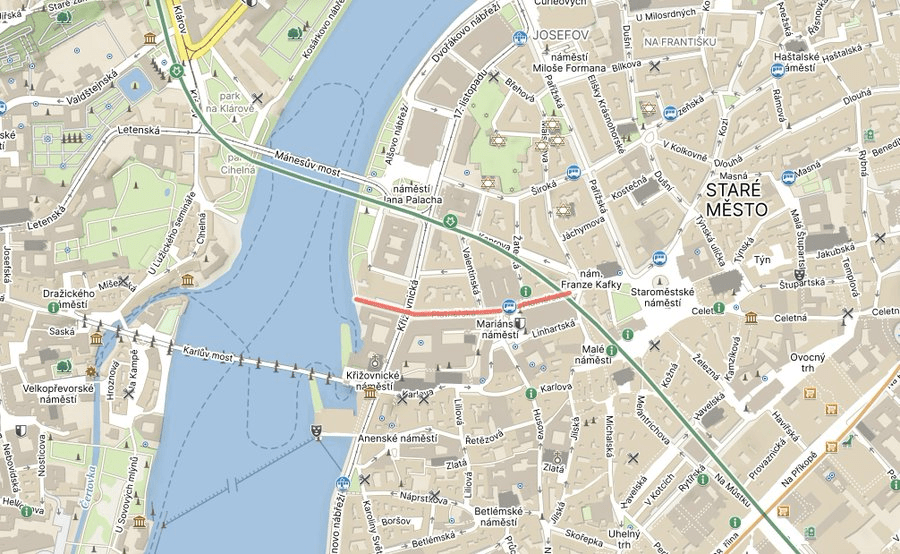
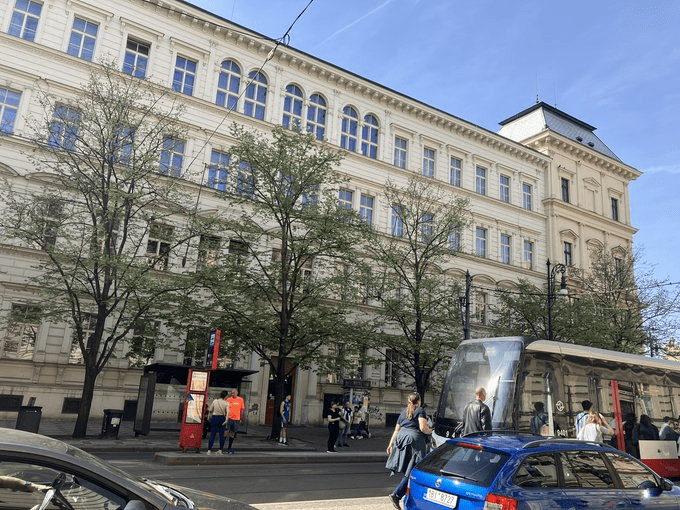
I’ve mentioned the ‘asanace’ (rehabilitation) of Prague at the start of the 20th century several times, mainly to talk about things that were destroyed, but things were created, too – this boulevard being one of them.
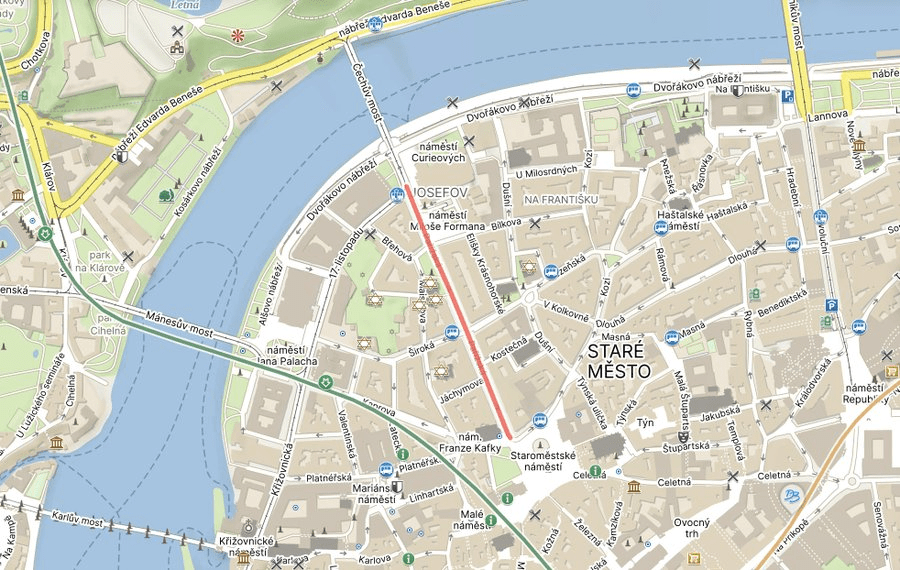
It’s hardly a small street, but apparently it was meant to be even longer – stretching as far as the National Museum and becoming Prague’s answer to the Champs-Elysées. But these things are usually only possible when financing is available and there is public support.
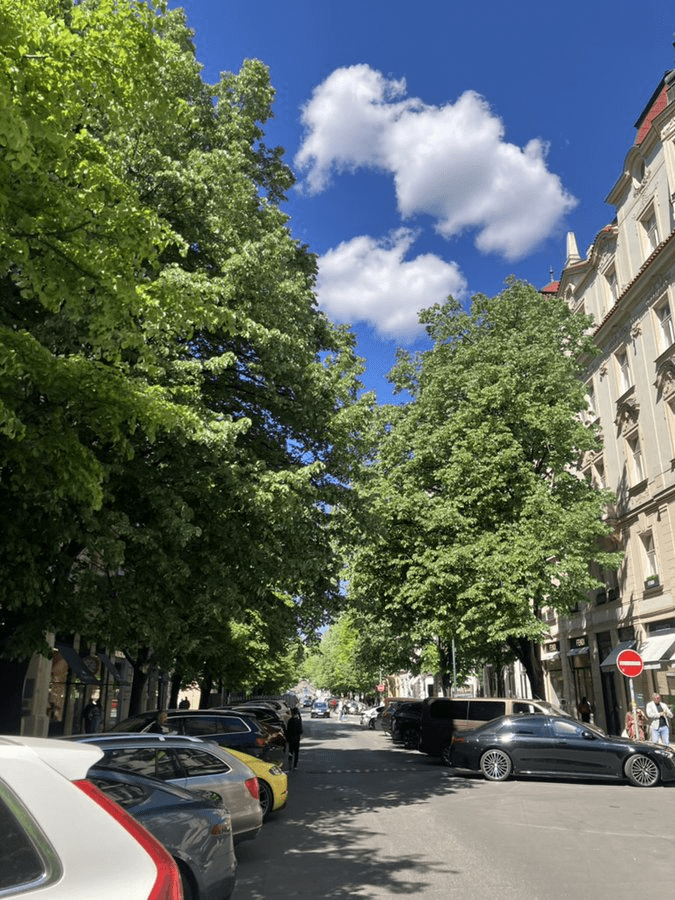
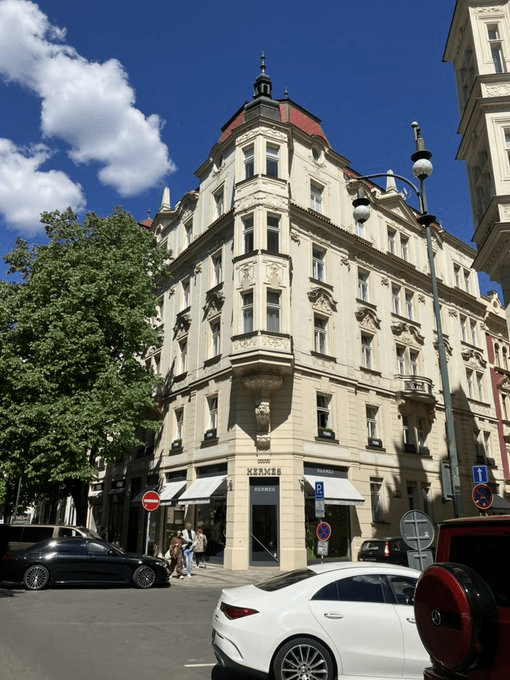
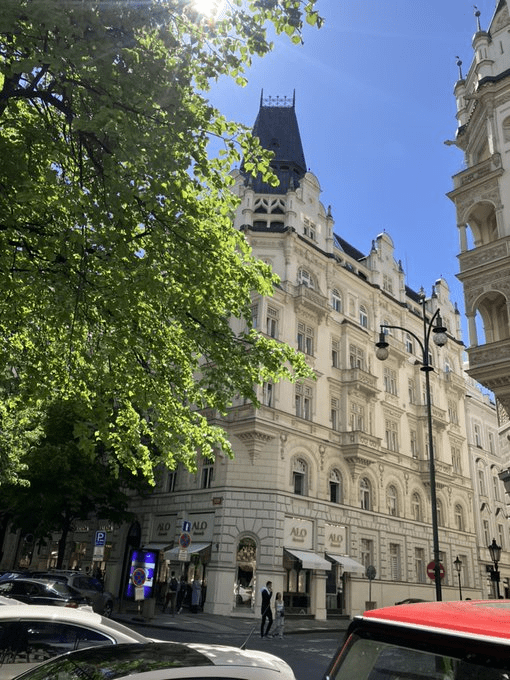
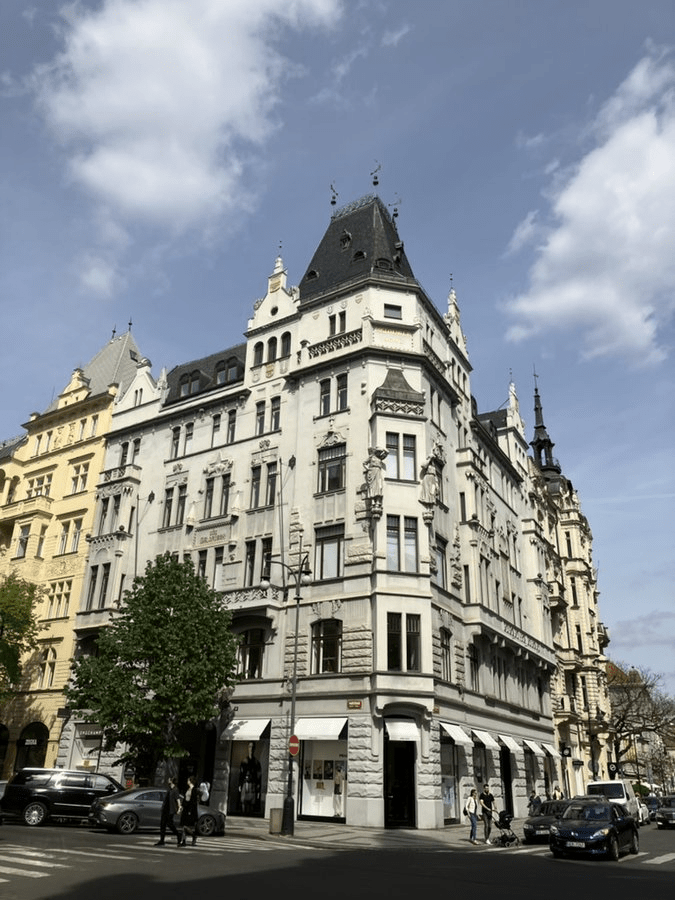
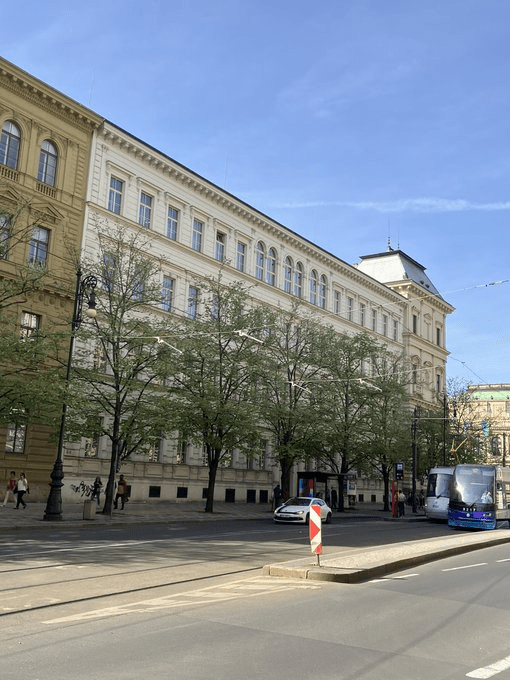
Anyway, Pařížská is meant to be all sophisticated and Parisian and stuff, and I will concede that its trees are nice. Streets in Prague 1 don’t tend to have enough trees.
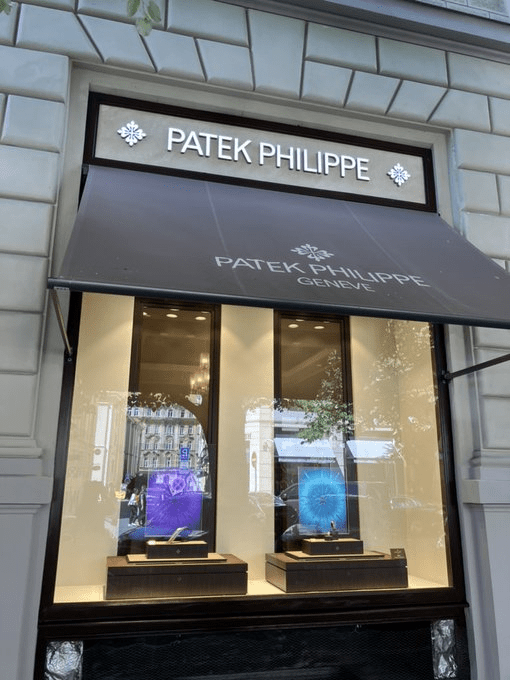
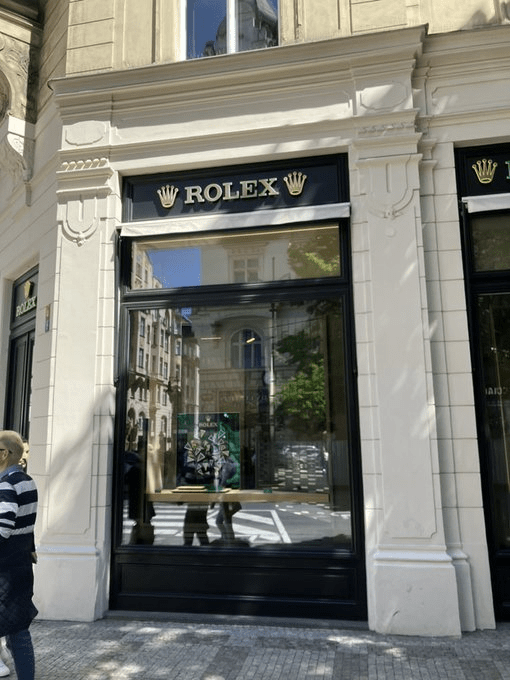
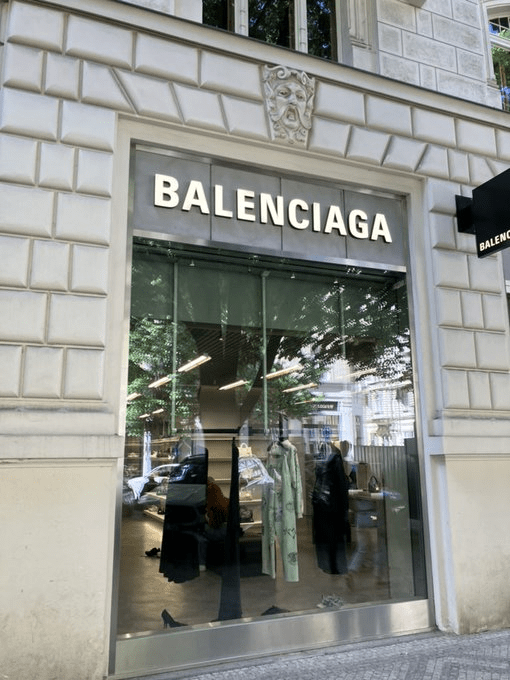
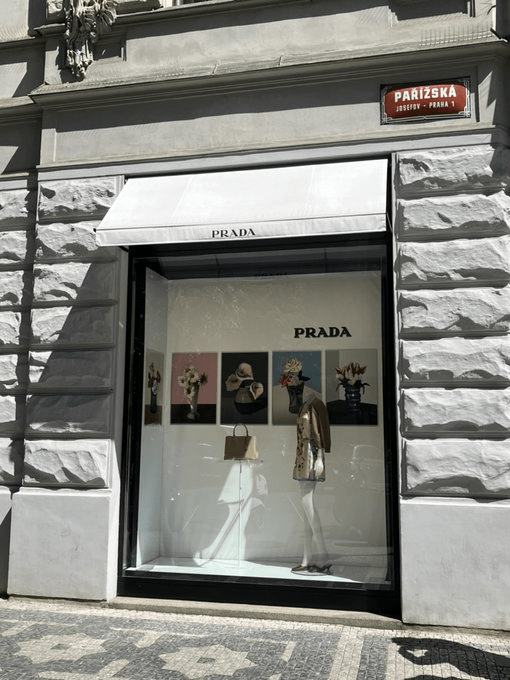
Pařížská also feature a lot of bling, which excites me somewhat less.
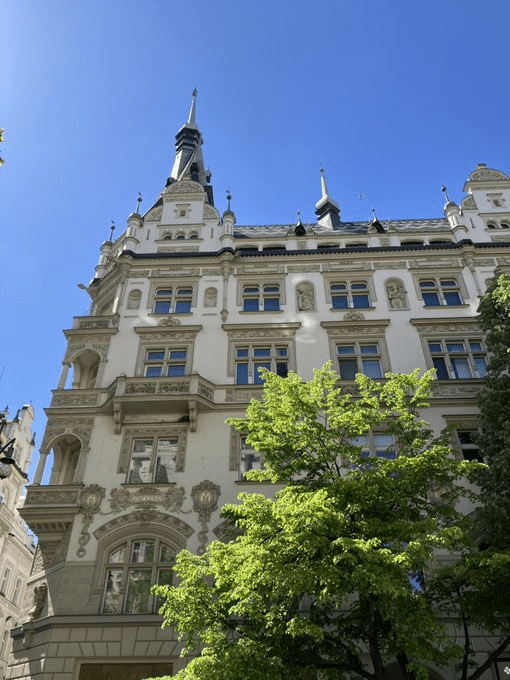
I recommend ignoring the shop displays and looking a bit further up instead.
There’s also a fine synagogue which we haven’t covered yet – but tomorrow’s post will be remarkably short if I talk about it now, so see you tomorrow for that part.
Finally, if I were ever to do What’s In A Paris Street Name, I would absolutely have to start with… maybe the best street name ever?
(photo taken in 2011, as if part of me knew I’d be doing this series over a decade later)
According to Christianity, Joachim lived from about 100-75 BC to about 10 BC, i.e. not quite long enough to become the world’s braggiest grandparent, because his daughter was Mary, and his grandson was, therefore, Jesus.
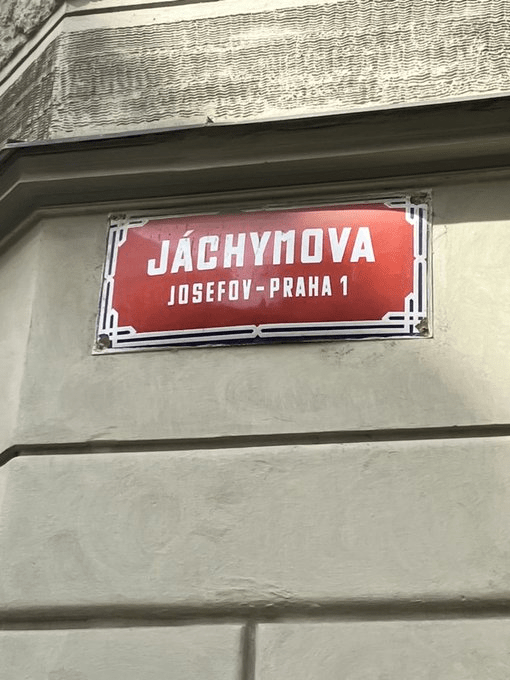
Among the more well-known variants of his name, we have Joaquín (Spanish), Gioacchino (Italian), Aćim (Serbian), and Joaquim (Portuguese). In Czech, the name is written as Jáchym.
That said, we don’t know who Jáchym of ‘this street’ fame was. It’s assumed that he was Jewish, and that he owned one of the houses here.
Before the 20th century, the names ‘Joachimova’ and ‘Joachimská’ were in use.
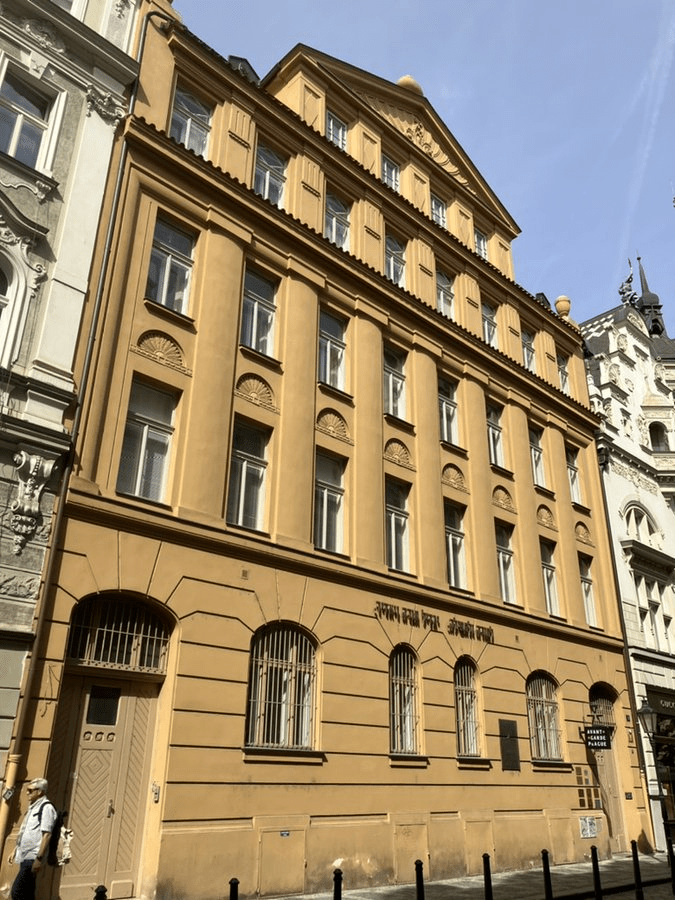
Jáchymova’s most famous building is the Talmud-Torah School at number 3. It operated as a Jewish religious school from 1905 to 1942.
Nowadays, it hosts the Terezín Initiative, an association of former prisoners of the Terezín and Łódź ghettos, as well as the Czech office of the Jewish National Fund.
Mordecai Meisel was born in Prague in 1528 (the oldest mention of a member of the Meisel family living in Prague dates from 1425).
Moredcai, meanwhile, is first mentioned in writing in 1569; he was a banker and businessman who eventually became a member of the court of Rudolph II.
In 1576, he became a member of the council of elders of Prague’s Jewish community, and used his wealth to develop the Jewish Town.
For example, he sponsored the construction of the Jewish Town Hall, opened in 1586. This is how it looked in the early 20th century.
And this picture is (mainly) its newer section, built in 1908.
To the left, he also built the High Synagogue (1568) as a place of worship for the town hall councillors. It was damaged by fire in 1689, repaired in 1754, and reconstructed in 1883.
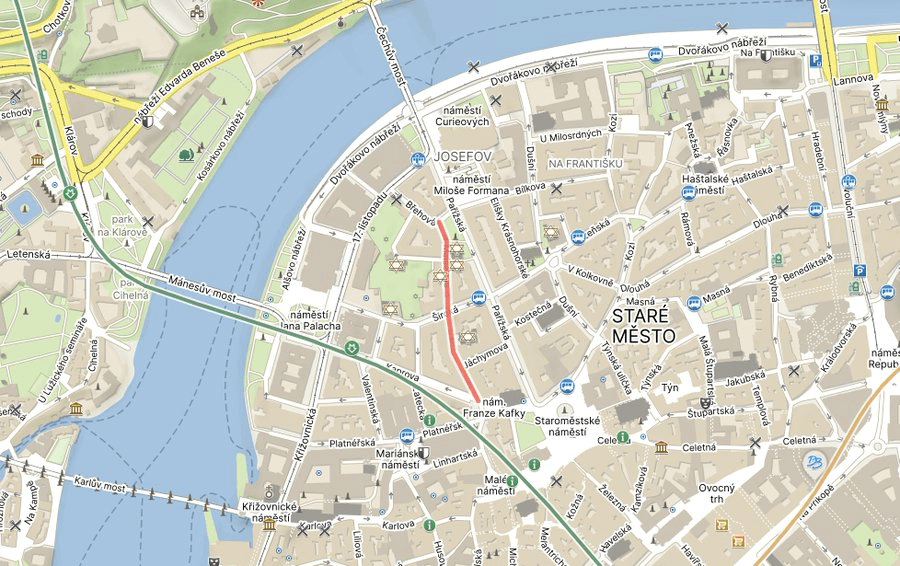
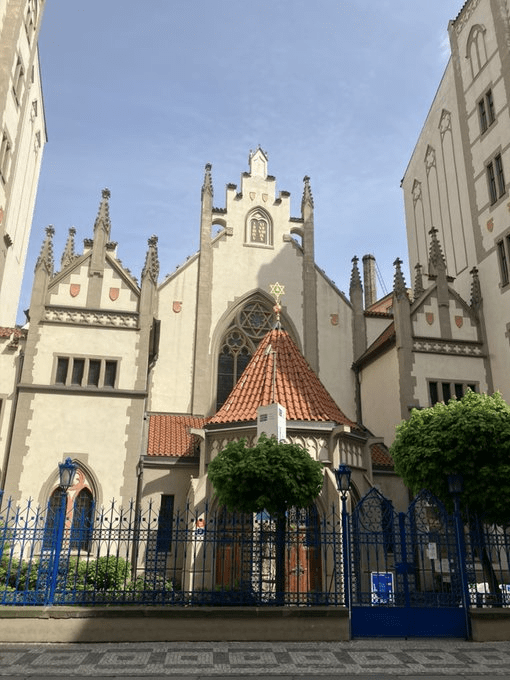
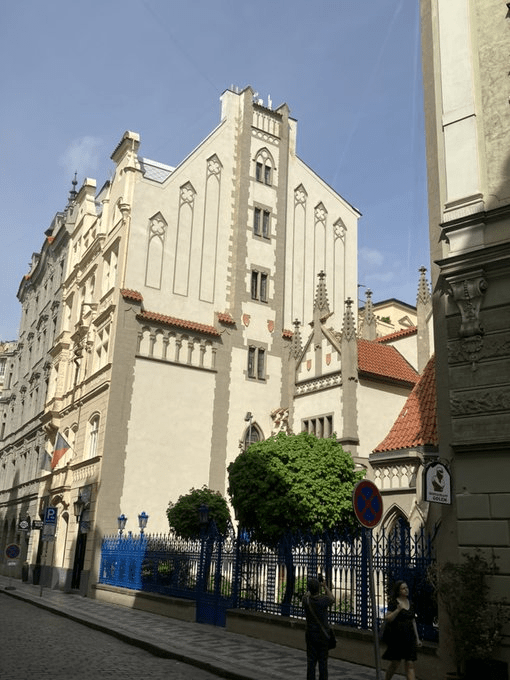
He also built Maisel Synagogue (1590-2), which bears his name and gives its name to the street. It too was badly damaged in the 1689 fire, and underwent a Neo-Gothic reconstruction in the early 20th century.
Meisel also gave the Jewish Town paving stones, and supported scientists, artists and tradesmen, and even co-financed the construction of a church which we’ll discuss on day 226.
Emperor Rudolph II gave Meisel the right to dispose of his property in whichever way he saw fit.
Meisel died in 1601, and is buried in the Old Jewish Cemetery; Rudolph attended his funeral, but then did a massive 180, confiscating all his property within a matter of days.
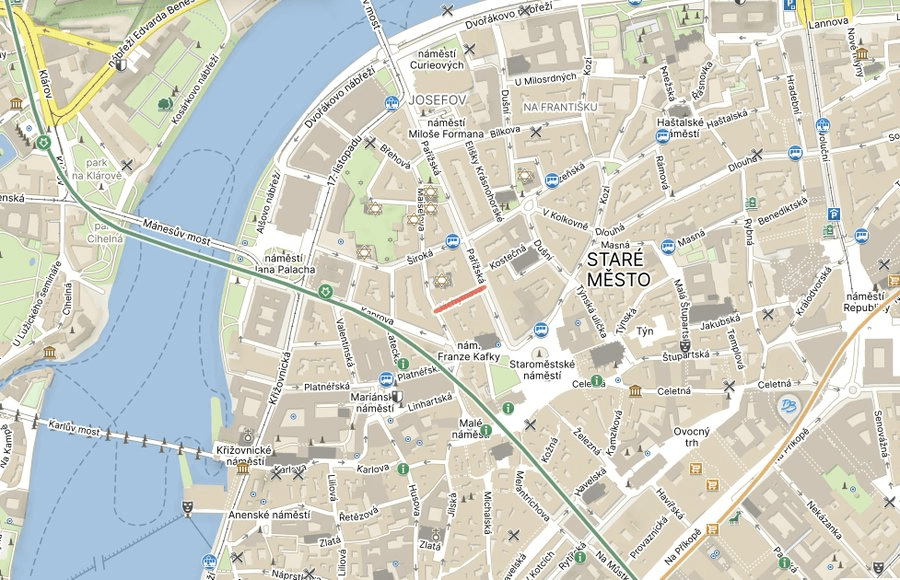
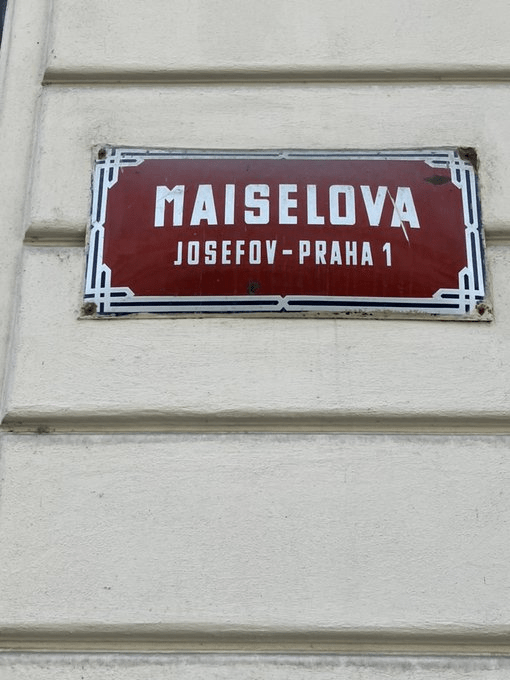
The street wouldn’t become known as Maiselova until 1901 – before then, the southern part was called Zlatá (Golden), and the middle part was called Malá Masařská (Small Butcher’s Shop Street, due to the presence of such shops round here).
Meanwhile, the part near the synagogue was called Rabinská (‘rabín’ is Czech for rabbi), and the northern part was called Velkodvorská, after the Great Court Synagogue, which was founded after Meisel’s time, but was demolished in 1906 as part of the ’asanace’.
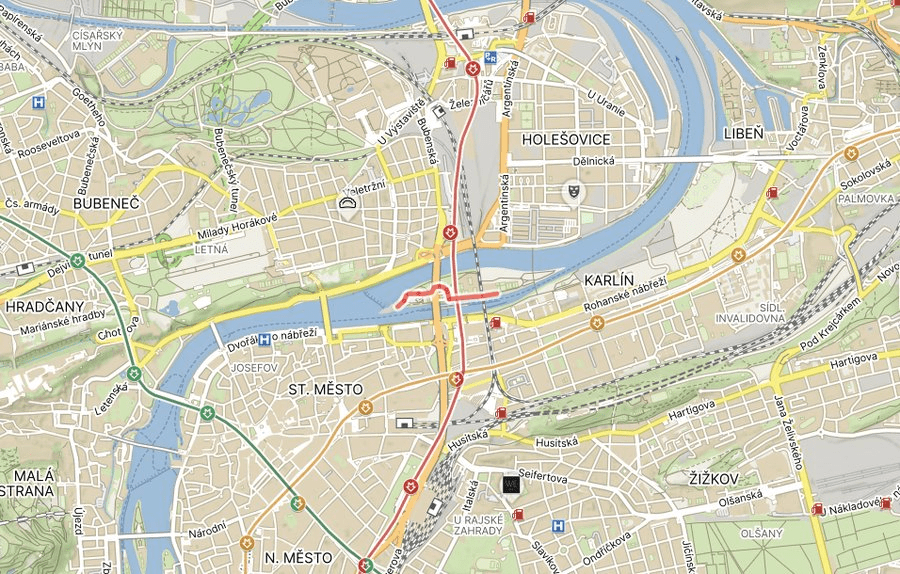
Starting this story a bit to the north: Štvanice is an island between Karlín and Holešovice; you’re most likely to know it for its tennis arena which hosts the WTA Prague Open.
It was around here that Prague’s Jewish community settled. The area was probably known as V Židech, and the street came to be known as Židovská.
Then, in 1535, the Pinkas Synagogue was founded by a prominent local citizen, Aaron Meshulam Horowitz, and probably named after his grandson, Rabbi Pinkas Horowitz.
The street became known as Pinkasova.
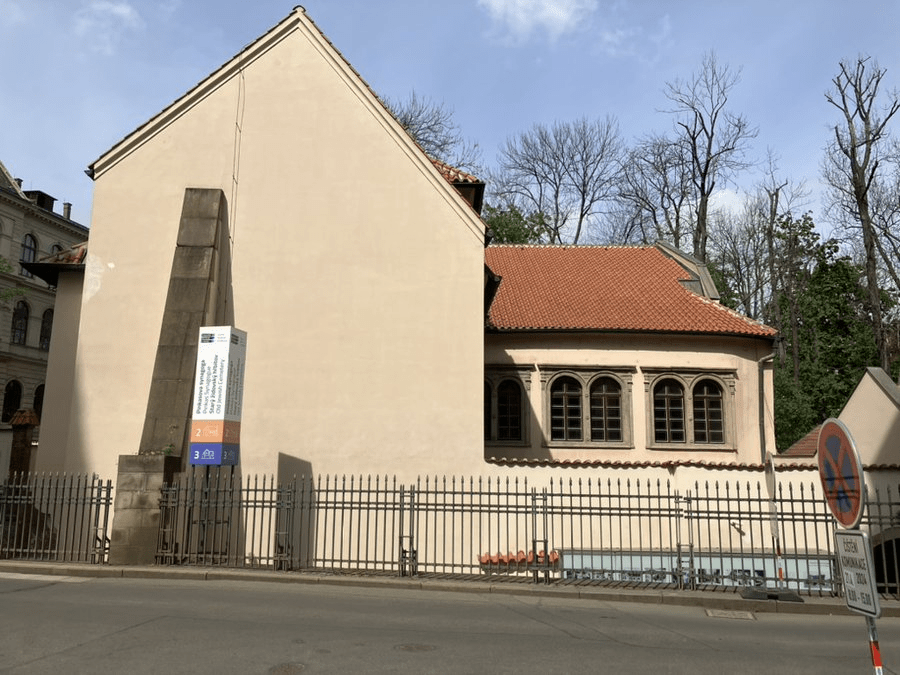
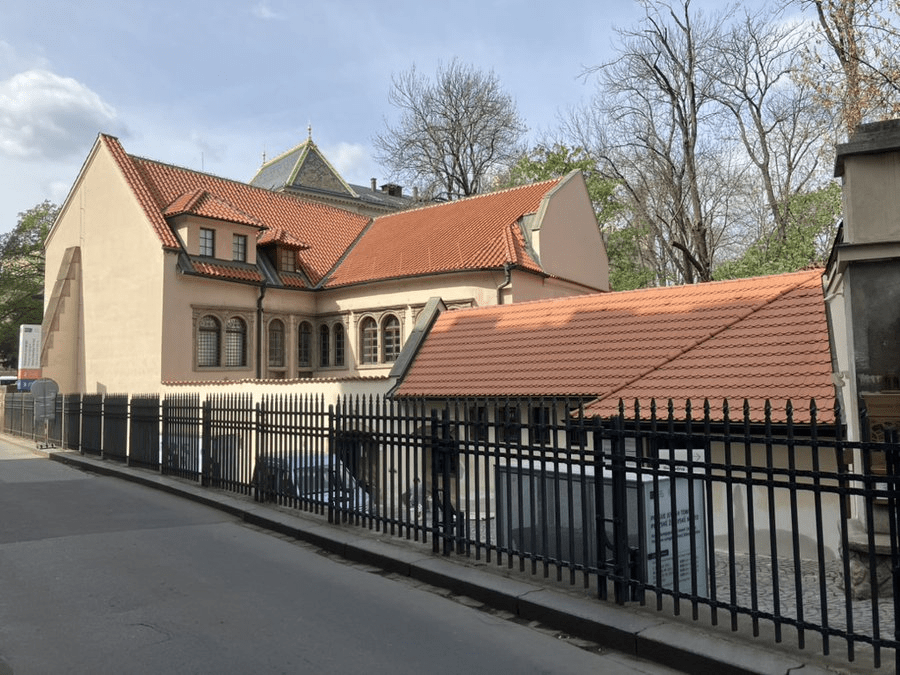
It’s managed by the Jewish Museum, and, from 1955 to 1960, its walls were decorated with the names of 77,297 Bohemian and Moravian victims of the Shoah.
The memorial was closed to the public in 1968, and reopened in 1995.
Later in the 1600s, the central part of the street was known as ‘Hlavní’ (because it was a main road), ‘Široká’ (because it was wide, or at least wider than the other streets in the area) or ‘Dlouhá’ (ditto, but replace ‘wide’ with ‘long’, and ‘wider’ with ‘longer’).
In 1850, the Jewish Town was named Josefov, after Joseph II (1741-1790), who not only closed down about a million monasteries (see every other post in this series), but also emancipated the Jews through his Edict of Tolerance (1782). The street was then renamed Josefovská.
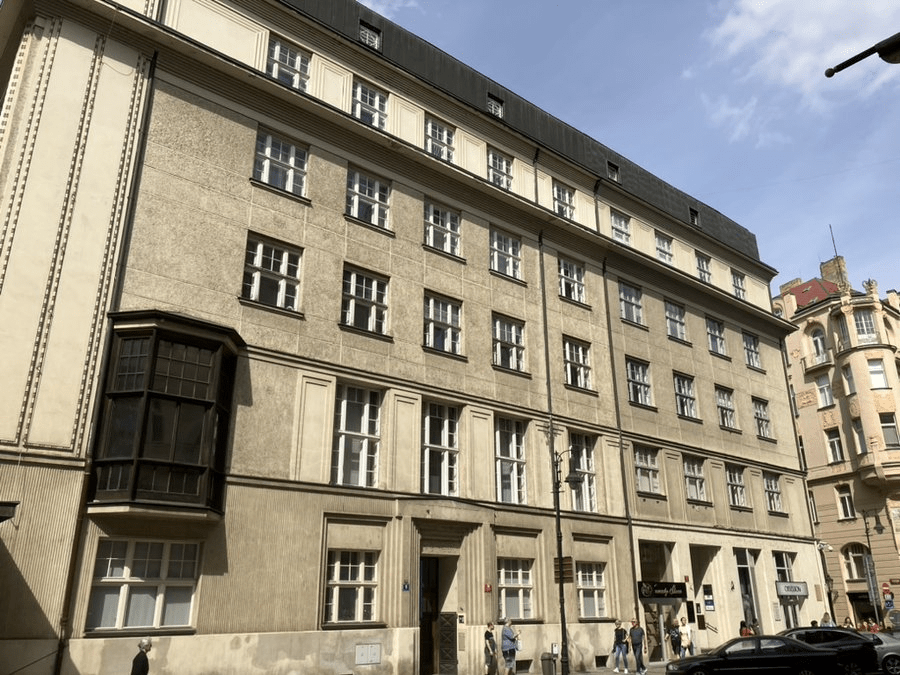
Then, at numbers 5 and 7, you have the Chevra Kadiš community and apartment building, built in 1910-1, and named after a funeral brotherhood founded by the Prague Jewish community in 1564 (‘Chevra Kadiš’ is Aramaic for ‘Holy Brotherhood’).
Then, at number 13, U Dvou Malorusek was built in 1905-6 by Jiří Justich and Matěj Blecha for Tomáš Ryšánek, a director of sugar factories who had worked in Volyn and Podilia in Ukraine.
The house was called ‘The Two Little Russian Women’ as a tribute to what Blecha called ‘Little Russia’; you can see them above the entrance. It might be time for somebody to propose a name change, as, no, Ukraine is not Little Russia, and never will be.
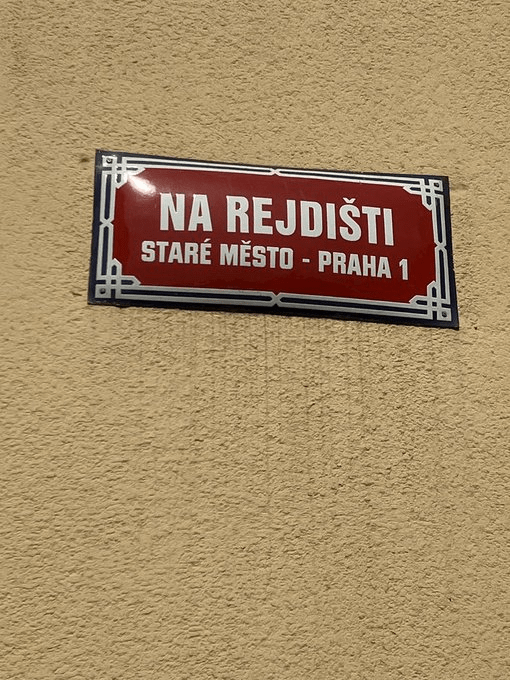
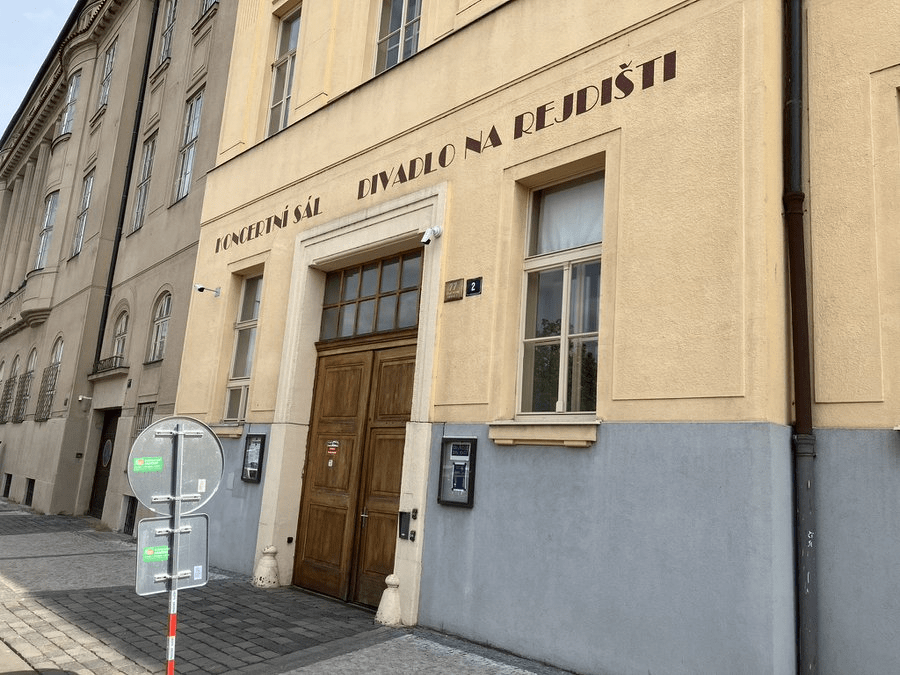
Which – if the building was never used for equine purposes – implies that the riding school didn’t last very long, although it was clearly long enough for the entire area to become known as Na Rejdišti. However, that name wouldn’t be given to the street until 1919.
The earliest recorded name of the street is ‘Na břehu’, which translates as ‘on the bank’.
From the 16th century, this street was called Sanytrová, after ‘sanytr’, an Old Czech word for saltpetre, which is used to make gunpowder.
In the 19th century (until 1870), it was known as V krechtách, after the nearby pits and ditches by the Vltava. Sanytrová was used again after that until 1947.
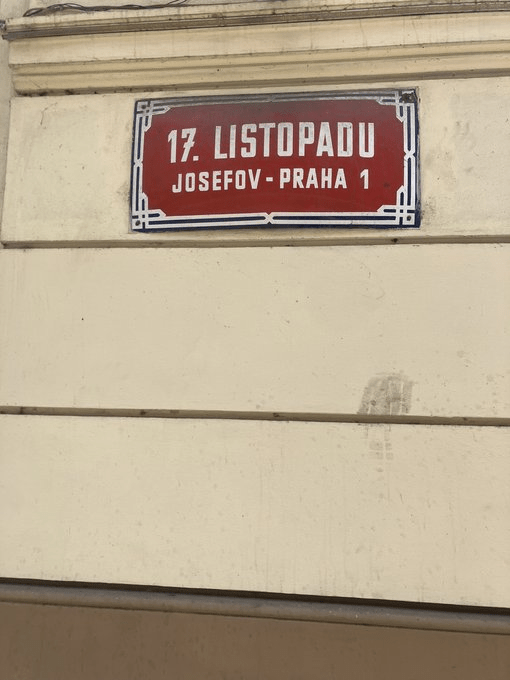
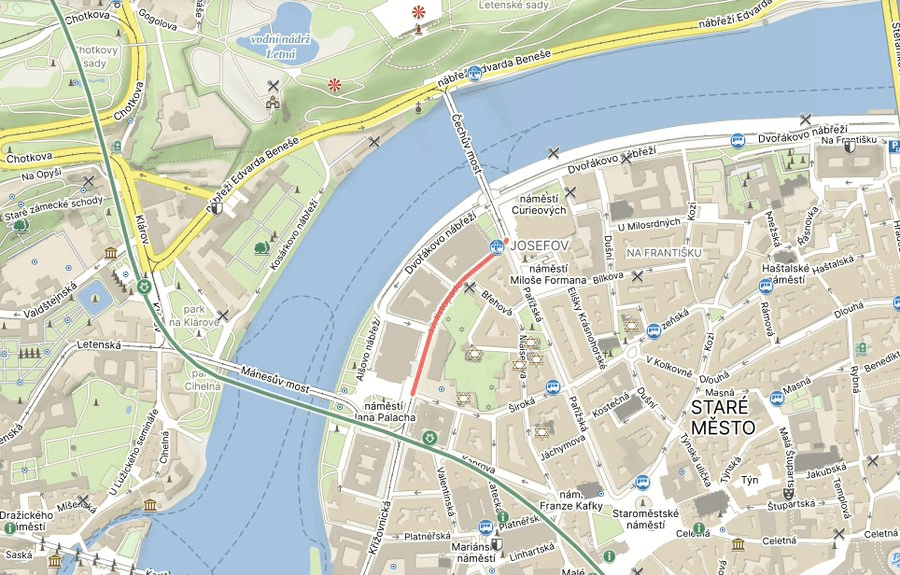
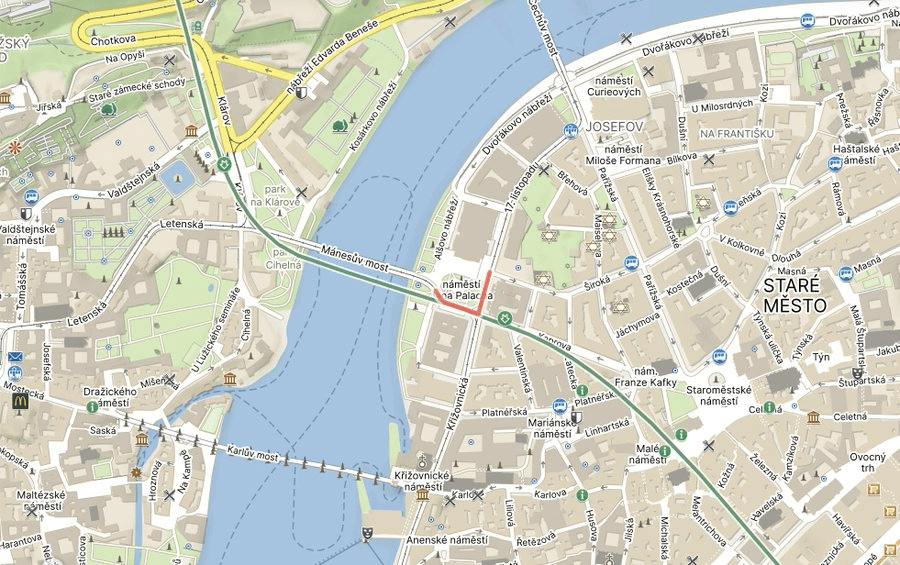
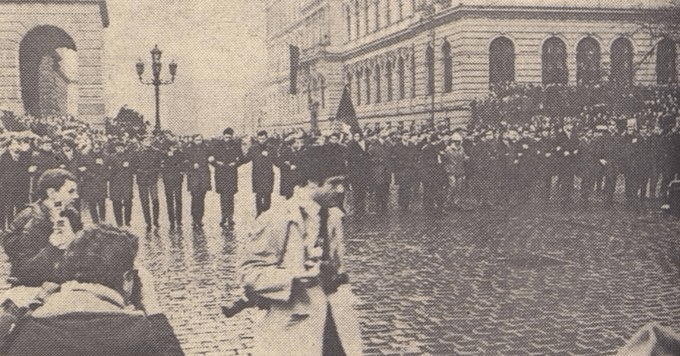
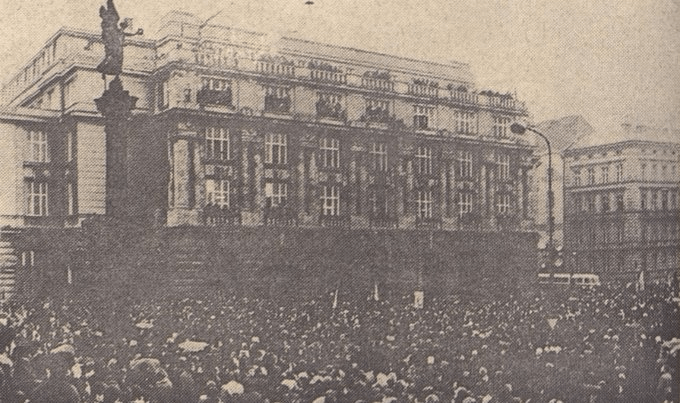
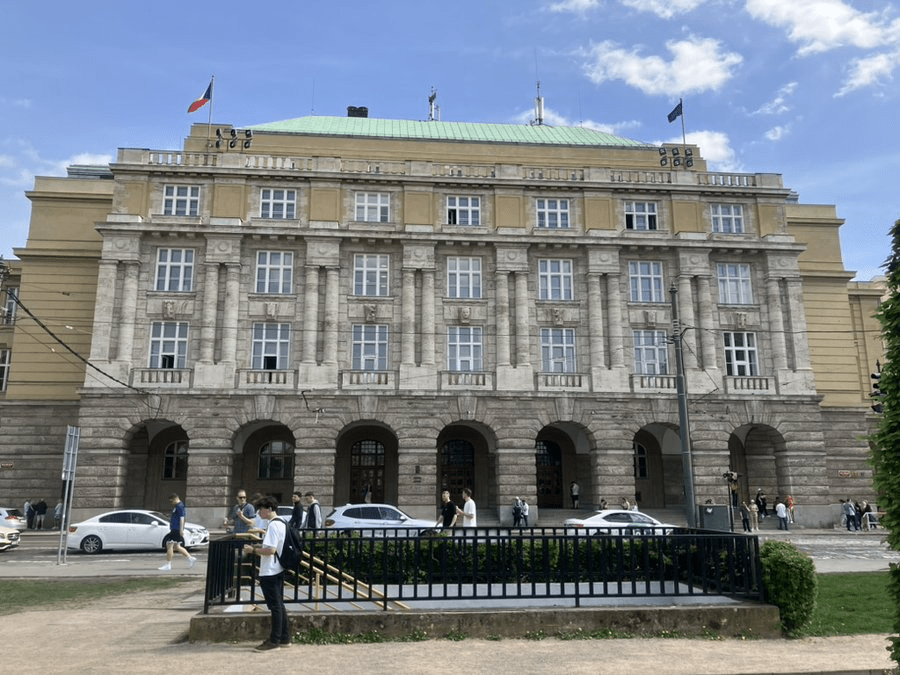
17 November (17. listopadu) 1939 was the date on which the Nazi Protectorate reacted to anti-occupation demonstrations by announcing the closure of all Czech universities for three years (although teaching would ultimately not resume until 1945).
1,200 students were sent to the Sachsenhausen concentration camp; over 15,000 students were no longer able to study, and over 1,300 people found themselves without a job.
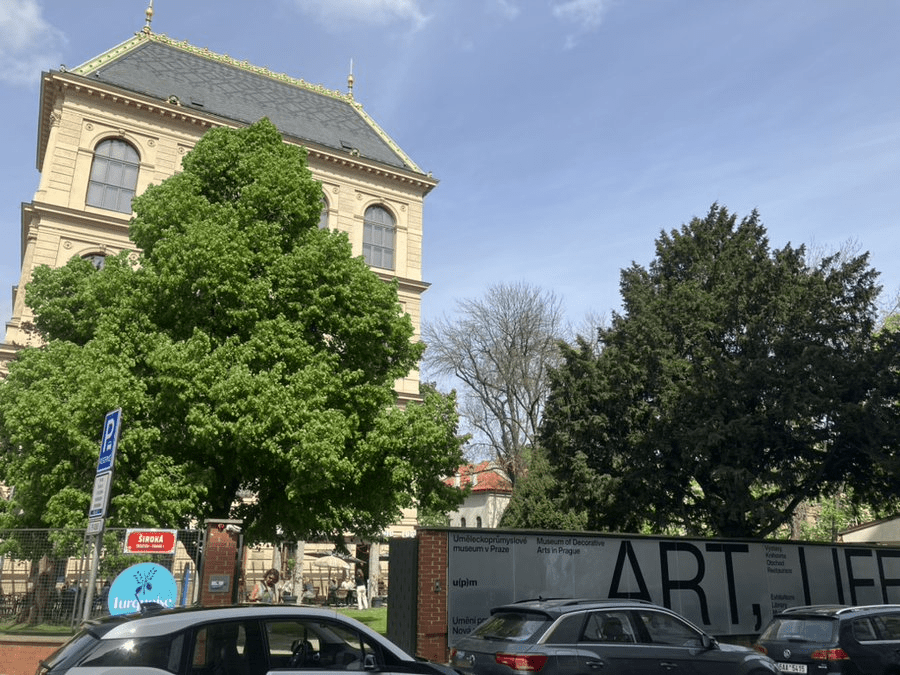
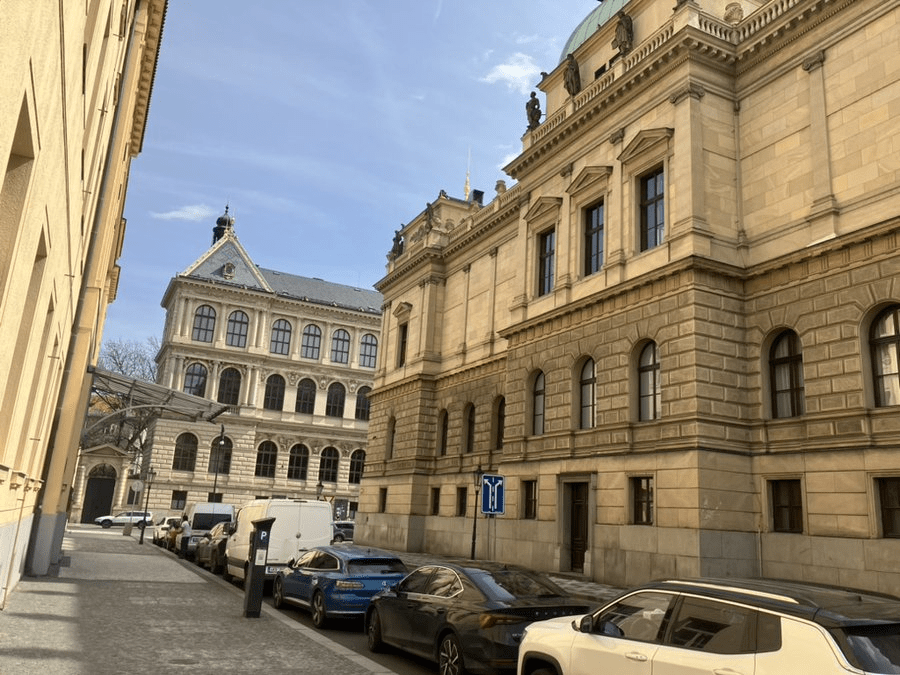
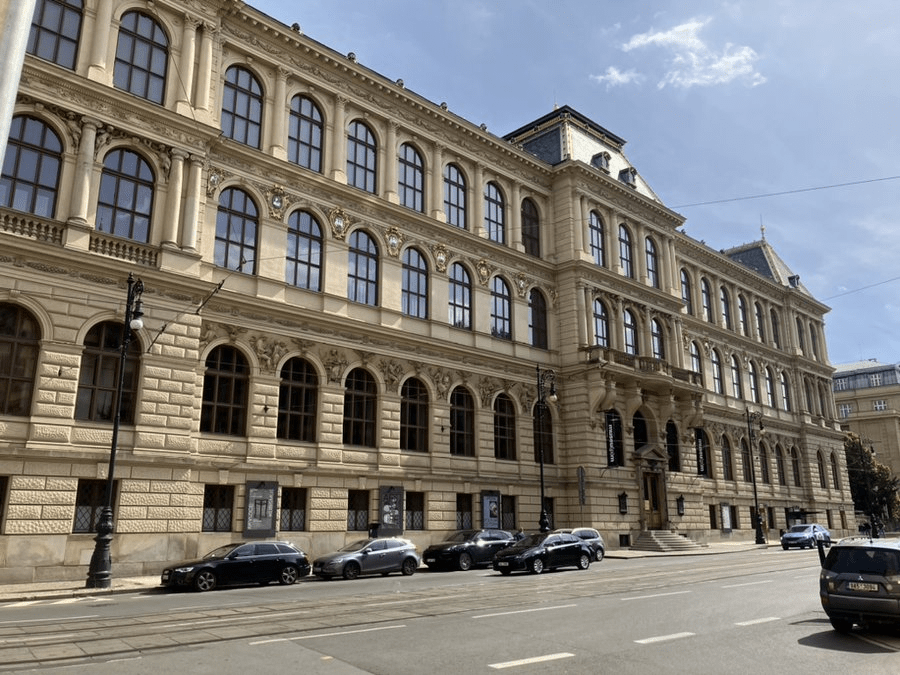
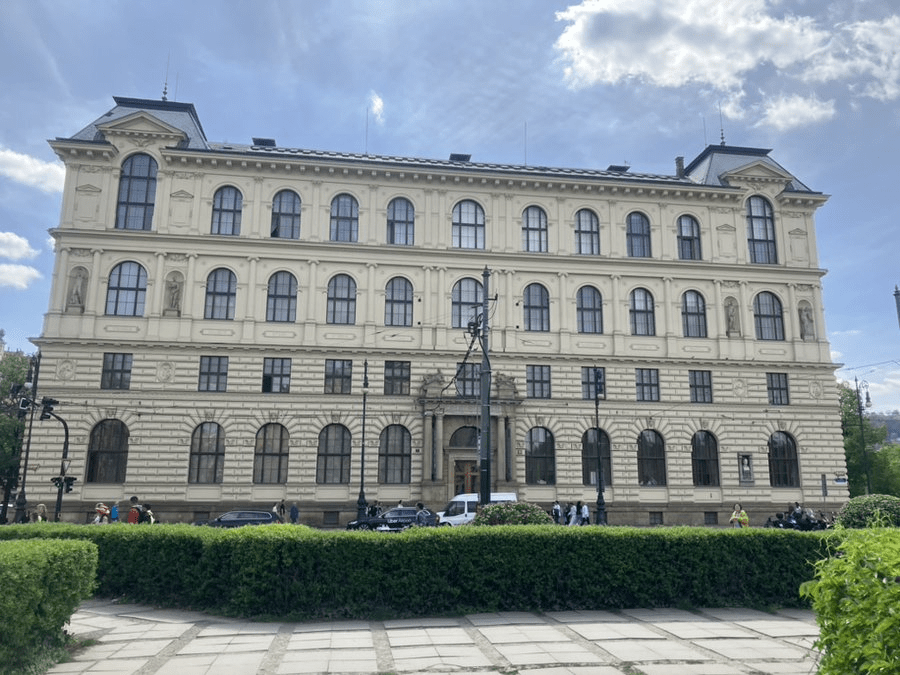
The most imposing building on 17. listopadu is the Museum of Applied Arts in Prague (Uměleckoprůmyslové museum v Praze / UPM), built in the Neo-Renaissance style based on a design by Josef Schulz, and opened in 1900.
It has the country’s largest library relating to the arts, with over 172,000 titles.
Then, in 1952, it was named náměstí Krasnoarmějců, after Red Army soldiers who were initially buried here in 1945. Streets named after Czechs who fell during that uprising? Not so much of a thing.
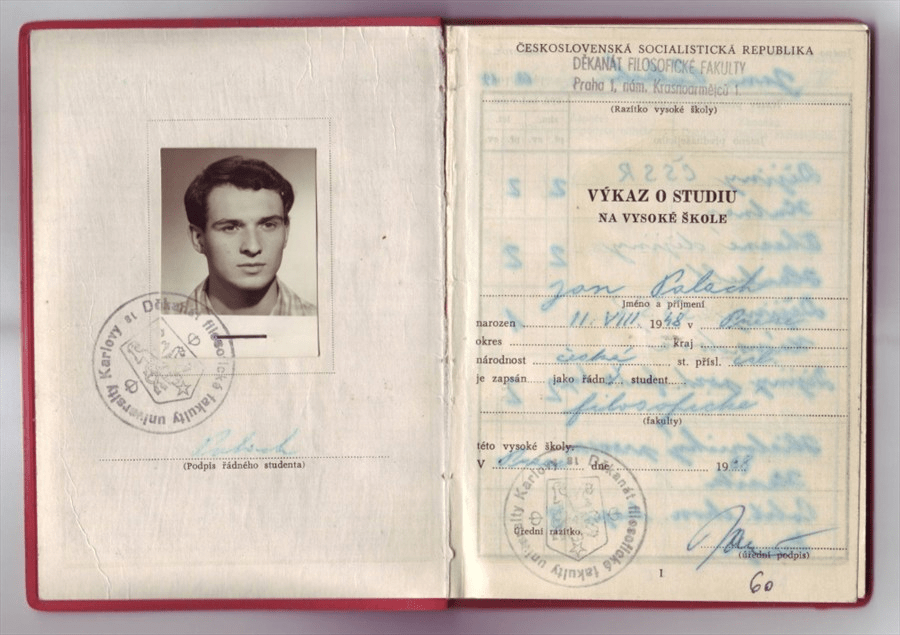
His father, who died in 1962, had run a confectionery store until it was closed down by the Communists in the 1950s; this was used as a reason to stop Palach from entering the Faculty of Arts of Charles University in 1966, despite passing the entry exams.
In 1968, Palach’s second attempt to join the Faculty of Arts was successful, and, in the summer, he went on another brigade, this time to Leningrad. He came back to Czechoslovakia a few days before Warsaw Pact forces invaded the country.
In the aftermath, he participated in student strikes, but failed to see any progress being made, and had the overwhelming feeling that society was already becoming apathetic.
In early 1969, Palach sent a letter to several public figures, demanding that censorship be abolished, and that distribution of Zprávy (News), the occupying forces’ newspaper, cease.
From here, he gave a short interview, which was recorded. Please be warned that this is not an easy listen.
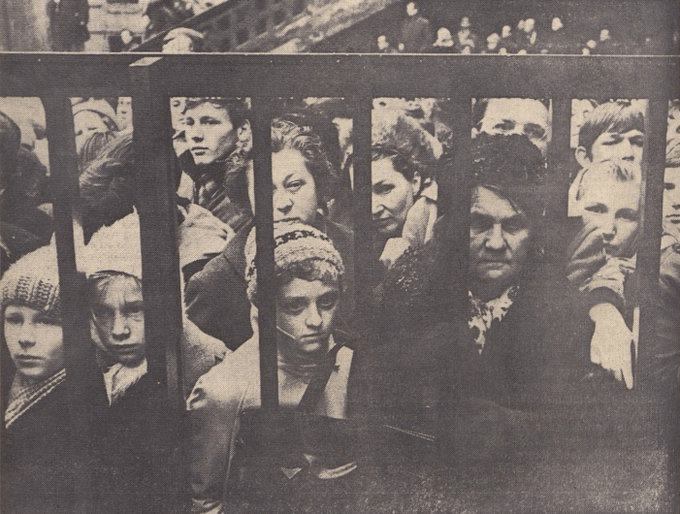
Palach died three days after his act, on 19 January. His death was followed by strikes at universities and secondary schools across the country, and his funeral on 25 January became a mass protest.
The funeral procession started at náměstí Krasnoarmějců – today’s square – and Palach was buried at Olšany Cemetery.
Within three months, another seven deaths by self-immolation had occurred in Czechoslovakia, the most remembered being that of 18-year-old student Jan Zajíc, who called himself ‘torch number two’ (see the Wenceslas Square post).
Palach’s grave became something of a pilgrimage site, which worried the regime. Therefore, in 1973, Palach’s remains were cremated (his family was not informed in advance) and sent to Všetaty.
From 15 to 21 January 1989, a series of events, ostensibly to commemorate the 20th anniversary of Palach’s death, but also held to criticise the communist regime – were held.
These were brutally put down by the regime – a regime that, by the end of 1989, would no longer exist. The square was also renamed with remarkable speed – most street name renamings occurred in 1990, but this one took place in December 1989.
In 1990, Palach’s ashes were transferred back to Olšany Cemetery; the elementary school he went to (in Všetaty), as well as his secondary school (in Mělník) were both named after him.
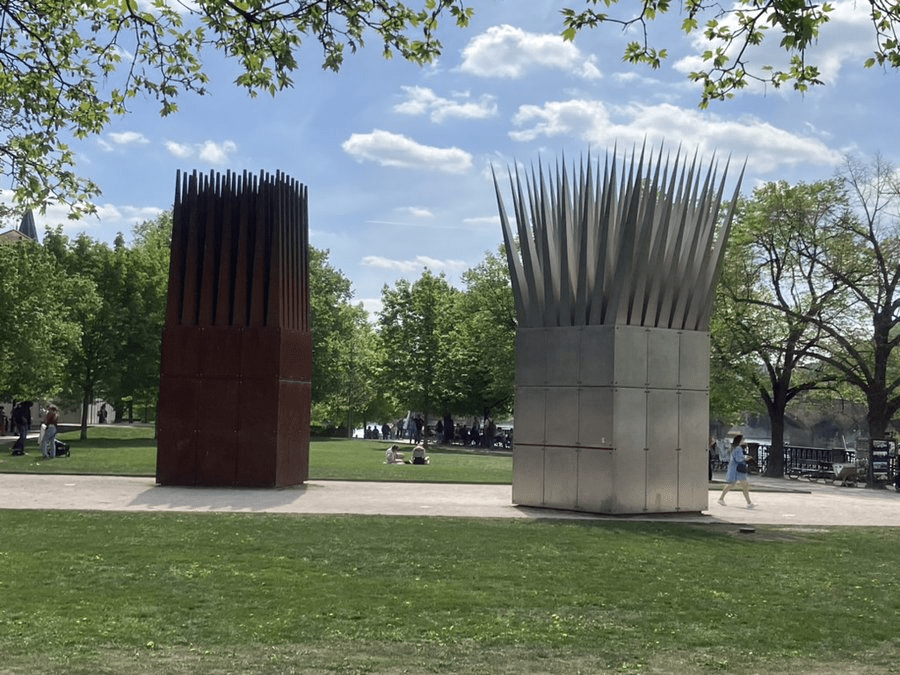
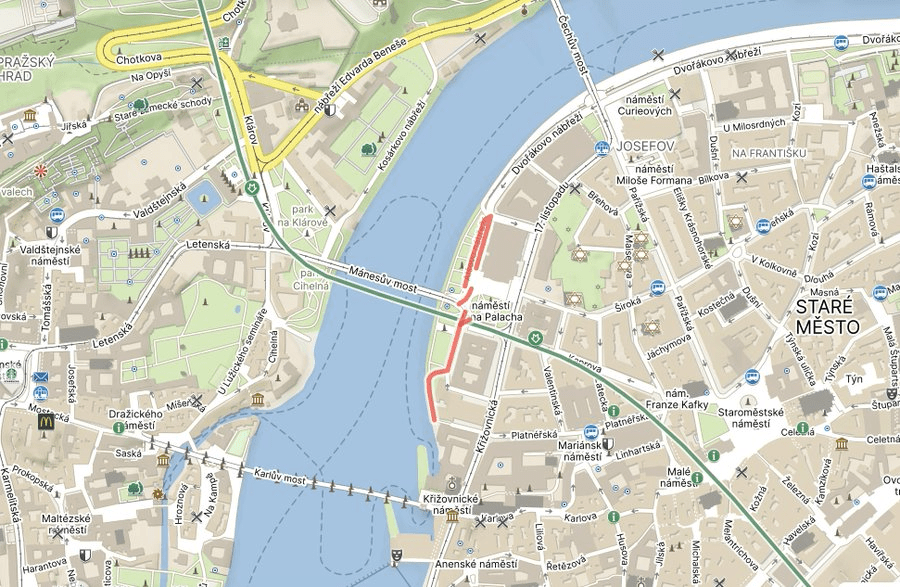
In 2016, a tribute to Palach, Dům sebevraha a Dům matky sebevraha (The House of the Suicide and The House of the Mother of the Suicide), by American artist John Hejduk, was placed on Alšovo nábřeží.
In 2004, British indie rock band Kasabian released Club Foot, the second single from their self-titled debut album. Its video is dedicated to Palach.
There was also a biographical film of Palach in 2019, directed by Robert Sedláček.
On the less high-brow side, Karel Gott’s cover of All By Myself (‘Where did my brother Jan go’), with lyrics by Zdeněk Borovec, was a tribute to Palach, although this was obviously not admitted to at the time.
Palach’s death mask, created by Olbram Zoubek, can be found on the wall of the building.
The University of Applied Arts in Prague (UMPRUM) also has its premises here. When it was opened in 1885, it was the first state arts school in Bohemia. Many of the country’s greatest talents have studied and taught here.
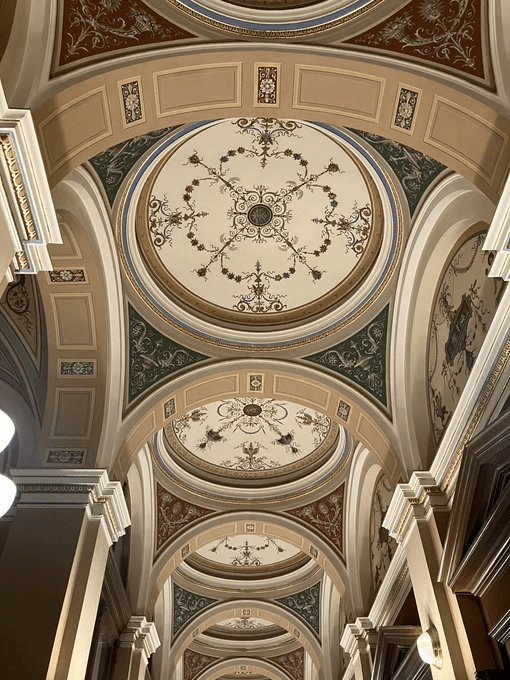
Nowadays, it’s the home of the Czech Philharmonic Orchestra. I went to a concert here last year, and the insides are pretty special too.
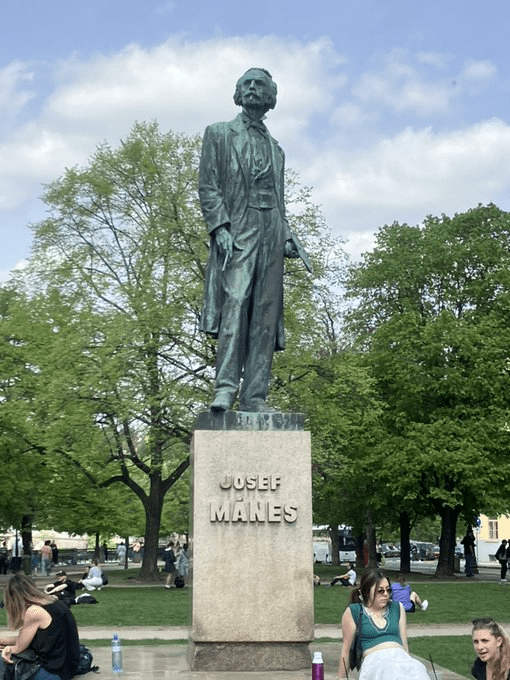
A statue on the square commemorates Antonín Dvořák, who conducted the Czech Philharmonic Orchestra in its first ever concert, which took place in the Rudolfinum in 1896. He’s facing the concert hall.
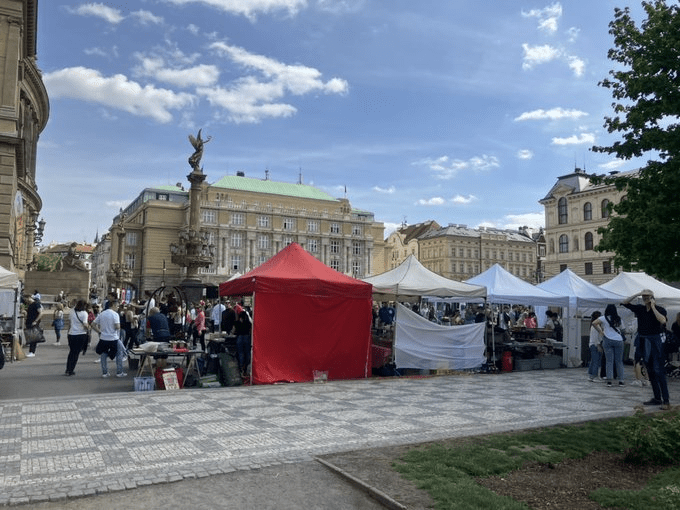
Náměstí Jana Palacha is pretty lively at weekends.
Finally, we all remember what happened on the square in December 2023. I am only mentioning it here to preempt anybody who asks why I’ve left it out, and to tell those people that it is still too horrific to think about, but that this is not the same thing as forgetting.
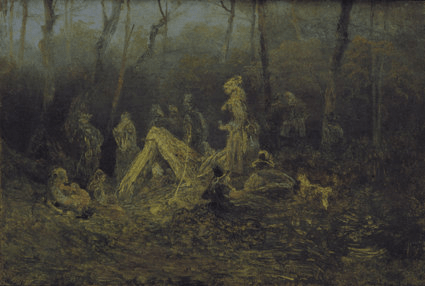
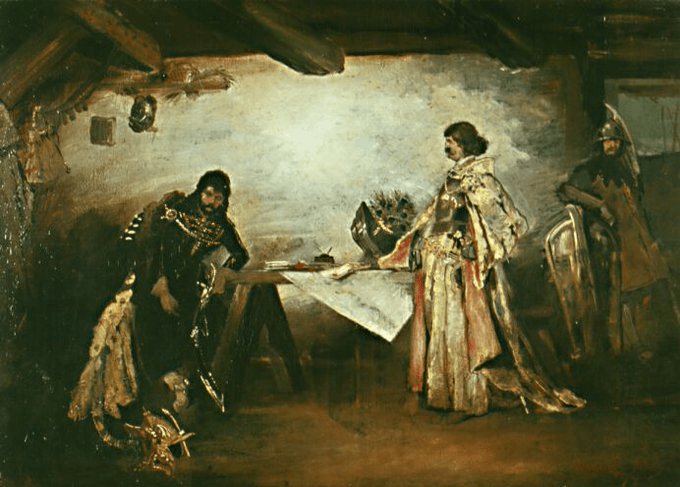
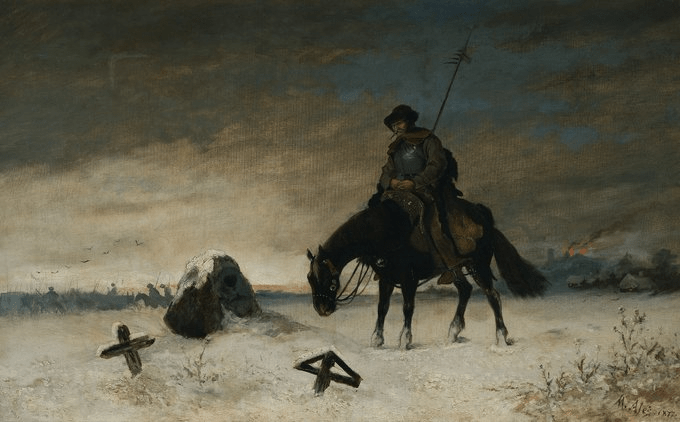
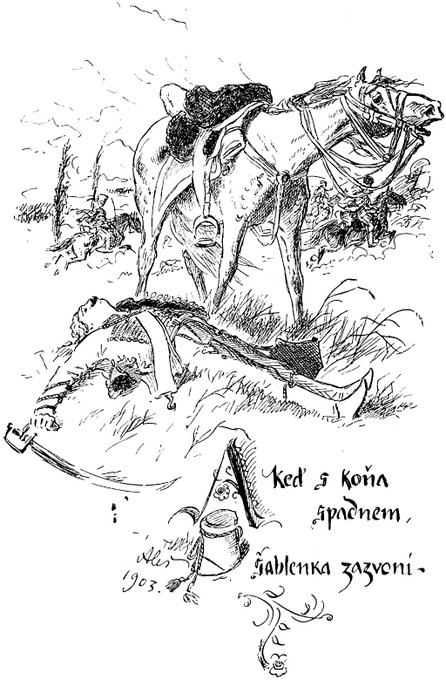
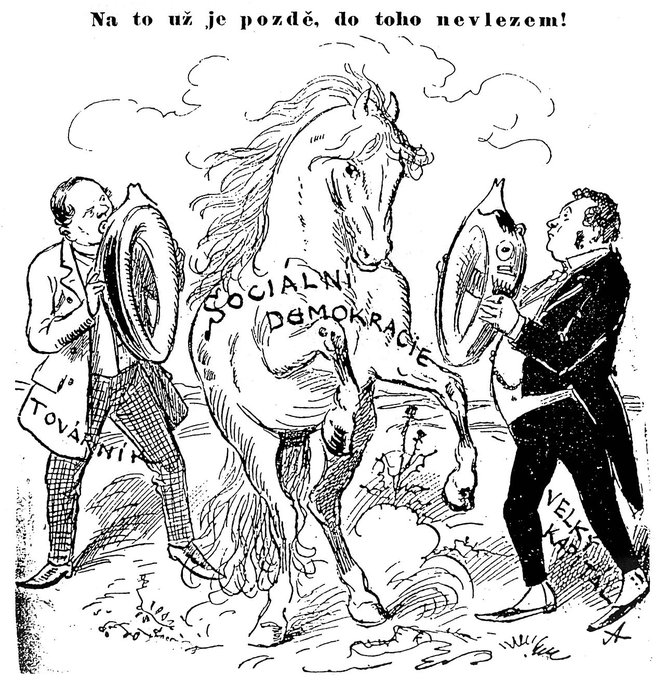
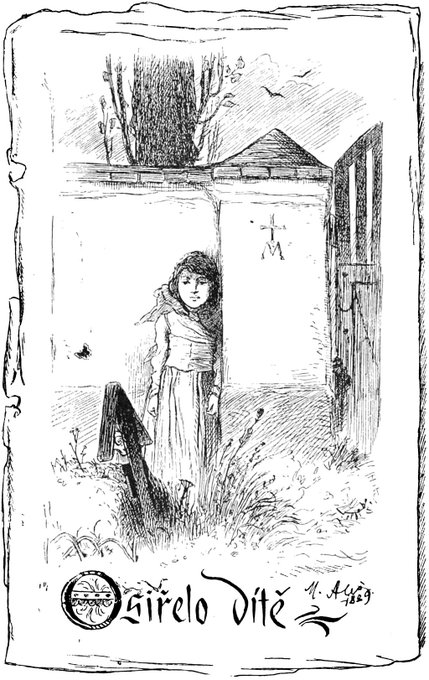
Mikoláš Aleš was born in Mirotice, in Southern Bohemia, in 1852. He started drawing at the age of four, later taking up painting.
In 1869, he enrolled in Prague’s Academy of Fine Arts. He was later expelled (in 1876) after taking part in a demonstration against a professor who said there was no such thing as Czech art during the Gothic and Baroque periods, just Czech impersonations of German art.
Speaking of that marriage: his wife was called Marina Kailová, and her brother was called Otto Kail. Otto’s great-grandson would be a certain Václav Klaus.
Aleš also created illustrations for books and magazines. During his lifetime, his decorative work was appreciated; his oil paintings (such as these ones) wouldn’t gain acclaim until after his death.
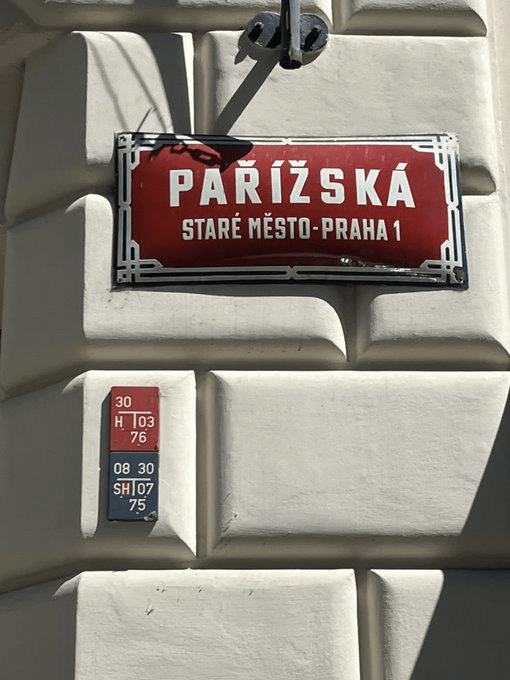
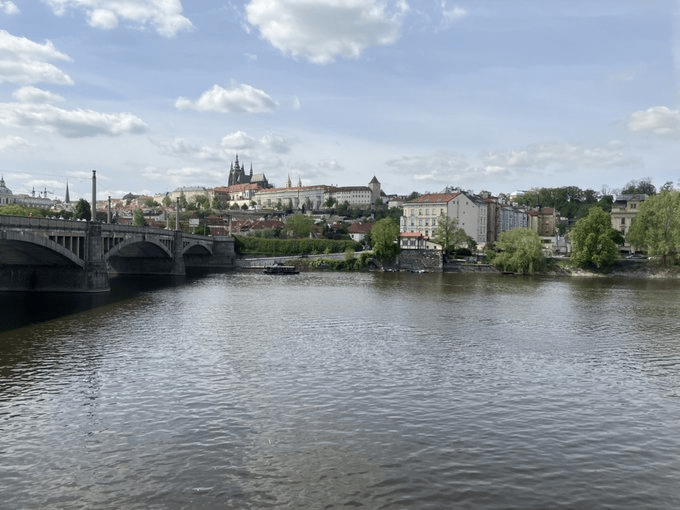
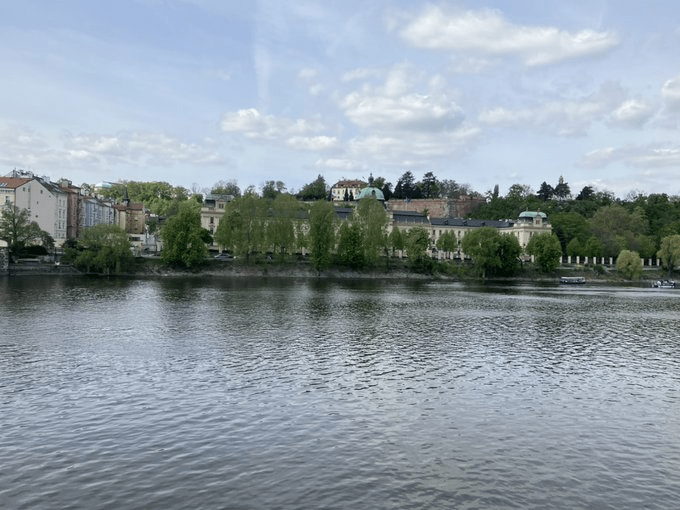
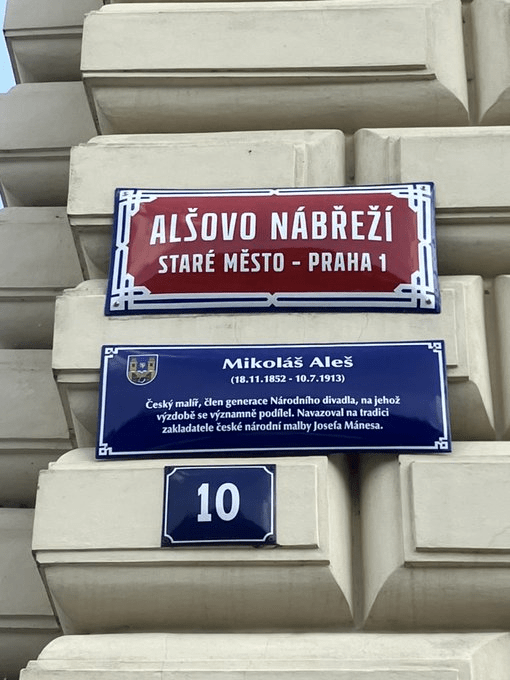
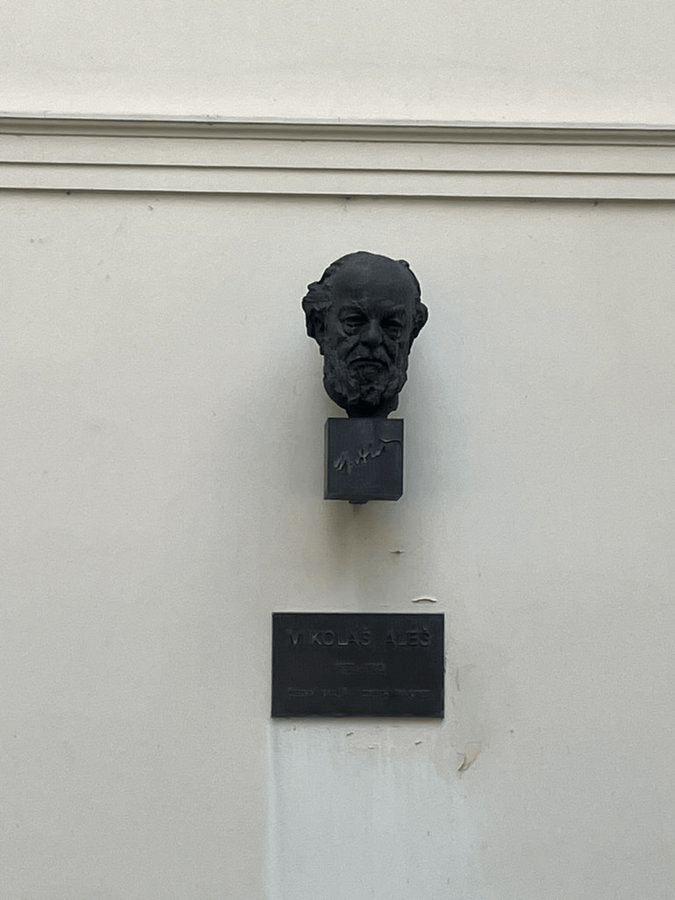
From 1885, Aleš ran a painting academy where this embankment is now named after him; the street sign at the top of the post is on the building’s façade, which we’ll take a closer look at tomorrow.
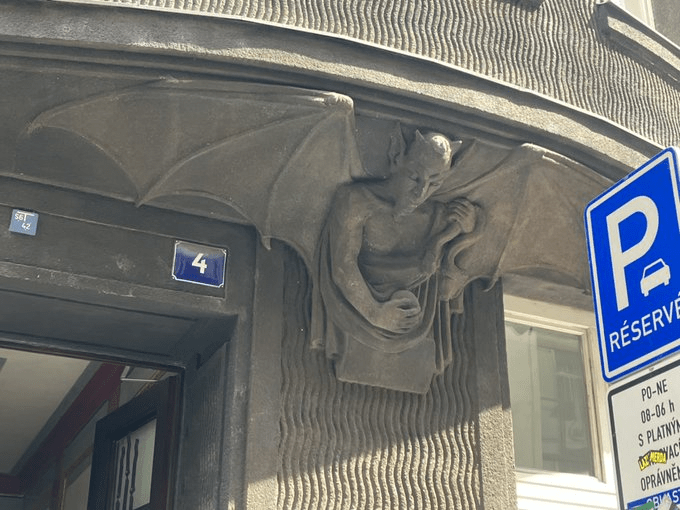
He’s also commemorated at another building in the street, number 4.
In 1908, Aleš became a full member of the Czech Academy of Sciences and Arts.
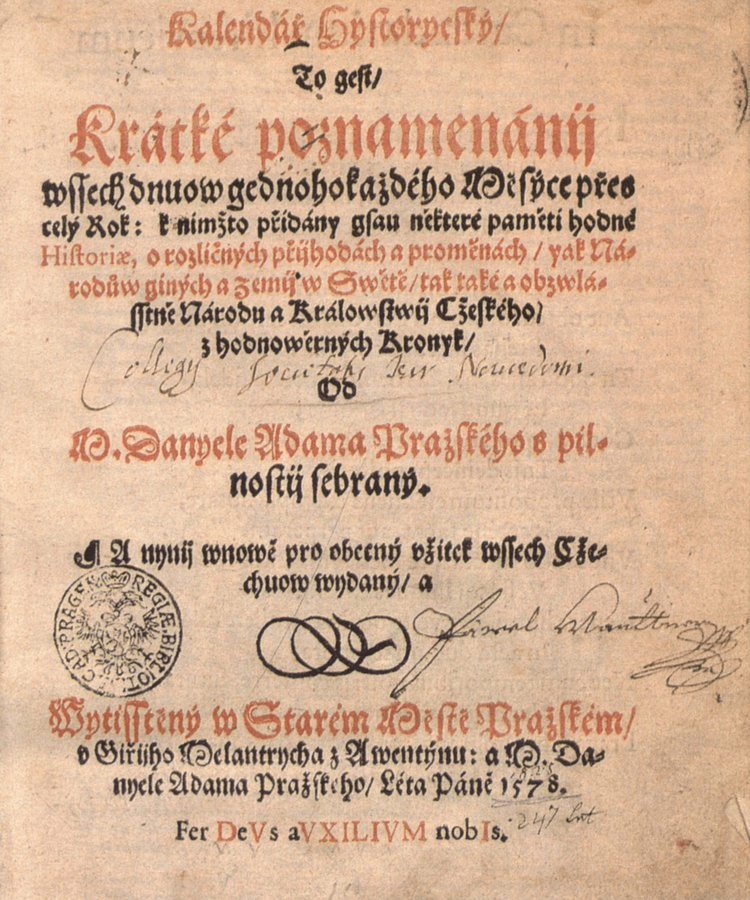
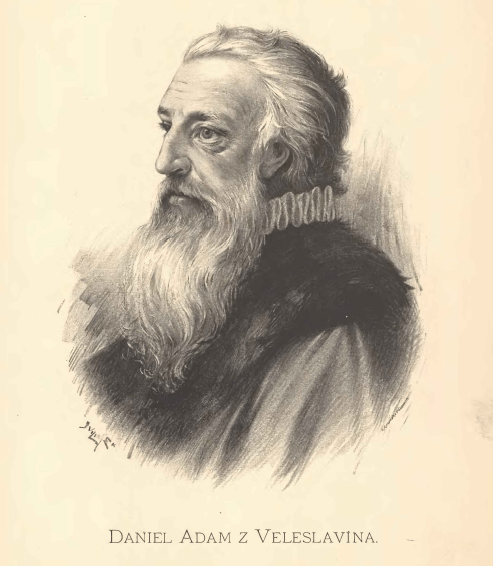
In 1578, he published Kalendář historický, which went through the days of the year and described the historical events that happened on them (i.e. this would probably have been my favourite book ever if I’d been around then).
In the same year, he added ‘z Veleslavína’ to his name, after his father’s birthplace.
Melantrich died in 1580, and left the business to his son, Jiří, who didn’t do a very good job of it. So, when Jiří also died prematurely in 1586, Adam took over.
This proved to be a good move – over 130 high-quality publications were released as a result, of which almost half were in Czech (which was not usual at the time).
Additionally, he was one of the first to publish sheet music, and also published a Czech-Latin-Greek-German dictionary.
In 1595, Adam moved just outside of Mladá Boleslav; four years later, while in Prague, he caught a fever and died.
The printing house would then be run by his widow and her second husband, Jan Bohutský.
Just after Bílá Hora in 1620, it was given to the Jesuits, who were unable to make it reach its past glories.
There’s a monument to Adam in Veleslavín (of ‘Nádraží’ fame) in Prague 6. Looking forward to sharing a photo of that with you all in 2028 or so (we laugh now, but one day we’ll wake up and realise it’s almost 2029).
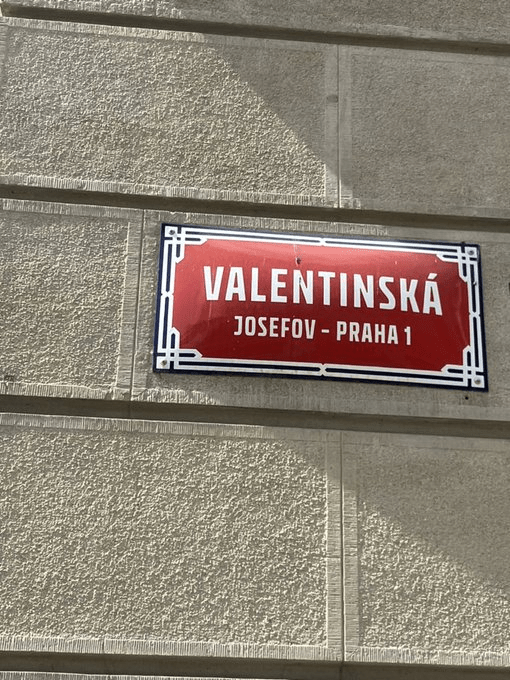
I think we can skip the part in which I explain what St Valentine is the saint of, and the date on which we celebrate him. But here’s some music.
Anyway, from about 1253, St Valentine’s Church stood here, where, rather than the current-day street, there was actually a square, Valentinské náměstí.
It followed the usual pattern of Prague churches: 1) built in Romanesque style; 2) gained Gothic elements as the years went by; 3) became a Hussite church; 4) was forcibly re-Catholicised; 5) was abolished thanks to Joseph II; 6) was demolished in 1794.
It was replaced by a residential house, but that too was got rid of during the ‘asanace’ (clean-up) of Prague around 1900, a process which got rid of Valentinské náměstí too.
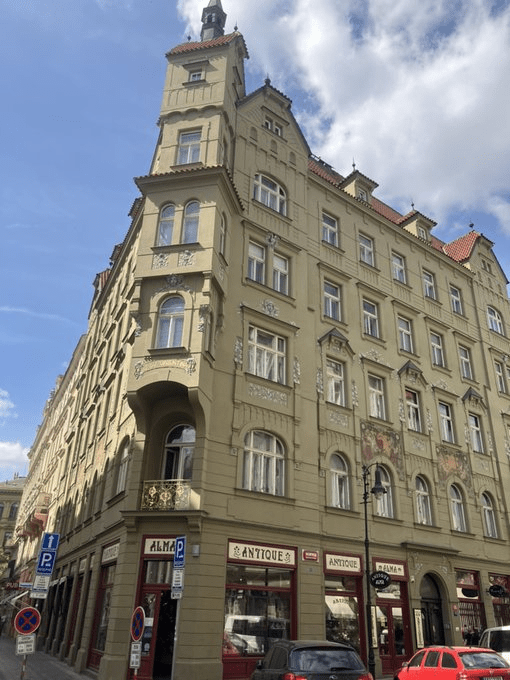
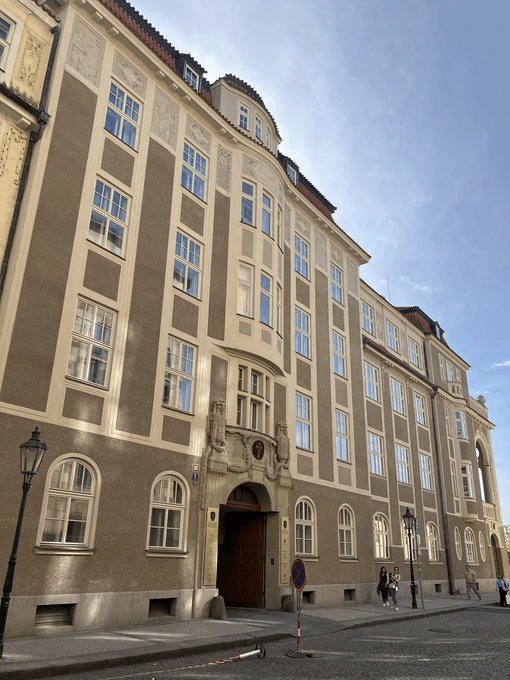
Despite all this lost heritage, the Art Nouveau building that is named after St Valentine, and which was built just after the asanace, is pretty cool.
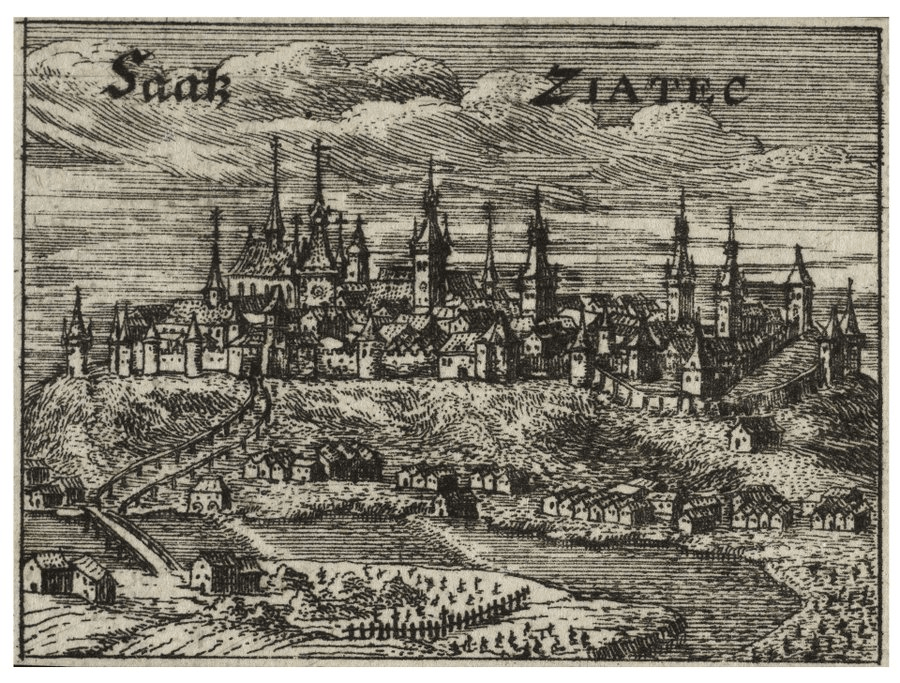
Žatec is a town of approximately 19,000 inhabitants in the Ústí Region, named after a hillfort which existed there in the early 10th century.
It was an important city in Hussite times – when preachers predicted that it was one of five cities which would survive the final destruction of the world – and survived a month-long siege during the Second Crusade to Bohemia in 1421.
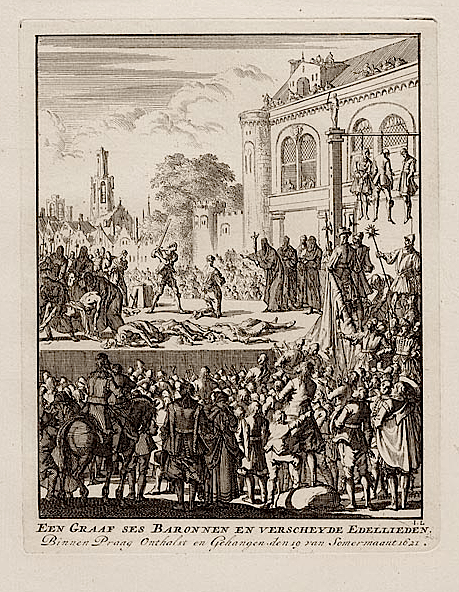
It also played its role two hundred years later – its former mayor, Maxmilián Hošťálek z Javořice, was one of the 27 rebels executed on Old Town Square in June 1621.
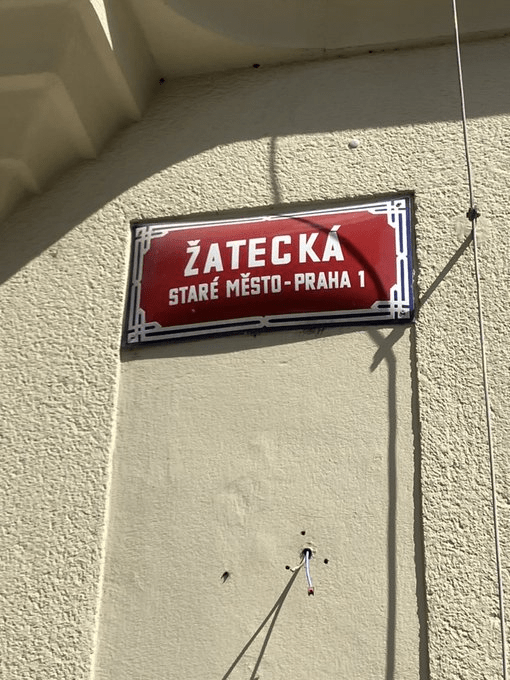
As one of the biggest cities in Bohemia at the time, it also had a good deal of money, and used part of this to buy what is now number 4 on the street, owning the house from 1615 to 1641 and giving the street its name.
After the Thirty Years’ War, though, Žatec started to decline, and also became predominantly German-speaking (its German name is Saaz); having been the regional capital for centuries, it was demoted to district town in 1850.
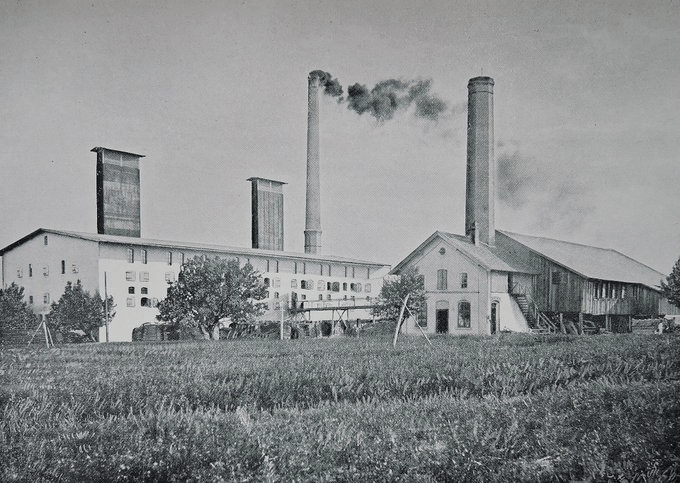
The 18th and 19th centuries also saw the growth of brewing and hop cultivation in the city (Pivovar Žatec still exists), and, during the Industrial Revolution, a major cardboard and paper box factory was opened here.
Some more pictures of Žatec, industrialisation-style, credited to Josef Wara (1863-1937).
And some non-industrial ones.
In May and June 1945, 5,000 German inhabitants of the town were marched from the town square to Postoloprty, where about 800 were shot. Even in a time of extreme brutality, it remains the largest known massacre of Germans living in Bohemia after WW2.
In 1960, Žatec lost its status as district town to Louny. As with much of Czechoslovakia under communism, housing estates were constructed and historical parts fell into disrepair.
However, restoration is now gradually taking place, and, in 2023, Žatec and its hop-based surroundings were placed on the UNESCO world cultural heritage list: https://whc.unesco.org/en/list/1558/.
And, in April 2024, Žatec was named Historical Town of the Year.
The person you are most likely to have heard of from Žatec is film director Jan Svěrák, born here in 1965:
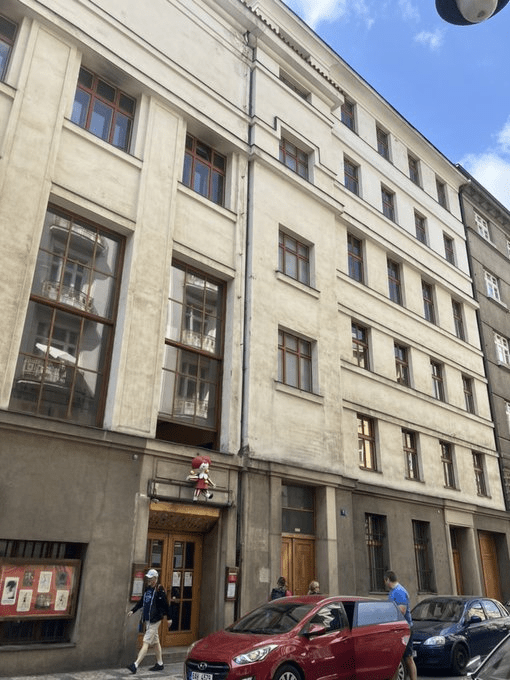
Back in Prague, number 1 on Žatecká features one side of the National Library – the side which includes the entrance to the National Marionette Theatre and the Kingdom of Puppets, an amateur theatre founded in 1920. The entrance is charming.
As is the plaque of UNIMA, Union Internationale de la Marionnette / International Puppetry Association, founded here in 1929.
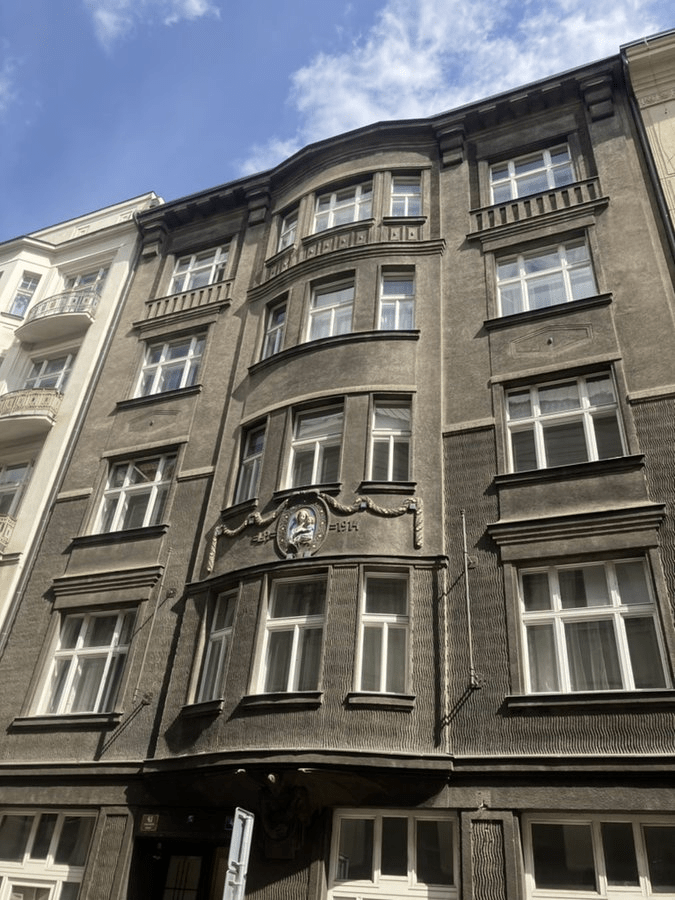
Number 4 – not the original building bought by the city of Žatec, but standing in its spot – has some pretty interesting things going on on its façade too.
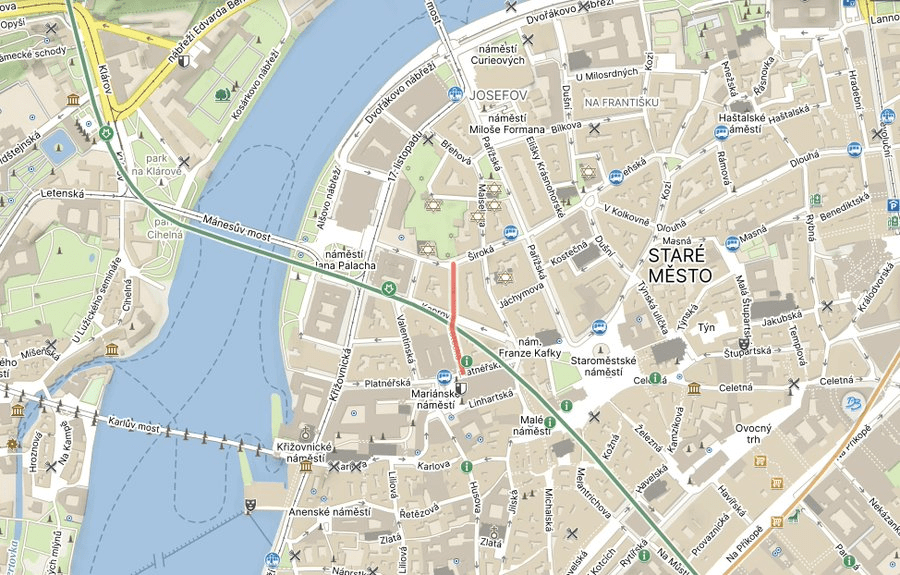
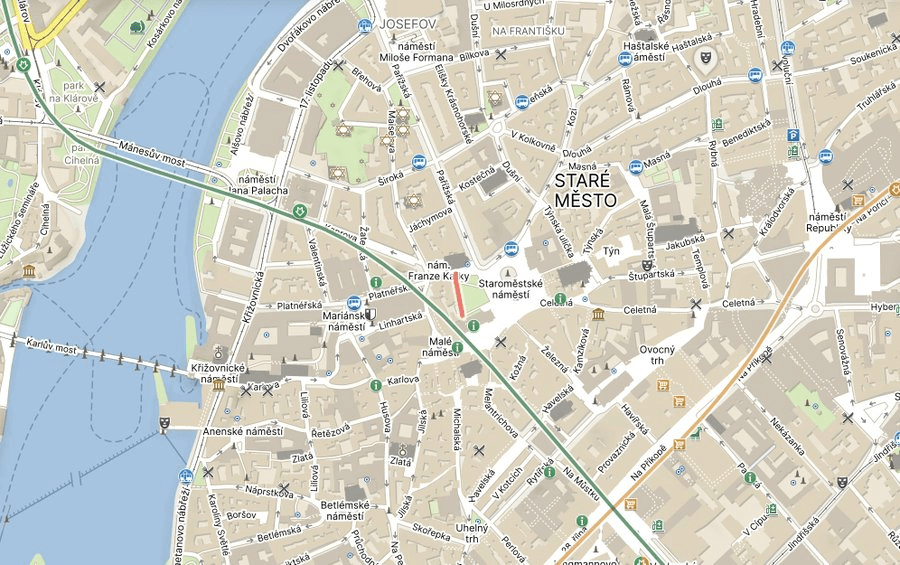
This is one of the oldest streets in Prague, originally connecting Old Town Square – the city’s main marketplace – with a ford across the Vltava, where the Rudolfinum is now.
The street was originally called Svatovalentinská, which there’ll be more about in two threads’ time.
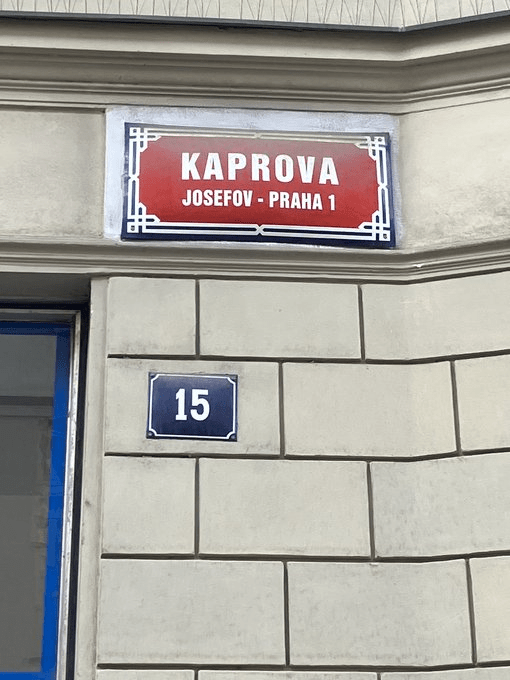
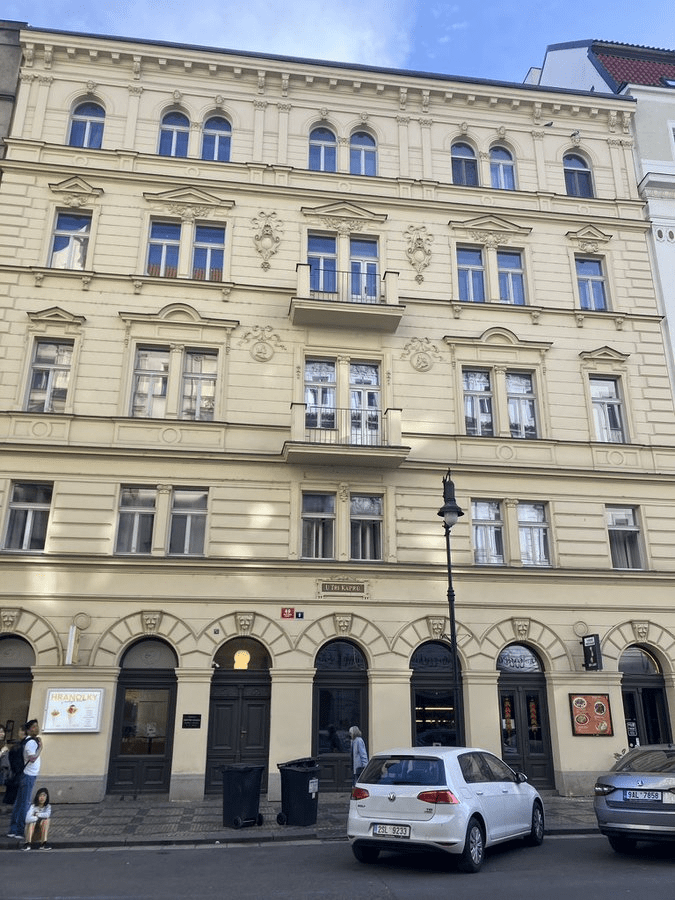
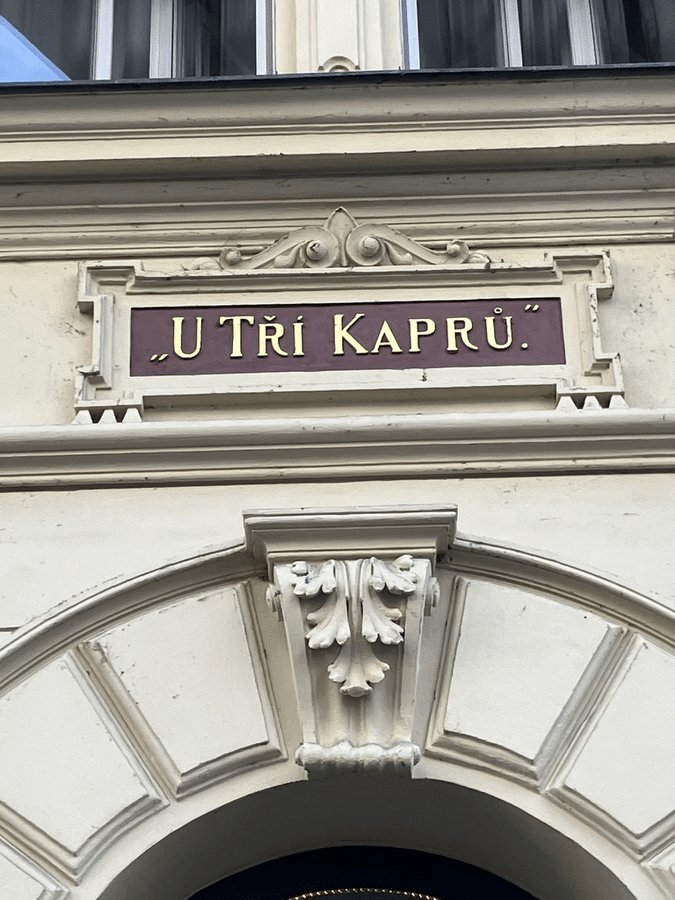
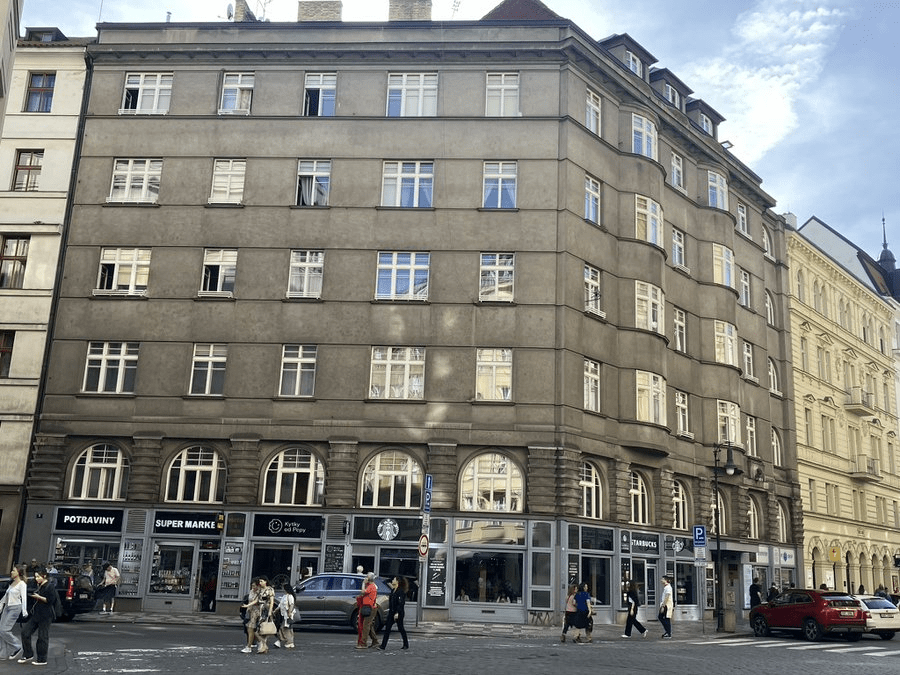
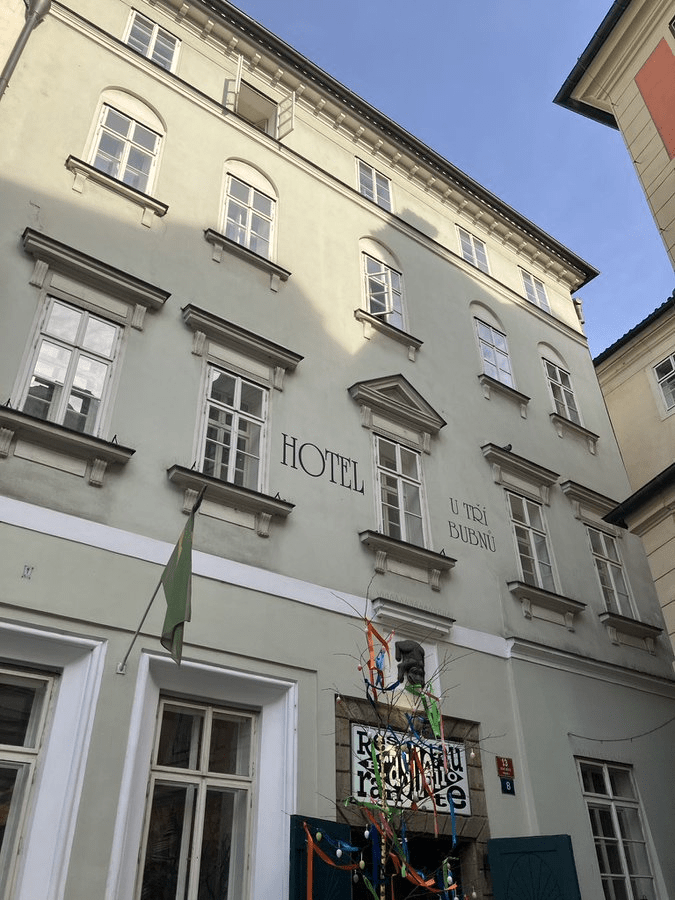
Number 8 on the street is called U Tří kaprů (The Three Carps). And you’d think that would be the reason for the street name, wouldn’t you? Well, you’d be wrong.
Mayor number 11 was Pavel Kapr z Kaprštejna, who was in charge from 1565 to 1567. He bought U Tří kaprů (I can’t tell you if this was because he was amused by the name or not), and the street name followed (‘Kaprovic’ and ‘Kaprová’ were also in use in the 16th century).
A later member of the dynasty, Jan Daniel Kapr z Kaprštejna, wouldn’t be fondly remembered by the Czechs: in 1621, he presided over the trial of the participants in the Estates Uprising, which ultimately led to their execution on Old Town Square.
For those wondering if he lived happily ever after, the answer is a pretty categorical no: in 1625, his wife, Anna Marie, asked to meet up for a rendezvous in Dolní Počernice, but, when Jan was travelling through Hrdlořezy, his wife’s lover, Adam Zapský ze Zap, shot him dead.
They, in turn, were executed in 1626.
Please take these few sentences as your reminder that, yes, people can be terrible, but no, they haven’t just deteriorated massively in the last decade or so.
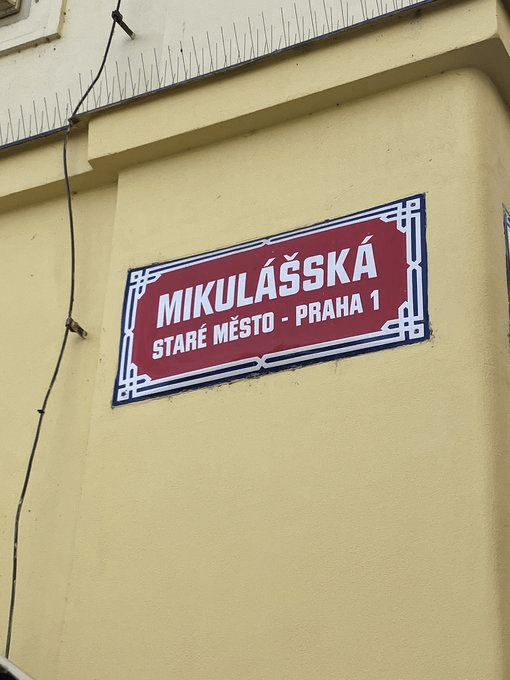
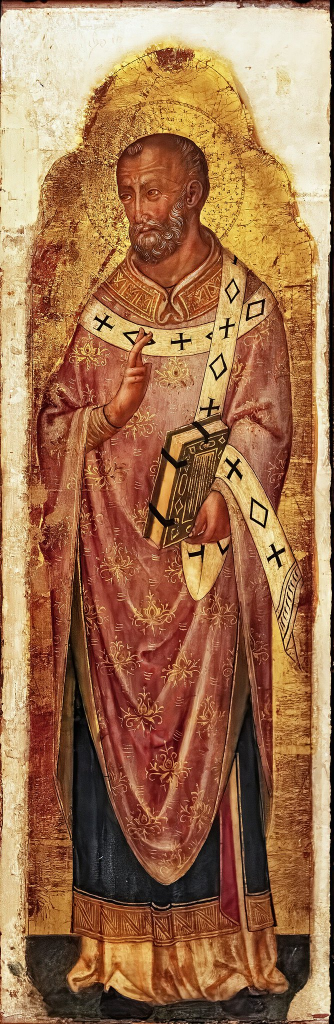
And once again, I remind myself that ‘Mikuláš’ is Czech for ‘Nicholas’.
Saint Nicholas (of Bari) died in 343, and was known for secret gift-giving, hence Dutch folklore coming up with Sinterklaas, who is one of the sources for Santa Claus.
Saint Nicholas is also the patron saint of sailors, archers, brewers, pawnbrokers, unmarried people, merchants, repentant thieves and therefore basically everyone.
The Czechs (and Slovaks) aren’t alone in having a version of this name that begins with ‘m’ – see also Ukrainian Микола, Polish Mikołaj, Hungarian Miklós, Belarusian Мікалай, Lithuanian Mikalojus and Slovenian Miklavž.
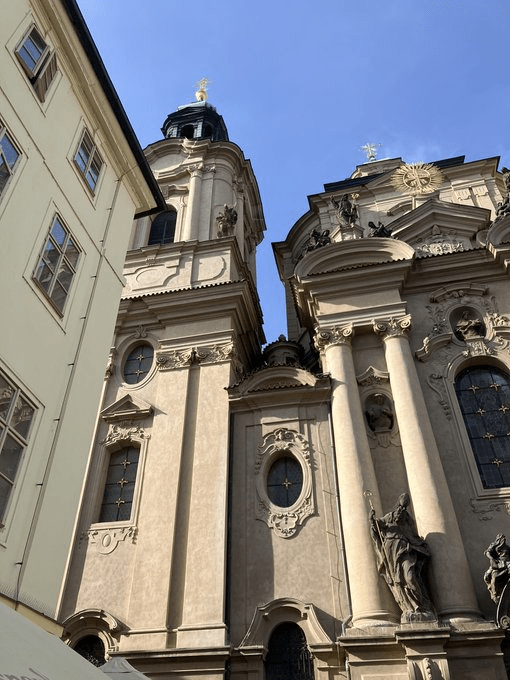
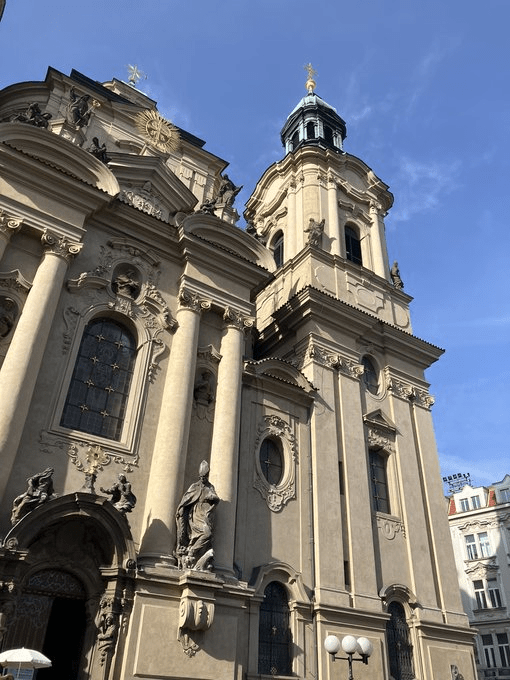
The earliest mention of a church devoted to St Nicholas in this spot is from 1273 (it also mentions that the area had been recently flooded); the current building is obviously not from then, but a few elements of the original building remain in the cellar.
Much like the Church of Our Lady before Týn (this photo is how that church looks from this one), St Nick’s was a centre of Hussite worship in the early 1400s, though it reverted to Catholicism around the 1430s.
In the 1630s, the church’s Gothic basilica fell into the hands of the Montserrat Benedictines, who, a couple of decades later, would carry out extensive reconstruction.
However, in the 1730s, the Gothic building was torn down and replaced with a Baroque central building.
The church was deconsecrated in 1787, and the monastery was abolished; the church was used as a warehouse, then as a grain storage facility, then, from 1865, as a concert hall.
It only filled this latter function for a short time, as, in 1871, it was leased to the Russian Orthodox Church. They used it until 1914.
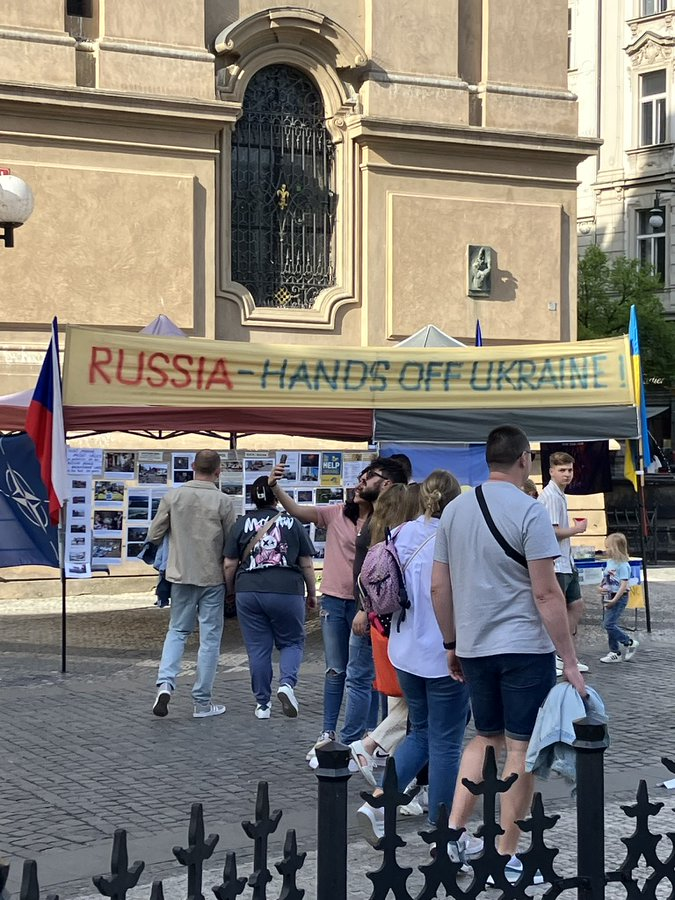
The fact that this was outside when I went there may be a coincidence; how nice it would be to live in a world where it wasn’t necessary for such a stand to exist at all.
In 1920, the church started to serve the newly formed Czechoslovak Hussite Church; it’s still their main church (and, unlike the country it’s named after, didn’t split in two when 1992 became 1993).
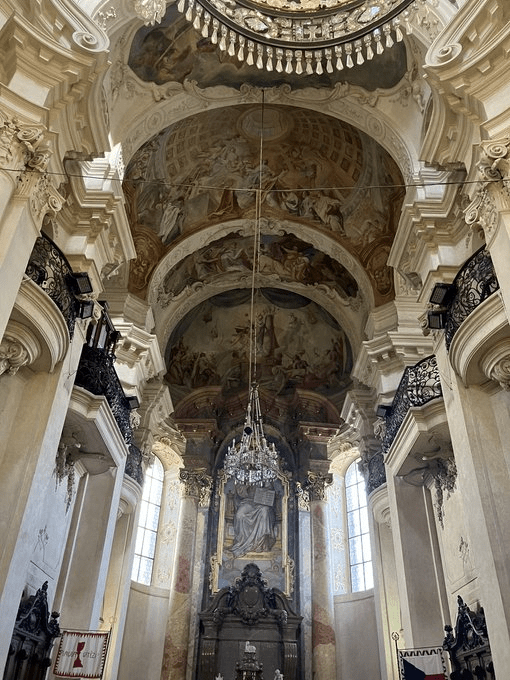
For once, I went inside while mentally drafting this post, and it was totally worth it.
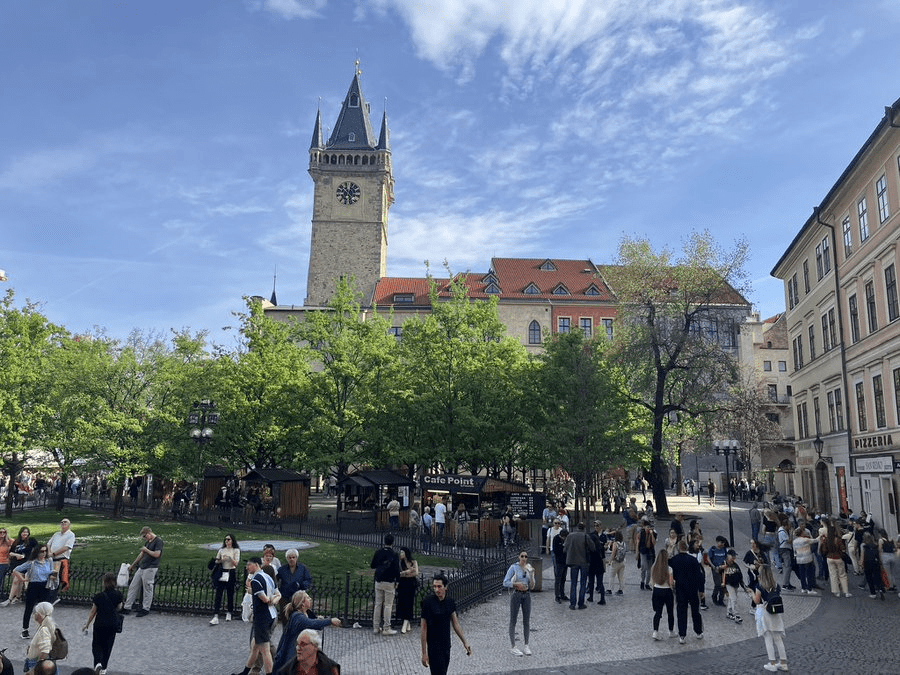
The view as I left was something of an ‘I get to live in this city’ moment too.
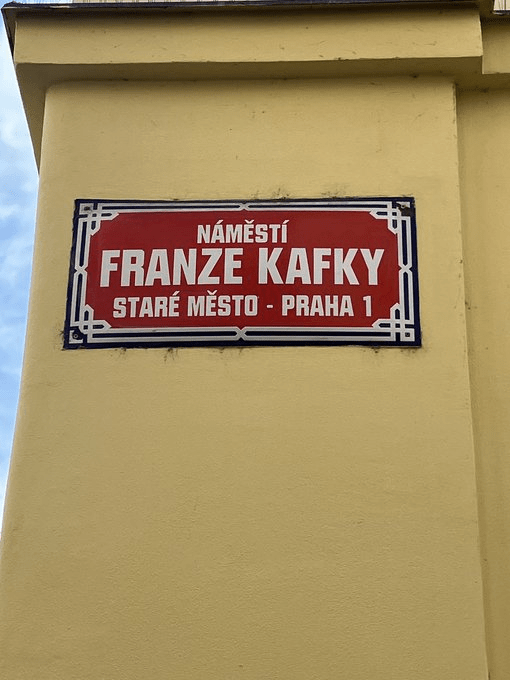
Franz Kafka was born in a house on the present-day square in 1883. It was called U Věže (At The Tower), and was destroyed as part the ‘clean-up’ operation in the Old Town in 1897.
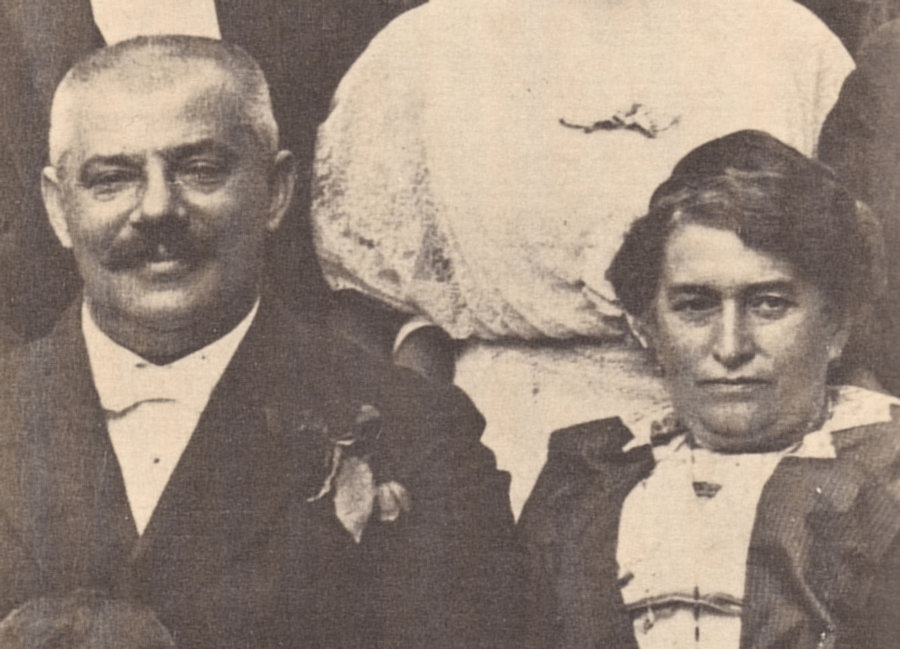
His father, Hermann, was originally from Osek, a South Bohemian village with a large Jewish population. After working as a travelling salesman, he became a wholesaler of luxury goods in Prague.
His mother, Julie, hailed from Poděbrady, and was born into the family of a well-off retail merchant.
Kafka didn’t get on with his father, whom he described as despotic; both parents were away on business a lot and the children would largely be raised by servants and governesses.
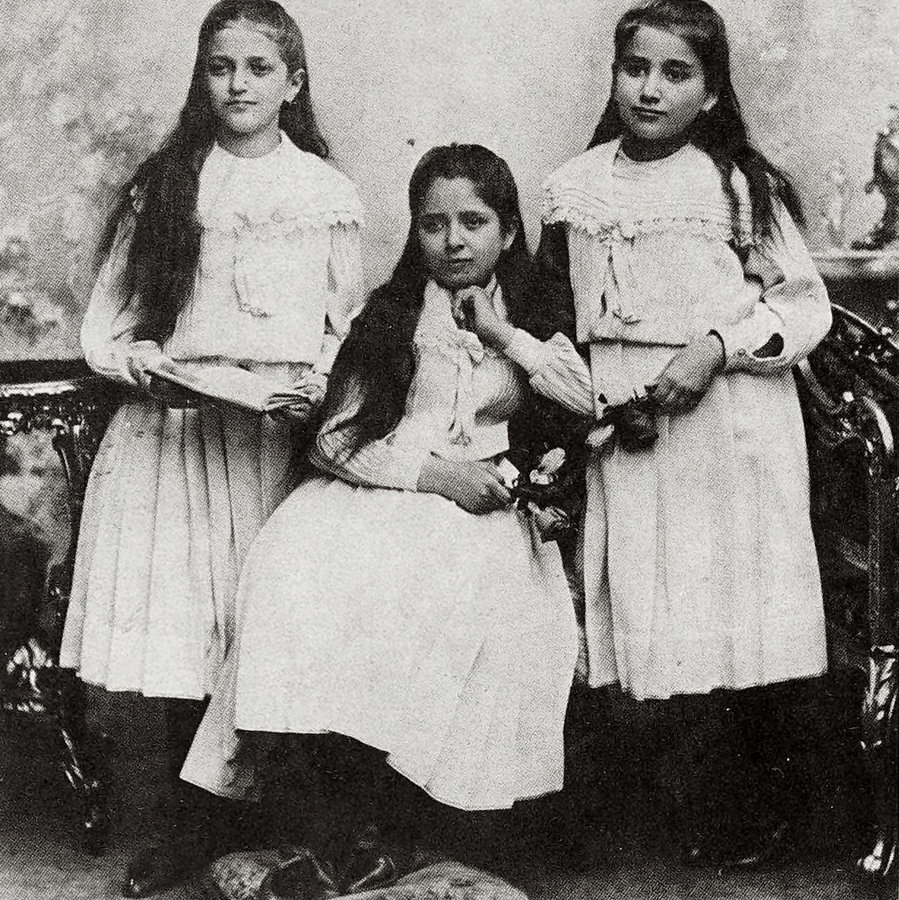
Kafka had two younger brothers, Georg and Heinrich, who died in infancy, and three younger sisters, Gabriele (Elli), Valerie (Valli) and Ottilie (Ottla), who would all be murdered in the Holocaust.
From 1889 to 1893, Kafka attended the German Boys’ General School on Masná, then switching to the German State Gymnasium in Palác Kinských on Old Town Square, which (in things no child wants to experience) is also where his dad had his store.
Incidentally, 1906 was also the year in which the family business would move to another address on Celetná, Hrzánský Palace.
Resigning from the insurance company after less than a year, Kafka then got a job at the Workers’ Accident Insurance Company for the Kingdom of Bohemia on Na Poříčí, where he would work until 1922.
Kafka’s biggest gripe about both jobs was that they took up time that he could have spent writing instead; to make matters worse, his father still expected him to help out in the family shop.
Despite work commitments, the first publication of Kafka’s work (eight short stories, in this case) occurred in the Munich-based literary magazine Hyperion in 1908.
As a German-speaking Jewish inhabitant of Prague, Kafka was fascinated by Eastern European Jewry and Yiddish literature; however, he also felt alienated from Judaism and Jewish culture.
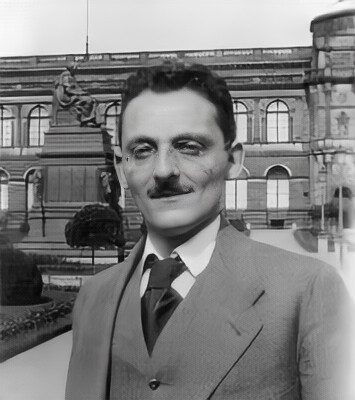
In 1912, Kafka met Felice Bauer, to whom he would be engaged twice (in 1914 and 1917, although they only met seventeen times during their five-year relationship). Kafka and Bauer first met at Max Brod’s house, which is U Mladých Goliášů on https://whatsinapraguestreetname.com/2024/09/27/prague-1-day-148-skorepka/.
It was also in 1912 that Kafka managed to write a short story, Das Urteil (The Judgement), in eight hours, starting a phase of intense creativity. It was published in Leipzig in the same year, and dedicated to Felice Bauer (this is the 1916 edition).
During his lifetime, only a few short stories of his, all of which were written in German, were published, and received little attention. The most famous is Die Verwandlung (The Metamorphosis), written in 1912 and published (also in Leipzig) in 1915.
As further proof of how productive 1912 was, Kafka also started on drafts for a work which he titled ‘Der Verschollene’ (The Man Who Disappeared); he continued with this until 1914, but left it incomplete; it would be published in 1927 as Amerika.
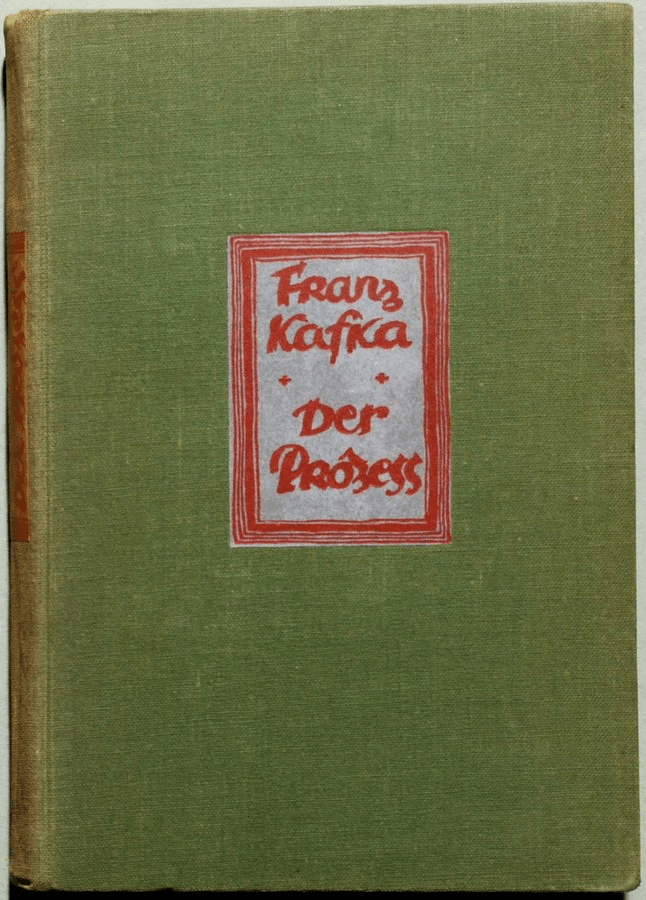
In 1914 qnd 1915, Kafka wrote Der Process (The Trial), which would appear in print in 1925 (yes, I would have assumed ‘Prozess’ too, but this is the spelling Kafka used).
He also planned a third novel, but didn’t start writing it just yet.
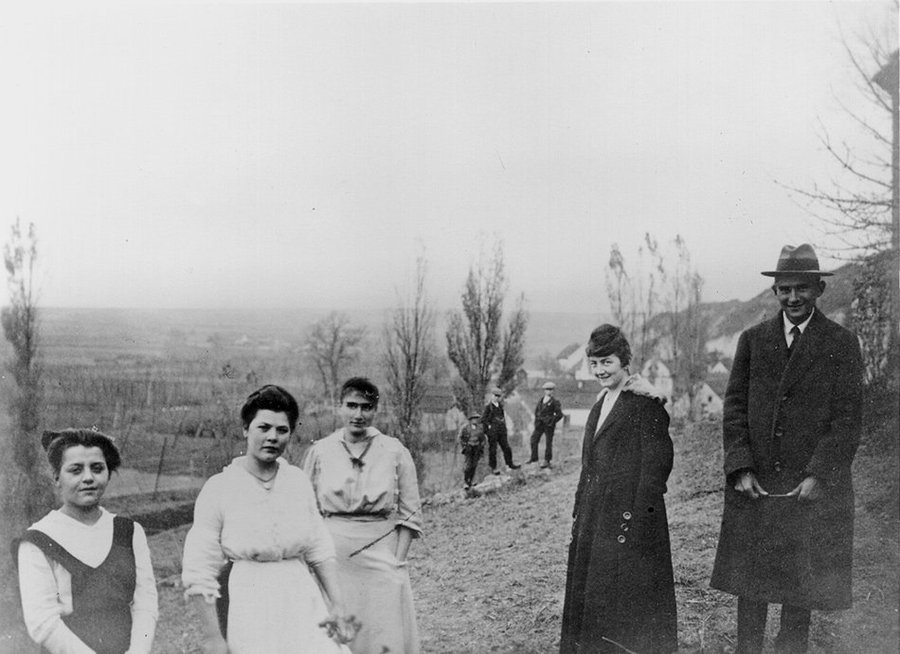
Here, that Kafka started to suffer from persistent bleeding, which his doctor identified as being caused by tuberculosis. He was granted long-term sick leave, going to Siřem, near Žatec, to recuperate (he’s on the right; his favourite sister, Ottla, is second from left).
Meanwhile, around 1919/20, he would become engaged to Julie Wohryzková, a hotel chambermaid. The engagement would only last a few months.
In 1920, Kafka had a largely correspondence-based relationship with a Czech (and non-Jewish) journalist, Milena Jesenská, who would translate some of his works into Czech and would publish an obituary for him in Národní listy following his death.
In 1922, Kafka finally found time to start on the other novel he’d been planning since 1914, Das Schloss (The Castle); like his other two novels, he never finished it, but it would appear in print in 1926.
As all attempts to improve his health failed, Kafka left his job for good in 1922. In 1923, he moved to Berlin in a bid to get away from his family and focus on writing, and lived with a kindergarten teacher, Dora Diamant.
However, his tuberculosis would return and spread to his larynx, leaving him unable to speak and only able to eat and drink with difficulty.
He died of heart failure on 3 June 1924, at a spa in Kierling, Lower Austria. He was forty.
In two letters to Max Brod – which were never sent – Kafka requested that all his unpublished works be destroyed, a wish that Brod chose not to respect, publishing the bulk of what he owned of Kafka’s writing between 1925 and 1935.
Kafka’s complete diaries from 1909 to 1923 would be published in German in 1994; a full English-language translation didn’t follow until 2023 (a version edited by Brod had appeared in the 1940s).
A distinctive statue dedicated to Kafka was unveiled in Prague in 2003 – we’ll get to that in a future post.
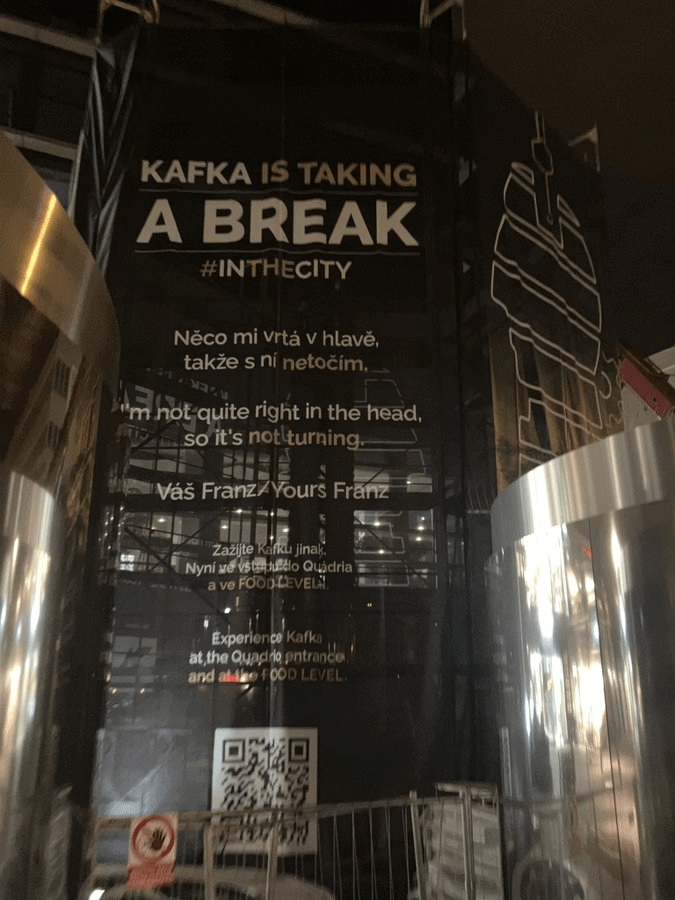
We’d also have a nice picture of David Černý’s mechanical tribute outside the Quadrio shopping centre near Národní třída if it hadn’t been closed for repairs when I took this photo last year:
About Prague, Kafka wrote that ‘Prag lässt nicht los’ (‘Prague doesn’t let go’) and ‘Dieses Mütterchen hat Krallen’ (‘This little mother has claws’). A century after his death, it’s continuing to have that effect on me, and I hope those claws never stop clawing.
Sellers of bridles (Czech: uzdy) operated here, and the street became known as V uzdářích or Pod uzdáři for a couple of hundred years.
Back on current-day Old Town Square, a town hall (Czech: radnice) was gradually built from 1338 onwards, and V uzdářích (which wasn’t identical in scope to the current street) became known as Radnická from 1870.
However, come 1900, Prague was growing, and the city administration needed a bit more space than Old Town Hall could offer on its own.
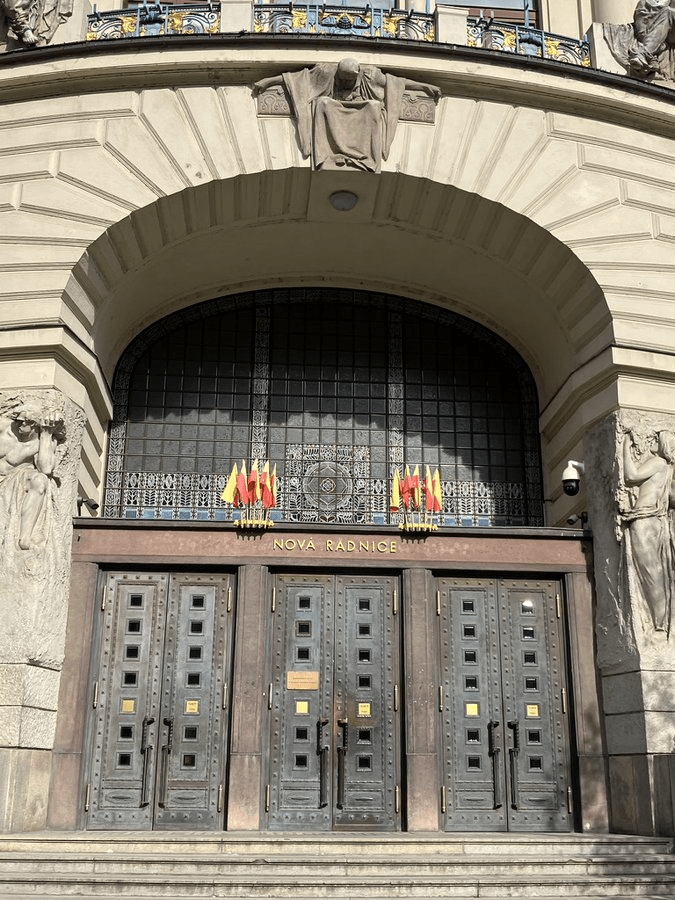
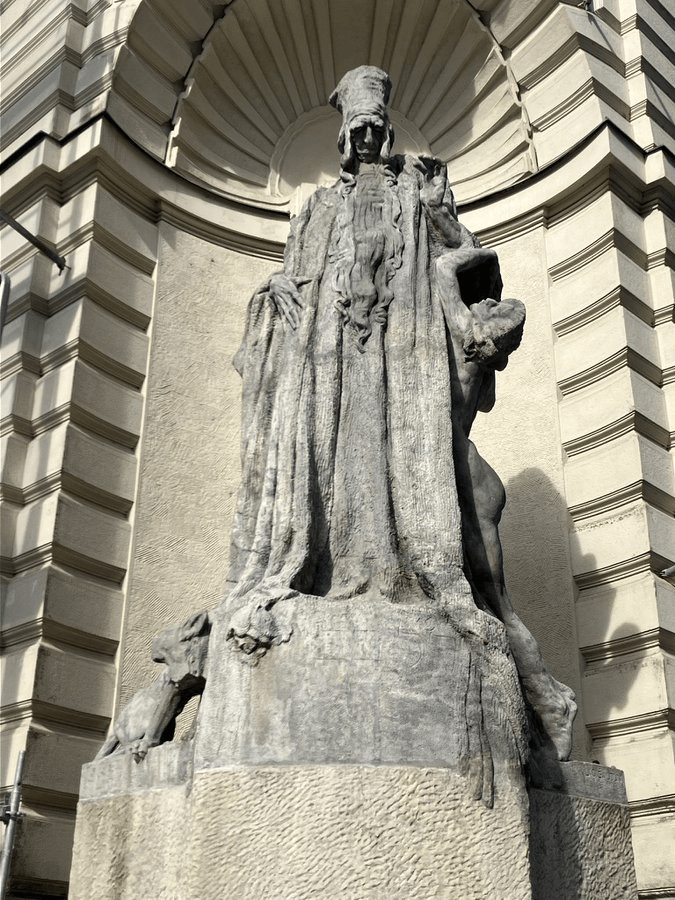
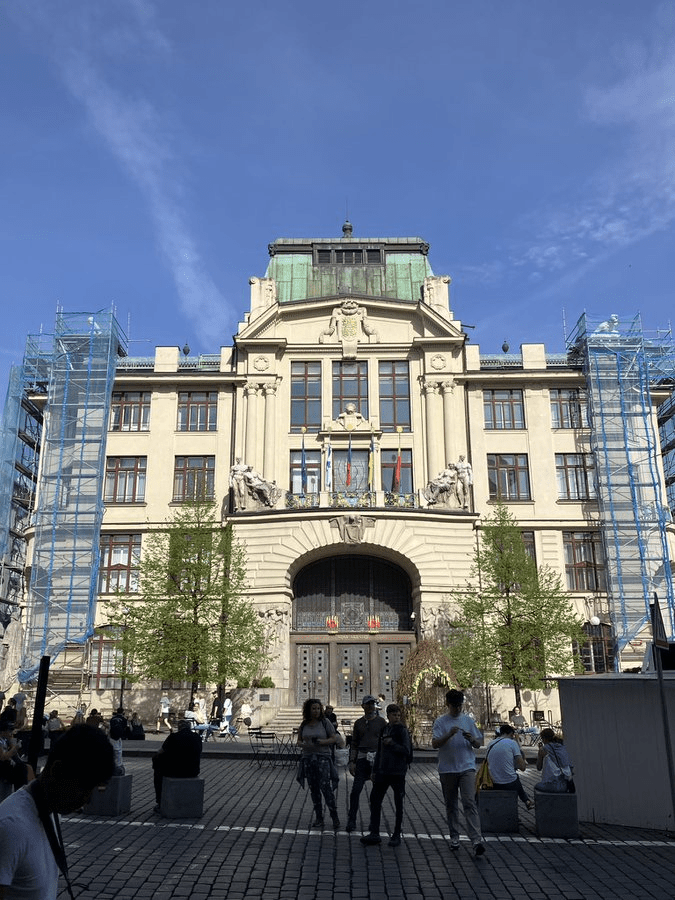
Interior features included Prague’s first two paternosters; exterior features included fine statues and sculptures, such as Ladislav Šaloun’s sculpture of Judah Loew ben Bezalel, supposed creator of the Golem of Prague.
As well as Šaloun’s statue of the Iron Knight, the spirit of a knight who can’t find peace following the suicides of his fiancée and her father, the death of his wife, and his own suicide.
The relief sculptures at the entrance are by Stanislav Sucharda; they represent ‘Citizenship jointly bearing the burden’ and ‘The common benefit flowing to citizenship’.
Initially, New City Hall hosted the city treasury, accounting office and collection offices; after the Prague Uprising in May 1945, parts of the Old Town Hall were burned down, and the city administration moved here.
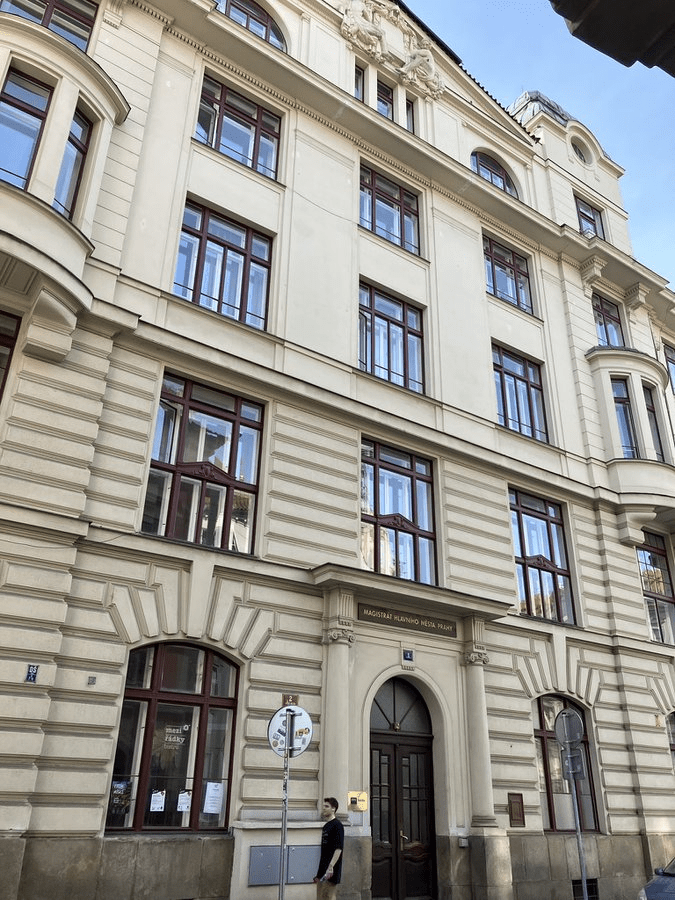
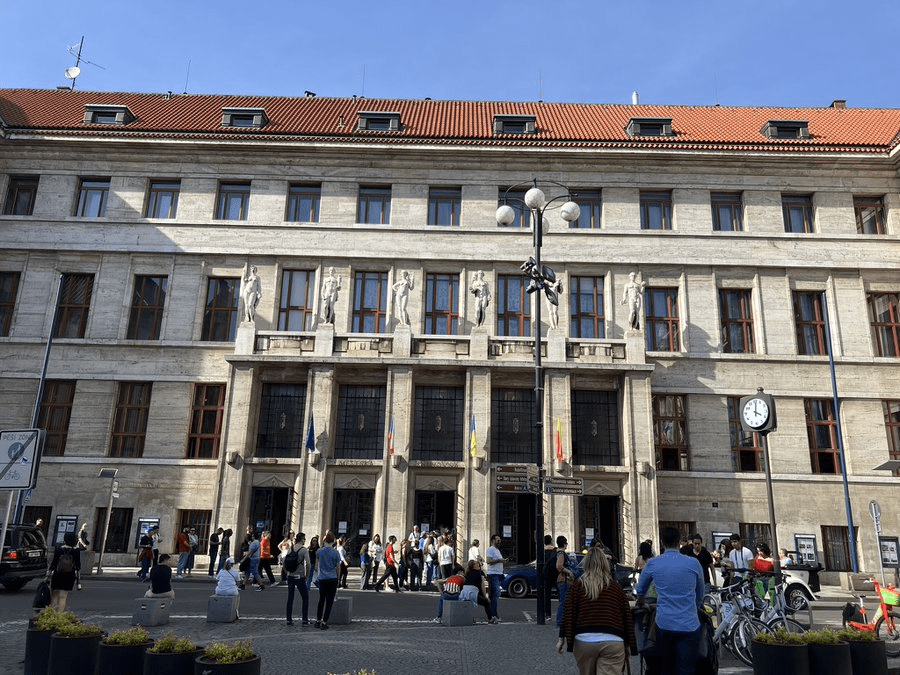
It’s been the seat of Prague’s mayor ever since, and also hosts the Prague City Council. This is a picture of its slightly more low-key entrance on U Radnice itself.
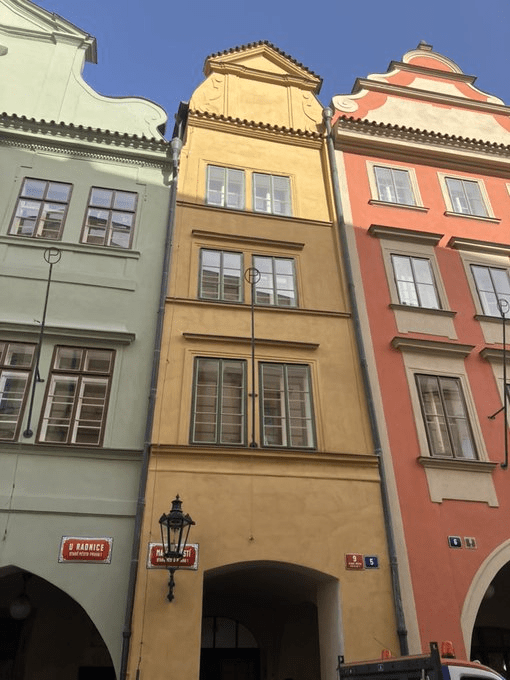
Other houses on U Radnice definitely indicate a common theme – you’ve got U Zlatého bažanta (The Golden Pheasant) at number 2 (left-hand part of the first pic), U Zlatého zvonku (The Golden Bell) at number 4, and U Zlatotepců (The Goldsmiths) at number 6.
Number 8 spoils the consistency somewhat, but I also think U Zelené žáby (The Green Frog) is a great name (which dates back to at least 1428); zoom in above the entrance, and you’ve got a frog welcoming you in.
Svatý Linhart is Leonard of Noblac (died 559), who is closely associated with the Limousin region of France, where he lived as a hermit.
He’s the patron saint of imprisoned people, including political prisoners and prisoners of war. As well being the patron saint of horses, and of women in labour.
Where the south-east corner of the New City Hall now is, there was once St Leonard’s Church. The oldest surviving written mention is from 1268, and it was likely to have been built in the century before that.
Given to French Catholics by Emperor Ferdinand II in 1628, the church was abolished in 1787 and demolished entirely in 1798.
The New City Hall was built from 1908 to 1911 (more on that tomorrow), and the street was created as a result of that. Here’s what the city hall looks like from this side.
A long time ago, there was a village here called Na Louži. A ‘louže’ is a puddle or a pool, and the name possibly came from the fact that the area, not being too far from the Vltava, was vulnerable to flooding.
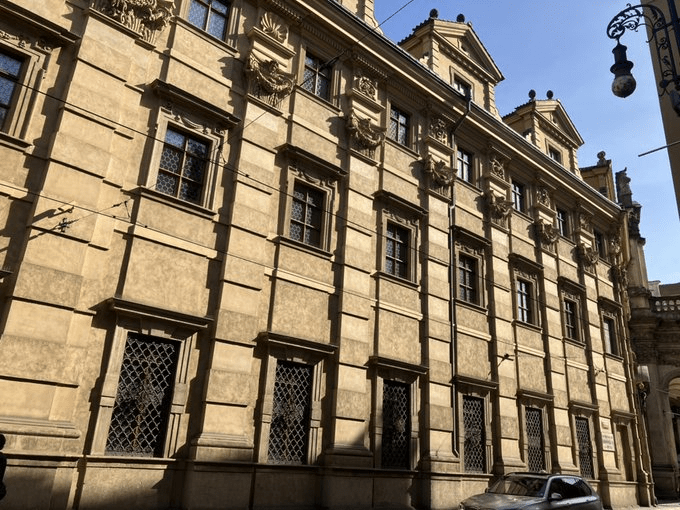
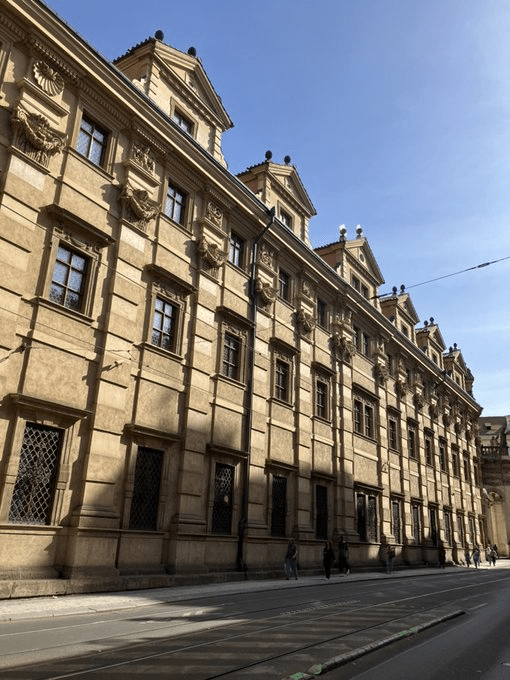
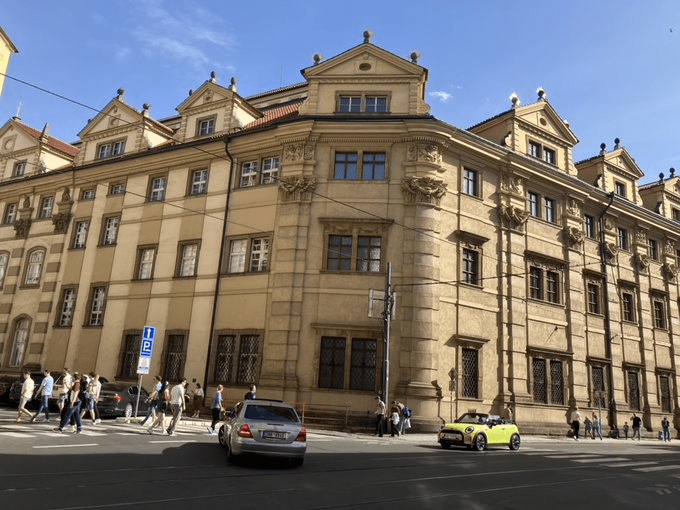
In what is now the southern side of the square stood the Church of the Virgin Mary Na louži / Kostel Panny Marie Na louži (first written mention dating from 1268; destroyed in the 1790s).
Hence the name of the square, although, from 1952 to 1990, it was named Náměstí primátora dr. Václava Vacka, after Václav Vacek, co-founder of the Communist Party of Czechoslovakia, mayor of Prague for a brief while in 1945, and again from 1946 to 1954.
Mariánské náměstí is another one that lost a lot of its buildings around 1900.
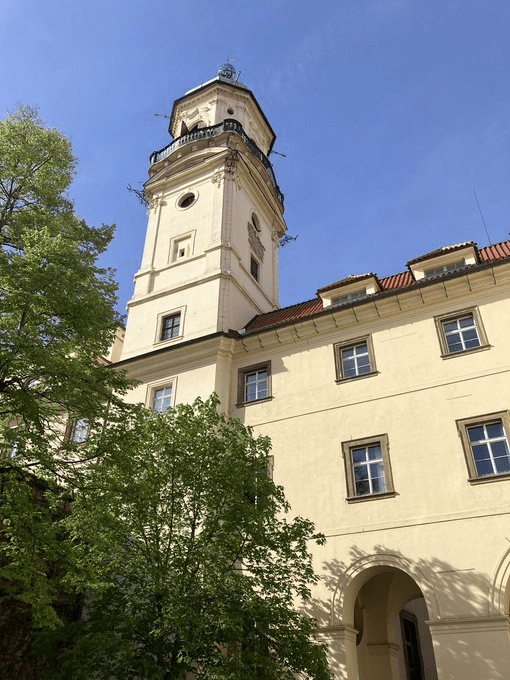
The square includes the eastern entrance to the Klementinum.
Opposite, meanwhile, is the New City Hall (which I can’t write more about yet because it’ll make an upcoming post extremely empty if I do).
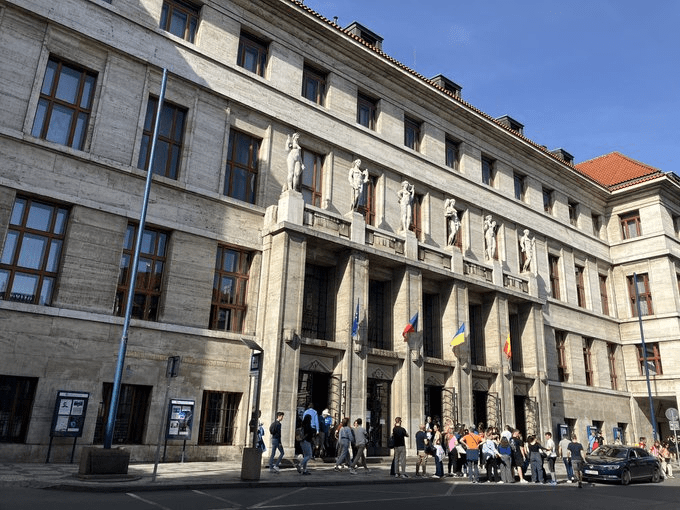
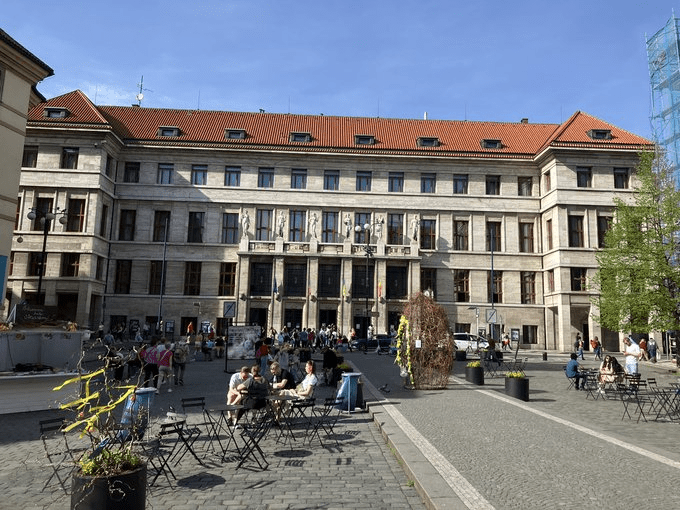
On the northern side is the Municipal Library, Prague’s biggest; these premises were built between 1925 and 1928.
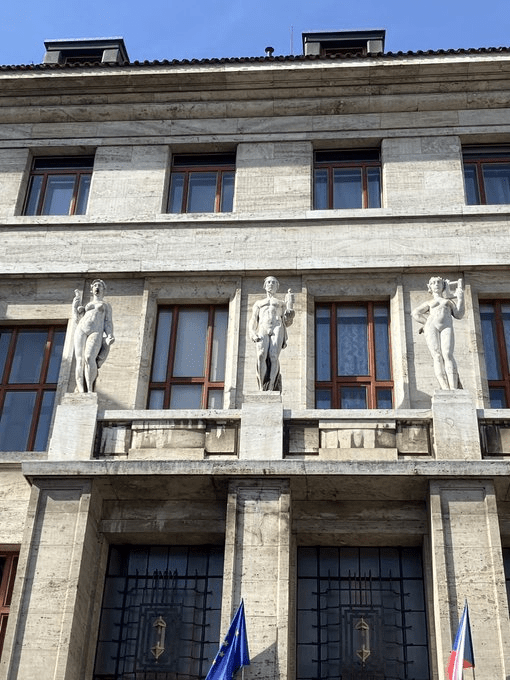
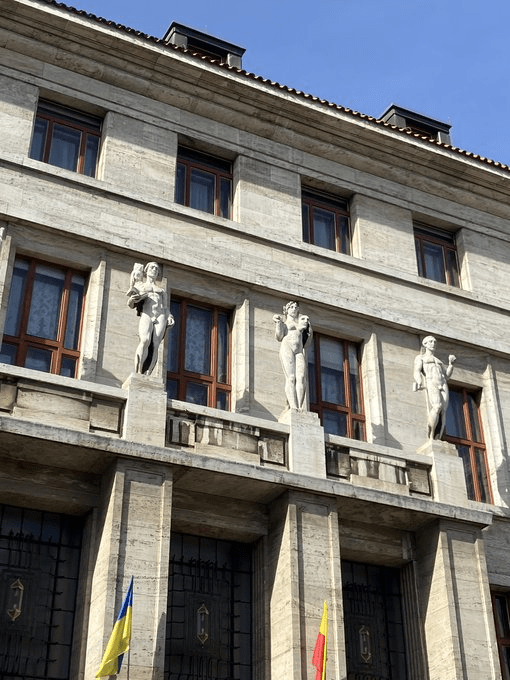
The sculptures on the façade, by Ladislav Kofránek, represent literature, sculpture, music, philosophy, drama and architecture.
Take a closer look, and there’s the Terezka Fountain, or, to give it its official full name, ‘Fountain with an allegorical statue of the Vltava’, where the church once stood.
It was sculpted by Václav Prachner, and has stood here since 1812.
The locals apparently started to call the statue Tereza after an attractive local girl who used to come here to get water.
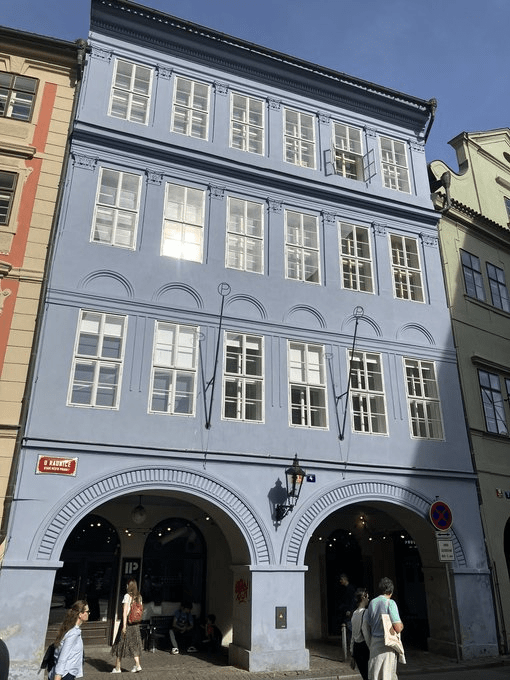
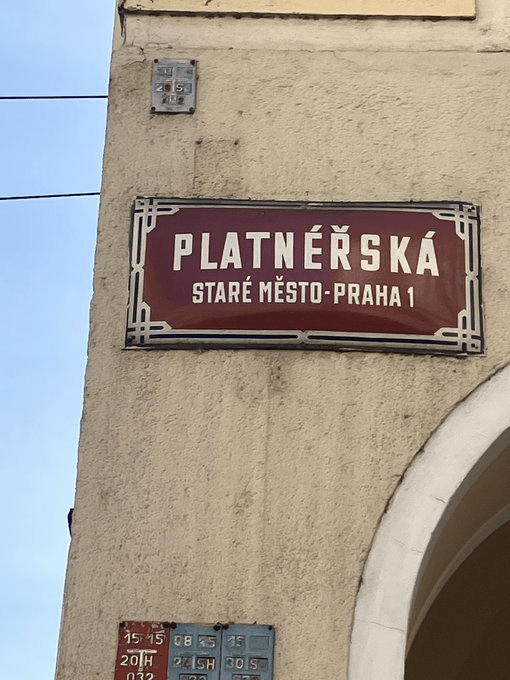
Originally, the street was called ‘Ostrožná’ or ‘Ostrožnická’, because an ‘ostroh’ is a spur, and spur-makers set up shop in this area.
A ‘plát’, meanwhile, is, yes, a plate, as in an iron or a steel one.
Therefore, a ‘platnéř’ would be a platemaker, but, rather than those plates having food put on them, they’d become components of a knight’s armour.
There’s a story that a knight came to the area, looking for someone to fix his armour; he met the daughter of one of the platemakers, and fell in love with her, but she rejected his advances.
He reacted by stabbing her; before dying, the girl said that, whatever happened, he would turn to stone and be stuck in this spot for a thousand years.
The (literally) petrified knight was turned into a statue, placed at the front of number 19.
The part of the story that is actually true is that number 19 was knocked down in the early 20th century, and the statue was moved to the City of Prague Museum.
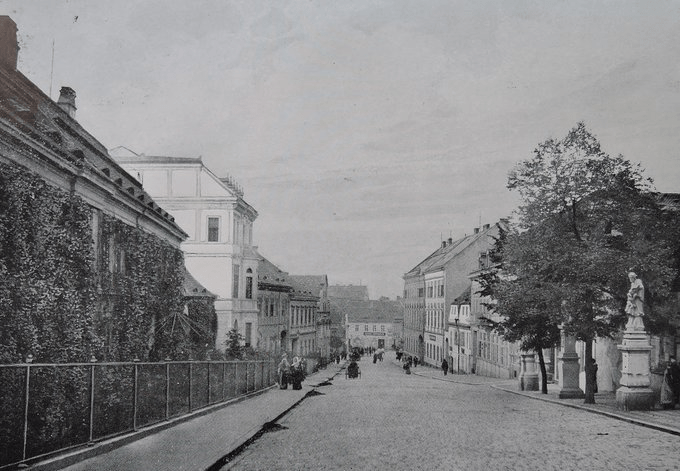
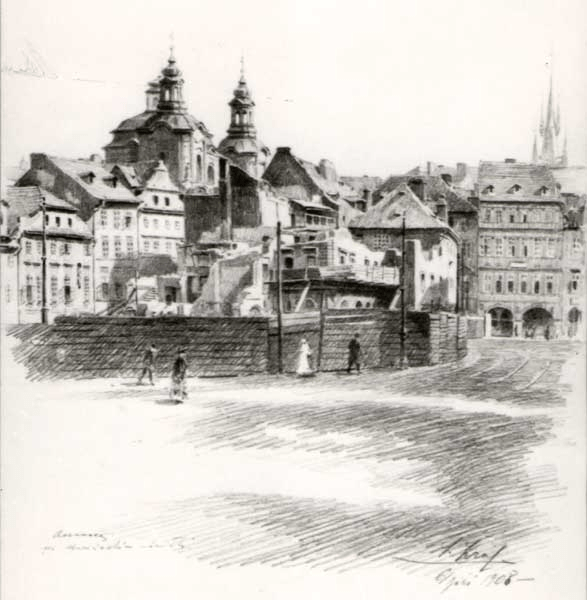
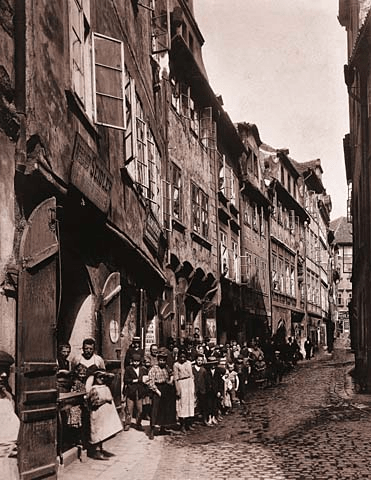
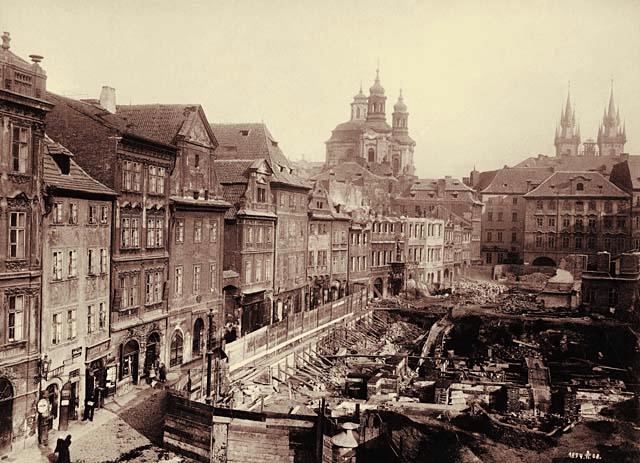
Here’s the street before a large chunk of its buildings were demolished – and also in 1908, during the process. Photos are from https://zastarouprahu.cz.
While number 12 in the street is the New City Hall (not to be confused with the New Town Hall – https://x.com/ed__ley/status/1650018266486636544…)… but I’m scheduled to talk about that on day 203, so I’ll shut up for now.
Ditto the Municipal Library.
And, as today is kind of an milestone: I think there are 87 streets left to write about in Prague 1, but this may have a margin of error.
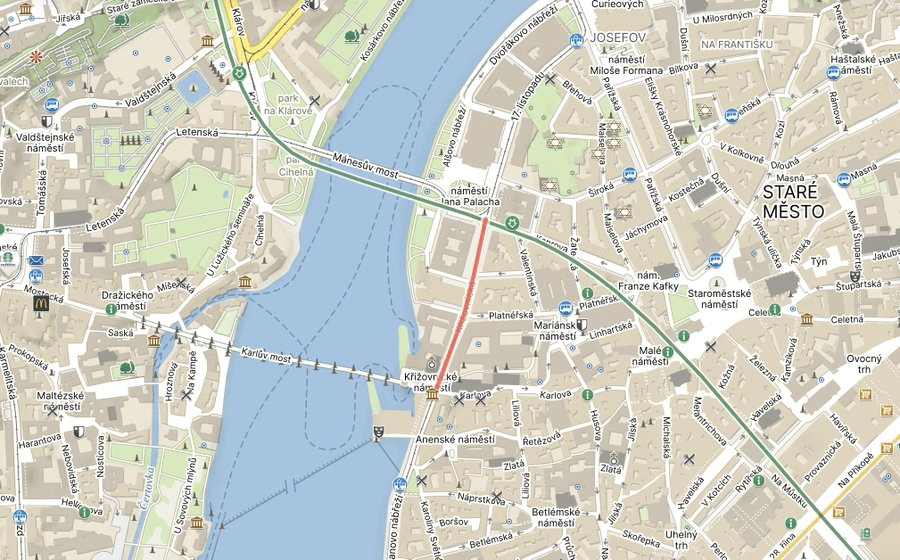
The part of the street to the north of these was once called Granátová – we don’t know exactly why, but it may be related to people (students?) using grenades to defend the Old Town, or to other grenadiers.
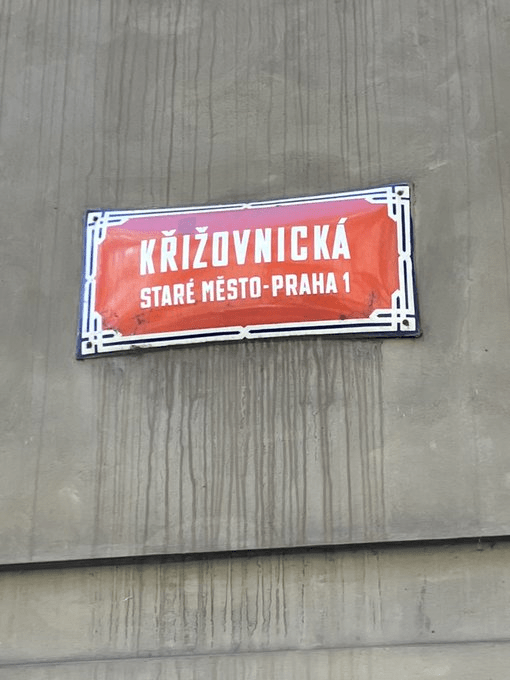
In the 19th century, it was known as Malá (Small) Křižovnická before becoming part of Křižovnická Proper in 1870.
The northern part is quite grand too – this is the Dance Conservatory of the Capital City of Prague (TKHMP).
While Dům Na Kocandě, the birthplace of academician Jaroslav Heyrovský (in 1890), also includes remnants of the Old Town fortifications in its basement, as discovered during works in 2016-7.
And I may have to book myself a night at the Four Seasons one summer, just so I can stop talking about taking pictures of Charles Bridge at 05:00 and actually go and do it.
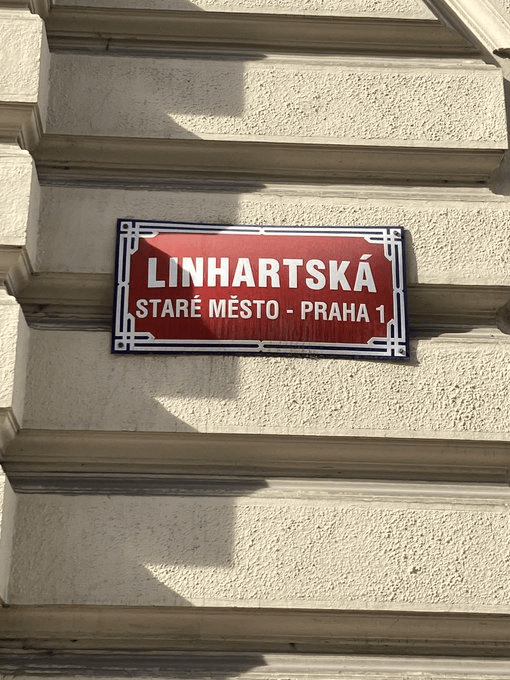
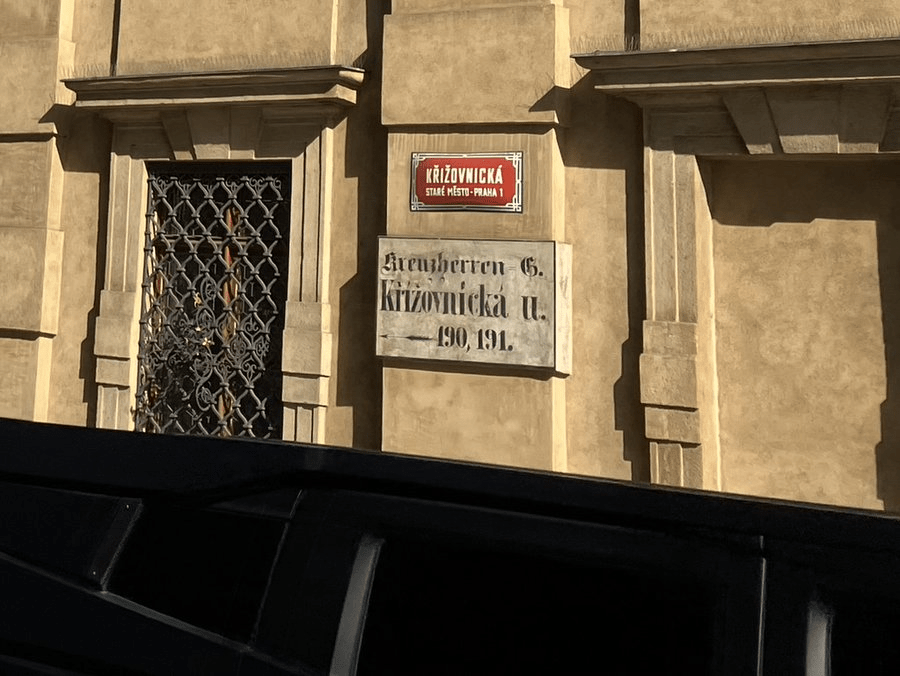
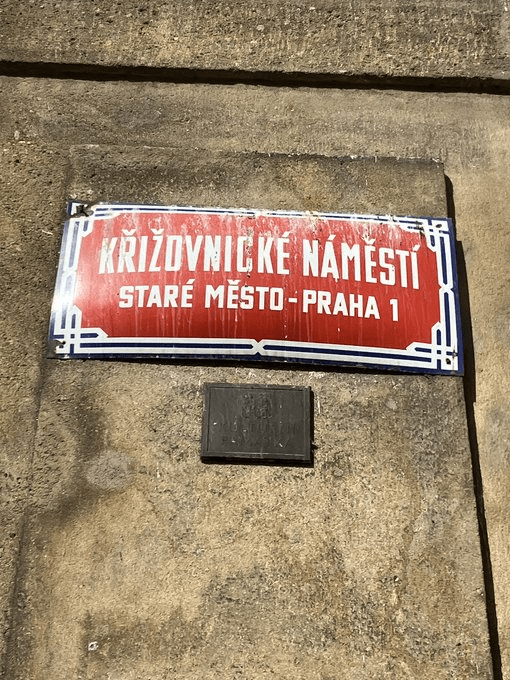
Finally, here’s a gift for fans of Ye Olde Street Signs.
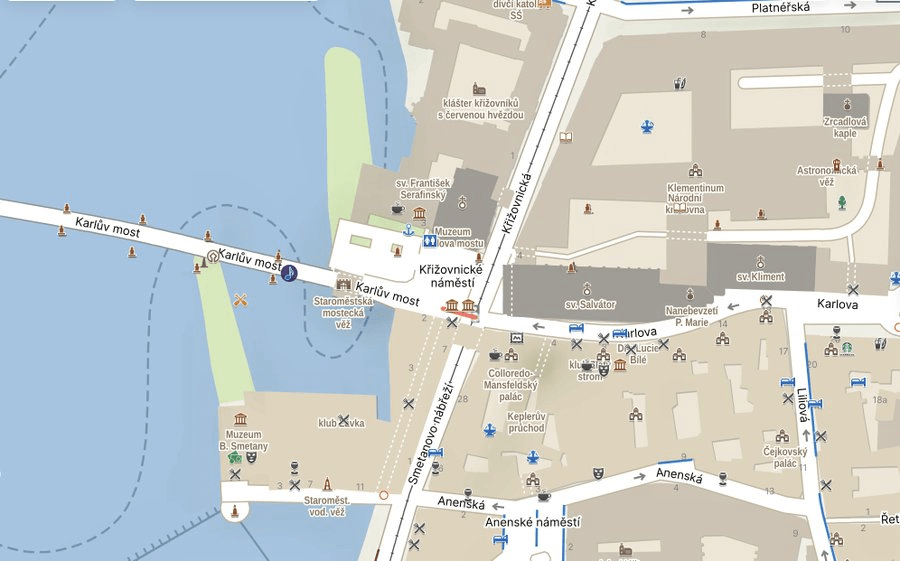
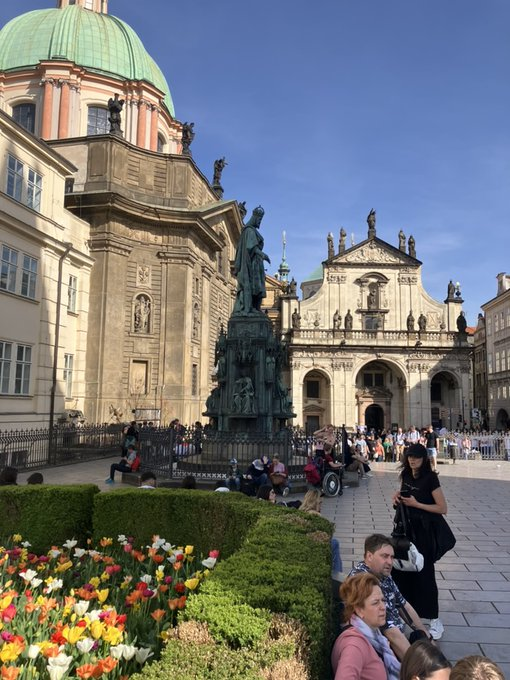
If you’ve got a vague memory of standing somewhere and thinking it must be the most crowded place in Prague, you may have been in this spot.
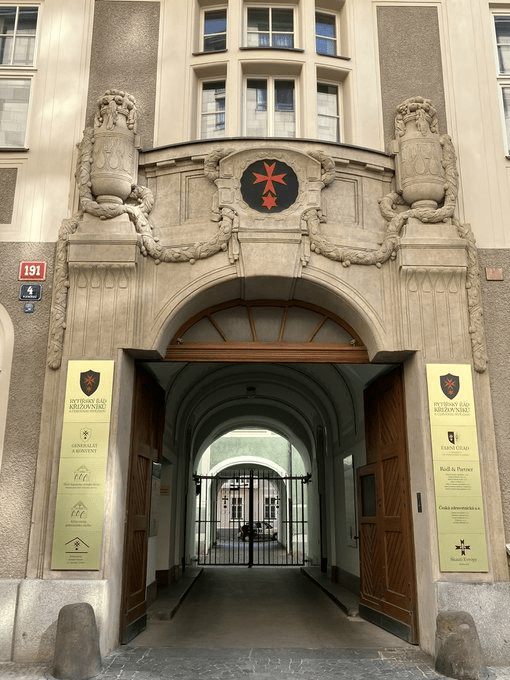
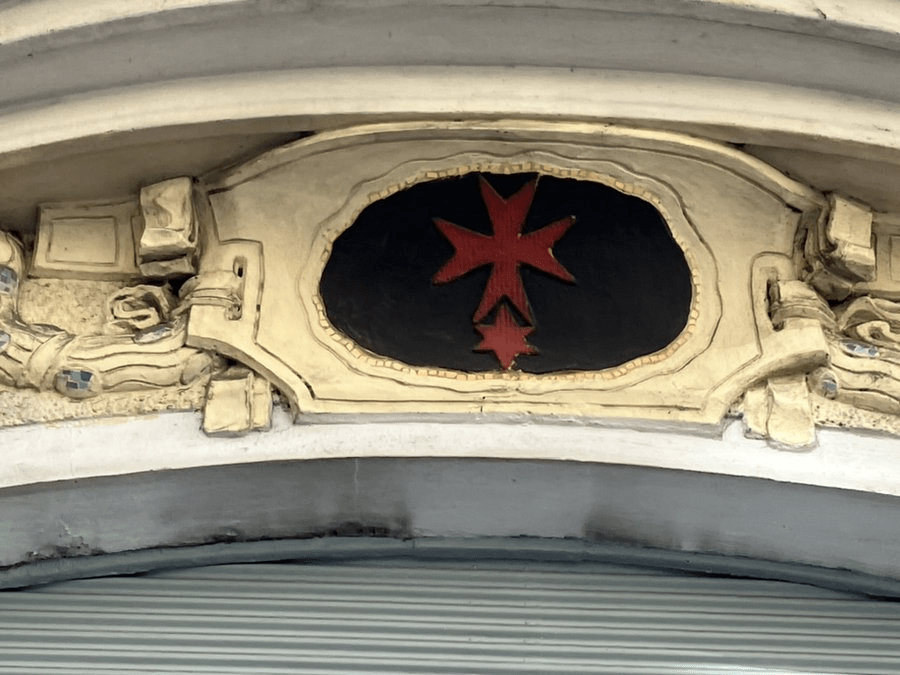
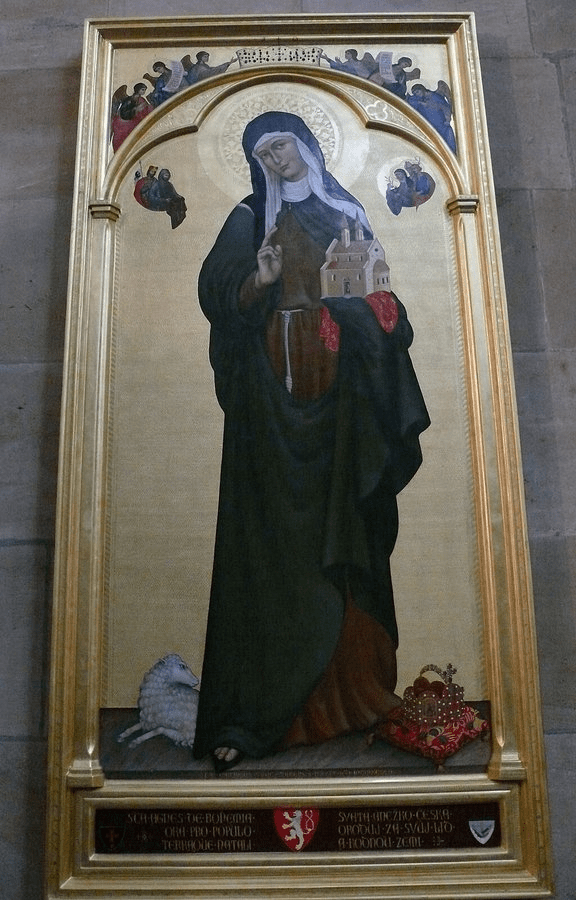
In 1233, the Knights of the Cross with the Red Star / Rytířský řád Křižovníků s červenou hvězdou – Bohemia’s only home-grown religious order, and the only religious order led by a woman (St Agnes, getting her own post soon) – was founded.
Four years later, they were formally constituted by Pope Gregory IX.
The foundation devoted itself to looking after pilgrims and the sick – so this very central location was ideal. And doesn’t ‘Crusader Square’ sound awesome?
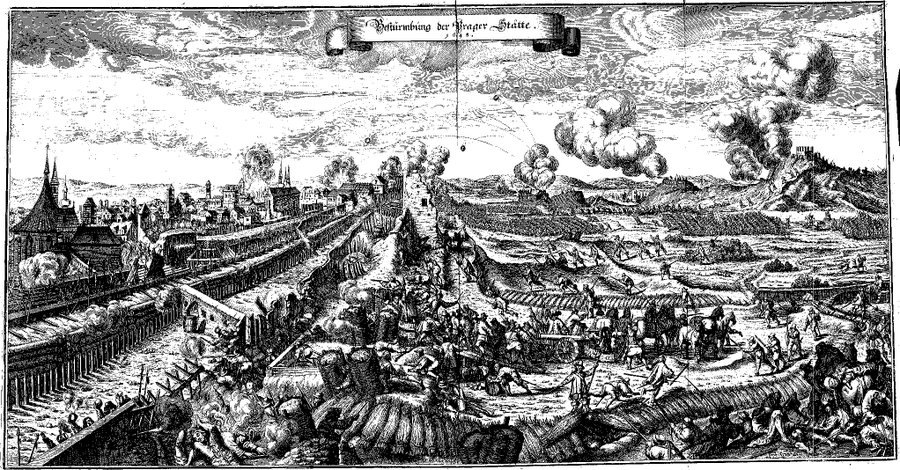
The monastery had to be rebuilt after a fire in 1378; it didn’t suffer so much in the Hussite Wars, but the Swedish siege of Prague at the end of the Thirty Years’ War (in 1648) was a different story.
The area didn’t get reconstructed until 1664; the Baroque reconstruction of the monastery church got going in 1679.
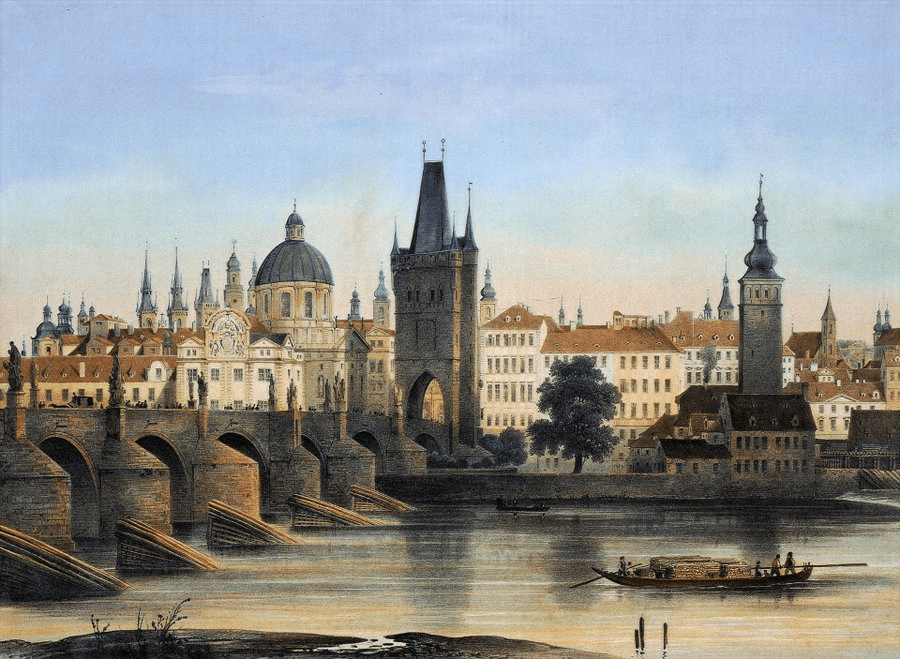
This painting by Franz Josef Sandmann is from 1840.
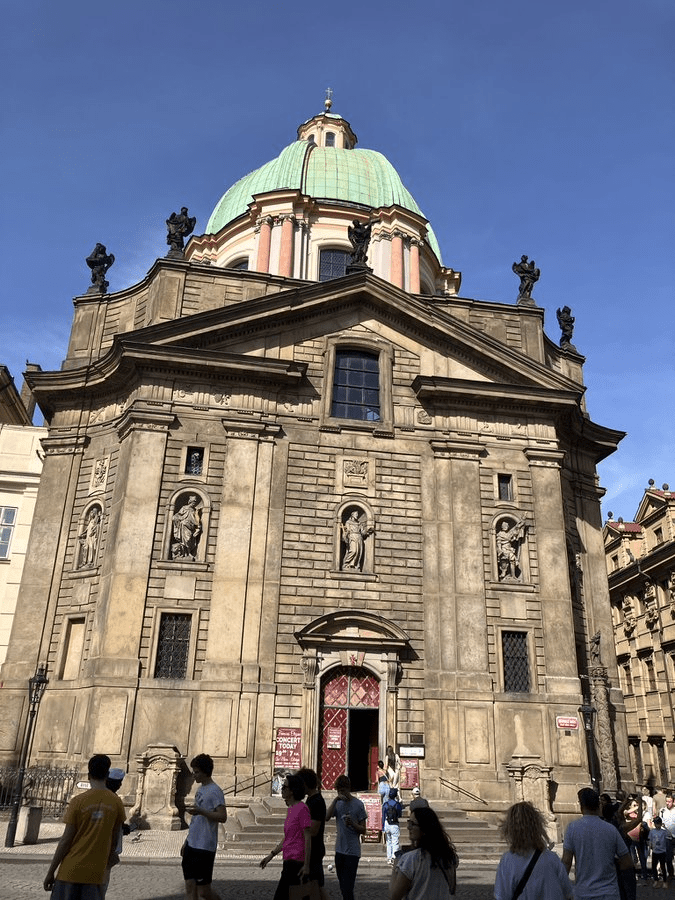
Further construction (1908-12) was even further-reaching: many of the early monastery buildings were disposed of entirely, with the church of St. Francis of Assisi being one of the few survivors.
The order itself stayed in the monastery until 1942, when the Nazis forced them out; they returned after the Prague Uprising in May 1945, but only lasted there for five years before the communist regime, as part of Action K, forced them out again.
The premises were then used by the Czechoslovak Ministry of Health. The order was allowed to return in 1990.
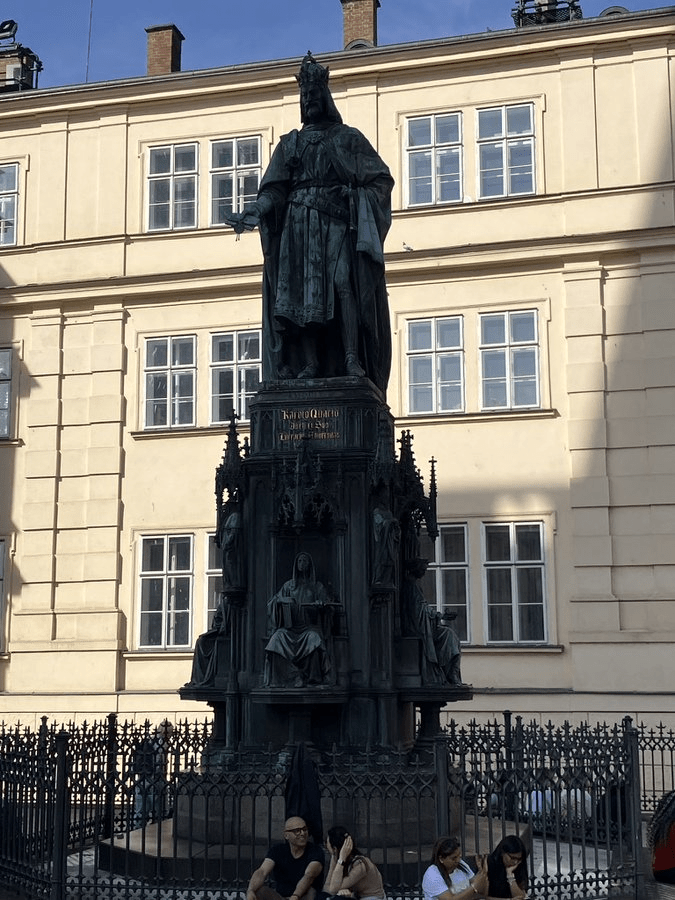
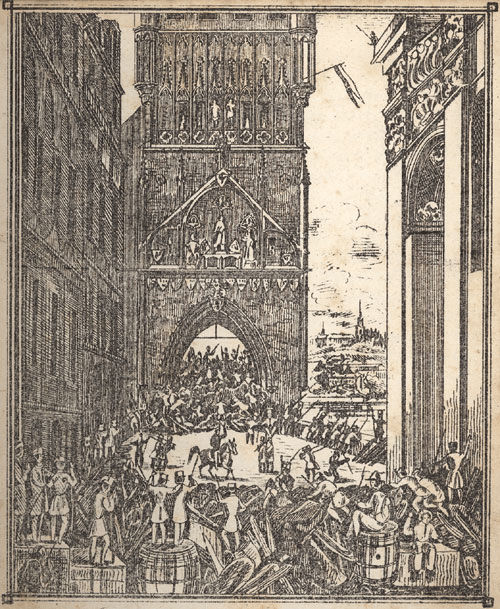
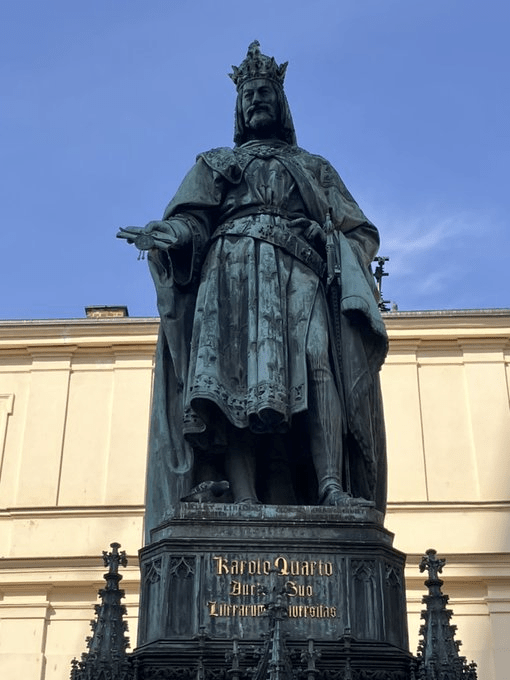
It was unveiled in 1851 – the intended unveiling on the 500th anniversary of the founding of Charles University, i.e. in 1848, became unfeasible due to all the revolutionary stuff going on in that year.
He’s holding the University’s charter in his hand.
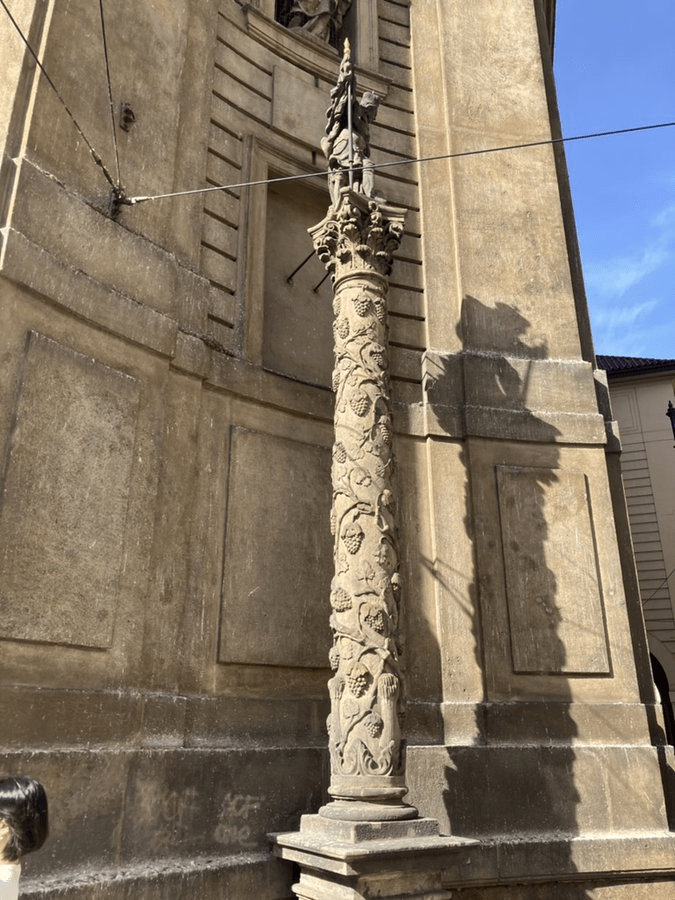
Also in front of the church, there’s the Wine Column, consecrated in 1676, because, apparently, St Wenceslas is the patron saint of winemakers; the Prague Vineyard Office (which ‘supervised winemakers and bartenders’) operated just by the tower until 1783.
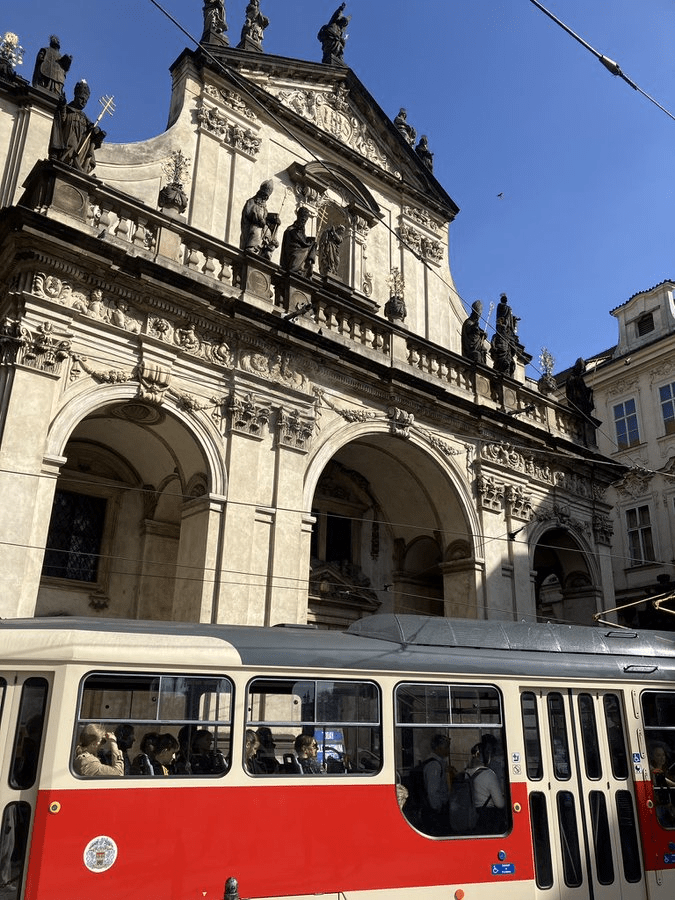
Turn away from the bridge, and you’ve got St Salvator’s Church, discussed in the Karlova thread (and pictured here with tram).
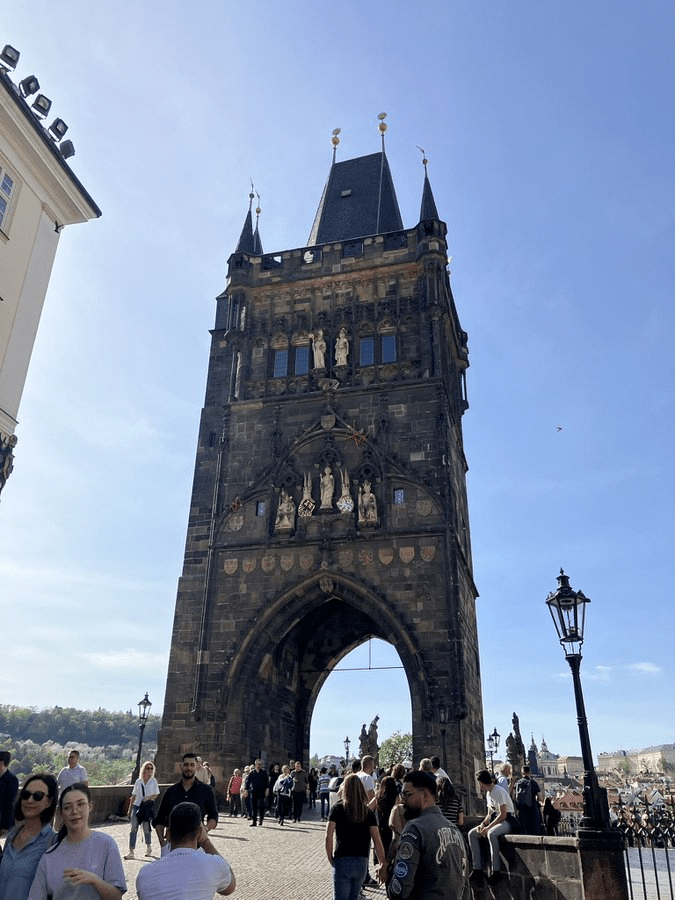
Turn back towards their bridge, and you’ve got the Old Town Bridge Tower. It’s been repaired several times over the centuries – some repairs have been more thoughtful than others – and a comprehensive survey is being carried out with a view to the next one.
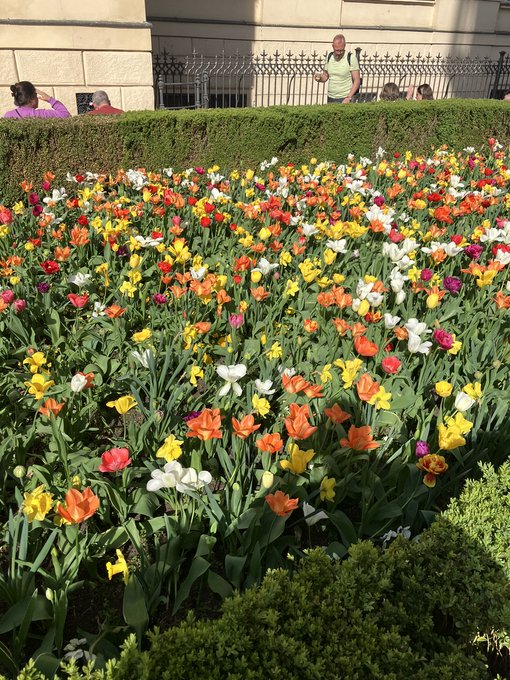
Please consider these two photos to be a special mention for spring.
And, crowded as the square can be, you can still move a little to the right and get photos like this, even on a Saturday afternoon. I’m so incredibly lucky to live here.