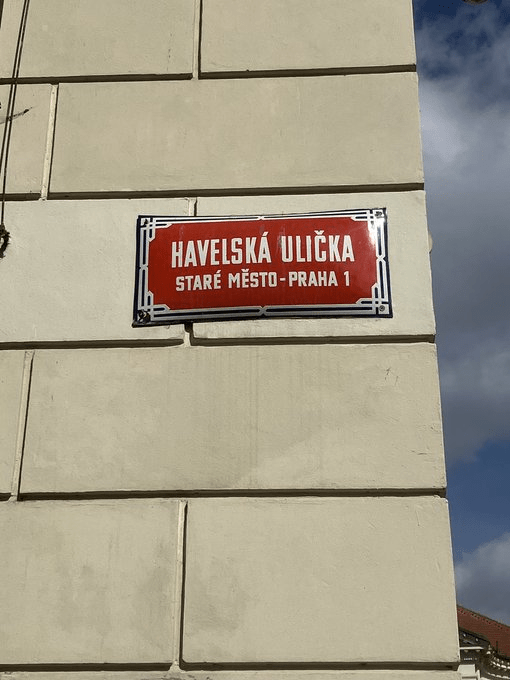
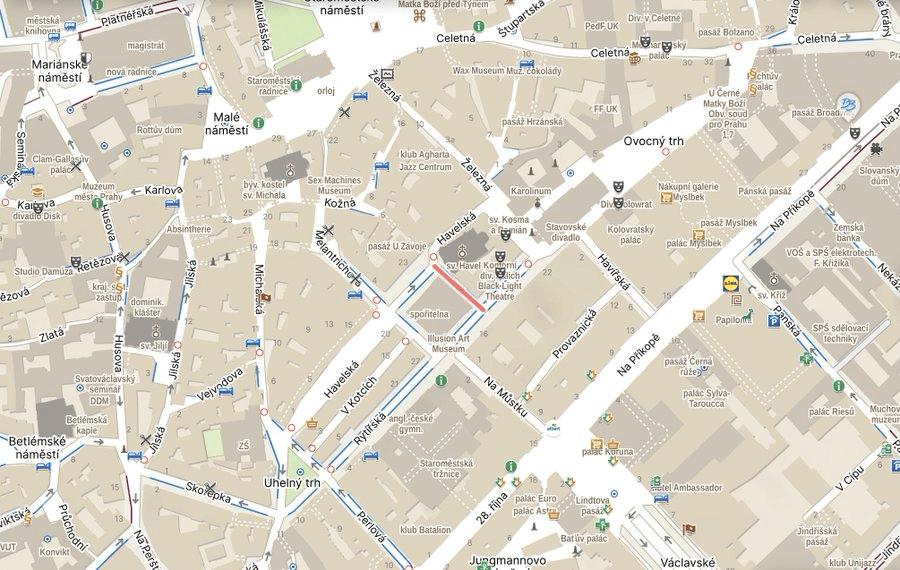
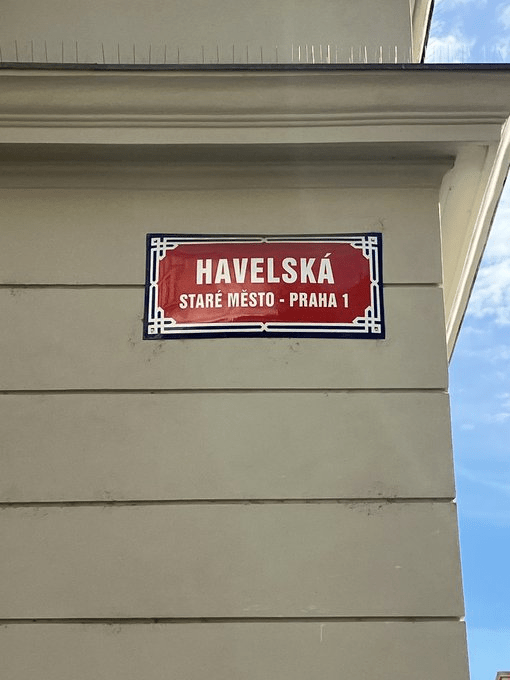
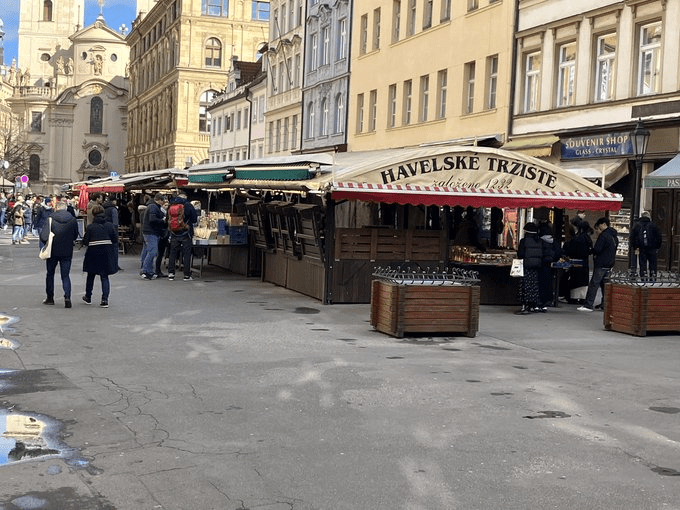
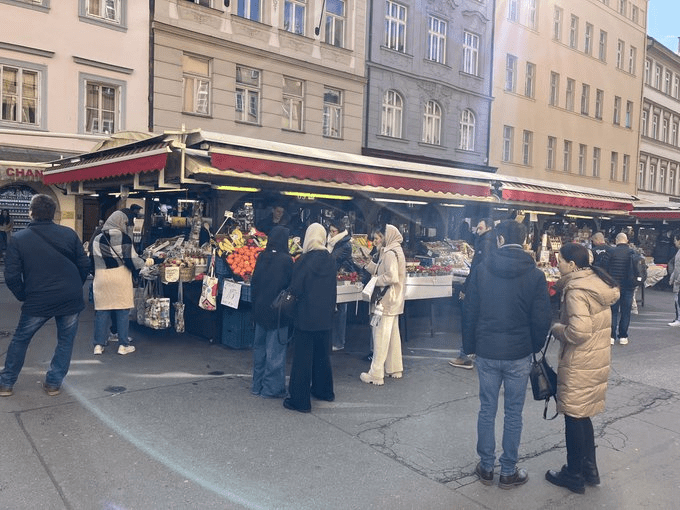
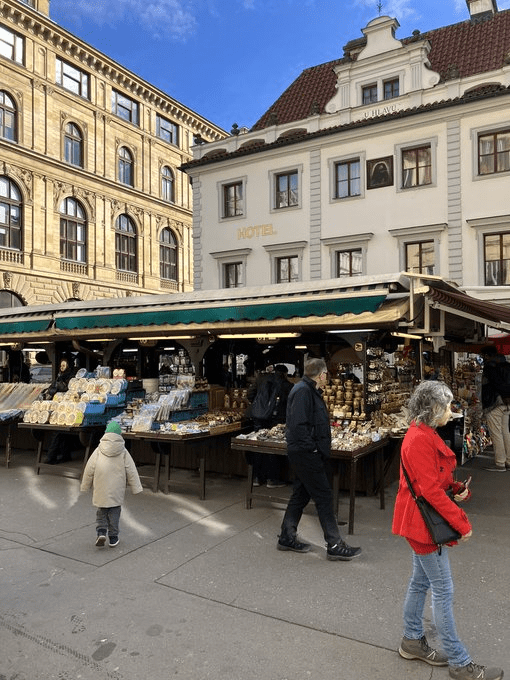
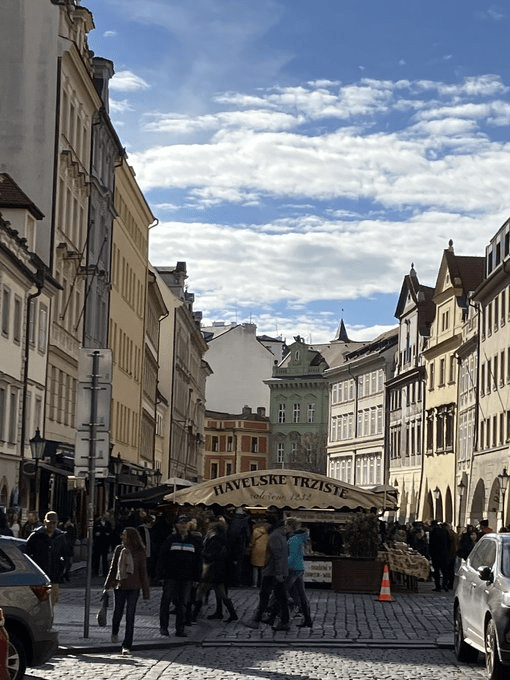
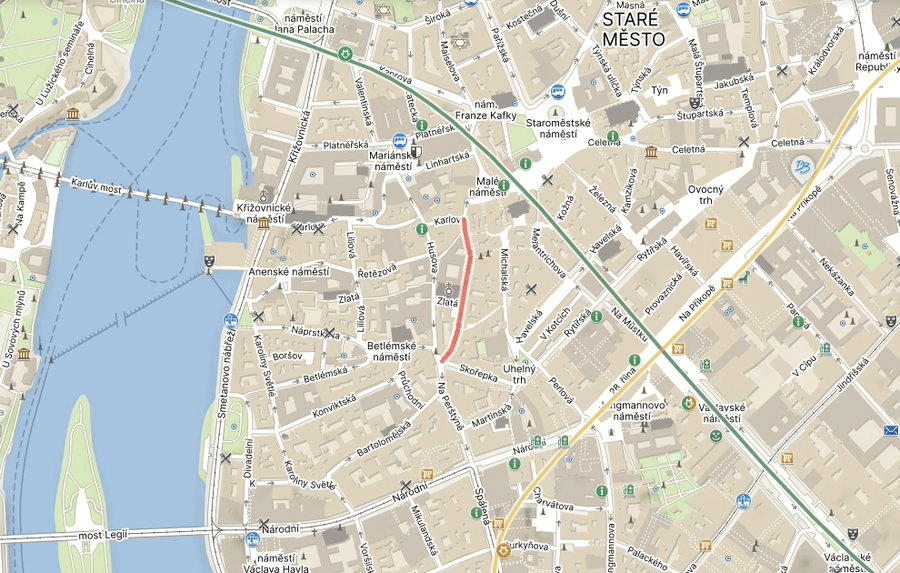
Until the 1700s, Havelská ulička was nameless, and was part of the surrounding market. There was also quite a gap between people using the current name and its becoming official (that happened in 1906).
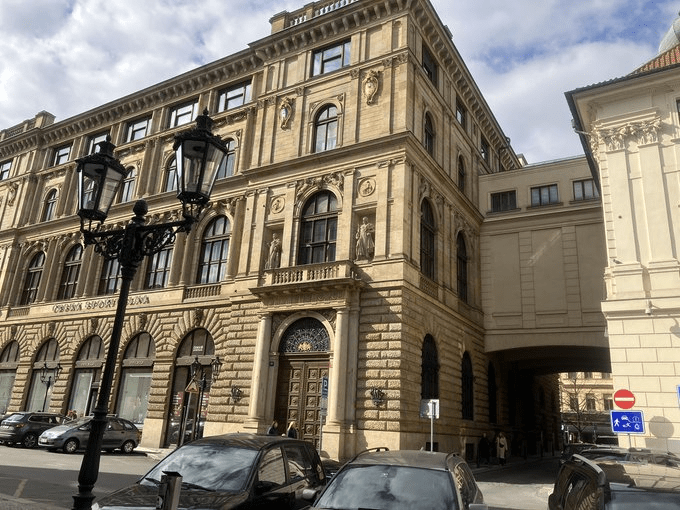
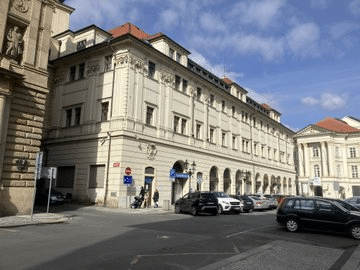
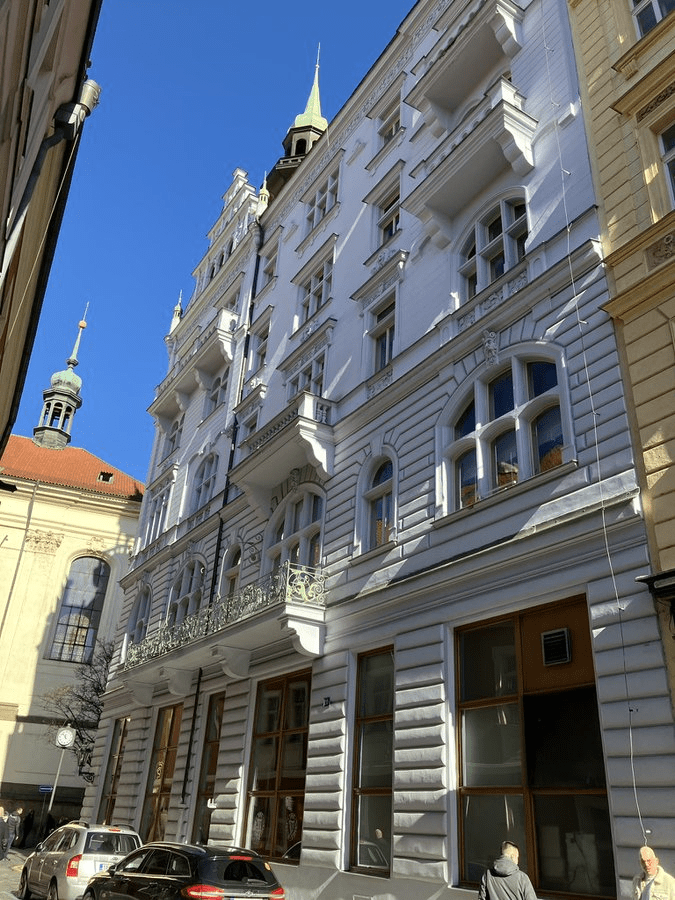
One of these buildings is the former Carmelite monastery. The other – the Municipal Savings Bank – was built in Neo-Renaissance style between 1892 and 1894 by, like so much other great buildings in Prague, Antonín Wiehl and Osvald Polívka.
From 1954 to 1989, the building hosted the Klement Gottwald Museum, presumably a worse place to take your child, or anyone, than that Willy Wonka Experience thing that was half of my feed a few weeks back.
If you’re not watching this and thinking ‘1979? Seriously?’ every three seconds, we need to have a word.
In modern Czech, a ‘kotec’ is a hutch, as in a cage for keeping a rabbit or another small animal.
In modern Serbian/Croatian/Bosnian, a ‘katec’ is a pigsty – literally or figuratively – and, in Albanian, ‘katec’ can mean both these things, but also a grain basket.
The ‘kotce’ were located in a 200-metre long corridor in the middle of the market.
In 1739, the Municipality of Prague inaugurated a theatre in the corridor and called it Divadlo v Kotcích, or, in German (the main language of its repertoire), Theater an der Kotzen.
Which is mildly amusing if you know that ‘kotzen’ is also German for ‘to puke’.
The theatre was the first stone theatre in Prague (which was just as well, given the wooden ones had a habit of burning down).
As well as its German repertoire, many Italian-language operas were also performed.
The number of Czech pieces ever performed here? One.
The theatre existed until 1793, when the grander Stavovské divadlo / Estates Theatre was opened nearby (so nearby that it’s coming up in three posts’ time).
The ‘corridor’ which the theatre had been housed in was demolished shortly afterwards, in 1795, and the street would come into being early in the next century.
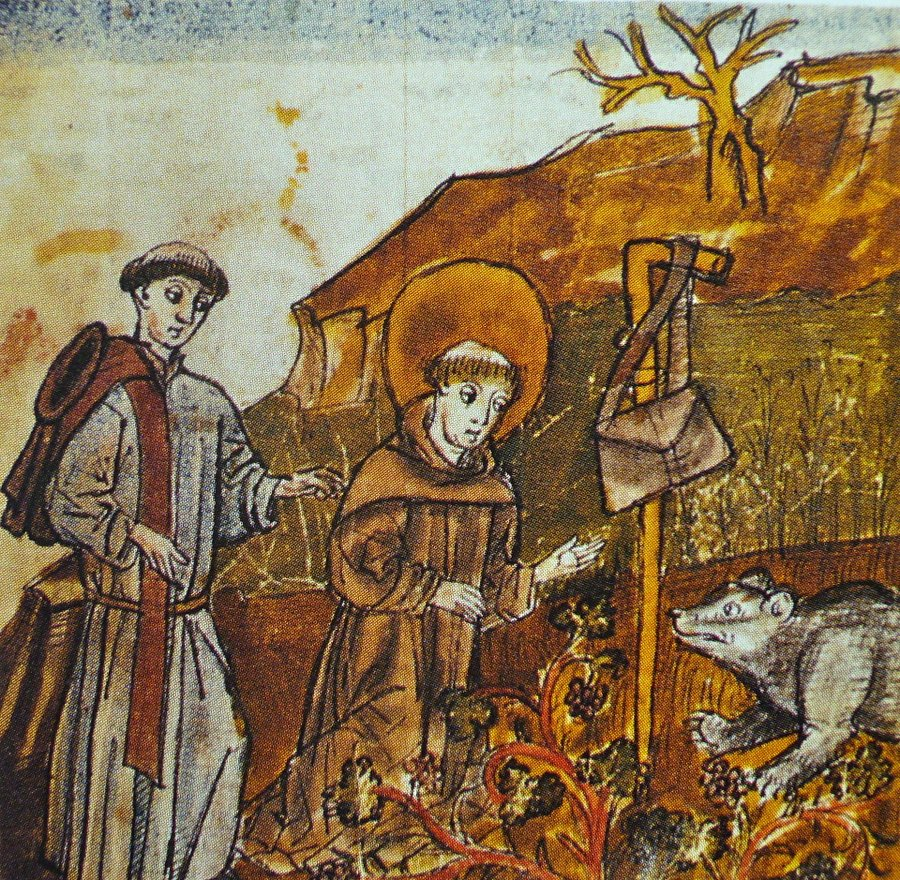
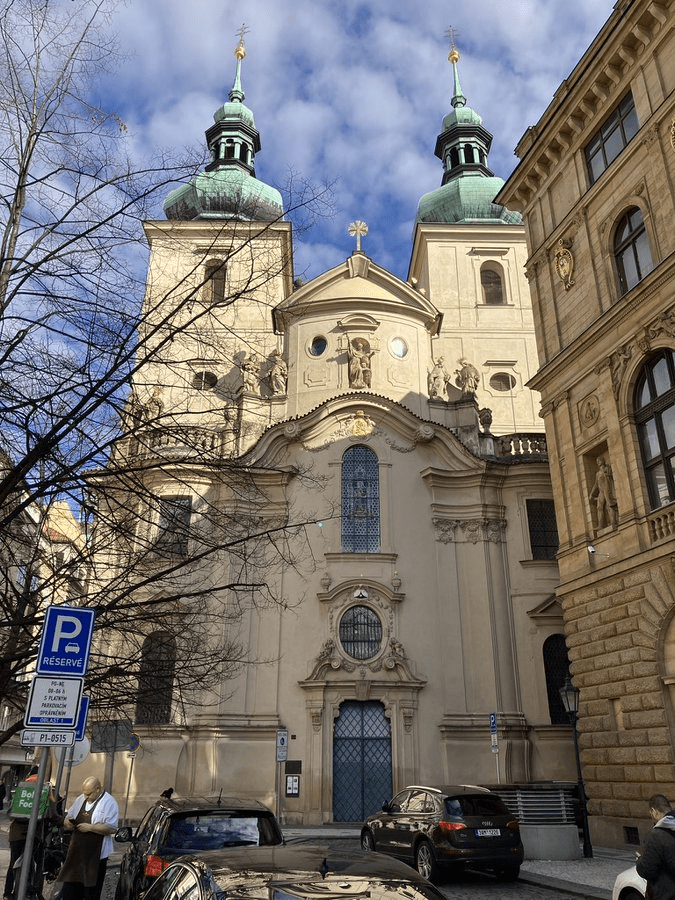
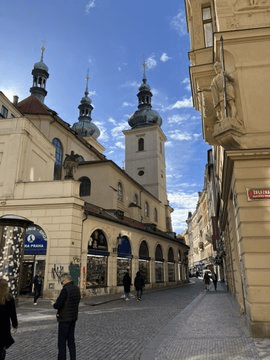
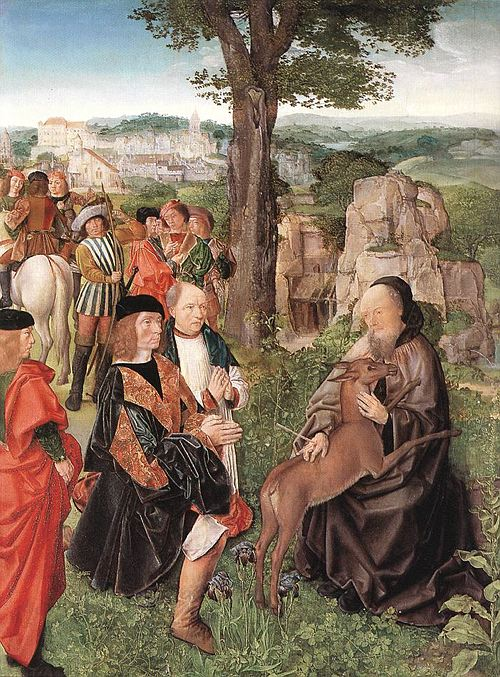
Nothing to do with the Havel you’re probably all thinking of – Svatý Havel is St Gall.
According to his biographers, Gall was born in Ireland around 550, and studied at the abbey in Bangor (County Down, Northern Ireland, not Wales), becoming a disciple of St Columban.
In 610, Columban, Gall and others went to Alamannia, a kingdom entered around Lake Constance, on a mission. Columban moved on to Switzerland, but, due to illness, Gall stayed, and lived as a hermit.
In 625, Gall founded a monastery in what is now called St Gallen.
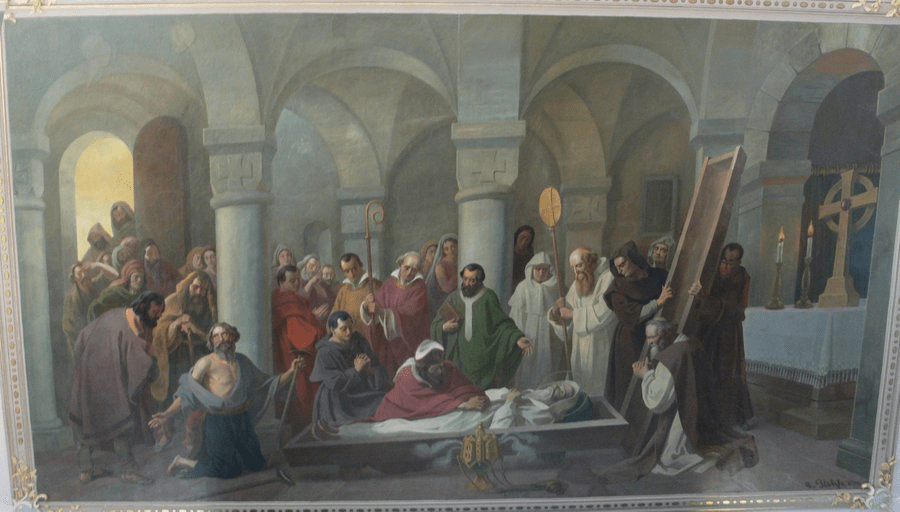
He died around 645, when almost a hundred years old.
He’s the patron saint of birds, geese, poultry, and – yes – Switzerland. You may also recognise his name from Via San Gallo and Porto San Gallo in Florence.
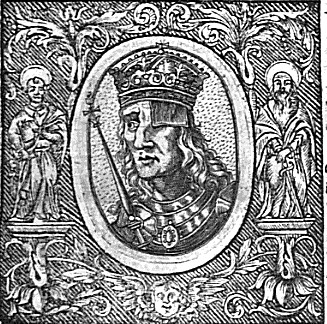
In 1230, Václav I / Wenceslas I (the ‘One-Eyed’ / Jednooký) was crowned King of Bohemia.
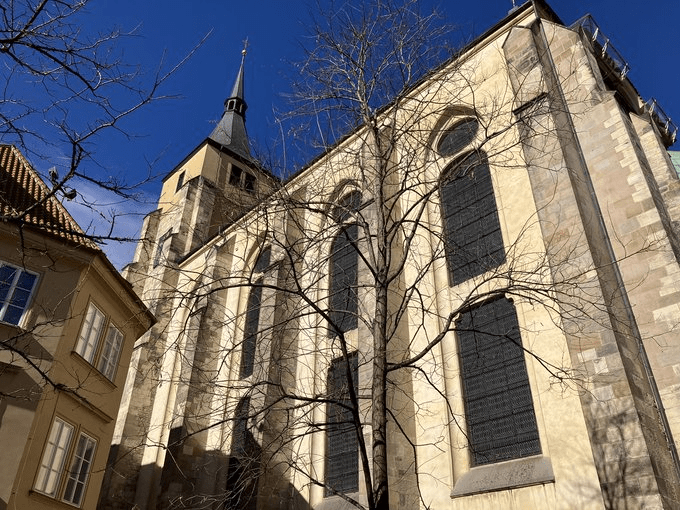
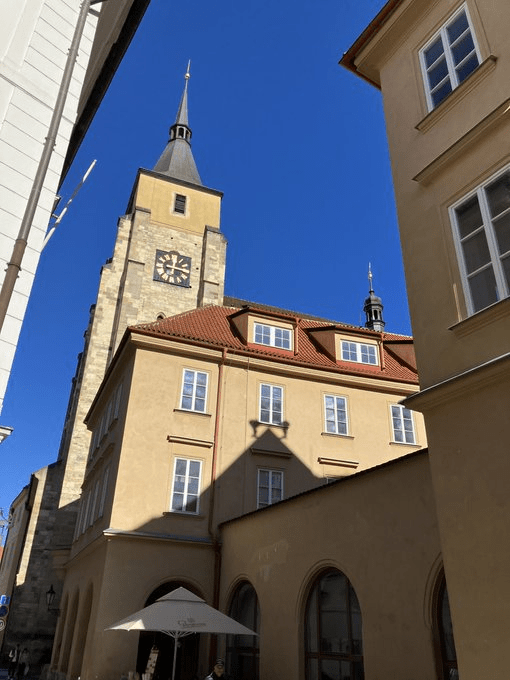
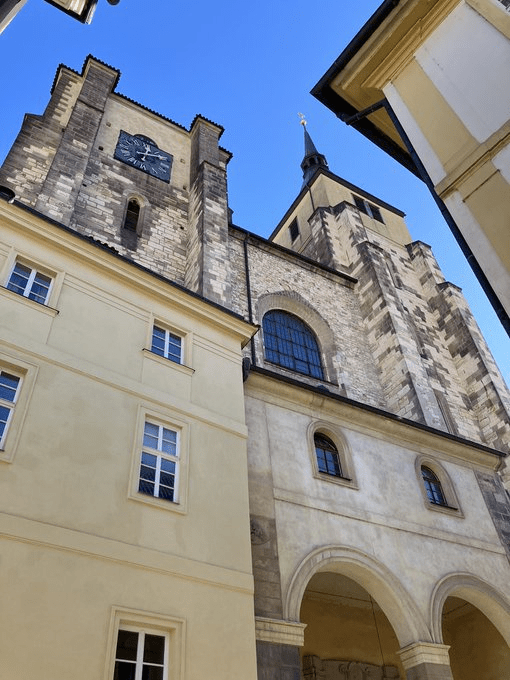
Shortly after this, Havelské město (German: Gallusstadt) was founded, and construction started on a church devoted to St Gall (it would be completed in 1263).
Havelské město was mainly populated by migrants from German cities – especially Regensburg, and, while it was located within Prague’s Old Town, it had a separate legal and administrative system.
Its centre was the Nové tržiště / New Marketplace, which is still there.
Originally built in the Romanesque style, the church was done over in Gothic style in the 1300s.
In 1353, Charles IV managed to get the Benedictine monks of St Gallen to hand over St Gall’s (supposed) skull.
Over the centuries, as more and more buildings were created, Havelské město was incorporated into the Old Town. Meanwhile, the church – another one which Jan Hus had preached in at one point – was given to the Carmelites (https://whatsinapraguestreetname.com/2024/09/08/prague-1-day-39-karmelitska/) in 1627.
In the 1660s, they built a monastery, and later had the church reconstructed. The monastery was dissolved in 1786, but the church kept going.
The monastery, meanwhile, having been a lace factory, the Institute of History of the Communist Party of Czechoslovakia, and a not-entirely-welcome Soviet cultural centre, is now partially a theatre and partially used by UNICEF.
Jan Hlavsa was born at some point in the 1400s. I have no idea when, but I’m going to estimate that it wasn’t later than 1470, and not earlier than 1440, because we do know that he was a scribe of the land registers from 1497 to 1499.
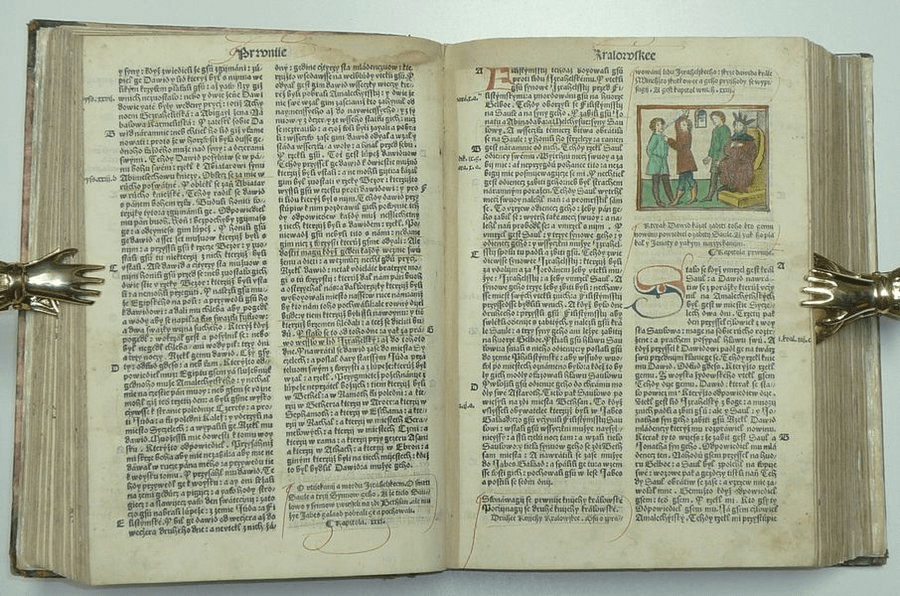
In 1506, he, along with two other citizens, published the Bible benátská / Venice Bible, the first Czech-language version of the Bible to be published abroad, and the third overall.
In 1515, he gained a coat of arms and became known as Jan Hlavsa z Liboslavi. He also became a member of the Old Town council (various websites say he was mayor, but I don’t think the Old Town had any mayors until 1537, which was three years after Hlavsa died).
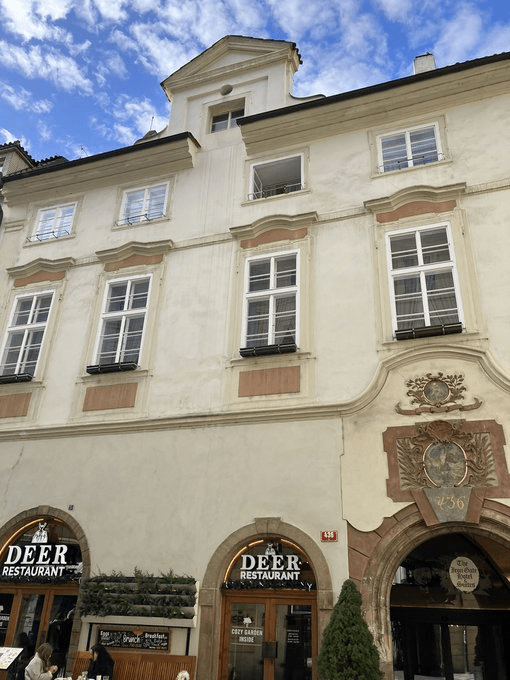
Hlavsa also owned a local house, U železných dveří (The Iron Doors), number 19 on Michalská.
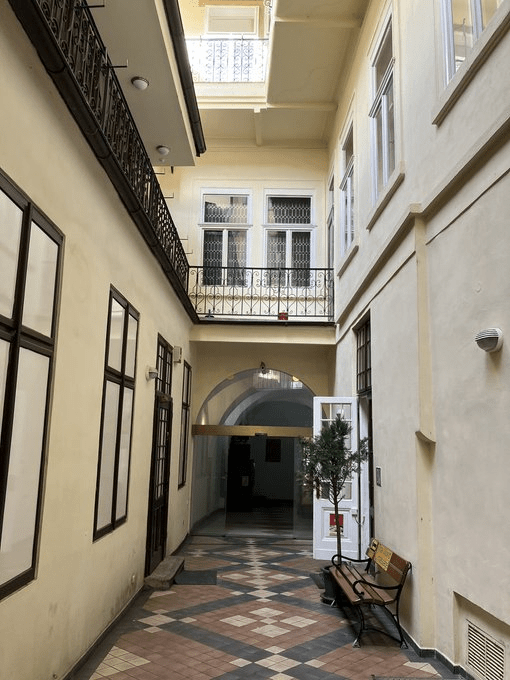
It’s interesting that Hlavsova has street status, or a name, at all (this happened in 1918) – it’s really just a passage way through this building, connecting Michalská with Jilská.
After the Battle of Bílá Hora, the church ended up in Catholic hands, and gained a monastery.
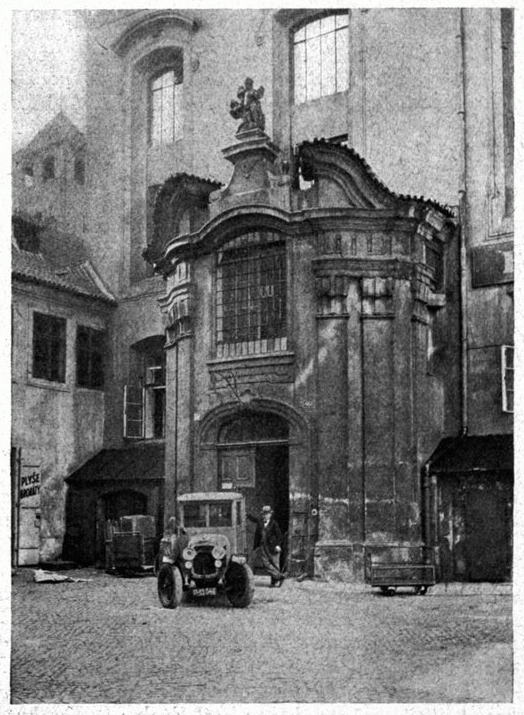
However, both would be closed down in 1786, and the church was turned into a factory (the pic is from 1933, when it was a warehouse for a paper company).
I just had a very, very vague déjà vu of winding up here around 03:00 on a night out in… 2009? 2010? and wondering if I was so drunk that I was imagining that I was in a nightclub that looked like a church.
I’d completely forgotten about that until writing this thread.
Also, in the 1990s, the church hosted ‘St Michael’s Mystery’, a frankly terrifying-sounding ‘Las Vegas-style show which tried to bring tourists closer to the main moments of Czech history’.
I can’t find any footage of this, which is probably a good thing.
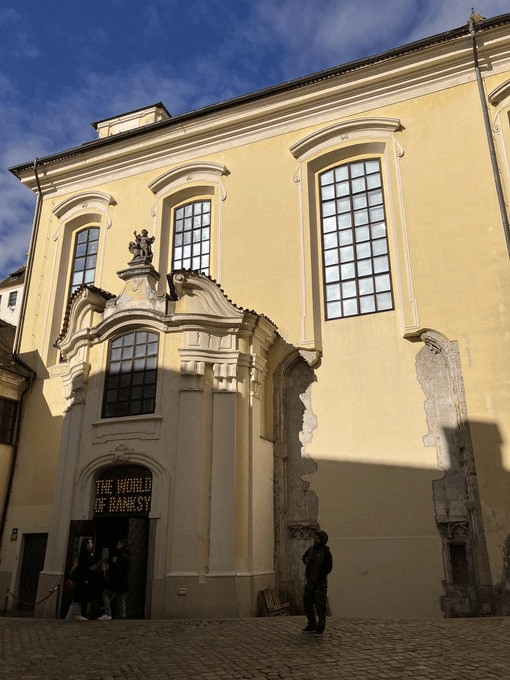
The former monastery building now hosts a Banksy exhibition.
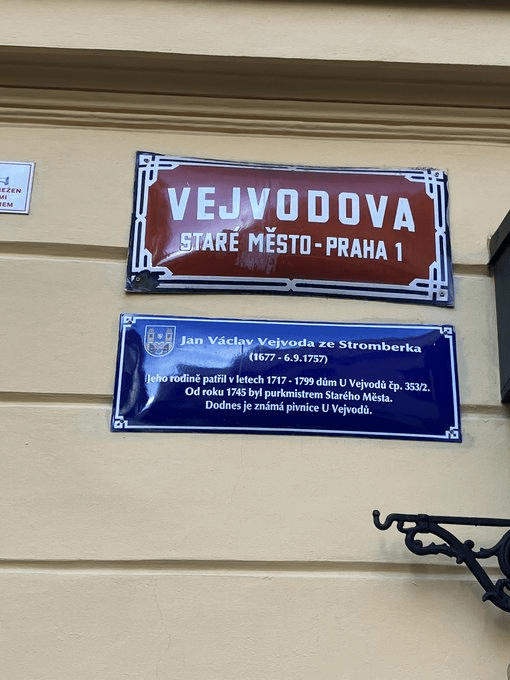
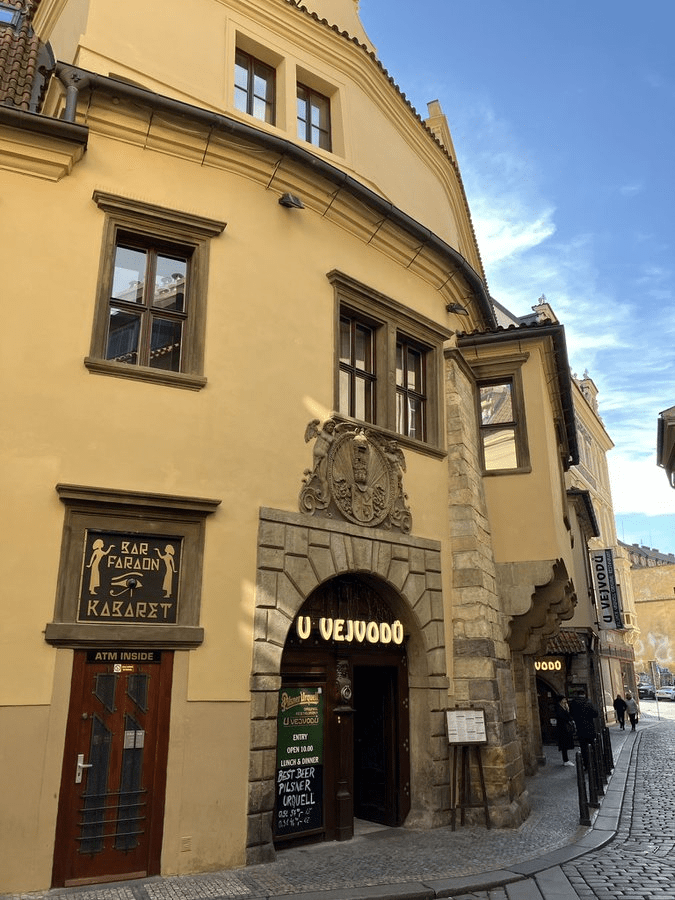
Jan Václav Vejvoda was born around 1677. I’m not sure about his early life, but, by 1701, he was already working in the Old Town’s municipal administration.
After various roles (including a scribe, a supreme warden, a member of the city council, and, erm, ‘director of the fish office’), he was ultimately appointed as the mayor of the Old Town in 1745.
A year later, Maria Theresa, presumably wanting to do something that wasn’t the War of the Austrian Succession, ennobled Vejvoda, who called himself Jan Václav Vejvoda ze Stromberka after that.
Vejvoda was the 35th mayor of the Old Town – and there would only be one after him, because, in 1784, it, the New Town, Hradčany and Malá Strana would be merged into one municipality, with one mayor.
Number 36, however, would certainly make the most of the role – Jan Václav Blažej Friedrich z Friedenberka was mayor for 26 years.
This week, more than ever, Bohuslav Svoboda should not be taking this as a hint.
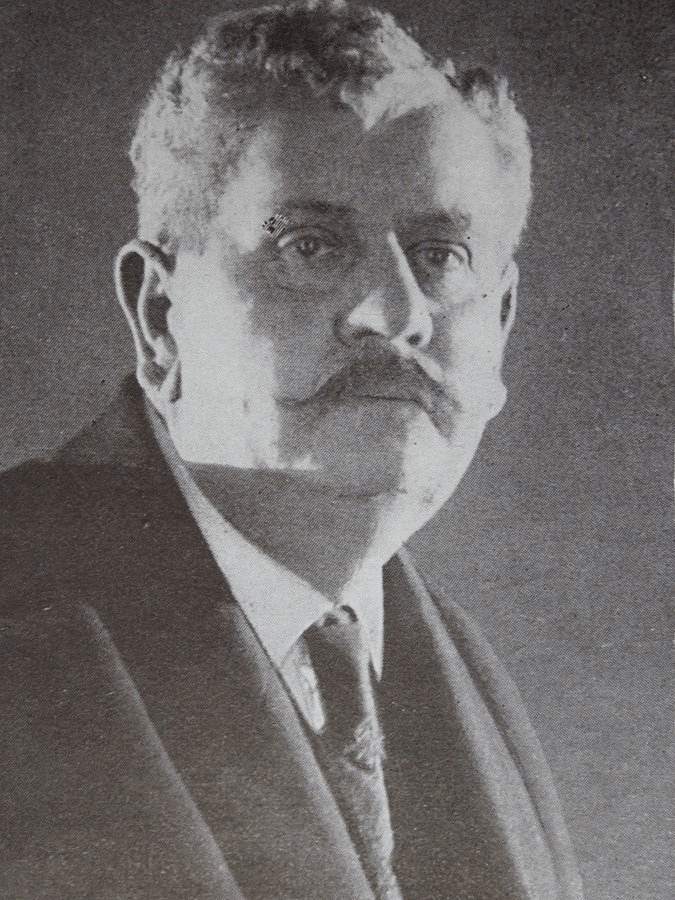
I know I’m Kating, sorry, stating the obvious when I say that it’s foolish to get people on Twitter into conspiracy theory mode, but it’s interesting that Googling Jan Václav Vejvoda brings up not a single image of the man.
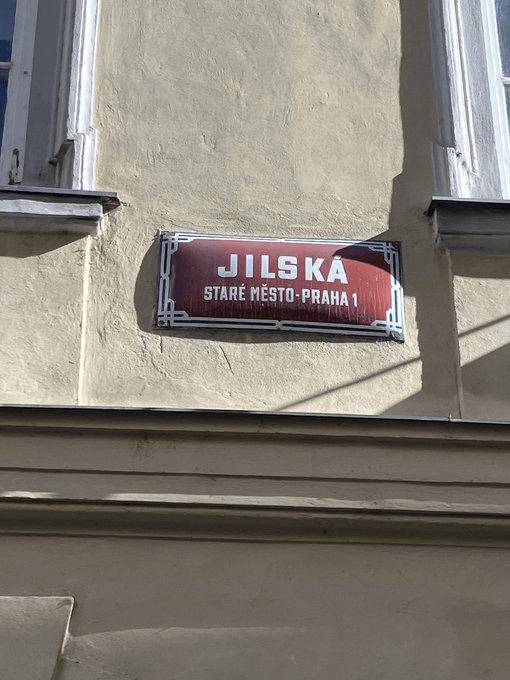
‘Jiljí’ is the Czech version of ‘Aegidius’. This is a name that’s changed more than many others when entering other languages – in English, we know it as ‘Giles’.
Saint Giles, meanwhile, was born in Athens and is said to have founded the Abbey of Saint-Gilles in the south of France in the 7th century.
He’s the patron saint of people with disabilities, as well as Edinburgh, Graz and Nuremberg.
Back in Prague, a Romanesque church in this area existed at least as far back as 1238.
It underwent reconstruction in the 14th century, and was consecrated in 1371, in the presence of then-current monarch Charles IV, and the future Wenceslas IV.
In 1432, lightning caused a fire which destroyed the church’s roof and melted the church bells. They were reconstructed in 1437 – one of them, also called Jiljí, is the oldest church bell in Prague.
In the decidedly post-Hussite times of 1625, the church was handed over to the Dominicans, who had a monastery built where there had once been a graveyard.
You may have seen the inside of the church without realising it:
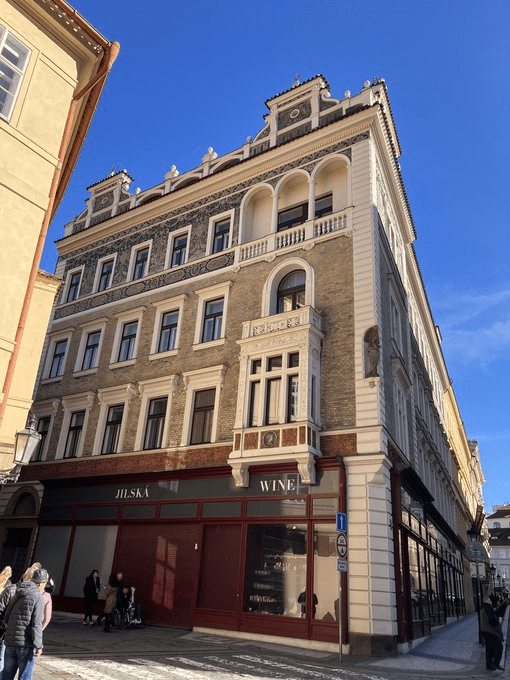
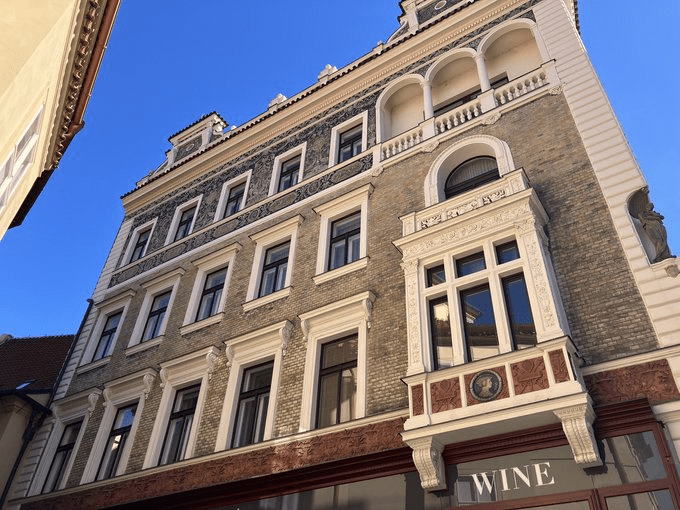
Other highlights of Jilská include Dům U Mladých Goliášů, built by Antonín Wiehl and with distinctive sgraffito designs by Mikoláš Aleš.
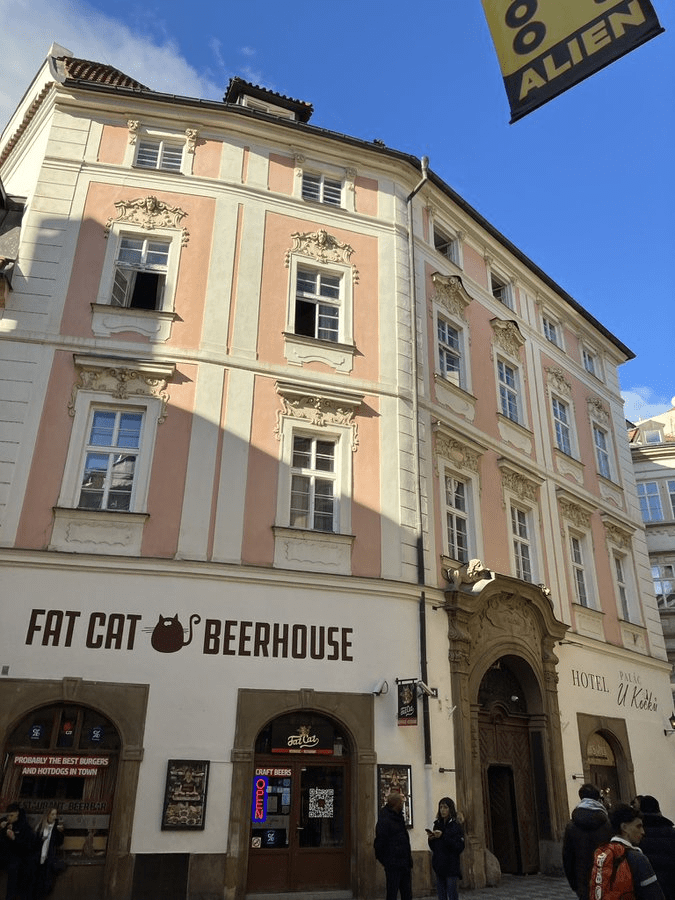
While Dům U Kočků has the preserved torso of a Romanesque house, but is named after a Mr and Mrs Koček, who bought it in 1927.
A ‘jalovec’ is a juniper. Junipers are quite popular in the Czech Republic as ornamental trees.
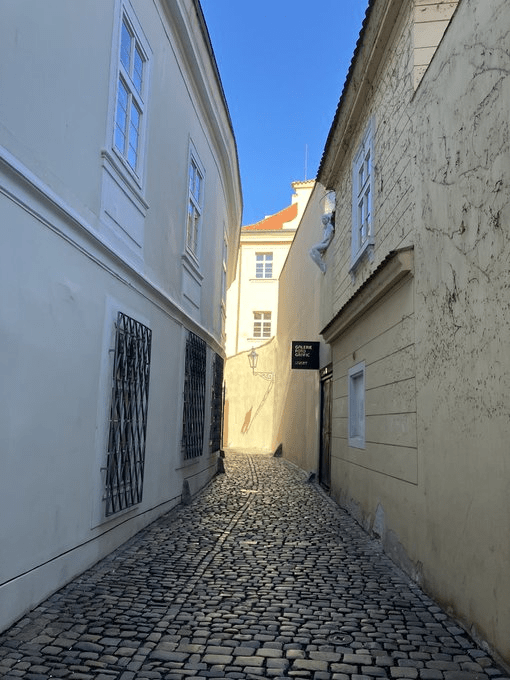
Number 3 on the street (pictured) is called U Jalovcového stromu (The Juniper Tree). The street then got its name from that; the photo also makes it clear that Jalovcová is pretty short, and unlike its neighbours, not crowded.
Things the street is not named after include Jalovec, the sixth-highest mountain in Slovenia, Jalovec, a village in Slovakia, and Jalovec, an… other village in Slovakia.
Juniper berries are ‘jalovcové bobule’ or ‘jalovčinky’, whereas ‘jalovcová’, the feminine adjective, can also refer to juniper brandy.
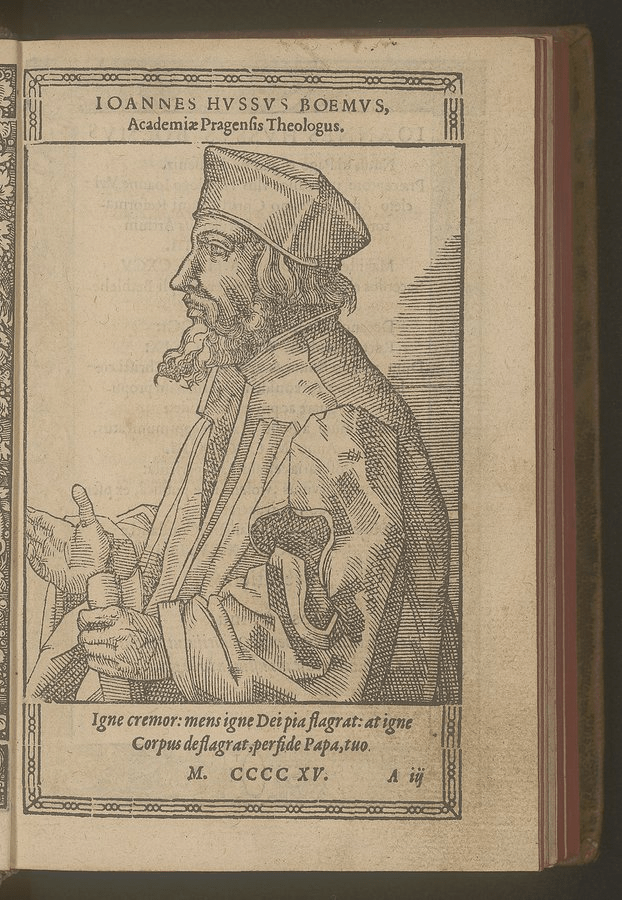
By 1398, Hus was teaching at the University, and also started studying at the Theological Faculty in the same year. In 1401, he was elected dean of the Faculty of Arts for a semester.
In the meantime (in 1400), Hus had been ordained as a priest, and started preaching at St Michael’s Church (coming up in four days).
Advocating reform of the clergy, which he saw as immoral, sacrilegious, and rich when it was supposed to be poor, Hus initially had the support of the Archbishop of Prague, Zbyněk Zajíc z Hazmburka.
Since its inception, Charles University assigned all students to one of four ‘student nations’: Bohemian, Bavarian, Saxon and Polish.
Each ‘nation’ had one vote on the University Council. Unsurprisingly, the Bohemian nation was pro-Wycliffe, and the others were not.
In 1407, Pope Gregory XII ordered Archbishop Zajíc to declare Wycliffe’s teachings as heretical. In 1408, Hus tried to compromise – he publicly rejected Wycliffe’s writings, but also said they were not entirely heretical. This didn’t go down well with the Archbishop.
In January 1409, King Václav IV issued the Decree of Kutná Hora, which declared that, from now on, the Bohemian nation would have three votes at Charles University; the remaining three nations would have to make do with a single vote between them.
In October 1409, Hus was appointed rector of the University; by this time, many of the German staff had left to found a new university in Leipzig. Charles University became a very Czech affair – but lost a lot of its international prestige as a result.
In December of the same year, a papal bull declared that all Wycliffe’s writings circulating in Prague were to be surrendered. Hus and his followers would soon be excommunicated, though this was never properly enforced.
After Archbishop Zajíc’s death in 1411, Hus would start to come into conflict with Václav IV, who had authorised papal envoys to sell indulgences in order to finance a crusade against the King of Naples.
On 24 June 1412, a group of Hus followers burned the papal bull. Three men who were trying to stop a priest from preaching the purchase of indulgences were executed. Hus fled to Kozí Hrádek in southern Bohemia.
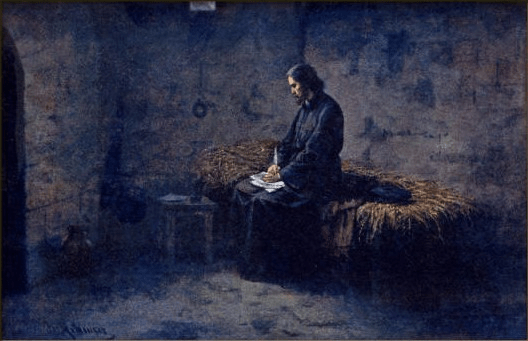
In November 1414, Antipope John XXIII called the Council of Constance; Hus was invited to present his views before the Council. He arrived in the same month, but was imprisoned in December and, in 1415, would undergo a trial.
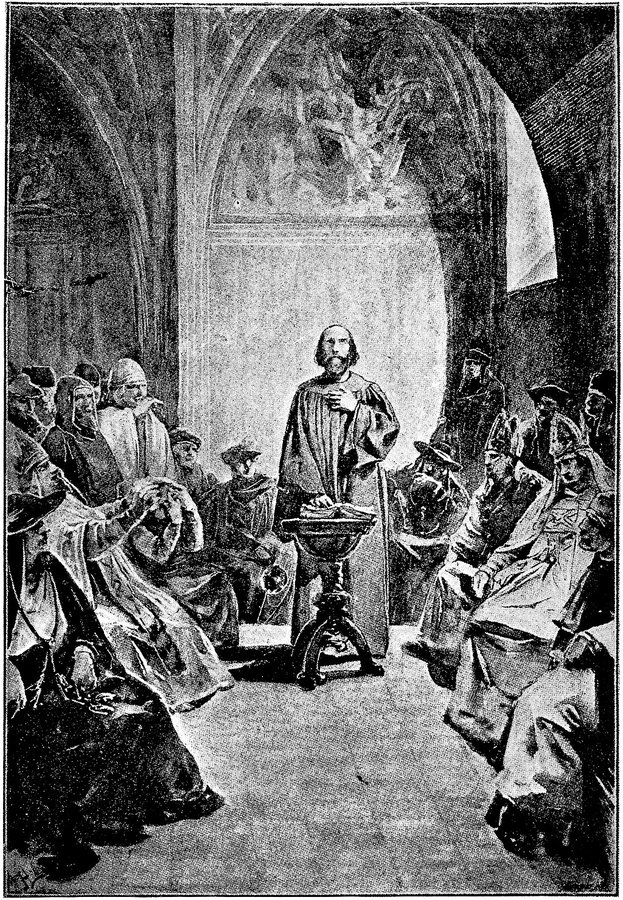
On 27 June 1415, the Council declared that his writing were heretical. The Council asked Hus to disavow parts of his writings; he refused despite knowing this was the difference between imprisonment and a death sentence.
Therefore, on 6 July 1415, Jan Hus was burned at the stake; 6 July is now a national holiday known as Jan Hus Day, and the Catholic Church has never rehabilitated him.
A consequence of his execution would be the Hussite Wars, which ran from 1419 to about 1434. A consequence of *those* could be what seems like every other street in Prague 3 (https://whatsinapraguestreetname.com/category/hussites/).
Bohemia would remain largely Hussite until the 1620s, when Habsburg domination would also involve intensive and forced conversion to Catholicism. Distrust of religious institutions remains a noticeable feature of the Czech population to this day.
Number 20 on Husova is the Clam-Gallas Palace, once the scene of concerts by Mozart and Beethoven. It’s also hosted the first Ministry of Finance of Czechoslovakia and the municipal archives, and is now owned by the City of Prague.
Also, if you look very closely at this picture of the other end of Husova (specifically the sky between the two buildings), you’ll see an example of David Černý doing what David Černý does.
They might also have been the endpoint of a chain leading across the Vltava, erected to force ships and rafts to stop until they had paid their customs duties for crossing from one end to the other.
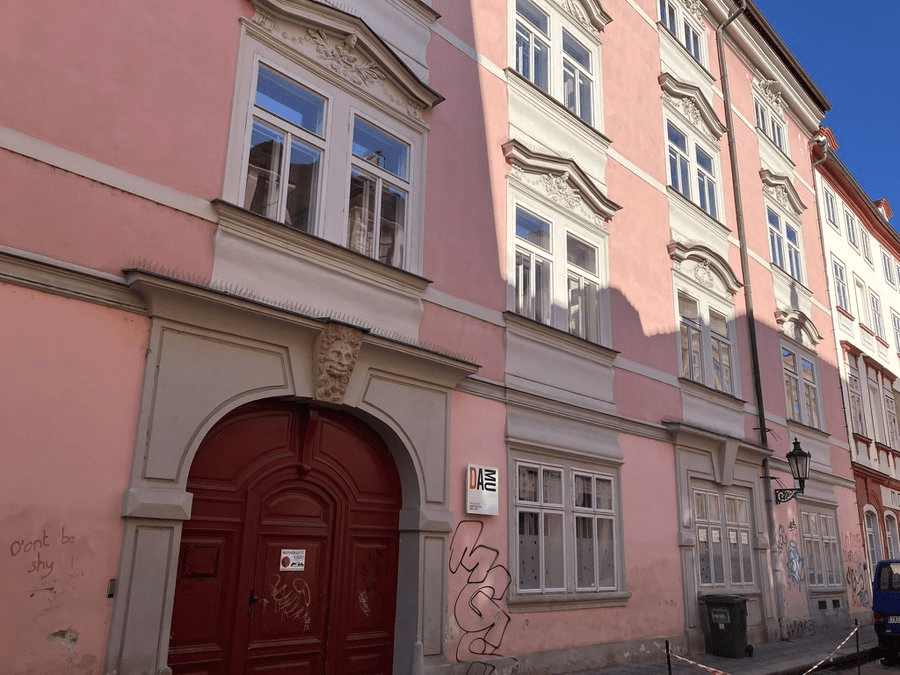
While number 5, Palác Kokořovských, is the home of the Theatre Faculty of the Academy of Performing Arts in Prague (DAMU).
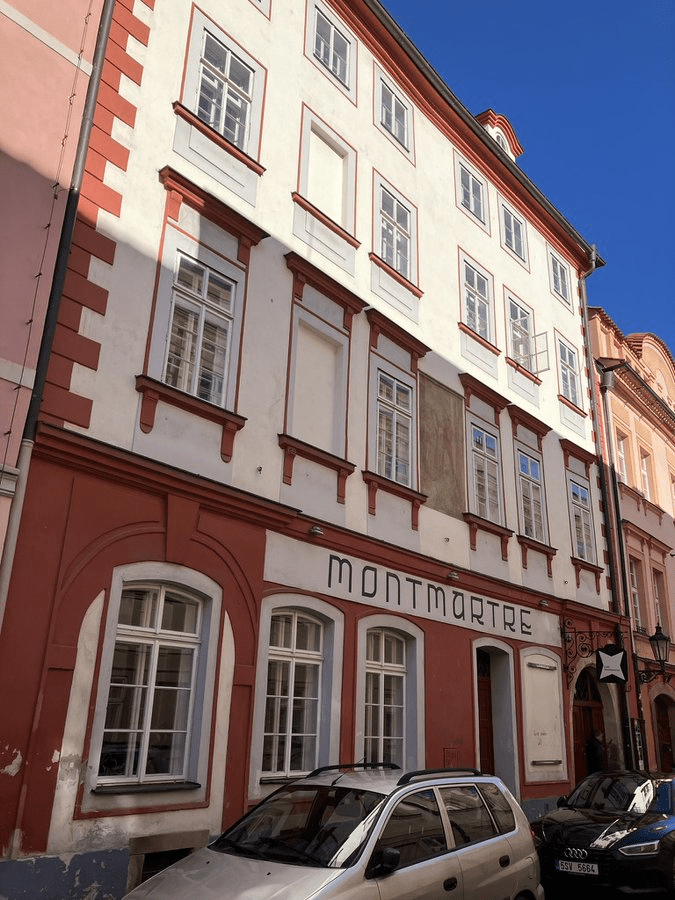
And neighbouring U Tří divých mužů (the Three Wild Men) had its best days in the 1910s and 1920s, when it was Montmartre, a cabaret and cafe frequented by, among others, Jaroslav Hašek.
While number 20, U Modré štiky (The Blue Pike) is of note not just because of the large numbers of tourists swarming past it, but also because, in 1907 (a year after it was built), Prague’s first permanent cinema, Bio Ponrepa, was opened here.
It’s named after its founder, Victor Ponrepo (1858-1926), born as Dismas Šlambor. He was also a magician, and his stage name was meant to be a play on the Bon Repos castle near Stará Lisa.
Pretty much everything in those two sentences is why I love writing these posts.
More on Ponrepo in 2045 if you’re still following me then – he has a street in Prague 21.
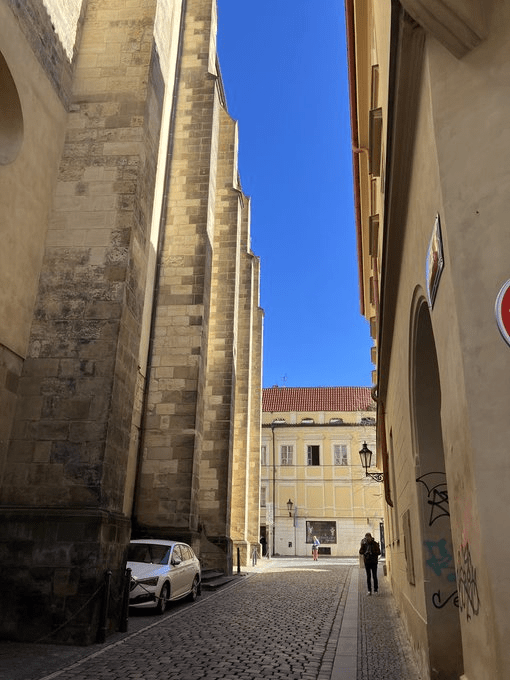
Good luck to anybody trying that these days, though – the street is so narrow that cars aren’t allowed to pass through it, let alone fire engines.
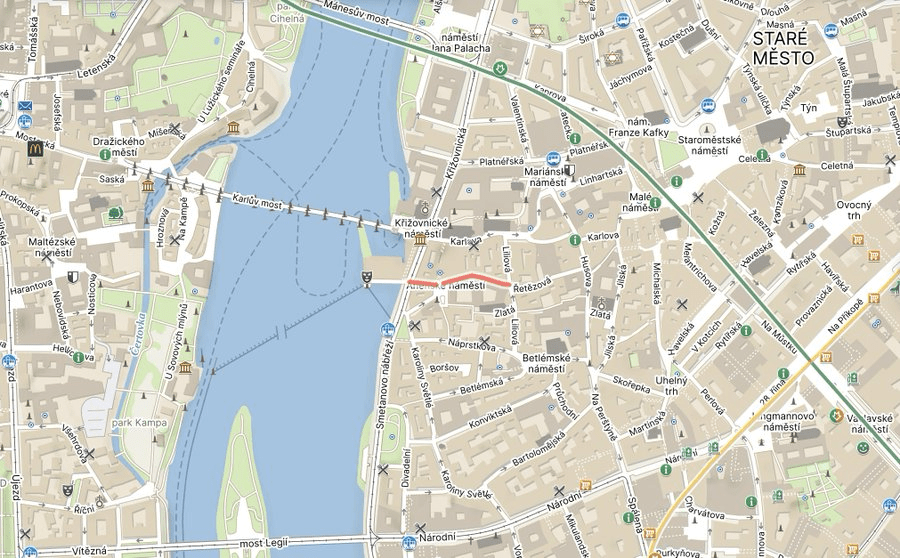
For vocab fans, a ‘stříbrný důl’ is a silver mine, a ‘stříbrná medaile’ is a silver medal, a ‘stříbrná svatba’ is a silver wedding, and the ‘stříbrné plátno’ is the silver screen.
This part of the street also features St Anne’s Church, as discussed in the same thread and no longer acting as a church.
The next part of the street is really a passageway – and is also closed at night (clearly, there’s something about streets named after gold only being accessible at certain times of day).
And then its final part is more like, well, a street – but starts slightly south of where the previous section ends.
On the other hand, it’s accessible 24/7, so that’s nice.
Announcement: the rest of the Prague 1 series is going to involve quite a lot of these ‘but I already said everything yesterday’ threads. Which, to be fair, I’m totally fine with.
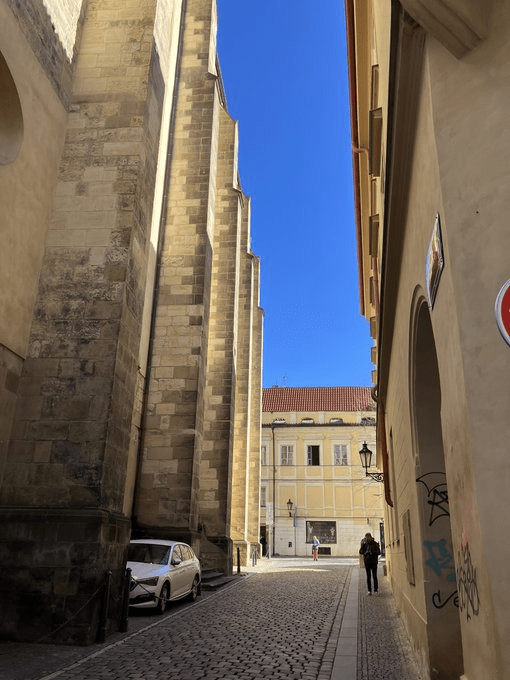
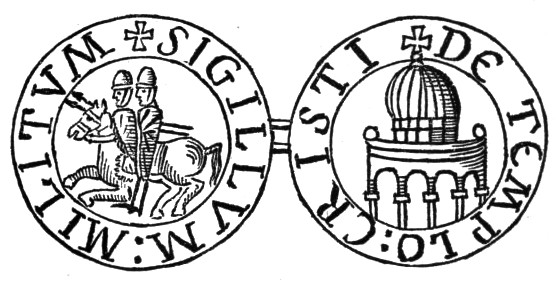
In this spot, there was once a rotunda devoted to St Lawrence (Vavřinec). In 1230, the Knights Templar bought the land and had the rotunda expanded into a church.
Pope Clement V disbanded the Knights Templar in 1312, largely due to the machinations of Philip IV of France, who was in considerable debt to them and had an interest in their cancellation.
Their convent on the other side of the river had also had a church devoted to St Anne.
The convent (1313 Old Town Edition) was abolished in 1782 – like so many – and was converted into a printing house. Passing through various owners, it functioned as such until 1977.
The church, meanwhile, became a paper warehouse.
Since 1993, however, the middle wing of the convent building has been used by the National Theatre’s ballet troupe.
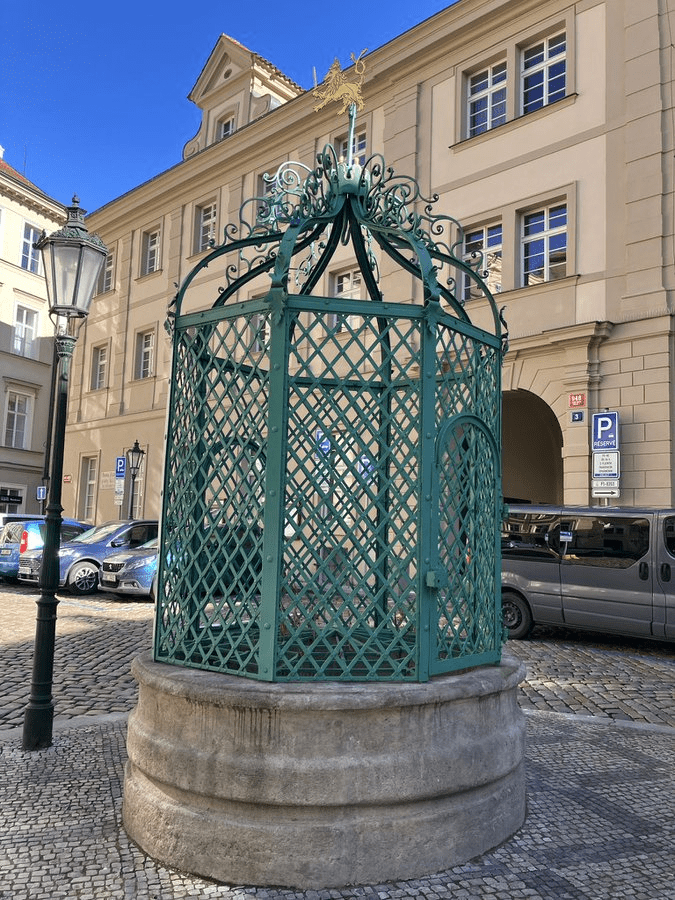
There’s also a fountain in the centre of the square. It didn’t have any water in it the day I took this picture… and apparently it never has done. Which makes you wonder.
It’s originally from the Újezd Barracks, which were destroyed in 1932, at which point it was decided the well deserved a new home. It’s never been connected to a water source (on the square, that is).
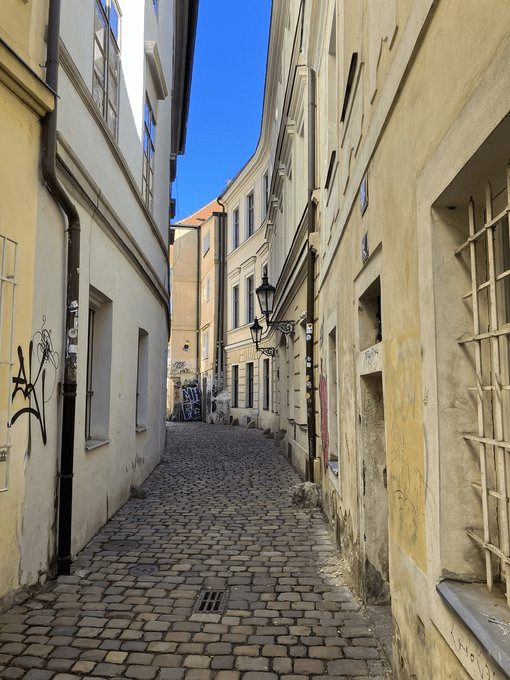
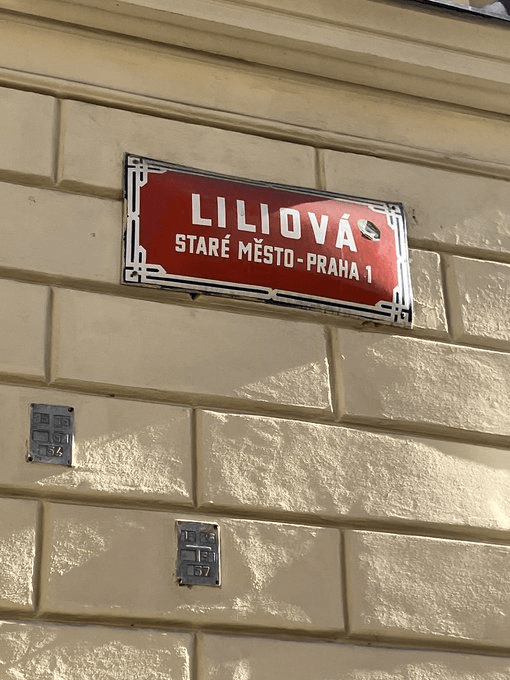
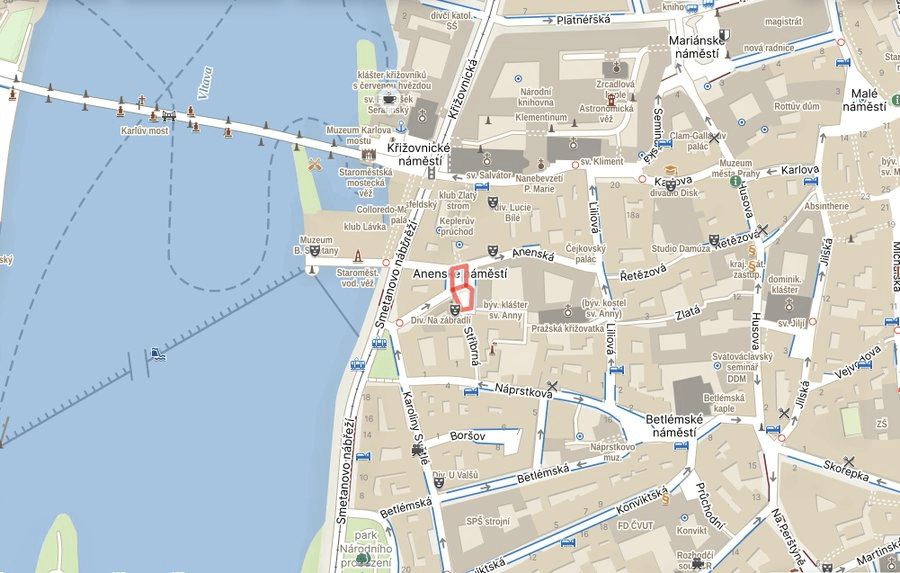
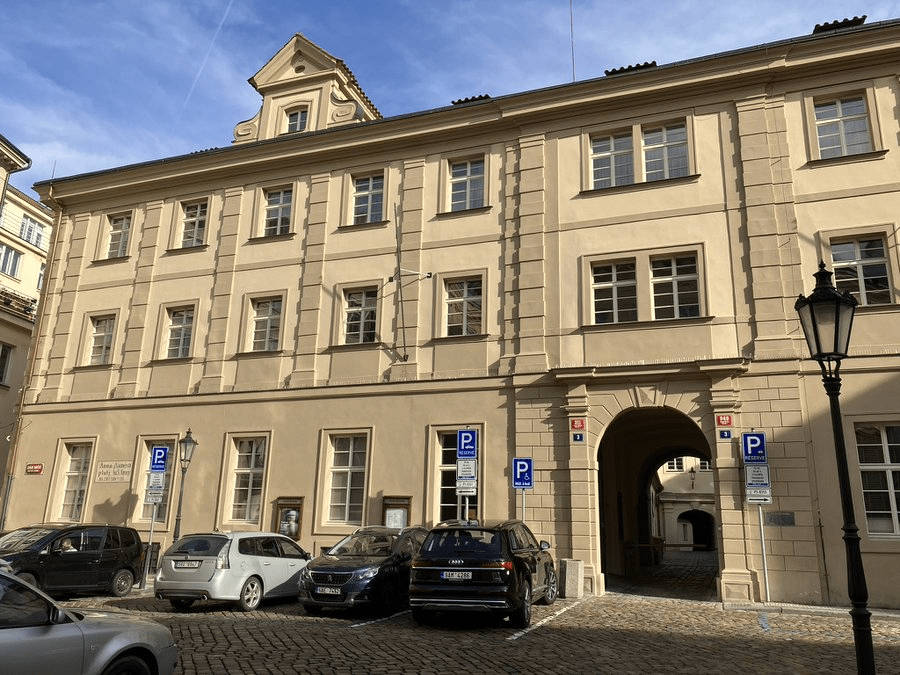
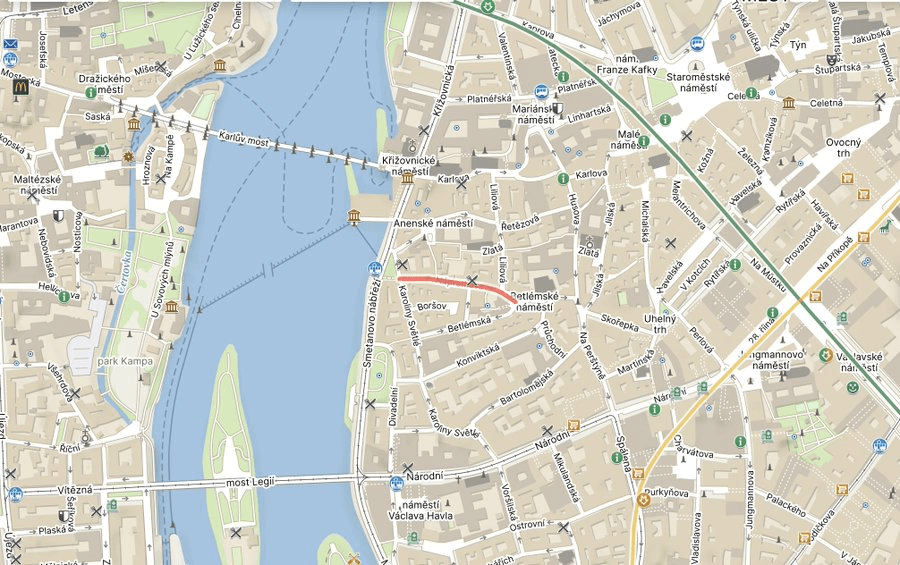
According to Wikipedia, the former convent is on Anenská, Zlatá, Anenské náměstí, Liliová, Stříbrná *and* Náprstkova.
Multi-street-occupying buildings seem to be a thing in this part of Prague, so please forgive me if any of these threads sound disjointed as a result.
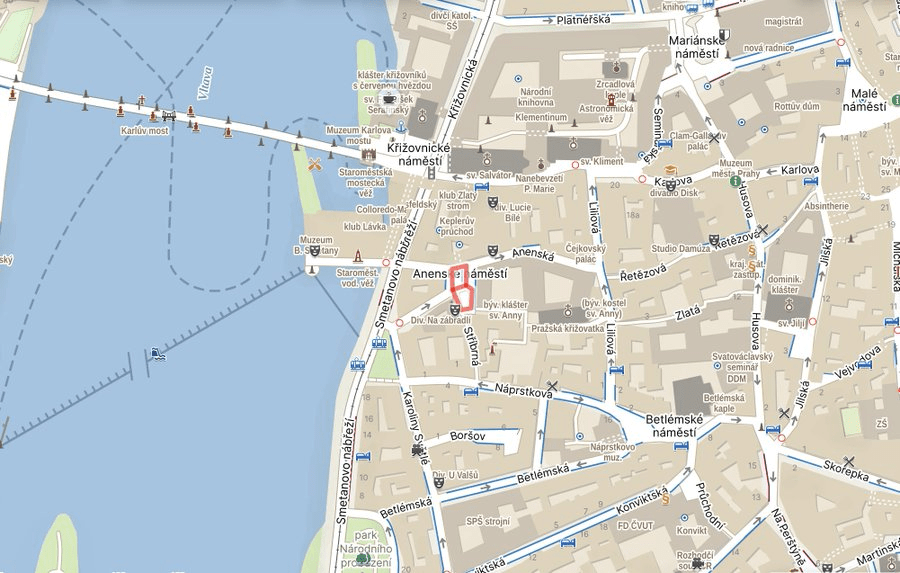
A ‘zábradlí’ is a banister, railing, handrail or balustrade.
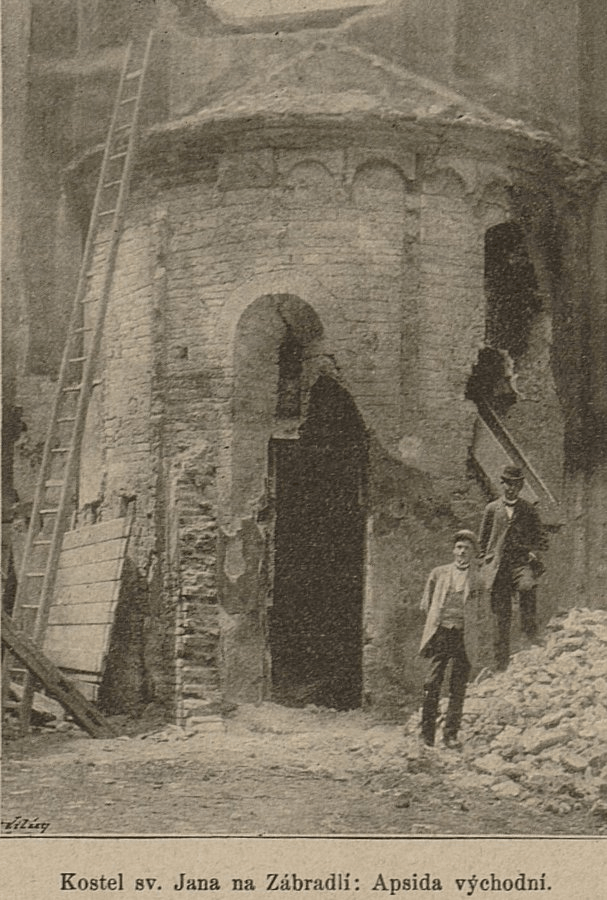
In the context of this street, there was once a church on the corner called Church of St. John the Baptist ‘Na zábradlí’. It was built around 1130.
It was most likely part of the wall that was in place to protect the Old Town from the Vltava – and the ‘zábradlí’ is probably a reference to a gate or something within these fortifications.
However, it survived longer than the fortifications did – they were destroyed in 1367. The church, which was closed down in 1789 and turned into a residential building, was destroyed in 1896.
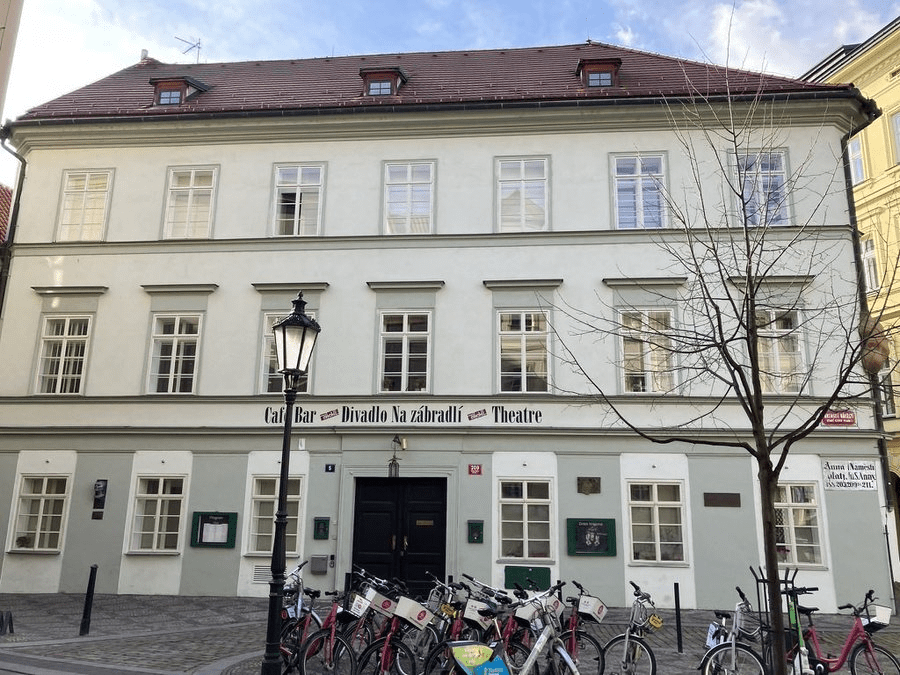
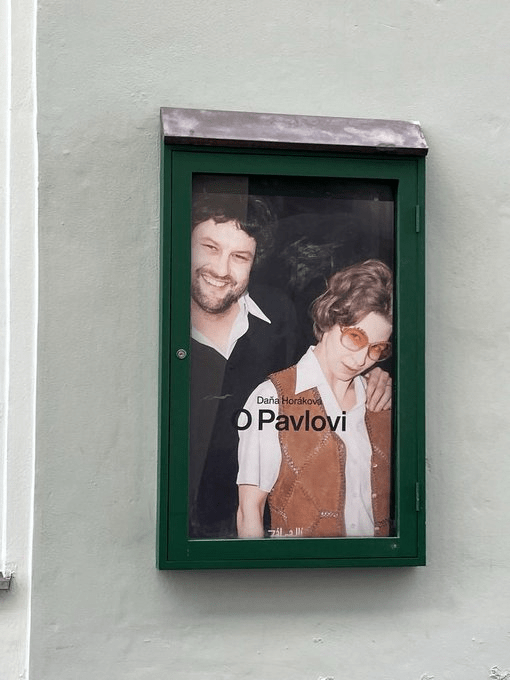
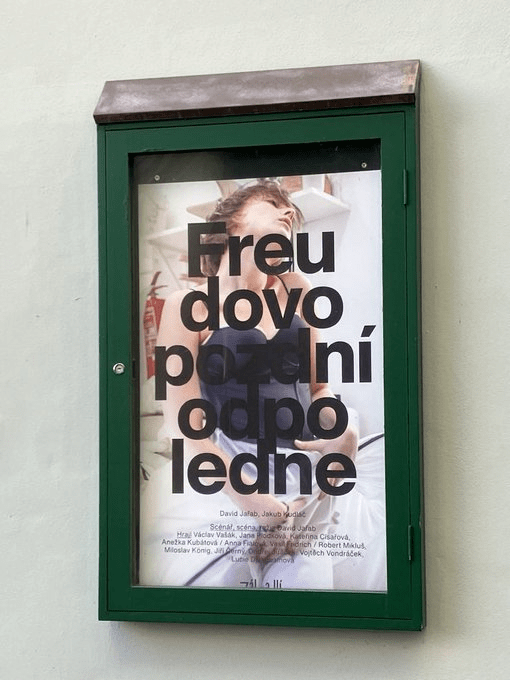
The first thing you might think of when you hear ‘Na Zabradlí’ is the theatre of the same name.
Founded in 1958, it gained national and international recognition in the 1960s, largely due to its promotion of the theatre of the absurd.
After he left in 1968 – not of his own volition, of course – the theatre became something of a refuge for film directors of the Czech New Wave who had found themselves no longer able to make films.
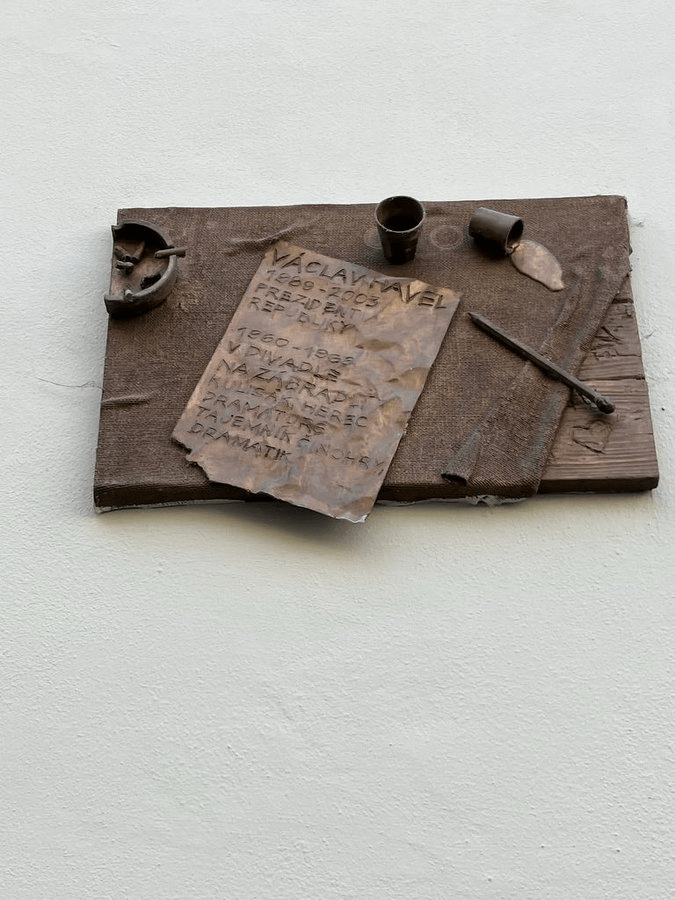
One of the plaques on the façade is a tribute to Havel.
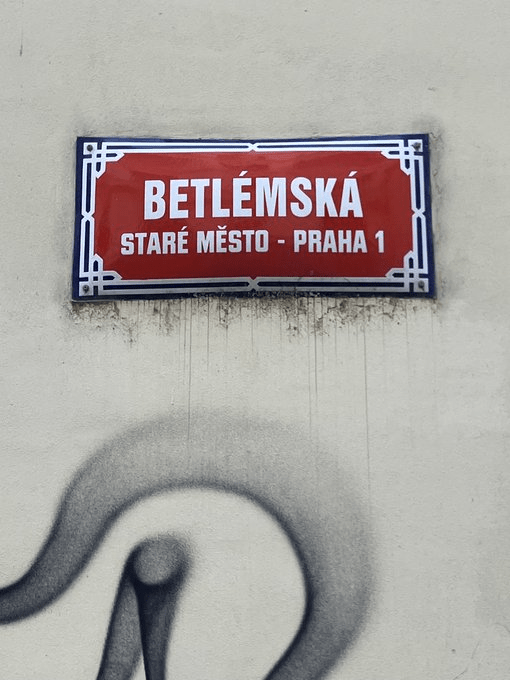
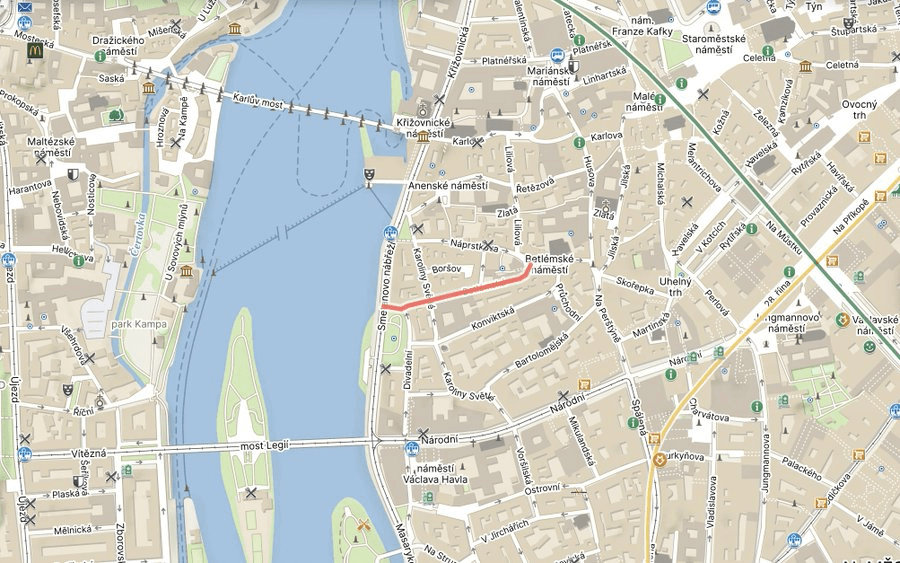
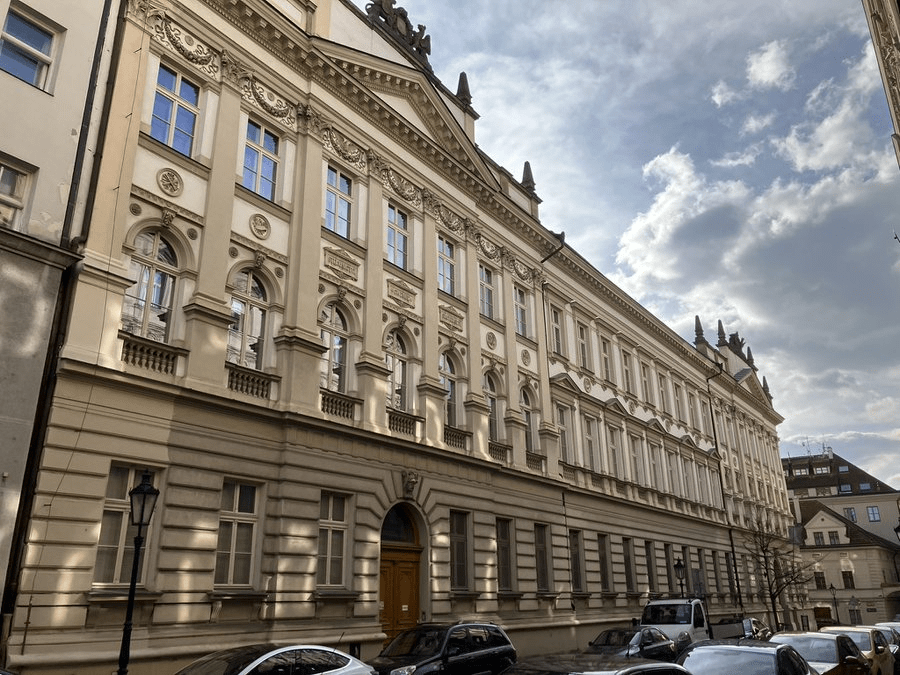
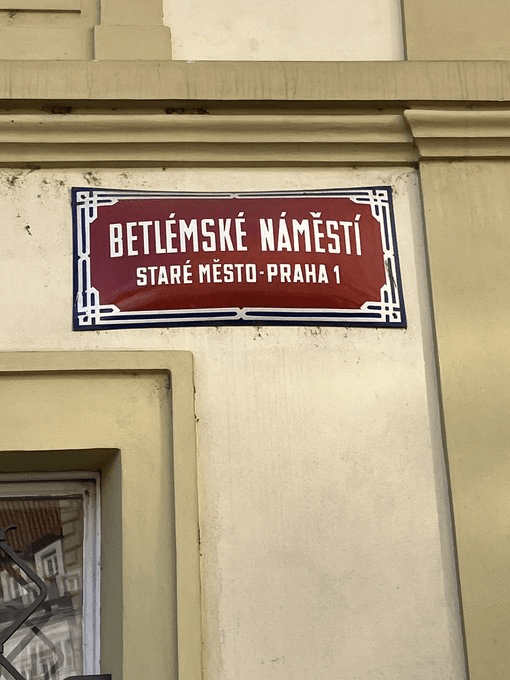
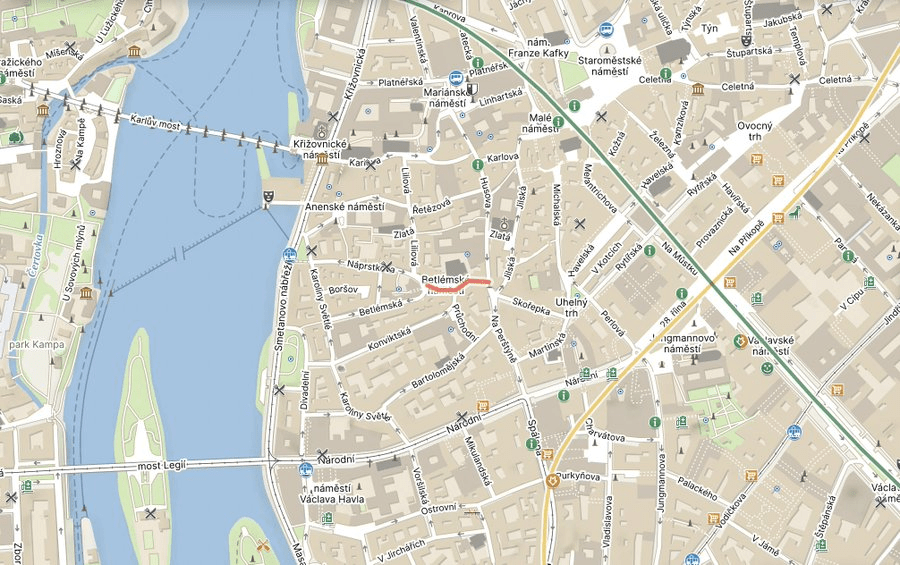
Betlémská features the character limit-busting Střední průmyslová škola strojnická, škola hlavního města Prahy (Secondary School of Mechanical Engineering, School of the Capital City of Prague). Founded in 1837, it’s the oldest school of its type in the city.
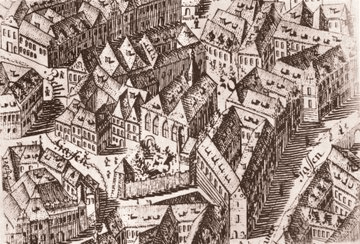
In the Middle Ages, there was a Romanesque church here devoted to Saints Philip and James – and so the accompanying street became known as U Filipa a Jakuba.
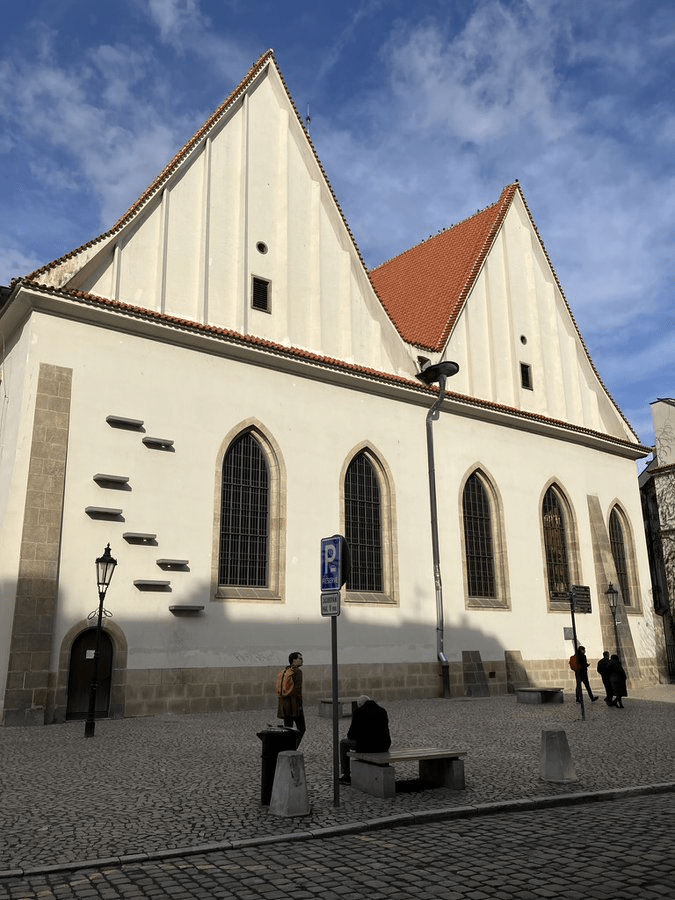
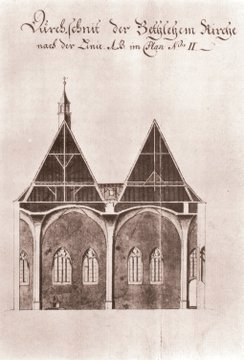
Between 1391 and 1394, a chapel – the Bethlehem Chapel / Betlémská kaple was also constructed. The intention was for this to be a place where preachers would do their work in Czech.
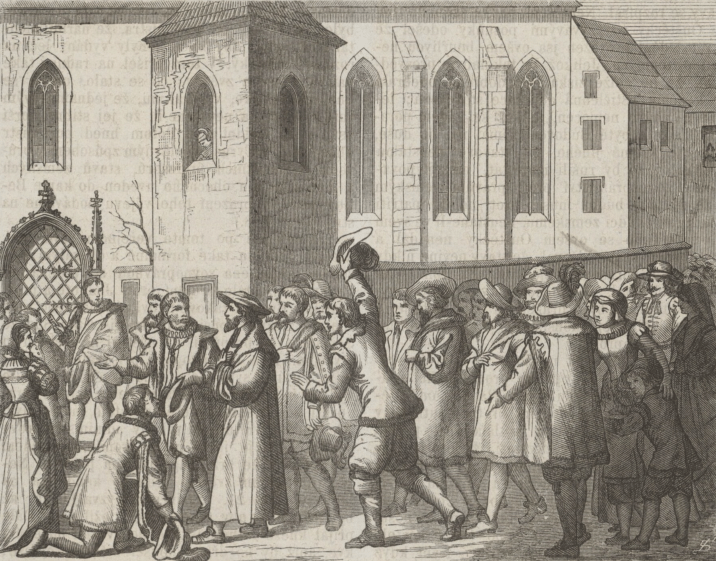
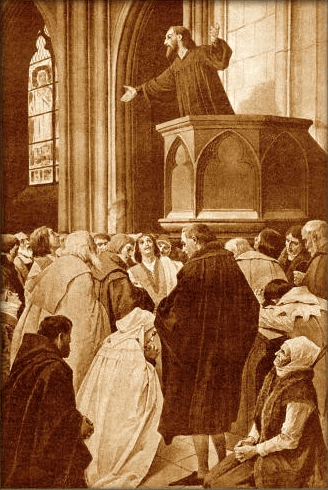
A certain Jan Hus became the chapel’s administrator in 1402, and preached there until 1413. It naturally became a centre of resistance against the Catholic Church.
In 1412, three followers of Jan Hus who had been executed for protesting against the granting of indulgences were buried in the chapel.
After the Hussite Wars, the chapel basically served as a parish church, and many notable people were buried there.
In 1622 – two years after the Hussites had been defeated – Ferdinand II gave the chapel to the Jesuits. They had to cede it to the University of Prague in 1638, but got it back in 1661, and used it until their own dissolution in 1773.
In increasingly poor condition, the chapel was mainly demolished in 1798 and was later replaced with an apartment block.
The block was demolished in 1948, and the chapel was reconstructed from 1950 to 1952. It was officially reopened on 6 July 1954 (6 July being the date on which Jan Hus was executed):
The road was originally called Zlatá (Golden), and a neighbouring street still is.
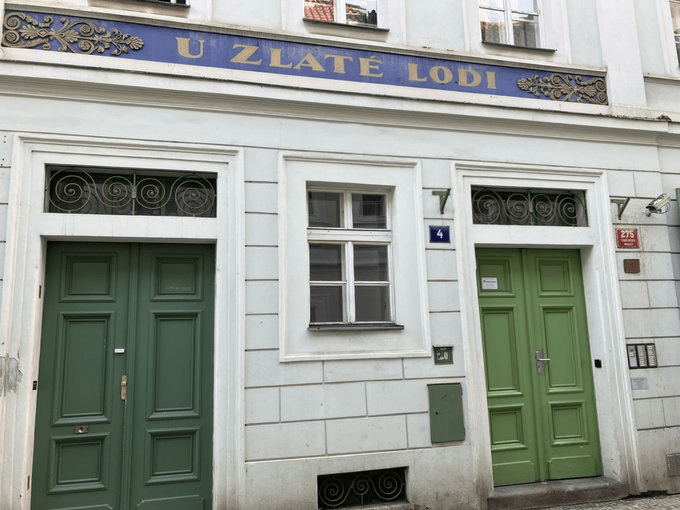
You can still see evidence of the goldsmiths who lived on the street in the names of number 9 (U zlaté hrušky – The Golden Pear) and number 4 (U zlaté lodi – The Golden Boat).
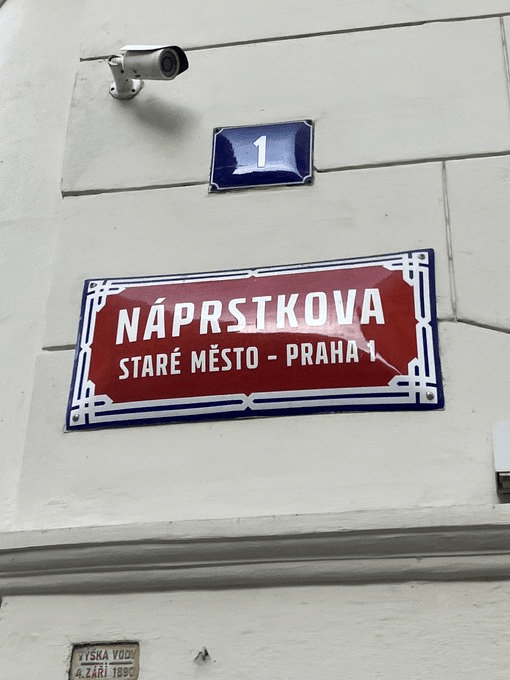
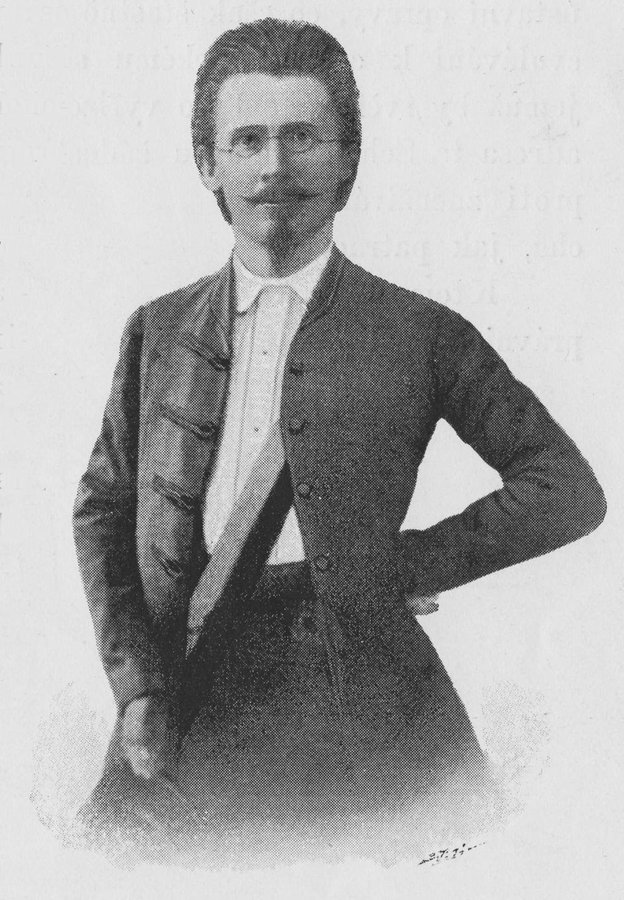
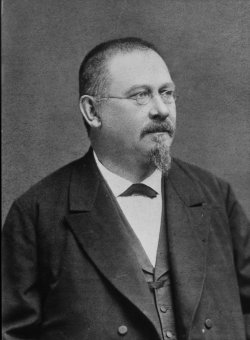
Adalbert Fingerhut was born in Prague in 1826. A ‘Fingerhut’ is a thimble – interestingly, while this was father’s surname, his father’s siblings all had the Czech version of the surname, Náprstek.
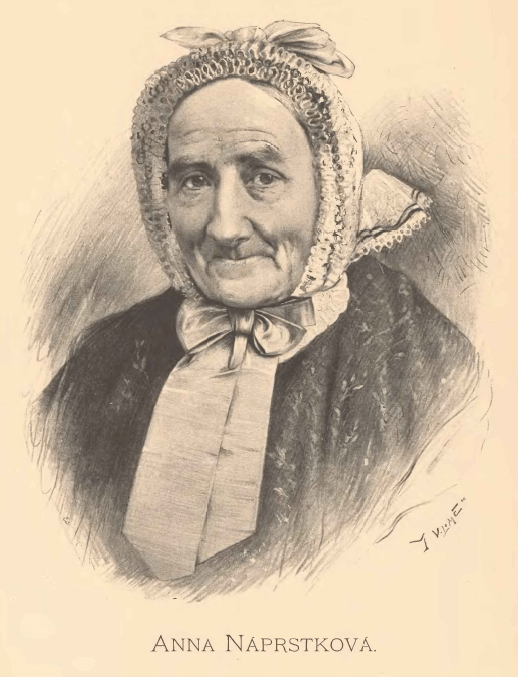
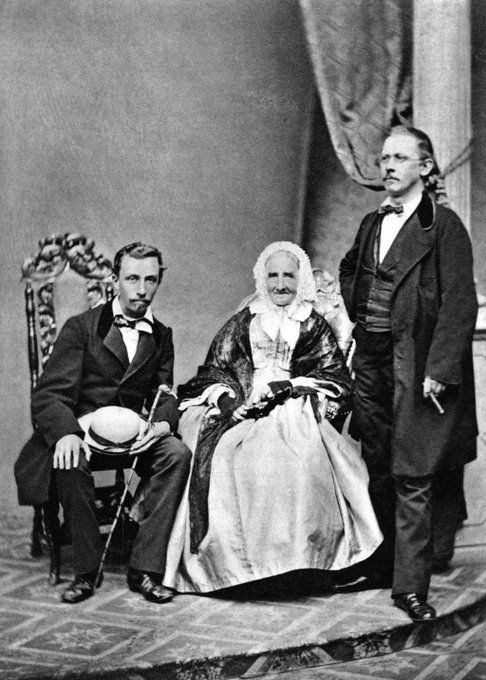
That mother was Anna Náprstková, a brewer and philanthropist.
Still a student in 1848, he participated in revolutionary activities in both Vienna and Prague, and once these had been suppressed, went into exile. However, he fled a bit further than many others did – to Milwaukee.
He stayed for a decade, obtaining US citizenship and becoming the first Czech to launch a newspaper in the States, the Milwaukee Flugblätter. He also worked with Native American groups during this time.
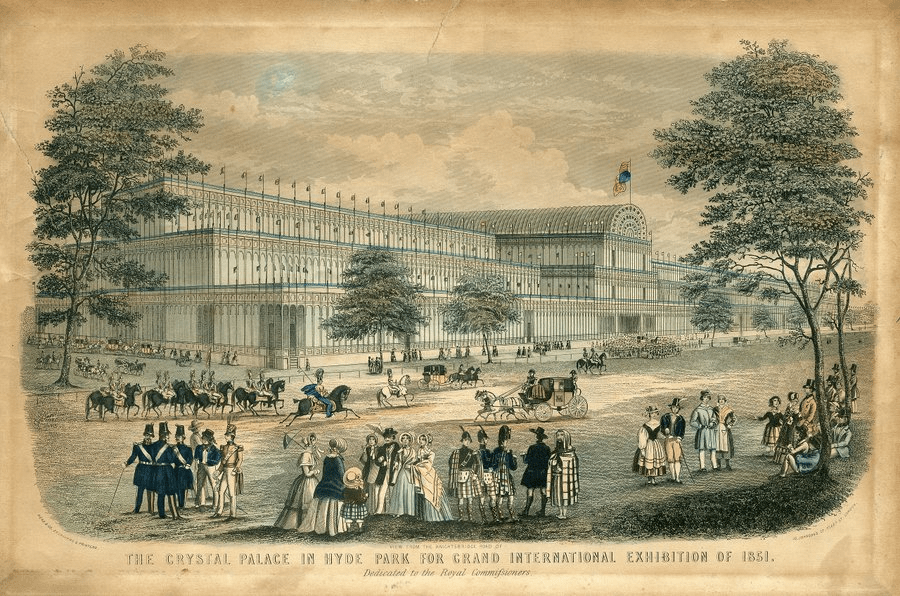
In this time, his fascination with the Industrial Revolution also led him to visit Britain, where he took part in the Great Exhibition of the Works of Industry of All Nations at Crystal Palace in London in 1851.
On his return to Prague, he turned the family brewery into a centre for Czech intellectuals. He helped his friends learn English, and also used his experience in the States to promote women’s emancipation.
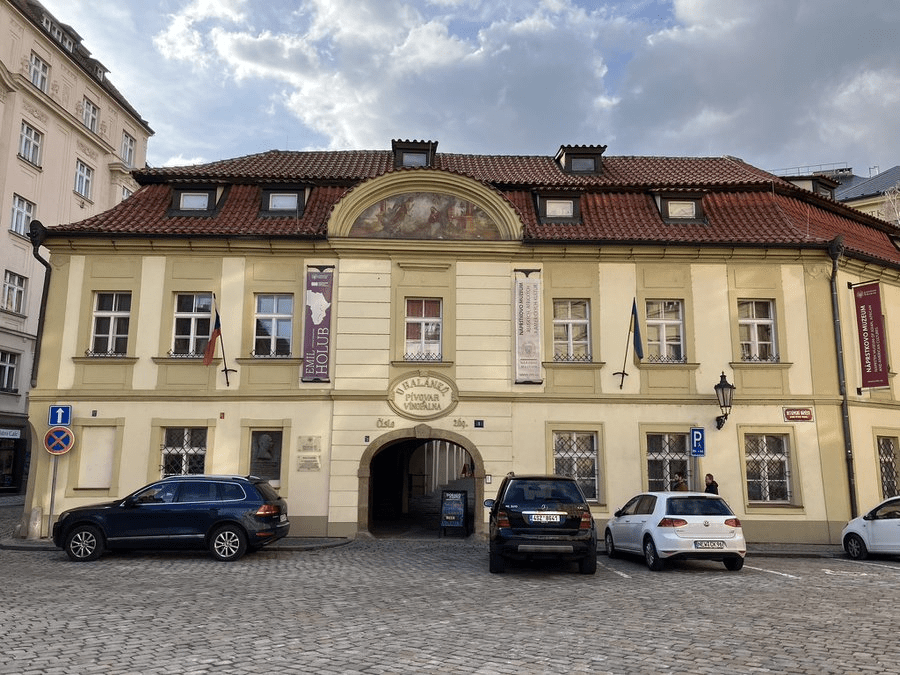
A year earlier, in 1874, Fingerhut/Náprstek converted the family brewery into the Czech Industrial Museum.
Since the 1940s, it’s borne his name and has been devoted to Asian, African and Native American cultures.
In 1880, Adalbert Fingerhut officially changed his name to Vojtěch Náprstek, which he had been using for ages anyway. Seven years later, he publicly advocated women’s suffrage.
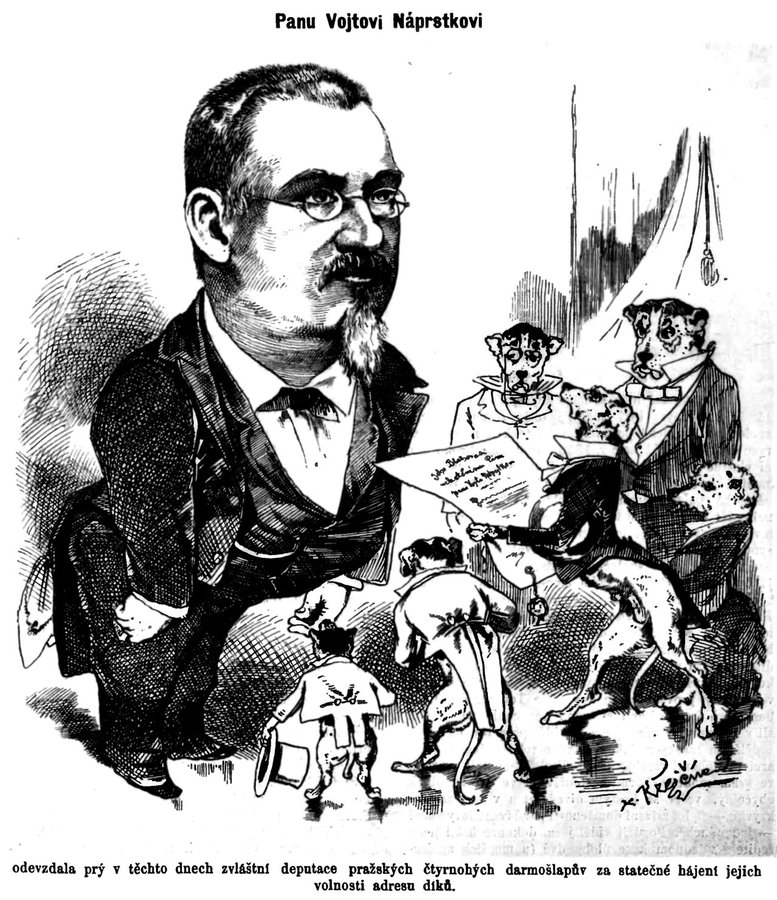
In 1881, he had also attempted to repeal a law stating that all dogs in Prague had to be kept on a lead by their owners – hence this satirical cartoon from the same year.
Náprstek died in 1894, and was cremated (this took place in Germany, as it wasn’t legal in Austria-Hungary at the time). His urn is kept in the museum, which also received his collections of books and photographs.
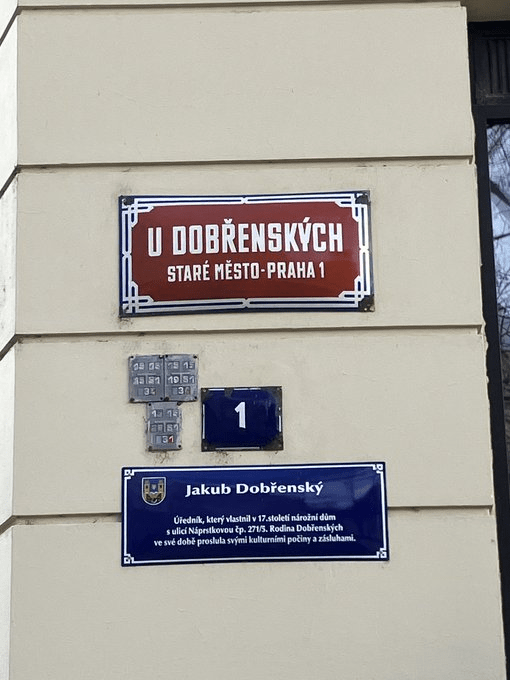
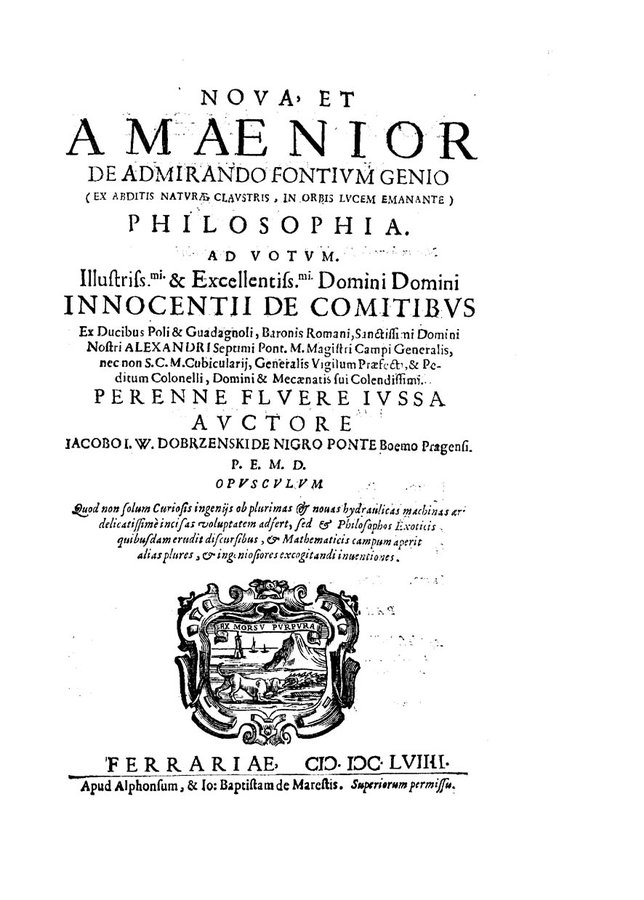
Jakub Jan Václav Dobřenský was born in Prague in 1623. He studied medicine and philosophy at Charles University (and also in Italy), and began teaching at the university in 1664.
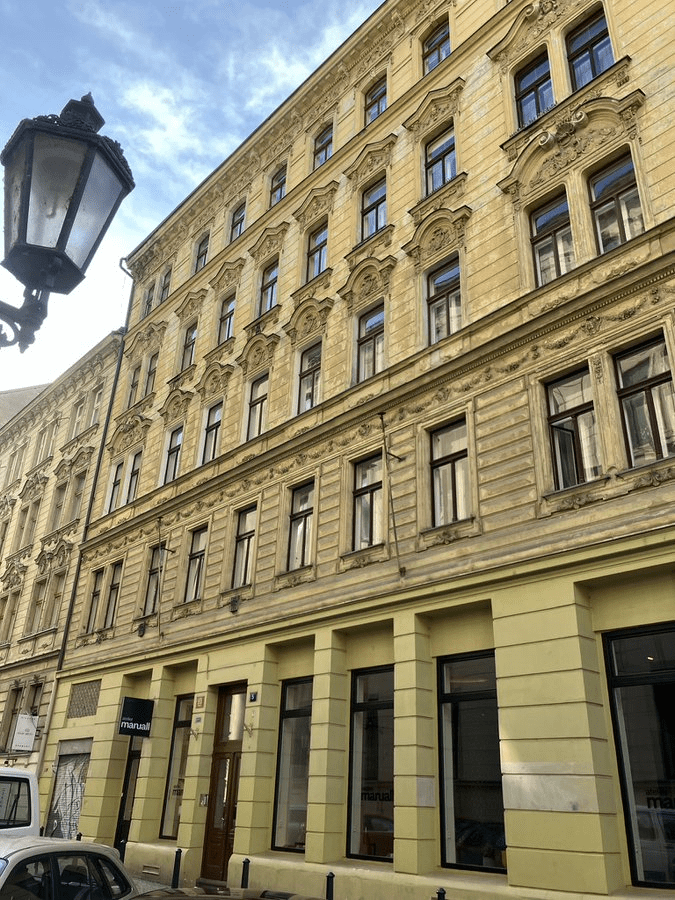
In the meantime, he bought several properties in Prague and set up laboratories in them. One of his properties was at number 5 on this street.
Dobřenský had two spells as rector of Charles University, and was also the dean of the Medical Faculty from 1683 to 1684.
Dobřenský died in 1697. Considered a pioneer in the field of pathological anatomy, his name is one of the 72 that you can find on the façade of the National Museum (now there’s an idea for a mini-series when the Prague 1 series is done).
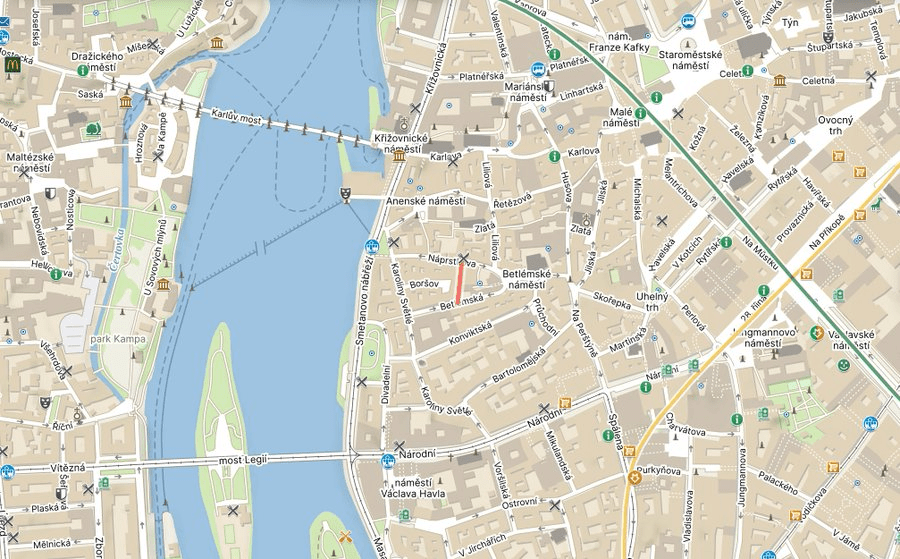
U Dobřenských includes (one side of) the Náprstek Museum, which is devoted to Asian, African and Native American art. The museum was founded in 1874, and the road was formed after that. It’s had its current name since 1901.
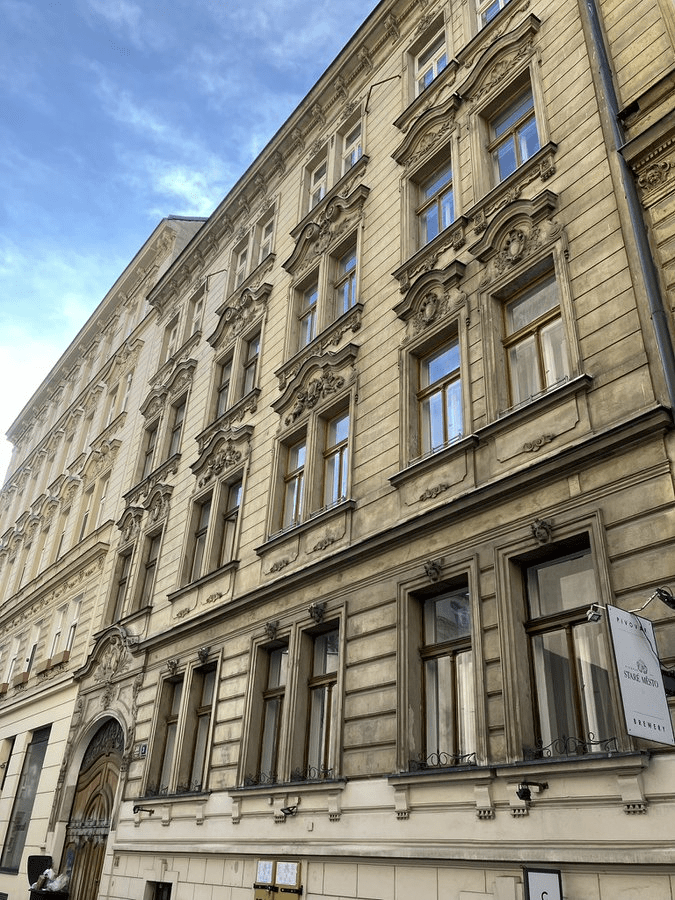
There’s also a brewery – with the same name as the street – at number 3, known for brewing beers flavoured with medicinal plants.





































,_Praha_1,_Liliov%C3%A1,_Zlat%C3%A1_5,_Star%C3%A9_M%C4%9Bsto.jpg)

