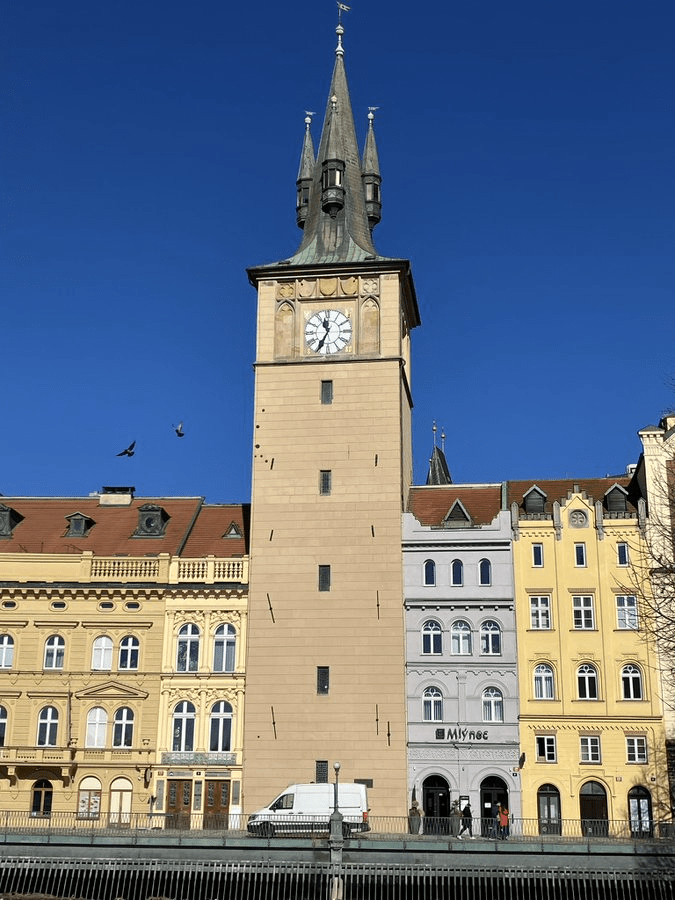
A text from 1396 mentions ten mills in this location; no later than 1489, they had been joined by a wooden water tower, which was used to provide water from the Vltava to the Old Town.
As with nearly every wooden structure that’s come up in these posts, it was destroyed by fire; it was replaced by a stone version in 1577 (although the Neo-Gothic version you see nowadays is the result of a makeover from 1878 to 1888).
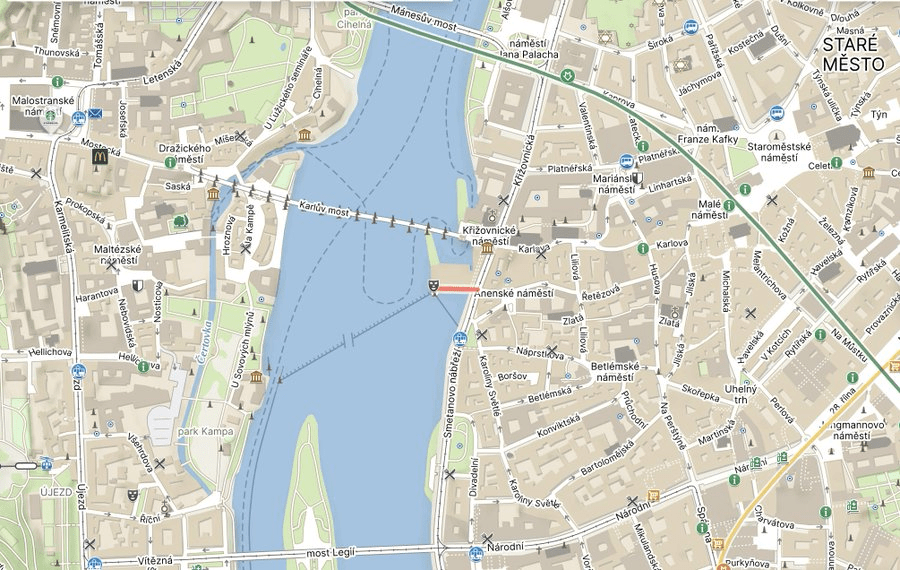
The lávka – i.e. footbridge – changed names over time, depending on who its owner was.
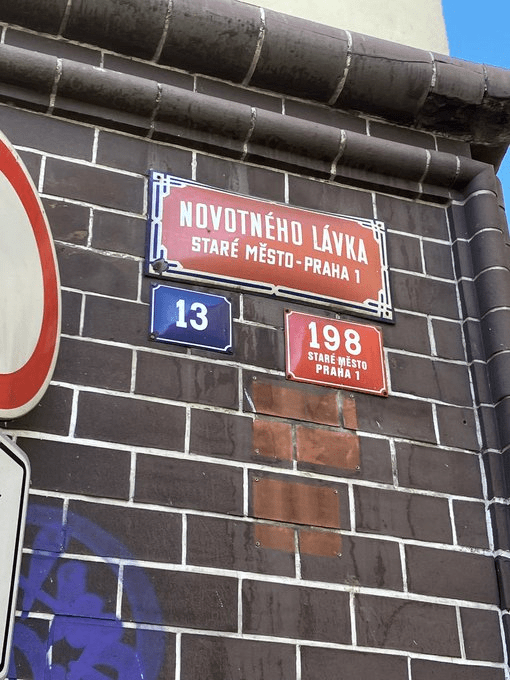
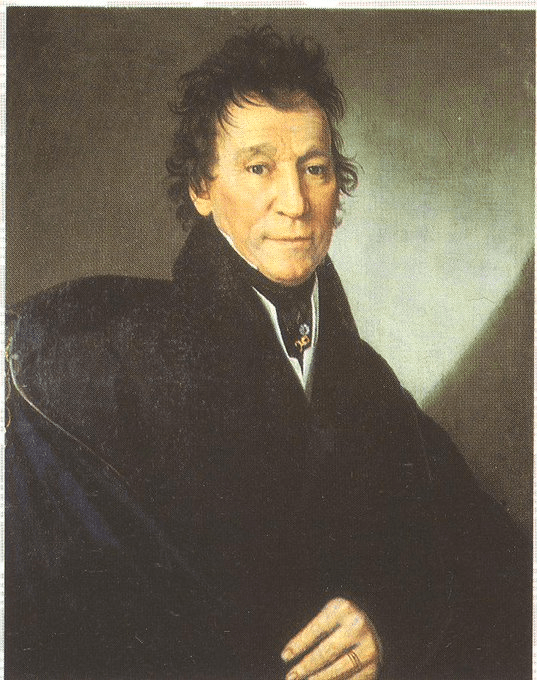
In 1887, it was renamed Novotného lávka in honour of Karel Novotný (1827-1900), a miller who had arranged for an iron footbridge on the southern side of the ‘street’.
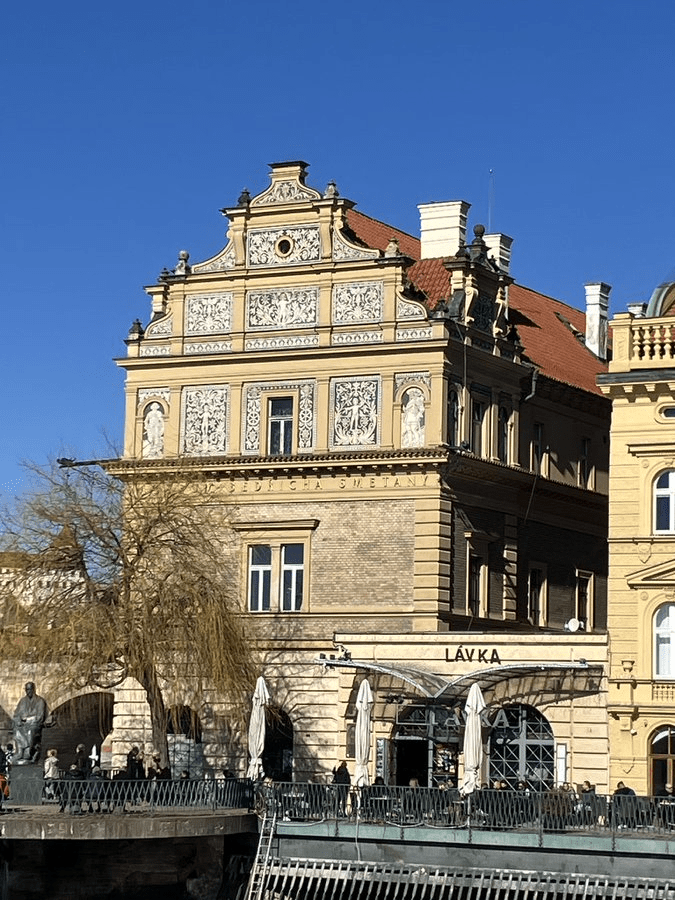
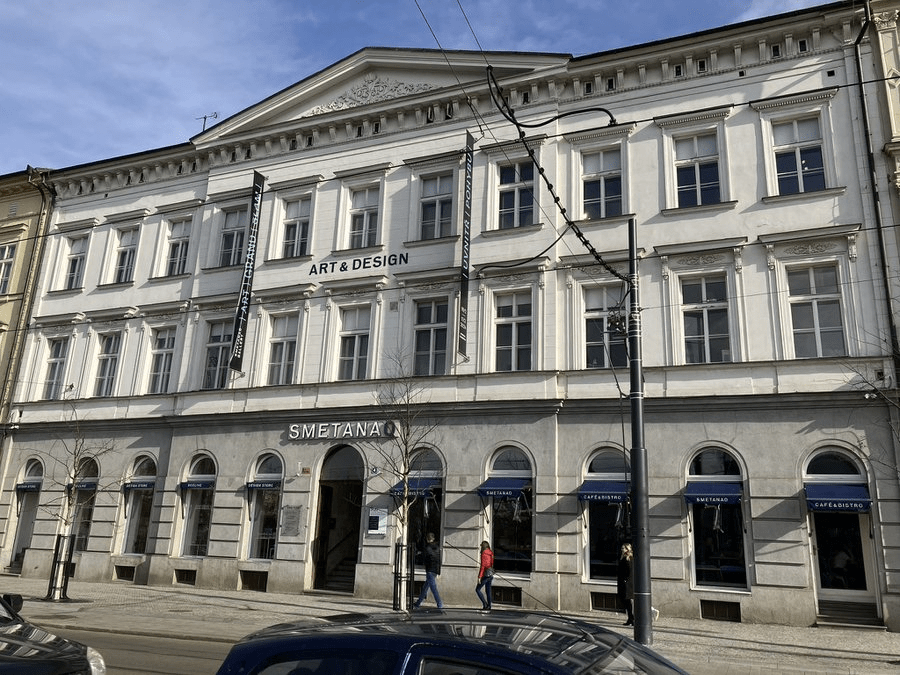
If you’re passing by and you’re not sure who this museum relates to, a statue outside offers you an unsubtle reminder (also: what a view).
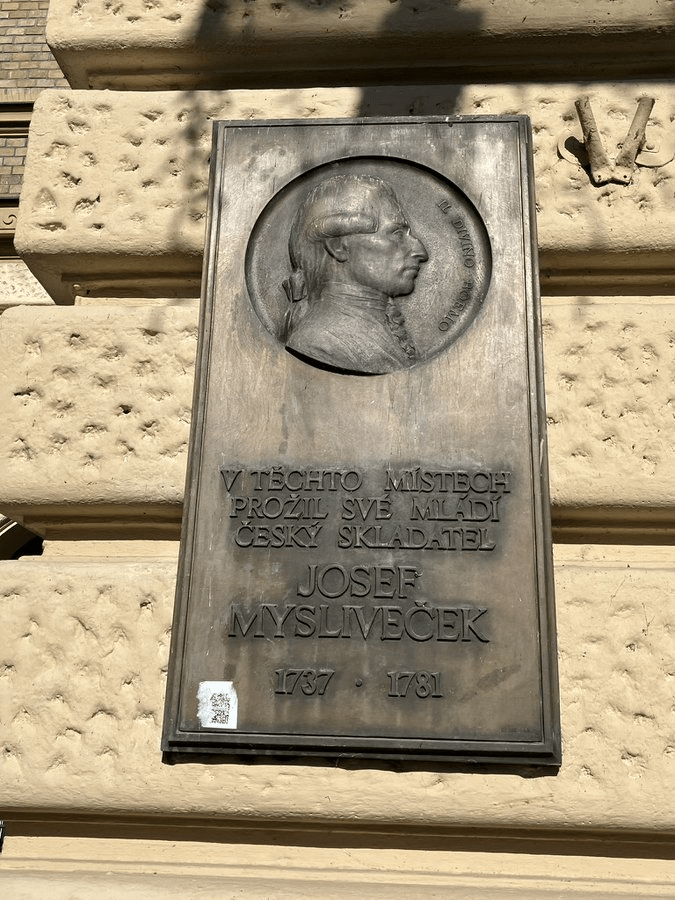
Appropriately, the footbridge had once been lived on by another composer, Josef Mysliveček (1737-1781), whose father had owned one of the mills.
At the other end, Karlovy lázně used to be a spa, and also a cafe, as well as being the location for Karel Havlíček Borovský’s apartment and publishing house.
Since 1999, it’s been a nightclub, and, while I’m glad they *finally* stopped advertising themselves as ‘the biggest club in middle Europe’, I’ve never been inside and sense that doing so would make me feel much older than I actually am.
No, I didn’t pick the music for this video:
A good-looking collection of buildings, this (would look better if those scooters weren’t there, but we can’t have it all).
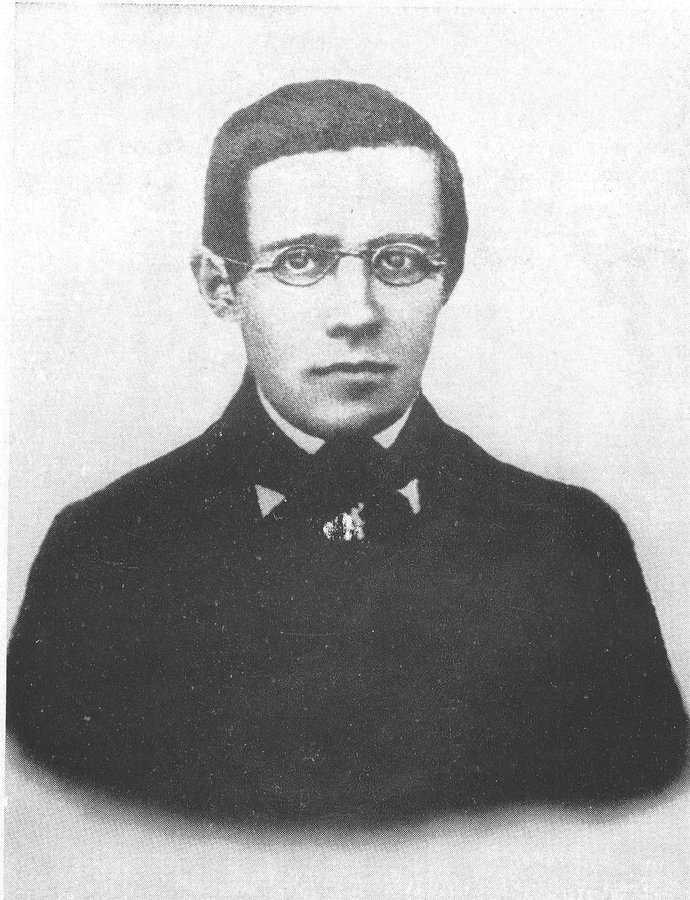
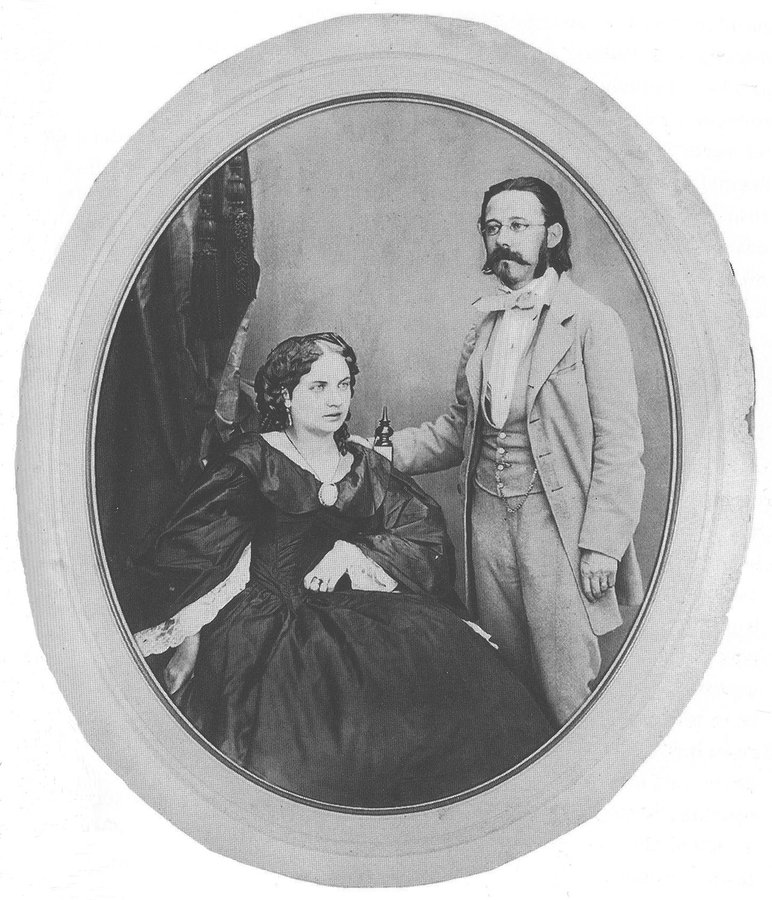
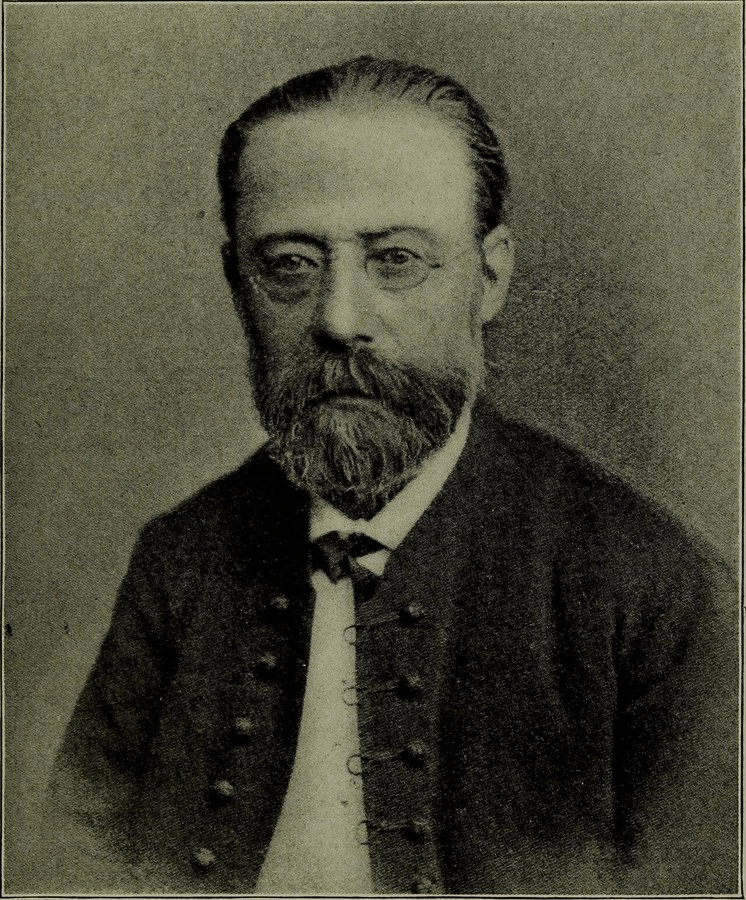
Bedřich Smetana (baptised as Fridrich) was born in Litomyšl in 1824. His father František was a prolific brewer (and played violin in a quartet) while his mother Barbora was a relative of the Baroque composer Jiří Ignác Linek (and was a dancer).
Bedřich, meanwhile, started violin and piano lessons, giving his first public performance on the latter in 1830, when he was six.
A year later, the family moved to Jindřichův Hradec when his father became head of the castle brewery; they stayed there until 1835, when František bought the estate at Růžkova Lhotice.
Smetana transferred again in 1840, this time to the academic gymnasium in Prague, where music soon took up much more time than his studies did. He announced he was dropping out, and his father promptly had him transferred to Plzeň.
He matriculated (just) in 1843.
Having composed several pieces in Plzeň – of which the polkas became particularly popular – Smetana returned to Prague as soon as he could, eventually finding work as a tutor to a noble family in 1844.
He continued to compose and tried to make it as a concert pianist.
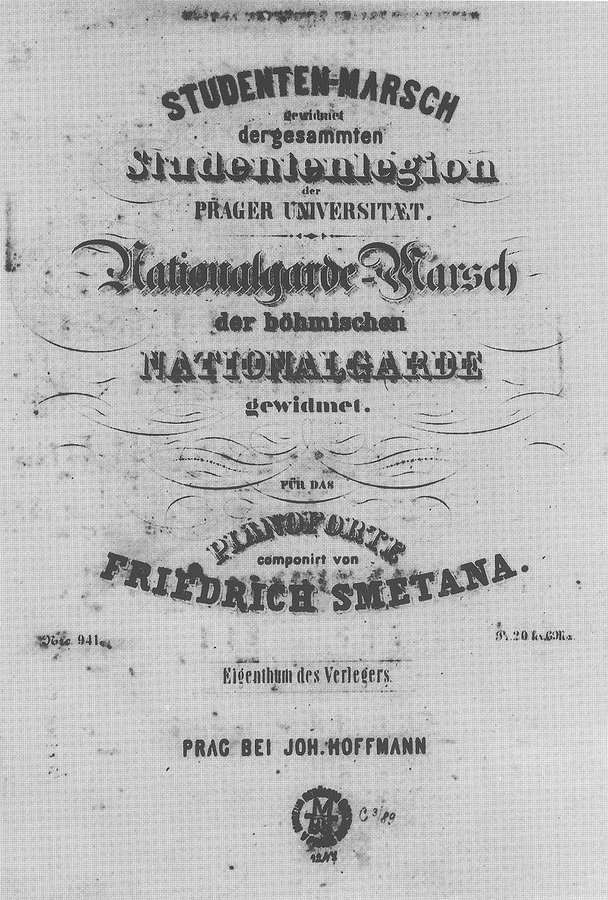
In June 1848, Smetana was on the barricades during the failed Prague Uprising; two marches he wrote during this time became his first published works.
Thanks to financial support from his parents, he was able to open a piano school on Old Town Square in 1849; he married his long-term sweetheart, Kateřina Kolářová, in the same year.
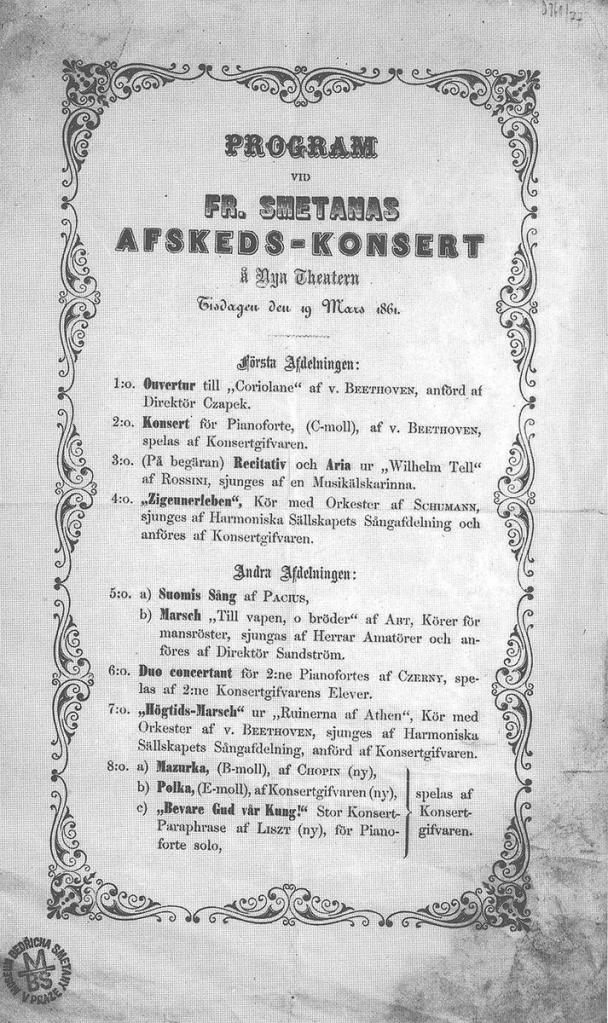
After a series of personal setbacks (three of his four daughters died within two years) and professional difficulties (some of his concerts were poorly received and led to a financial loss), Smetana moved to Göteborg and opened a successful music school, staying until 1861.
Kateřina would also die in 1859; Smetana then spent time with a friend, Ferenc Liszt, in Weimar.
It was around this time that he met his second wife, Bettina, whom he married in 1860, although the marriage would ultimately become somewhat miserable.
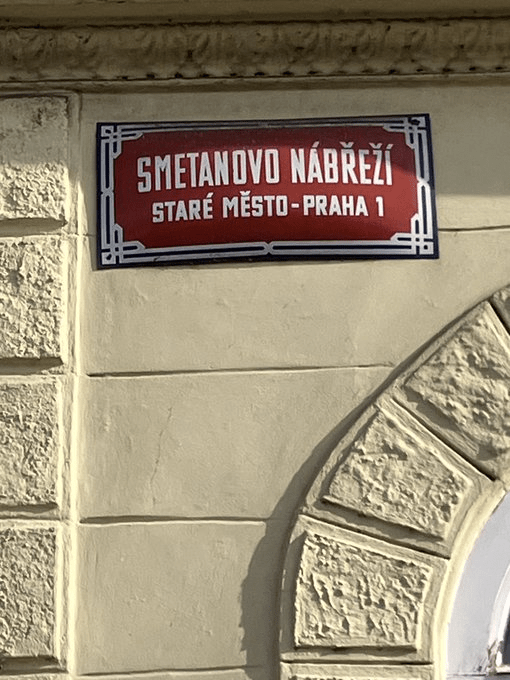
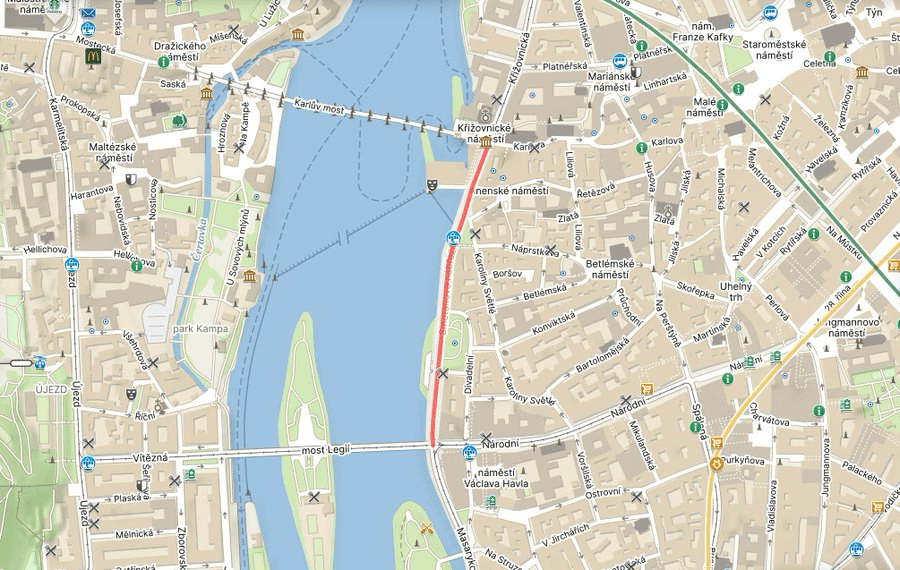
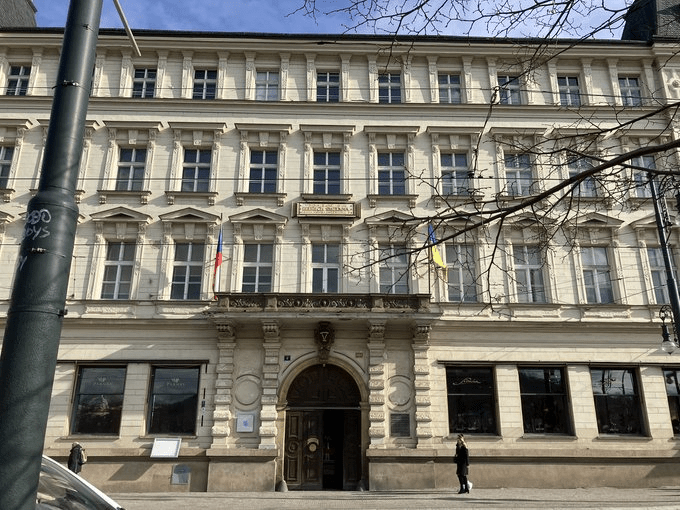
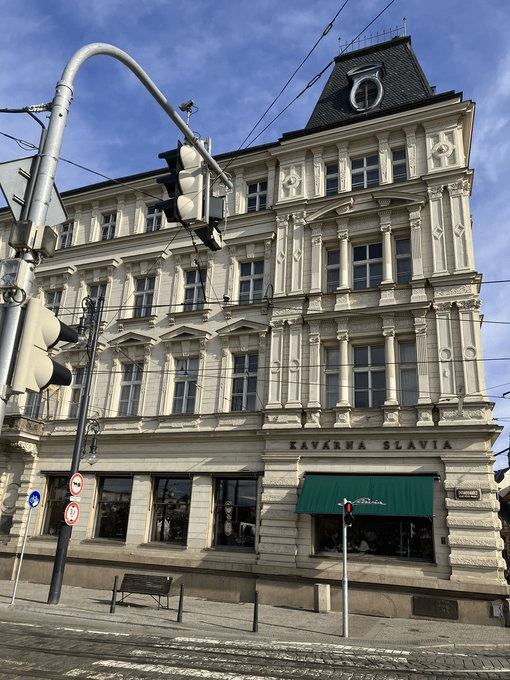
Smetana’s living quarters in the first part of the decade were at Palác Lažanských, which is on the embankment which now bears his name, and which you may know better as the home of Café Slavia.
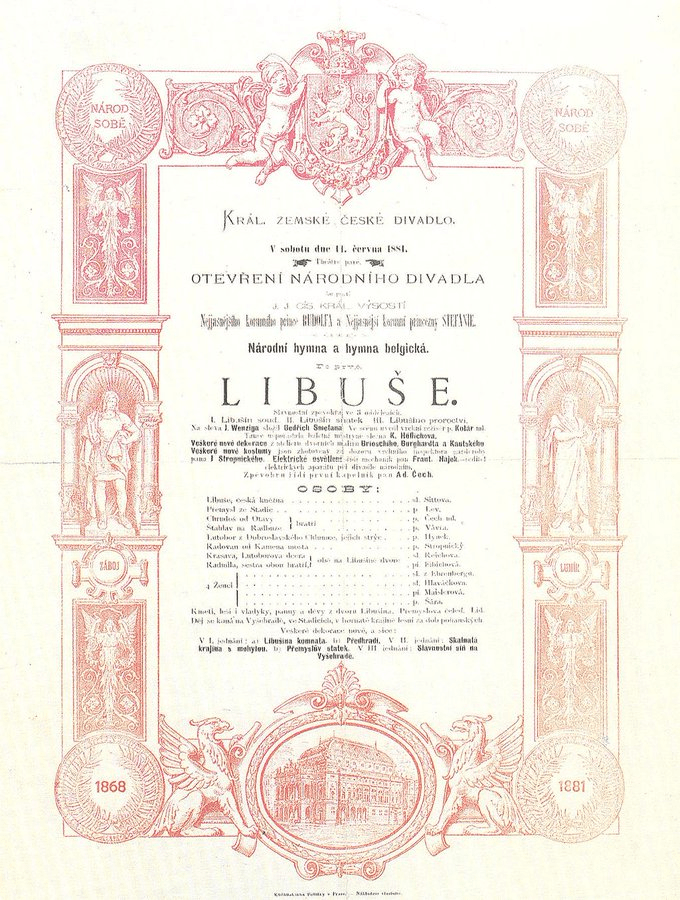
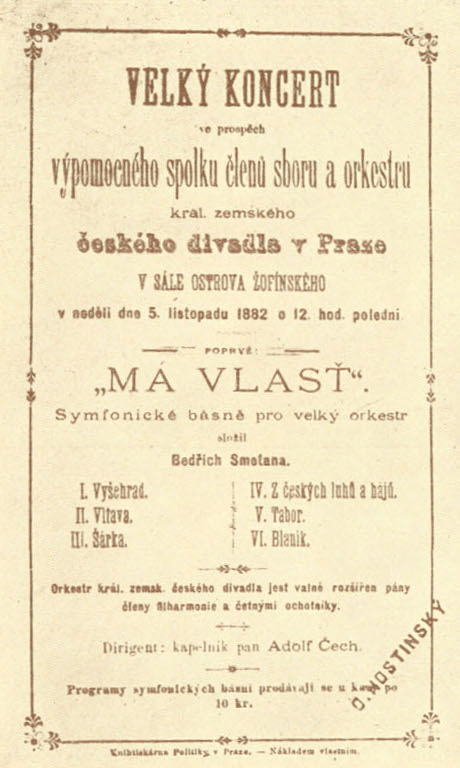
From 1873, Smetana’s health worsened – by 1874, he had become totally deaf – but still managed to compose Má vlast, a collection of six symphonic poems, and finally saw Libuše premiered at the National Theatre in 1881.
In the Czech Republic, Smetana is regarded as the father of Czech music. The annual Prague Spring International Music Festival is always opened with a performance of Má vlast.
Internationally, however, his most famous work is probably The Bartered Bride / Prodaná nevěsta, a three-act comic opera which was premiered at the Provisional Theatre in 1866.
As well as Palác Lažanských at number 2, Smetana’s name adorns the cultural centre next door at number 4.
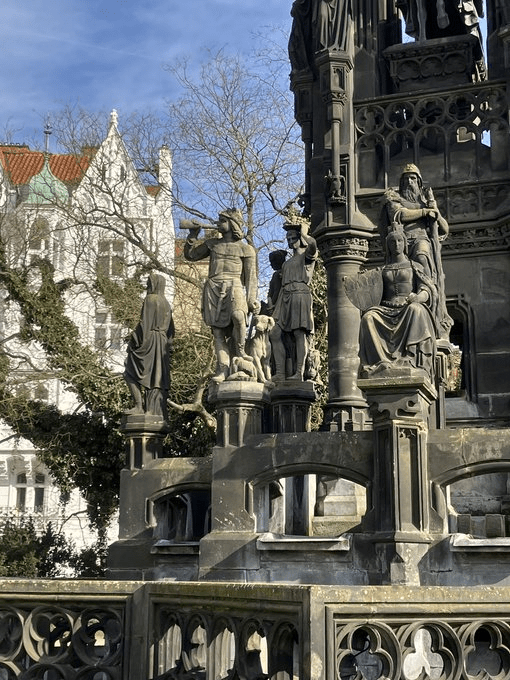
While the embankment is also noticeable for the Park of National Awakening / Park Národního probuzení, created in the 1840s and dominated by Krannerova kašna, a Neo-Gothic monument to Francis I, first Emperor of Austria (from 1804 to 1835).
Finally, back in the 1980s, you’d have seen Smetana’s face more often than you do now.
There’ll be a little bit more Smetana coverage tomorrow.
Václav Krocín was born in 1532, and grew up in Žatec, later moving to Prague, where his mother owned various properties.
After finishing his studies there in 1560, he started working for the Old Town Municipality, eventually becoming mayor in 1584.
He became known as Václav Krocín starší z Drahobejle in 1587, and became a noble seven years later. He served as mayor until 1605, the year in which he died.
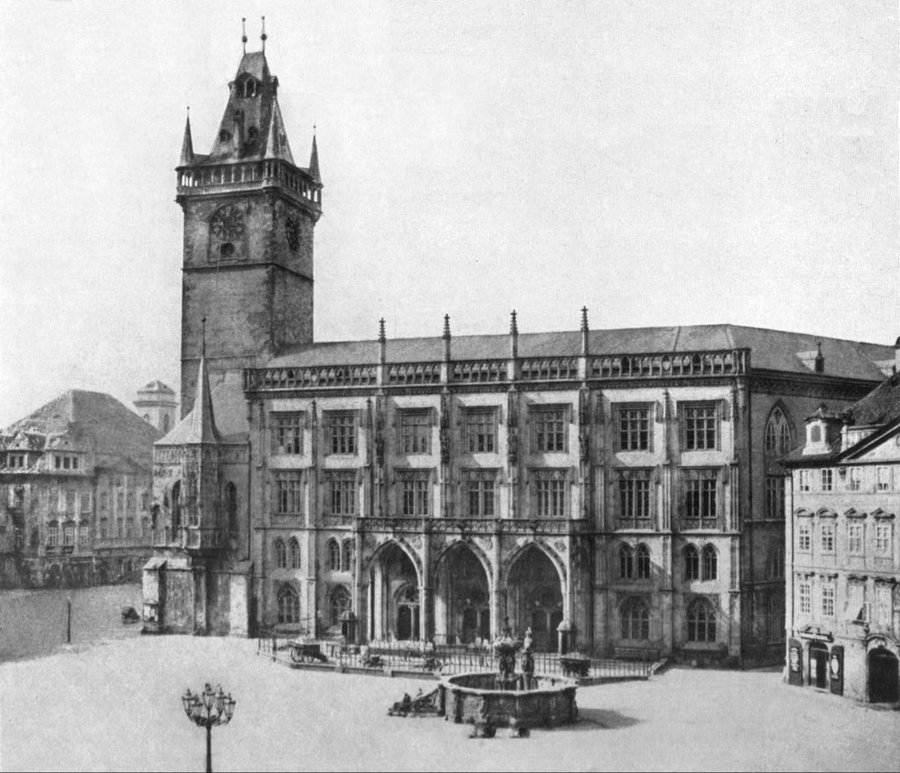
During his tenure, he ordered the construction of a fountain on Old Town Square. Built between 1591 and 1596, it was named Krocínova kašna / the Krocín Fountain.
The fountain was made of red marble – due to its ready availability, but also because it looked good – but this was at the expense of its efficiency, and it soon started to deteriorate.
In the 1850s, there were heated debates about what to do with it, given, in part, the high cost of repairing it; in 1862, it was dismantled, amid much controversy and a declaration by the authorities that Prague City Council had acted illegally in doing so.
On two occasions (1895 and 1915), a reconstruction was planned, but had to be cancelled because too many parts were missing.
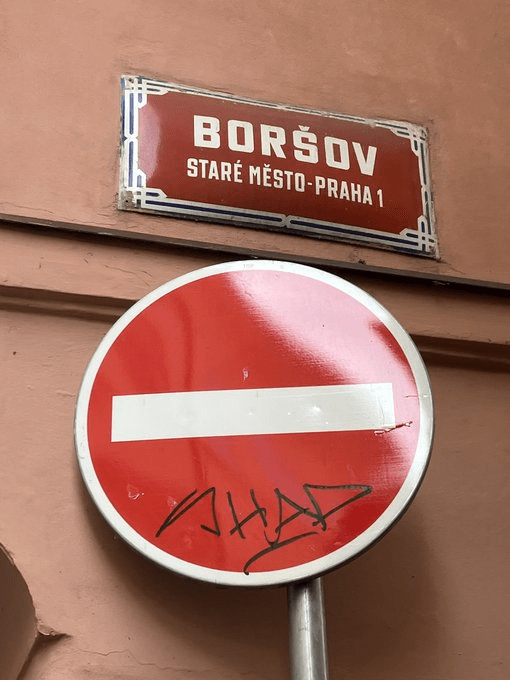
It reverted to Boršov in 1870, but, around the end of the century, the manor was destroyed as part of the ‘clean-up’ that this part of Prague underwent at the time.
Its remains can be seen in these two properties.
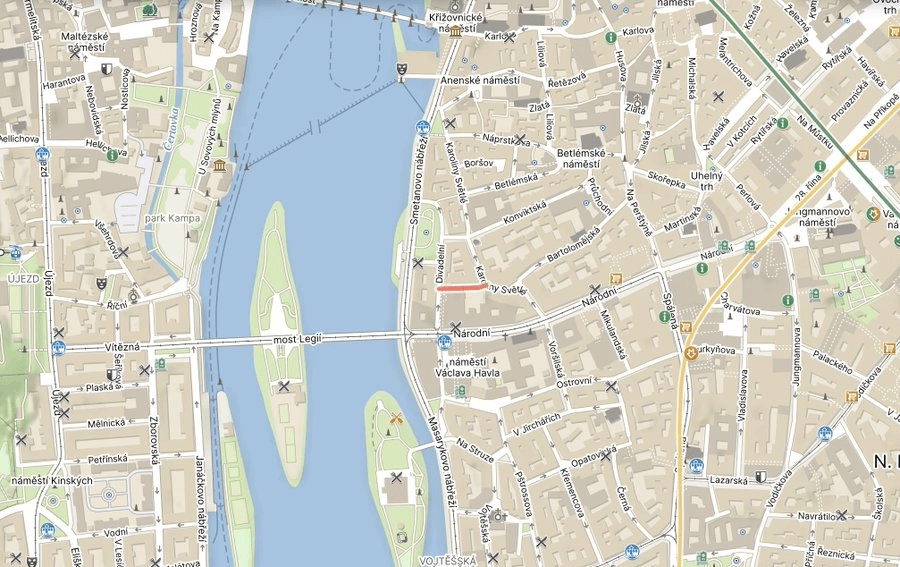
This is one of Prague’s shorter streets – about 40 metres – and is really more of a courtyard than a street.
The southern part of the street was originally called Svatoštěpánská, later being known (from 1780) as Štěpánské náměstí, both after a nearby church which is no longer there.
The northern part became known as Poštovská, because it was on the regular mail route between Malá Strana and Vienna (and there was a post office here).
This name was attributed to the whole street from 1870 onwards.
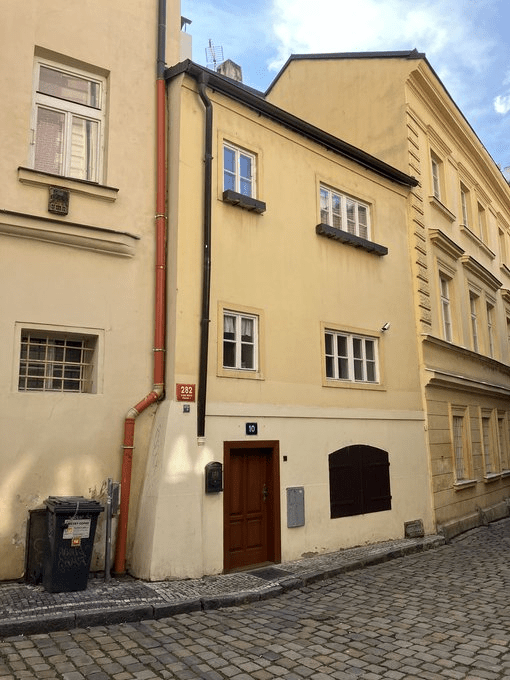
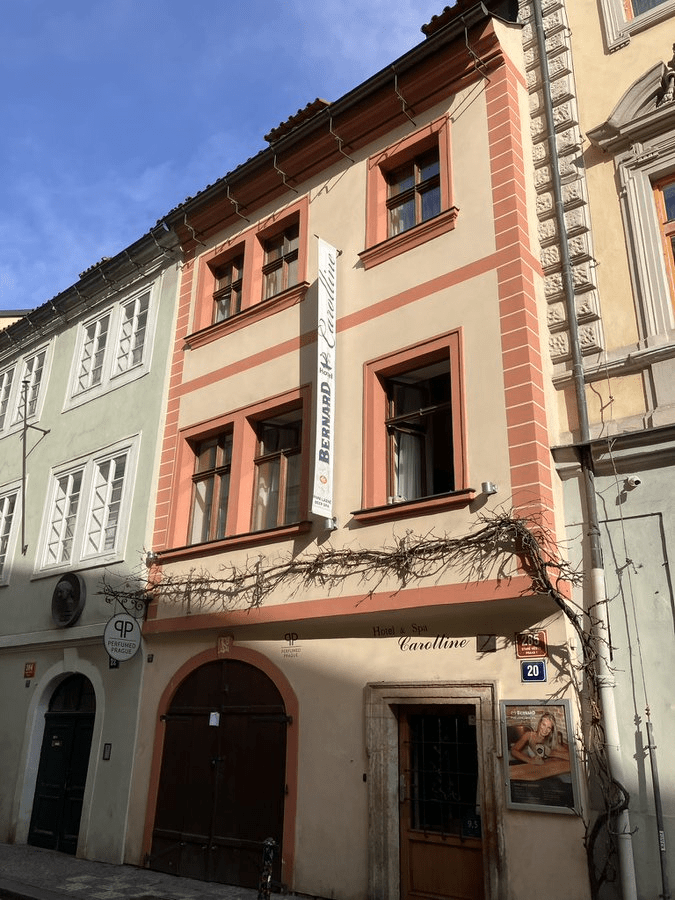
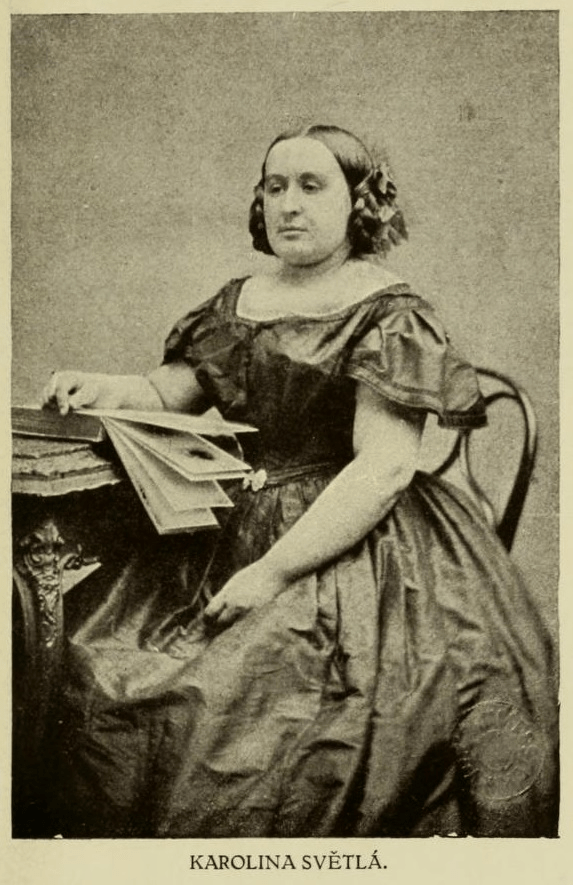
Johanna Nepomucena Rottová was born into a wealthy family on the street – at number 20 – in 1830.
Her education allowed her to learn French as well as Czech and German.
In 1852, she married her piano teacher, Petr Mužák. Their only child, Boženka, was born later that year, but only lived for three months.
Partially as a way to deal with her grief, Johanna started writing.
Her husband was from Světlá pod Ještědem (near Liberec), where she would spend her summers, and which inspired her pseudonym, Karolina Světlá.
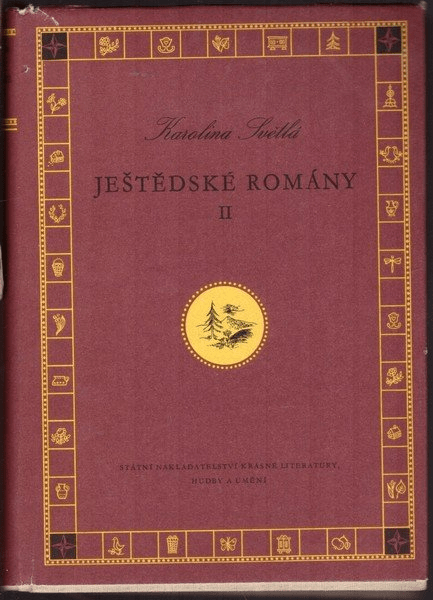
While many of Světlá’s works were about the Prague bourgeoisie, it was her rural prose – notably five novels which came to be known, collectively, as the Ještěd novels – that had the most enduring popularity.
Along with Vojta Náprstek (coming up soon), Světlá founded the American Ladies’ Club, the first Czech women’s association, in 1865; in 1871, she founded the Czech Women’s Manufacturing Association, which aimed to help girls from poor families get an education and find work.
From the late 1870s onwards, Světlá had to dictate her works to her niece, Anežka Čermáková-Sluková, due to an eye condition.
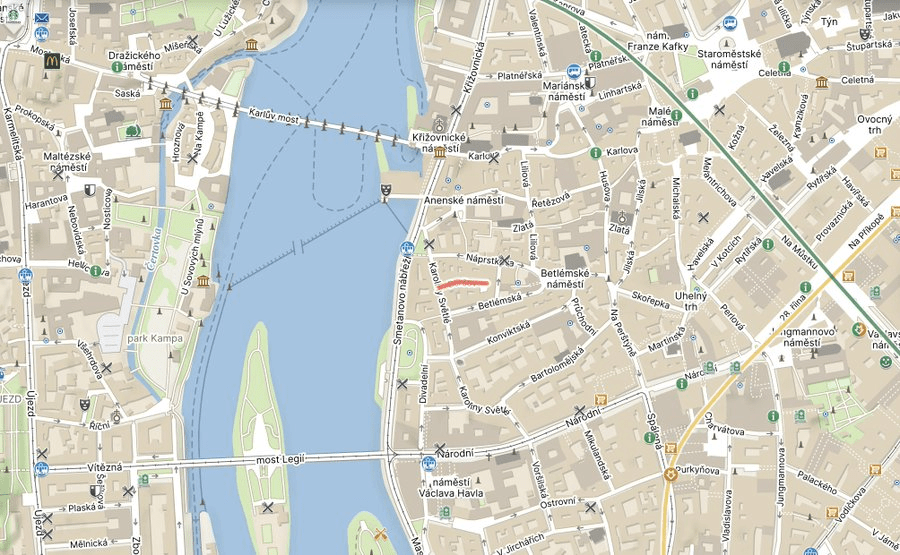
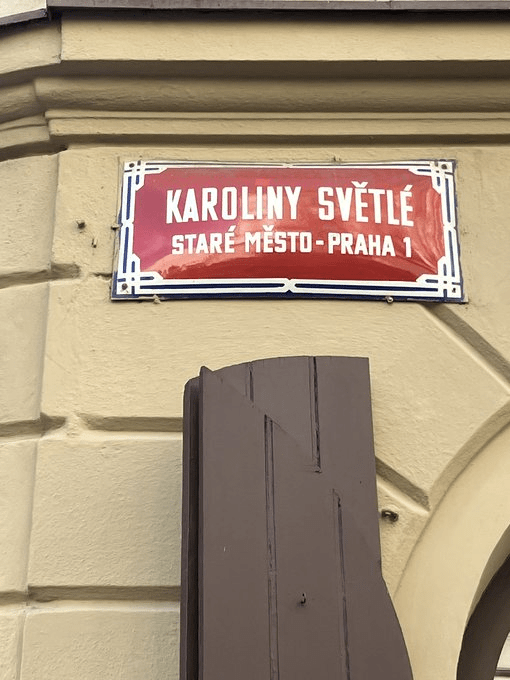
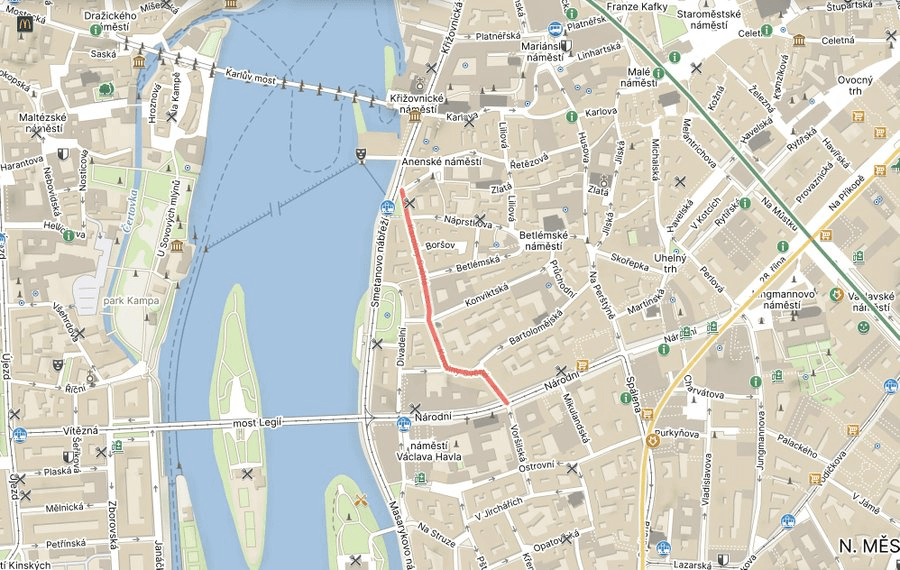
Světlá died in 1899 and is buried in Olšany Cemetery. The street had been named after her a year earlier.
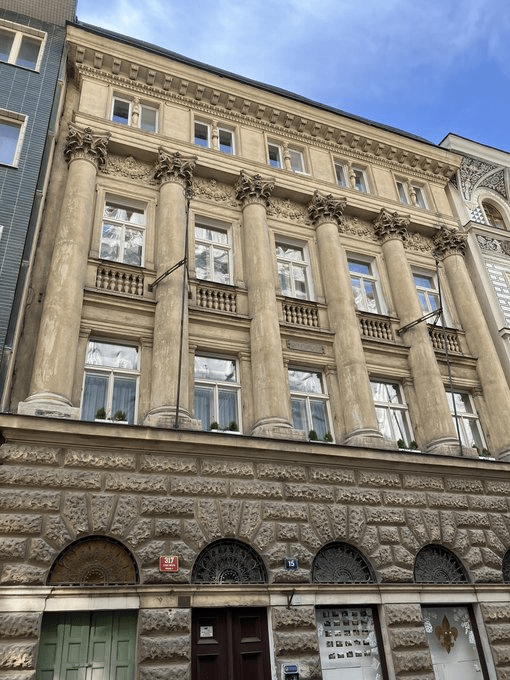
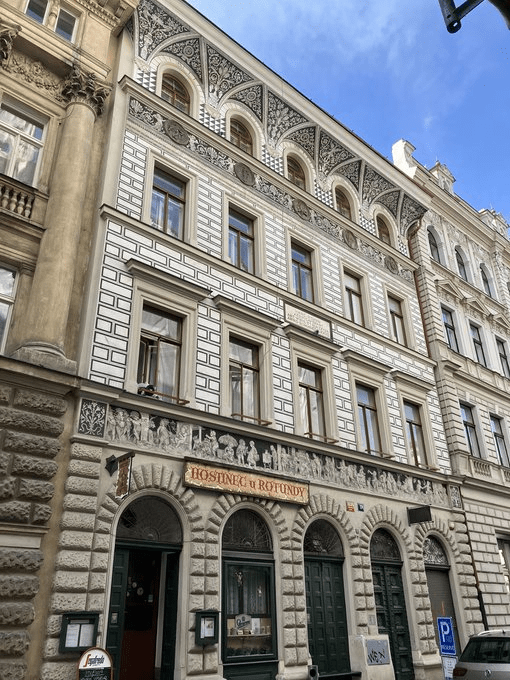
The street is also known for its Neo-Renaissance buildings designed by Antonín Wiehl and Jan Zeyer in the 1870s (specifically numbers 15 and 17 – see below).
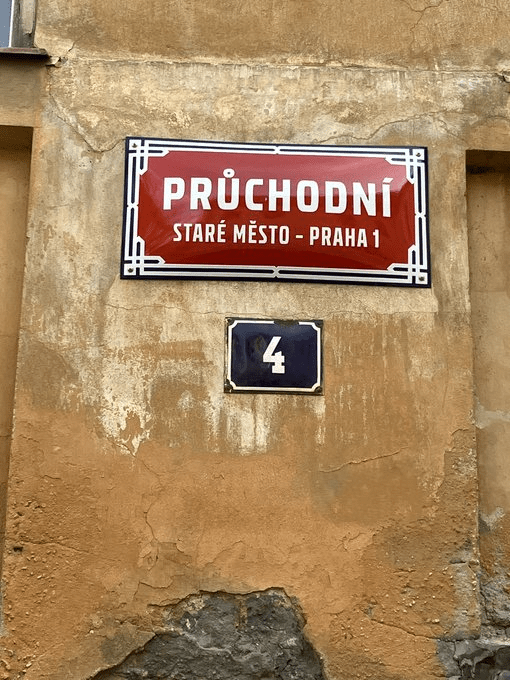
A ‘průchod’ is a passage(way) or alley(way), much like a ‘pasáž’ (except you wouldn’t also use ‘průchod’ to refer to a shopping arcade).
It can also be used to denote the action of going through something, rather than the physical space itself.
As in ‘Průchod stavbou zakázán!’, which translates something like ‘Sod off, this is a construction site and we’re trying to work, so cross over to the other side or the road like everyone else is doing, FFS, I hate tourists’.
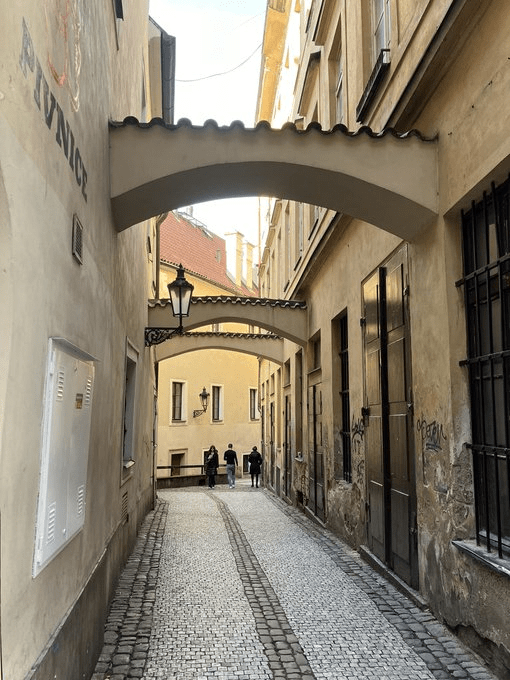
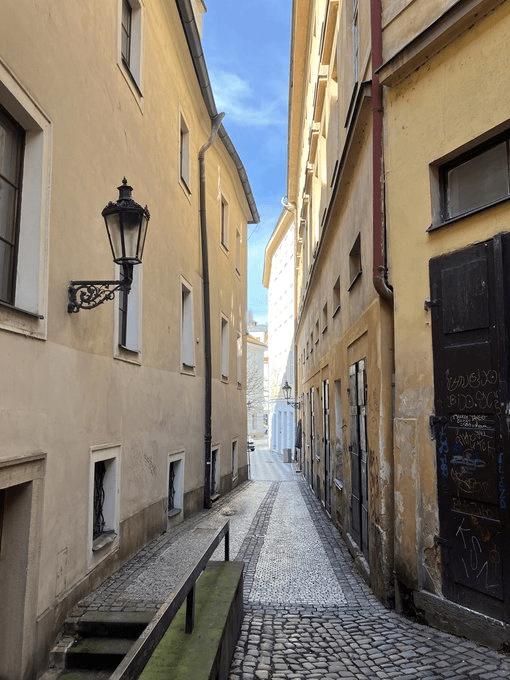
It outlived the konvikt, and was promoted to street status in 1905, when it was named after the composer Karel Bendl (1838-1897), who had worked nearby.
The street got its current name in 1968. It’s hardly the district’s most happening street, but it can make for some of its most atmospheric photos.
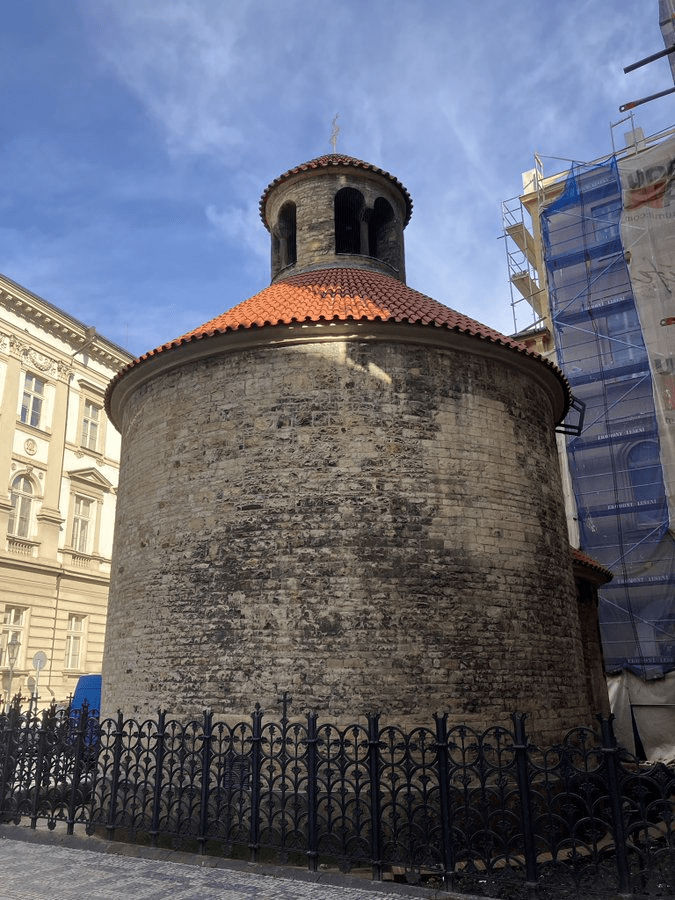
Originally, this street was called U sv. Kříže (St Cross), named after a rotunda which was built around 1125. Pleasingly, it’s still there and was done up in 2022.
In the 1600s, the street was renamed ‘Horní Solní’ due to the presence of a nearby salt warehouse.
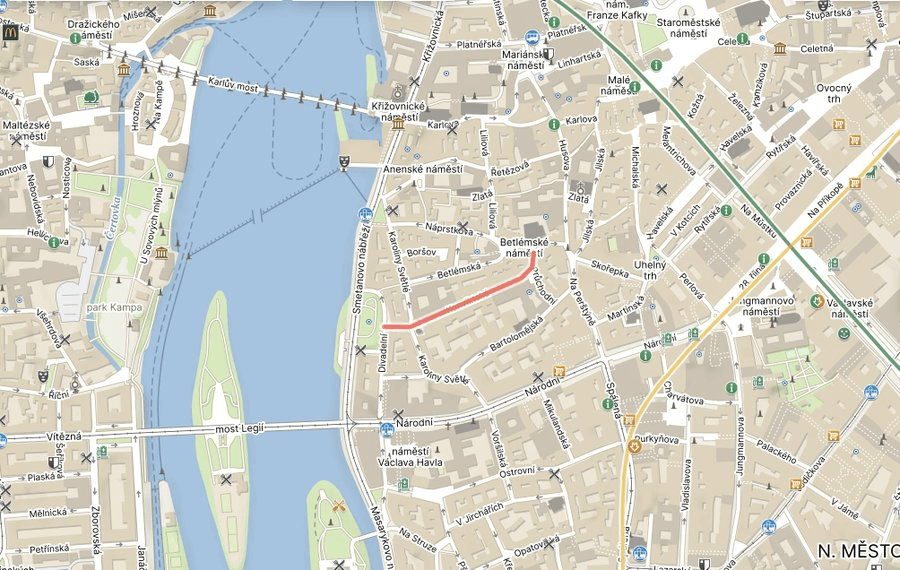
In Latin, ‘convīctus’ means ‘communal life’ (or, alternatively, a ‘banquet’ – hence ‘convivial’).
In Czech (and German, albeit with a capital K), ‘konvikt’ came to mean a common home with some sort of spiritual element – such as a seminary. In Austria, ‘Konvikt’ can also be used to denote a Catholic boarding school.
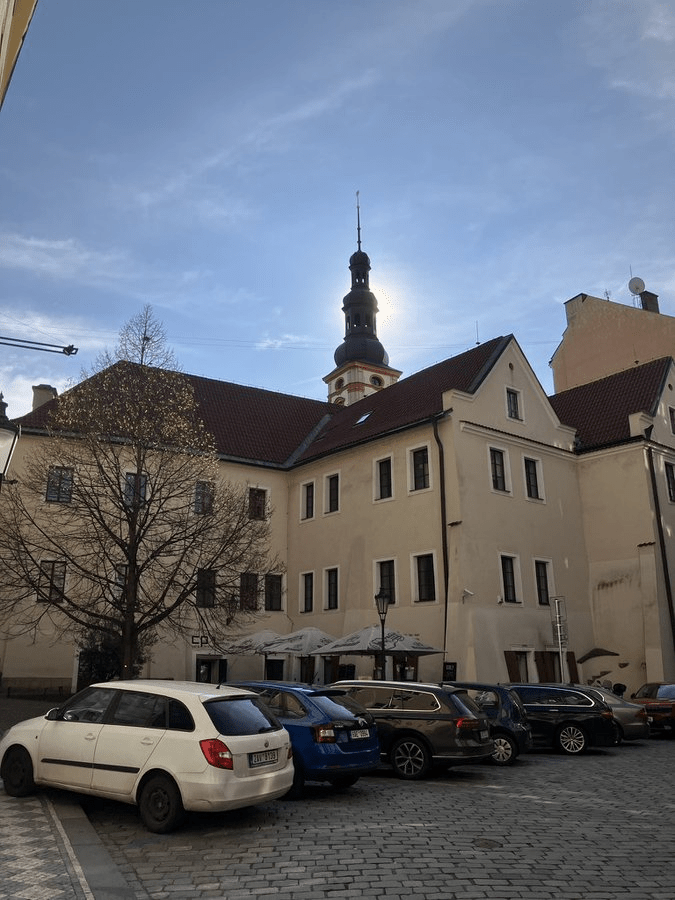
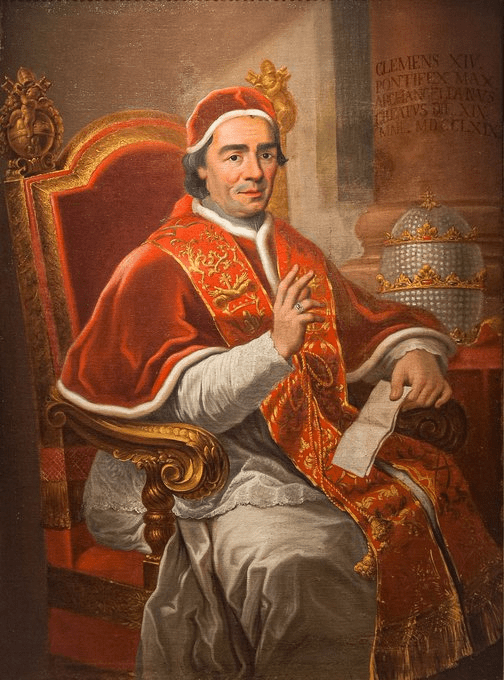
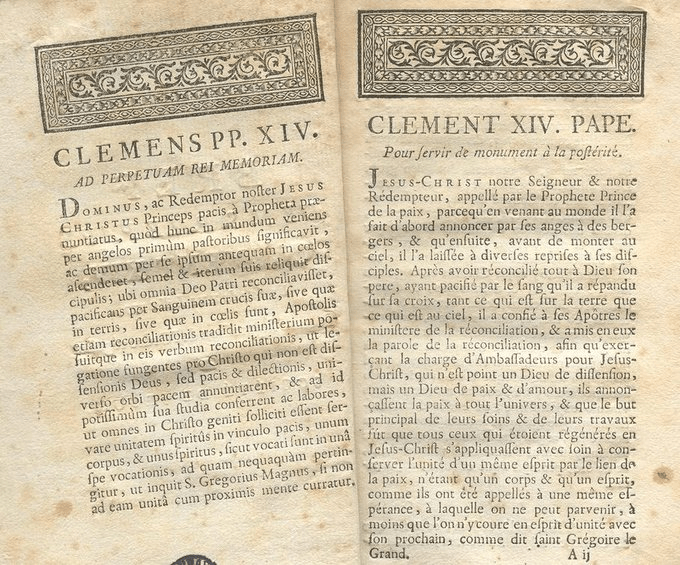
It lasted for over a century, until 1773, when Pope Clement XIV issued a papal brief declaring that the Jesuits were no longer a force for good and should be dissolved.
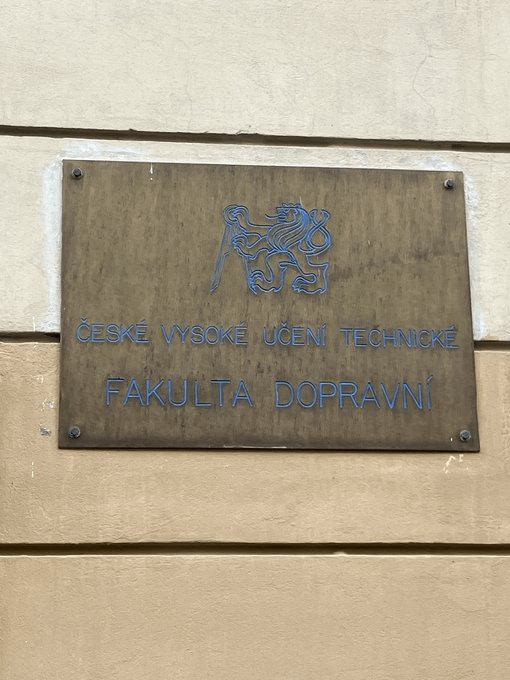
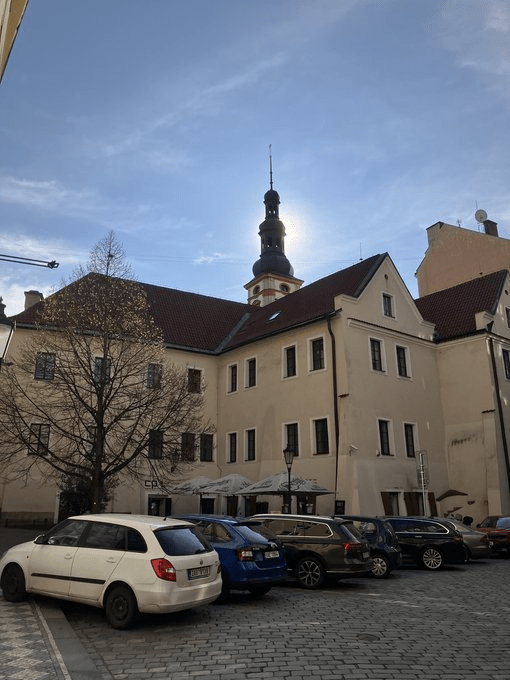
Number 22 in the street is the Czech Technical University’s Faculty of Transportation Sciences.
In the 1200s, this area was a poor neighbourhood; one of its most well-known buildings was called ‘Benátky’ (Venice), and so the street’s first name was Benátská.
The street then became known as V Jeruzalémě or Jeruzalémská.
Accommodatino for them was provided in the chapel, named after Mary Magdalene.
In 1660, the Jesuits turned this into a boarding school, and the street’s named was changed to Horní Konviktská (more on that tomorrow).
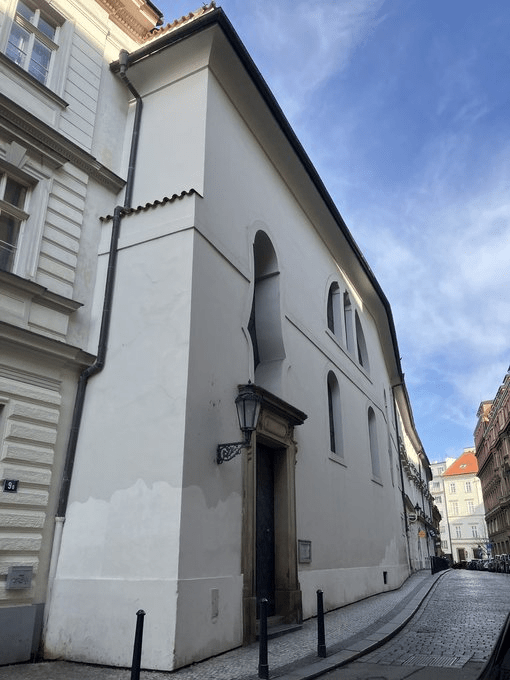
In the 1720s, the Jesuits decided to build a new, Baroque church – the Church of St. Bartholomew, hence Bartolomějská.
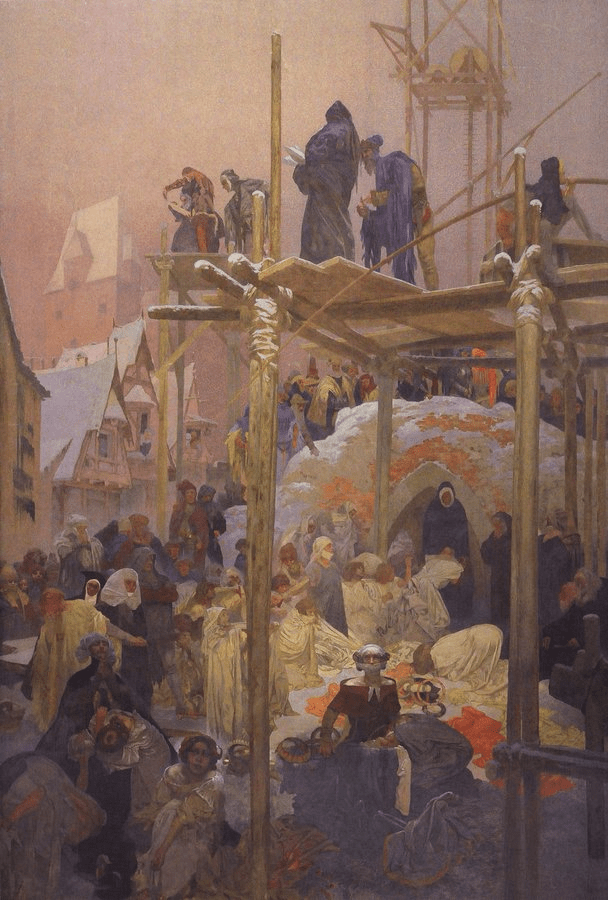
My photos show very, very little of the church, so maybe enjoy this painting by Václav Jansa instead.
When the Jesuit order dissolved in 1773, the church became state property. It was used by the Grey Nuns of the Third Order of St. Francis from 1835 to 1949 – and again since 1995.
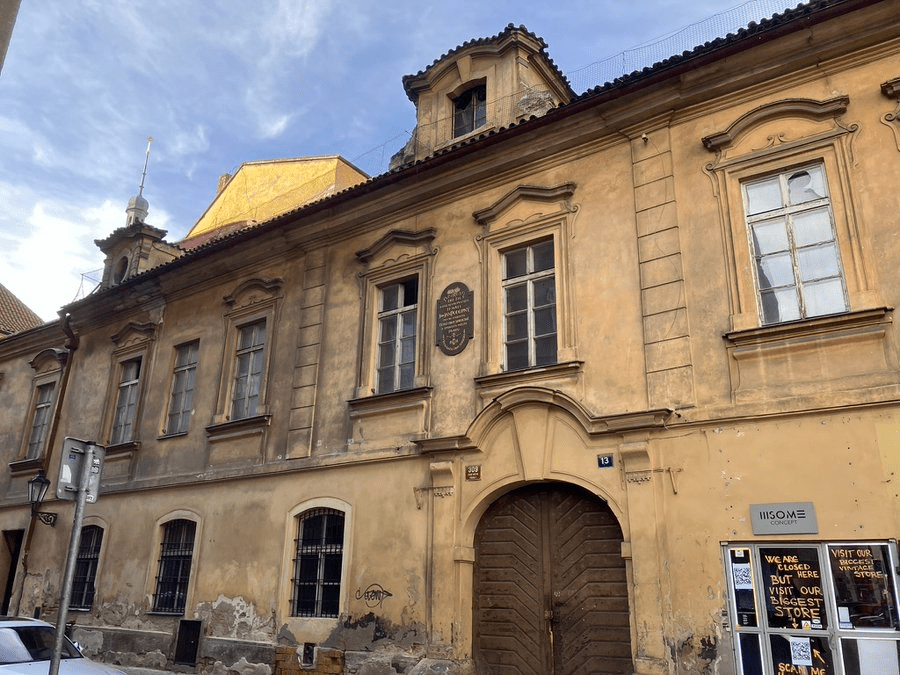
Number 13 in the street – one of those houses that you feel needs a clean, but which you’d miss in its current state if it got one – was lived in (and died in) by Jan Podlipný (1848-1914), once mayor of Prague but also of the Sokol organisation (https://whatsinapraguestreetname.com/2024/08/26/prague-2-day-114-sokolska/).
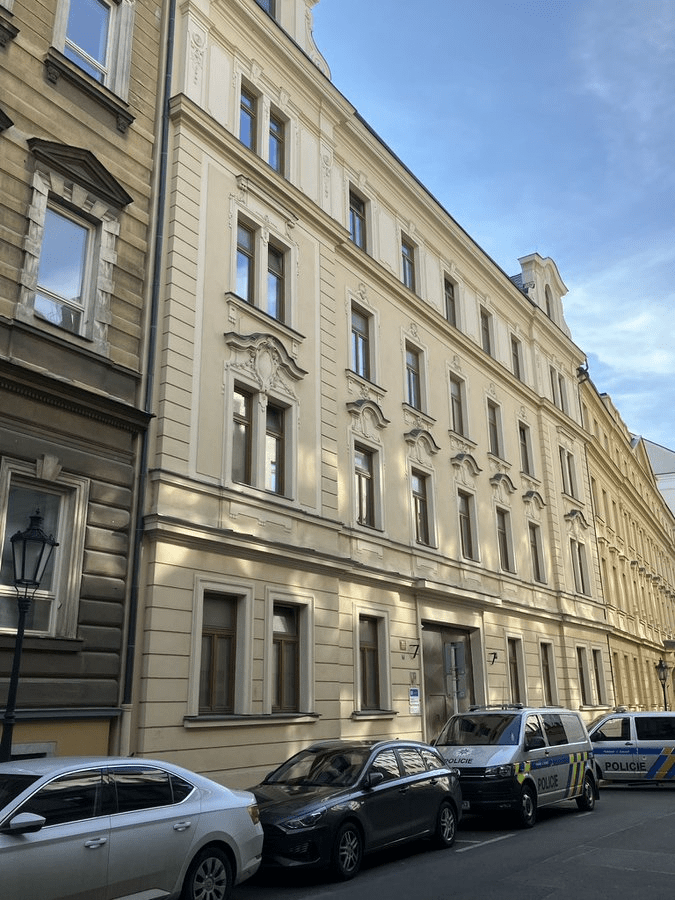
Meanwhile, number 14 is as stern as it looks – it’s the district directorate of the Prague 1 police, and, until 1990, was the headquarters of the StB, communist Czechoslovakia’s secret police force.
And number 12 is the headquarters of the Criminalistics Institute of the Czech Republic.
And number 6 is the Criminal Police and Investigation Service.
Pernštejn Castle is located about 40 kilometres northwest of Brno. It was founded in the second half of the 13th century, and is what we would classify as ‘well preserved’.
The name ‘Pernštejn’ is derived from the original German name for the castle, ‘Bärenstein’ (the Bear Rock).
Obviously, the Pernštejn clan wasn’t short of cash, and, in 1524, one of them – Jiřík Kasík z Pernštejna – bought number 5 on this street, which subsequently became known as Pernštejnský dům.
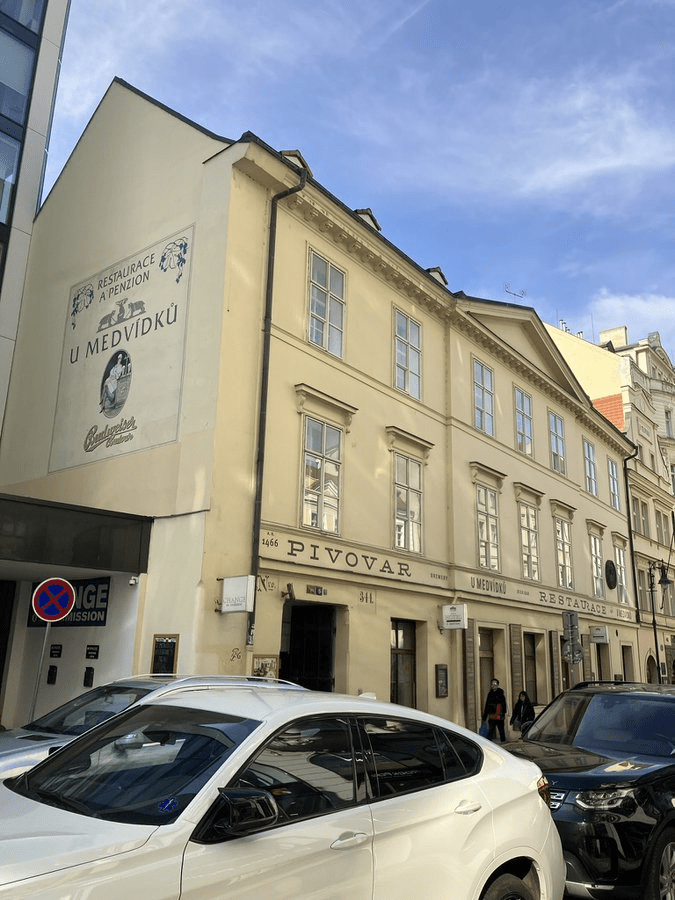
Next door, number 7, U Medvídků – literally The Little Bears – was one of Prague’s oldest breweries, dating back to the 1430s. Its name derives from one of its owners in the 15th century, Jan Nedwidek.
The brewery closed in 1898; the current hotel-restaurant-microbrewery combo was created after the Velvet Revolution. As part of that process, number 5 was attached to number 7.
The most famous inhabitant was František Ladislav Rieger in his student days.
When I was at university in the UK, I too lived directly upstairs from the college bar. I wonder if this was as counterproductive for Rieger as it was for me.
Sadly, it was destroyed in 1949-50 and replaced with something a whole lot more corporate (cool reflection, though).
Further down, number 12 is called Purkrabský pivovar – while ‘pivovar’ means ‘brewery’, it hasn’t been one for a long time, and currently hosts the National Monument Institute.
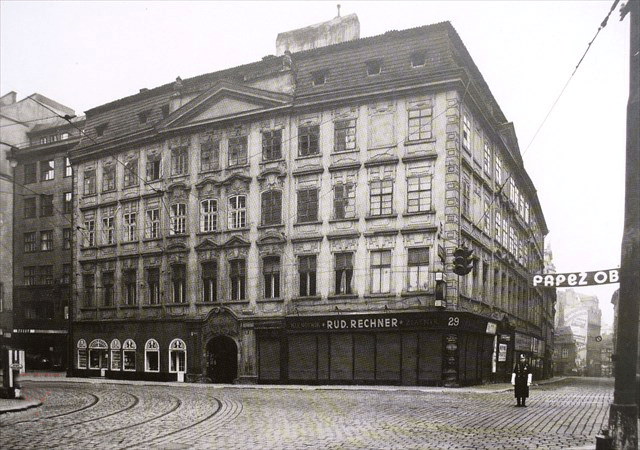
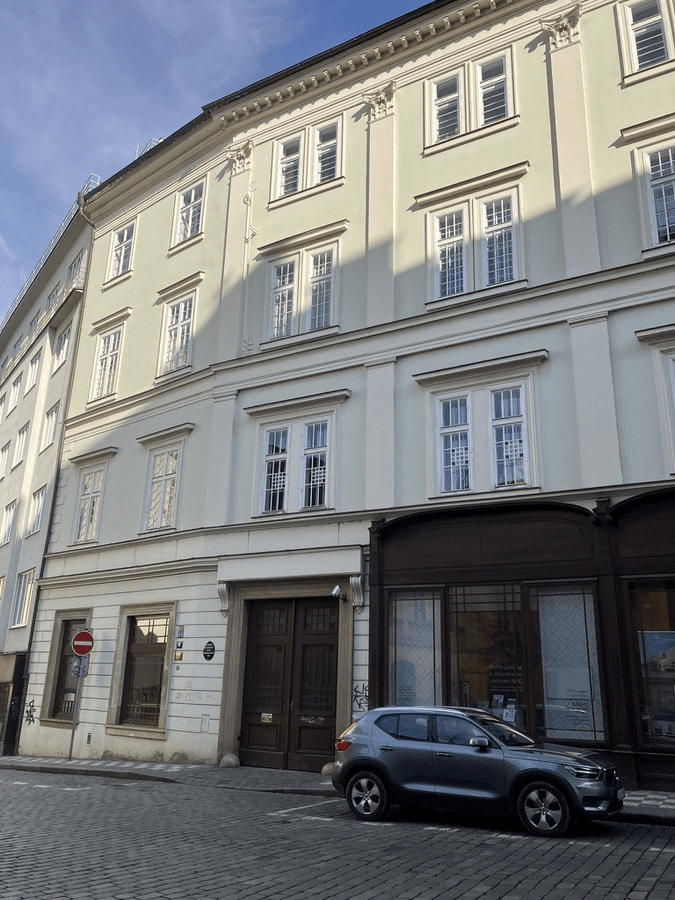
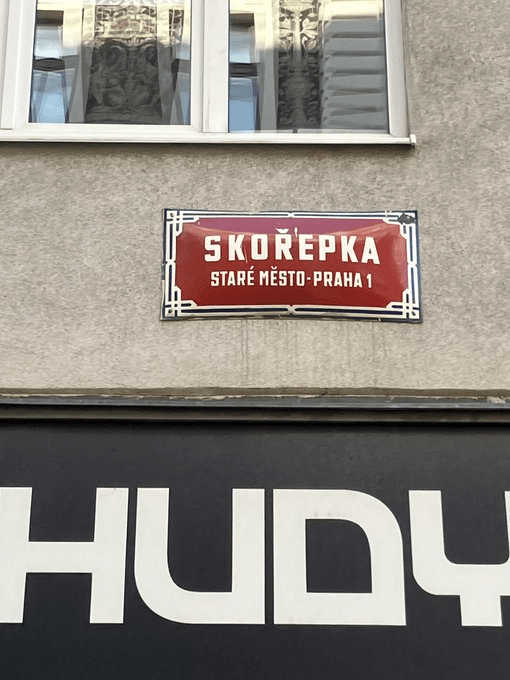
In the early 1500s, a hat-maker called Vít Skořepa bought number 10 and ran his business from there. It became known as Dům U Skořepů (with the alternative name of Dům U Tří zlatých lvů (the Three Golden Lions)).
Mozart wasn’t the only person of note to live in the street – number 5 was lived in by the sculptor Jan Brokoff (1652-1718), and also his son Ferdinand (1688-1731).
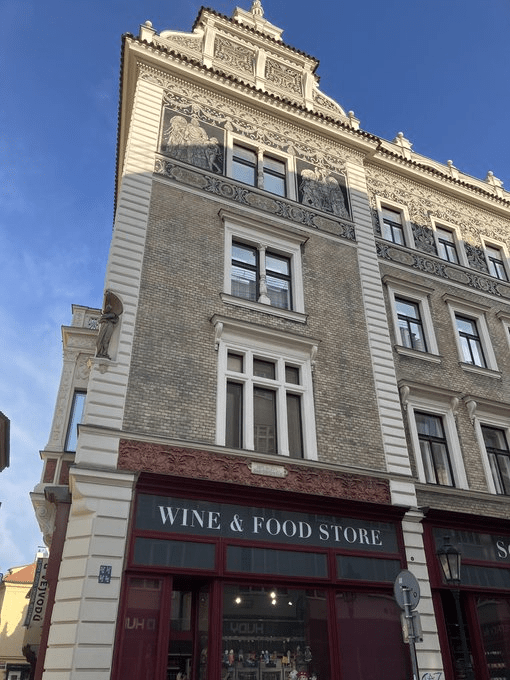
Number 1, the Neo-Renaissance U Mladých Goliášů (The Young Goliaths), is possibly the most impressive building on the street.
Number 3 – which you can see on the right-hand side of the next picture – was the birthplace of Petr Brandl, the most famous Czech Baroque painter.
While Dům U Šturmů, at number 9, was the birthplace of Vojta Náprstek (1826-94), a philanthropist, politician and journalist. More on him in about ten days.
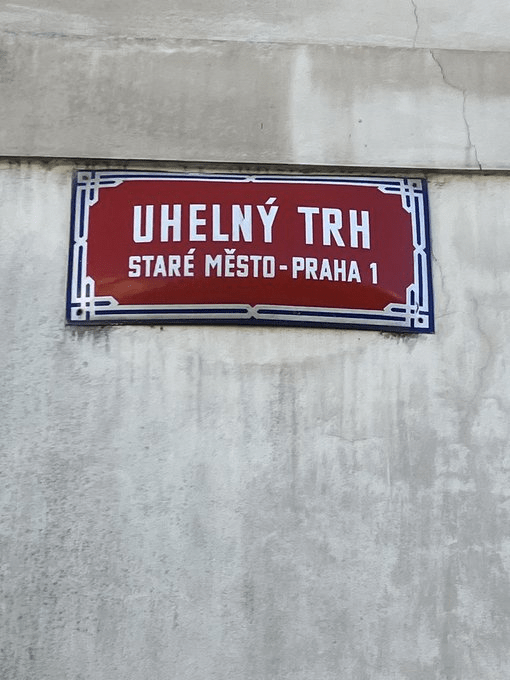
Uhlí is coal; a trh is a market. Coal made from wood is charcoal, and, in Czech, that’s dřevěné uhlí (literally ‘wooden coal’).
Sales of charcoal took place until the 1800s, when hard coal became more popular.
Uhelný trh became a place you’d go to to buy soup and other hot meals, as well as flowers. Meanwhile, the smelter that was in the centre of the square until 1807 was disposed of.
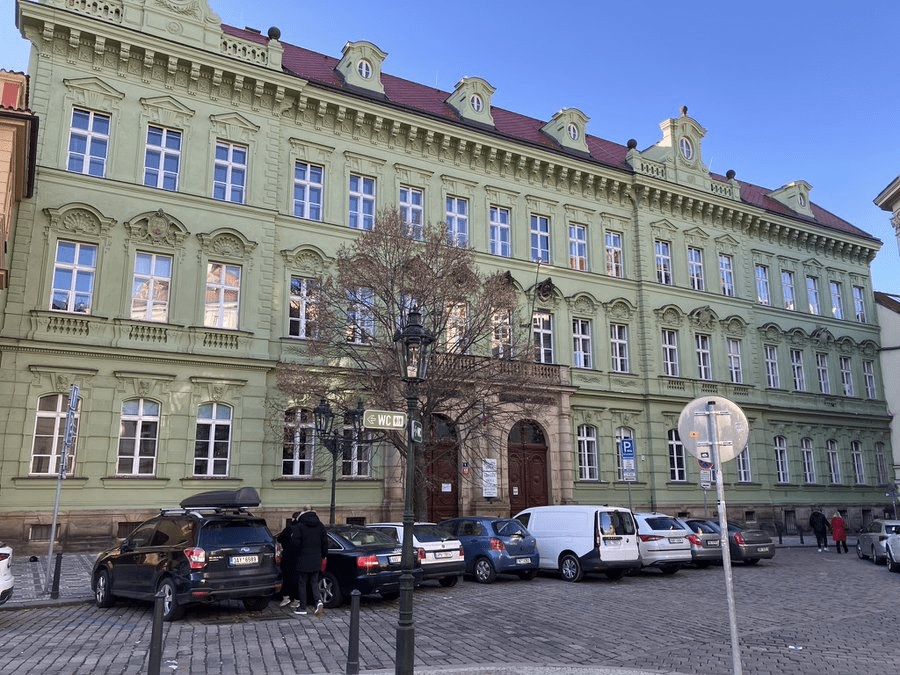
Which was twenty years after a young composer from Austria had stayed at number one on the square. His name was Wolfgang Amadeus Mozart.
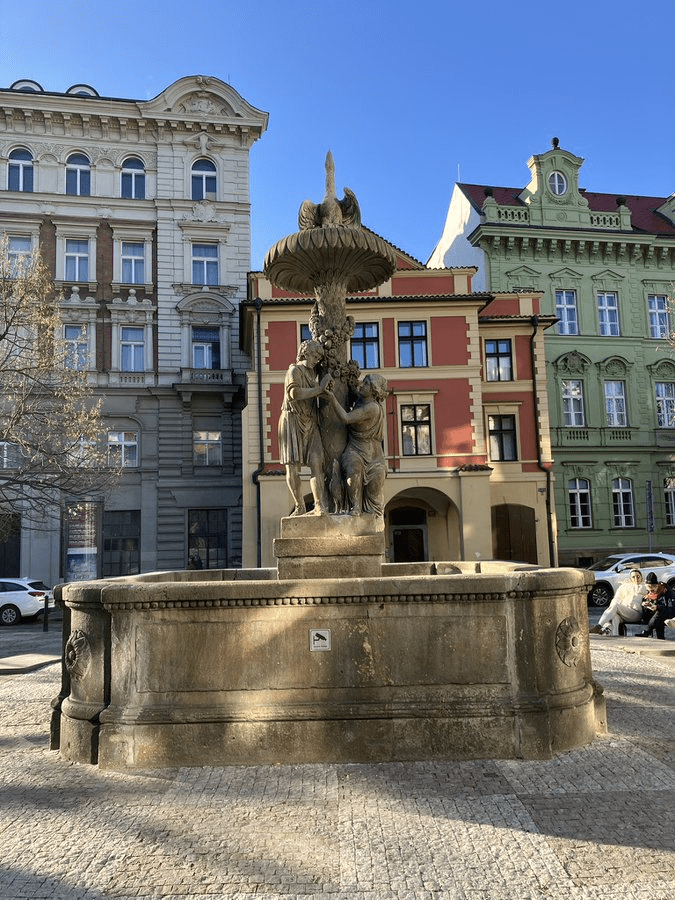
In the 1830s, a fountain was placed where the smelter had been; it was removed in 1894, and what you see now is the Wimmer Fountain, which was added in 1951.
The house behind the fountain is the only ancient building on the square that still exists; it’s called U tří stupňů (The Three Degrees) and used to be a cafe, mainly frequented by those who worked at the market.
Meanwhile, you can see the original fountain – somewhat less grand – in this photo.
The school building on the square was the scene of an incident we’d rather forget.
It happened on 15 March 1939, also the day that President Emil Hácha signed away Czechoslovakia’s independence to Nazi Germany.
The Mussolini-inspired National Fascist Community (NOF) – which had never won more than 2% of the vote – occupied the building, and asked its supporters to occupy others in Prague. This was meant to be in support of the German occupiers, not against them.
However, NOF was vehemently anti-Germany, whoever was in power there, and the occupiers (of Bohemia and Moravia) managed to get the occupiers (of the school) out within three days. The NOF had ceased to exist by the end of 1939.
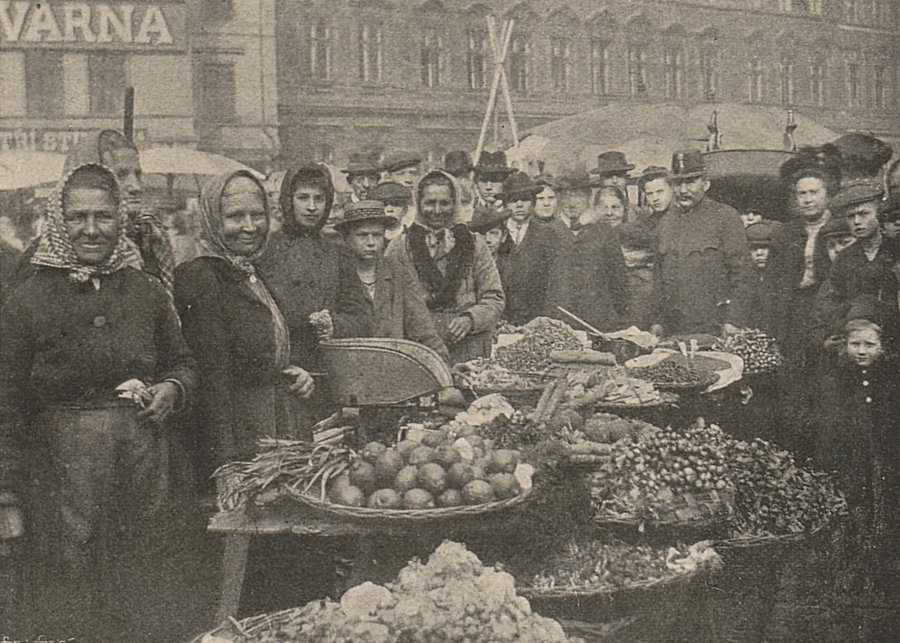
In order to end this post on a more positive note, here’s a great people of people going to / working at the market in 1906.
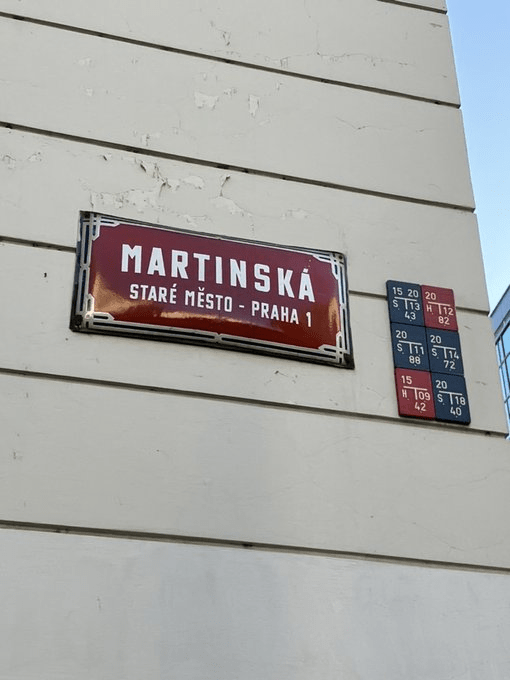
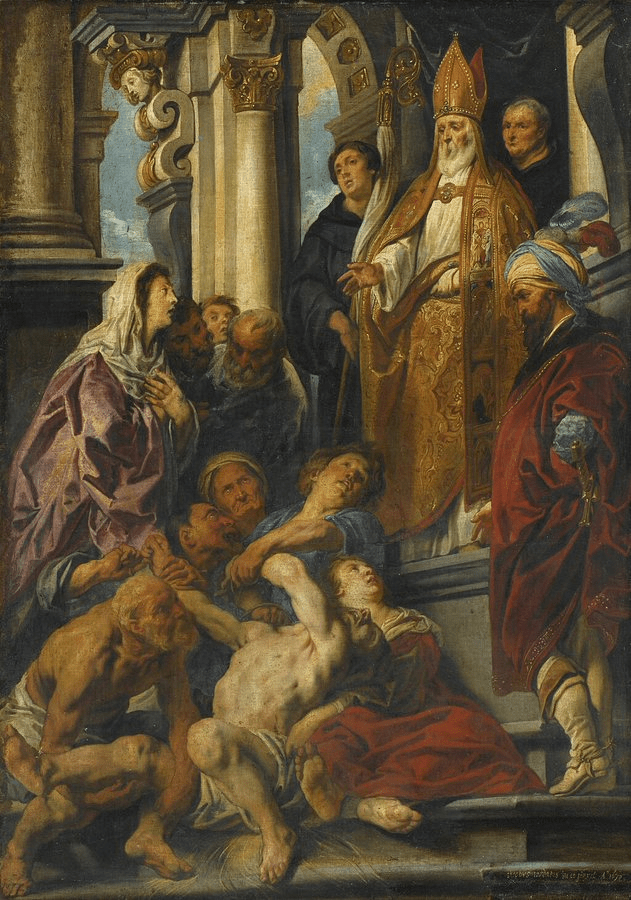
Between 1178 and 1187, the Church of St Martin was built, and, after that, the name of the settlement was updated to Újezd u Svatého Martina.
St Martin is Martin of Tours, actually from Pannonia (modern-day Hungary), but also the third Bishop of Tours, and later the patron saint of the French Third Republic.
In the 1230s, Václav I had city walls built. One result was that the southern side of the church was built into these; another was that the church became known as Kostel svatého Martina ve zdi (Church of St Martin in the Wall).
This also resulted in most of Újezd being placed outside the walls of the Old Town (the church being the obvious exception).
St Martin also got a gate named after him (yes, yes, it’s a shame nobody gives guided Tours of these, etc., etc.).
The church got a Gothic makeover in the 1350s; as it was used by Hussites in the 1400s, it was one of the few churches that was spared from destruction in the Hussite Wars.
It wasn’t so lucky in 1784, when it was abolished by Joseph II; subsequently, it was converted into residential space (photo from 1890 by Jindřich Eckert).
Reconstruction took place in 1905, going back to the Gothic style; archaeological finds from the original church were transferred to the City Museum.
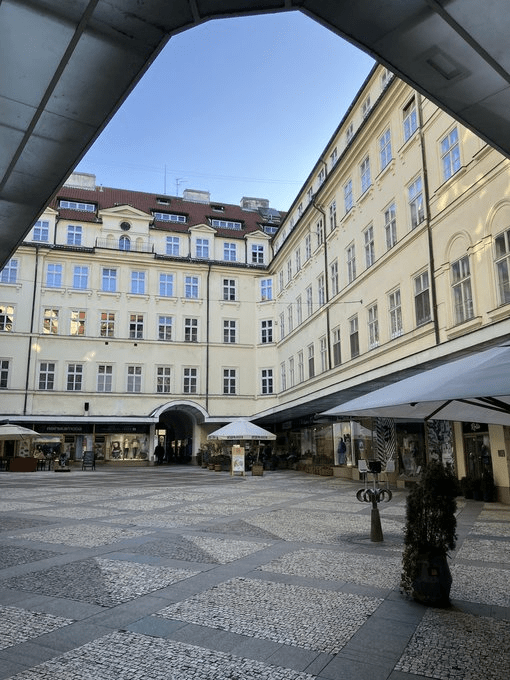
Martinská also features one of the entrances to the courtyard of Palác Platýz. I know I mentioned this on the Národní post, but it’s worth highlighting again as it’s been nicely reconstructed.
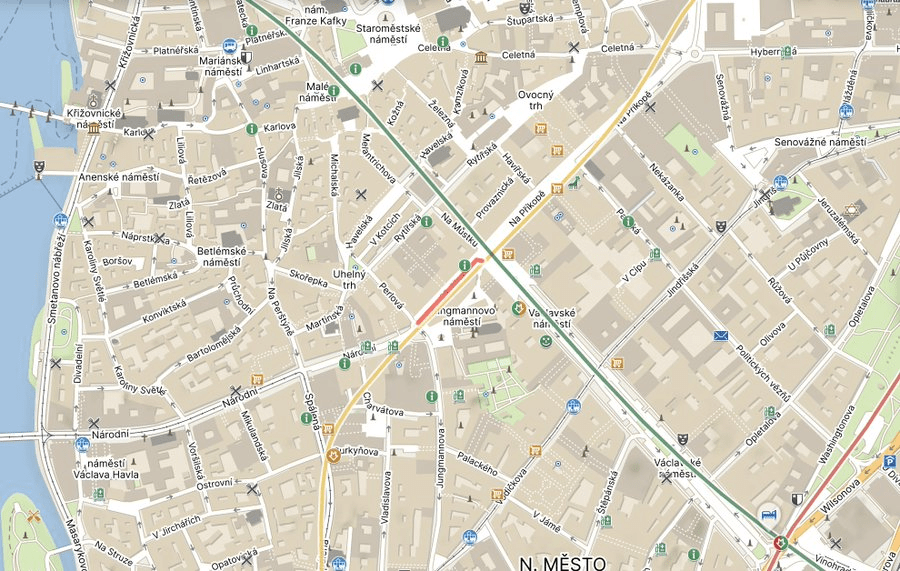
There was a gate on the southern side of the street, leading to the monastery, so the street became known as ‘U fortny k Panně Marii Sněžné’, or for those who didn’t feel like saying that all the time, ‘U fortny’ (fortna being derived from the German Pforte).
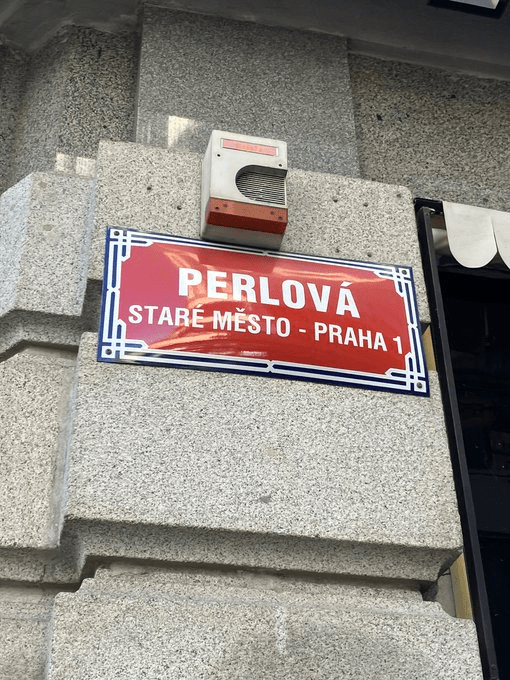
In 1641, one Vojtěch Had z Proseče bought a house on the street. He was ennobled in 1649, and decided to be known as Vojtěch Had z Proseče a z Perlštejna.
That last addition to his name is the most likely reason for the street now being called Perlová.
Number 10 – clearly not the version that Sir Had lived in – was, from 1865, the first headquarters of the Mortgage Bank of the Kingdom of Bohemia / Hypoteční banka Království českého.
There wasn’t any sign of this when I was there recently, but there was a man who was very stressed and in a hurry, and who got very sweary when I (a few metres in front of him) stopped to take some photos of buildings and he couldn’t get past (note: he could).
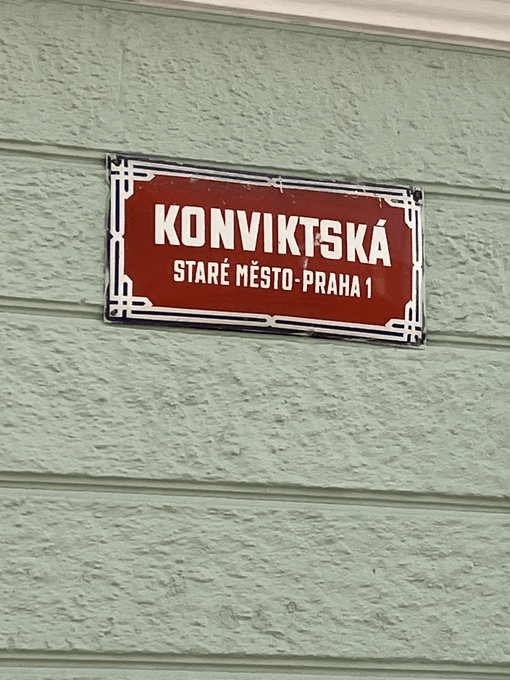
Originally published on X on 15 February 2024. That street sign needs a clean.
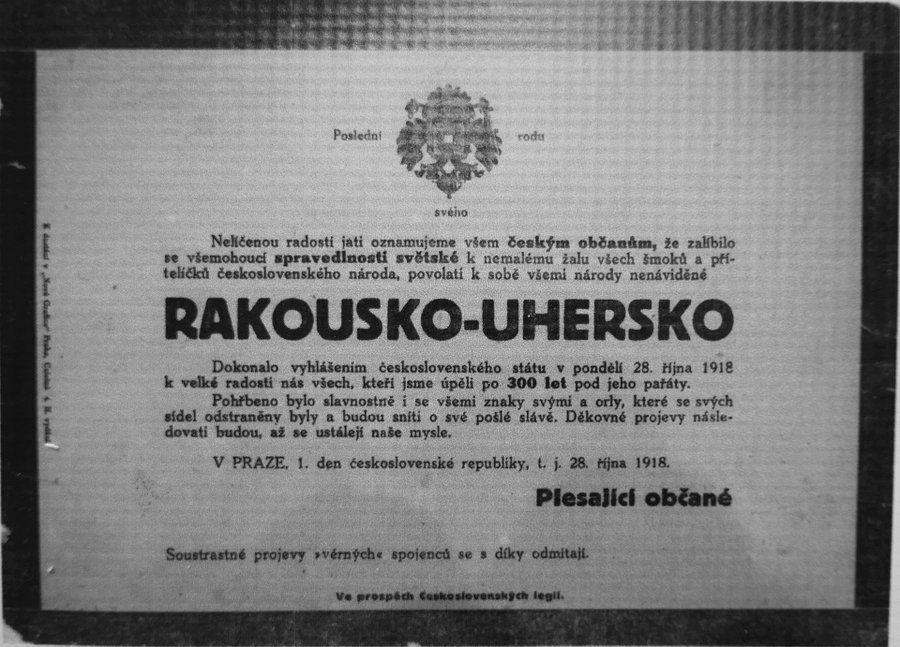
On 28 October 1918, a delegation of the Czechoslovak National Committee was in Geneva, as was Edvard Beneš, not a member, but the most prominent member of the anti-Austrian resistance.
They agreed that a Czechoslovak Republic should be created, with Tomáš Garrigue Masaryk (still in the USA) as President, and Karel Kramář – founder of the Committee – as Prime Minister.
Back in Prague, two members of the Committee, Antonín Švehla (later a three-time Prime Minister) and František Soukup (soon to be Czechoslovakia’s first Minister of Justice), went to Václavské náměstí, specifically to where Lucerna is now (https://whatsinapraguestreetname.com/2024/09/15/prague-1-day-114-vodickova/).
The reason? This was the location of the Prague branch of the War Grain Institute, and Švehla and Soukup wanted to stop grain from being transported to the front (they also made the staff working there swear allegiance to the soon-to-be-formed state).
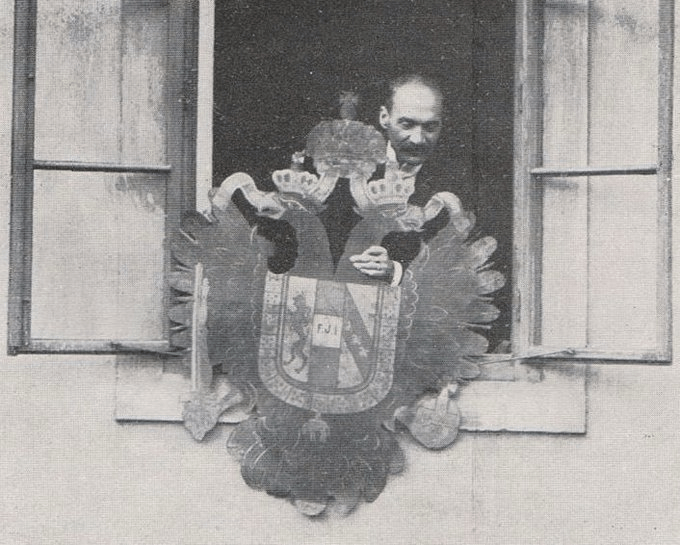
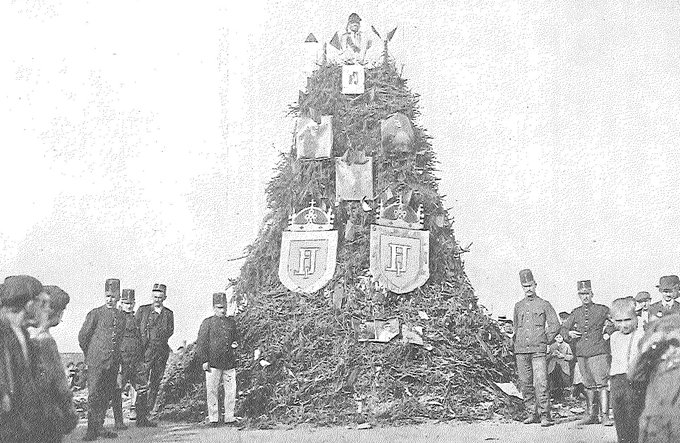
On the same day, Austria-Hungary said it was going to recognise the autonomy of the peoples living in the Empire; people took this to mean that the Empire was acknowledging Czechoslovakia’s independence, and took to the streets (not just in Prague, of course) to celebrate.
And to tear down / paint over / burn stuff that reminded them of that Empire.
Meanwhile, Isidor Zahradník, a priest, gave a speech by the statue of Svatý Václav Plus Horse and declared that Czechoslovakia was now a reality.
In the evening, the National Committee issued the Act on the Establishment of an Independent Czechoslovak State.
Its signatories – Antonín Švehla, Alois Rašín (whose writing this is), Jiří Stříbrný, Vavro Šrobár and František Soukup – would come to be known as the Muži 28. října / Men of October 28.
This patriotic walk would start a bit further east if Na příkopě had been given a nice new Czechoslovak name too, though.
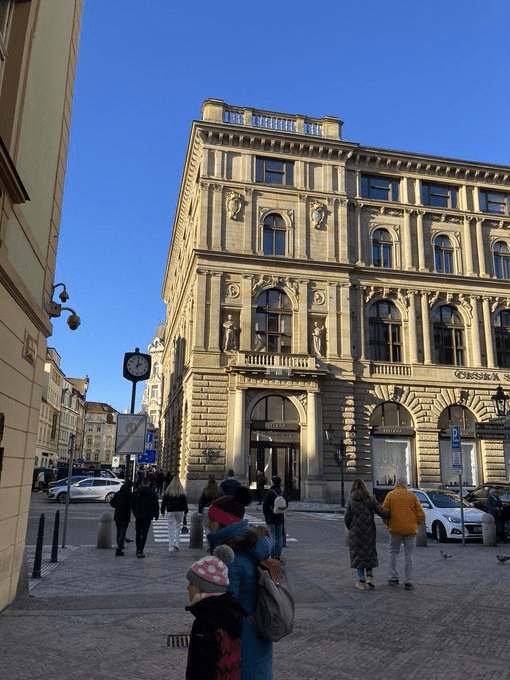
It’s fair to say that 28. října is the least scenic of all these streets, but it does include the corner of U Zlatého úlu (The Golden Beehive), probably the oldest building on Václavák (reconstruction from 1789).
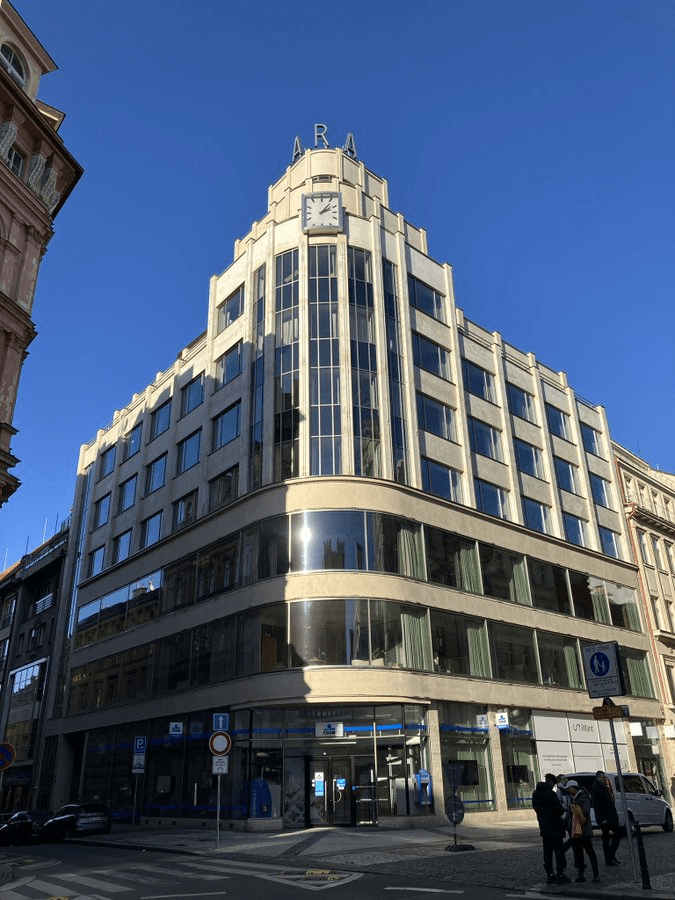
Whereas the functionalist Palác ARA (1930-1; done up in 2018-9) used to be a shopping centre, known as OD Perla during communism and, at times, giving (the earlier) Kotva and Bílá labuť a run for their money.
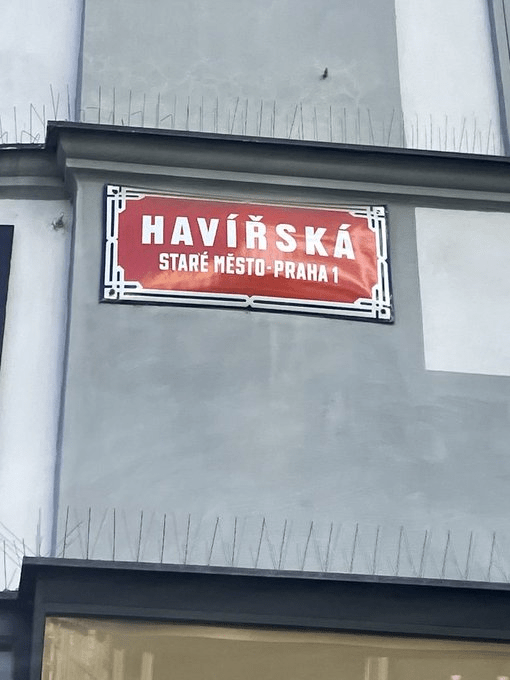
Also in the 13th century, there was a town near here called Havelské město (later incorporated into the Old Town, but getting its own post soon enough). And, on the north side of the bridge, there was a gate, appropriately called Havelská brána.
The street itself was created around 1330 as the principal access to Havelské město. It’s interesting that the name ‘Na můstku’ has been in use ever since, given that this was only one of thirteen gate-bridge combos in the Old Town fortifications.
Provaznická is pretty empty, especially for such a central street, but it does feature the backside of Wimmerův palác (more on this – and a better-kept frontside – when we get to Rytířská).
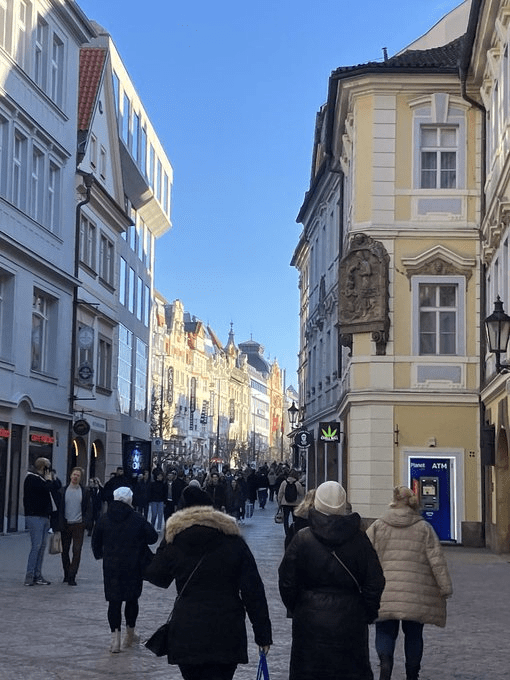
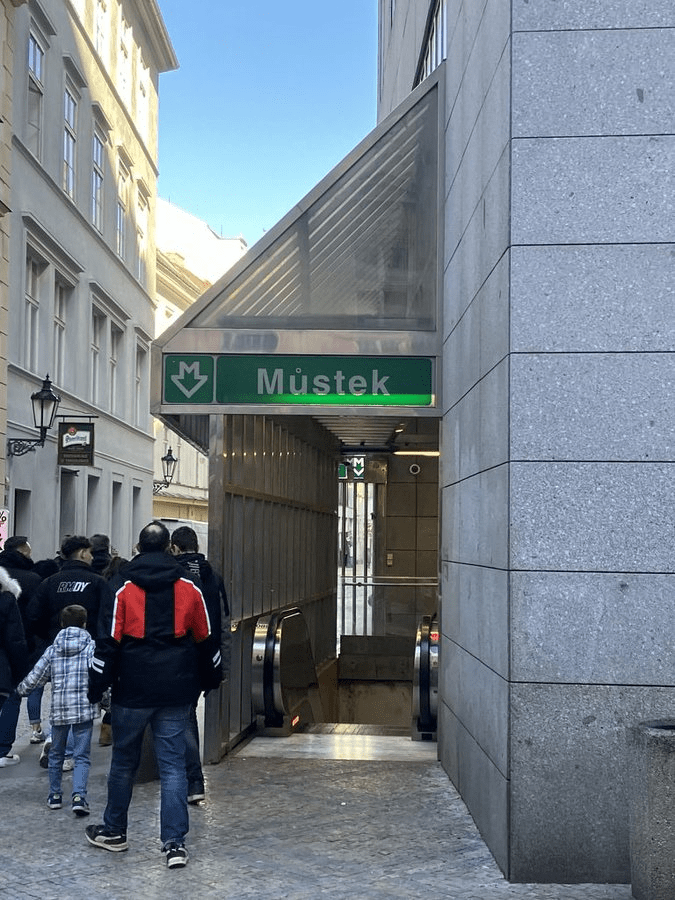
You can also hop onto the metro here if you want. And, to find out why Můstek is called Můstek, tune in tomorrow.
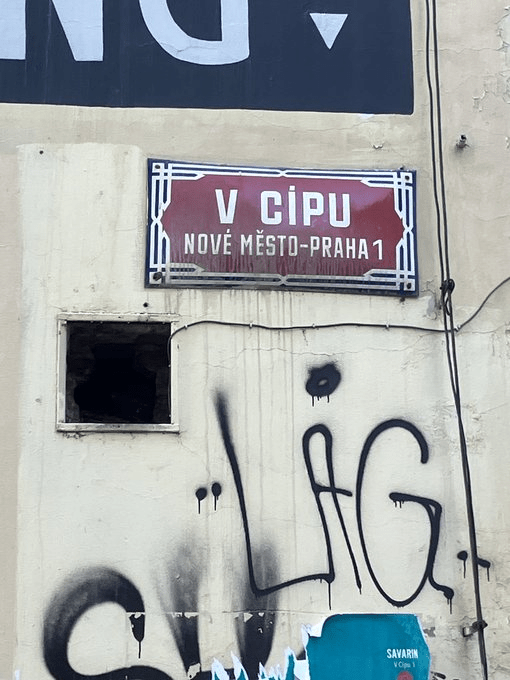
V Cípu has to be a contender for ‘least attractive street in Prague 1’. Even the houses refuse to look out onto it.
I didn’t feel unsafe per se when walking down it to take these pictures, but I didn’t feel sorry to no longer be on the street a couple of minutes later either.
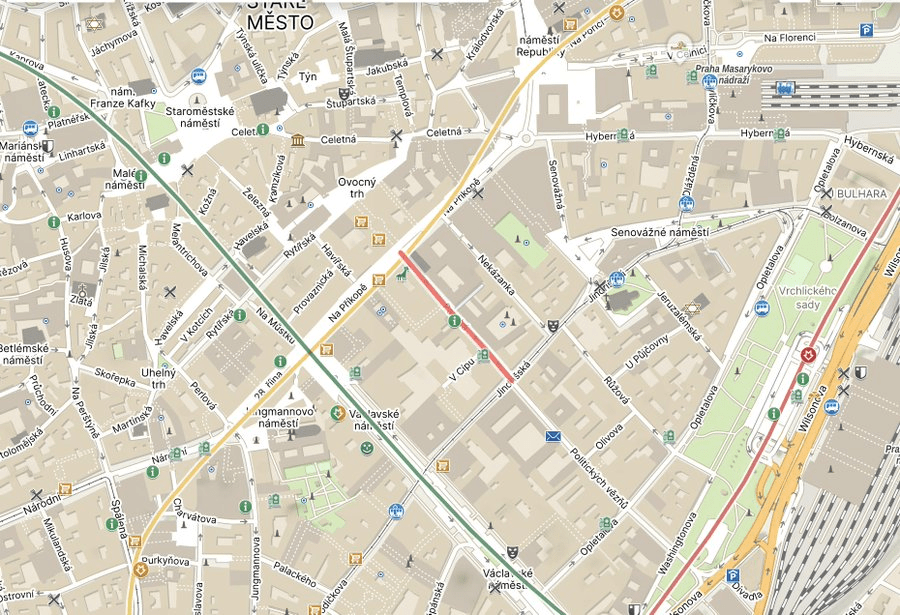
The oldest documented name for this street, around 1380, is Nová (New) – because, sometimes, these street names just aren’t that creative.
On the corner with Na Příkopě, there was once land and gardens belonging to – great word alert – a maltman called Kříž or Křížalova, which led to the street being renamed Křížalova in 1680.
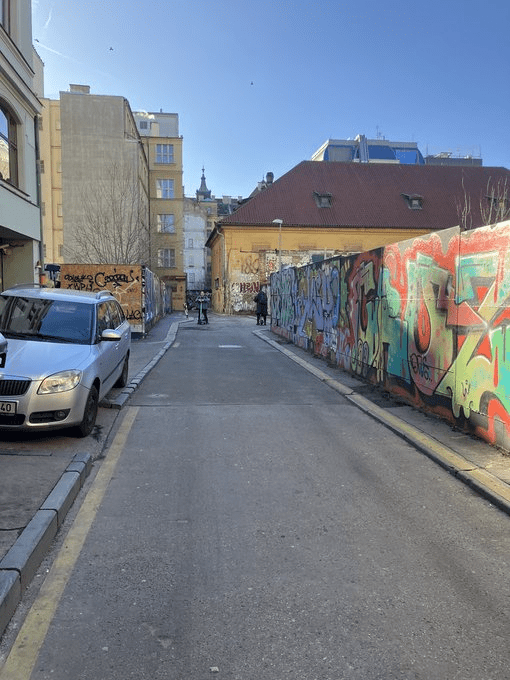
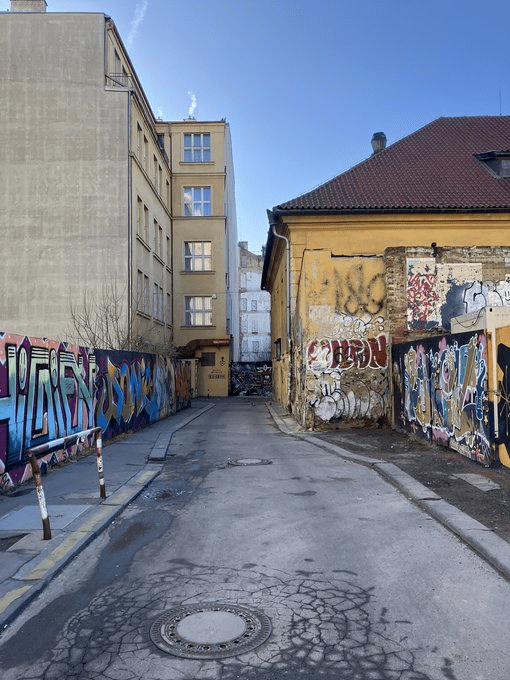
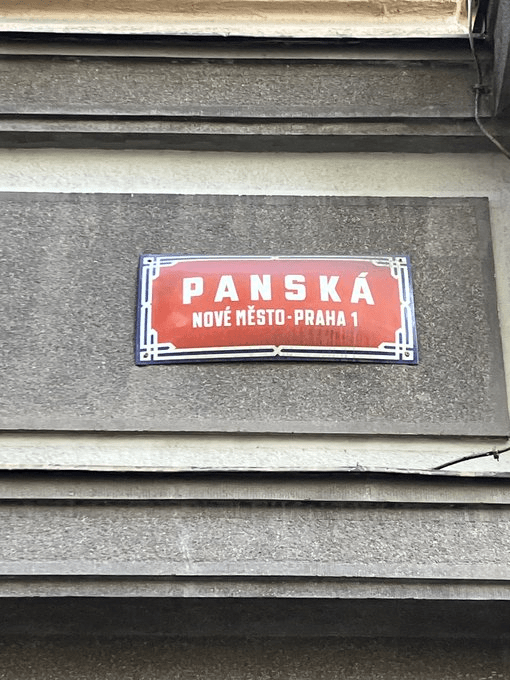
After Bílá Hora (1620), this street became a popular place for the nobility to buy up properties which had presumably been confiscated from non-Catholics – hence the street being known as Panská from the 1700s onwards (a pán is a sir, master, lord, gentleman, etc.).
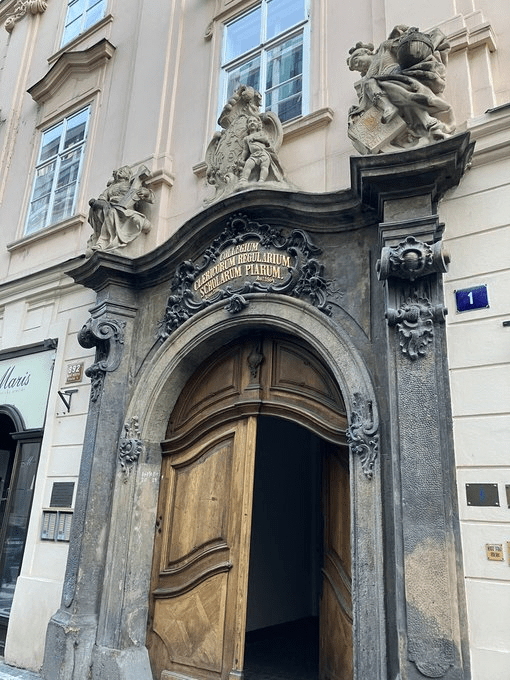
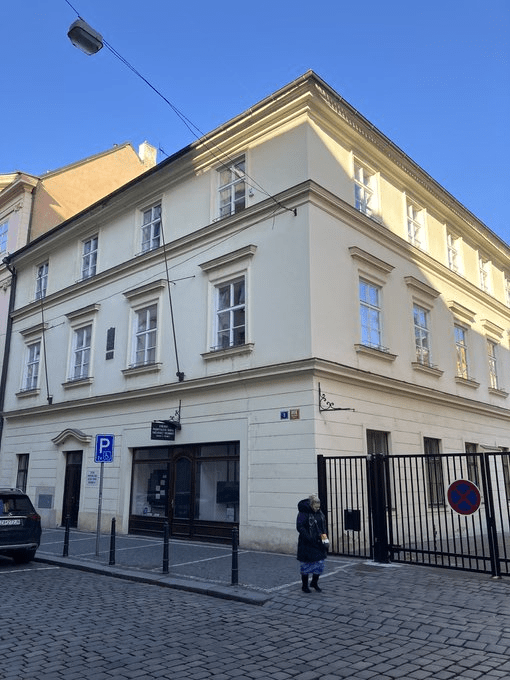
The third name was Piaristická. The Piarists are a religious order who are All About The Education; they arrived in Prague during the reign of Maria Theresa, and set up a school here in 1766. It’s about 17 paragraphs into this thread: https://whatsinapraguestreetname.com/2024/09/22/prague-1-day-137-na-prikope/.
From Panská itself, its entrance (at number one) looks like this, while, nowadays, number 3 is the Secondary Technical School of Communication Technology.
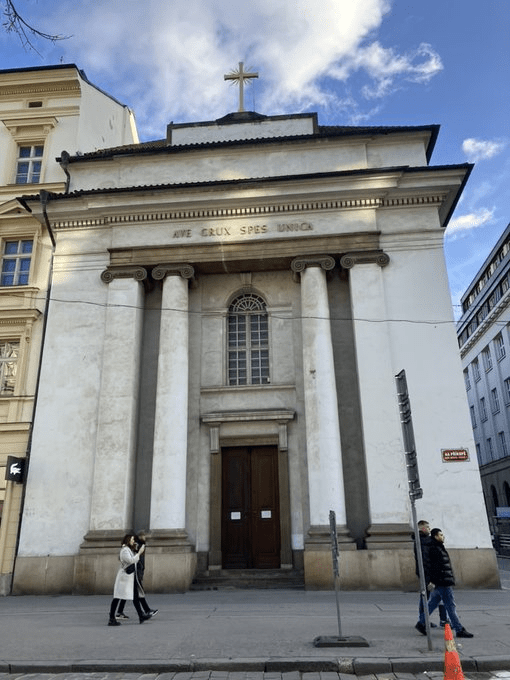
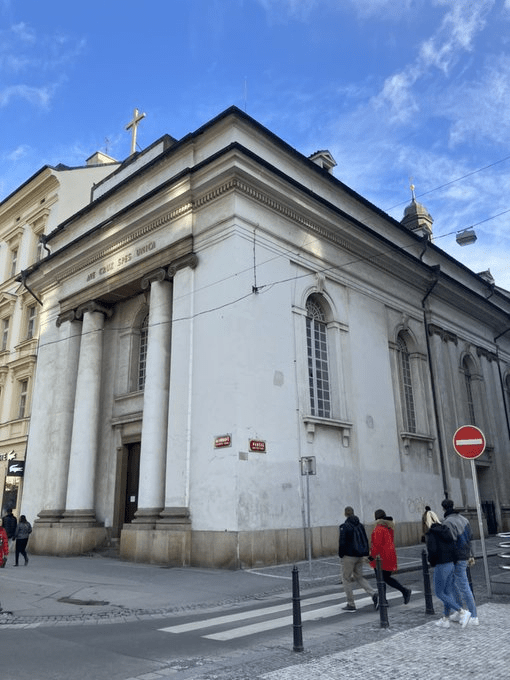
The Piarists also made a financial contribution for a church to be built across the road – the Church of the Holy Cross was completed in 1824.
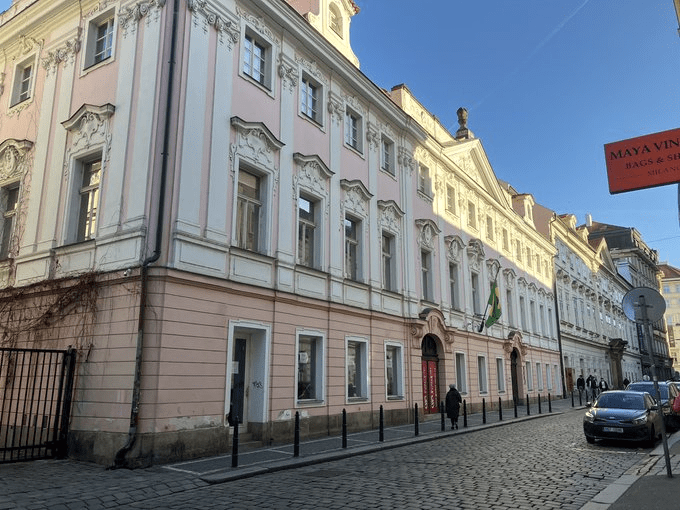
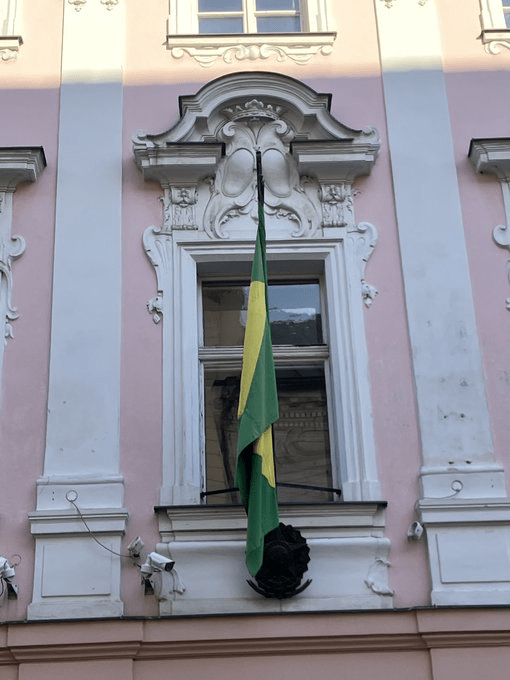
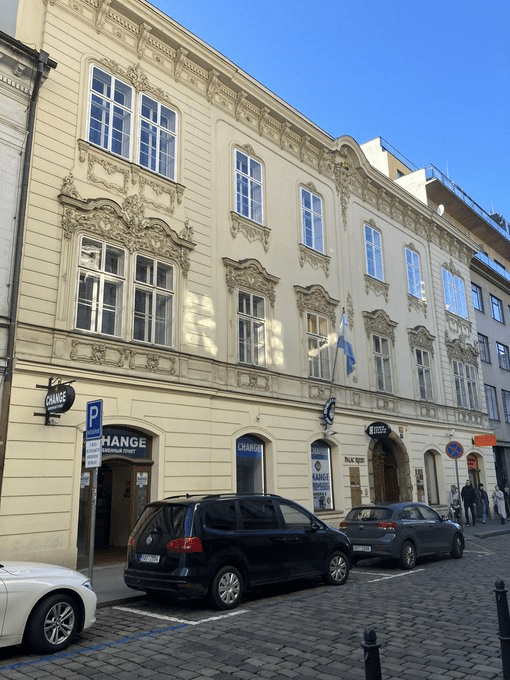
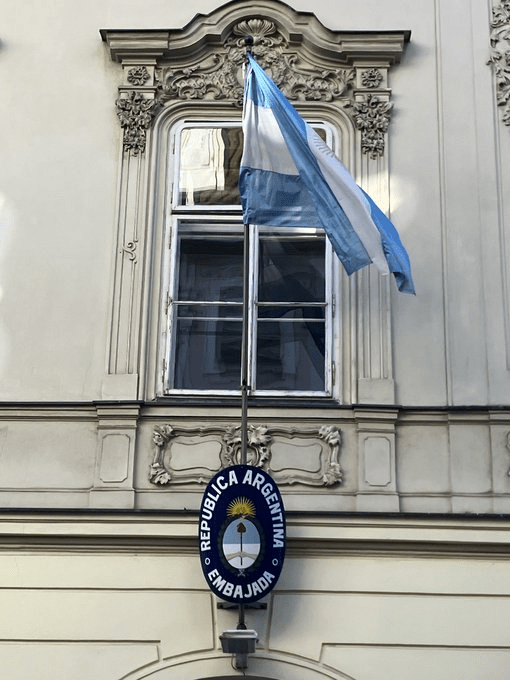
Panská also has embassies for two countries which, between them, cover almost two thirds of their continent’s landmass: Neubergovský palác, at number 5, is Brazil’s, while Palác Riesů ze Stallburgu, at number 6, is Argentina’s.
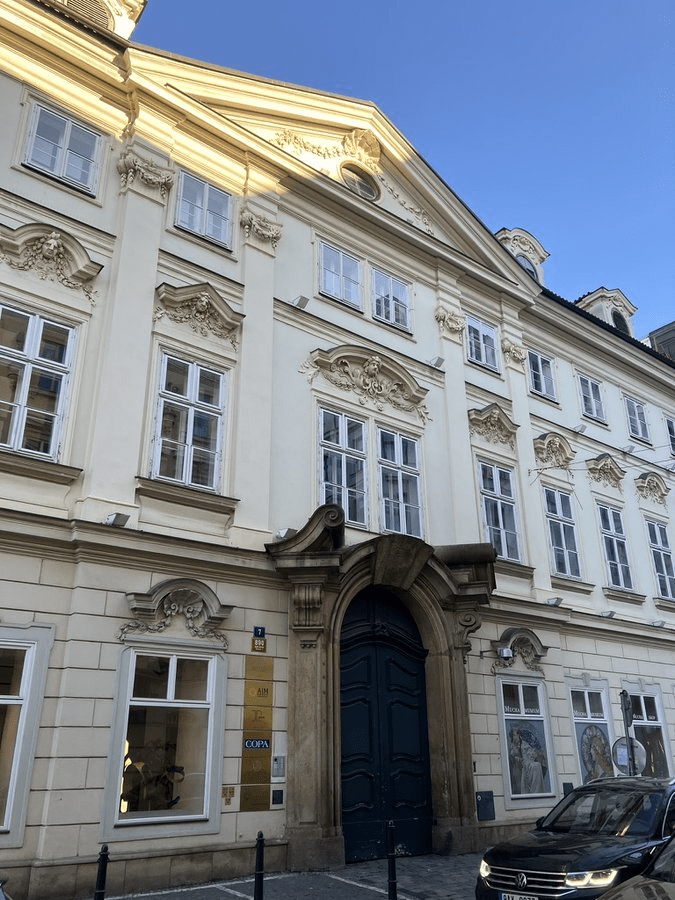
Whereas Kounický palác, at number 7, contains the Alfons Mucha Museum, and, in 1946, was the first Prague home of the British Council.
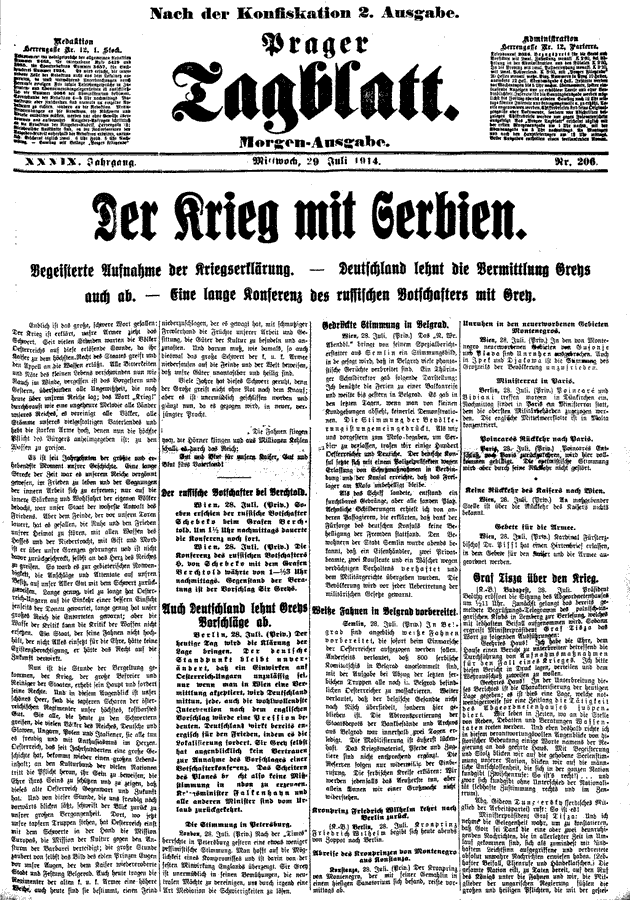
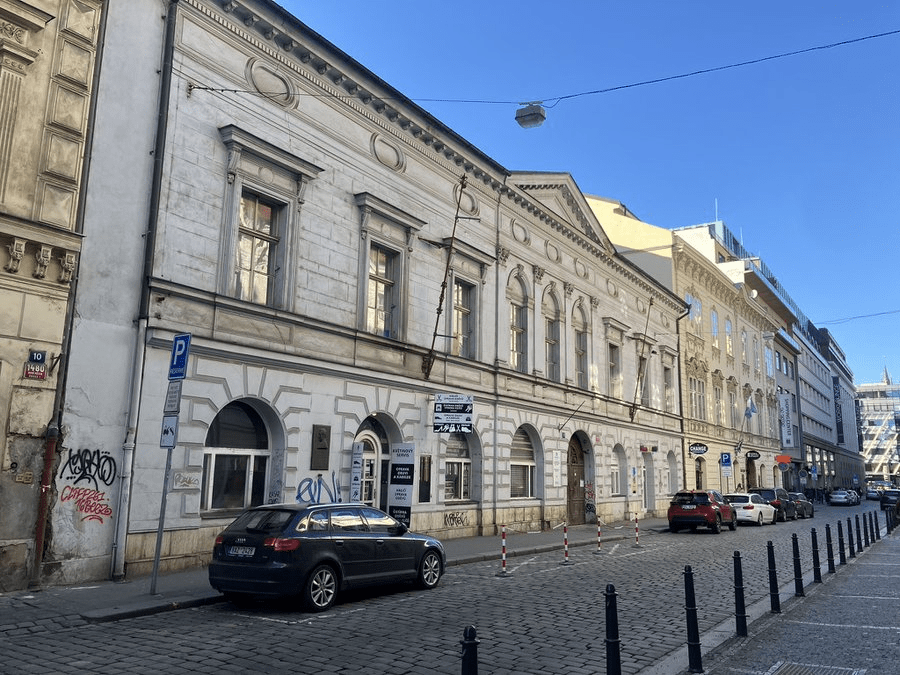
Millesimovský palác, at number 8, used to be an office for the Prager Tagblatt, a liberal-democratic newspaper which, despite being in German, was forced to close when the Nazis occupied Bohemia and Moravia in 1939.
Look between the first two lower windows, and you’ll see a plaque dedicated to the famous journalist Egon Kisch. You feel this building should be put to a good use, but apparently it’s due to be destroyed instead. So much for cultural monument status.
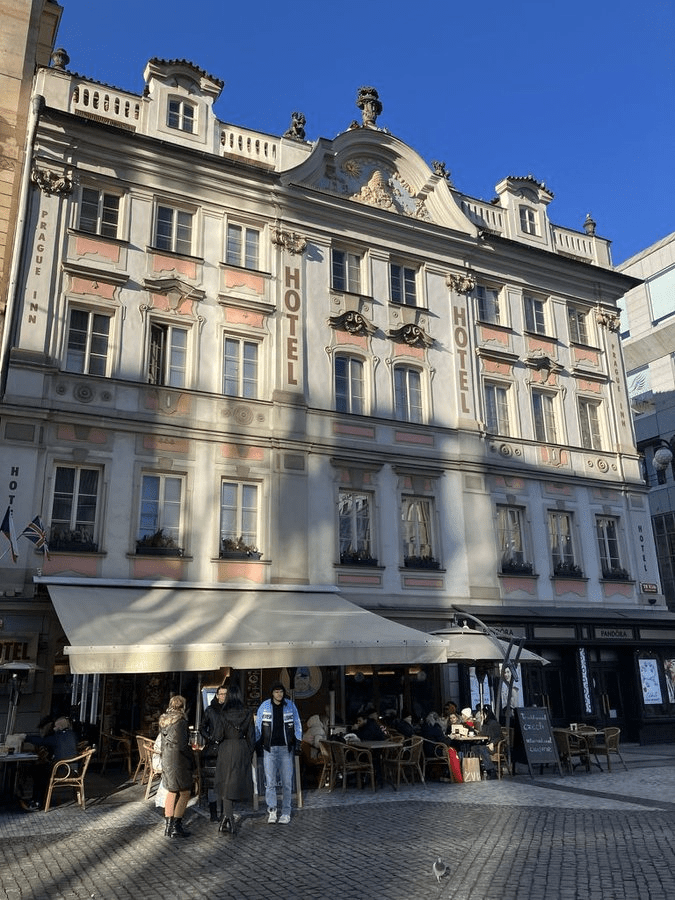
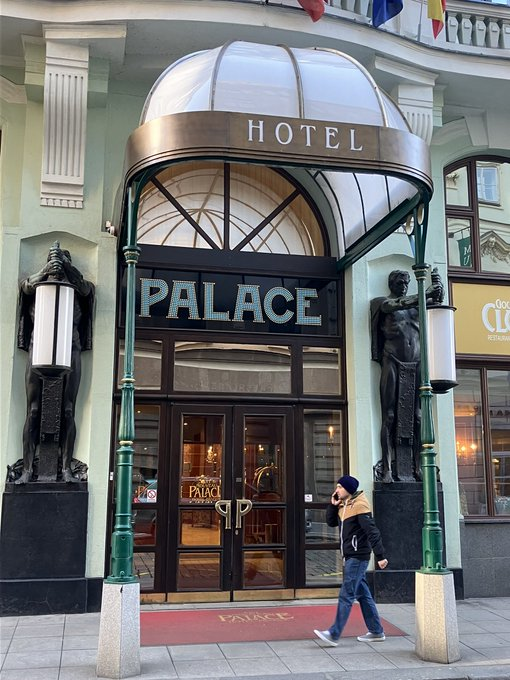
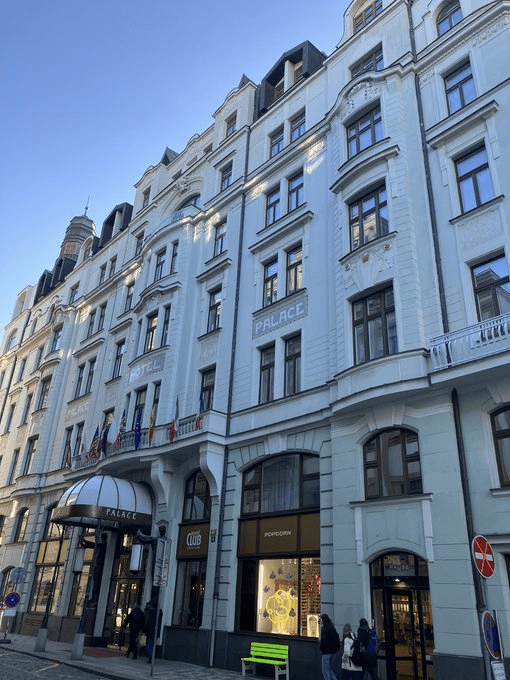
Because, if you look across the road*, you can see the Art Nouveau Palace Hotel, which has been beautifully done up (with hints of kitsch, but I quite like hints of kitsch). So maybe there’s hope for Millesimovský.
* And ignore what I’ll be writing about on day 140
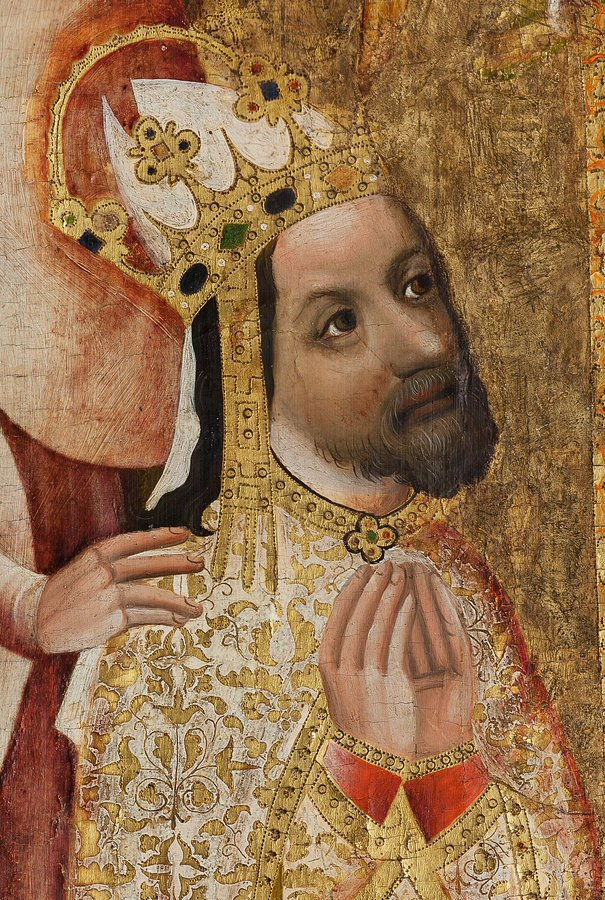
Prague’s New Town was founded by Charles IV in 1348, which I *may* have mentioned 1,348 times to date.
Charles was a busy man, what with also having been crowned King of the Romans in 1346, and also experiencing the death of his first wife (Blanche of Valois) in 1348 when she was just 32, and still needing an heir.
Therefore, Charles was away a lot. When he came back from one trip, he supposedly found that a street had been built in his absence and without his consent.
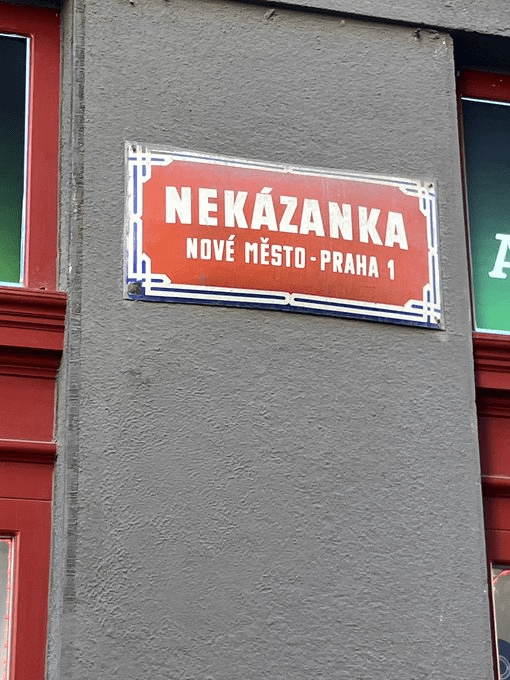
Kázat means ‘to preach’ or to ‘proclaim’. Charles hadn’t proclaimed that this street should’ve been built. And he (allegedly) said that, for this reason, the street should be called ’Nekázanka’ forever more.
Which, given it’s been almost 800 years, has kind of stuck.
On the other hand, there is nothing unusual about the location or existence of this street, so the entire story is probably a load of rubbish.
The other option – somewhat more likely – can be linked to the fact that nekázeň means a ‘lack of discipline’, i.e. the street was known for Czechs Behaving Badly (it’s not particularly dingy, but one of its neighbours – coming up in a few days – certainly still is).
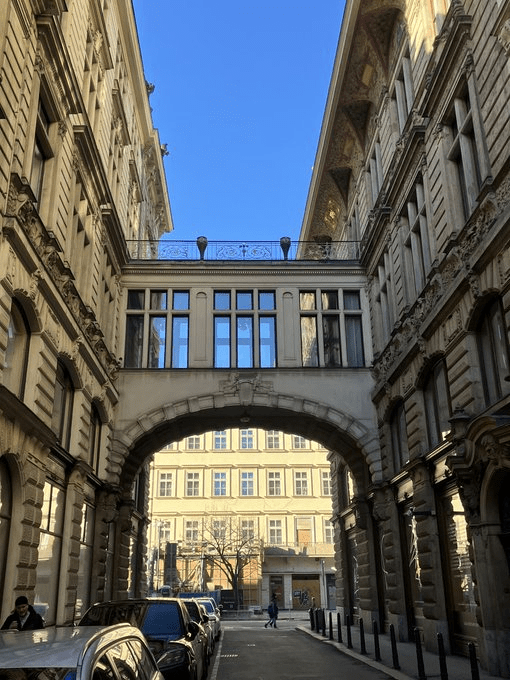
What Nekázanka is definitely known for now is its skyways, which were designed by architect Osvald Polívka in 1912.
















































#/media/Soubor:M%C5%AFstek_oblouky.jpg)
#/media/File:Ulice_V_Cipu,_vpravo_budova_hotelu_Art_Nouveau_Palace.jpg)