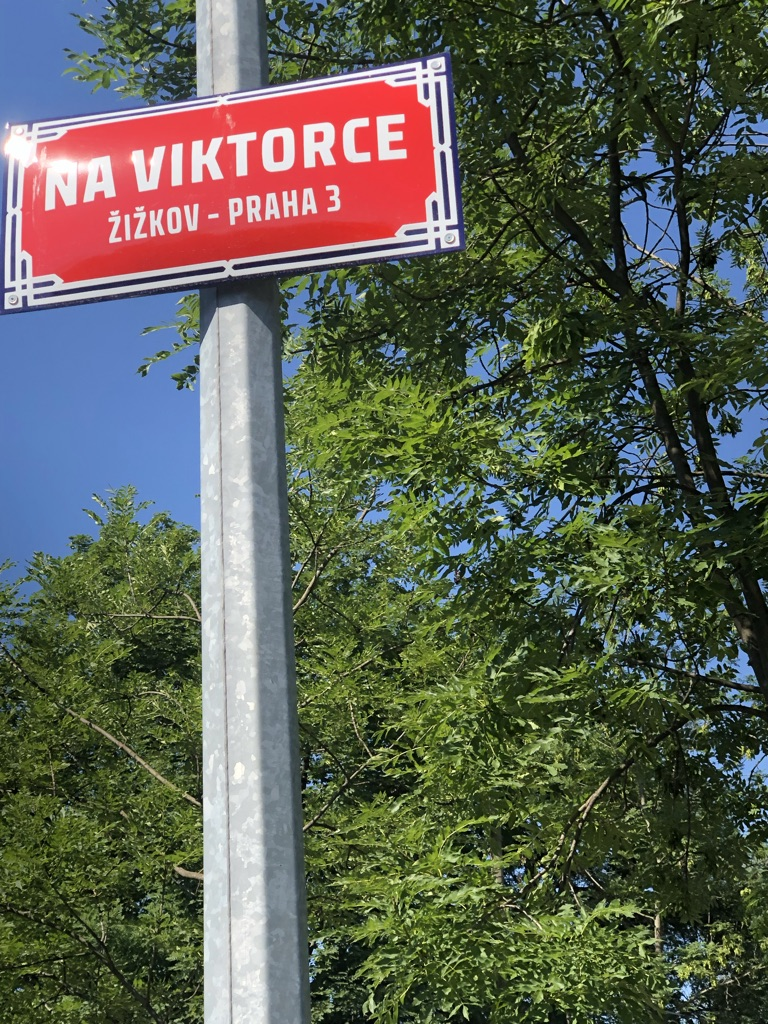
Viktorka (https://whatsinapraguestreetname.com/2022/11/21/prague-3-day-70-na-viktorce/) may have been destroyed as Nákladové nádraží Žižkov was expanded, but Červený dvůr had even worse luck – it disappeared when the freight station was being constructed in the first place, and was completely gone by 1938.
A farming settlement was founded here in 1873. From the end of the nineteenth century onwards, it was owned by one Viktor Kos (1858-1911), hence the name.
Indeed, that brickyard is why the surrounding area was built up at all – the workers at Vacek’s factory needed housing, hence the creation of the neighbourhood (with a commute only slightly longer than the one most of us had during lockdown).
Ambrož of Hradec, or Ambrož Hradecký, was pastor of the Church of the Holy Spirit in Hradec Králové, until he was banished from the town in 1419 for his Hussite beliefs.
In 1420, he founded the Orebites, the Hussites’ followers in Eastern Bohemia.
In the same year, they burned the Benedictine Monastery in Mnichovo Hradiště and fought in the Battle of Vyšehrad. Ambrož, meanwhile, regained HK.
In 1423, the Orebites merged with the Sirotci (Orphans), the Hussite grouping formed by Jan Žižka. Ambrož opened HK up to Žižka, whose funeral was held there in 1424.
Ambrož was thrown out of HK yet again in 1437 as the result of a pro-monarchy uprising. He took refuge in Kolín, where he died two years later.
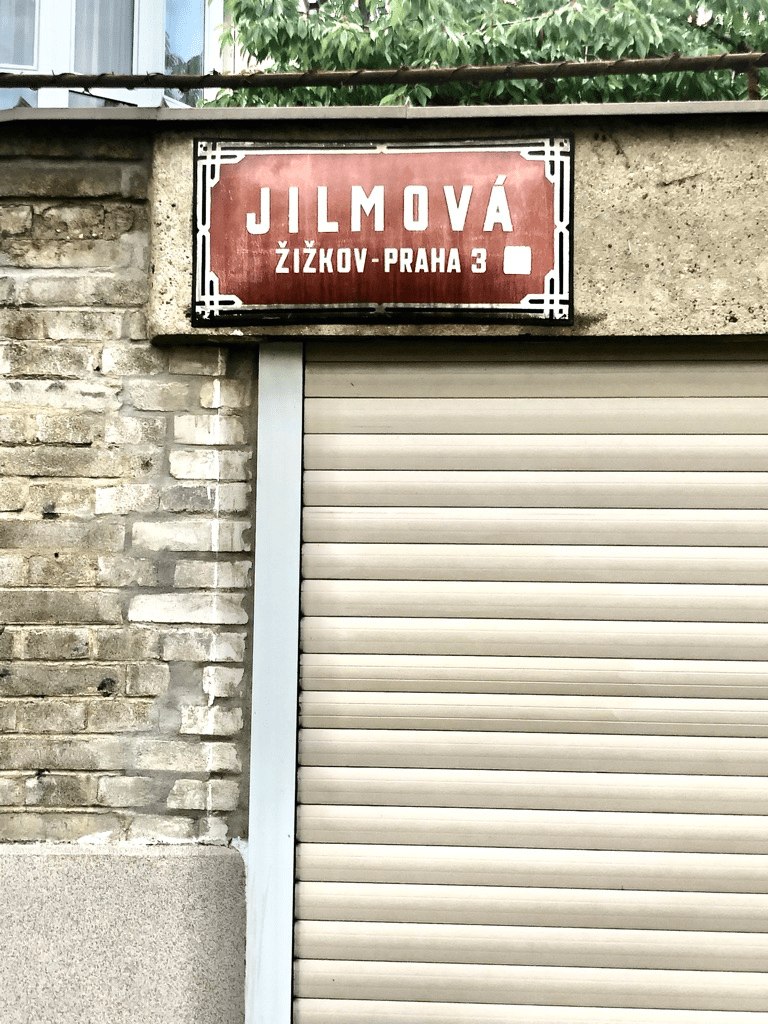
Did you really think we were done with the trees? This is one case where the Czech and English words are actually quite similar – a jilm is an elm.
Elms have been in Czech territory for 12,000 years, i.e. even longer than Miloš Zeman.
The elm has also given its name to Jilemnice, a town of 5,400 people in the Liberec Region.
YouTube hits for ‘Noční můra na Jilmové’: zero. Where is your creativity, people?
So let’s make this a bit more interesting by discussing the park that Jilmová forms the northern border of.
It’s called Židovské pece, which translates as ‘Jewish furnaces’.
The origin of the name isn’t certain. One theory is that Jews took refuge in caves here when they were expelled from Prague in the 1740s during Maria Theresa’s reign (Žižkov would not be part of Prague until 1922).
Alternatively, the name has a link to the location’s status as an execution site (used until 1866).
This was a desolate area until the 1950s. It was done up quite nicely a few years ago, but it’ll be a heck of a lot nicer when the huge amount of building work currently taking place to the south of it is over.
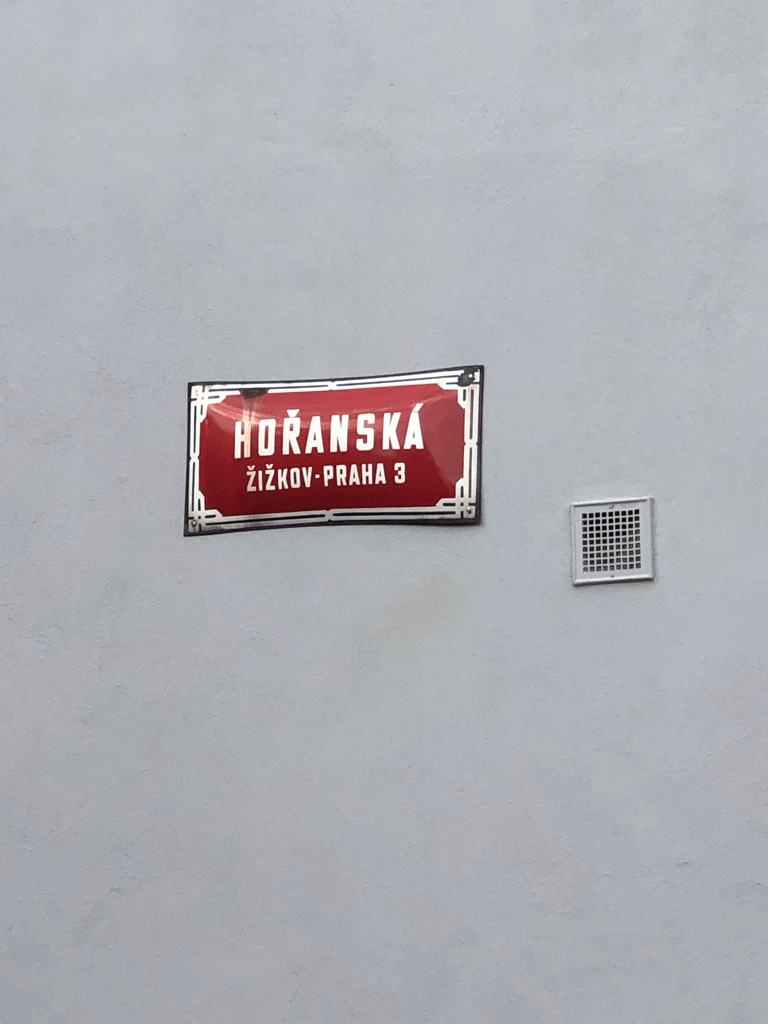
Hořany is a village on the River Elbe in the Nymburk region, first mentioned in writing in 1282. It is probably so called because it’s located on a hill (hora).
In 1420, the village was registered by Emperor Sigismund; from 1531-47, it was the property of the Old Town of Prague.
In 1561, the village was purchased by Jaroslav Smiřický, who annexed it to the Černokostelec estate, of which it remained part until 1848.
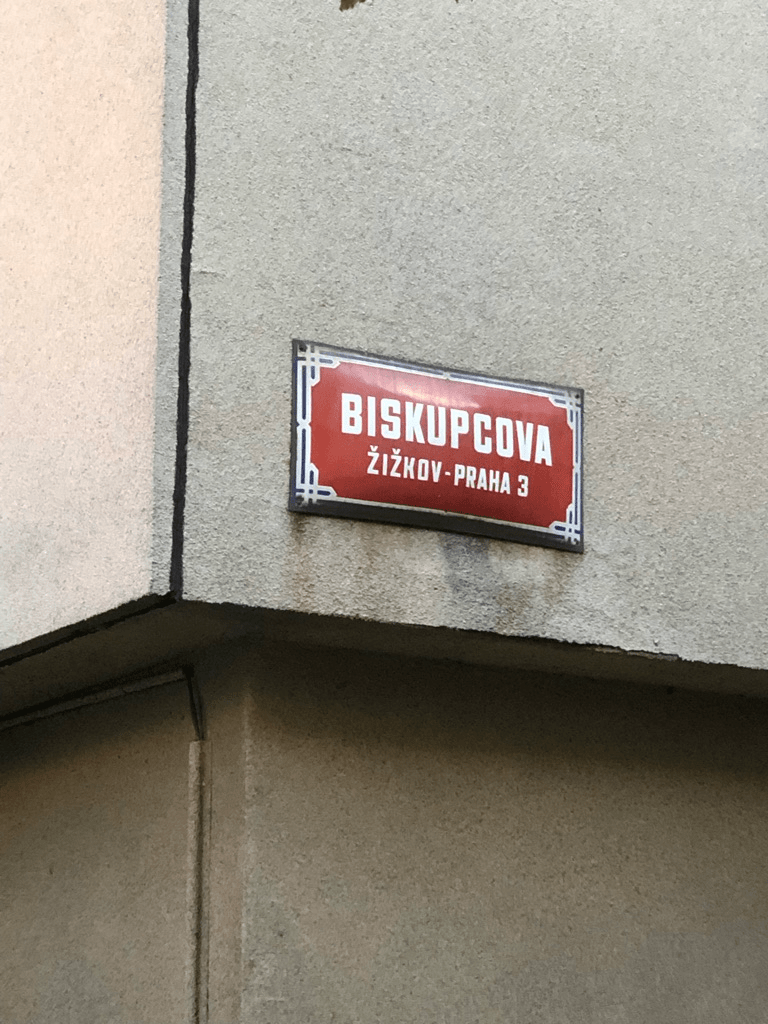
Mikuláš z Pelhřimova, or Nikolaus von Pelgrims, *or* Mikuláš Biskupec (1385-1459 approx.) was born in, yes, Pelhřimov, but started studying in Prague around 1406.
Around this time, he became a devoted follower of Jan Hus. In 1415, he was ordained as a priest.
In 1420, Mikuláš was elected as bishop of Tábor (hence the name ‘Biskupec’). Technically, however, he was only an ‘elder’, because big decisions remained with the Synod of the Priesthood.
As a representative of Tábor, he was regularly involved in negotiations with theologians and the masters of Prague University.
In 1444, the Land Assembly condemned the teachings of the Tábor theologians as erroneous. Biskupec refused to submit to this verdict.
He did so, but was then sent to a dungeon at a castle in Poděbrady. He was seriously injured in an attempt to escape, and died shortly afterwards, probably in 1459.
I normally try to get a photo where you can actually read the street sign, but isn’t this one awesome despite completely failing on that count?
Olga Šplíchalová was born in Žižkov (specifically Vackov) in 1933.
In the early 1950s, she joined an amateur theatre group, and, when at Cafe Slavia, met Václav Havel (photo from the Blesk archive).
They married at Žižkov Town Hall in 1964. In the mid-1960s, they both worked at Divadlo Na zábradlí (https://nazabradli.cz/en/homepage/).
We all know about Havel’s work as a dissident, but Olga was also a formidable figure. While he was in prison, she took over his samizdat responsibilities. She also participated in and organised Charter 77 activities and meetings (she signed in 1982).
Havel’s letters to Olga, written when he was in prison from May 1979 to March 1983, are collected in ‘Letters to Olga’.
In 1987, she co-founded Originální Videojournal, a video news magazine documenting dissident activities in Czechoslovakia.
Here’s the episode documenting the protests on Škroupovo náměstí in December 1988.
As First Lady from 1990, she focused on charitable activities, setting up the Olga Havel Foundation in 1992. You can find out about their work on https://vdv.cz/en/.
She died of cancer in January 1996, with an outpouring of grief from the nation.
She is buried in the Havel family tomb in Vinohrady Cemetery.
A 2014 documentary, titled ‘Olga’, can be viewed on https://aerovod.cz/katalog/olga (in Czech; payment required, but this Aero-Světozor-Bio-Oko website is making me want to not go out for a few months).
Elsewhere, there is a memorial plaque to her on Senovážné náměstí and a grammar school named after her in Ostrava-Poruba.
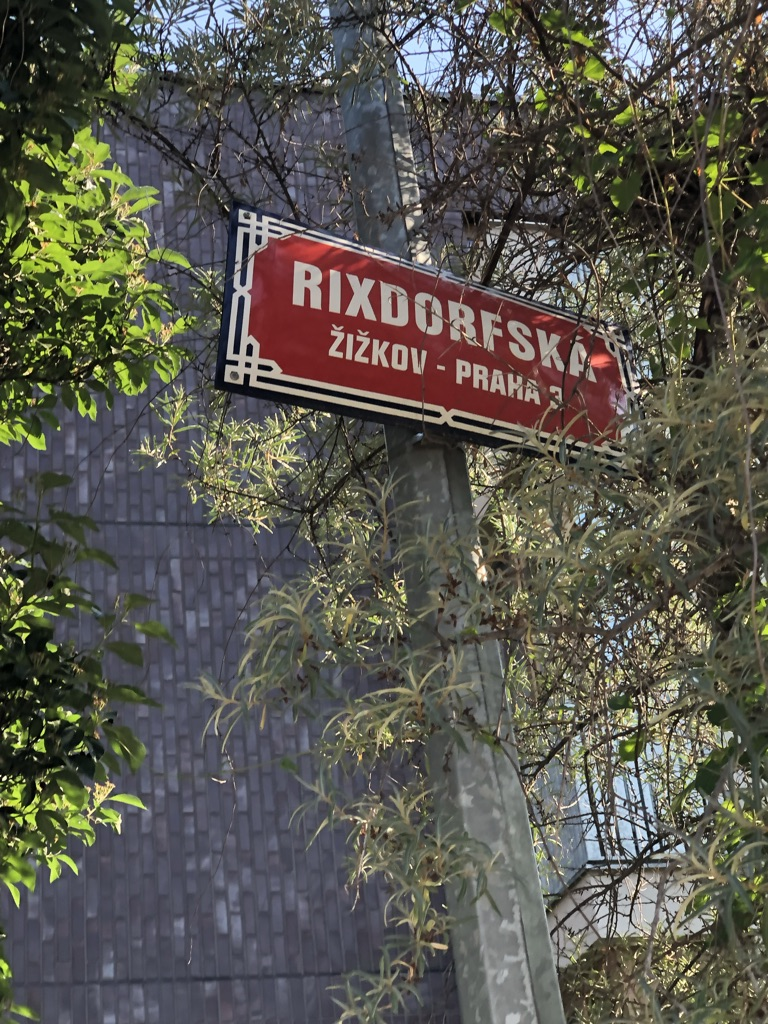
Český Rixdorf, or Böhmisch-Rixdorf, was a community founded by Protestant refugees from Bohemia in 1737. It’s located in what is now the Neukölln district of Berlin.
Like other Bohemian Protestants, these exiles left the country as they were being increasingly prosecuted against after the Battle of Bílá Hora in 1620.
Based on the chronology, these departures were still happening a century on.
Friedrich Wilhelm I of Prussia suggested that these exiles move to Rixdorf, which was divided into two (German Rixdorf and Bohemian Rixdorf).
Bohemian/Český Rixdorf even had a ‘Malá ulička’ until 1909 (it’s now the Kirchgasse).
Approximately a quarter of the houses in Rixdorf were destroyed in a fire in 1849.
Both Rixdorfs were merged into a new municipality in 1873, which was renamed Neukölln in 1912.
The name change was an attempt to remove the district’s reputation as a location for… ‘frivolous entertainment’, let’s call it.
Neukölln became part of Berlin in 1920. You may also recognise its (deliberately misspelt) name from this:
I’ve walked this street many a time, and have stayed (and partied) in Neukölln more than once, and never knew about any of this.
You’ll have noticed that not every single street name story is thrilling. But when they’re like this one, they’re *such* a joy to write about.
Plavínová was built in 1998 (making it newest street yet, but only until tomorrow).
A plavín štítnatý, or plavín leknínovitý, or Nymphoides peltata, has its fair share of names in English too: fringed water lily, yellow floating heart, floating heart, water fringe or entire marshwort.
It’s a perennial that grows in stagnant or gently flowing waters. In the Czech Republic, it’s gradually disappearing, and is only found in the south and east of the country.
Hence its status as an endangered species. If you’re the sort of person who enjoys blame, then feel free to cast a judgemental glance at fish farmers, carps, ducks and swans.
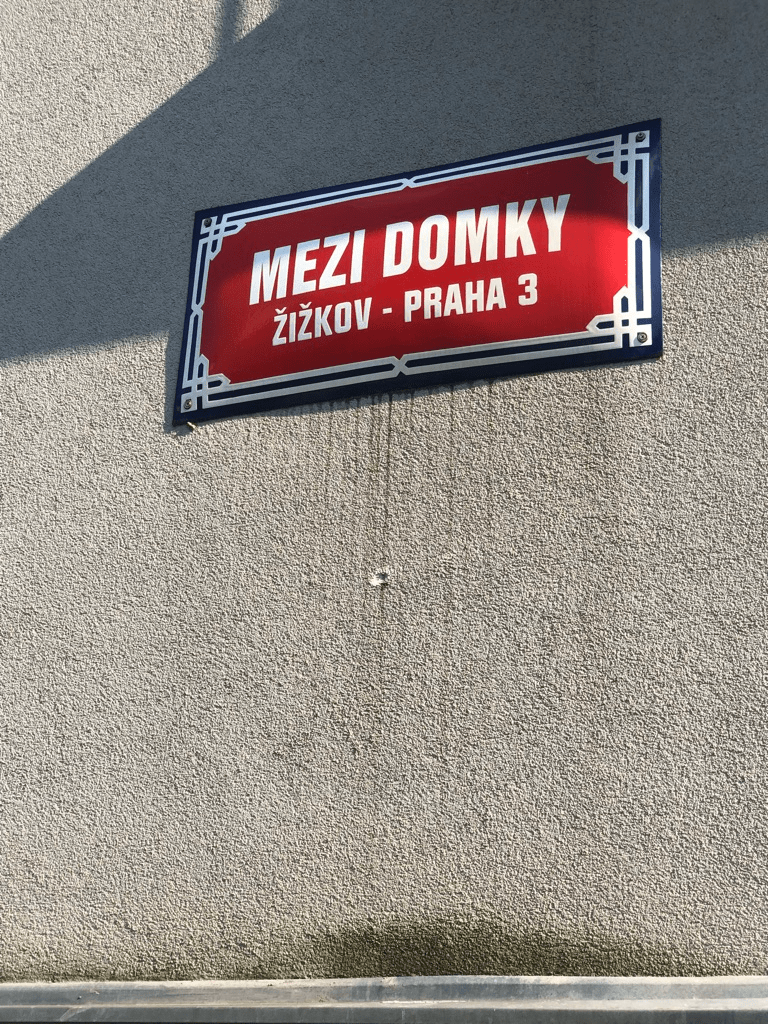
Mezi Domky was built in 1925. It translates as ‘Between the houses’.
The street is so named because of its location, between houses built as Prague’s population soared in the early 1920s.
A domek is smaller than a regular dům.
However, many of these houses are no more and have been replaced by high(-ish) rises.
Some useful phrases of which domek is part: a řadový domek is a terraced house, a zahradní domek is a garden shed, and a montovaný domek is a kit home.
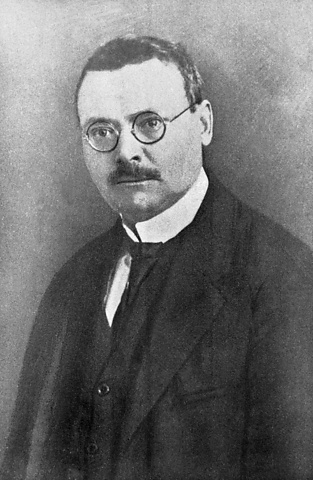
Secondly, there’s Josef Vacek (1875-1930), professor of comparative science and ecclesiastical law, who worked at Charles University in Prague and also at the Faculty of Law of Masaryk University in Brno.
Until 1949, Vackov was part of Praha XIII – Staré Strašnice.
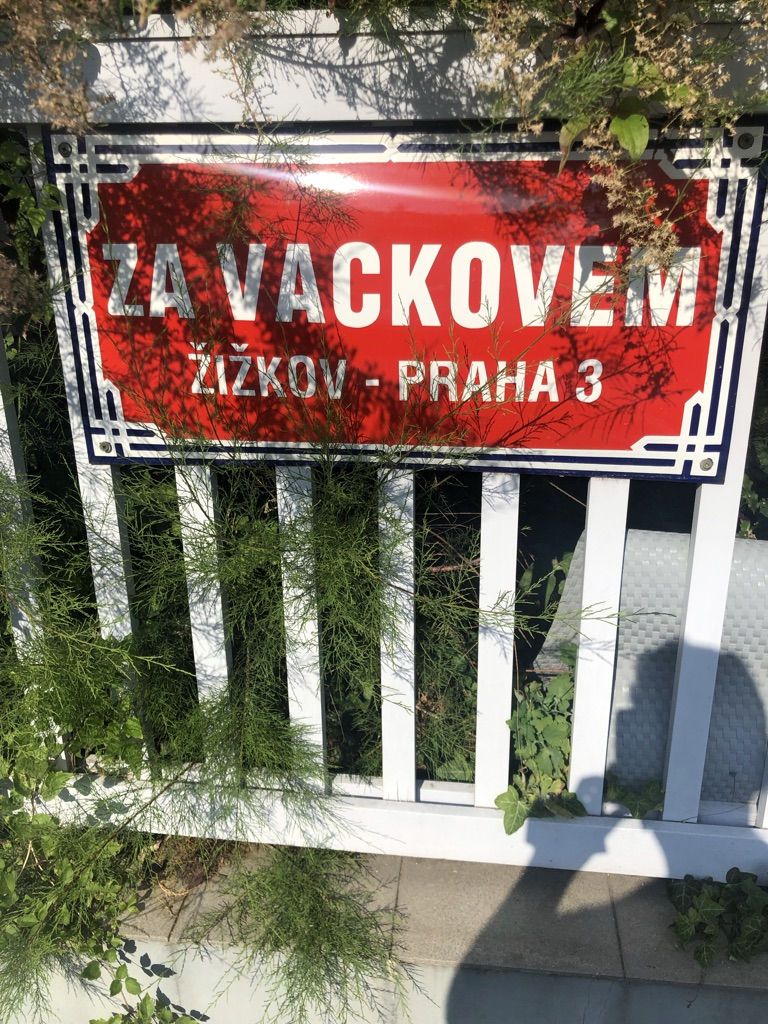
Vackov is named after Josef Vacek, who owned a restaurant and hotel here at the end of the 19th century.
Vacek built several houses for his workers in the area, as well as the J. A. Komenský school (which operated until 1929 before being replaced by housing).
The restaurant became a hotel with a cinema in 1931, and part of the 1993 film Hotýlek v srdci Evropy (Hotel in the Heart of Europe) was filmed inside it.
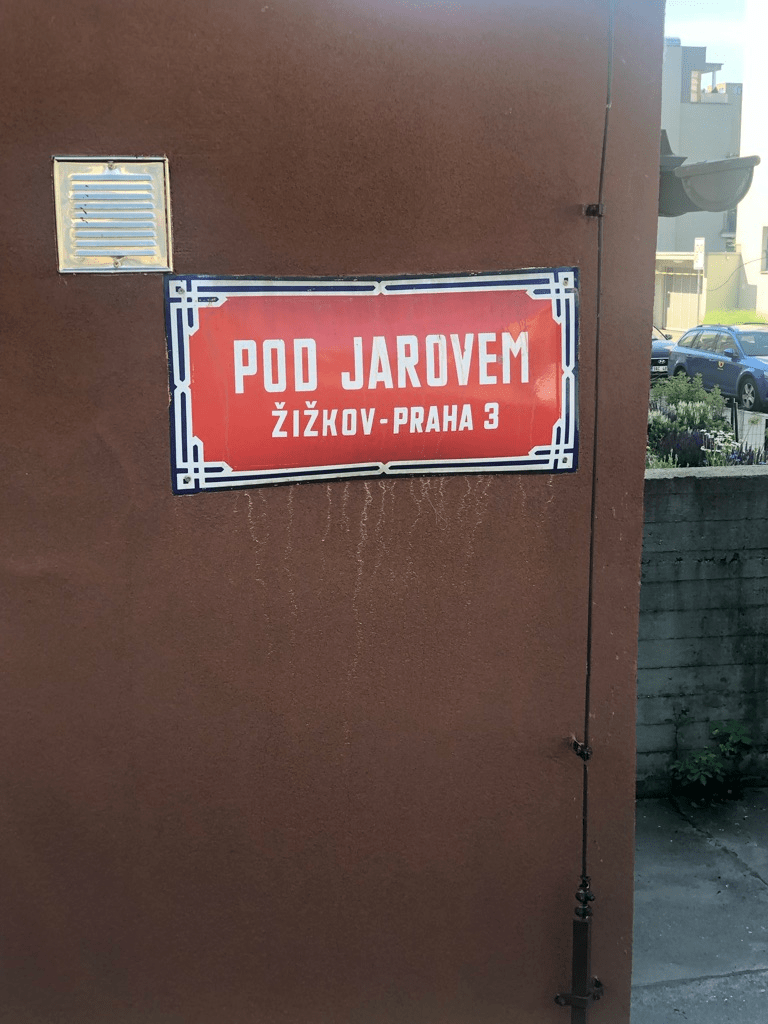
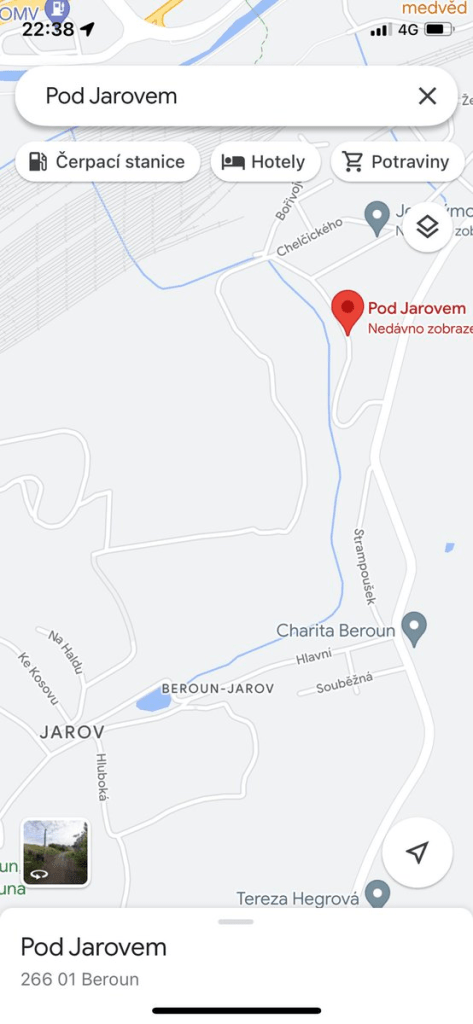
There are some other Jarovs around the country too, for example in north Plzeň district: https://oujarov.cz and, erm, in south Plzeň district: https://obecjarov.cz.
And a Jarov u Berouna, which also manages to be the scene of The Other Pod Jarovem. Just something to keep in mind next time you’re booking a Bolt.
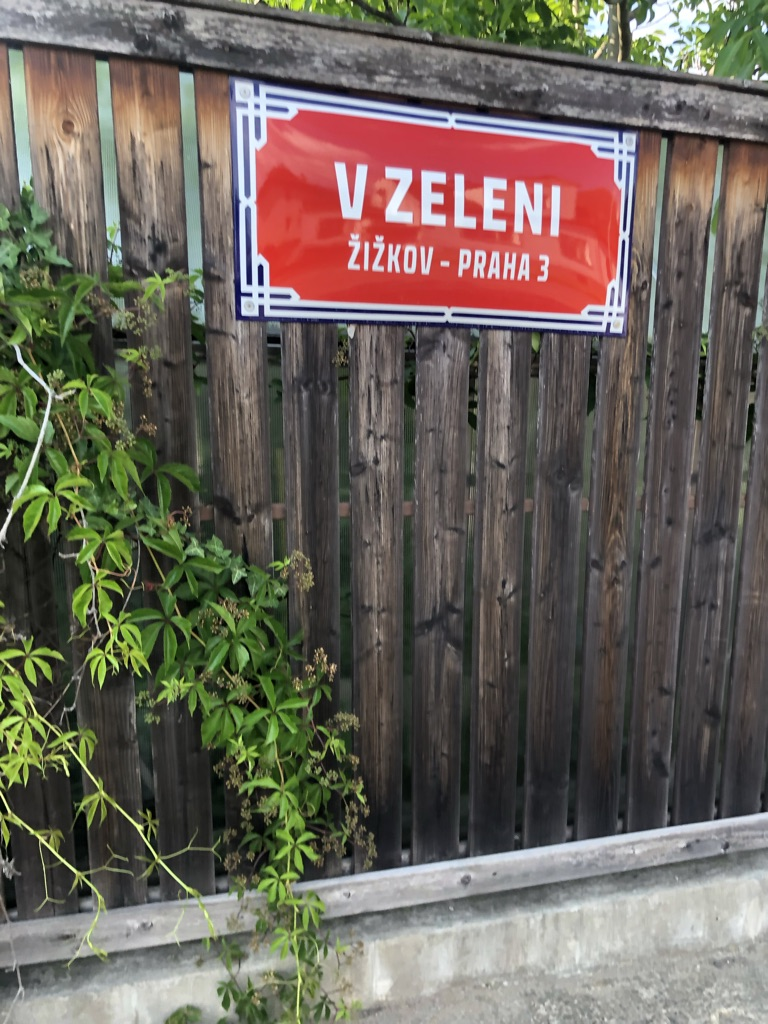
Vocab fun: the verb zelenit se means ‘to turn green’. Komu se nelení, tomu se zelení translates roughly as ‘someone who is not lazy will turn green’, which is something like ‘no pain, no gain’.
And malí zelení mužíčci are little green men, presumably also not lazy.
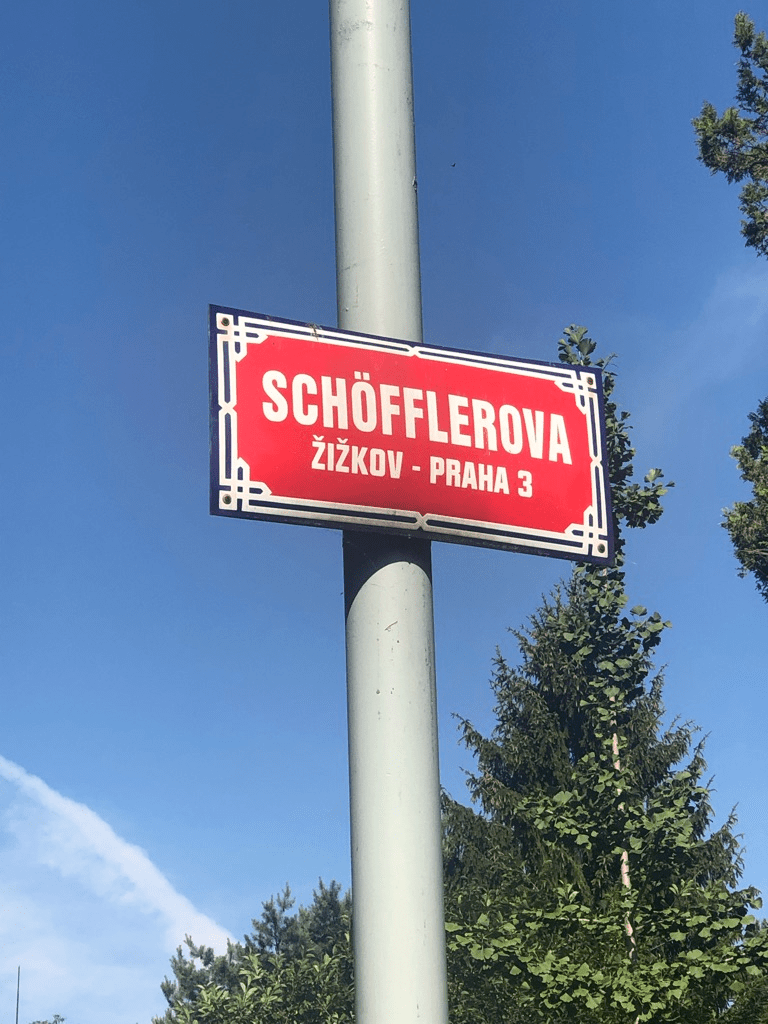
Josef Schöffler, also Schäffler, was a typographer and co-founder of the Cooperative for the Construction of Workers’ Flats and Family Houses in Žižkov (Družstvo pro stavbu dělnických bytů a rodiných domků na Žižkově).
Sources say that Schöffler died in World War I, but don’t give a year.









 What's in a Prague street name