What's in a Prague street name

Every street in Prague, one by one.

  • Originally published on Twitter on 23 July 2022.

    Pod Parukářkou was built in 1997.

    Parukářka is the name of a former vineyard and farm, founded in the 15th century and located on the eastern part of Vrch svatého Kříže / Hill of the Holy Cross, though it was initially called Hejtmánka.

    From 1804, the homestead also housed a wig factory. The is where the name Parukářka comes from (paruka is Czech for ‘wig’, very similar to the German Perücke).

    In 1825, Sellier and Bellot (see https://whatsinapraguestreetname.com/2022/11/22/prague-3-day-74-ke-kapslovne/) purchased it and founded the Kapslovna factory.

    Parukářka is now the name of a park in this location with excellent views of Prague.

    If I can turn this series a bit Ed Talks for a second: I took a couple of pretty big knocks, mentally speaking, in 2019.

    Hard to explain, and almost trivial-sounding when I do, but the kind you don’t bounce back from that easily, especially when 2019 + 1 = 2020.
    But Parukářka will always be the place where, last year, I sat with a friend, stared at Žižkov down below, said very little, listened to myself breathing, and felt like I was possibly getting my sh*t together.

    So I’m pretty grateful it’s there.

  • Originally published on Twitter on 22 July 2022.

    V Kapslovně was built in 1997.

    I’m about to go on annual leave from work for two weeks and have what I can only describe as a Kapsload of work to get through today, so I’m happy to keep this one brief and point you to https://whatsinapraguestreetname.com/2022/11/22/prague-3-day-74-ke-kapslovne/.

    tldr: Kapslovna was a factory making cartridges for infantry. Then it wasn’t. Then it became a biathlon club and still is one.

    It seems there’s going to be a park called Kapslovna here soon, too, so that’s nice: https://praha3.cz/aktualne-z-trojky/zpravy/prijdte-se-seznamit-s-navrhovanou-podobou-budouciho-parku-kapslovna-n1143806.htm

  • Originally published on Twitter on 21 July 2022.

    Náměstí Barikád was built in 1904, bearing its current name (Barricade Square) since 1952.

    Until 1952, this was Perštýnovo náměstí, named after the Pernštejn family, a distinguished noble family from south-western Moravia.

    Recent followers of these posts will be *stunned* to know that they were Hussites.

    The square was renamed after the barricades that were erected in Žižkov during the Prague Uprising in 1945.

    On 28 October 1968, a Lípa republiky (Linden of the Republic) was planted on the square to commemorate 50 years since the founding of Czechoslovakia. http://prazskestromy.cz/stromy/vyznamne-stromy/90-lipa-republiky-na-namesti-barikad-na-zizkove/

    The most famous building on the square is probably the Hussian Congregation of Jan Žižka (Husův sbor Jana Žižky), a prayer house (photo links to Wikipedia as it’s much better than the one I took): https://cs.wikipedia.org/wiki/Hus%C5%AFv_sbor_(%C5%BDi%C5%BEkov)#/media/Soubor:%C5%BDi%C5%BEkov_Hus%C5%AFv_sbor_J._%C5%BDi%C5%BEky_1.jpg

  • Originally published on Twitter on 20 July 2022.

    Koldínova was built in 1904.

    Pavel Kristián z Koldína (1530-1589) was a lawyer and writer.

    He held several key positions in Prague: rector of the Latin school, dean of Charles University (from 1561), and chancellor of the Old Town from 1565 to 1584.

    In 1569, he and Jiří Melantrichaz Aventýna drafted the code of urban law of the Kingdom of Bohemia (Práva městská Království českého).

    The Code came into force in 1697, and applied until the Austrian Allgemeines bürgerliches Gesetzbuch / General Civil Code came into force in 1812.

  • Originally published on Twitter on 19 July 2022.

    Tovačovského was built in 1904.

    Jan Tovačovský z Cimburka st. (1400-ish to 1464) was a Moravian nobleman.

    Born a Catholic, he converted to the Kalisz faith and became a faithful follower of Jiří z Poděbrad.

    He took part in the battles of Ústí nad Labem (1426) and Tachov (1427).

    From 1439 to 1460, he was a provincial governor in Moravia.

    His son, Ctibor Tovačovský, was a politician and author, who became governor of Moravia in 1469, and was Supreme Chancellor of Bohemia from 1471 to 1479.

  • Originally published – albeit with a more inconclusive (slash wrong) ending – on Twitter on 18 July 2022.

    Dovcova was built in, well, let’s talk this one through.

    Google Maps says that Dovcova exists.

    But there’s no street sign, and the street (is that even the correct word?) looked like this when I went to take a photo of the non-existent sign.

    It’s not on the list included on https://regiony.kurzy.cz/praha/praha-3-mestska-cast/ulice-vypis/… (whose final page is behind a paywall, which will traumatise me no end in a few months when I realise I’ve left out one street in Prague 3 and can’t work out which one).

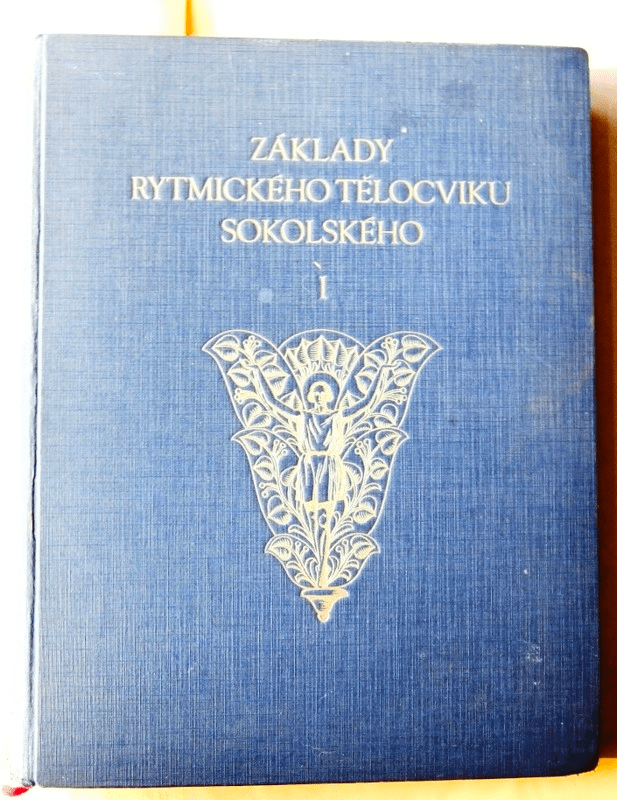
    It’s also not mentioned in this fine volume (which includes an English translation, so do get yourself a copy).

    I originally assumed this street was under construction – the photo would certainly imply that.

    But it turns out that this is known as a ‘trap street’ – a street which publishers of maps include in their maps, knowing full well that it’s not real, because, if somebody else happens to produce a map including the same, fictitious street, they can then go and sue them for plagiarism.

    Handy.

  • Originally published on Twitter on 17 July 2022.

    Žerotínova was built before 1875.

    Karel starší ze Žerotína / Karel the Elder from Žerotín (1564-1636) was born to an ancient Moravian noble family. He studied in Ivančice, Strasbourg and Basel.

    In 1594, he commanded the Moravian Cavalry in the Ottoman wars.

    In 1599, he was put on trial for alleged treasonous connections. He was acquitted but also relieved of his posts.

    From 1608 to 1615, he was regional governor of Moravia, managing to secure the religious freedom of Protestants for a few more years.

    After the Battle of Bílá Hora, he provided asylum to priests of the Unitas Fratrum.

    He voluntarily emigrated to Wrocław in 1629, and helped the Unitas Fratrum move their library (the Kralitzer Library) there.

    He moved to Přerov in 1633, and died there three years later.

  • Originally published on Twitter on 16 July 2022.

    Blahoslavova was built before 1875.

    Jan Blahoslav (1523-1571) was a writer, translator, and composer, among many other professions.

    He was a bishop in the Jednota bratrská (see yesterday: https://whatsinapraguestreetname.com/2022/11/26/prague-3-day-83-ceskobratrska/), and, in 1564, translated the New Testament into Czech.

    He also published ‘Muzika’ (a ‘guide to how to sing hymns’ – think those For Dummies books, but in 1558), reputedly the first Czech-language book on music theory.

    In written correspondence, he used various pen names which I am totally going to try out for myself: Apteryx, Makarius and Blasius.

  • Originally published on Twitter on 15 July 2022.

    Českobratrská was built before 1875.

    The Jednota bratrská / Unitas Fratrum was the Bohemian Reformation Church, founded in 1457 in Kunvald.

    Its principles were based on the teachings of Petr Chelčický, who we dealt with on https://whatsinapraguestreetname.com/2022/11/24/prague-3-day-78-chelcickeho/.

    Unsurprisingly, the Church did not do particularly well out of the Counter-Reformation.

    It wasn’t revived in the Czech Lands until the 19th century, this time with the name ‘Jednota českobratrská’ (Czech Fraternal Unity’).

    The Evangelical Church of Czech Brethren (ECCB) (Českobratrská církev evangelická; ČCE) has existed in its current form since the unification of several Protestant churches in 1918.

    It’s the second-largest church in the Czech Republic, although its membership was just under 33,000 according to the 2021 census, when, in 1991, it counted 204,000 members.

  • Originally posted on Twitter on 14 July 2022.

    Komenského náměstí was built in 1872.

    Named after John Amos Comenius / Jan Amos Komenský (1592-1670). There’s a lot to say about this guy.

    Komenský was born into the Moravian Brethren, a pre-Reformation Protestant denomination, whose last bishop he ultimately became.

    The religious wars forced him to seek refuge in Poland.

    While in exile, he became one of the earliest champions of universal education.

    He advised governments across Protestant Europe (including in Sweden and England) on this in the mid-17th century.

    Among the innovations he introduced were textbooks written in languages other than Latin, prizing logical thinking over memorisation and equal opportunities for women and the poor.

    There’s a strong chance that you see Komenský’s face every single day, even without realising.

    28 March, his birthday, is celebrated as Teachers’ Day in the Czech Republic.

    Comenius University in Bratislava is Slovakia’s largest university, founded in 1919. More recently, the University of Jan Amos Komenský was opened in Prague in 2001.

    In the 1980s, nearly all the 19th century buildings in the square were destroyed and replaced by paneláky.

    There were plans to destroy the school in the square, too, but 1989 and the Velvet Revolution arrived before the bulldozers could.

    The square has undergone some major revitalisation in recent years, swapping a parking lot for a park and a pedestrian zone.

    You can see pictures of the renovation – performed by MCA atelier s.r.o. in 2018 – here: https://www.earch.cz/architektura/clanek/atraktivni-verejny-prostor-misto-zanedbaneho-parkoviste-mca-atelier-navrhl-revitalizaci-komenskeho-namesti-na-zizkove

  • Roháčova was built in 1872.

    A ‘roháč’ is a stag beetle. Sadly, this is not the insect section of Žižkov, and Roháčova is named after – who else? – a Hussite.

    Jan Roháč z Dubé / Jan Roháč of Dubá was a Taborite, appointed as a hetman by Jan Žižka in Lomnica nad Lužnicí in 1420.

    After Žižka’s death, he became head of the Orphans, a radical Hussite sect.

    In the Battle of Lipany (1437), he was captured, but soon released. He then retreated to his castle, Sion, where he created the last focus of resistance against Emperor Sigismund.

    After four months, the castle defences were breached by Bohemian and Hungarian troops. Roháč was led to Vítkov Hill, where he was hanged on the highest rung of the gallows.

    Bonus material: Roháčova was shorter until 1898, when it gobbled up a street called Kališnická (whose name I will explain at a later date, as there’s another street called that in the area, built in 1910).

    This happened yet again in 1947, when Harantova (which was Kalvinova from 1940 to 1945) was incorporated into the street.

    The Harants were a Czech noble family (so the liquidation of a street named after them in the early days of communism totally makes sense).

    Kalvínova, the name given to the street during the Protectorate of Bohemia and Moravia, came from the French theologian, pastor and reformer John Calvin (1509-1564).

  • Originally published on Twitter on 12 July 2022.

    Prokopovo náměstí (Prokop Square) was built in 1872.

    We’ve already covered Prokop Holy all of three days ago: https://whatsinapraguestreetname.com/2022/11/23/prague-3-day-77-prokopova/.

    So let’s pad this out with some brief facts about the square itself.

    It used to be the scene of the largest market in Žižkov, as well as the district’s first post office, and, until 1890, the Žižkov Town Hall.

    It’s also known for having an equestrian monument to Jaroslav Hašek, created by Karel Nepraš and Karolína Neprašová.

    There’s a nice picture of the market back in the day on https://prahain.cz/zivot-ve-meste/po-top-prokopovo-namesti-pred-sto-lety-a-dnes-4875.html….

  • Originally published on Twitter on 11 July 2022.

    Sabinova was built in 1875.

    Until 1962, the street was called Jaboukova (named after either Jakoubek ze Stříbra or Jakoubek z Vřesovic, both prominent Hussites in the early 15th century).

    Karel Sabina (1813-77) was, among other things, a writer, poet, playwright, journalist and politician.

    Despite growing up in poverty (and claiming to be the son of a Polish noble), he studied philosophy and law in Prague and Vienna (though he didn’t finish his studies).

    During this time, he became a member of Karel Hynek Mácha’s circle, which helped organise a collection for Poles fleeing the November Uprising in 1831.

    From 1835, he started publishing articles in journals, which brought him into conflict with the Austrian regime, including censorship and police surveillance.

    Increasingly politically active, he was arrested in 1849 for taking part in the May Coup, and was sentenced to death in 1851.

    Ultimately, the sentence was reduced to imprisonment (in Olomouc prison), and he was freed in 1857.

    In 1870, he was accused by a newspaper of being a police informant, snd was found guilty of the same at an unofficial trial (at which the jury included Jan Neruda and Vítězslav Hálek) in 1872.

    He became an outcast from this moment, living in hiding, having his books withdrawn from circulation, and being obliged to write under pen names.

    Sabina died of exhaustion in 1877.

  • Originally published on Twitter on 10 July 2022.

    Chelčického was built in 1885.

    Petr Chelčický (1379-1460-ish) was most likely a pseudonym for Petr Záhorka, born in the Chelčice region (in South Bohemia).

    He was a writer, translator and theologian, one of the most important figures of the Czech Reformation.

    He didn’t have a university education, but was more knowledgeable than most of his contemporaries who did.

    He was primarily influenced by Jan Hus and John Wycliffe, and his teachings were, in turn, an influence on the Quakers and the Baptists.

    He was a pacifist and an opponent of the clericalization of the church. These views were radical at the time, to the extent that he is sometimes referred to as the first Czech anarchist thinker.

  • Prokopova was built in 1872.

    Prokop Holý (the Bald) was born around 1380 in Prague. The identity of his family is unclear, but it’s known that he was born into wealth and was able to travel extensively around Europe as a young man.

    His uncle ordained him as a priest, but, no later than 1420, he became a follower of Jan Žižka, and started to preach in Tábor.

    He probably became known as ‘the bald’ after undergoing tonsure, which is the practice of cutting or shaving some or all of the hair on the scalp as a sign of religious devotion or humility.

    He became one of the field captains of the Taborite groups in 1424, and was instrumental in their victories at Ústí (1426), Zwettl (1427) and Domažlice (1431 – see also https://whatsinapraguestreetname.com/2022/11/19/prague-3-day-14-domazlicka/).

    That last battle stopped the raids by Catholic army groups into Bohemia, and ushered in the opposite, a period of Hussite army groups invading neighbouring lands.

    In 1433, Prokop defended more radical forms of Hussitism at Basel. In the following year, he died at the battle of Lipany, which I will keep fairly quiet about for now as that has a street of its own which I haven’t covered yet.

    Part of current-day Prokopova was a different street, called Nákvasova, until 1975. Jan Nákvas was a Hussite priest, burned as a heretic in Bavaria in 1419 after being captured by German Catholics.

  • Originally published on Twitter on 8 July 2022.

    Sauerova was built in 1975 (apologies for the obvious defects in the street sign).

    František ‘Franta’ Sauer was born to a poor family in Žížkov in 1882. He trained as a locksmith, spent some time as a journeyman, and then returned to the district.

    He was the leader of the group of Žižkovites who tore down the Marian column on Old Town Square in 1918. He went to trial for this in 1924, but the case was considered time-barred.

    Around the same time, he set up an organisation in Žižkov, Černá ruka (Black hand), which moved non-residents into secret apartments.

    He also claimed to have participated in a reenactment of the Battle of Vítkov in 1920, getting the main participants drunk and thereby helping the crusader side to win.

    He was most known for being a close friend of Jaroslav Hašek, and also the publisher of the first edition of The Good Soldier Švejk.

    After WW2, he was arrested for publishing the works of T.G. Masaryk, and imprisoned in Terezín.

    Released in 1945, he contracted tuberculosis shortly after and died in 1947.

  • Originally published on Twitter on 7 July 2022.

    Pitterova was part of Chelčického (coming up in a few days) from 1885 until 1996, when it was given a name of its own.

    Přemysl Pitter was born in Smíchov in 1895. He studied typography in Leipzig in 1911-2, and, after his father’s death a year later, took over the family business, a printing house.

    While serving in WW1, he became a devout Christian. He deserted, and was sentenced to death for this, but escaped, and, in 1920, began to study at the Hus Faculty of Theology.

    In 1933, he opened the Milíč House / Milíčův dům, offering extracurricular activities for disadvantaged children. During this decade, with the threat of war looming, he dedicated himself to pacifist activities.

    After 1945, he organised ‘Operation Castles’, setting up sanatoriums in castles in to treat Jewish children returning from concentration camps.

    Indignant at the treatment of Germans who were placed in the camps after WWII, he extended his help to German children as well.

    After 1948, Pitter was persecuted, and was forced to resign as director of the Milíč House. He escaped to West Germany in 1951, from where he worked with the BBC and Radio Free Europe.

    He moved to Zurich in 1963, where he set up various Czechoslovak societies. He died there in 1976.

    He was named Righteous Among the Nations (Yad Vashem) by the Israeli government in 1976; Havel posthumously awarded him the Order of Tomáš Garrigue Masaryk in 1991.

    There was a 1996 ČT documentary about Pitter on YouTube, but it’s disappeared since July.

  • Originally published on Twitter on 6 July 2022.

    Ke Kapslovně was built in 1975, but was called U Stadionu (Stadium) until 2008.

    Louis Sellier and Jean Maria Nicolaus Bellot founded a company, Sellier & Bellot, in Žižkov in 1825, which made cartridges for infantry, as well as matches (up to 60 million per year). The factory, operating from 1827, was called Kapslovna.

    Despite their very French names, Sellier and Bellot didn’t just rock up from abroad and set up shop – Sellier was a Czech-German of French origin, whereas Bellot was a Czech with French roots.

    The business grew and grew, which ultimately became incompatible with the growth of Žižkov as a residential area – so, in 1936, the factory moved to Vlasim near Tábor (where, in 2018, it had almost 1,600 employees and annual turnover of 4.3 billion CZK).

    A biathlon club – now a member of the Czech Biathlon Union, and with a nice website at https://kapslovna.cz – was opened in the factory’s location in 1975. Presumably this is also the ‘stadium’ that gave the street its first name.

    It organises the biggest biathlon event in Prague, the Žižkovské stuhy, and has an active social media presence on https://facebook.com/KlubBiatlonuKapslovna….

    Unsurprisingly, given its origins, Kapslovna also operates a shooting range.

  • Originally published on Twitter on 5 July 2022.

    Olšanská was built in 1947.

    Olšany, a village located where the road now is, was built in 1306. It was named after ‘olše’, the alder tree. It’s hard to believe now, but there were several ponds and a stream here.

    The manors here had various owners, before being taken over by the people of Prague at the time of the Hussite riots, before undergoing multiple ownership changes yet again.

    In 1557, the land became the exclusive property of the Old Town of Prague. The court was destroyed by the Swedes during the Thirty Years’ War, and, after 1662, was attached to the Libeň court.

    Plague broke out in 1680; the city of Prague therefore established three cemeteries in Olšany: the Old Town cemetery, the New Town cemetery, and the Jewish cemetery.

    In 1788, the village district of Viničné Hory was created. Western Olšany became part of this, while the remainder became part of Strašnice. Olšany became part of Žižkov in 1875, and of Prague in 1922.

    There are plans to give Olšanská a revamp (article from a few days ago: https://idnes.cz/praha/zpravy/olsanska-architekti-studie-zmena-revitalizace-uzemi-praha-3.A220629_145206_praha-zpravy_baky…). It’s fair to say it could do with one.

  • Originally published on Twitter on 4 July 2022.

    U Nákladového nádraží was built in 1935 but not given a name until 1947.

    Nákladové nádraží Žižkov, or Žižkov freight railway station, is the biggest functionalist industrial building in Prague and a notorious Destroyer of Neighbourhoods (https://whatsinapraguestreetname.com/2022/11/21/prague-3-day-70-na-viktorce/ and https://whatsinapraguestreetname.com/2022/11/22/prague-3-day-71-k-cervenemu-dvoru/).

    It also gets to have *two* tram stops named after it.

    The station opened in 1936, aiming to reduce the amount of freight train services provided in Prague city centre, and to provide warehousing.

    It ceased operation in 2002, with the exception of a container terminal that still functions.

    Since then, it’s hosted the odd art exhibition and festival (e.g. https://english.radio.cz/15th-designblok-arrives-1930s-freight-station-8542425…), but now a residential and administrative complex – with 11,000 new apartments – is in its early stages of development.

    There will be a metro station near here, too, as part of the D line.

    This year’s Landscape Festival (https://landscape-festival.cz and https://instagram.com/landscapefestival/…), which opened in June and runs until October, is dealing with the renovation of this and other train stations in Prague (ČT piece from a few days ago on https://ct24.ceskatelevize.cz/kultura/3511927-az-za-20-let-uvidime-jestli-o-tom-nekdo-uvazoval-landscape-festival-vyhlizi-premenu…).

    During the second lockdown, there was a vending machine in here which sold all kinds of fluorescent-looking and very un-European soft drinks. I will freely admit to being quite sad when it went away, though my teeth were probably relieved.

    Update, December 2024: the City of Prague finally agreed to purchase the freight station for about € 55 million, aiming to turn it into a cultural centre including offices, a school, apartments and a tram line.