Originally published on X on 23 March 2024.

A ‘calta’ is a a type of medieval Bohemian pastry.
They had some sort of ‘braided’ design on them, which means I’m currently picturing a hot cross bun, but probably more intricate.
Google results for this pastry reveal more hits over in Slovakia than here, where it was apparently once traditional to bake calty for weddings, christenings, Easter, Christmas, and well, any excuse.
Anyway, a baker of calty would be known as a caltnéř or a caletník – and around 1300 or so, they used to sell their goods here. Hence Celetná.
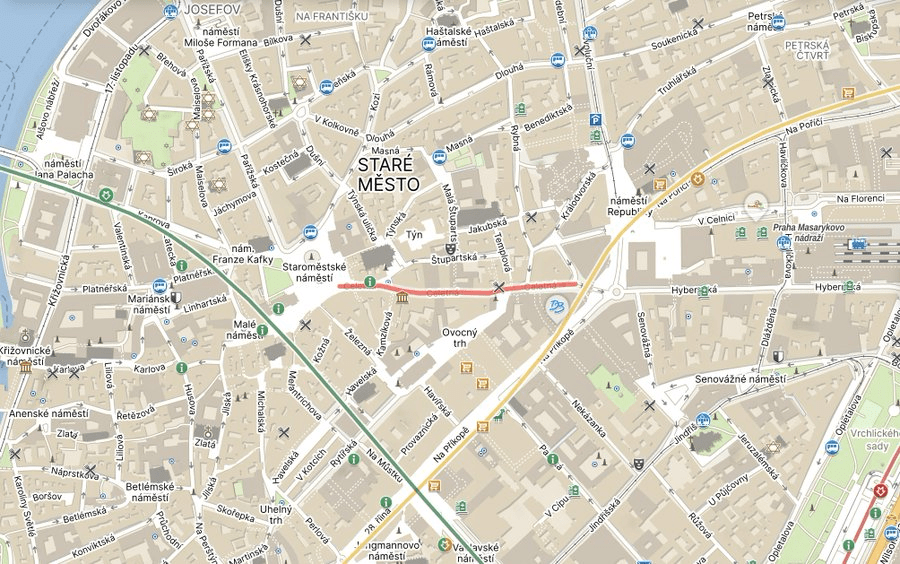
Celetná was the first part of the Královská cesta, or the Royal Way, which connected the Old Town with Prague Castle.
Nowadays, it connects Staroměstské náměstí and Náměstí Republiky, so it’s understandably filled with people all the time (there were trams until 1959, and it is pedestrianised these days).
But there are several good reasons to stop and stare. So let’s do that.
Sixtův dům, at number 2, is due to be converted into a Ritz-Carlton hotel; this plan, mooted for a long time, was approved in 2020 despite protests from preservationists. It also looks pretty rubbish right now.
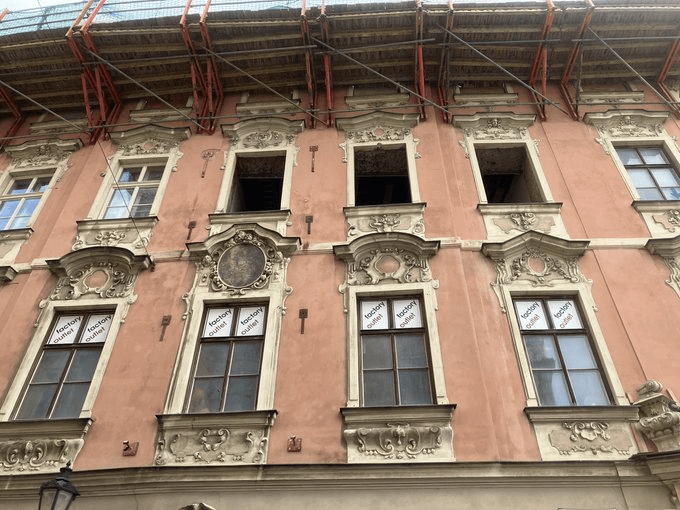

Number 3, U tří králů (The Three Kings), was lived in by Franz Kafka from 1896 to 1907.
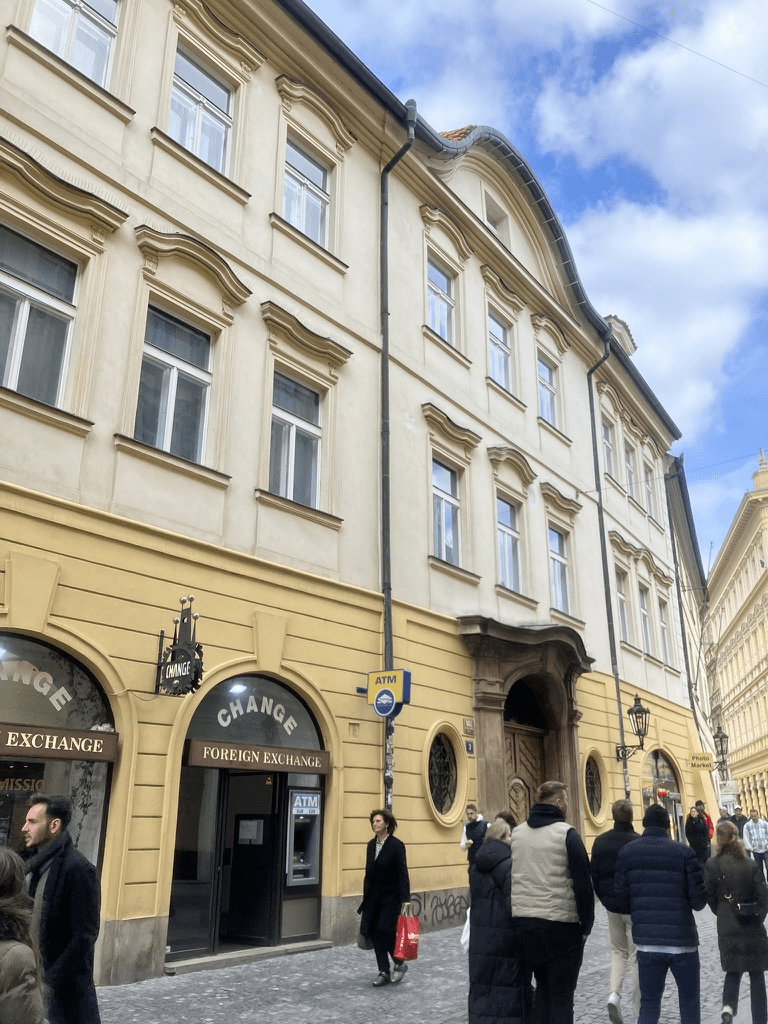
While number 5, Týnská fara / the Týn Rectory, is first mentioned in writing in 1135 and was founded by Soběslav I as a hospital for sick merchants and the poor.
It now hosts the local parish office and a restaurant (more on Týn when we get to Old Town Square, of course).

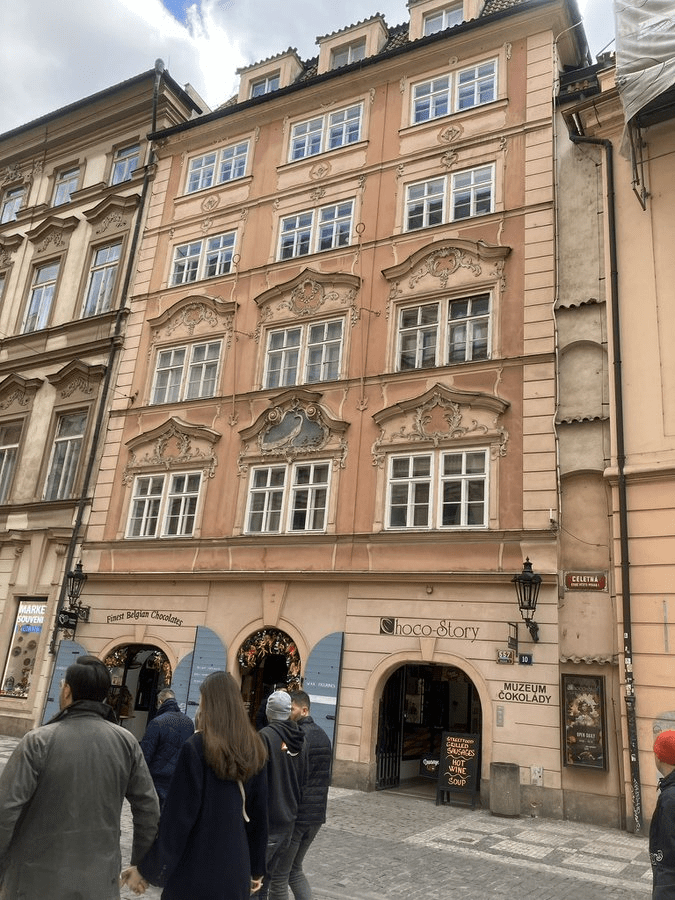
Number 10, U Bílého páva (The White Peacock), was burned down during the Prague Uprising in May 1945, so what you see now is a reconstruction from 1949 (the chocolate museum obviously arrived later).
Number 12, Hrzánský Palace, is another Kafka connection – from 1906 to 1912, Hermann and Julie Kafka (parents of Franz) ran a textile wholesale business from here.
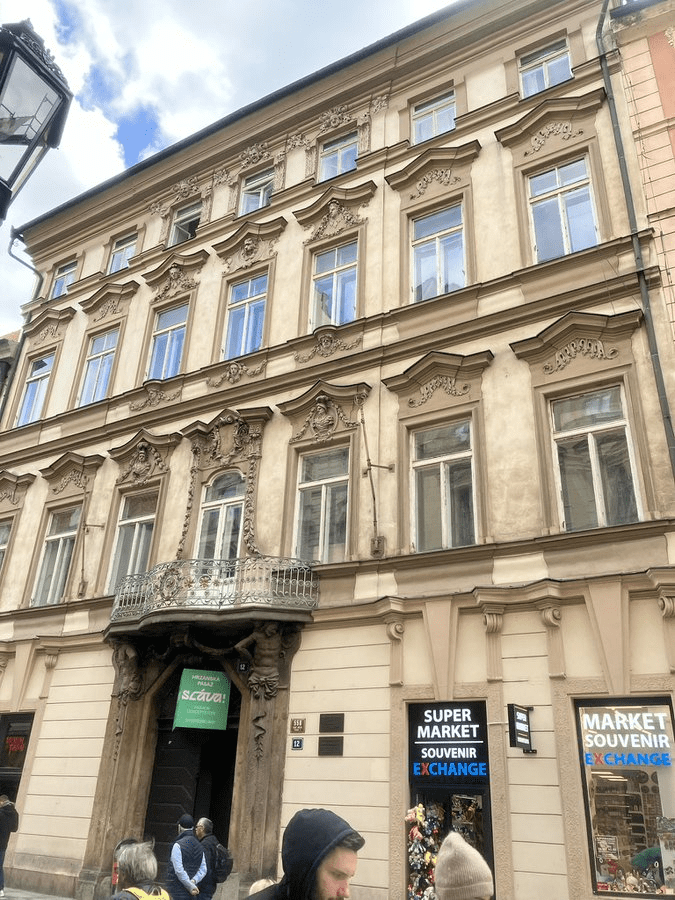
Millesimovský Palác, at number 13, was once the Institute of Marxism-Leninism, is now used by Charles University, and is mainly being written about by me right now because I just think it’s a great building.

While Menhart Palace – number 17 – hosts the Celetná Theatre and the Institute of Arts – Theater Institute, founded by the Ministry of Culture in 1959 and aiming to acquaint both Czechs and foreigners with the country’s theatres and their work.

Buquoy Palace, at number 20, is part of the Karolinum complex (see https://whatsinapraguestreetname.com/2024/10/09/prague-1-day-179-ovocny-trh/).

And, going back a bit, number 18 is basically paradise and I sometimes fantasise about getting locked in here overnight. https://karolinum.cz/en/
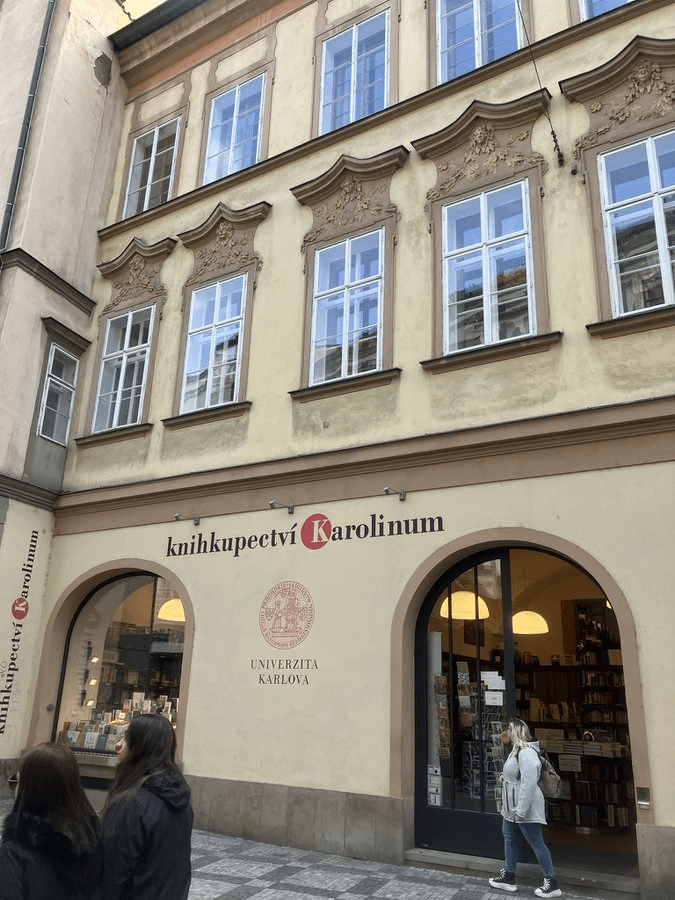
Number 25, U Čtyř sloupů (The Four Columns), was purchased by an Italian merchant, Bernard Pompeius Bolzano, in 1786. His famous son would spend much of this life here (https://whatsinapraguestreetname.com/2024/09/19/prague-1-day-133-bolzanova/).
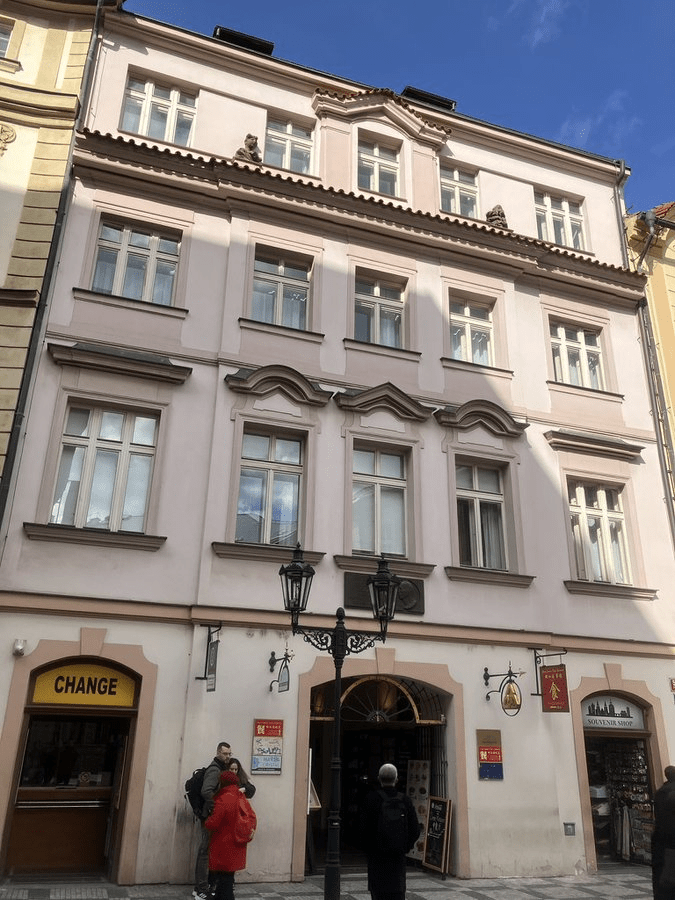
Number 29, U Zlatého anděla (The Golden Angel), attracted several royals in the late 19th and early 20th centuries – the monarchs of Denmark, Greece, Hannover and Saxony are all listed as guests.
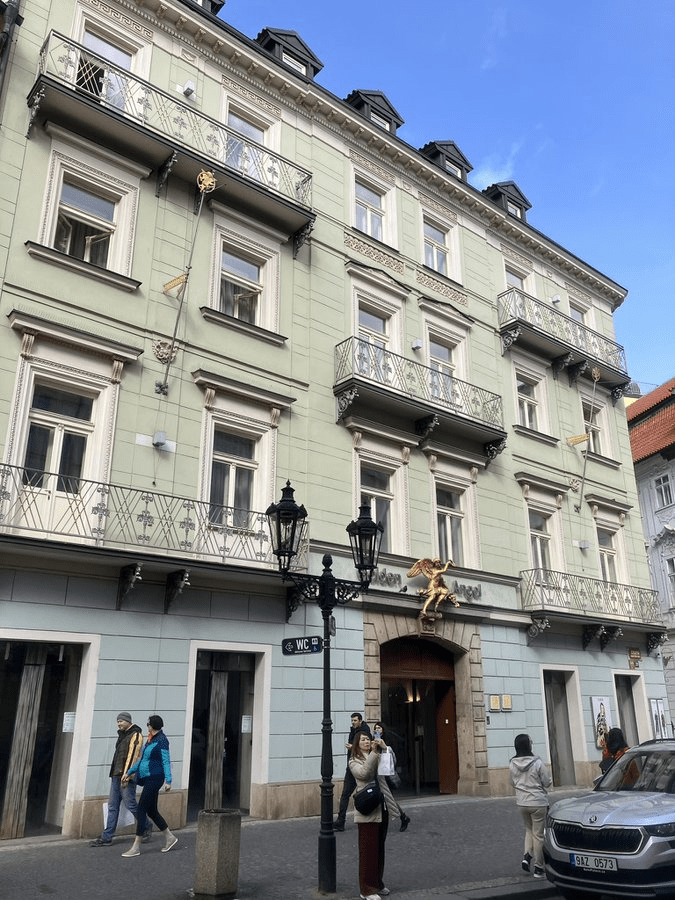
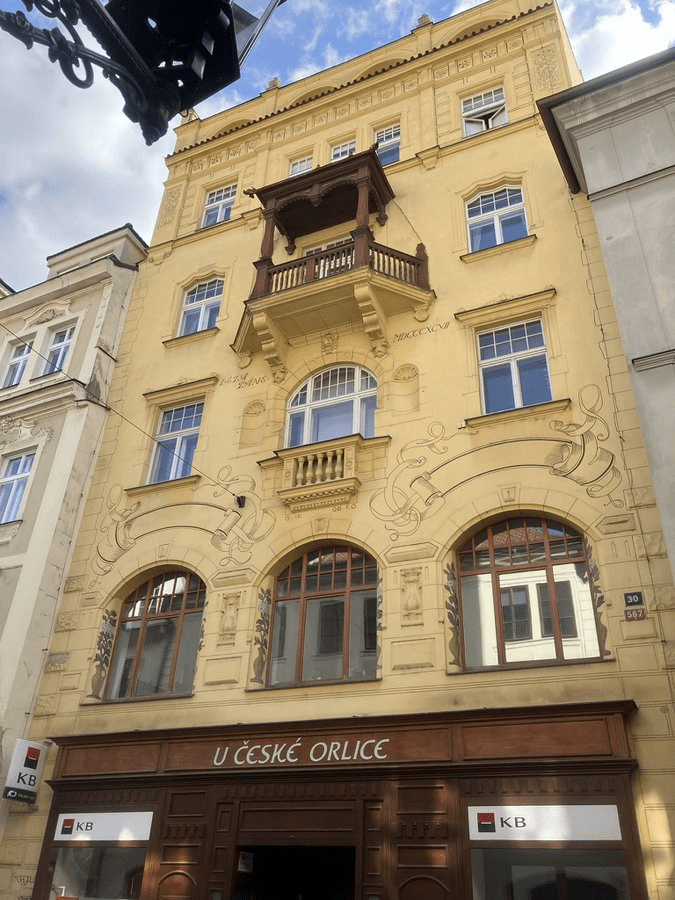
Number 30, U České orlice (The Czech Eagle), stands out thanks to its Neo-Gothic style. It was commissioned in 1896 by a physician, Čeněk Klika, who would later co-found the Czech Scouting Association.
There are also two buildings on Celetná known as Palác Pachtů z Rájova, or Pachtovský palác – numbers 31 and 36. The picture is of number 36.

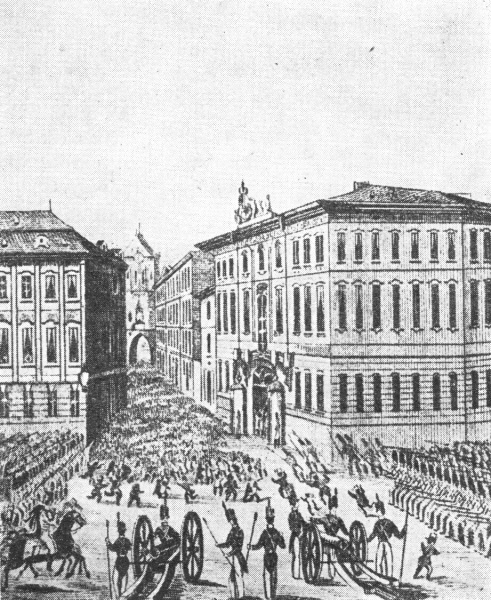
In June 1848, street fights were taking place between students and radicals on one side, and the forces of the commanding general in Bohemia, Alfred Windischgrätz, on the other. His wife, Marie Eleonora zu Schwarzenberg, was watching from one of this building’s windows.
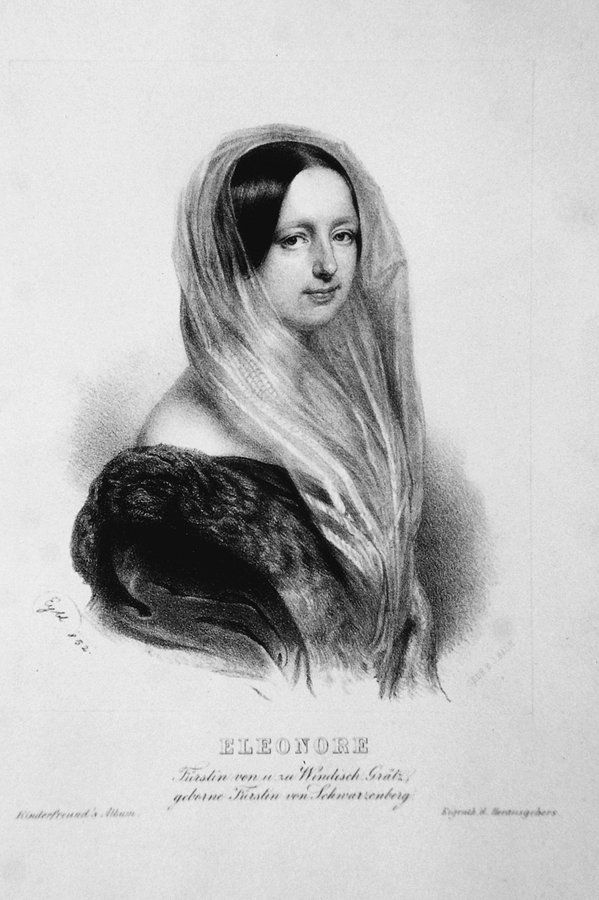
While watching, she was hit by a stray bullet and was killed. The full circumstances remain unknown.
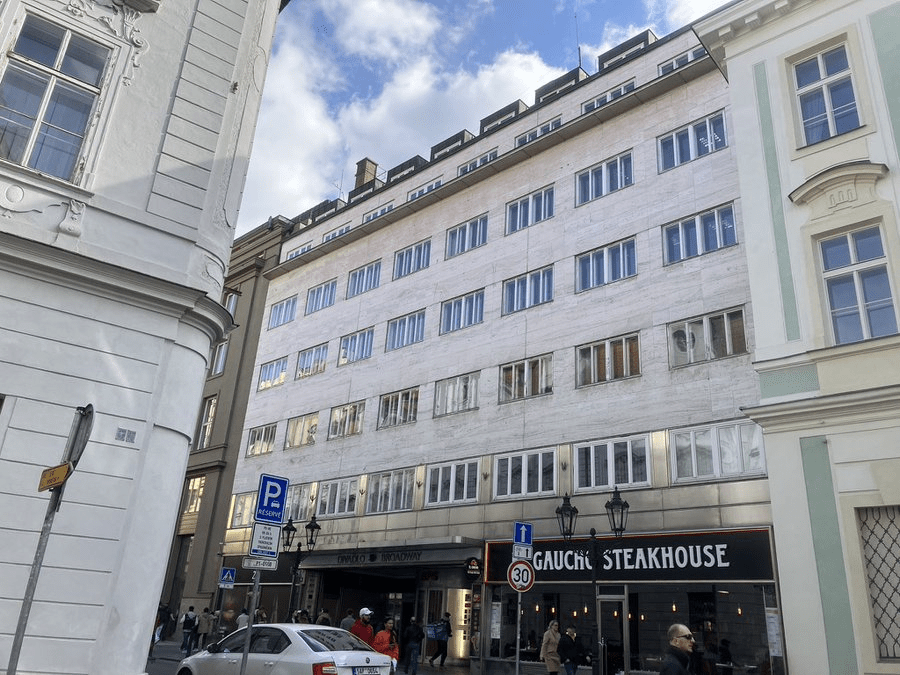
Then, at 38, you’ve got the other end of Palác Broadway, discussed, along with much else, on https://whatsinapraguestreetname.com/2024/09/22/prague-1-day-137-na-prikope/.
And then we’re at the Powder Tower… which gets a full thread to itself tomorrow.

 What's in a Prague street name
Leave a comment