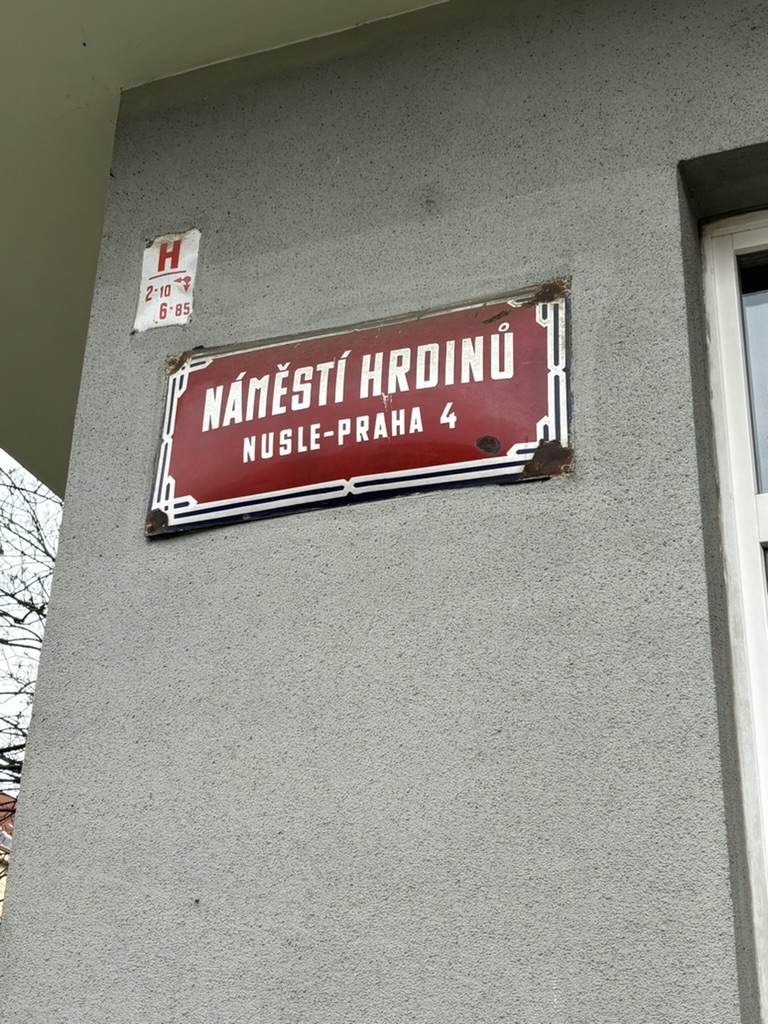
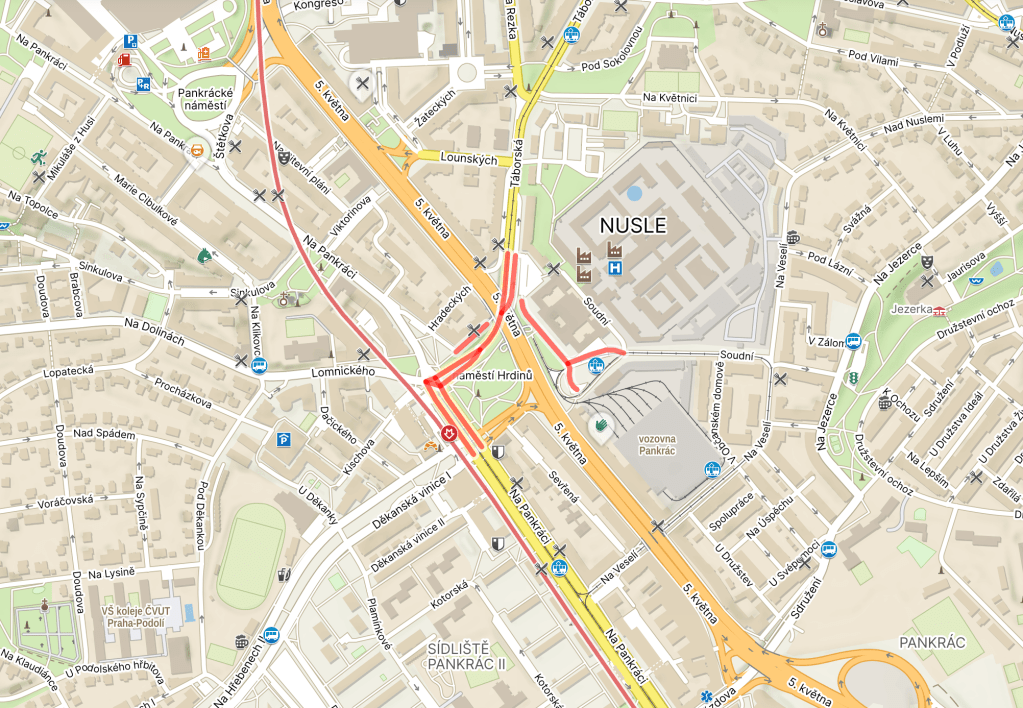
In 1938, this square was first named individually on maps – but it was called Soudní náměstí (Court Square), after the Prague High Court, which had moved here in 1933 (see https://whatsinapraguestreetname.com/2025/03/25/prague-4-day-57-soudni/).
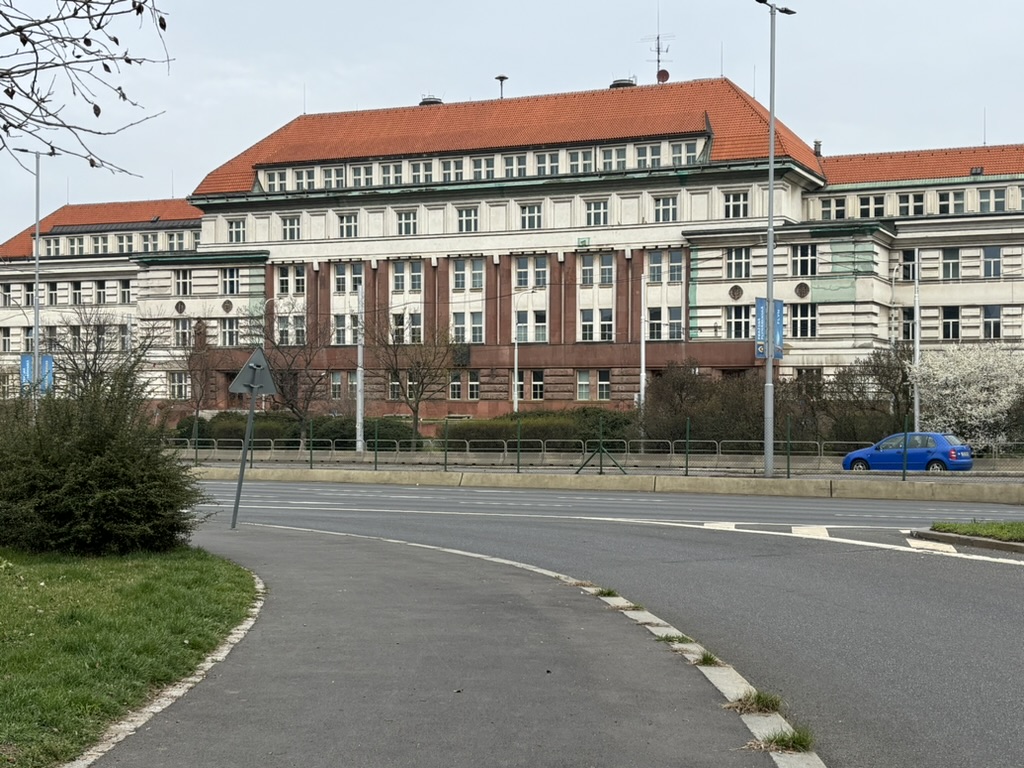
During the Prague Uprising of May 1945 (https://whatsinapraguestreetname.com/2025/02/05/prague-4-day-25-5-kvetna-5-may/), barricades stood in front of the court, aiming to stop the Nazis from reaching Pankrác; the Germans tore them down on the 7th.
However, within two days, Prague was liberated from Nazi rule, and, in September 1945, Josef Pfitzner, who had been installed as Deputy Mayor of Prague in 1939, was executed on the square. This would be the last public execution in the city.
In 1947, the square was renamed Náměstí Hrdinů – Heroes’ Square – in honour of those people who had resisted Nazi rule, but paid for this by being locked up – or murdered – at Pankrác Prison.
A year later, the square saw the last farewell to Edvard Beneš (https://whatsinapraguestreetname.com/2024/09/08/prague-1-day-53-nabrezi-edvarda-benese/), as part of his funeral procession through Prague.
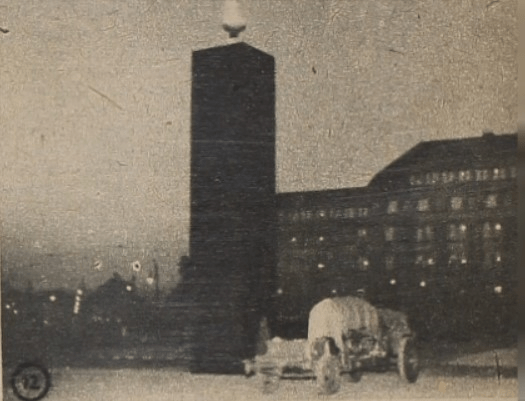
In August 1968, when Warsaw Pact troops invaded Prague, 54 of their tanks occupied the square, effectively cutting Nusle off from the rest of the city for several days.
The square includes a memorial to Milada Horáková, killed at Pankrác Prison in 1950: https://www.drobnepamatky.cz/node/23974.
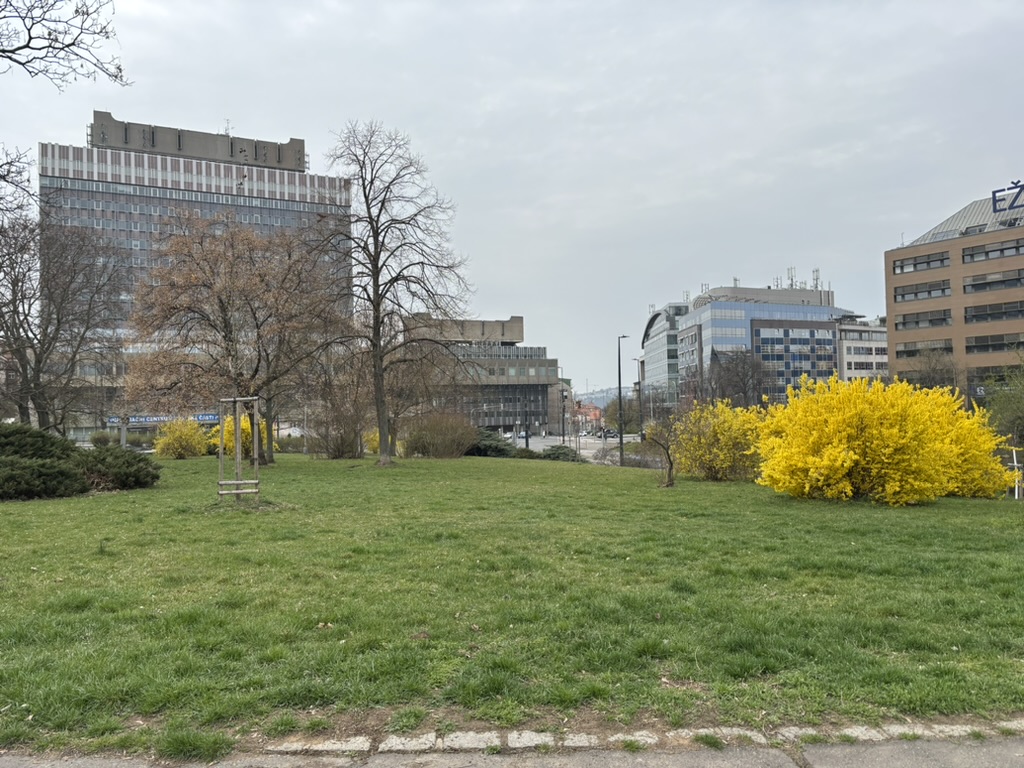
Whereas the other side of the square is… not scenic, but we’ll still find things to talk about when we get onto its streets quite soon.
 What's in a Prague street name
Leave a comment