V podzámčí was built in 1935.

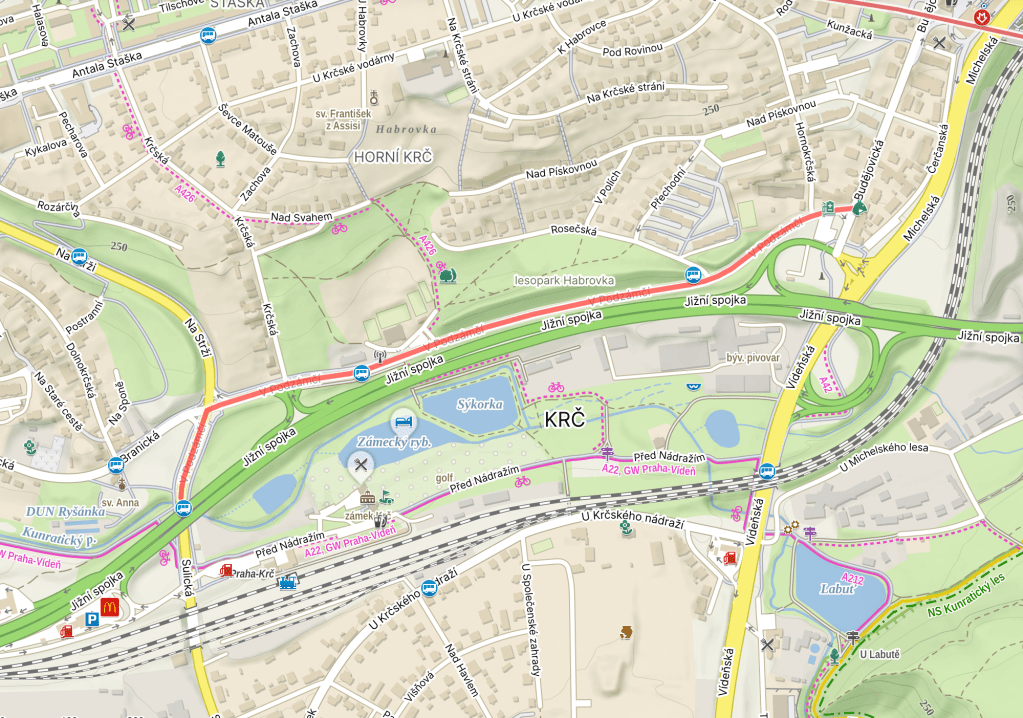
In 1222, the fortress and village of Lower Krč (Dolní Krč; https://whatsinapraguestreetname.com/2026/07/18/prague-4-day-406-dolnokrcska/) were mentioned in writing as belonging to the Vyšehrad Chapter (https://whatsinapraguestreetname.com/2024/08/26/prague-2-day-118-vysehradska/).
In 1420, the fortress was captured by the Hussites under one Jan Žižka (https://whatsinapraguestreetname.com/2023/02/26/prague-3-day-150-zizkovo-namesti/ and many other Prague 3 posts).
It passed through various owners, many of whom didn’t seem to give two hoots about it, so much so that a text from around 1620 describes it as ‘desolate’.
In 1627, Old Town burgher Jan Lukšan z Luftenštejna sold it to the Discalced Carmelites of St. Havel (https://whatsinapraguestreetname.com/2024/09/08/prague-1-day-39-karmelitska/ and https://whatsinapraguestreetname.com/2024/10/08/prague-1-day-175-havelska/).
They used it as their summer residence, but, in 1786, Joseph II abolished the monastery, and passed through various owners.
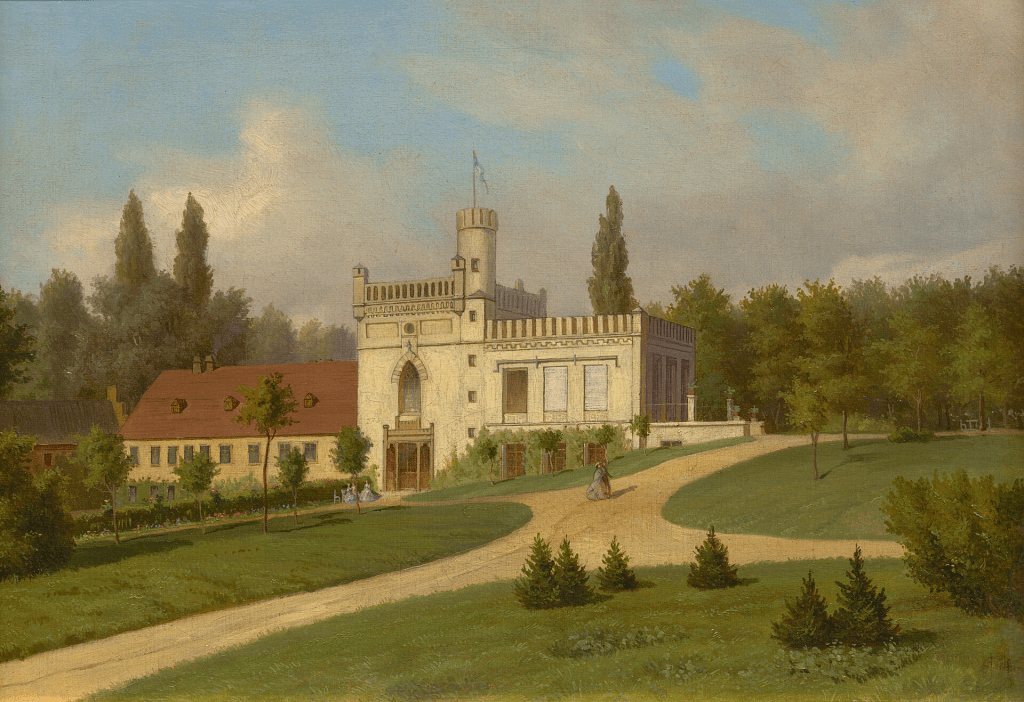
It wasn’t until the 1860s that one owner – Karl Baron Schlosser – turned the building into how we know it today, with neo-Gothic façades, battlements, and a British-inspired park (painting from 1865 by Eduard Herold).
From 1900 to 1948, it was owned by the Welz family, before becoming the home of the state-owned Agroprojekt company until 1989. Returned to the Welzes, it underwent significant reconstruction in 2003, and has served, since then, as the four-star Hotel Château St. Havel (https://chateauhotel.cz/ is less heavy on the construction work than my photo below is).
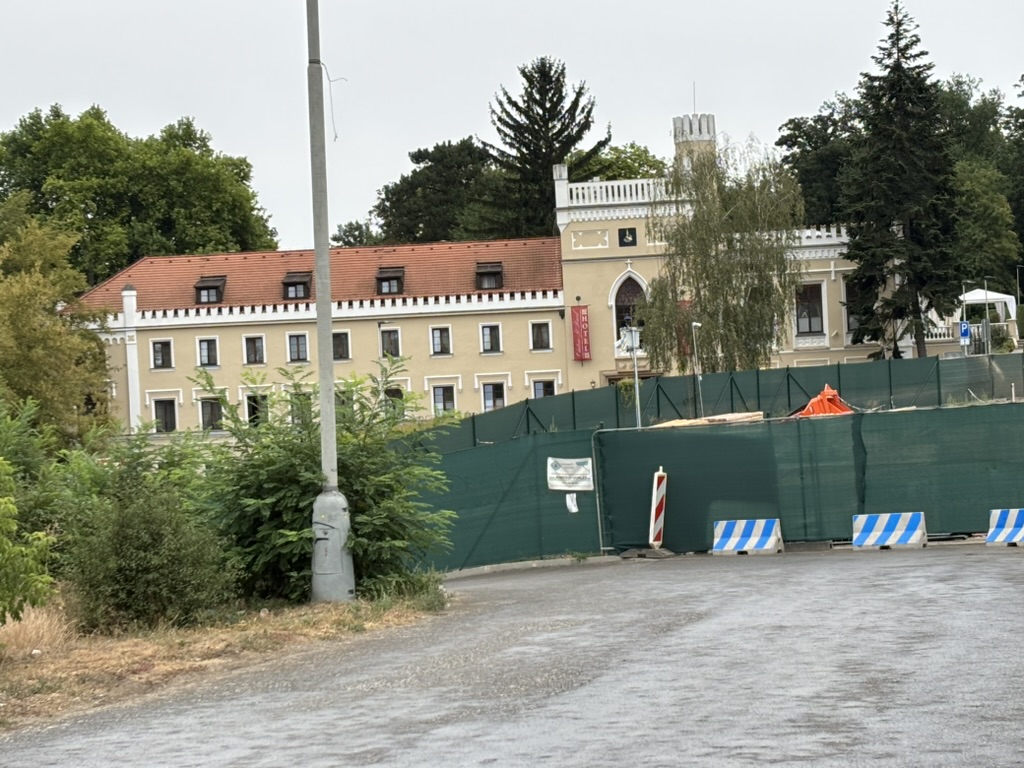
And, because I didn’t explicitly say so: a ‘podzámčí’ is under (‘pod’) a château (‘zámek’), i.e. it’s the area located in the immediate vicinity of a castle.


Leave a comment