Dolnokrčská was built in or before 1920.
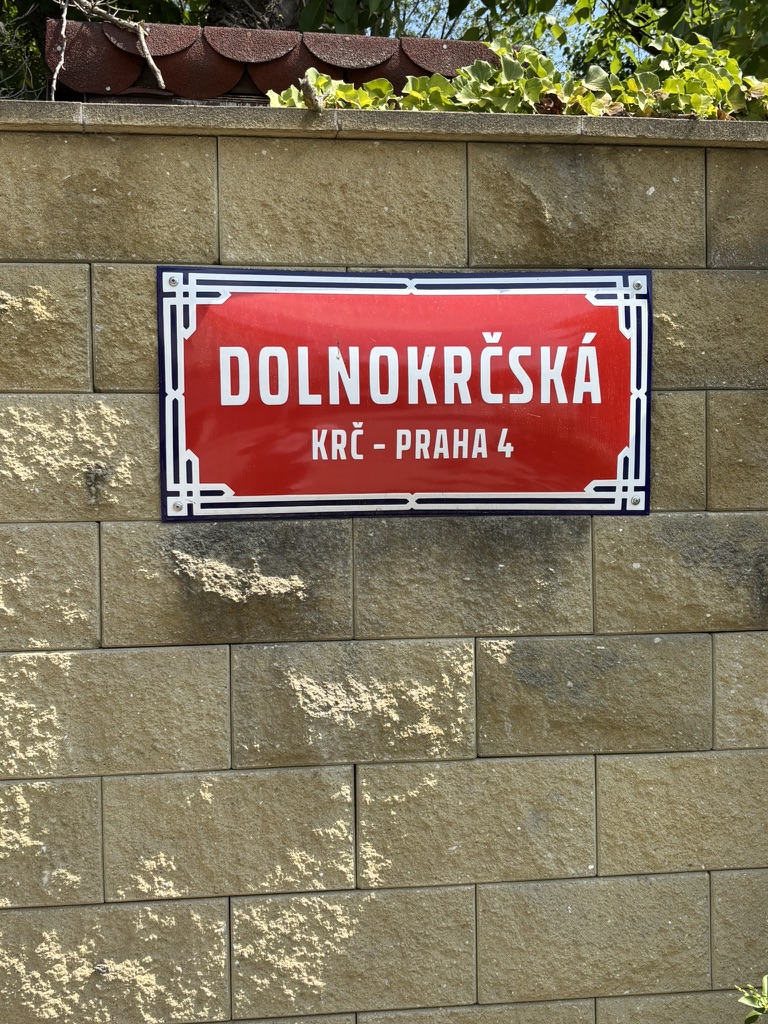
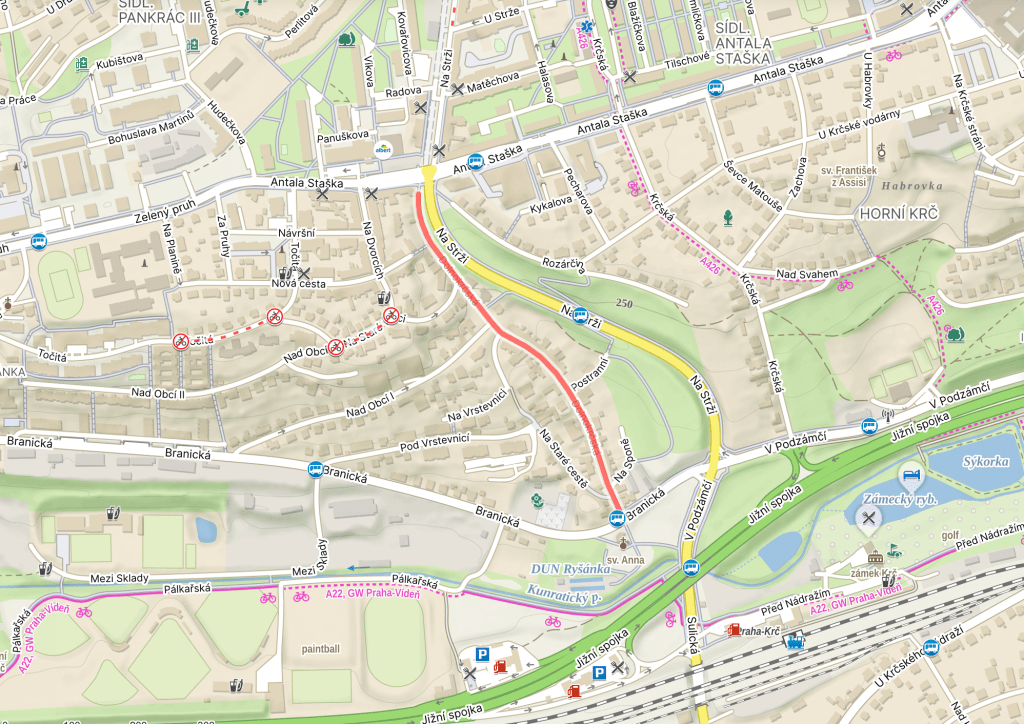
The street is named after Dolní Krč – or Lower Krč, because, as discussed on https://whatsinapraguestreetname.com/2026/05/30/prague-4-day-390-hornokrcska/, this was once A Tale of Two Krčes.
The first written mention of Krč that we know of is from the 1200s; there is also a document from 1620 in which Dolní Krč is referred to as Nová (= new) Krč (which confirms that ‘Krč’ is indeed feminine).
In 1628, Dolní Krč was purchased by the Monastery of the Discalced Carmelites (https://whatsinapraguestreetname.com/2024/10/08/prague-1-day-175-havelska/).
The monastery was dissolved in 1786, and Dolní Krč passed through private owners, the last ones being the descendants of Tomáš Welz, who had bought it in 1880.
By 1900, Dolní Krč had about 1,350 inhabitants. It became part of Greater Prague (along with Horní Krč) in 1922. They became One Single Krč in 1948.
The list of noteworthy buildings in Krč includes an awful lot of opportunities to say ‘but then it was demolished’: two brickworks, a chapel to St Gall (Havel), the Krč Brewery, and the original version of Krč Train Station.
Of course, not everything worth seeing is gone: one example is the Chapel of St. Anne (Kaple svaté Anny), on the intersection with Branická (https://whatsinapraguestreetname.com/2025/11/18/prague-4-day-233-branicka/).
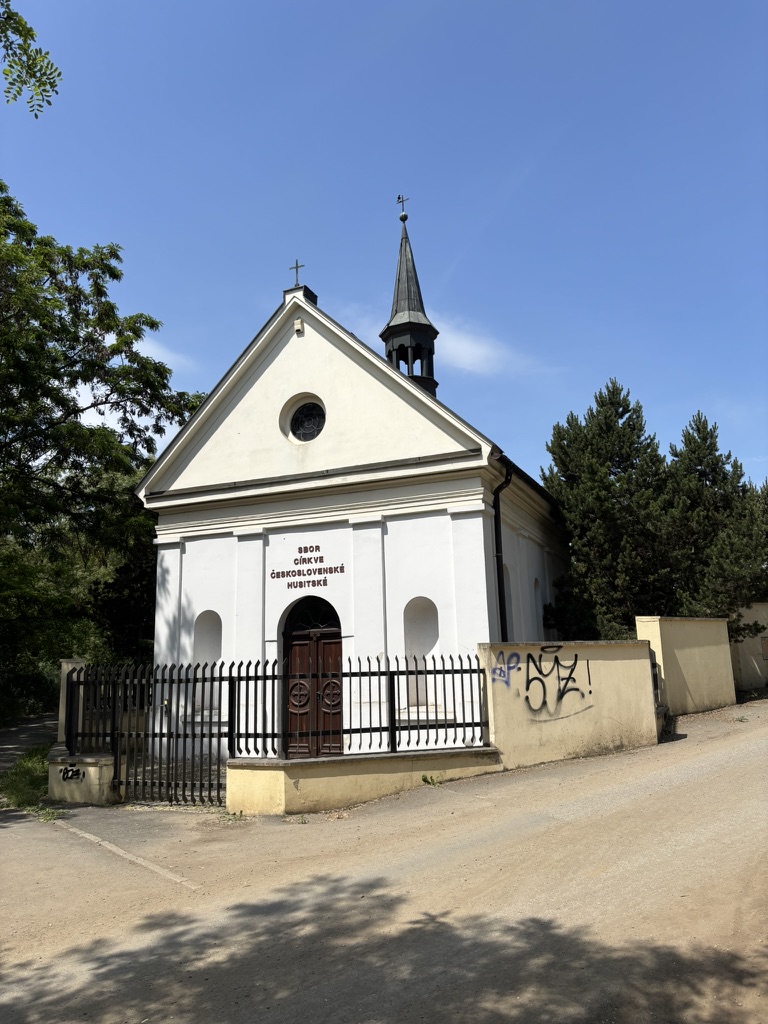
A large part of Dolní Krč was destroyed in 1979 to make way for the south-eastern part of the Prague City Ring Road (Jižní spojka). The chapel was basically left to rot until a plan for its reconstruction was written up in 1989.
Nowadays, it serves the Czechoslovak Hussite Church.
 What's in a Prague street name
Leave a comment