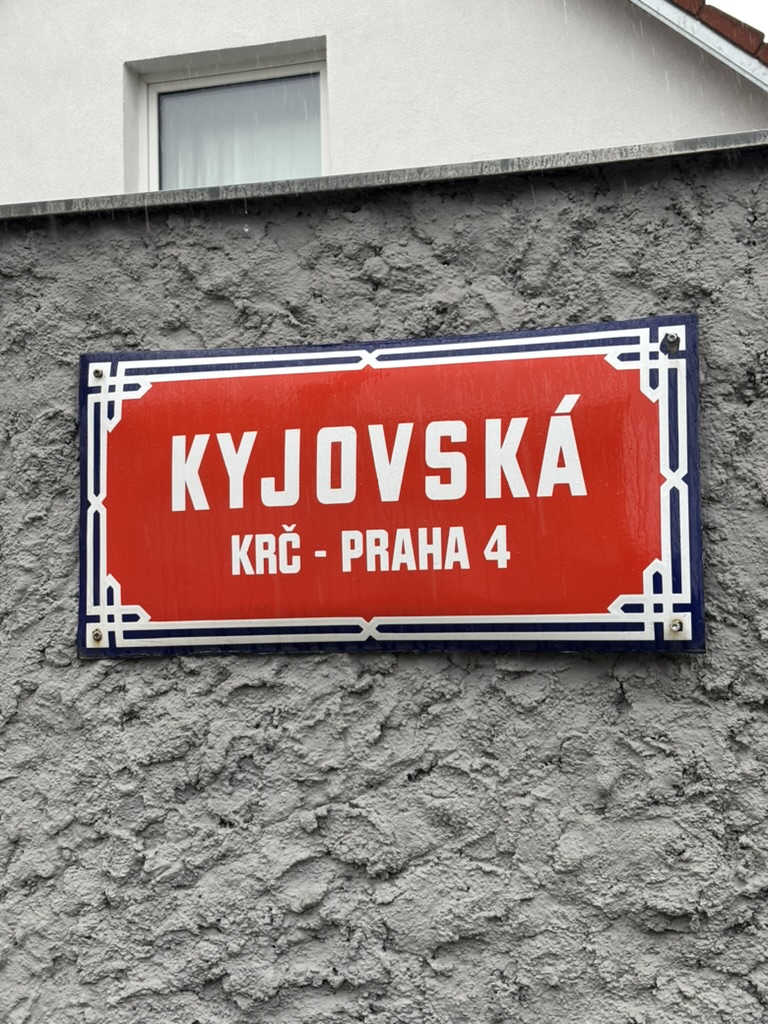
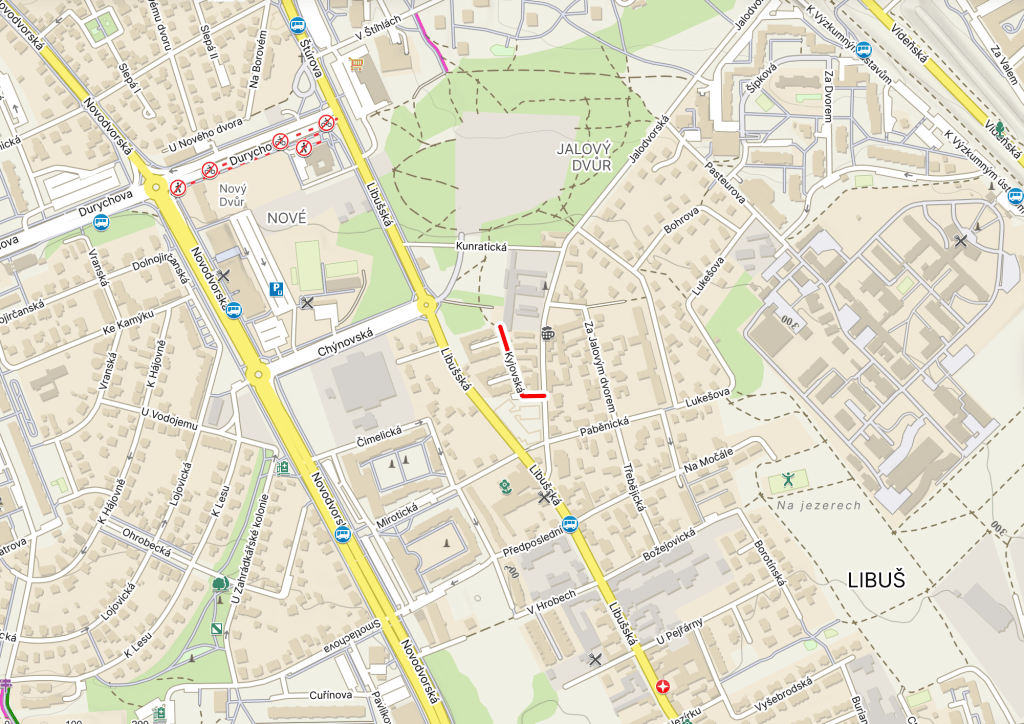
Kyjovská was built in 2000.
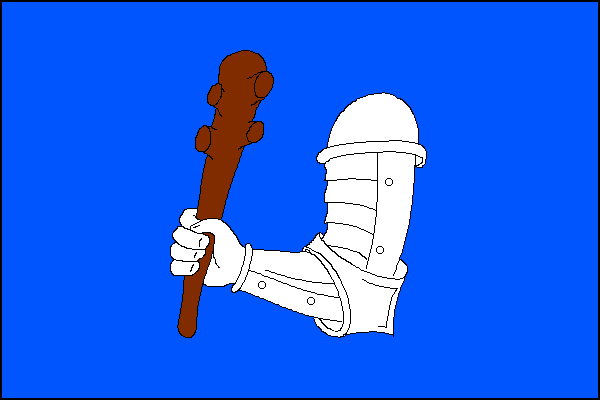
Kyjov is a town of about 11,000 people in South Moravia, more precisely in Hodonín District.
The earliest written mention we have is from 1126, when it was gifted to Hradisko Monastery (near Olomouc). The monastery soon fell into the hands of the Premonstratensians, and therefore Kyjov did too until at least the 1380s.
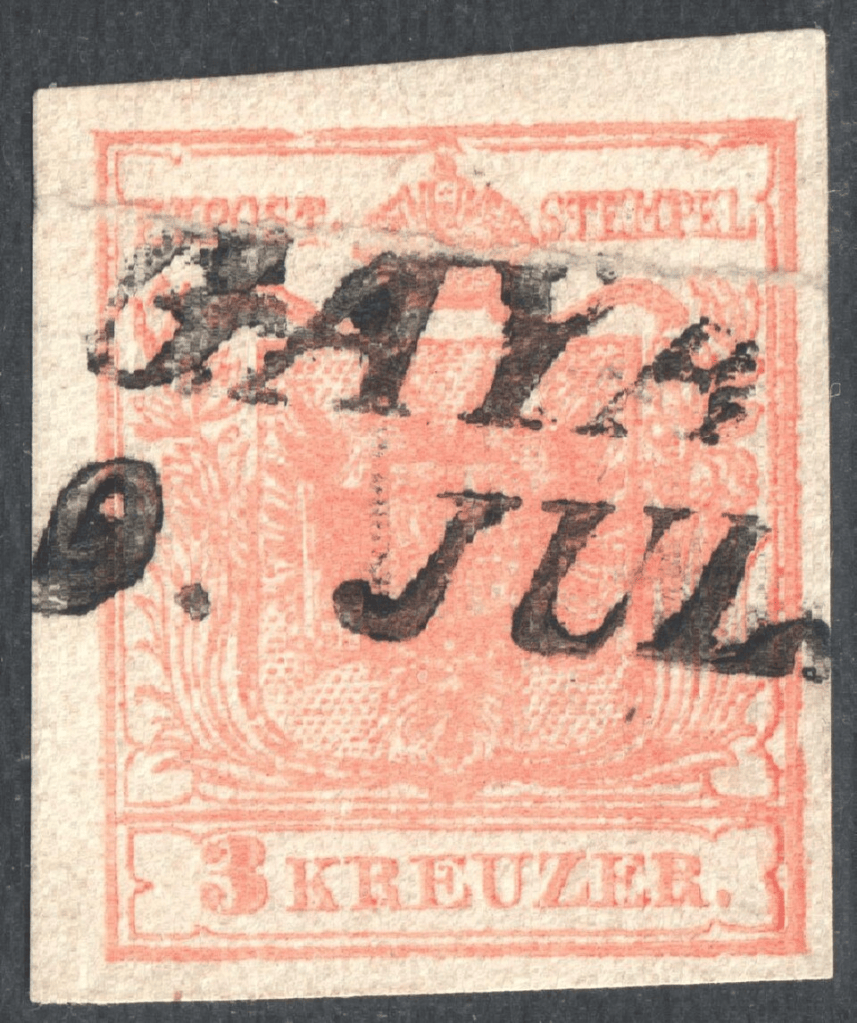
Its name is either derived from a possible one-time owner called Kyj, or from its location in a forest (forests contain trees, which you can use to make clubs, or ‘kyje’). ‘Kyj’ might have been pronounced ‘Kaj’ in local dialect, hence the town’s German name being Geyen, later Gaya (stamp from 1854).
The town was leased to the lower nobility after 1382; during the Hussite Wars, it became an Utraquist stronghold (https://whatsinapraguestreetname.com/2022/11/28/prague-3-day-100-kalisnicka/).
Which will explain why, in 1431, Austrian Margrave Albert II of Habsburg captured it and allegedly had about fifty of its inhabitants killed.
The monastery sold Kyjov in 1539; in 1548, following local dissatisfaction with another change of ownership, Vienna promised Kyjov would be placed under direct imperial administration (which also did its economy quite a lot of good).
Its development was impacted in 1605, though, when it was looted and burned by forces of the Transylvanian Prince Stephen Bocskai. Things didn’t get better in 1619 (when Kyjov fell during the Bohemian Revolt) or 1623 (when it was invaded by Gábor Bethlen’s army). *And* it burned down in 1638.
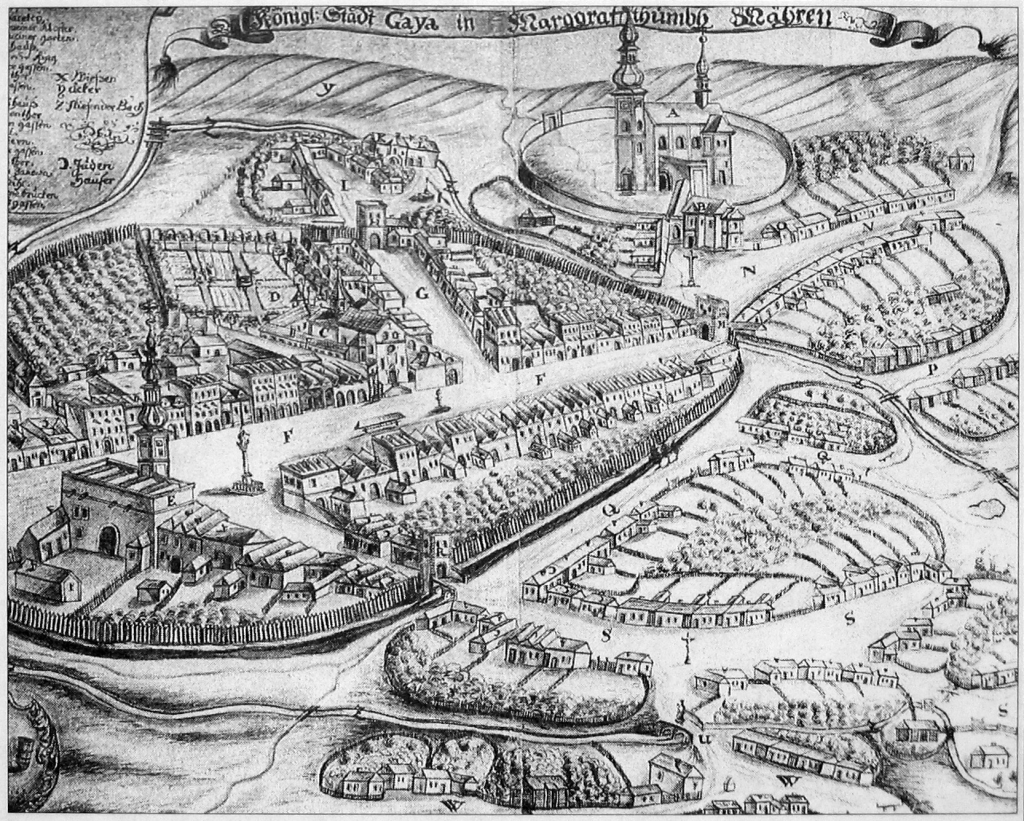
Kyjov started to flourish again in the 1700s (the picture is the town in 1727), when it was developed by a group of Capuchin friars (they built a new parish church and monastery – still standing – while, in 1760, the Piarists added a Latin grammar school).
Industrial development came to Kyjov in 1844 with the opening of lignite mines; it also had a glassworks from 1858 to 1878, and, following a fire and rebuilding, from 1883.
Kyjov is part of Slovácko, or ‘Moravian Slovakia’; people in the region speak a dialect which forms a transition between Czech and Slovak. Slovácko is known for its music, folklore, costumes and – yes – wine.
All of these are on show at the Slovácky rok festival, which is held every four years. But the next one is in three years and ten months. Sorry (I am genuinely quite sorry). https://www.kudyznudy.cz/akce/slovacky-rok-v-kyjove-1
In 2021, a settlement and burial site were excavated in Kyjov, dating back to the Early Bronze Age (around 2000 BC): https://hodoninsky.denik.cz/zpravy-region/archeologove-objevili-na-jihu-kyjova-zlaty-sperk-a-ctrnact-hrobu-podivejte-se/.
Finally, here’s some genuinely great footage of Kyjov in 1971.


Leave a comment