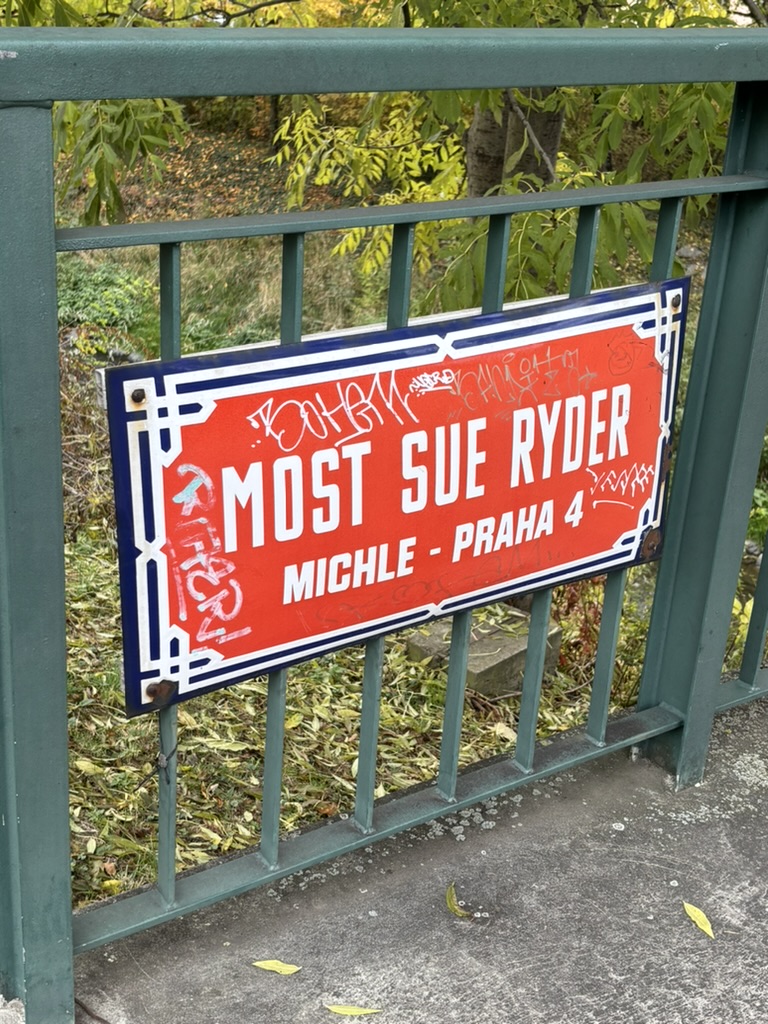
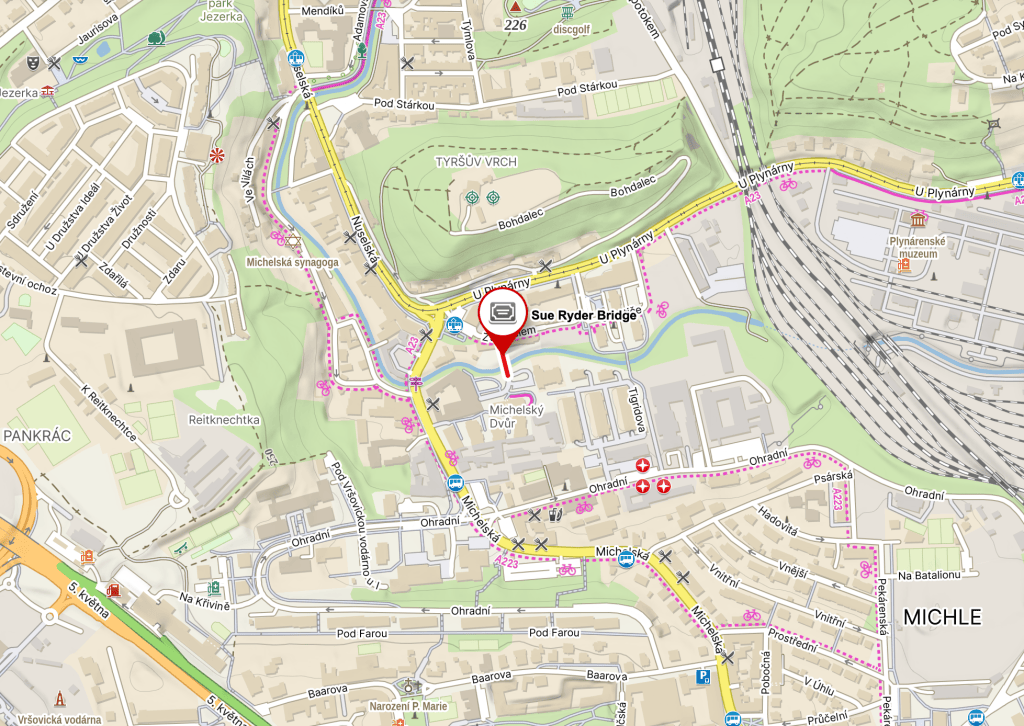
Most Sue Ryder (Sue Ryder Bridge) was named in 2001.
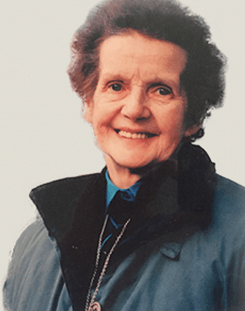
Margaret Susan ‘Sue’ Ryder was born in Leeds, England in 1924. When World War II broke out, she, still a teenager, joined the First Aid Nursing Yeomanry (FANY).
Such units were used by, among others, the Special Operations Executive (SOE), which conducted sabotage and espionage in German-occupied Europe, and which, in 1943, assigned Ryder to its Polish section, with which she travelled to Tunisia, Algeria, Italy and Scotland.
The SOE trained Poles to act as paratroopers and infiltrate Poland; these paratroopers were known as the ‘Silent Unseen’ (Polish: Cichociemni). Ryder provided care to them and transported them to airfields.
After World War II, she provided humanitarian assistance in Poland, including to survivors of concentration camps. In 1952, most official aid organisations left Poland, but Ryder continued to work there.
She also advocated for ‘Bods’, which is what she called young men who were stuck in countries other than their own, with no obvious way of getting home, or anyone to go home to, and who often turned to crime.
She campaigned for their release, prayed with those who had been sentenced to death, and, for those who did get released, she sometimes managed to arrange repatriation to the UK.
Ryder founded the St. Christopher Settlement (in Hannover) and the St. Christopher Kreis (in Frankfurt), both of which were homes for concentration camp survivors.
In 1953, Ryder set up a charity, the Forgotten Allies Trust, which soon became known as the Sue Ryder Foundation. Operating from her mother’s house on Cavendish, Suffolk, it provided care for the sick and disabled.
By the 1970s, the Foundation had also set up houses in Poland (over thirty) and Yugoslavia (over twenty); they were assembled by local workers, using prefabs imported from Britain. It also arranged extended holidays abroad for survivors.
In 1976, Ryder was made a dame Commander of the Order of St. Michael and St. George; in 1978, she became a life peer and chose the title of Baroness Ryder of Warsaw.
In 1989, Ryder managed to raise over £40,000 in support of Poland, which had recently dropped communism; in 1991, she set up a Sue Ryder Foundation in Poland.
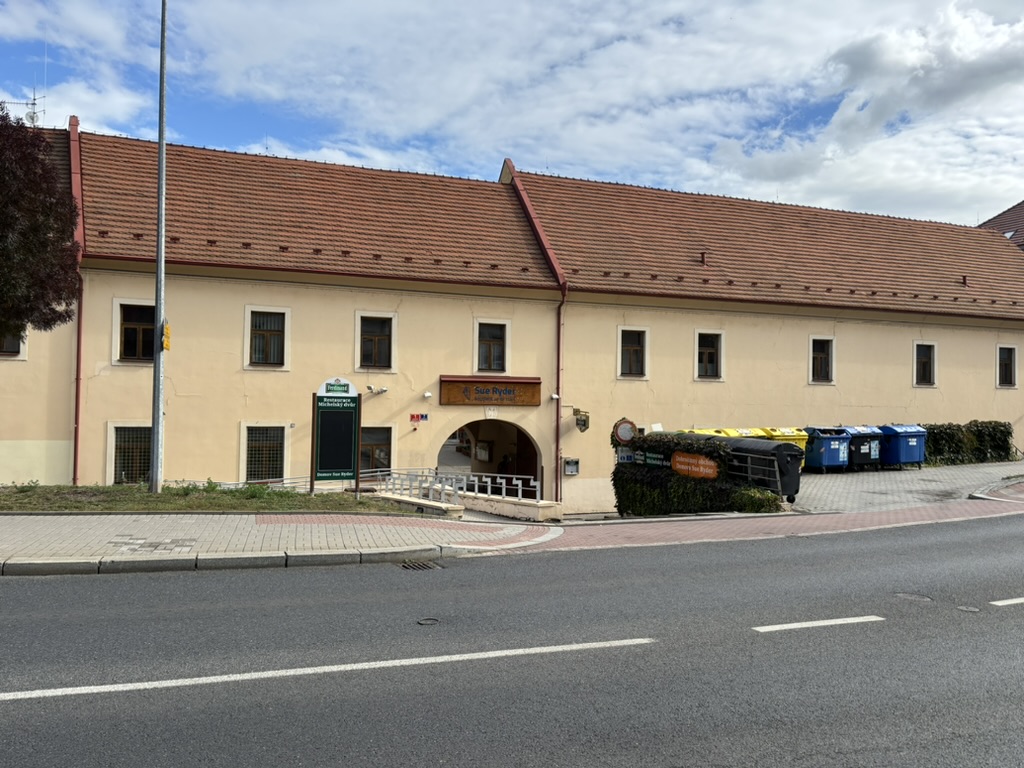
The Foundation’s activity in the Czech Republic started in 1994, when it won a tender to reconstruct Michelský dvůr (Michle Court), located here.
Ryder died in Bury St Edmunds, Suffolk, in 2000.
Nowadays, the Sue Ryder charity runs hospices in the UK, and provides support to those dealing with bereavement. It also runs 400 charity shops in the UK, and, in the year from 2021-2, earned £112.75 million.


Leave a Reply