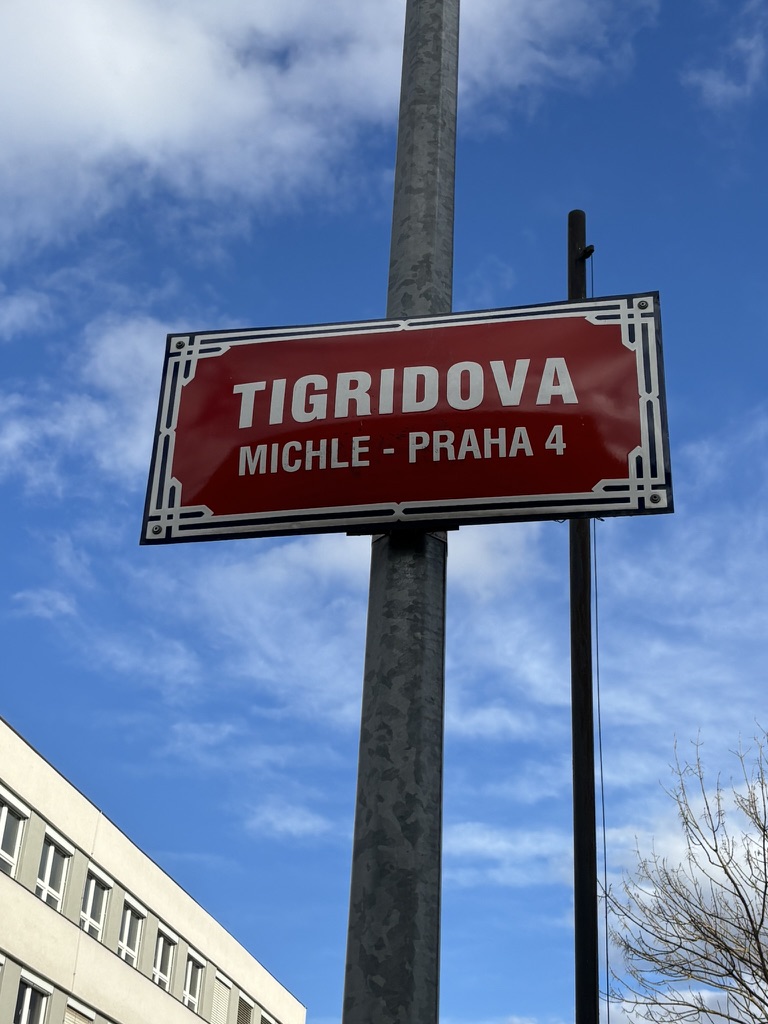
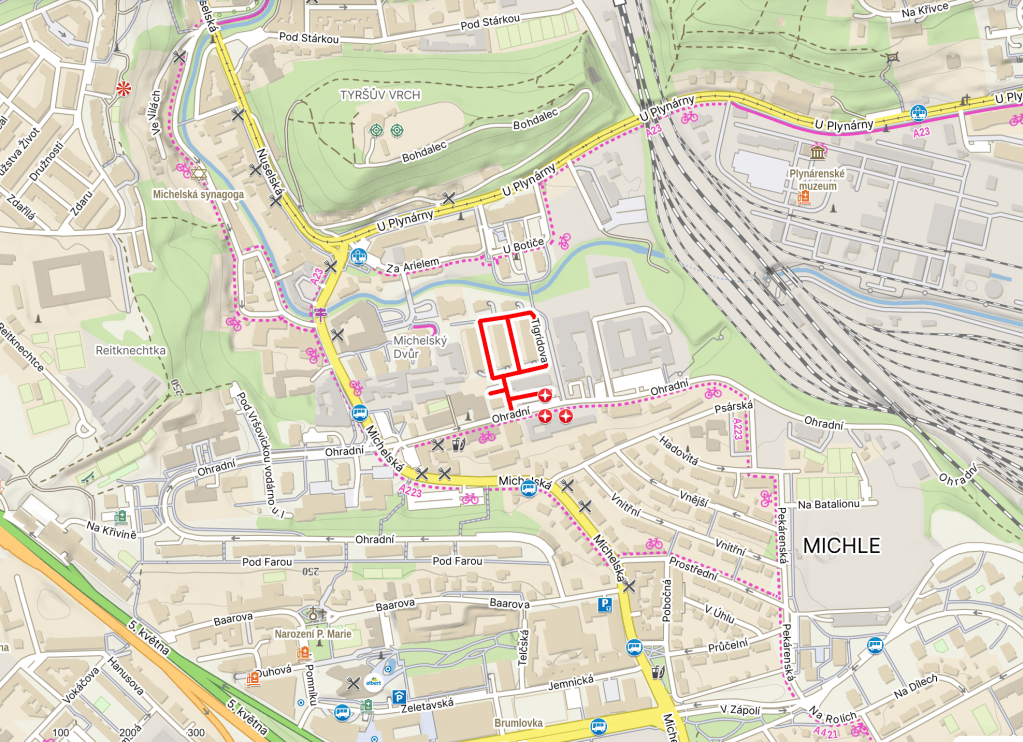
Tigridova was built in 2007.
Pavel Schönfeld was born into a Jewish family in Prague in 1917. His father, František Schönfeld, was the nephew of the writer Antal Stašek (https://whatsinapraguestreetname.com/2026/05/07/prague-4-day-378-antala-staska/).
And also, therefore, a cousin of the writer Ivan Olbracht (https://whatsinapraguestreetname.com/2026/03/30/prague-4-day-346-olbrachtova/).
He grew up on Kouřimská in Vinohrady (https://whatsinapraguestreetname.com/2023/03/08/prague-3-day-170-kourimska/), where he is commemorated by a Stolperstein.
Schönfeld started law school in 1936. While there, he wrote for a student magazine, Studentský časopis (translating as… Student Magazine), and founded Divadelní kolektiv mladých (Theatre Collective of the Young), where he worked as a director.
In 1939, Schönfeld emigrated to the UK, spending the World War II years in London and participating in BBC’s programming for Czech and Slovak exiles. During this time, he adopted the pseudonym ‘Tigrid’, inspired by his love of geography lessons at primary school and, specifically, the River Tigris.
He also became a Catholic, inspired by Jan Šrámek, Prime Minister of the Czechoslovak Government-in-exile (and therefore also in London) from 1940 to 1945.
In May 1945, Tigrid was offered a job at Czechoslovak Radio, although this offer was soon withdrawn when the Minister of Information realised Tigrid was very much not a communist and very much not likely to become one. However, Tigrid still returned to Czechoslovakia in June.
He edited two magazines, Vývoj (Evolution) and Obzory (Reviews), the latter of which was particularly critical of communism, and not afraid to argue that the expulsions of Germans from Czechoslovakia after WW2 had not been appropriate.
In February 1948, Tigrid travelled to the British sector of West Berlin on a diplomatic passport that he was supposed to have returned; the Czechoslovak government issued an arrest warrant, but Tigrid managed to escape and made it to Frankfurt, where he informed the Western press of the communist coup.
In 1951, Tigrid was appointed programme director for Radio Free Europe’s Czechoslovak service, based in Munich, but left within a year due to disagreements with the director, and moved to the US.
He initially worked as a waiter (he had also done so in London), and then as owner of a restaurant. His wife, who had followed him into exile in 1948, was the cook.
In 1956, Tigrid started a quarterly magazine, Svědectví (Testimonies), as a reaction to the Soviet’s crushing of the Hungarian Revolution. The couple relocated to Paris in 1960, by which time they both had U.S. passports.
Svědectví – which, we would learn decades later, was supported by CIA funding – would be an inspiration for the Prague Spring. He continued to contribute to Radio Free Europe and the BBC; in 1964, the State Security (StB) tried to kidnap him during a meeting in Budapest, but failed.
Just after the Velvet Revolution in 1989, Tigrid returned to Czechoslovakia and acted as an advisor to Václav Havel. In 1994, Václav Klaus appointed him Minister of Culture (representing the Christian Democrats).
In 1995, Tigrid was instrumental in organising an exhibition about Tomáš G. Masaryk on Národní třída. After being defeated in the Senate elections in 1996, he started working on Czech-German reconciliation, as advised by Havel, who believed that Tigrid had the sensitivity that was needed for such discussions, and which many politicians lacked.
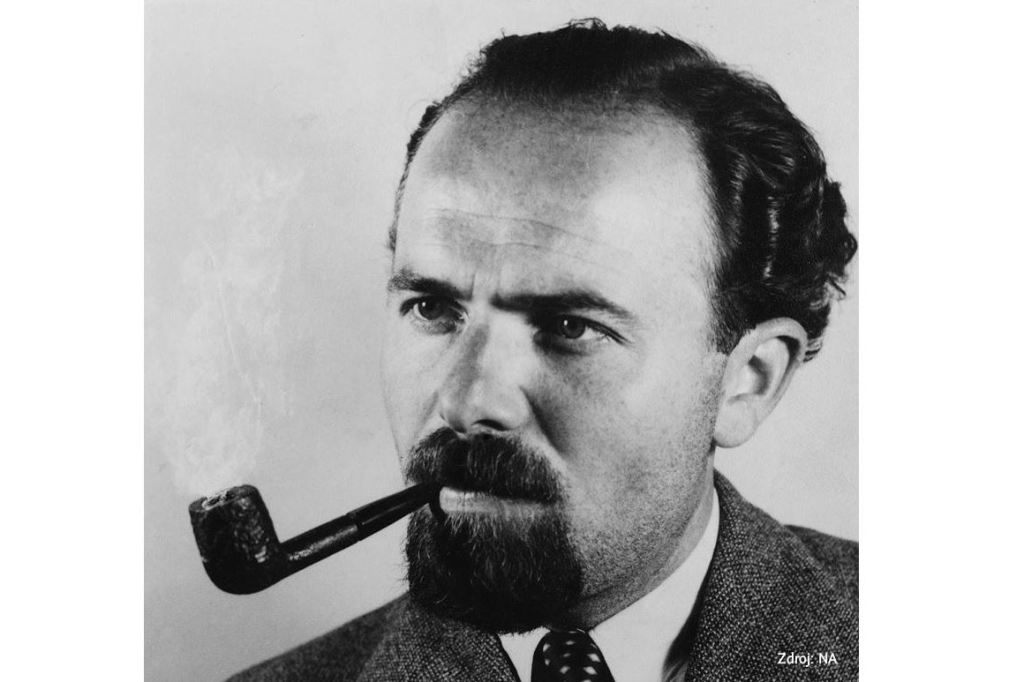
In 1998, Tigrid withdrew from public life and went back to his home in Héricy, Île-de-France. In 2003, when seriously ill, he voluntarily stopped taking his medication and died, a plan he had openly talked about before (photo from https://www.vhu.cz/vola-londyn-ze-zakulisi-ceskoslovenskeho-vysilani-z-londyna/).


Leave a Reply