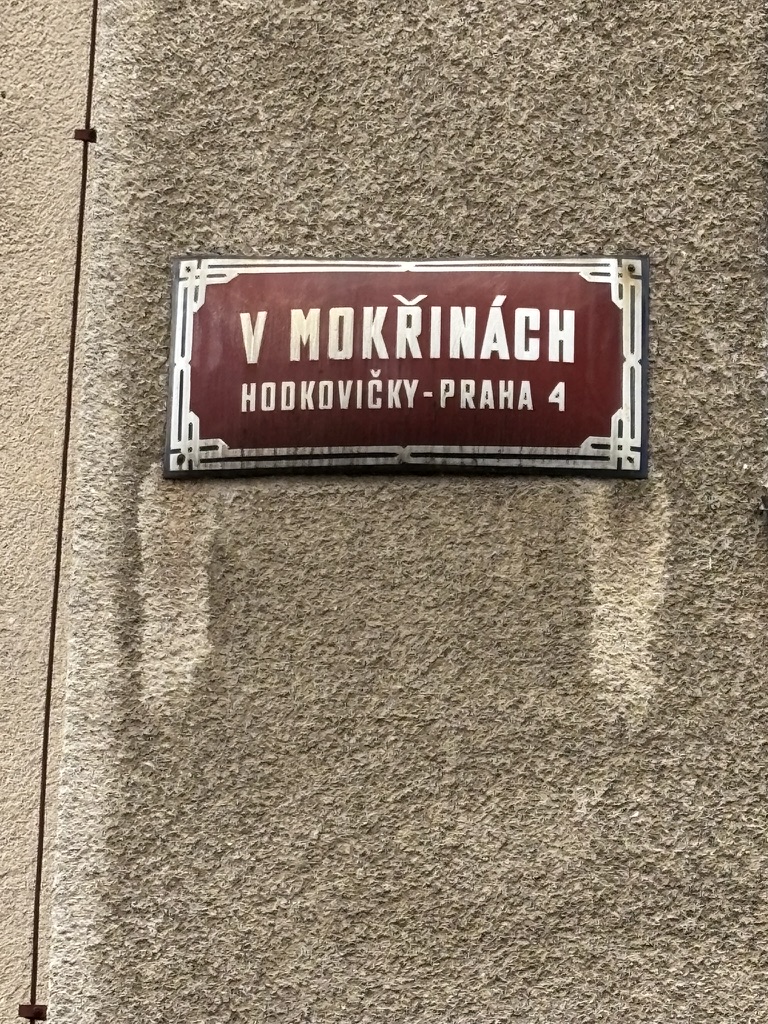
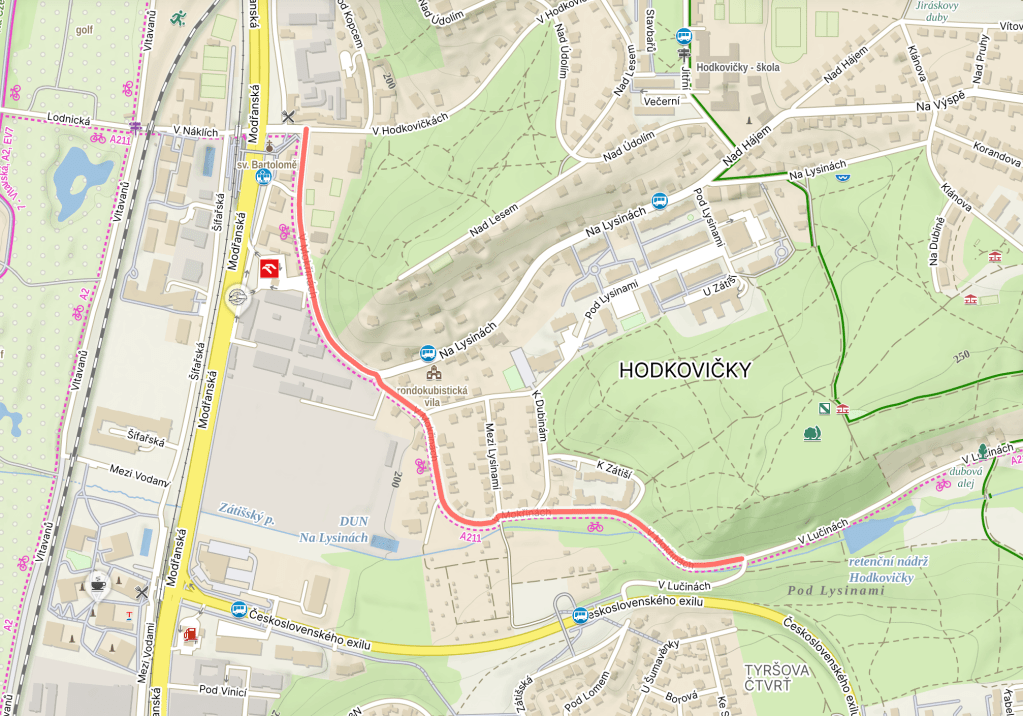
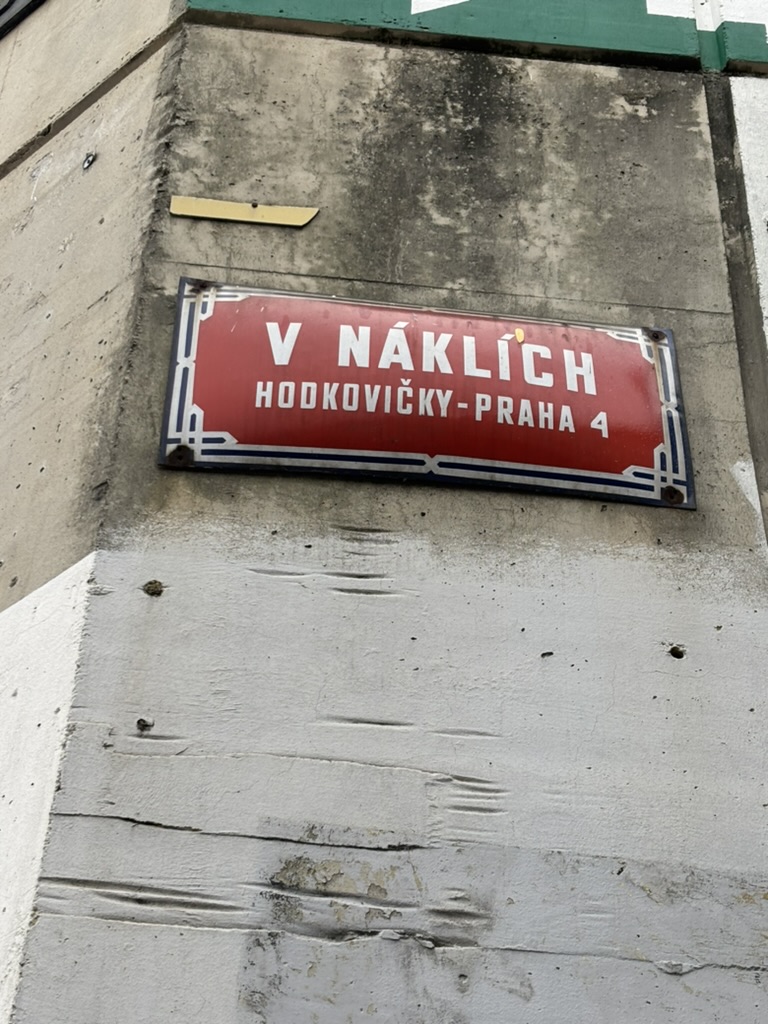
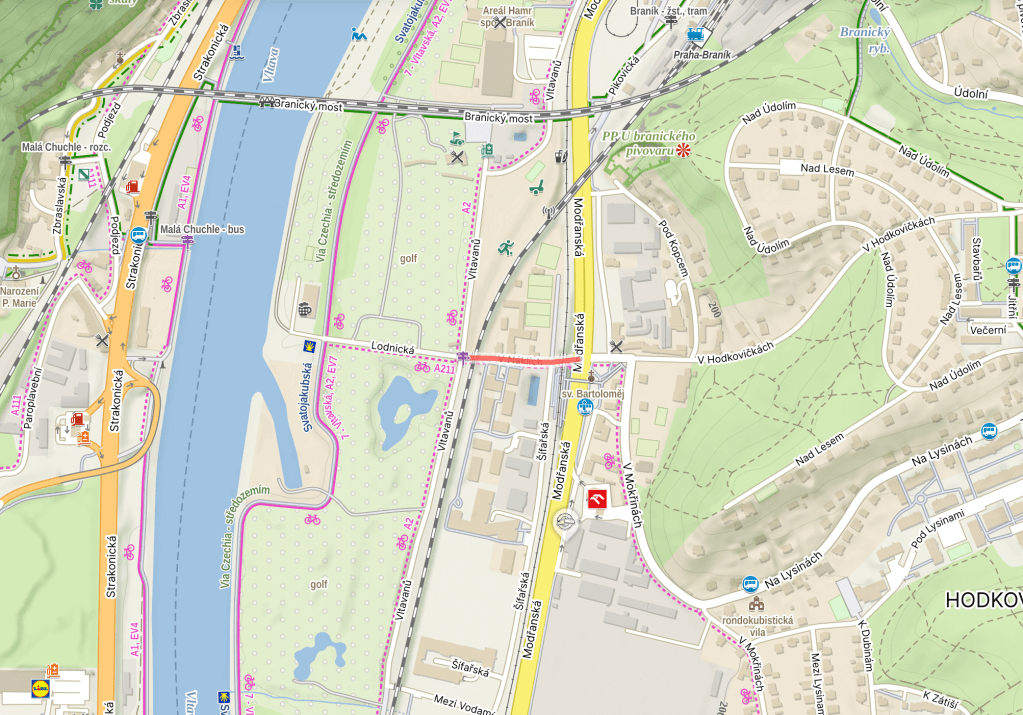
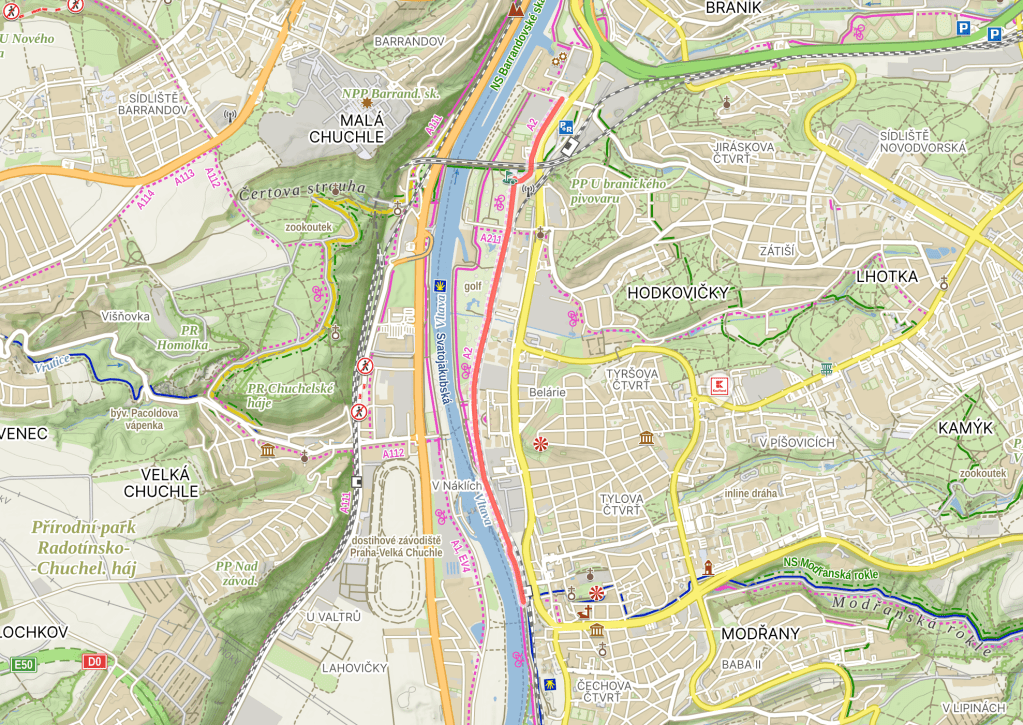
Until 1947, the street was called U kapličky (By the chapel), after the Chapel of St. Bartholomew on Modřanská (note to self to take a photo when I’m next there).
‘Náklí’ is young willow growth by a river, cut down annually so that it can be used to weave baskets and the like.
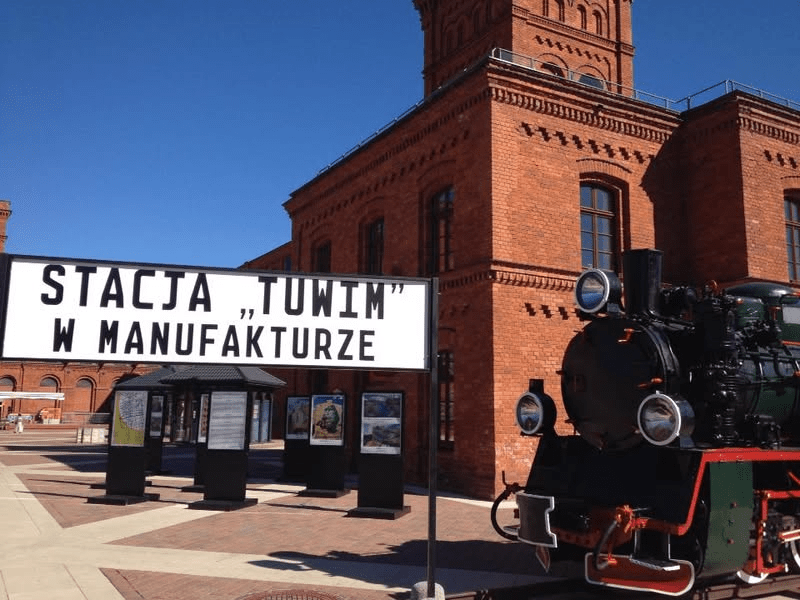
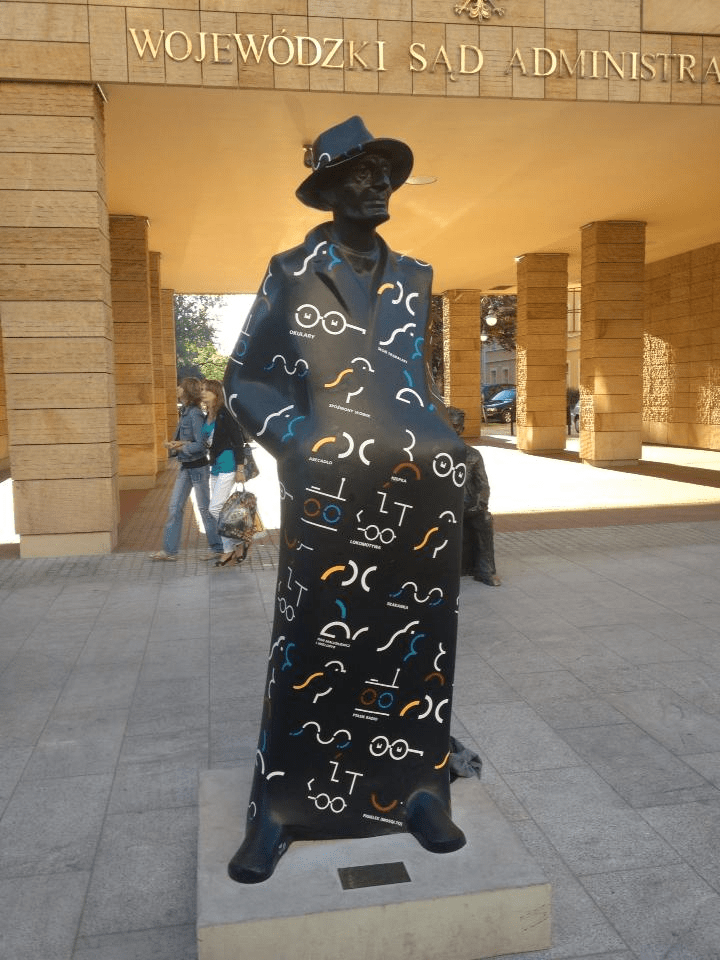
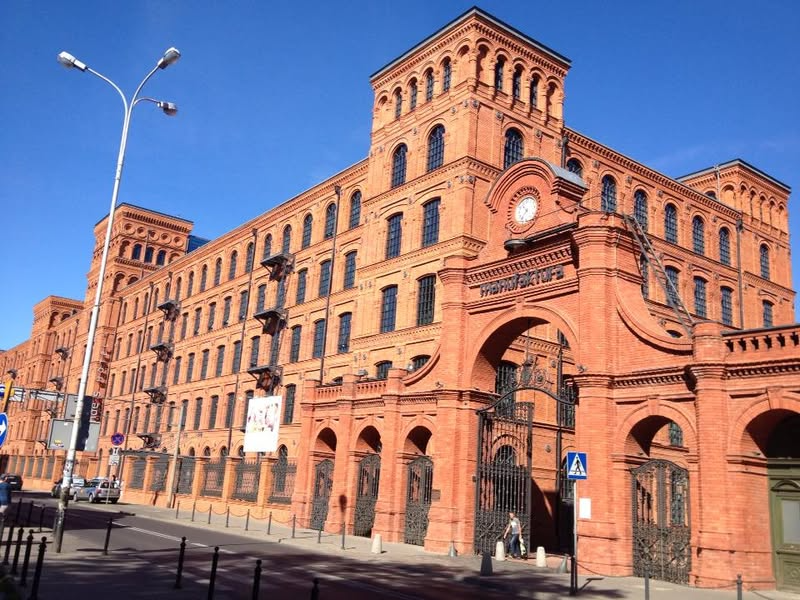
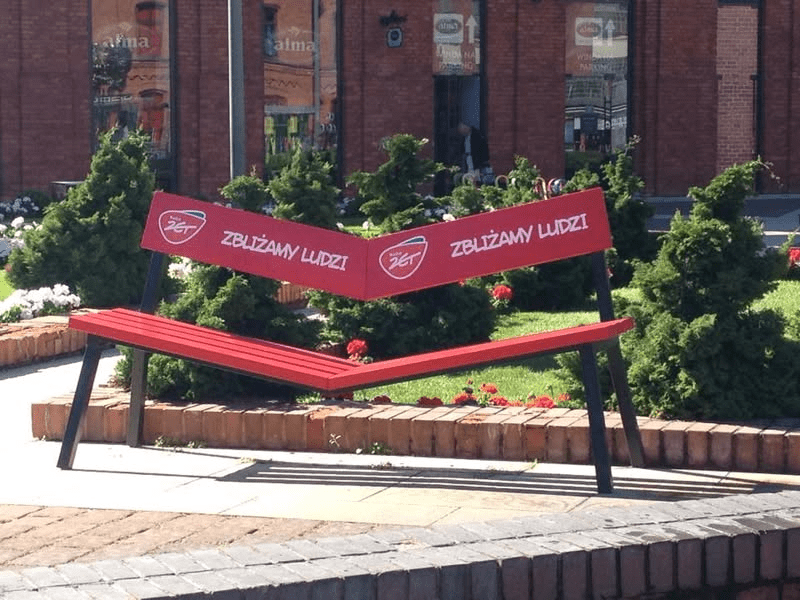
In Czech, a ‘ship’ is a ‘loď’. For those wondering, yes, ‘łódź’ is also Polish for ‘ship’, but there’s no consensus that that’s the reason why Łódź has its name. But it gives me a nice excuse to share some pictures of my 2013 trip to Łódź all the same.
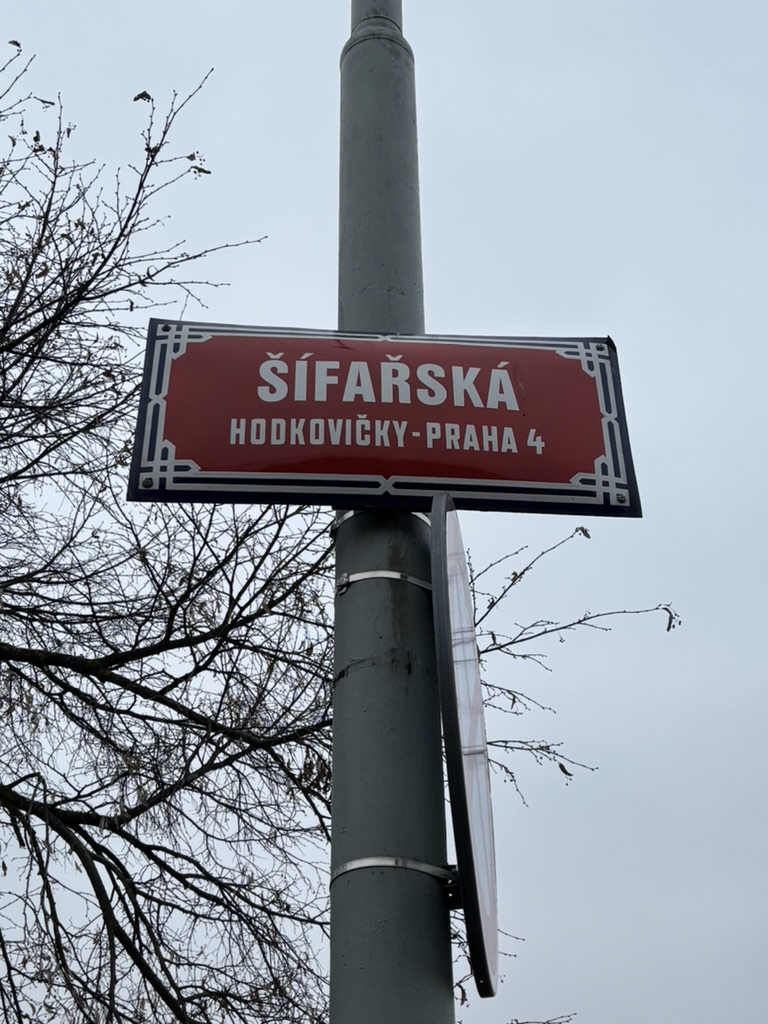
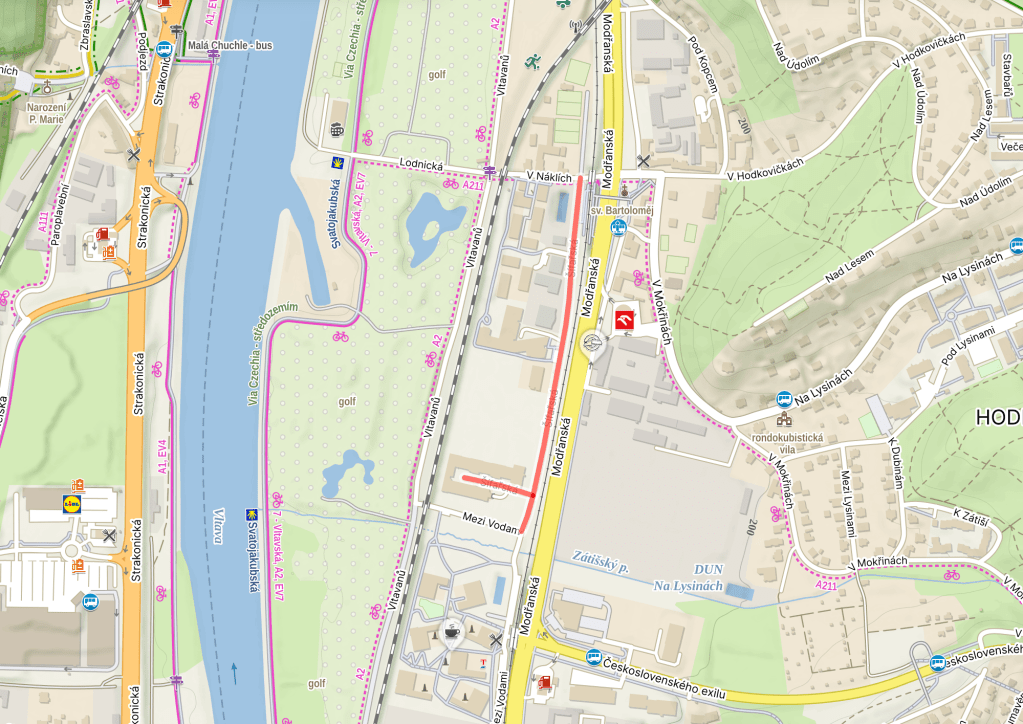
Of course, Prague used to have a large number of German speakers, and German words would find their way into colloquial Czech. Such as ‘Schiff’ turning into ‘šíf’, an alternative to ‘loď’.
It then follows that somebody working in ship-related tasks would be called a ‘šífař’ (or a ‘lodník’).
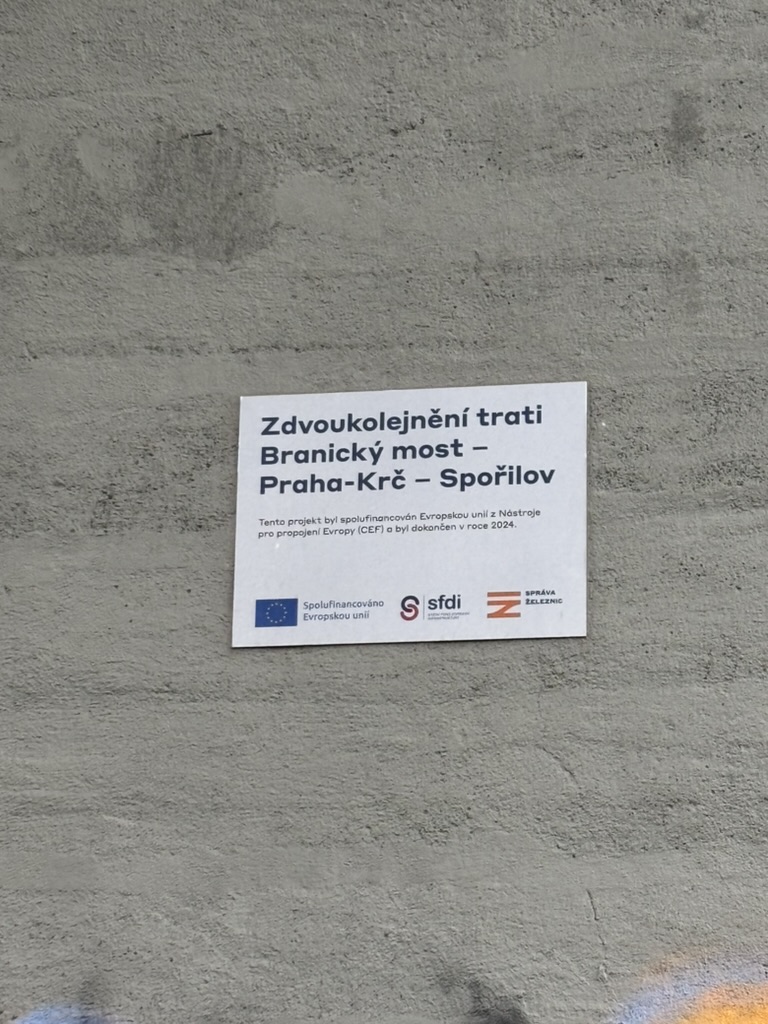
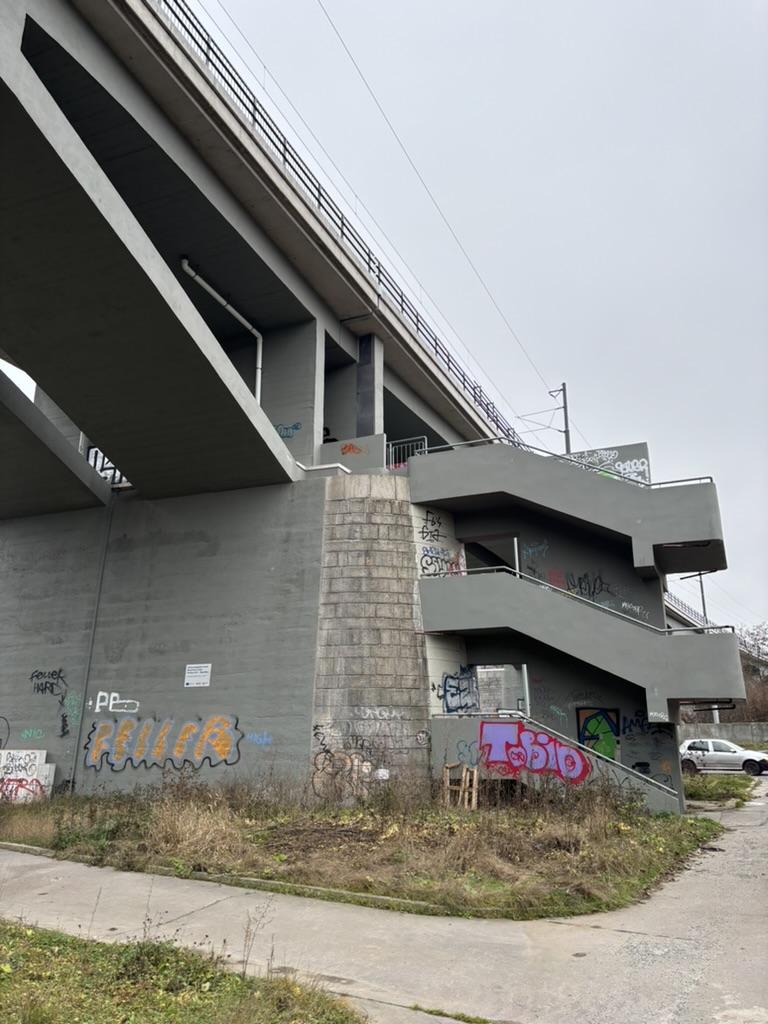
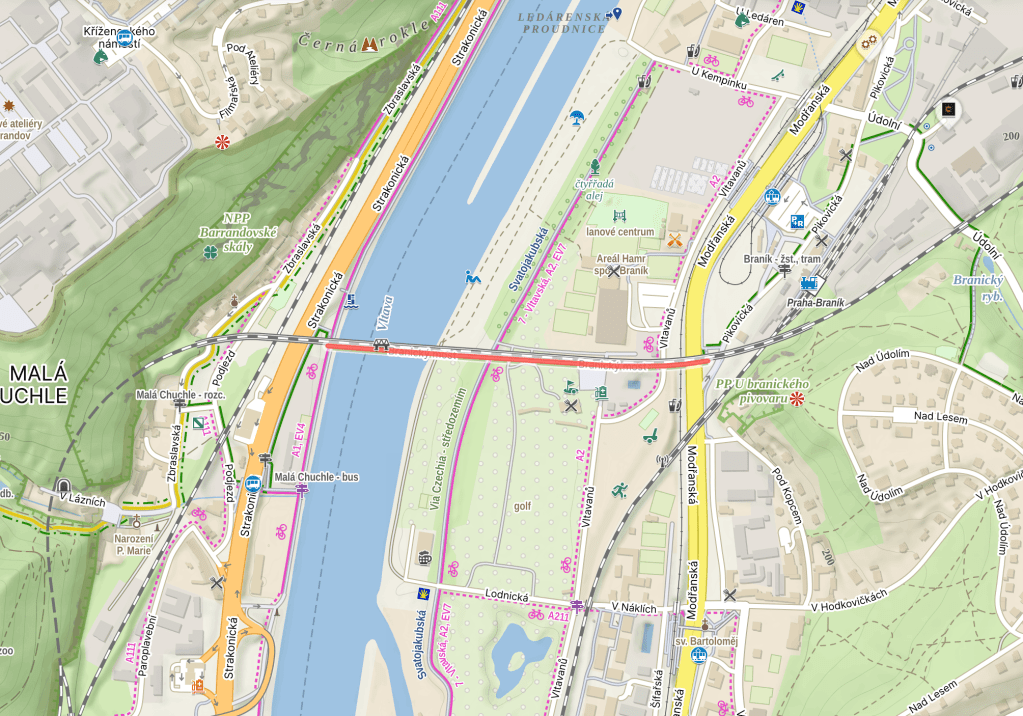
In 1920, the Prague Railway Commission received a proposal for a railway bridge for freight transport. Construction began, somewhat abruptly, in 1949, before the design of the bridge had even been agreed on (this doesn’t sound like a great idea).
It’s thought that part of the reason for the sudden decision to get on with making the bridge was because, since the February Revolution, many educated people had been forced to take up blue-collar jobs, and new jobs needed to be created.
Despite successful tests in 1955 (well, partially successful – one of the two tracks was removed, and presumably didn’t pass the tests), it wasn’t until 1964 that the bridge was opened to rail traffic. There is a walkway for pedestrians.
However, because of the former professions of those who helped build it, it was long called ‘Most Inteligence’ – Intelligentsia Bridge by the locals. There were even attempts in 2014 to make this its official name.
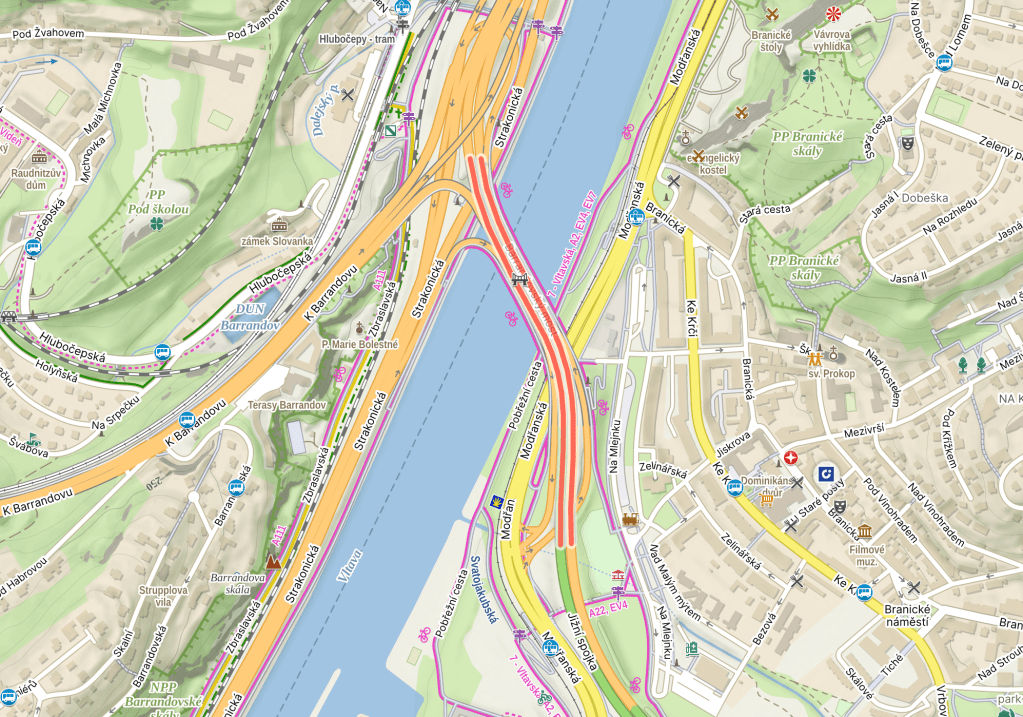
Barrandovský most (Barrandov Bridge) was built between 1978 and 1988.
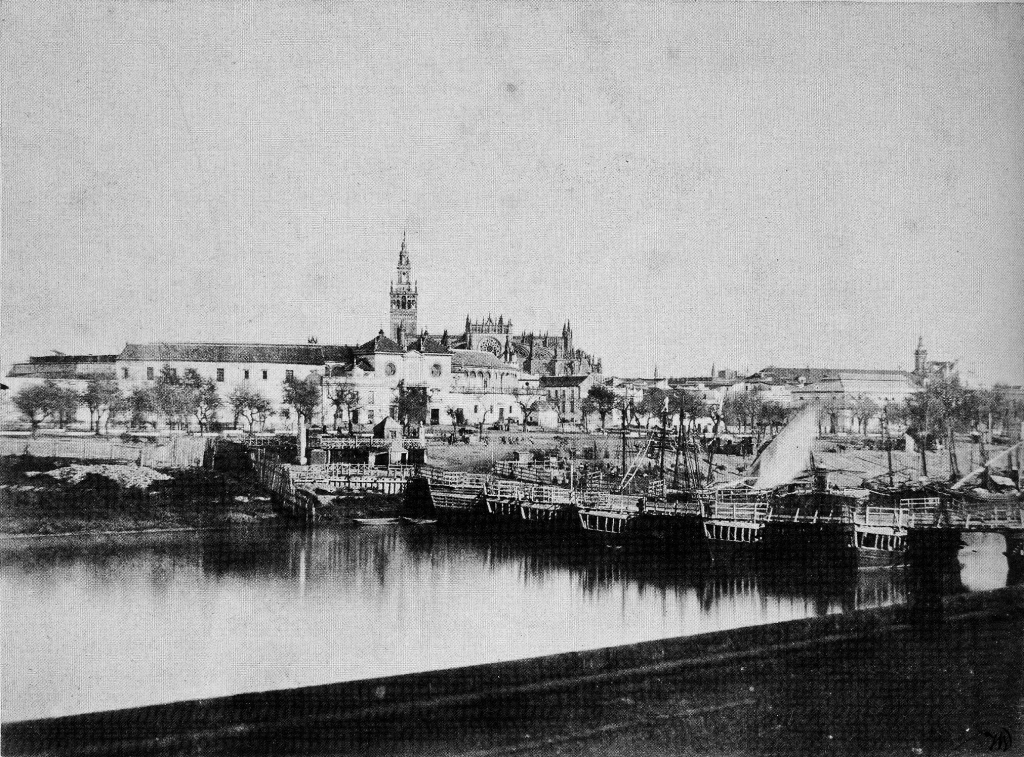
In the 1700s already, there was a pontoon bridge here – a pontoon bridge being a bridge that uses floats, or shallow draft-boats to continuously support traffic.
For those of you wanting to see an example and also dream of warmer weather, here’s a picture of the Puente de Barcas in Seville, taken in 1851 (a year before it was demolished).
After World War II, it was decided to build a single bridge itself. For anyone who gets a little bit impatient at the smallest delay, the design for the bridge was agreed upon in the not-particularly-immediately-postwar month of August 1976.
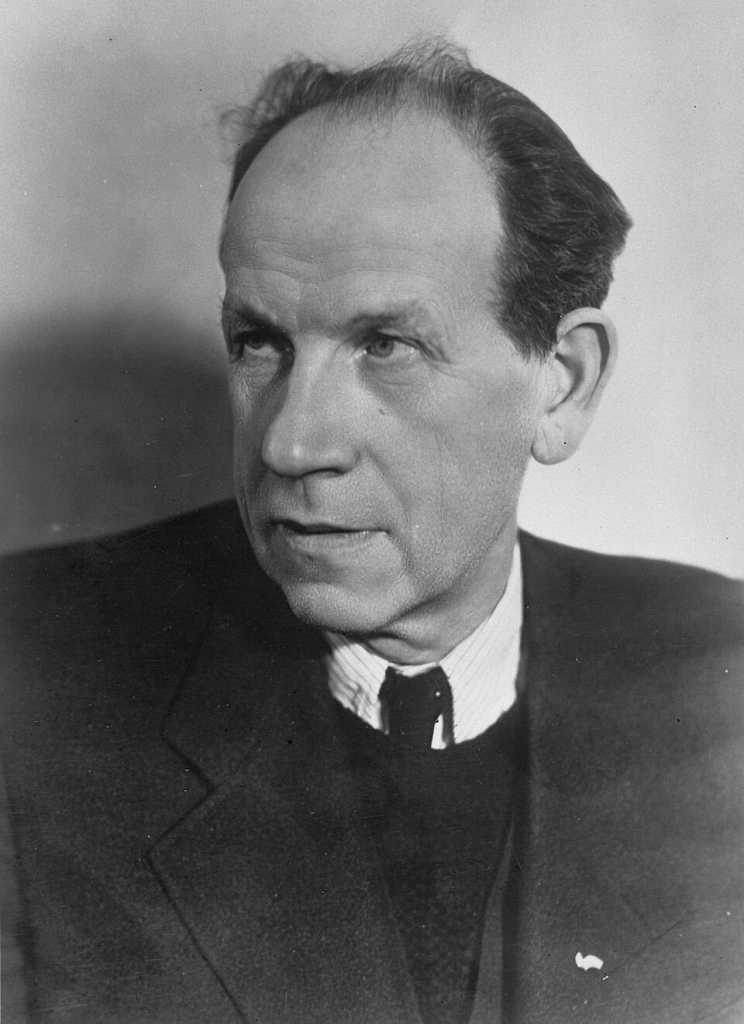
Work on the (decidedly brutalist) bridge started in 1983, with one part being opened in 1983, and the other in 1988. In those still-communist times, it was called Most Antonína Zápotockého, Zápotocký having been PM from 1948 to 1953, and president from 1953 until his death in 1957.
Far be it from me to tempt fate in multiple locations around the globe right now, but I feel the desire to point out that he died in office.
In 1990, the bridge was renamed after Barrandov, an area of Prague 5 that I’ll say little about for now, but am seriously looking forward to getting onto.
On the eastern bank – the one we’re on for now – there’s a hard-to-miss sculpture by Josef Klimeš called ‘Rovnováha’ (Balance), nicknamed ‘Červ dobyvatel’ (the Conqueror Worm); see https://sochyamesta.cz/zaznam/20827.
It’s not in the greatest condition (fittingly, it doesn’t seem to have lost its balance, though), and there is talk in Prague City Hall about replacing it with a copy.
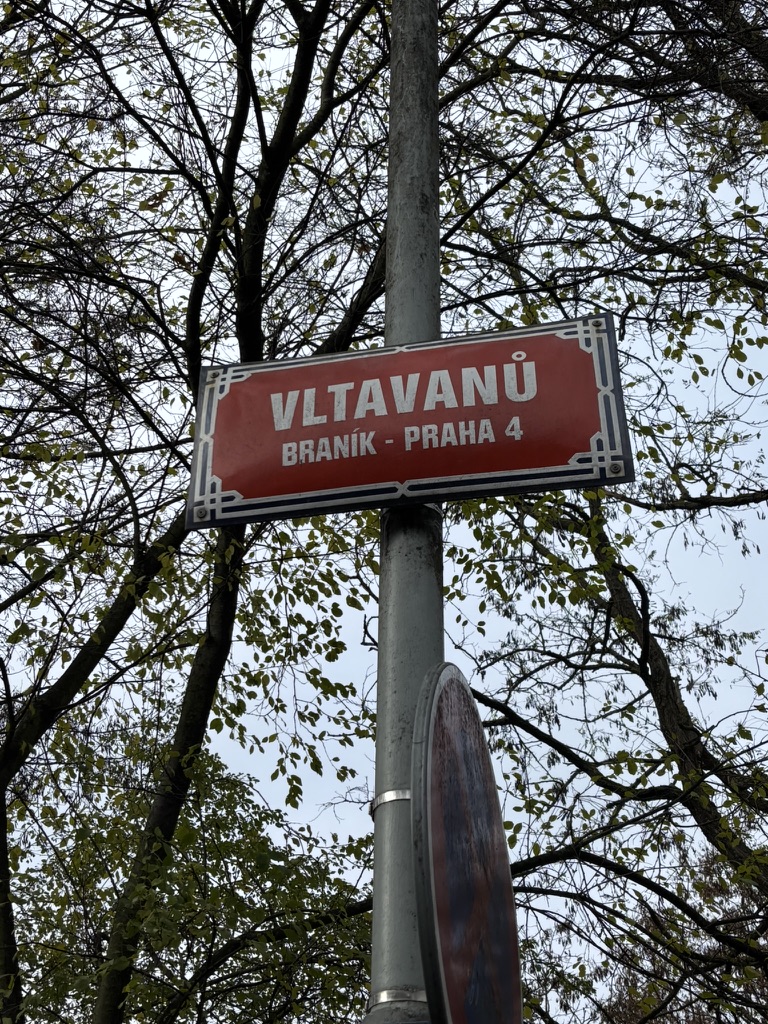
In 1871, an association was formed in Podskalí (https://whatsinapraguestreetname.com/2024/08/26/prague-2-day-122-podskalska/). Its full name was ‘Vzájemně se podporující spolek plavců, rybářů a pobřežných Vltavan’, translating loosely as ‘The Mutually Supportive Association of Swimmers, Fishermen and Coastal Guards: Vltavan’.
The association provided material support to those who worked on the Vltava: people involved in processing and transporting timber, lifeguards, and those involved in cross-river transport, as well as to their families.
The idea caught on; by 1902, there were four Vltavan associations, even if, by this time, much of Podskalí had been destroyed in the name of ‘sanitation’.
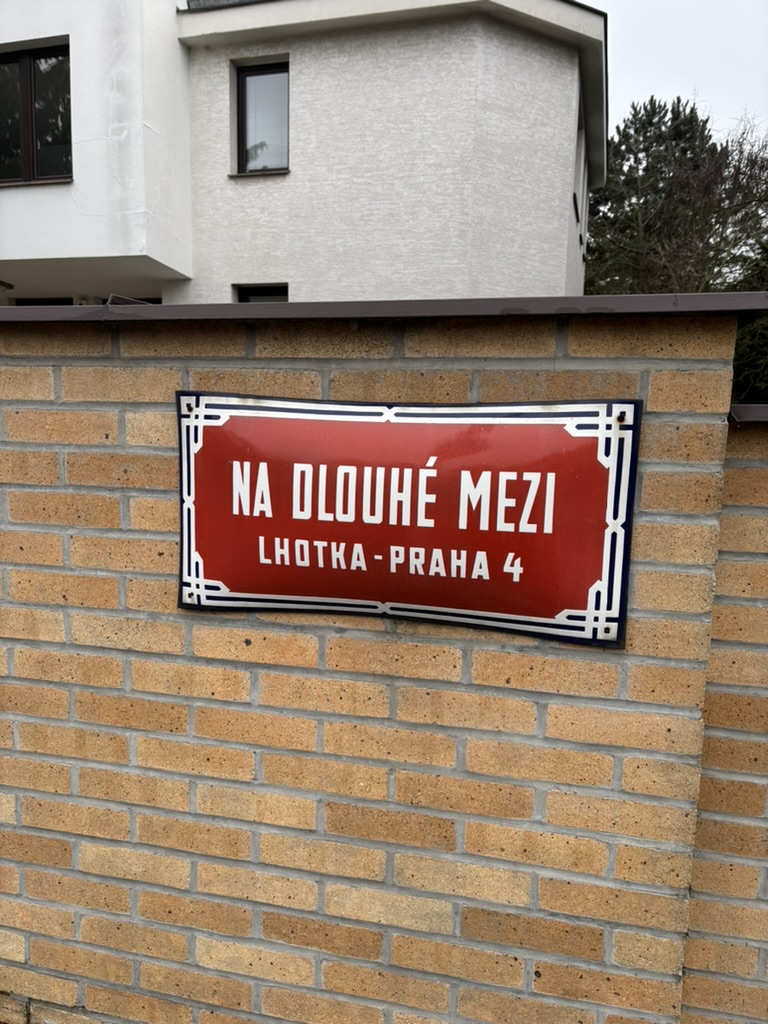
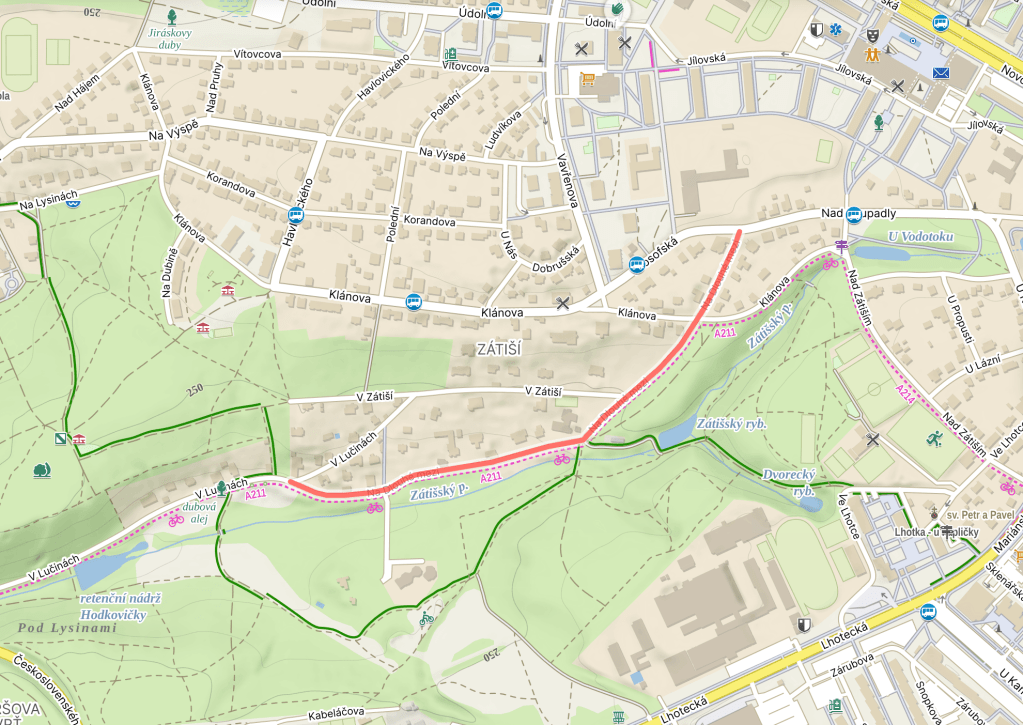
Na dlouhé mezi was built in 1900 and, despite the pic, is partially in Braník.
Until 1941, the street was called V Zátiší, which we’ll discuss in a few days.
A ‘mez’ is a ‘limit’ or a ‘boundary’; it can also be translated as ‘balk’ or ‘baulk’ (a ‘narrow strip of uncultivated land between cultivated fields’). A ‘dlouhá mez’ is a long boundary.
At the time of naming, this wasn’t just a boundary between city districts – Hodkovičky was one of the many districts assimilated into Prague in 1922, but Modřany remained a separate town until 1968. Meaning that this was a border between Prague and Not Prague.
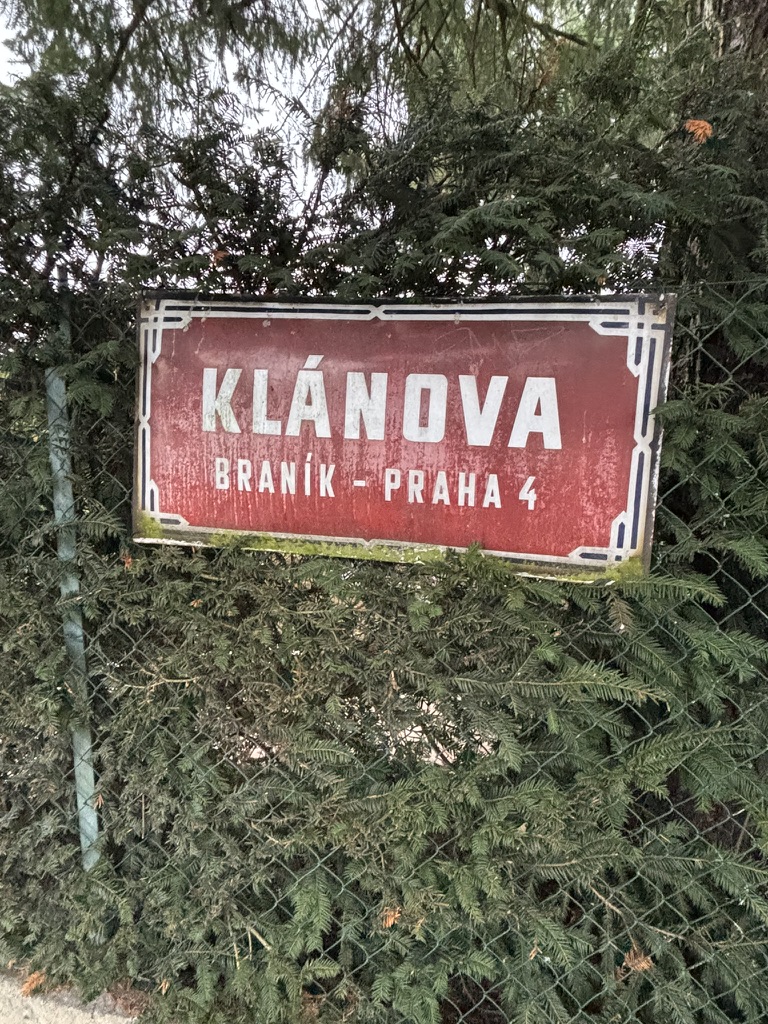
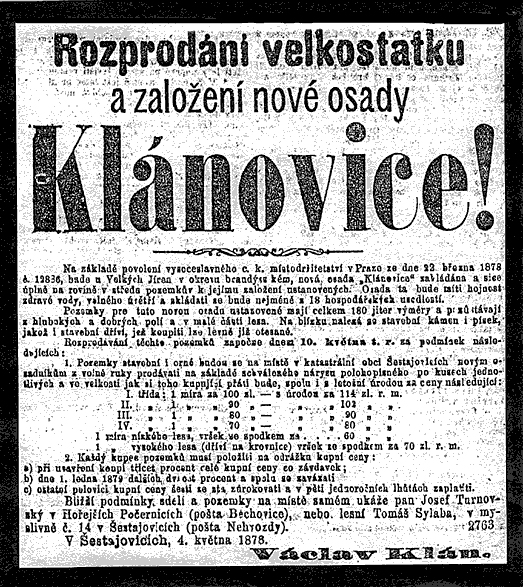
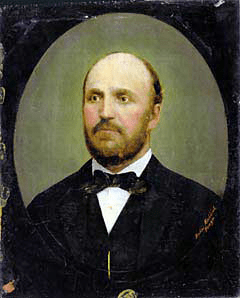
Václav Klán was born in Černošice (nowadays in Prague-West) in 1839. He was working as a clerk in Zbraslav when an aunt left him some rocky land in Radotín (nowadays in Prague 16).
He later sold this to a mining company (Radotín is famed for its limestone), making a nice little profit as a result. He used this to buy a farm in Modřany, which he then sold to a noble family, the Schwarzenbergs. Cue another nice little profit.
Taking advantage of an economic crisis and an ensuing buyer’s market, he purchased forests in Šestajovice (1873) and Vidrholec (1874). In 1878, he was granted permission to have a train station built on his lands.
In the same year, he founded a settlement here, logically called Klánovice (go if you haven’t before – it has some seriously nice villas and, when I went a few years back, a particularly great Vietnamese restaurant).
Klánovice may have thrived, but, ultimately, Klán didn’t – various investments, including a land purchase in Dalmatia, failed, and he died of a heart condition, and with very little money to his name, in České Budějovice in 1903.
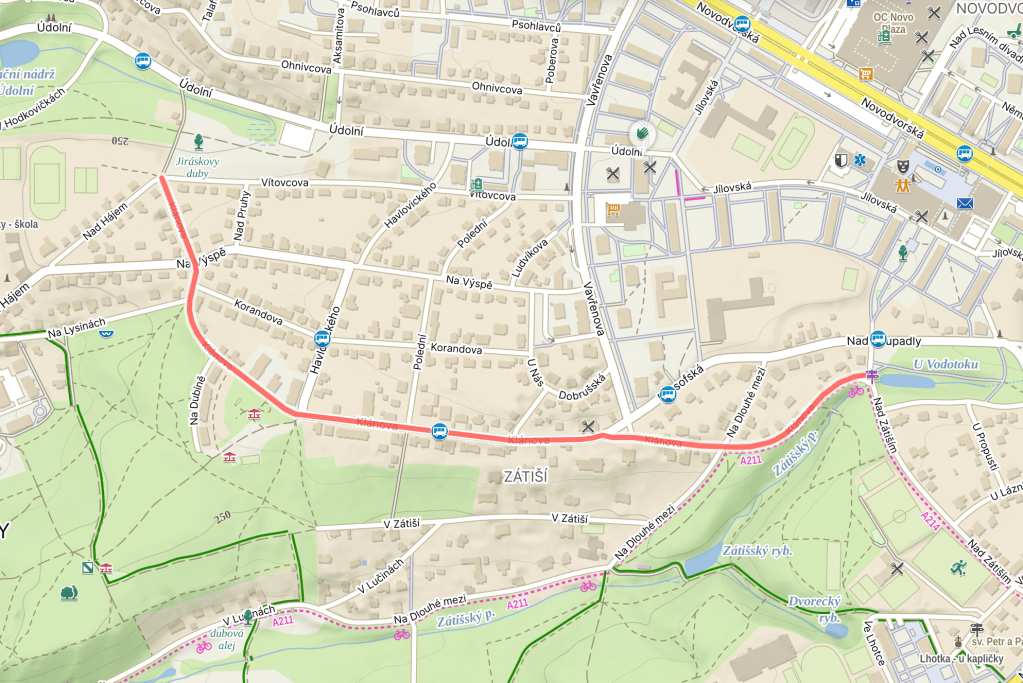
Klán also owned a villa, called Klánovka, round here in Prague 4.
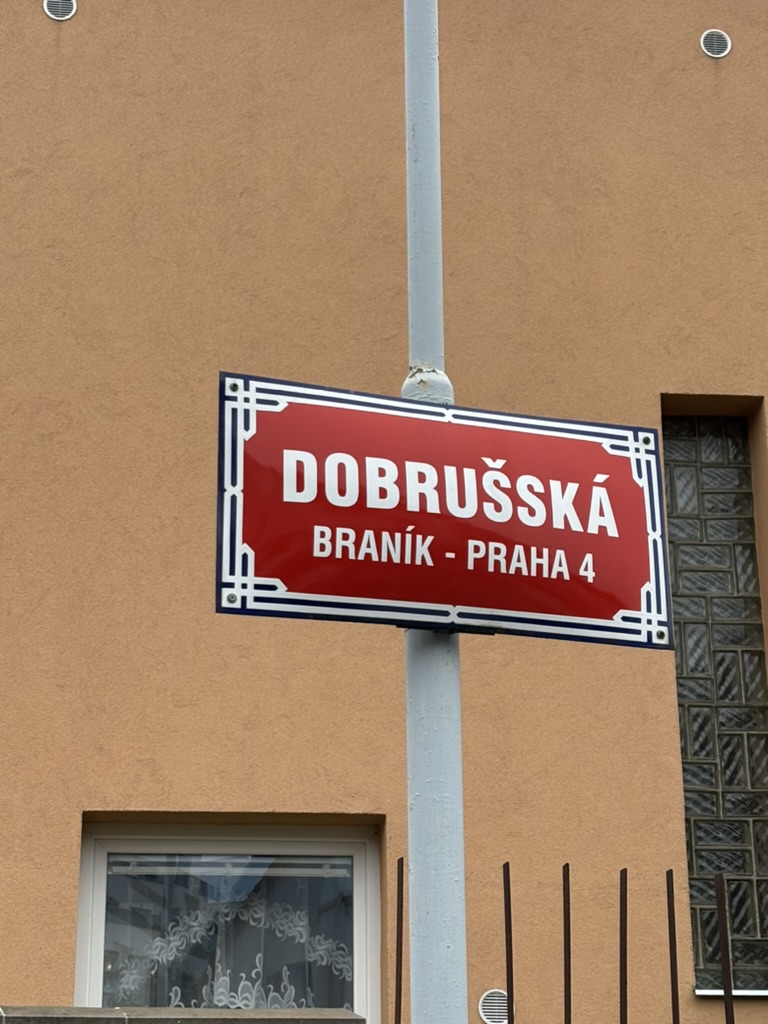
In the mid-1800s, Dobruška was an important regional centre of the Czech National Revival, mainly because it had been the birthplace of František Vladislav Hek, who was a key contributor to the Revival’s early stages (he died in 1847).
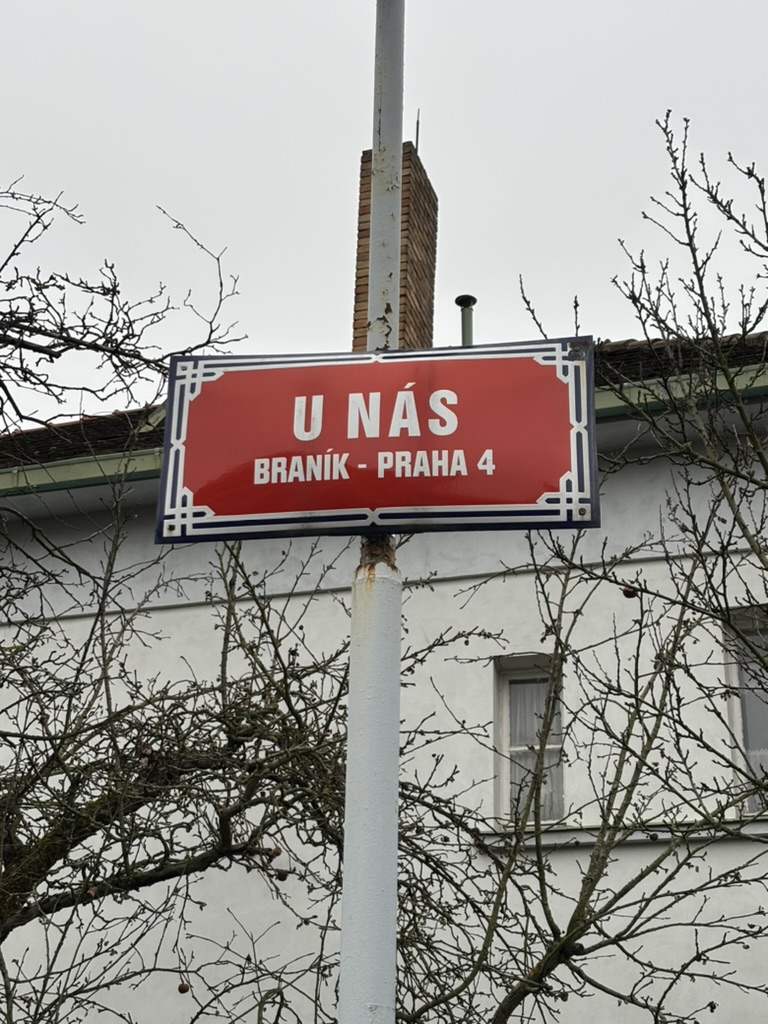
‘U nás’ is a simple phrase that can be translated in multiple ways in English, because we don’t have an equivalent of ‘u’ / ‘chez’ / ‘bei’ / ‘hos’, and so on. You could say ‘at our place’, ‘where we live’, ’round ours’, etc.
The whole Jirásek district thing is an excellent and fascinating idea, but, if there were a street called ‘Round ours’ simply because somebody thought that would sound all homely and wholesome, I think that would have been my favourite street name ever.
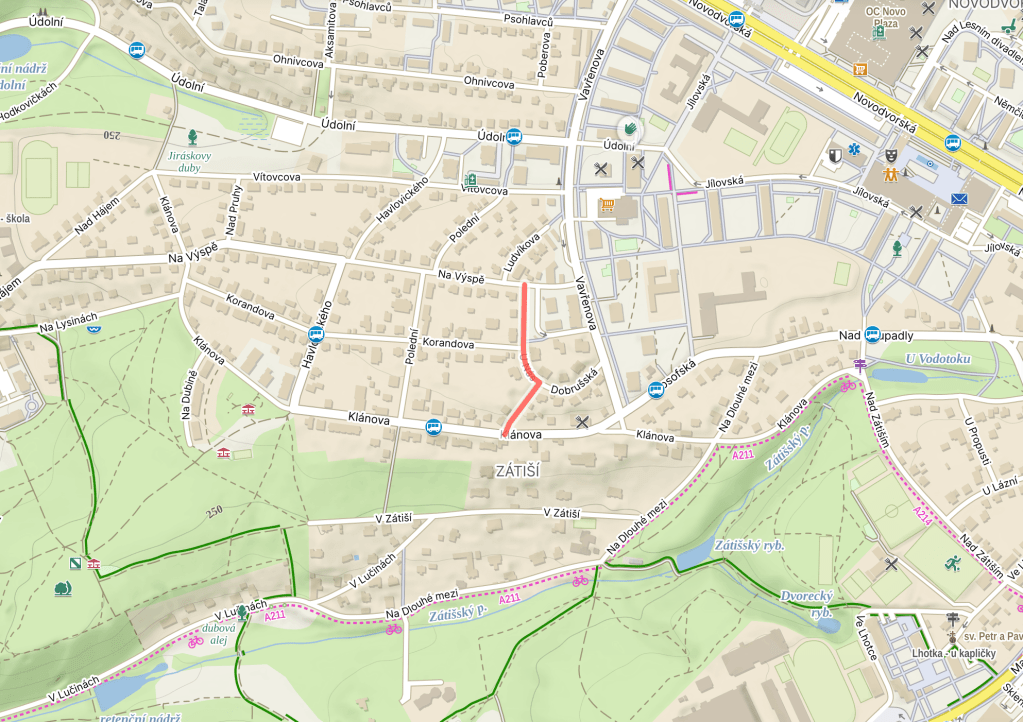
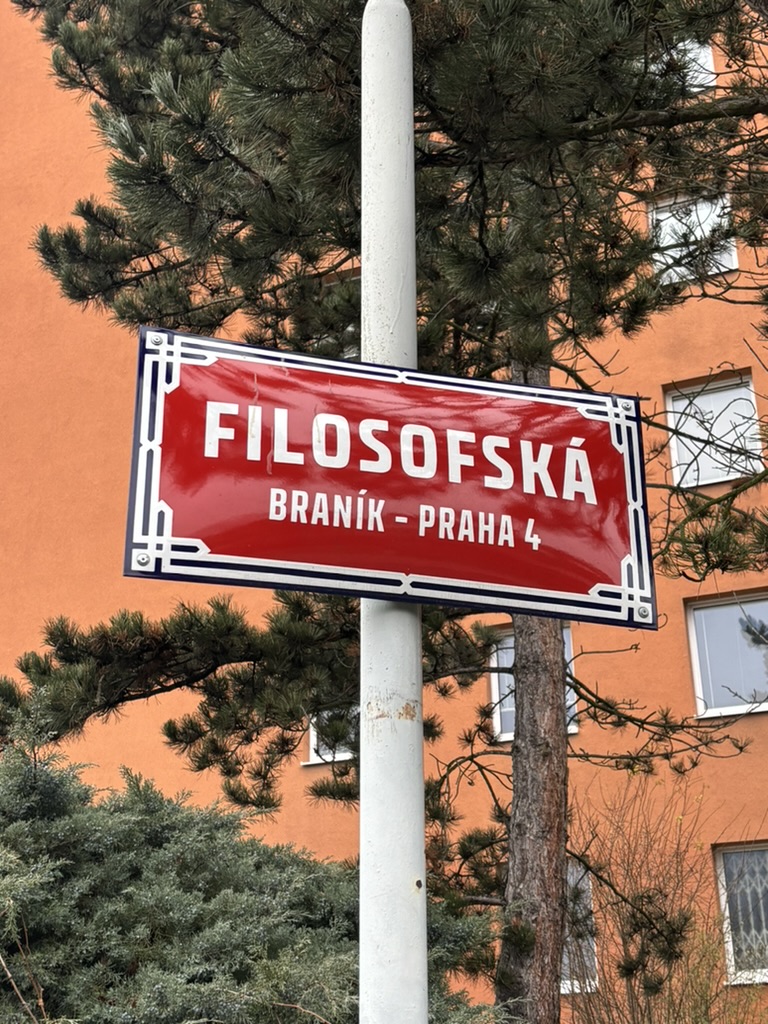
You know what philosophy is. You know what a philosopher is. But we’re not here because of Socrates, Plato, and whichever person on your feed has declared that he (it’s always a he) too is a philosopher and should therefore be listened to.
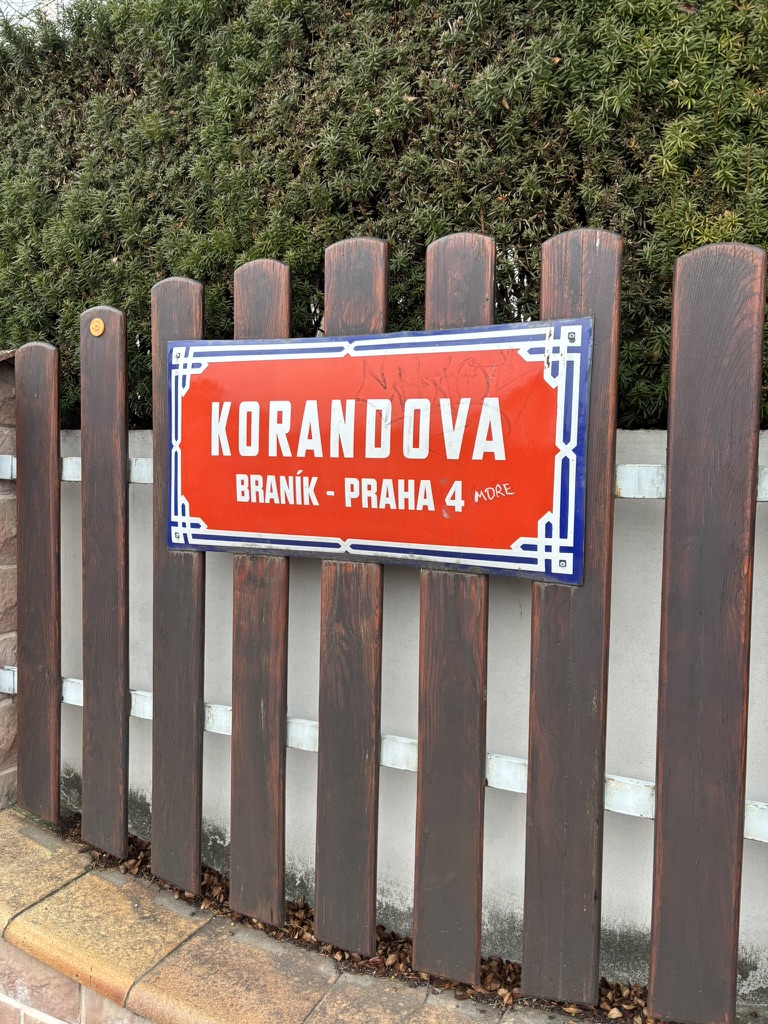
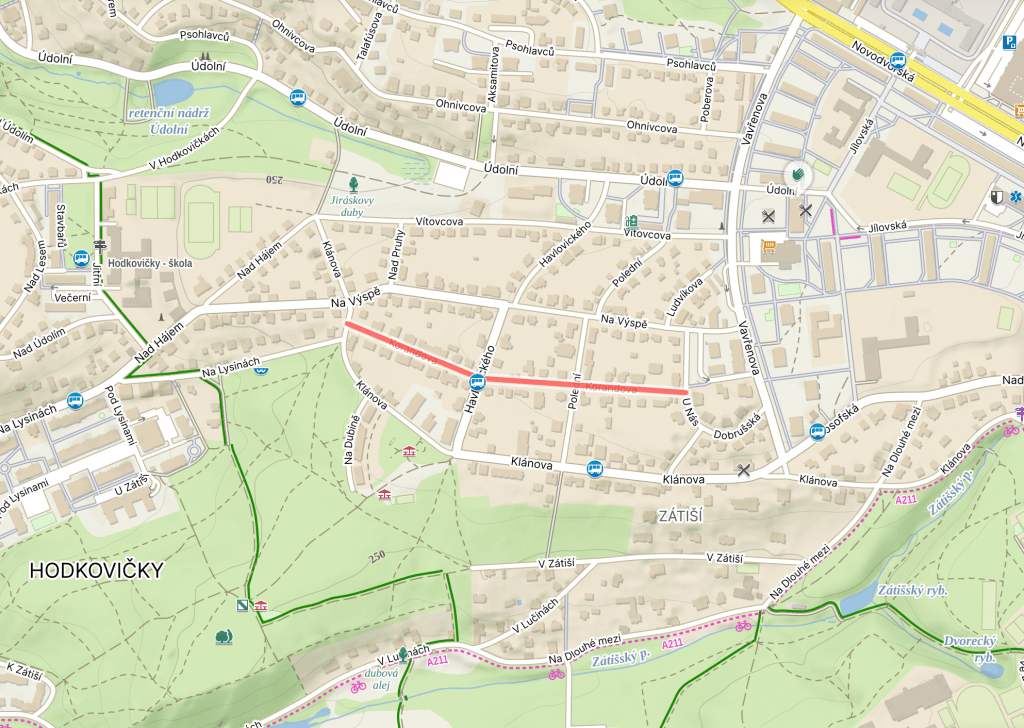
We don’t know when Václav Koranda was born, but we do know that, by 1414, he had founded a Hussite community in Plzeň, taking part in and often leading pilgrimages to the mountains.
This shouldn’t be taken to mean that Sigismund ever became a fan, though – by 1437, he had ordered Koranda to either stay in Tábor at all times or be punished by drowning.
Koranda died about two years later at Litice Castle.
In 1879 – you might have guessed where this was going already – Alois Jirásek wrote a historical novel called Konec a počátek (The End and the Beginning), in which Koranda, imprisoned in Litice, is the main character.
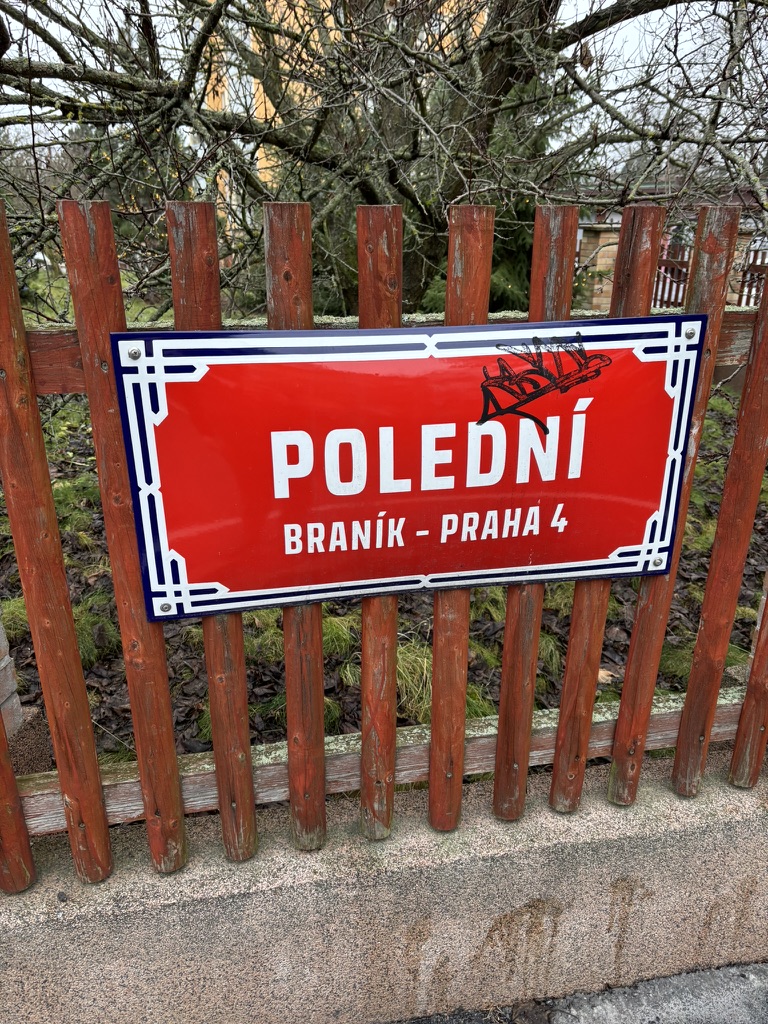
‘Polední’ is the adjective from ‘poledne’, midday or noon. You might be reading this on your ‘polední přestávka’ (lunch break).
In Polish (but not in Czech), ‘południe’ means not only ‘noon’ but ‘south’ (and, yes, the word for ‘midnight’, ‘północ’ also means ‘north’).
This is the first in a series of four streets, although the other three are entirely in Hodkovičky, and we’ve got *counts* another nine Braník streets to get through first.
Needing that ice to go away so I can go and take pics.
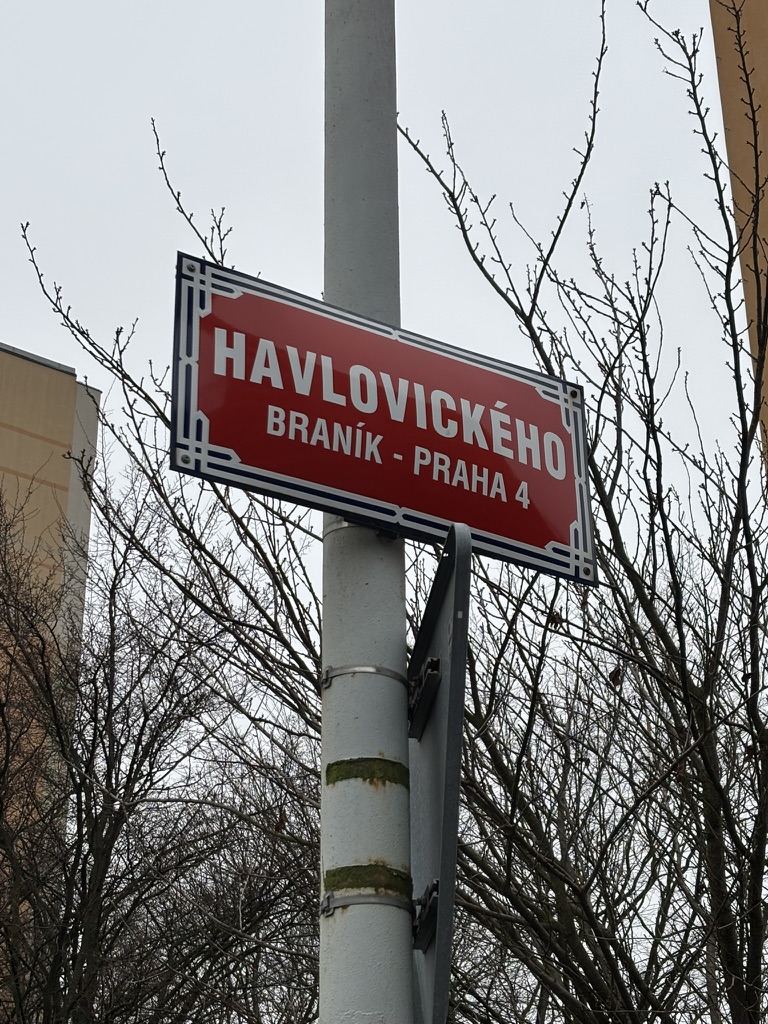
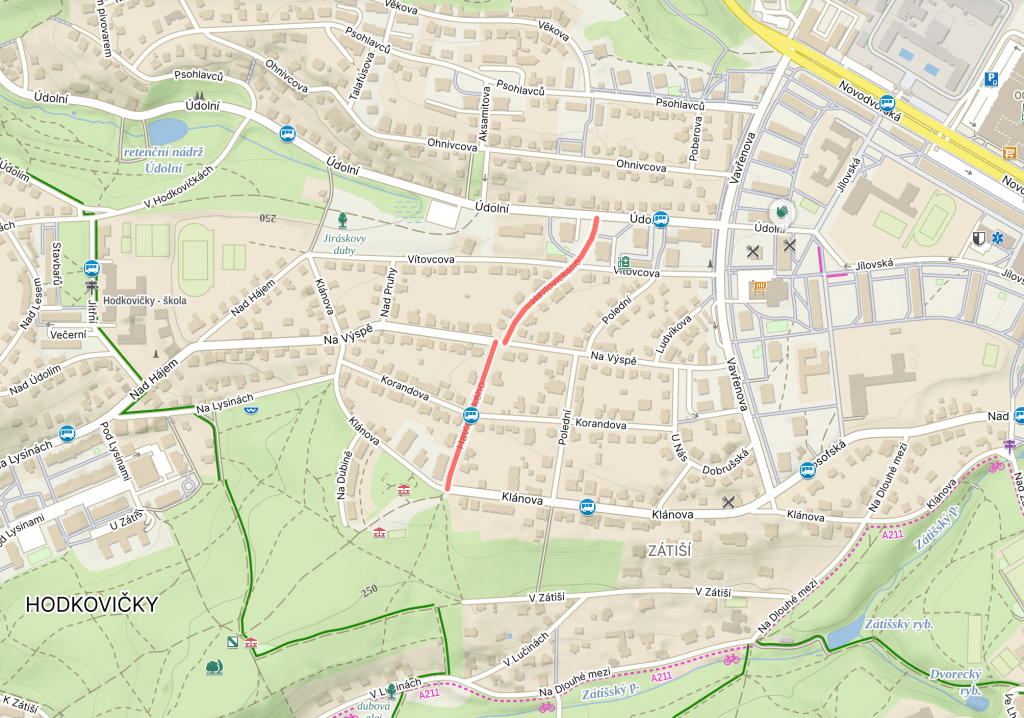
Josef Regner was born in Havlovice, near Trutnov, in 1794, the son of a miller (his mill, Regnerův mlýn, is still standing) and fervent Czech patriot.
He studied philosophy at Charles Ferdinand University in Prague, and then theology at the seminary in Hradec Králové. He first served as a priest in Náchod in 1817.
Regner (also known as Havlovický) devoted himself to noble courses throughout his clerical career: for example, he worked as a teacher, a farmer, a carer for the sick during a cholera epidemic in the 1830s, and as the owner of a mine which provided employment to those most in need of it.
Josef Regner Havlovický died in 1852. He then appeared in Alois Jirásek’s four-part novel U nás. Jirásek had been born in 1851 in Hronov, and so, while he was less than a year old when Havlovický died, he would have heard tales about him throughout his childhood.
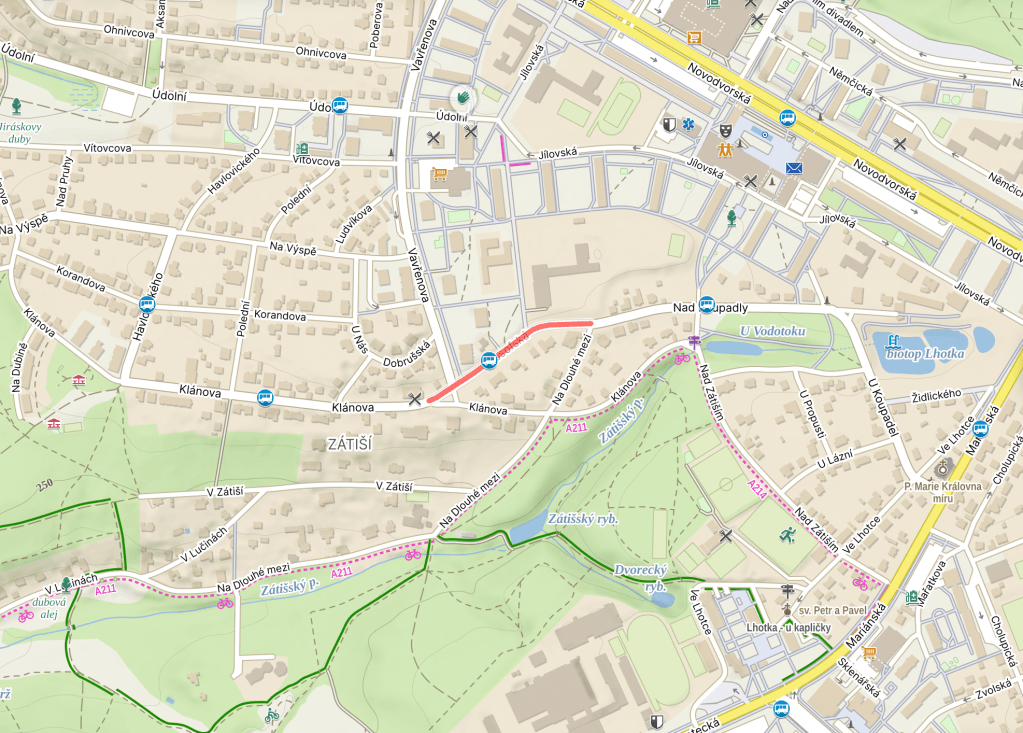
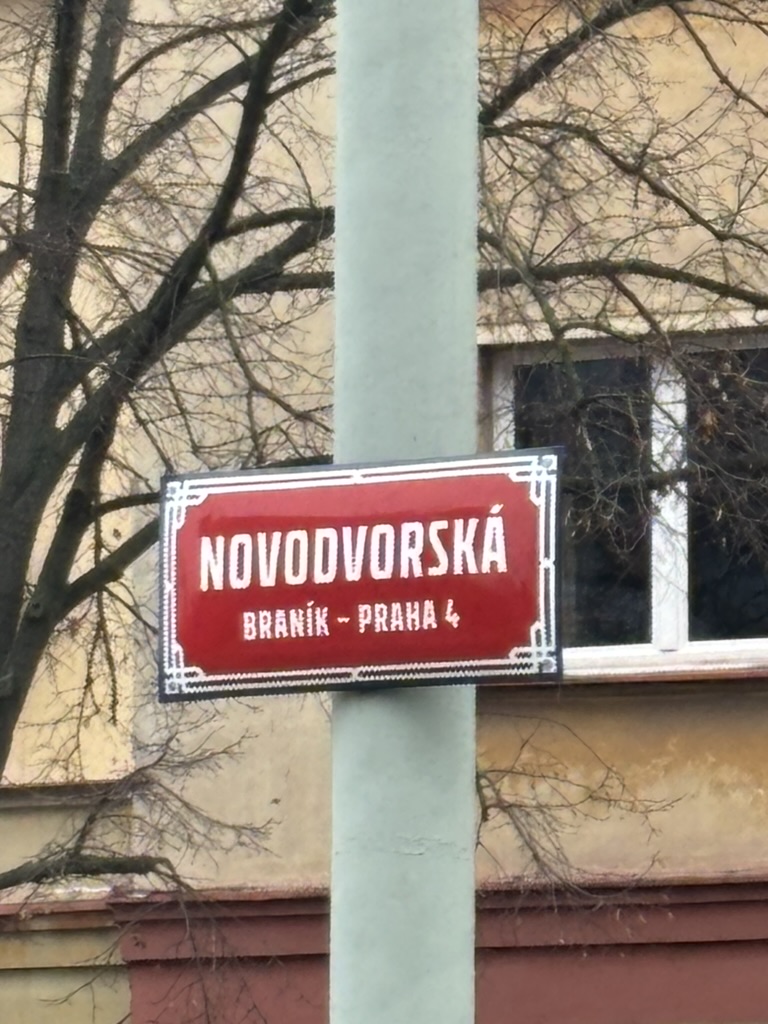
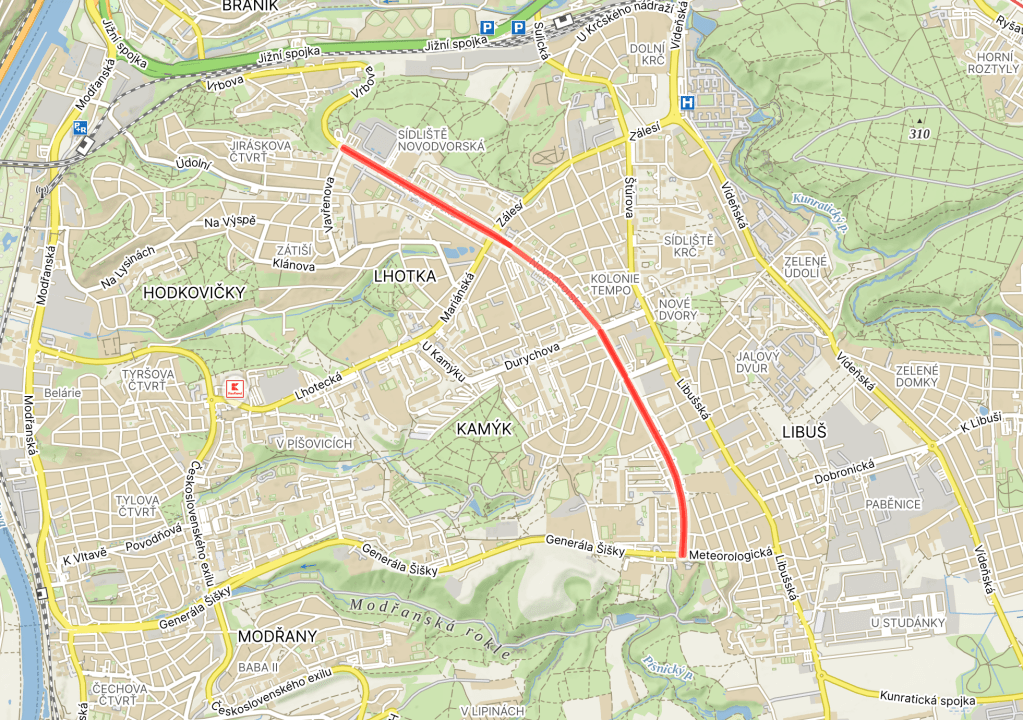
Novodvorská was created in 1935 through the merger of two streets: Hlavní (Main) and Vozová (which is related to ‘vůz’, meaning wagon).
Once upon a time, there was a farmstead (in present-day Lhotka, also in Prague 4). Its name was Nový dvůr (New Court). It later became a monastery.
After that, it served, at different times, as a poorhouse, apartments for rent and a crafts centre.
In the late 18th century, the entire area became knows as Nové dvory (New Courts). The original building itself survives, and a proposal to demolish it was rejected in 2019.
The building got some unwelcome publicity in January 2006, when František Mrázek, known as the “Godfather of Czech Organized Crime”, was shot dead by an unknown assailant outside the building, where one of his companies was registered.
Almost exactly two months later (and unconnectedly, insofar as one can say that with confidence when a murder is unsolved), Novodvorská gained a shopping centre, Novo Plaza. It also had a cinema until 2008, although that was closed due to low attendance.
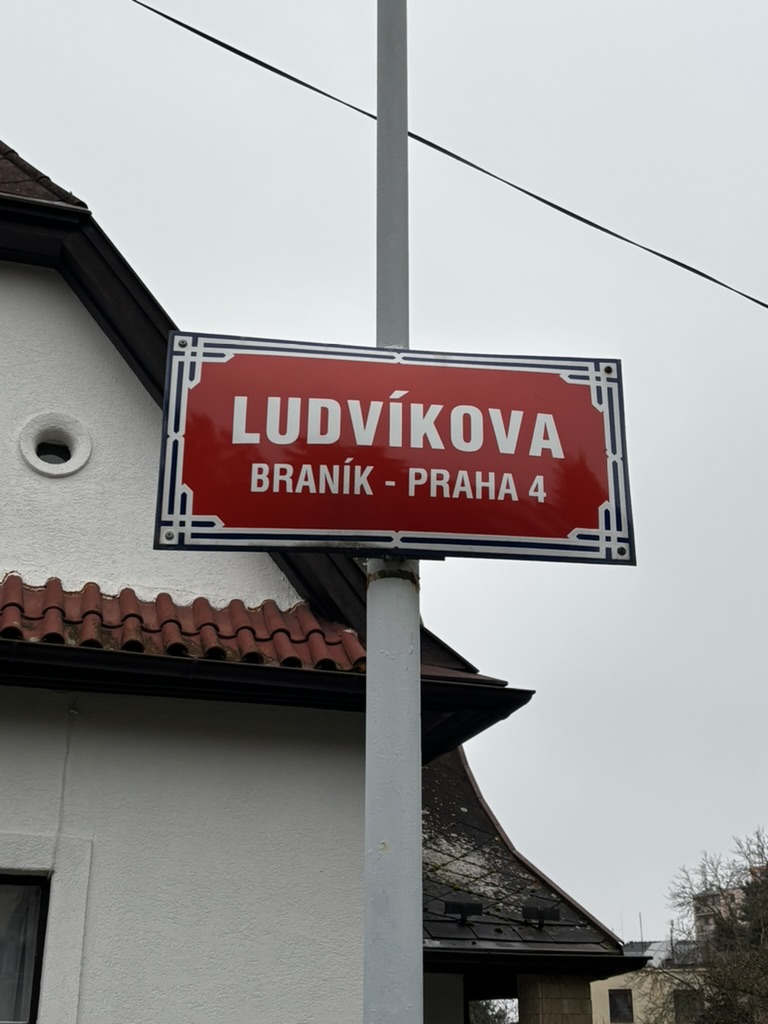
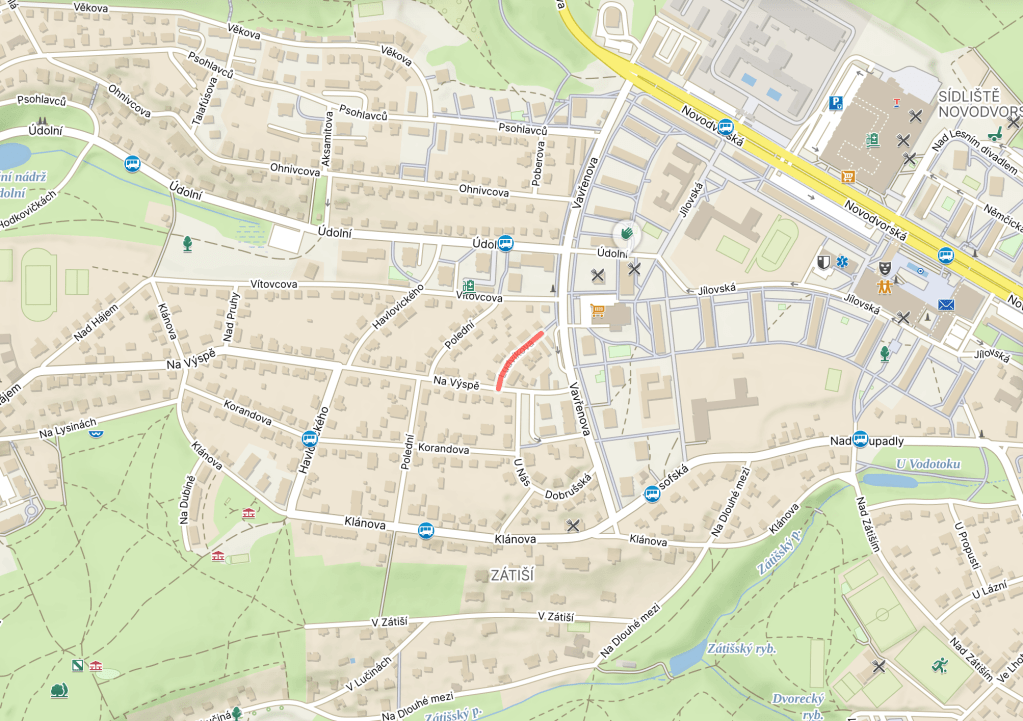
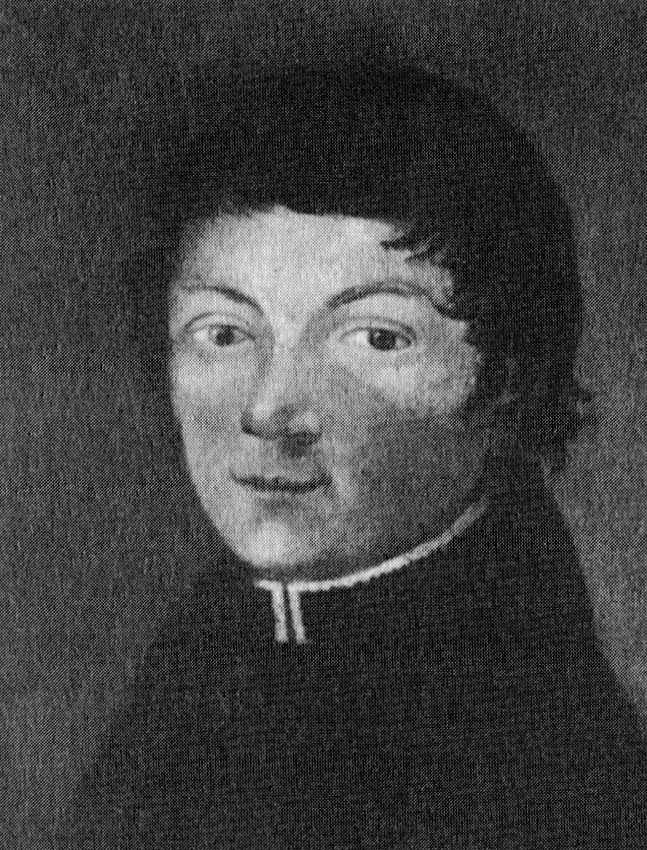
Josef Myslimír Ludvík was born in Dolany, near Náchod, in 1796. After studying theology at the seminary in Hradec Králové, he was ordained as a priest in 1819.
A year later, he became chaplain of Náchod Castle, staying in that role until 1832. He devoted much of his time to writing historical studies of both the city and the castle.
His writings were published in magazines which supported the Czech Nationalist Revival; in 1831, he co-founded Matice česká, a publishing house which was hugely influential in its dissemination of the Czech language.
By 1846, Ludvík was serving in Boušín; he was attacked by a gang of thieves in that year. When the local authorities did very little to investigate this crime, the local inhabitants hunted the attackers down and killed some of them.
Ludvík retired in 1848, and started work on Památky hradu, města a panství Náchoda, i vlastníkův jeho (Monuments of the Castle, City and Manor of Náchod, and its Owners). He died of a stroke in 1856, not living to see his work’s publication later that year.
Between 1896 and 1903, Jirásek published U nás (approximately ‘Where we live’, shall we say), a four-part chronicle taking place to a large extend in Náchod, and covering the Czech National Revival. The work includes Ludvík as one of its characters.
From 1927 to 1935, the street was called U rybníka, after a nearby and erstwhile pond.
From 1935 to 1973, it was called V Hodkovičkách, which presumably caused confusion, as it’s not directly connected to the other street in the area called that. More on that name when we get on to Hodkovičky (which is our next district after another two weeks of Braník streets).
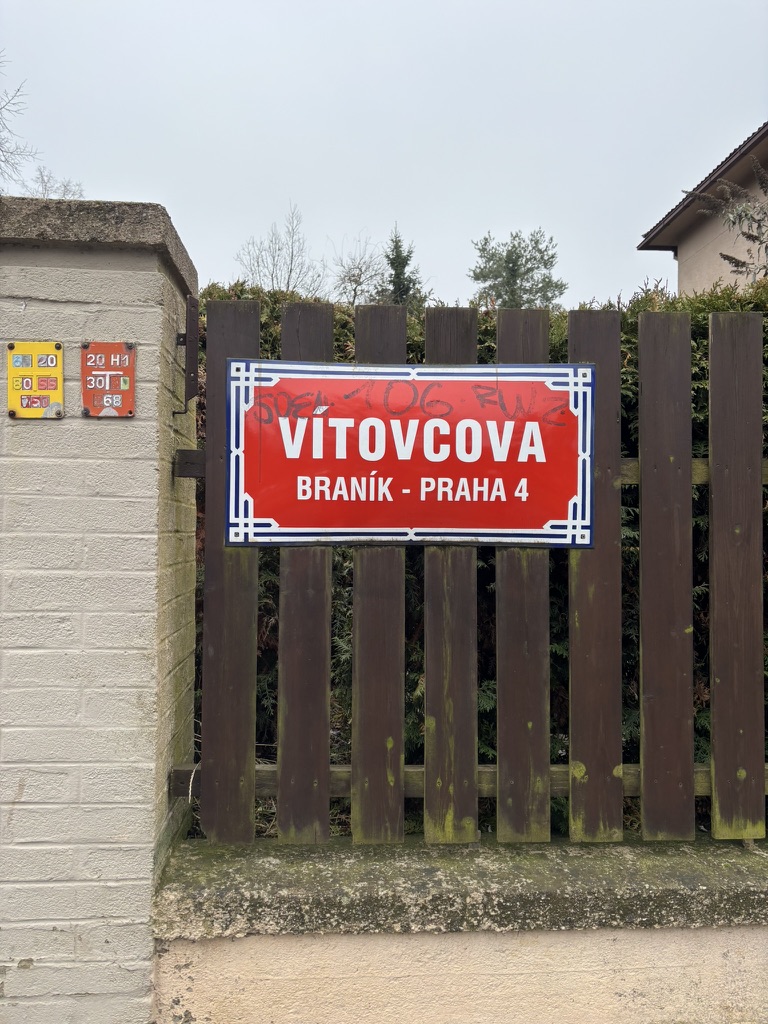
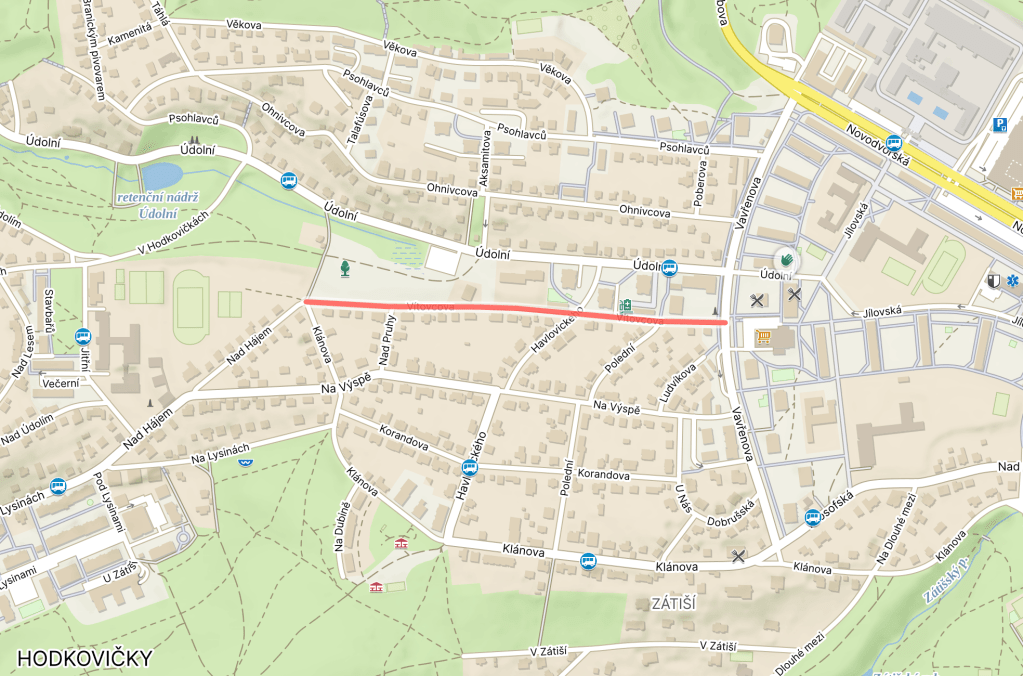
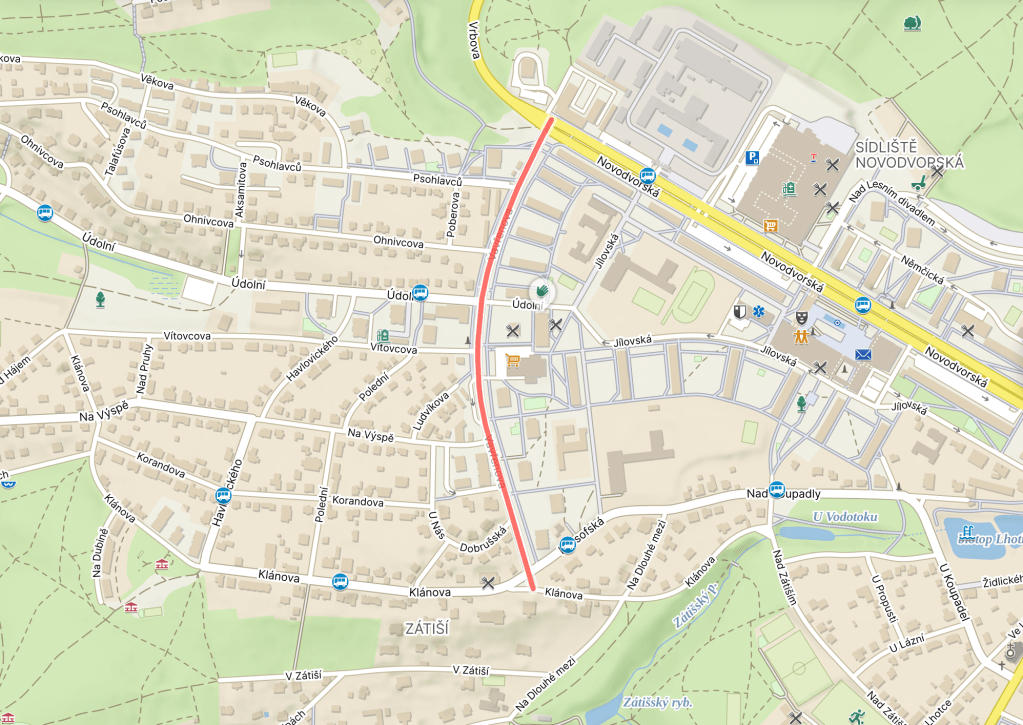
Alois Jirásek – he who is the man behind the story behind most of the streets around here – published a novel in 1883 called V cizích službách (In Foreign Service), which includes a character called Vítovec.
It’s set in Litomyšl, where Jirásek was living and working as a teacher at the time, and a key theme is the use of Czech and German in everyday life.
Tellingly, it is set in 1847 (the novel starts with the banning of a student festival for May Day) and 1848, when rebellion erupted in Prague.
The students in the novel have a real love for their mother tongue, and read classic Czech literature, and yet, when they’re in public, they often end up choosing to speak German instead.
The principal male character in the novel is called Vavřena (hence the street name). He’s a serious, kind and gentle student who goes to teach in a family (the Roubíneks), and falls in love with their daughter, Lenka.
He admits his love for her during the May Day festival, which the students went through with despite the ban, displeasing the authorities.
In 1848, he goes to Prague to join the uprising; at the end of the novel, he marries Lenka and becomes a doctor.
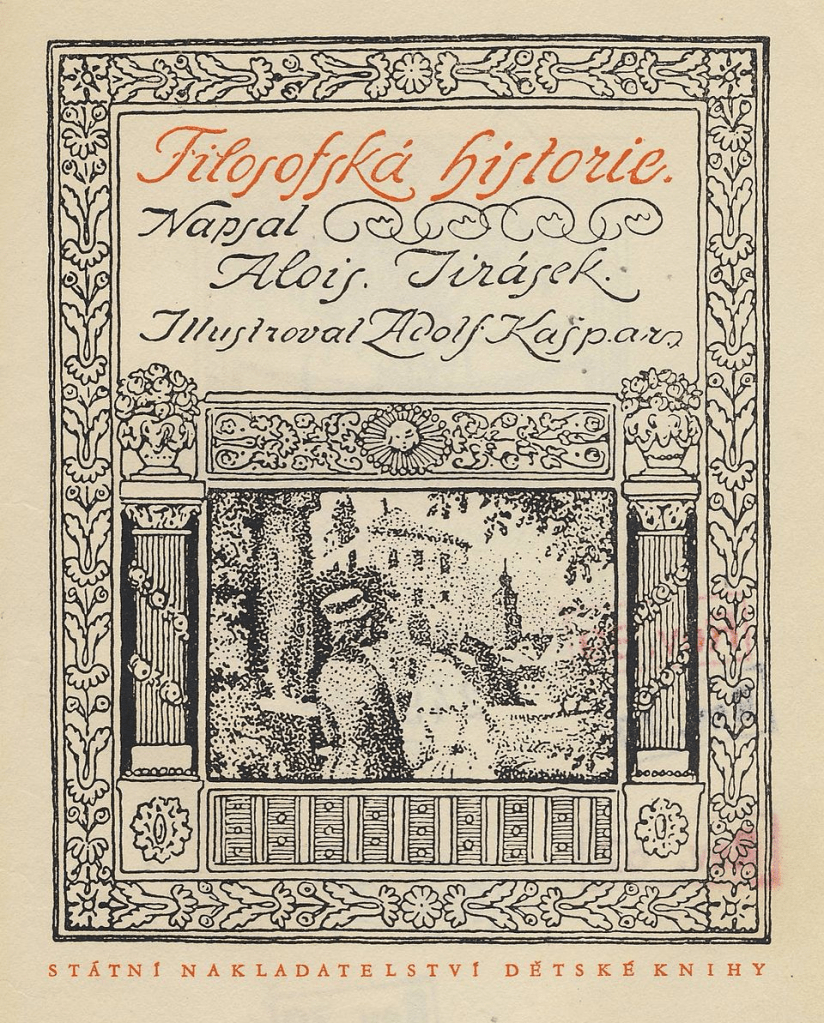
Filosofská historie was made into a film in 1937, directed by Otakar Vávra.
It had what you can only describe as one heck of a cast: Václav Neckář, Marta Kubišová, Helena Vondráčková, Waldemar Matuška, and Jiří Štědry. Coincidentally (or not?), it opened in the same year that this street first did.