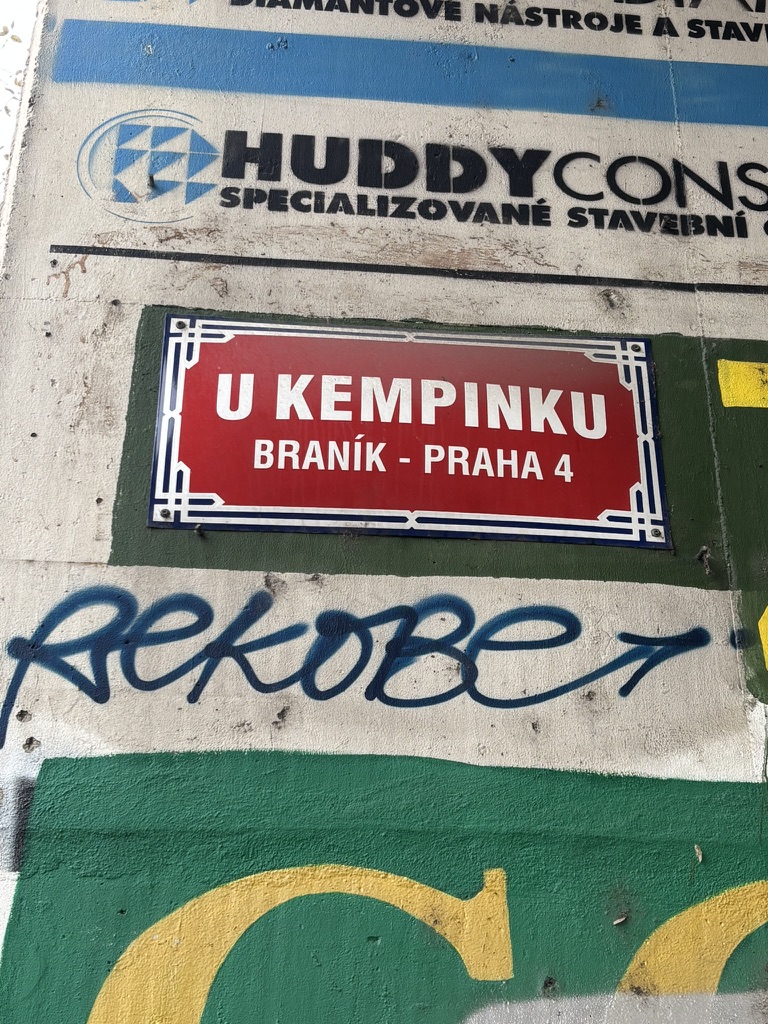
I’ve mainly grown out of giggling at certain Czech transliterations of English words, but my ability to laugh when the English ending ‘-ing’ turns into ‘-ink’ hasn’t quite fizzled out yet. Think brífink, mítink, etc, and my personal winner, dispečink.
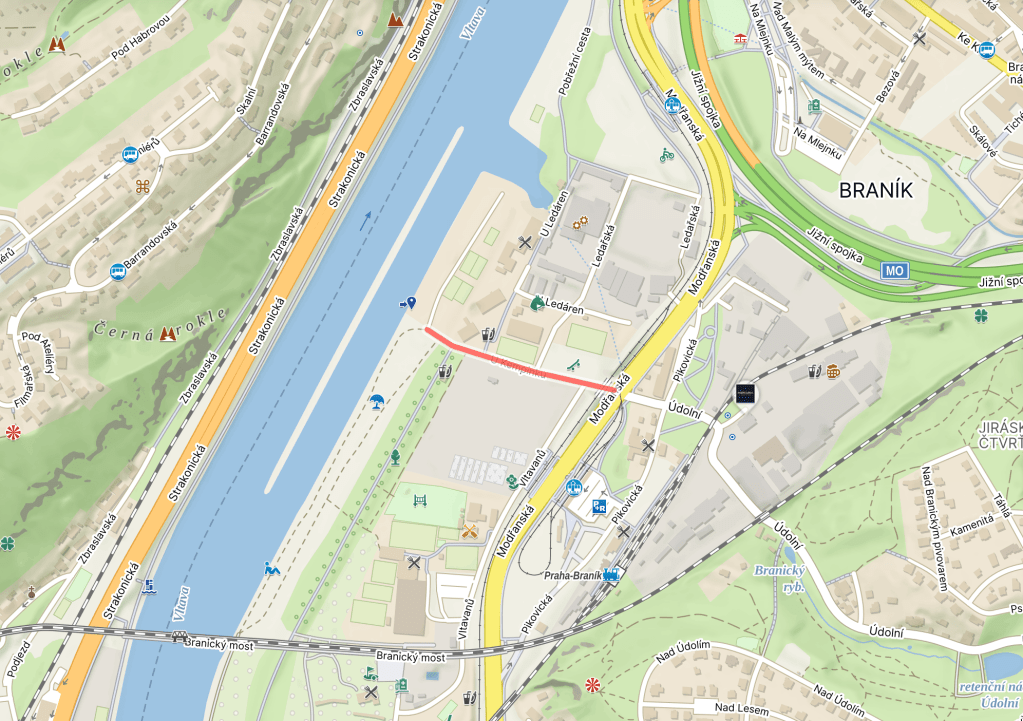
But it’s time to, erm, carry on, and here, we are talking about kempink, better known as camping. And this decidedly non-residential area is the site of Intercamp Kotva, a campsite right by the Vltava.
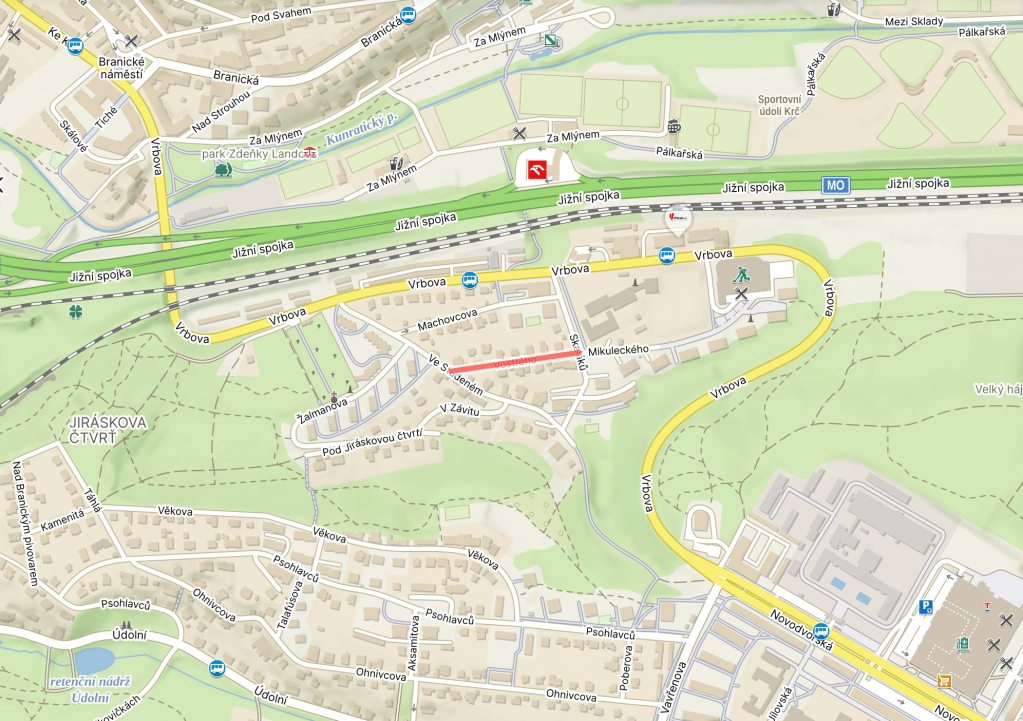
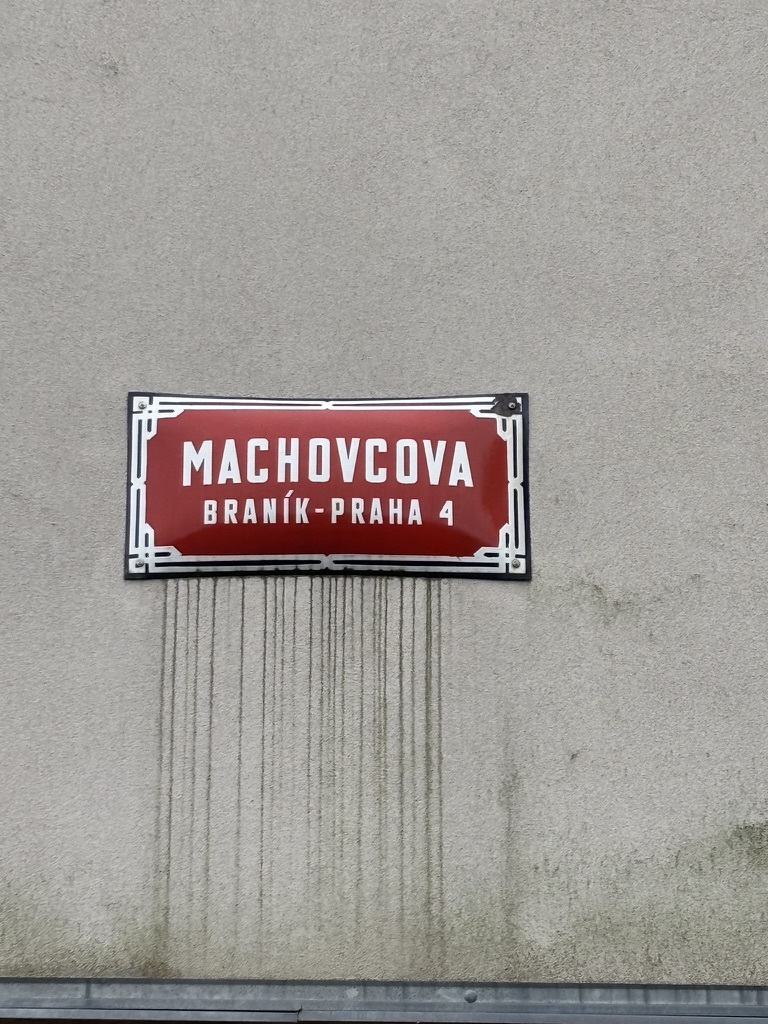
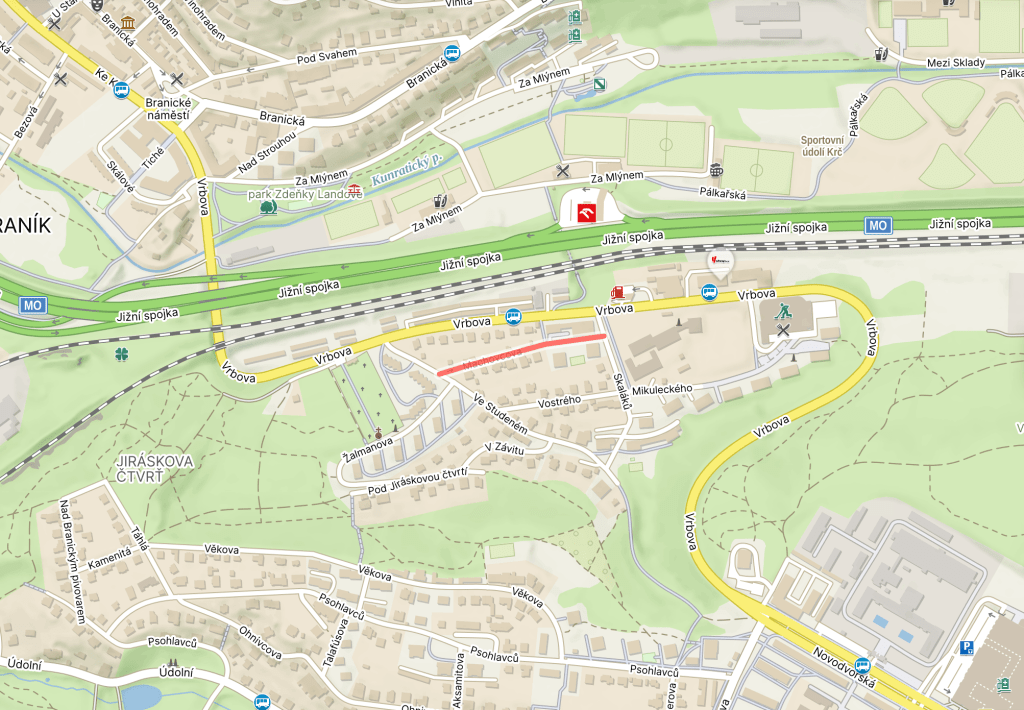
In said novel, Vostrý is a Protestant priest – a big no-no to the Habsburgs – and distributes non-Catholic literature. And he’s also the one who tries to get Machovec’s children to join their father abroad (success rate: one out of two).
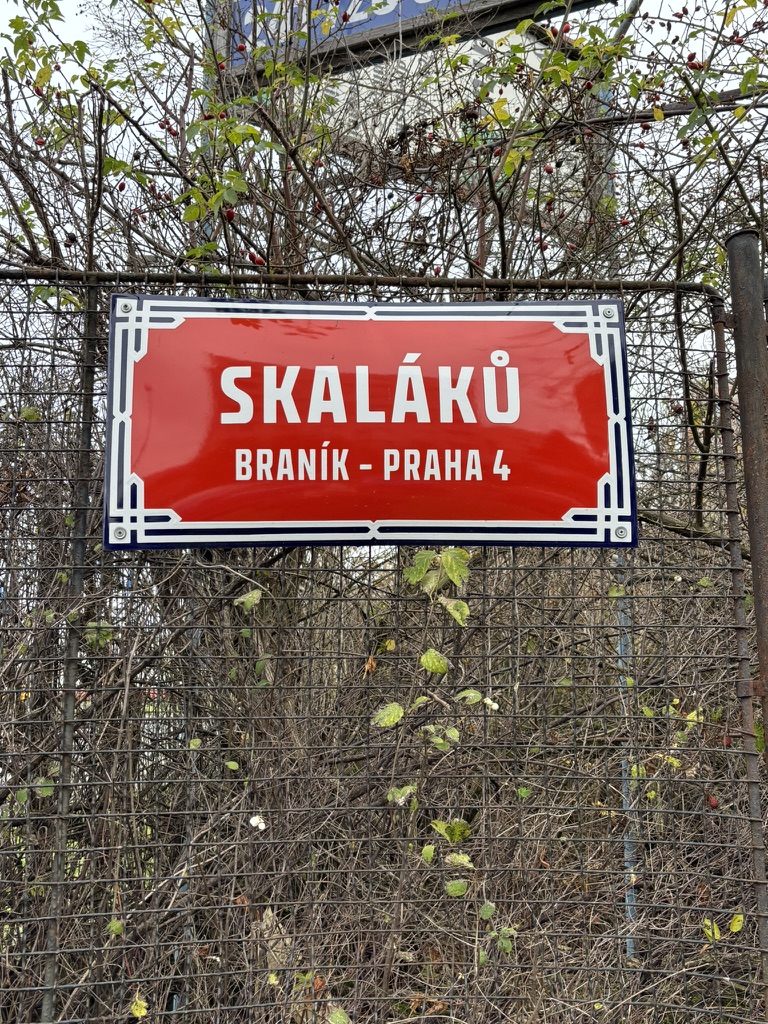
Skaláci (1876) is Jirásek’s novel about the Peasant’s Uprising which took place 101 years earlier. I won’t go into huge detail on that (spoiler: the peasants were still peasants after it), as it’s sure to come up in other posts.
For the title of the novel, we have to rewind to 1628, when a character called Jíra Skalák had taken part in a peasant rebellion in the Náchod region.
After being arrested and physically punished, he moved to a farm which subsequently became known as ‘Na skalce’. The family endured, and the novel then follows his descendants during the events of 1775.
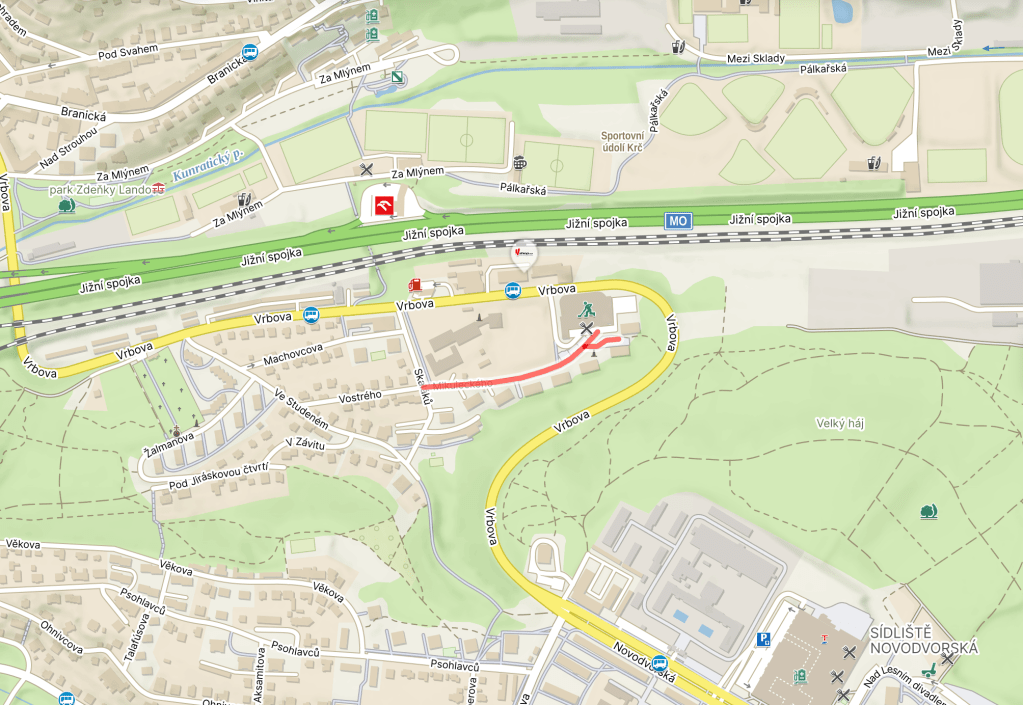
It also tells me that the novel had a character called Jakub Mikulecký. However, the long summary I read yesterday (full disclosure: I haven’t read Temno) doesn’t mention anyone called either Jakub or Mikulecký.
The internet is not helping either, and the only reference I can find is to a Jakub is on page 74 of a 1916 edition available on the Czech Digital Library. Without surname.
Hmm.
To make up for this, here’s a pic of Kobra Prague Winter Stadium, located on this street. It was opened in 1977; Okbra play in the country’s second ice hockey division.
This time, the novel is called Temno (Darkness), and it was published in 1915.
The novel itself starts with the coronation of Charles VI in 1723 (so, just over a hundred years after the Battle of Bílá Hora), and ends in 1729, with the canonisation of Jan Nepomucký. The title represents the state that the Czech nation found itself to be in at the time.
Much of the action is set in an estate called Skalka, where the inhabitants include a hunter called Machovec. He has two children, Helenka and Tomáš, who are close to Lhotský, the chief administrator of the estate.
However, Machovec doesn’t get on with the local administrator, Čermák, who happily reports him and the kids to the authorities for not having converted to Catholicism. Machovec escapes, but can’t take Helenka and Tomáš with him.
Considered heretics, they are expelled from the lodge and are eventually sold into serfdom for a brewer, Březina.
Although Machovec manages to get Tomáš to escape and join him abroad, Helenka has fallen in love with one of Březina’s relatives and starts to lean towards Catholicism.
Eventually, she realises they will never be happy together, and, when her love is revealed, she is banished, eventually managing to flee to join her family.
Temno was a huge success, especially with Czech soldiers fighting on the front lines in World War I; the first edition sold out within three weeks, and, by November 1918, the novel was already on its sixth edition.
Temno was made into a film in 1950, although it was inevitably adapted to suit the Communist ideology.
Originally, it was two streets – one called Pod myslivnou (Under the gamekeeper’s lodge), and one called Ve studeném (a name we’ll get on to before we leave Braník). They were joined and renamed in 1973.
The villa district covering parts of Braník and Hodkovičky (which is up next in this series) was built during the First Czechoslovak Republic, i.e. between the World Wars.
Several of its streets – all of which will be coming up in the next few weeks – were named after fictional characters from works by author of historical novels (and Staré pověsti české / Ancient Bohemian Legends, a mainstay of many bookshelves and many of the stories in these posts), Alois Jirásek.
The area with all the villas became known as (and is still known as) Jiráskova čtvrť – Jirásek’s district.
One of Jirásek’s most famous works is the five-part F. L. Věk, ‘a picture from the history of our national awakening’, published between 1888 and 1906. It’s set during the Czech National Revival, specifically between 1769 and 1816, and is named after its lead character, the merchant František Ladislav Věk.
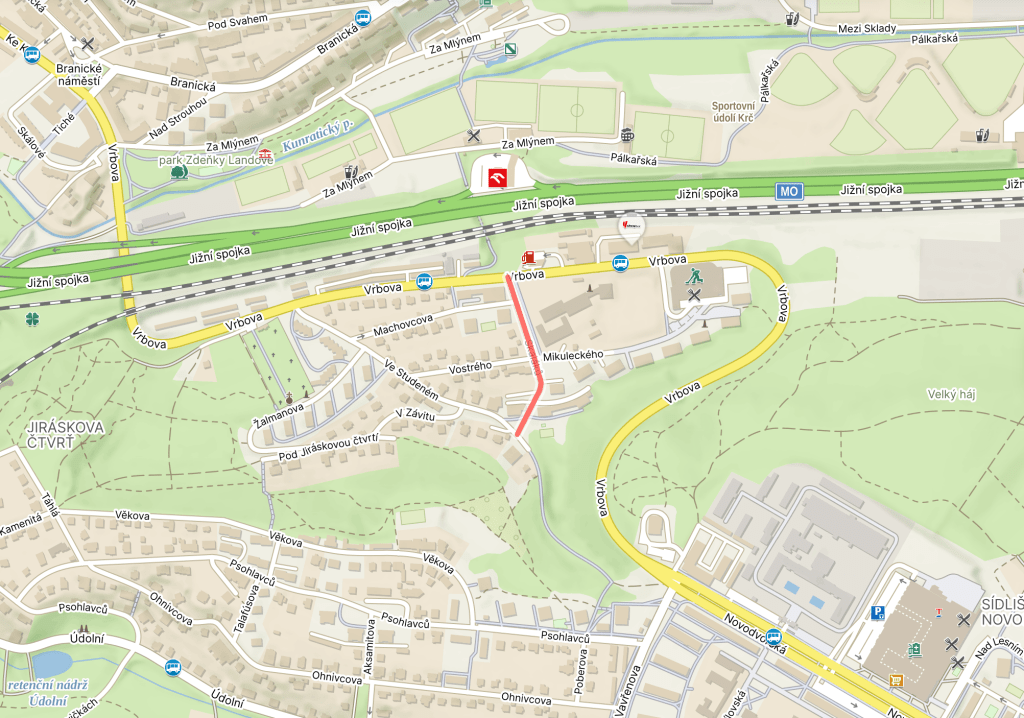
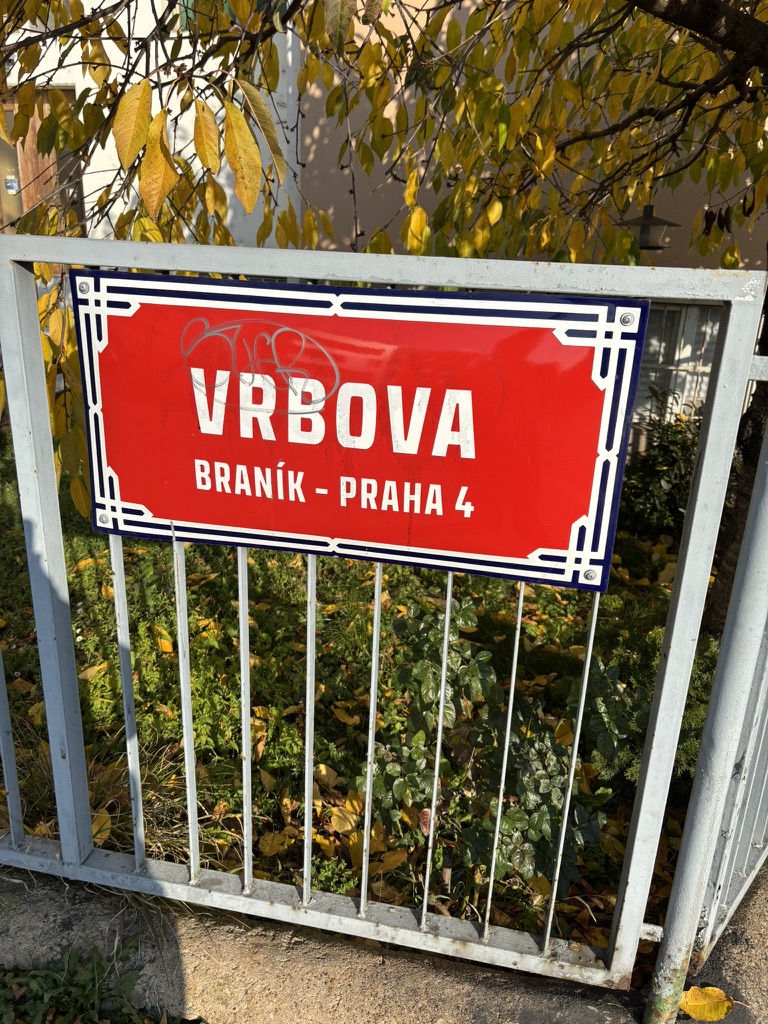
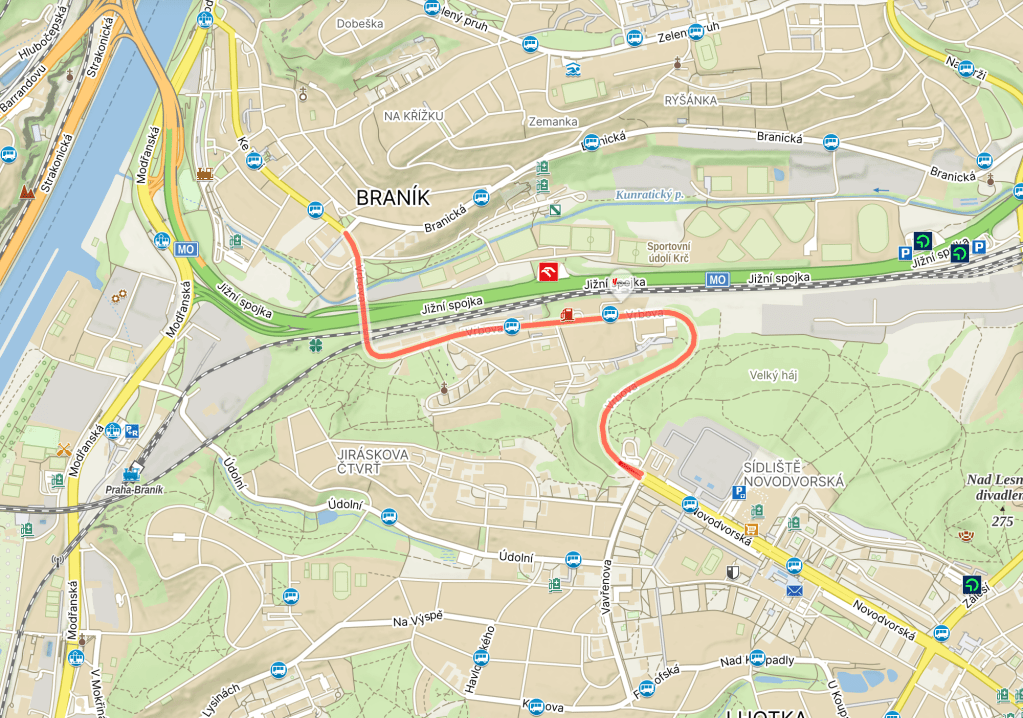
One of the characters – and the one who has given his name to this street – is Matouš Vrba, a priest who decided to travel Bohemia and promote the Czech language, which he said was ‘not dead but sleeping’.
He’s characterised as a kind type who cares about the common people… but also with something of an obsessive dislike of the French and their Revolution.
F.L. Věk was made into a television series in the early 1970s; here’s a playlist of clips.
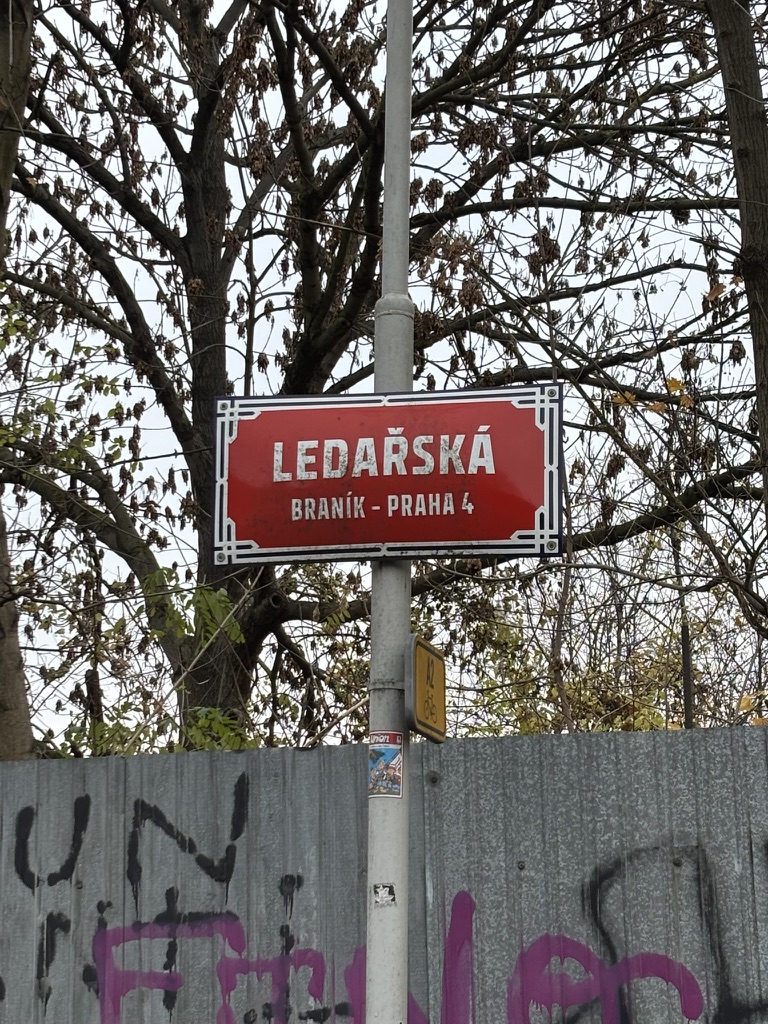
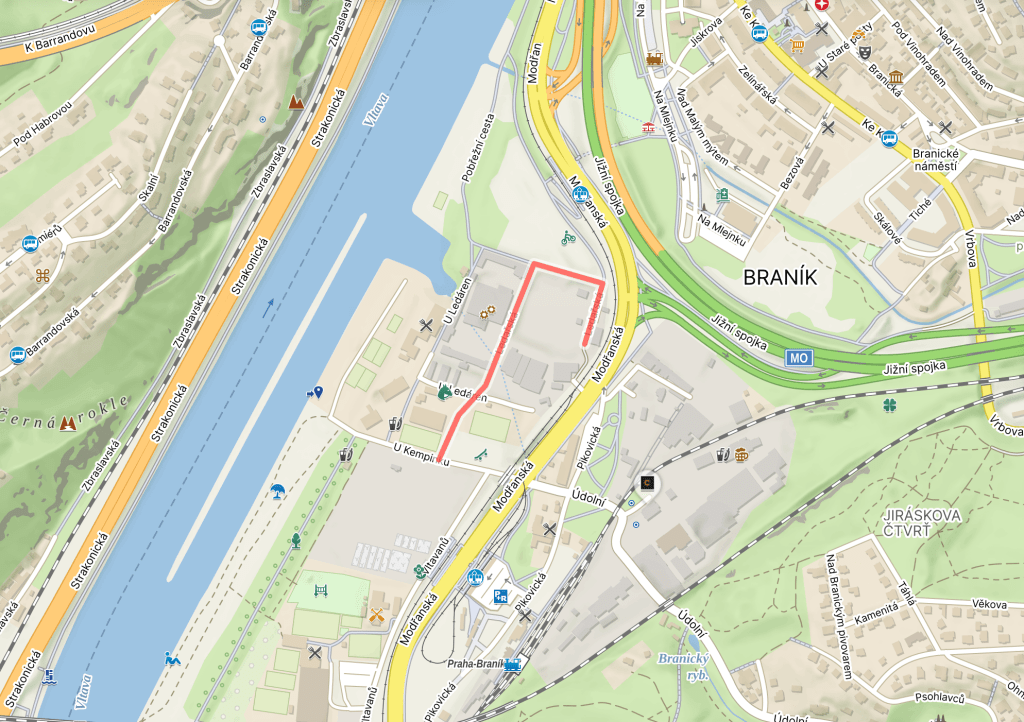
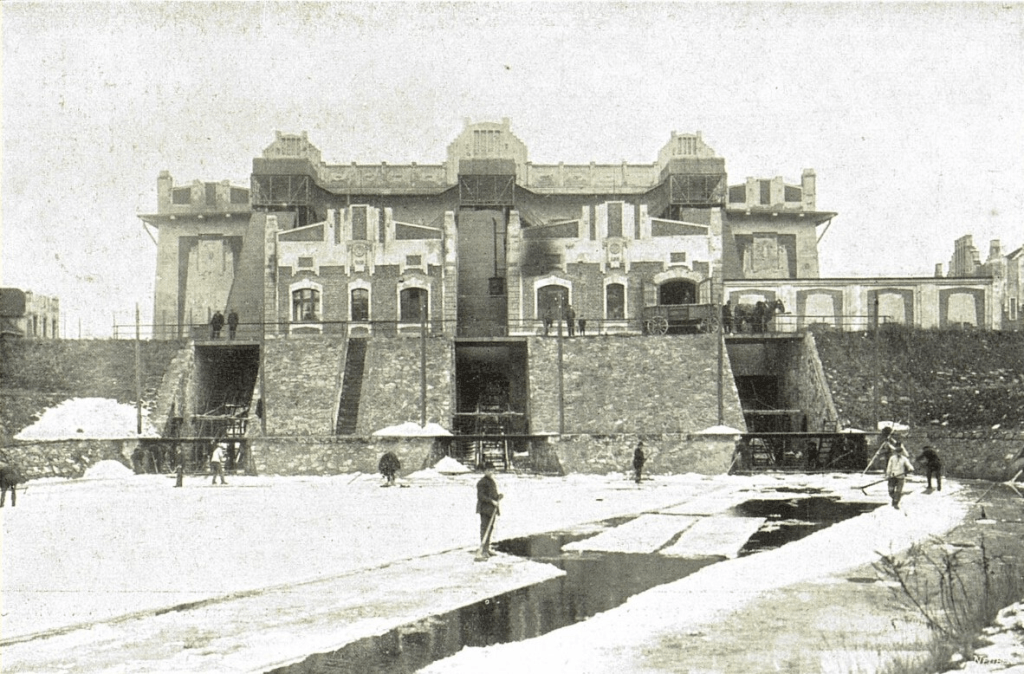
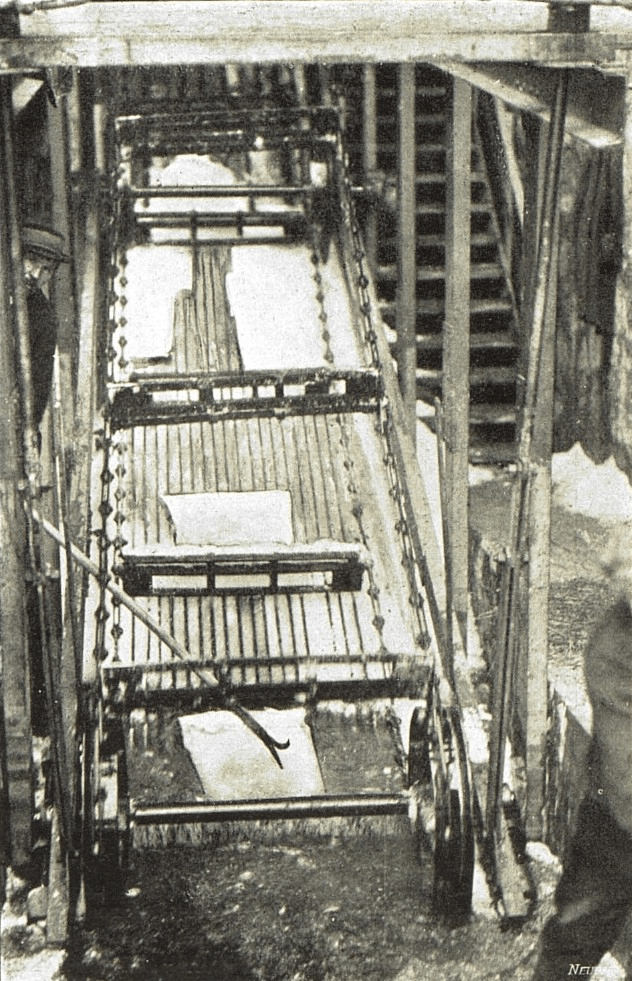
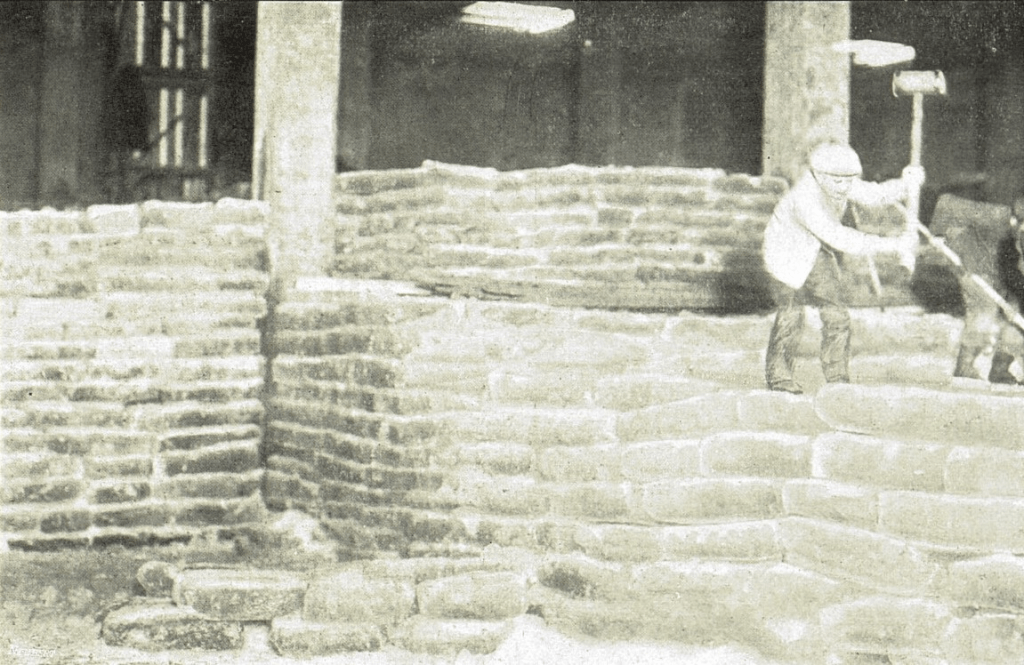
A ‘ledař” is someone who works with ice (and so you’d most likely hear the word, these days, in connection with ice hockey). A ‘ledárna’, meanwhile, would be an ‘icehouse’ or an ‘iceworks’.
They needed ice, taken from the Vltava, to cool beer. But, by 1909, they needed somewhere where ice could be stored all year round, irrespective of whether there was any in the Vltava or not.
Therefore, a group of them formed a company and, between 1909 and 1911, saw to the construction of what became known as the Branické ledárny. It (or rather, the horses pulling the carts) were able to deliver ice across Prague in all four seasons.
The complex included stables for the horses, a villa (used as the works’ office), and a house for the building manager. The area was so lively that the local trams had their terminus here.
However, between 1949 and 1955, the Slapy Reservoir / vodní nádrž Slapy was constructed about 22 km south of Prague. The construction of various dams and weirs keeps the temperature of the Vltava above freezing (its last significant freeze was in 1978).
This wasn’t great news for the icehouse, which no longer had much, or any, ice from the Vltava to accommodate. Operations came to an end in 1954; the trams no longer passed by the icehouse after 1959.
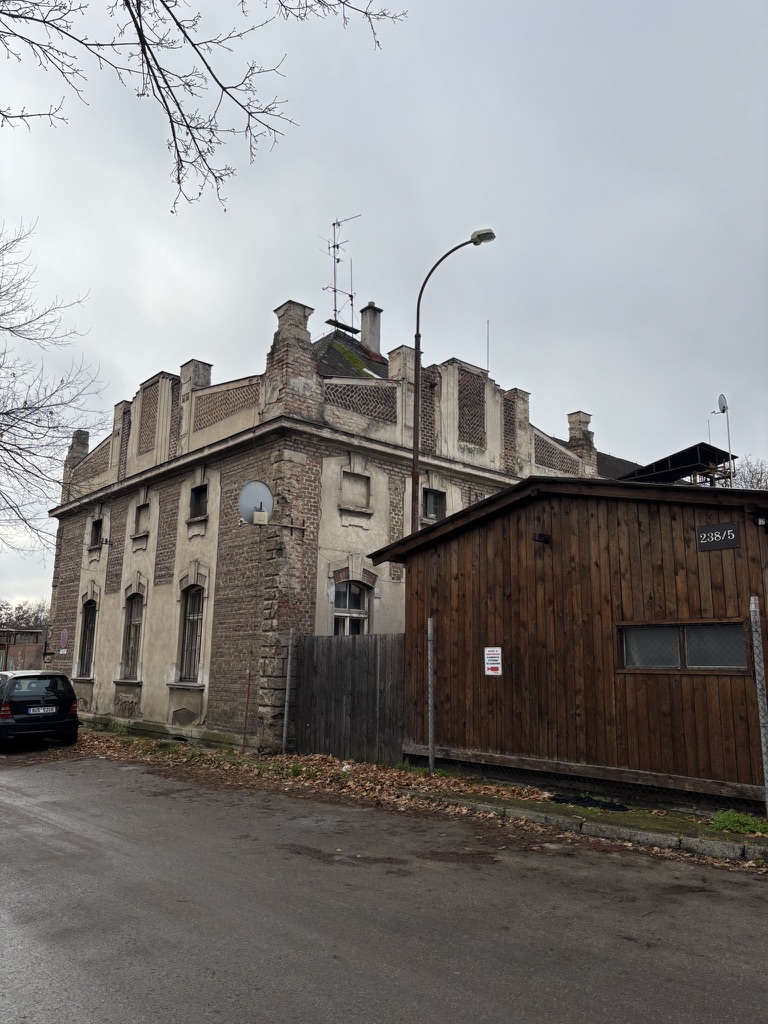
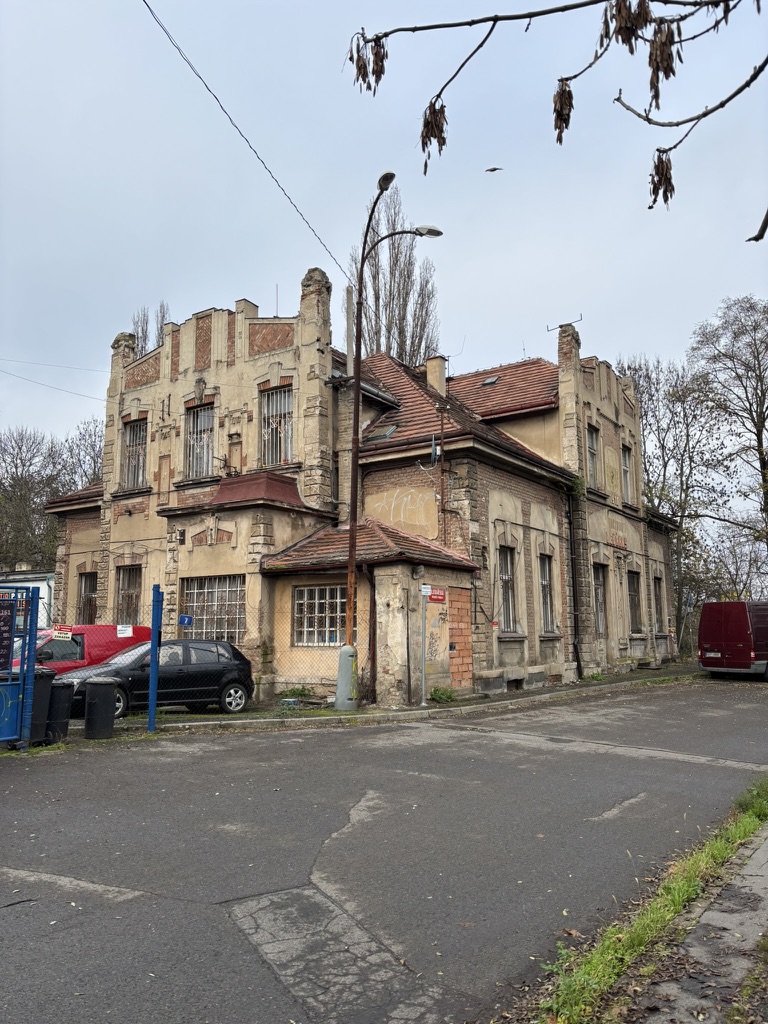
The area has been considered for a museum (in the 1980s), a brothel (in the 1990s – there isn’t really anyone living round here to object, at least compared to other proposed locations), and luxury apartments and a hotel (in the 2010s).
Instead, the buildings are in something is a state of neglect.
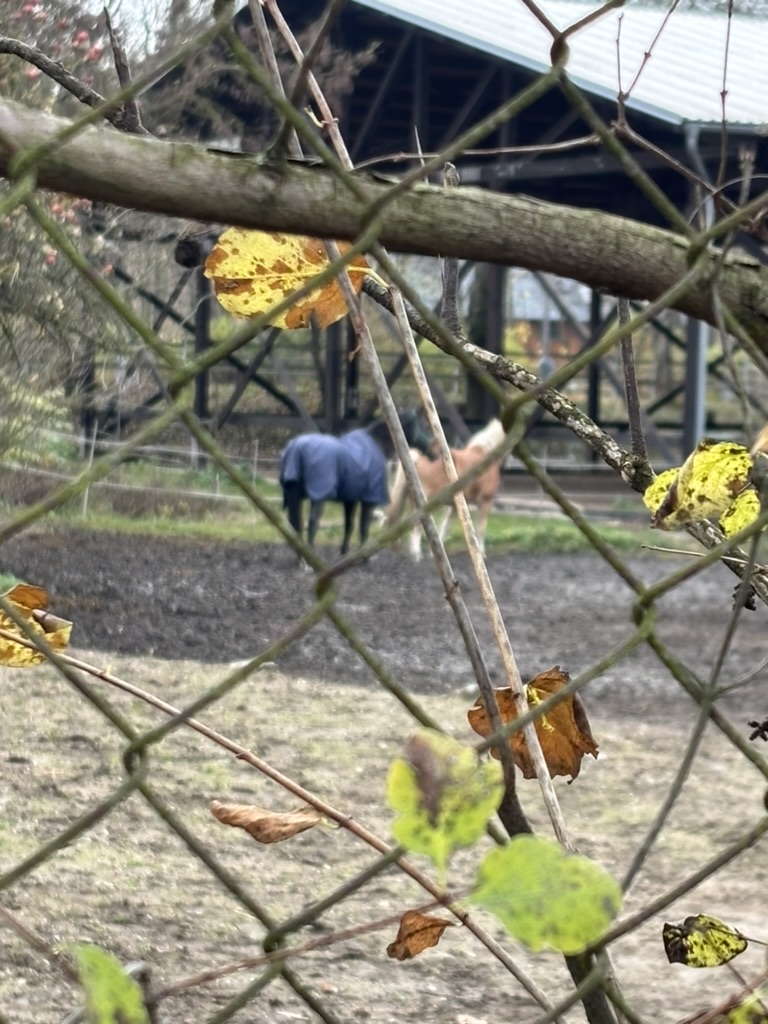
There’s still a functioning stable for horses, though.
Dagmar Šimková was born in Plzeñ in 1912. She joined a scout troop in 1934, where the other members nicknamed her Rakša.
Rakša is Raksha – the Mother wolf in The Jungle Book who raised Mowgli as her own cub. Raksha (रक्षा) is Hindi for ‘protection’.
She and her husband, Karel Skála, moved to Prague and founded a new scouting centre (which was attended by one Václav Havel). Dagmar Skálová was the leader of the girls’ troop.
After 1948, both became involved in the anti-communist resistance. In February 1949, the Prokeš coup, initiated by the retired major Květoslav Prokeš, was planned for mid-May, but the plan was revealed before it could happen, and the main plotters were arrested.
The insurgents were supposed to include scouts; Skálová had agreed to provide them with medical assistance and facilitate communication between them.
While under interrogation, Skálová stated that the scouts involved just thought they were taking part in a regular scheduled activity; her statement stopped most of those scouts from getting arrested. It might have saved Karel from the death penalty, too.
In August 1949, Skálová was sentenced to life imprisonment; the six main plotters were sentenced to death and were executed at Pankrác Prison in December 1949.
Dagmar and Karel were ultimately freed in 1965. While in prison, she Dagmar wrote to the UN Secretary-General to make him aware of the dire human rights situation in Czechoslovakia. By that point, the scouts were no longer autonomous, and had been absorbed into the Pioneer Organisation.
During the Prague Spring in 1968, the Scouts were revived; Karel Skála was asked to lead the Prague section, but declined, although he was involved in some scouting activities until they were absorbed into the Pioneers yet again in 1970.
Karel died in 1973, and was buried in the family grave in Plzeň. Dagmar lived to see the revival of the Scouts after the Velvet Revolution, and was awarded the Order of T. G. Masaryk in 1997.
Michaela Tichá was born in Šumperk in 1993. She joined the army in 2017, specifically the 242nd Transport and Special Squadron of the 24th Transport Air Force Wing of the 24th Transport Air Force Base Prague-Kbely.
Her first mission abroad, starting in August 2020, was to the Sinai Peninsula, where she served in the 8th Task Force of the Czech Army and in the USA-led Multinational Force and Observers, which monitors the Egyptian-Israeli peace accord.
On 12 November 2020, during a routine monitoring mission over Tiran Island, the helicopter Tichá was in crashed due to a technical malfunction. Seven passengers, including Tichá, were killed.
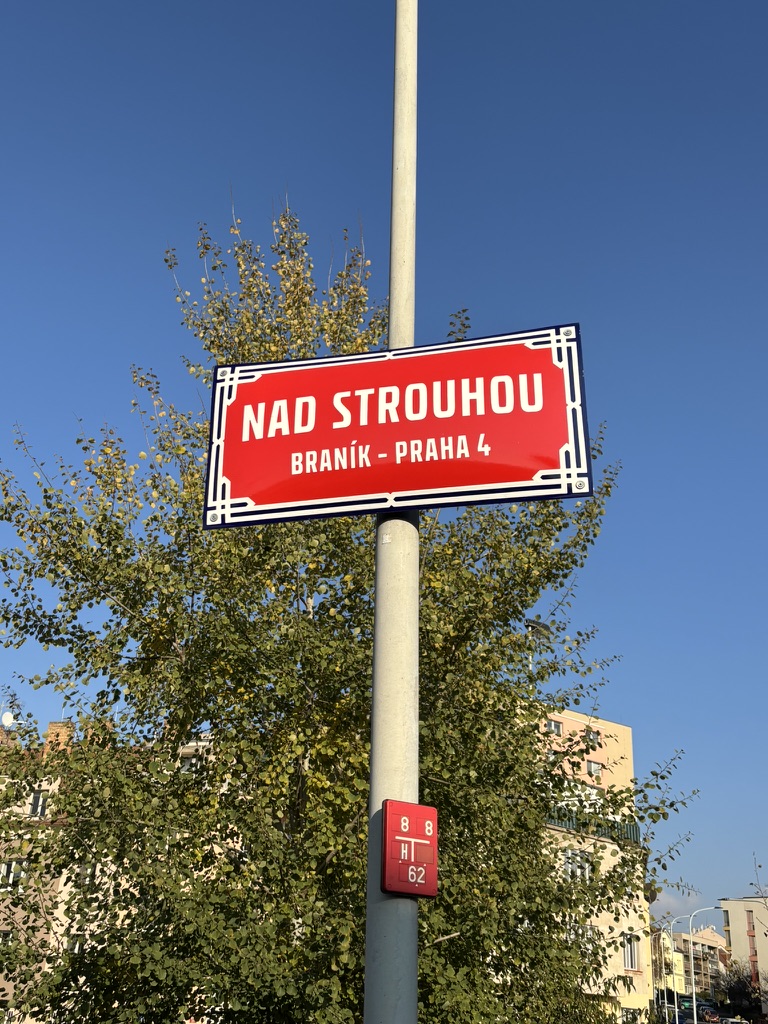
A ‘strouha’ is an artificial or natural flow of water. It can be used to drain water, or to power a mill. I’m going to go with ‘gully’ as a reasonable English translation.
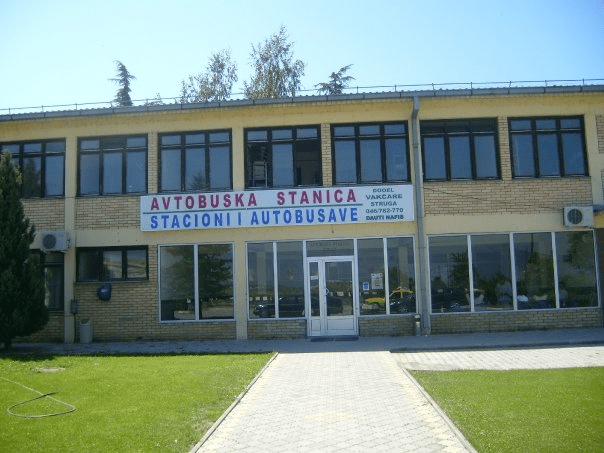
I’m also going to assume it comes from the same Old Slavic source as Struga in North Macedonia. Here’s a photo from a rather fraught day in August 2008 when I was trying to go from Ohrid to Albania (for the first time) from there. I succeeded.
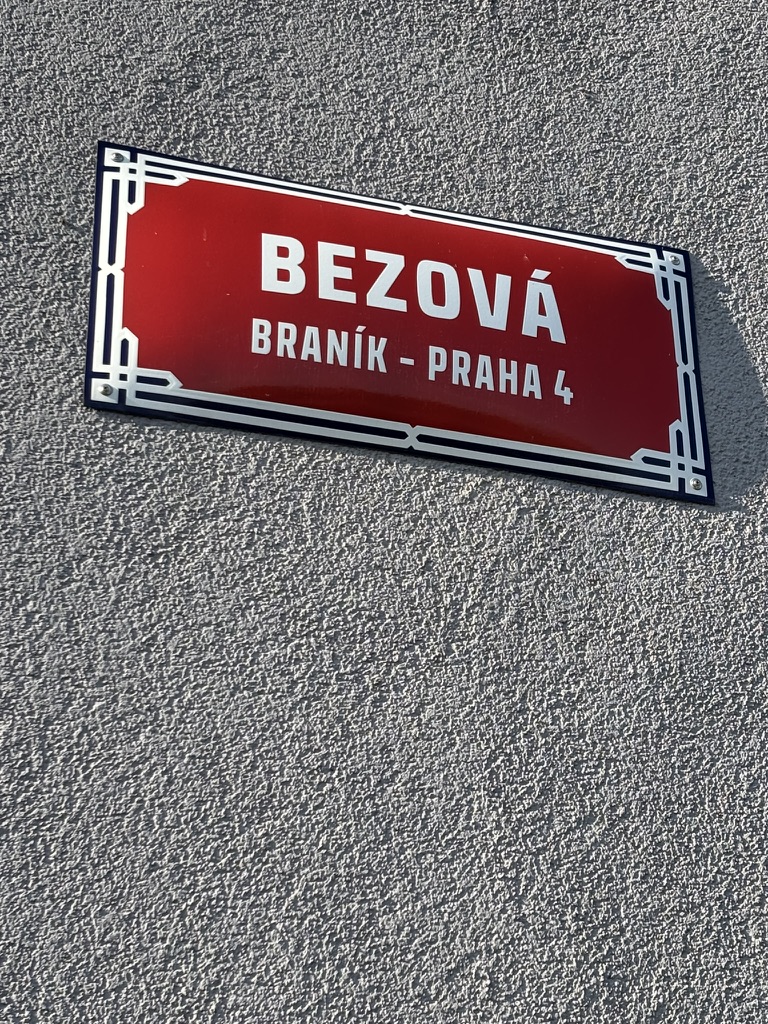
‘Bez’ translates as ‘Sambucus’, a genus of about 20-30 flowering plants which are commonly referred to as ‘elder’.
In Czechia, there are three native species: the black elderberry (Sambucus nigra / bez černý), the Sambucus ebulus / bez chebdí) and the red elderberry (Sambucus racemosa / bez červený). And, obviously, this is, or was, an area filled with them.
For those wondering, yes, ‘Sambuca’ can be spiced with elderflower, but isn’t required in its legal definition.
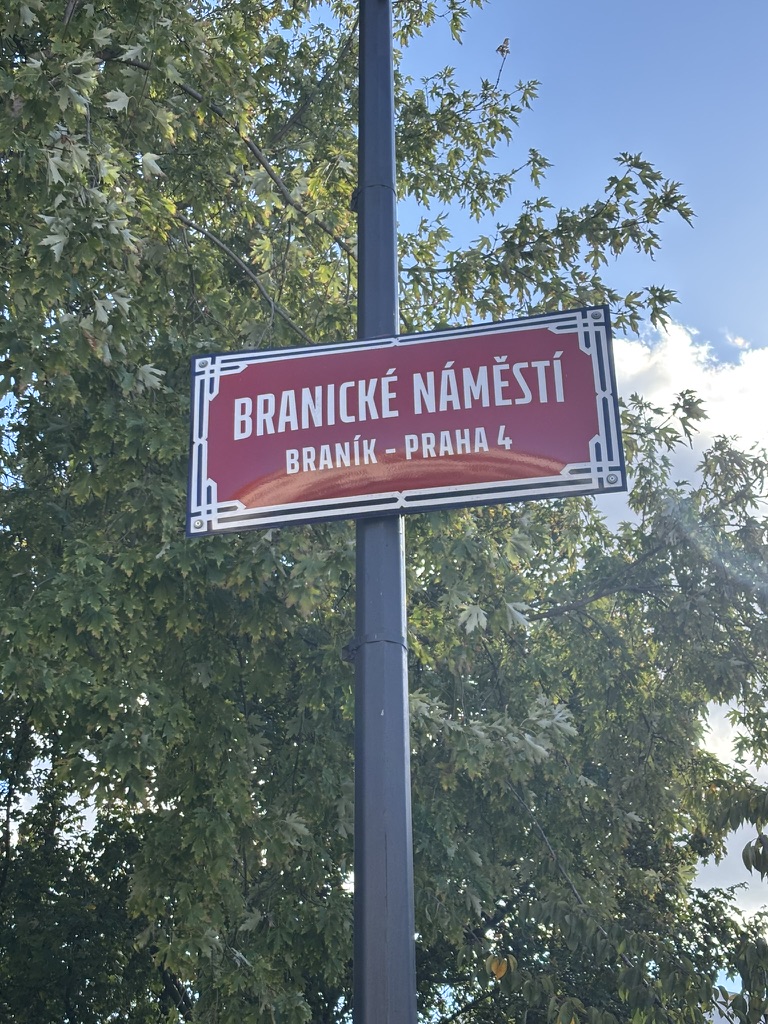
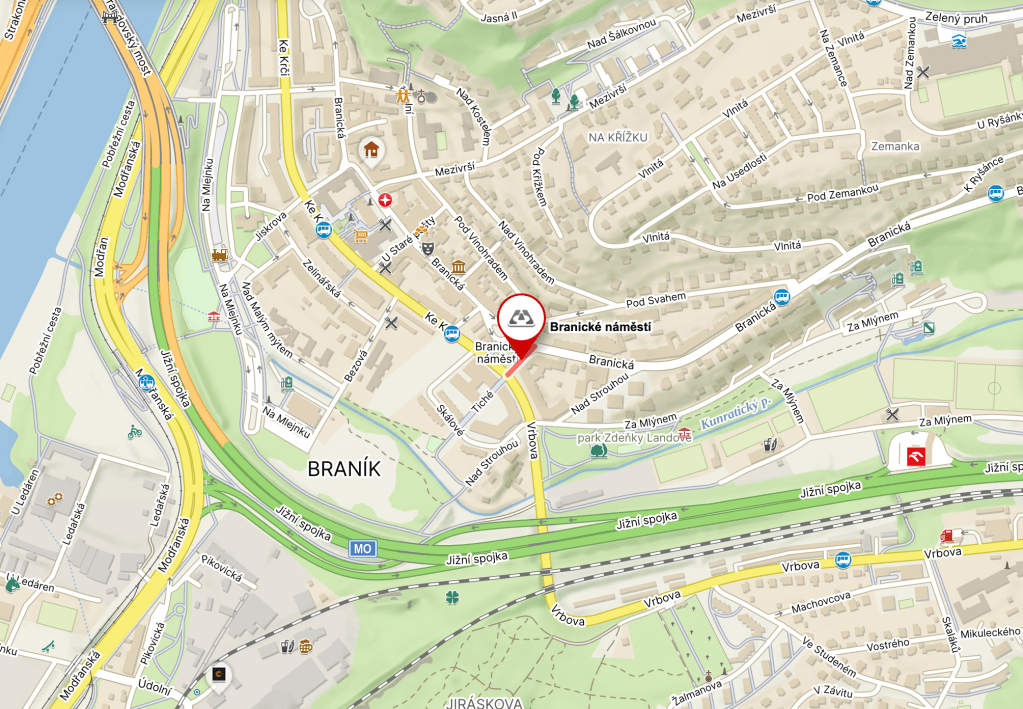
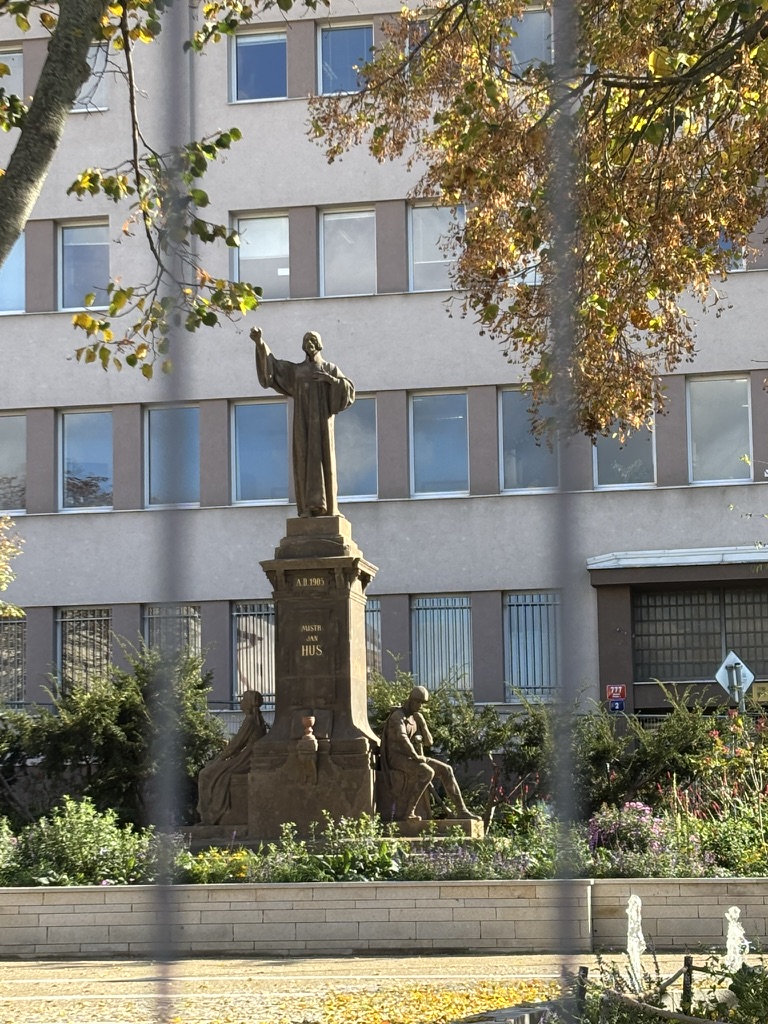
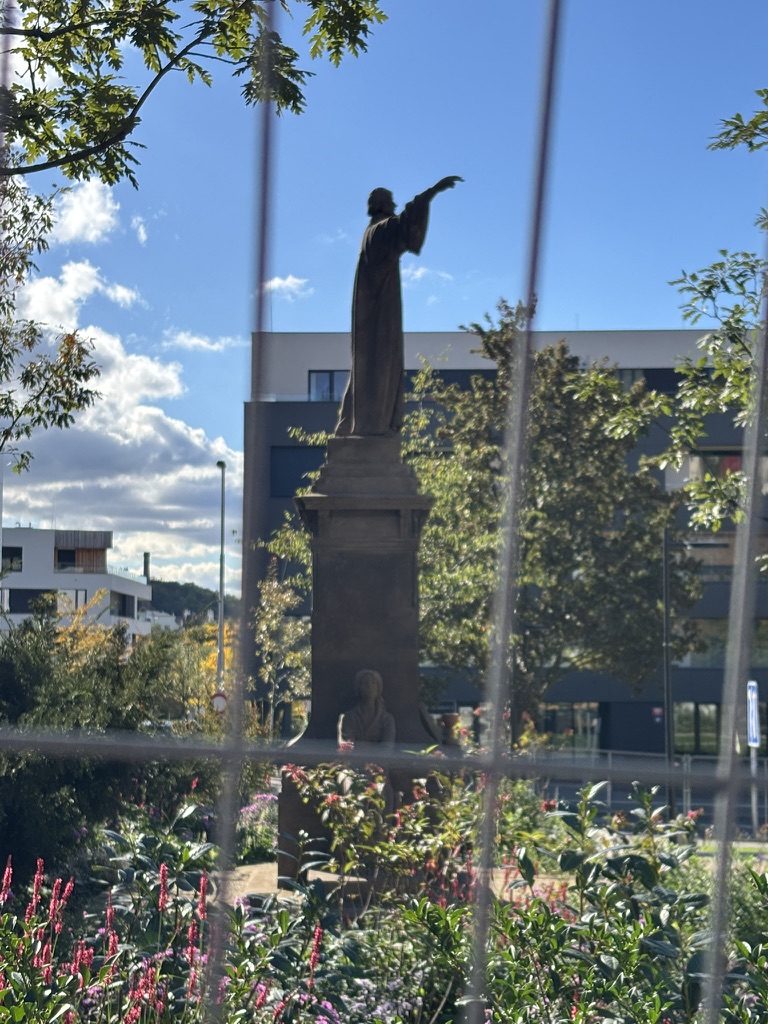
Branické náměstí is pretty small, and currently feels even smaller, because it’s fenced off (pics of Jan Hus behind bars below).
It was recently given a facelift which was completed in August 2025 (about a year later than intended), but the square has several private owners who have to comment on the works by a certain deadline, and only after that can it be opened to the public.
One rather wonders what would happen if one of them chose to object.
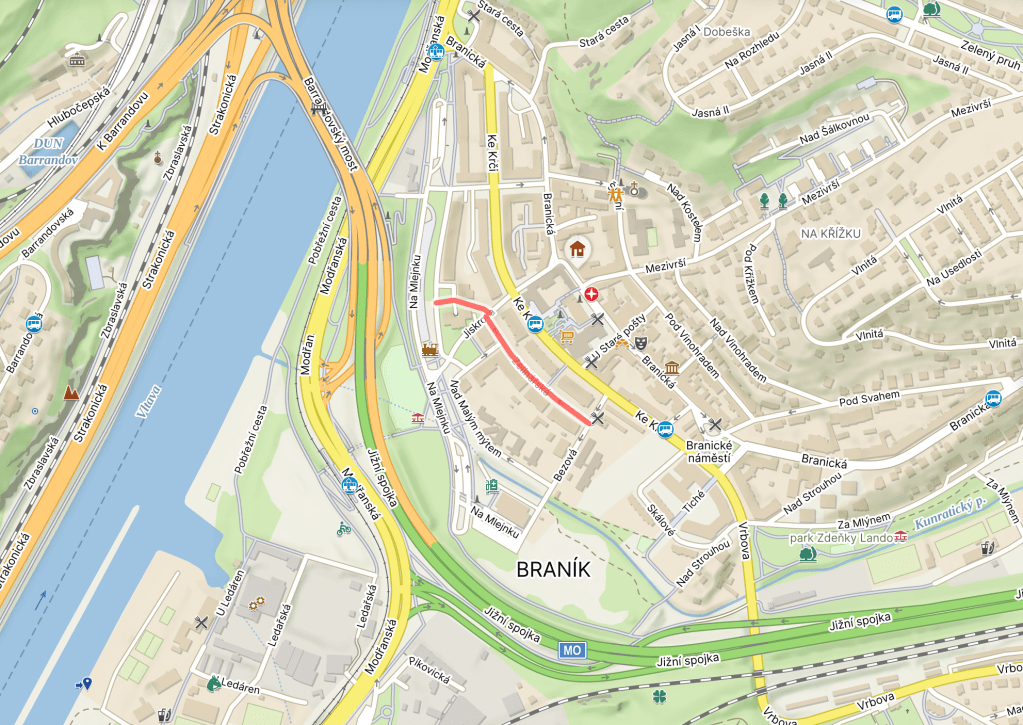
A ‘mýto’ is a toll. We’re near the Vltava, and, historically, this is where tolls were collected.
By the mid-19th century, the entire area was called ‘Za malým mýtem’, literally ‘Behind the small toll’.
Those who think it may be unusual to name a place after a toll may do well to think of Vysoké Mýto, a town of 13,000 people in the Pardubice Region. It was founded by Přemysl Otakar II (https://whatsinapraguestreetname.com/2025/01/06/prague-4-day-6-otakarova/) in the mid-1200s and, once upon a time, was a major trading centre. in the mid-1200s and, once upon a time, was a major trading centre.
The town is so-called because only the monarch was allowed to impose tolls there.
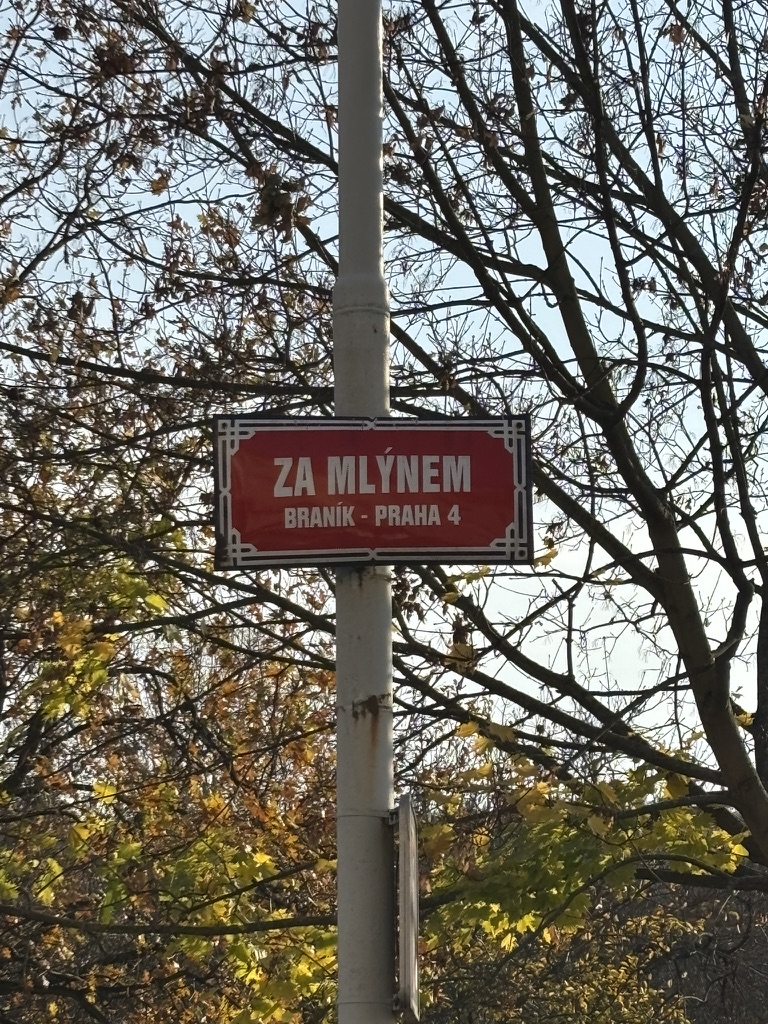
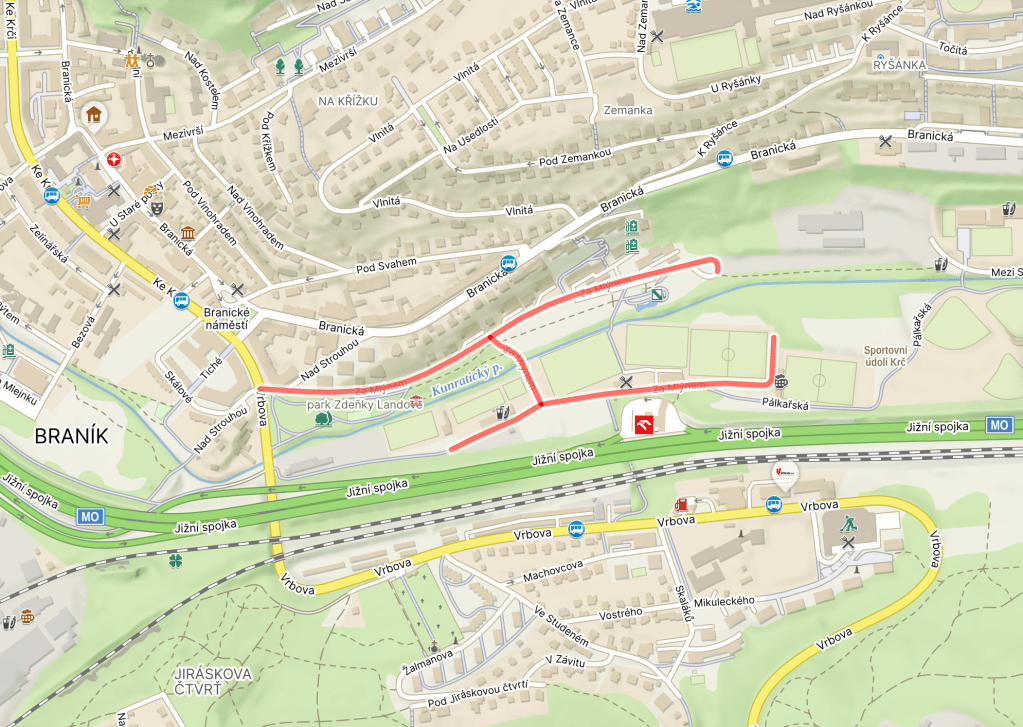
‘Za mlýnem’ translates as ‘Behind the mill’, and so we need to talk about Kunratický potok.
In Praha-Kunratice (south-east of here, and a separate urban district from the Prague 4 urban district, but part of the Prague 4 municipal district – it’s complicated), a stream (potok) originates.
Around here – specifically where the street intersects with Nad strouhem – a water mill once stood; there’s a written record from 1734 referring to both it and a water miller called Josef Vrabec.
From 1910, a bakery also operated here.
Publicly available sources about the mill seem very limited indeed, but the fact that I’ve found a list of owners up until 1938 suggests that the construction of the street led to the destruction of the very thing it was named after. Which is a bit dispiriting.
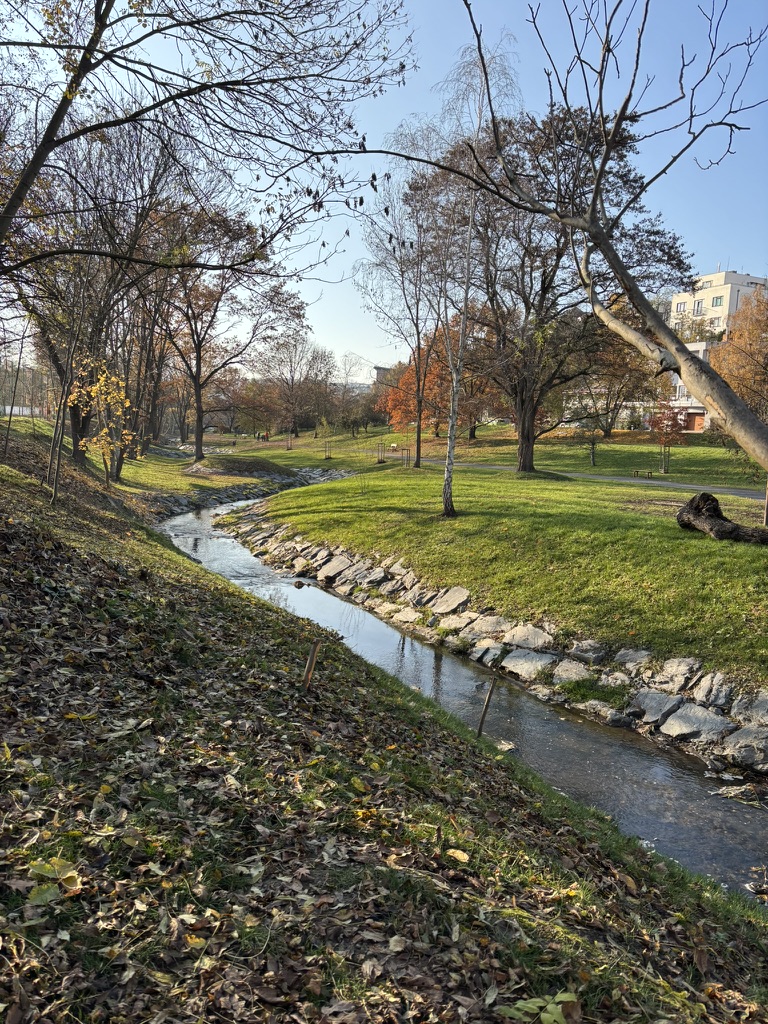
To make up for that, here are some pictures of how the stream looks round here.
A ‘zelinář’ is a market gardener (as well as translating as ‘greengrocer’) – and this street reminds us that, while there’s been a lot of talk in recent posts about vineyards, the area was also once known for its vegetable gardens.
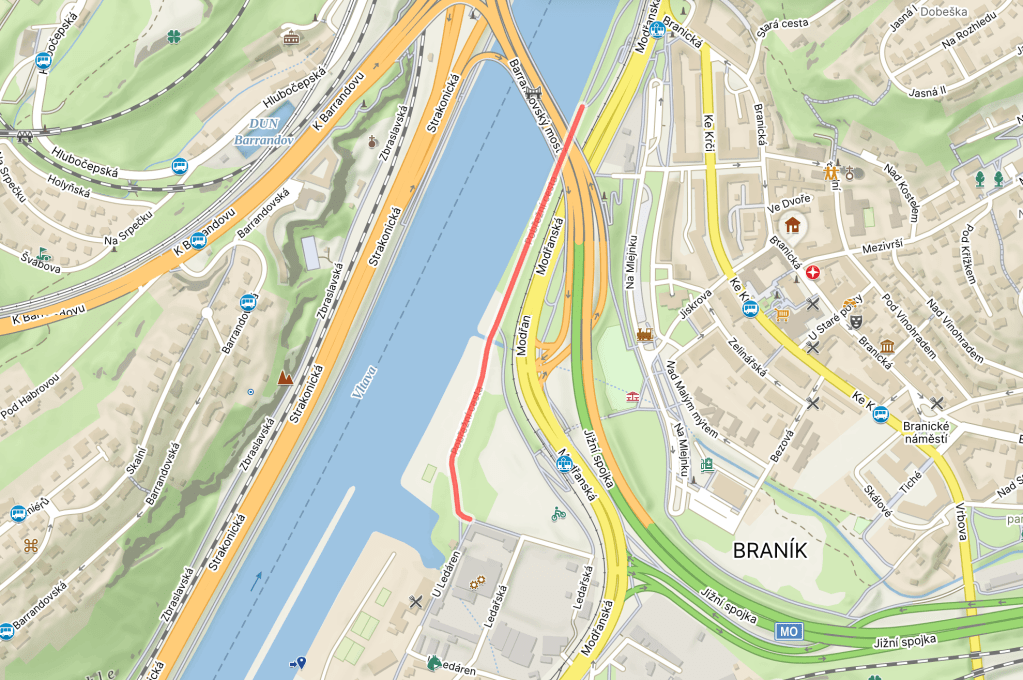
Pobřežní cesta was named in 1938. I couldn’t find a street sign, so here’s the nearby tram stop instead.
‘Pobřežní cesta’ translates as ‘coastal road’ if you’re by the sea. We’re not. So I guess we can make do with ‘river bank road’. And this street – more of a path – does exactly what it says.
(I’ve been resisting the urge to include a ‘Not everything in Prague is about Vinohrady, you know, expats’ in all three of these posts, and can hold it in no longer)
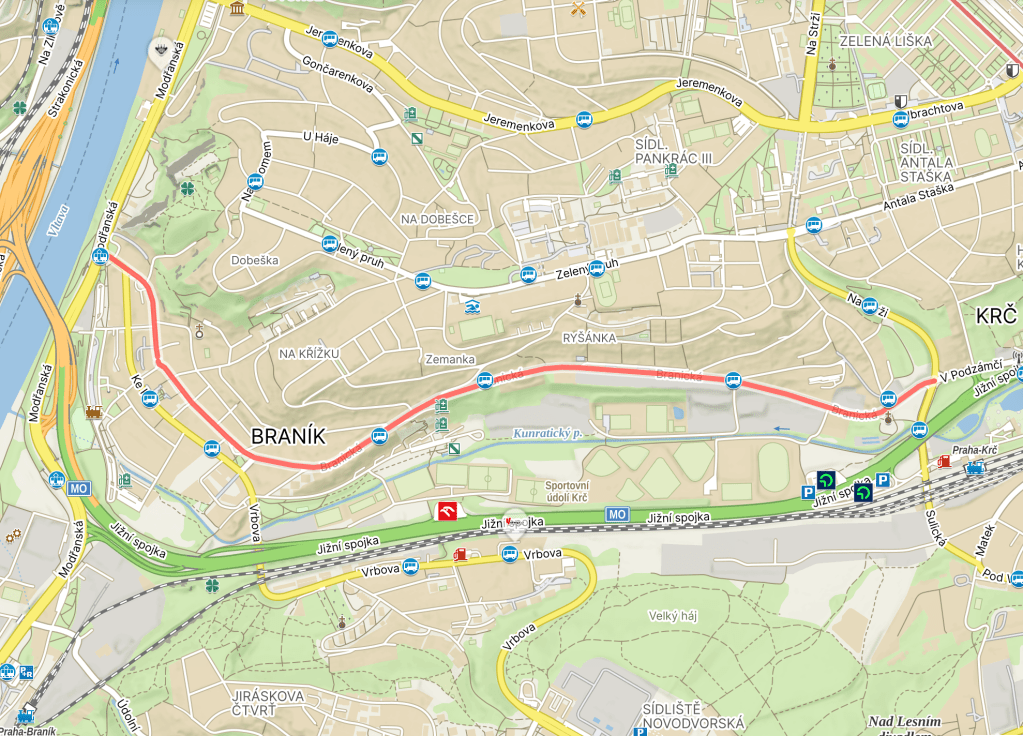
Originally, it was three separate streets. The first one was called Hlavní, because it was the main street in, yes, Braník (which wasn’t yet part of Prague).
The third one was nameless. All three were consolidated as Branická in 1935.
The earliest mention we know of for Braník is from a charter dated 1088 which refers to ‘Branice’. It’s most likely linked to the defensive role the village played (‘branný’ translates as ‘defense’, as in ‘branná povinnost’ – compulsory military service.
In the 1300s, Braník alternated between belonging to royalty and to various monasteries; duty on driftwood collected here went to the canons of Prague Castle.
After the Hussite Wars, Braník belonged to Prague’s Old Town; it would be confiscated in 1547, although the Old Town would get it back twelve years later.