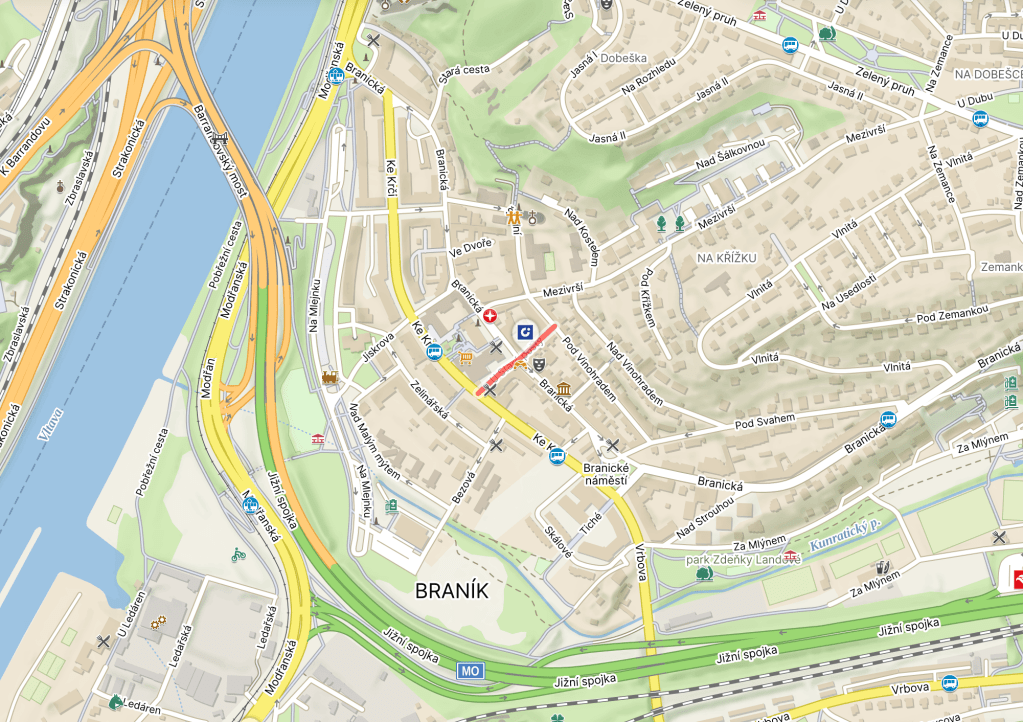
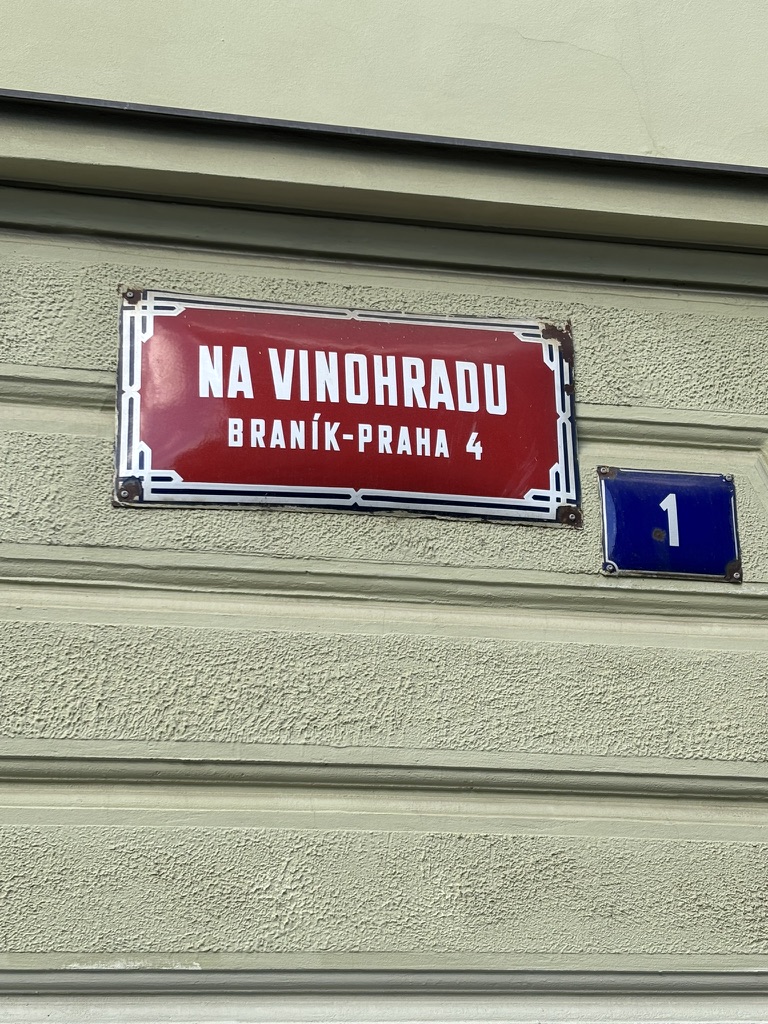
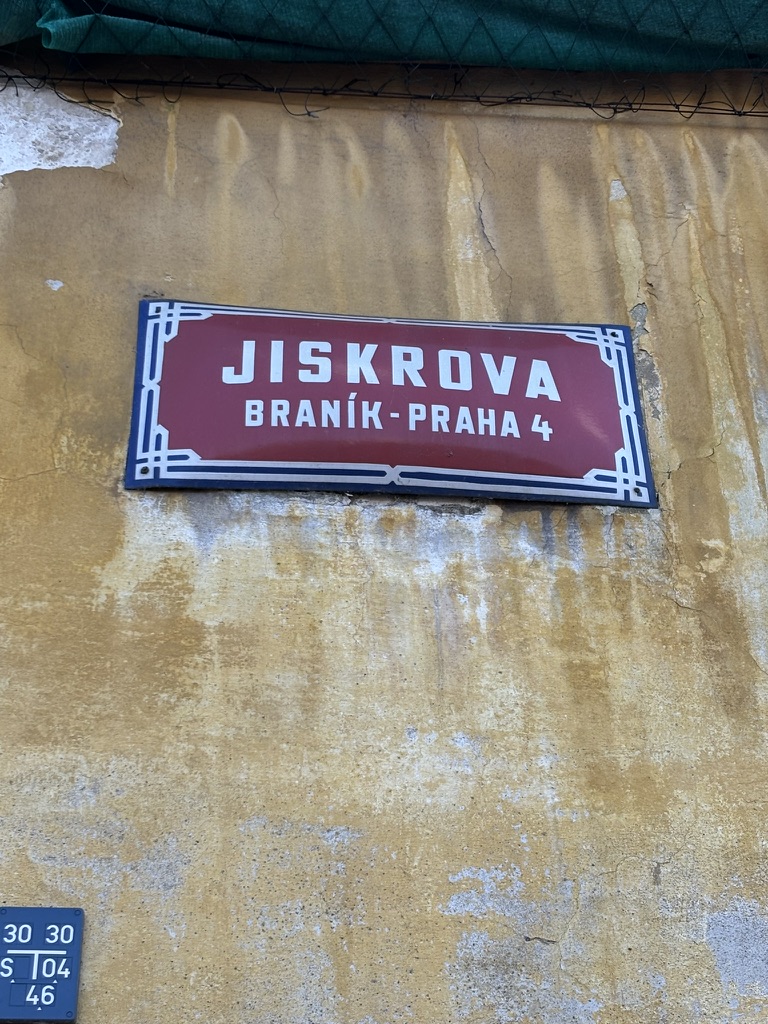
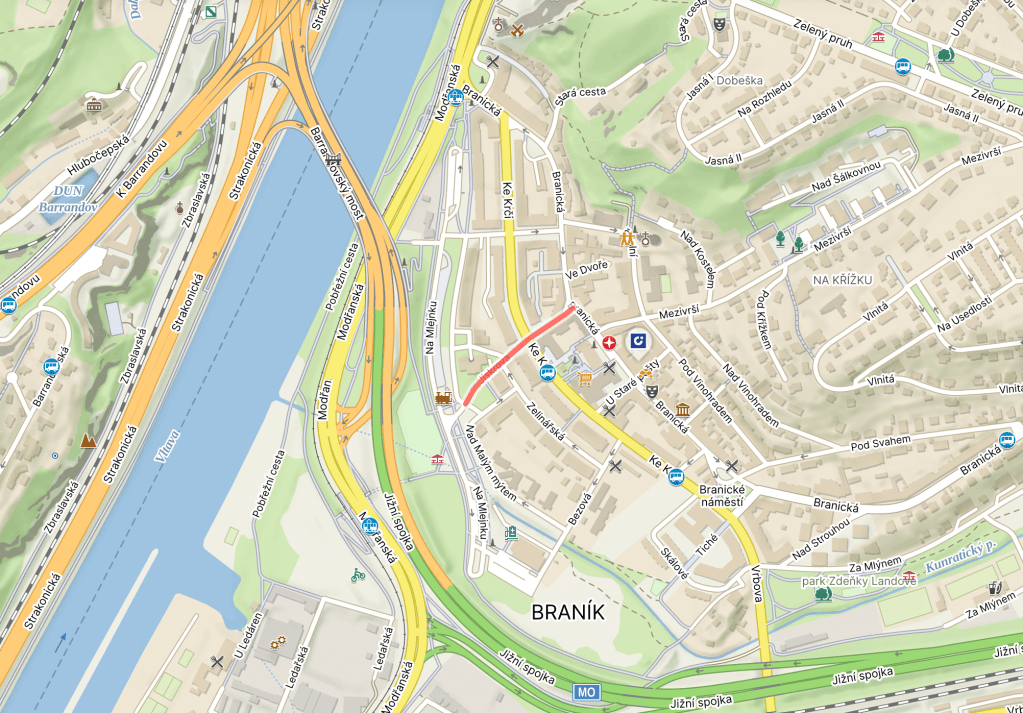
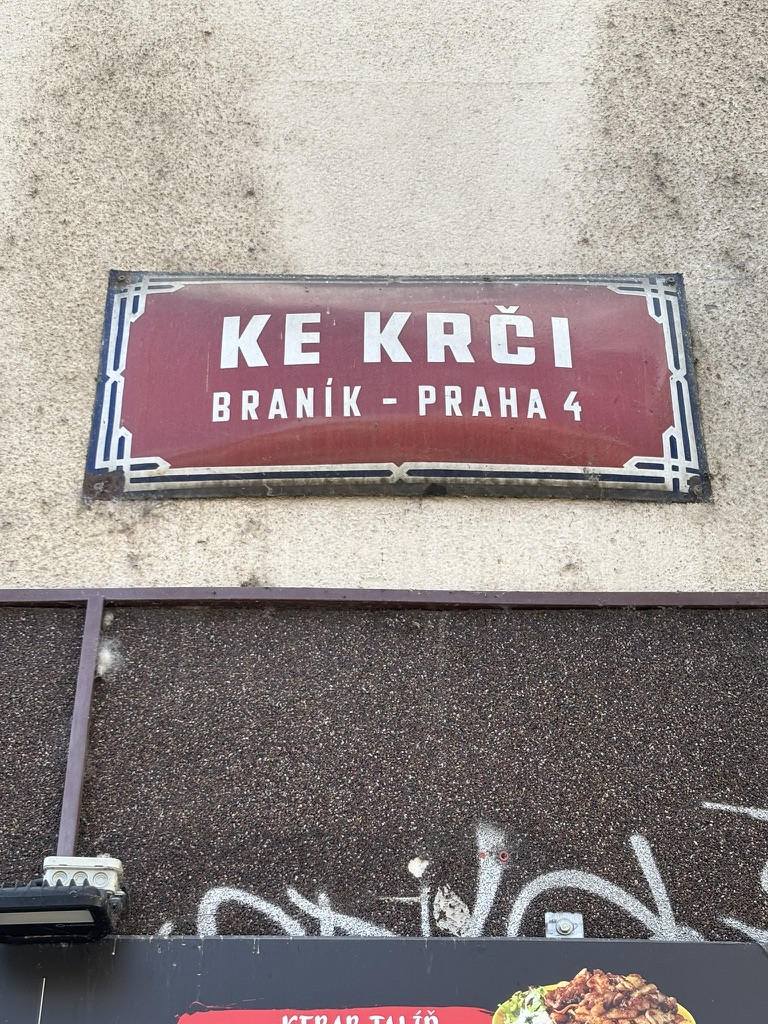
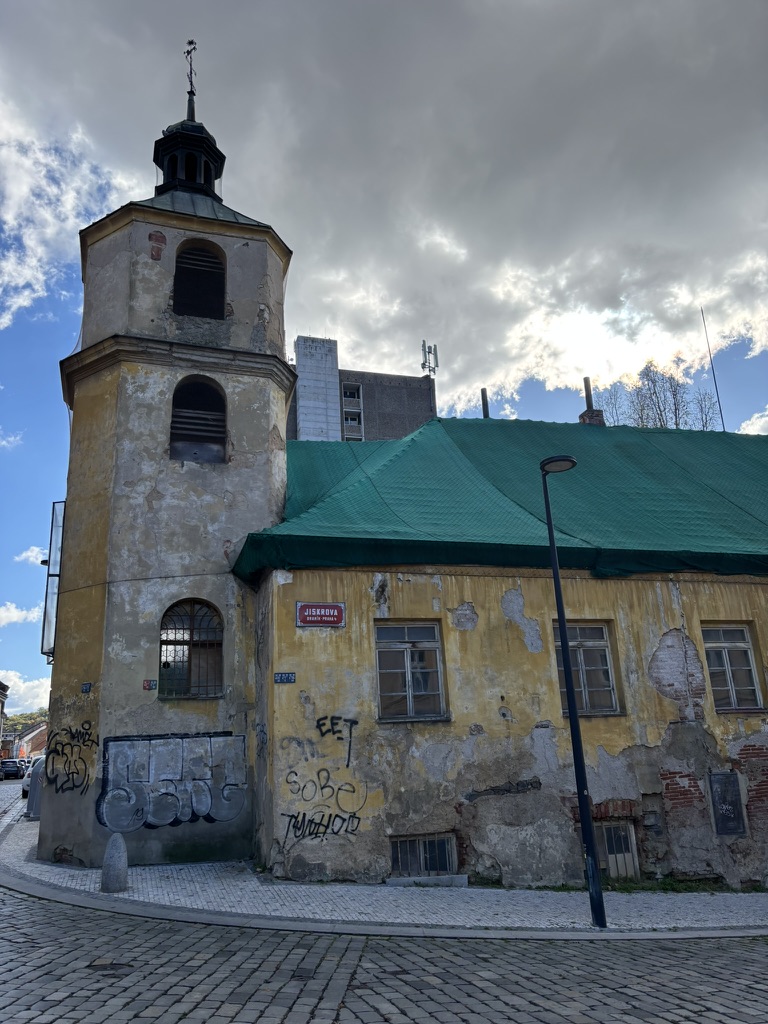
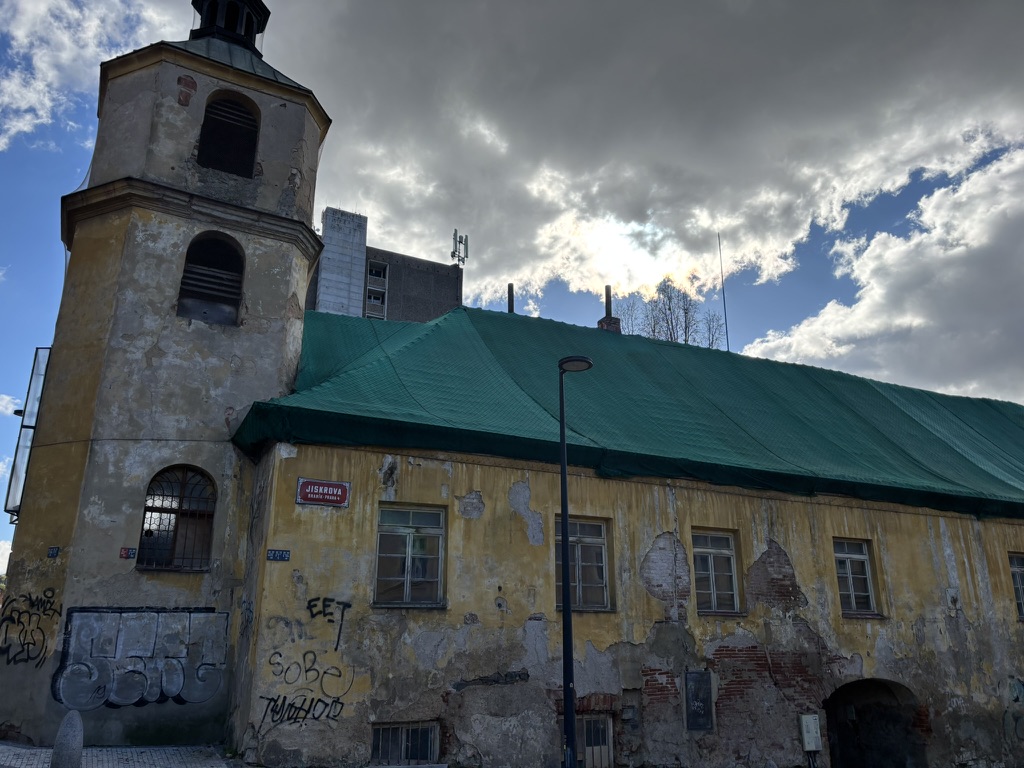
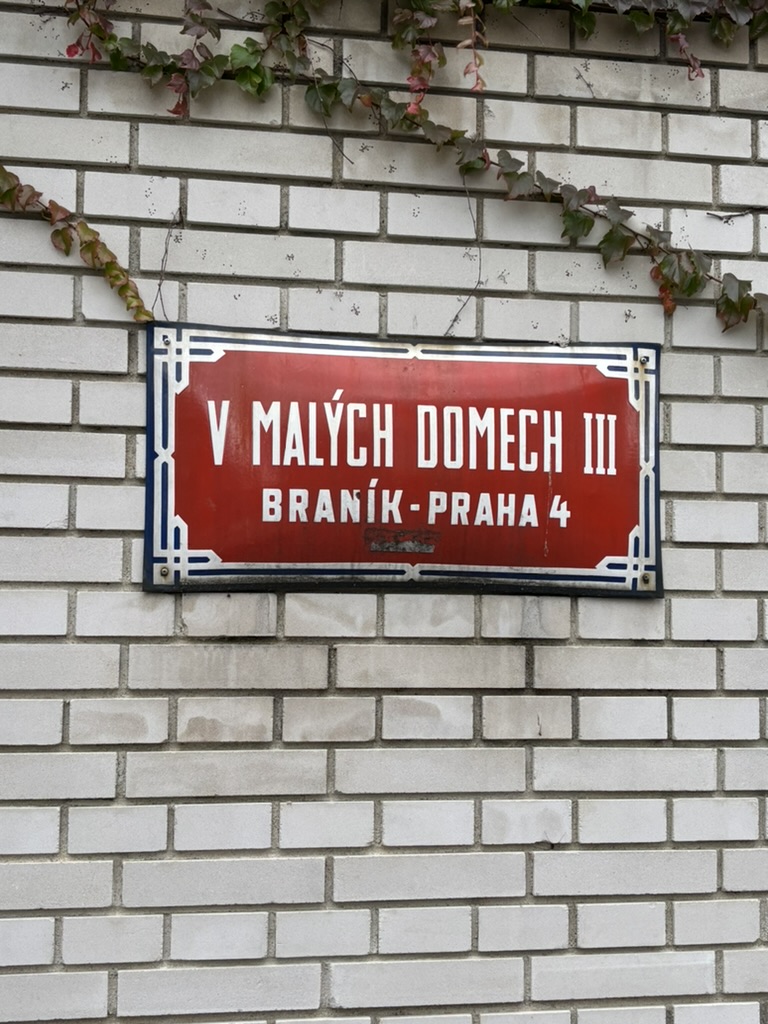
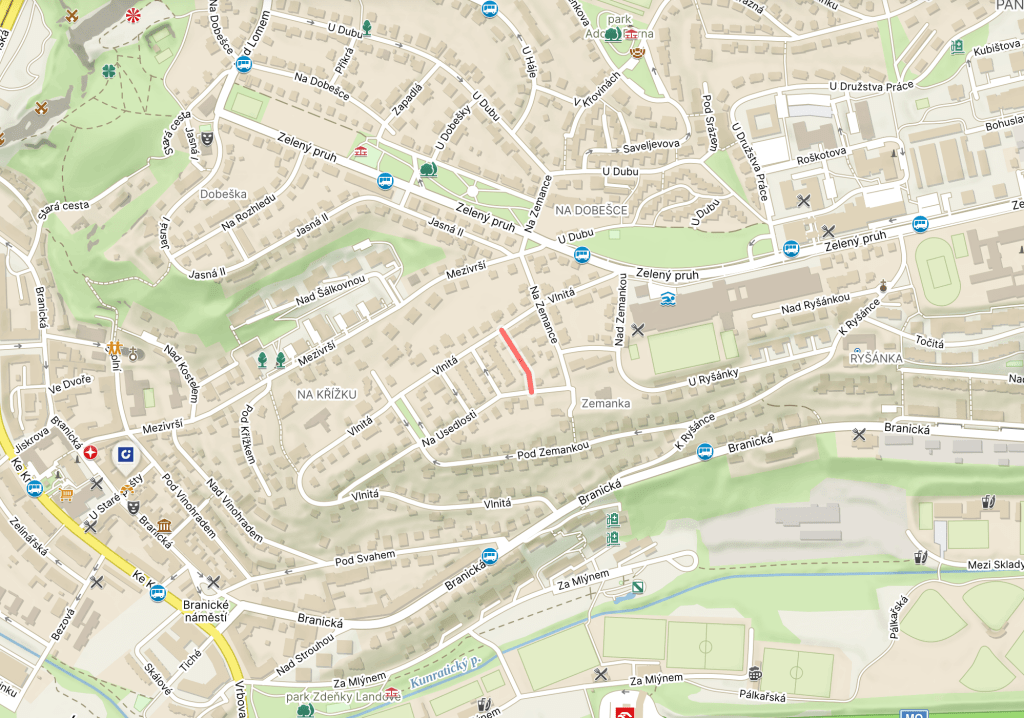
A street with this name was founded in Braník in 1935, but was destroyed in 1990 during construction works.
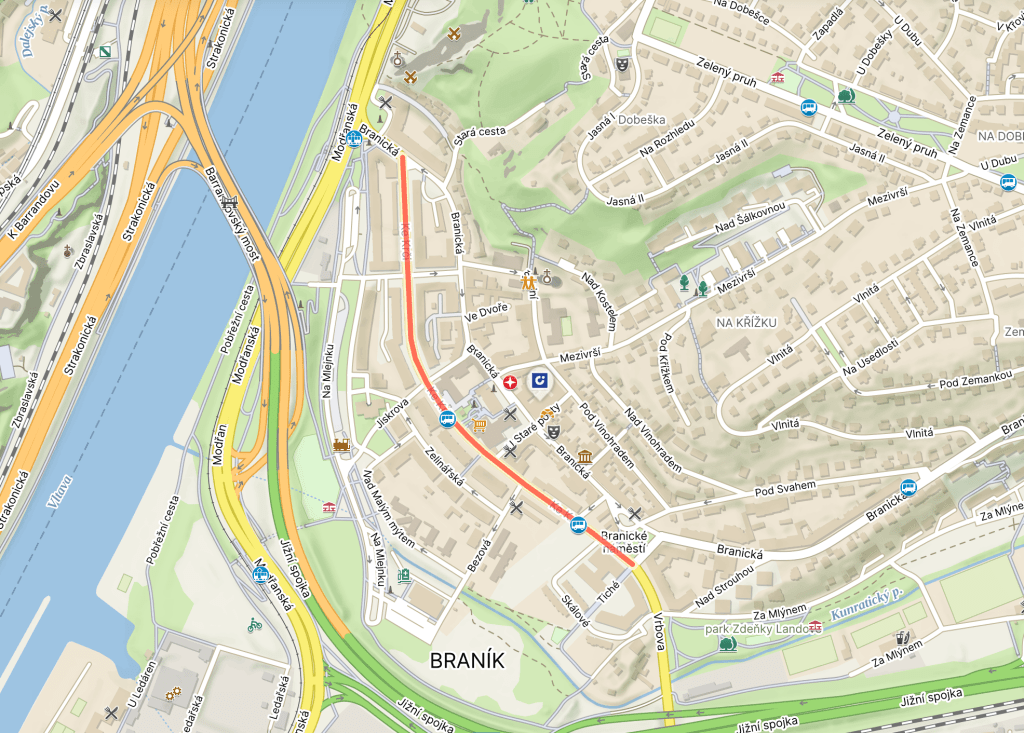
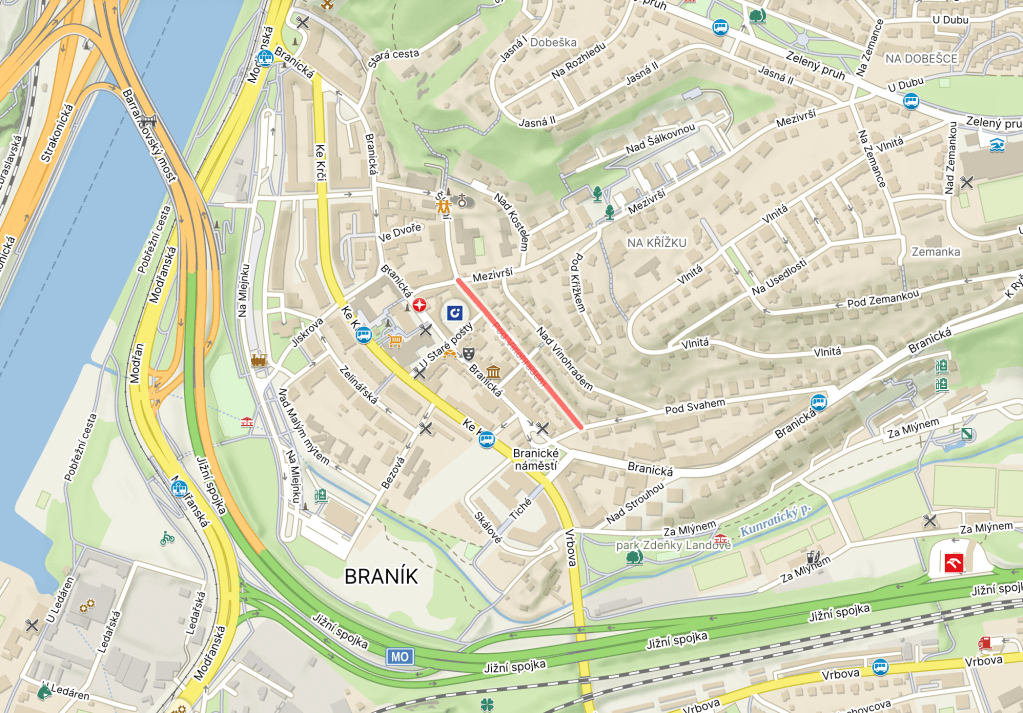
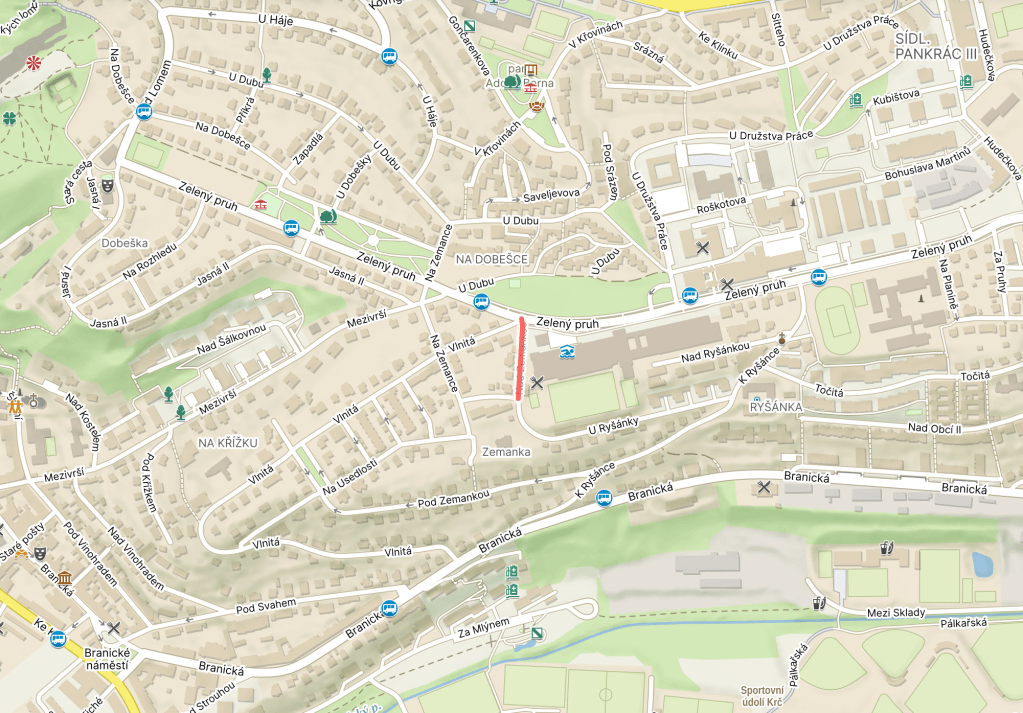
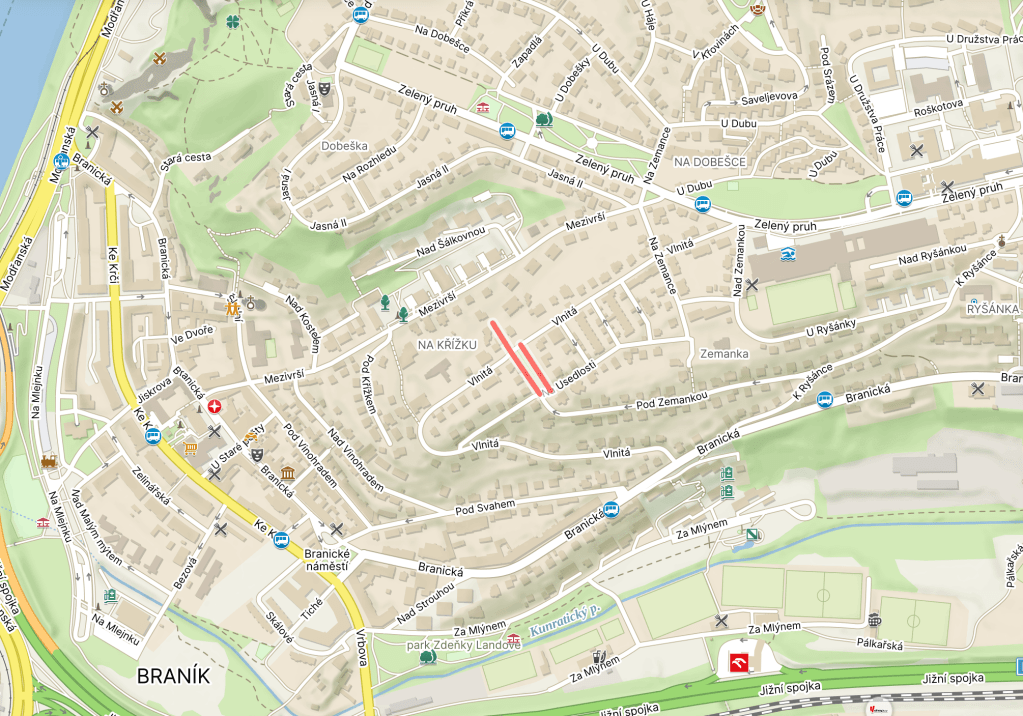
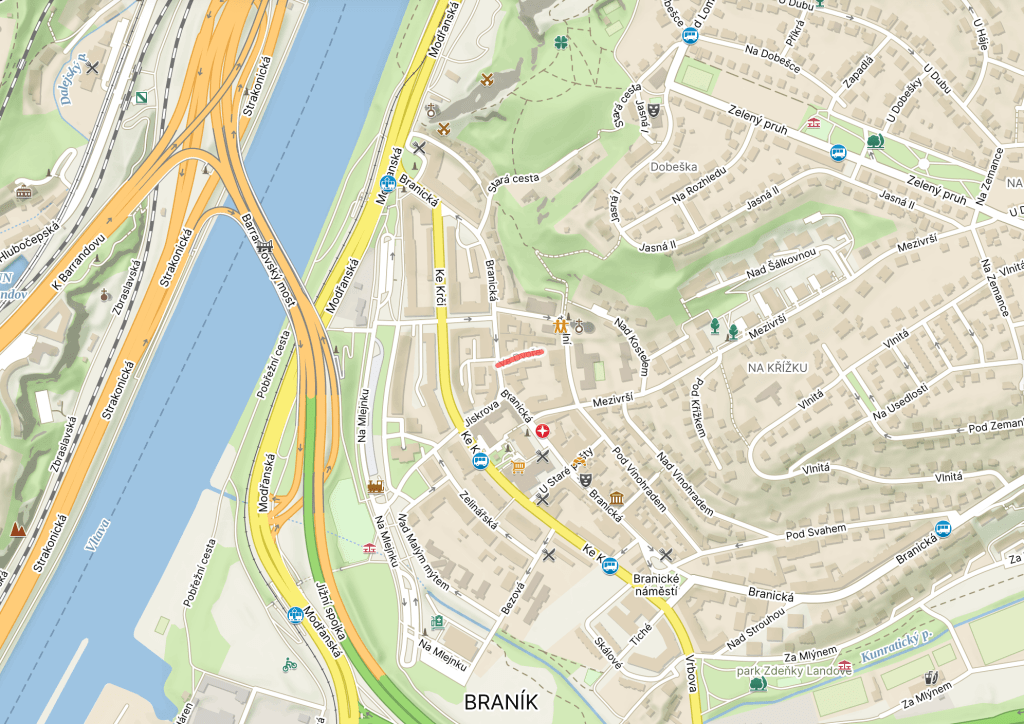
In 1991, this street – about a kilometre away from the original Jiskrova – was given the name instead. Internet searches indicate that it was originally part of Modřanská (https://whatsinapraguestreetname.com/2025/09/29/prague-4-day-185-modranska/), but the map above isn’t helping me to visualise that successfully.
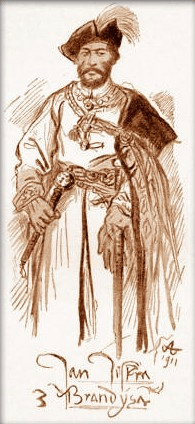
Jan Jiskra z Brandýsa was born into a noble Moravian family around 1400. He gained military experience as a youth, both in Italy and in the Czech Lands.
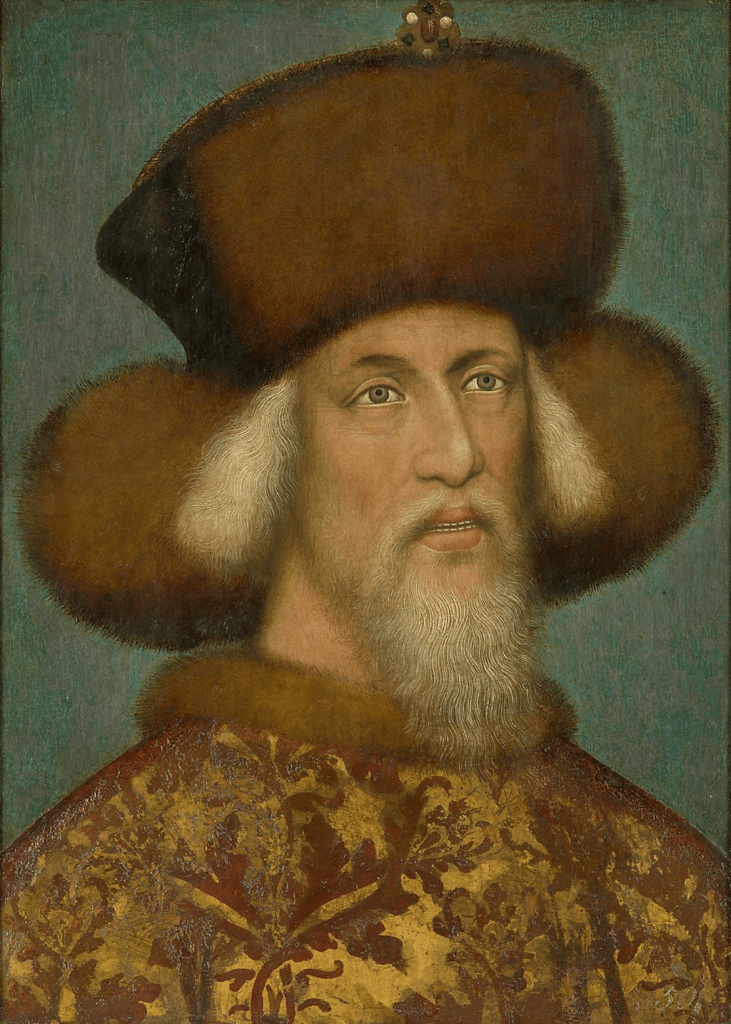
During the Hussite Wars, he fought as a moderate, defending Plzeň from more radical factions. After them, he started to serve Sigismund, who was not only King of Bohemia, but also of Hungary and Croatia, as well as being Holy Roman Emperor.
He helped Sigismund’s efforts against the Turks, mainly around Belgrade.
Sigismund died in 1437 while en route from Prague to Hungary, leaving behind one adult child, Elizabeth.
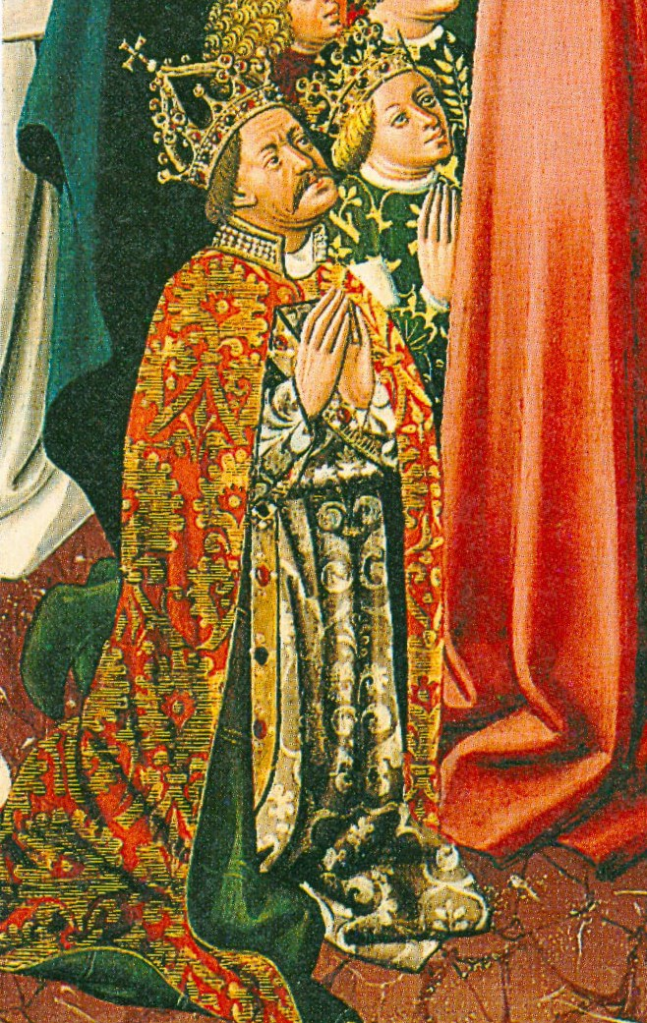
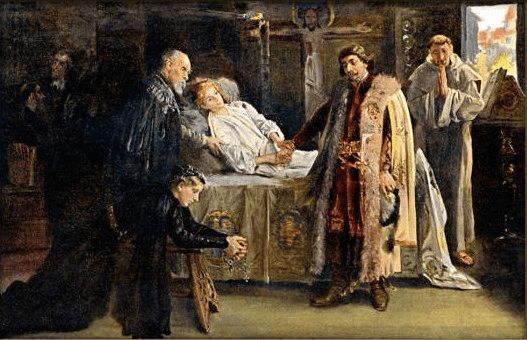
The Catholics and moderate Hussites supported putting Elizabeth’s husband, Albert of Austria, on the throne (both are pictured below); the more extreme Hussites wanted Casimir, brother of Władysław III, King of Poland.
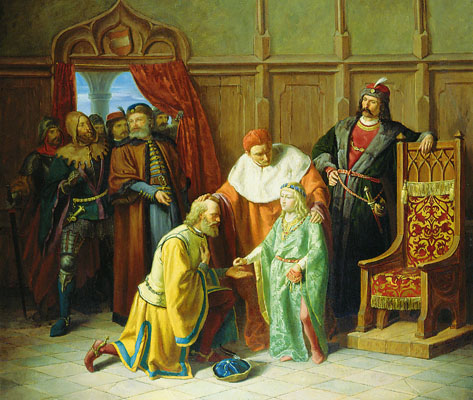
Albert died in 1439 while travelling back from an unsuccessful expedition against the Turks in Hungary. His son Ladislav was born after his death, and consequently became known as Ladislav Pohrobek (Ladislav the Posthumous).
When Ladislav was three months old, Elizabeth had him crowned King of Hungary; the Hungarian nobility wanted Władysław III. Elizabeth fled Hungary for Upper Hungary, i.e. present-day Slovakia. She also asked Jiskra to protect her son’s interest.
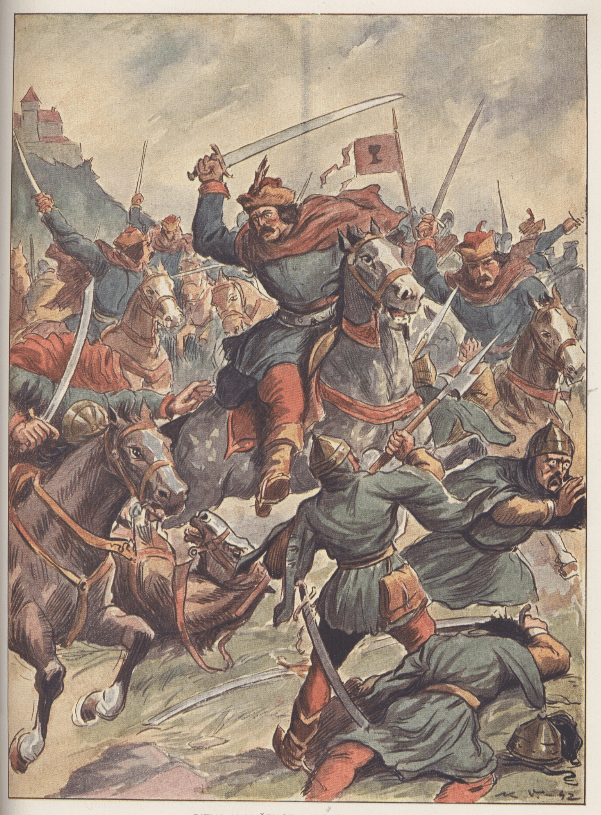
Jiskra managed to get an army of 5,000 Hussites together, and promptly occupied large parts of Upper Hungary, thereby cutting Poland and Hungary off from each other.
Władysław III disappeared following the Battle of Varna in 1444; Elizabeth had died in 1442. Jiskra became Chief Captain of Upper Hungary in 1445, but spent much of the next few years in on-off conflicts with János Hunyadi, who served as regent of Hungary under the still very young Ladislav.
Hunyadi resigned the regency in 1453; Ladislav stripped Jiskra of his position and property in Hungary, but called him back into service a year later to help against the former Hussite fighters who were plundering Upper Hungary.
Ladislav died unexpectedly in Prague in 1457, aged just seventeen. Jiskra opposed the new King of Hungary, Matthias Corvinus. He eventually capitulated in 1462, and agreed to pay tribute to Matthias.
In 1467, Jiskra represented Matthias Corvinus in peace negotiations with the Turkish Sultan, Mehmed II. We don’t know when he died, but there’s a text from 1468 referring to him being alive, and one from 1471 saying he was deceased.
A ‘vinohrad’ is a vineyard, and, as mentioned in several posts to date, this area used to be full of them. The street, we have to assume, is located below what used to be one.
A ‘vlna’ is a wave (it also translates as ‘wool’, but not here).
If you’re into the radio and living here, you may know, or want to know, the phrases ‘krátké vlny’ (short wave), ‘střední vlny’ (medium wave) and ‘dlouhé vlny’ (long wave).
And if you’re into physics, you might want to know ‘tlaková vlna’ (shock wave).
If you want to talk about Prague in 2002 or 2013, you may end up mentioning a ‘povodňová vlna’ (flood wave).
And if you’re one of those Praguers who wants to believe they are living in the dirtiest, worst, most dangerous city on earth, and get very upset if you point out that’s a load of bull (I know these people and so do you), you may rant about the smallest sign of a ‘vlna zločinnosti’ (crime wave).
And if you’ve ever gone to a sporting event, you may have ended up being part of a ‘mexická vlna’, which I’m not going to patronise you by translating.
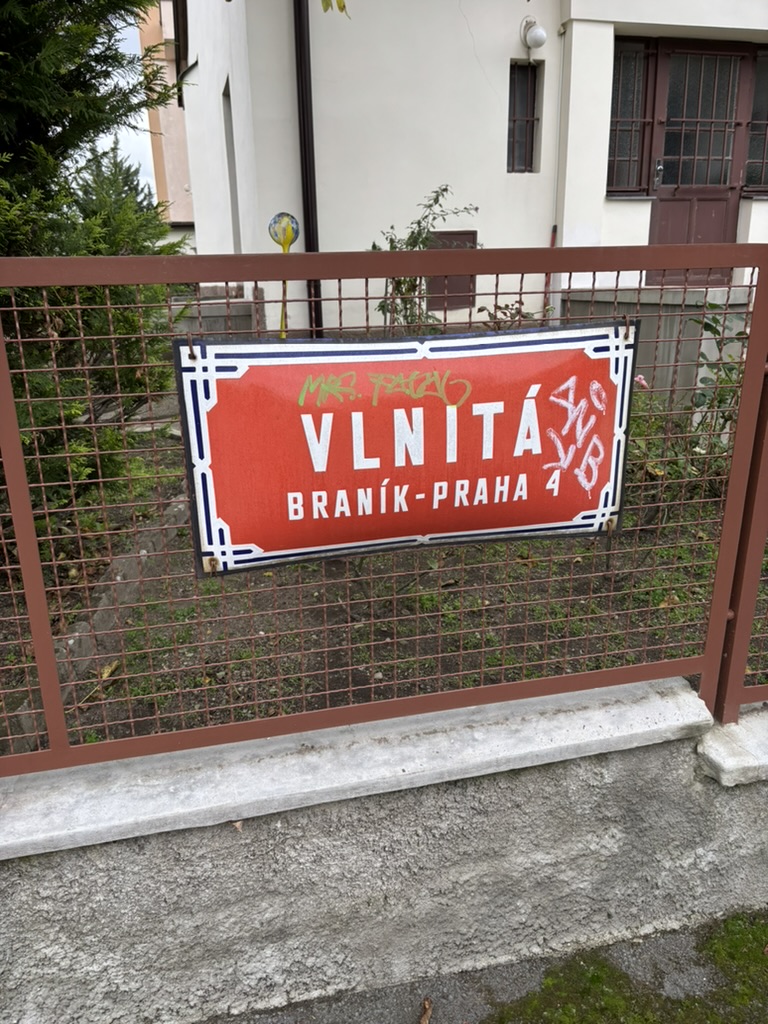
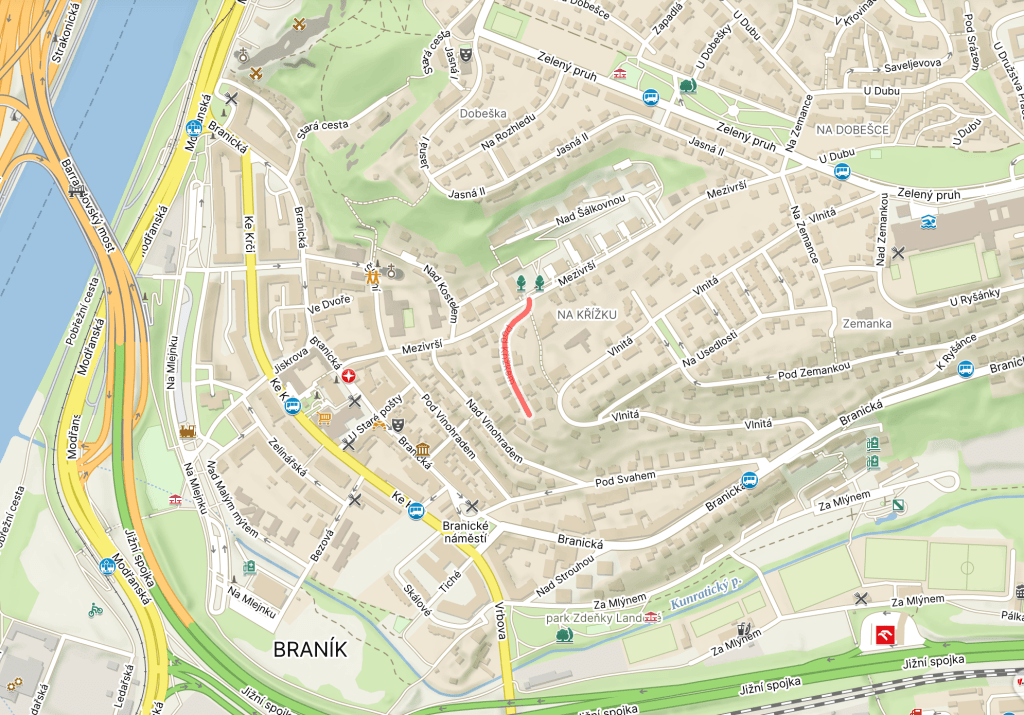
Meanwhile, something that is wavy or undulated would be ‘vlnitý’, as in a ‘vlnitá čára’ (a wavy line) and as in this street.
One last bit of vocabulary for today: ‘vlnitý plech’ is corrugated iron.
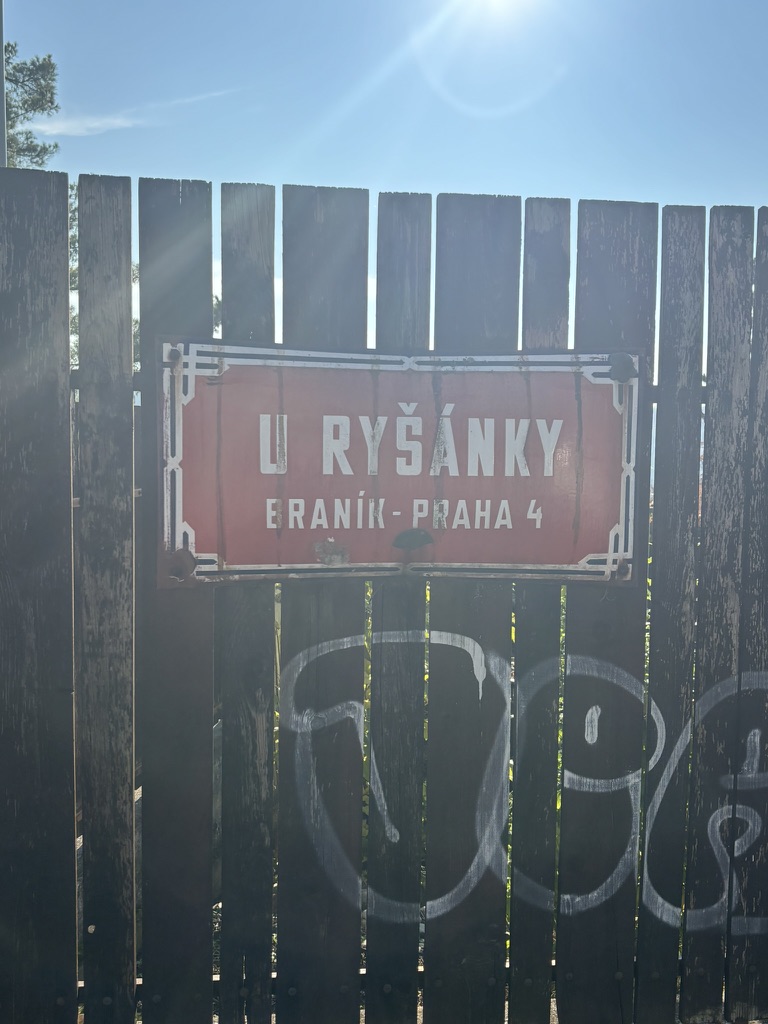
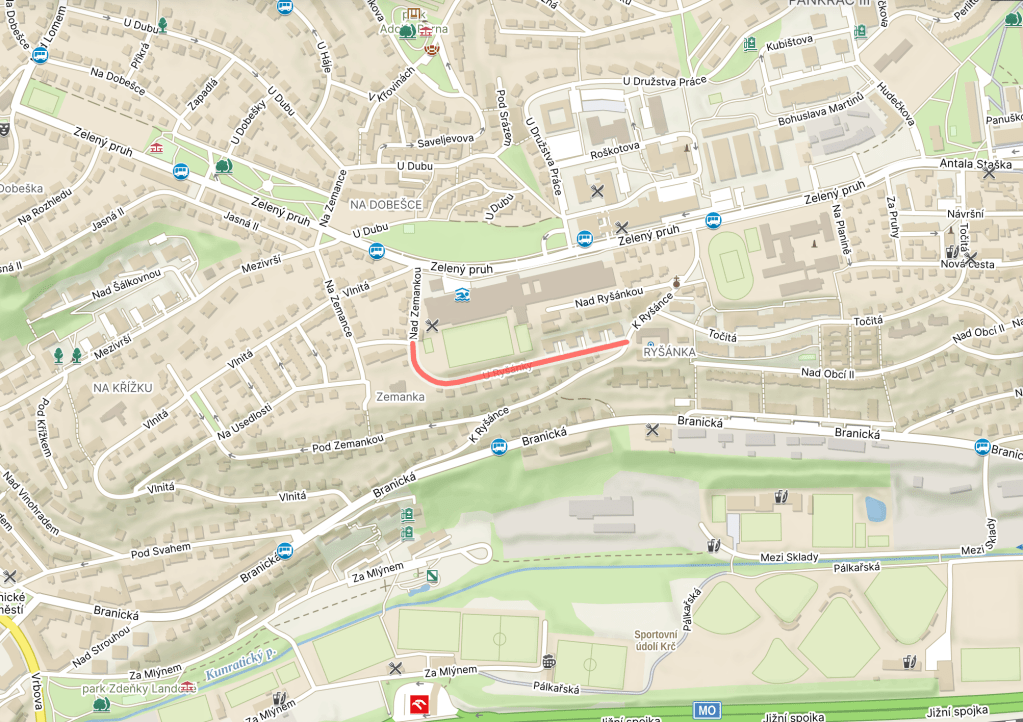
Ryšánka has also given its name to the surrounding area. The number 13 tram ran round here from 1938 to 1970, when it was closed, as the red line of the metro was under construction, and the authorities decided that having several metro stops near(-ish) made the tramline redundant.
Having spent many recent weekends round here to take photos and do research, I can confirm that I would quite like it if those trams still existed.
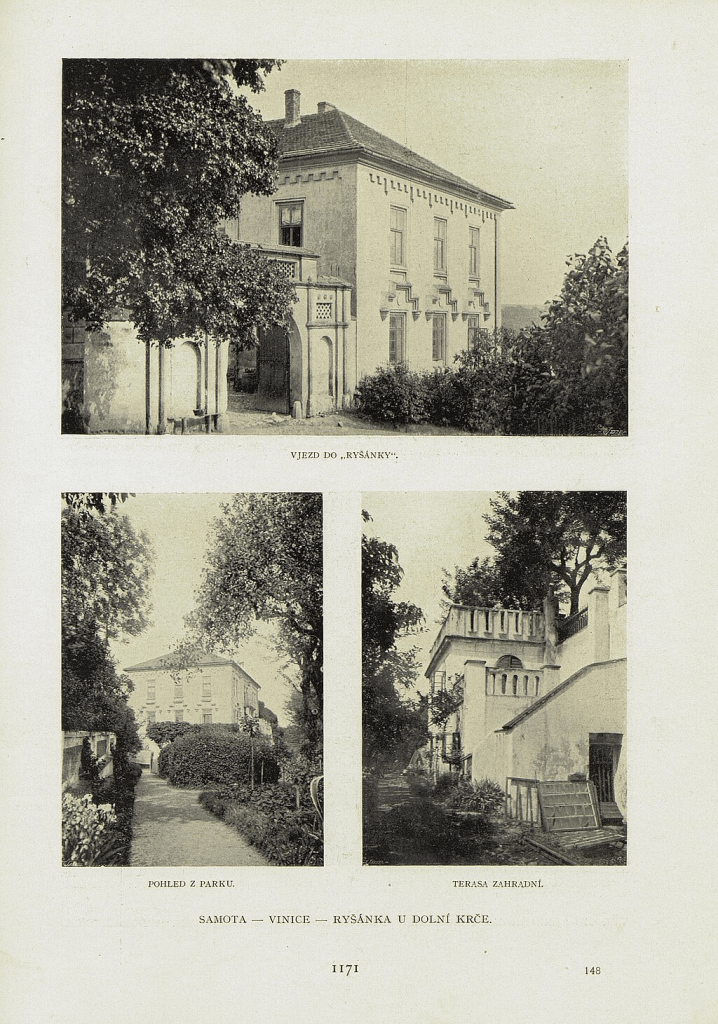
The residential building was converted into a chateau around 1860; the owner at the time was one Mr Ryšánek. The farmstead, which had initially been known as simply ‘Na Vinici’ (In the vineyard), was named after him.
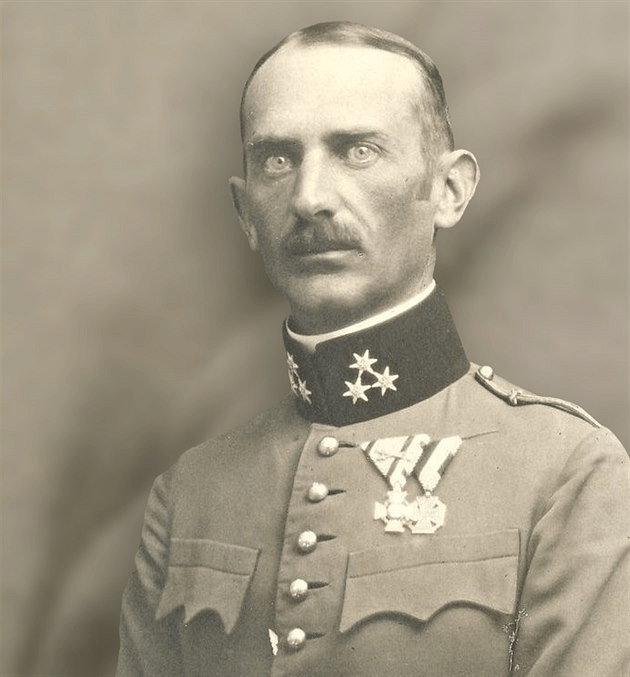
The final owner of the farmstead was Maxmilián Sanleque, who used it as his summer residence until 1945. His ancestors had arrived in Prague from France just before the French Revolution.
Sanleque himself fled in 1945 because he had just applied for German citizenship and feared the Czechs’ reaction to this. Among the documents he left there before he fled was a letter written by King Louis XVI (guillotined in 1793).
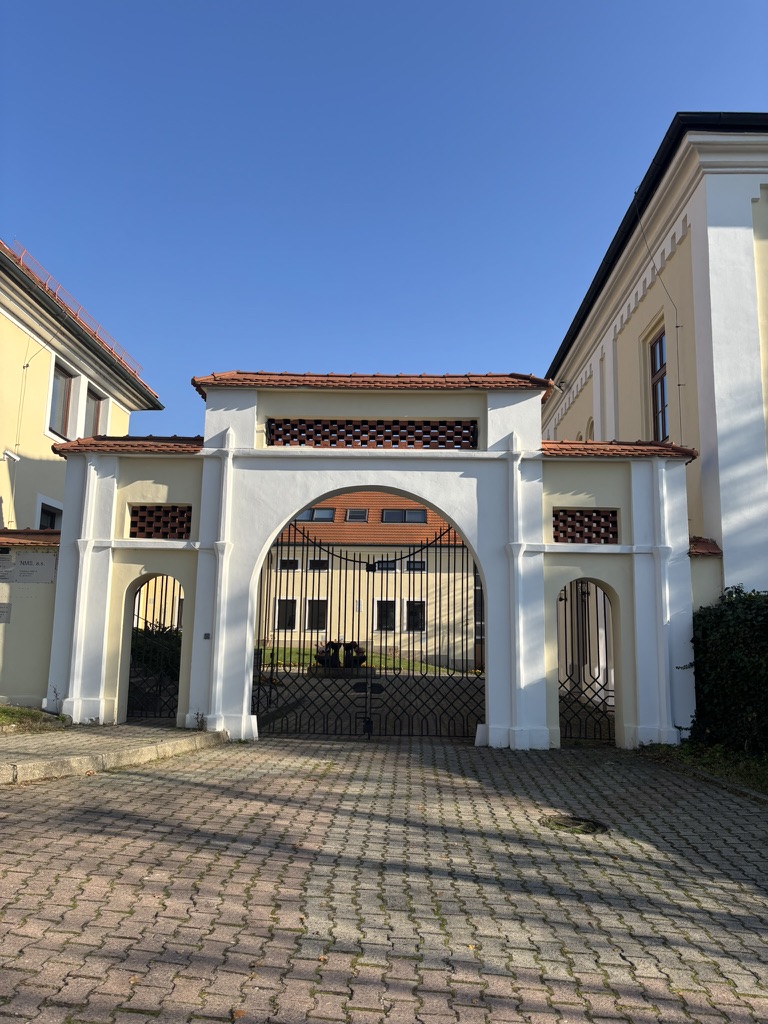
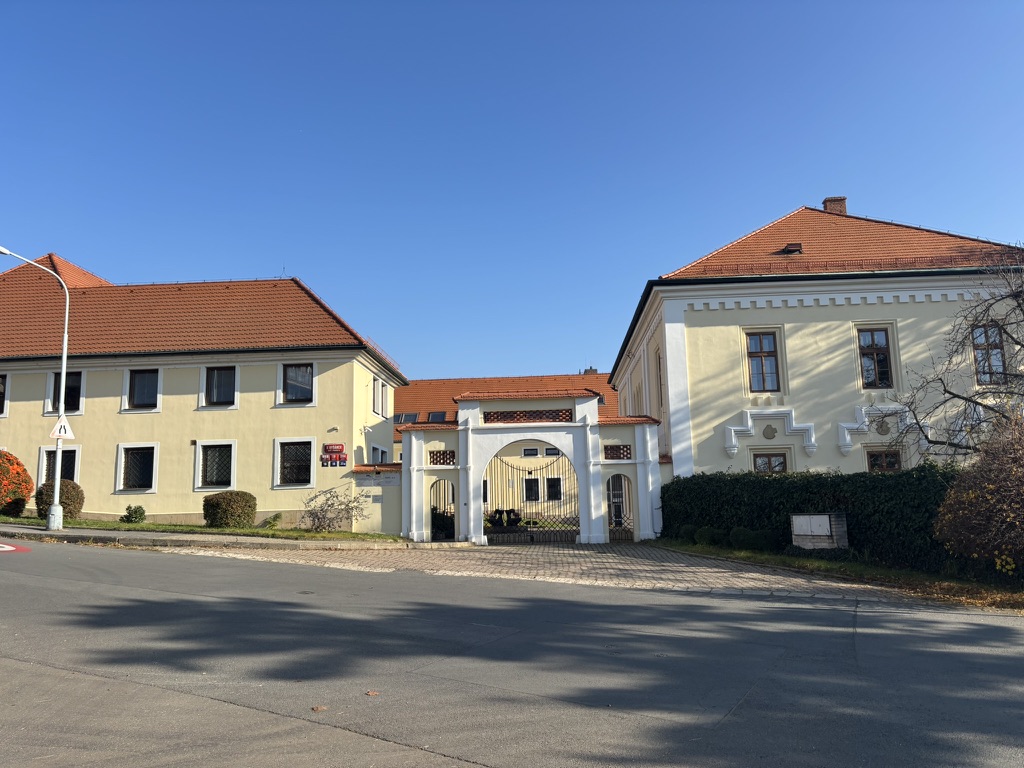
Falling into disrepair after this, the complex underwent major renovations from 1977 to 1984. The company responsible for these, PRAGOPROJEKT a.s., still has the address as its headquarters.
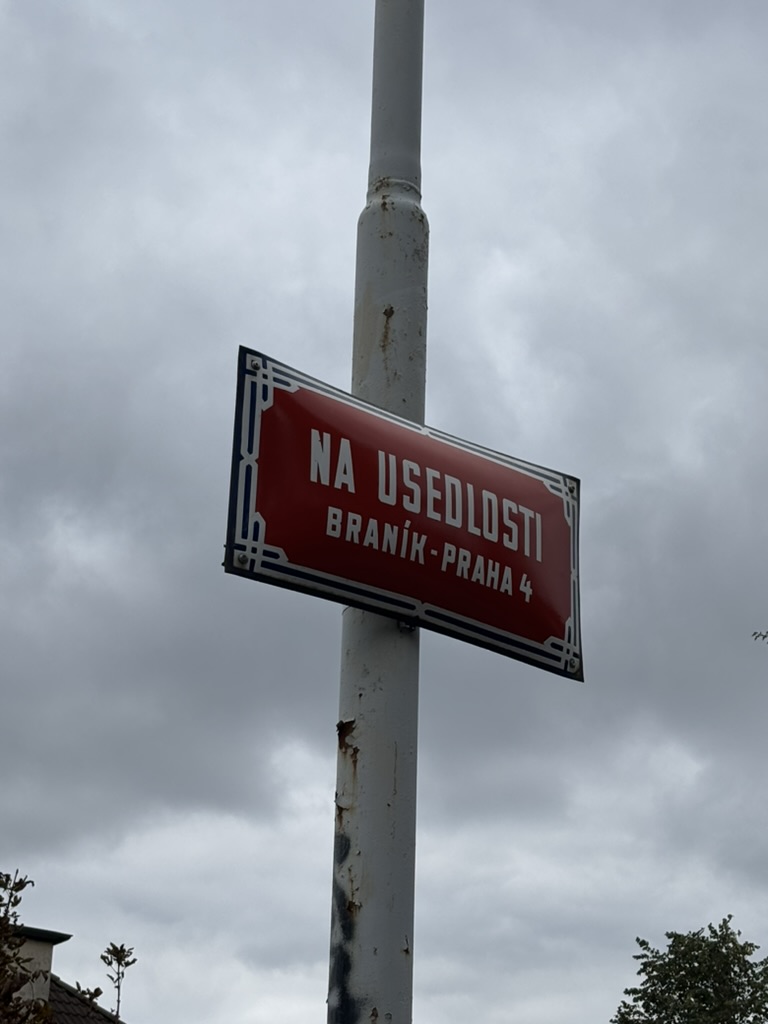
An ‘usedlost’ is a homestead, a farmstead or an estate.
In English, the difference between a homestead and a farmstead is that the former intends to feed its own inhabitants, whereas the latter’s role is agricultural production.
Czech makes no distinction between the two, which is why I’ve been using both translations interchangeably over the years (sorry).
The ‘usedlost’ in question is called Ryšánka, and I’m going to have to stop talking now, because there’s an upcoming street or two named after it (as is this one, of course, but less directly).
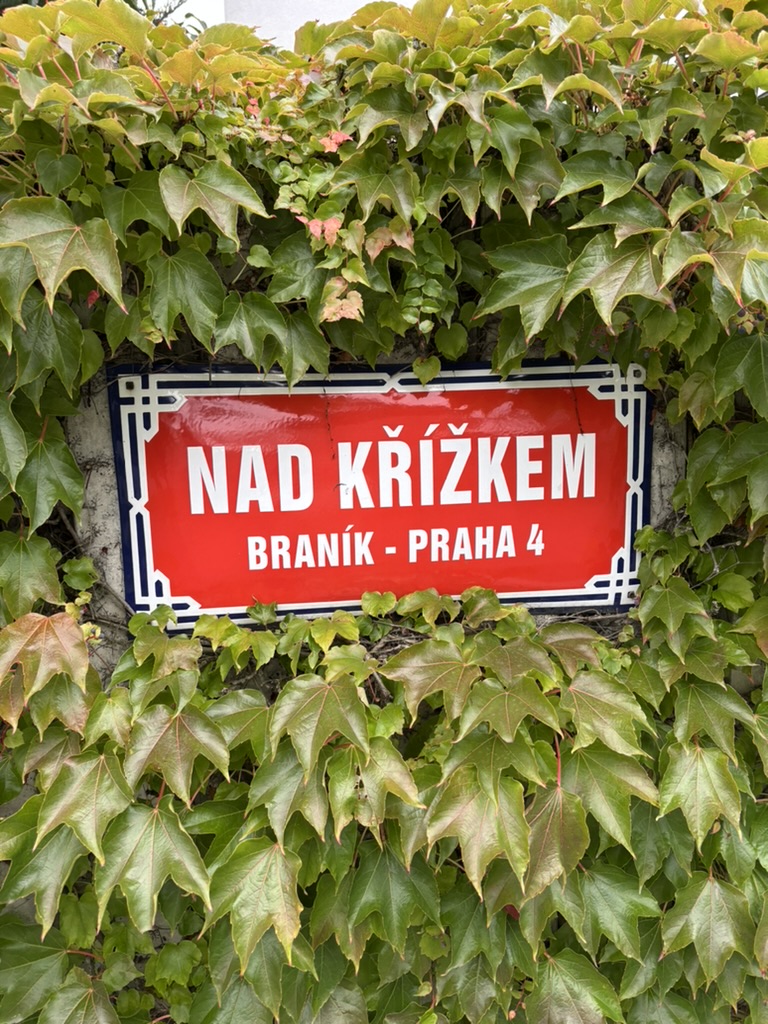
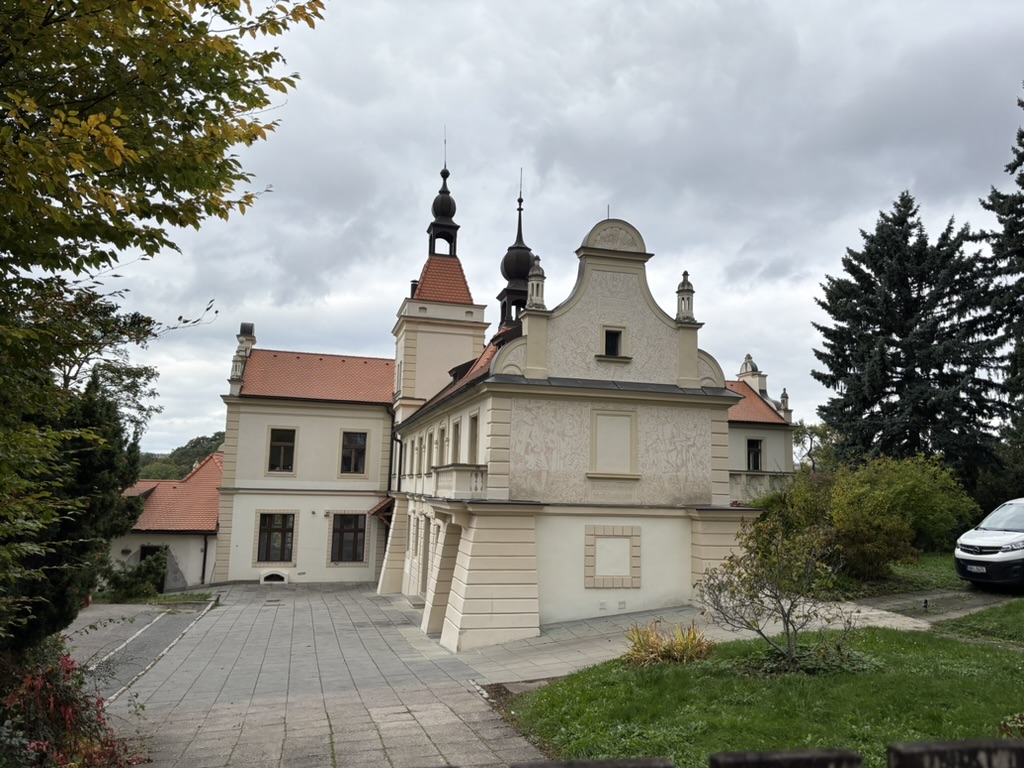
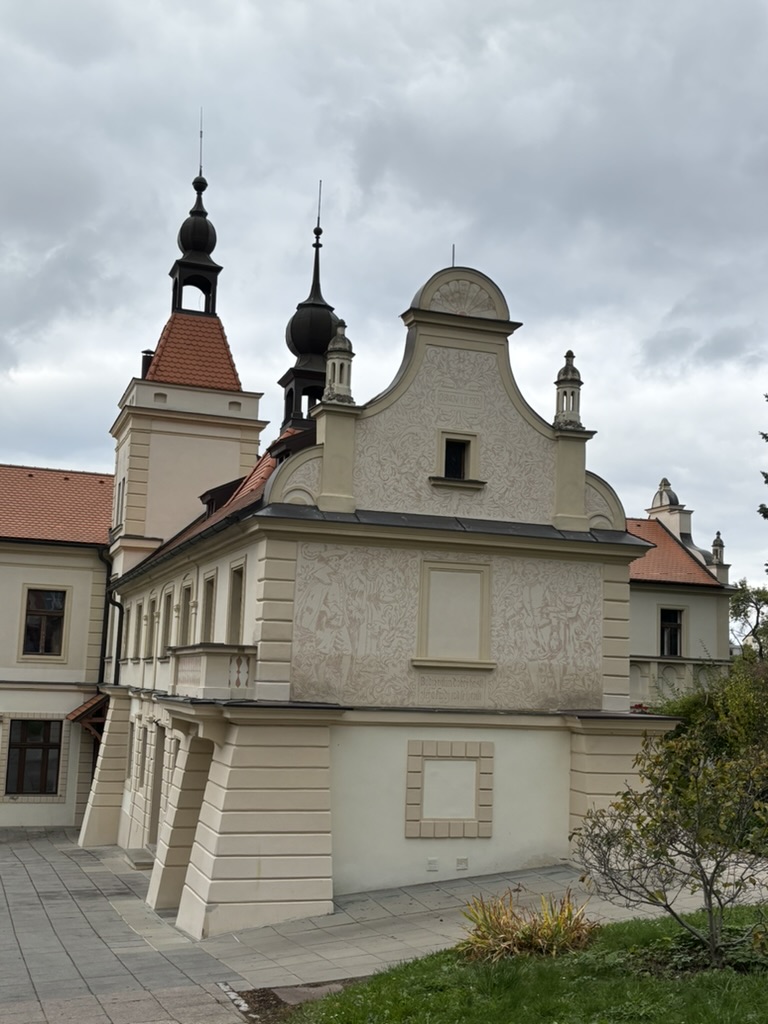
In the late 1800s, a Neo-Renaissance chateau, with quite an irregular form, was built round here on the site of an earlier building; it was named Na Křížku (‘At the small cross’). It originally served as a farmstead.
However, in the early 20th century, it was turned into a restaurant. In 1958, it was registered as a listed building. These days, it serves as office space.
In 2003, it underwent a through reconstruction under the watchful eye of the City of Prague. It’s pretty conspicuous, and apparently even visible from the other side of the Vltava.
However, Braník was outside the Prague city walls, and therefore suffered quite badly during the Thirty Years’ War. By 1650, reconstruction was sorely needed – and this is roughly when the Dominicans started building a court (dvůr; ‘Ve dvore’ means ‘In the court’).
Three of its four wings survive to this day; a bell tower was added in 1761.
The Prague Brewers’ Association operated a brewery here from 1899 to 1907 (if these words sound familiar, it’s because of yesterday’s posts); it was then the site of the Eden Cinema for fifty years from 1919.
As you can see, it’s now neither being used for anything nor in great condition. There’s been recent-ish (2019) talk of turning it into a magistrate’s court, or into a Waldorf school, but neither plan has materialised.
At some point, they had a water mill – a vodni mlýn – built. It lasted a good while, being purchased by the Prague Brewers’ Association in 1899; they operated a brewery (what else?) there until 1907.
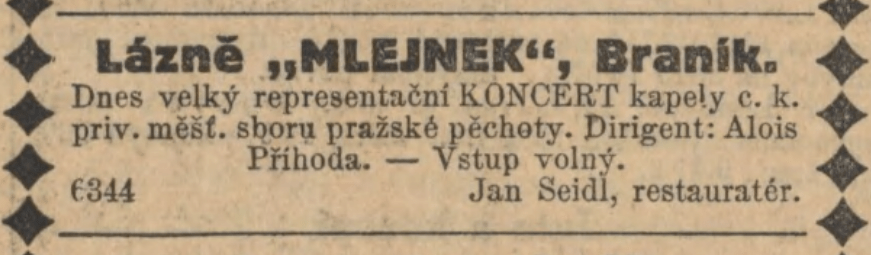
By 1914, there was a restaurant here called Lázně Mlejnek (the Mlejnek Spa), as evidenced by this advertisement.
In 1919, a swimming pool was established round here by the river, and was called Na Mlýnku, and the mill was rebuilt (but didn’t serve as a mill any longer).
All of this went for good in 1978, when Barrandov Bridge was constructed.
Nad kostelem was built in 1934. And that’s a particularly satisfying street sign pic.
‘Nad kostelem’ translates as ‘Above the church’. The church in question is Kostel svatého Prokopa v Braníku (the Church of St. Prokop in Braník), the tower which you can see in this picture.
The single-nave, Romanesque Revival-style church was consecrated in 1901; its tower was completed in 1903. The architect was Rudolf Vomáčka (1847-1926).
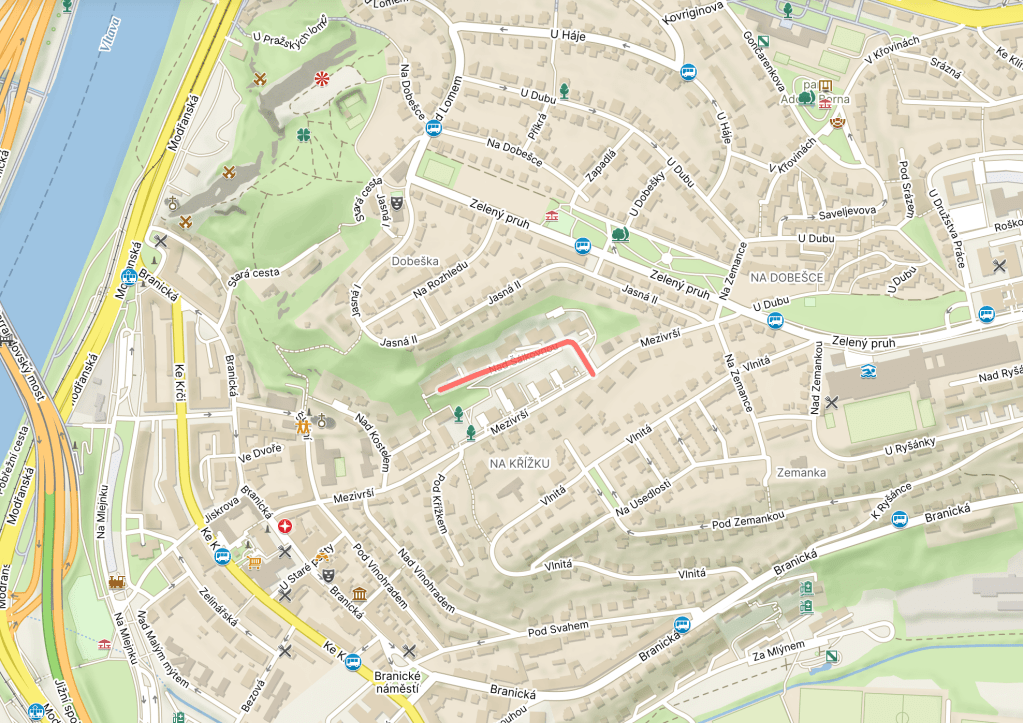
Vineyards existed around here at least as far back as 1400. About four hundred years later, a farmstead was set up here by an owner called Mr Šálek. Šálek was Jewish and, for a time, the farmstead included a synagogue.
After World War One – by which time the farmstead was owned by a Mr Vosátko – there were plans to sell it to the City of Prague, but this didn’t happen.
It was ultimately expropriated in 1945, by which time it was in a terrible state, and was replaced by, amongst other things, a kindergarten, presumably this one: https://www.msmezivrsi.cz/.
Until 1947 (other than during the Nazi occupation), it was called Kateřinská, supposedly an old name for the immediate surrounding area. One has to assume there was a church or other institution named after St Catherine.
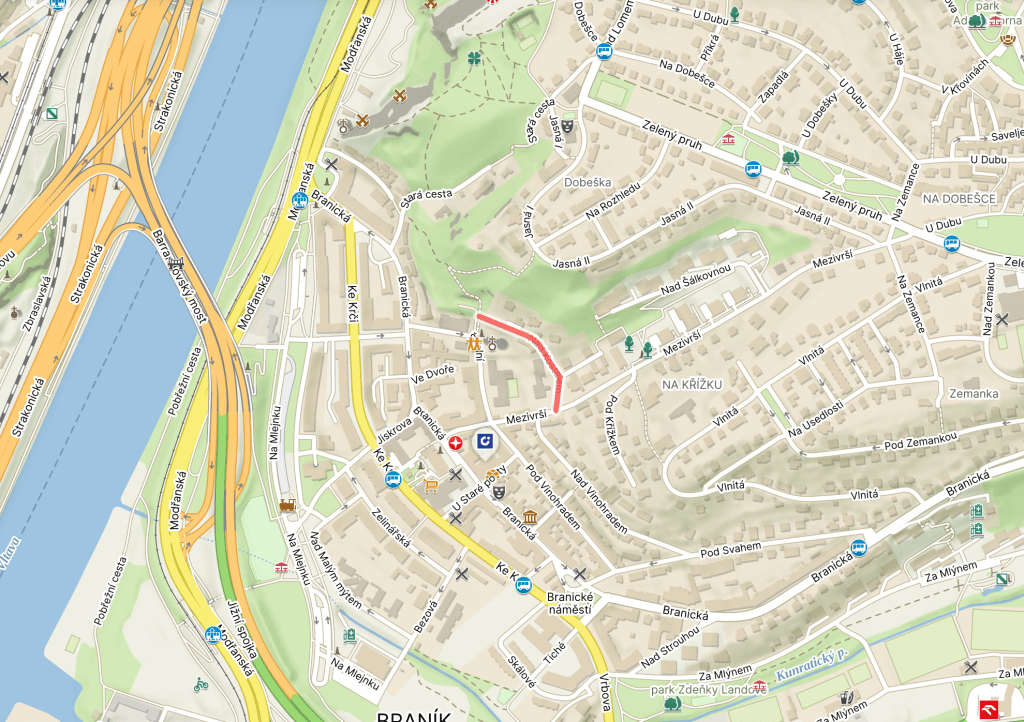
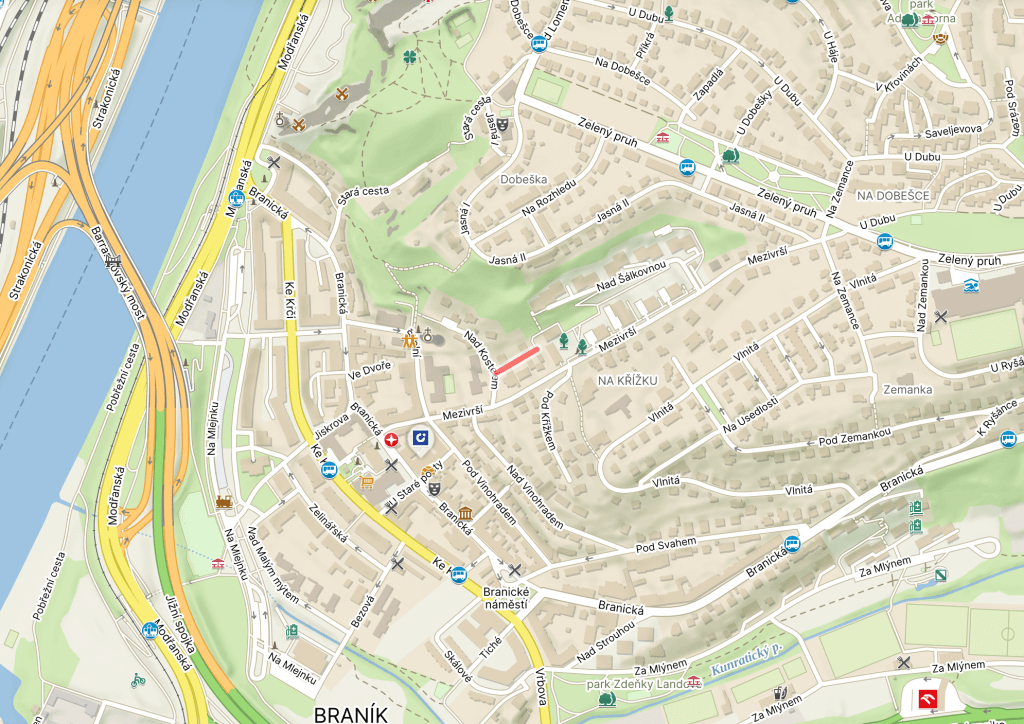
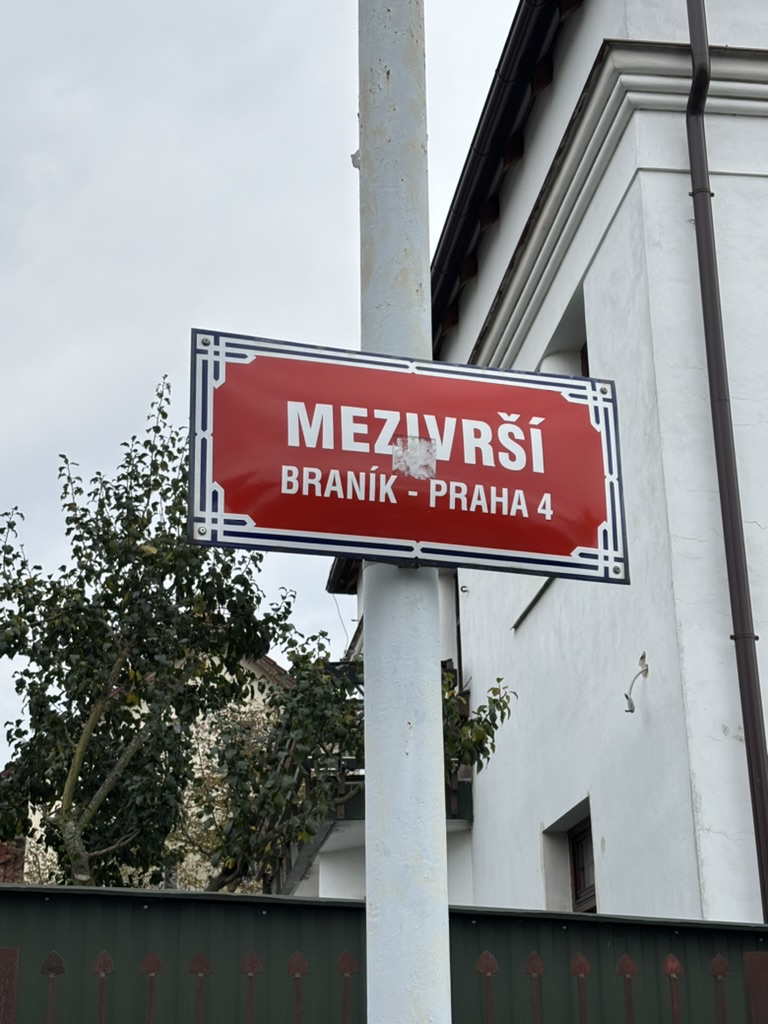
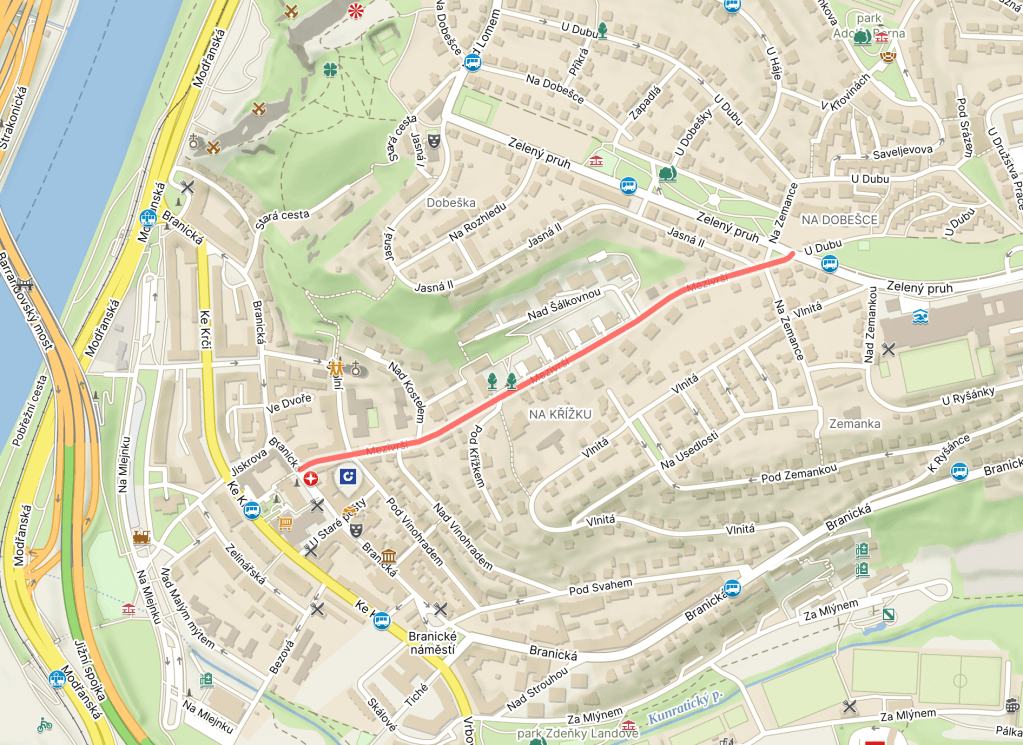
Mezivrší is steep-ish, and its name reflects this, translating as ‘between the hills’ (well, it sort of reflects this – I walked up it and the start of the route seemed decidedly low down).