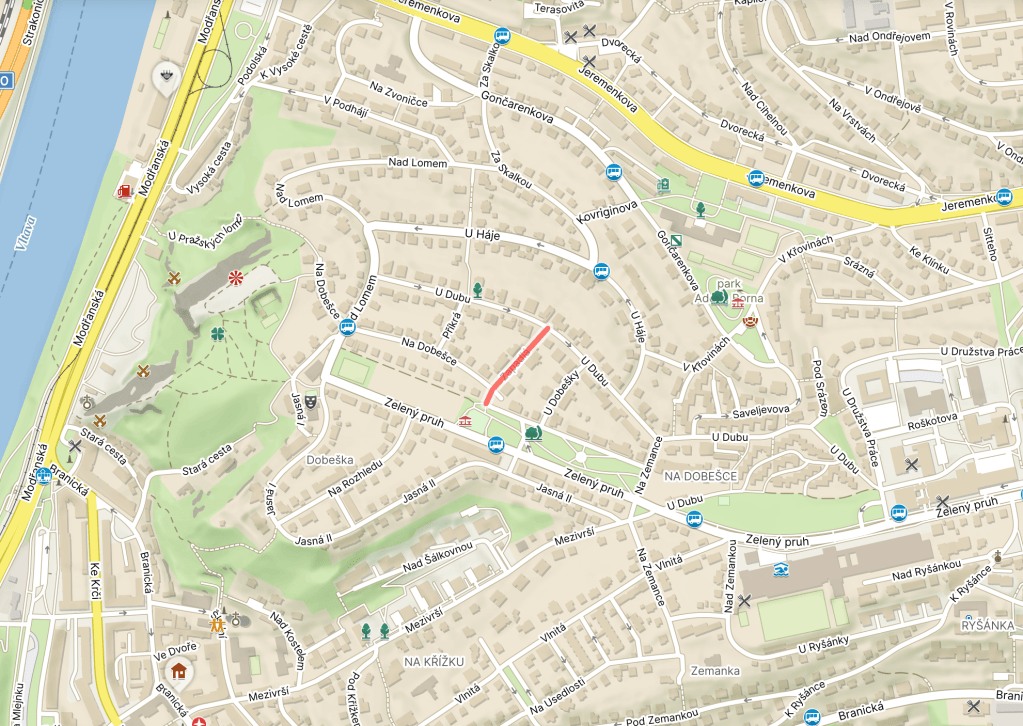
You’ll often hear it mentioned how the First Czechoslovak Republic was (after 1933) the only democratic country in the region, and how it was one of the world’s ten most industrialised countries. Cue nostalgia (also, it seems it was ‘only’ 14th).
One of the facts that this needs to be balanced against is the Great Depression, which hit Czechoslovakia hard, especially around 1933, when industrial production almost halved.
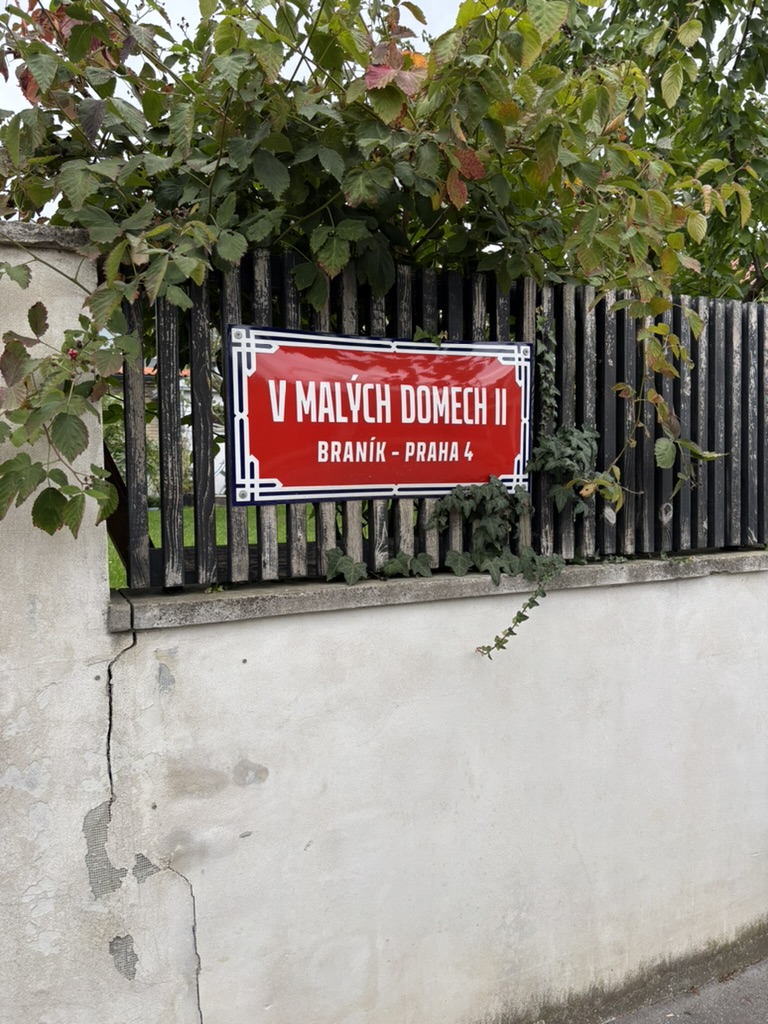
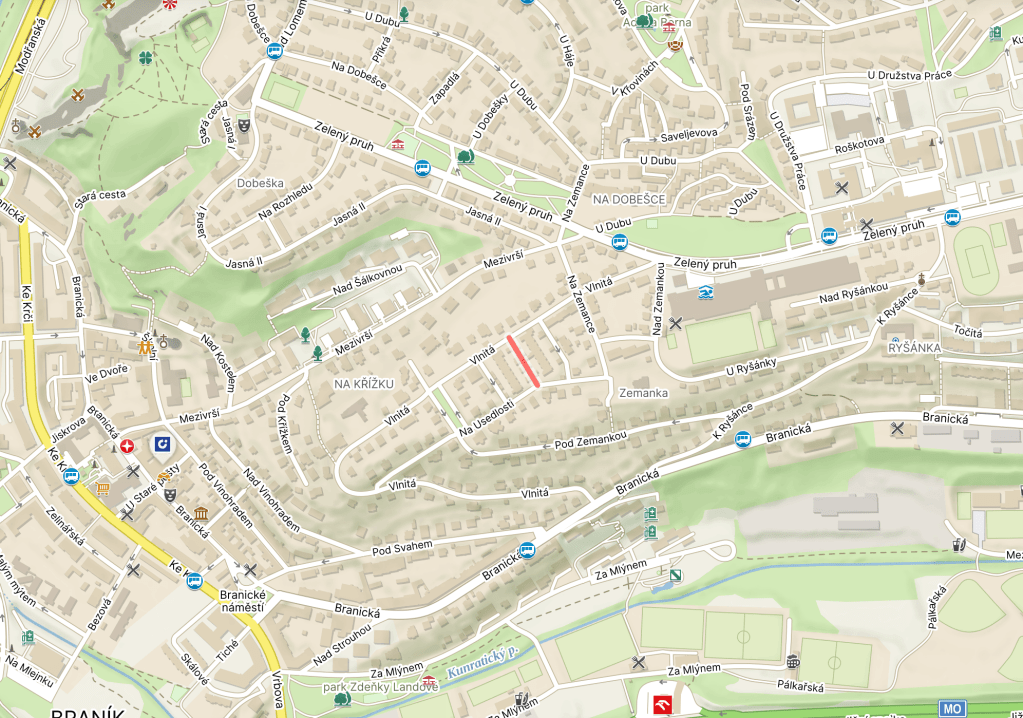
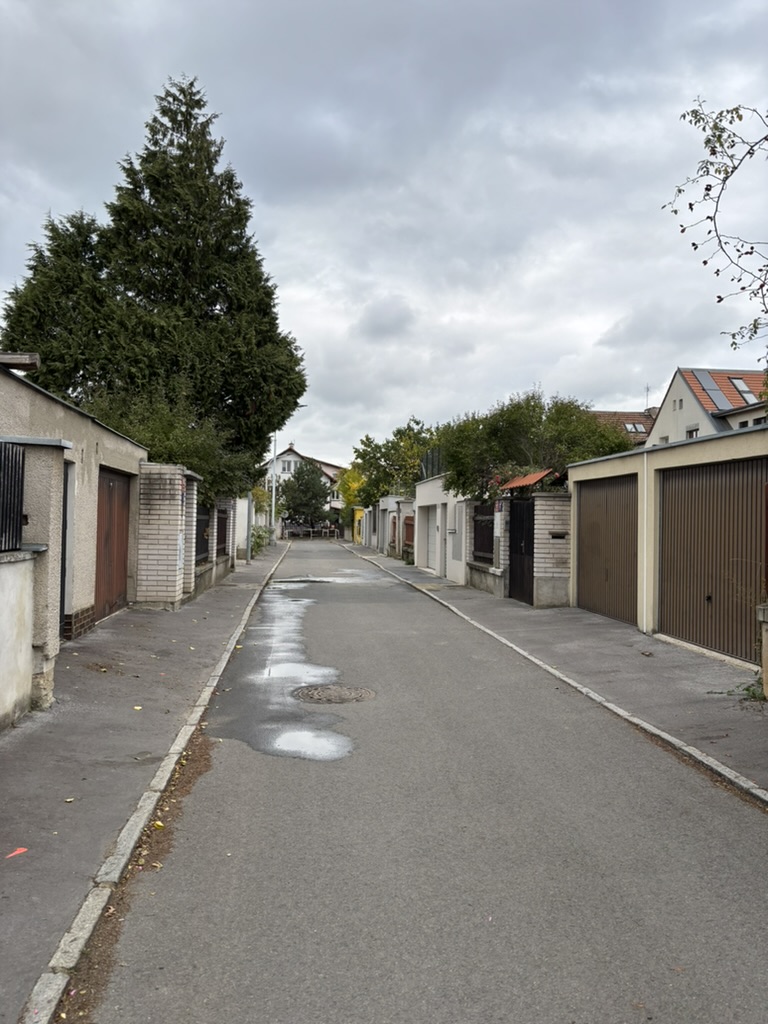
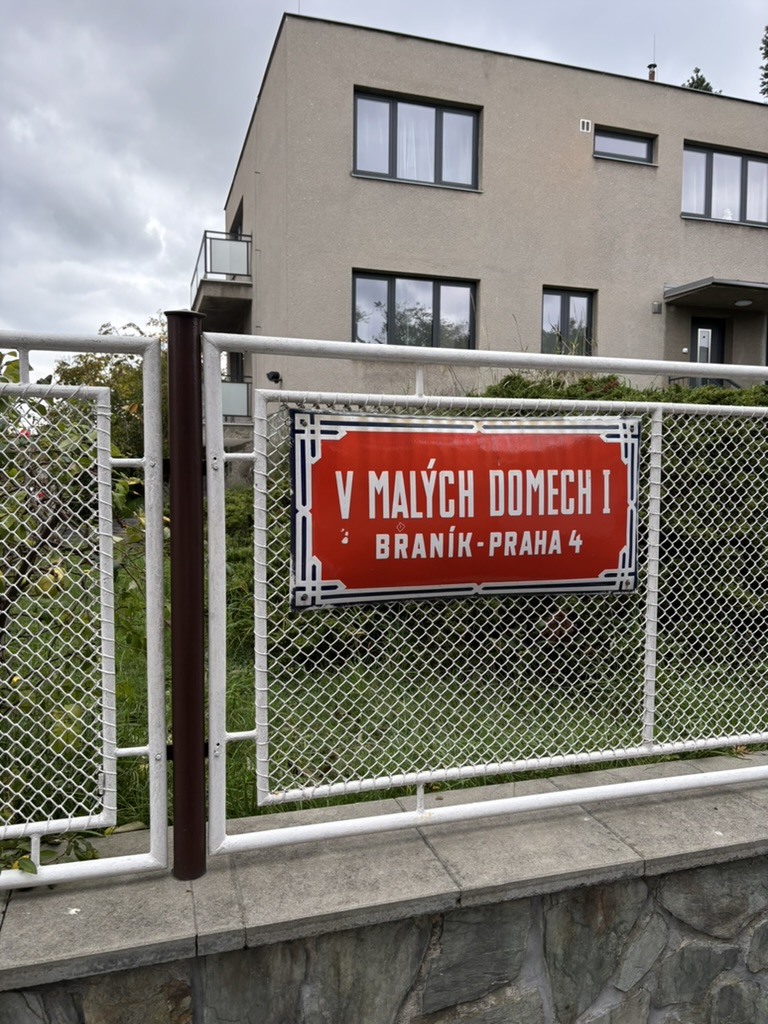
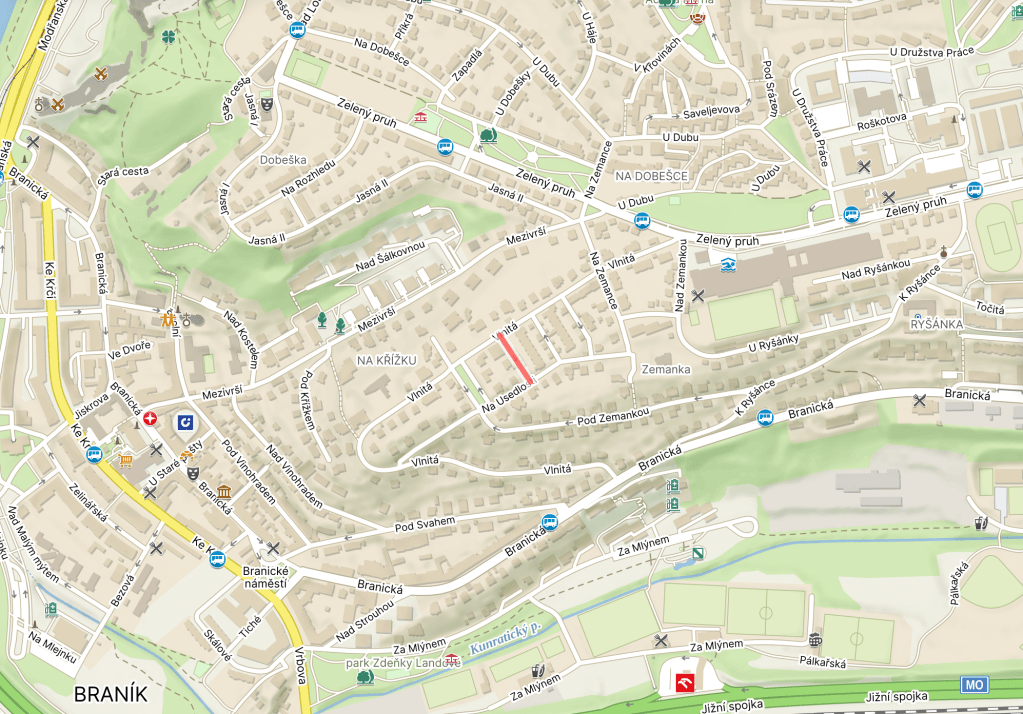
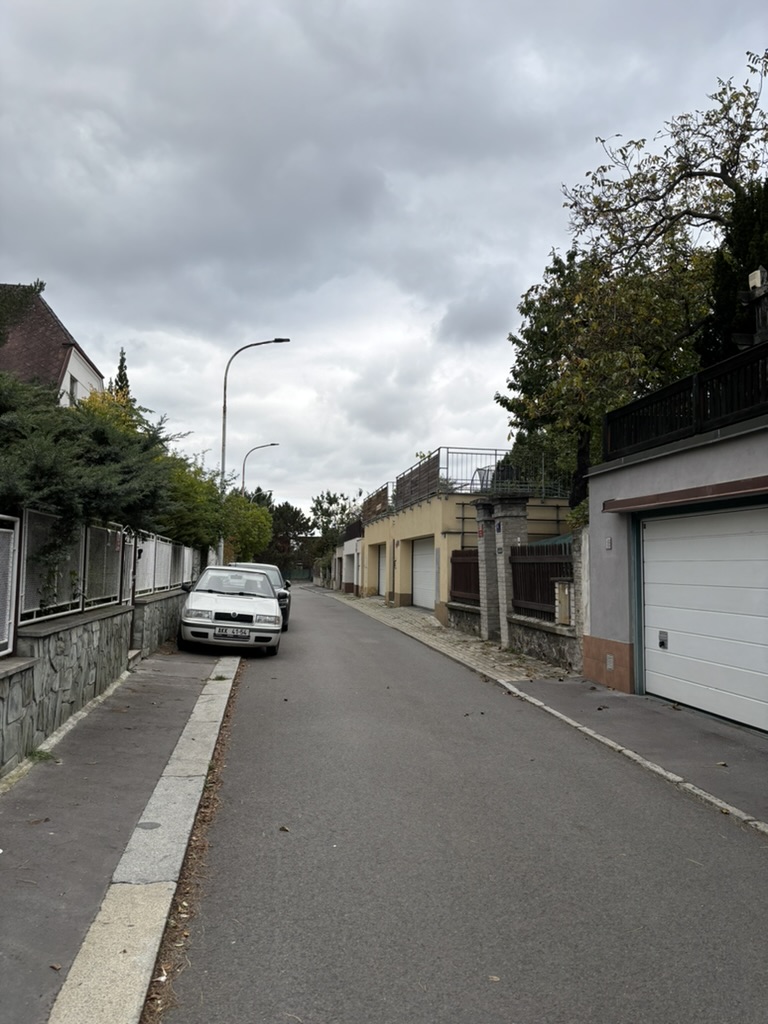
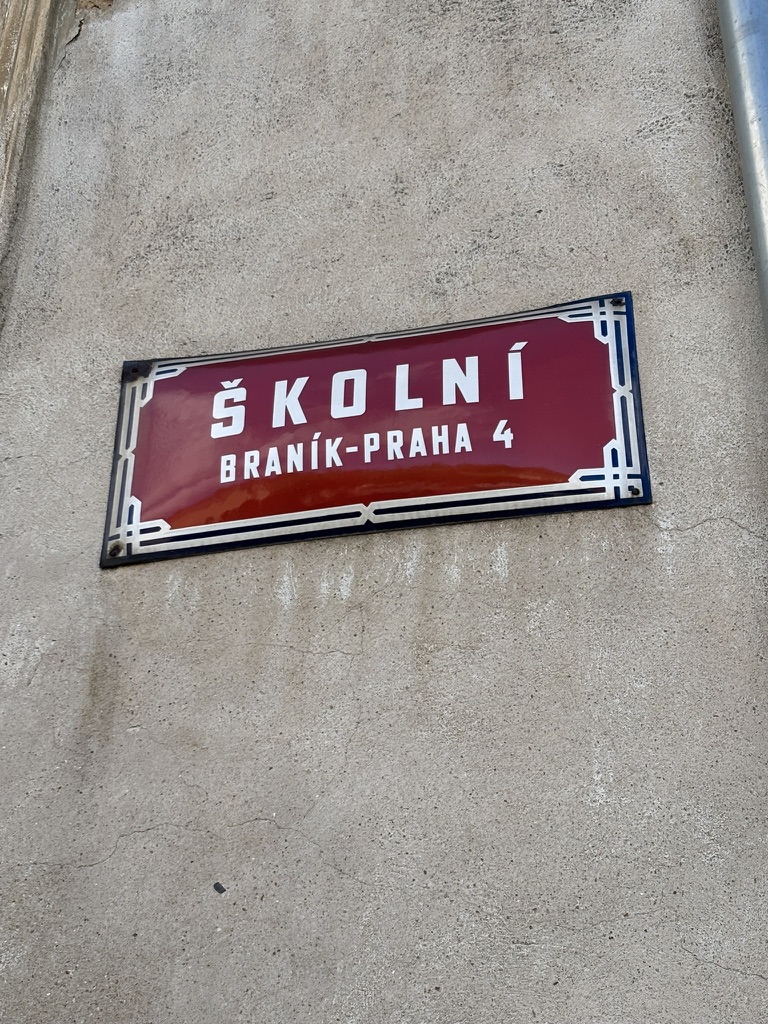
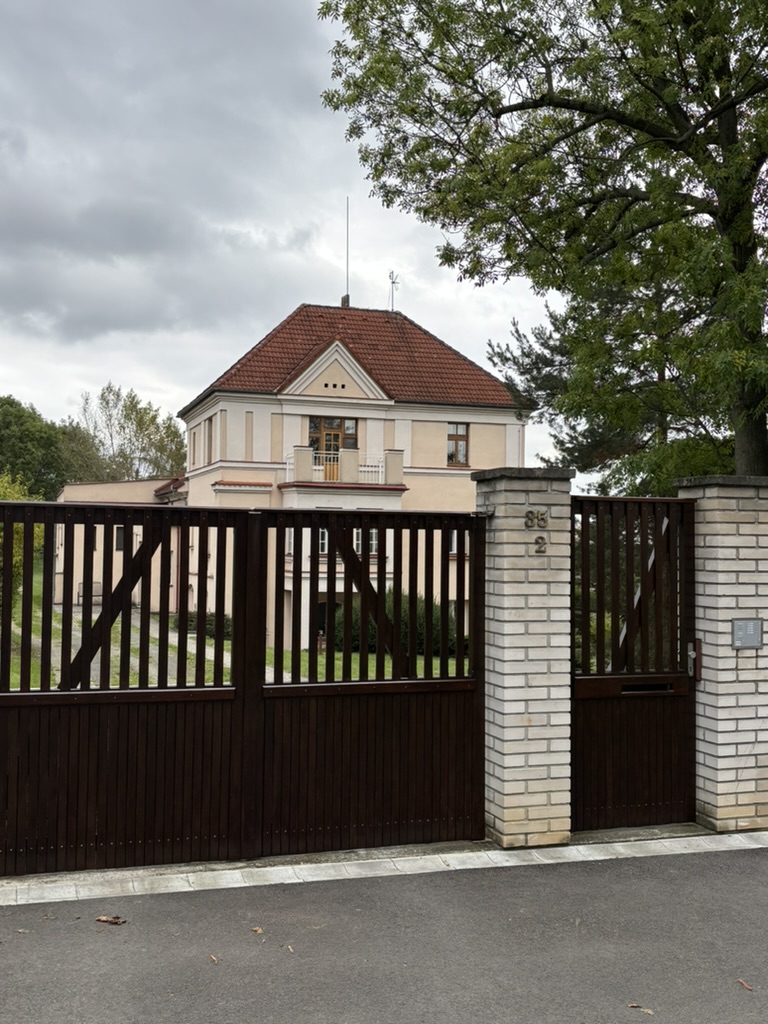
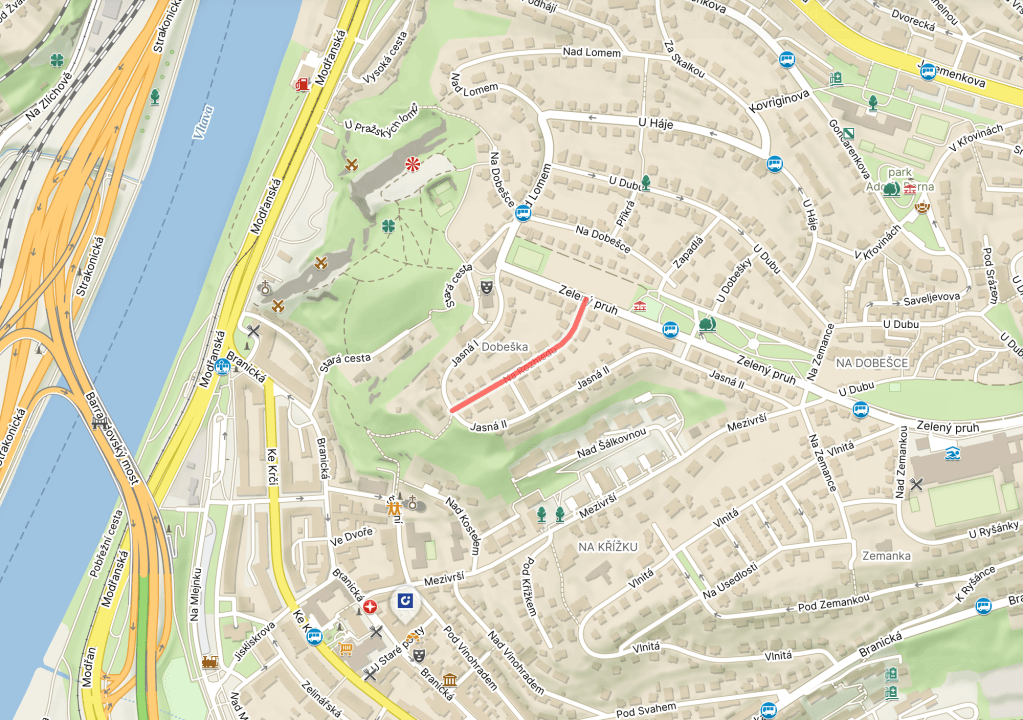
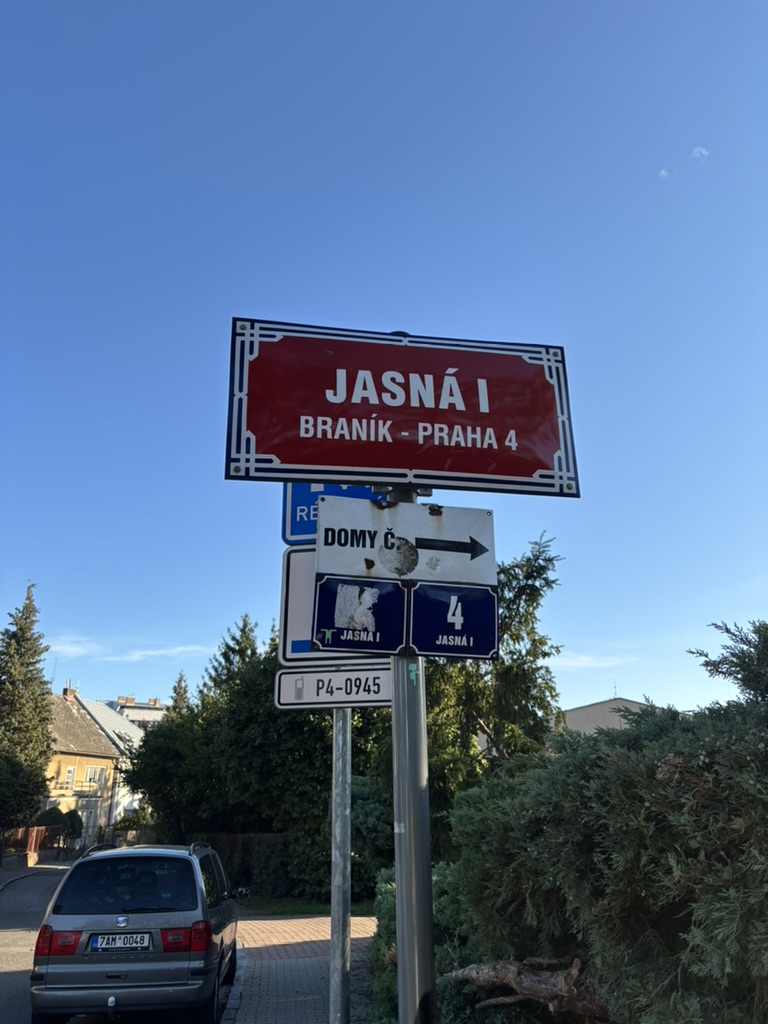
This meant downsizing – including when it came to building new homes. The houses in this street – while not tiny – can’t be compared to the villas that had sprung up in the 1920s. The street name translates as ‘In the small houses’ (I).
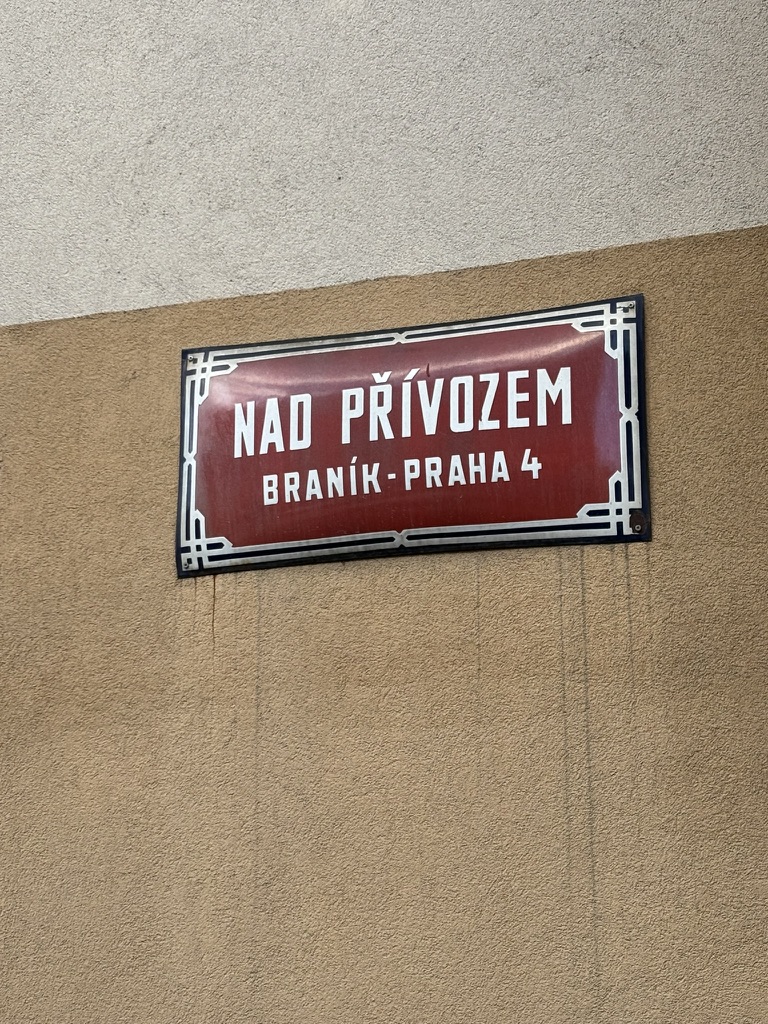
Czech Wikipedia lists 17 current ferry routes across the Vltava – and 85 which are no more. Of the 17 remaining ones, only six are in Prague, and one is just for tourists.
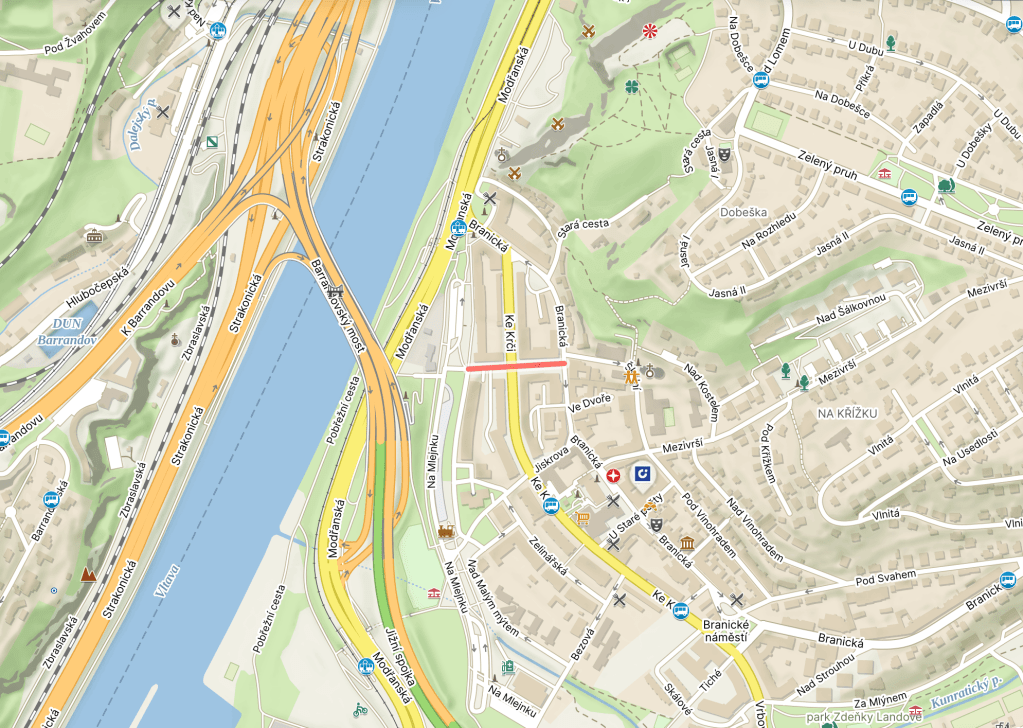
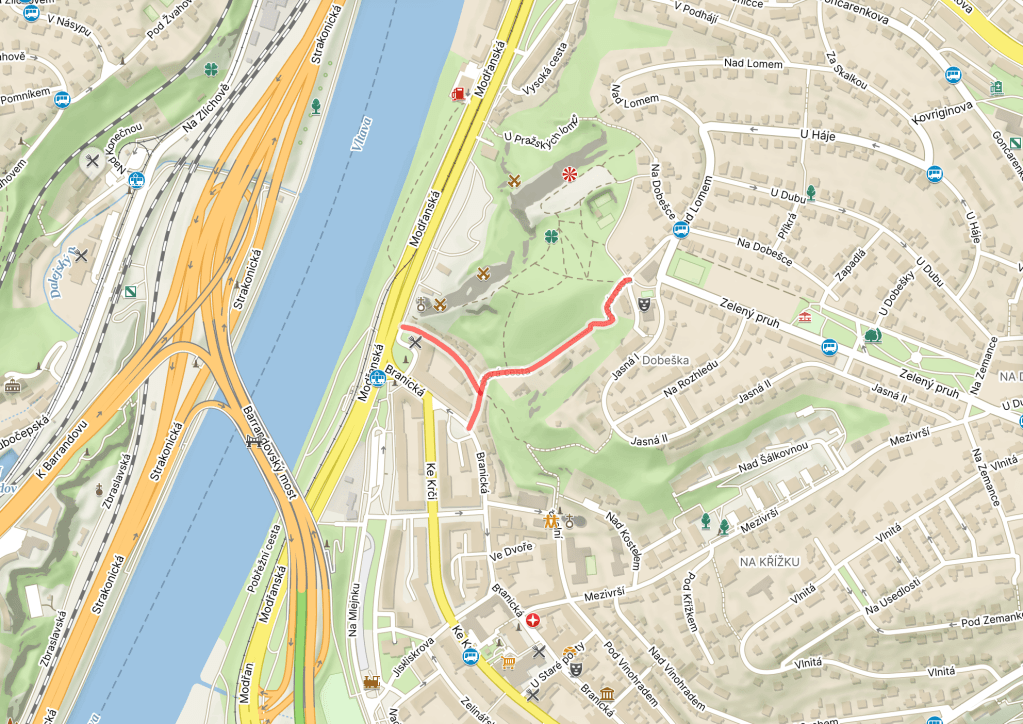
Two ferries used to cross the Vltava to/from Braník: one, sailing to Hlubočepy, ran from 1835 to about 1979; the other, sailing to Zlíchov, ran from 1935 to 1966.
The end date of ‘about 1979’ is not coincidental – it was in 1978 that work started on Barrandov Bridge, which will get its own post soon-ish. It’s not a beauty, but I get how a ferry wouldn’t be able to transport 142,000 cars a day (the stat for 2023) quite as effectively.
‘Školský’ – by far the rarer of the two – relates to education and schools in general. So, ‘školský zákon’ is ‘school law’ and the ‘školský úřad’ is the ‘education office’. And you can probably guess what the ‘školský systém’ is.
‘Školní’, meanwhile, relates to a school. A ‘školní rok’ is the school year, a ‘školní aktovka’ is a schoolbag, and the ‘školní řád’ is the school rules.
Other examples are ‘školní lavice’ (school desk), ‘školní mládež’ (schoolchildren), ‘školní potřeby’ (school supplies), ‘školní předmět’ (school subject), ‘školní výlet’ (school trip), and – the one we all used to dread – your ‘školní vysvědčení’, or school report / mark card.
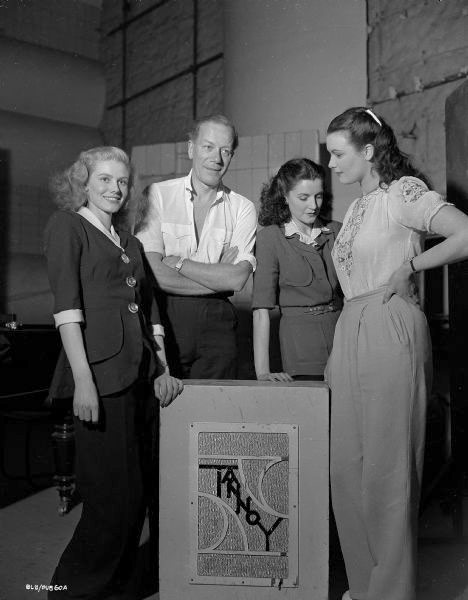
Interesting phrases include ‘povinná školní docházka’ – frequently translated as ‘compulsory education’, but literally ‘compulsory school attendance’ and the ‘školní rozhlas’, AKA the Tannoy over which a voice might boom ‘COULD XXX PLEASE COME TO THE HEADMASTER’S OFFICE IMMEDIATELY’ or similar.
I didn’t know until today that Tannoy was a British manufacturer founded in 1926, or that many English speakers in the rest of the world would have no idea what a Tannoy is. To those people, therefore: sorry, intercom.
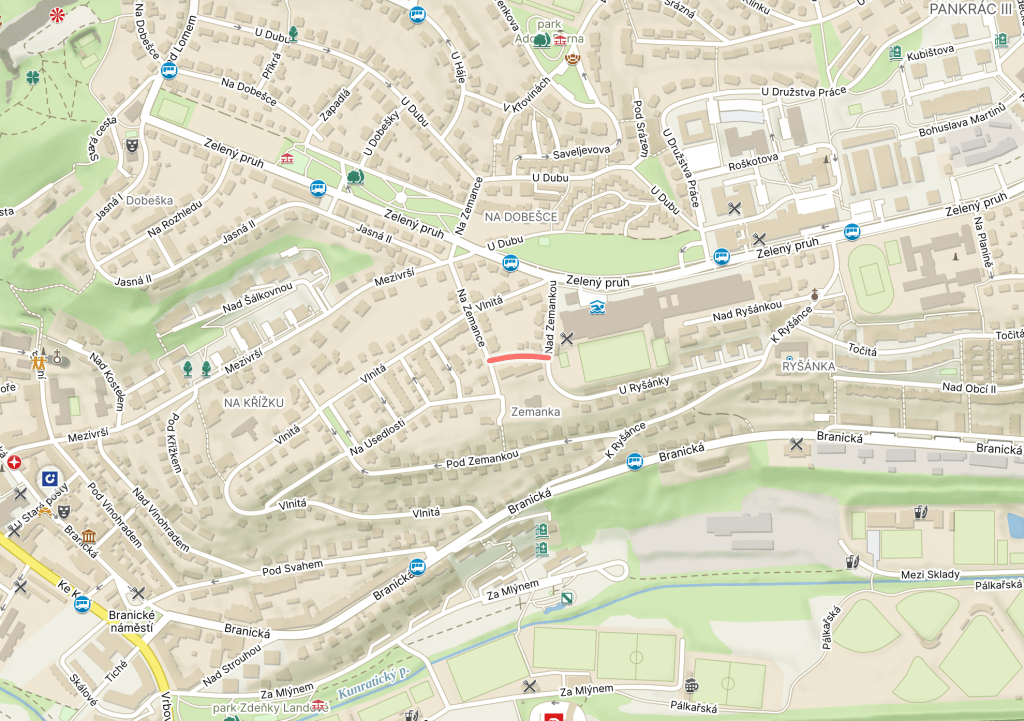
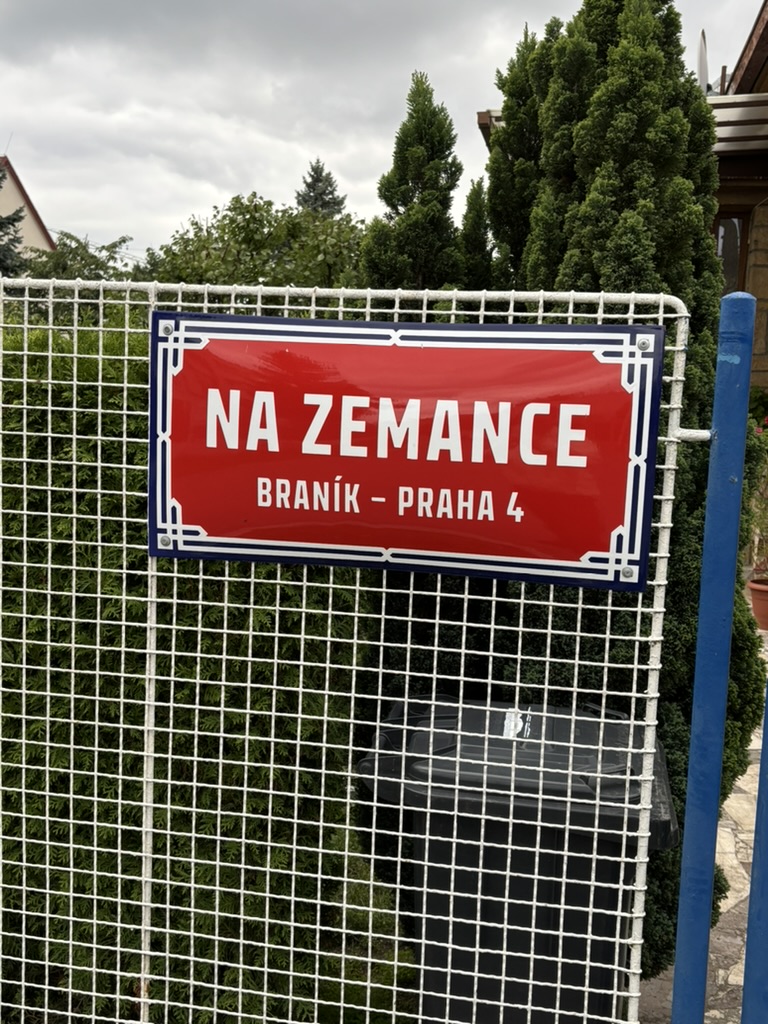
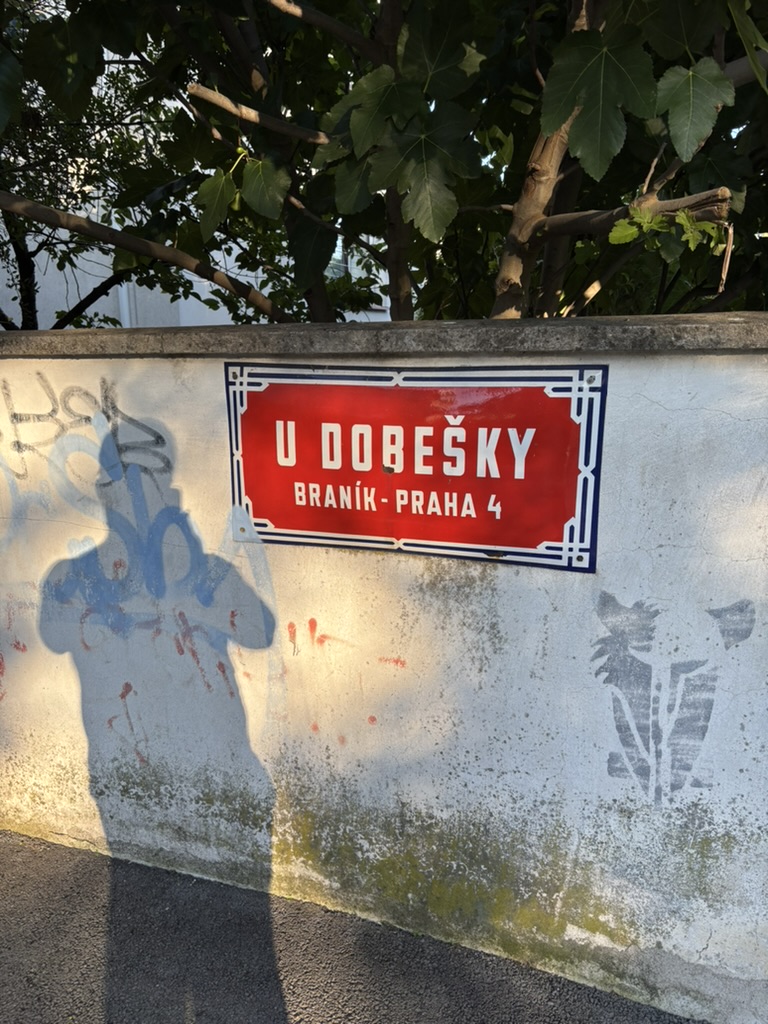
A vineyard was probably in place here as far back as the Middle Ages. It survived several centuries, but took a bit of a beating in the War of the Austrian Succession (1740 to 1748).
Reduced from being a vineyard to just being a field, it was purchased by one Mikuláš Jan Miksa in 1756. The vineyard would be revived around 80 years later – but more on that on a later day.
It’s also around the 1840s that a farmstead was built here, and was named Zemanka (it’s not clear which person called Zeman this was presumably named after). It was rebuilt around 1900, and again in 1920.
The 1920s classicist upgrade is what you see before you today (it’s now a villa).
In 1941, a street, intended to be called Weilburgova, was built. It was named after Jan Weilburg z Widy, who, in the late 1400s, was the highest scribe in the Old Town. We have to assume he was a German speaker, not only because of his name, but because of who was in charge of Prague in 1941.
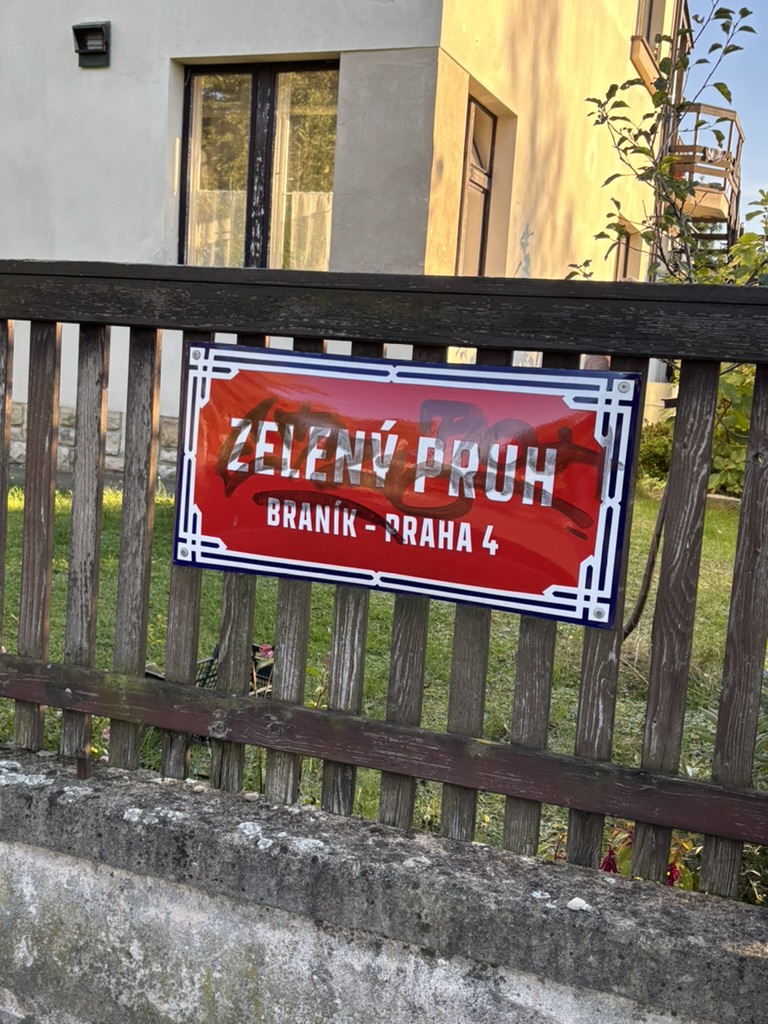
It seems this name was never properly adopted, and, in 1947, the street was renamed (or just plain named?) as Zelený pruh – which translates as ‘Green strip’, denoting the quite pleasant, park-like area between the road parts.
Back in 1941, another street was planned to the east of may-never-have-been-Weilburgova. Its planned name was Wernerova, and good luck narrowing down all the Mr Werners who that could have been named after.
In 1947, may-never-have-been-Wernerova was connected to U Krčské vodárny II. Nothing on that street or name for now, as this is not the place for spoilers.
Part of the street then became part of Antala Staška street. Same lack of information from me for now, for the same reason as described above.
But, in 1952, this street, never exactly treated as much of an individual, became part of Zelený pruh.
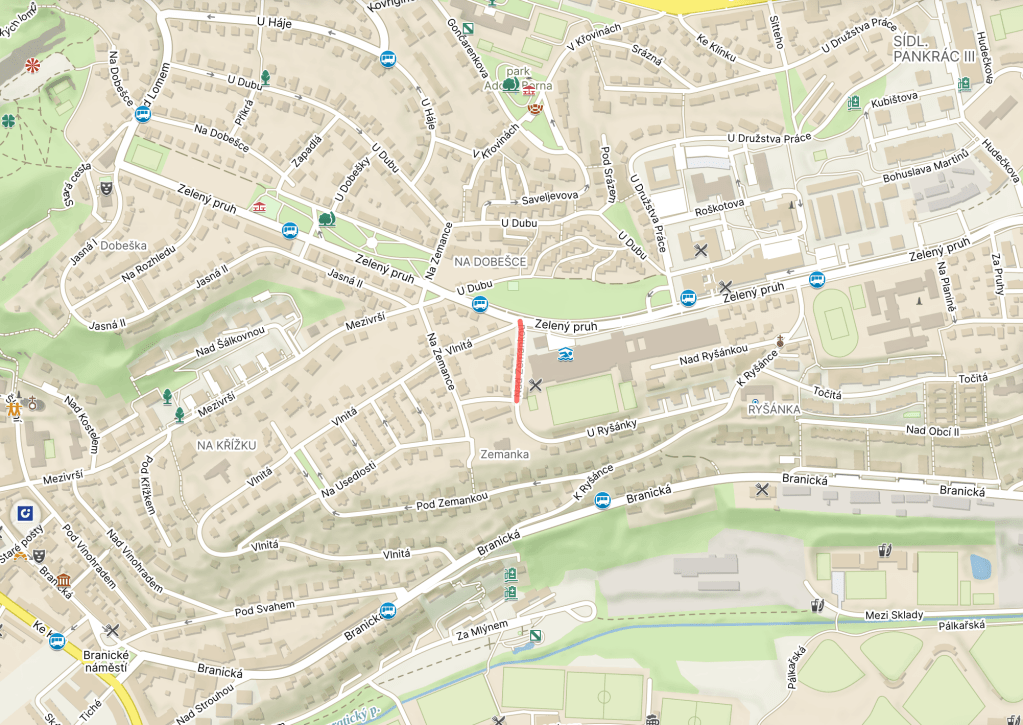
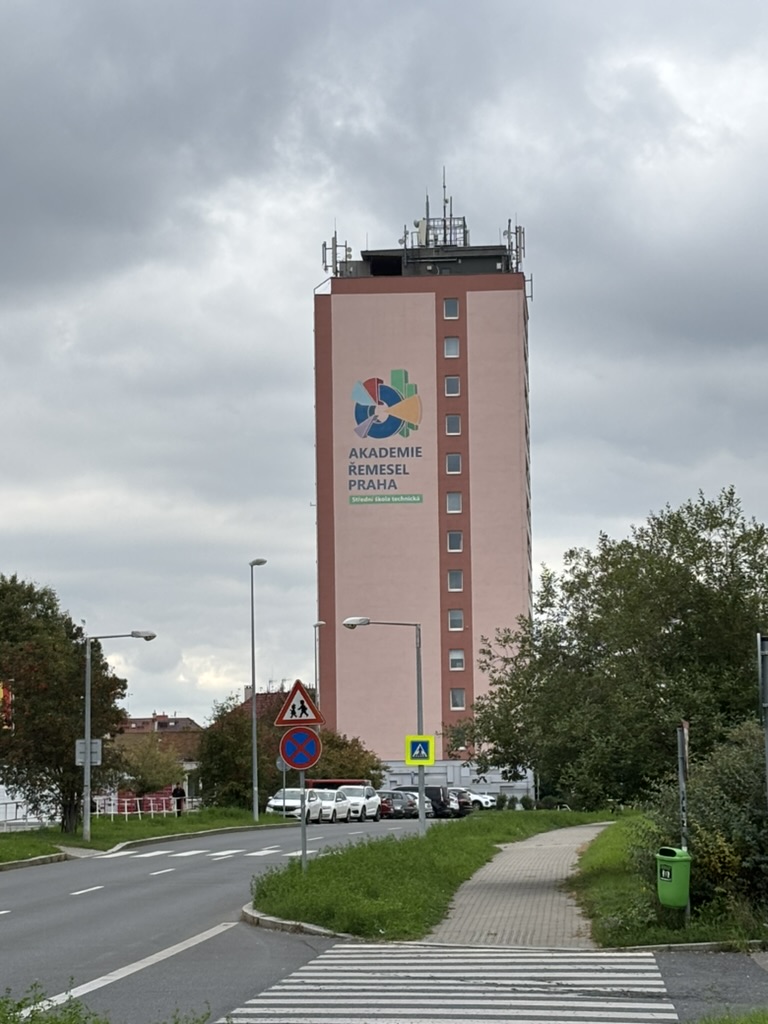
The street’s most famous building (certainly the most dominant) is surely the Academy of Crafts / Akademie řemesel Praha, a technical secondary school – so much so that its online presence is at https://www.zelenypruh.cz.
There are some pretty great views round here, and I need to add some pictures of them to these posts.
Stand in the right spot, and you even have a view of Zlíchov, which we’ll talk about a lot when we get across the river and into Prague 5.
For those who like vocabulary, ‘všeobecný rozhled’ is a general outlook, and therefore ‘general knowledge’, and it’s always a good idea to ‘rozšiřovat si rozhled’ – to broaden one’s horizons.
‘Jasná’ translates as ‘clear’ or ‘bright’ or ‘radiant’, which whoever named the street clearly thought was one of its main characteristics.
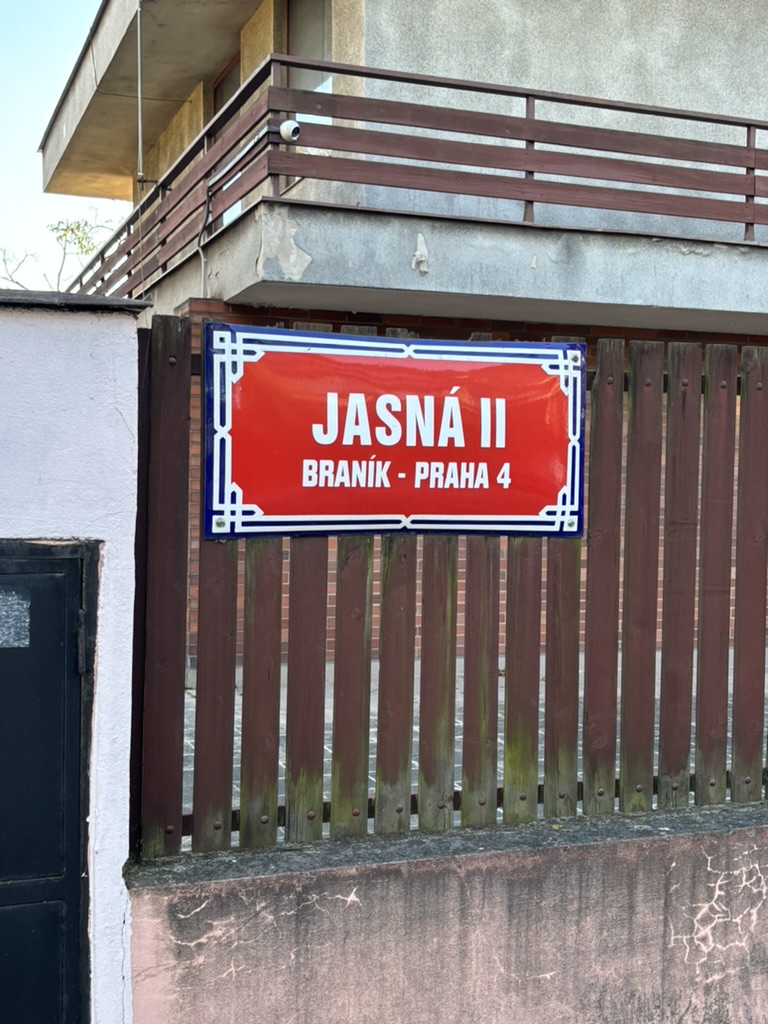
In 1960, the street, originally known as Jasná, was split into Jasná I and… well, you might have guessed and are more than welcome to skip the post for the second part when I reach it.
It’s pretty, well, clear.
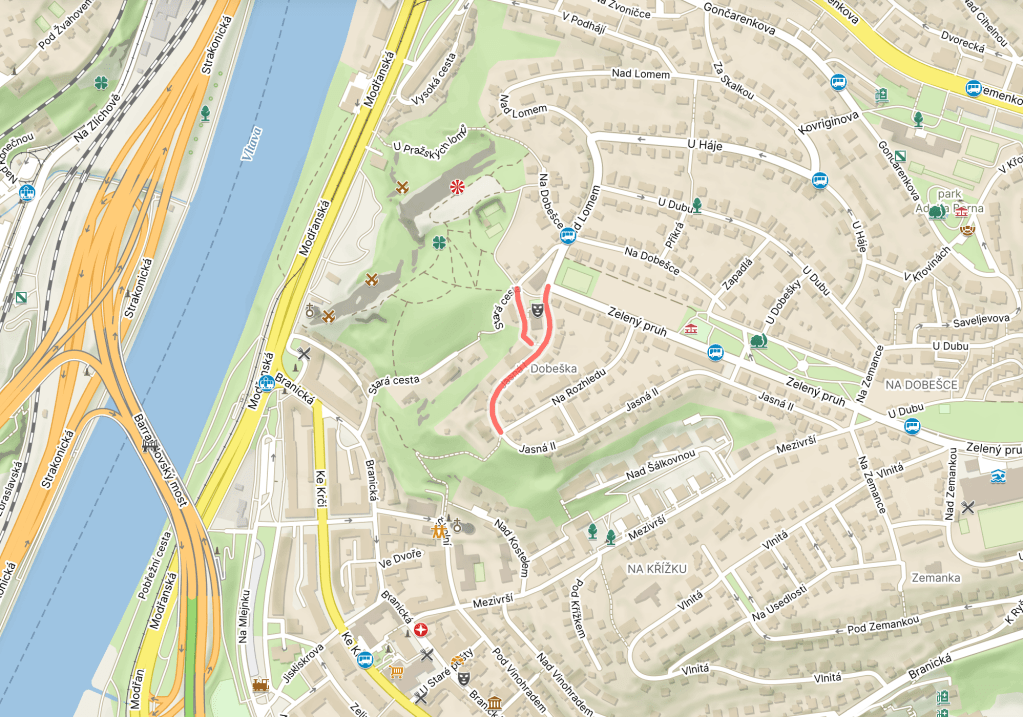
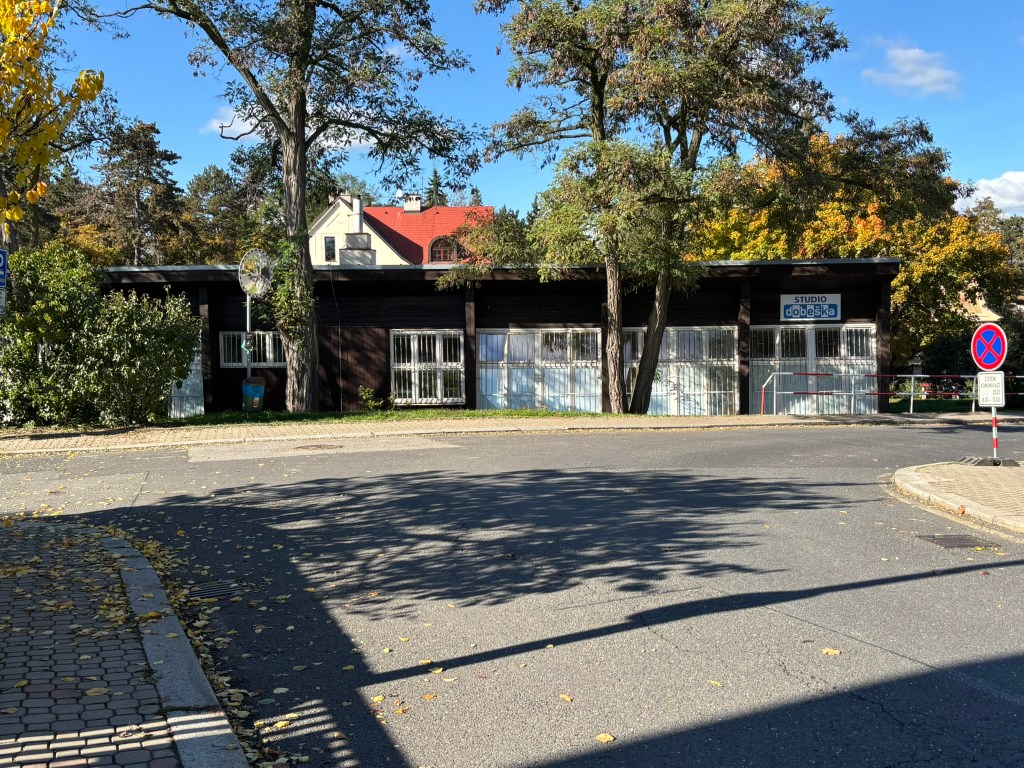
In 1971, two fourteen-year-olds, David Vávra and Milan Šteindler, founded a theatre called Divadlo Sklep (The Cellar Theatre), so called because it was originally located in the basement of Vávra’s grandmother’s house.
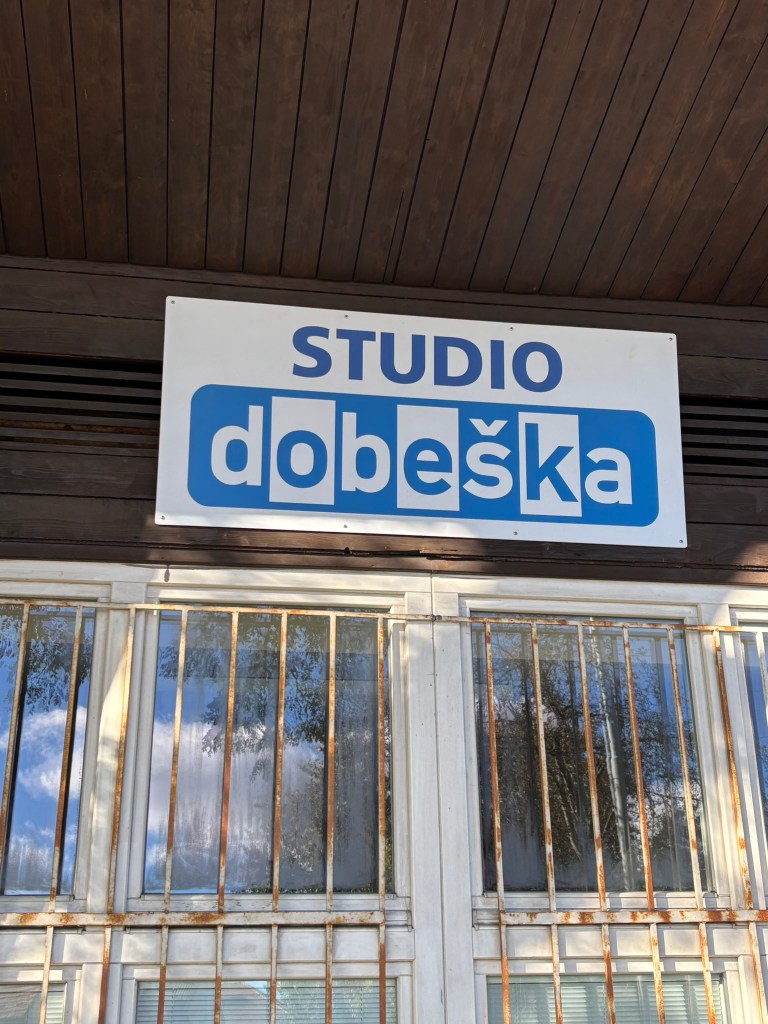
Originally performing for friends only, it went public in the late 1970s. Then, in 1980, it moved to the Dobeška Theatre, on this street. It’s still there.
But oaks aren’t just important to the Slavs – the oak is the national tree of Bulgaria, Croatia, Poland and Serbia, yes, but also of Germany, Latvia, Lithuania, Spain, the United Kingdom and United States.
In April, oak trees often shed their leaves and grow new ones. This is why the Czechs call the month ‘duben’.
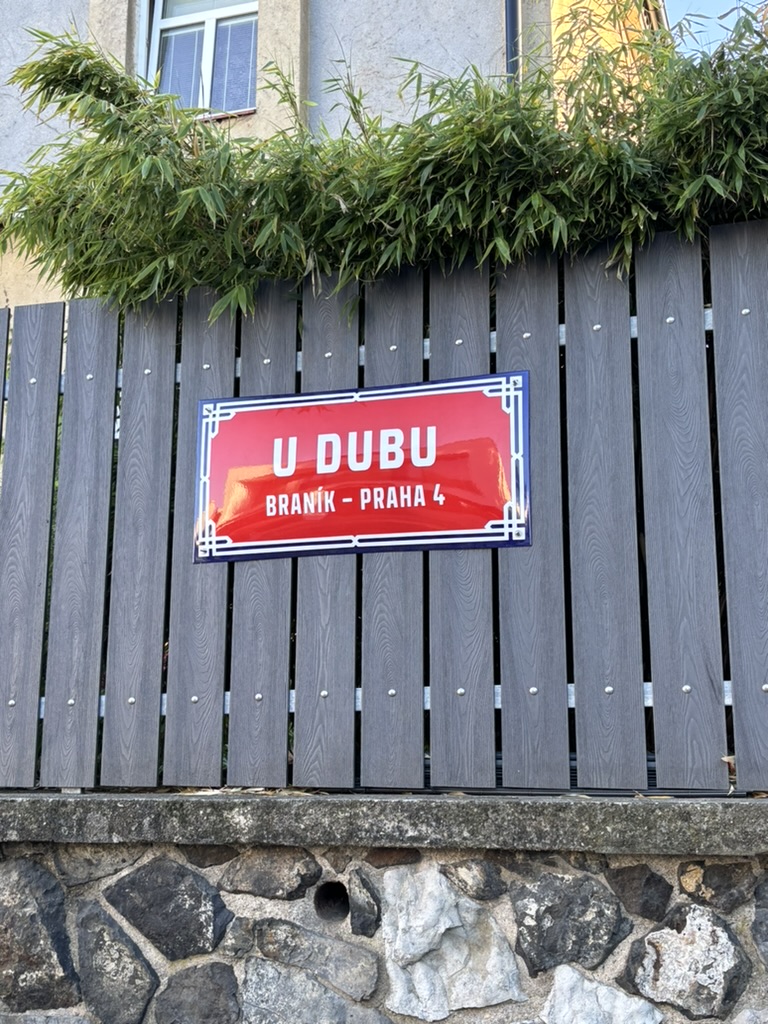
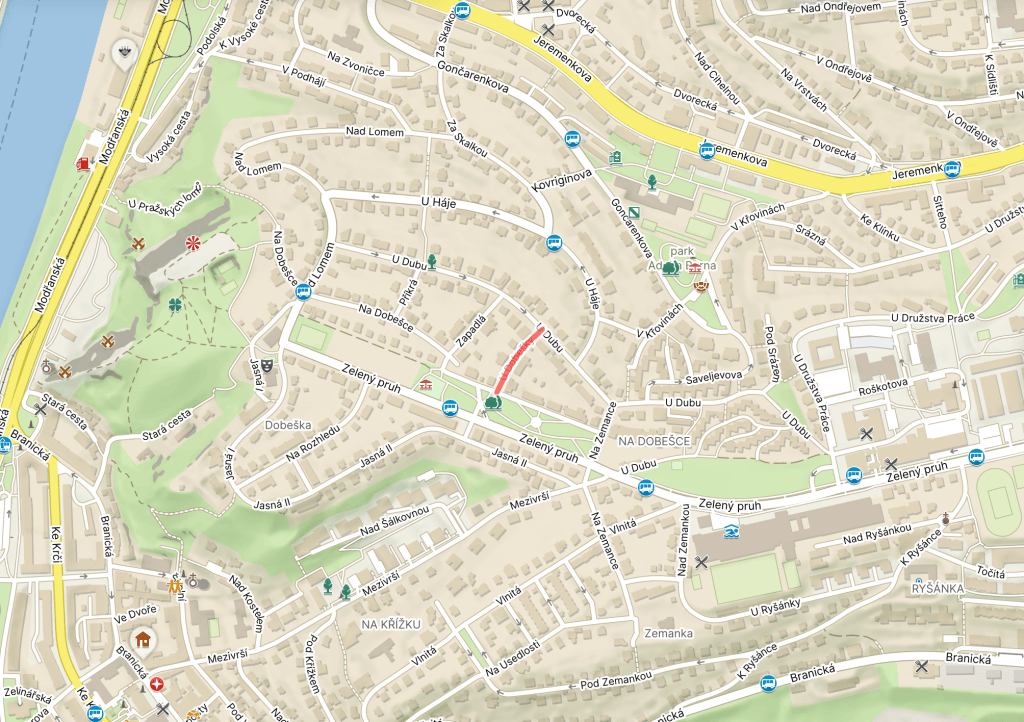
In terms of round here, ‘U dubu’ translates as ‘by the oak tree’, an erstwhile local name whose origins are self-explanatory.
Oh, and song alert.
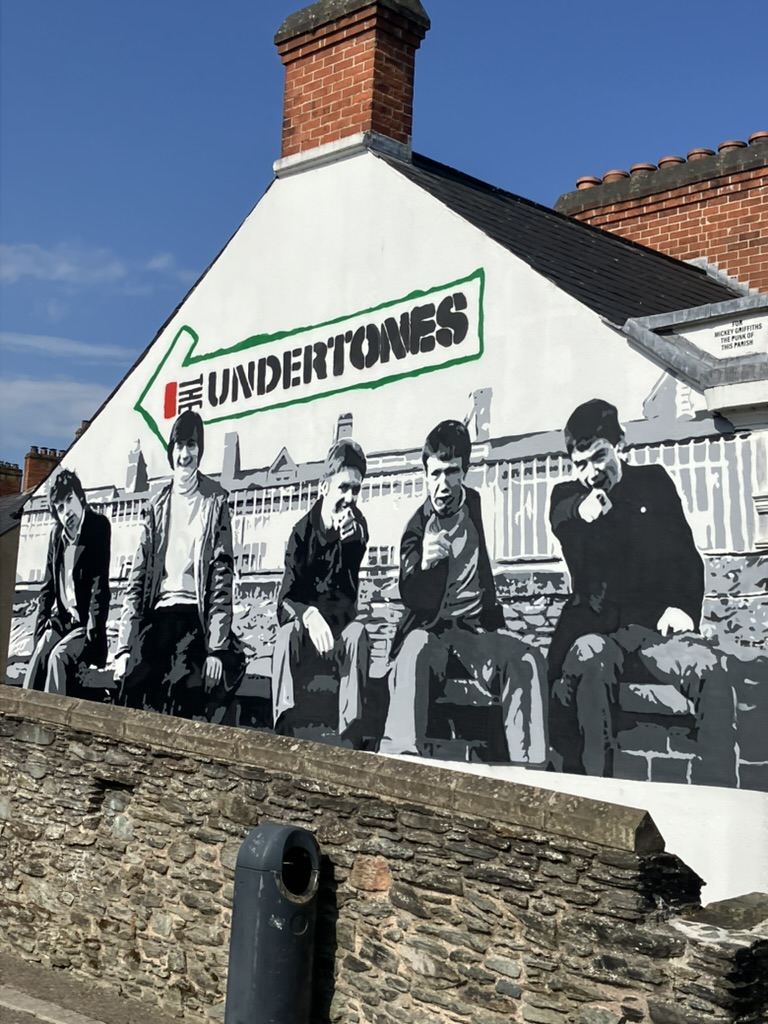
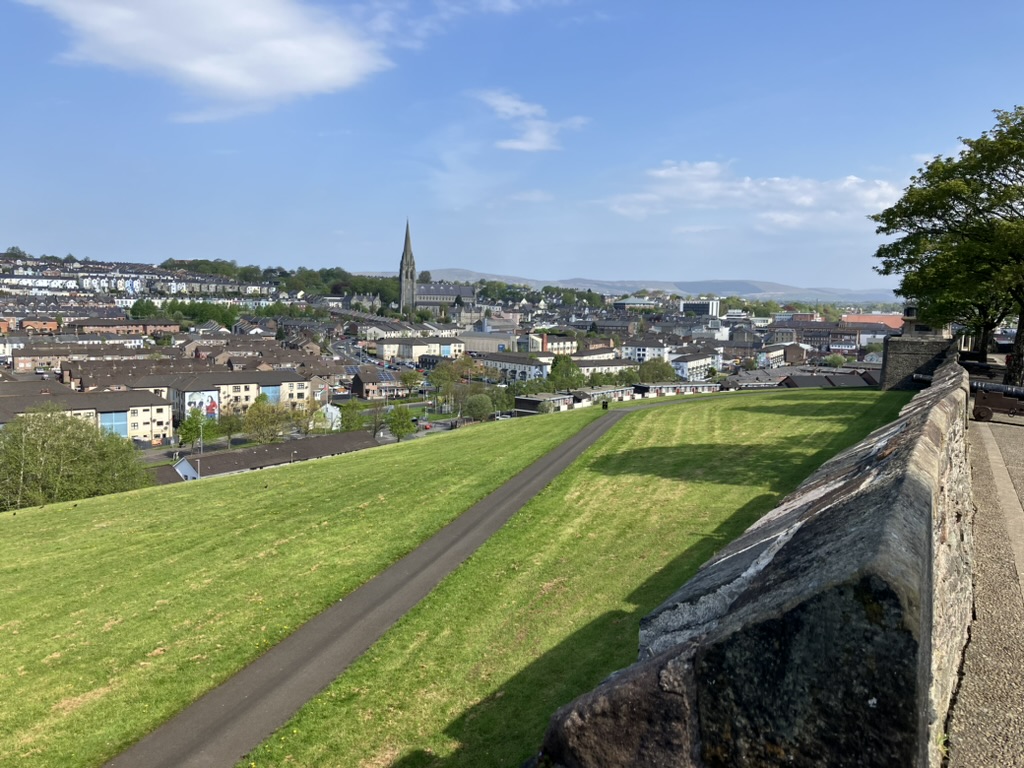
Before we finish: in Irish, a grove consisting of oak trees is called a ‘doire’ – which is where Derry gets its name.
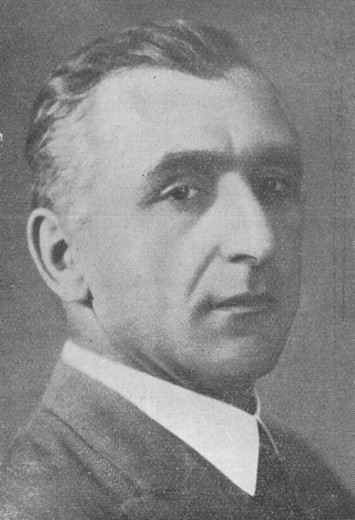
From 1904 to 1910, he studied civil engineering at Prague’s German Technical University, while taking part-time architecture classes at the Czech counterpart.
This was followed by further studies – of philosophy and art history at Charles University – from 1911 to 1913, and, after military service on the Russian and Serbian fronts in WW1, architecture at the Academy of Fine Arts (1919 to 1922).
In 1921, Roškot became a founding member of the Association of Building Design (soon renamed as the Association of Architects).
His architecture was based around reimagining urban areas in the form of ideal geometric formations.
Internationally, he got attention for his Czechoslovak pavillions at World Exhibitions in Milan (1926), Chicago (1933; picture one) and New York (1939; picture two; noticeably, the pavilion represented the whole country despite the Nazis having recently dismembered it).
He also built several residential buildings around Prague – I would love to share links to the streets they’re on, but this will have to wait, as they’re mainly in Prague 6, 7 and 10.
However, the building of his you’re most likely to recognise is somewhat out of the centre. It was opened in 1937, and, until 2012, went by the name of Prague Ruzyně International Airport.
While the architect Adolf Benš was responsible for the main building, Roškot prepared the overall layout of some of the other airport buildings, including houses for the airport director, administrator and gatekeeper.
Neither was responsible for these new machines that everyone was having a hullaballoo about last weekend, so please take your rage elsewhere and keep trying to find a time machine that can take us back to 2016 and do that year differently.
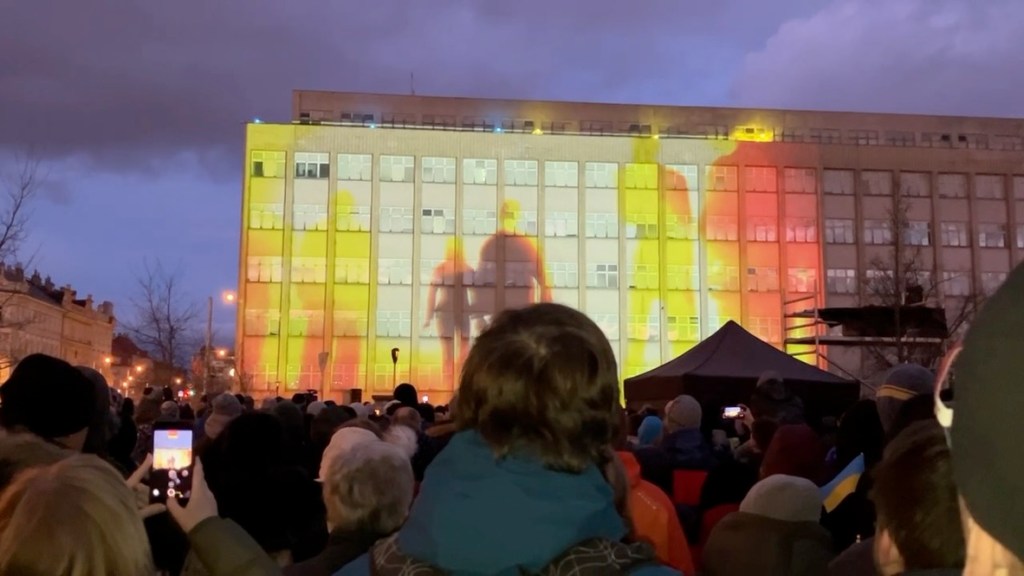
Roškot also designed what is now the Ministry of the Interior in Prague 6 (picture from 25 February 2023, during a commemoration of the first anniversary of the full-scale Russian invasion of Ukraine).
When he designed it, it was scheduled to be the Supreme Accounting and Auditing Office.
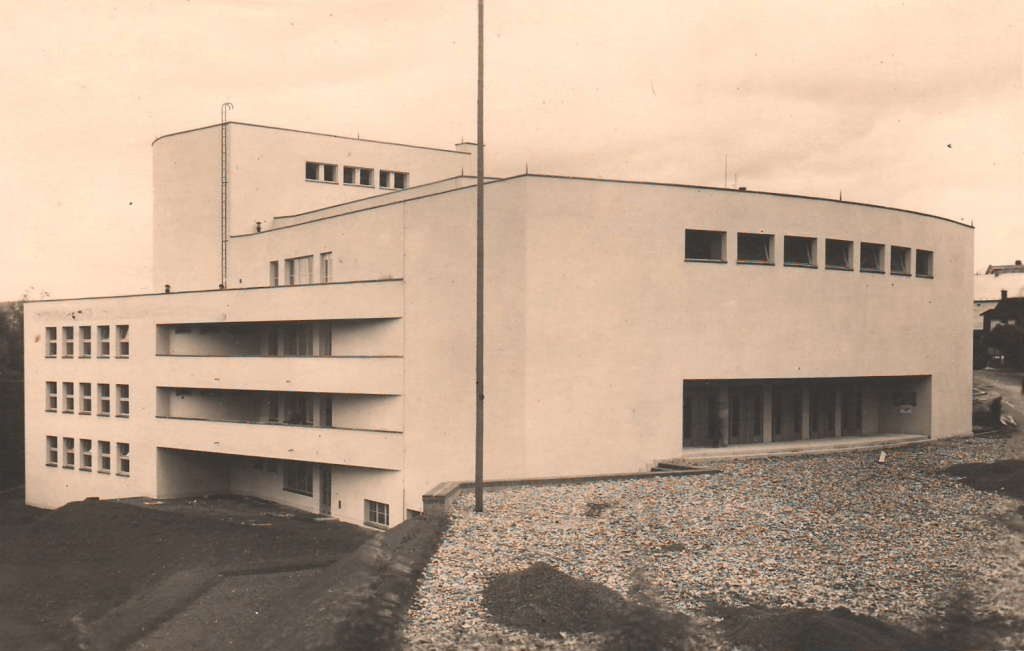
His most famous work, though, is probably the Roškot Theatre in Ústí nad Orlicí, opened in 1936 (postcard from around that time).
Roškot died in Paris in 1945, and a posthumous exhibition of his work took place in Prague a year later.
His sister, Anna Roškotová (1883-1967), was a renowned painter.
Adolf Born was born in České Velenice in 1930 – which was formerly one town along with Gmünd, which is now not only a separate town but is across the border in Austria.
In his late teens, he started studying art education at the Faculty of Education at Charles University, but changed his plans a couple of times and ultimately graduated from the Academy of Fine Arts in 1955.
He studied there in the Department of Caricature and Newspaper Drawing, and I can’t be the only one reading those words right now and suddenly wanting to go back to university.
After his studies, Born made a living by providing illustrations for books and drawing caricatures for newspapers. In 1966, he and the American illustrator Gene Deitch animated the first ever screen adaptation of The Hobbit.
From 1973, the Czechoslovak authorities banned Born from presenting his works at exhibitions or in the press, and he started to focus on book illustrations and animations.
Most famously, he was responsible for the design of Mach a Šebestová, a 1982 animated series about two students and a magic telephone receiver.
From 1992 – i.e. post-censorship – Born created postage stamps for Czech Post; he also designed costumes and sets for the Czech National Theatre.
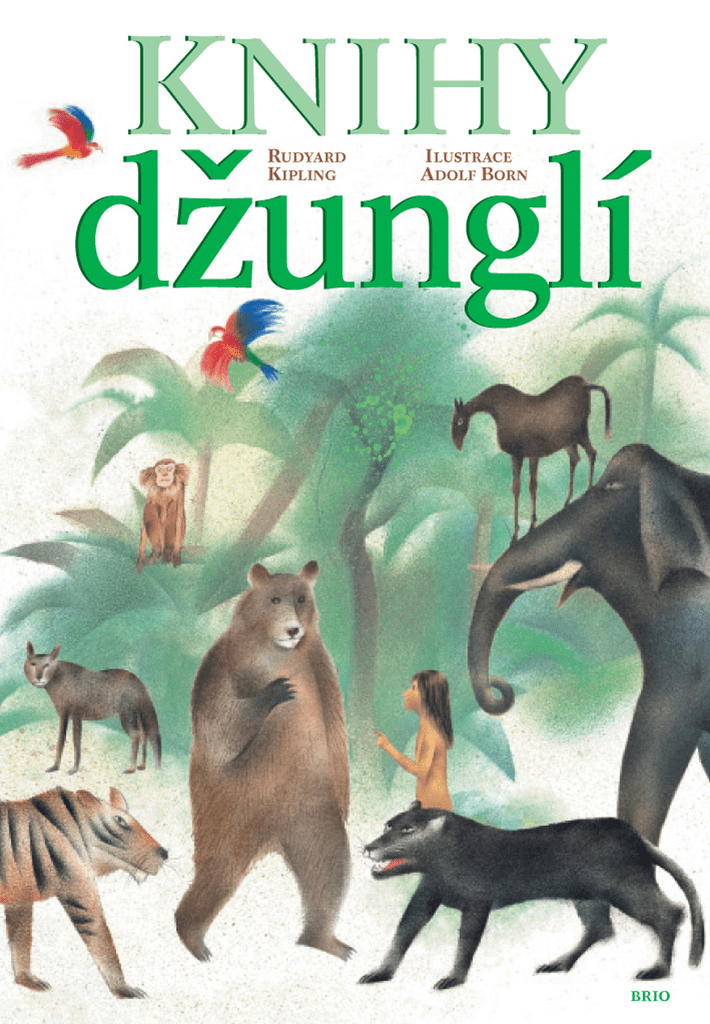
If you go to a bookshop looking for a copy of Knihy džunglí – Rudyard Kipling’s The Jungle Book – and you come across this version, you’ll have one of Born’s last works. He illustrated it in 2015, and died in the following year.
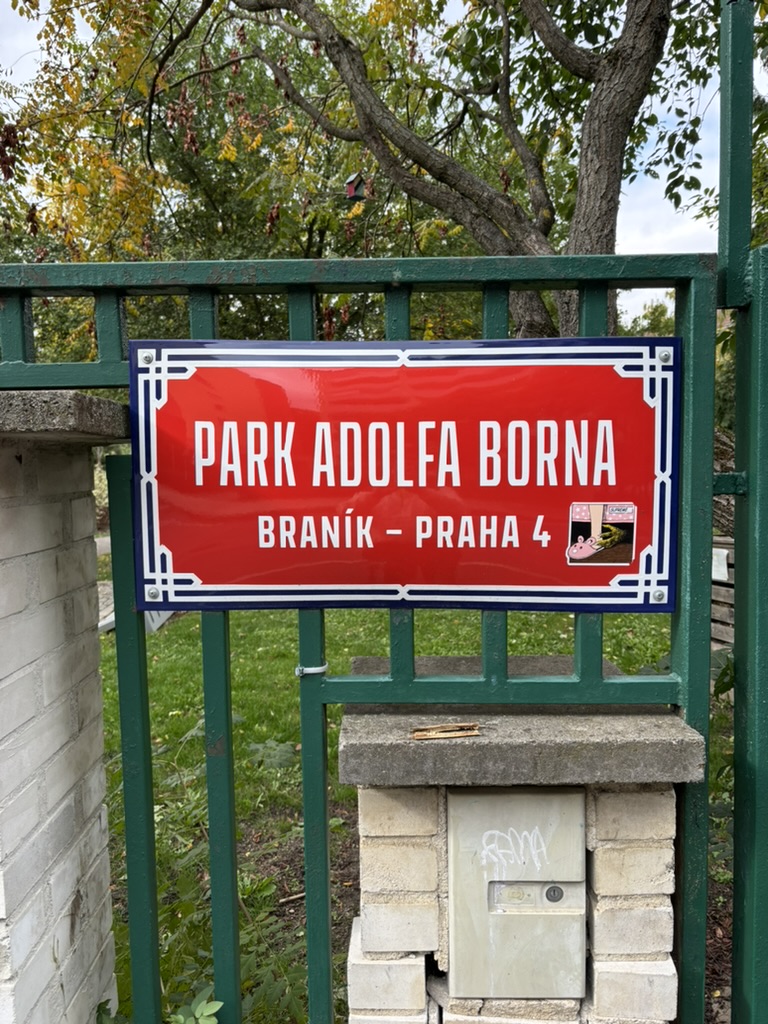
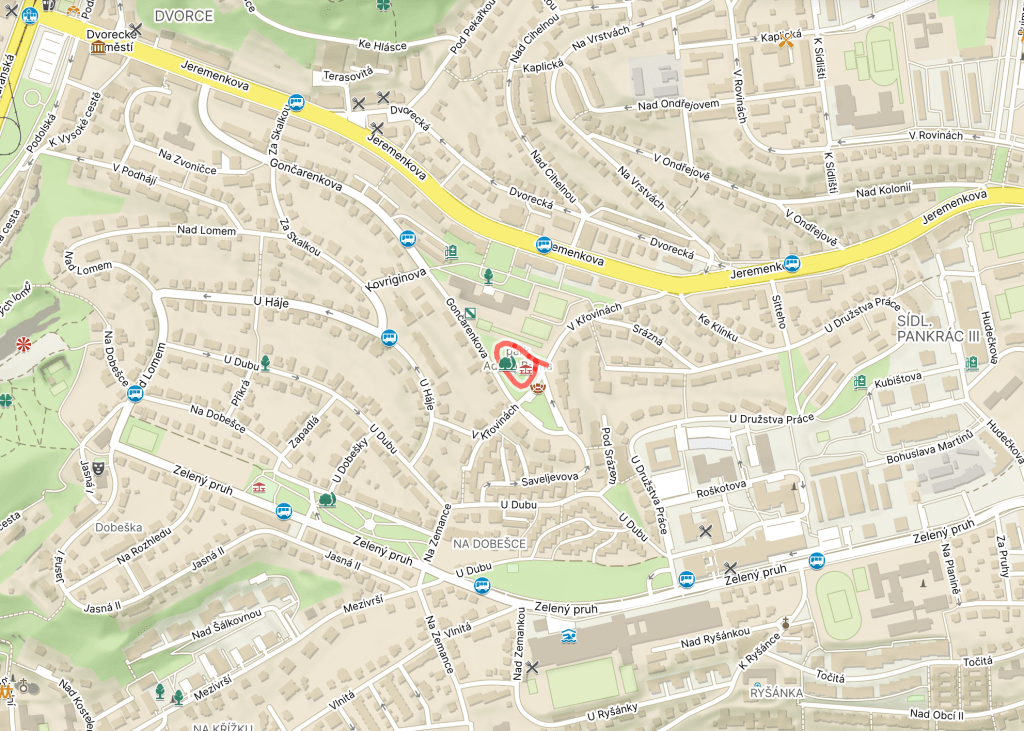
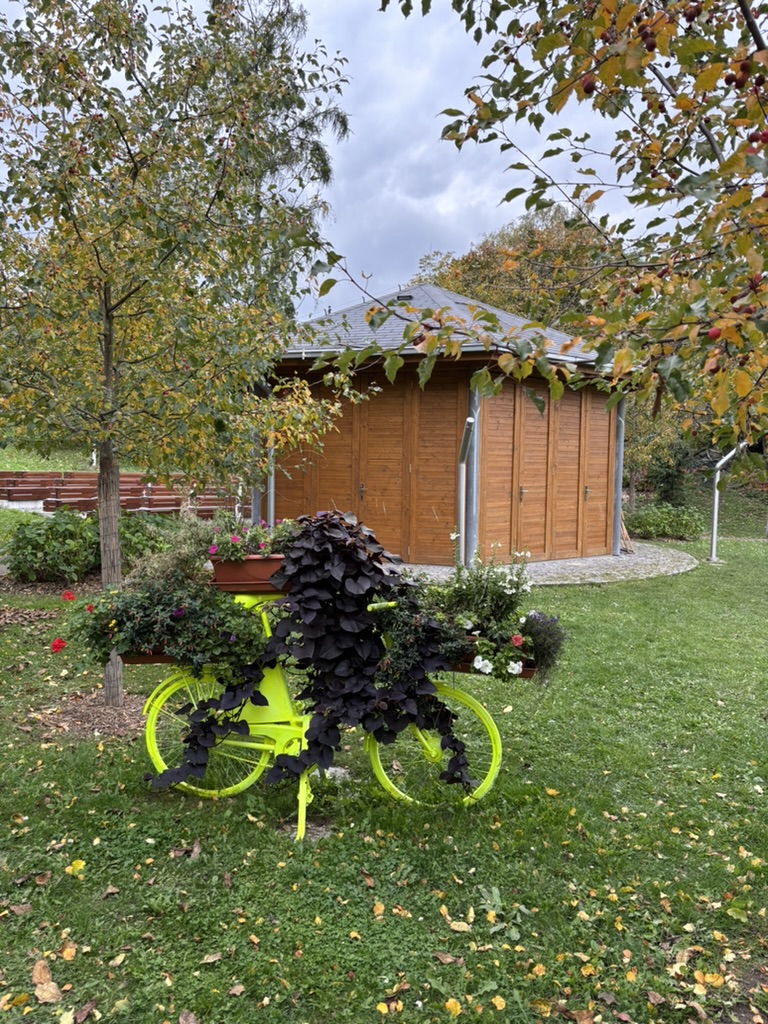
When the park opened in September 2020 (for all the use it presumably got in the nine months after that), it was called ‘Přátelská zahrada’, or ‘Friendly park’. It was renamed after Born in 2024.
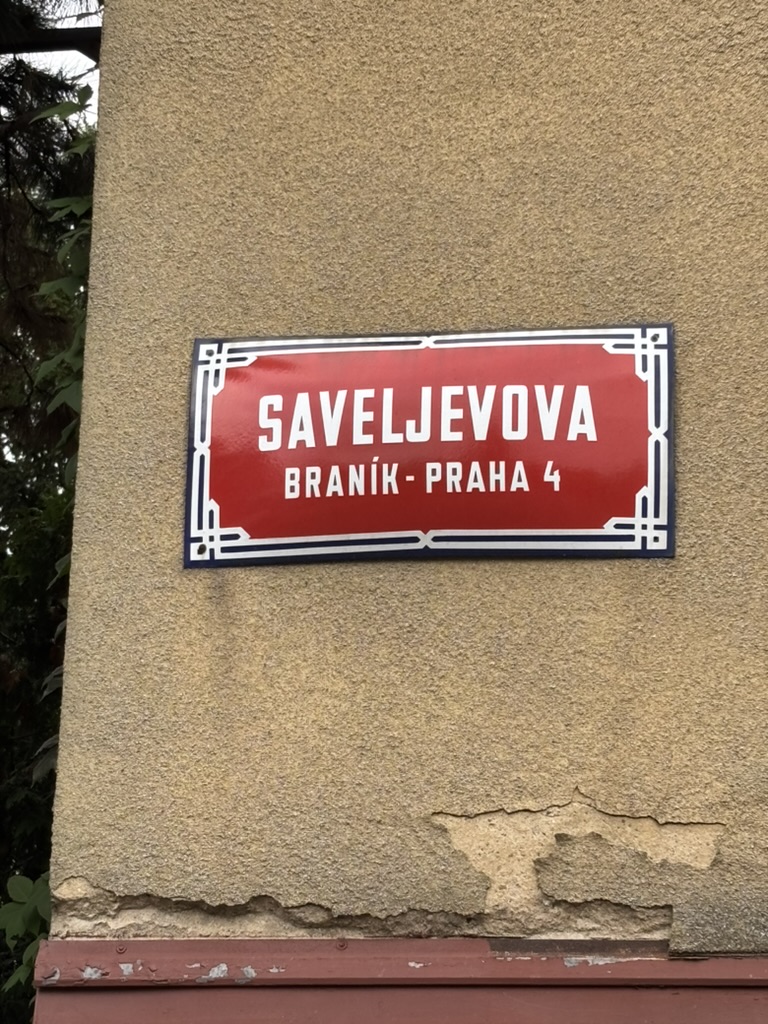
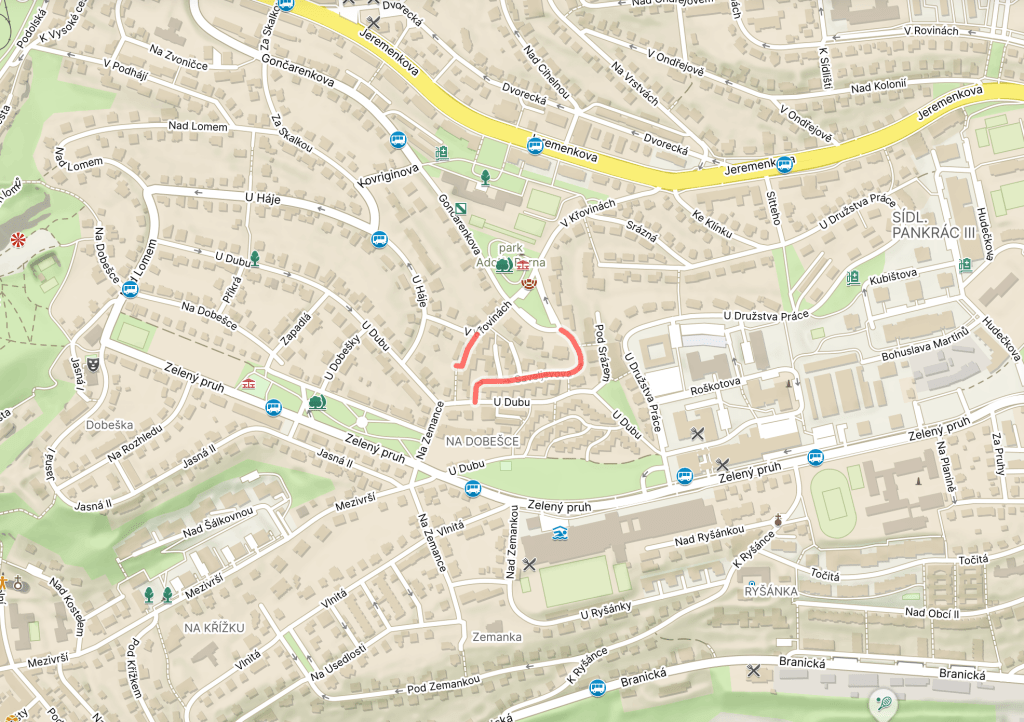
Mikhail Ivanovich Savelyev was born in 1896 in Poyarkovo, a village in Ryazan Governorate, Russia. From the age of twelve, he worked in a butcher’s shop in Moscow.
In 1915, he was drafted into the army; after the October Revolution of 1917, he was involved in the disarmament of counterrevolutionary officers.
Savelyev stayed in the army and was continually promoted; fast forwarding almost thirty years, his troops had, by May 1945, taken Bucharest, Levice (Slovakia), Brno, Vienna and Budapest.
This is also why this street is named after him: on 9 May 1945, the 5th Guards Tank Corps, of which he was commander, entered Prague.
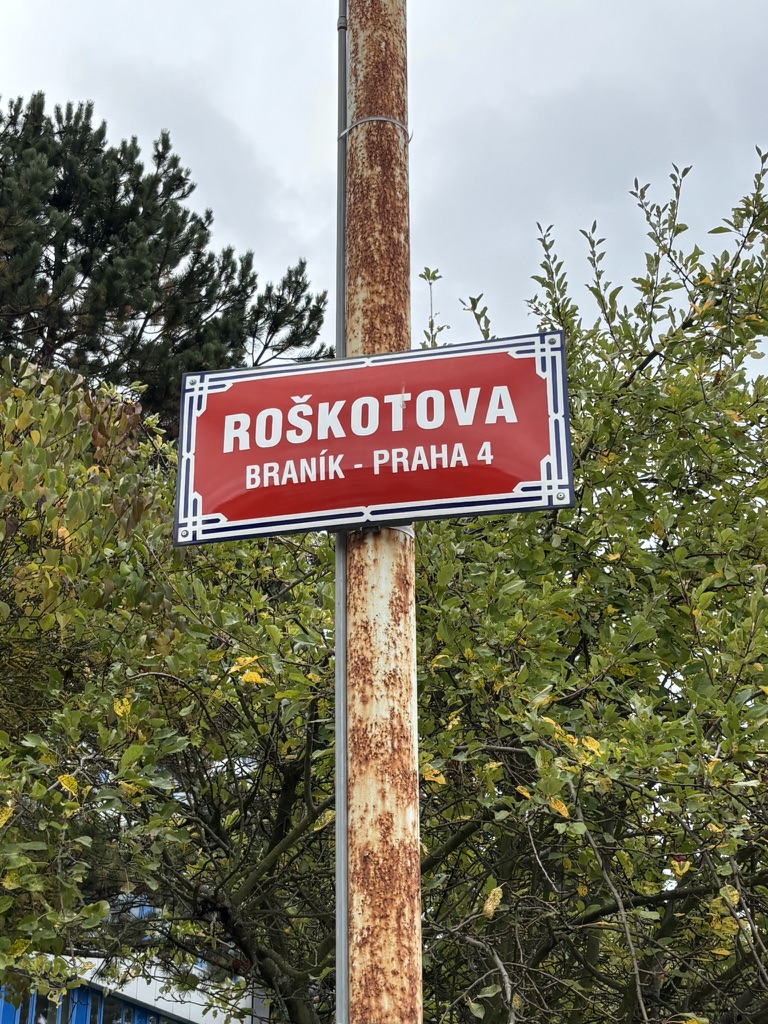
Hey, Prague 4! Can you get these people a street sign, or, if there is one, place it where it’s not covered by greenery (while please not getting rid of the greenery)?
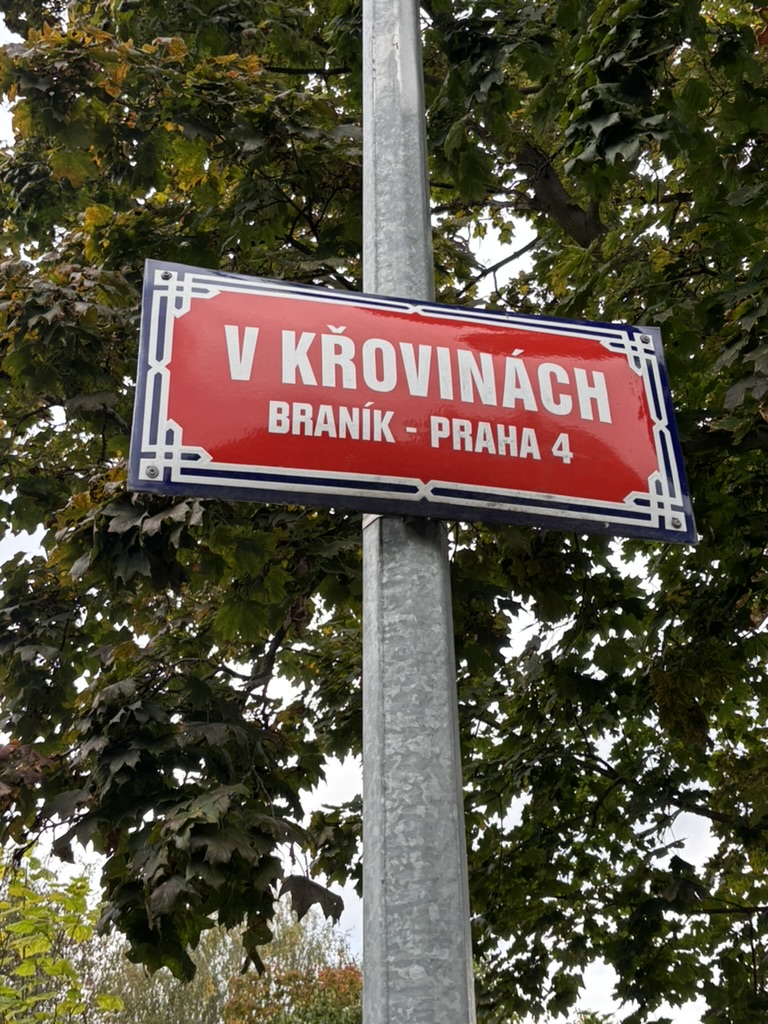
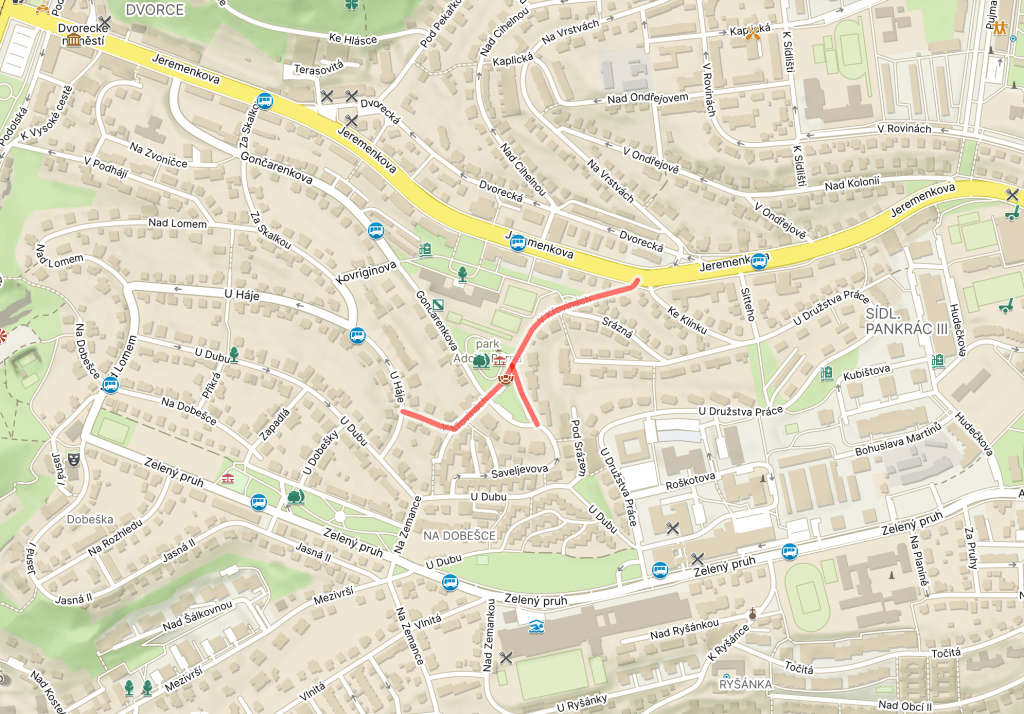
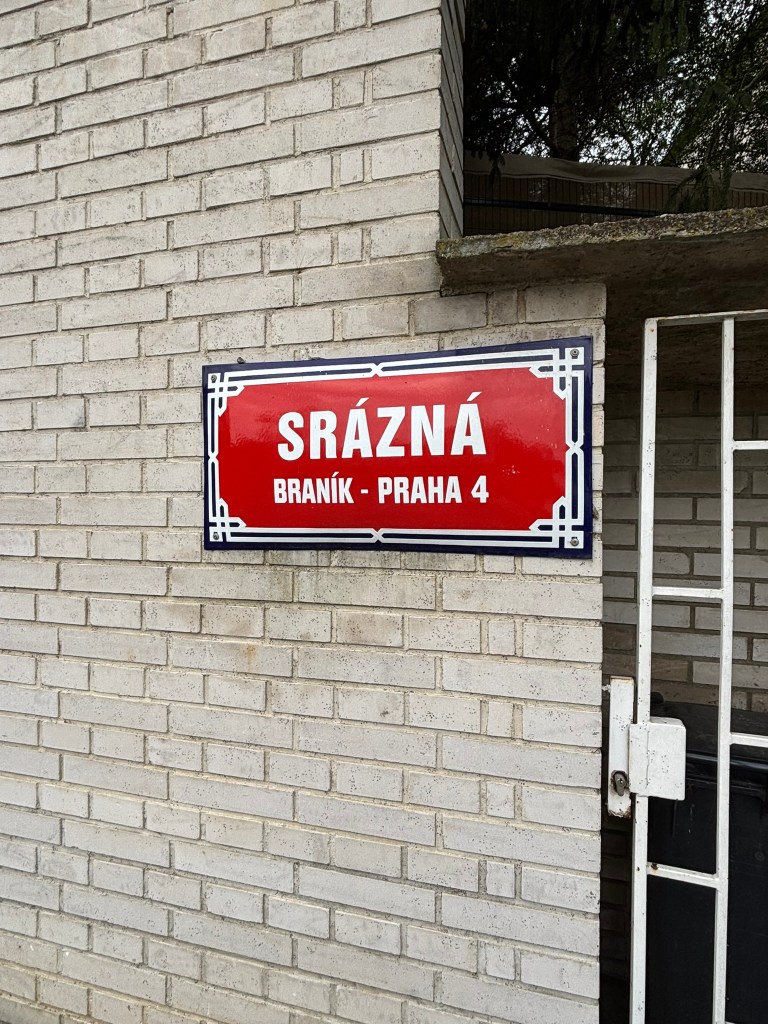
‘Křovina’ translates as ‘shrub’, ‘bush’ (both individual) or ‘shrubbery’ (general). The area round here, covered in the stuff, was also once known as V křovinách.
Synonyms include ‘keř’ and ‘křoví’, although the latter has some interesting additional meanings that the other words don’t.
On stage, it can designate a ‘foil’, i.e. a character who contrasts with the protagonist (Sancho Panza comes to mind); also on stage, but not at the theatre, it can denote the back-up singers.
It’s nothing to do with a ‘sraz’, i.e. a meeting. A word that I learned a few years back when somebody clearly got a digit wrong in someone else’s mobile number and kept asking me if I had any information about the ‘sraz’. I didn’t, but I hope whoever it was did eventually meet.
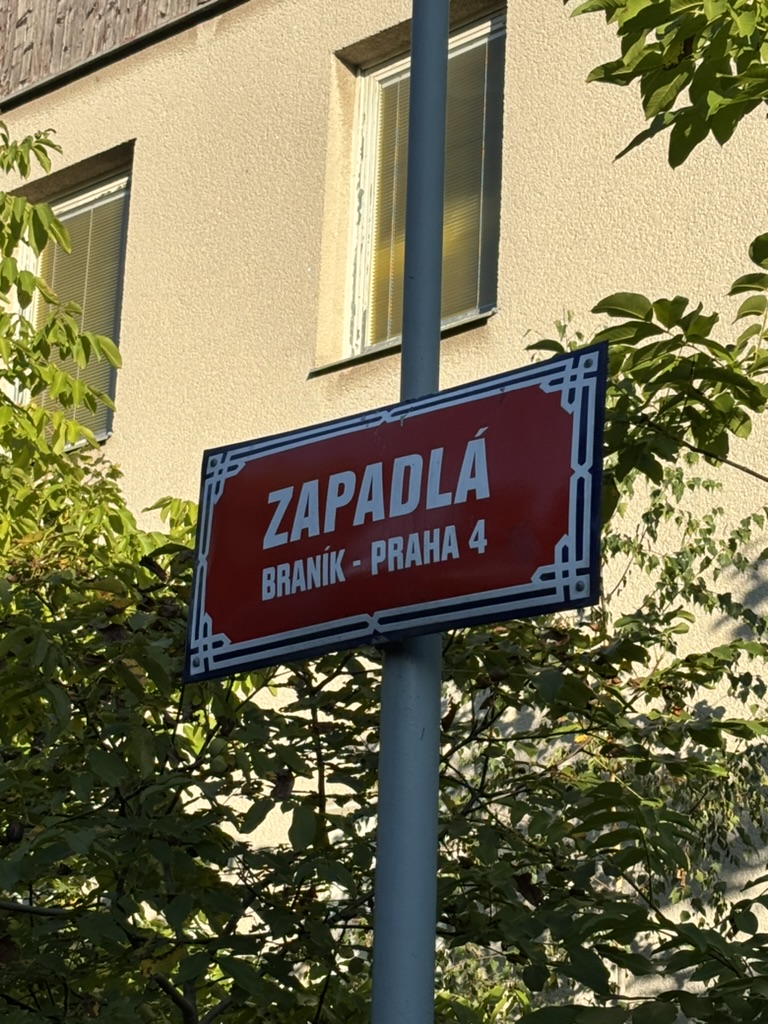
‘Zapadlá’ is an adjective with many potential translations, including (but not limited to) ‘fallen’, ‘remote’, ‘out-of-the-way’, ‘sunken’ and ‘deep-set’.
In 1925, when this was becoming a truly residential area, it was decided that this was a good way to describe the street in relation to all the construction taking place.
It fits in with my perception of the area, i.e. I would love to own one of the villas round here, but I think I love knowing I can walk less than ten minutes from home and get a decent coffee served by a friendly person even more.