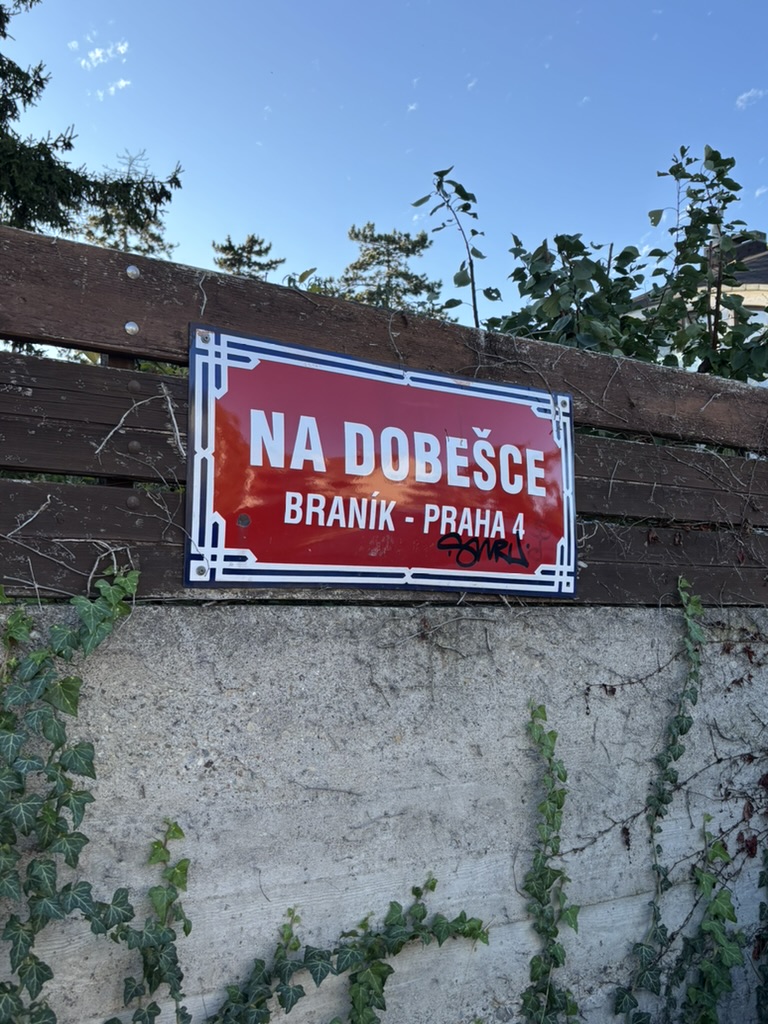
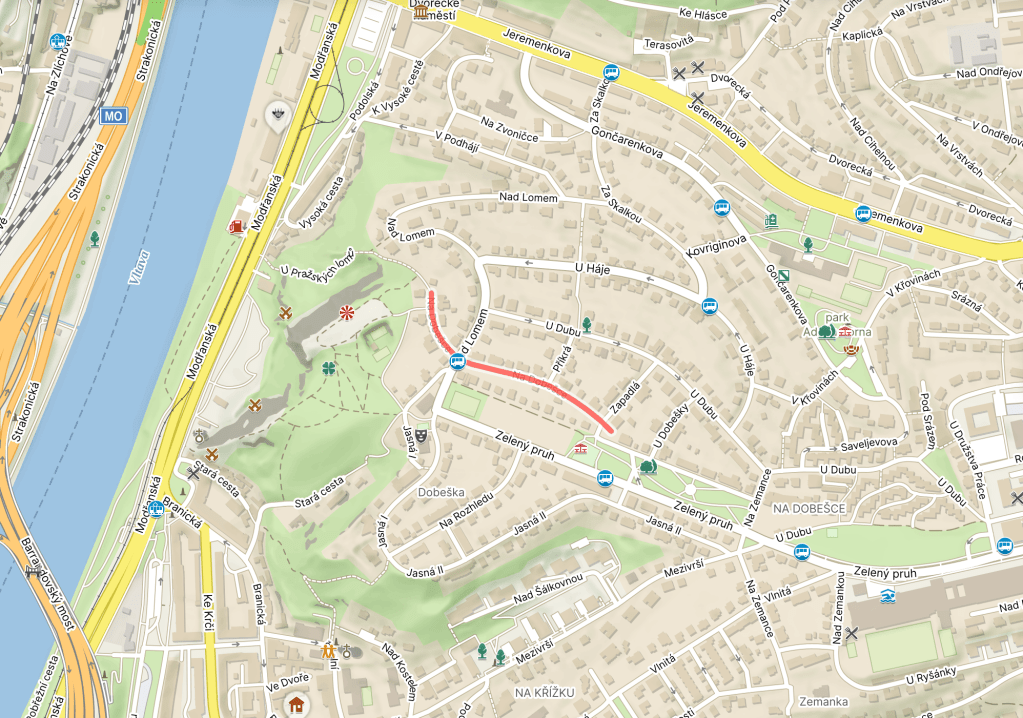
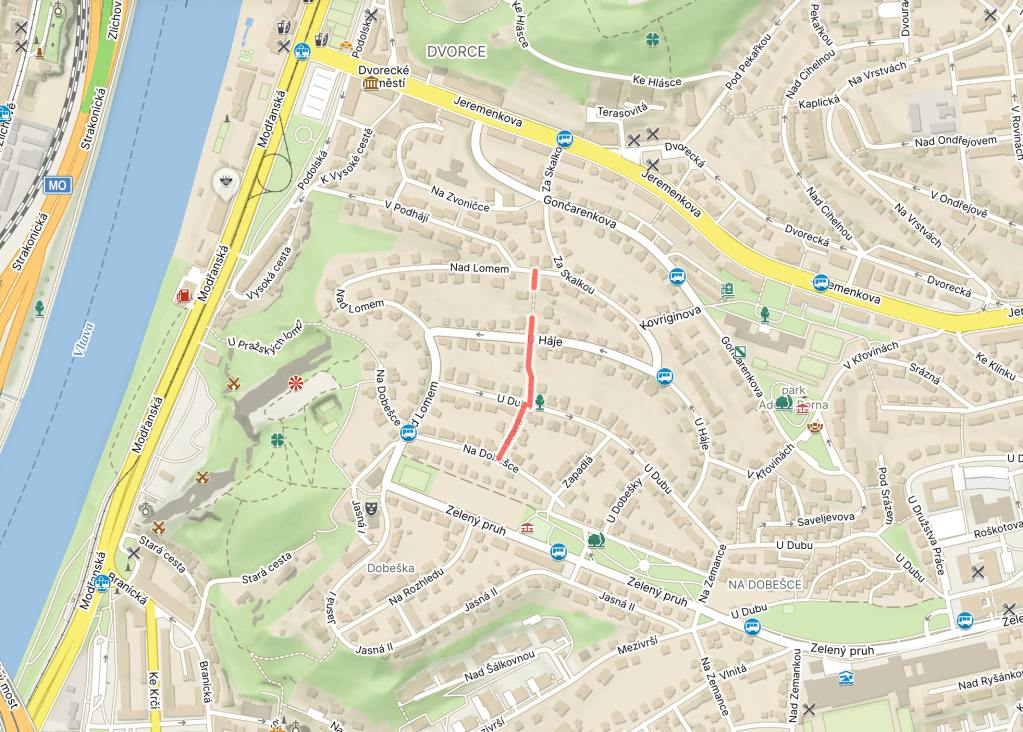
Čapek said that – as is the case for so many of streets we’ve covered so far – Na Dobešce is named after a former farmstead called Dobeška (Dobeš is an old Czech variant of the name Tobiáš).
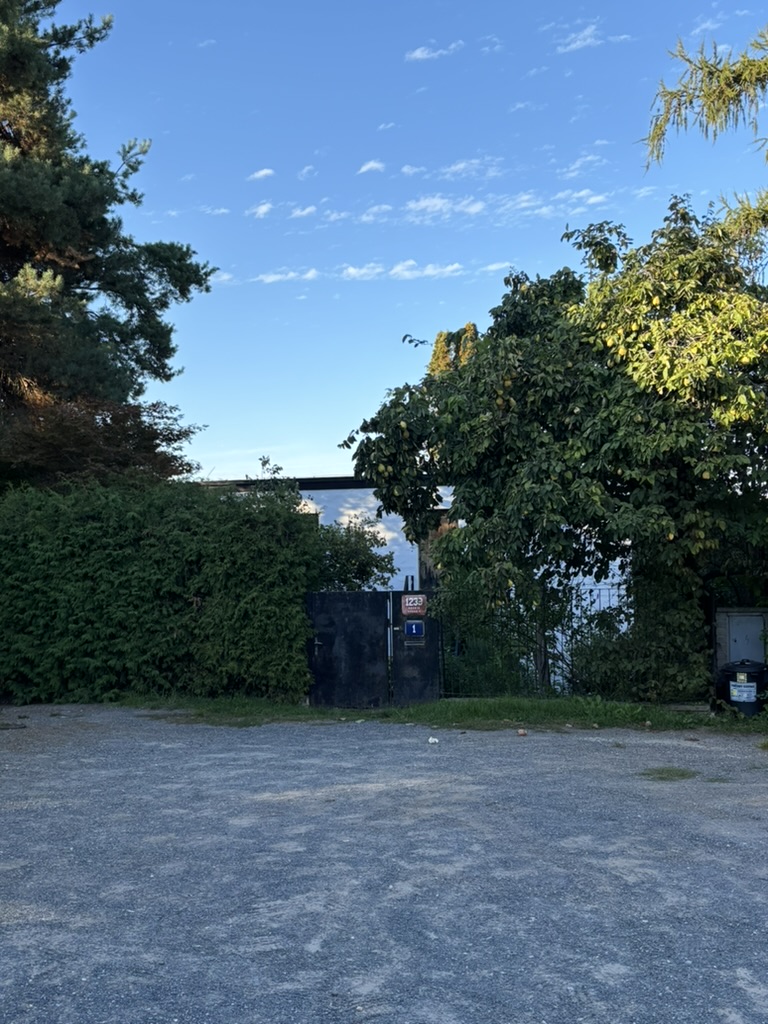
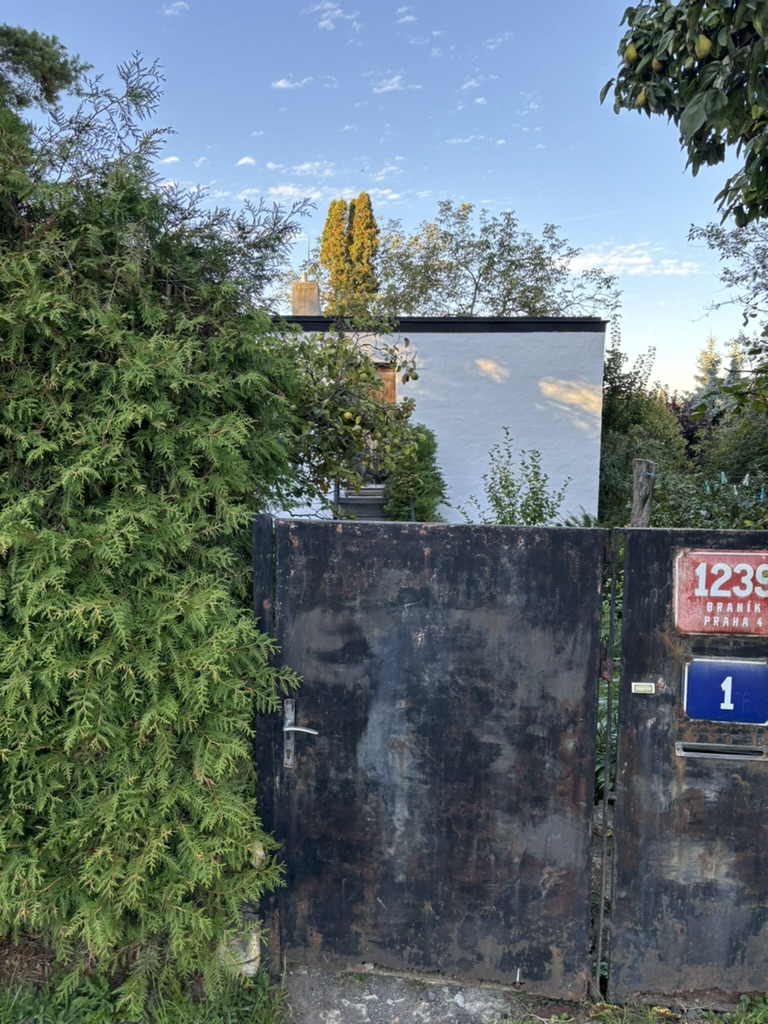
I always try to avoid taking photos of people’s homes that could be deemed intrusive – hence these two not showing you a great deal – but number 1, Na Dobešce is interesting.
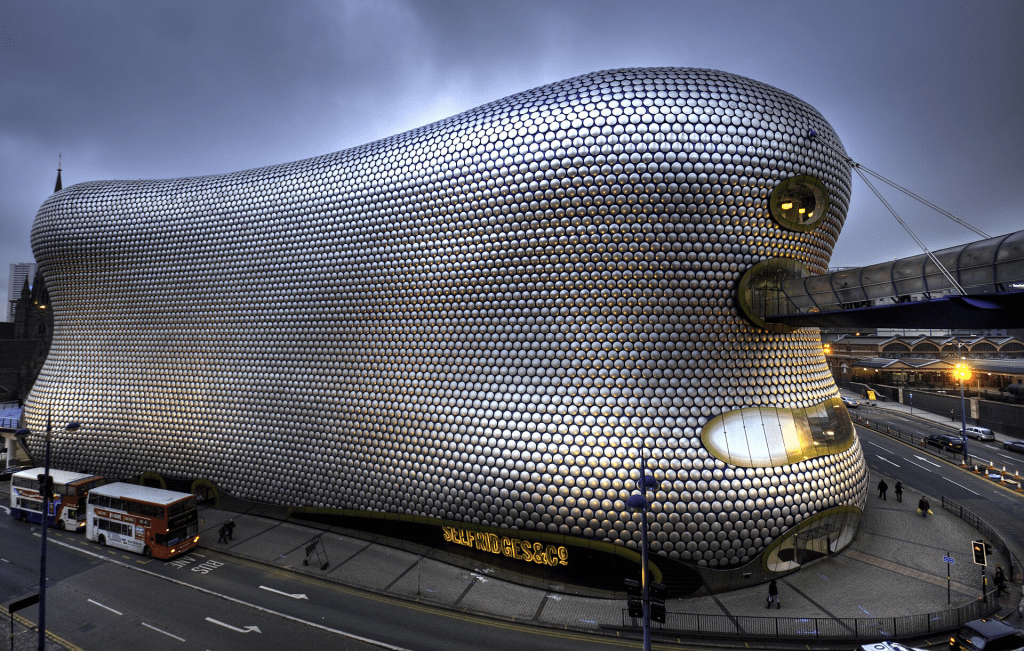
It was built by Jan Kaplický (1937-2009), who you might know best for his Neofuturistic Selfridge’s Centre in Birmingham, and whose plan for a National Library in Prague was commissioned in 2007, but cancelled in 2008.
Just before Kaplický moved to the UK in 1968, he created this house for two friends of his parents, the painter František Dvořák (1925-2002) and his wife Ludmila.
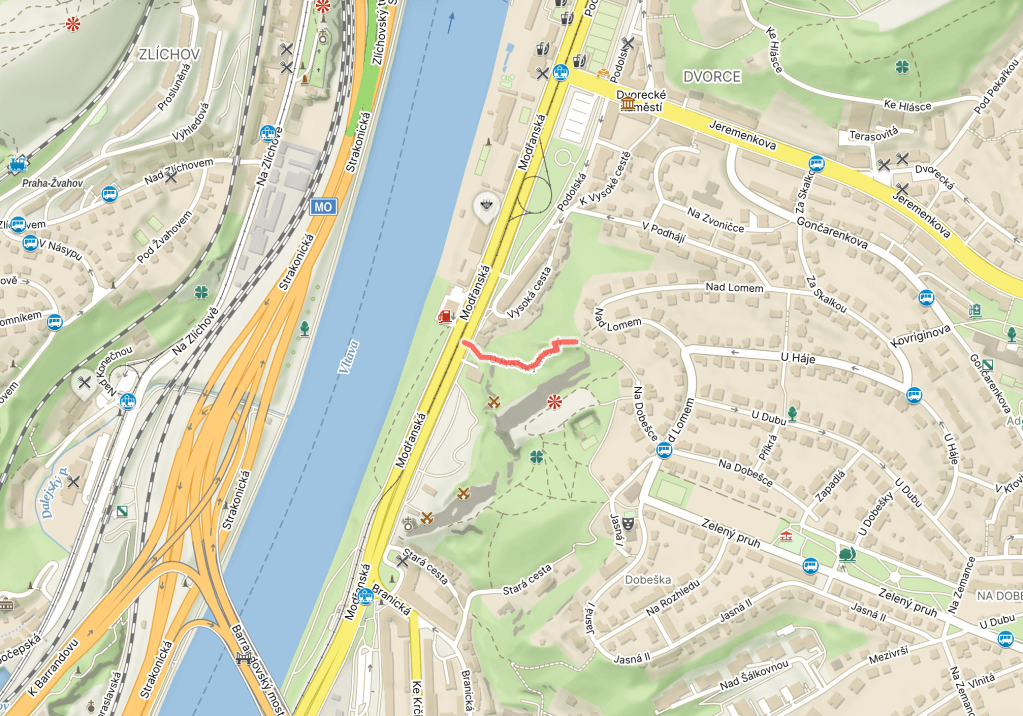
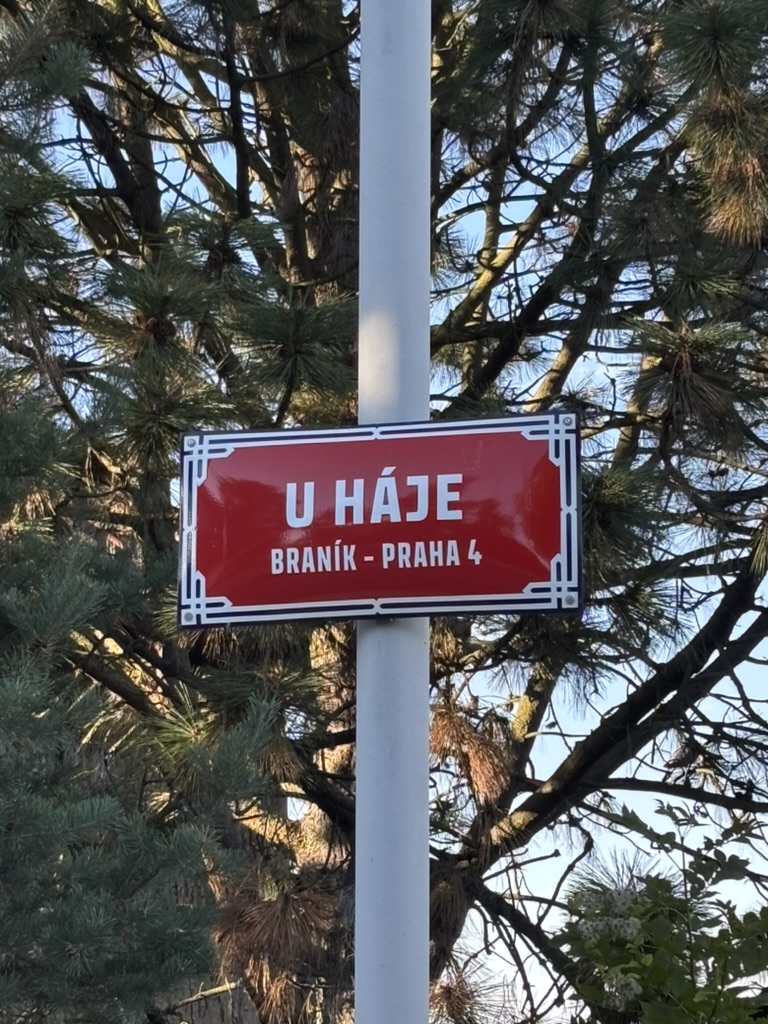
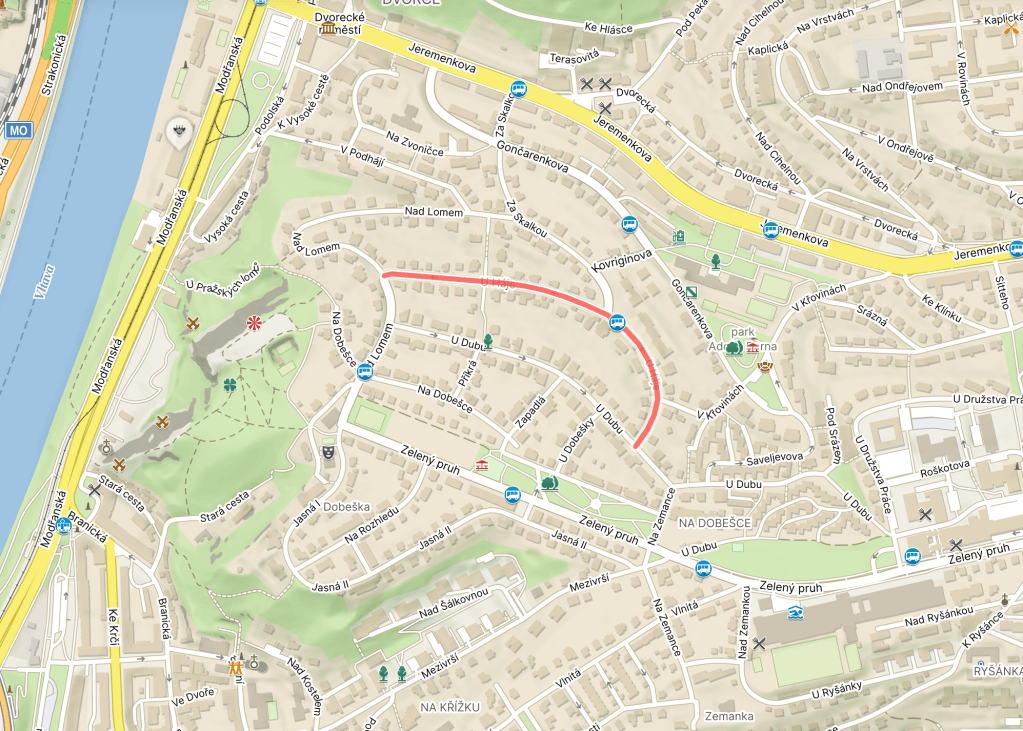
A ‘háj’ is a a grove; you may also know its diminutive form, ‘hájek’ (but note that, no, Mexican-American actress and producer Salma Hayek doesn’t have secret Czech roots – her father is of Lebanese descent).
This area used to be a grove; while there’s still a good deal of greenery around here, the grove itself is no more.
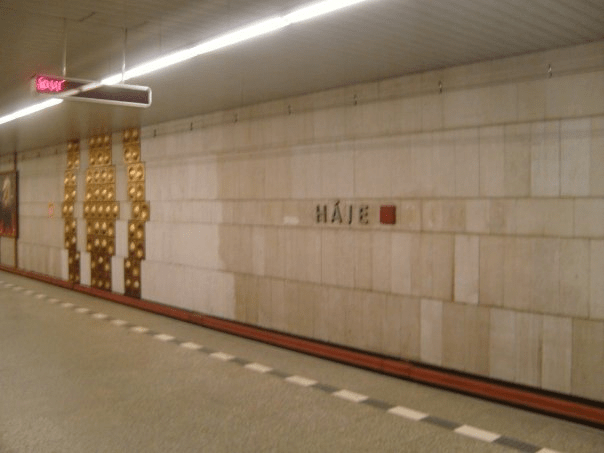
People familiar with Prague are most likely to hear ‘Háje’ and think of the last stop on the red line of the metro, in Prague 11. This pic is from when I decided to take a picture of every metro station in 2009 – looking back, a clear precursor to this series.
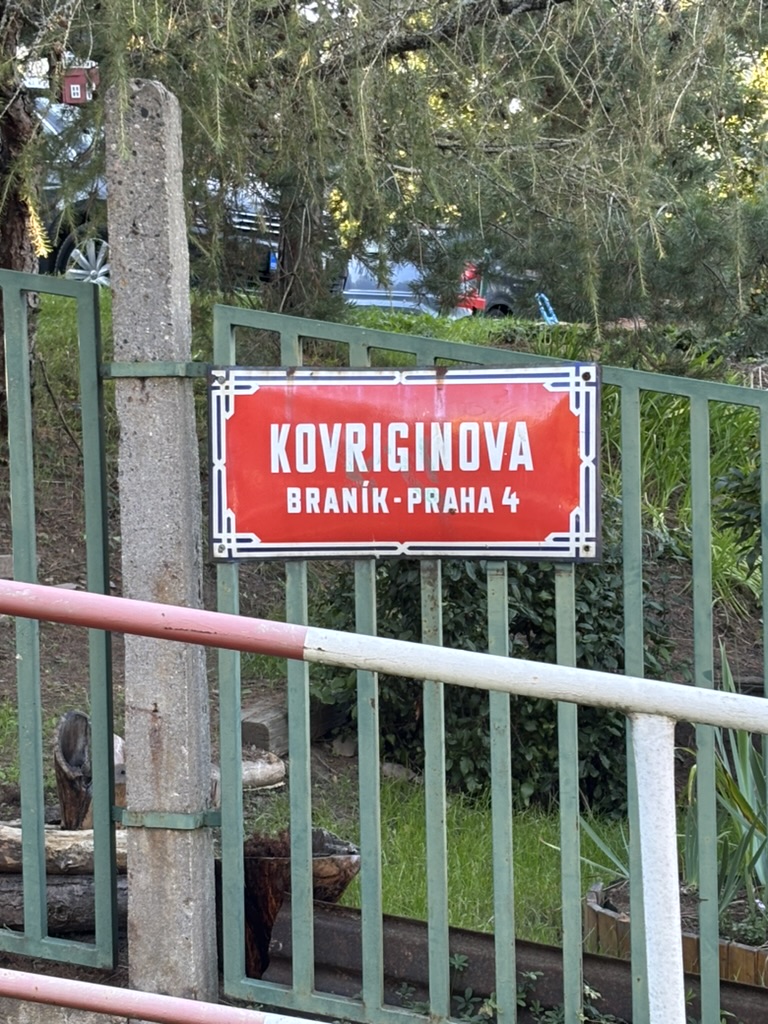
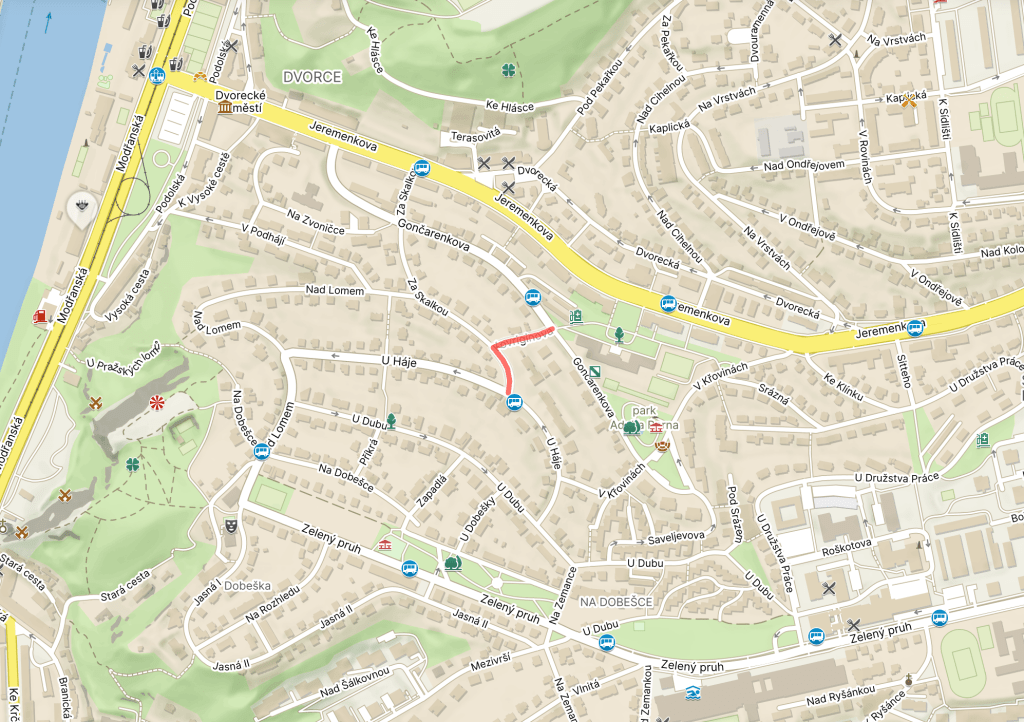
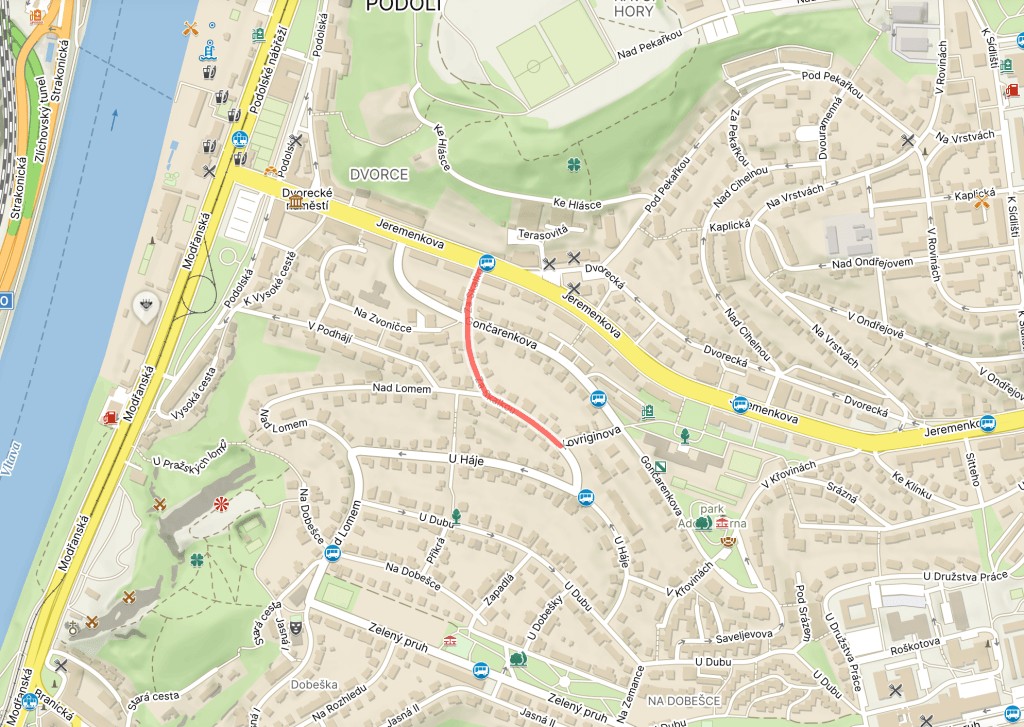
As well as Honcharenko, the crew of tank no. 24 included a loader, Nikolai Kovrigin. According to an article published earlier this year by a local newspaper in Samara, he was 19 and came from a village called Borskoye.
He was believed to have been killed, but, according to a 2013 article from the same paper, was found to be alive and back in his home village in 1965.
I don’t expect to get any further details, nor do I unquestioningly believe these articles, but I do know that, when your searches reveal just how many men called Nikolai Kovrigin have died in battle, let alone all the other names, it reconfirms just how f**king pointless all this fighting is.
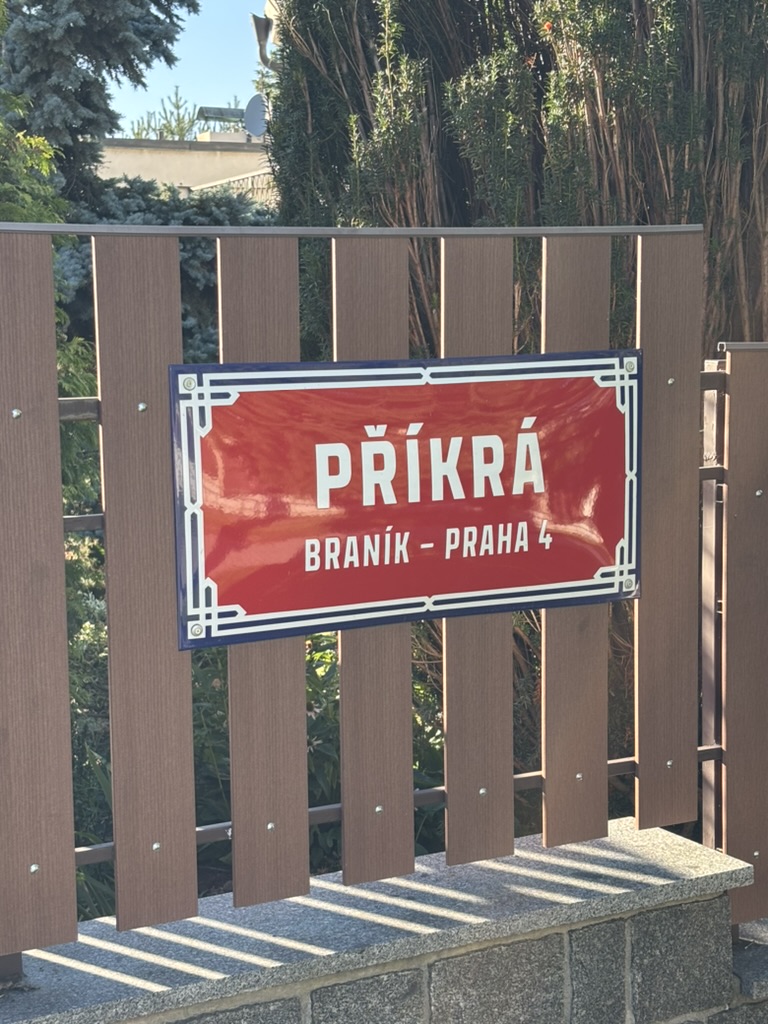
Braník is known for the Branické skály, or the Braník Rocks, designated as natural monument in 1968.
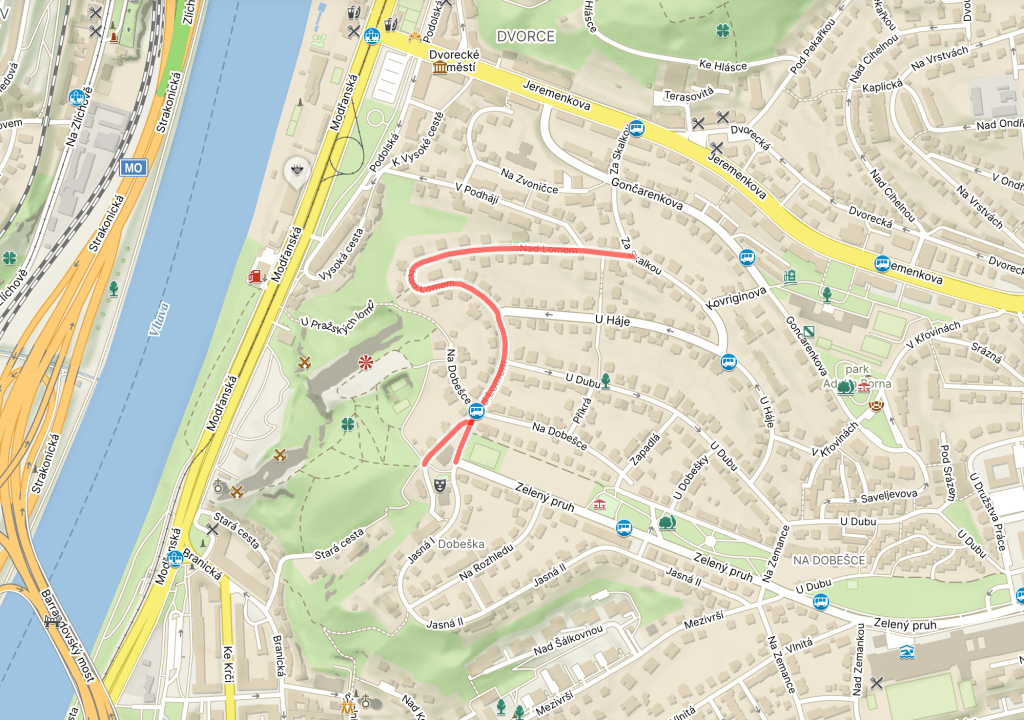
From the 1700s (maybe earlier) until 1928, limestone was mined round here. Mining involves quarries, and the Czech for ‘quarry’ is ‘lom’ – hence this street being ‘Above the quarry’.
However, wander along Nad lomem, and you might find yourself paying less attention to the landscape and more attention to some seriously swish houses.
One of these is the Prager and Louda Villa.
In 1968, the architect Karel Prager – known for, erm, not universally loved buildings such as the New Stage of the National Theatre (see below and/or https://whatsinapraguestreetname.com/2024/09/14/prague-1-day-105-divadelni/) and the new building of the National Museum – built the villa to live in.
It was shaped like a cube and had a flat roof. In 1978, his son-in-law, Jan Louda, added a half-cylinder, made of metal, to the roof, an extension so big that it added two floors to the building.
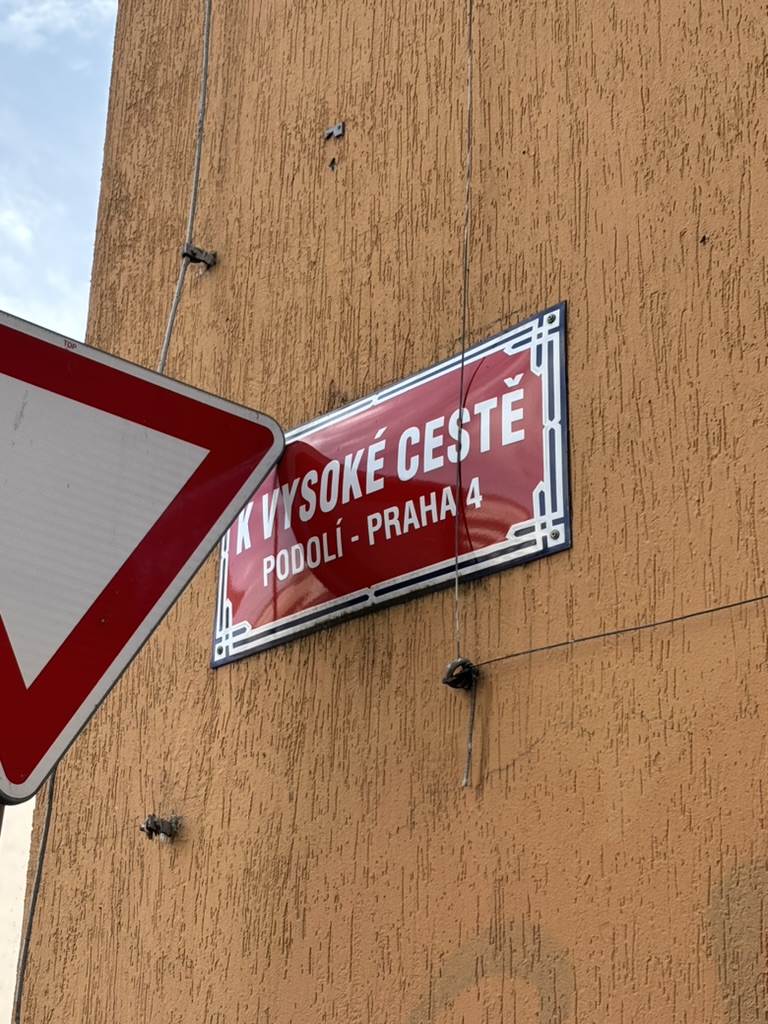
‘Vysoká cesta’ translates as ‘high road’, and, in relation to the terrain directly to the west, this is accurate.
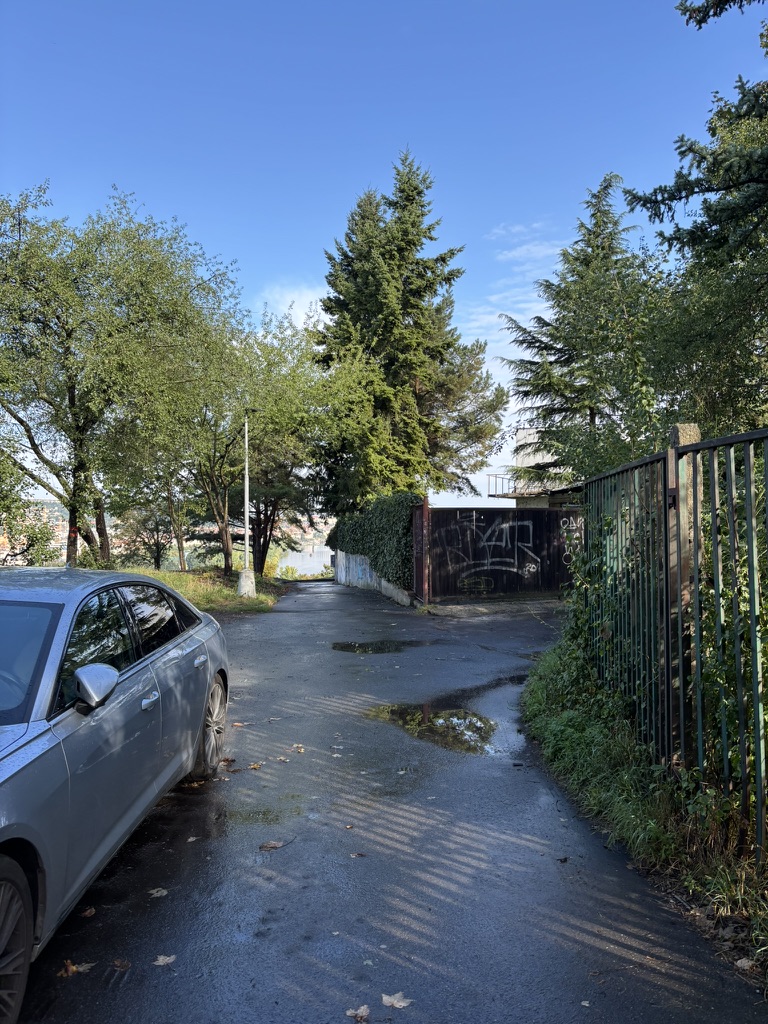
Though it kind of blows my mind that anywhere that looks like this qualifies for street status at all.
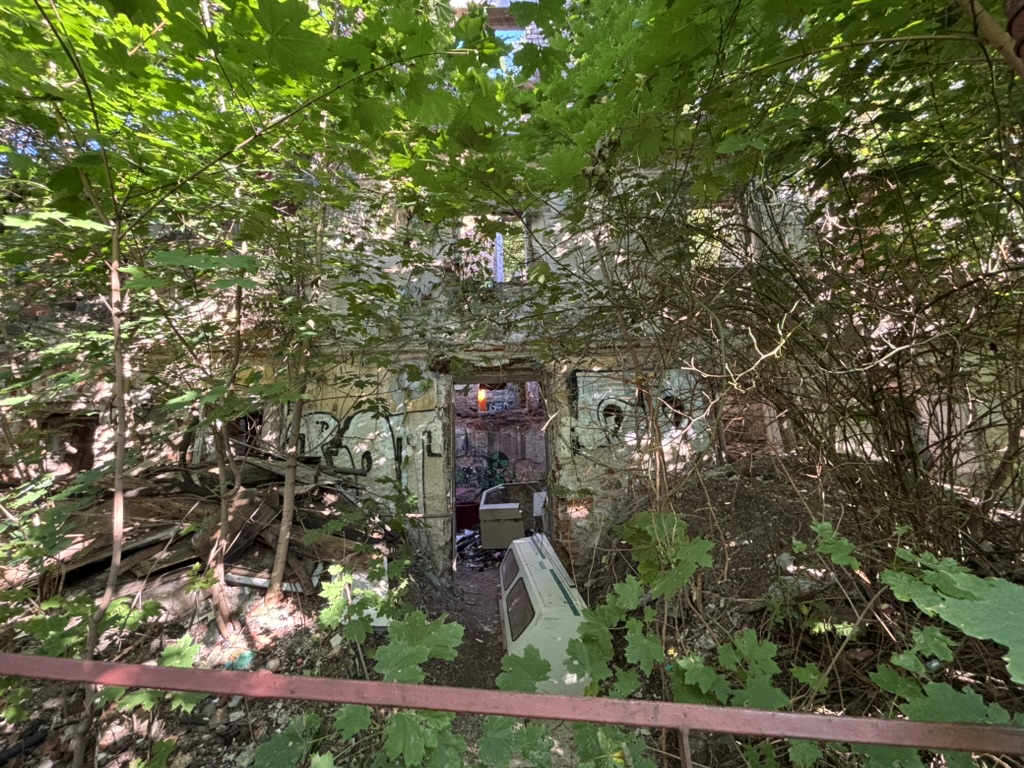
My mind is equally blown by the villa at number 24 – creatively referred to online as ‘Vila na Vysoké cestě’ – mainly because it took me a fair bit of time to identify where number 24 was at all, only to realise it looks like this.
The family house was built in the first quarter of the 1800s; only the perimeter walls are still standing.
From 1958 to 2012, it was listed as an immovable cultural monument, as it demonstrates Braník’s classicist suburban development, as well as the integration of housing into the landscape.
It’s a heck of a lot more integrated into the landscape than ever now, you could say.
Modřany was completely burnt down during the Hussite Wars, and, in 1429, was the site of fighting between Hussites and Catholics. The parts of Modřany which had belonged to Vyšehrad became the property of Prague’s Old Town.
They would then lose it again in 1547, as punishment for resisting against Ferdinand I and the Habsburg regime in general.
In the 19th century, Modřany – rural up until this point – became a suburban area. It became an independent parish in 1855, had passenger trains to Prague from 1881, and acquired its own post and telegraph office in 1891.
It wasn’t until 1968 that Modřany officially became part of Prague.
There’ll be a lot more to say about Modřany when we start walking down its streets – but, as it’s in Prague 12, I’m in the slightly terrifying position of saying, for the first time ever, ‘I’ll do that in the coming decade’.
In the meantime, that’s us done with Podolí! Braník coverage begins tomorrow.
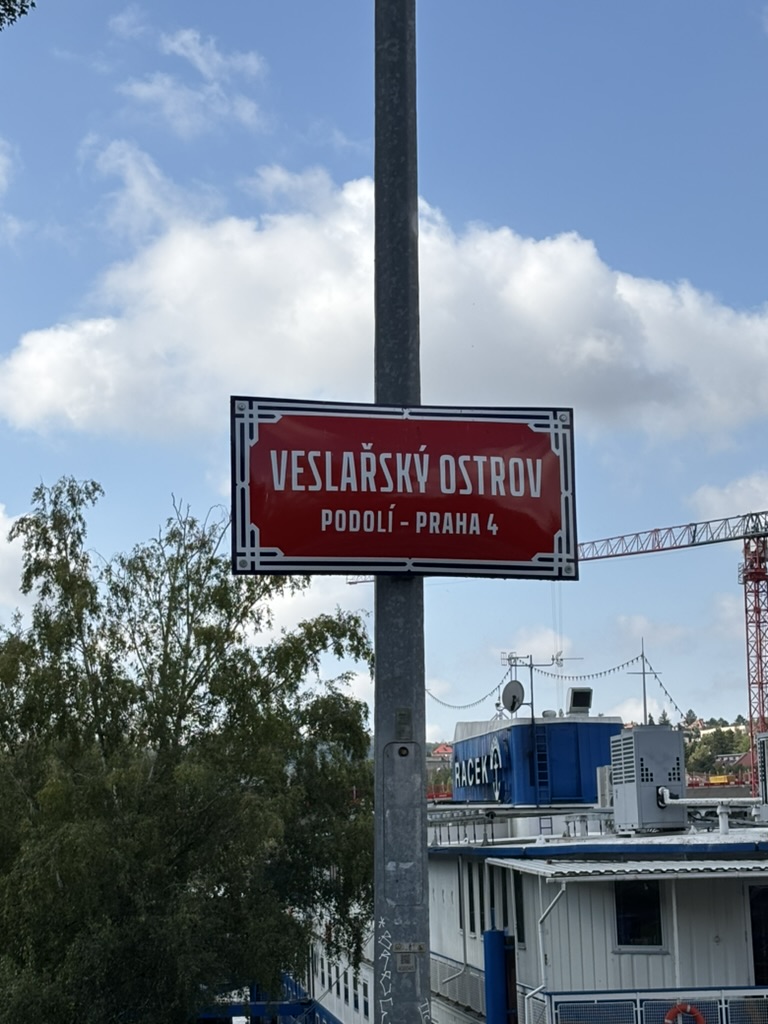
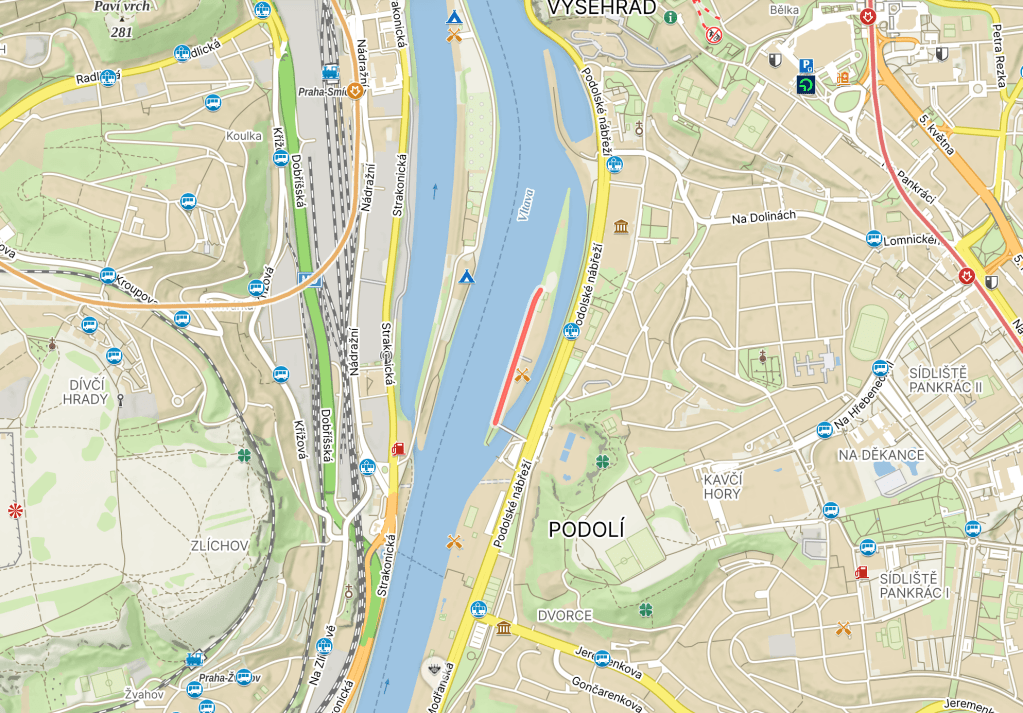
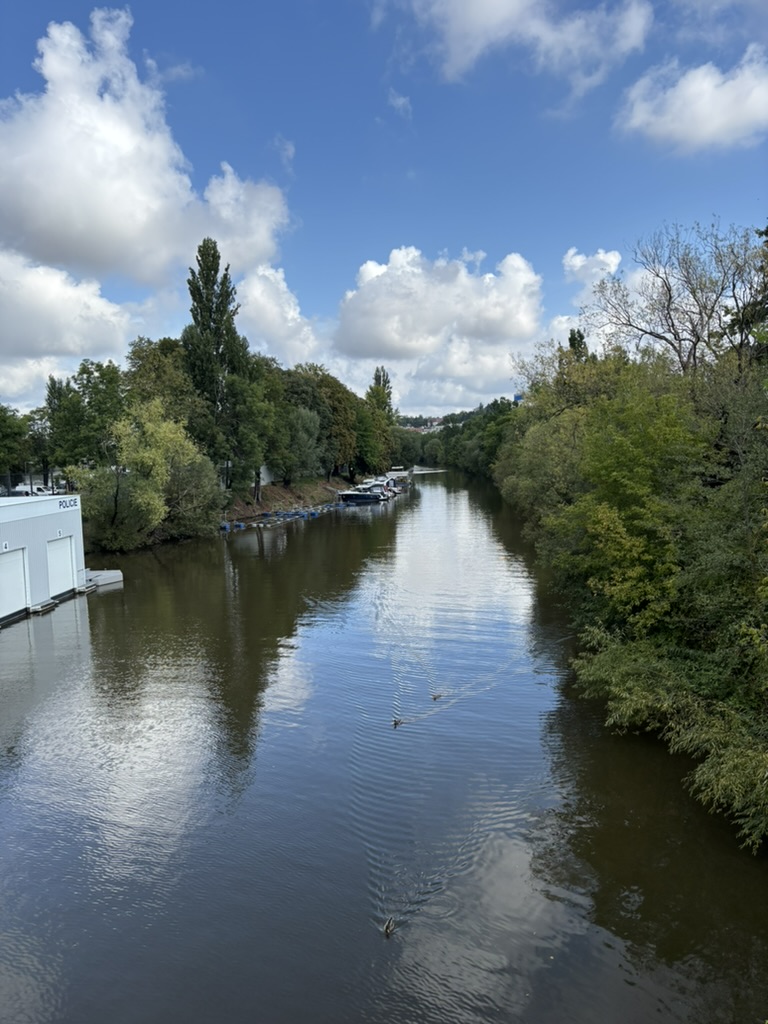
When rafting became less important, the island became something of a sports centre; it has clubhouses, shipyards and other sports facilities for rowing.
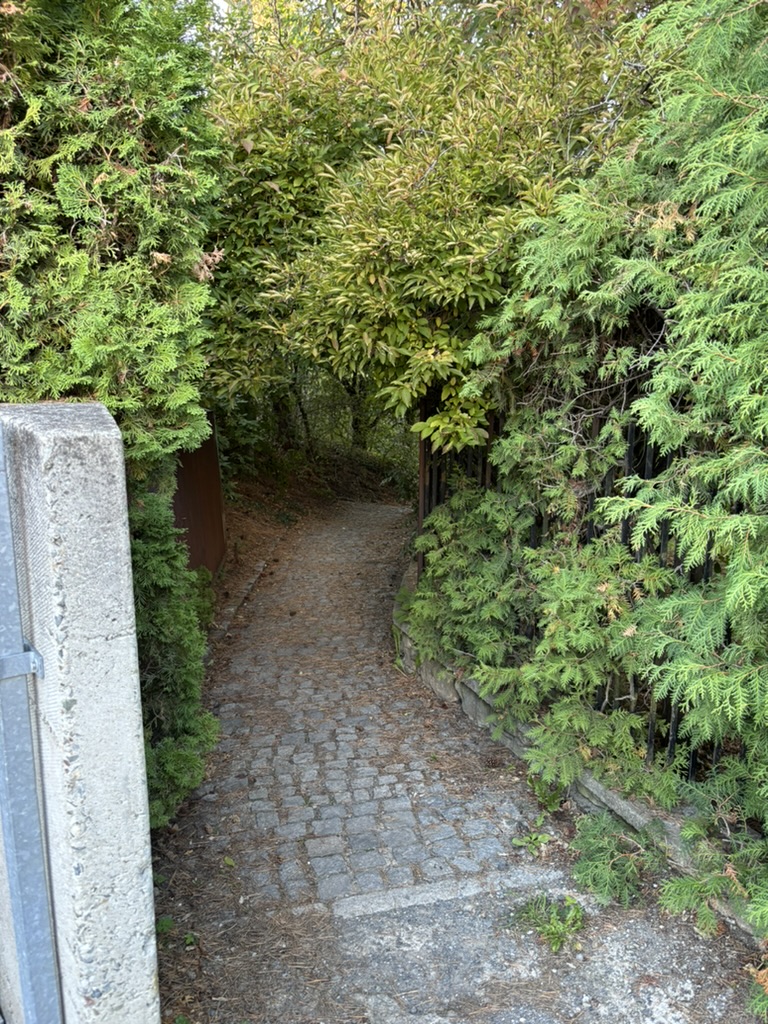
I don’t know if it has a street sign, and felt like I might be walking on private property anyway, as fairly well proven by this picture, so I decided it was wise to stop looking for one.
Regular broadcasting started in 1954, the first live broadcast (an ice hockey match vs. a Swedish team) happened in 1955, and by the end of the year, there were also studios in Bratislava and Ostrava.
In December 1957, the television and radio companies were separated – and Československá televize (ČST) came into being. Further studios appeared in Brno (1961) and Košice (1962). The station got its first logo in 1963.
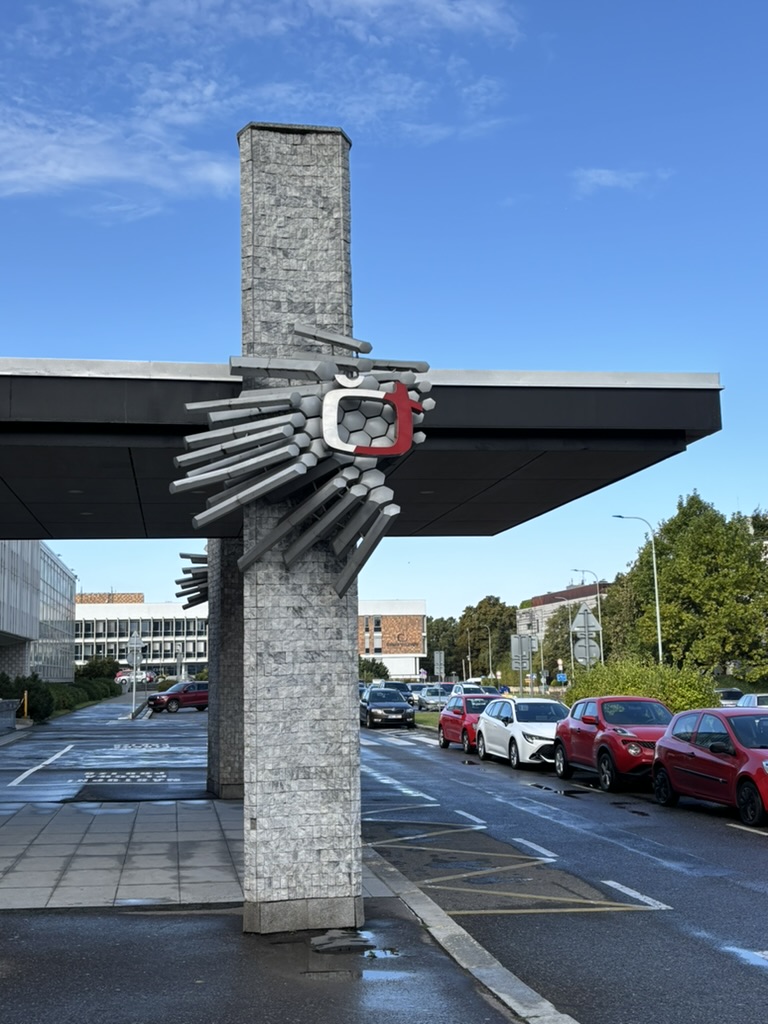
It was around this time that the complex at Kavči hory – the reason why we’re talking about this today – started to be built, although the first operations there wouldn’t start until 1970, and full operations wouldn’t commence until 1979.
Regular colour broadcasting began in 1973 on the second channel (which had been launched in 1970, also the same year as the first colour broadcast – a skiing competition); in 1979, a separate building for the newsroom was put into operation.
This is the logo as it looked in 1980, and would look for another ten years.
During the Velvet Revolution, ČST reported extensively, and its staff made a conscious decision to side with the demonstrators. Inevitably, the aftermath of the revolution meant that a lot of the old guard got replaced.
In 1990, a third channel – OK3, mainly broadcasting foreign content, and since replaced by ČT3 – was launched. The second channel was divided into two – one Czech and one Slovak.
By January 1992 – so, a year before the Velvet Divorce – Slovenská televizia (STV) and Česká televize (ČT) – were already in existence. ČST’s sole function was to produce news content, and it was dissolved – along with Czechoslovakia – on 31 December 1992.
For a real piece of history, this is how the TV guide looked on 31 December 1992, and how it looked on 1 January 1993.
ČT3 closed down at the end of 1993 to make way for Nova, the country’s first private television station (extremely 1993 logo of ČT below).
While this logo is from 1997, and is also quite 1997.
Moving with the times, ČT first tried its hand at digital and internet broadcasting in 2000 – but then it got attention for other reasons.
In December, a new director general and director of news were appointed; many staff didn’t approve, so much so that, while the new team got on with broadcasting on terrestrial television, the rebels broadcast their own news programmes via satellite.
The Czech Parliament sided with the rebels; dismissal of the Czech Television Council and a new interim director general resulted in the strike ending in February 2001.
Further channels have appeared since: the news channel, ČT24 (2005), ČT sport (2006), kids’ channel ČT 😀 (2013) and the cultural ČT art (2013). ČT3, meanwhile, made a temporary comeback from 2020 to 2023, initially to give people a nostalgia kick during lockdown.
In terms of viewership, ČT comes first if you consider the entire day, second if you consider primetime only, and its news service has been considered the most trustworthy news medium in the country.
K vysoké cestě leads to Vysoká cesta, a road whose name translates as ‘The High Way’ or similar (not a ‘highway’, though, and ‘cesta’ has more than one translation).
I would reveal more, but I’m trying to get all the Podolí streets done before I move on to Braník, and there are three to go before I can do that. But I will say that Vysoká cesta reminds me of no other street that I’ve written about so far.
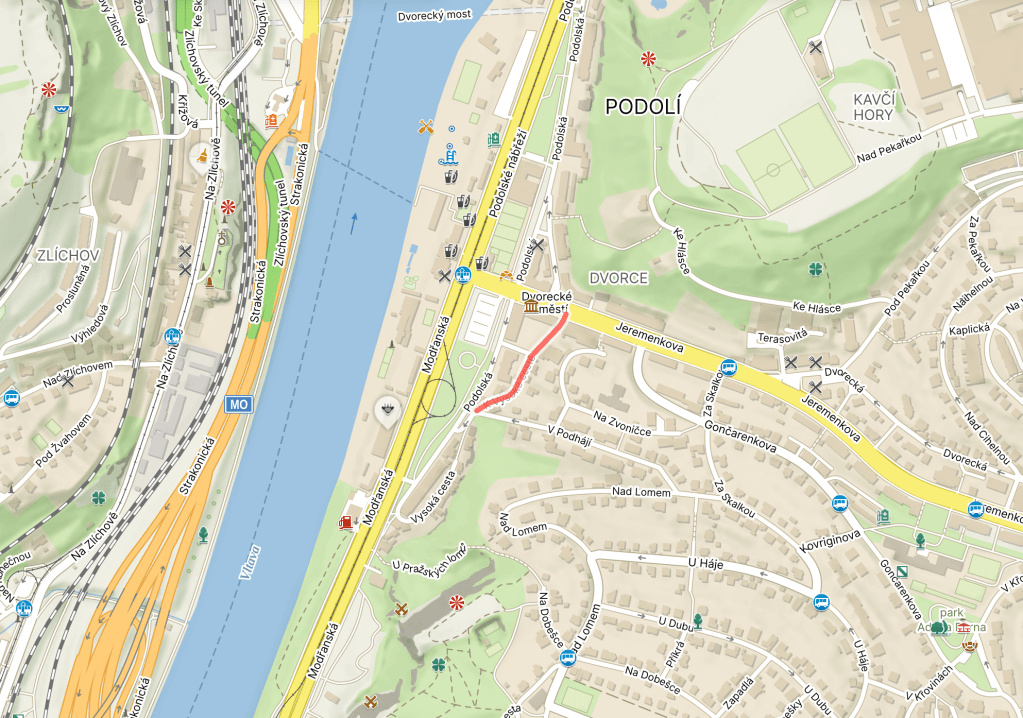
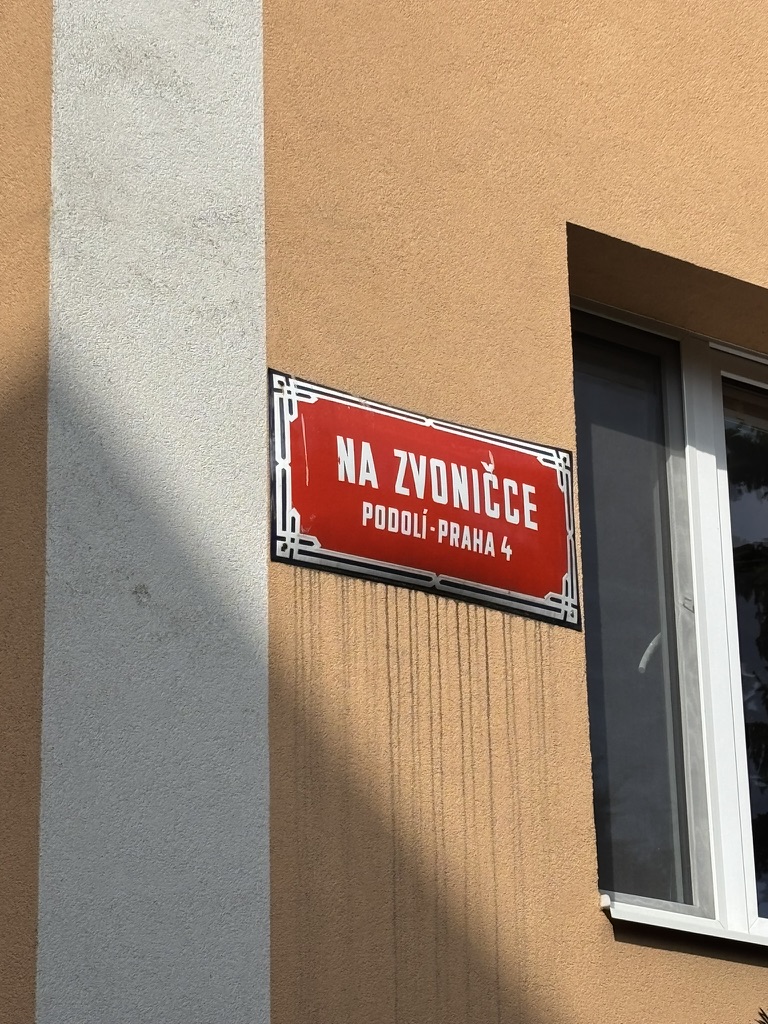
A ‘zvonička’ is a bell tower. Zvonička was also the name of a farmstead round here, existing until about 1850.
I went to Google looking for specifics, but mainly came back realising just how awful (and, somehow, condescending) Google’s AI search results can be, including in Czech.
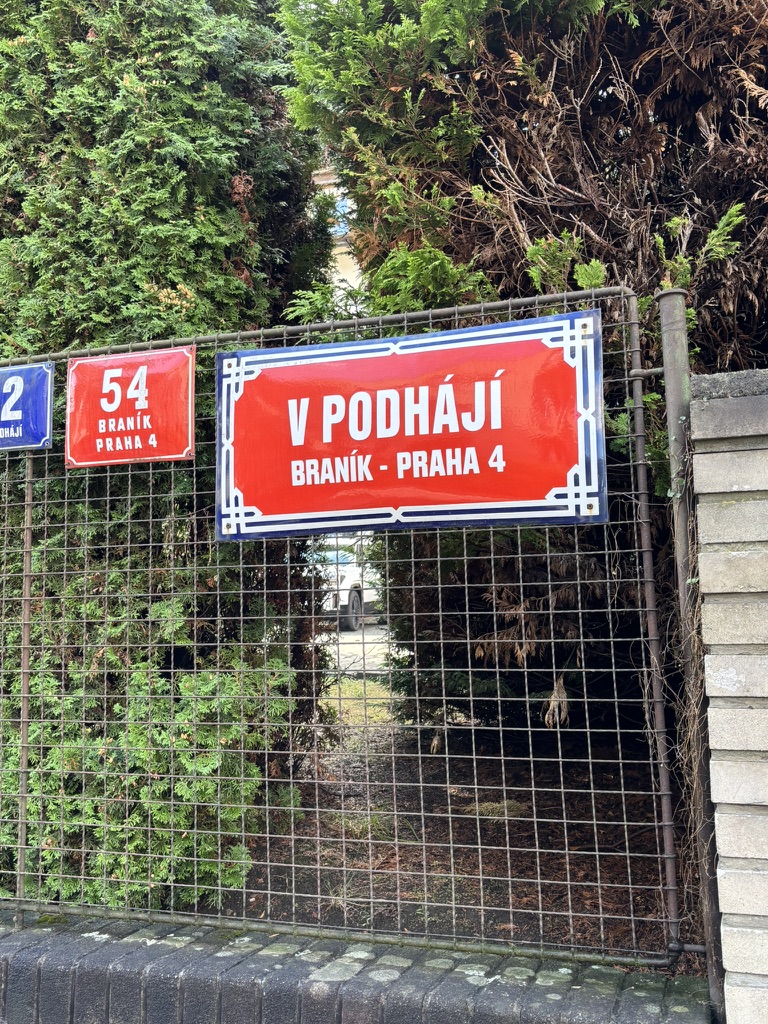
A ‘háj’ – the plural of which is Háje, as in the last stop on the red metro line – is a ‘grove’, or a dense collection of trees which isn’t big enough to qualify as a forest.
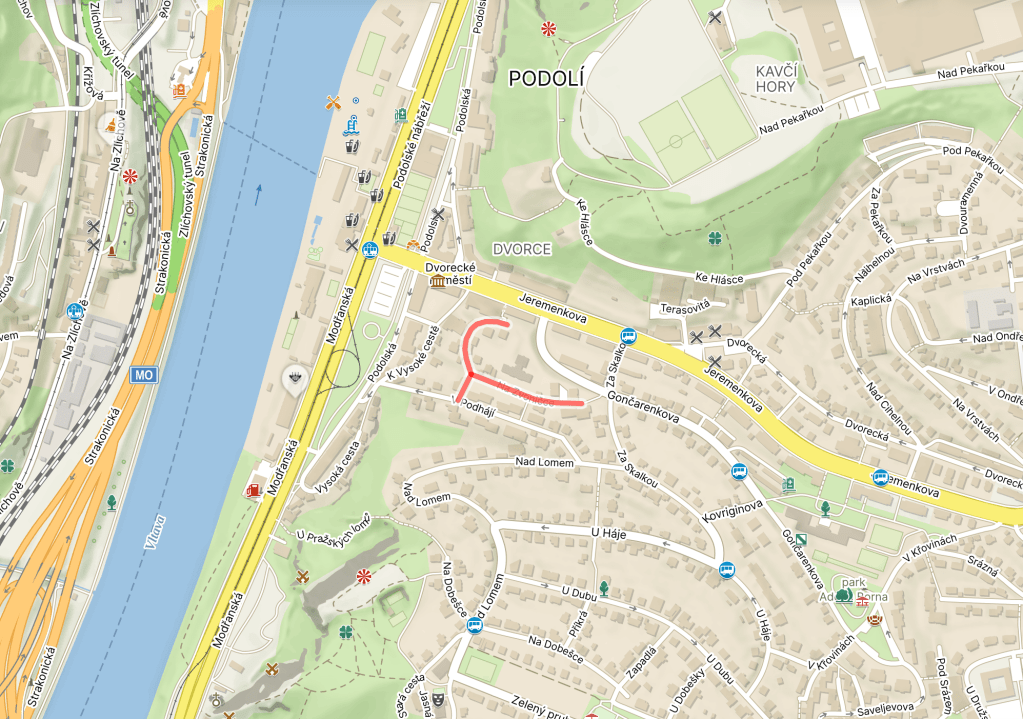
I guess a reasonable translation of ‘podhájí’ would be ‘undergrowth’. Once upon a time, it was quite forested (groved?) round here, hence Podhájí becoming a local place name.
There are at least ten places across the country called Podhájí too, and a town of about 1,150 people called Podhájska in the Nitra region of Slovakia.
From 1934 to 1952, the street was called Podhájská; from 1952 to 1957, it was called Na Zvoničce; from 1957 to 1973, it was called Na Zvoničce II. I’m saying nothing about those names, as all will become clear in the next few days.
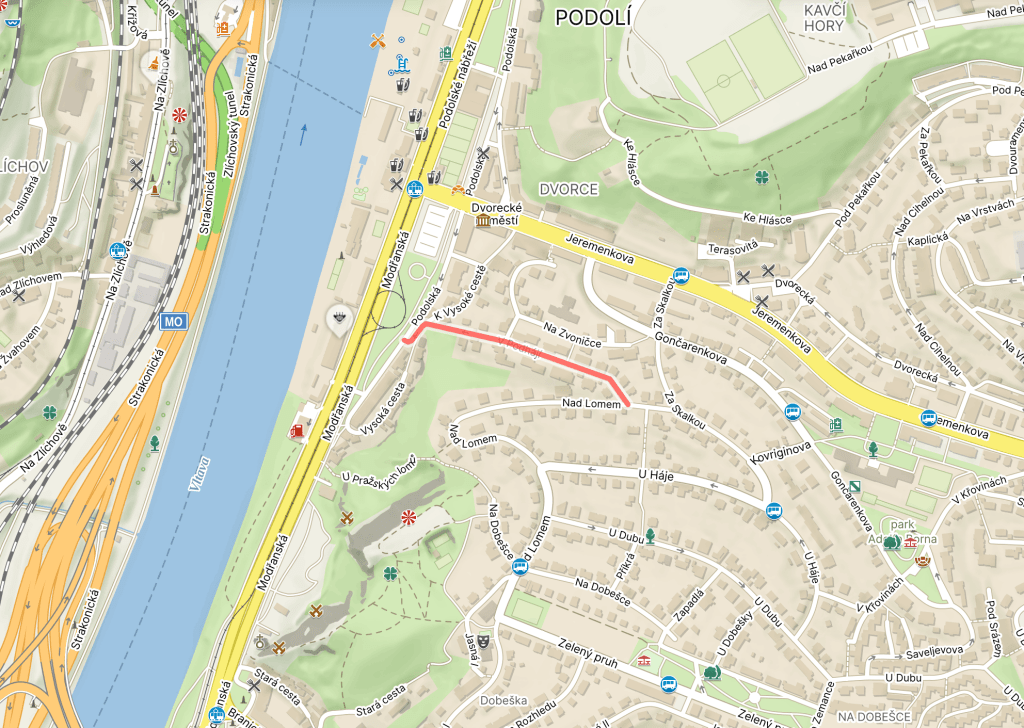
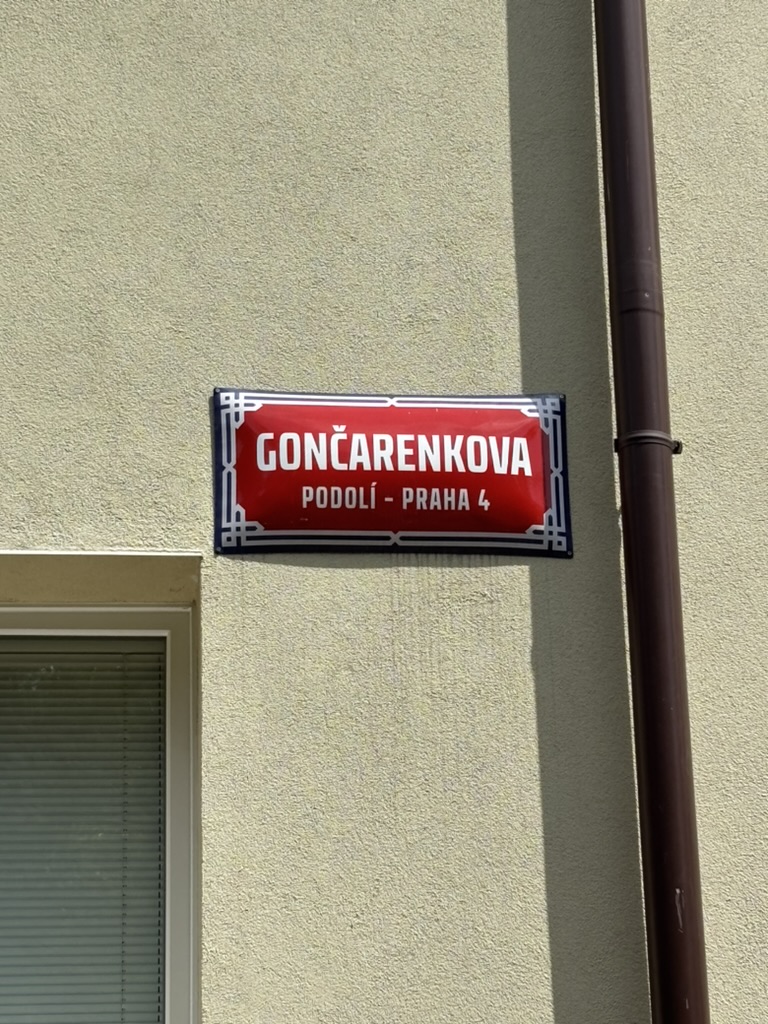
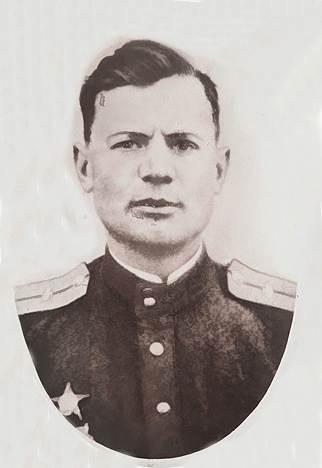
Ivan Hryhorovych Hončarenko was born in Sushylyne, a village in Sumy Oblast, Ukraine, in 1920. In 1940, he joined the Red Army.
Graduating from military school in 1941, he was assigned to a tank brigade on the Central Front, where he fought from June to December of that year.
In 1944, Honcharenko became commander of a tank in the 1st Tank Battalion of the 63rd Guards Tank Brigade “Chelyabinsk”.
In the very early hours of 9 May 1945, a reconnaissance platoon of three tanks made up the first group of Soviet troops to enter Prague (from the north-west). Honcharenko was in charge of one of these tanks.
The grave outlived the Velvet Revolution; in 1998, construction of an underground garage meant that all remains of Soviet soldiers were transferred to the Soviet war cemetery at Olšany.
But let’s rewind a little.
On 29 July 1945, meanwhile, the Monument to Soviet Tank Crews was erected on present-Náměstí Kinských (in Smíchov); the square (which will get its own post in… 2027, at this rate) would be renamed in 1952 as náměstí Sovětských tankistů, which barely needs translating.
In 1956, when Soviet tanks entered Budapest, the regime had all the engine parts and transmission removed. It’s almost like they realised the population wasn’t that into them and would like an opportunity to take action against them, isn’t it?
(tank pictured in 1961; credit to FOTO:FORTEPAN / Gyöngyi)
After the Velvet Revolution in 1989 – by which time Soviet tanks were mainly associated, in the public imagination, with the invasion of 1968, rather than 1945 – it was pretty clear that this monument was no longer welcome.
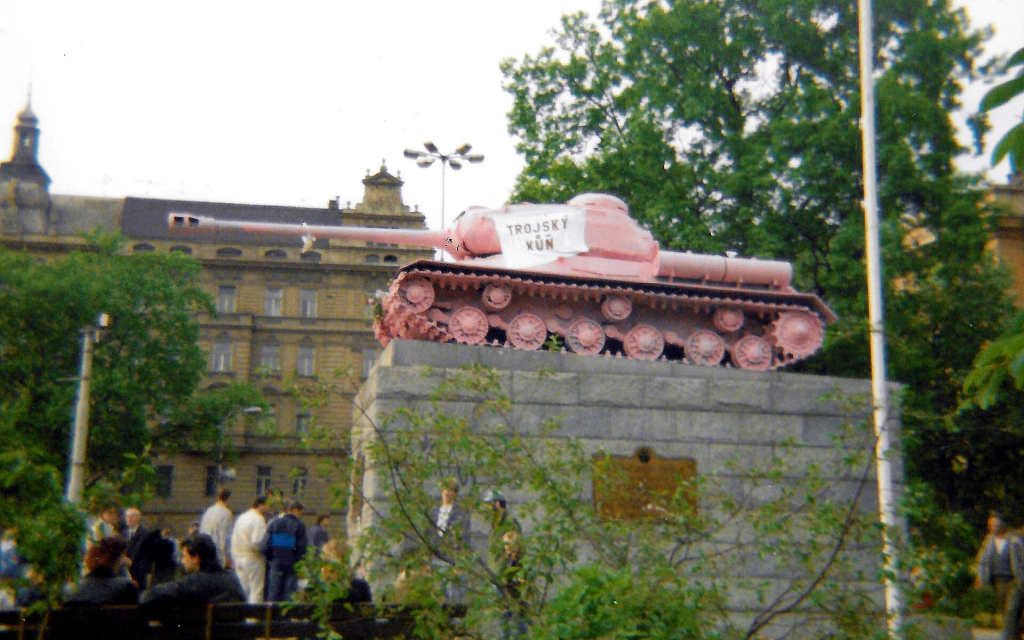
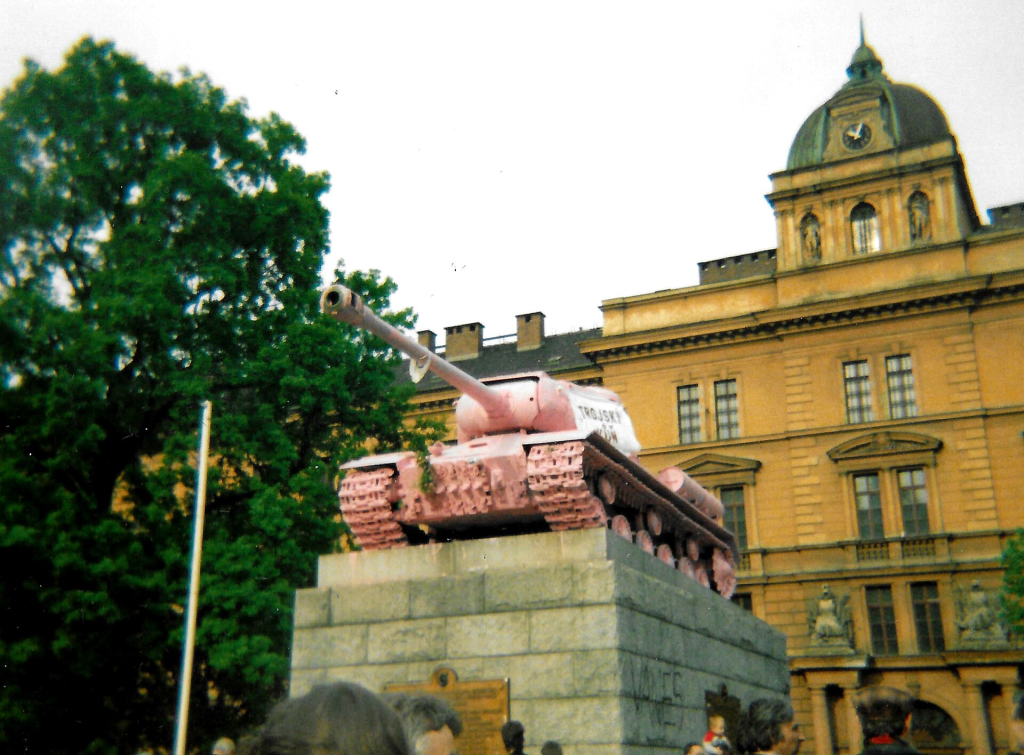
One night in April 1991, a 23-year-old art student, one David Černý, painted the tank pink. The Soviet Union – about as dynamic as the tank by this stage – protested, Černý was charged with hooliganism, and the authorities had the tank painted green again.
These quite incredible pictures have been shared on Wikipedia by a user called Meloun1212, to whom I am infinitely grateful.
In June 1991 – by which time Černý had been freed – the tank was moved to Kbely Military Museum, and then to Military Technical Museum in Lešany.
In 2005, a motion to have the monument restored was put forward by the Communist Party, for whom ‘ability to read the room’ was clearly not a prerequisite for membership.
In 2011, David Černý, by this time celebrated as a rebel rather than imprisoned as a hooligan, painted the tank pink again, and it was given an outing on the Vltava to celebrate twenty years since Soviet tanks had left Czechoslovakia.
This is one of those cases where I’d like my (brief) research to tie in with itself a little bit better.
The Pražský uličník – AKA my usual first port of all – says that Jindřich Sitte was the progressive headmaster of a school in Braník. It doesn’t say which school, but it does give Sitte’s years on the planet as being 1888 to 1951.
Websites relating to Police nad Metují – a town of 4,100 people in the Hradec Králové region – say that a Jindřich Sitte was born there in, yes, 1888, and died in, yes, 1951.
You would assume these are the same person, but you would also assume that there would be at least one search result mentioning both all the paintings and all the schoolmastering. There isn’t. And Czech Wikipedia – AKA my usual second port of call – only mentions him once in passing.
And my fear of spreading false information – a fear that many people in the world could do with catching – means I’m not going to confirm that all these sources are talking about the same man.
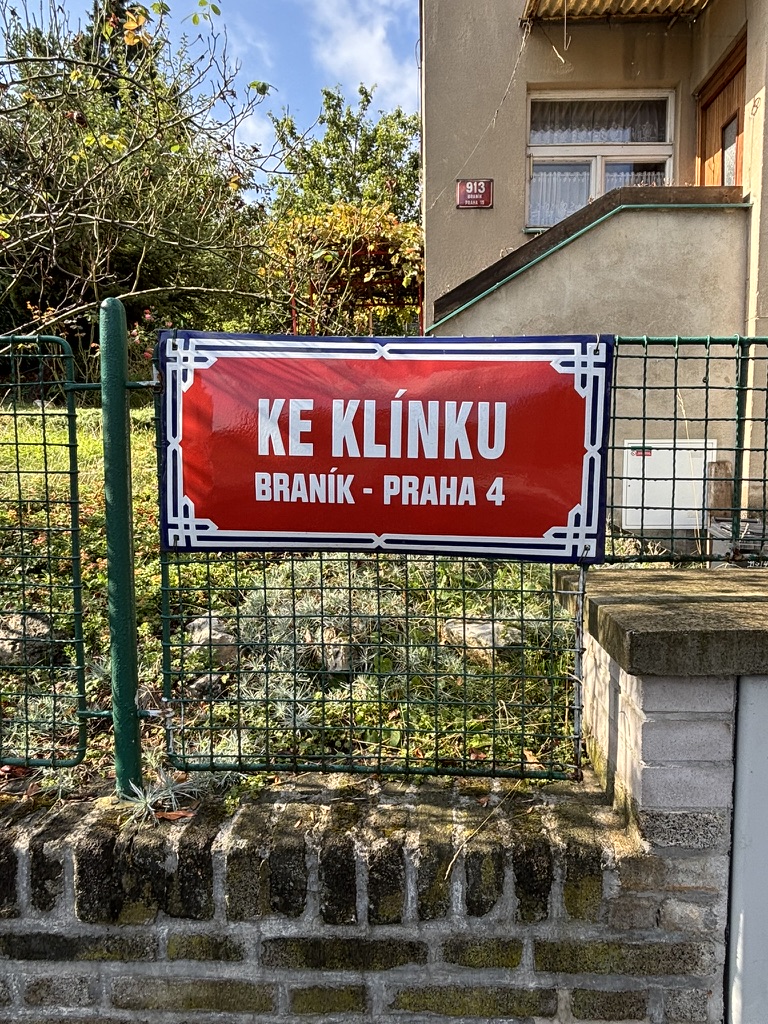
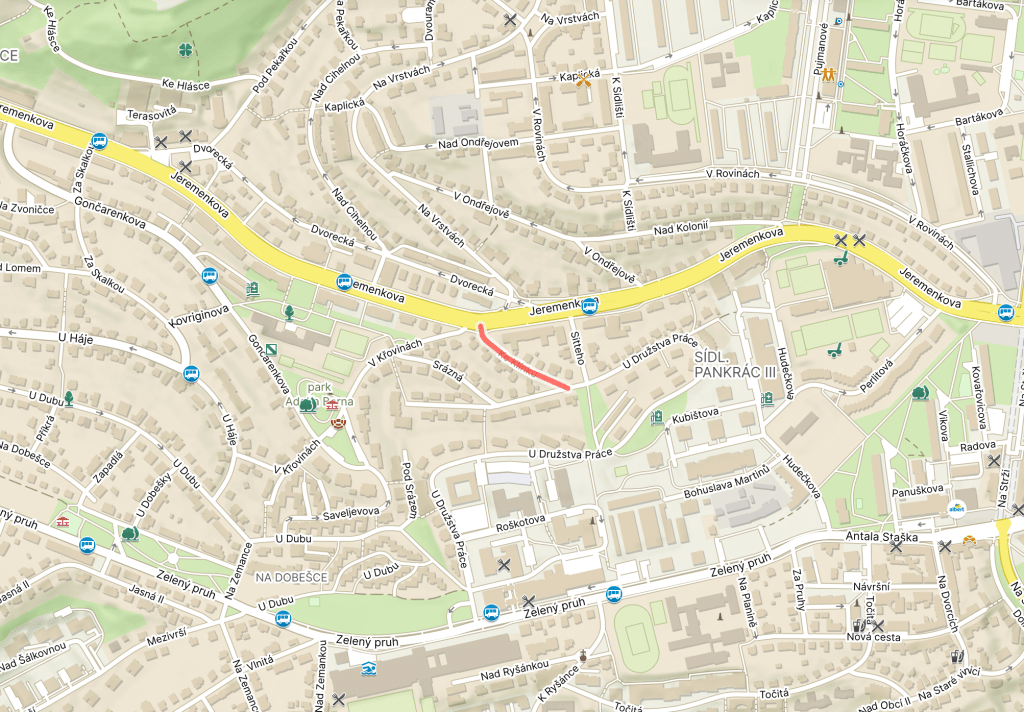
Ke Klínku was built in 1955. Despite the street sign, it’s partially in Podolí (we’re officially getting out of Podolí and officially getting into Braník in about ten days).
If you want a translation of ‘klín’, take your pick from the following non-exhaustive list: wedge / gore / gusset / lap / knees / crotch. Quite a range.
A ‘klínek’, meanwhile, could be translated as the first three of those – but also as ‘doorstop’.
Whichever of these you choose (I’m not willing to commit to one), it seems that the street leads to a place that, once upon a time, was known as Klínek. There are at least two villages called that elsewhere in the country.
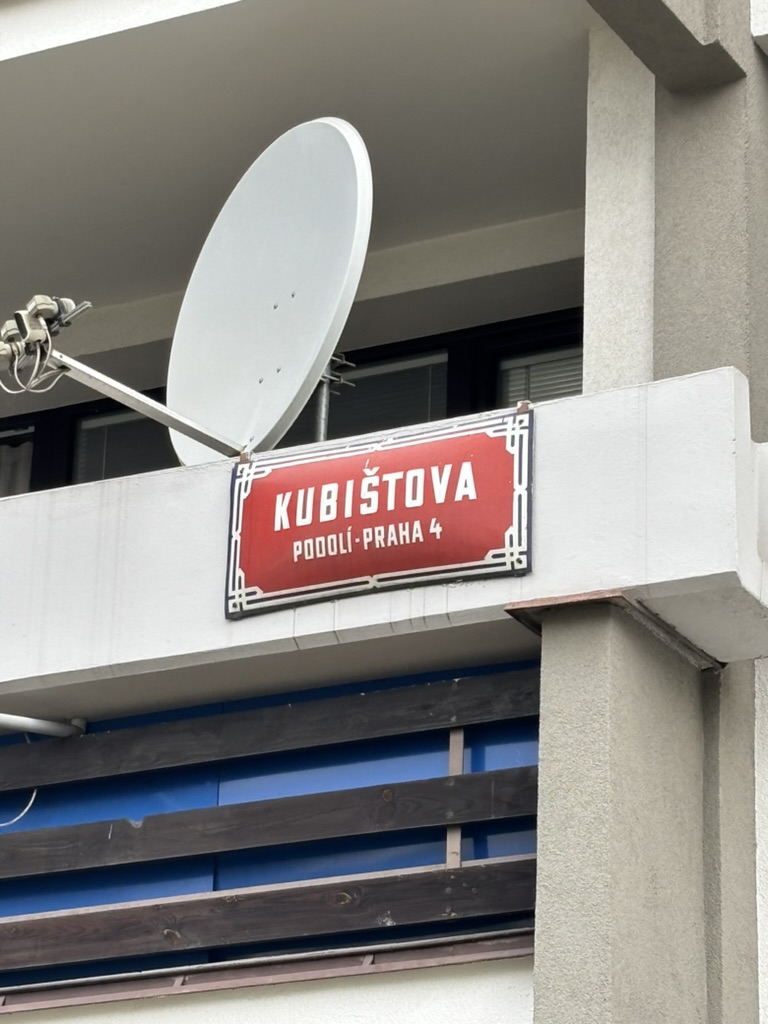
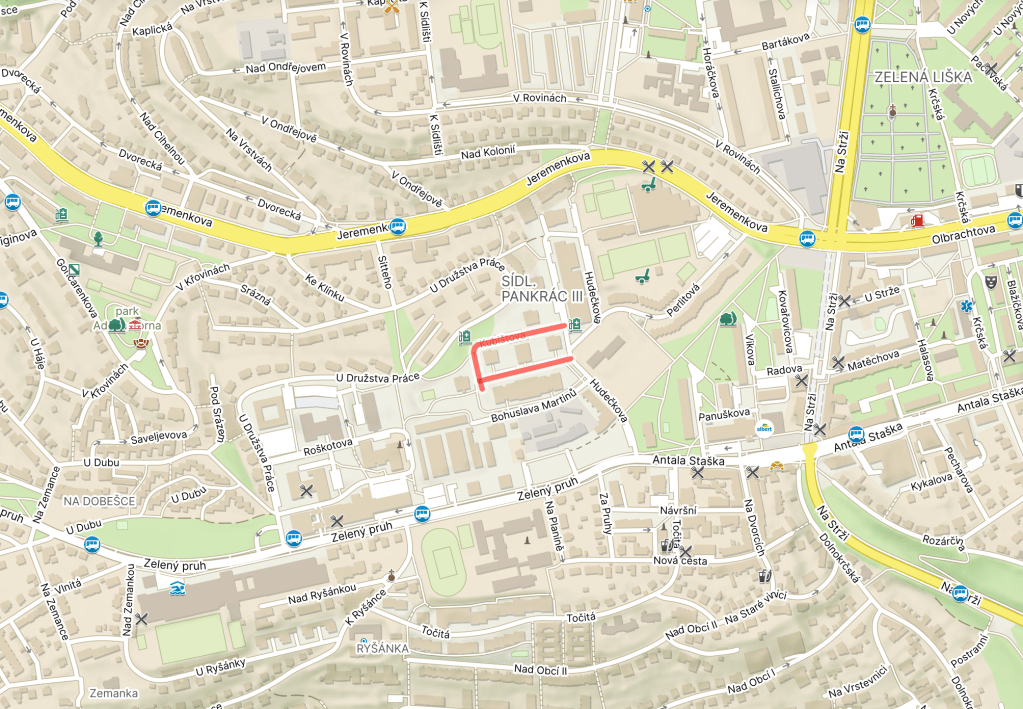
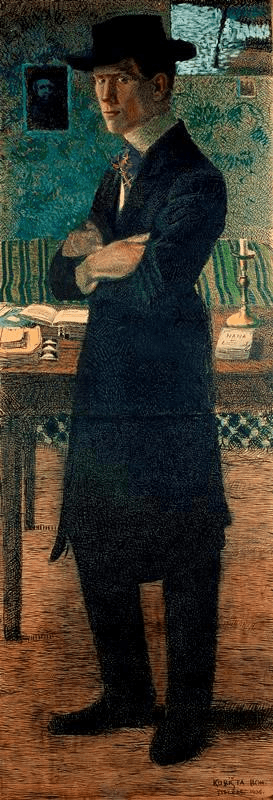
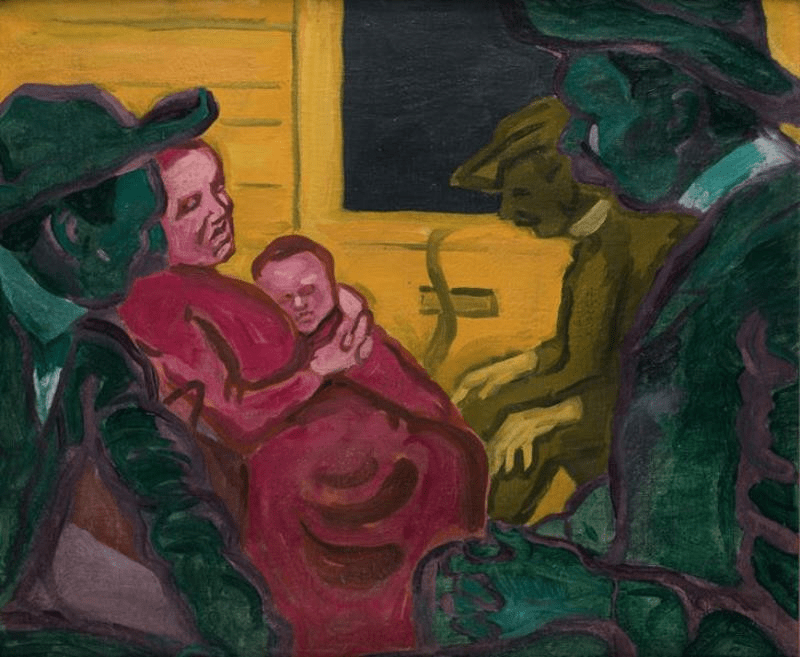
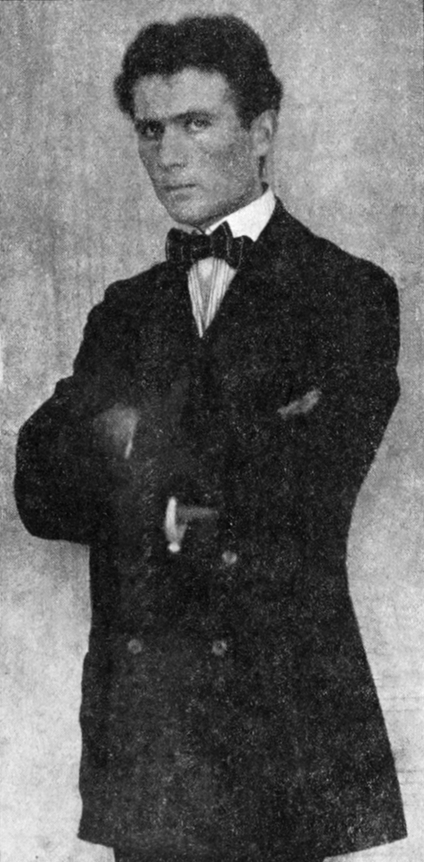
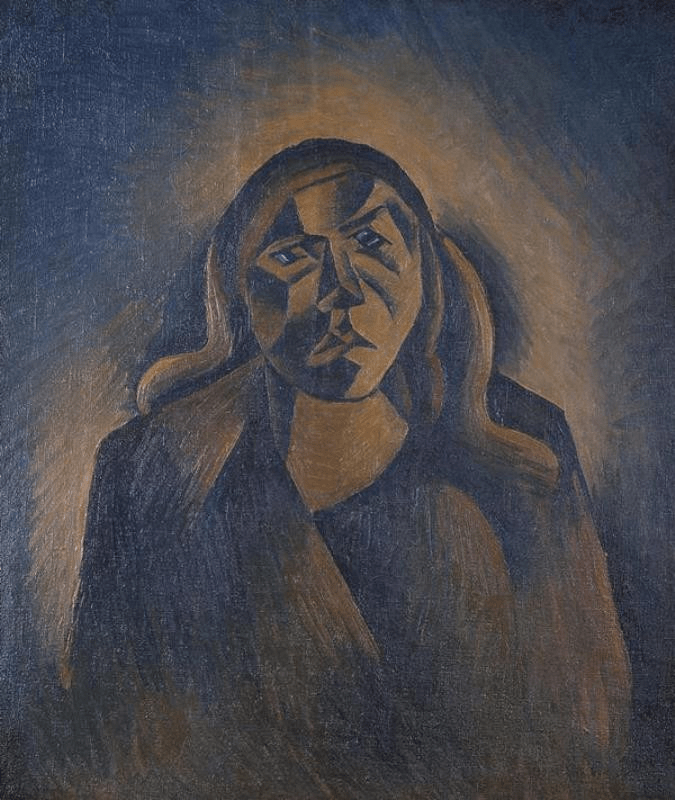
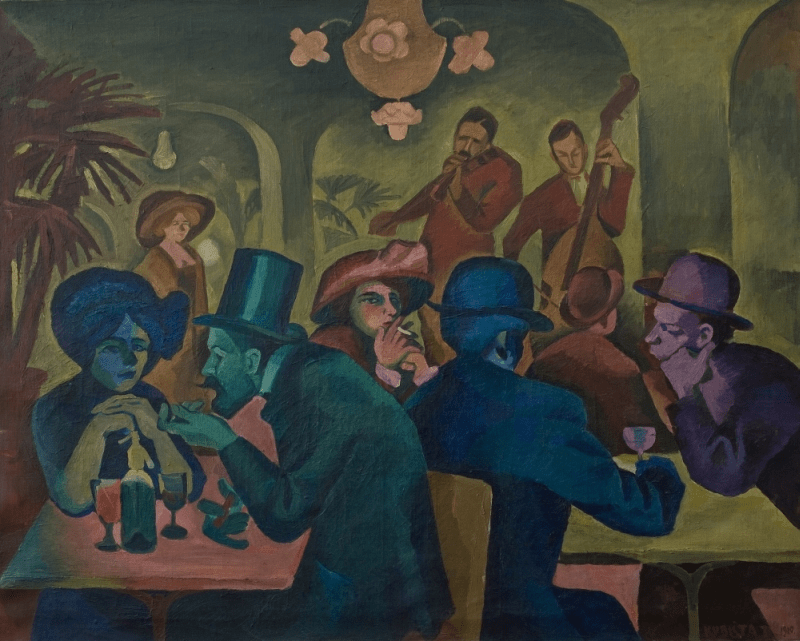
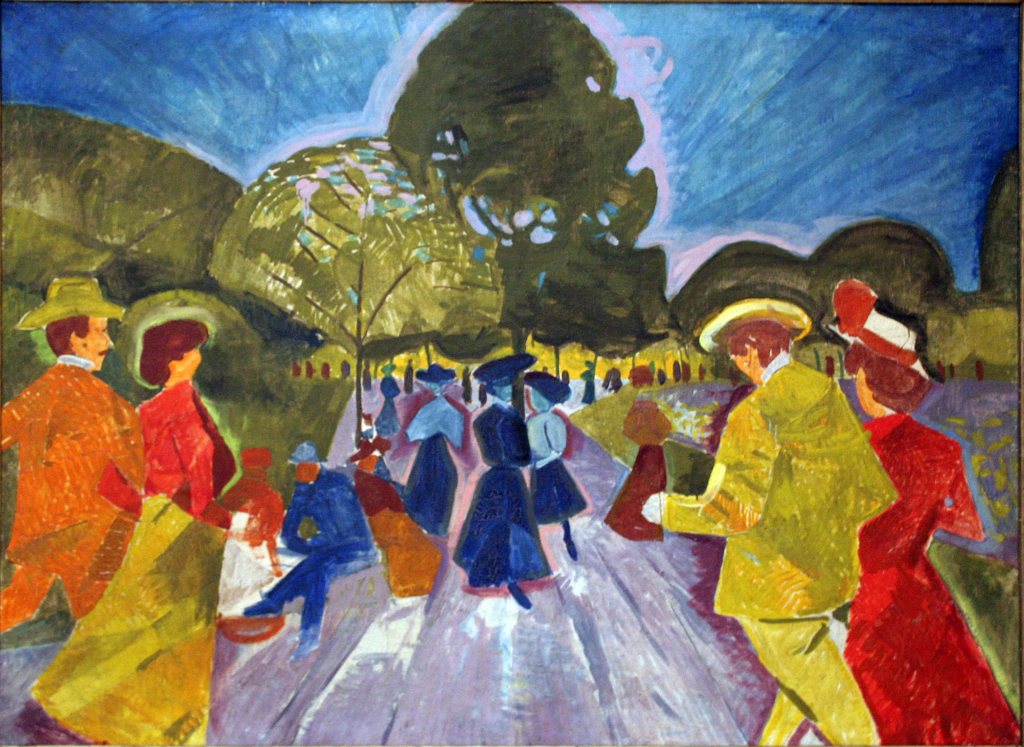
Bohumil Kubišta was born Vlčkovice near Hradec Králové in 1884; he was an illegitimate child, and his family was poor.
Developing an interest in fine arts while at secondary school in HK, he started studying at Prague’s School of Applied Arts in 1903, but moved to the Academy of Fine Arts in 1904. He left both due to conflicts with his teachers.
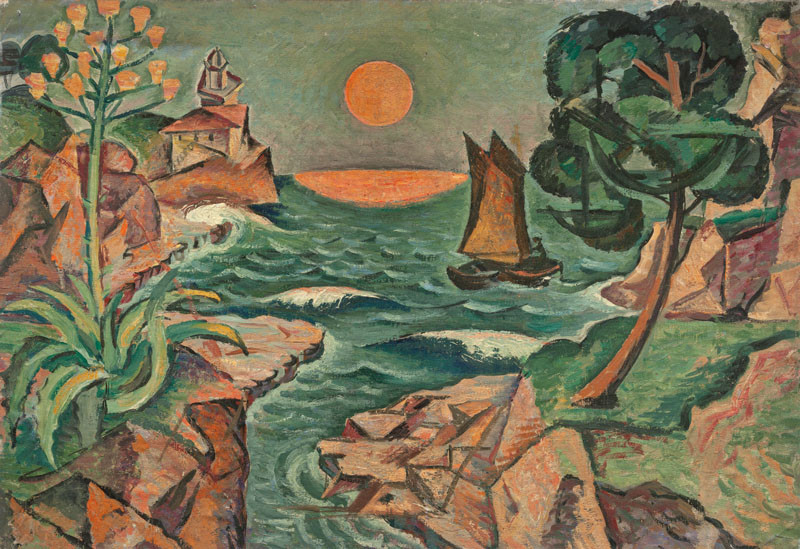
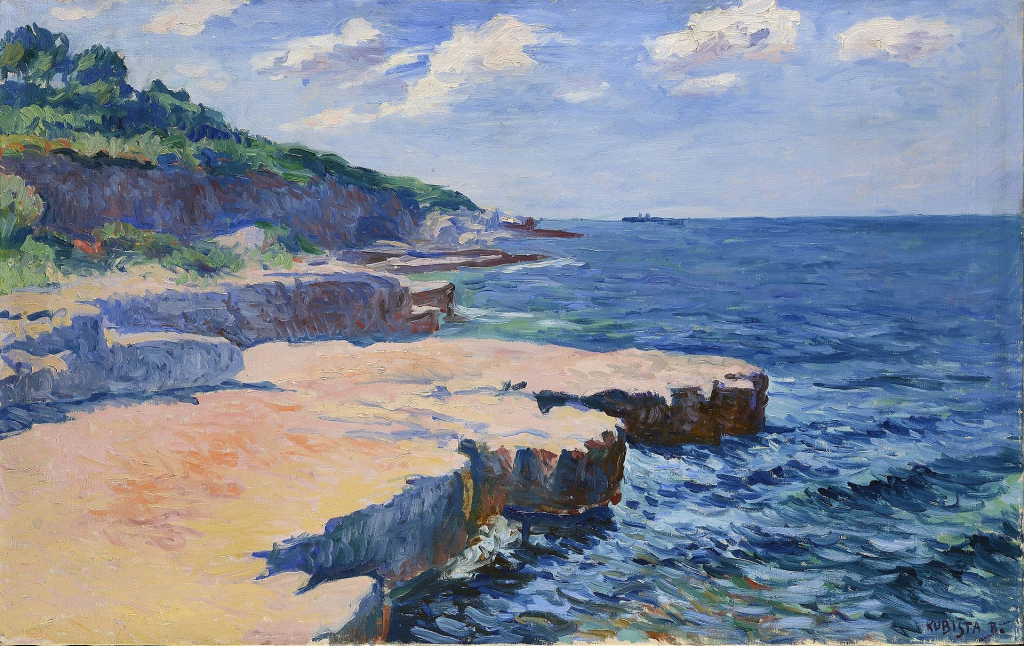
So, in 1904, he went to Pula, now in Croatia, to start military service (the painting below represents the sunset over the Adriatic). He graduated in 1906, and then went to Florence to study at the Reale instituto delle belle arti. He left after a term. There’s a pattern here.
Returning to Prague in 1907, Kubišta displayed fourteen of his paintings at an exhibition, and met the literary critic František Xaver Šalda, who would become a supporter. However, he struggled to make money, and started studying at the Technical University… leaving after a year.
With his uncle’s financial support, Kubišta went to Paris in 1909. He managed to make ends meet by writing articles on fine art, and established useful contacts among French painters.
Returning to Prague in 1910, he managed to make himself unpopular with several older landscape painters by writing articles criticising their work. One painter, Josef Ullmann, physically attacked him, and the case went to court.
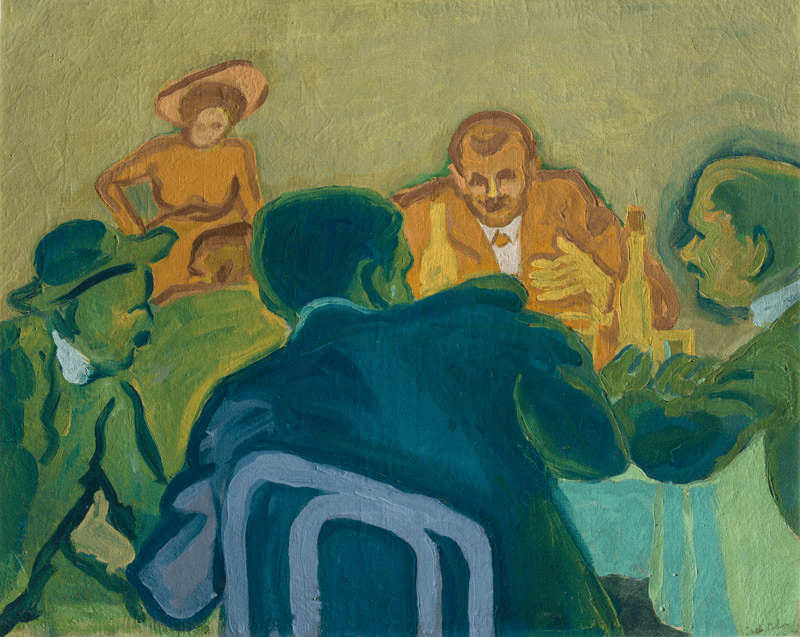
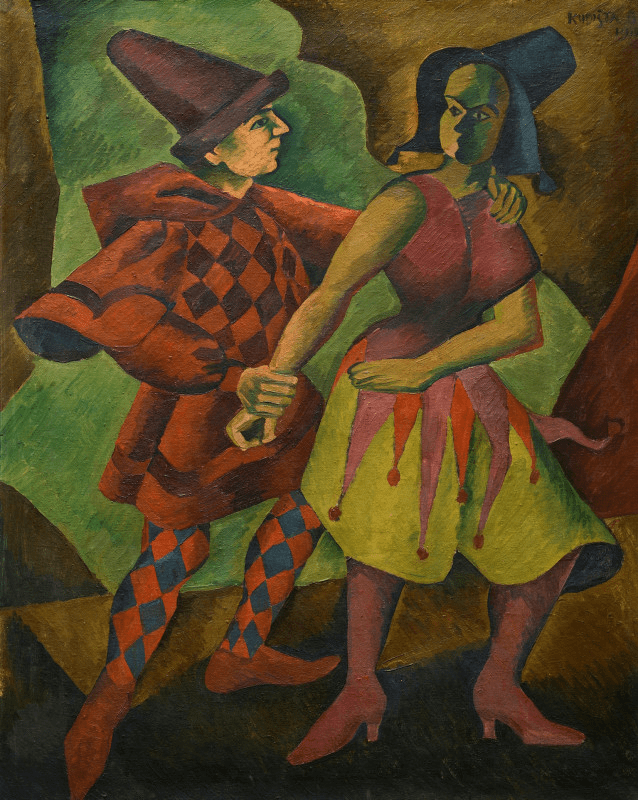
Still failing to earn a decent living, Kubišta rejoined the Austrian army in 1913. During World War One, he served in Pula (painting below), where he had done his military service.
On 27 October 1918 – one day before Czechoslovakia became independent – Kubišta returned to Prague and enlisted in the new country’s army. However, exactly one month later, he died of the Spanish flu. He was 34.
Bohuslav Martinů was born in a church in Polička (near Pardubice) in 1890.
From 1906 to 1910, he attended the Prague Conservatory, studying the violin, the organ and composition, but didn’t complete his studies, partly because he was much more interested in exploring Prague (Bohuslav, I hear you).
However, this didn’t stop him from becoming a violinist in the Czech Philharmonic in 1920. He had already composed a successful cantata, Czech Rhapsody (Česká rapsodie), in 1919.
After composing his first string quartet and two ballads, Martinů left Czechoslovakia for Paris in 1923, where jazz, neoclassicism and ragtime would all leave an imprint on his compositions. Stravinsky was a particular influence.
However, Martinů maintained his links with the homeland, especially through forming a close friendship group with other expats in Paris, and his ballet Špalíček (1932) would incorporate Czech folk tunes.
In 1926, Martinů met Charlotte Quennehen, a seamstress from Picardy. They would marry in 1931.
This is the soprano Ota Horáková, who played Julietta on that day.
After the Munich Agreement was signed, Martinů attempted to join the Czech resistance, but was rejected due to his age. However, he did compose Field Mass / Polní mše, a cantata honouring the Czechs fighting in the French army.
He and Charlotte then decided to flee Paris in 1940 when it became clear that the Nazis were about to occupy the city. They would end up settling in the United States in 1941.
Struggling to adapt to Manhattan – and not speaking English – Martinů would find quieter surroundings (all the easier to compose in) when they moved to Jamaica Estates, Queens.
Charlotte never warmed to America; Martinů also considered returning to Czechoslovakia after World War Two, but, after the Communists took power, he was branded a traitor to the nation, and decided to stay put.
Despite gaining US citizenship in 1952, he mainly lived in France, Italy and Switzerland from 1953 onwards.
Martinů died in Switzerland in 1959; Charlotte would die in 1978. A year later, their remains were transferred to Czechoslovakia; they are both buried in his native Polička.
Here’s a picture of him there with his mother in 1927.
Very nice video on Martinů by the National Museum: