And the prize for ‘most numerous and least helpful Google results for a Prague street name’ goes to…
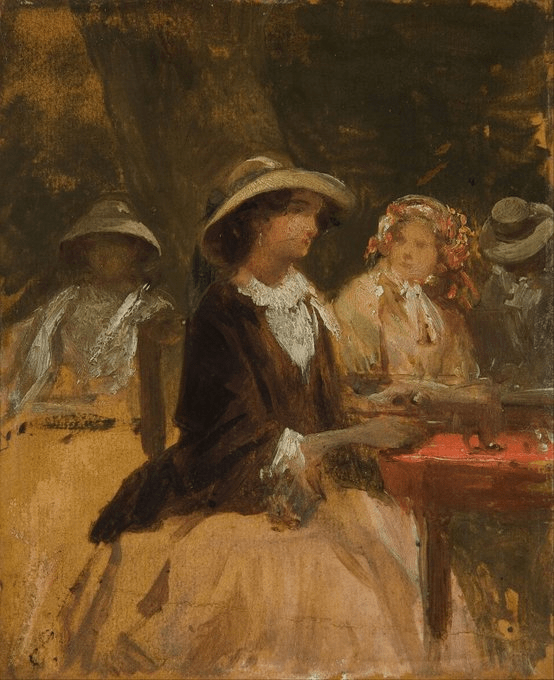
Josef Matěj Navrátil was born in Slaný in 1798, but lived in Prague from 1801. As a child, his father taught him how to paint rooms.
So logically, after graduating from the Prague Academy in 1823, he became a painter-decorator, mainly working in stately homes and castles.
From 1832, he travelled extensively around Europe (with a particular fondness for the Alps), and developed his skills as a landscape painter.
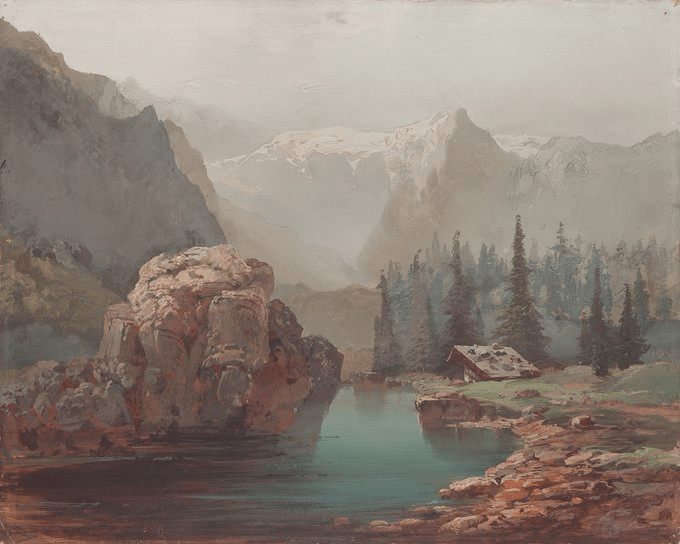
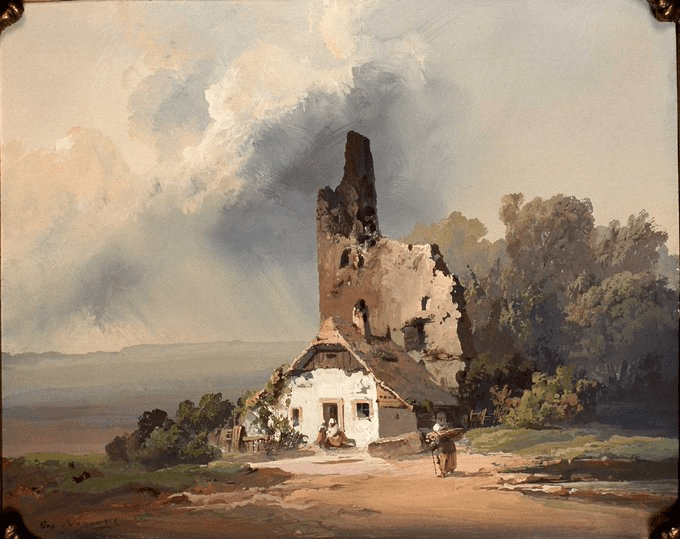
(Pictured: ‘Forest landscape with a girl’, ‘Waterfall on the Mumlava River’, ‘Mountain landscape with lake’ and ‘Landscape with ruins)
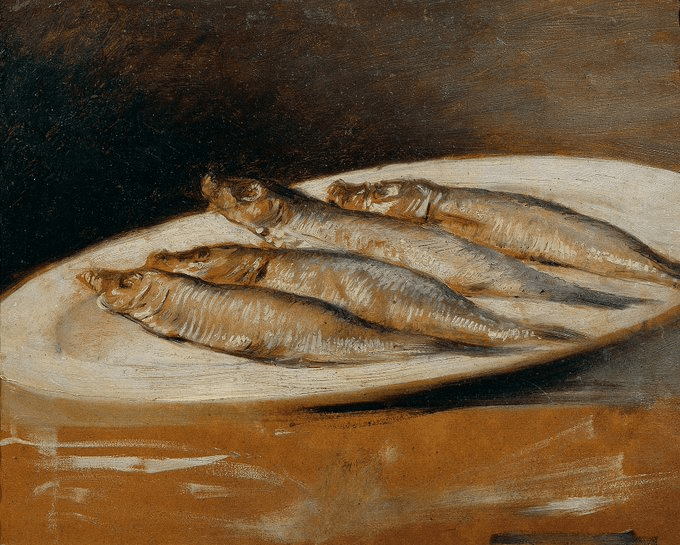
He was also known for his still life paintings and his works depicting people (examples of both below).
In 1850, Navrátil became chairman of the Union of Fine Artists, but later life didn’t treat him kindly: his son Antonín (also a painter) died in 1859, and two years later he suffered a stroke and was unable to work again. He died in poverty in 1865.
Navrátil’s works fell into oblivion until 1909, when an exhibition was dedicated to him at the Rudolfinum. A particularly big fan was the photographer Josef Sudek, whose own work was inspired by him.
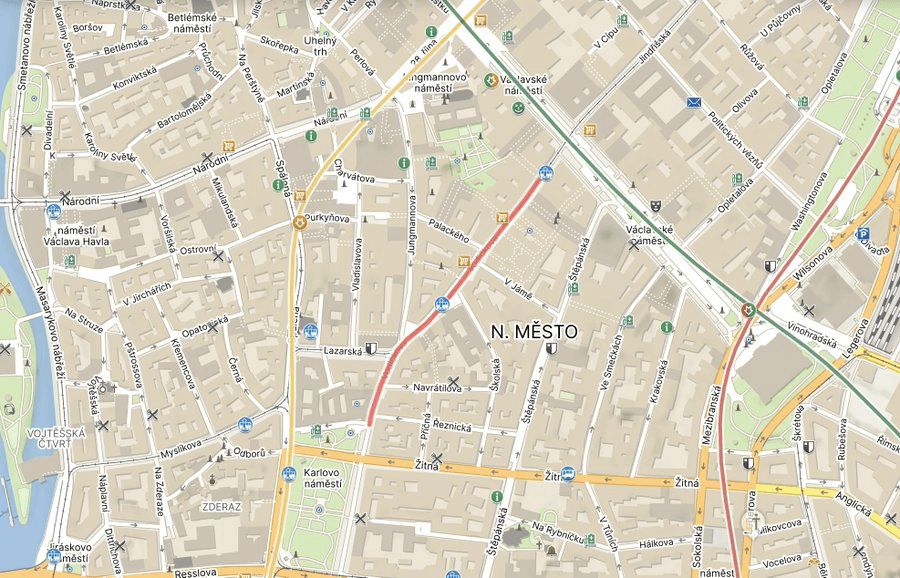
In the 1500s, various names were used – Velká Řeznická, Masná and Řeznická, because of the number of butchers round here (a butcher is a řezník). The last of these names, Řeznická, was used until 1869 (and is still the name of a neighbouring street).
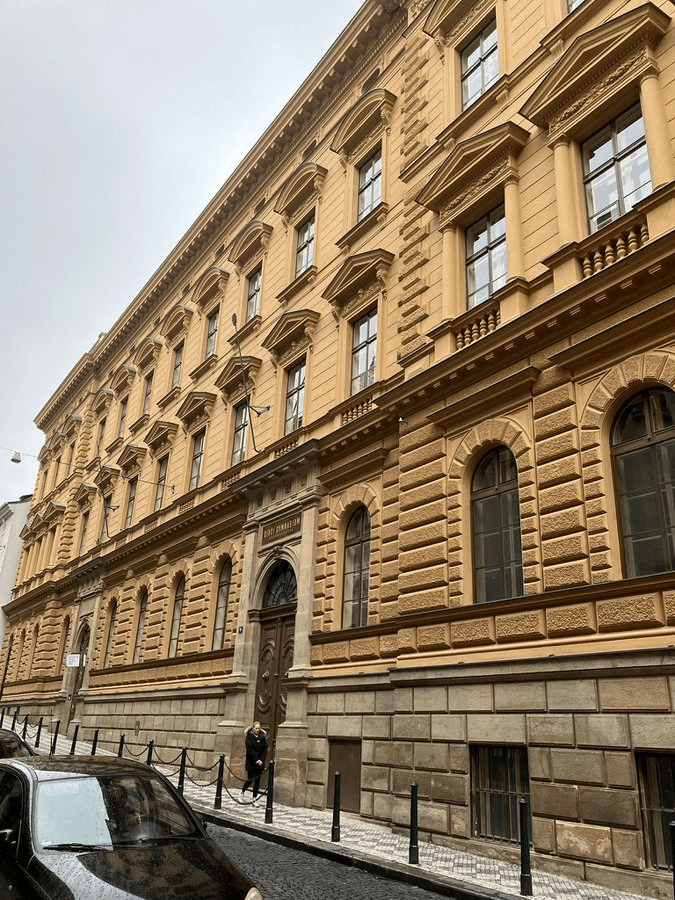
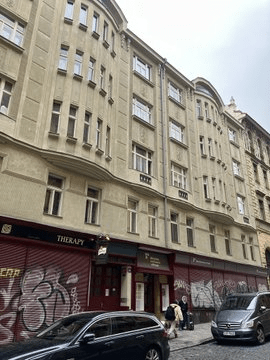
You might think that the name ‘Školská’ is because of a specific school in the street. Actually, the whole street is quite educational (though, as you’ll see, one of the schools appeared after the street was renamed).
The former New Town General School has now got an incredibly catchy name: Vyšší odborná škola ekonomických studií, Gymnázium, Střední průmyslová škola potravinářských technologií a Střední odborná škola přírodovědná a veterinární, Praha 2, Podskalská: https://podskalska.cz.
AKA the VOŠ, G, SPŠ a SOŠ Podskalská; if you’re more into English, it’s the Podskalská Higher Vocational School of Economic Studies, Gymnasium, Secondary Vocational School of Food Technologies and Secondary Vocational School of Natural Sciences and Veterinary Science.
The State Language School (founded 1920) also has quite the full name – Jazyková škola s právem státní jazykové zkoušky hlavního města Prahy (Language School with the Right to State Language Examination of the Capital City of Prague) – but looks like my idea of school heaven.
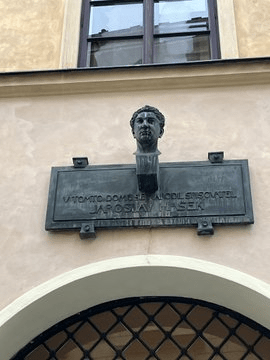
Cross this street (which will take no time at all, it’s very narrow), and you’ve got the family home – and birthplace – of Jaroslav Hašek.
As well as one of Prague 1’s two branches of the city library, and the Leica Gallery, which has a range of interesting events on in any given year: https://lgp.cz
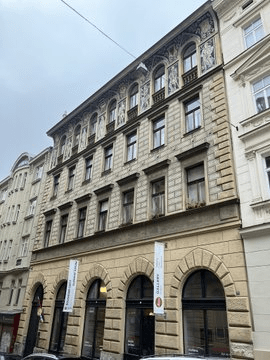
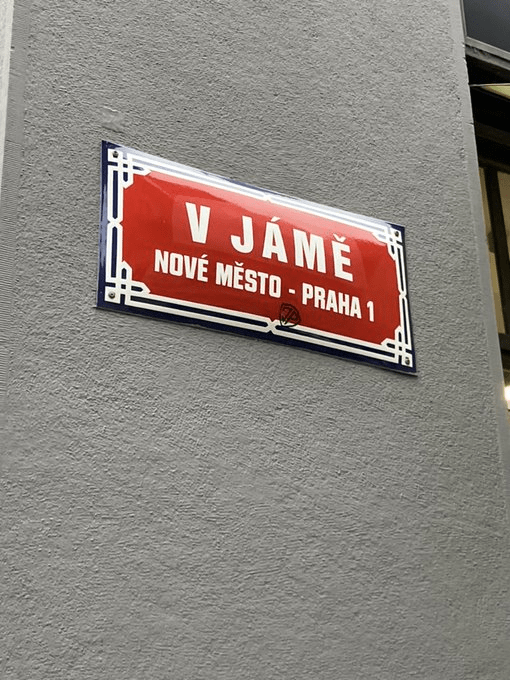
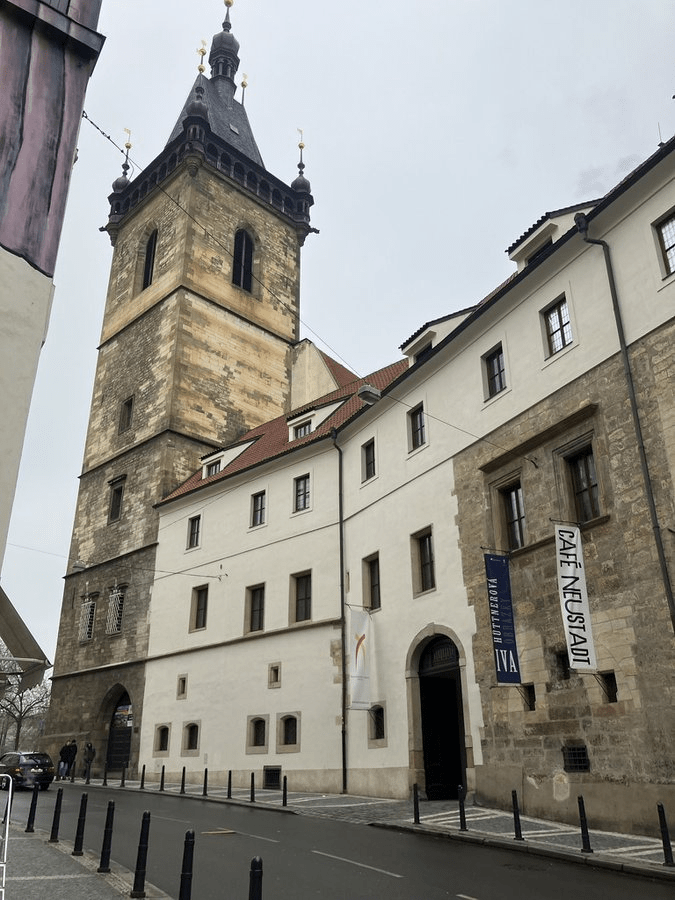
A jáma is a pit, a hole, or a hollow; a synonym for this is a prohlubeň. And, expectedly, pits/hollows are what the terrain round here once consisted of.
The hollows round here had water in them, and, in the early days of the New Town, were used by the various traders who worked round here (and who we’ve spoken about a fair bit lately) as a rubbish dump.
The street has been named after Jan Vodička since about 1450. We don’t know much about him, other than that he lived in the 15th century, was a butcher, and owned property here.
But, as you’ve probably noticed (and, as Vodičkova is a key tram thoroughfare, you may find yourself on it quite frequently), there are plenty of other factoids to keep us occupied.
I find footage of things like openings of first-ever McDonald’s quite hypnotic, especially when these things took place in my youth, so here’s a whole 40 minutes of the stuff:
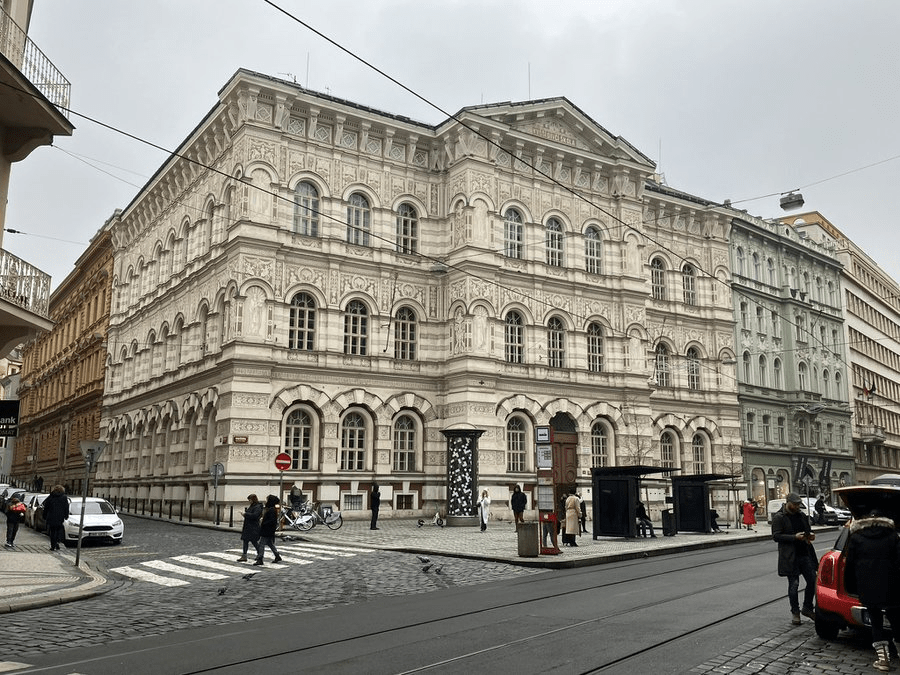
Number 22, formerly the Girls’ High School in Prague – the first school of its kind in Bohemia – is now an elementary school, and, no matter how many times I go past it on the tram, it blows my mind that a school can look this incredible.
This building actually marks the spot on which the building owned by Mr Vodička stood. It’s not as hi-tech as modern shopping centres but makes for significantly better photos.
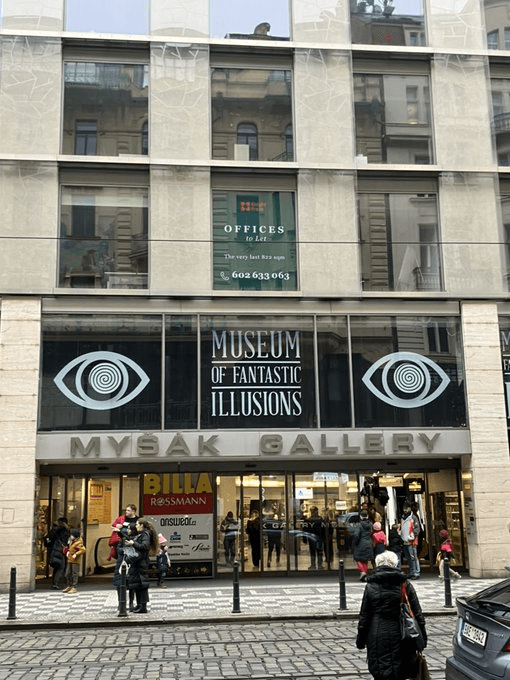
Across the road, Myšák Gallery is much more recent – 2007 – and is named after the well-known pastry shop, founded by one František Myšák. The Museum of Fantastic Illusions opened in the Gallery in 2019.
One of the less glamorous buildings on the street – number 34 – is the headquarters of the Czech Export Bank.
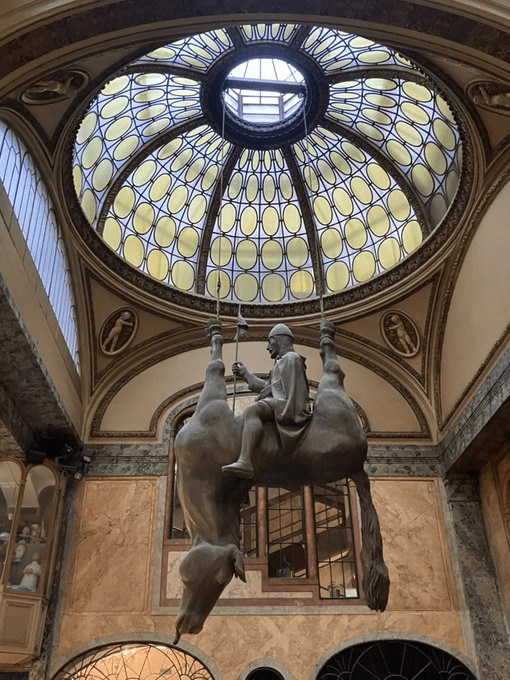
But next door is the somewhat more spectacular Lucerna, initially realised by Vácslav Havel, grandfather of Václav without an S. It’s now owned by his sister-in-law, Dagmar Havlová (as opposed to his widow, also called Dagmar Havlová).
You may know its concerts, its cinema, its paternoster, and its ‘David Černý gonna David Černý’ statue.
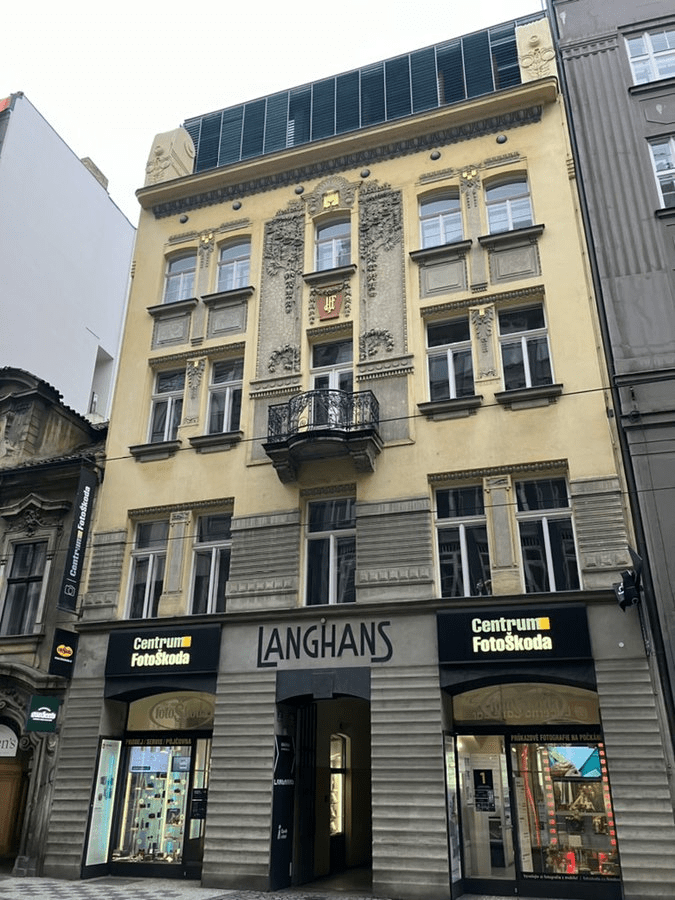
Just across, at number 37, Palác Langhans was bought in 1882 by Jan Nepomuk Langhans, founder of the eponymous photo company. Which explains why I’ve been here to get passport photos before.
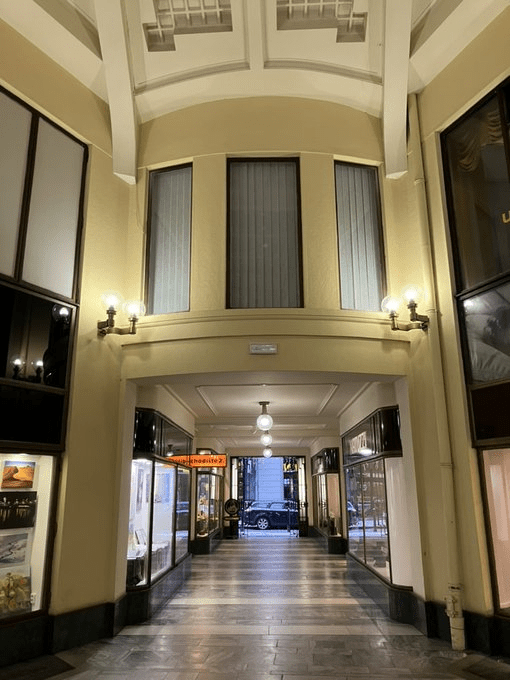
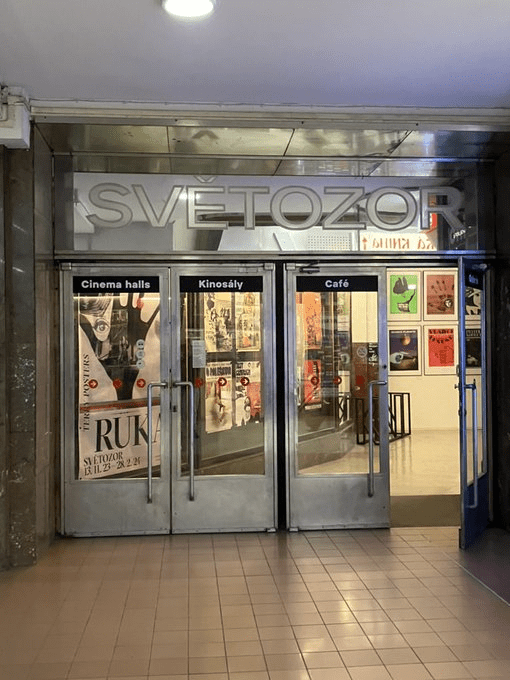
Number 41 is Kino Světozor, opened in the same-named arcade in 1918, and the ultimate ‘I never come here but should come here, like, all the time’ location.
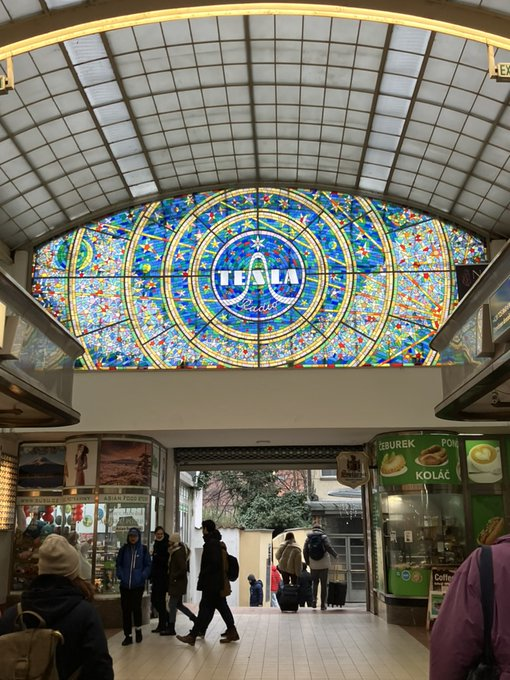
Excellent stained-glass in the arcade too (Tesla once lived round here – more on that story soon).
Finally, the Neo-renaissance Wiehlův dům (Wiehl House) is on the corner with Wenceslas Square. More on this one when we get to Václavák in about nine days (if this site has a limit to the number of posts a thread can have, that might be the day on which I find out).
Prague, though, seriously. I’m never going complain about the number 9 not having arrived yet ever again.
Lucerna update, June 2024: Dagmar Havlová, sister-in-law of Václav Havel, sold her majority stake (but maintaining a 25% one), stating that money from the sale would be used to renovate the building.
The street was first mentioned in 1383, under the name of Tandléřská – a tandléř, derived from southern German, being a dealer in used clothes and shoes.
In the 15th century, it became known as Nová Pasířská (more on that tomorrow, when we get to the street that used to be known as Stará Pasířská). In the 16th century, the ‘Nová’ was dropped.
The current name has been in place since 1876, i.e. pretty much automatically after Palacký’s death (except for a brief reversion to Pasířská during the Nazi occupation).
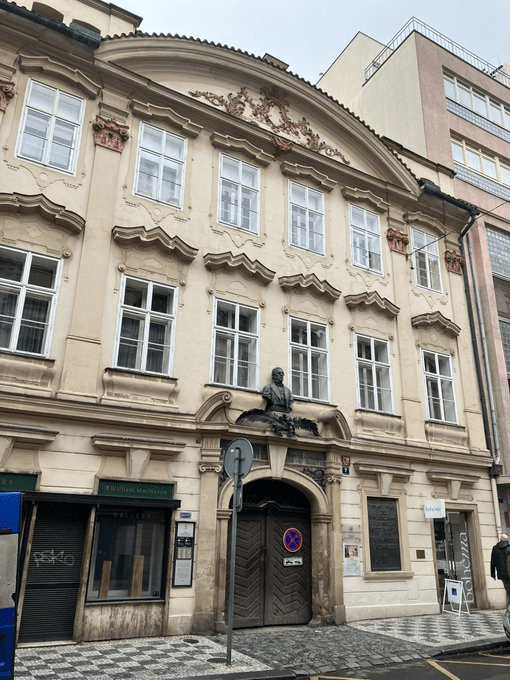
Back on number 7: it’s got the not terribly Czech-looking name of MacNeven Palace. The owner, Wilhelm Mac Neven O’Kelly ab Aghrim, had been born in Baile na hAbhann in County Galway in 1714.
He became a doctor and moved to Prague, where he wrote several books and lectured at the university. He stayed in Prague until his death in 1787.
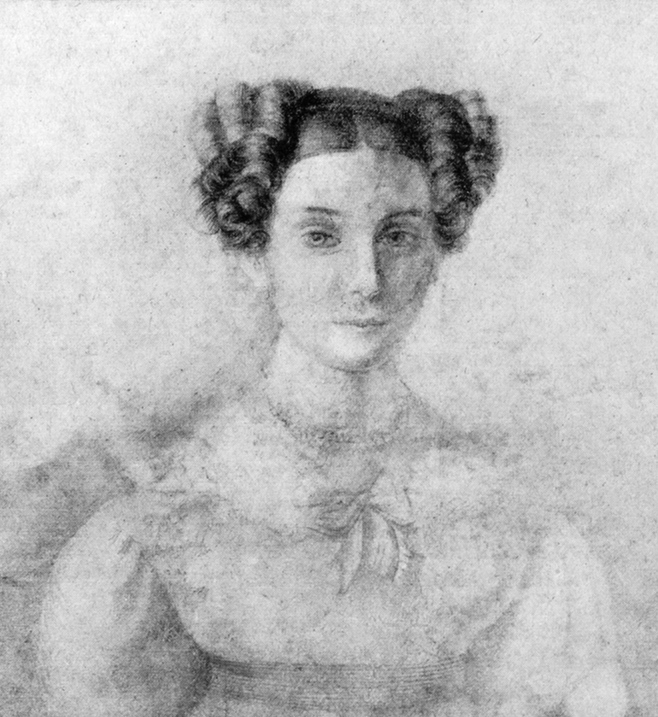
In 1827, Palacky’s fiancee, Terezie Měchurová, gave him the palace (owned by her parents up to that point) as a dowry.
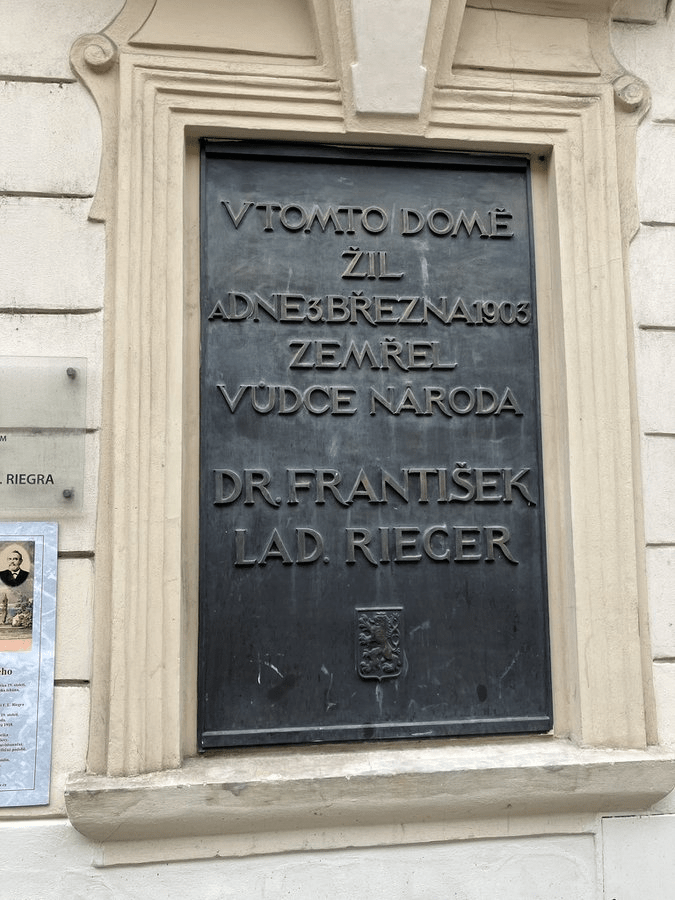
But Palacký wasn’t the only famous Czech to live and die here – in 1853, František Ladislav Rieger married Palacký’s daughter, Marie. He would live in the building, ultimately dying in it in 1903.
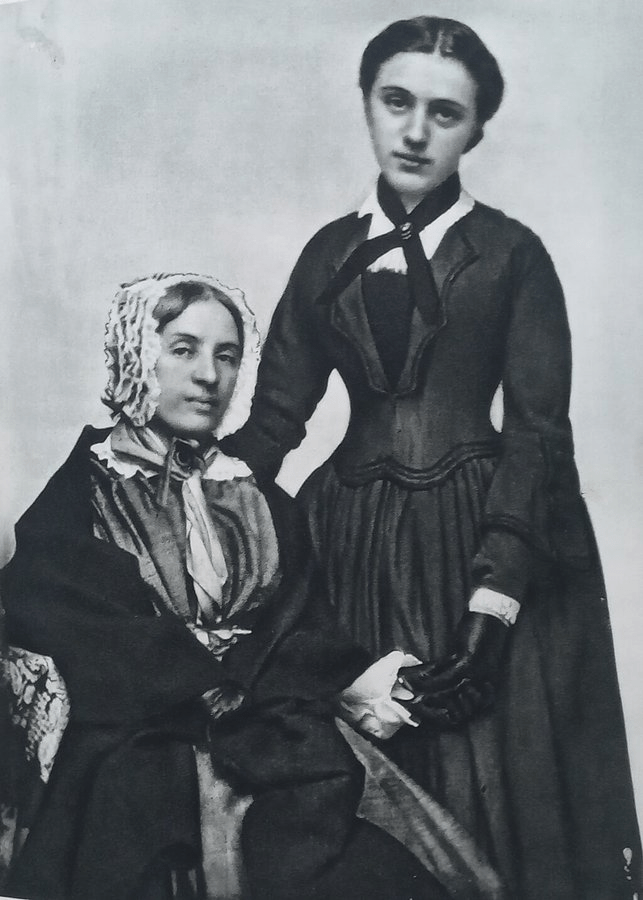
This is a picture from 1848 of mother and daughter (Terezie and Marie).
On the other hand, the square itself deserves some attention.
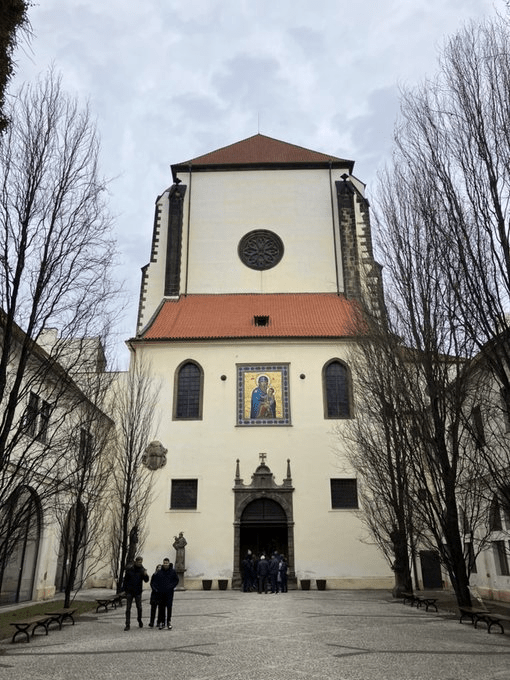
In 1347, one year after the founding of the New Town, Charles IV founded the Church of Our Lady of the Snows / Kostel Panny Marie Sněžné, as well as the associated monastery.
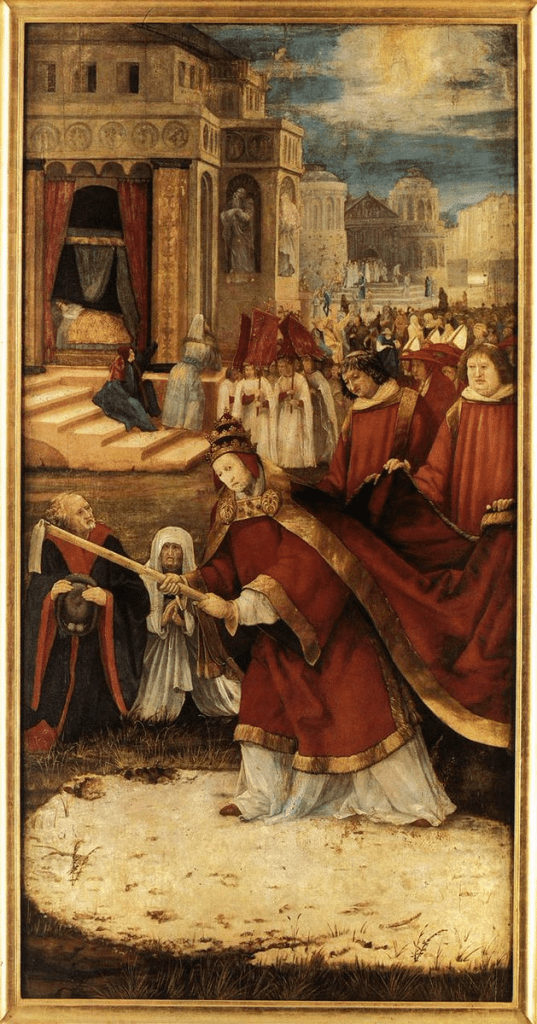
Regarding that name: legend has it that a Roman patrician called John vowed, with his wife, to donate their possessions to the Virgin Mary, but prayed that she’d give them a sign when it was time to do so.
One night in August, they had a vision of the Virgin, and, later that night, snow fell on the Esquilino, one of the seven hills of Rome. Which was, apparently, the sign that had been requested.
Which may not sound particularly exceptional, except that this walk to the New Town would ultimately result in the First Prague Defenestration and the Hussite Wars.
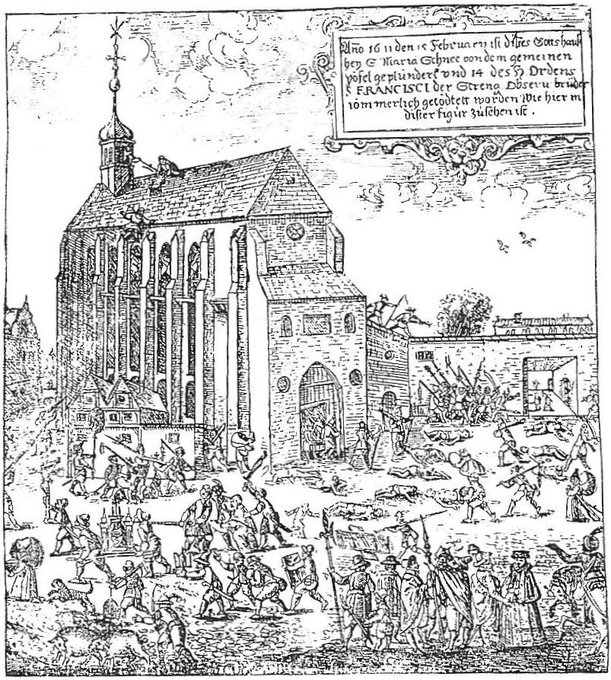
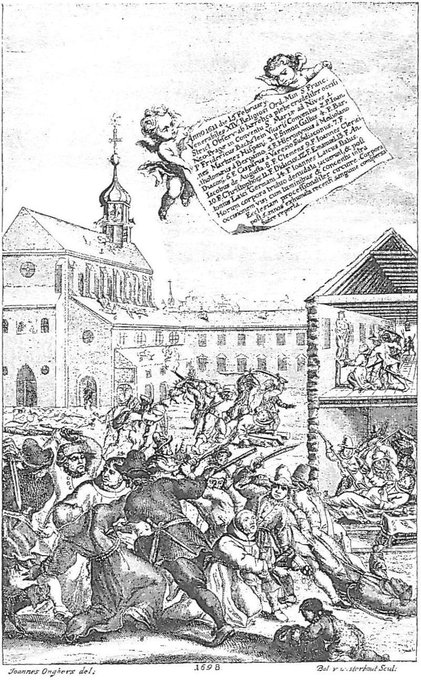
In 1606, the church and monastery started to be used by the Discalced Franciscan order. In 1611, a fanatical mob attacked the monastery and killed fourteen monks.
In 2012, they were beatified as the Fourteen Prague Martyrs.
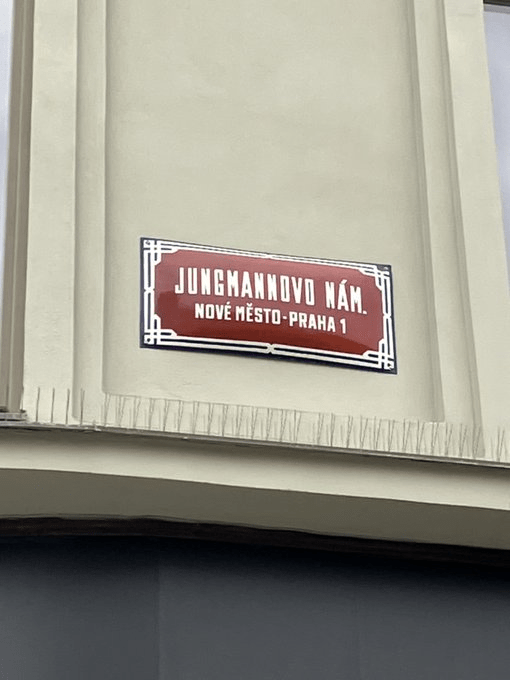
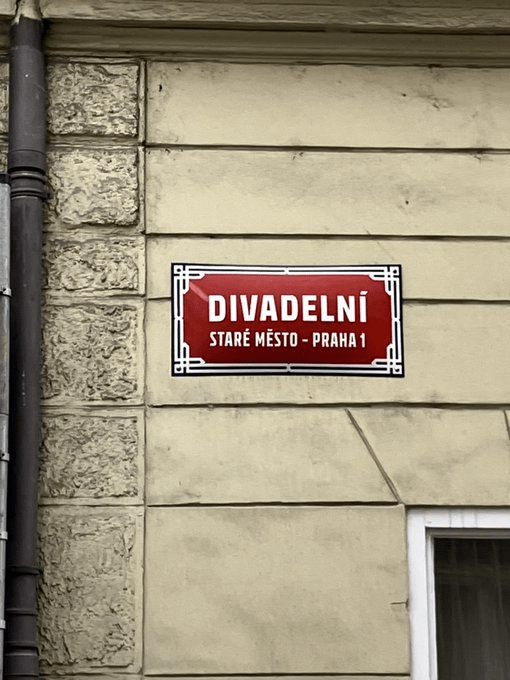
This courtyard within the church is dedicated to them, complete with a street sign which will have me lying in bed at 01:00 tonight wondering if it was wrong of me not to write this part as a separate thread.
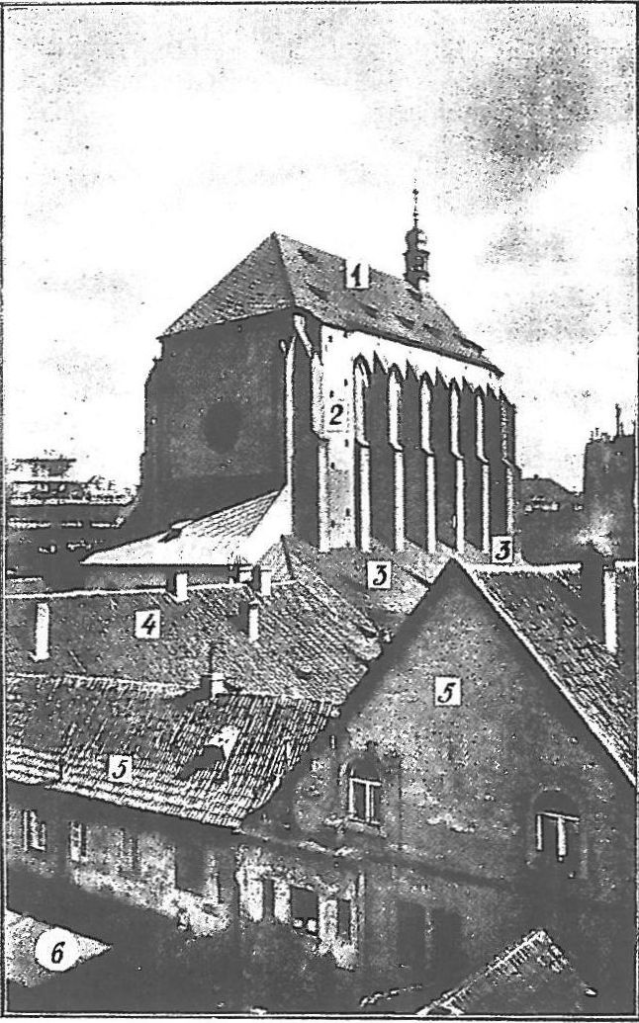
Here’s how the church looked in 1930.
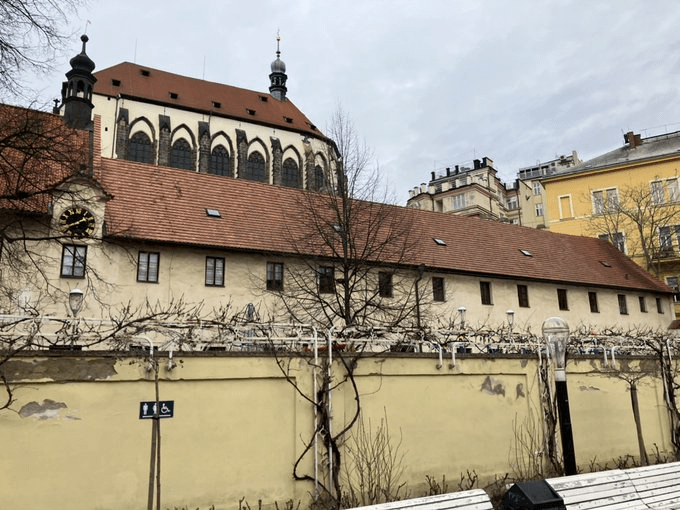
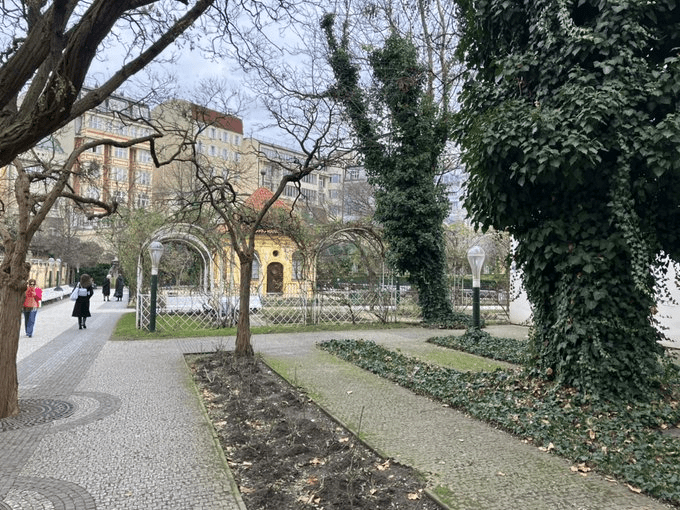
The church has also had its own gardens since 1347 (now called Františkánská zahrada). Here they are a couple of weeks ago, probably at their least floral (and at their most ‘hurry up, this is closing early today’).
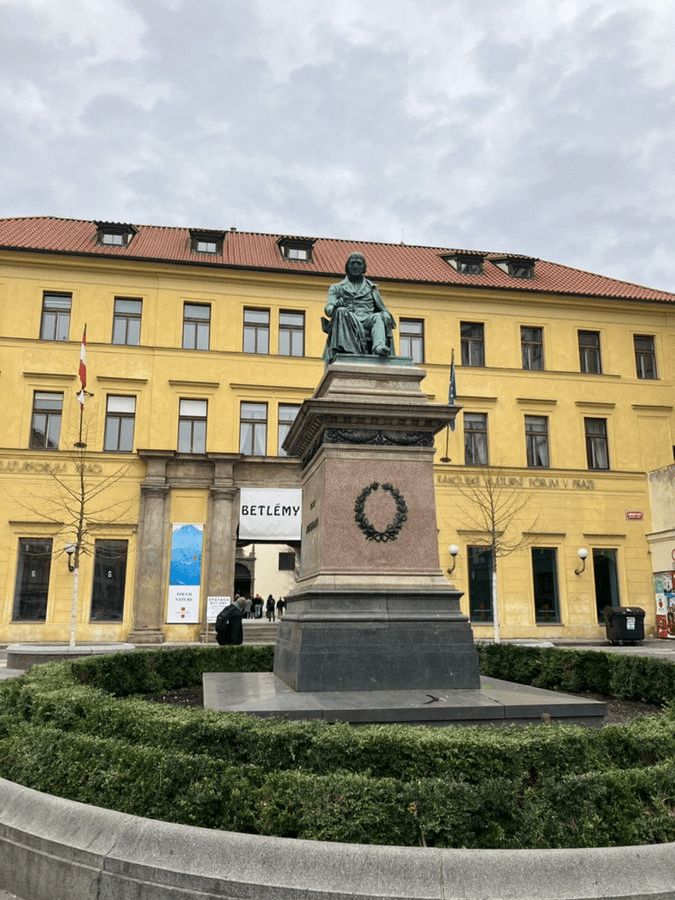
One of the monastery buildings now hosts the Austrian Cultural Forum (Österreichisches Kulturforum Prag), in front of which there’s a statue of (the non-Austrian but definitely cultural) Josef Jungmann.
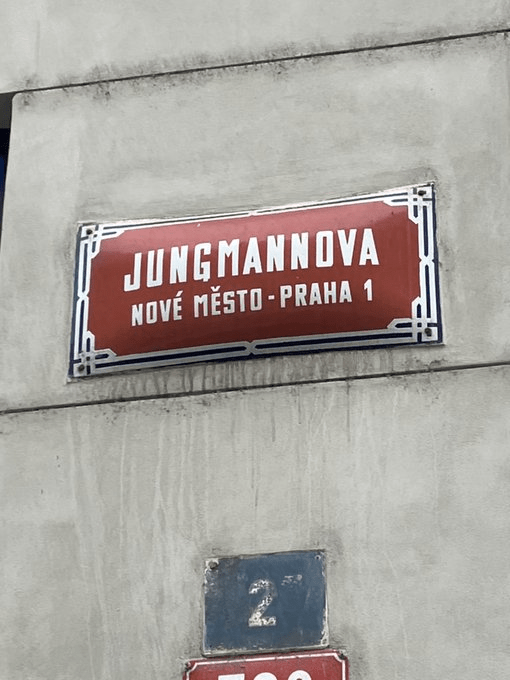
And those of us who are still a bit upset about the demise of Bontonland on Václavák can do some music shopping on Jungmannovo instead.
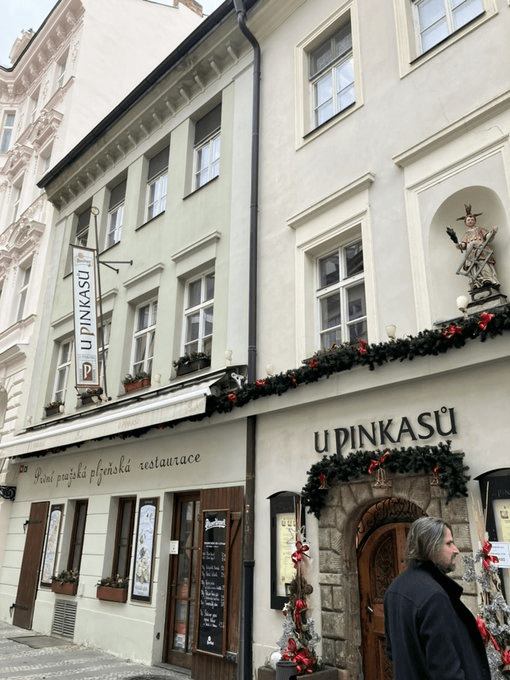
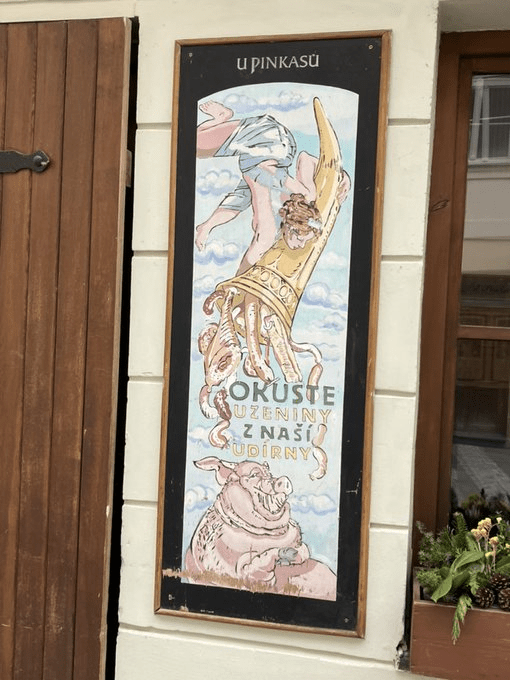
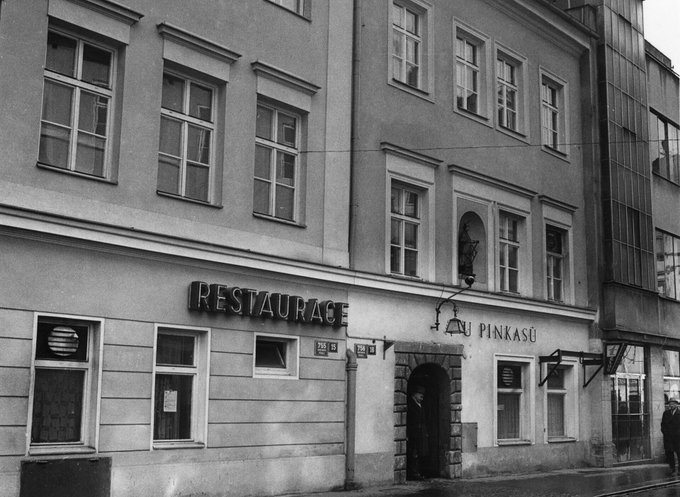
Finally, the square also includes the famed U Pinkasů restaurant, which Václav Havel, Václav Klaus and Miloš Forman all visited more than once (probably not at the same table). In 1843, it became the first place in Prague to have Plzeňský Prazdroj on tap.
There are some great old pictures from the restaurant on Wikipedia (credited to one ‘Titl’).
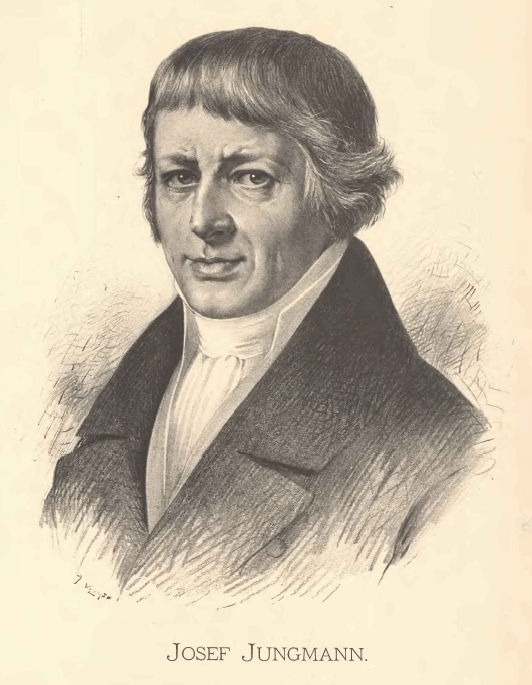
Josef Jungmann was born in Hudlice, near Beroun, in 1773. His family wanted him to make a career in the church, and sent him to attend the local Piarist school.
However, he transferred to a grammar school on Panská in Prague’s New Town, graduating in 1792 and then studying philosophy at Prague University.
In Litoměřice, he taught Czech at the gymnasium (grammar school) – a fact which becomes more interesting when you consider he was the first Czech language teacher at a gymnasium in Bohemia. Ever.
While living in Litoměřice, Jungmann met one Johanna Světecká z Černčic, from a noble family, and, interestingly, born in Vršac (now in Serbia). They married in 1800 and agreed to bring their children up to speak Czech (Johanna’s family was German-speaking).
In 1821, Jungmann founded the first Czech scientific journal, Krok (Step) and formed a group of patriotic intellectuals around him, including František Palacký, Jan Evangelista Purkyně, František Ladislav Čelakovský – all of whom have featured in these threads before.
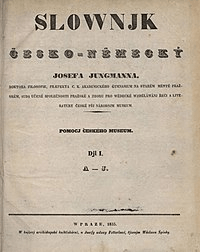
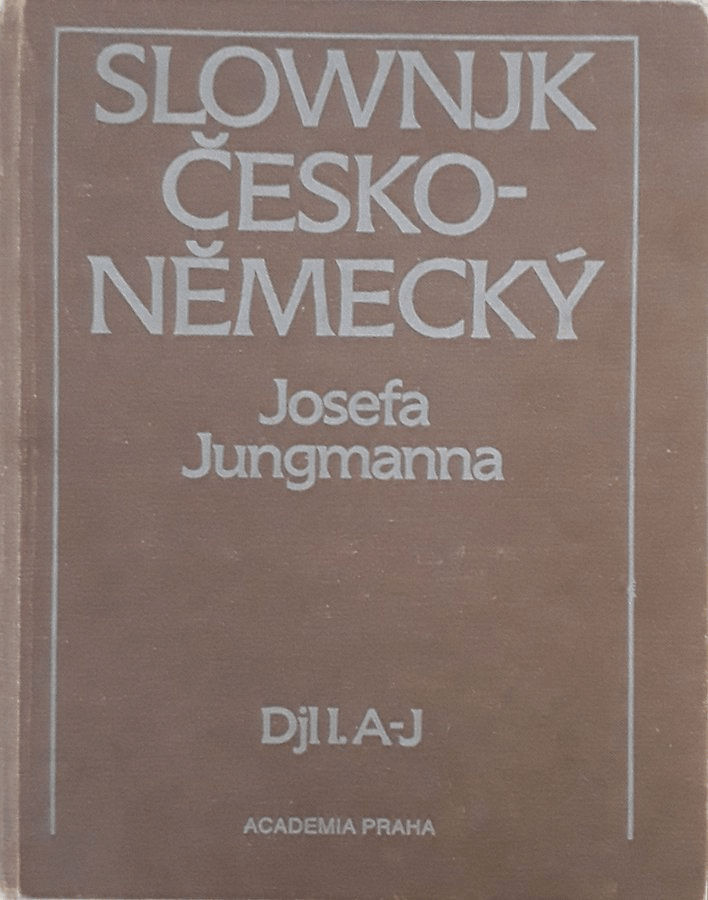
From 1835 to 1839, Jungmann published the five-volume Slownjk česko-německý Josefa Jungmanna (Josef Jungmann’s Czech-German Dictionary).
It sets out the basis for the vocabulary of modern Czech, including archaic words and borrowings from other Slavic languages.
Jungmann also aimed to create the first Czech encyclopaedia, but this never materialised. On the other hand, he was knighted for his work on the dictionary (and the language as a whole) in 1839.
Jungmann died in 1847 and is buried in Olšany Cemetery, as is Johanna, who died in 1855. In 1878, meanwhile, Široká was renamed Jungmannova – a street which merits a few more posts (and pictures). Read on.
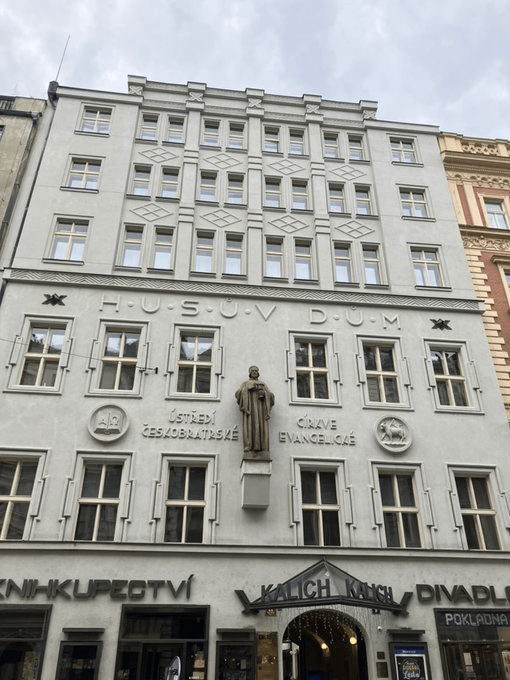
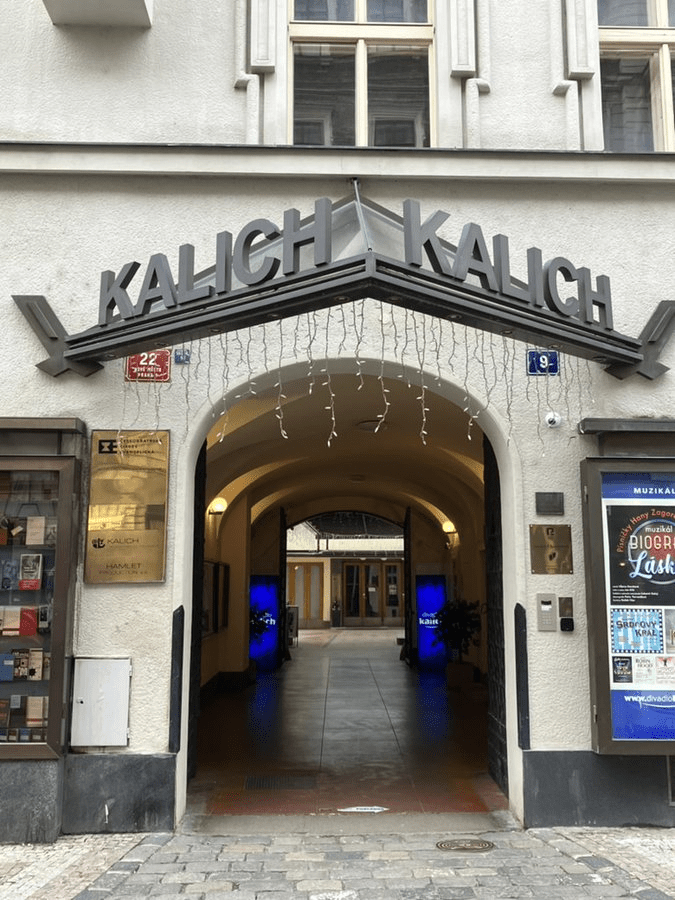
Husův dům / The Hus House (number 9) has existed since the Middle Ages, but was given a cubist makeover in the 1920s. It hosts the Synod Council of the Evangelical Church of the Czech Brethren.
It also houses the renowned Kalich Theater, opened in 1999.
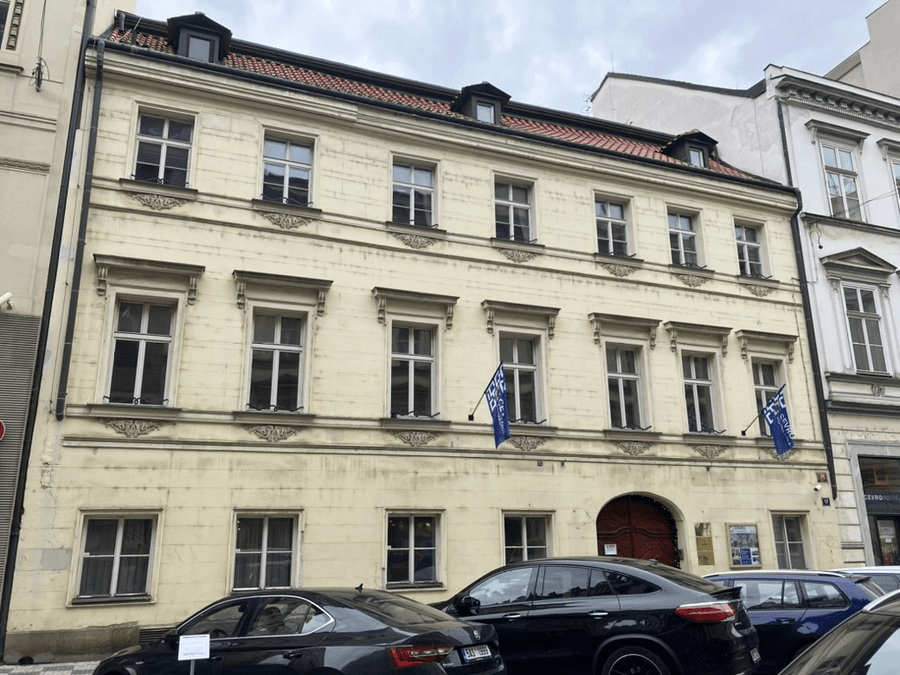
Number 17 used to host the Měšťanská beseda, a Czech-speaking cultural association co-founded by Jungmann in 1845, shortly before his death.
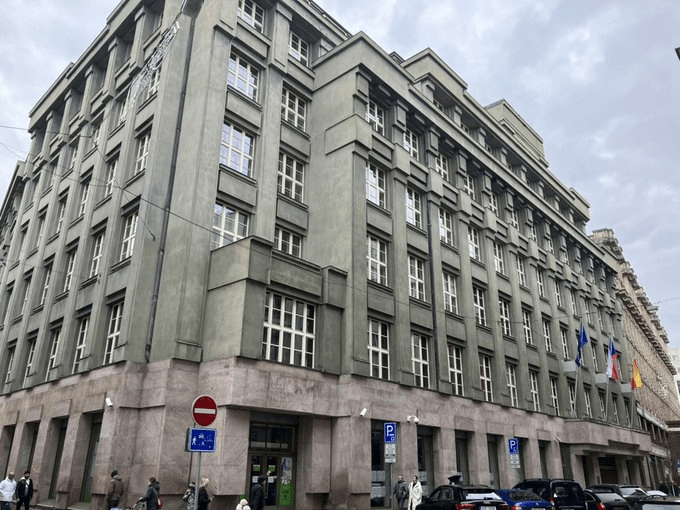
The Škoda Palace was built in 1929 in order to house factories of, yes, Škoda. From 1994 to 2004, it was used by the ČEZ Energy Group; it’s currently the site of Prague’s Town Hall.
Walk on a bit, and you’ve got another excuse to take even more photos of Palác Adria. As well as the entrance to the Divadlo bez zábradlí.
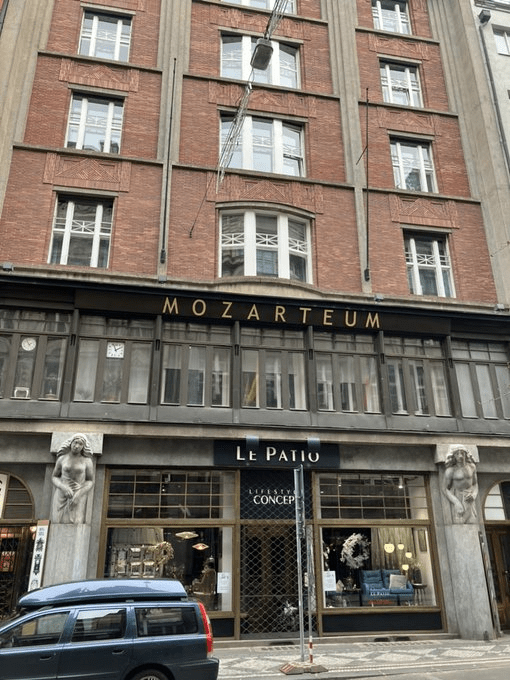
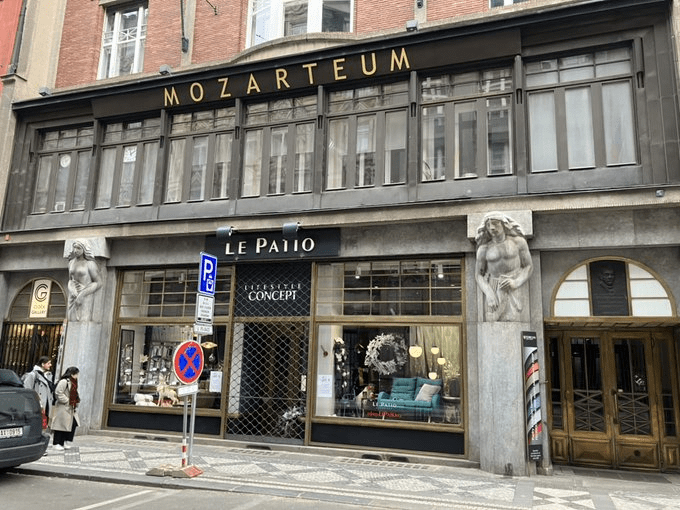
Across the road at number 30, the Mozarteum and its concert hall were never visited by Mozart – what with having been built in 1913 – and used to host a leftist theatre (D 33), as well as, in the 1970s, one of Supraphon’s recording studios.
At number 24, Evropský dům / European House, is, yes, where you would go to get information about the EU and its institutions.
Whereas one of the two Hlávka foundation houses (Hlávkovy nadační domy) takes up numbers 10, 12 and 14. It was here, during the later stages of WW1, that politician Přemysl Šámal and his collaborators organised resistance against Austria-Hungary.
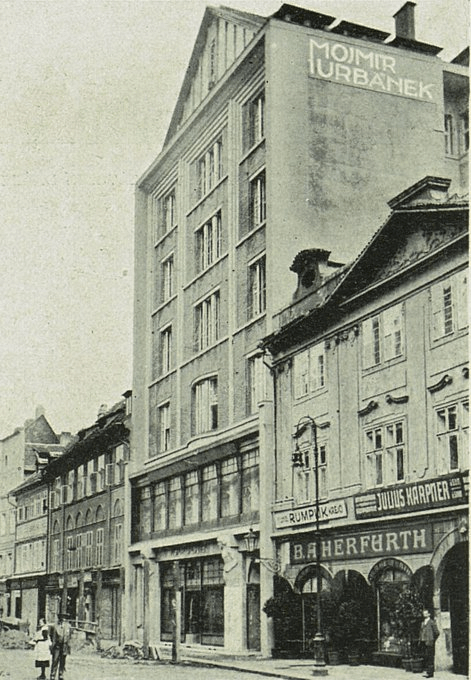
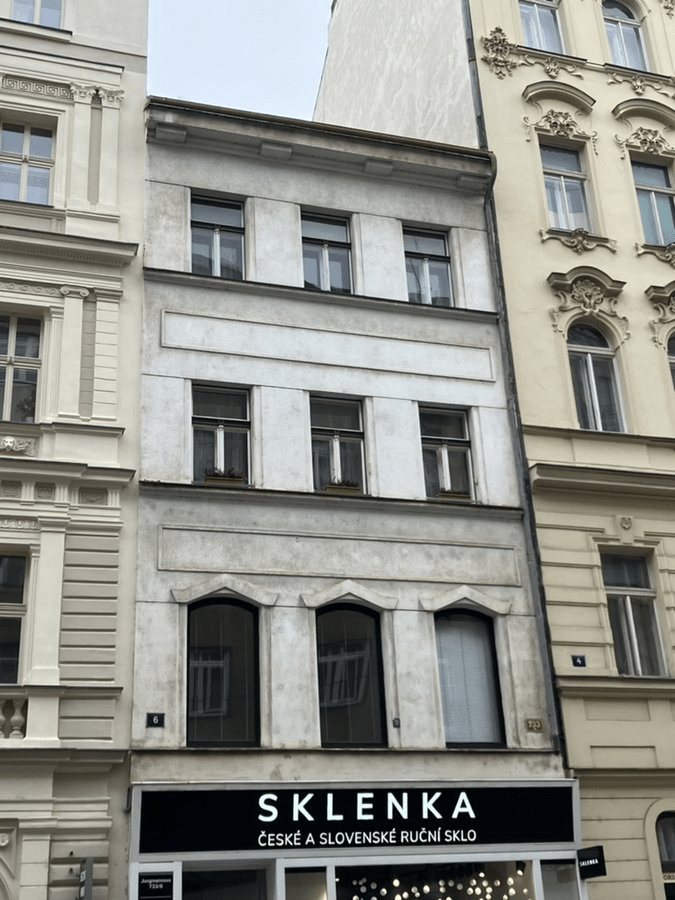
And number 6 stands out precisely because of how much smaller it is than its neighbours.
Finally, number 1 is the Comedy Theatre / Divadlo Komedie, run by the legendary Vlasta Burian in the 1930s and 1940s. Its functionalist building was built in 1930 (yes, I forgot to take a photo, so here’s a nice one (credit to Andreas Praefcke): https://en.wikipedia.org/wiki/File:Praha_Divadlo_Komedie.jpg
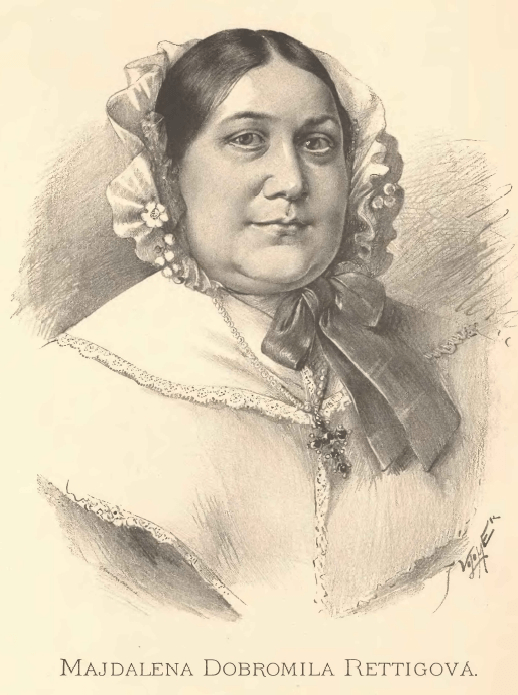
Magdalena Artmann was born at the castle in Všeradice, near Beroun, in 1785. After the premature deaths of her father and siblings, she moved to Plzeň with her mother.
Until she was 18, Magdalena only spoke German, but then she fell in love with a law graduate – and Czech patriot – called Jan Alois Rettig. They married in 1808.
Rettig, who worked as a councillor in several Czech towns, recognised his wife’s talents as a writer, encouraged her to keep writing, and even hired experts to give her advice and tips. Which counts as pretty enlightened for the 1810s.
Magdaléna was particularly interested in providing an education to girls; she wrote short stories aimed at teenage girls, and also gave them classes in economics, cooking, housework and Czech literature.
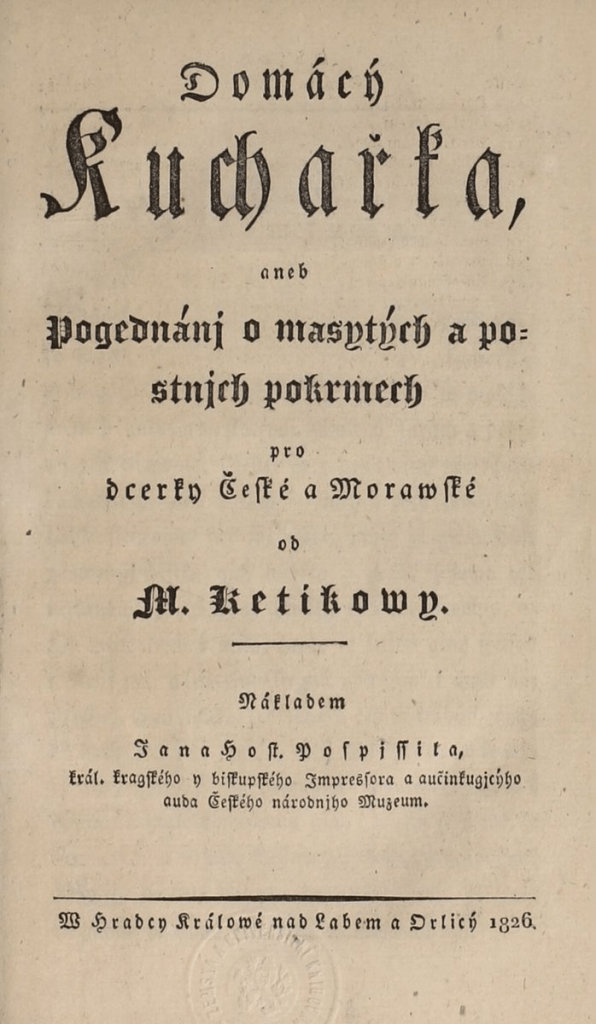
Her most famous work was 1826’s Domácí kuchařka (Home Cookbook). Featuring over 700 recipes, it was innovative in that it was written in Czech, used clear language, and didn’t assume that the reader had infinite time or infinite money with which to buy ingredients.
It also had the outstanding subtitle of Pojednání o masitých a postních pokrmech pro dcerky České a Moravské (Treatise on Meaty and Fasting Dishes for the Daughters of Bohemia and Moravia).
As well as her writing, Rettigová ran a social salon, was in charge of the library in Ústí nad Orlicí when she and her husband lived there, and, when they moved to Litoměřice, was active in promoting renovation and construction projects.
It was in Litoměřice that Jan died in either 1842 or 1844; Magdaléna would follow him in 1845. She’s buried in the cemetery there.
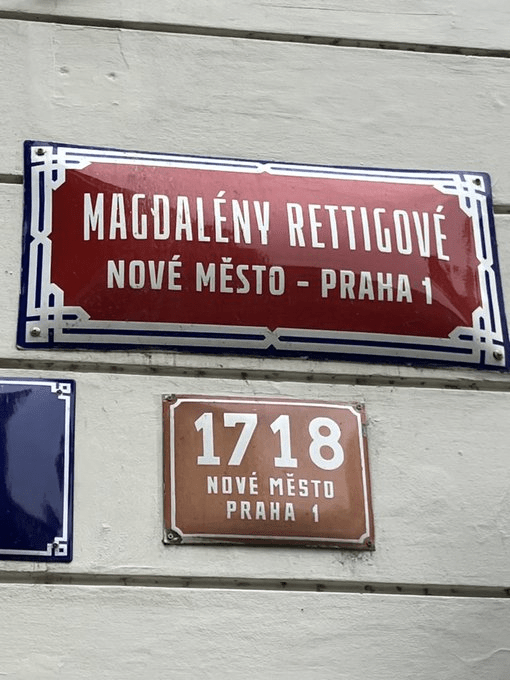
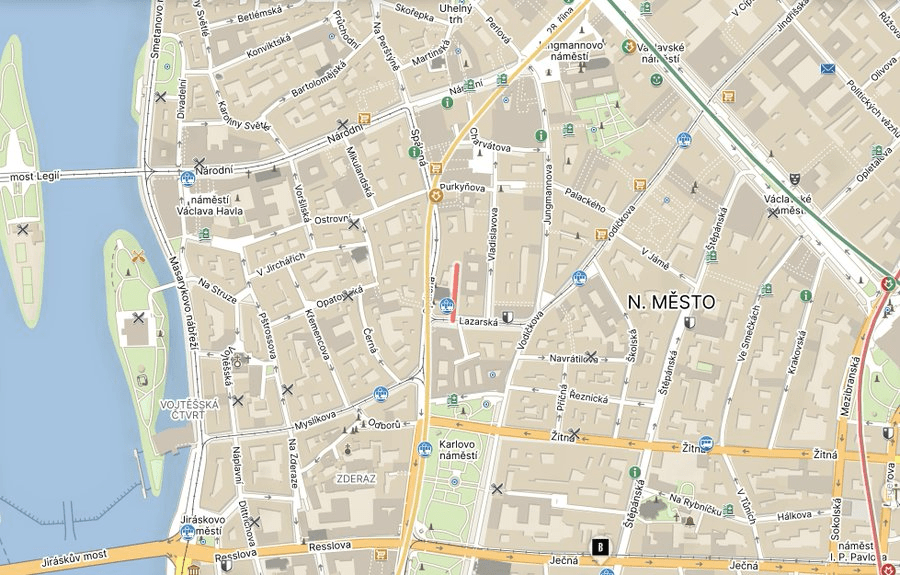
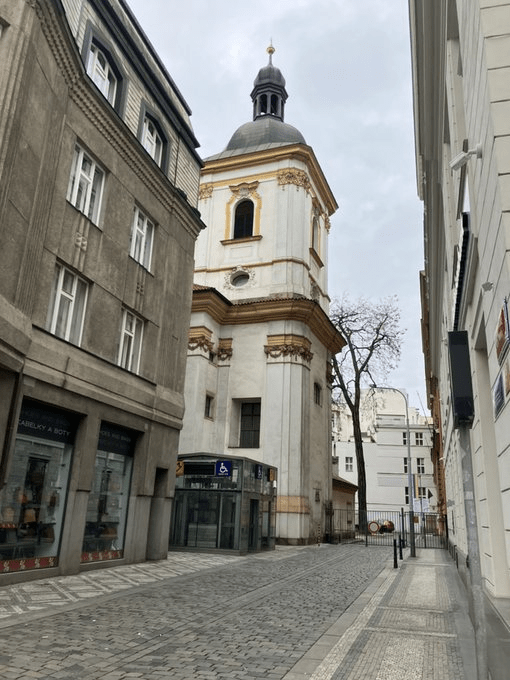
Magdalény Rettigové is not a long street – and half of it is only accessible if somebody opens the gate for you.
Beyond that gate is the Faculty of Education of Charles University. Appropriately, it was formerly a school for girls.
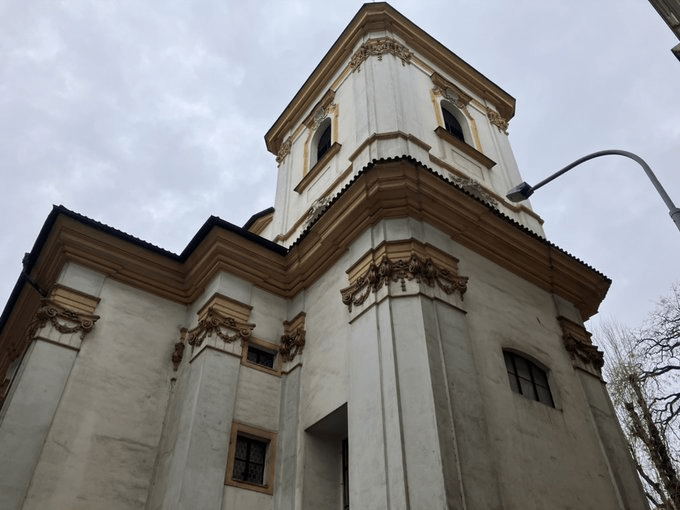
There’s also the Church of the Holy Trinity (Kostel Nejsvětější Trojice; tower from 1713). In 2005, it was handed over to the Slovak Greek Catholic Church (which may sound obscure, but has 350,000 followers in Slovakia alone).
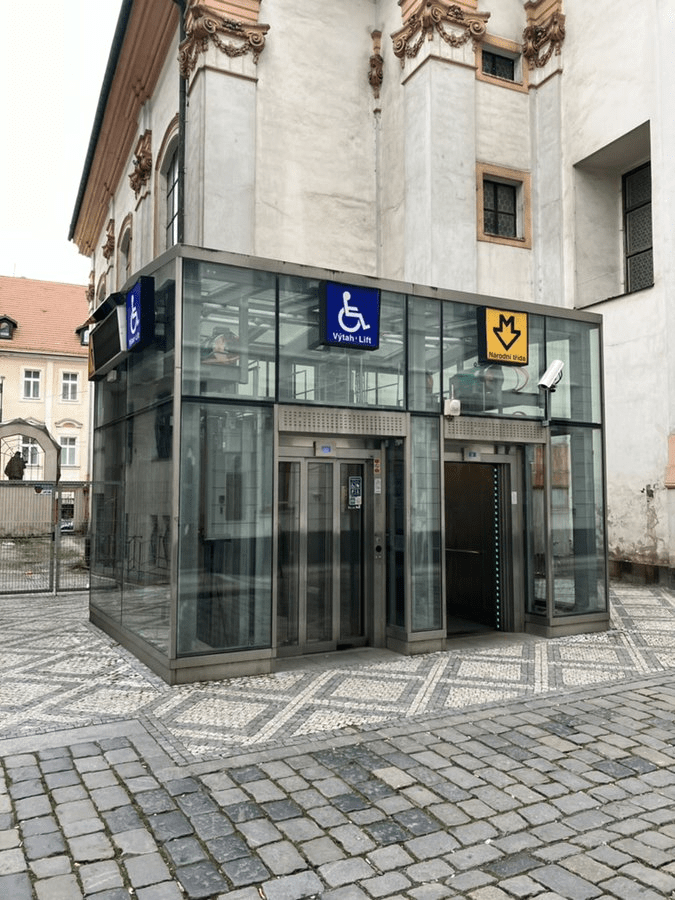
I also never realised there was barrier-free access to Národní Třída metro station here (partially because, in my head, this is fairly far away from the main entrance, even if it isn’t in reality).
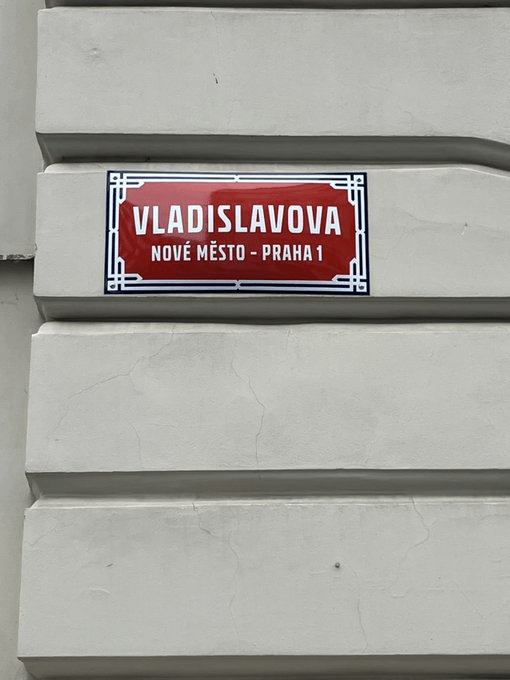
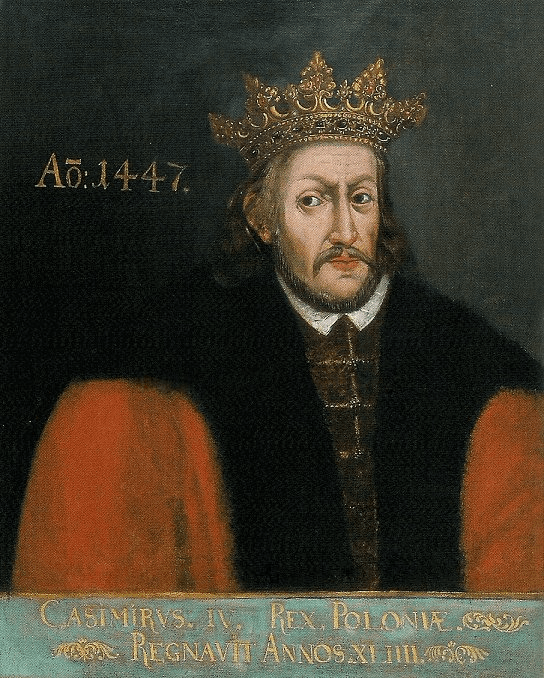
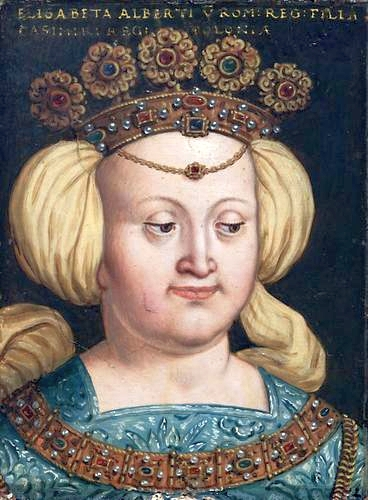
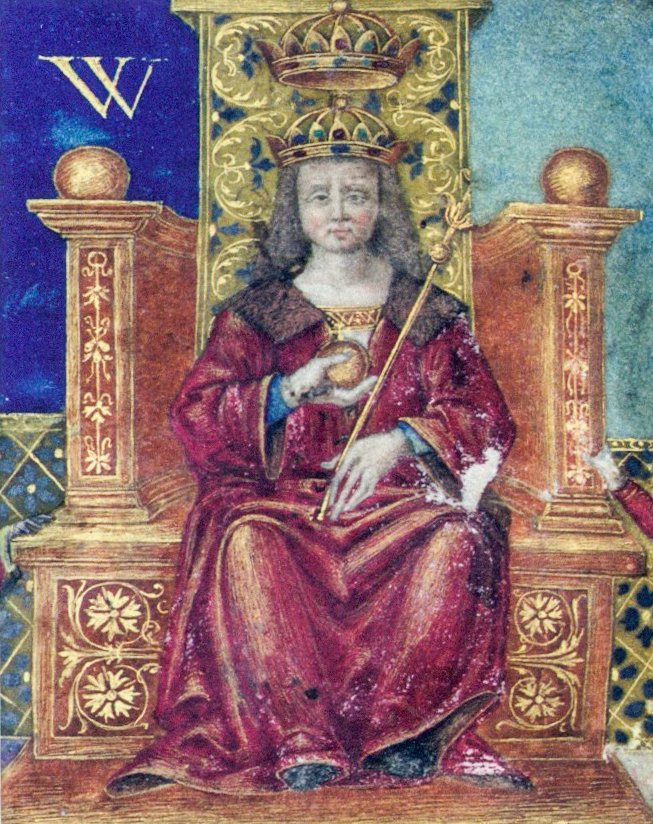
Vladislav/Władysław/Vladislaus/Ulászló was born in 1456, as the eldest son of Casimir IV Jagiellon, Grand Duke of Lithuania and King of Poland. His mother was Elizabeth of Austria, granddaughter of Sigismund, Holy Roman Emperor (and King of Bohemia from 1419 to 1437).
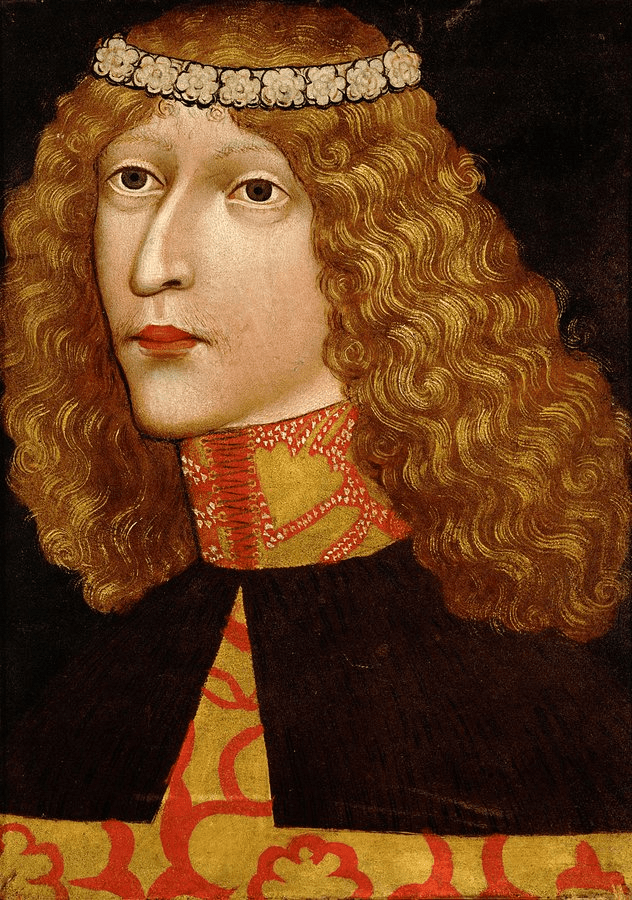
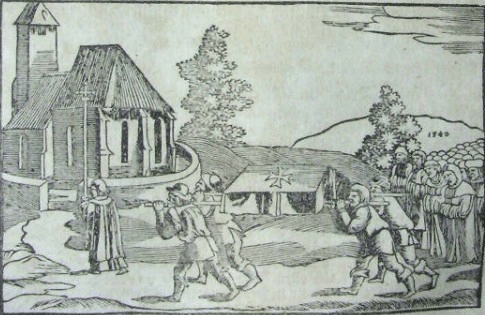
Elizabeth’s brother, Ladislaus the Posthumous (Ladislav Posmrtni), had become King of Bohemia in 1453, but would die in 1457, aged just 17. The cause of death was probably leukaemia.
Hence Vladislav being chosen as King by the Bohemian Diet when George died in 1471. However, the Catholic States Bohemia had also elected Matthias Corvinus (Matyáš Korvín) as King two years earlier.
They made peace in 1478, when it was agreed that Vladislav would get Bohemia, while Matyáš would be in charge in Moravia, Lusatia and Silesia, all of which Vladislav would get to be in charge of if Matyáš were to die prematurely.
In 1483, the Hussites, worried about Vladislav’s concessions to the Catholics (who were making plans to get all their powers back), launched an uprising in Prague. Defenestrations were involved, because of course they were.
Eventually, in 1485, the Hussites and the Catholics met at Kutná Hora and declared their churches to be equal, making Bohemia the first country in Europe to legally guarantee religious tolerance (for these two confessions, at least). Take that, Nantes.
In 1490, that peace made twelve years earlier proved quite advantageous to Vladislav – Matyáš did indeed die, and Vladislav became King of Hungary, which he celebrated by moving to Buda. He would only pop back to Prague twice after this.
Which you would probably do too if you wanted to avoid the Hussite-Catholic bickering that took up much of the rest of his reign over Bohemia (not described in detail here because it’ll surely appear in another thread one day).
Vladislav died in 1516, and was succeeded by his son Ludvík, who would be the last of the Jagiellon Kings of Bohemia (and who would show even less interest in Bohemia than his dad did, visiting once in his ten-year reign).
Number 13, built in the late 1930s for the Czech Mutual Life Insurance Company, is quite impressive.
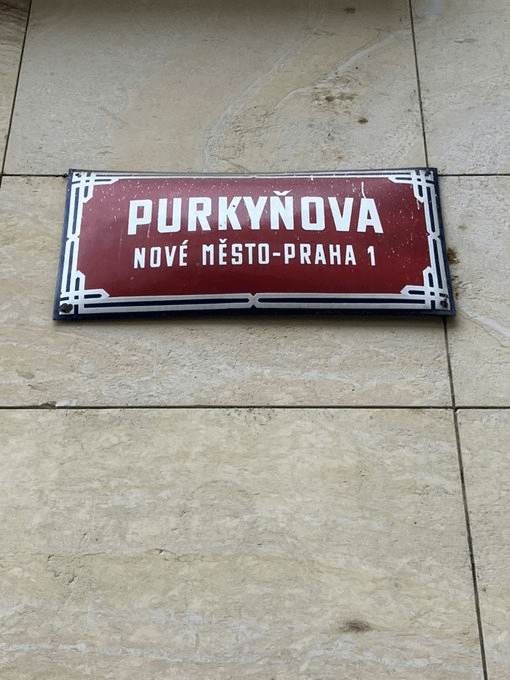
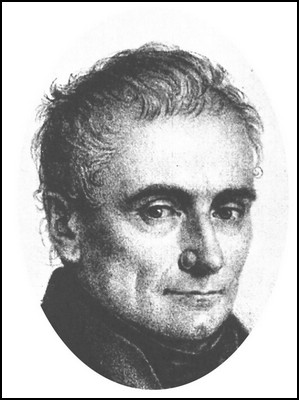
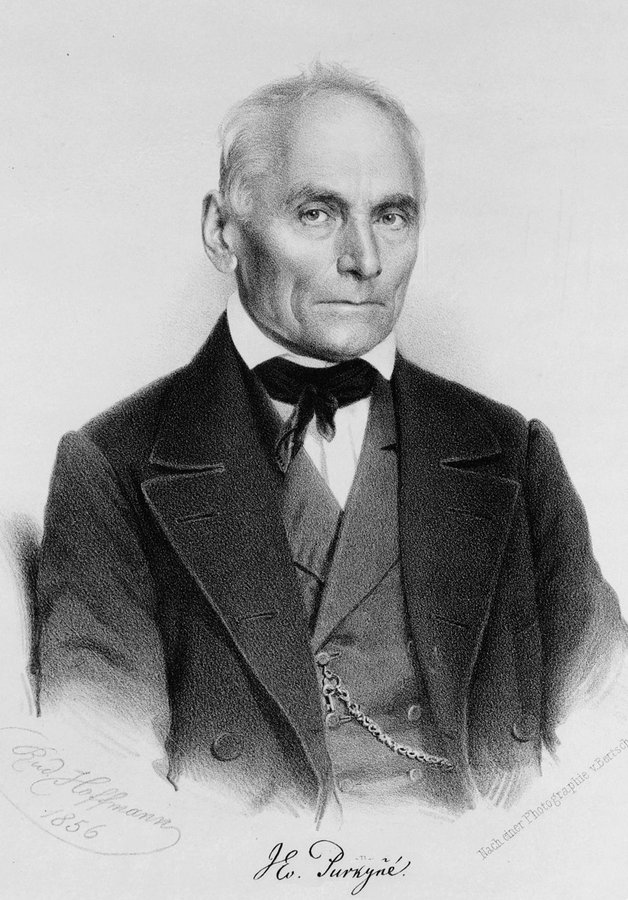
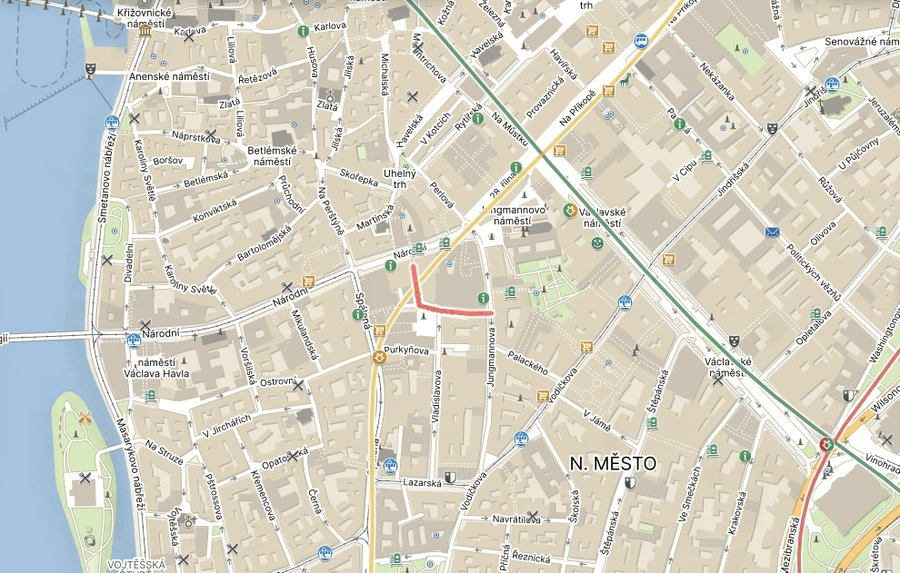
Jan Evangelista Purkyně was born on the noble estate at Libochovice (near Litoměřice) in 1787.
He joined the Piarists as a monk in 1804, but quit at the age of twenty and became a tutor to a noble family before studying medicine at Prague University from 1813 onwards. He graduated in 1818 and became an assistant there.
However, his desire to become a professor was thwarted by his pro-Czech sentiments, and he got hired in Wrocław (then in Prussia and known as Breslau) instead. This was partially thanks to the recommendation of the naturalist Karl Asmund Rudolphi.
Purkyně would marry Rudolphi’s daughter, Julia, in 1827; they had four children, but Julia and the two daughters would die of cholera while in Wrocław.
In 1837, Purkyně discovered Purkinje cells (output neurons of the cerebellar cortex, i.e. in the lower part of brain, which play pivotal roles in coordination, control, and learning of movements).
(Drawing by Santiago Ramón y Cajal, Madrid, 1899)
In 1839, he discovered Purkinje fibres, which are located in the inner ventricular walls of the heart. They’re composed of electrically excitable cells and are essential for maintaining a consistent heart rhythm.
He also discovered Purkinje images, which are images formed by the reflection of light in the structure of the eye.
Purkyně was also one of the few scientists in the region at the time to accept Darwin’s theory of evolution.
Returning to Prague University in 1850, Purkyně founded a physiological institute there, but devoted more and more of his time to pro-Czech activities: for instance, he founded the magazine Živa, and took part in the founding of the Sokols (https://whatsinapraguestreetname.com/2024/08/26/prague-2-day-114-sokolska/).
He also sat in the Bohemian Diet, where, as a member of the Young Czechs, he campaigned for the university to also offer classes in Czech.
Purkyně was granted the Knight’s Cross of the Order of Leopold by Francis Joseph I in 1868; this was elevated to a knighthood in July 1869, but Purkyně died later in the same month. He died on Spálená (https://whatsinapraguestreetname.com/2024/09/01/prague-2-day-163-spalena/), where he had also lived.
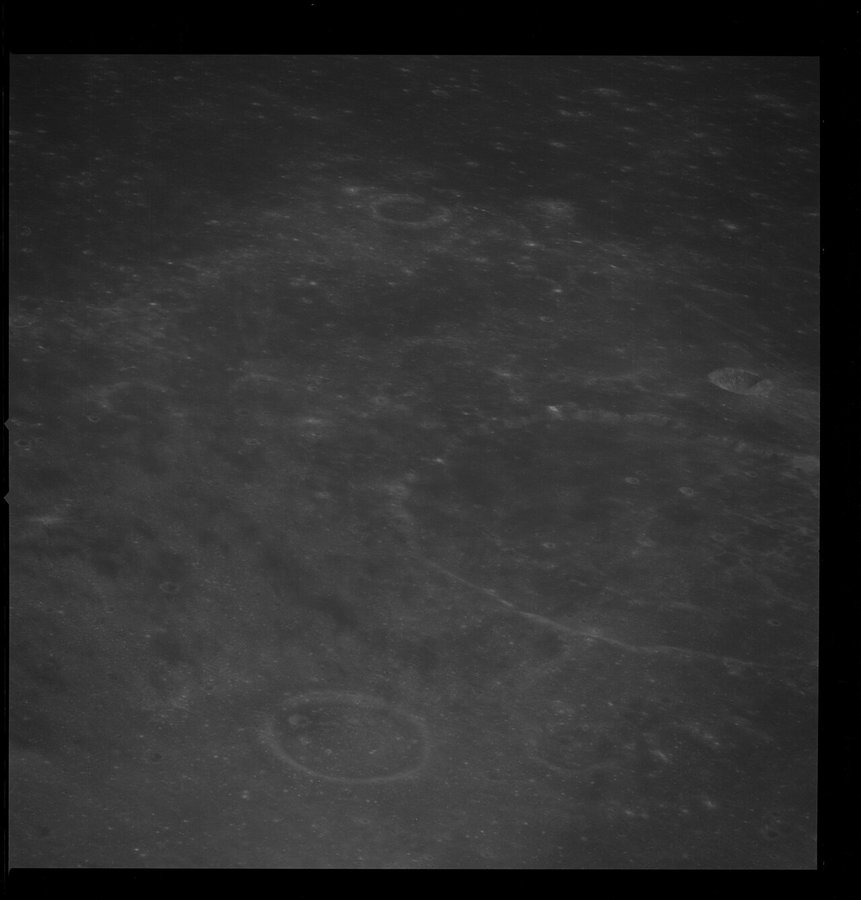
Other things named after Purkyně include the Jan Evangelista University in Ústí nad Labem (https://ujep.cz/en/) and Asteroid 3701 Purkyně, discovered by Czech astronomer Antonín Mrkos in 1985, as well as one of the Moon’s craters.
Prague’s New Town was founded in 1348; of its early citizens, we know that there was one called Jakub Charvát.
We can also assume he was quite well-off, because, in 1378, he bought two houses (now at numbers 33 and 34 on this street), as well as the surrounding Olbramovice gardens.
He replaced the garden with eighteen new houses which he rented out, making him a precursor of those nightmare landlords in big cities who people love exposing on Facebook.
He owned so much property in this area that it came to be known as Charváty, and the street name was in place by around 1400 too.
Maps from the 19th century refer to the street as Židovská zahrada zadní (Rear Jewish Garden). I was going to discuss this in tomorrow’s post, but that is a long one and this one isn’t particularly, so here goes.
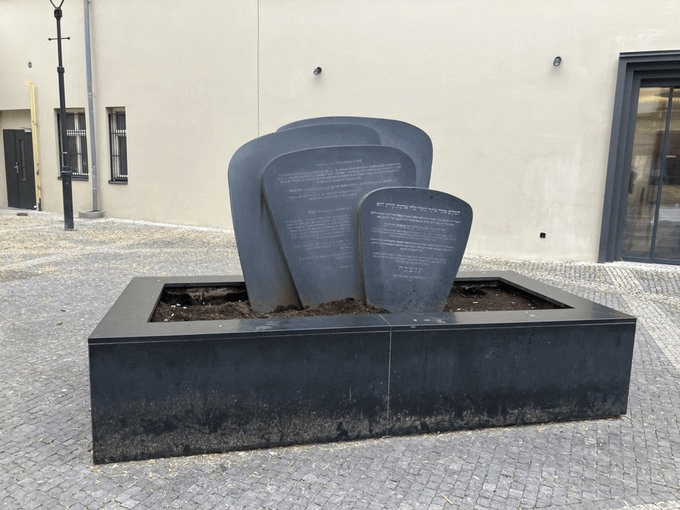
This was a Jewish cemetery, used for burials from 1254 (at the latest) until 1478, when the area was transformed into building plots.
From 1900 to 1920, construction works round here unearthed several Jewish tombstones from that time; fragments are in the National Museum.
Further construction work in 1997 resulted in the discovery of another 400 tombs and skeletal graves; the works were terminated as Judaism states that graves are inviolable for eternity. The subterranean area was declared a cultural monument. More on https://www.jewishgen.org/austriaczech/archaeol.htm.
A memorial, created by Richard Sidej and put in place in 2016, commemorates the cemetery.
Until 1781, there was a moat here, which had the somewhat inconvenient effect of separating the Old Town and the New Town. Therefore, it was decided to fill the ditch and create a street in its place.
Then, after 1870, it was named Ferdinandská, after Ferdinand V ‘the Benevolent’ / ‘Dobrotivý’, who had abdicated the Habsburg throne in 1848 and lived out his remaining years in Prague Castle. The name shifted slightly to Ferdinandova třída around 1900.
The current name was introduced in 1919, and has been used ever since (except during the Nazi occupation, when it was called Viktoria).
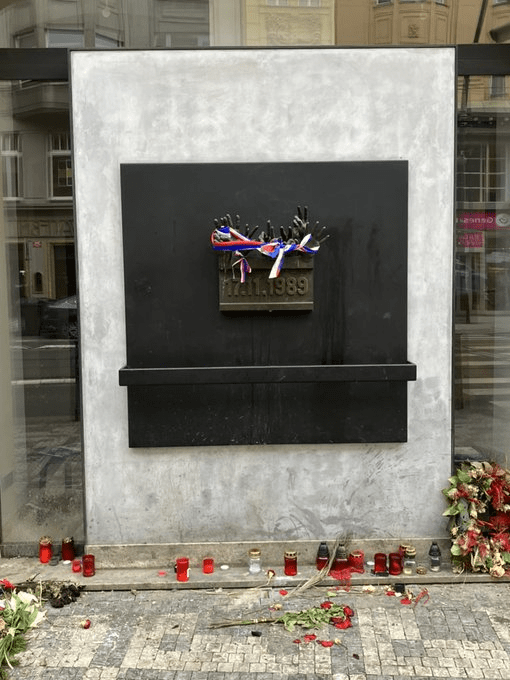
On 17 November 1989, Národní was the scene of a brutal crackdown on demonstrators by the riot police.
As well as those crucial moments in Czech history, there’s so much to see on Národní. Let’s go for a walk (please forgive me for skipping the theatre and the Ursuline convent/church, both of which are discussed in recent threads).
Lažanský Palace was built between 1861 and 1863, and, in its early days, was lived in by Bedřich Smetana. You may well be familiar with the cafe that was opened in the building in 1881 – Cafe Slavia.
Other parts of the building are used by FAMU.
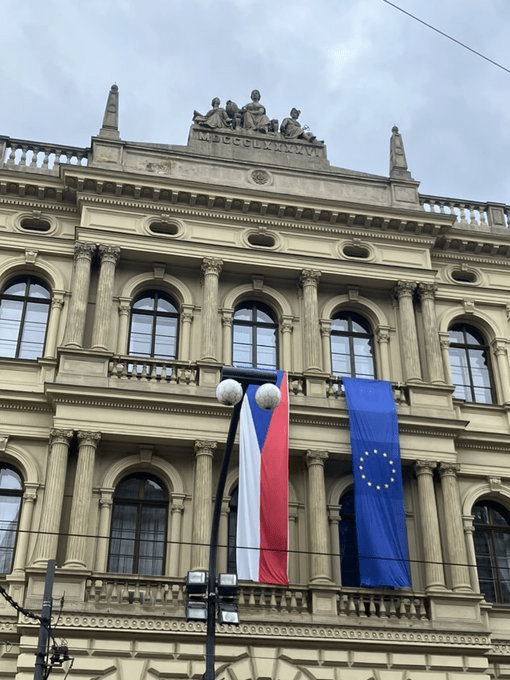
Next door to the palace, and built around the same time (1858-62) for the Spořitelna česká bank, number 3 has hosted the Czech Academy of Sciences since 1994.
At number 7, Pojišťovna Praha (the Prague Insurance Company) was built between 1906 and 1907, and is owned by the Center of Joint Activities of the Academy of Sciences of the Czech Republic. Nice bookshop in there too.
Continuing the (freaking awesome) art nouveau theme, Topič House is at number 9. It was built as part of the František Topič Publishing House and used to host Topič Salon, once the longest-running private art gallery in Prague.
At number 25, Palác Metro was built in 1870 and given an overhaul between 1922 and 1925. Nowadays, it includes three theatres and, because I don’t want to paint an idealised picture of Prague, a KFC.
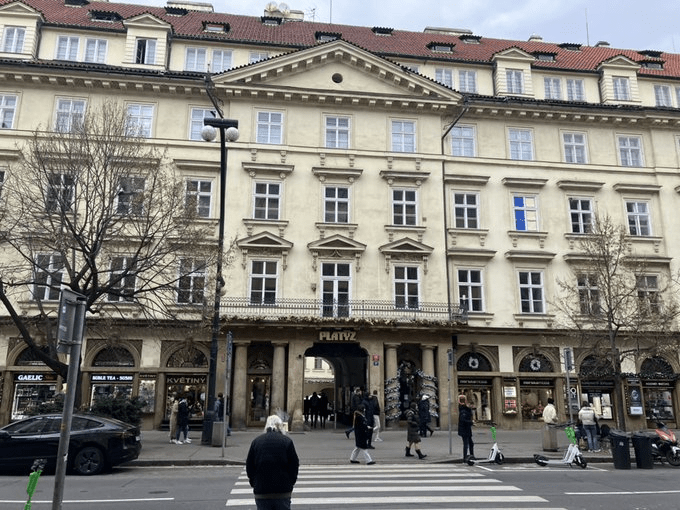
At number 37, Palác Platýz has a much longer history than most buildings here – back to 1347, though obviously not in its current form. Nice courtyard.
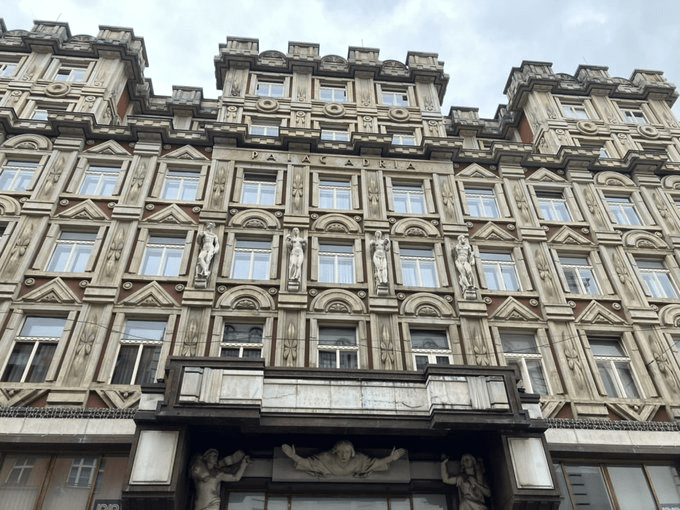
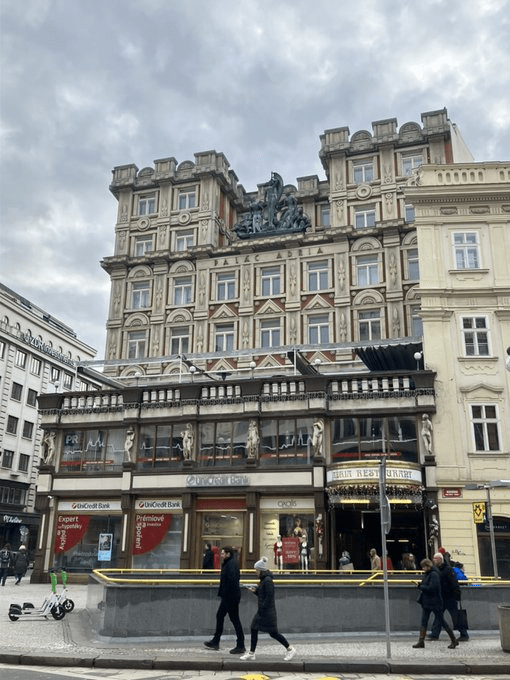
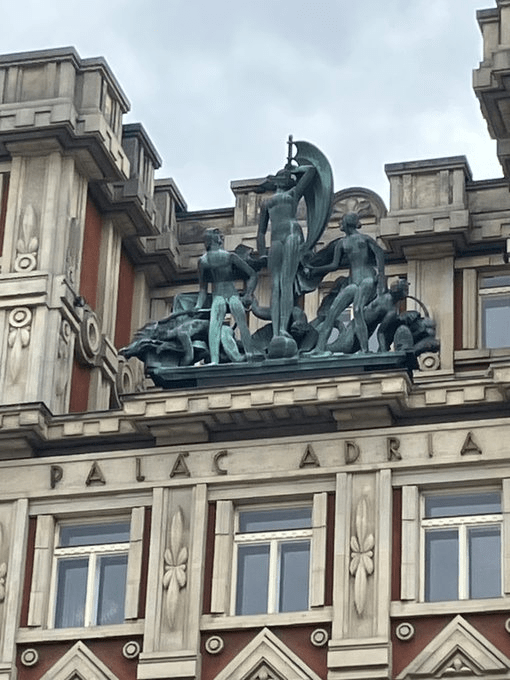
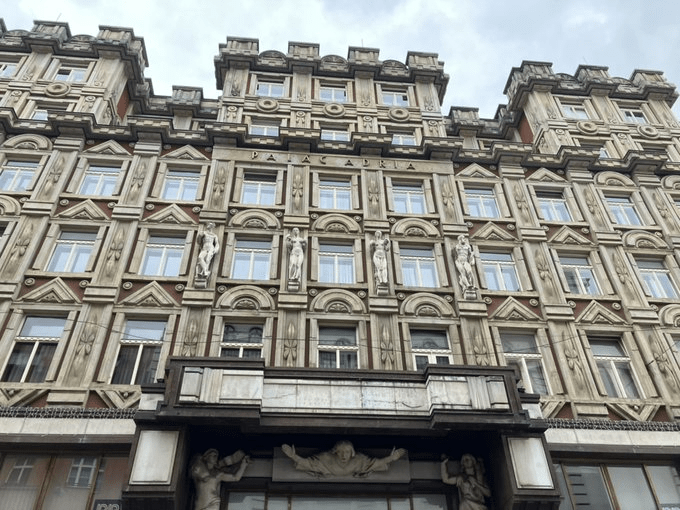
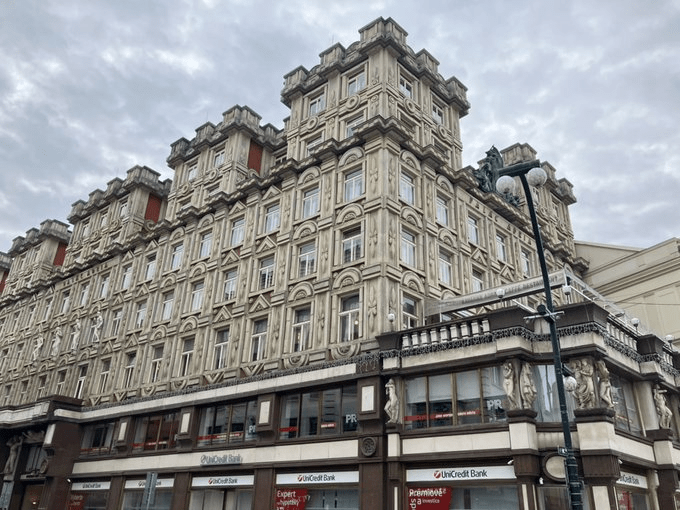
Crossing the road, we come to Palác Adria, one of those buildings that could be voted the best building in the world and still be underrated. It was built in 1924 and its style is apparently known as ‘Rondocubist’.
Since 1998, it’s hosted Divadlo Bez zábradlí, which, when it was founded in 1990, was the first privately-owned theatre in the country.
WHAT A BUILDING THOUGH.
Turning back towards the river, Palác Porgesů z Portheimu (1762-76) has been owned by the Prague Gas Works since the 1940s.
While Palác Chicago (1927-8) was, at the time of building, one of the most cutting-edge buildings in Prague; it was fitted out with facilities which were meant to emulate those of American skyscrapers.
The Máj shopping centre (1972-5) is known for being: a) incredibly 1970s; b) the scene of a multi-storey Tesco when I first visited Prague in 2005, a store so big that it had a boomerang section; c) briefly a Kmart in the 1990s; d) under reconstruction.
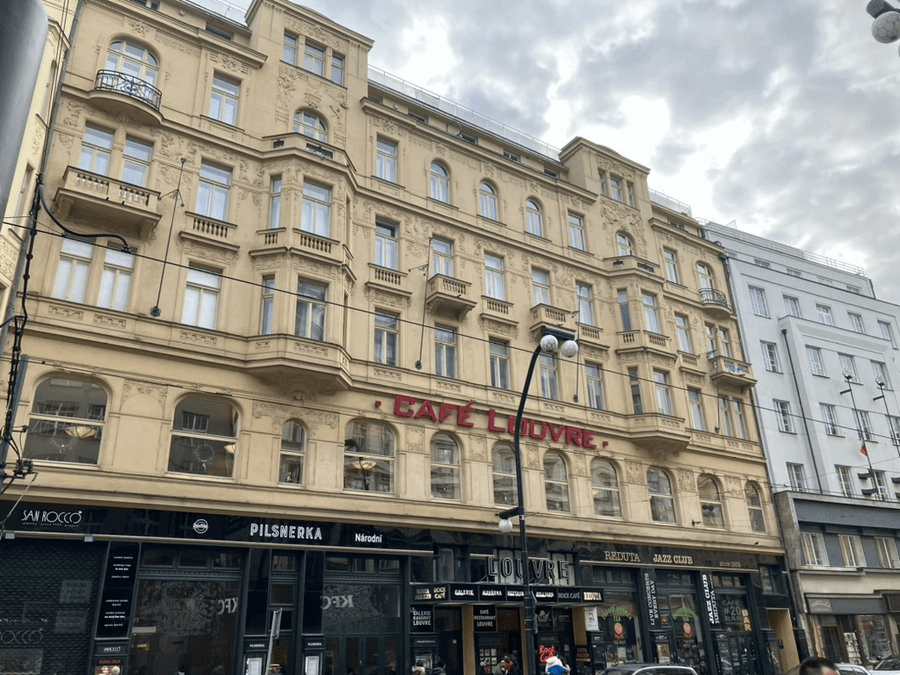
Palác Louvre was built around the turn of the 20th century, replacing an old riding stable. It’s best known for its eponymous cafe, which was one of Kafka’s favourite hangouts and reached the peak of its popularity in the 1920s and 1930s.
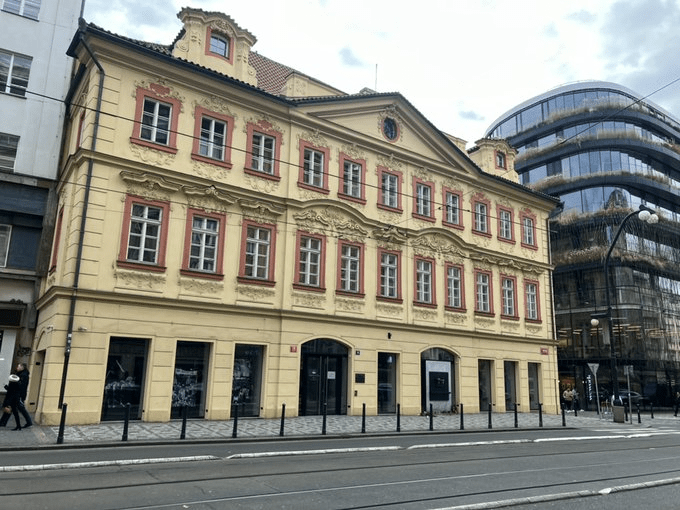
Schirdingovský palác (renovated in 1752) is the home of the Czech Bar Association. It’s most famous for its plaque commemorating the Velvet Revolution, as this is the spot where the most brutal police beatings took place.
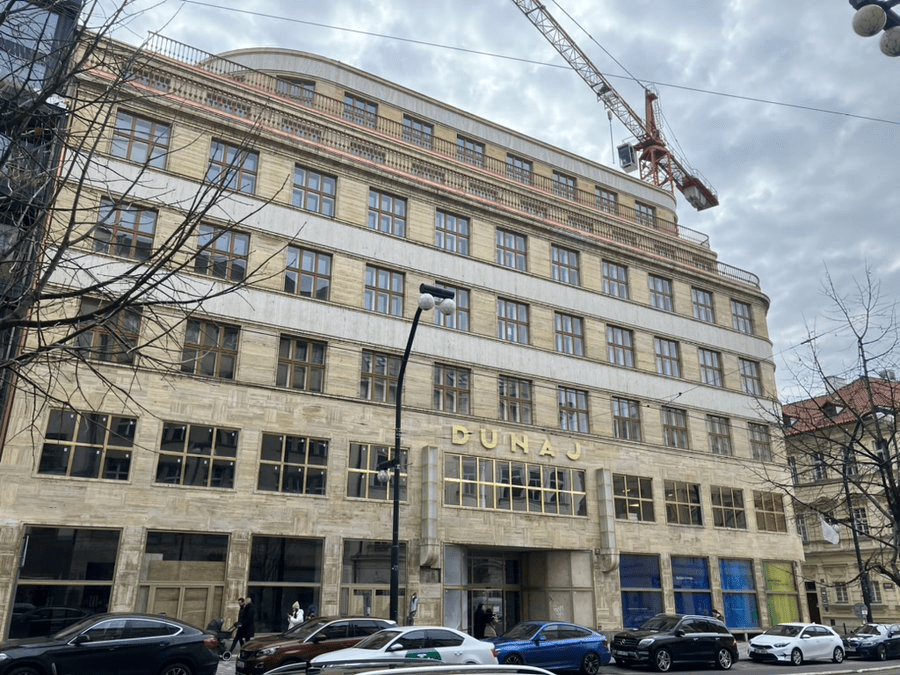
And finally, Palác Dunaj (Danube) was opened in 1930, and, during Communist times, hosted the Cultural Center of the GDR. Having hosted the British Council in the 1990s/2000s, it’s recently been converted into upmarket office space, and this is due to open in the next few weeks.
If there’s one thing I love about writing these posts, it’s the opportunity to walk down a street you’ve walked down a million times and see all these things you’ve never really looked at before. It’s kind of like falling in love with someone all over again.
This was granted in the same year, but it wasn’t until 1851 that a board was set up for the project, and started gathering donations (this is something like wanting to set up a Gofundme page and then having to wait six years to actually do so).
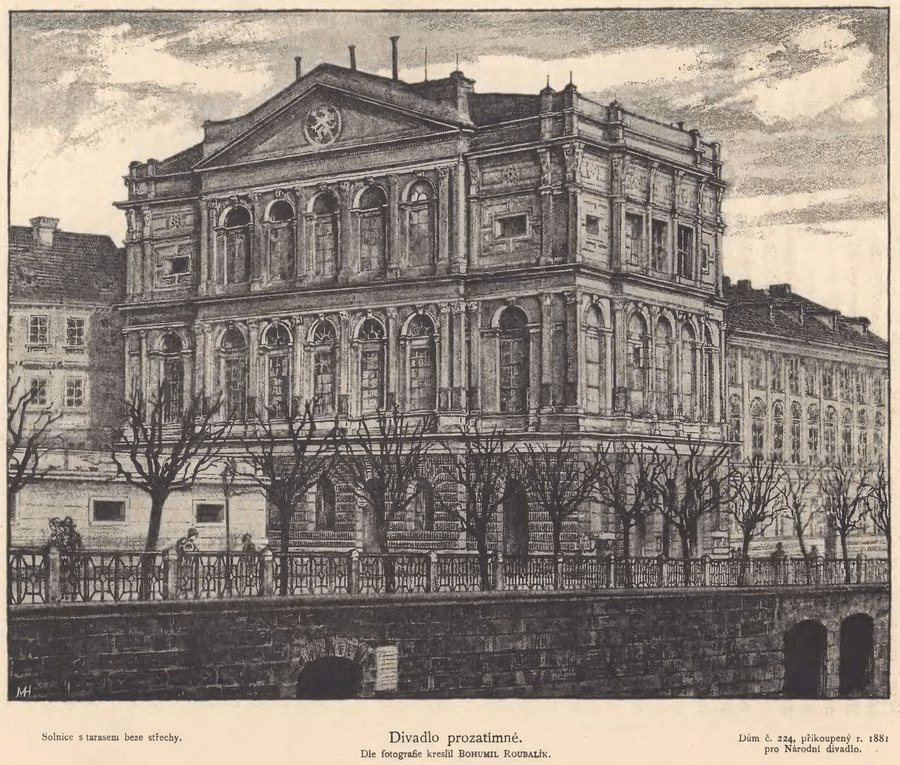
The plot of land where the theatre is located was purchased in 1852; ten years later, construction began on the Provisional Theater (Prozatímní divadlo), which was completed within six months.
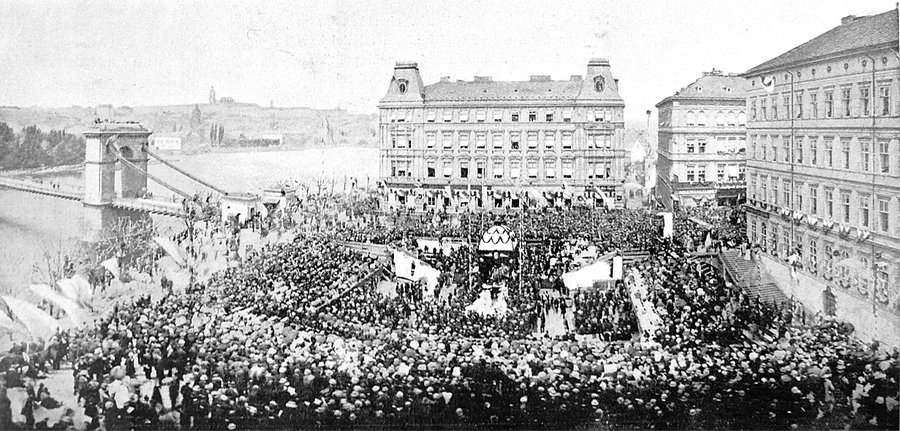
The ceremony was quite well attended, shall we say – it’s said that over 100,000 people witnessed it.
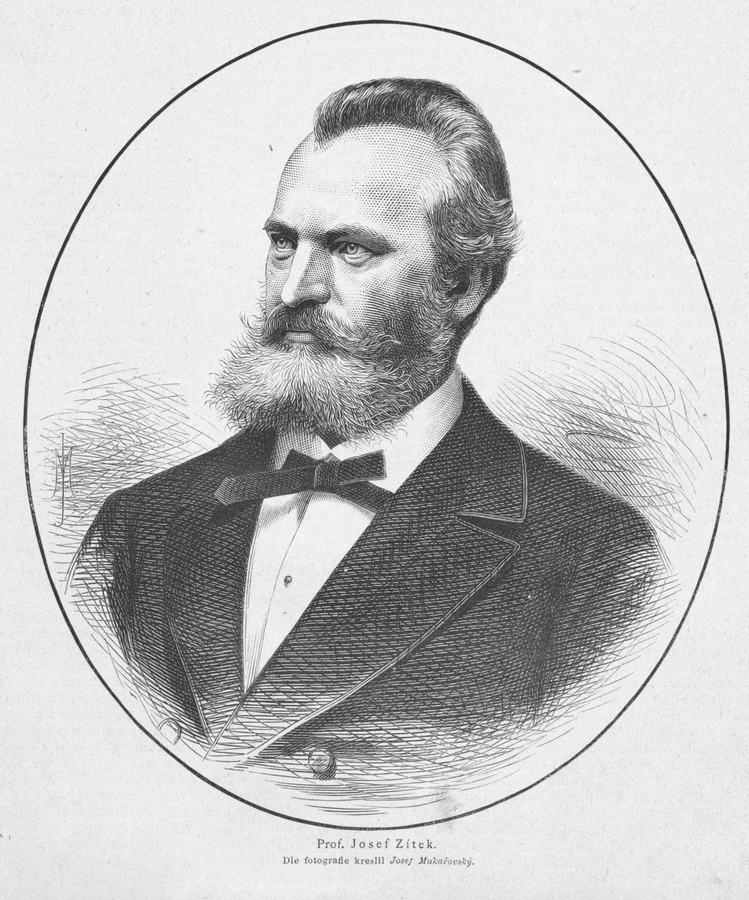
The architect whose design for the theatre was selected was Josef Zítek (pictured – he also designed the Rudolfinum), and his vision was carried out by František Havel (not related to Václav) from 1874 onwards.
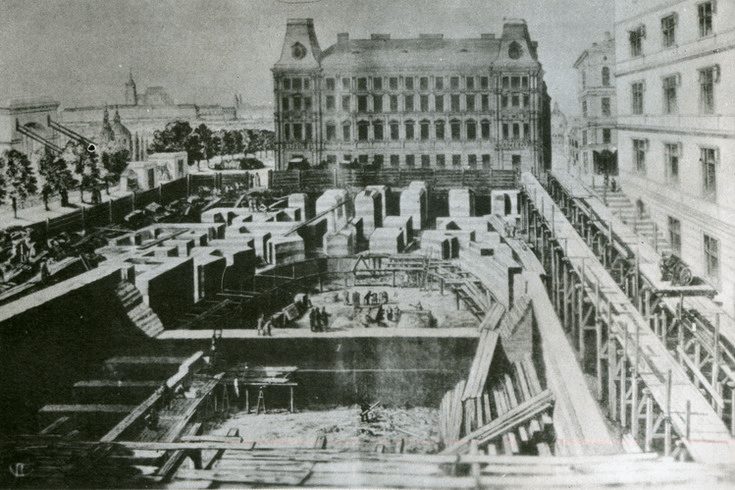
By 1868; the foundations of the theatre were prepared; in 1873, a commission was formed to decide who would get to decorate the façade of the building; by 1877, the theatre also had a roof.
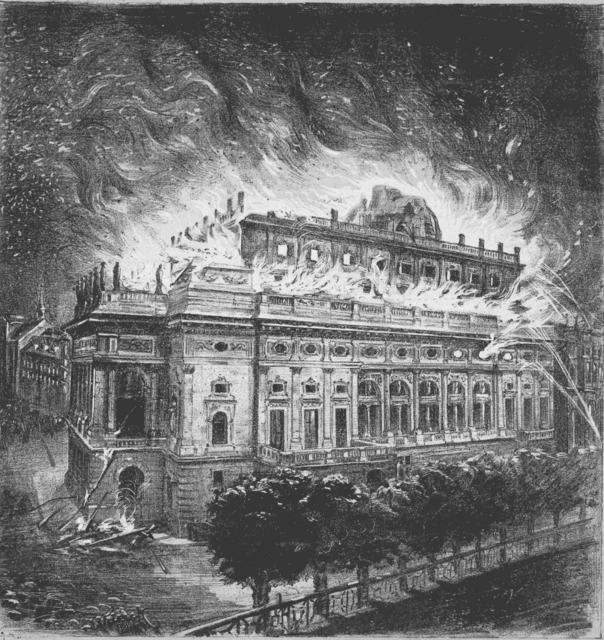
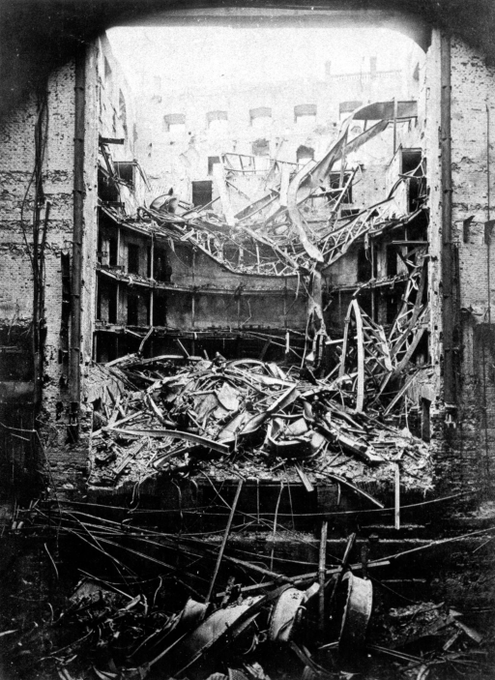
However, during these works, the roof, auditorium and stage were destroyed by a fire, a mere two months and one day after the theatre’s opening.
Thanks to hugely generous donations from the people of Prague, the theatre – worked on by architect Josef Schulz – reopened on 18 November 1883, again with a performance of Libuše.
The Prozatímní, meanwhile, was joined to the theatre’s southern wing.
Also from 1977 to 1983, the theatre gained a younger sibling, the Nová scéna / New Scene. It’s the home of the Laterna Magica.
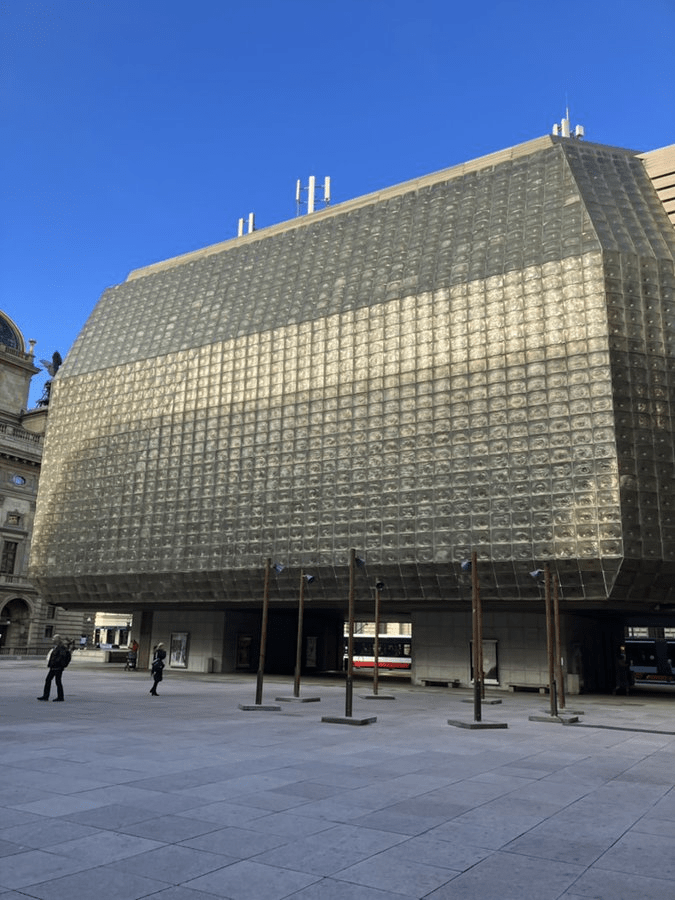
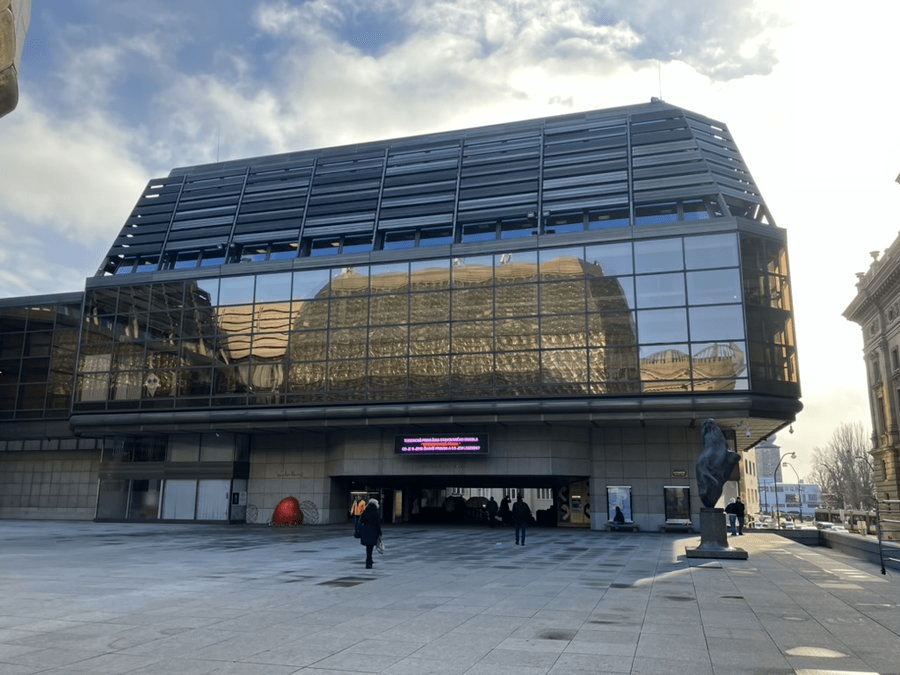
The 1980s also saw the construction of the theatre’s restaurant building and service building. The service building is, well, very 1980s, and the pink neon letters on the screen in this picture only add to that.
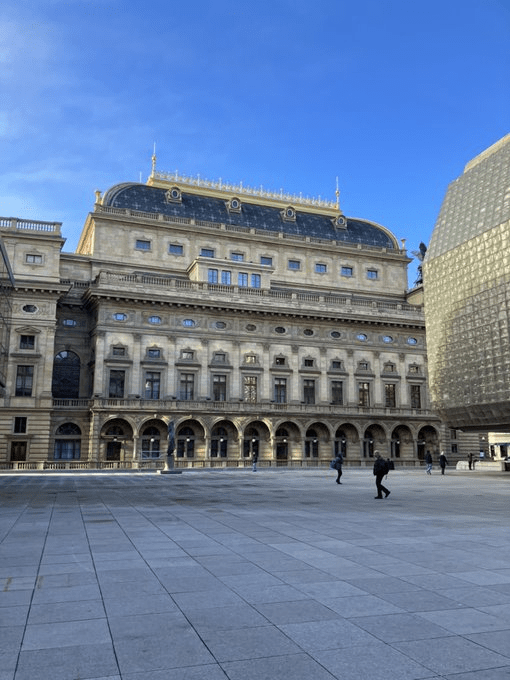
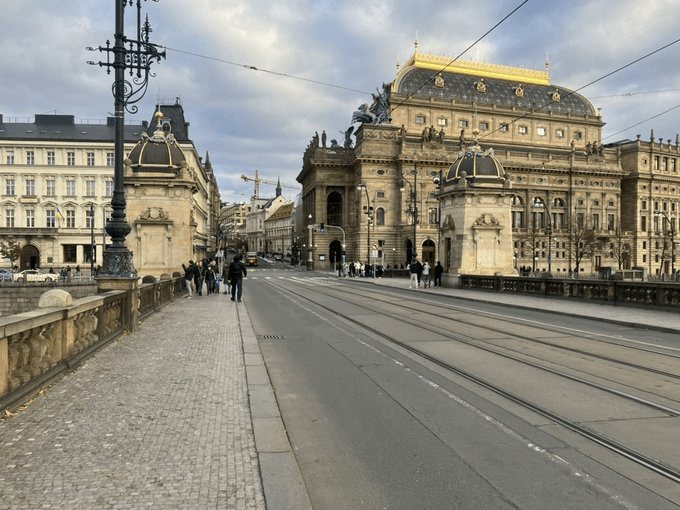
Meanwhile, the National Theatre is the sort of building you can look at from every angle without getting bored.
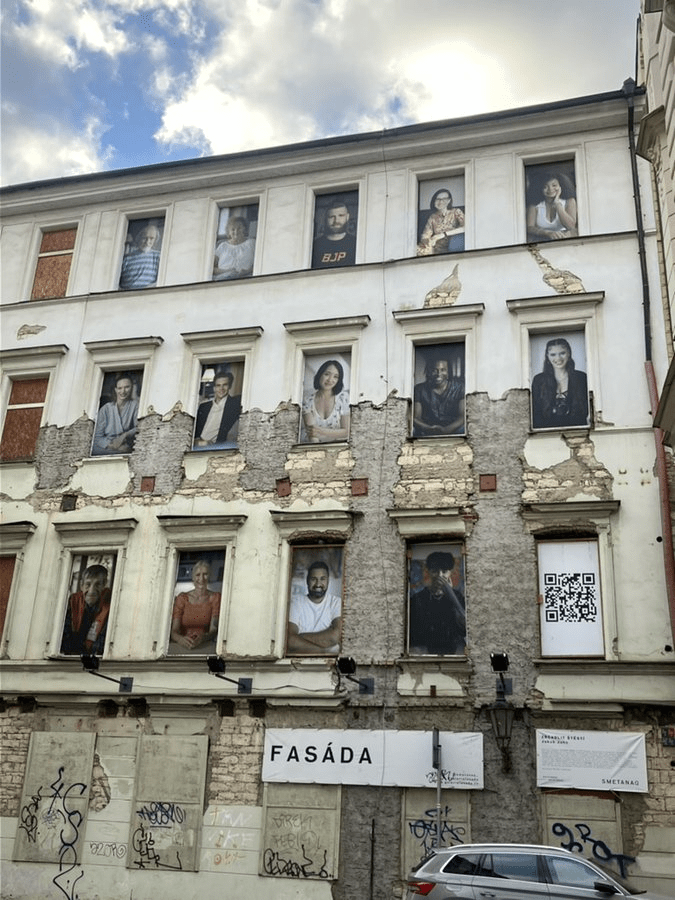
One of the buildings whose façade was significantly damaged by the explosion is now a gallery called, appropriately, Fasáda. I like what they’ve done with it very much.
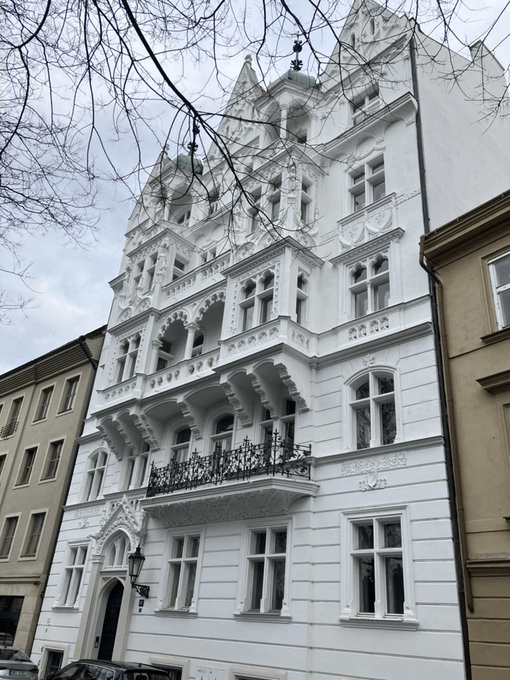
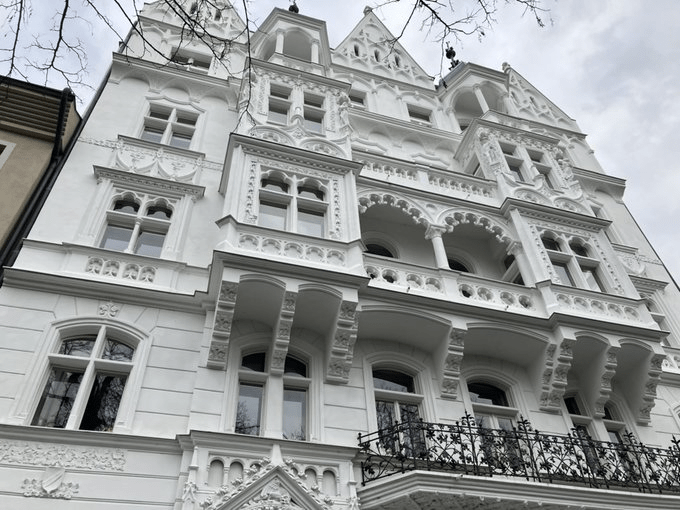
I was also quite taken by number 22 in the street when I walked past it; apparently it now hosts luxury apartments.
Václav Havel was born in 1936 in Prague. His family was well-off and well-known: his grandfather Vácslav (1861-1921) had built Lucerna, while his father (also Václav; 1897-1979) had created Barrandov Terraces.
Meanwhile, his maternal grandfather, Hugo Vavrečka (1880-1952), had been a renowned war correspondent, and was also the first Czechoslovak ambassador to Hungary, before carrying out the same role in Austria.
Struggling to get into the secondary school of his choice due to his bourgeois background, Havel, in 1951, started training as a chemical laboratory technician while also attending evening classes on Štěpánská (https://whatsinapraguestreetname.com/2024/09/01/prague-2-day-167-stepanska/), graduating in 1954.
He started studying economics at the Czech Technical University (ČVUT) in 1955, but dropped out in 1957 and tried, unsuccessfully, to get a place at the Film and TV School of the Academy of Performing Arts (FAMU).
After his military service (1957-9), Havel got a job as a stage technician at the ABC Theatre on Vodičkova, before switching to Na zábradlí (on Anenské náměstí) in 1960.
It was at the latter theatre that Havel’s second play, Zahradní slavnost (The Garden Party), was premiered in 1963 (see https://www.youtube.com/watch?v=A5P4s_APdaE). He eventually became the theatre’s dramaturg.
Havel got on the authorities’ radar in June 1967, when he made a speech at the Congress of Czechoslovak Writers criticising censorship (https://archiv.hn.cz/c1-54248810-1967-projev-na-sjezdu-spisovatelu). Originally on the list of candidates to lead the Union of Czechoslovak Writers, he was promptly removed from it.
During the Prague Spring in the following year, he became head of the Circle of Independent Writers, and demanded a multi-party political system.
Once the Prague Spring was crushed, Havel’s works were no longer allowed to be performed or published. Having a certain degree of financial independence due to his plays’ international success, he took a job in a brewery and published his new plays in samizdat.
He was one of the founders of Charter 77, a civil rights movement formed in part as a response to the imprisonment of the Plastic People of the Universe in 1976. The founding of the Charter would result in Havel’s imprisonment in 1977 & 1978: https://edu.ceskatelevize.cz/video/15230-vaclav-havel-a-charta-77.
Undeterred, Havel founded the Committee for the Defense of the Unjustly Prosecuted (VONS) in 1978, which campaigned for the rights – and the release – of political prisoners. This would lead to his longest stay in prison – 45 months from 1979 to 1983.
Two months later, he was imprisoned again following a police crackdown during Palach Week, on the 20th anniversary of Jan Palach’s self-immolation. Released on parole in May, he helped draft the Several Sentences petition, published in June.
On 17 November 1989, the police violently dispersed a student demonstration. Within two days, Havel had co-founded the anti-totalitarian Civic Forum (OF); by the 21st, he would be addressing a packed Wenceslas Square.
On the 28th, the Communist party relinquished power after 41 years. Of the many, many things this meant, one was that Czechoslovakia would need a new president. Havel was nominated on 8 December, and inaugurated on the 29th.
In Havel’s first term, he helped pave the way for free elections, democracy, and the withdrawal of Soviet troops; within a year, Pope John Paul II, George Bush and the Dalai Lama had all visited Czechoslovakia, and Havel had spoken at the US Congress.
However, this term was also marked by a somewhat generous amnesty in 1990 and tensions between the Czech and Slovak Republics (Havel wanted them to remain as one state).
When the Czech Republic became independent on 1 January 1993, Havel became its first president, and would remain in that position for two terms, i.e. ten years.
In this time, the Czech Republic joined NATO, and made preparations towards becoming a member of the EU. Havel also addressed the thorny topic of Czech-German relations, an area where his two successors seemed quite happy to aggravate matters.
Olga died of cancer in January 1996; in the same year, Havel would be diagnosed with lung cancer.
After leaving office in 2003, Havel remained politically engaged, particularly concerning human rights in Myanmar, Belarus and Kurdistan. He also wrote two more plays, including Leaving / Odcházení, which he directed a film version of in 2011.
Havel died on 18 December 2011, aged 75, as a result of a respiratory illness which had been caused or aggravated by his various stays in prison. Deservedly, there was an immense outpouring of grief.
There are many places named after Havel, both in the Czech Republic and internationally; if you fly into Prague, his name will be the first one that you see.
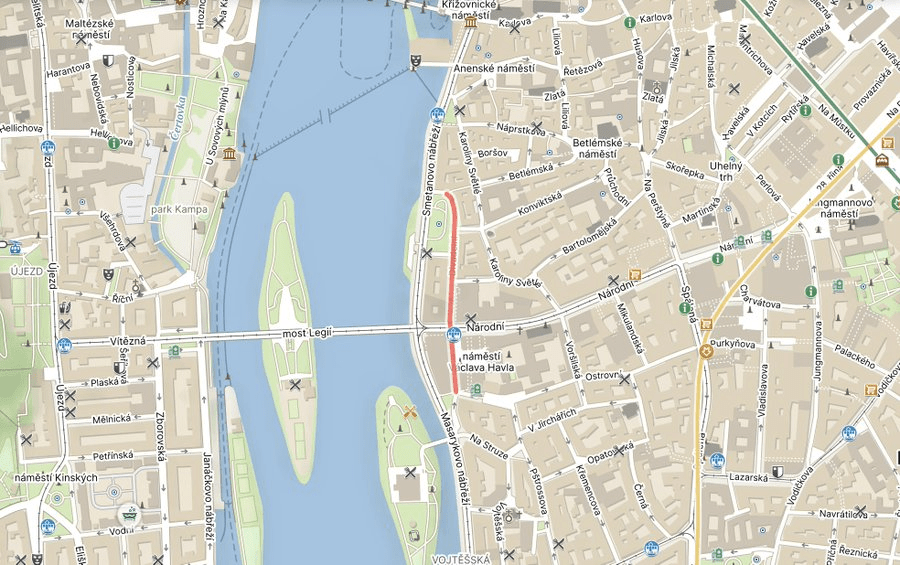
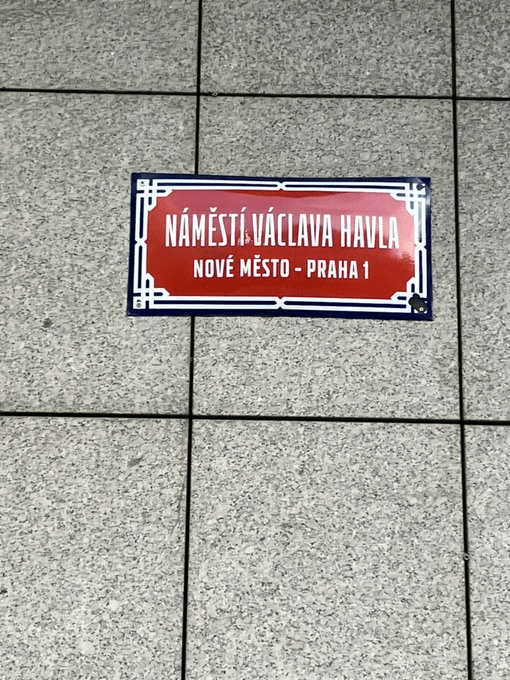
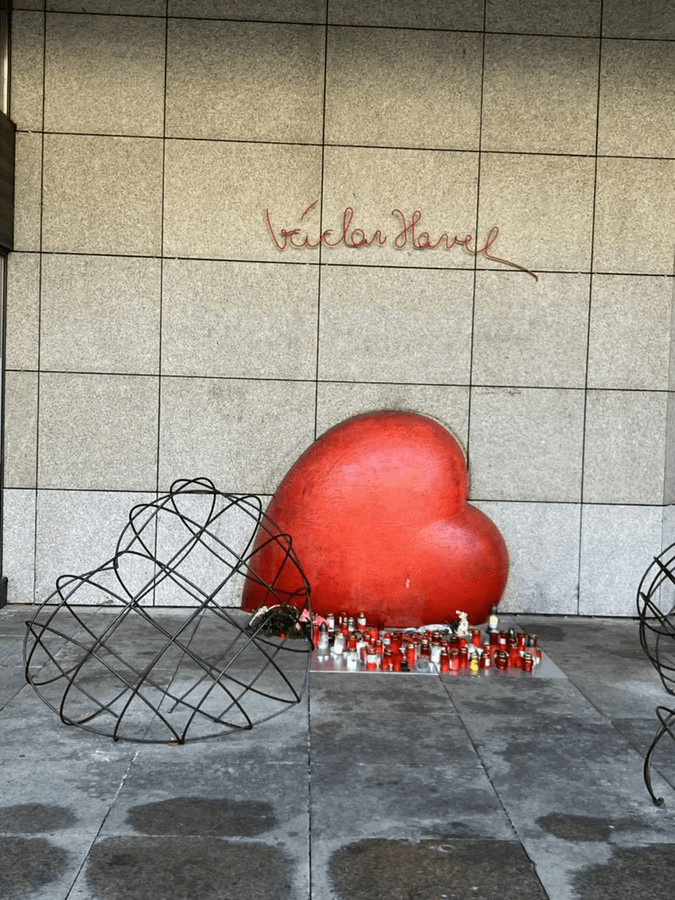
This square, meanwhile, is the ‘piazzetta’ of the National Theatre, designed in 1981 and given its current name in 2016. It includes Heart for Václav Havel, by the sculptor Kurt Gebauer.
This is obviously a very long thread, but even more obviously feels like it doesn’t go into enough detail.
Update, March 2024: on the second anniversary of the Russian attack on the theatre in Mariupol, Czech-Ukrainian initiative organised an event here to commemorate the children, and adults, who lost their lives due to this senseless and reprehensible war. Слава Україні. https://www.ceskenoviny.cz/zpravy/2493618
Svatá Voršila is known to English-speakers as Saint Ursula; we don’t know much about her other than that, in 383 AD, she, along with a group of virgins, was beheaded by the Huns in Cologne, where the main church devoted to her is now located.
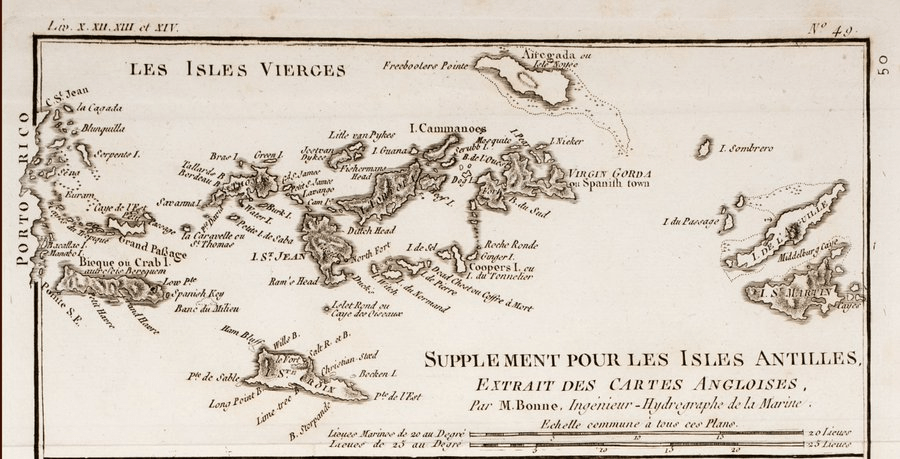
We also know that Christopher Columbus later named the Virgin Islands after her and her unlucky group.
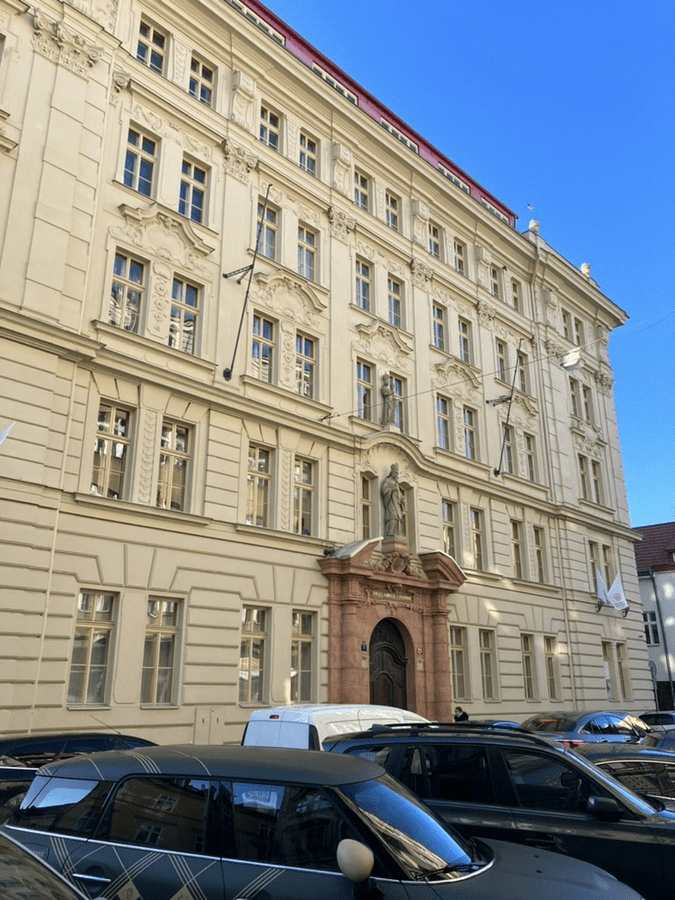
Having originally settled in Malá Strana, the order bought a town house round here in 1664. In the following years, they would buy more properties in the area, only to demolish them and replace them with a new building, the first stone being consecrated in 1674.
By 1676, enough work had been done for the nuns to move into their new convent here; in 1702, the foundation stone of the Church of St Ursula was laid.
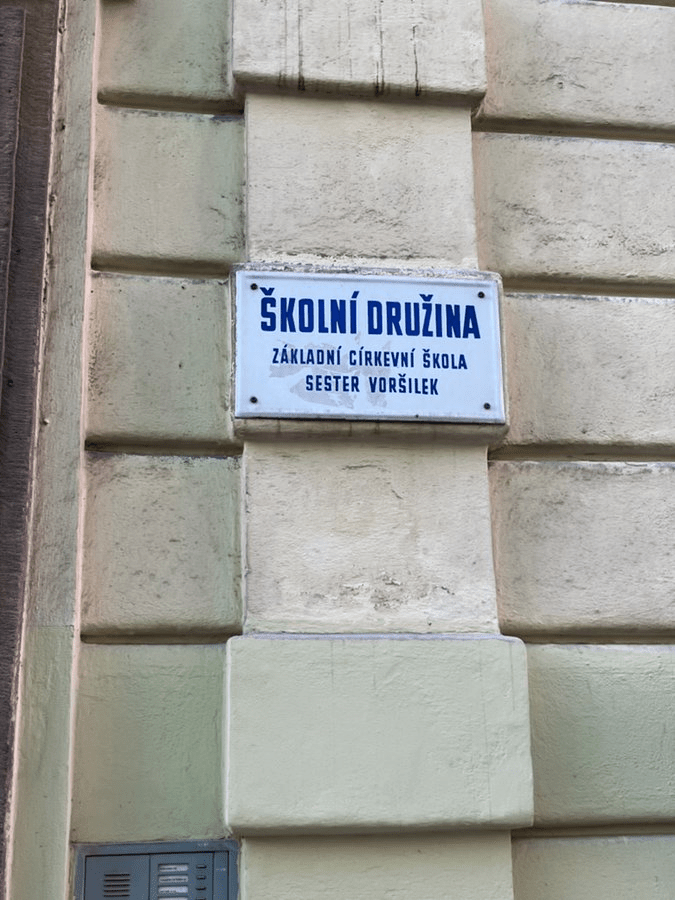
As Ursuline nuns are particularly dedicated to education, they founded an elementary school; education was initially in German, with Czech being introduced in 1898.
The convent was closed in 1784 as part of Joseph II’s reforms, but only briefly (presumably because the Ursulines, working in education, were seen as ‘productive’ rather than ‘contemplative’).
However, the communists would abolish the convent yet again in 1951, nationalising the school and interning the nuns in Northern Bohemia. The Ursulines would get their property back in 1991.
The convent and church actually have their entrances on Národní rather than Voršilská, but let’s not let that get in the way of a good story.
Things that do have their entrance on Voršilská – other than the school – include, at number 1, the Arnošt of Pardubice halls of residence, built in 1901 (on the site of a former monastery) and run/used by Charles University since 1945.
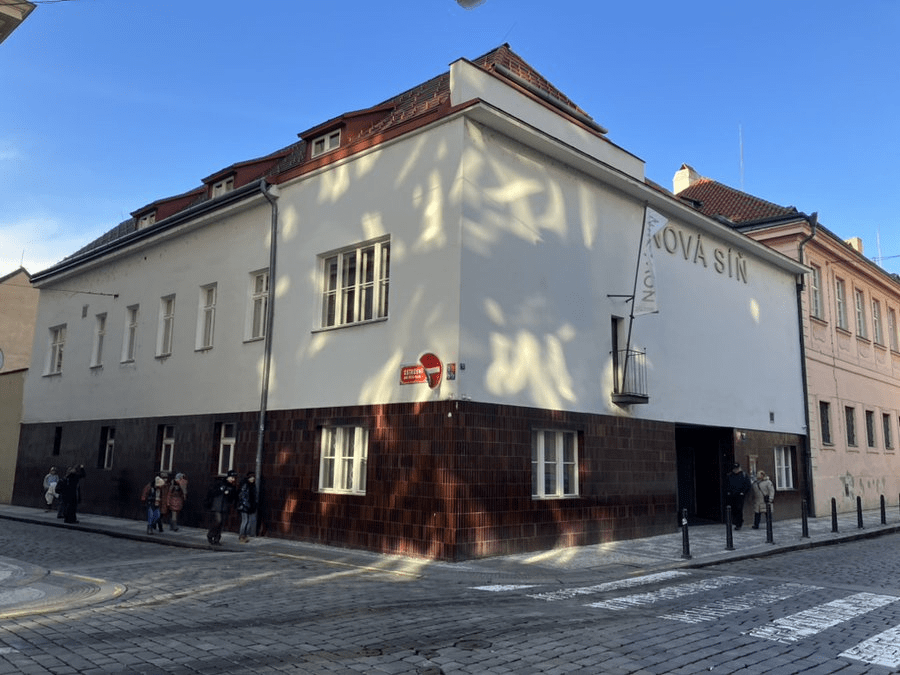
At number 3, meanwhile, there’s the functionalist Nová síň art gallery, founded in 1934 and currently also owned by the Ursulines.
Across the road, at number 10, is Deymovský Palace, one of many palaces belong to the Schwarzenbergs. Converted into office space in 1994, Václav Havel had his headquarters here in his post-presidential days.
Finally, number 12, Dietrichsteinský Palace, is Prague’s Apostolic Nunciature, i.e. it’s basically the Vatican City’s embassy (spoiler alert: they don’t issue visas).
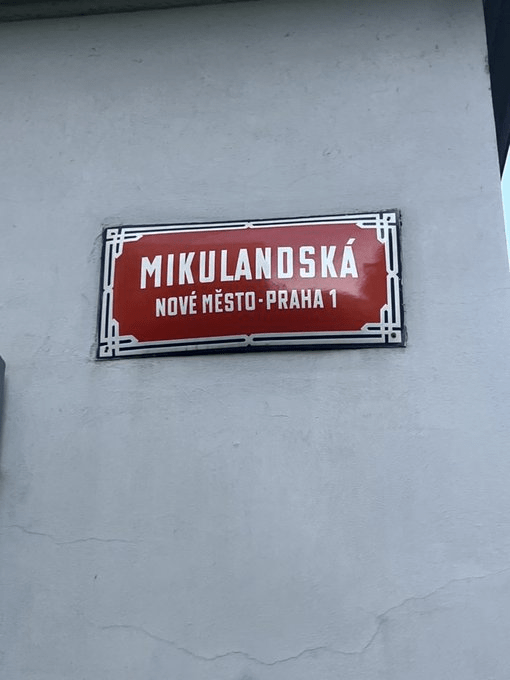
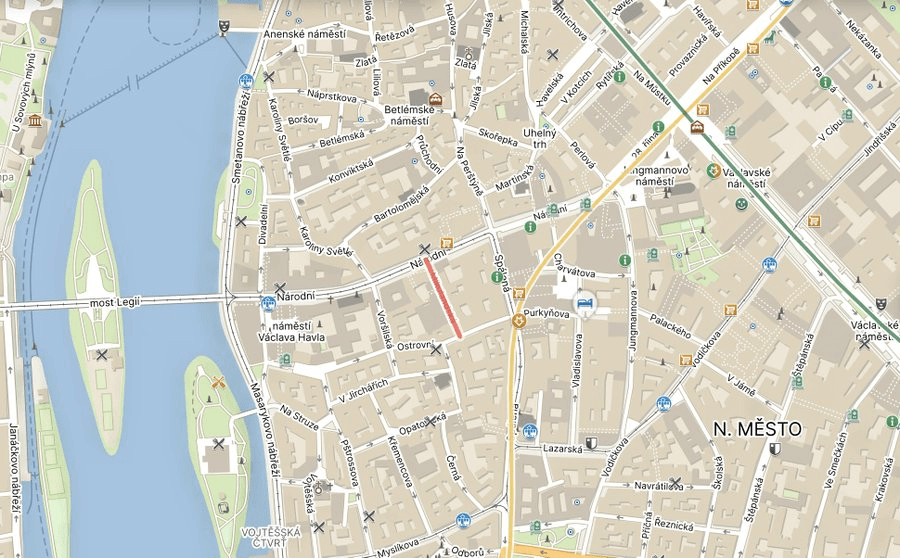
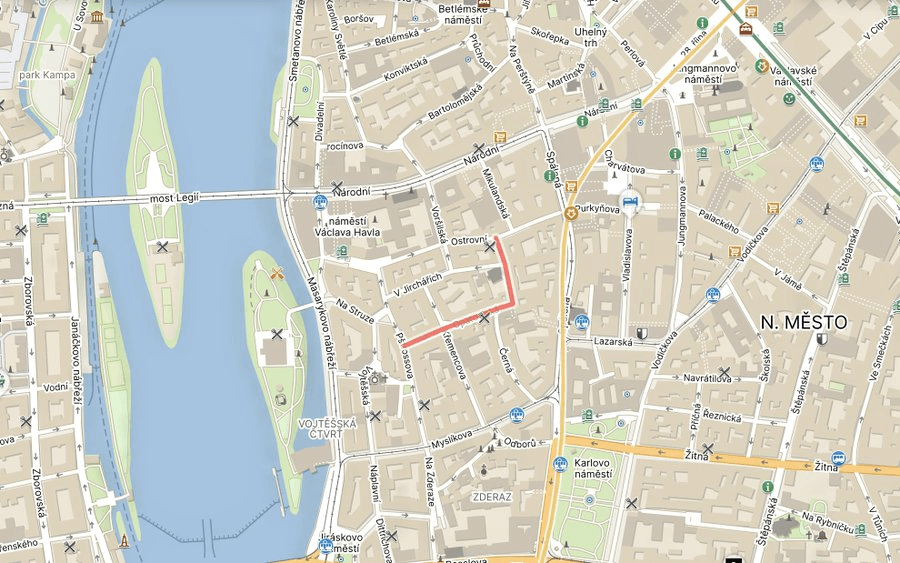
When this street was built in the 14th century, it was named Pasířská, because it was inhabited by pasíři – craftsmen making belts from metal, i.e. girdlers.
When they moved to another nearby street – which we’re getting to soon-ish – they were replaced by makers of fur coats and goods, and the street was renamed Kožešnická (a ‘furrier’ in Czech is a kožešník).
By 1791, the German name Nikolander Gasse had been introduced, and the Czech name Mikulandská appears on a map from 1816.
Apparently, one of the houses in the road was owned by a Mikuláš or a Nikolaus, although we don’t know any more about him.
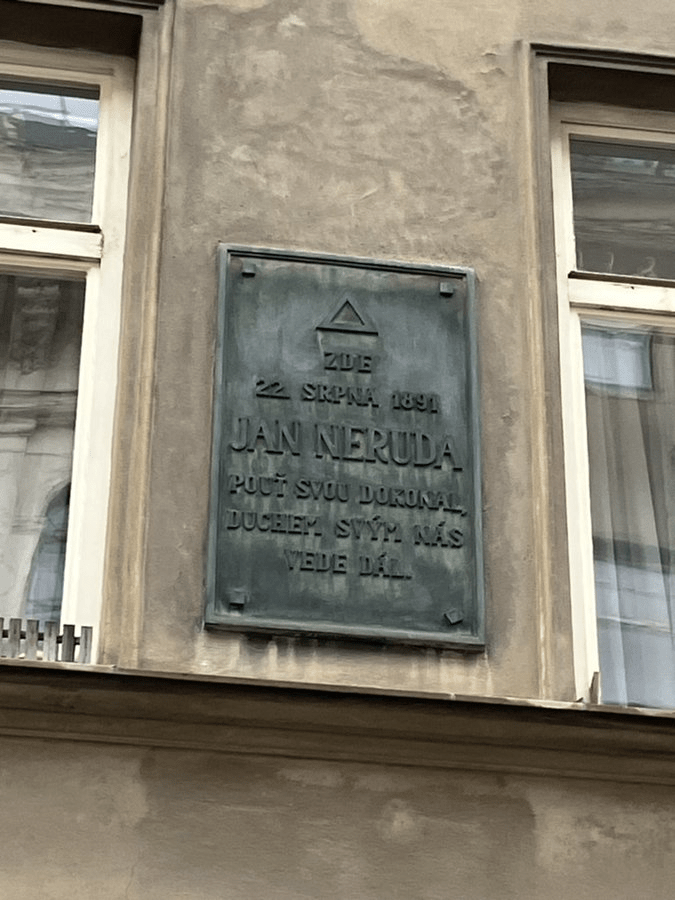
Mikulandská included the first German Realschule in Prague; its most famous teacher was Jan Neruda, who, in the late 1850s, gave Czech classes to, amongst others, the writer Jakub Arbes. It later became a primary school.
The building gained a certain degree of notoriety in 2018, when it collapsed during renovations; three workers were injured. Police charged two people with causing the accident in 2021.
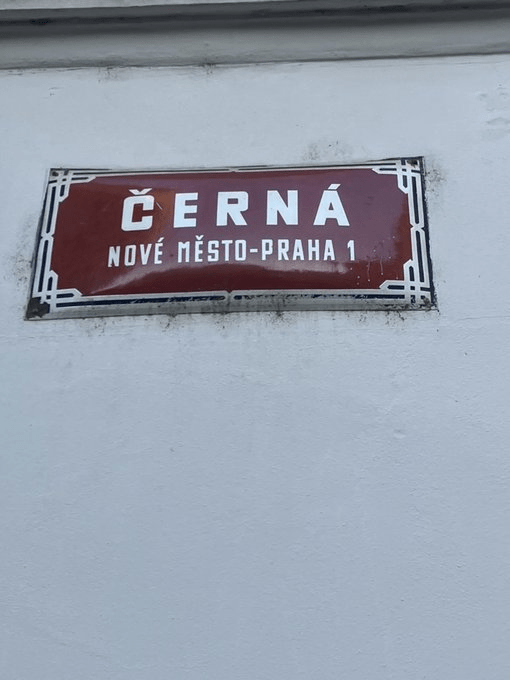
While it’s been suggested that there may have been a Mr Černý who owned property here, the most likely explanation is because the street is relatively narrow and, therefore, dark.
(And, if the first theory was correct, surely the street would be called Černého anyway)
Černá includes the Evangelical Faculty of Theology (ETF) of Charles University, and, while 2024 has only just begun, this may be the worst photo of a building in Prague that you’ll see all year.
Across the road is the house lived in by avant-garde artist and writer Karel Teige (1900-51); it also hosted a children’s home run by Dominican nuns. Currently, the same order offers student accommodation here.
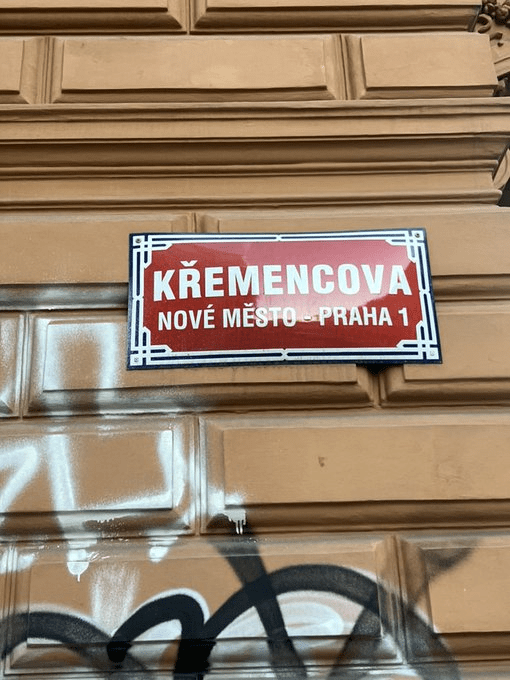
Around 1400, one of the houses on this street was owned by a Velík Křemenec, whose name literally translates as ‘Big Quartzite’, which is incredible.
We don’t know much about him other than that he was wealthy, the house he owned was named Na Křemenci, and he had a licence to brew beer in there.
Over time, the name of the street gradually got corrupted to ‘Skřemenná’, but, in the 1700s, it became known as Poštovská, because postal cars would travel through it as part of the journey from Malá Strana to Vienna.
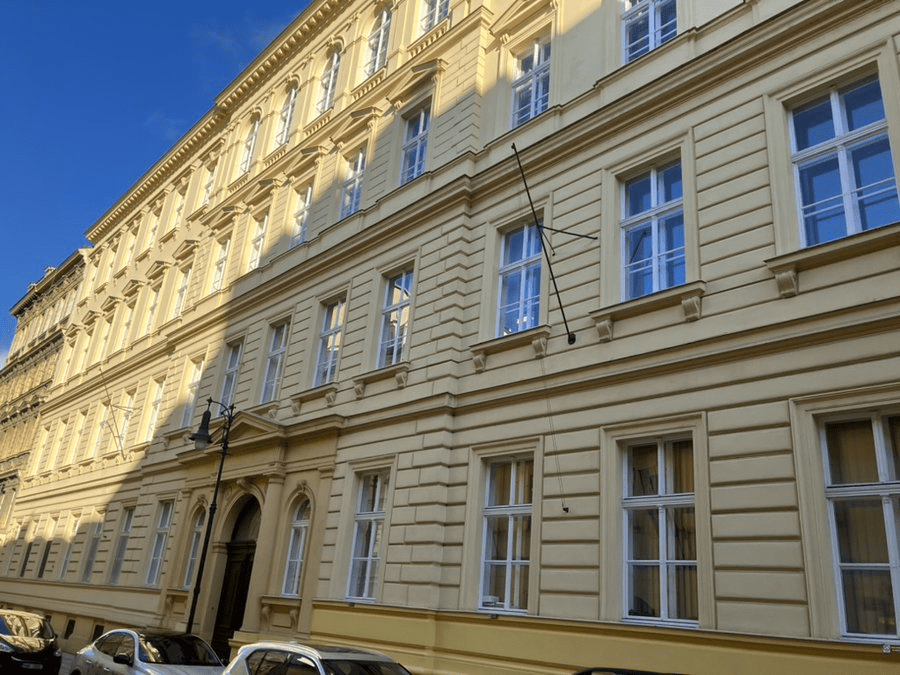
If you’ve been in Křemencova, there’s quite a good chance that this was because you were at number 11, AKA U Fleků, possibly the oldest brewery in Prague (the pub was first mentioned in 1499).
I think this is the house originally owned by Mr Křemenec, but don’t quote me on that as it could also have been bought later by a descendant. These days, it’s named after Jakub Flekovský, who bought it in 1762.
Across the road, number 12 was built from 1892 to 1894 in order to provide better premises for the country’s first Realgymnasium (a secondary school that prepares children for university). It educated, amongst others, Vladislav Vančura, Jiří Voskovec and Jan Werich.
Like any self-respecting street, Křemencova also has its own ghost. It’s said that, twice a week, a carriage drives through here from Vyšehrad, containing a miller who stole a lot of money. And the ghost won’t give up the, well, ghost until the money is spent on a good cause.
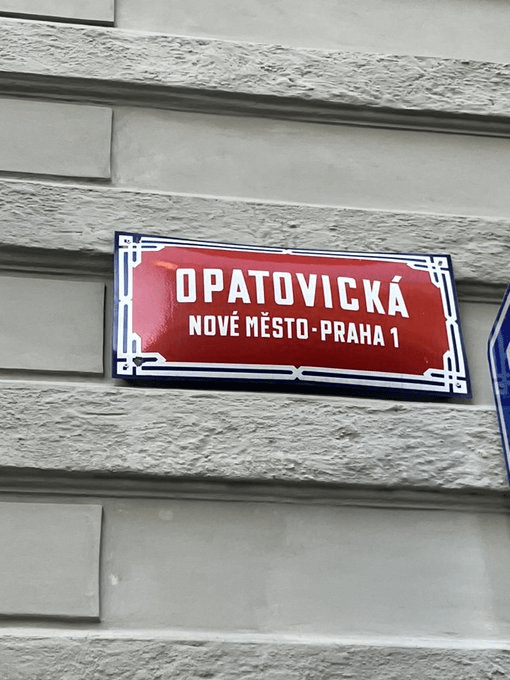
He also decreed that a village be created here, in the monastery’s honour. The village was named Opatovice (an opat is an ‘abbott’, with both words having their root in the Aramaic ‘abbā’).
The abbott may actually have lived here, at least according to one source I read.
In 1348, Charles IV founded Prague’s New Town, and so Opatovice ceased to exist as a separate village.
Current-day Opatovická includes the premises of the former Josef R. Vilímek Publishing House, one of the most famous in Bohemia in the late 19th and early 20th centuries. It’s now used by the Higher Vocational School of Journalism (VOŠP).
The street also features Vilímkův průchod, also named after the publisher, and linking Opatovická to Spálená. It’s convenient – and I can’t believe I hadn’t realised it was there until I took these photos – but it’s also in need of a bit of a makeover.
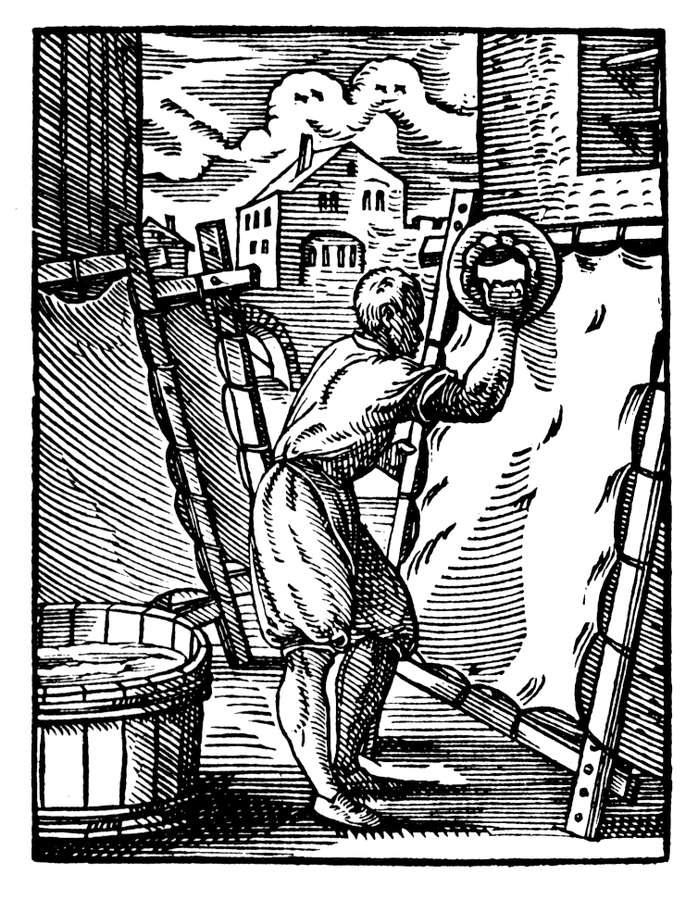
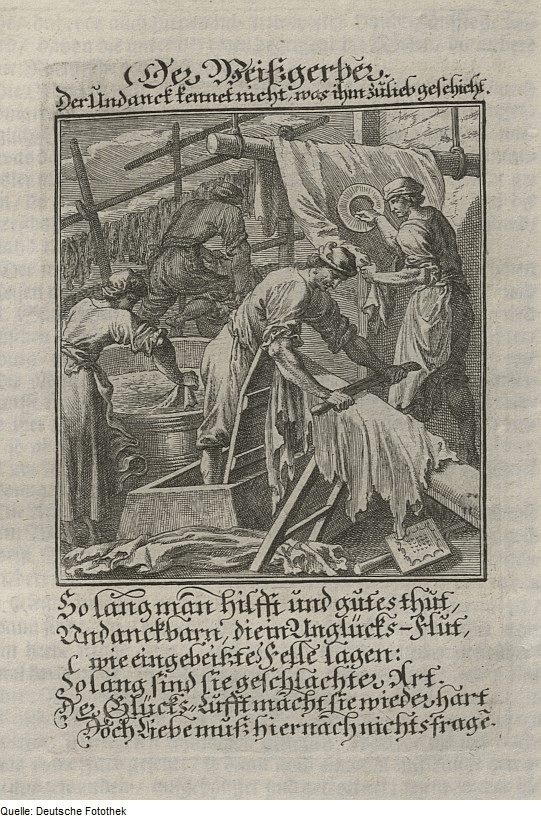
Jircha is tanned leather, derived from the Latin ‘hircus’, which is a buck or male goat. So a jirchář is a tanner, but is not exactly as the same as a koželuh, the standard word for ‘tanner’.
A koželuh – or a černokožešník (‘black leather craftsman’) – uses so-called tan, obtained from the bark of trees, to process leather.
A jirchář – or a bělokožešník (one who works with white hides) – processed hides using a solution of alum, water, egg yolks and flour. Apparently such a person would now be known as a ‘currier’.
And, of course, working as a jirchář or koželuh is what Wikipedia (quite wonderfully) refers to as an ‘odoriferous trade’, which is why it makes sense for it to be carried out near water.
In the 14th and 15th centuries, the street was known by another name, which, while also reflecting its tanners, was somewhat less complimentary: Smradařská (something like ‘Stinkers’ Street’).
But clearly somebody sensed that an image overhaul was needed, as, in the time of Charles IV, tanners were brought to work here from Calabria, and the street later came to be known as V Kalábrii.
Having been known as Jirchářská Prostřední from 1850 to 1870, it’s had its current name since 1870, which was quite a big year for renaming of streets.
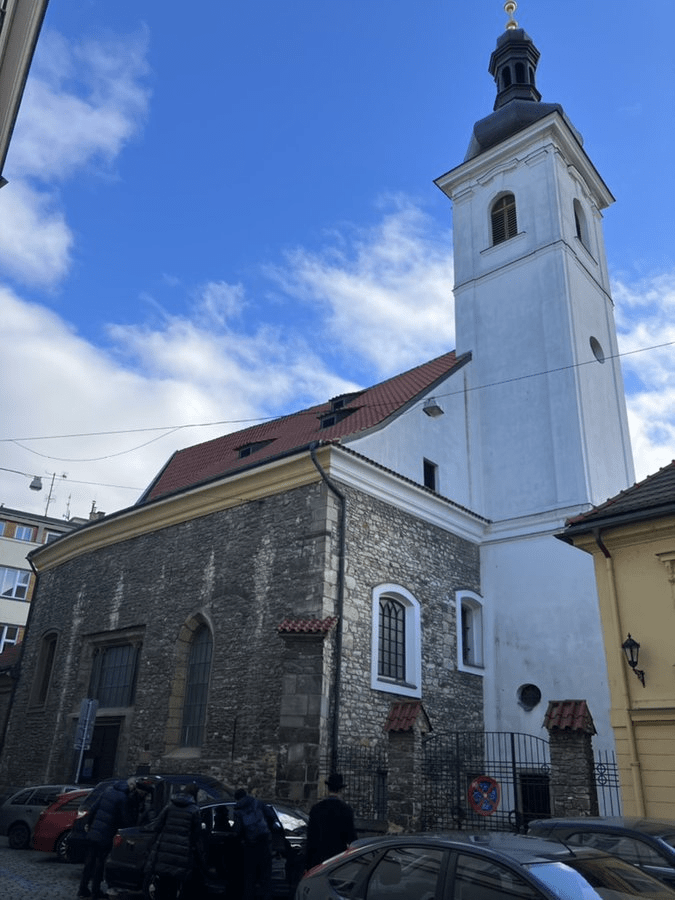
V Jirchářích includes St. Michael’s Church in Jircháře, which is the home of the Czech, Slovak and English congregation of the Evangelical Church of the Augsburg Confession in the Czech Republic.