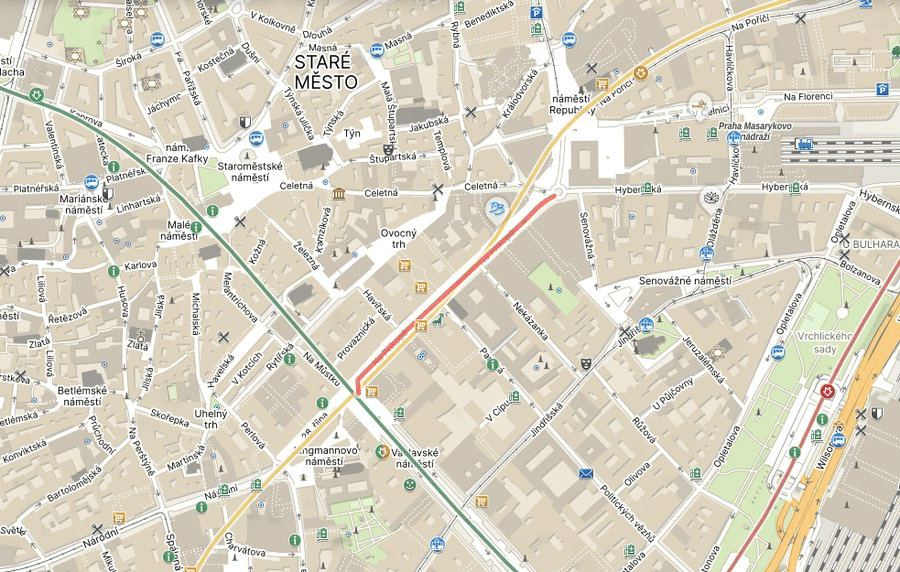
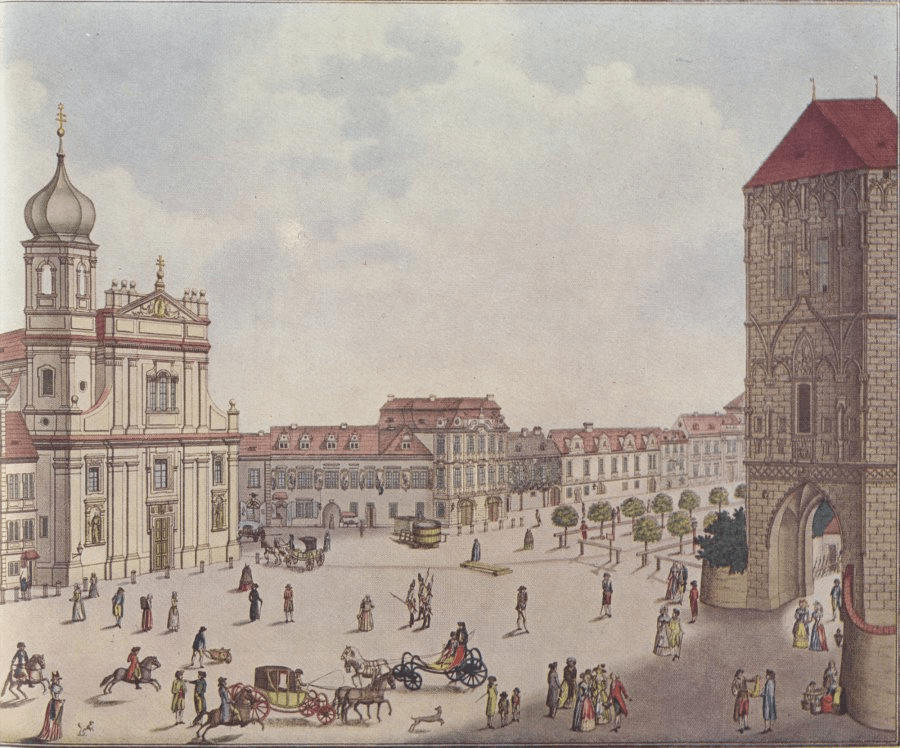
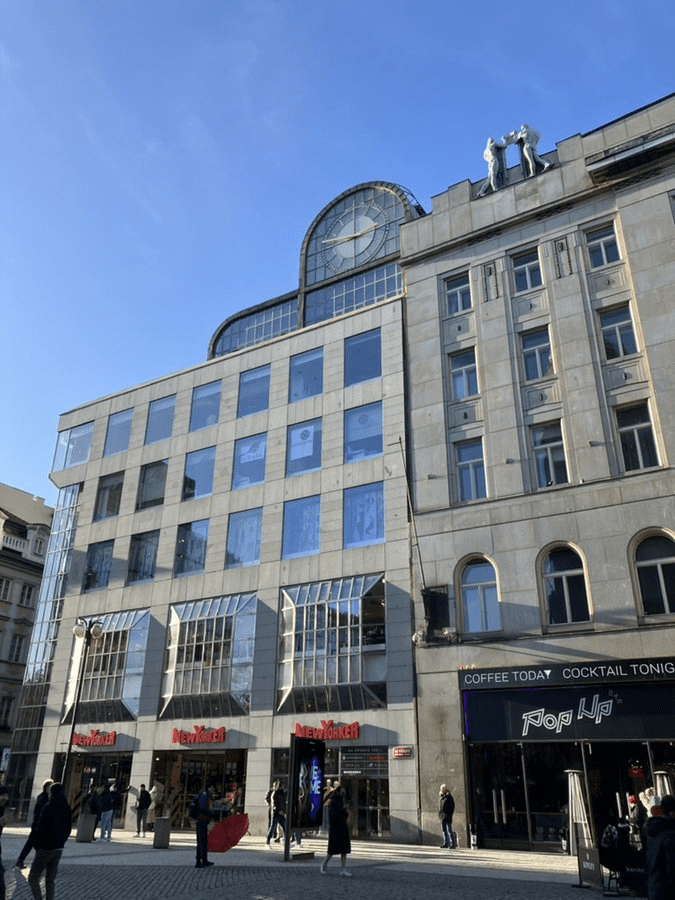
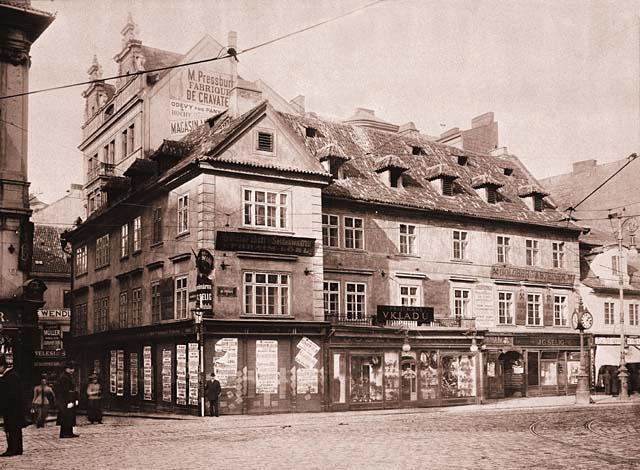
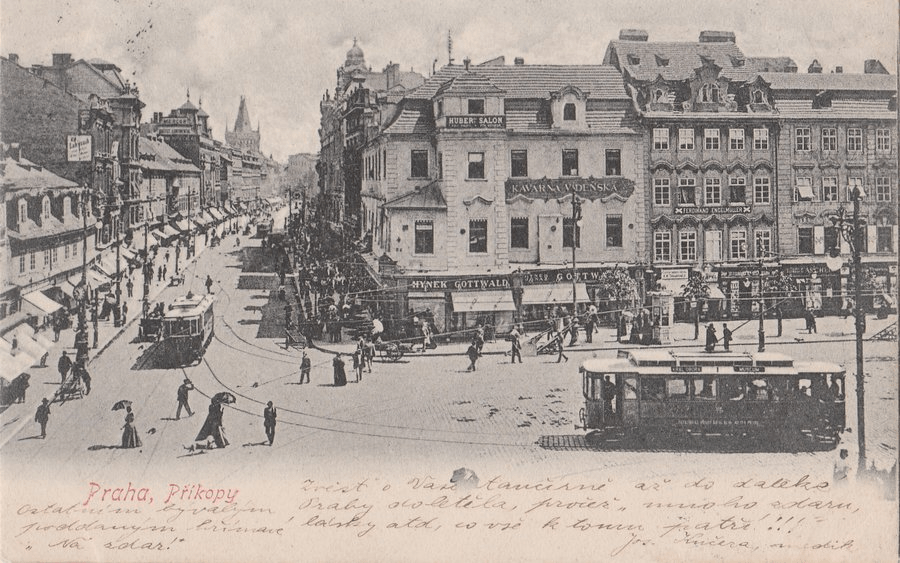
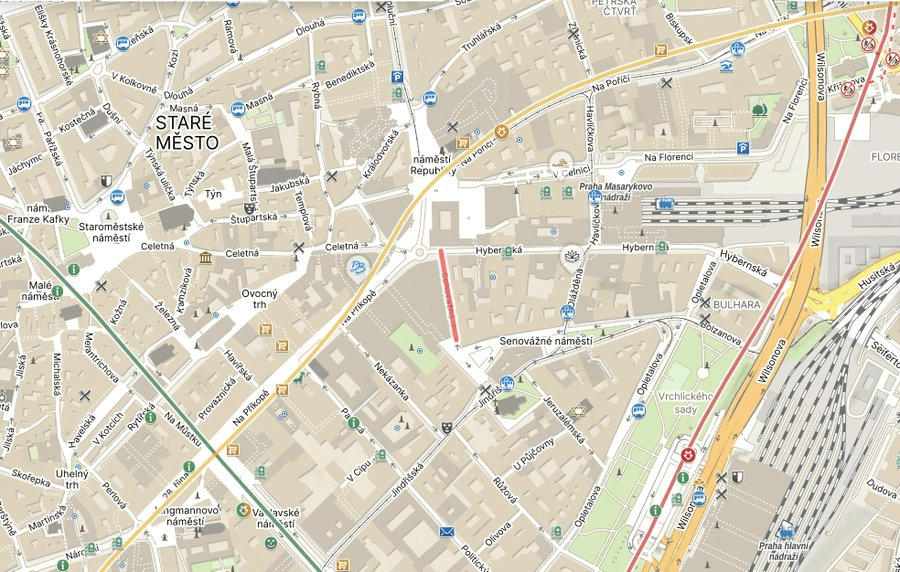
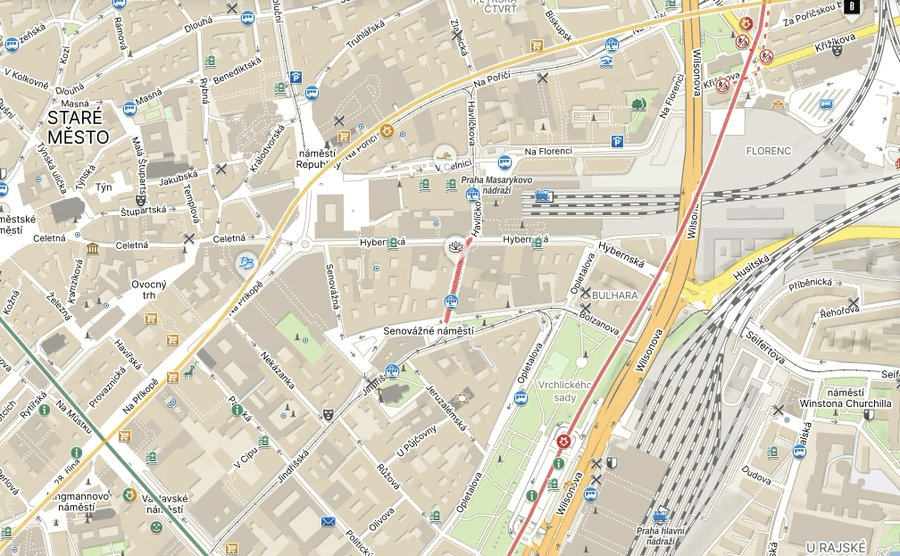
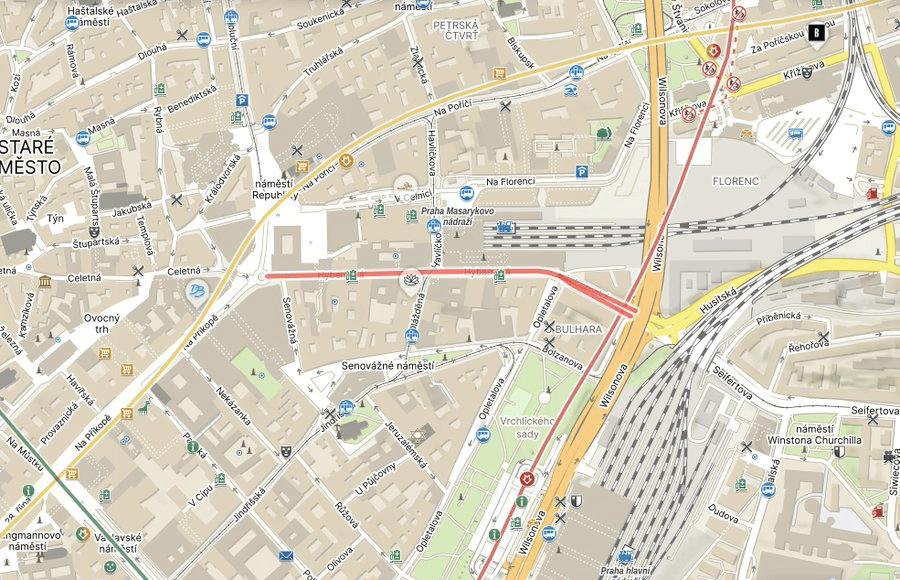
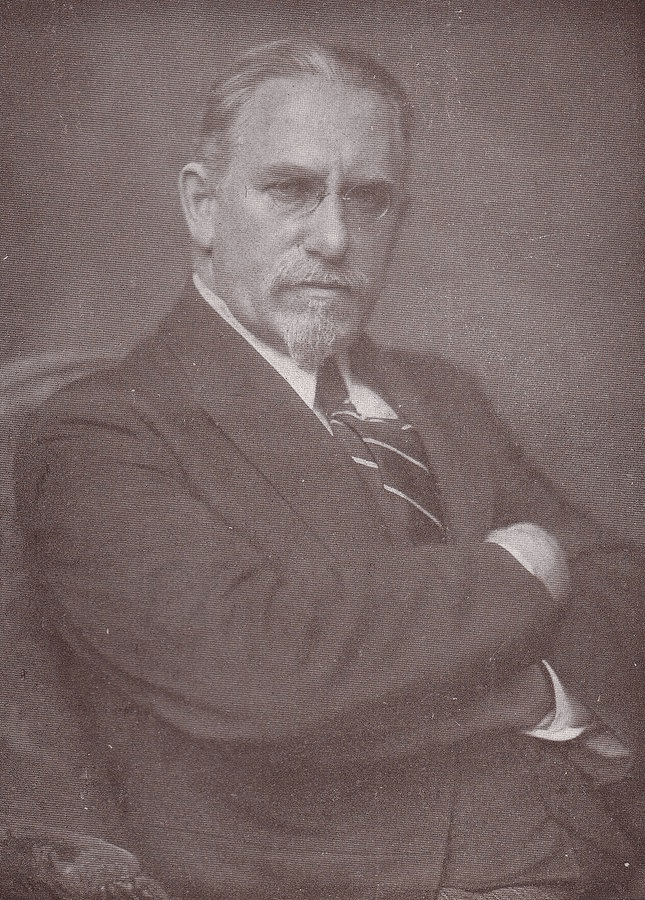
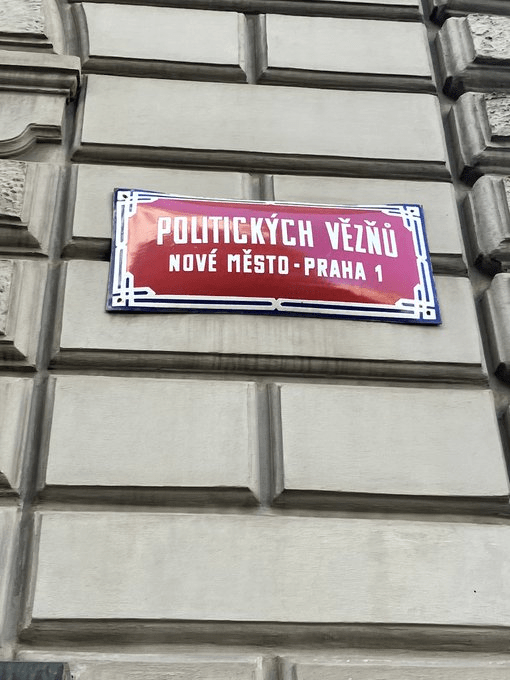
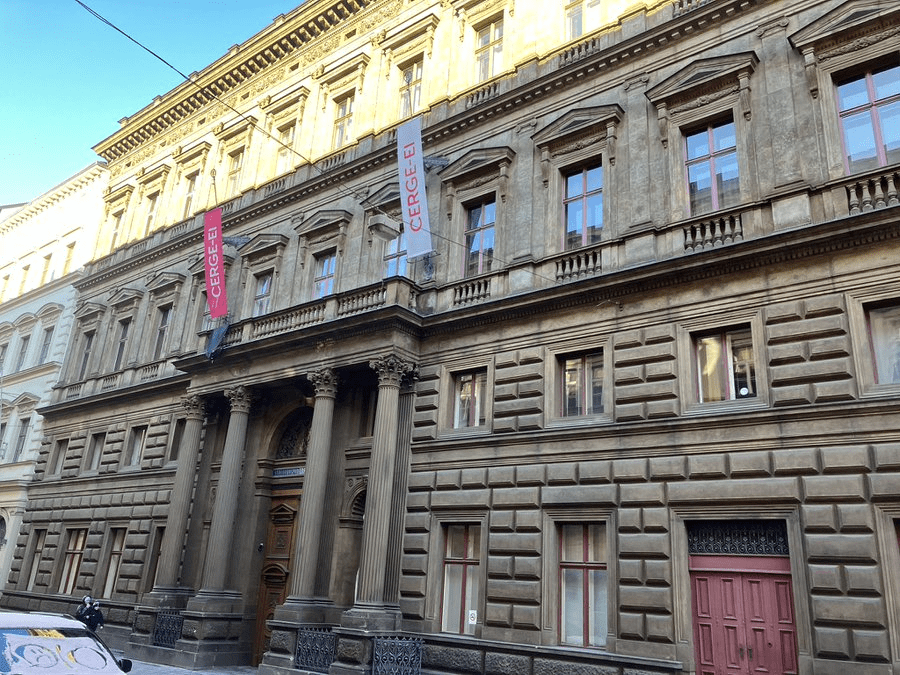
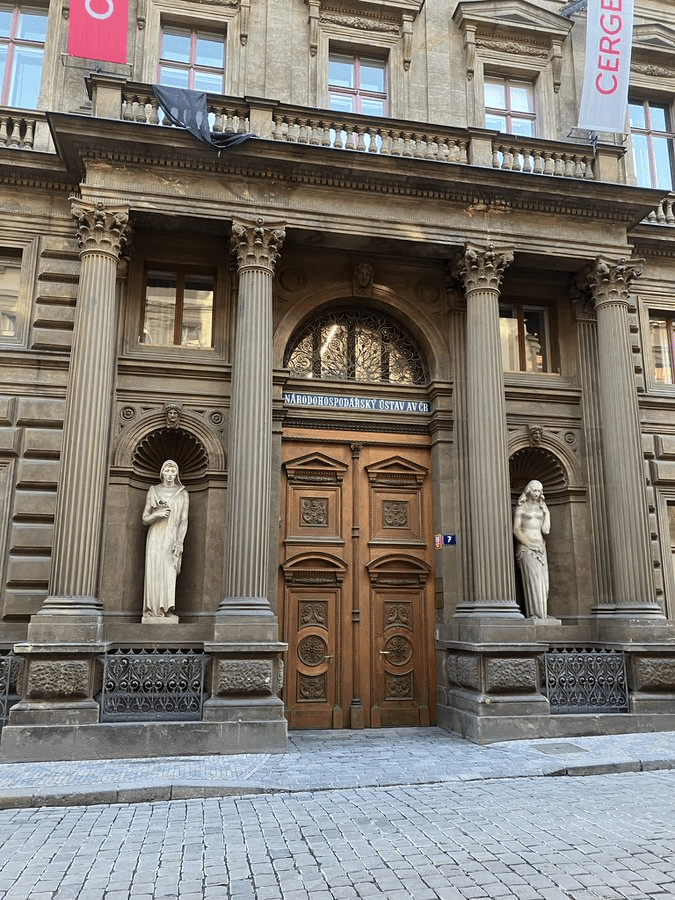
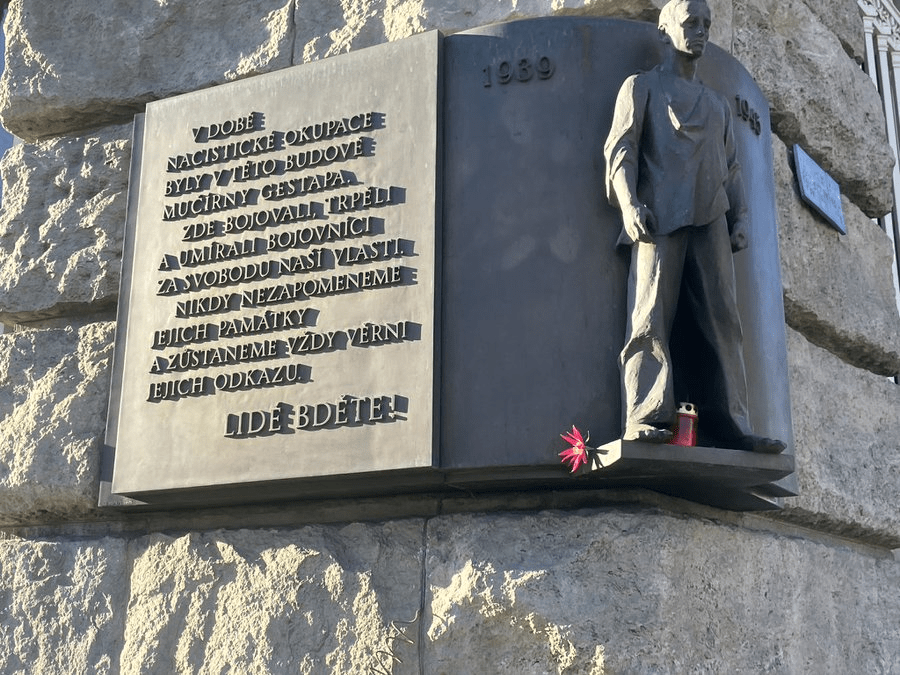
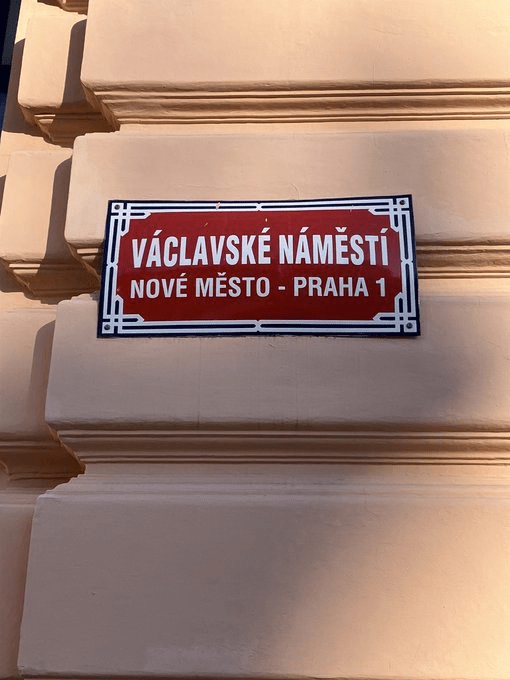
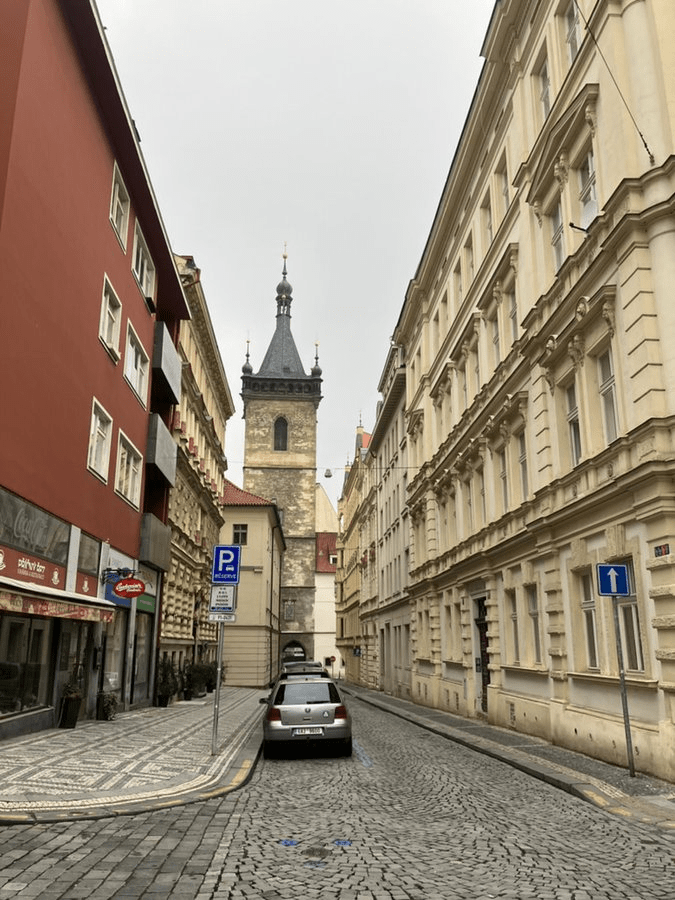
A příkop is a ‘ditch’ or a ‘moat’. Way back in the 1230s, work was underway to create the walls of the Old Town, and, during the process, a moat was excavated here.
The moat wouldn’t be filled in until 1760, when the street was created.
(Stop press: it seems the Starých was added in 1781 to distinguish between the two, and that, while the New Avenues had linden trees, the Old Avenues were all about the chestnuts)
From 1830 to 1870, the street was called Kolowratská třída, after Count František Antonín Kolovrat (1778-1861), Burgrave of Prague, Prime Minister of Austria and member of a family that owned a lot of properties that have come up in these threads. Including number 17 here.
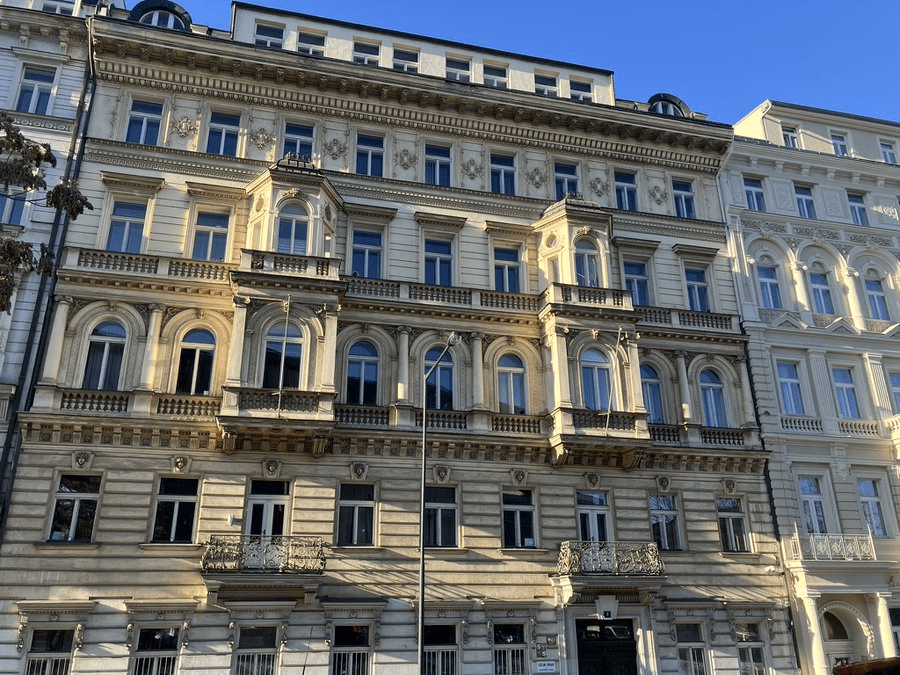
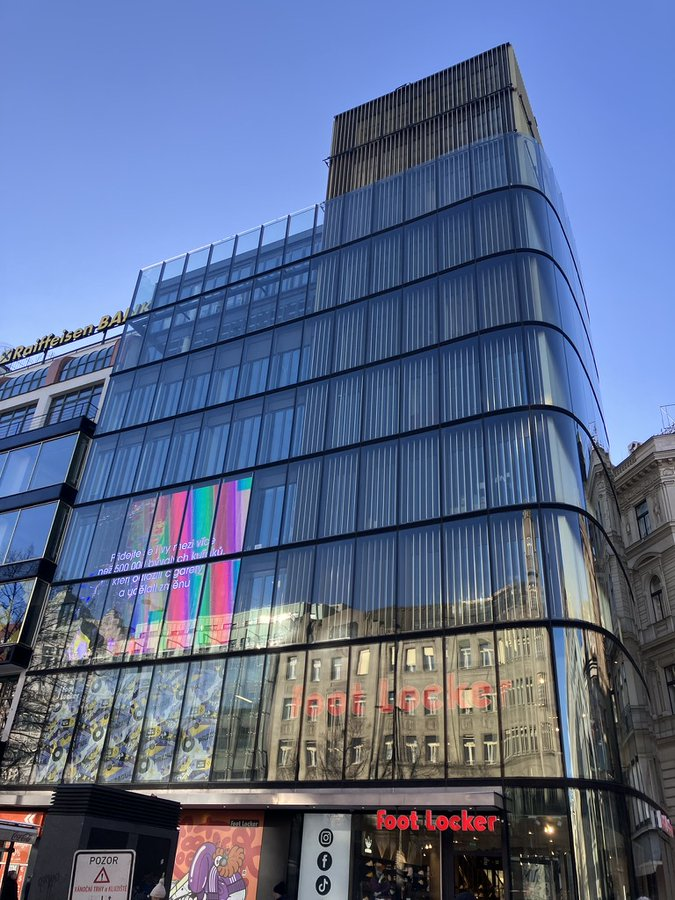
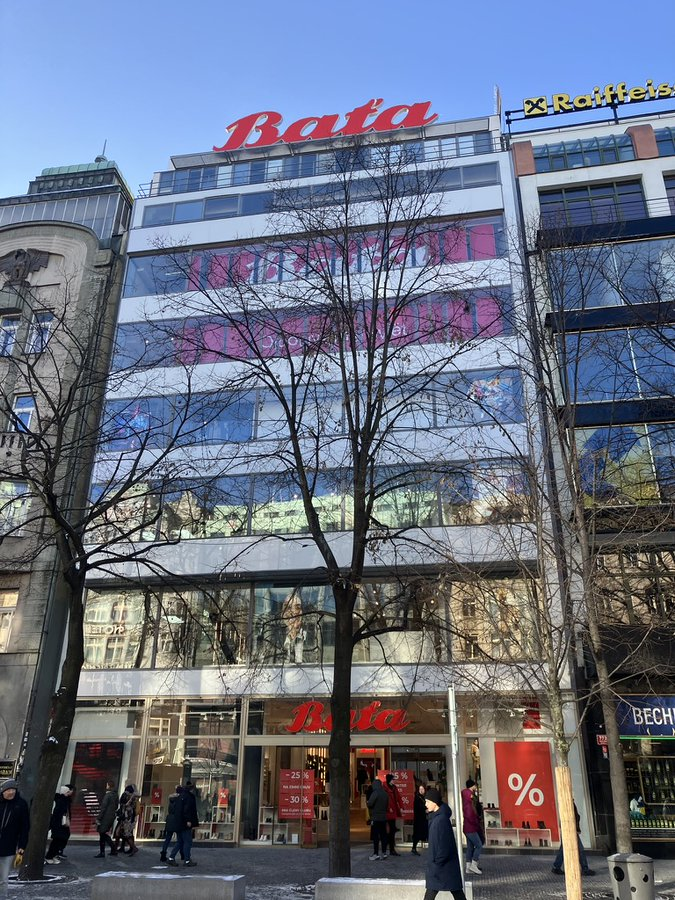
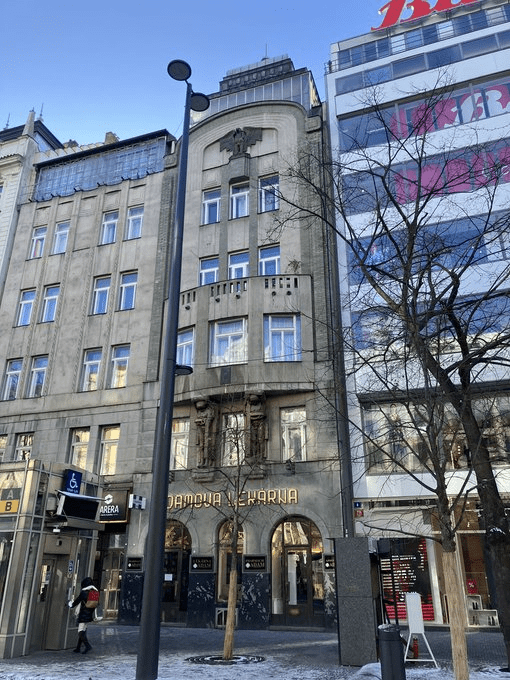
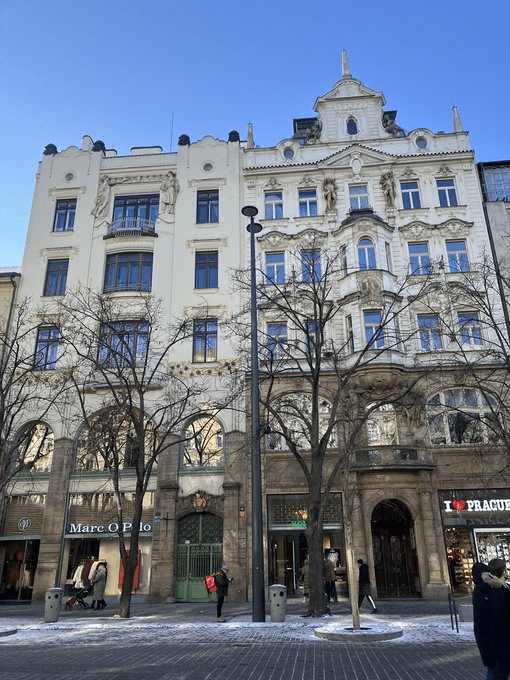
Na Příkopě is the 18th most-expensive shopping street in the world, or it was in 2019. So it may not surprise you that there’s a lot of fine buildings on it. Let’s go for a walk.
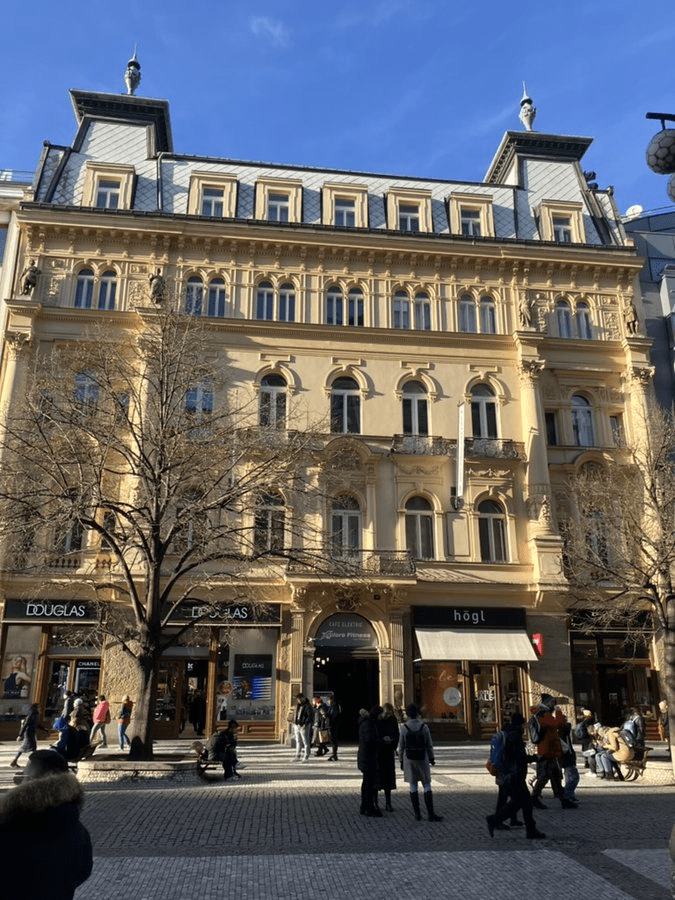
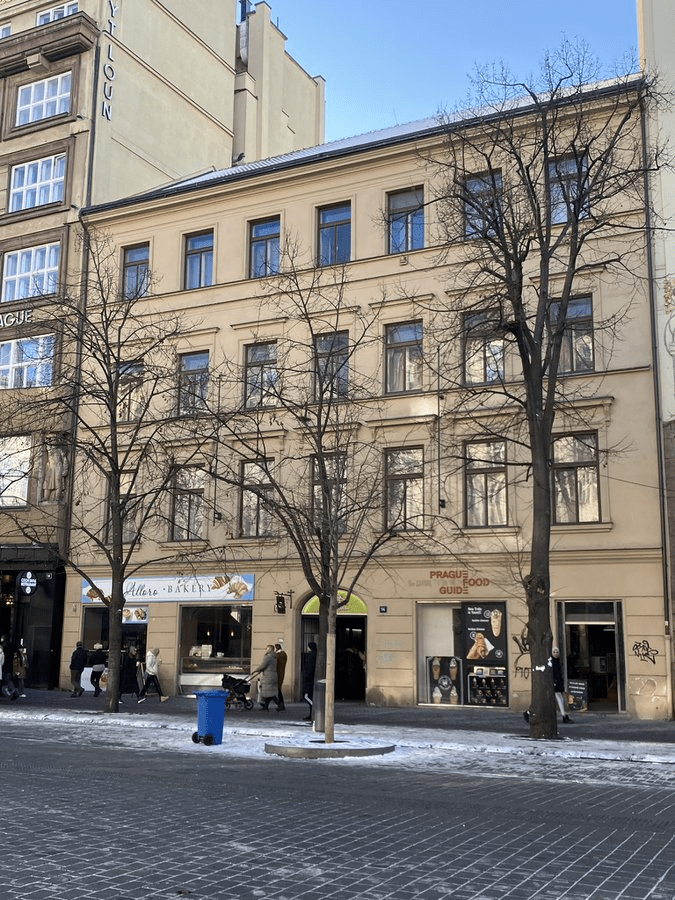
Next door, the Haas Carpet House, built between 1869 and 1871, was Prague’s first modern department store.
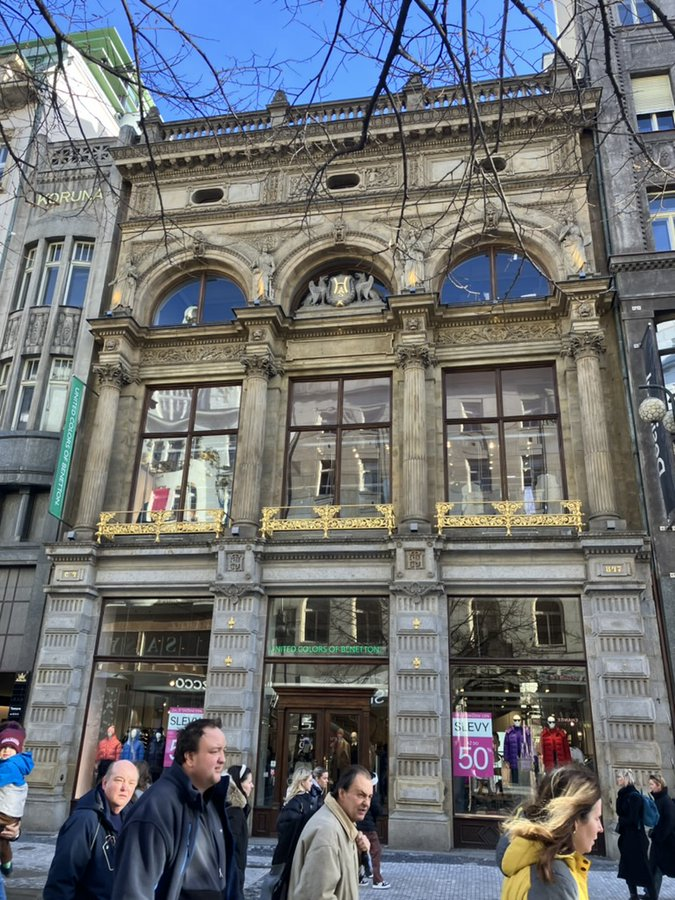
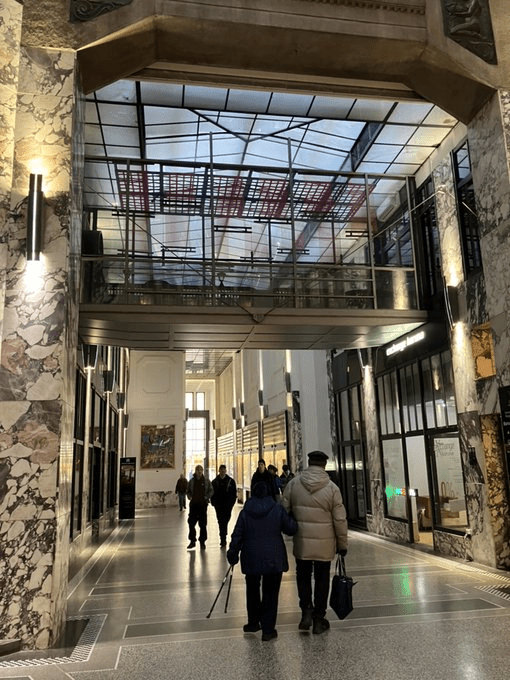
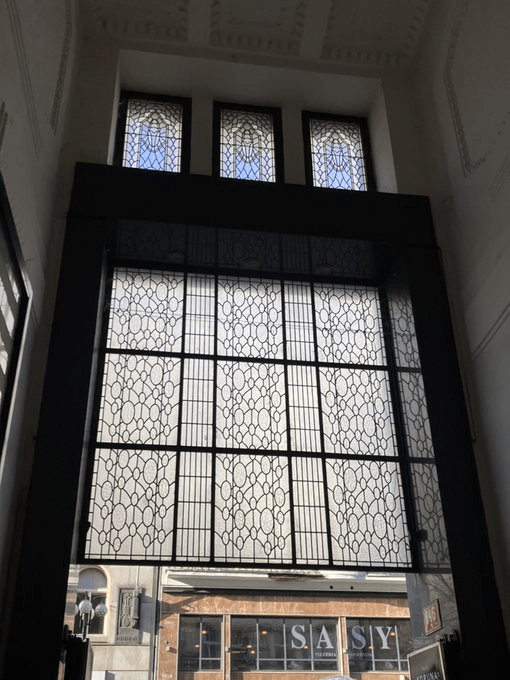
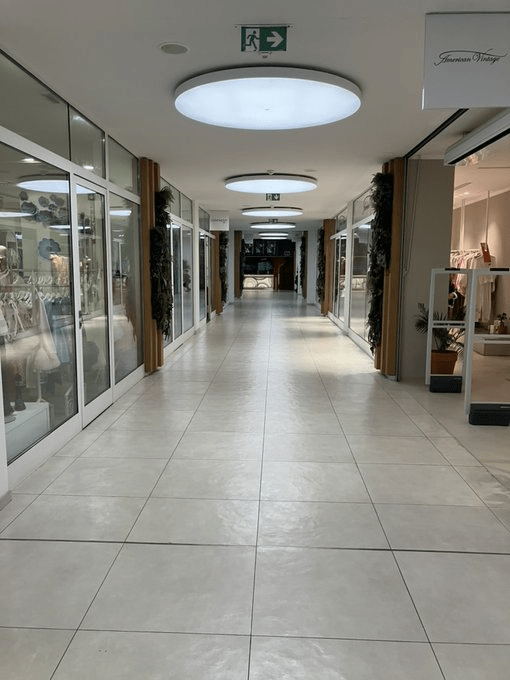
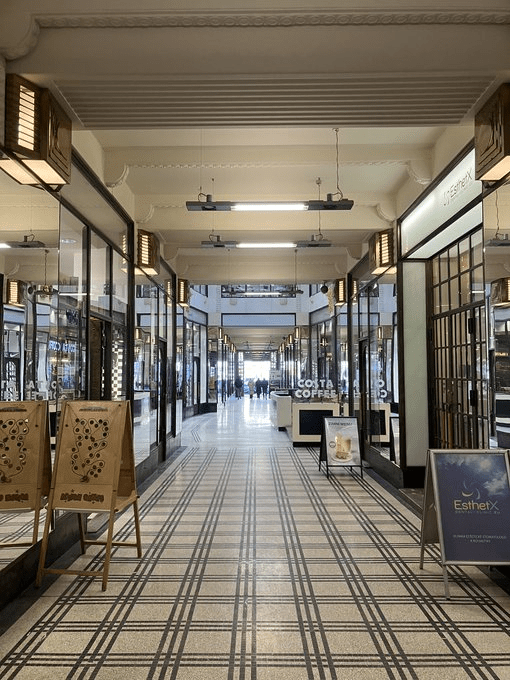
And next to *that* is an entrance to the part of Koruna that is one of Prague’s shopping arcades (and not the only one in this thread). You might not go shopping in these, but they certainly make for good photos.
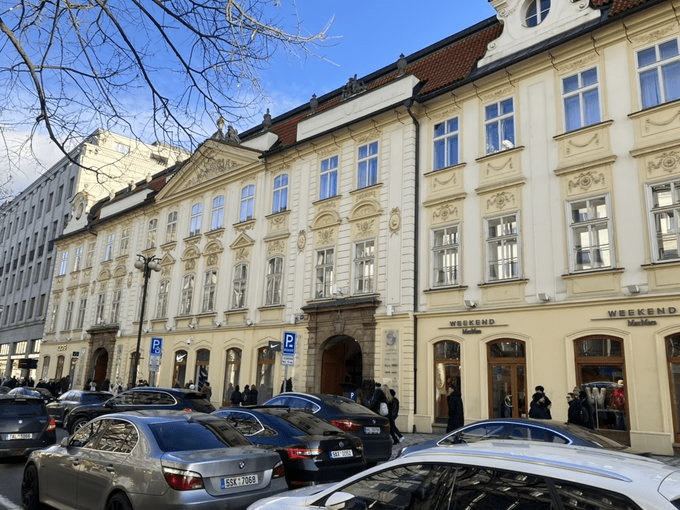
The late Baroque Sylva-Taroucca Palace used to host many things, including one of the very first places I ever went in Prague – the Museum of Communism.
It’s under major reconstruction and is meant to open as a completely new public space in 2026.
Next door is U černé růže (Black Rose), originally founded by a group of Jan Hus-supporting German refugees. The current building dates from 1847.
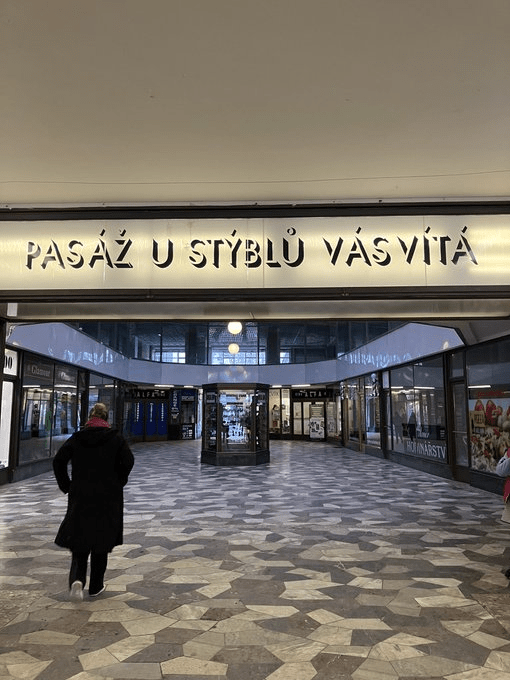
And it has a shopping arcade inside, built in 1932, which I’m somehow quite mesmerised by – it’s old-looking but new-looking, in the centre of town but empty, and with an array of Asian restaurants. I could’ve stood here and taken photos all day.
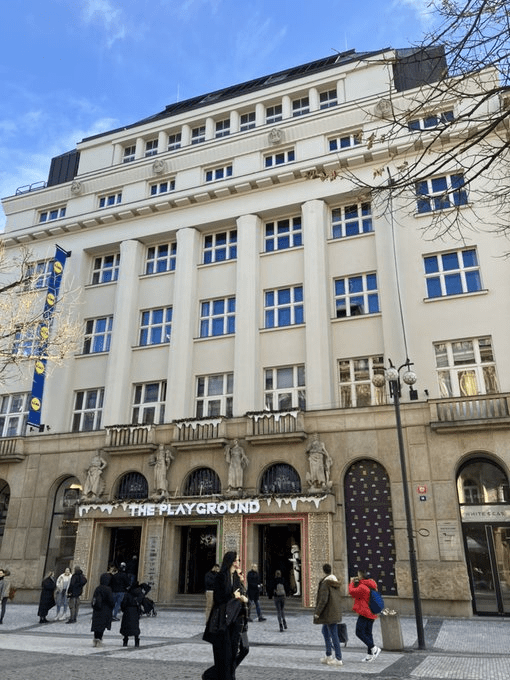
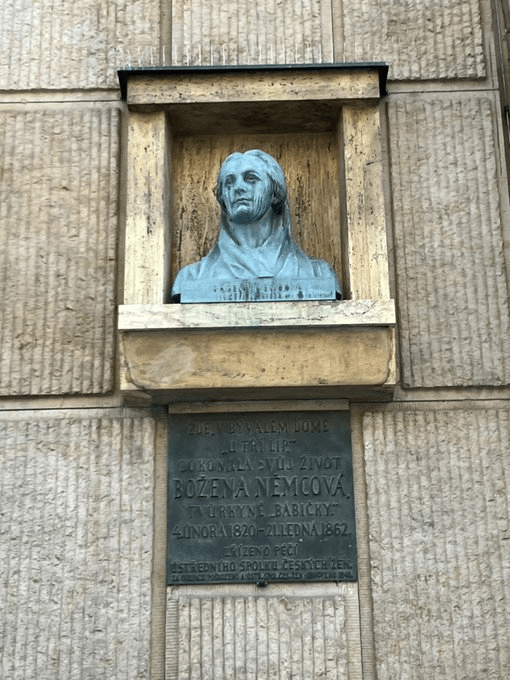
Next door’s Bankovní palác stands on the spot of the house in which Božena Němcová died in 1862.
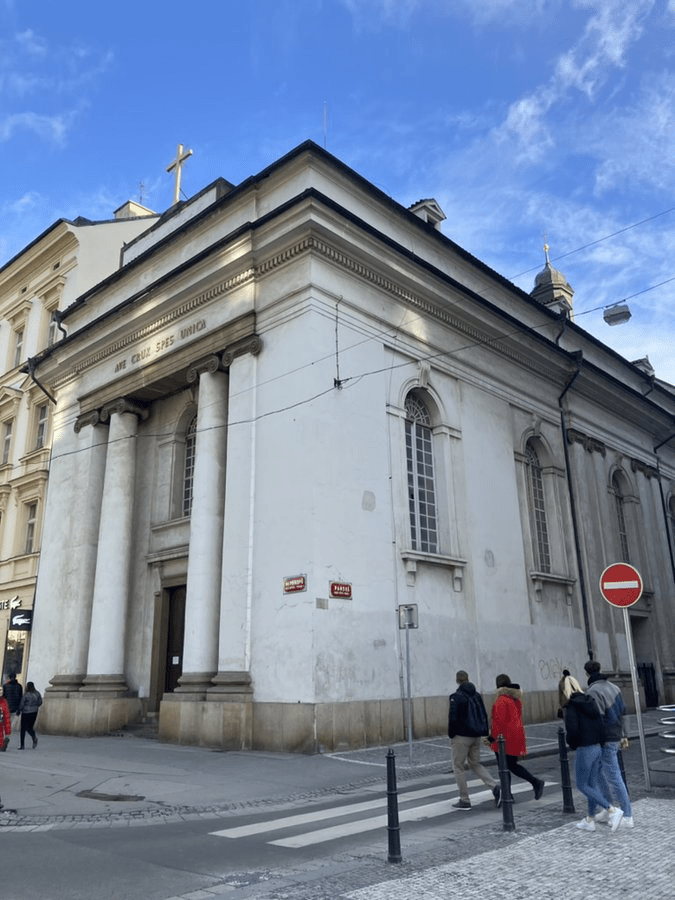
The church on the corner will be discussed a bit/lot more on day 139.
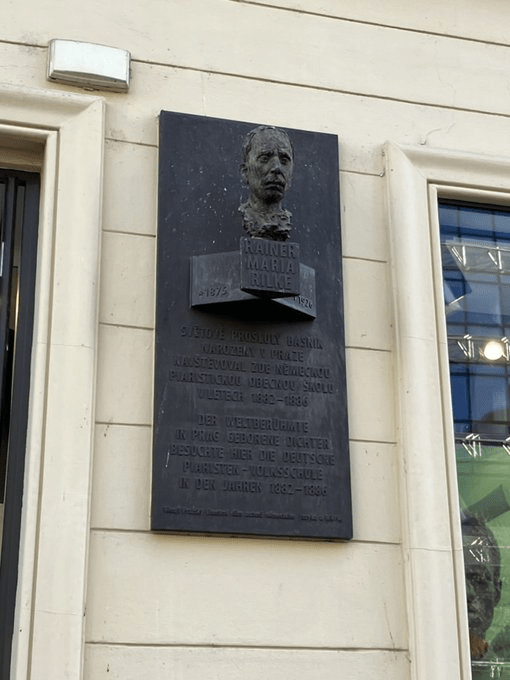
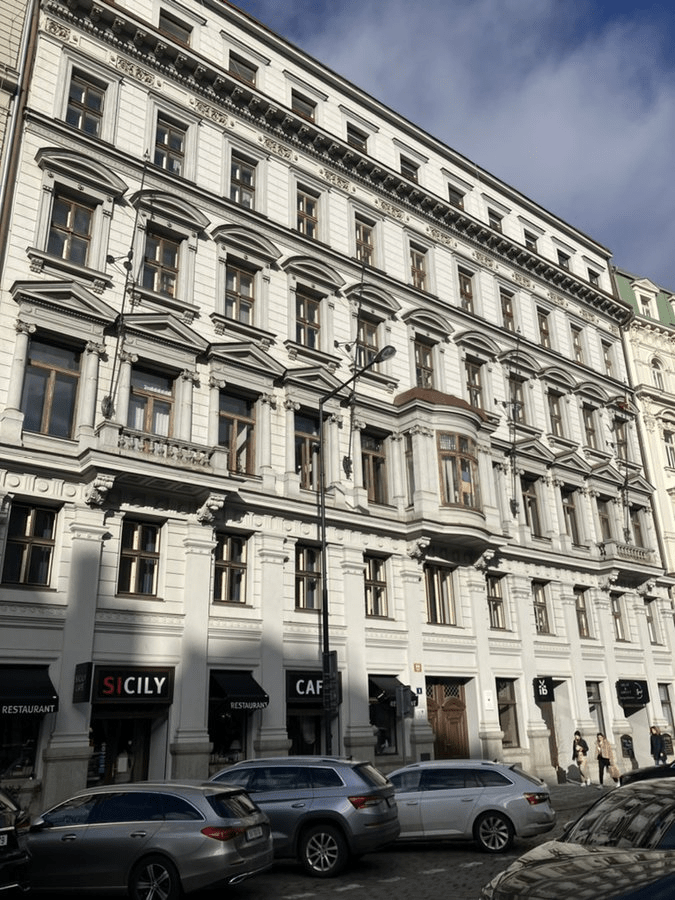
Whereas number 16, the former Piarist Gymnasium (built 1760-5) had pupils including Rainer Maria Rilke.
Number 18, Second Palace of the State Bank (1909-11) has some excellent mosaic action going on; the First Palace is just next door, at number 20.
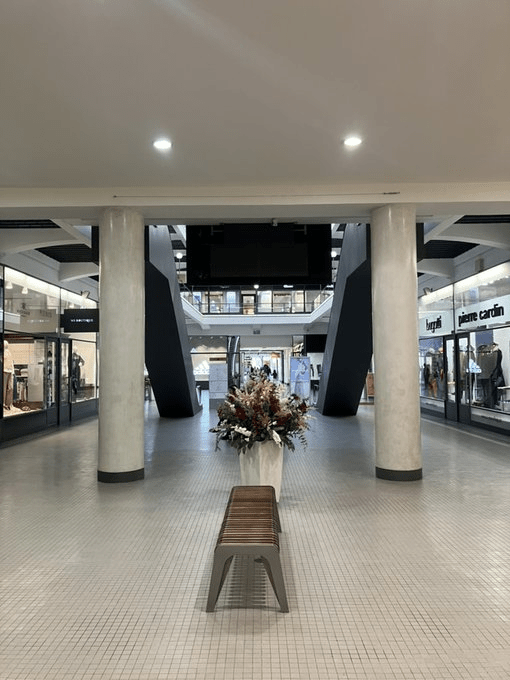
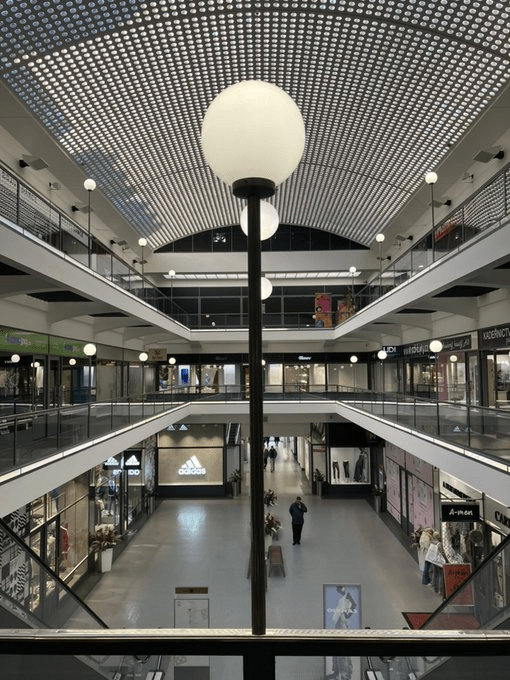
Slovanský dům might be the ‘Slavic House’ now, but it was once the Deutsche Casino, a major cultural centre for the city’s German-speaking population from 1875 to 1945. It has a well-known cinema, a shopping arcade, and a nice little courtyard.
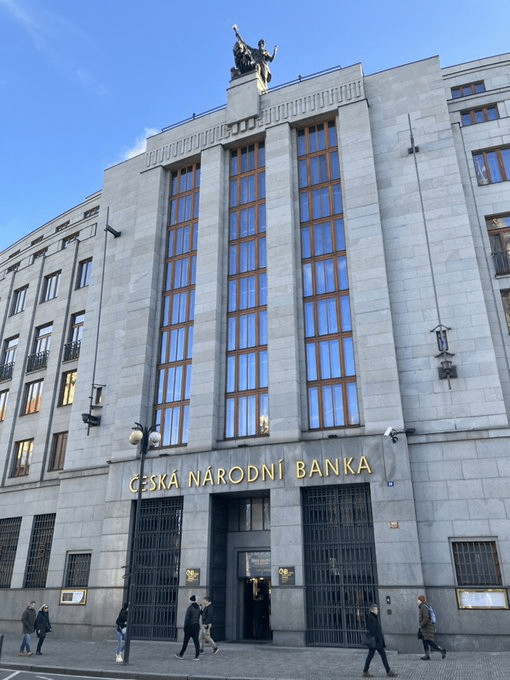
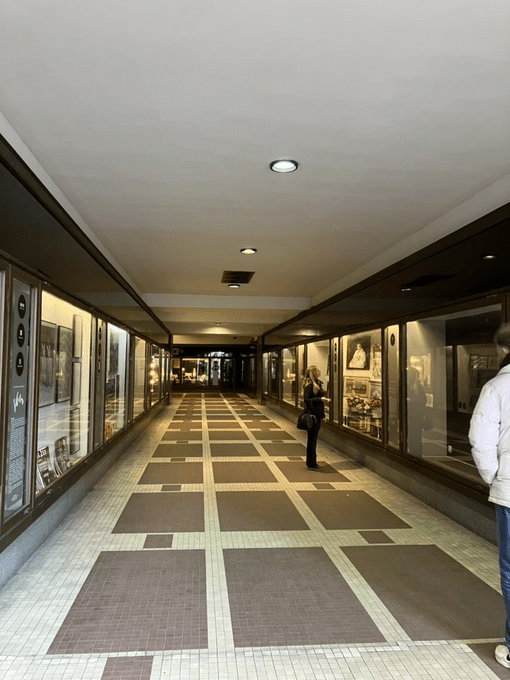
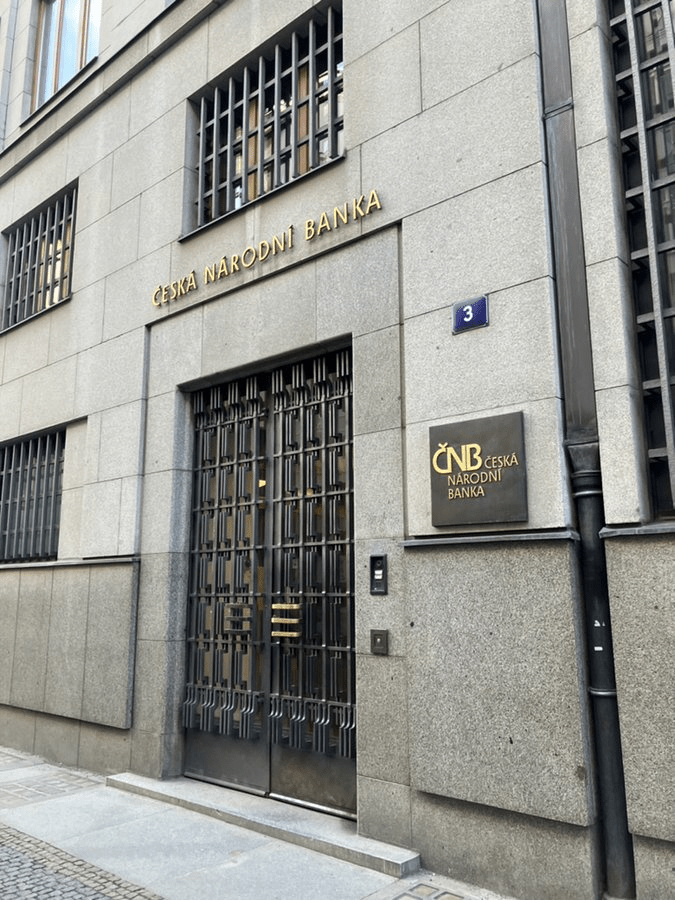
Reach the end of the street, and you’re at the Czech National Bank headquarters, built between 1935 and 1942. The shopping passage here is called ‘Pasáž českého designu’, and is, expectedly, quite stylish.
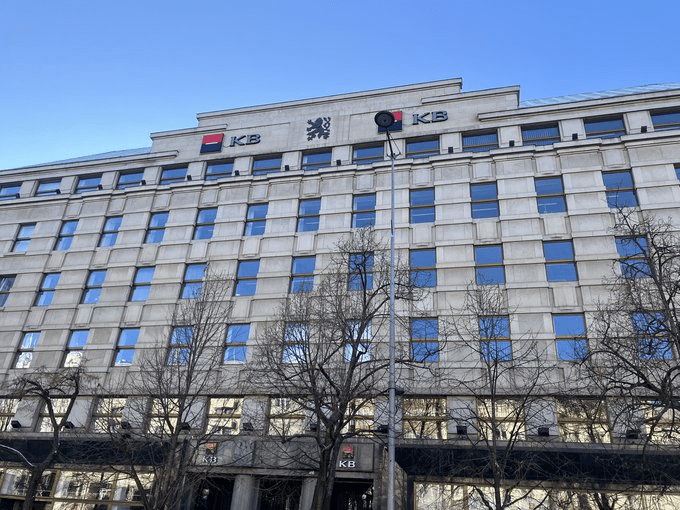
Crossing the road – I told you this one would take some time – we have the headquarters of the Komerční banka, formerly the Café Français, frequented by František Palacký and Ferenc Liszt, and also once the Central Committee of the Communist Party’s home (1945-60).
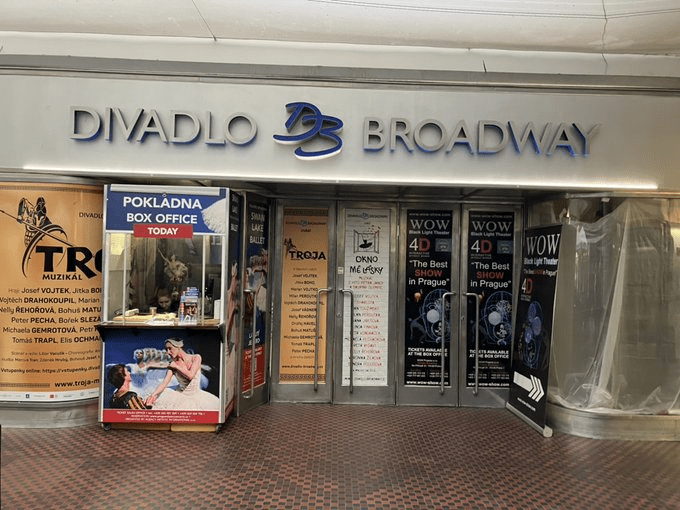
Palác Broadway (1936-8) used to host the eponymous cinema – renamed Viktoria by the Nazis, and Sevastopol by the Communists. Reverting to its original name, it closed in 1998 and there’s a theatre here instead now.
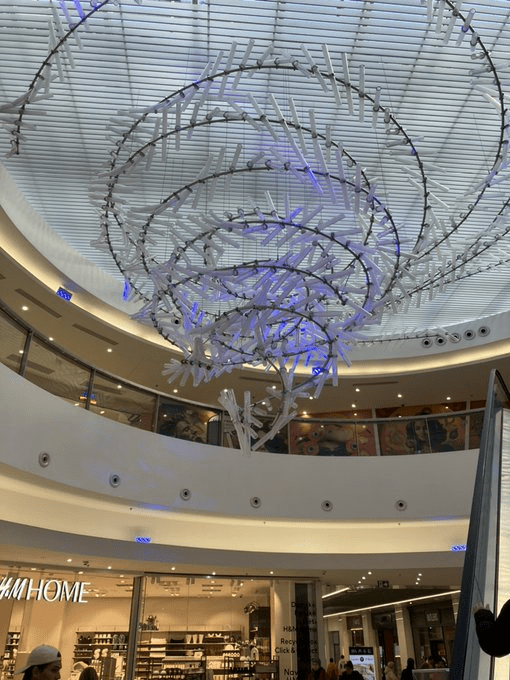
Palác Myslbek is much newer – it was built in 1996.
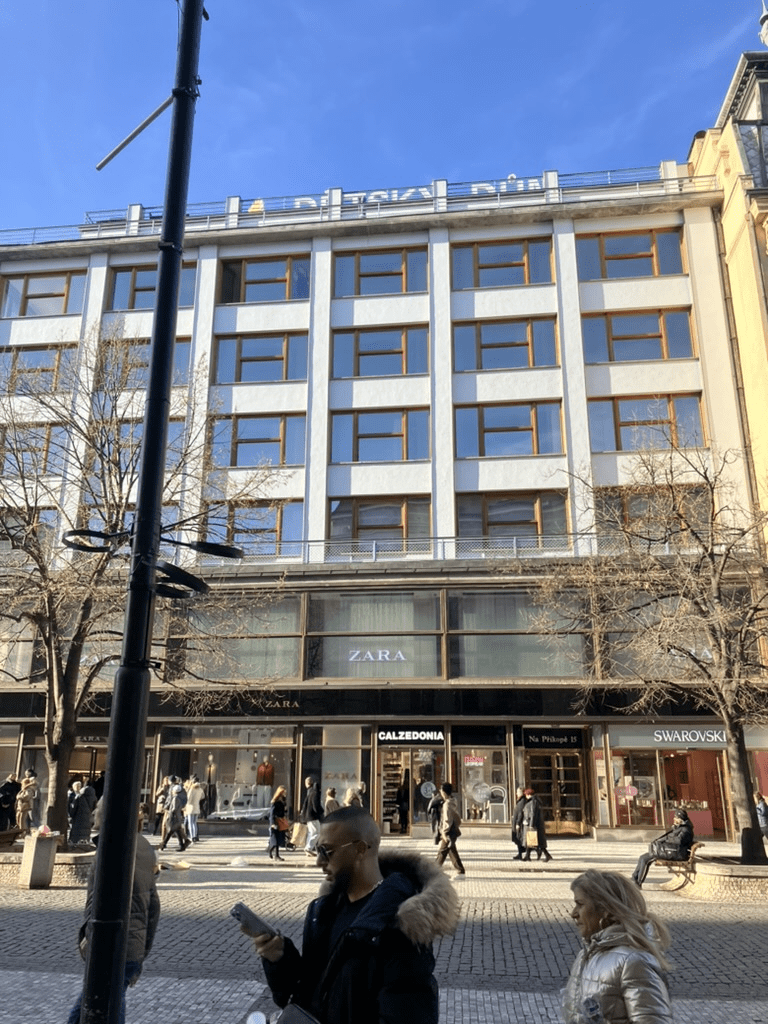
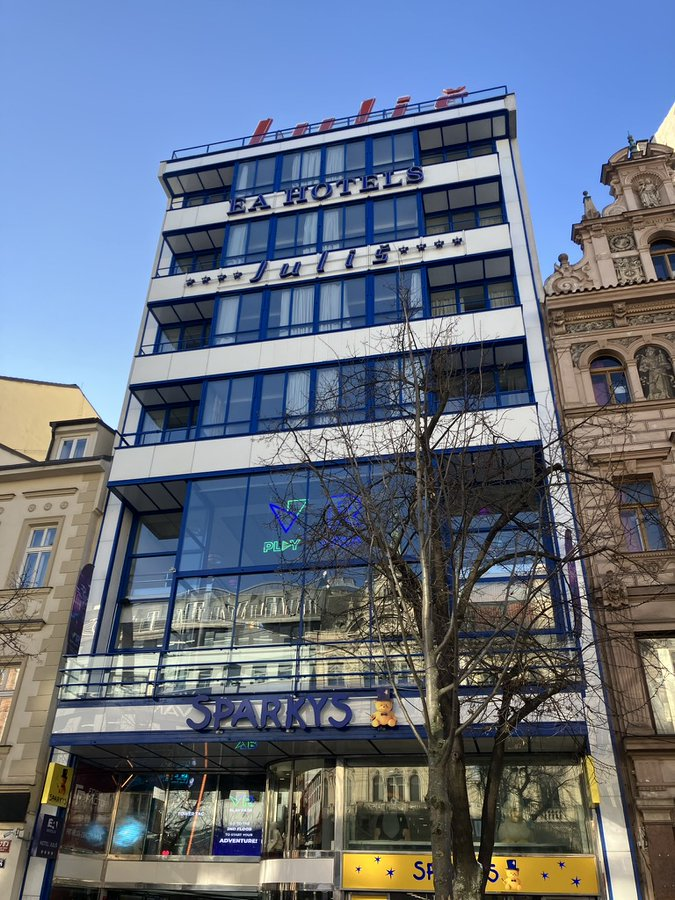
While the Dětský dům (1925-9) – Children’s House – still maintains its original name despite no longer specialising in goods for children. Unless your kids *really* like Zara.
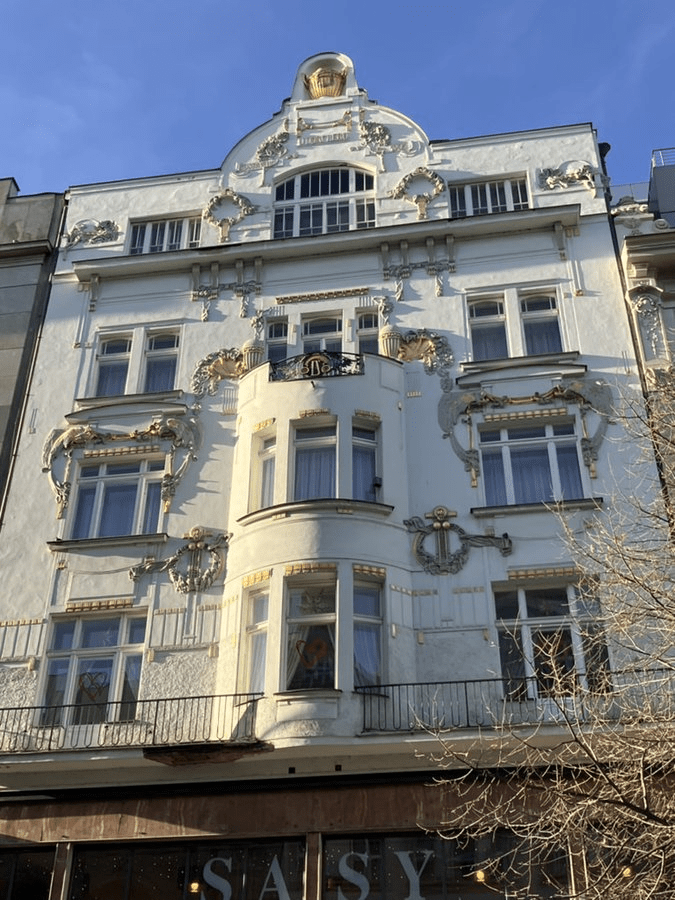
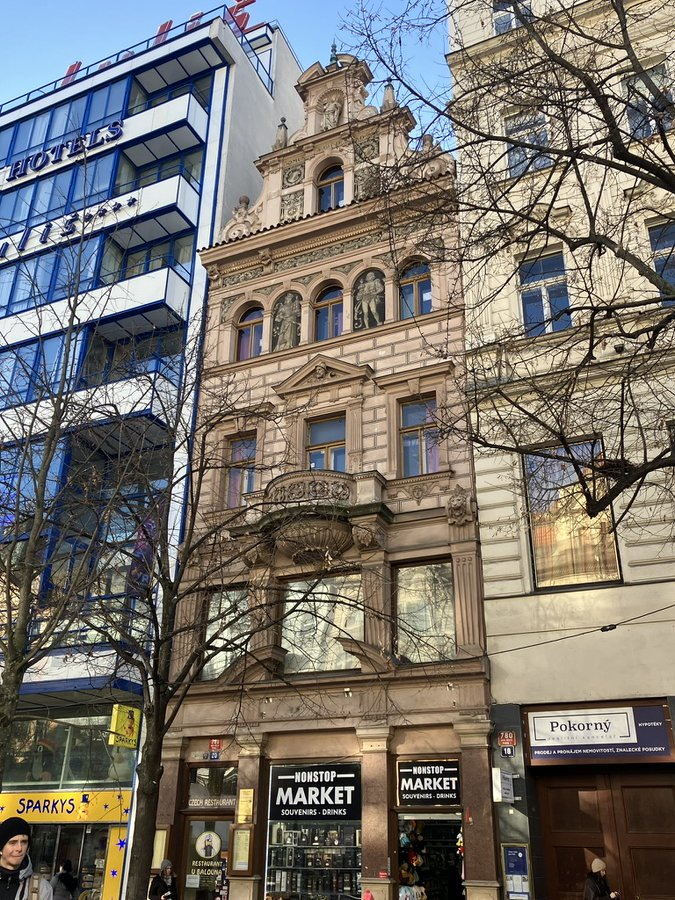
And number 7 – U Dörflerů – gets a pic because it’s a pleasing contrast to the more modern buildings on this side of the street.
And then we end with Dům Na Můstku, built between 1976 and 1983. It was built for the General Direction of ČKD, the now defunct (since 2000) tram company, most famous for the Tatra T3, still the world’s most widely-used make.
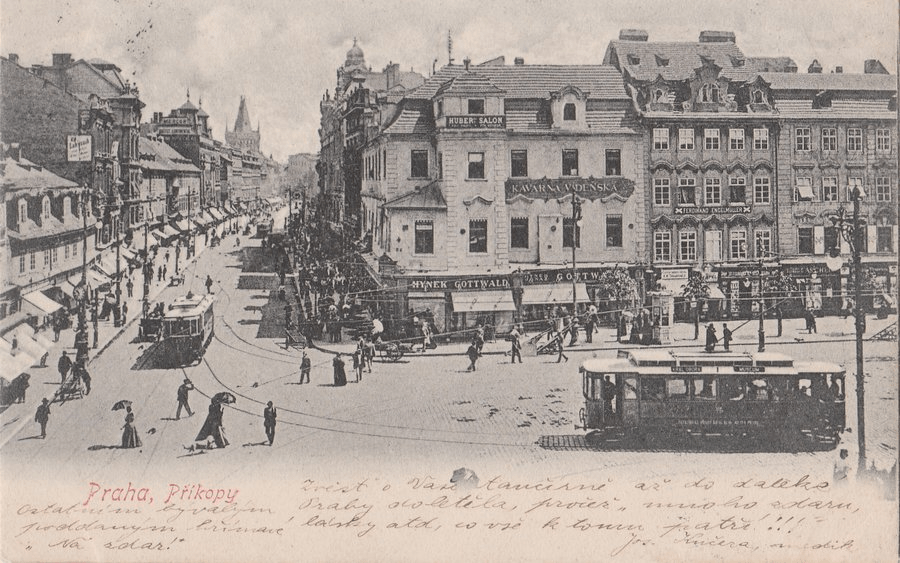
This spot looked rather different once (this building was destroyed in 1901), as did the corner with Václavák.
Finally, I’m not one for ending threads on a downer, but I went home just after taking all these pics and the first thing that I saw made me a bit sad.
Dlažba means ‘pavement’, ‘cobbles(tones)’ or ‘paving’, whereas something that is dlážděný is ‘paved’.
Paving didn’t happen anywhere in Prague at all until 1329, and, when the New Town was founded just under twenty years later, was still the exception rather than the rule.
As well as looking quite nice, cobblestone paving drains water and doesn’t get muddy when it rains. This means that roads can be used all year round.
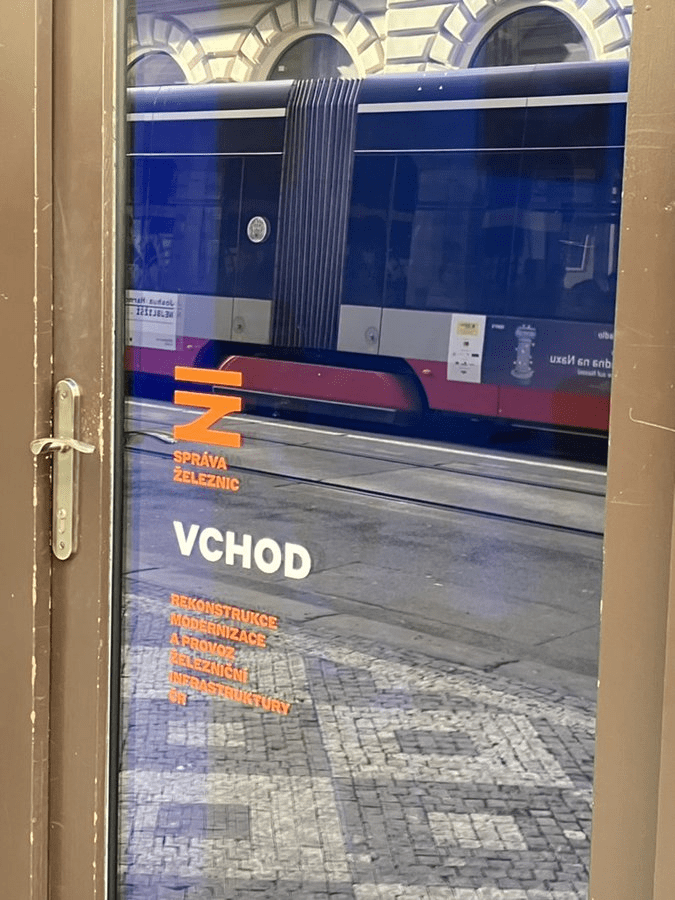
While the other side of the street includes Správa železnic (the Railway Administration), Czechia’s sixth-biggest employer, and one of its most distinctive logos, at numbers 5 and 7.
(Tram part of reflection, not part of logo)
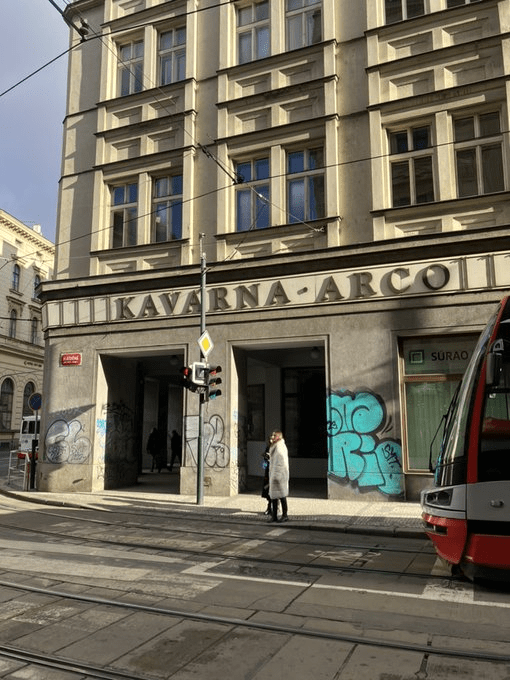
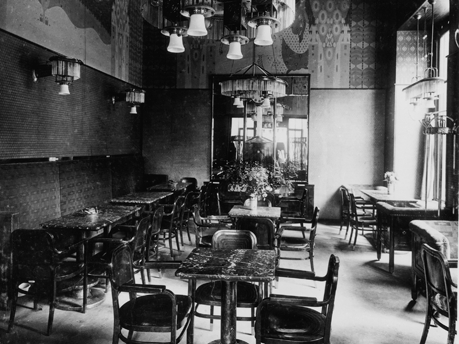
Finally, Cafe Arco was opened in 1907, and used to be *the* meeting place for Prague’s German-speaking intellectuals. Those days are long gone and it’s now a canteen used by the Ministry of the Interior, and open for a grand total of 12.5 hours per week according to Google.
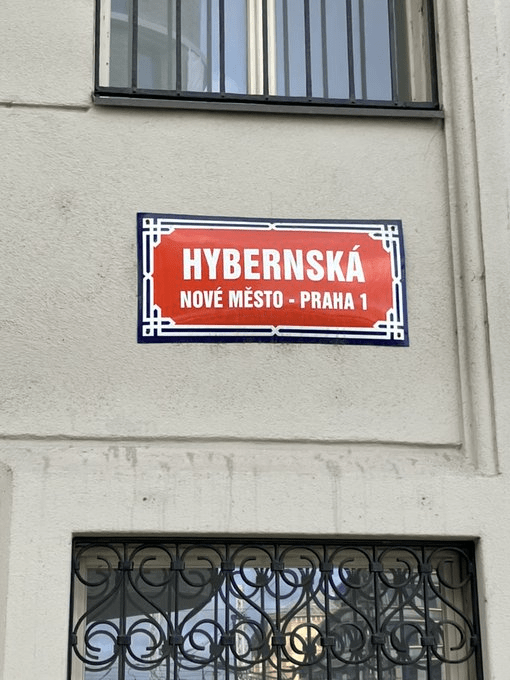
In the pre-New Town was founded, this street was called Horská, because it led to Kutná Hora. It then became known as Na Dlážděném from 1348, and if I explain that now, I’ll ruin tomorrow’s post.
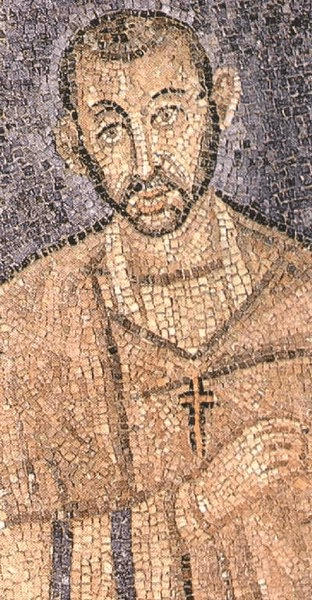
In 1355, a church was built, and dedicated to St Ambrose, Archbishop of Milan from 374 to 397, and now its patron saint. This led to the street’s alternative name, Svatoambrožská.
In 1629, the church was purchased by the Irish Franciscan Order – who were also known as hyberni in Czech, because Hibernia was the Latin word for Ireland.
It seems that the Celtic term *Īweriū got translated into Greek as Iouerníā, and then made its way into Latin – it’s also the source of ‘Éire’, which is the Irish word for Ireland (see also: Raidió Teilifís Éireann).
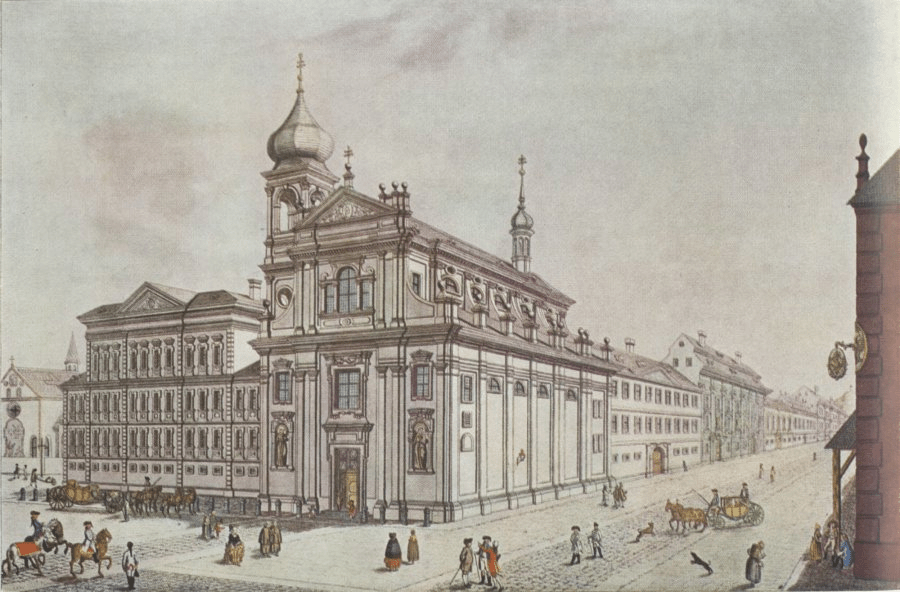
Anyway, the church was given a Baroque makeover between 1652 and 1659; it was abolished as part of Joseph II’s reforms in 1784, and deconsecrated in 1806.
However, it was destroyed rather than repurposed – its successor, Dům U Hybernů, has been a musical theatre since 2006. It has quite a varied programme: https://www.hybernia.eu/
The side of Hybernská that is near Florenc is one of the least aesthetically pleasing parts of Prague 1, but the section nearer to Náměstí republiky is more interesting.
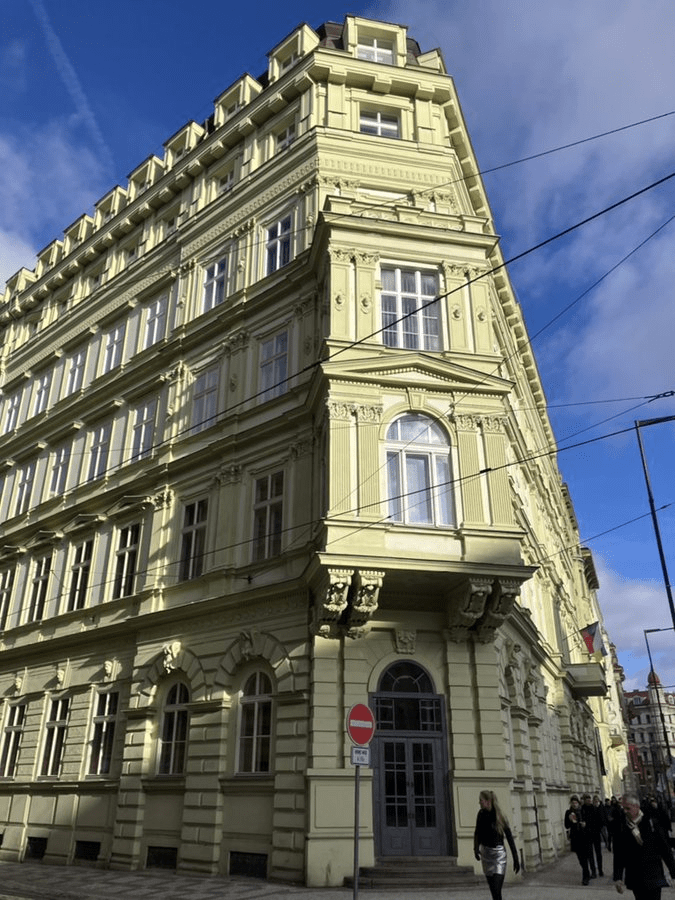
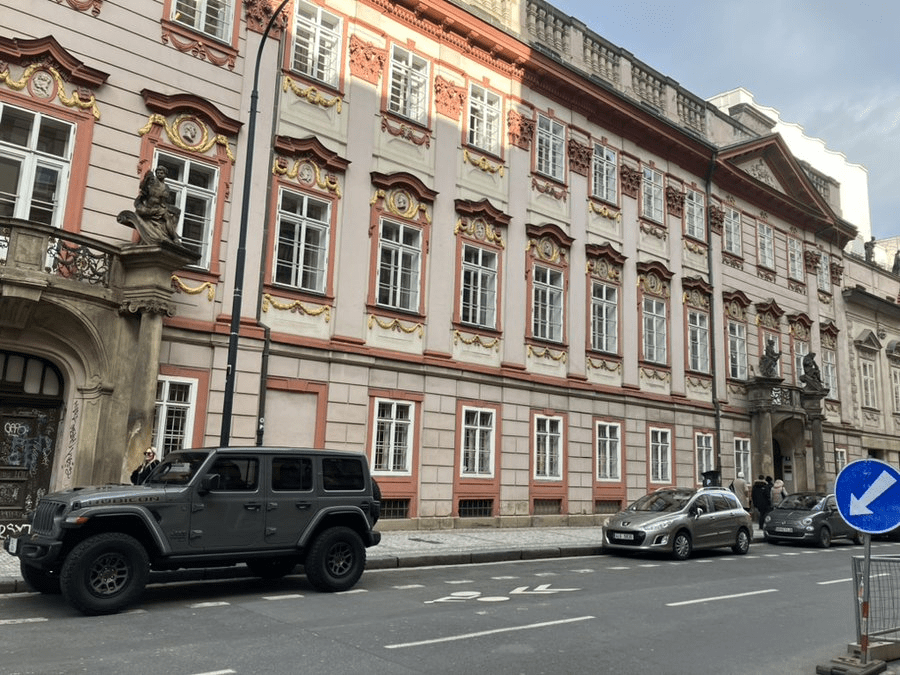
The Swéerts-Spork Palace was, in 1701, the first permanent theatre in Prague. Following reconstruction in 1790, it now has two quite distinct parts – and two separate addresses (3 and 5). Here’s number 3, used by Charles University.
The university and the City of Prague have also collaborated on Hybernská Campus, at number 4, founded in 2021. It’s an event space which intends to ‘connect the public with the university’s activities’.
At number 7, the People’s House (Lidový dům) is the headquarters of SOCDEM, formerly the ČSSD (Social Democrats). Twelve years as the lead partner in government coalitions, three years as a junior partner, and currently not a single seat in parliament.
They also owned the Lanna Palace at number 11 until they were short of money and therefore sold it.
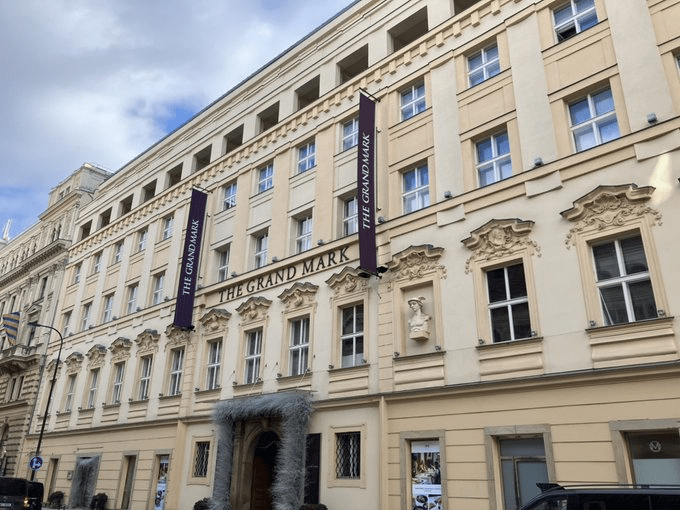
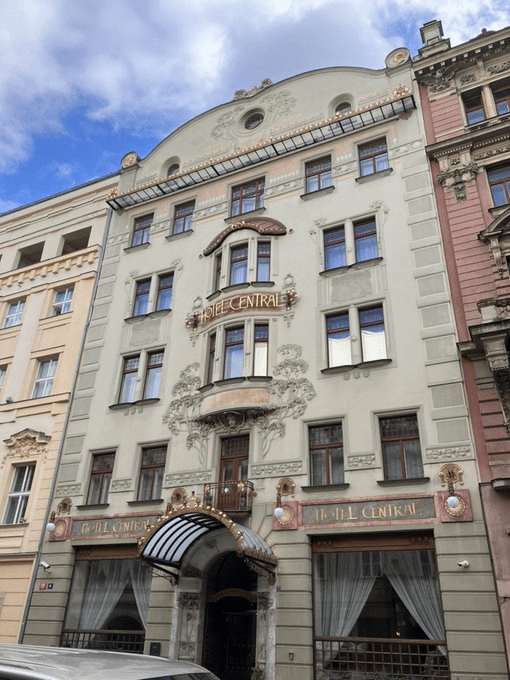
While Věžník Palace, at number 12, was used by the Institute of National Health until 1996, but is now an upmarket hotel. Next door at number 10 is, well, another upmarket hotel.
For the language fans, in Irish, Prág is the capital of An tSeic, which is made up of An Bhoihéim, An Mhoráiv and An tSiléis. Until 31 Nollaig 1992, it was the capital of An tSeicslóvaic (the capital of An tSlóvaic is An Bhratasláiv).
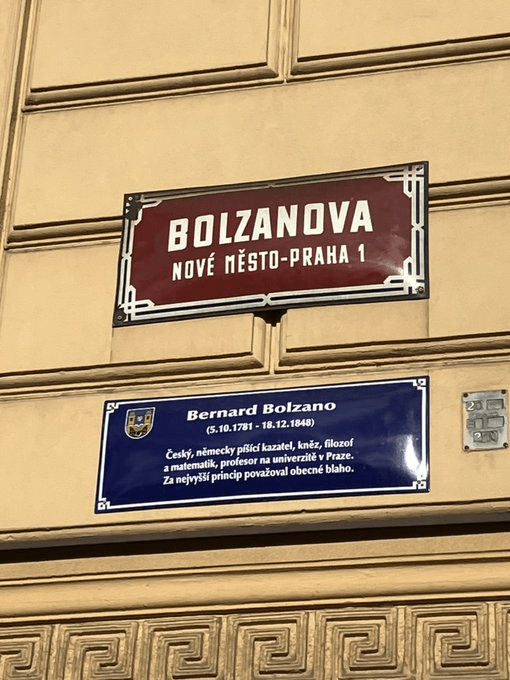
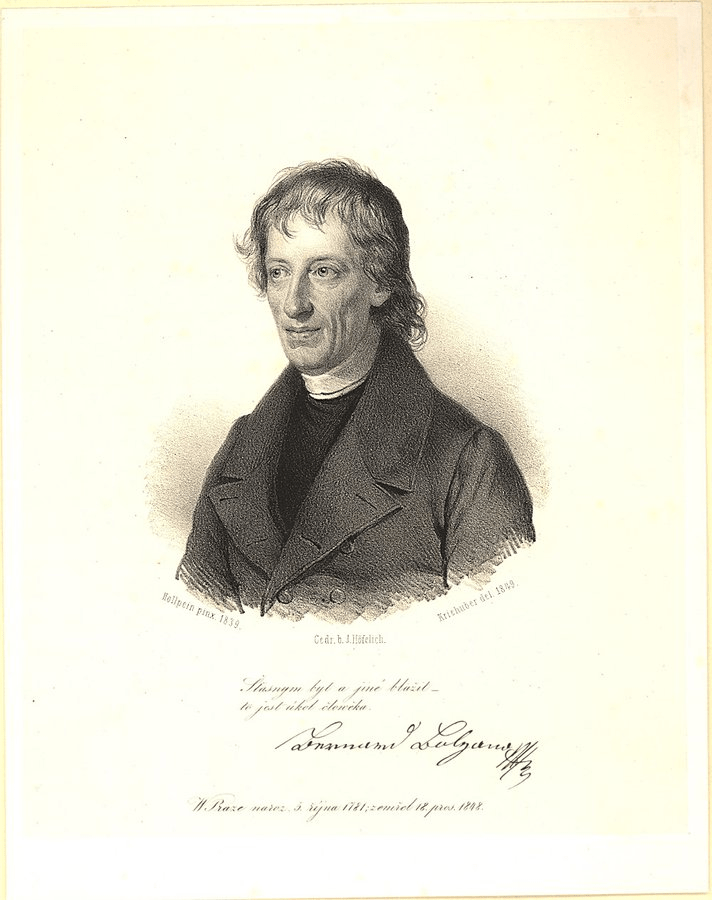
Bernard Bolzano was born in Prague in 1781. His father was an Italian-born arts dealer, while his mother came from a German-speaking family which had arrived in Prague from Austria around 1700.
Graduating from the Piarist gymnasium in 1796, he then studied mathematics and philosophy, switching to theology in 1800.
He was ordained as a priest in 1805, and graduated from Charles University as a doctor of philosophy ten days later. Later that year, he would become professor of philosophy of religion at the University. He also started preaching there, becoming popular in this role.
Before this all starts to sound a bit too much like a nauseating ‘Is there anything I can’t do?!’ LinkedIn profile, two books published by Bolzano in this time were banned the Catholic Church.
Emperor Francis I banned Bolzano from teaching in 1819, on the grounds that he was too liberal for the Viennese authorities.
Bolzano lived in seclusion after this, devoting himself to scientific research and also recuperating from various illnesses; a trial conducted by the church against him would drag on until 1825.
Bolzano moved back to Prague in 1842 (specifically to Celetná), and worked as a secretary for the Royal Czech Society of Sciences.
He died of tuberculosis in 1848 and is buried at Olšany Cemetery.
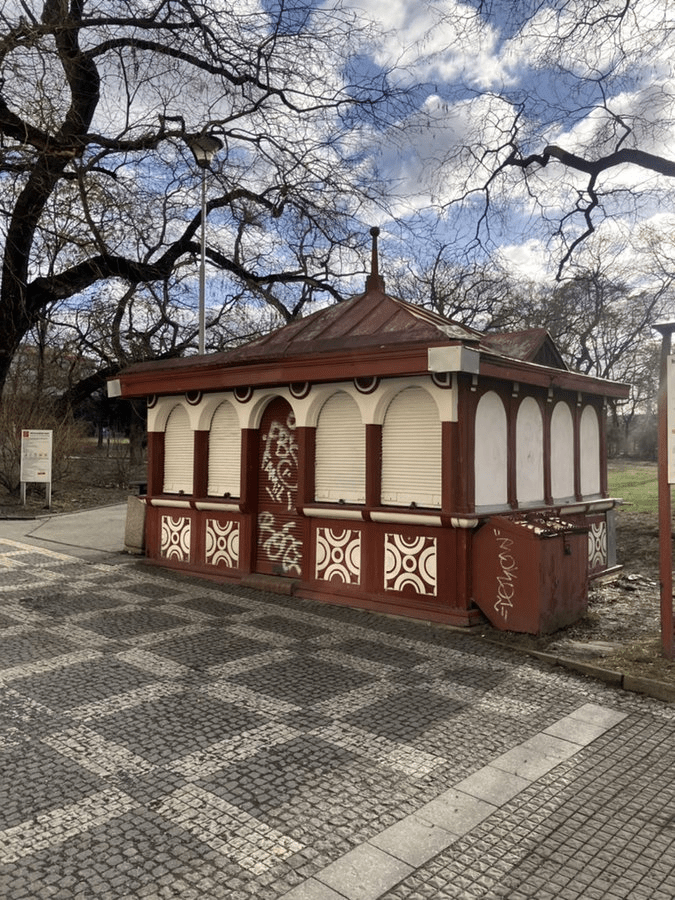
Bolzanova, to the left of the train station, is pretty short, with only one block of houses – but the most distinctive structure in the street isn’t a house.
Is it being used now? I don’t think it is but am happy to stand corrected. In any case, it used to be an exchange office not so long ago (like Prague doesn’t have enough of those), and also had an unauthorised ATM added to it (because ditto).
Your regular reminder that a ‘náměstí’ is a square, but doesn’t necessarily have to be square in shape.
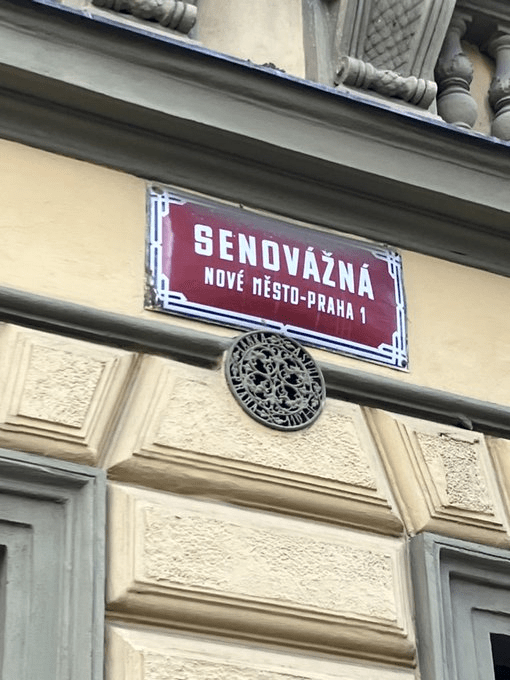
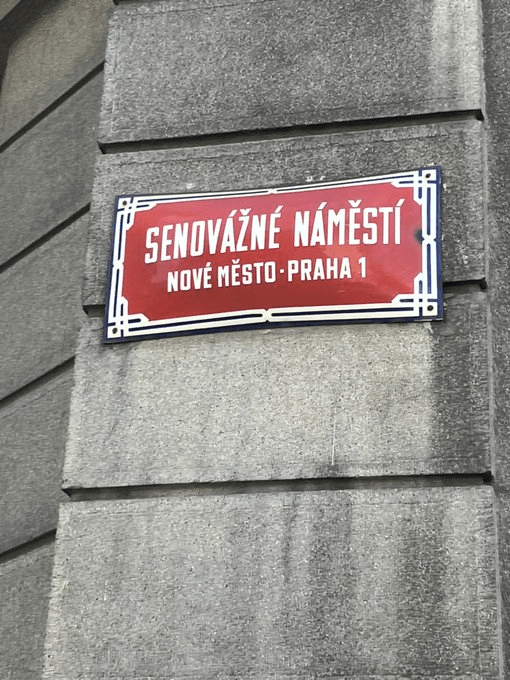
Let’s start with a language lesson: seno is ‘hay’, while váha means both ‘weight’ and ‘weighing machine’. So, a senováha is a hay scale, and this is Hay Scale Square.
In 1360, Charles IV declared that it was permitted to sell hay, fodder and oats in this location, and a weighing machine was placed there. The market was originally called ‘Senný trh’ (Hay Market), before getting its current name in the 1400s.
In 1927, it then became Soukupovo náměstí, after František Soukup (1871-1940), a social-democratic politician, and Czechoslovakia’s first Minister of Justice.
During the Nazi occupation, it was Senovážné náměstí again, before reverting to Soukupovo until 1951, at which point it became náměstí Maxima Gorkého, after the Russian writer and socialist.
Clearly somebody was napping in the early 90s, because there was a gap of over three years between the Velvet Revolution and the square getting its current name back in January 1993.
Things on Senovážné include the Crop Exchange (logically enough), used as the headquarters of Czechoslovak Television during communism, and by the Czech National Bank since 1994.
Across the road, at number 1, is the Probation and Mediation Service (PMS), which is supervised by the Ministry of Justice and, as you might have guessed from the name, performs probation and mediation in matters pending in criminal proceedings.
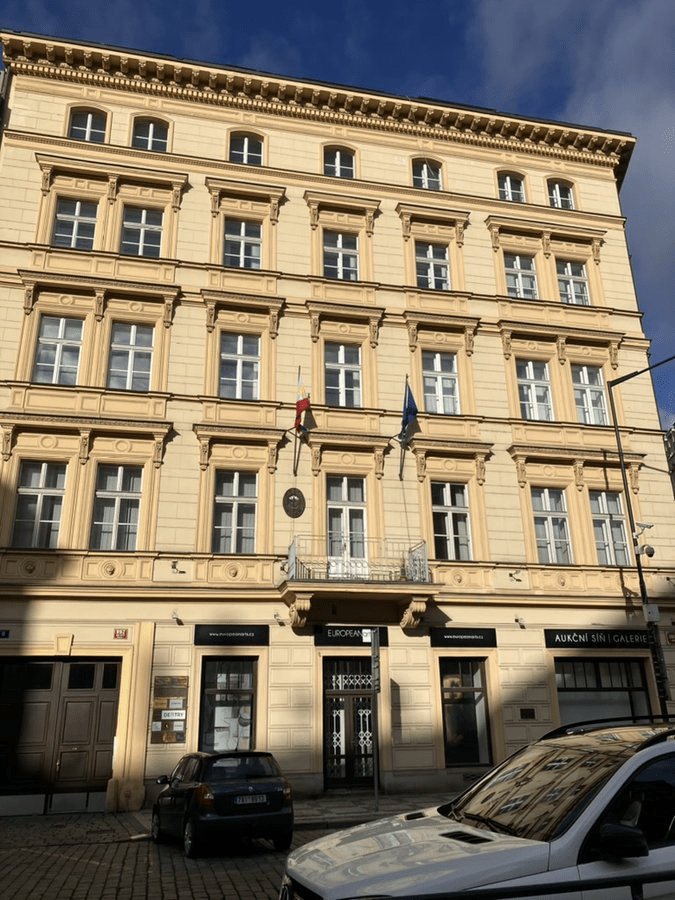
A bit further down, number 8 is the Embassy of the Philippines.
The statues/fountain in the centre of the square date from 2002, and are known as the Czech Musicians (Čeští muzikanti), designed by Anna Chromy (1940-1921) and Jan Wagner (1941-2005).
The fountain depicts musicians as rivers: the mandolin-player is the Ganges, the flautist is the Amazon, the violinist is the Danube, and the horn-player is the Mississippi.
A fifth sculpture, at a distance from the others, represents the Nile.
The Mortgage Bank of the Kingdom of Bohemia moved into number 13 in 1890. It’s now the Carlo IV hotel, and, if you want a room there tonight, it’ll cost you about €120, i.e. that the person who once told me it’s the most expensive hotel in Prague might have been lying.
Finally, if you dream about a senováha tonight, this is apparently a sign that you should follow your goal strictly, says someone on the internet: https://babiccinsnar.s1.pexow.com/senovaha.html
‘Jindřich’ is Henry, and the two don’t seem so different once you realise that one of the German versions of ‘Henry’ is ‘Heinrich’.
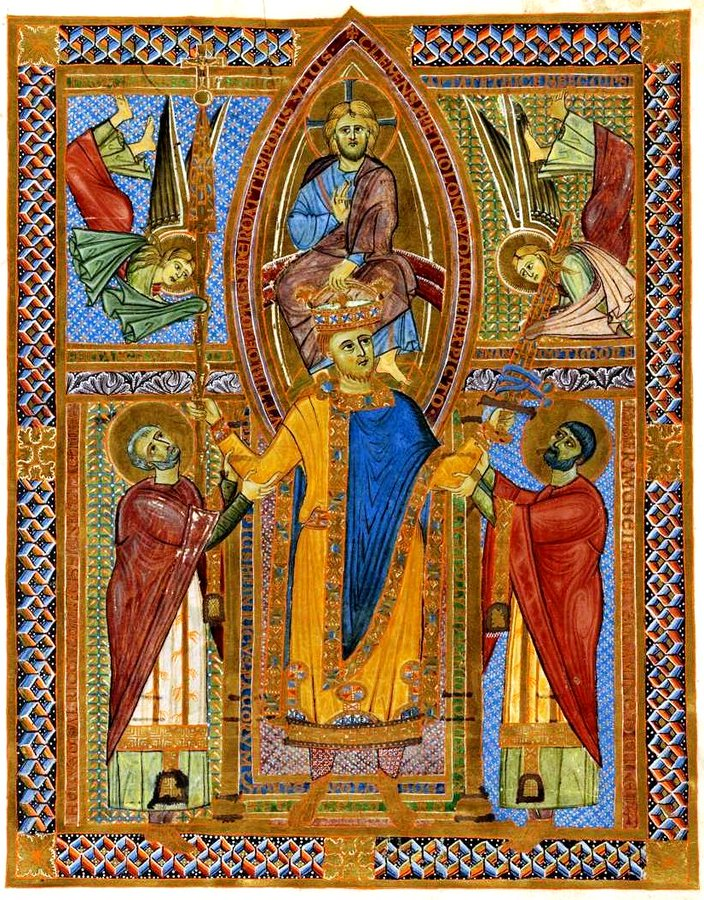
And one famous German Henry was Henry II (973-1024), Holy Roman Emperor, also known as Saint Henry the Exuberant.
He essentially incorporated Bohemia into the Holy Roman Empire, and had a profound fondness for fighting for Poland.
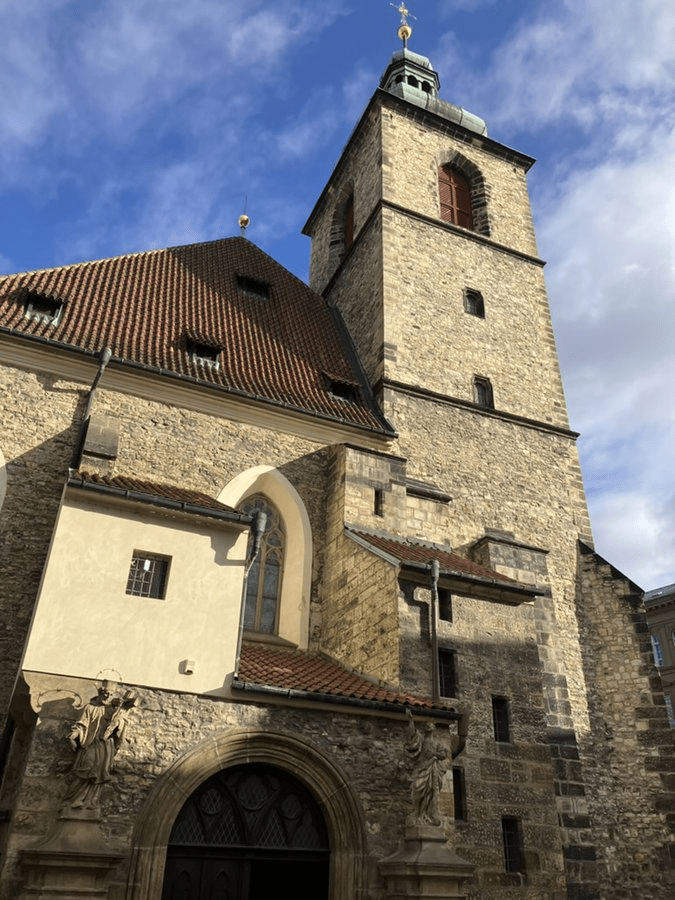
Saints get churches dedicated to them – such as the Church of St. Henry and St. Cunigunde / Kostel svatého Jindřicha a svaté Kunhuty, consecrated in 1351, a few years after the New Town was founded.
(Cunigunde of Luxembourg (975-1040) was Henry’s wife)
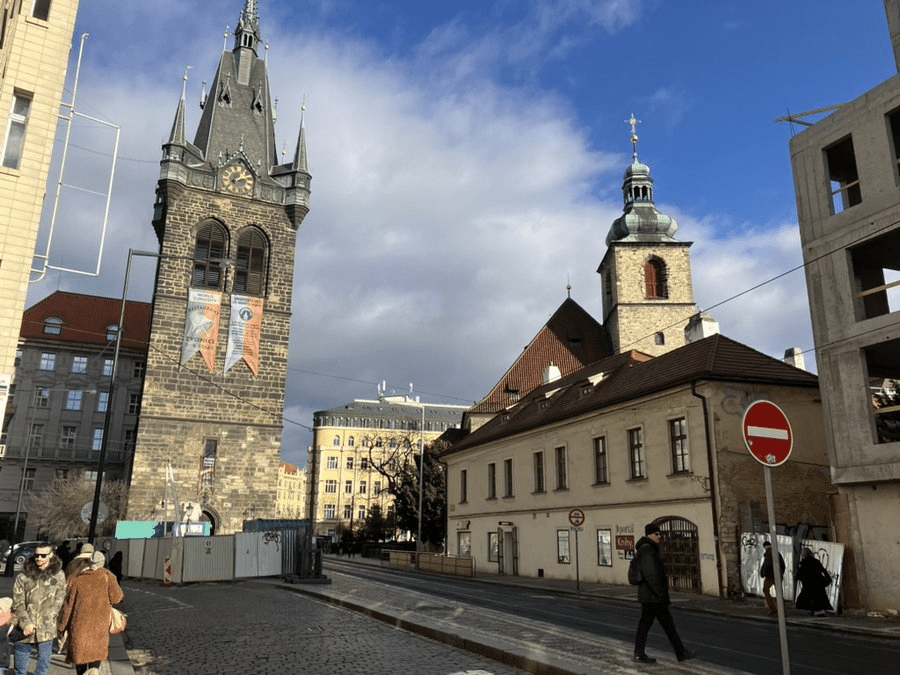
The Hussites were in control of the church for about two hundred years from the early 1400s onwards. In the 1470s, they built a new bell tower.
Those of you who pass through central Prague on a regular basis will recognise it.
What you see these days of the church these days is largely the result of a major renovation in 1879; the tower, meanwhile, was done up in the 1970s, and gained new floors, a lift and a viewpoint.
It’s also got a ‘romantic unique’ restaurant, because what doesn’t spell romance like the possibility of a very large bell going off in your ear while you’re eating.
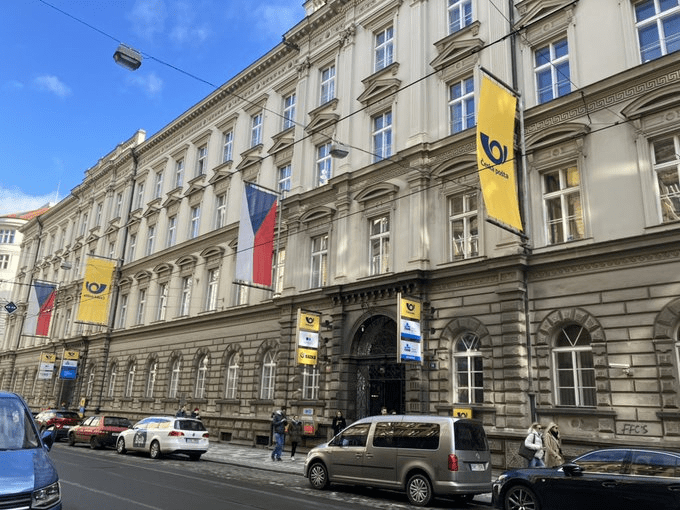
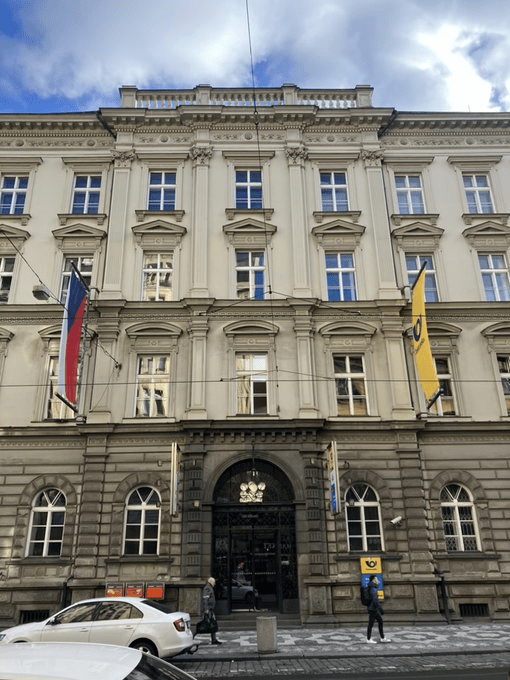
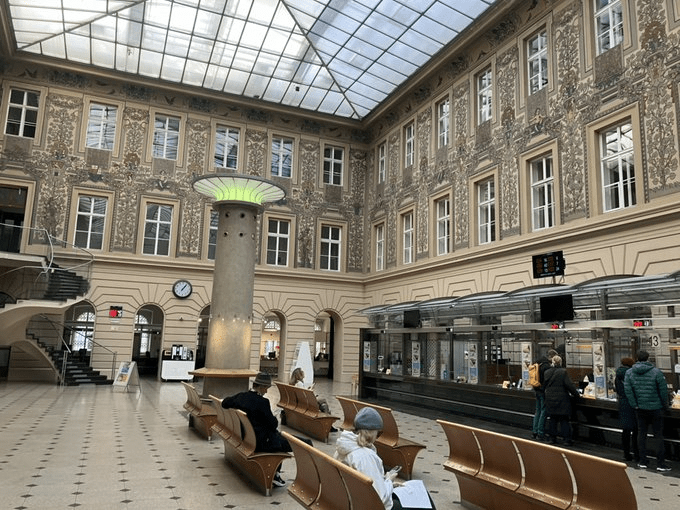
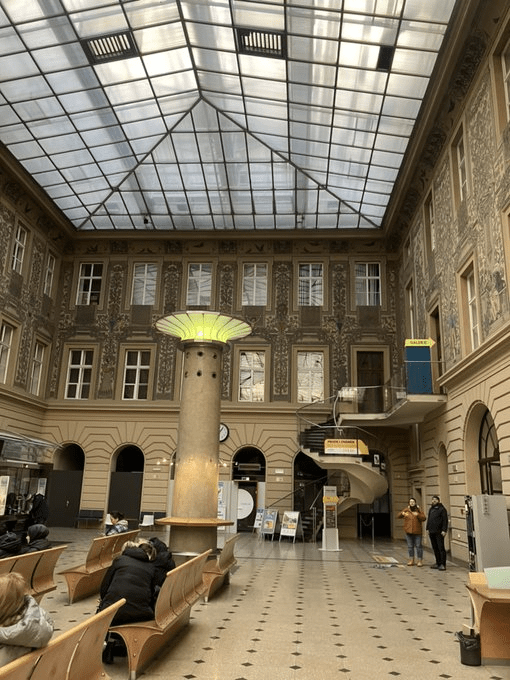
Jindřišská is also home to Prague’s main post office (more main than ever after so many local ones were closed last year). It was built between 1871 and 1874 in Neo-Renaissance style.
I might have gone off on a Twitter rant about the waiting times when I was there on Tuesday evening, but I can’t deny that its interior is stunning.
Meanwhile, the post office that was ten minutes from my flat until last summer remains empty, and I hope the people who worked there have found something new.
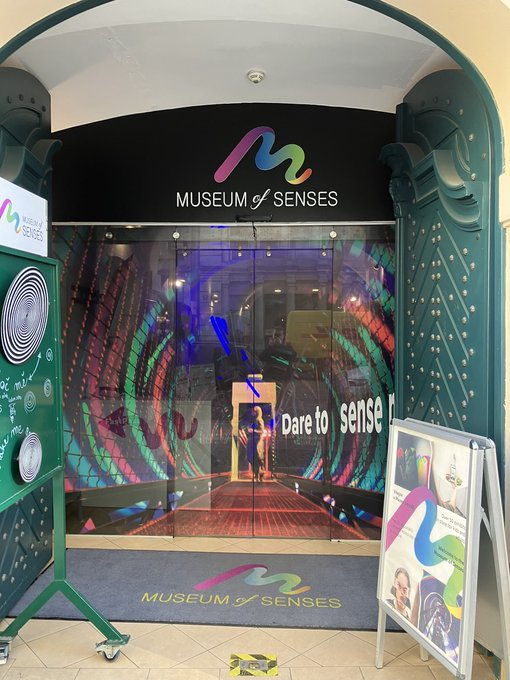
Just down the road, Harrach Palace was built in 1770 but is named after its owner around the 1850s, František Arnošt, Count of Harrach. It contains the Museum of Senses, which I’ve just spent ten minutes trying to come up with a pun about. And failed.
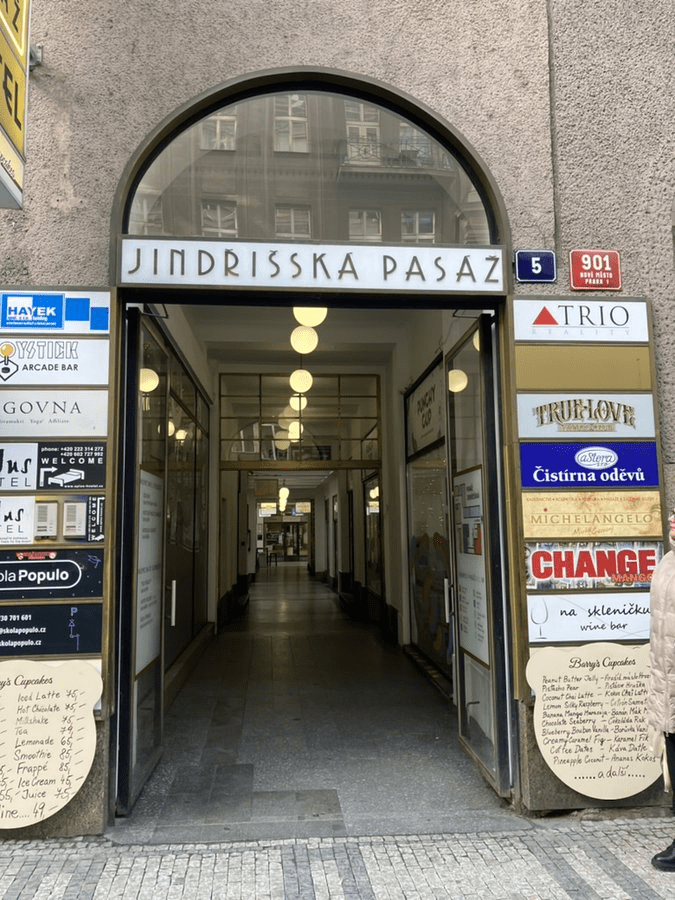
Jindříšská has also given its name to one of the New Town’s multiple shopping arcades.
I would say that Jindřišská is a key thoroughfare on the Prague tram network, but, given the current roadworks near the train station and the amount I’m having to use Bolt lately, that is, for some of us as at 2 February 2024, a lie.
Looks nice though.
Update: Czech Post called off its plans to sell the post office building in May 2024, although one could argue that, as no bids were received, the decision was really made for them.
Back in the early days of the New Town, this street was called Sedmihrady, which is Czech for Transylvania (see also: the German ‘Siebenbürgen’), and if you want to know a little bit about Czechs in Romania, take a look at https://whatsinapraguestreetname.com/2024/06/30/prague-2-day-52-rumunska/.
However, it’s more likely that the street was named after a house called U sedmi hradů (At the Seven Castles), which was reputedly owned by George of Poděbrady’s cook.
Around the turn of the 19th and 20th centuries, Prague underwent asanace, which can be translated as ‘rehabilitation’ or ‘renewal’, but, in reality, also involved the destruction of a lot of historic buildings.
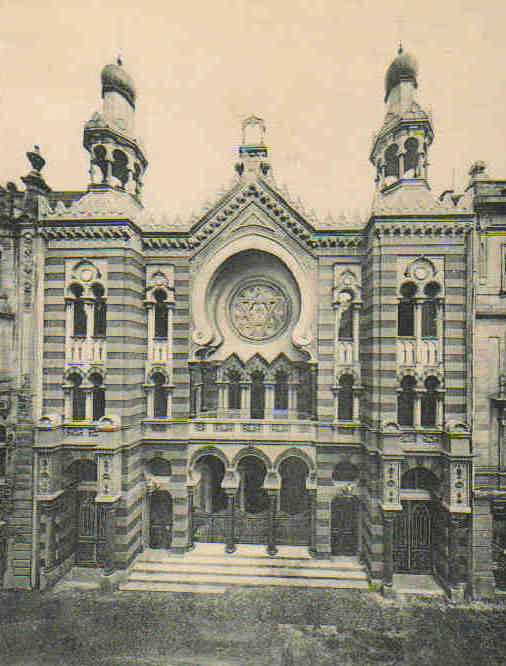
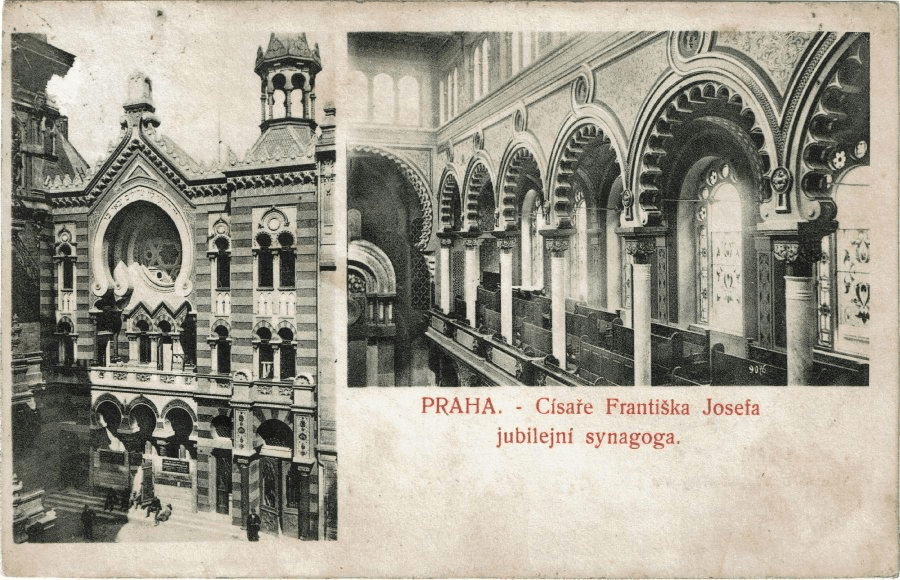
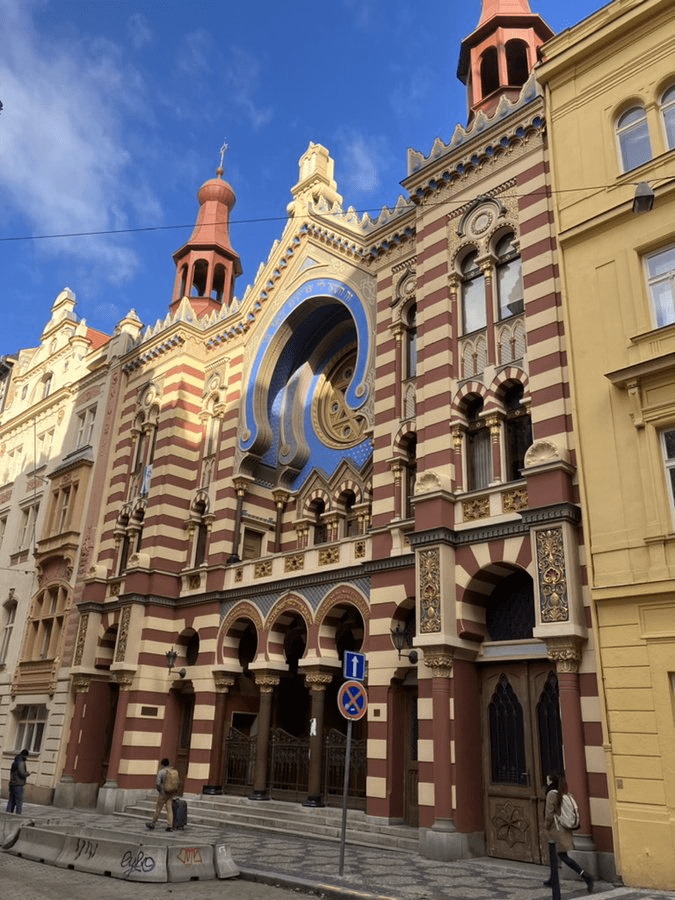
Josefov, formerly Prague’s Jewish ghetto, bore the brunt of this. Three important synagogues were destroyed, and so, in 1899, the Israelite Synagogue Association bought some land on this street in order to build a new one.
In 1903, a proposal for its design was submitted by Wilhelm Stiassny – who had also designed several synagogues across the Austro-Hungarian Empire – and was approved.
Building started in 1905, carried out by the Czech Alois Richter, and was completed in the following year. It’s also known as the Jubilee Synagogue (Jubilejní synagoga), as it was built to honour Franz Joseph’s Silver Jubilee.
For those who are rightly pointing out that Silver = 50, and 1906 – 1848 = not 50, the original plan to build the synagogue had been hatched in 1898.
The synagogue was closed down by the Nazis in 1941, and used as storage space for confiscated Jewish property – which is presumably why it wasn’t destroyed.
Also of interest in the street is the functionalist Edison Transformation Station, built between 1926 and 1930. Part of Prague’s electricity network until the 1990s, it now hosts an excellent cinema: https://edisonfilmhub.cz
In the early days of the New Town, written sources refer to the street as ‘nová ulice faráře svatojindřišského’, or the ‘New Street of the parish priest of St Henry’s’.
This was partly because the street was next to the church on Jindřišská (coming up on day 131), and also partly because the concept of a nice catchy name that would fit onto a nice red and white street sign hadn’t been invented yet.
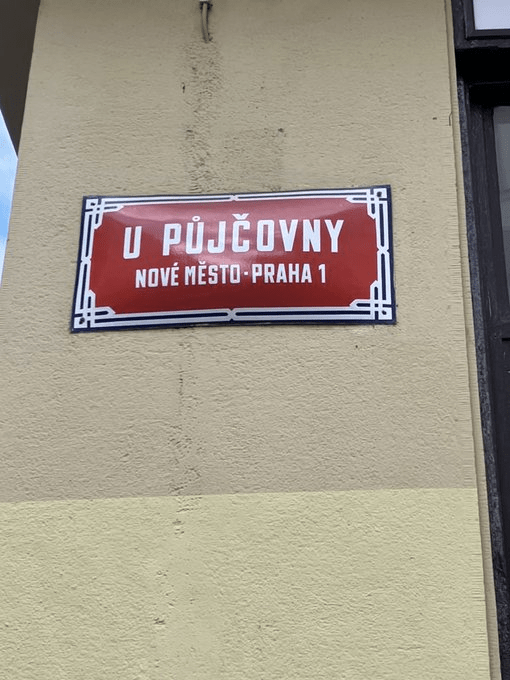
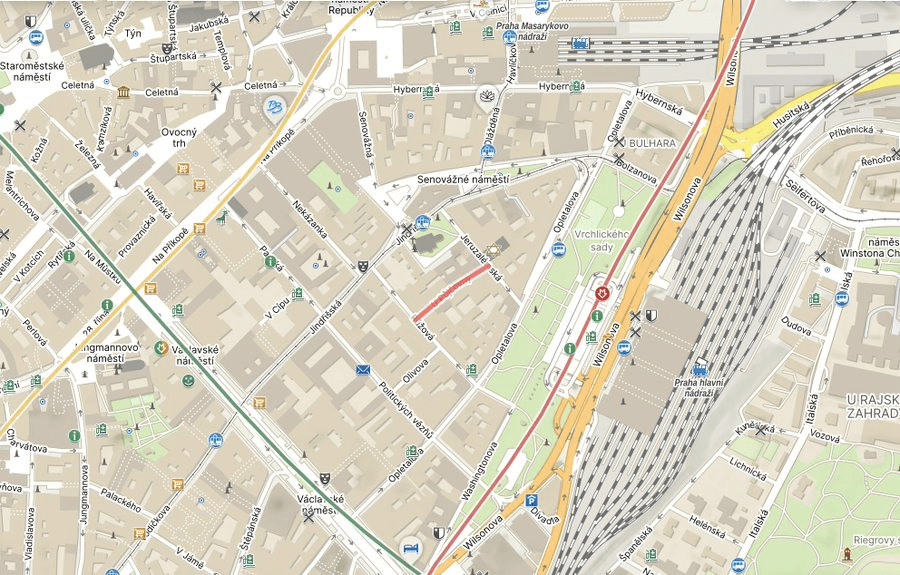
A půjčovna is a ‘rental shop’. If you live here, you may have seen the words půjčovna aut (rent-a-car) around town.
It can also be used to refer to a ‘pawn shop’ (the more common Czech term for this is zastavárna), where you can get a loan in exchange for some kind of collateral.
While the first pawnshops were created in China about 3,000 years ago, it was in the 13th and 14th centuries that Italian moneylenders, typically from Lombardy, started to operate pawnshops across Western Europe.
This is why, if you go to Poland or Ukraine, you will see lots of ‘lombard’ signs around – that’s the term for ‘pawn shop’ in both languages.
Prague didn’t get a pawnshop until 1747, however, and this was located in the Old Town before moving to this street in 1846, taking over the premises of a short-lived theatre.
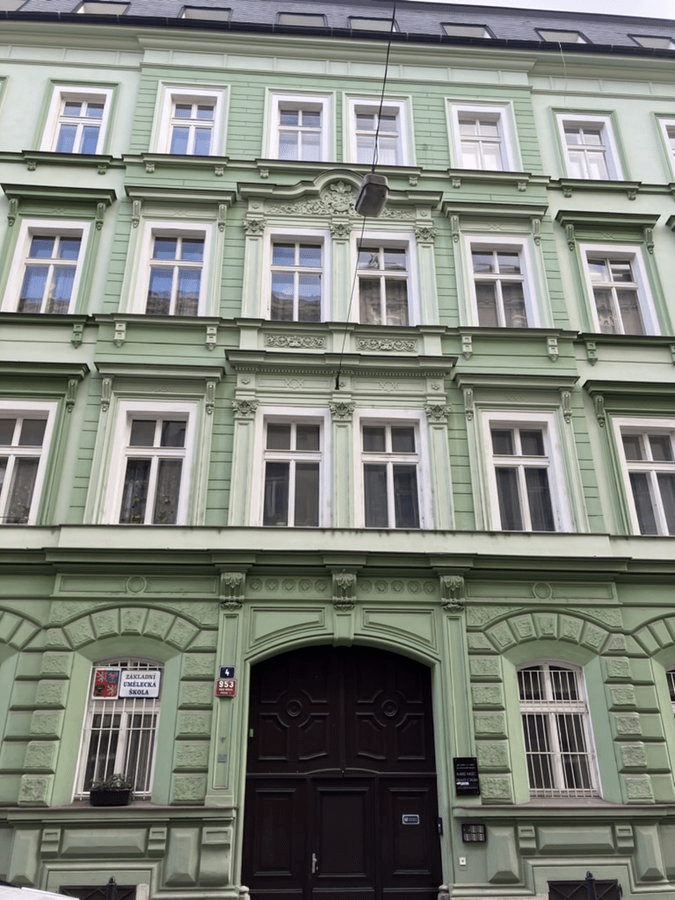
Number 4 on the street is a local branch of the Pštrossova Elementary Art School.
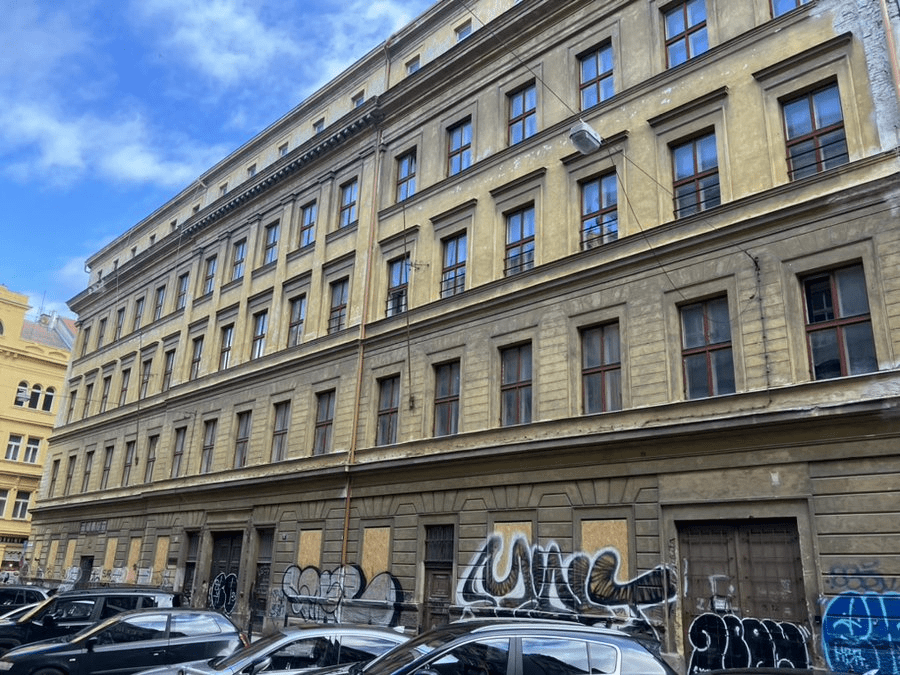
While number 10 is on the site of the former pawn shop. It looks like it needs a hug.
‘Růžová’ means two things: firstly, it’s the feminine adjective from růže (rose); secondly, it’s a colour which is prominent in Barbie, a film which there were one or two or three million op-eds about on this site last week.
Before the New Town was founded in the 14th century, the area around here was a village called Chudobice.
Gardens were later made on Chudobice’s territory, and I’m going to assume at least one of them was a rose garden.
(To the person at the back asking if there was ever a Czech cover version of Rose Garden, of course there was)
When the New Town was built, a church – the Church of Saint Henry and Saint Cunigunde, AKA The One On Jindříšská – soon followed, and inherited a garden, although the area would become less and less green as it became more residential.
Rose-related names appear as early as 1418, such as Růžená, or Domy v zahradě růžové (Houses in the rose garden); the current name has been in place since the 1800s.
For vocabulary fans, růžové líce are rosy cheeks, křiklavě růžový is shocking pink, dívat se na svět růžovými brýlemi is looking at the world through rose-tinted spectacles, and růžové víno is ‘rosé wine’.
Here’s a quite ‘so this happened’ 2000 Czech cover version of Where the Wild Roses Grow, originally by Nick Cave and the Bad Seeds and Kylie Minogue:
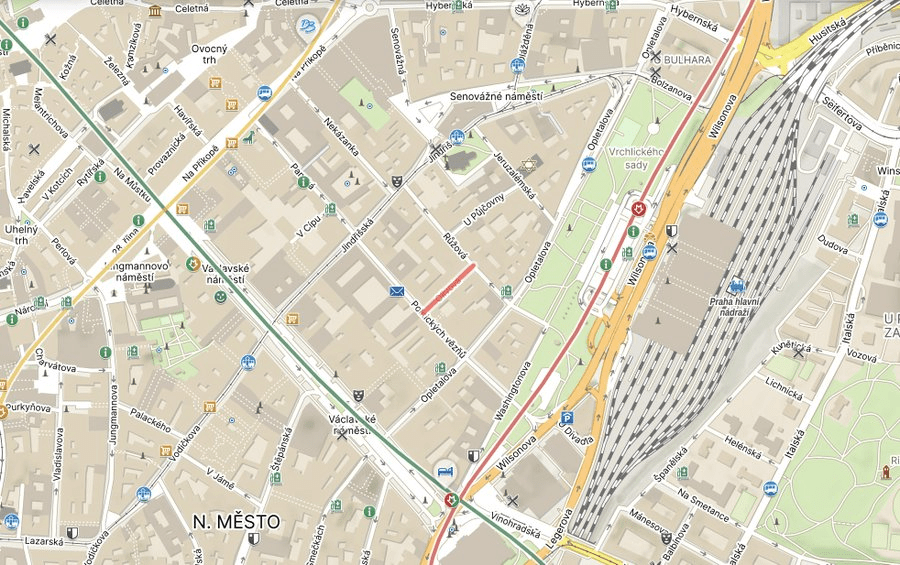
When the New Town was founded, this street was named Angelova, after Angelo of Florence (died 1408), court apothecary under Charles IV and his son, Wenceslas IV.
In 1757, it was renamed Bredovská after the noble Bredow family (Josef Breda was the governor of Prague’s Old Town, and owned property here).
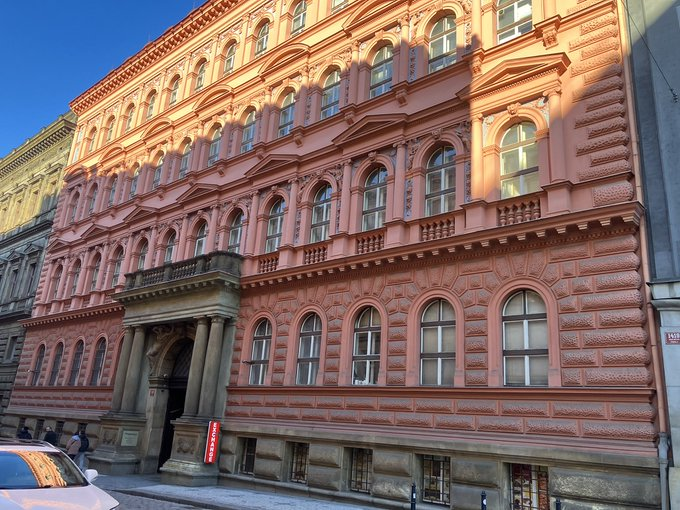
One such property was turned into an orphanage upon the order of Maria Theresa; it’s now known as Schebek Palace, as a businessman called Jan Schebek commissioned a Neo-Renaissance makeover in 1870.
It’s now the headquarters of the National Economic Institute of the Academy of Sciences.
Another palace in the street – Petschek Palace – was commissioned by a local, German-speaking banker, Julius Petschek (1856-1932), as the headquarters for the family-run bank, Bankhaus Petschek & Co.
The Petschek family were Jewish, and the heads of the bank after Julius’ death – his son Walter and his nephew Hans – migrated in 1938, later settling in the United States.
In March 1939, the Nazis proclaimed the Protectorate of Bohemia and Moravia; a few months later, the Gestapo started to use Petschek Palace as their headquarters. They used the premises to torture and interrogate members of the Czech resistance.
About 36,000 people were interrogated here; many of them did not survive; the building became known colloquially as ‘Pečkárna’ (possibly a pun on the Petscheks, also similar to the Czech word for ‘bakery’). A plaque outside commemorates the brutality of the Gestapo.
The street therefore got its current name in 1946, but what isn’t mentioned on the plaque is the fact that, by this point, it was the home of the Czechoslovak secret police, also notorious for their brutal treatment of suspects.
They moved to new headquarters in 1948, since which point the building has been used by the Ministry for Industry and Trade.
There’s a museum, including a replica of the Gestapo torture chamber; visits are by request only. It’s run by the Czech Union of Freedom Fighters, a veteran organisation which isn’t without controversy, as several members served in the security services prior to 1989.
You may also recognise the building’s exterior from this scene in The Bourne Identity, where it was a body double for the Gemeinschaft Bank in Zürich.
Next to Schebek Palace, and built around the same time as it, number 9 is the former Buštěhradská dráhy headquarters, named after the railway company it was built for. It’s now the seat of the Czech Communist Party.
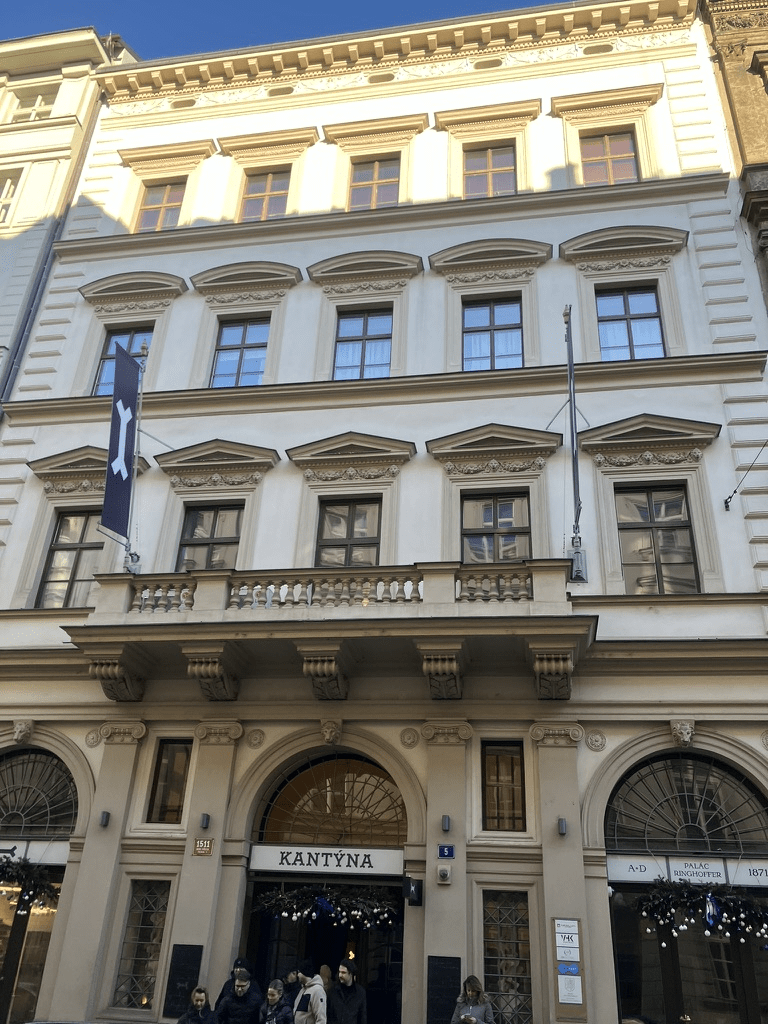
On the other side of Schebek Palace, Ringhoffer Palace has formerly been the headquarters of banks, but now hosts Kantýna, a popular restaurant.
Across the road, you can get a glimpse of what Prague’s main post office looks like from the other side.
And I can think of some people who will definitely not be happy if I fail to mention that number 13 in the street is the Prague branch of the British Council.
Finally, Ukrainophiles will find this plaque dedicated to Taras Shevchenko on the corner with Opletalova interesting.
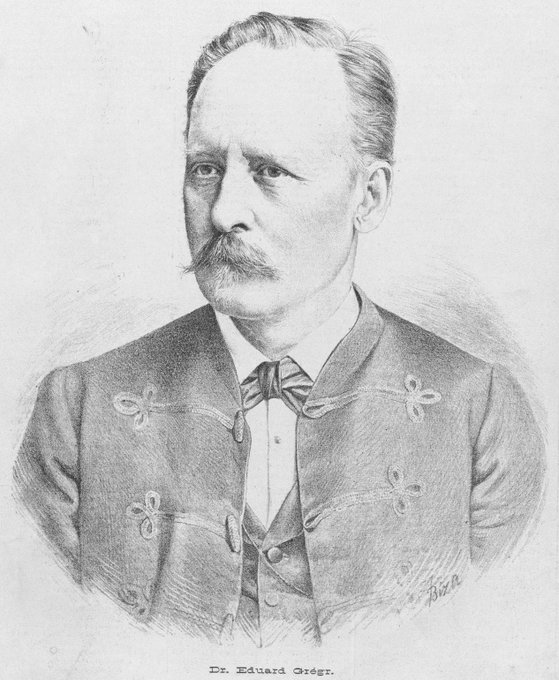
There was a printing house here; in 1876, this is where the first uncensored edition of his 1840 collection of poems, Kobzar, was published. The publisher was Eduard Grégr, of the Young Czech party.
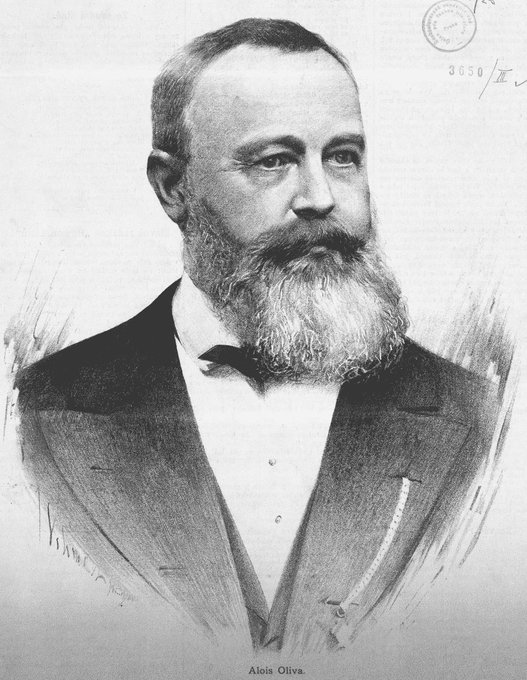
Alois Oliva was born in Kutná Hora in 1822, but went to school in Dresden, where he had relatives.
Going straight into employment after he finished school, he was, by the age of 20, a procurator. He then joined a sugar factory in Ruzyně, eventually becoming a partner. He founded his own sugar business in Prague in 1864.
Around the same time, Oliva became a member of Prague’s city council, supervising (and giving financial support to) a school on nearby Jindřišská. He also co-founded the Prague Stock Exchange.
He was elected to the Czech Land Assembly in 1865, and to the Imperial Council in Vienna in 1873, which he never attended until 1879 due to the Czech policy of passive resistance (and he resigned his post in 1880 anyway).
In 1890, he and his wife, Louisa, donated two of their properties on Na příkopě to the Municipality of Prague. The Municipality had to guarantee that any profits generated from the use of these buildings would be used to fund a home for disadvantaged children.
Girls were to be favoured (there were meant to be twice as many girls as boys), there would be a focus on practical education, and all teaching was to take place in Czech rather than German.
It was to be known as Dětský vychovací ústav Aloisa a Louisy Olivových (The Alois and Louisa Oliva Children’s Educational Institution), or, for short, Vychovatelna Olivových.
The City of Prague accepted the offer, and, to show its gratitude, renamed this street – where the Olivas owned two other properties (the street was previously called ’Sirotčí’ – Orphanage – because it included one).
Building started in 1892 in Říčany – shortly after Louisa’s death – and the facility was officially opened in 1896.
Oliva died in 1899, and is buried, along with his wife, at Olšany Cemetery.
In 1926, the facility was turned into a sanatorium for children from Prague. Since 1980, it’s been used as a treatment centre for children with upper respiratory tract diseases. It also deals with treatments for those who are overweight or obese: https://www.olivovna.cz/.
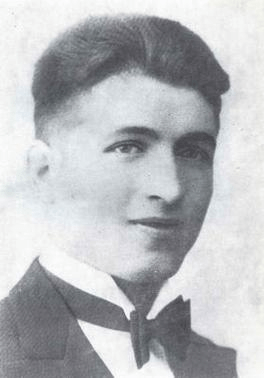
Jan Opletal was born on either 31 December 1914 or 1 January 1915 to a poor family in Lhota nad Moravou, near Olomouc. He was the youngest of eight children.
He had to work from a very early age to support his family, but also excelled at sports and was an outstanding athlete and gymnast at his local Sokol.
After graduating high school with top grades in all but one subject in 1934, he was unable to go to university for financial reasons, and joined the military.
Transferring to Prague, he took up courses at the Institut français and also started to learn English and Spanish. After completing his military service in 1936, he enrolled at Charles University’s Faculty of Medicine.
On 28 October 1939, the 21st anniversary of the founding of Czechoslovakia – and about seven months after the Nazi occupation of Bohemia and Moravia had begun – 100,000 demonstrators took to the streets of Prague. Opletal was one of them.
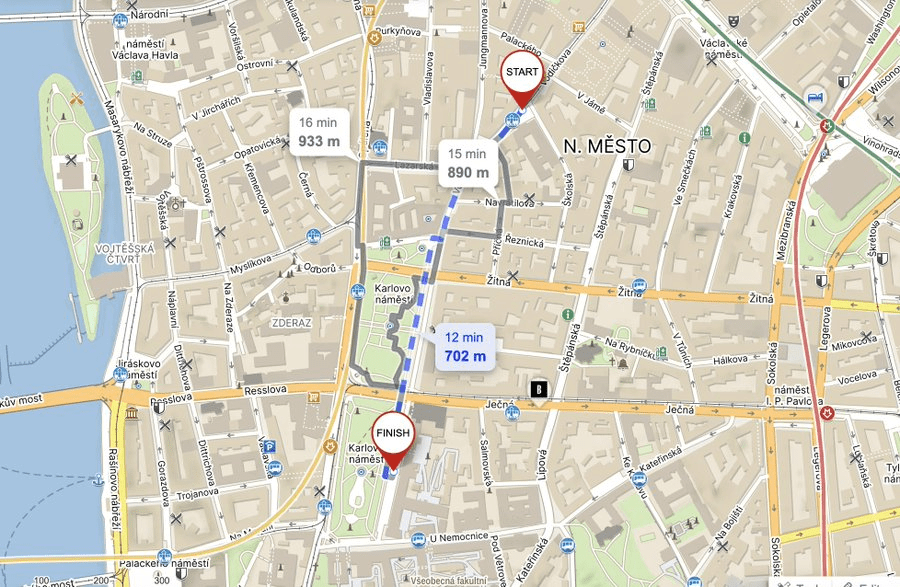
The crowd tried to proceed from Vodičkova to Karlovo náměstí, but, with the Nazi police appearing, they were forced to retreat onto Žitná. It was here that Opletal was shot in the stomach by an unknown assailant.
He died on 11 November, aged 24.
His funeral was held four days later, and became another massive demonstration against the Nazis.
On the night of 16-17 November, the Nazis responded by executing nine students, sending 1,200 students to a concentration camp, and closing the Czech universities entirely.
The names of those nine students don’t get said enough. They were Bedřich Koula (26), František Skorkovský (30), Jan Černý (24), Jan Weinert (24), Jaroslav Klíma (26), Josef Adamec (29), Josef Matoušek (33), Marek Frauwirth (28) and Václav Šaffránek (18).
Two years later in London, 17 November was declared as International Students’ Day, and still is.
And it was on 17 November 1989, sixty years after Opletal died, that Czech students would hold a demonstration which was brutally put down by riot police.
Within eleven days, the Communists’ monopoly on power in Czechoslovakia would be no more.
On the corner of Opletalova and Václavák, you have The Flow, which controversially replaced Dům U Turků and the premises of the former Pražská akciová tiskárna / Prague Stock Printing Company.
The Neo-Renaissance Daněk Palace, at number 19, used to host the Prognostic Institute of the Czechoslovak Academy of Sciences, but is now used by the Regional Directorate of the Municipal Police for Prague 1.
The Institute of Economic Studies of Charles University operates a bit further down, at number 26.
As does the Autoclub of the Czech Republic (number 45).
And there’s a student dorm at number 38 called Jednota; its location by the train station must be pretty incredible if you’re the sort of student who goes back to their home town every weekend so their mum can do their washing.
Finally, the views from Opletalova onto said train station don’t always look wonderful, but last Saturday they certainly did.
Originally published on X on 26 January 2024. George, not Denzel, Dinah or Poussey.
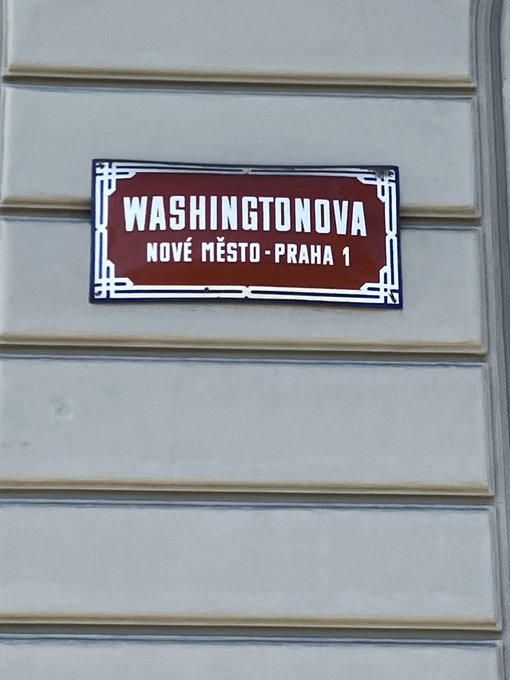
I could tell the George Washington story, but you might already know it quite well and/or feel it’s not got enough/any Czech connections (it won’t shock you to learn that GW never set foot in Bohemia).
So let’s go looking for world leaders and political figures who may not have been in charge in the Czech Republic or Czechoslovakia, but were/are of Czech origin.
Jerzy Buzek, Prime Minister of Poland from 1997 to 2001, was born in Smilovice in 1940, though he was, of course, part of the Polish community there. He was also President of the European Parliament from 2009 to 2012: https://www.europarl.europa.eu/meps/en/28269/JERZY_BUZEK/history/9
Karl Renner (1870-1950) held multiple roles in Austria, eventually becoming its first post-WW2 president in 1945. He was born to an ethnic German family in Unter Tannowitz (now Dolní Dunajovice), and went to secondary school in nearby Nikolsburg (now Mikulov).
Keeping with a theme, Adolf Schärf, President of Austria from 1957 until his death in 1965, was born in Mikulov in 1890, though his family had moved to Vienna by the end of the decade.
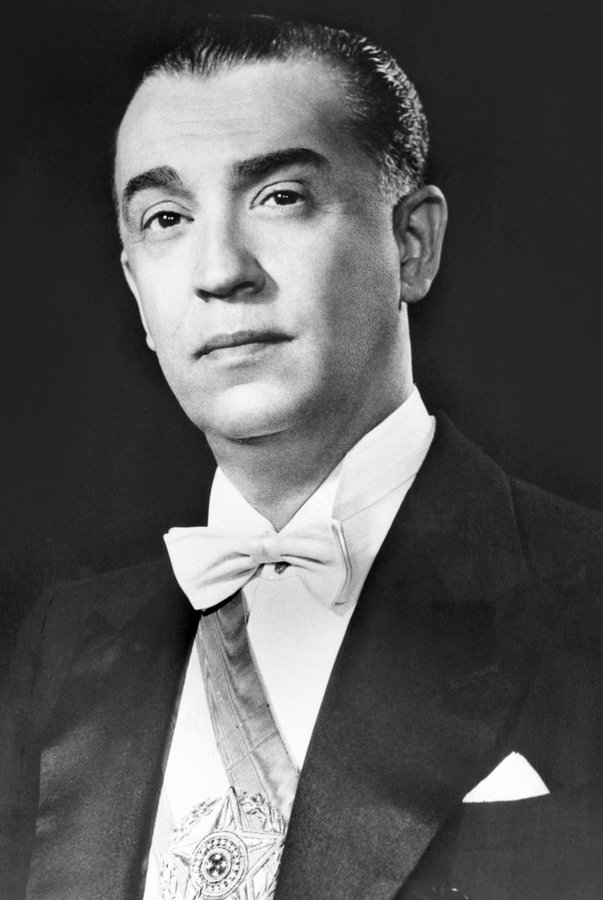
While Juscelino Kubitschek (1902-1976) was President of Brazil from 1956 to 1961, a period which included the founding of Brasília. His mother had Czech origins.
In Ireland, Ivana Bacik is the granddaughter of Karel Bačik, who moved to Ireland after WW2 after his glass factories were nationalised, and set up Waterford Glass there. Ivana has been leader of the Labour Party since March 2022: https://www.ivanabacik.com/.
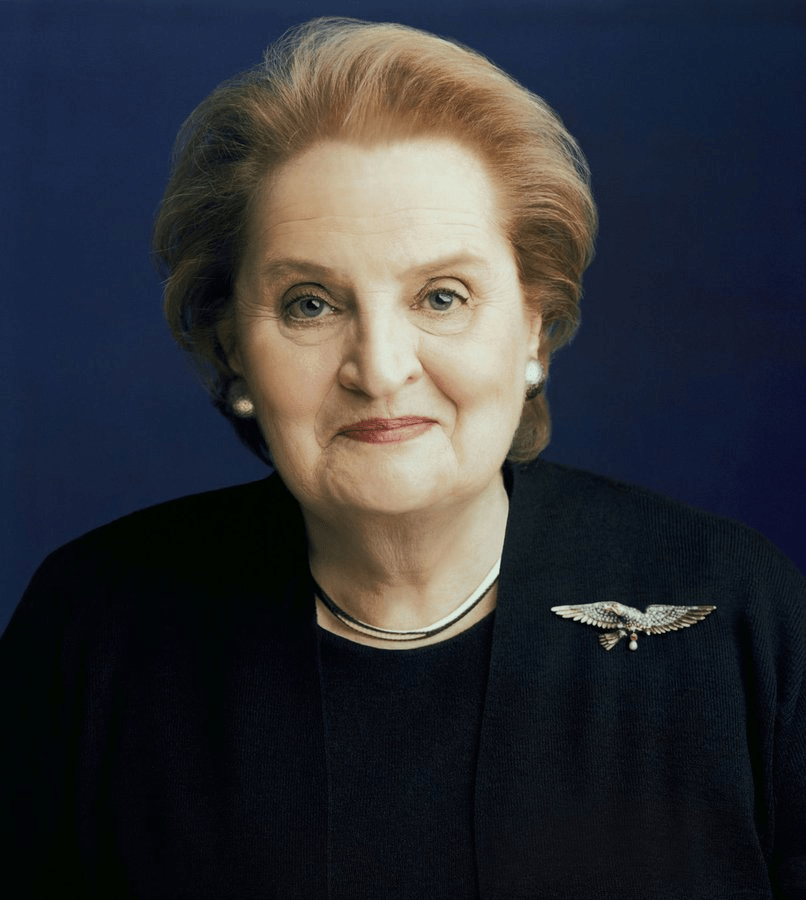
And we can’t go without mentioning Marie Jana Körbelová, who also emigrated to North America in 1948, and eventually became US Secretary of State in 1997. You’re more likely to know her as Madeleine Albright.
Tangential bonus material: Americans with roots in Slovakia include Jon Bon Jovi, Dave Grohl, Jon Voight (and therefore Angelina Jolie), Paul Newman and Andy Warhol.
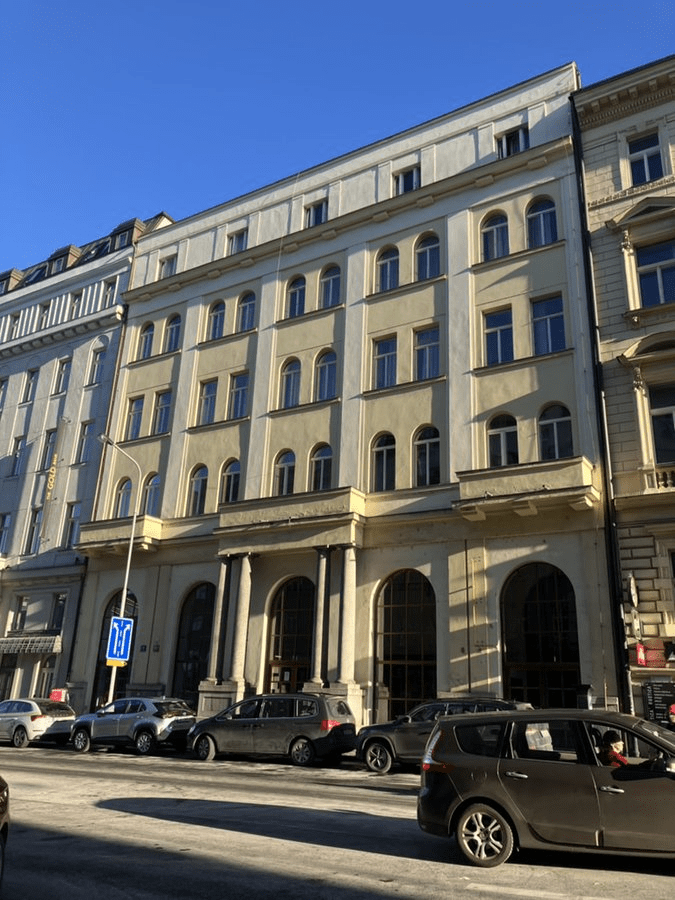
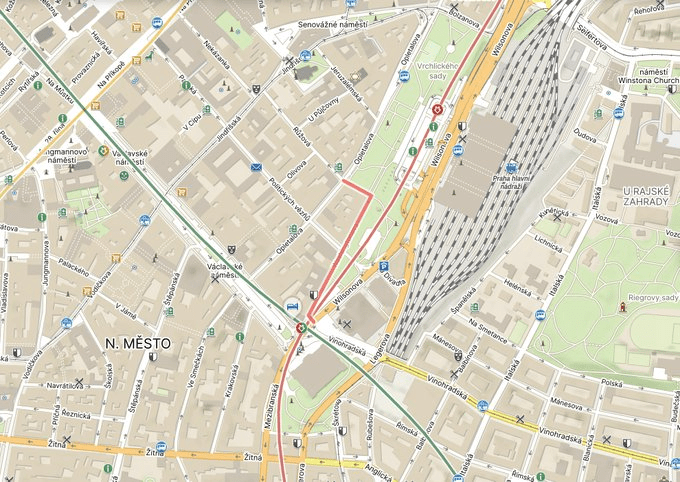
Further bonus material: the most noticeable building on Washingtonova is possibly the headquarters of the Celní úřad pro hlavní město Prahu / Customs Office for the Capital City of Prague, but the whole street has an air of grandeur to it (well, the car park doesn’t).
Using Google to find news stories about Washingtonova is an absolute waste of time, as it lists not only every story relating to Washington D.C., but also everything Czech that’s ever been mentioned in the Washington Post.
Originally published on X on 24 and 25 January 2024 (it’s a two-partner).
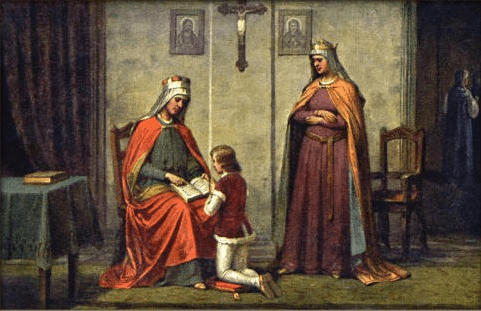
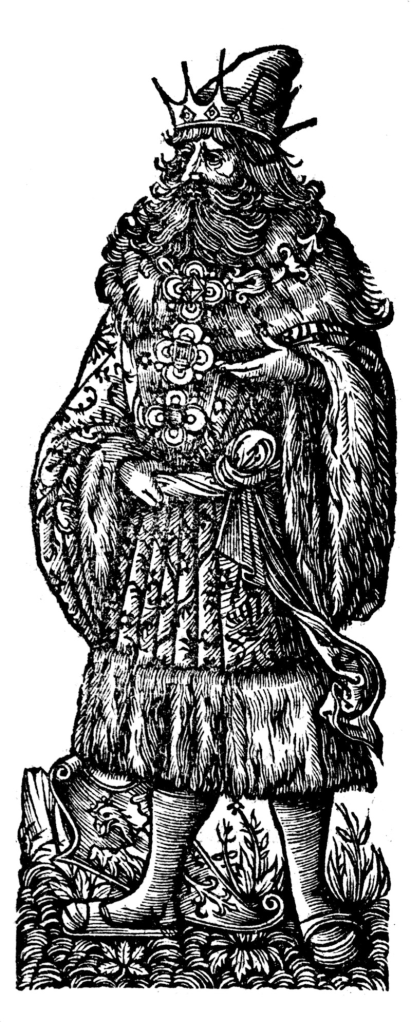
Václav (Wenceslas, as in ‘Good King’) was born around 907, the son of Vratislav (Wrocław-founding) and Drahomíra (pagan; murderous), and the granddaughter of Ludmila (Christian; victim of said murderousness; later saintly) and Bořivoj (the first verifiable Czech leader).
He became Prince of Bohemia while still in his teens, around 925. His reign had the typical features of the time, i.e. rivalry with Saxony which ended up with Václav promising to pay tribute to avoid Bohemia being raided (again).
He also decided to strengthen the Bohemian state, and the role that Christianity played within it. He therefore founded St Vitus Church at Prague Castle, predecessor of maybe the best-known building in the country.
It’s accepted that this happened on 28 September – now also Czech Statehood Day – but we don’t know if it happened in 929 or 935.
In any case, by the end of the century, Václav had been beatified and was henceforth regarded as a key fighter for the national cause.
Now onto the square.
As mentioned in every other post of late, Charles IV founded Prague’s New Town in 1348. A new town requires a new market, and one of the main ones was set up here, on what became known as the Koňský trh (Horse Market).
It’s hard to imagine now, but, even 400 years later, the market still looked like it belonged in the countryside – and, for a time, there was even a stream (the Vinohrady stream) flowing through it.
It was actually placed right in the middle of the square – where Vodičkova and Jindřišská are now – before being moved, in 1827, to where we now see Hotel Europa.
Also in the ‘hard to imagine now’ category, it was only around this time that the square was introduced to paving and streetlights. Trams started running along the square in 1884 (and ran until 1980).
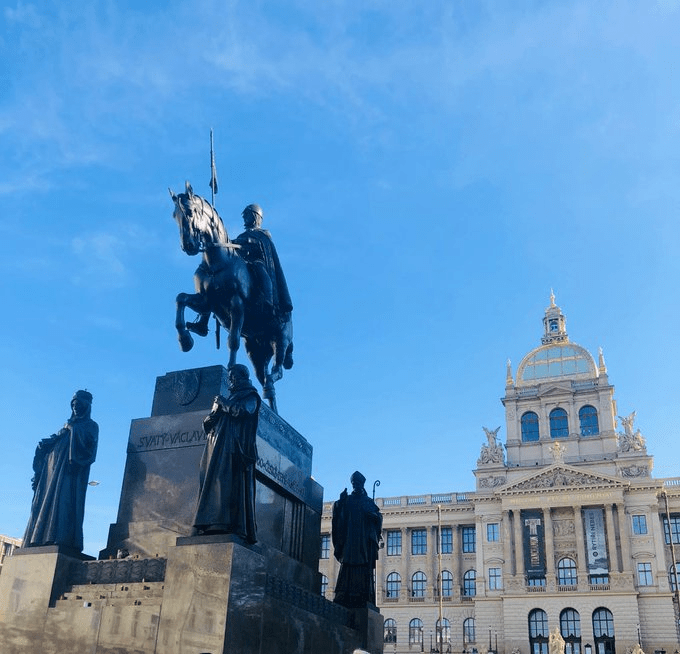
Bendl’s statue got moved to Vyšehrad in 1879 – it’s still there – while a new statue by Josef Václav Myslbek was unveiled in 1913, but not completed until 1925.
You’ll recognise it.
You might just think the square is for tourists and anybody who is really into Popeye’s or Primark – but it has, of course, played a key role in many important moments in the country’s history.
On 28 October 1918, Isidor Zahradník declared an independent Czechoslovakia in front of a huge crowd.
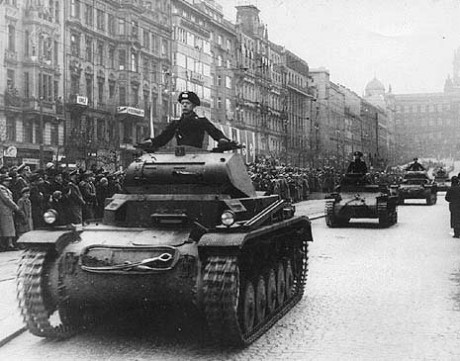
During the Nazi occupation, the occupying powers (not the first noun that I wanted to write) used the square for their own demonstrations.
And, in 1968, Soviet troops fired on the National Museum because they thought it was the headquarters of Czech Radio.
Am I allowed to say ‘twats’? Twats.
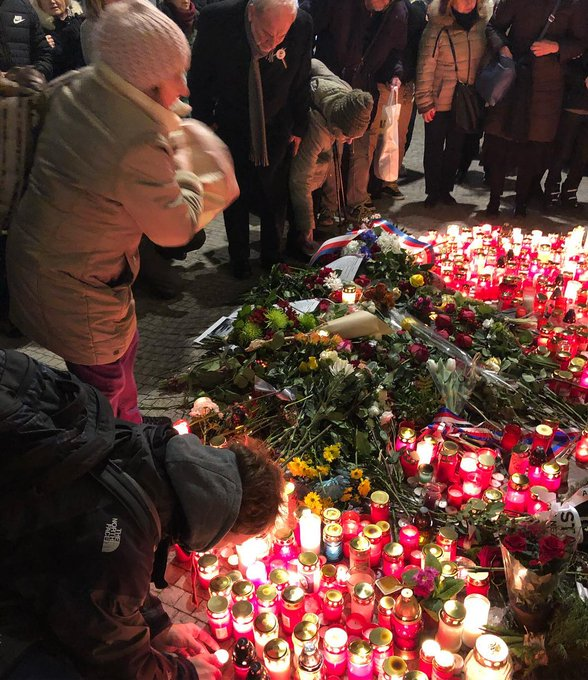
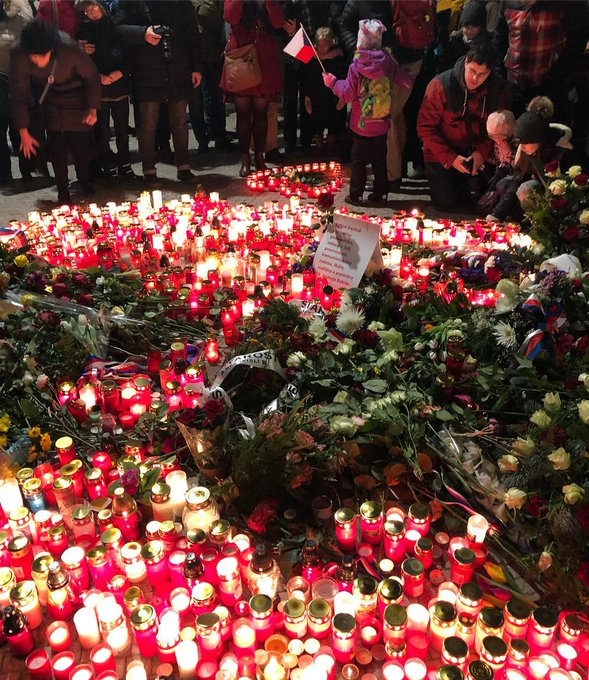
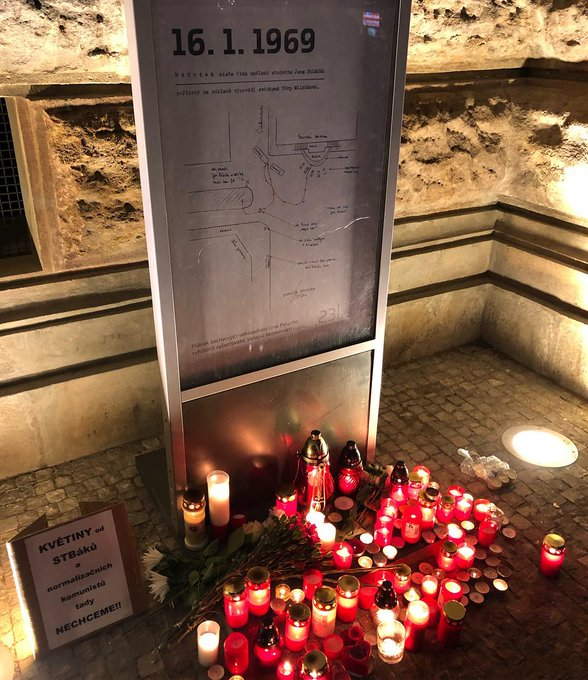
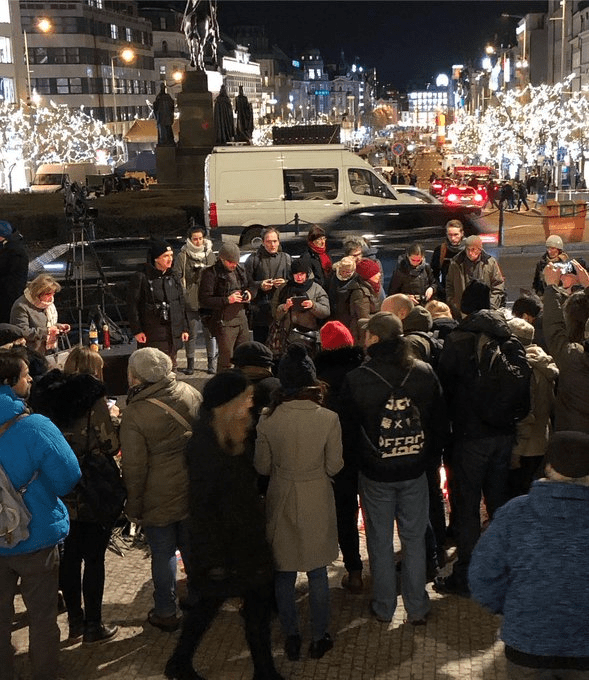
A few months later, this would be where Jan Palach set himself on fire in protest against post-Prague Spring demoralisation. Here are some pics I took during the commemorations of that event in 2019.
And many of us who aren’t Czech will have first seen Wenceslas Square in 1989, when it was the backdrop for the Velvet Revolution:
All the imperfections since, and I *still* get goosebumps watching this.
Václavák, as the locals call it, is constantly under reconstruction – the lower part is way more pleasant than it was a decade ago – and trams are due to make a comeback by the end of the decade.
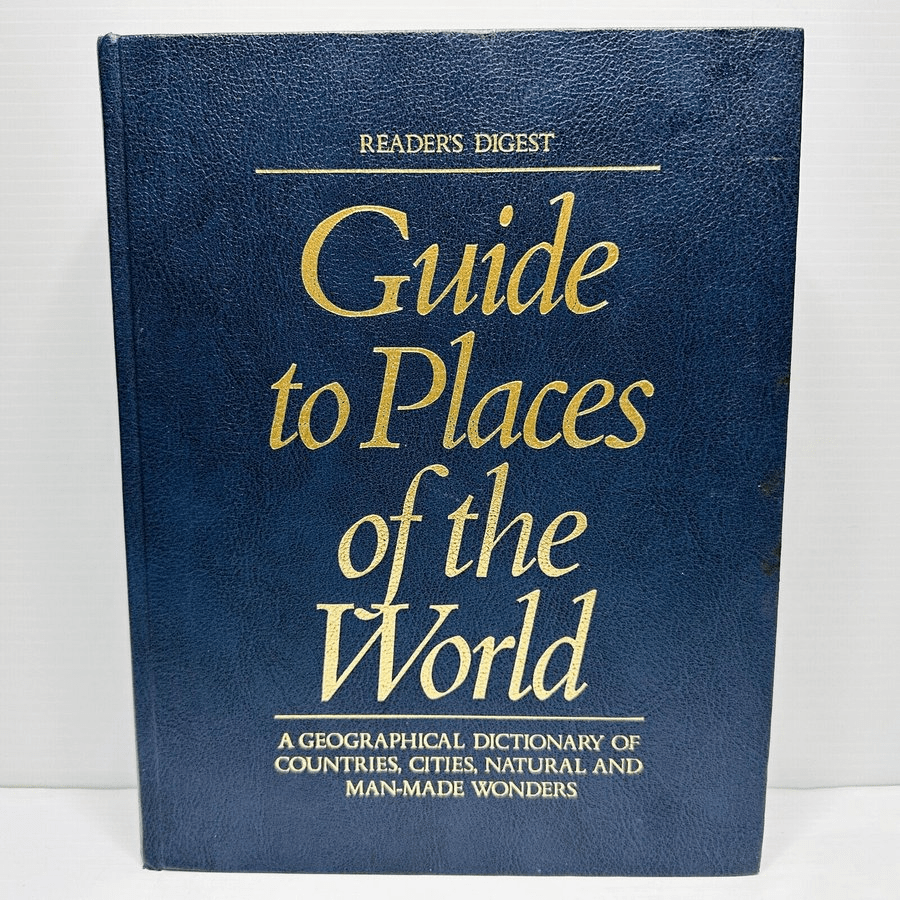
For some reason, my oldest memory of Prague concerns a Reader’s Digest book my parents once had, and which I was obsessed with as a child.
The Guide to Places of the World included a two-page spread about Czechoslovakia – it was published in the 1980s, after all – with a photo of a rather foggy-looking Václavák, with trams going down it.
I have no idea why that picture stuck with me as strongly as it did – and I certainly wouldn’t go so far as to say that photo is ultimately the reason why I’m here – but it does make me particularly excited about the moment when the trams make a return.
There’s a lot of see on Václavák, although you may have to look up rather than directly in front of yourself to see the interesting, not-for-sale-not-aimed-at-tourists stuff. Join me.
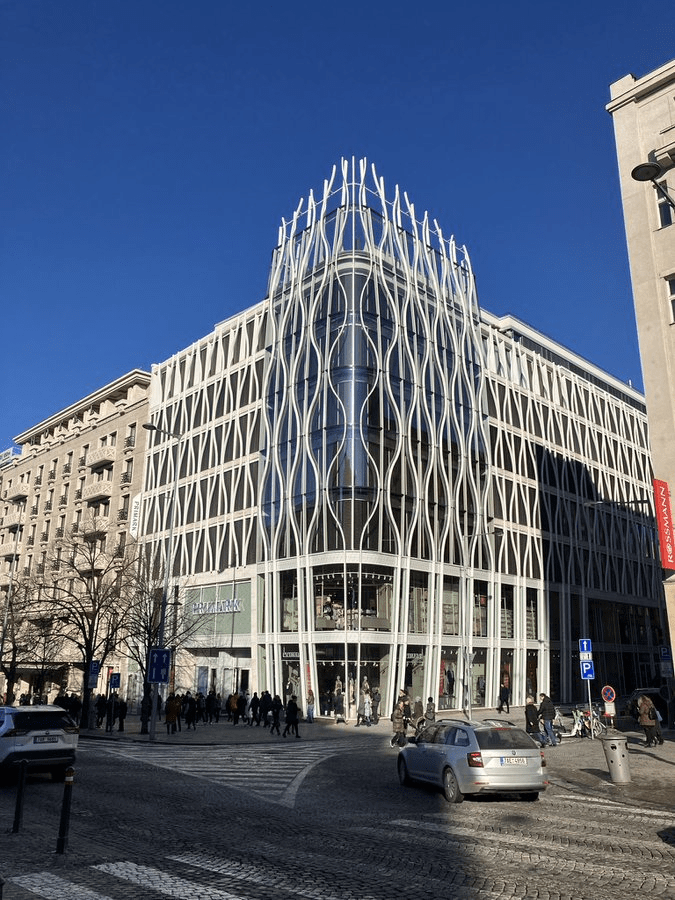
Number 47 is a particularly recent addition – the Flow Building (designed by the Chapman Taylor architectural studio, and completed in 2020), mainly known for making you realise Primark is extremely popular here.
It replaced the Neo-Renaissance Dům U Turků, built in 1880 and demolished in 2017. The decision was met with controversy, unsurprisingly, including a Facebook page which unsuccessfully campaigned for the decision to be reversed: https://t.co/gGvvxrRuL3
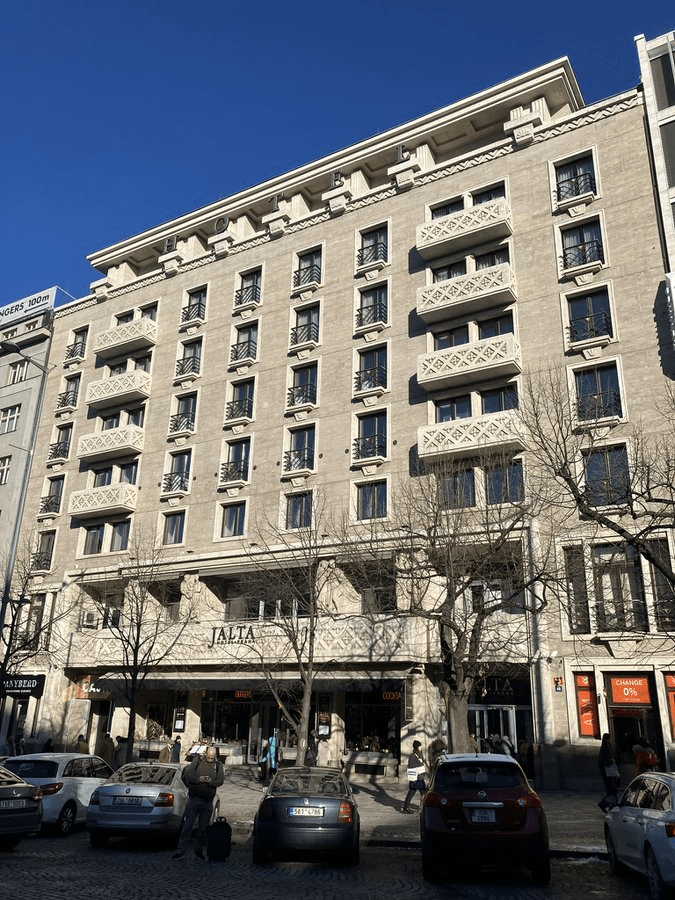
Next door at number 45 is the socialist realist Hotel Jalta (1958). There’s an anti-nuclear shelter in the basement, which is now a museum about the Cold War (do go – it’s fascinating and the guides are great).
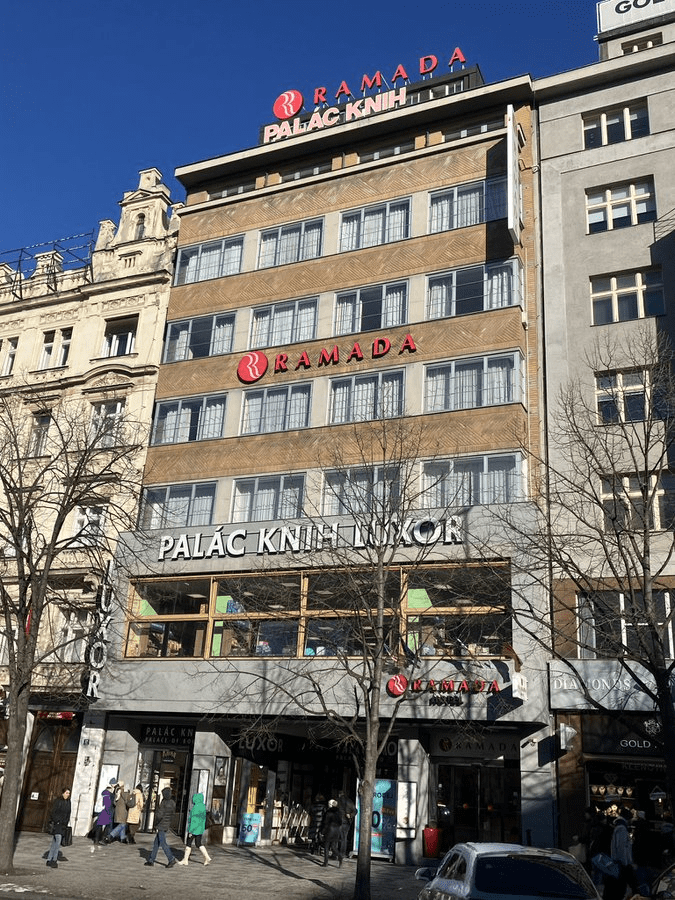
Number 41 is Luxor Palace; since 2002, it’s been the home of the Luxor bookshop, and I really hope I never find out how much money I’ve spent here in the last seventeen years.
Nearby is the building in whose courtyard Jan Zajíc, a 18-year-old student, killed himself by self-immolation on 25 February 1969, little over a month after Jan Palach had died.
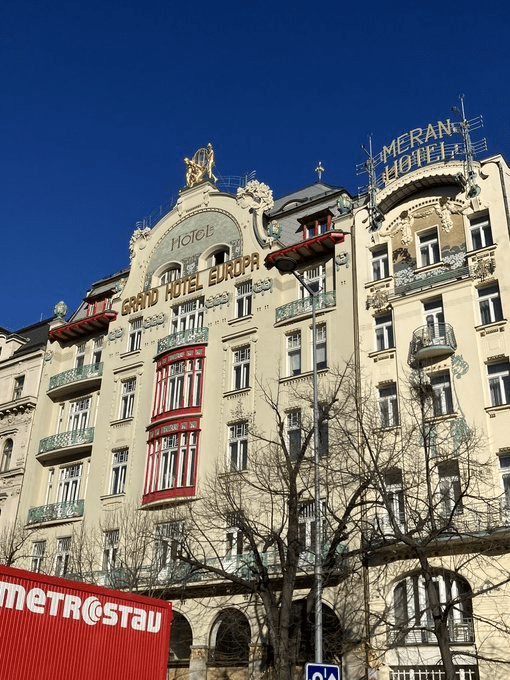
At number 25, Hotel Evropa was built in 1872, based on a design by Josef Schulz. It’s currently undergoing renovation, and you may have seen its interior during Mission: Impossible.
The exterior is pretty stunning too.
At number 19 is Palác Generali, built in 1895 and named after Assicurazioni Generali, an Italian insurance company. A local guy called Franz Kafka worked here from 1907 to 1908.
Another Art Deco hotel is at number 7 – Hotel Zlatá Husa (built in 1909 & 1910). It’s connected to number 5, Hotel Ambassador (built in 1922, and originally a department store).
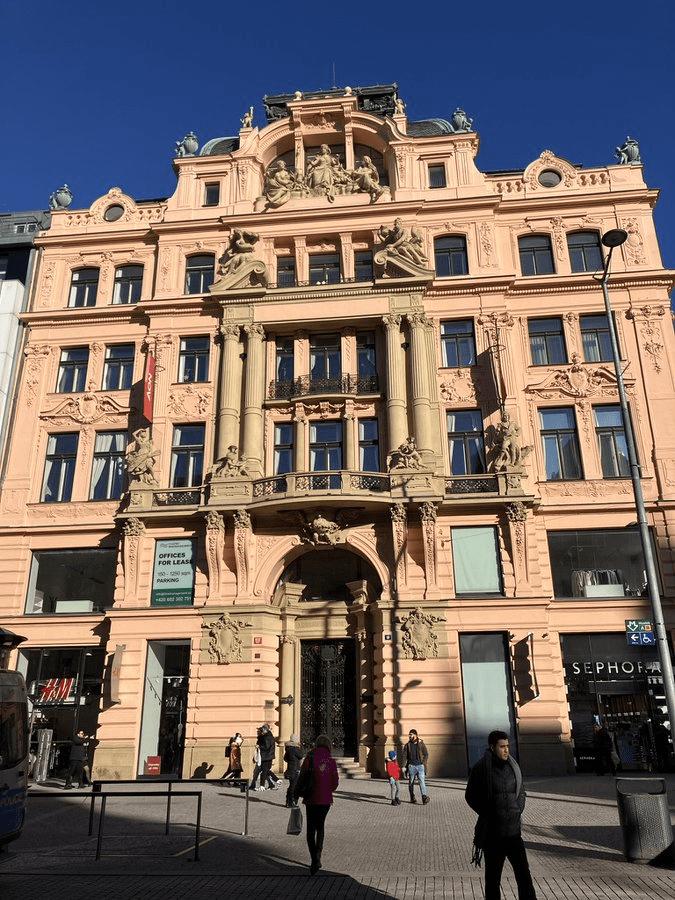
On the corner, Palác Koruna (opened in 1914) hosted Prague’s first self-service restaurant, Automat Koruna, until 1992. It also hosted Prague’s answer to HMV or Virgin, Bontonland, which I visited with 24 hours of first arriving in Prague in 2005 and miss enormously.
Crossing over (or, let’s be fair, turning around – the square is 65 metres wide and there are no cars in this part), Palác Euro was added in 2002 and looks like it.
It’s next to the Lindt department store building, which, in the 1920s, had the square’s first glass facade. It also hosted Prague’s first ‘western-style’ bookshop (1998 to 2011), and yes, I miss that too.
Number 6, built in 1929, is the Baťa Shoe House – named after one of the most famous Czech brands, if not the most famous. They still operate a store in there.
These glass buildings are quite a contrast to the most historical-looking Adam’s Pharmacy / Adamova lékárna, built between 1911 and 1912, and Peterkův dům, opened in 1899 and named after a banker called Peterka who had an apartment here.
Since 1996, number 14 has hosted Dobrá čajovna, a tea-house so successful that it has branches not only in Slovakia, Poland and Hungary, but also in the United States.
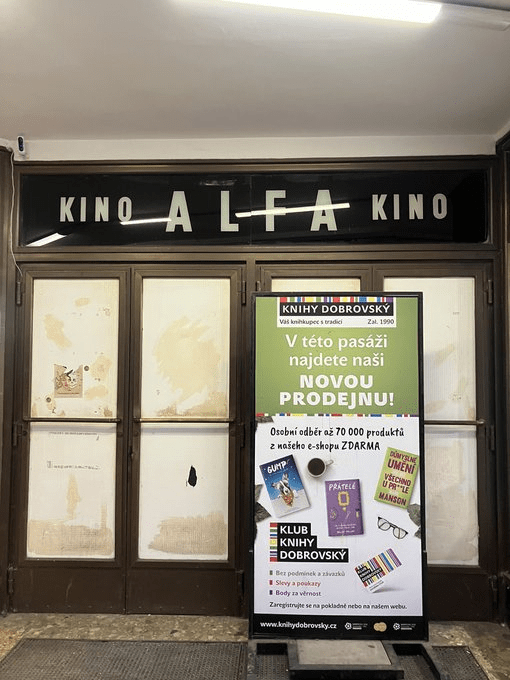
Palác U Stýblů (1928-9) used to be the home of the Semafor Theatre until it moved to Dejvice, as well as of Kino Alfa, a Prague institution that, sadly, hasn’t shown any films since 1994.
The Česká Banka Palace (built between 1913 & 1916) is the home of the Světozor Cinema, and was designed by Osvald Polívka, who was also responsible for the Assicurazioni Generali building right across the road, as well as, in part, Obecní dům and the New Town Hall on Karlák.
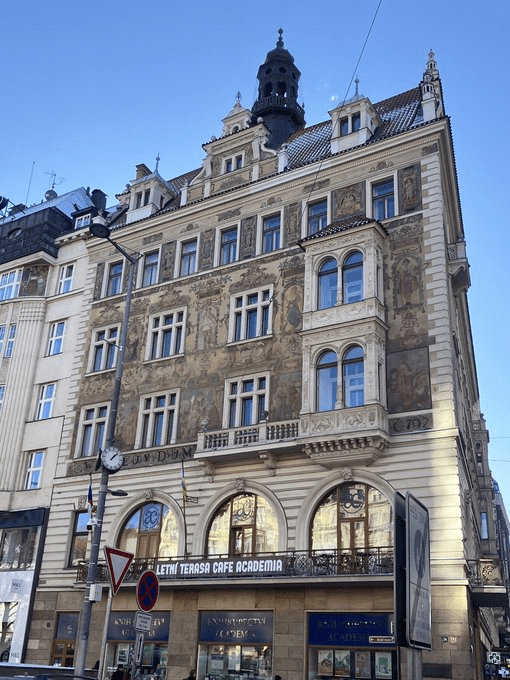
Right across from there is Wiehlův dům – home of the (excellent) Academia bookshop and publishing house. It has the best shop windows in Prague (example from the 30th anniversary of the Velvet Revolution).
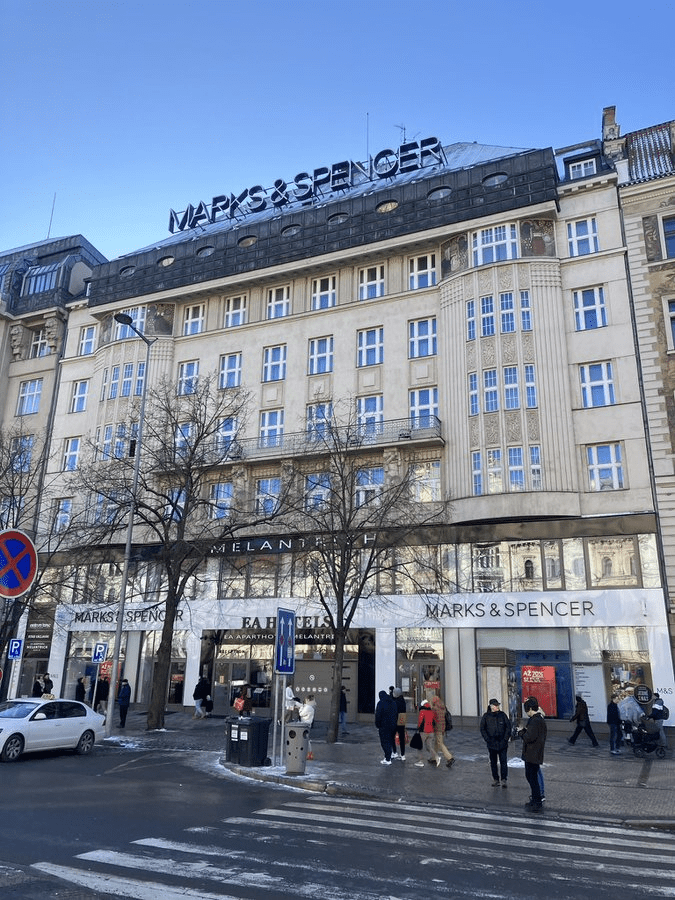
Next door, we Brits may know Palác Hvězda (1913) best for hosting M&S – but watch any clips from the Velvet Revolution in 1989, and this is the balcony people are most probably giving speeches from.
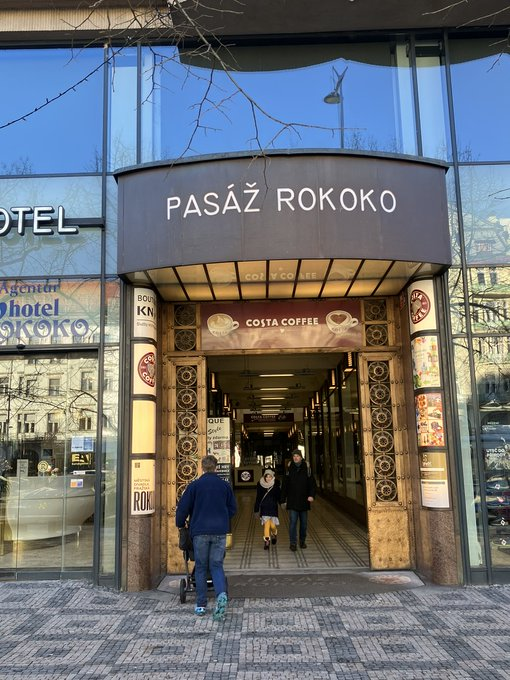
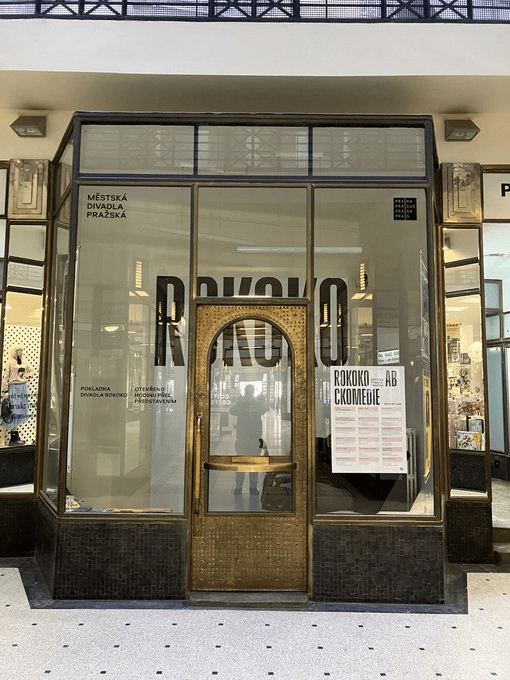
And neighbouring Palác Rokoko (1913-6) has been the home of the eponymous theatre ever since it opened.
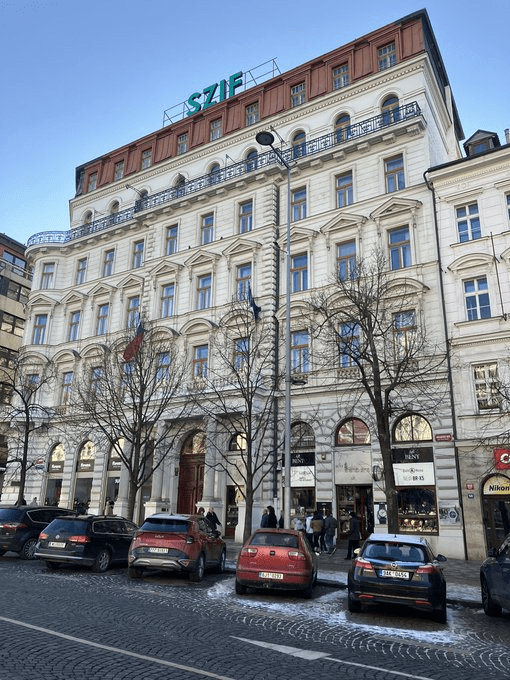
Up from here, you’ve got buildings owned/used by the State Agricultural Intervention Fund and Komerční Banka respectively. The latter has (had?) a paternoster which TERRIFIED me when I taught English in there for a time in 2007.
Palác Fénix (1927-30) was mentioned in a recent thread, while Dům módy (1954-6) hosted what was possibly the most glamorous, up-market department store in Czechoslovakia. Things change.
This thread is too long, and yet, when I went through it just now to see if anything could be eliminated, I not only failed to delete anything but also started worrying about all the things that I’d left out. And that is Prague in a nutshell, really.
Between 1348 and 1350, Charles IV arranged for the construction of Gothic-style walls all around the (then brand) New Town.
Like pretty much every settlement in Bohemia, the New Town had an incredibly rough time of it during the Thirty Years’ War (1618-48). Therefore, new, improved fortifications were needed, and these were constructed, in Baroque style, from 1654 to 1721.
here were five gates through which one could enter / exit the New Town (in Czech, a ‘gate’ is a brána, coming from the Proto-Slavic borna, a ‘guarded entrance’ – also giving us the verb bránit, to defend or protect).
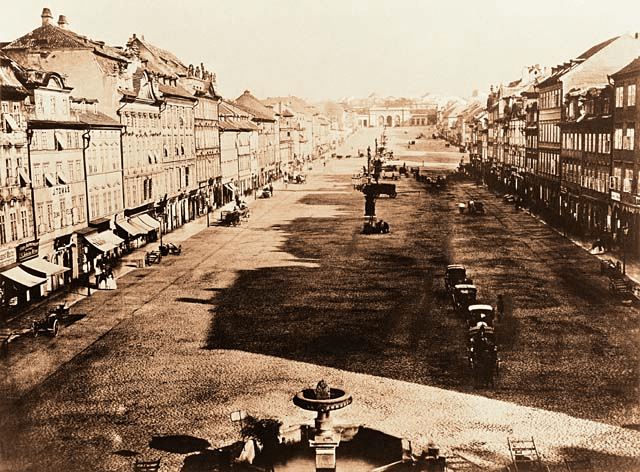
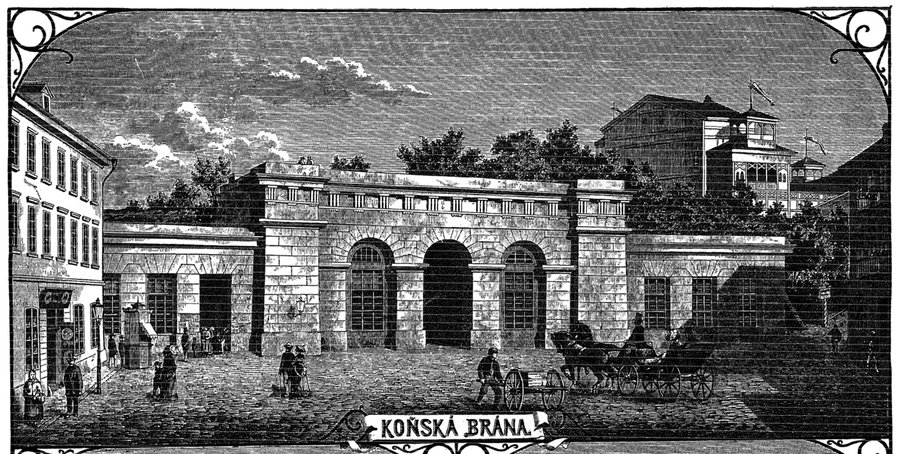
Another was the Koňská brána / Horse Gate, which was at the top of the Koňský trh / Horse Market, nowadays known as Václavské náměstí, and led to Říčanská silnice, now known as Vinohradská.
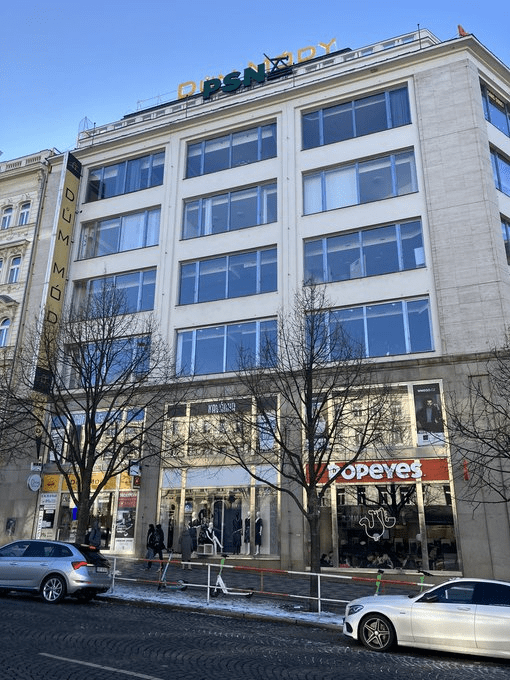
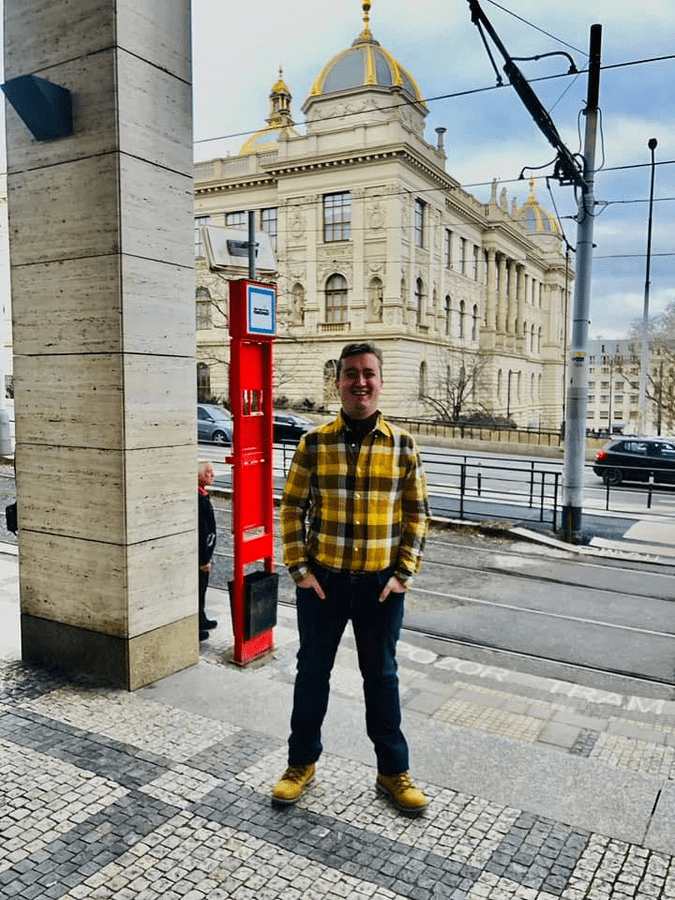
It got a revamp from 1831 to 1836, but was demolished in 1875/6 (as was the Rye Gate), and was replaced by a small, low-key building more widely known as the National Museum. Here it is with some idiot whose 40th birthday it was on that day standing near it.
You can see the gate at the end of Václavák in this photo.
Whereas this drawing of the gate was published in 1874, shortly before there would be no gate at all.
It seems the picture was pretty accurate.
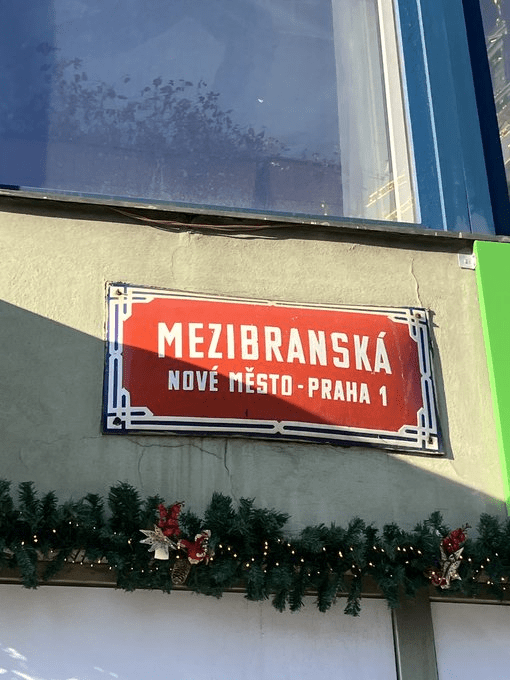
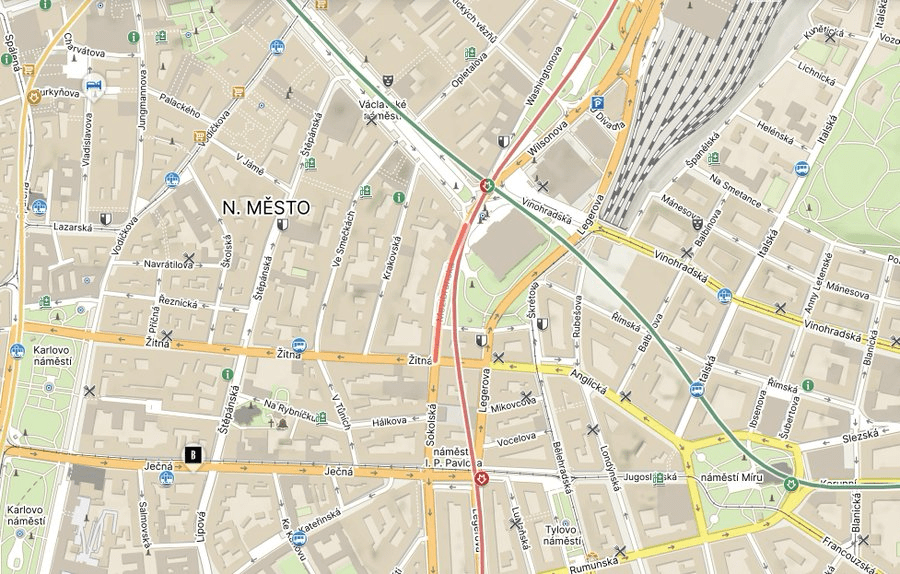
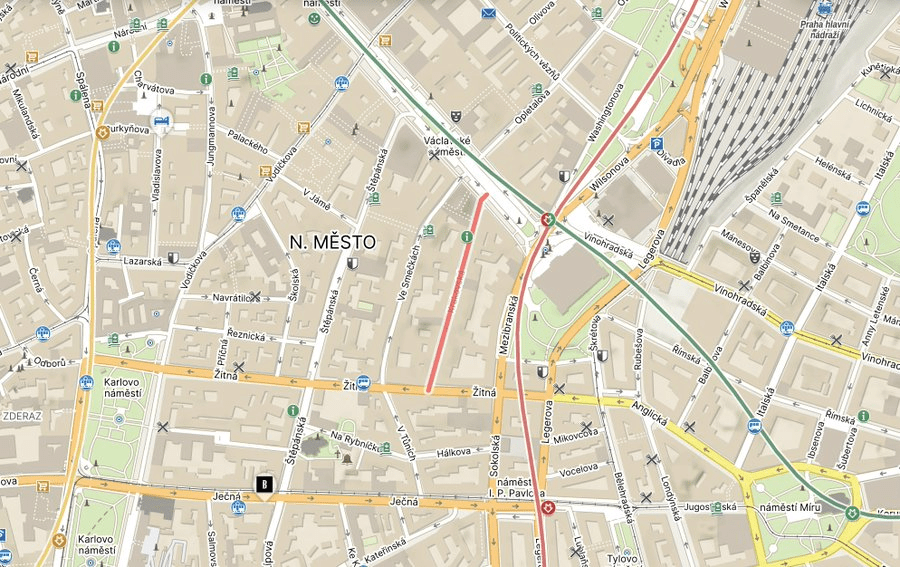
And, as for the name of the street? Mezibranská means ‘between the gates’ (i.e. these two).
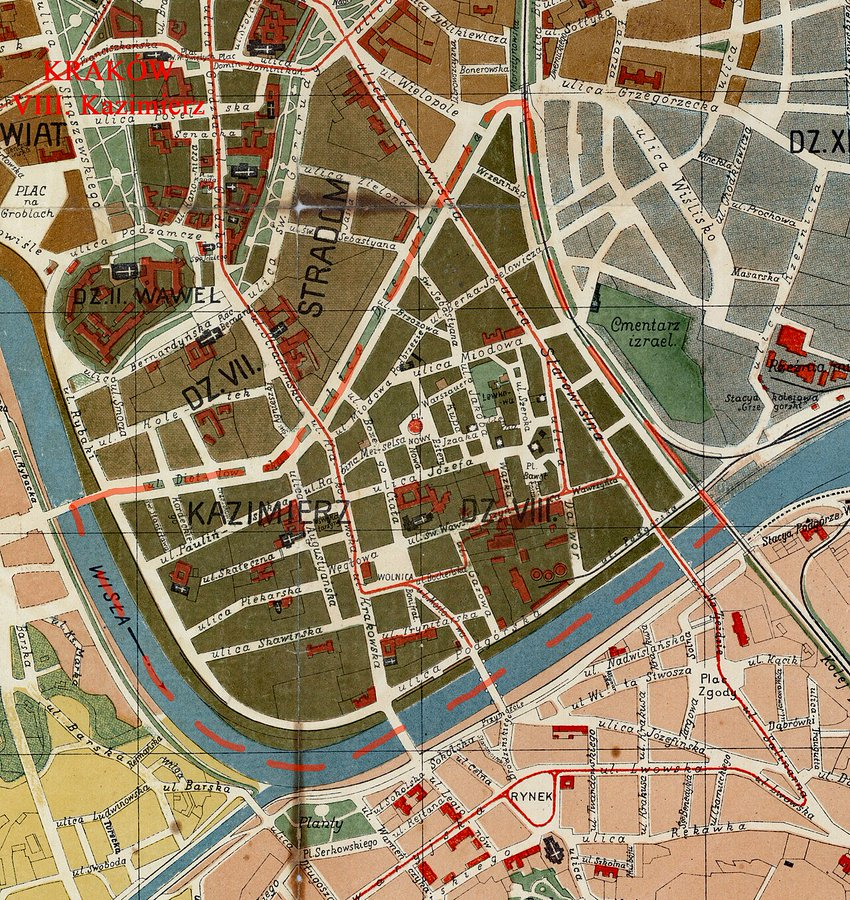
You know where Kraków is. Like me, you may also be wondering when people stopped spelling it ‘Cracow’ in English (full disclosure: I was never a fan of that spelling).
Kraków is named after Krakus, the alleged founder of the city (and its castle, Wawel), who apparently defeated a dragon living at the foot of Wawel Hill by feeding it fake sheep filled with stones.
Back when the Prague’s New Town, where this street is located, was founded in 1348, Wawel was where Polish kings were crowned, and the king of Poland was Casimir III the Great / Kazimierz III Wielki, founder of what is now known as the Jagiellonian University – Poland’s oldest.
He also had a new district of Kraków named after him – Kazimierz. This was the centre of Jewish life in Kraków, and, if you’ve been to the city as a tourist, it’s likely that you spent a good portion of your time there.
Anyway, when Charles IV founded Prague’s New Town, he arranged for merchants to move over from Kraków, and they settled round here, hence the street name.
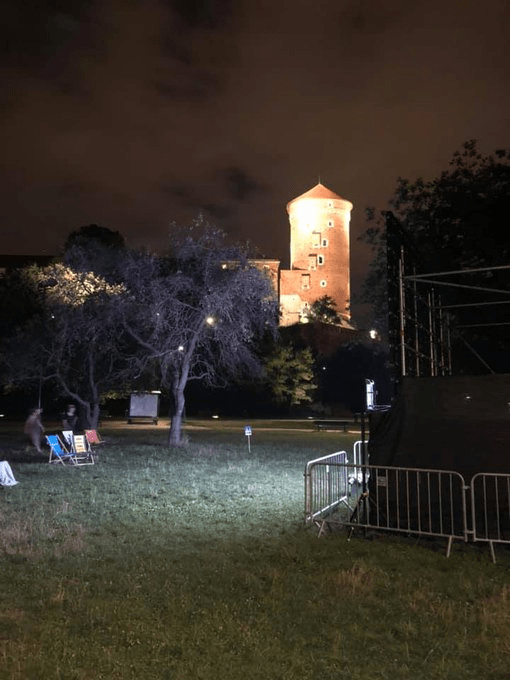
Kraków is somewhere I only ever seem to go when I have a lot of work to do, so my pics over the years are limited, but here are some, including a mildly amusing instruction on how to close the door in your hotel room from 2014.
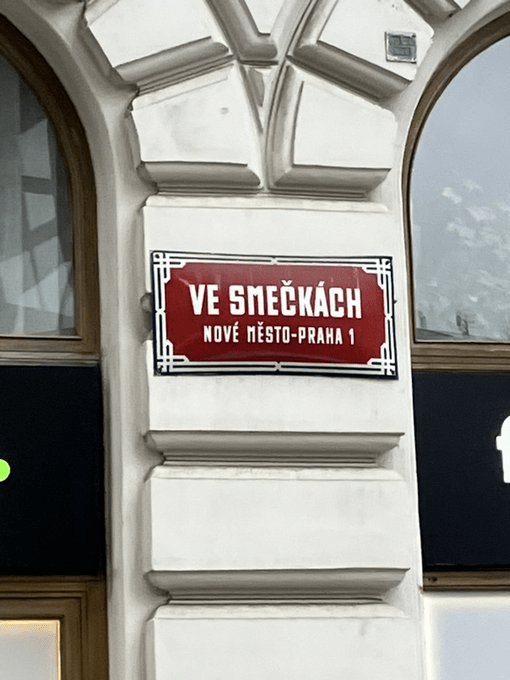
A smečka is a pack (e.g. of dogs or wolves), or a pride (of lions). It originally meant ‘loop’ or ‘dog-collar’, before being attributed to a whole group of animals rather than simply to one animal’s neck.
This could be the reason for the street’s name, but apparently there’s another theory.
The street was first mentioned as ‘Smekhacz’ in 1399, possibly a derivation of ‘smek hače’ (he took off his trousers).
This doesn’t seem inappropriate given the number of, erm… ‘clubs’ on this street, and suggests things haven’t changed that much over the centuries.
From 1880 to 1881, number 13 was lived in by a certain Nikola Tesla. He’d come to Prague to study, but was disadvantaged by not knowing either Ancient Greek or Czech. He went to some lectures, but moved to Budapest in 1881 to take up work at the Telephone Exchange.
Next door, at number 15, is the K. E. Macan Library and Printing House for the Blind, currently with over 5,000 registered users.
At number 26, the Činoherní klub was founded in 1965.
On 19 November 1989, the Civic Forum was founded here.
There’s some incredible footage of this even here, and the home-camera nature of it makes it all the more fascinating:
Until 1948, the building had been the headquarters of the Czech Women’s Club. Fittingly, it was built by Milada Petříková-Pavlíková, the first woman in Czechoslovakia to graduate as an architect (in 1921).
In 1959, the first performance by the Divadlo Semafor – specifically the opening performance of Člověk z půdy (Man from the Attic) – took place here:
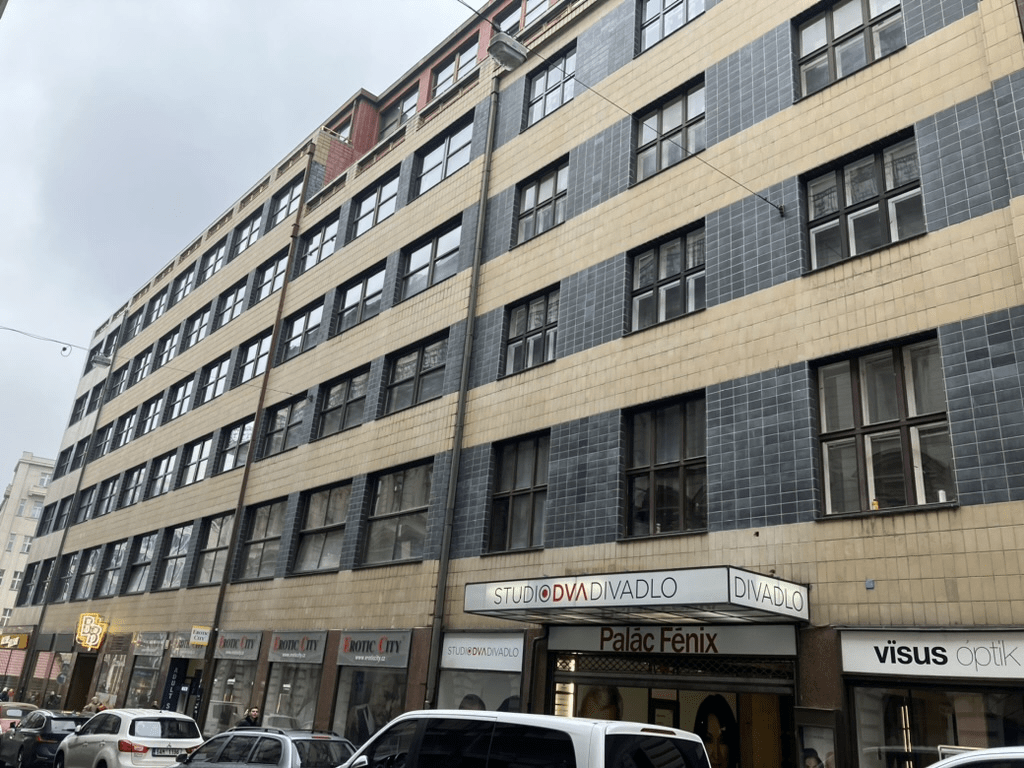
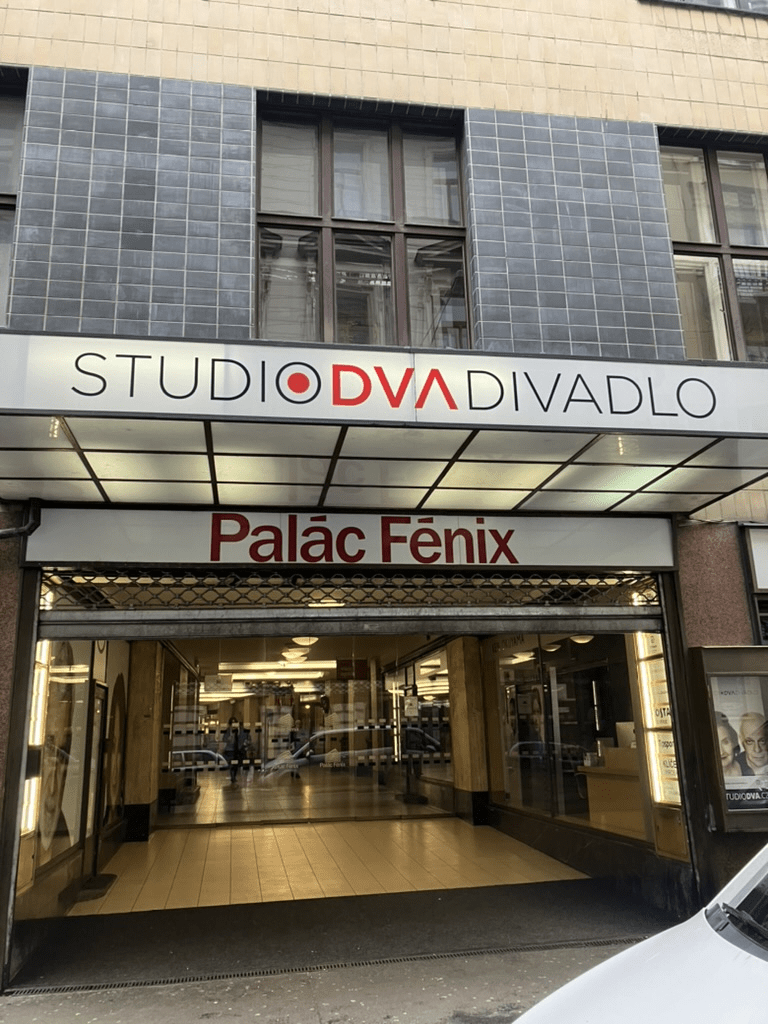
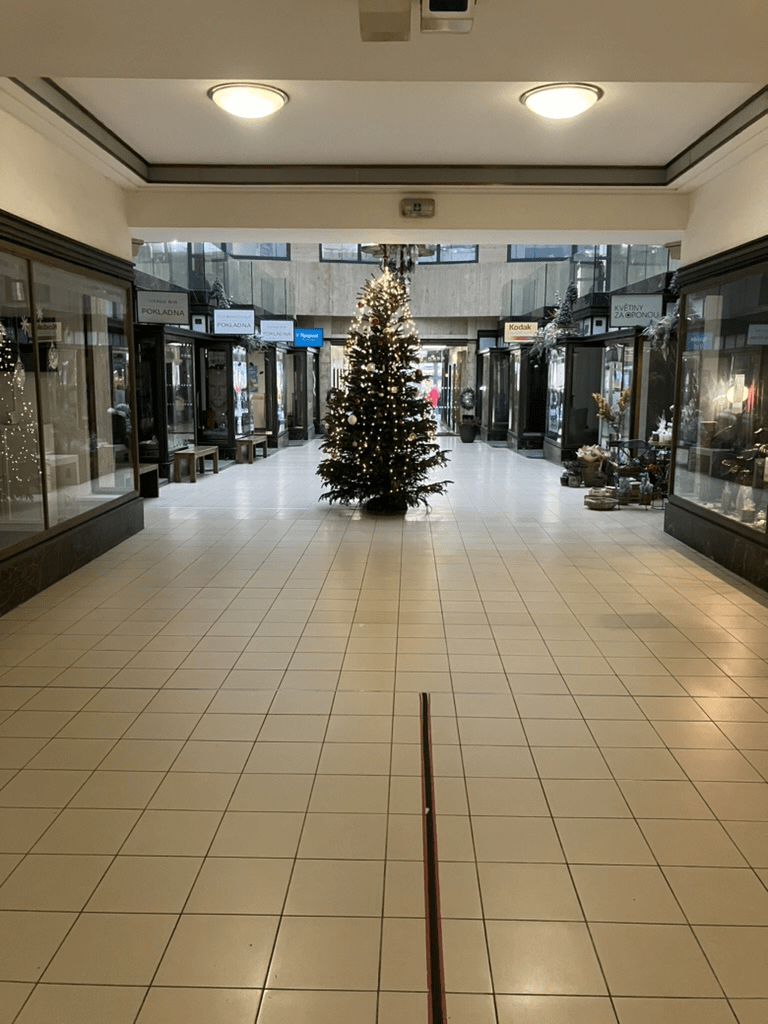
Finally, near the corner with Václavák is one of the entrances to Palác Fénix, opened in 1930. It includes the Studio Eva Theatre, whose simple but effective posters are a feature of pretty much every tram journey I take in Prague.
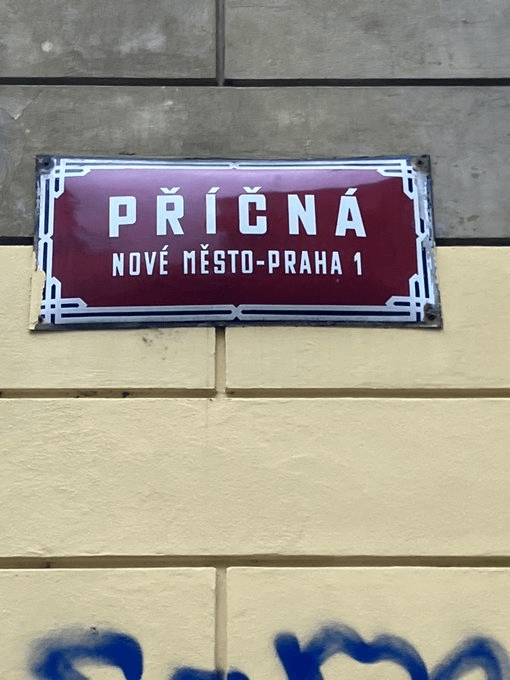
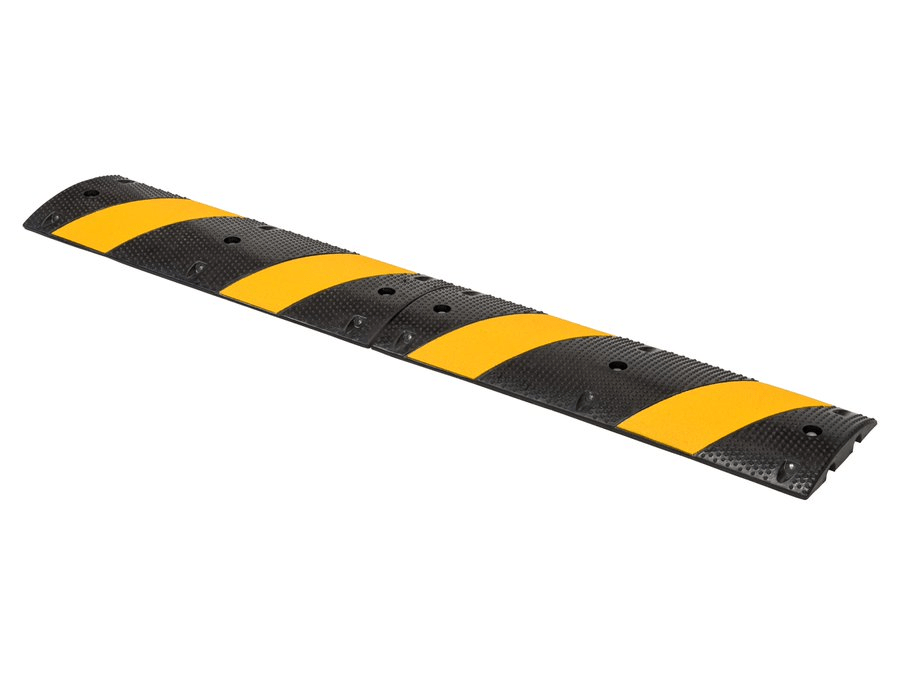
Příčný is a great word if your thing is vocabulary you’re not likely to have to use much unless it comes up in your job: a příčná flétna is a cross flute, a příčný práh is a sleeping policeman (pictured), and a příčný sval břišní is a transverse abdominal muscle.
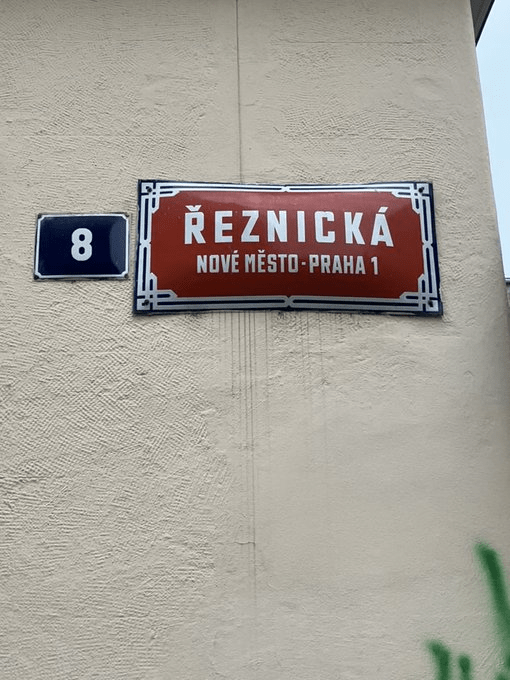
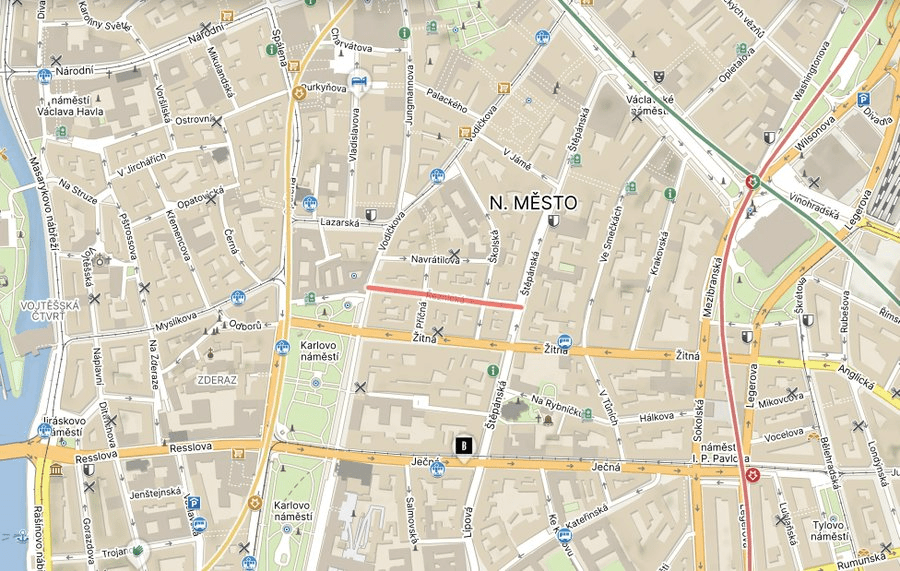
The name has been in place since the 1400s; before then, the street was called Proti věži (Against the Tower) or Věžní (Tower). Take a look at the New Town Hall from Řeznická and you’ll see why.
This is a short one today, but, let’s be fair, it was due.