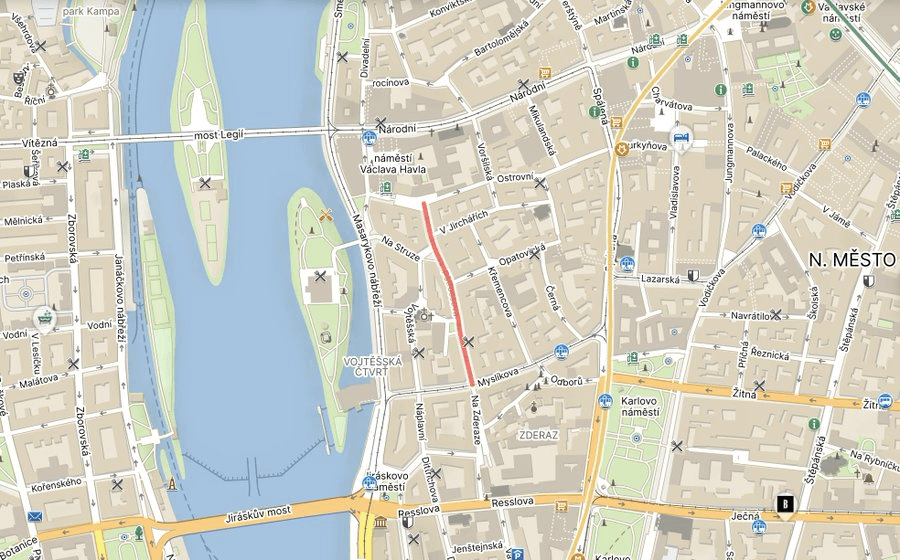
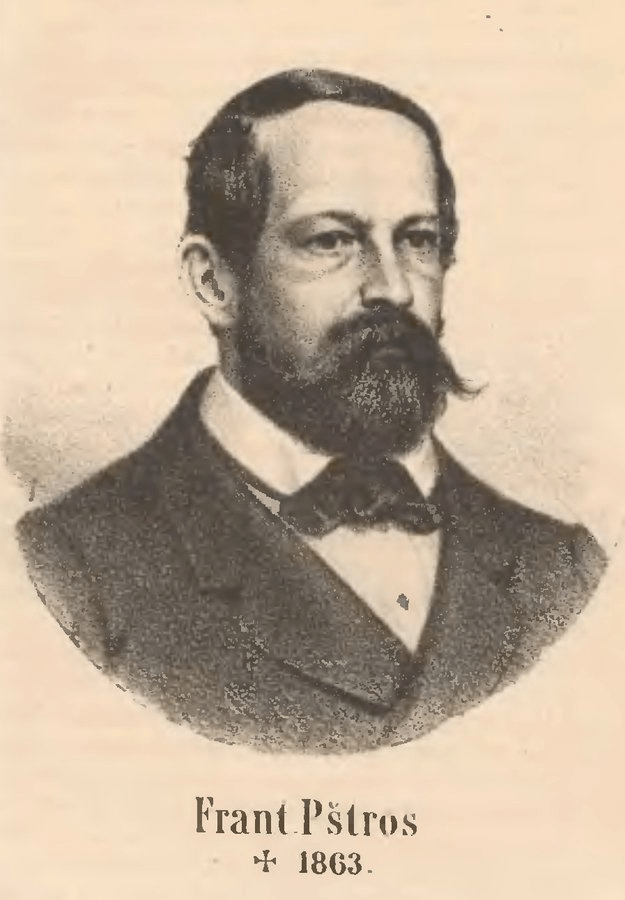
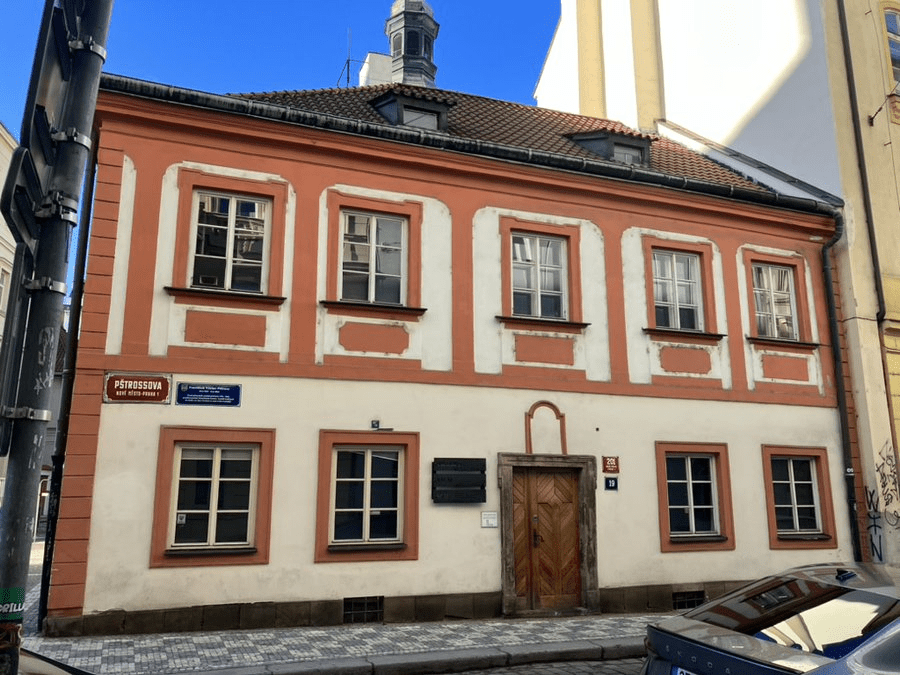
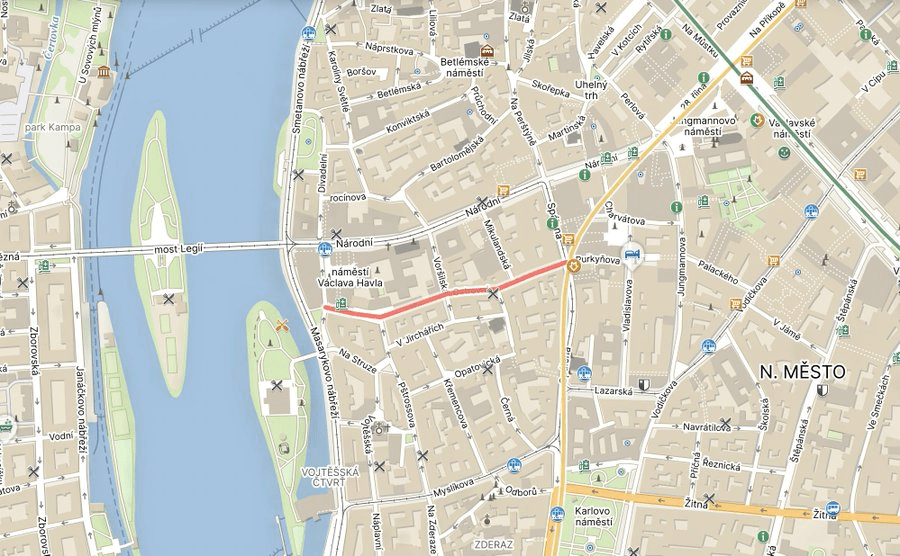
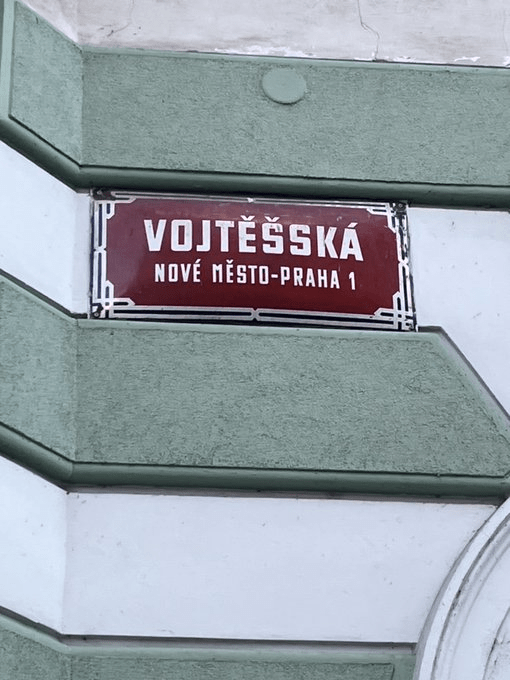
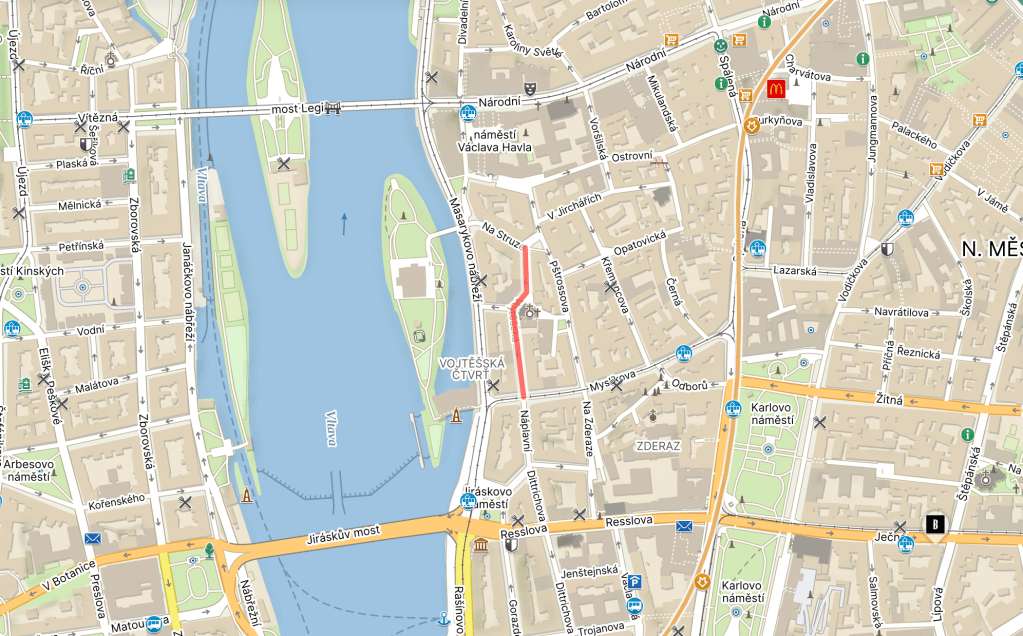
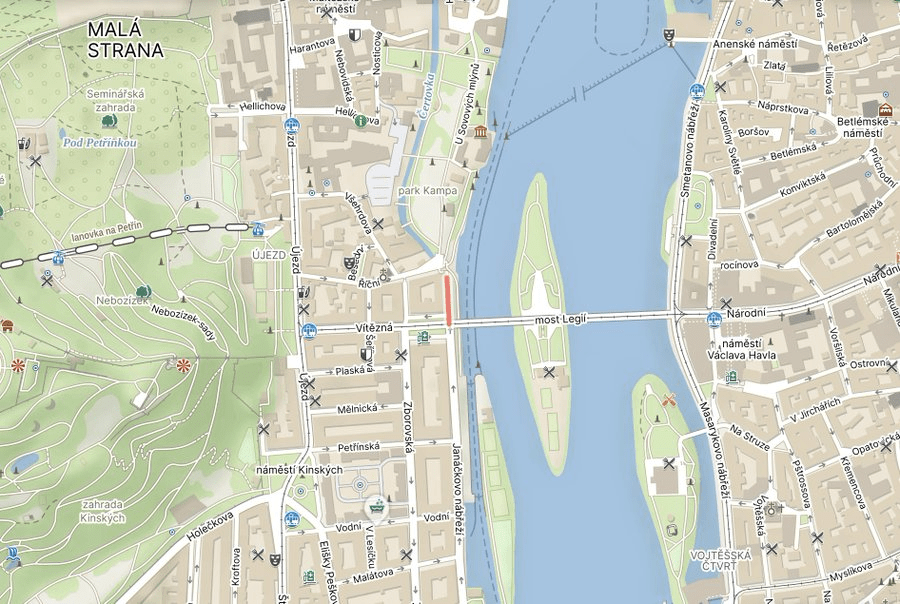
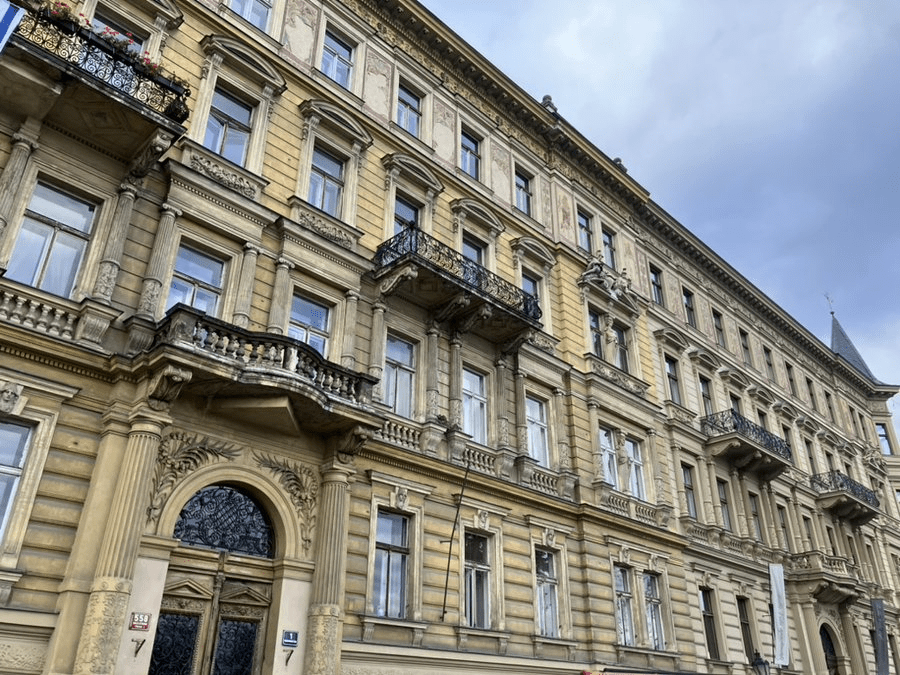
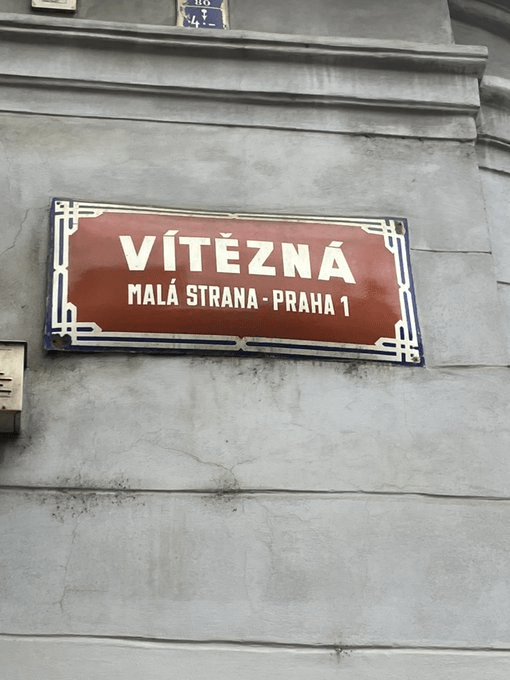
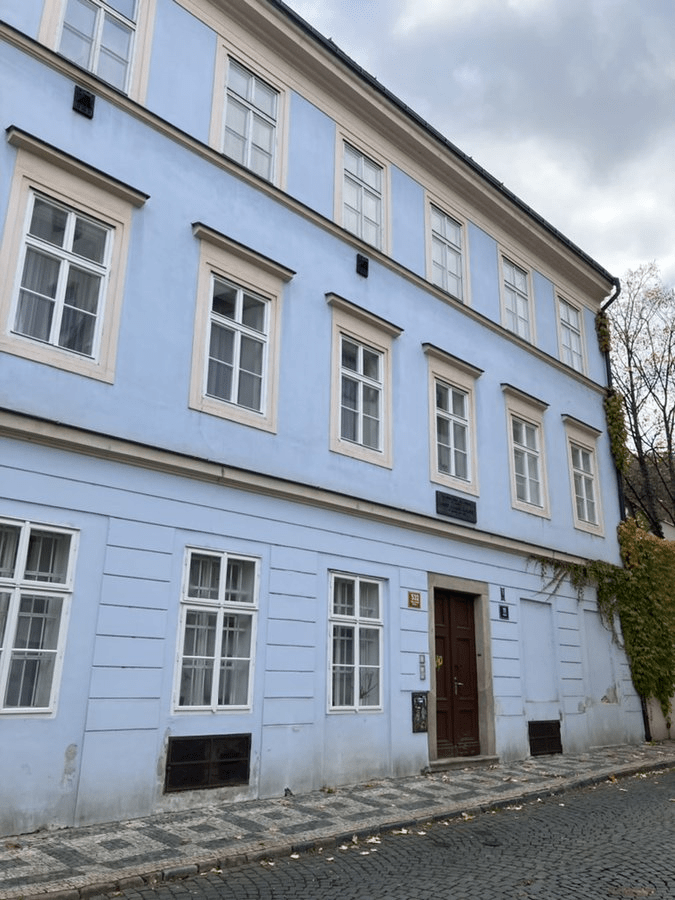
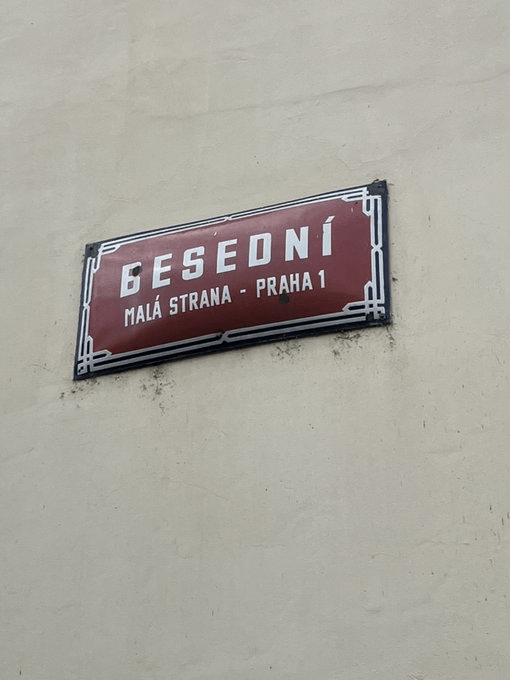
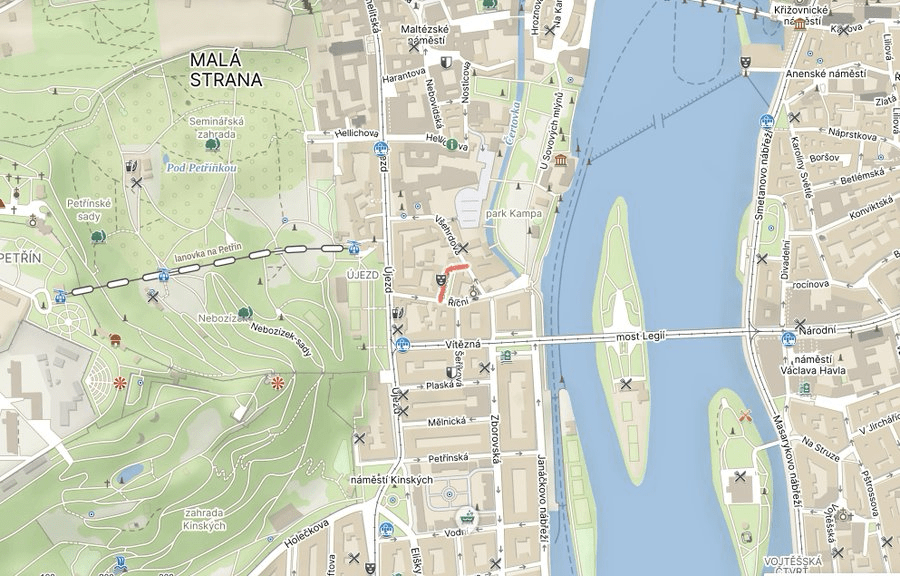
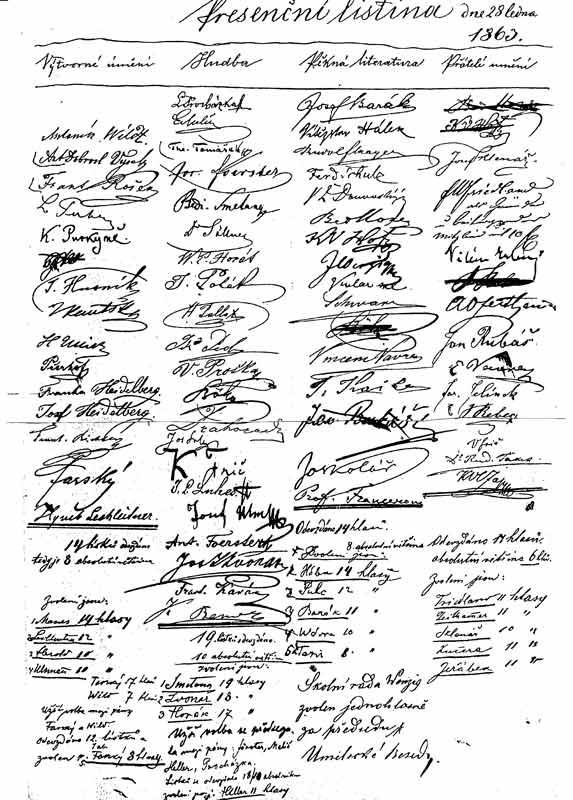
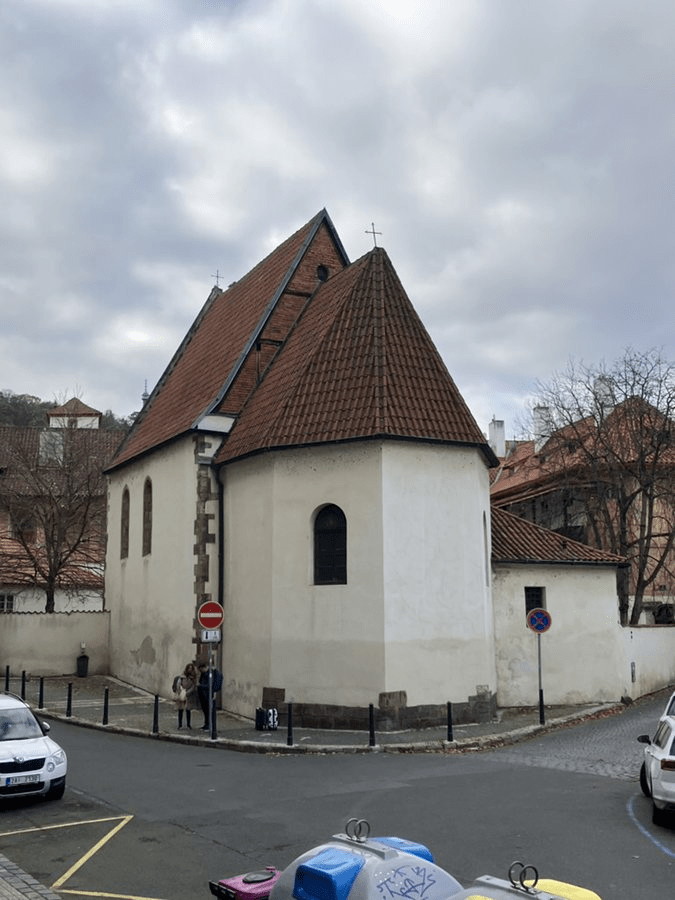
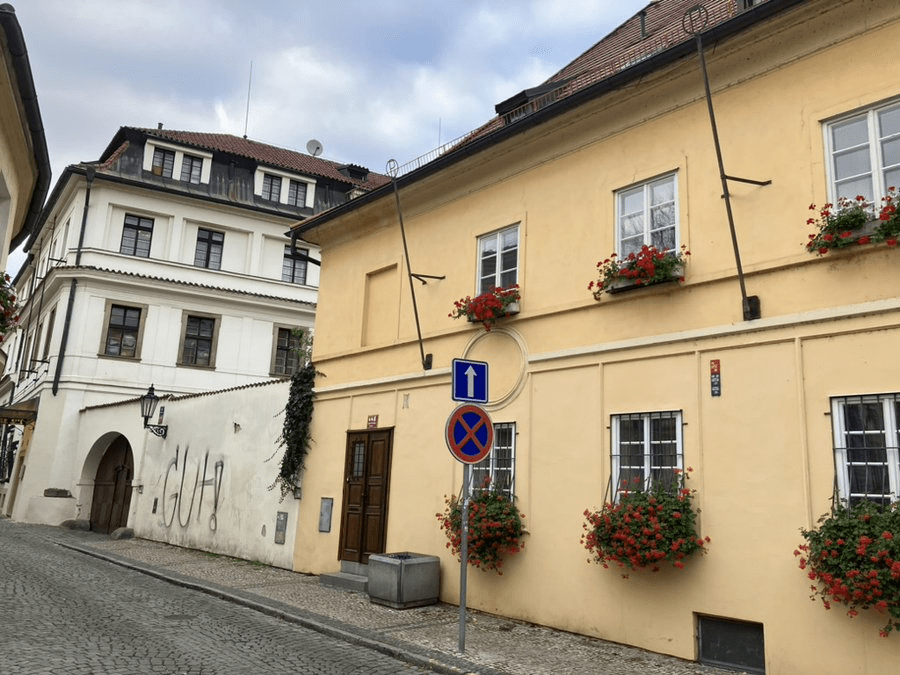
František Václav Pštross was born on this street in 1823; his father, also called František, was a local politician and owned a tannery, which František Junior joined in 1842.
Not content with only following in some of his father’s footsteps, he was elected to Prague City Council in 1848, but had to turn down the position as he was under 30.
He became a member of Prague’s Chamber of Commerce and Industry in 1850 (eventually spending a year as its Chairman from 1858), and also opened a leather processing factory in 1852.
In 1861, following municipal elections which saw Czech liberals take precedence over the German population, Pštross was elected as Mayor of Prague.
During his tenure, Czech became the main language of the administration, as well as the principal language in all of the city’s schools.
However, two years into his term, Pštross died of meningitis. He was 40.
He’s buried at Olšany Cemetery.
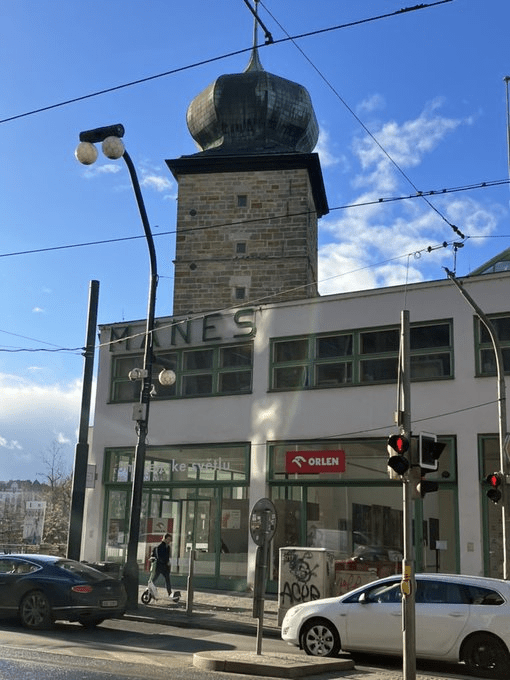
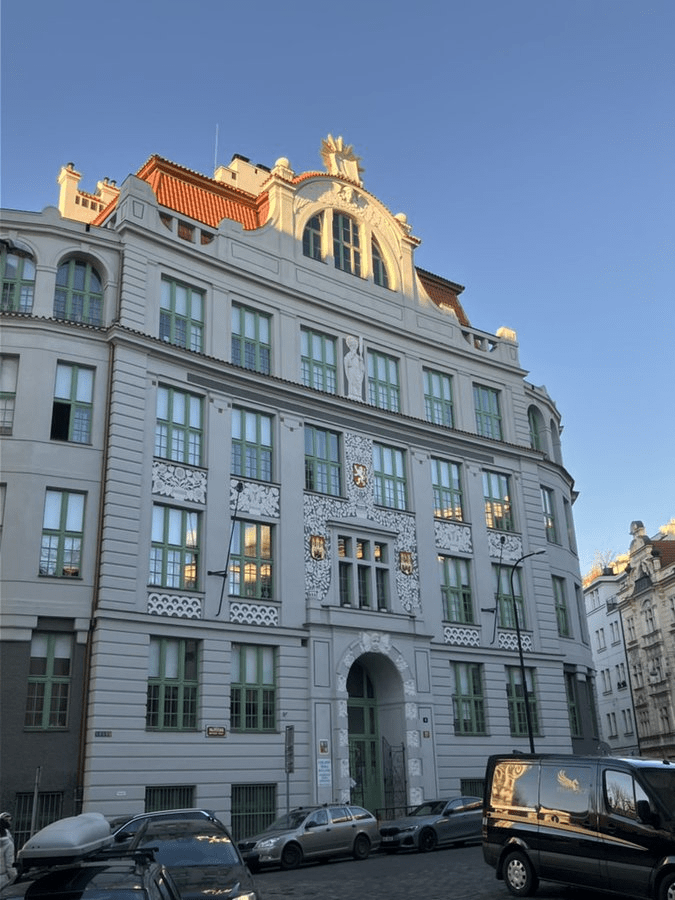
Pštrossova includes the building which, from 1890 to 1953, housed Minerva – the first high school for girls not only in Prague, but in Central Europe. It was founded by Eliška Krásnohorská, who is the subject of an upcoming post.
I’m quite glad this one is brief, because I’m currently on the larger of the two britských ostrovů, where we celebrate Christmas a day later than the Czechs.
If you fancy a quick quiz later, consider asking your relatives how you say Kanárské ostrovy, Panenské ostrovy and Velikonoční ostrov in English. Bis morgen!
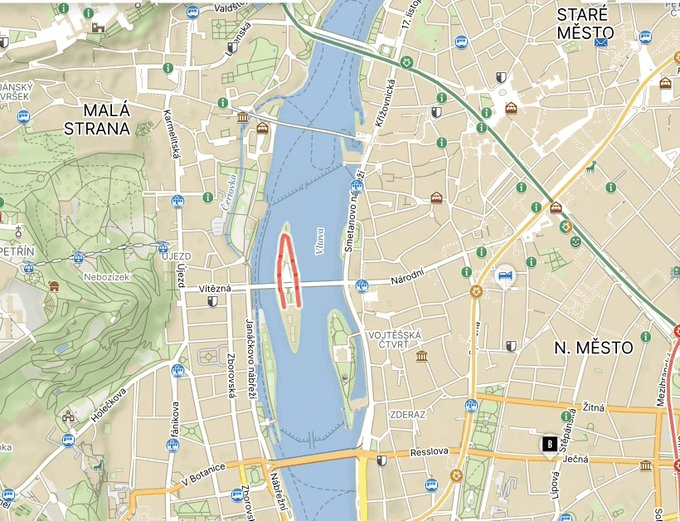
The island was gradually formed by deposits of sand during the 16th century. It was initially settled by dyers, and therefore got the name of ‘Barvířský’ (a ‘dyer’ being a barvíř, derived from barva, which means colour).
After flooding in 1784, walls were added to the island, and trees were planted; in 1801, one František Antonín Engel opened a cotton-goods factory on the island, and the name ‘Engelův ostrov’ started to be used.
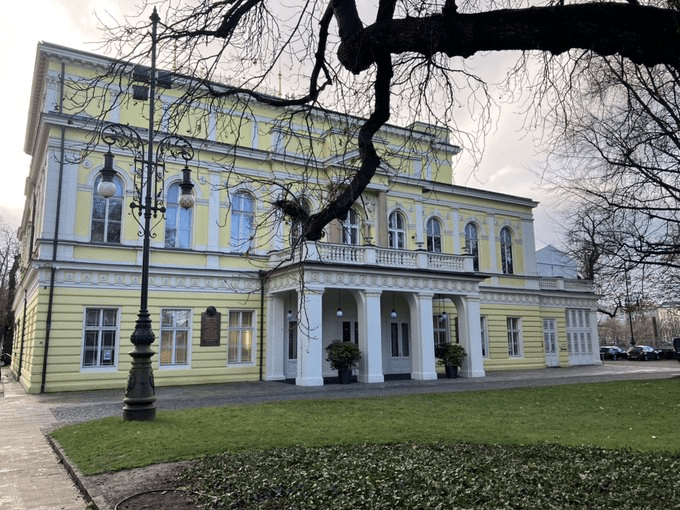
A spa-inn complex was added to the island in 1817, and, in 1836, the then-owner of the island, Václav Antonín Novotný, opened a new restaurant.
He named it – and the island – Žofín, after Princess Sophie of Bavaria (1805-72), mother of the future Franz Joseph I.
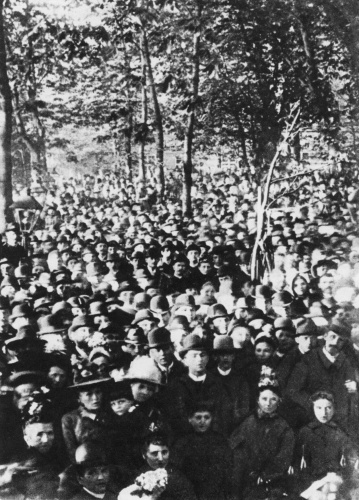
In June 1848, the Slavic Congress met here. The first congress of its kind, it was cut short due to the Prague Uprising ten days later, but gave the island its current name (plenty of us still say Žofín, though).
The Municipality of Prague purchased the island in 1884, when the palace was rebuilt in the form we know it in today.
It’s still one of Prague’s most important venues, although somebody should probably tell its web team to update their English-language event calendar (the next event is apparently a New Year’s Party on 31 December… 2019).
Also on the island is this 1927 statue by Ladislav Šaloun, Souzvuk (Harmony).
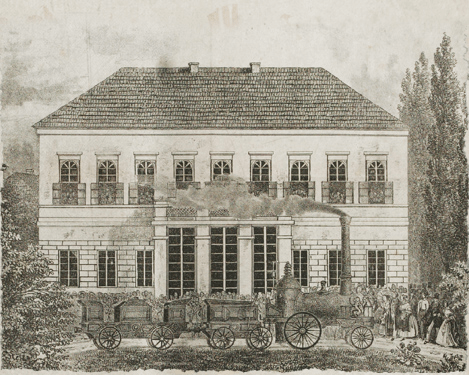
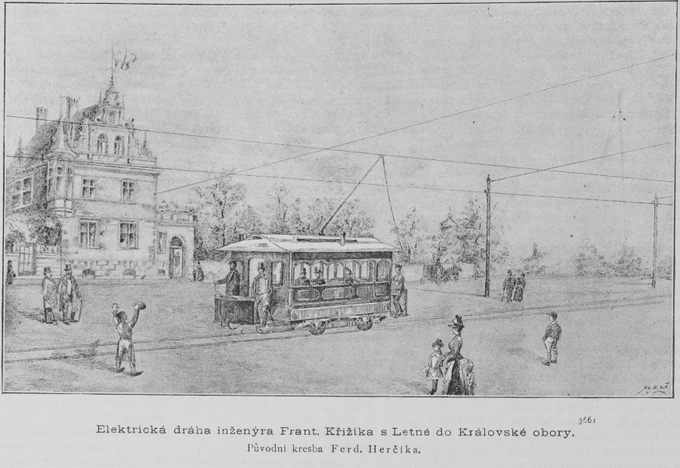
Slovanský ostrov was also home to Bohemia’s first steam locomotive – a 1:4 scale model of its British counterpart which was launched in 1841 and ran for all of 160 metres.
You can see it at the front of this drawing from the time.
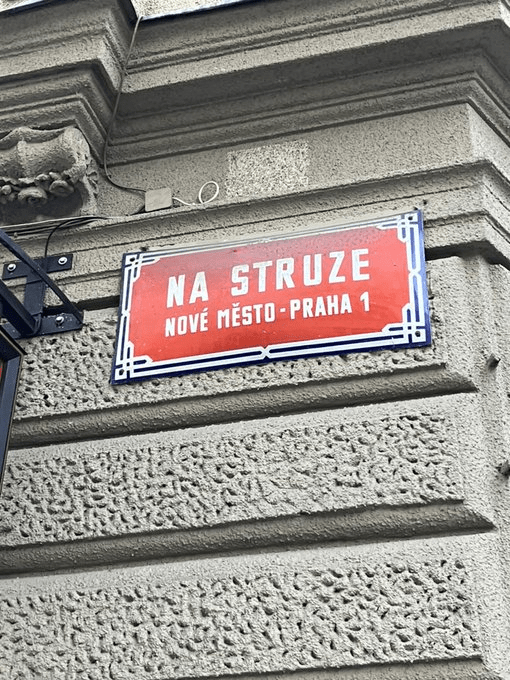
A strouha is a gutter or a drain – and, in the 14th century, the term was also attributed to the bay of the Vltava located here.
It was also in the 14th century that we have the first written mention of a church here – St Peter’s Church Na strouze, allegedly built by Saint Wenceslas himself. It was destroyed by the Hussites in the 1420s, and unlike so many other churches, not replaced or renovated.
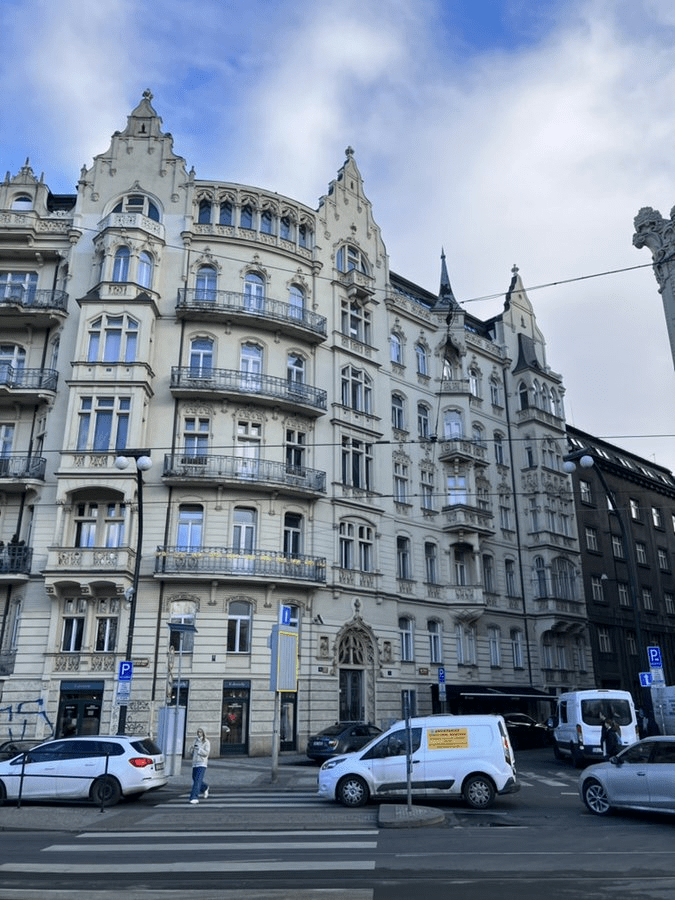
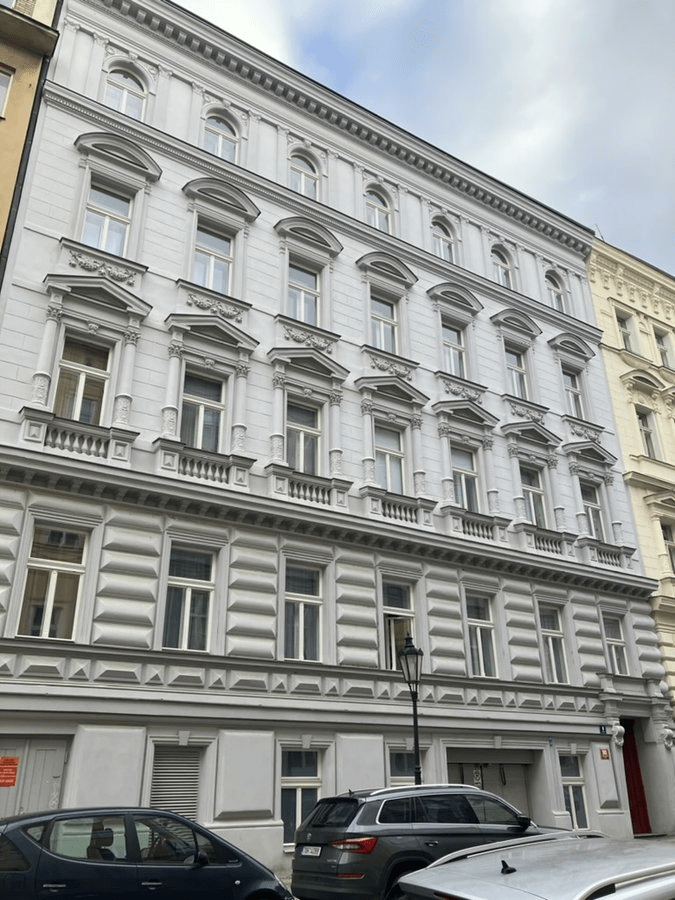
At number 1, Na Struze includes this memorable tenement house built between 1906 and 1907 by Gustav Papež (1863-1945).
While opposite (admittedly with its address on Masarykovo nábřeží) is the Goethe-Institut, which has operated here since 1991. It was the East German Embassy from 1949 to 1990 (having also been the Bulgarian Embassy from 1945 to 1948).
(Inevitably goes down rabbit hole of wondering if there are other cities in the region where the Goethe-Institut took over the East German Embassy’s premises)
Warsaw: no, although it set up shop in Poland earlier than it did in Czechoslovakia (1990 vs 1991), and its first address had previously been the East German Cultural and Information Centre: https://www.goethe.de/ins/pl/pl/sta/war.html?wt_sc=warszawa
Budapest: no, because there was once a time when Hungary was the one that was ahead of the curve, meaning that the local Goethe-Institut was opened before communism ended (1988 vs 1989): https://www.goethe.de/ins/hu/hu/index.html
Bucharest / Sofia: not sure.
Bratislava: not the capital of an independent country until 1993, so wouldn’t have had an East German embassy anyway.
East Berlin: now we’re just being stupid.
I’m now thinking ‘What happened to East German embassies’ would be a great little series if I weren’t already slightly occupied with this one, although, now I think about it, most of them probably just got subsumed into the West German ones.
Anyway, the Goethe dot CZ building was built in 1905, replacing a spa and a building with the excellent name of U tří divých mužů (The three wild men).
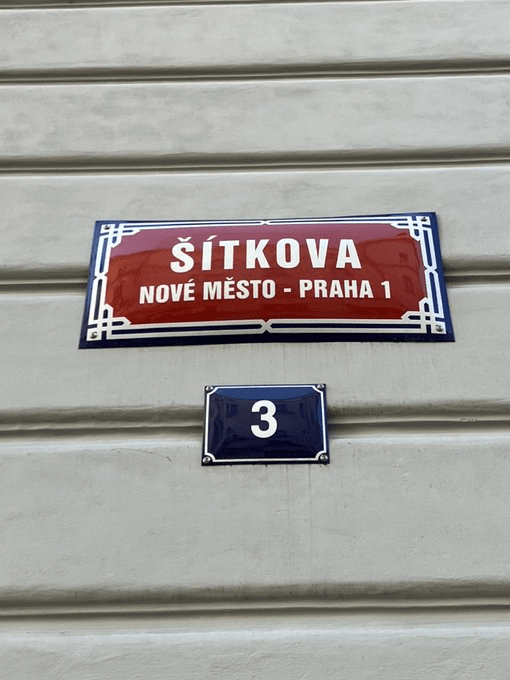
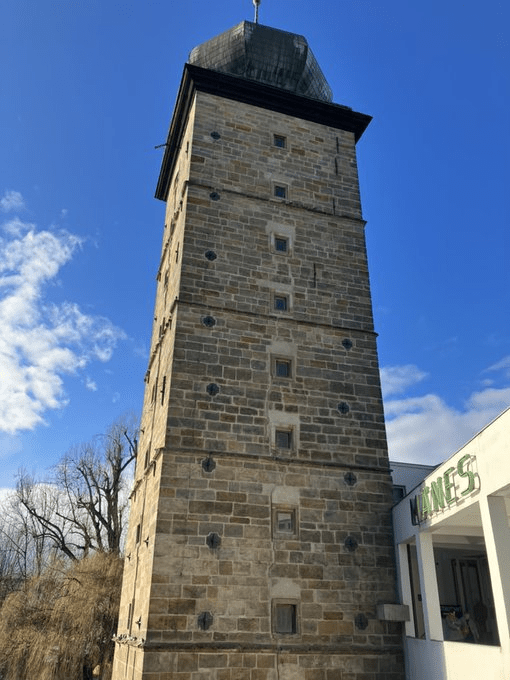
Mills operating here by the Vltava got their name from a former owner, Jan Šítka, who died in 1451.
In 1495, a wooden water tower was built, but would be destroyed by a fire six years later. A replacement would also be burned down in 1588, after which everybody got the message and a stone version was created instead.
Despite damage by Swedish troops in the Thirty Years’ War, the tower would function as the local waterworks until either 1847 or 1913 (two sources that I’ve been looking at mention different years).
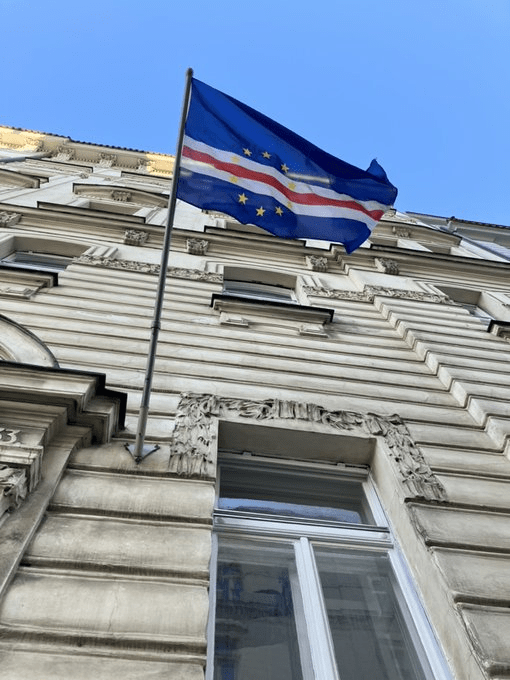
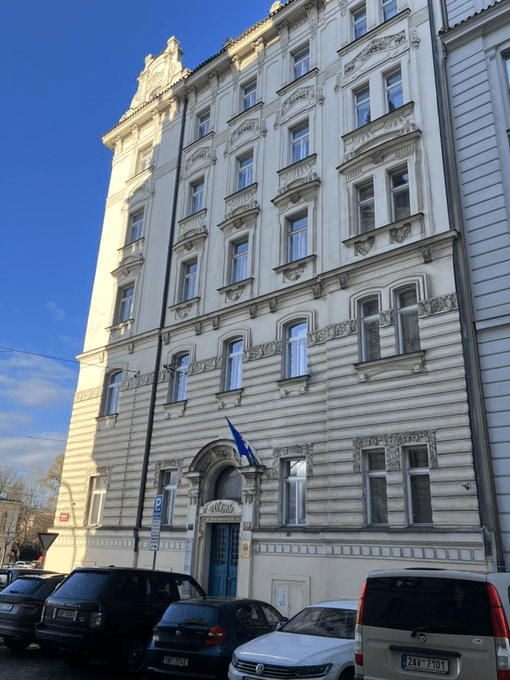
Back on the street itself (which, let’s be honest, isn’t *that* near the tower), those who enjoy looking for embassies and consulates (or that could just be me) will be able to walk along Šítkova and tick Cape Verde off their list.
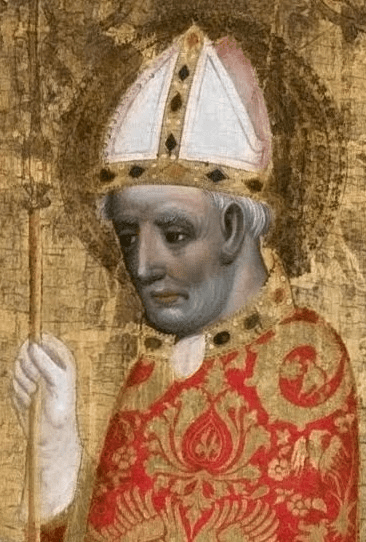
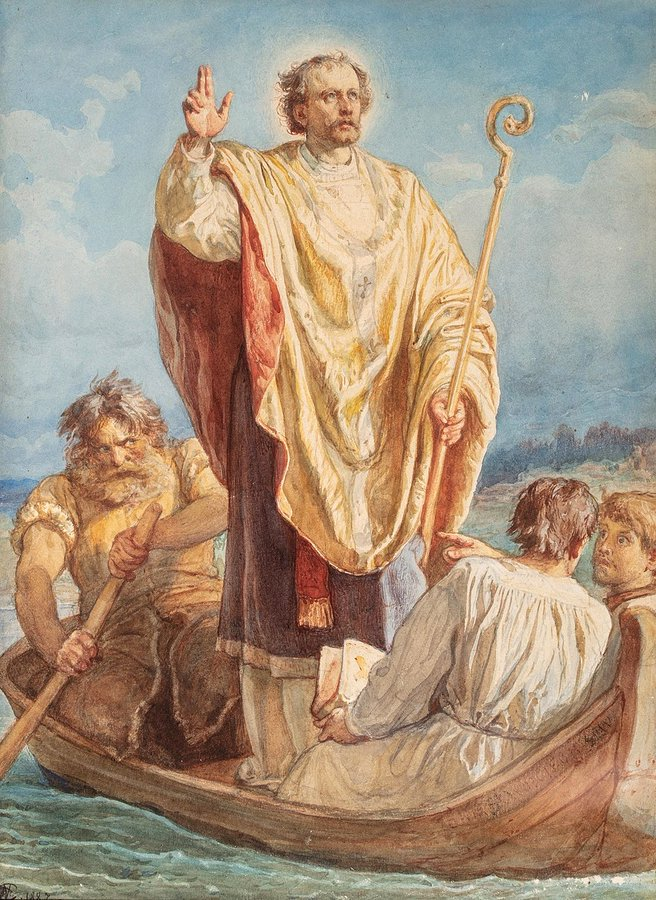
Vojtěch was born around 956 in Libice nad Cidlinou, near Nymburk, into the powerful Slavník dynasty (the other powerful family of the time being the Přemyslids).
Studying in Magdeburg for about ten years, he took the name ‘Adalbert’ upon his confirmation and was ordained as the second Bishop of Prague in 982, at a time when Christianity wasn’t gaining as much of a hold in Bohemia as those in power would have wanted.
Forced into exile when the Slavníks refused to finance a war being waged by Duke Boleslav, he headed to Rome in 988, returning five years later. In the year of his return, he also founded Břevnov Monastery.
The rivalry between the Slavníks and the Přemyslids would result in the storming of Libice in 995; several of Adalbert’s brothers were also killed. Adalbert excommunicated the murderers, but he was no longer safe either; he fled to Hungary, and then to Poland.
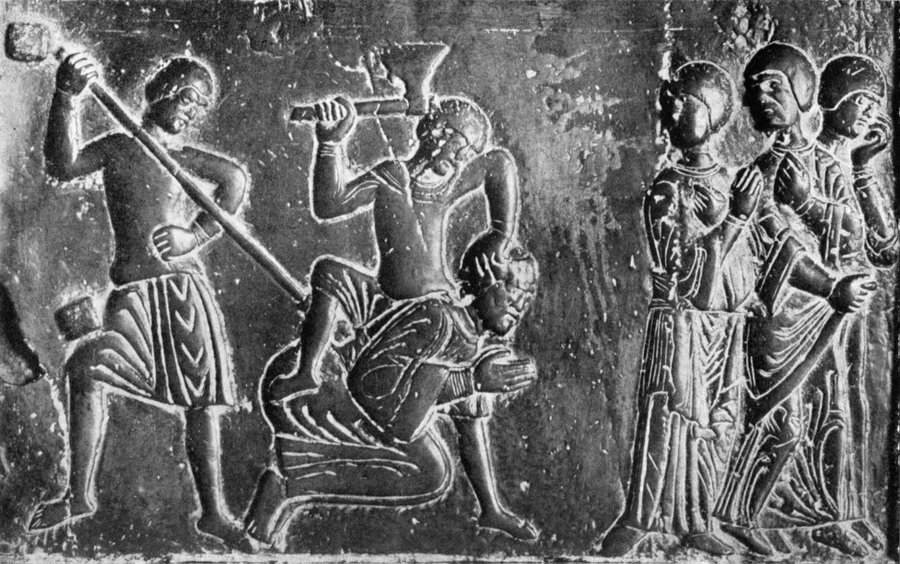
While acting as a missionary in Prussia, Adalbert was murdered by a pagan mob on 23 April 997.
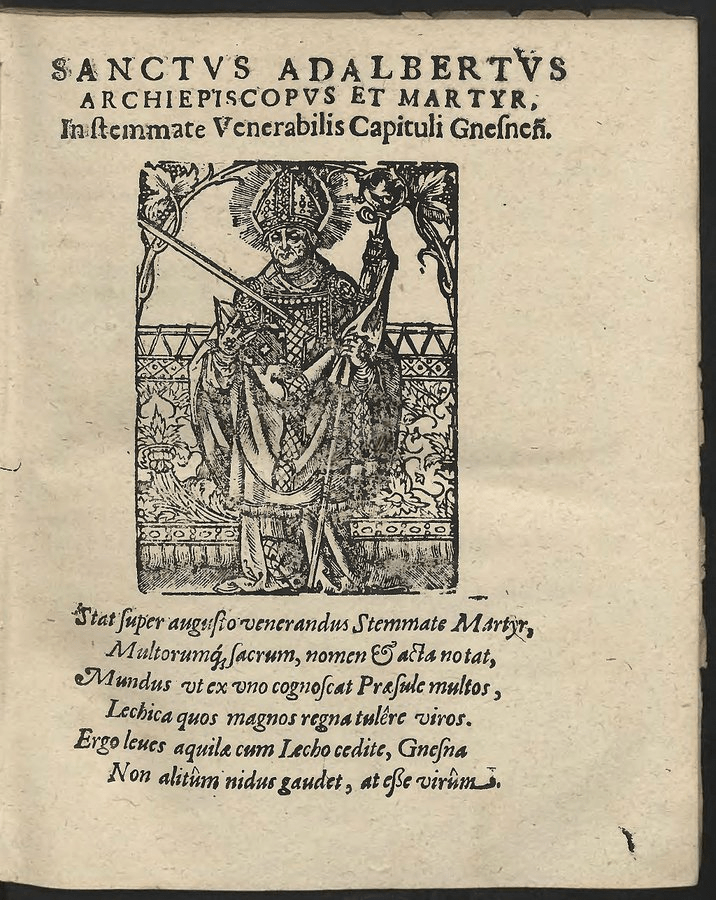
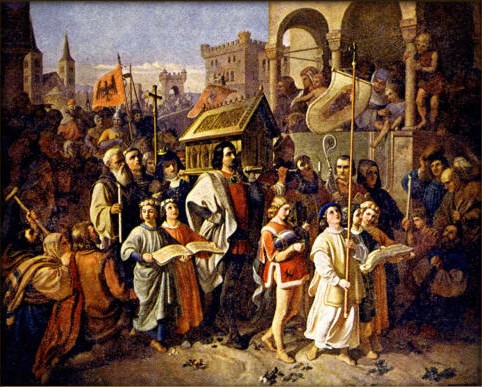
A few years later, he was canonised as Saint Adalbert of Prague, but his remains were kept in Gniezno, near Poznań.
Therefore, there are shrines to Vojtěch both at Prague Cathedral (whose full title has included his name since 1997) and in Gniezno, and also two skulls purported to be his, although the one in Gniezno was stolen in 1923. And he’s a patron saint of both countries.
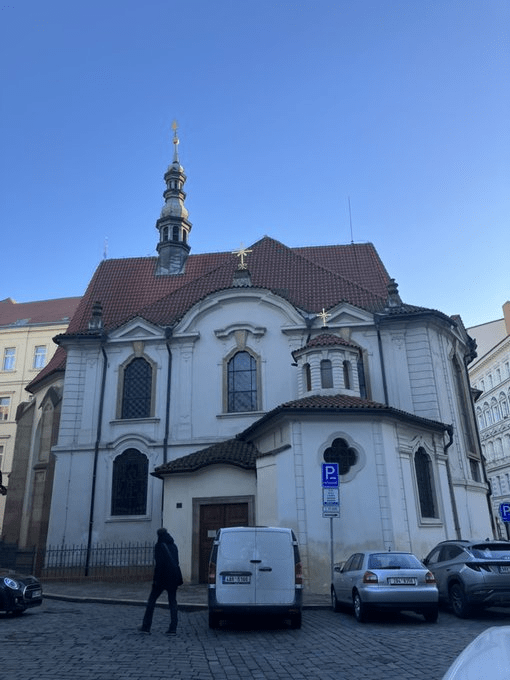
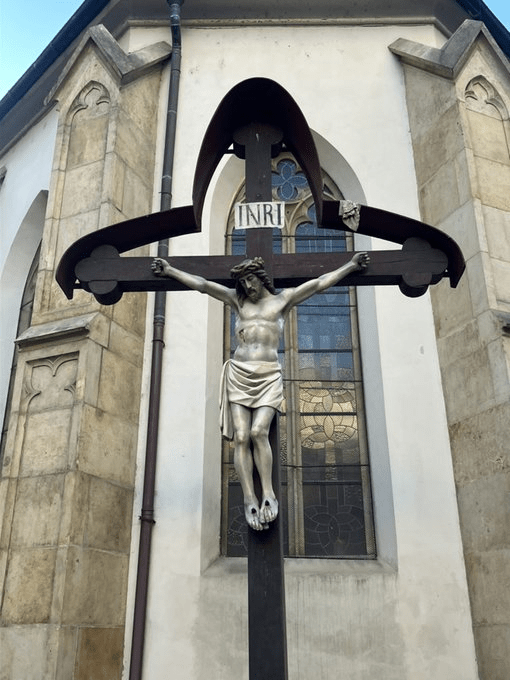
The Church of St. Vojtěch stands in this street, and was first mentioned in writing in 1318.
Its biggest claim to fame is probably the fact that, from 1874 to 1877, an up-and-coming composer worked here (for very little money, apparently) as the church’s organist. His name was Antonín Dvořák.
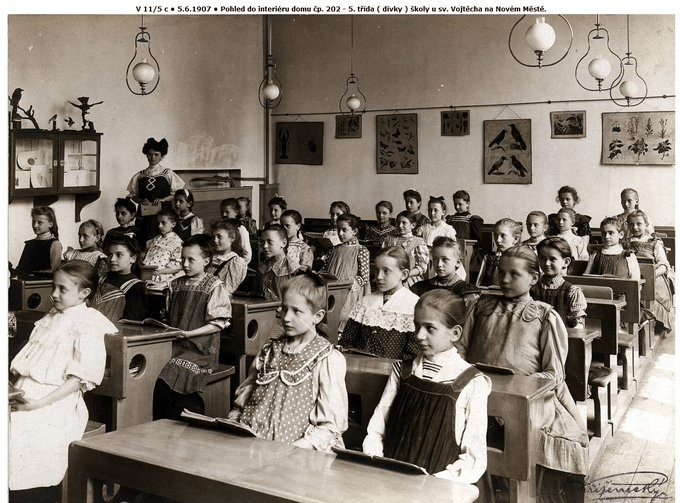
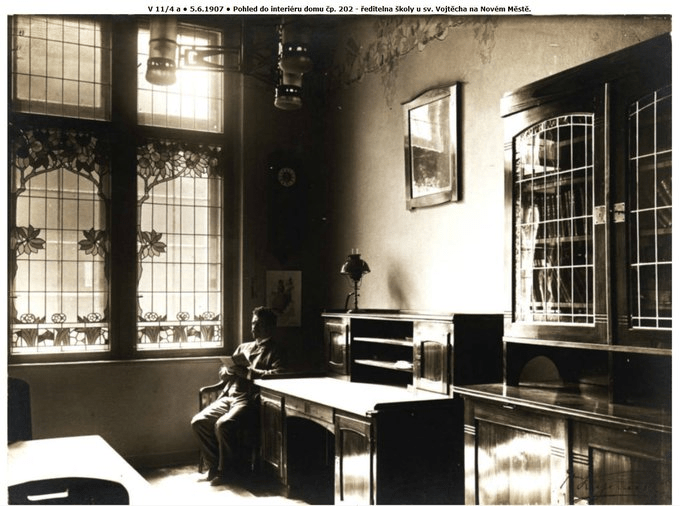
Also on the street is one of the locations of the Brána jazyků (Gate of Languages) Elementary School, a reminder that schools buildings really are quite different here to those in my country of origin, and quite possibly yours too.
Named after a textbook by Comenius, the school was opened in 1906, originally as a girls’ school. Its list of former students is basically a who’s who of the Czech entertainment industry. Great pics from 1907 here.
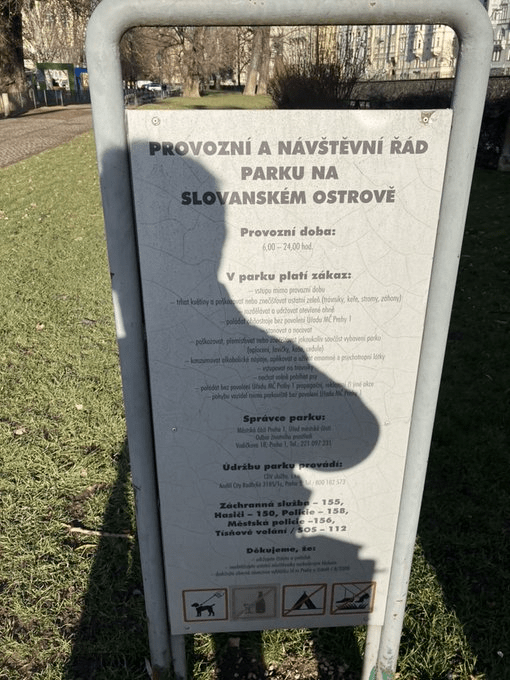
(Not a street; thought it might have a street sign like some parks do; it doesn’t; felt like writing about it anyway)
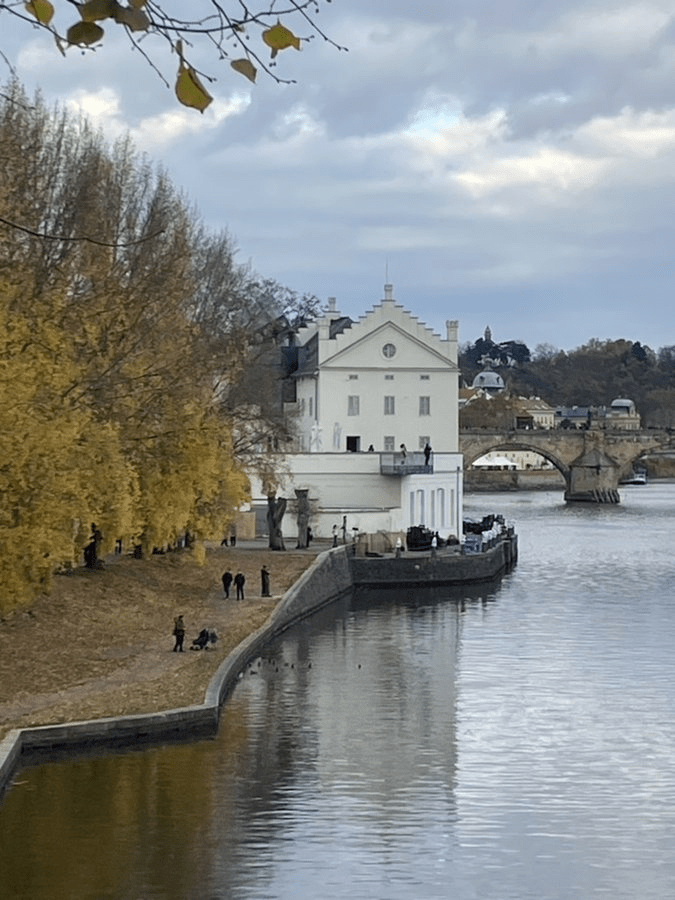
The island was first mentioned in writing in the 1100s, when it served as a park and was called Travník (‘Lawn’). During the reign of Charles IV (1346-78), local shooters were allowed to practise here, hence the current name.
Occupied by Ferdinand I in 1547, he then returned half of it to the City of Prague in 1562. Ferdinand’s half continued to be used by the city’s guild of sharpshooters, who also held an annual festival here until the 1800s.
In 1812, this building was erected for the guild; it’s now a restaurant.
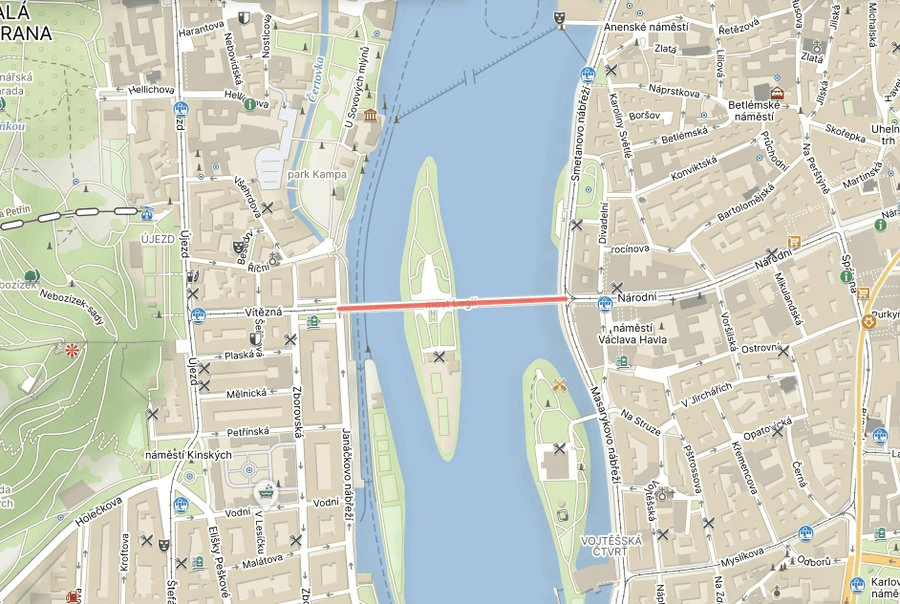
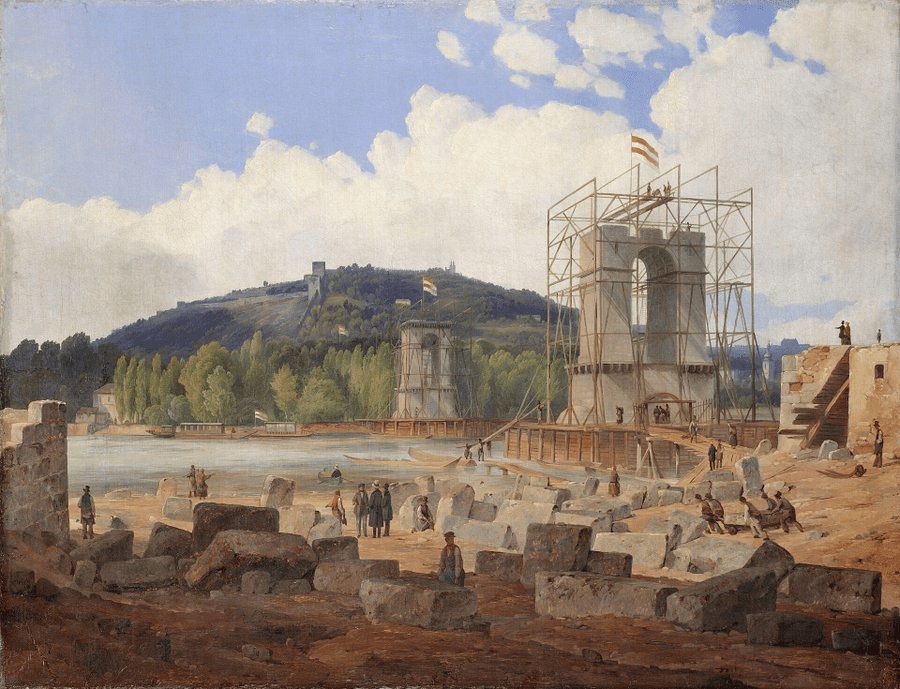
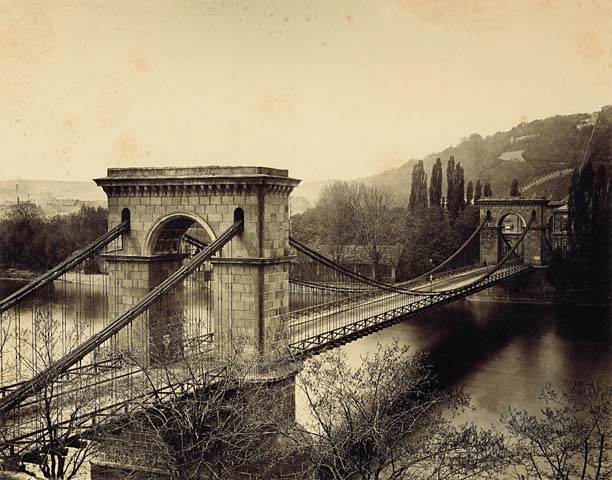
Between 1839 and 1841, a chain bridge was built here – at the time, it was the second bridge across the Vltava (after Charles).
Pretty incredible 1840 painting (by Karel Würbs) of its construction below.
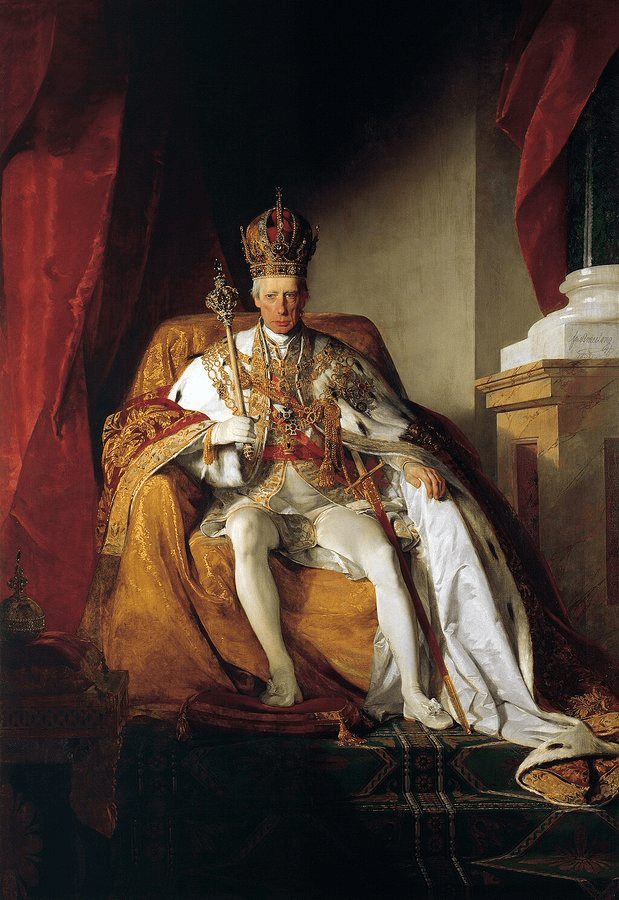
It was called the Emperor Francis I Bridge, after the man you will either refer to as Francis I (the first Emperor of Austria, 1804-35) or as Francis II (the last Holy Roman Emperor, 1792-1806).
The bridge was good at connecting places – Smíchov was suddenly way less remote than it had been – but less good at tolerating large amounts of traffic.
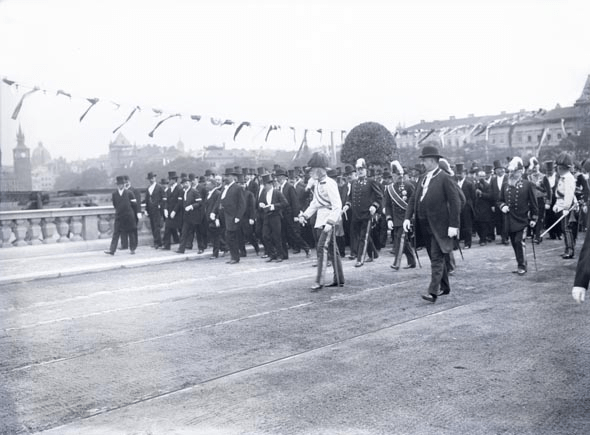
It was closed down in 1898, and work began on a stone replacement which was also named after Francis I slash II. The opening, in 1901, was attended by Franz Joseph I.
13 years later, war would break out, a war that would ultimately result in this bridge never being named after or inaugurated by Habsburgs ever again.
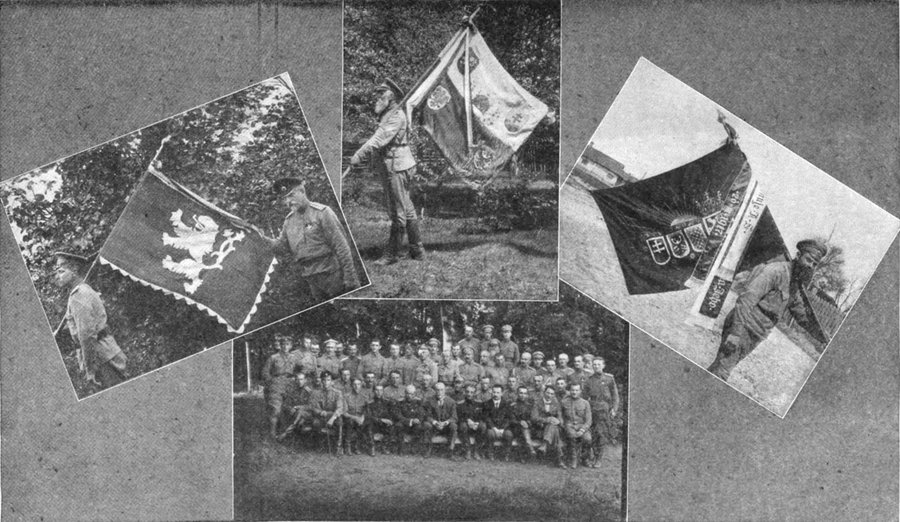
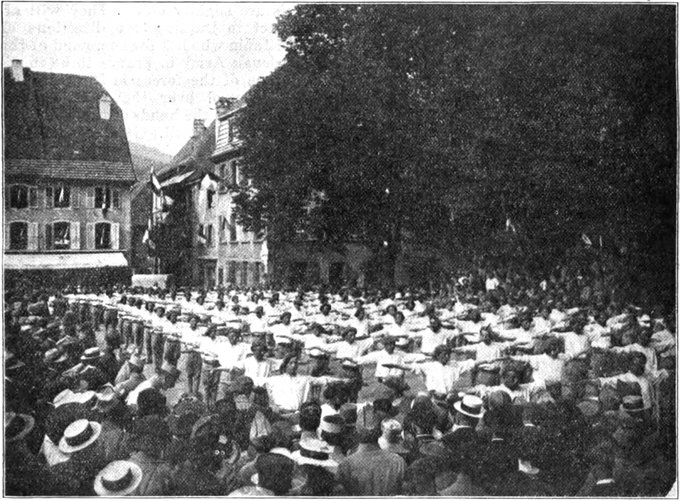
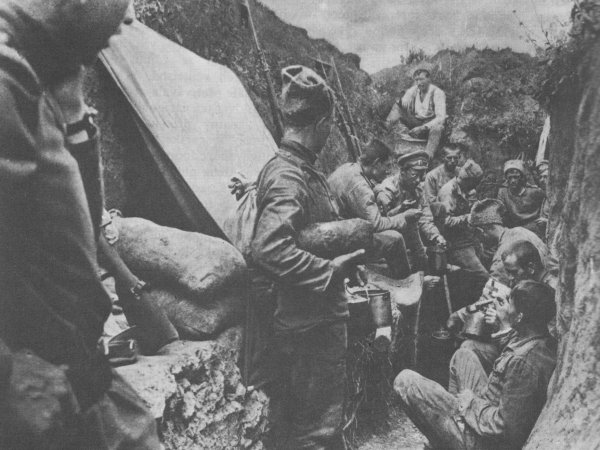
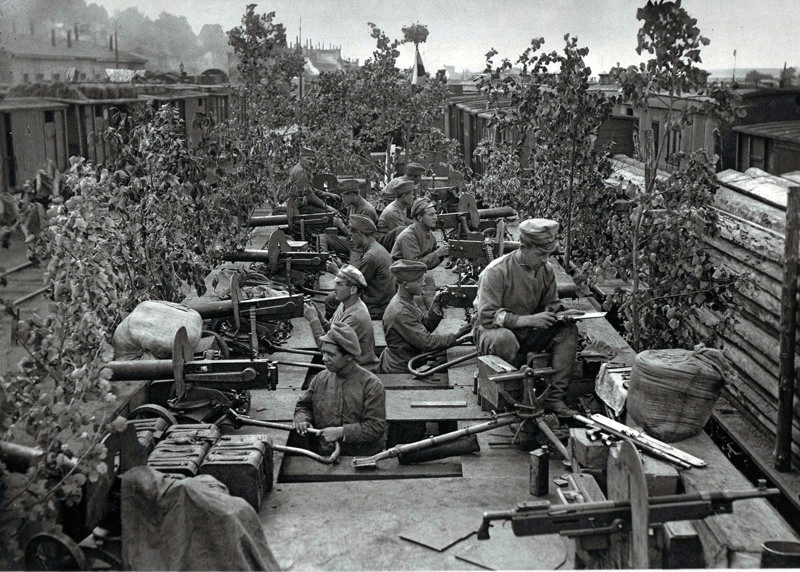
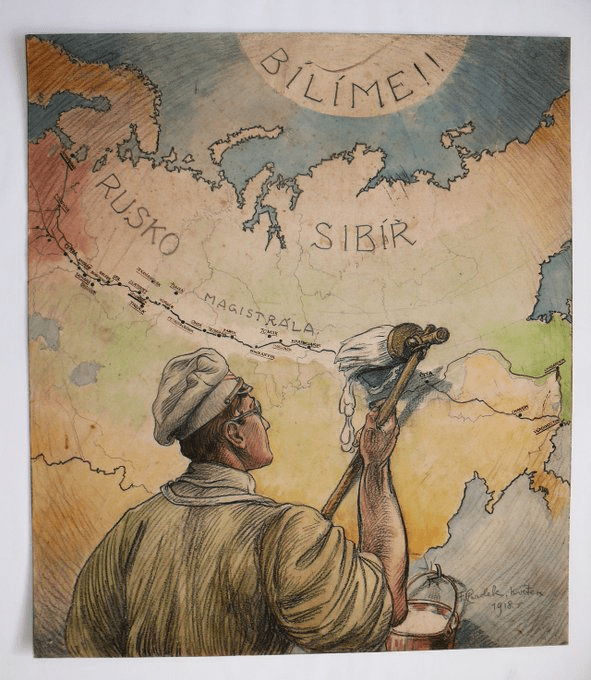
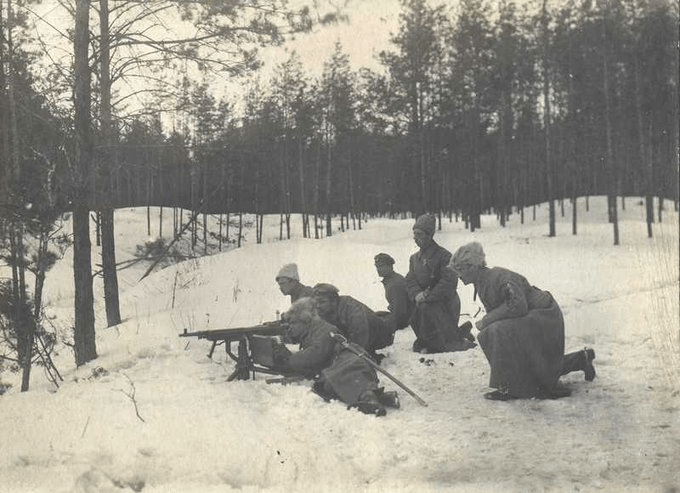
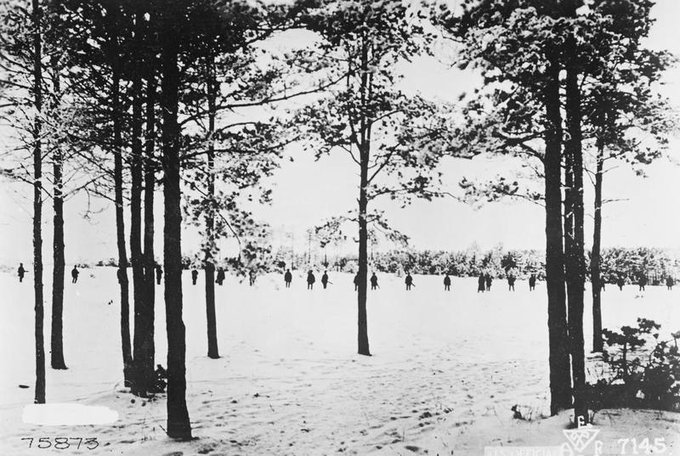
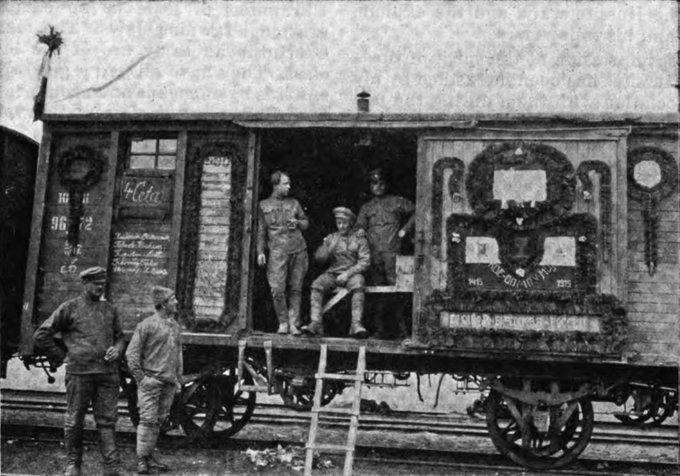
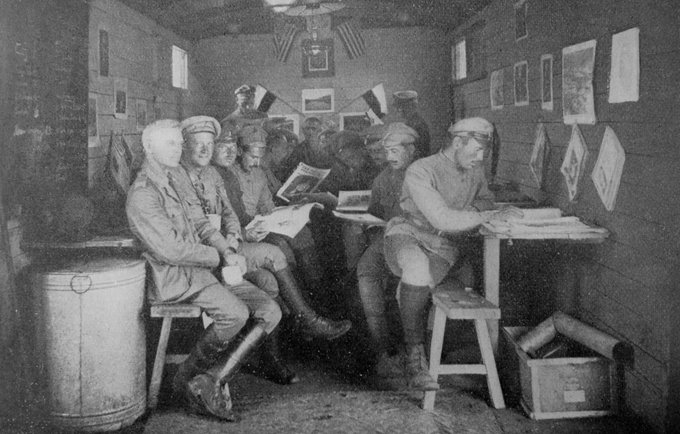
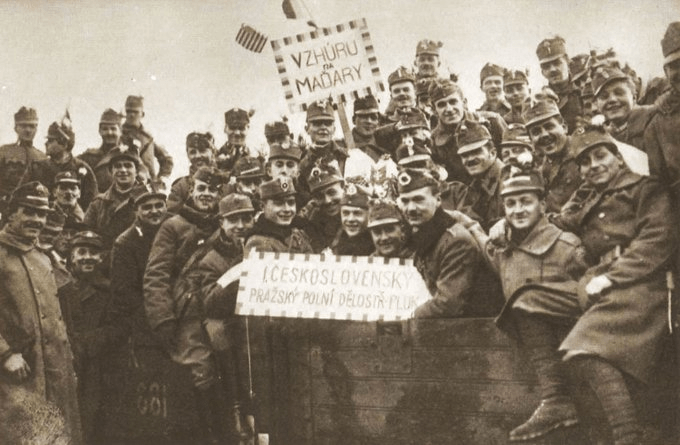
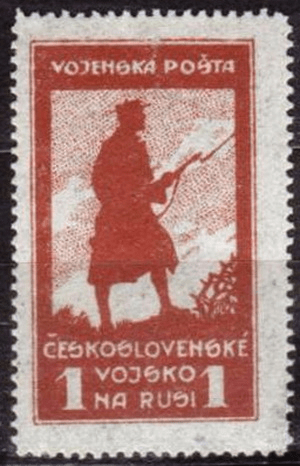
In 1914, a Czechoslovak battalion was formed in Russia (pic 1) and would serve as the Russian Third Army, while France (pic 2) also permitted Czechs and Slovaks to join the Foreign Legion.
The first significant action of the Czechoslovak formations in Russia would be the Battle of Zboriv, a victory of the Russian Provisional Government against Austria-Hungary (Zboriv is about 85 km away from L’viv), in July 1917.
As a result of their success, they were given permission to recruit prisoners of war – greatly increasing their numbers – and also to be turned into a legion. An autonomous Czechoslovak legion would also be formed in France at the end of the year.
However, in November 1917, the Bolsheviks came to power and Lenin withdrew Russia from the war. Tomáš Masaryk determined that the Legion should make its way to France and continue fighting the Central Powers.
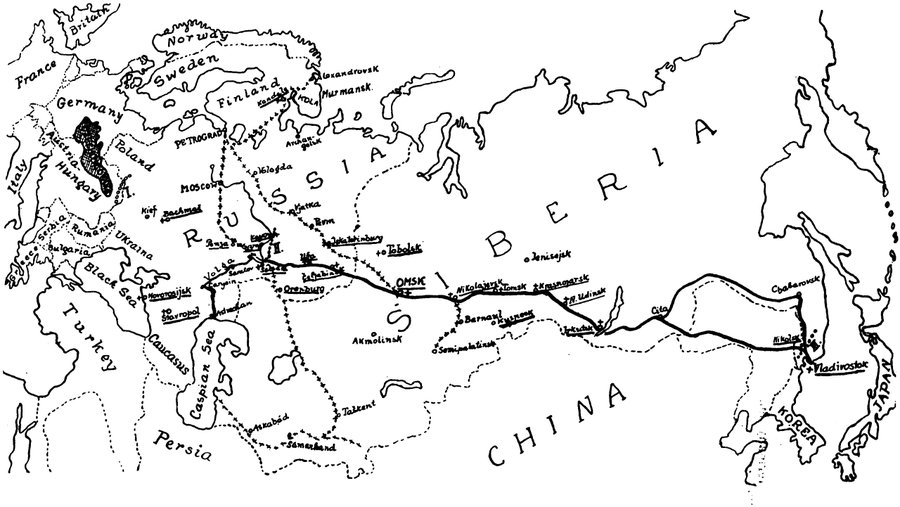
Given that the areas to the west of Russia were occupied by German soldiers, Masaryk decided that they should evacuate via that well-known midpoint between Moscow and Paris, Vladivostok.
However, relations between the Soviets – paranoid about counter-revolution – and the Czechs and Slovaks – paranoid about Communists within their ranks – meant this evacuation was unlikely to go smoothly.
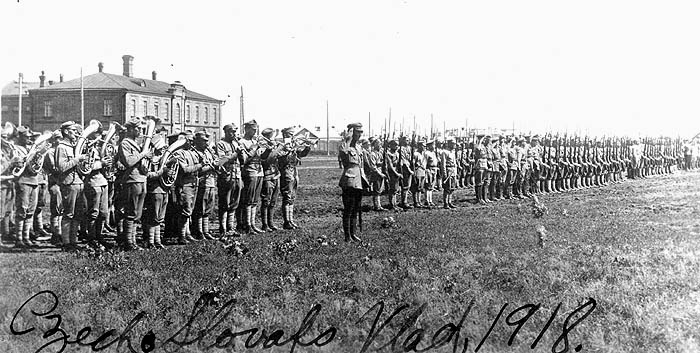
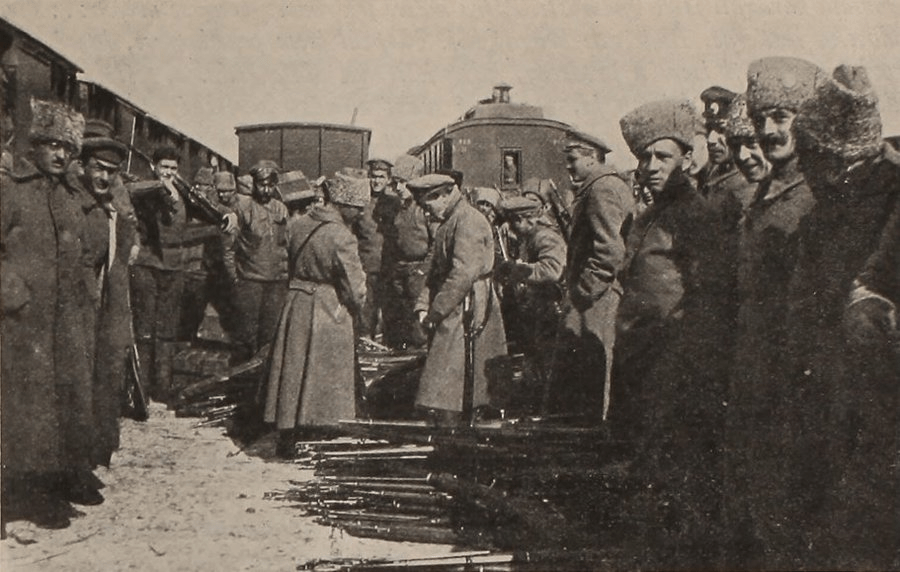
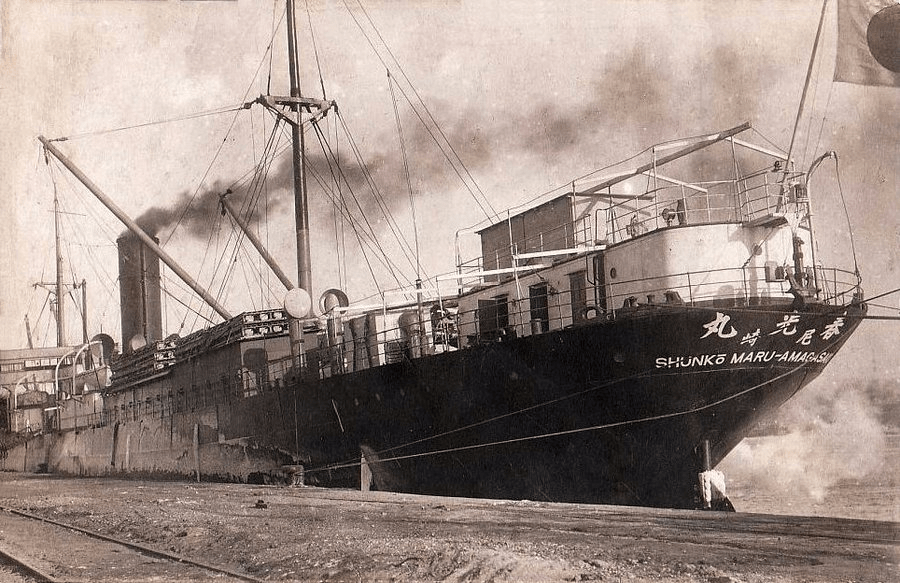
In May 1918, Leon Trotsky insisted that the legionaries disarm; they refused, and fighting on several points of the Trans-Siberian Railway followed. The legionaries would even seize control of Vladivostok in July.
Meanwhile, back in Europe and North America, news of the legionnaires’ Czexploits (including capturing the places underlined in the map below) would leave a strong impression on the Allies, who became increasingly favour of giving these guys their own state.
There would be further victories in autumn 1918, but a strengthened Red Army, muted material support from the Allies and the creation of Czechoslovakia on 28 October made the soldiers want to get the hell out at last.
For this reason, they declared neutrality in 1919 (not especially pleasing their White Russian allies), signed an armistice with the Bolsheviks in February 1920, and, by September, all legionaries had finally left via Vladivostok.
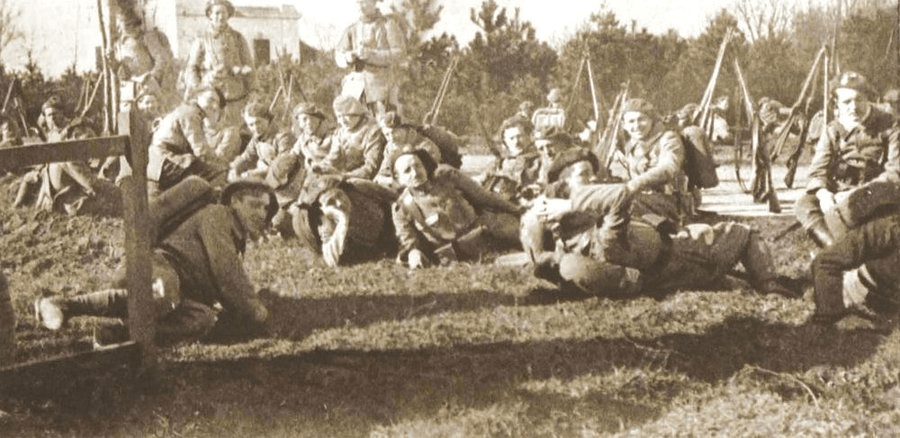
When the French and Italian Legions (the latter was formed later on, in 1918, but its troops were the first to get to Czechoslovakia) returned, they promptly became involved in dealing with wars against Poland (pic 1) and Hungary (pic 2) in 1919).
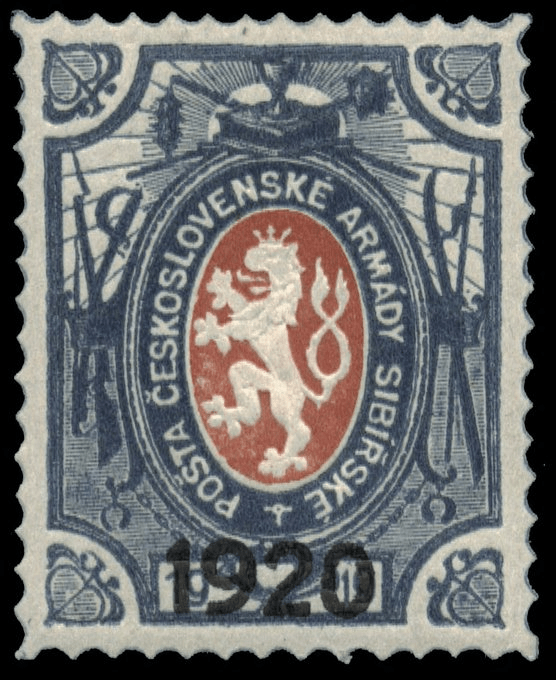
The Russia-based legion, however, had been stuck there for so long that they even ended up issuing their own stamps.
If you’re still thinking about Christmas presents, Last Train Home is a computer game that only came out last month; the goal is to help the Czechoslovak troops get home from the Trans-Siberian railway.
Reviews are really good – and we’re talking internationally.
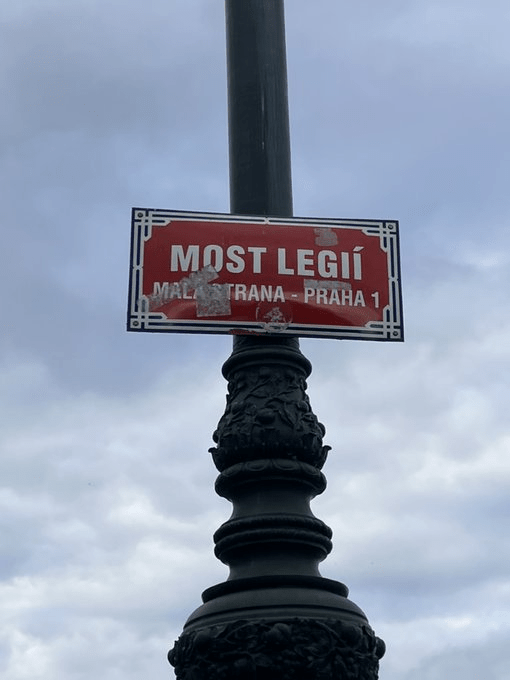
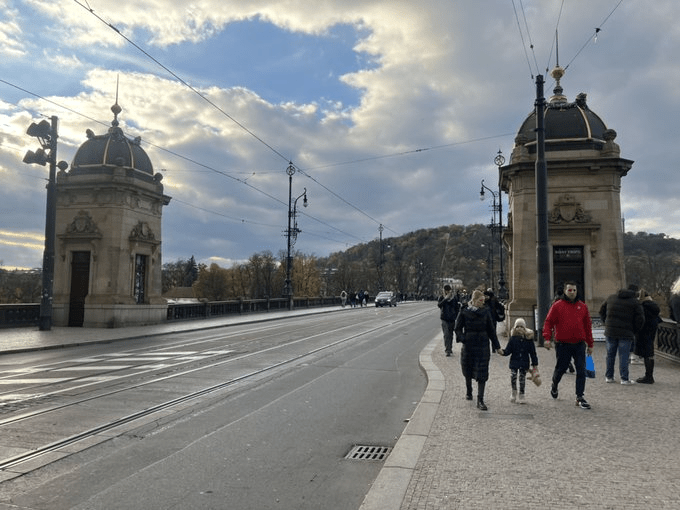
Back to the bridge, Most Legií got its name in 1919 – so well before the evacuation from Vladivostok – but the bridge was also known as Smetana Bridge during the Nazi occupation, and then as the 1 May Bridge from 1960 to 1990.
In the early days, tolls were collected on either side of the bridge; the towers used for this purpose remain.
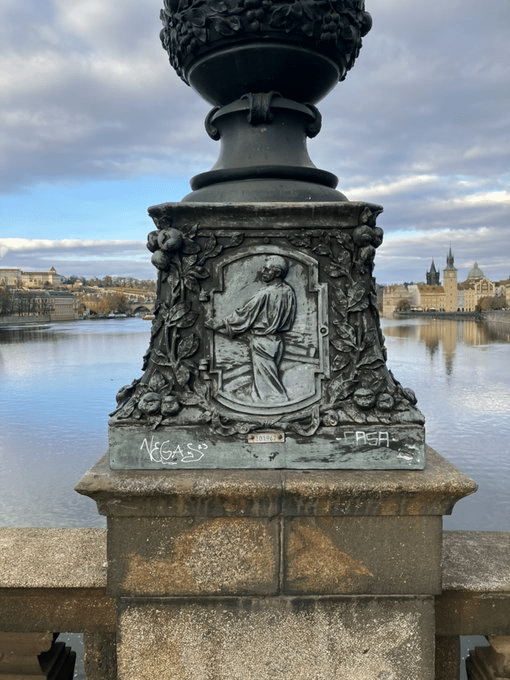
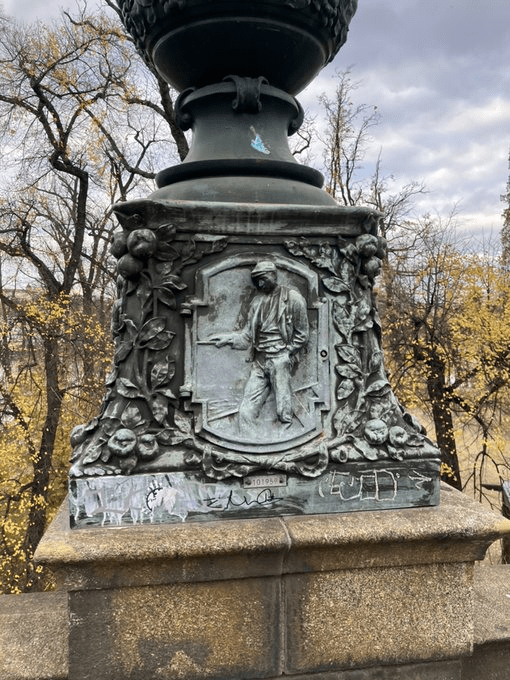
The reliefs on its streetlamps deserve attention too.
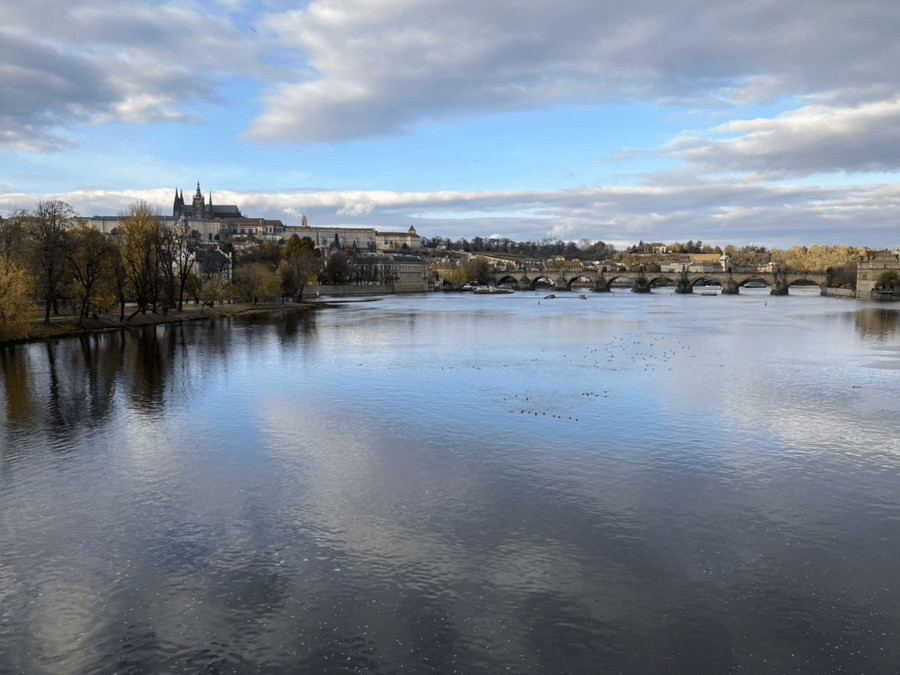
And the view from the bridge itself? I freaking love this city.
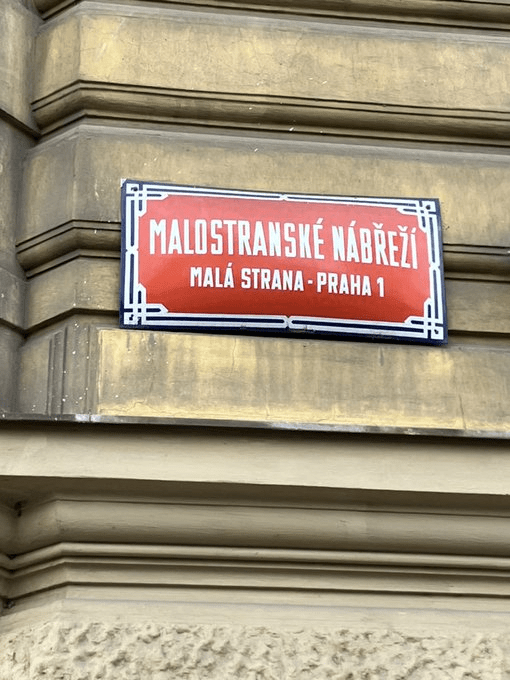
Malostranské is the adjective to denote Malá Strana, which we’re about three days away from leaving before we head over to the other side of the river.
And a nábřeží is an embankment. The name ‘Malostranské nábřeží’ has been applied since 1905.
This was about 18 years after this quite impressive pair of residential buildings in the street were built. They’re the work of the architect Josef Schulz (1840-1917).
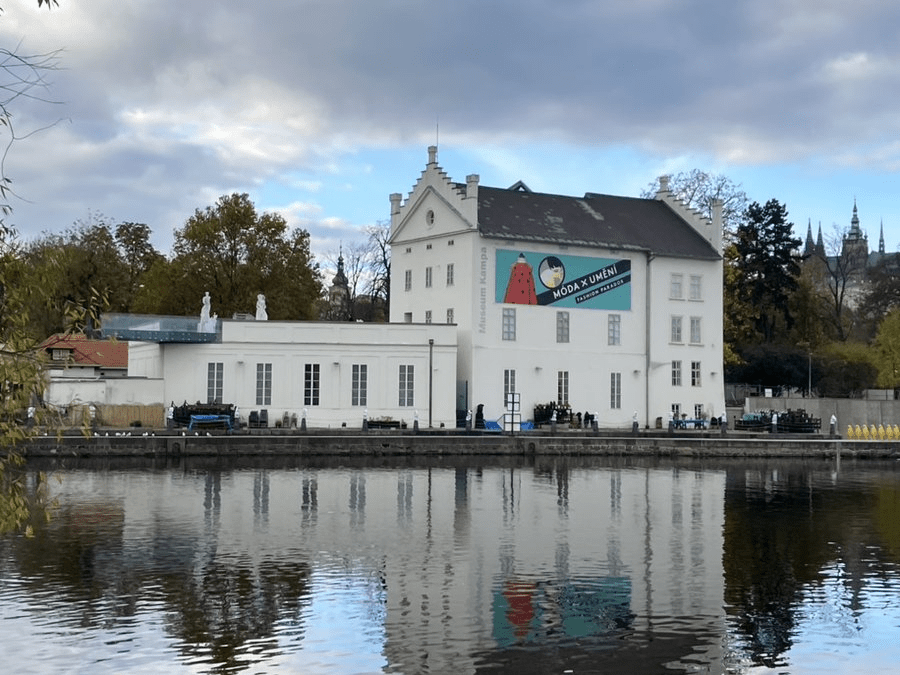
The embankment also gives good views of the Kampa Museum, at least so I thought until I saw how it looks from the place that will be the subject of day 91.
A šeřík is a lilac tree. Lilac trees originated in south-east Europe and Asia Minor, but are often grown in the Czech Republic for ornamental purposes.
The technical word for lilac – ‘Syringa’ – comes from the Greek for ‘pipe’; ‘lilac’ comes from the French ‘lila’, denoting the flowers’ colour.
Meanwhile, it’s believed that the somewhat different Czech word, šeřík, was derived from the Russian ‘сирень’.
Anyway, the story goes that the street was named after a very noticeable lilac tree outside number 8.
It’s very much not there now.
But this street has a habit of being named after things that aren’t there anymore – in the 19th century, it was called ‘U řetězového mostu’ / ‘By the Chain Bridge’. And, as we’ll see in a couple of days time, it hasn’t been by one of those since 1901.
Anyone who hoped, after yesterday’s thread, that we’d be avoiding the big topics today may wish to stop reading now – a vítěz / vítězka is a winner, and a vítězství is a victory.
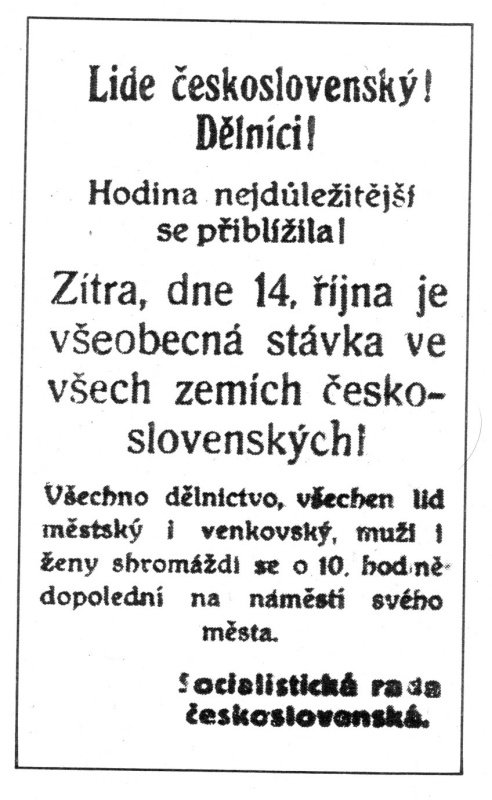
And we’re talking 1918 here, so let’s do a quick rundown (which doesn’t start until the latter stages of the year).
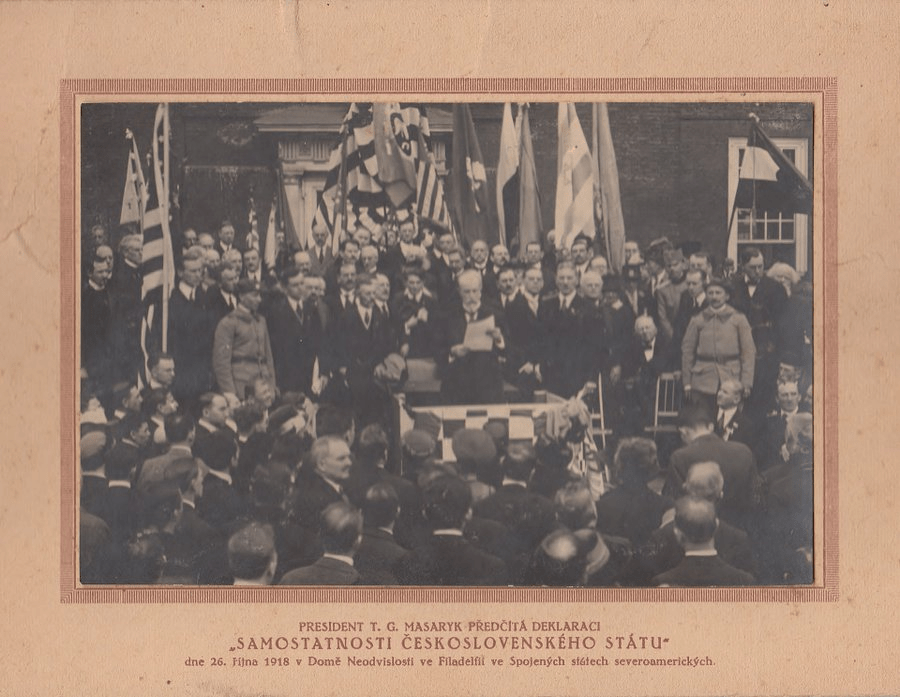
Masaryk drafted the Czechoslovak Declaration of Independence, or the Washington Declaration, on the 16th. He read it in Philadelphia on the 26th.
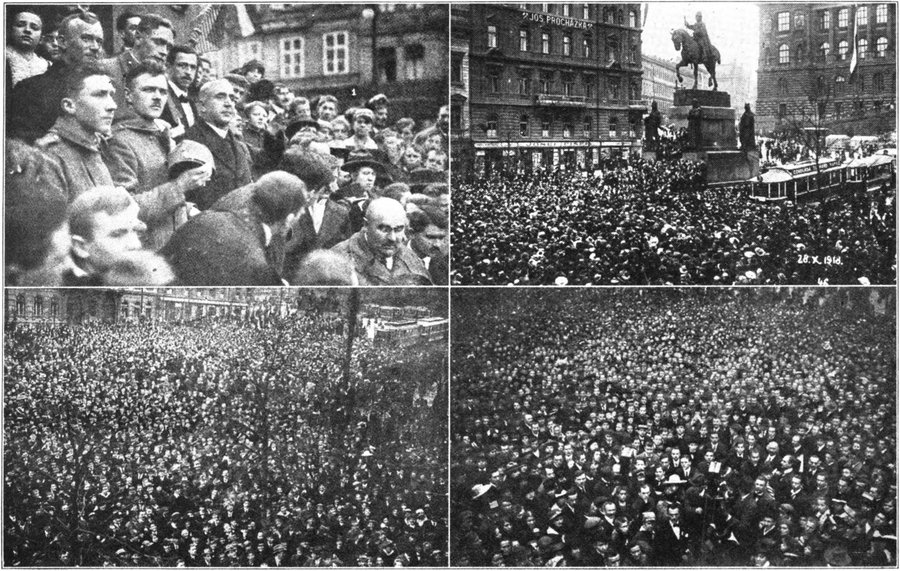
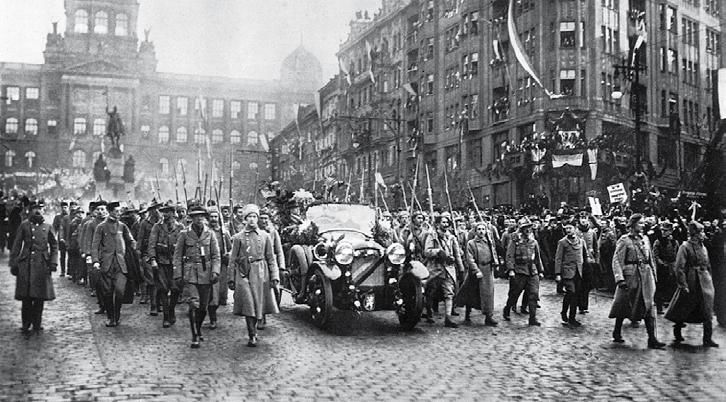
On the 28th, the Czechoslovak National Committee announced the founding of Czechoslovakia. There were celebrations.
I would say you got a day off for this recently, but, as it fell on a Saturday this year, you quite possibly didn’t.
On 14 November, that provisional Czechoslovak government was replaced by a Real Actual Government of Real Actual Czechoslovakia, and, in the Rudolfinum, Tomáš Garrigue Masaryk was (again) declared president.
But you may struggle to get any pictures of him at that ceremony, given that he didn’t make it back from exile until 21 December.
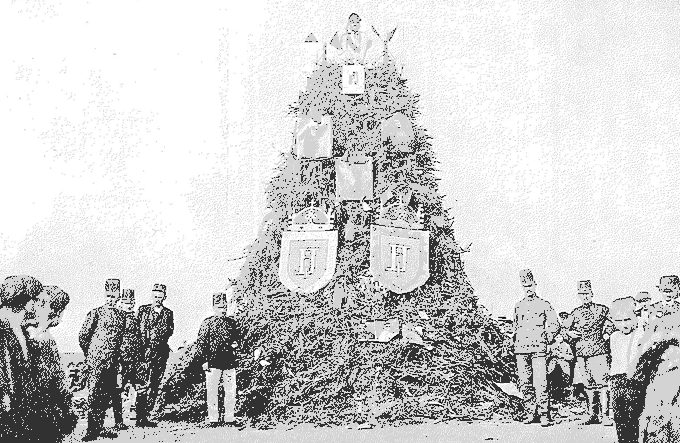
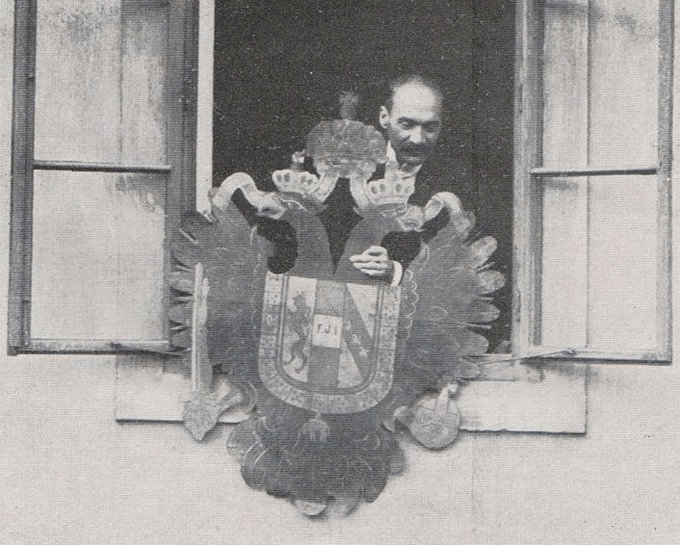
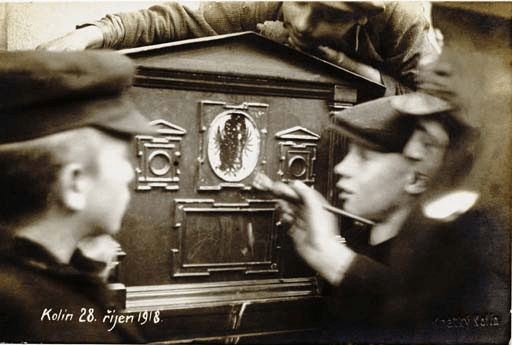
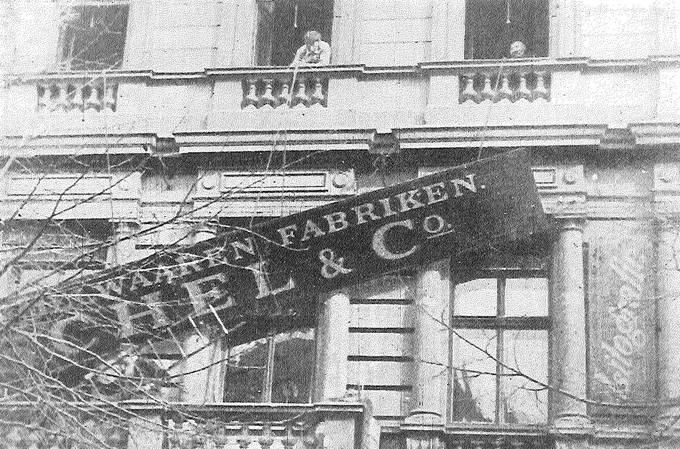
There was also much tearing down of symbols of Austro-Hungarian rule around this time.
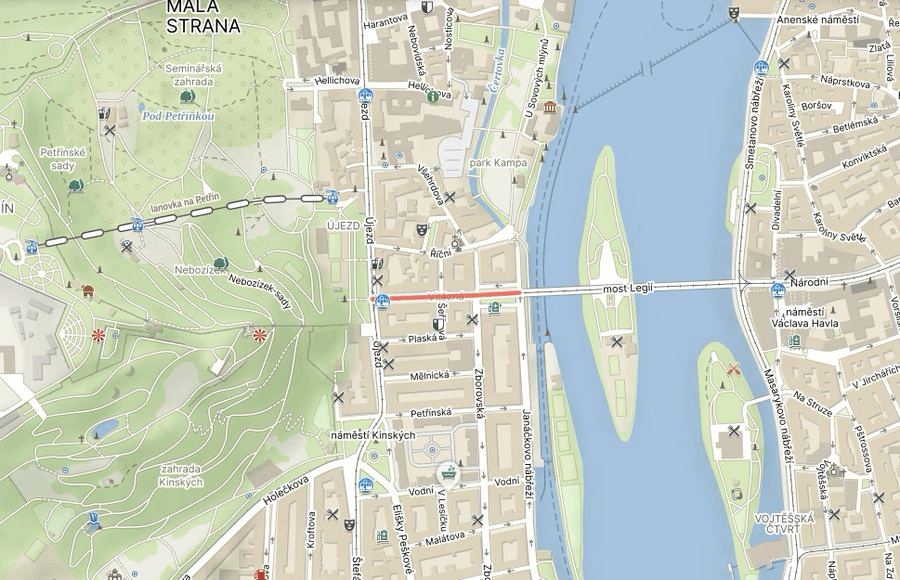
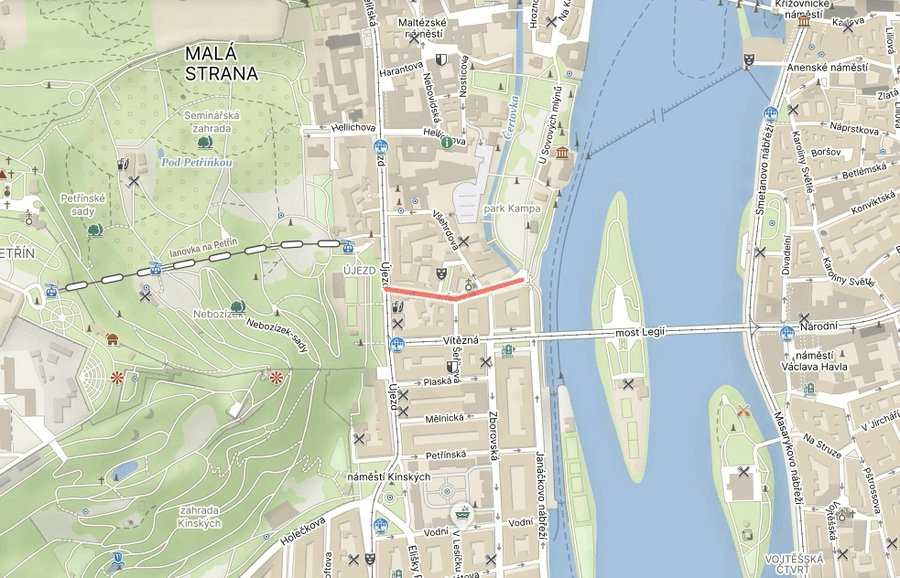
Vítězná – connected with the equally patriotically-named Národní by the, erm, equally patriotically-named Most Legií (both coming up soon), has had its name since 1928.
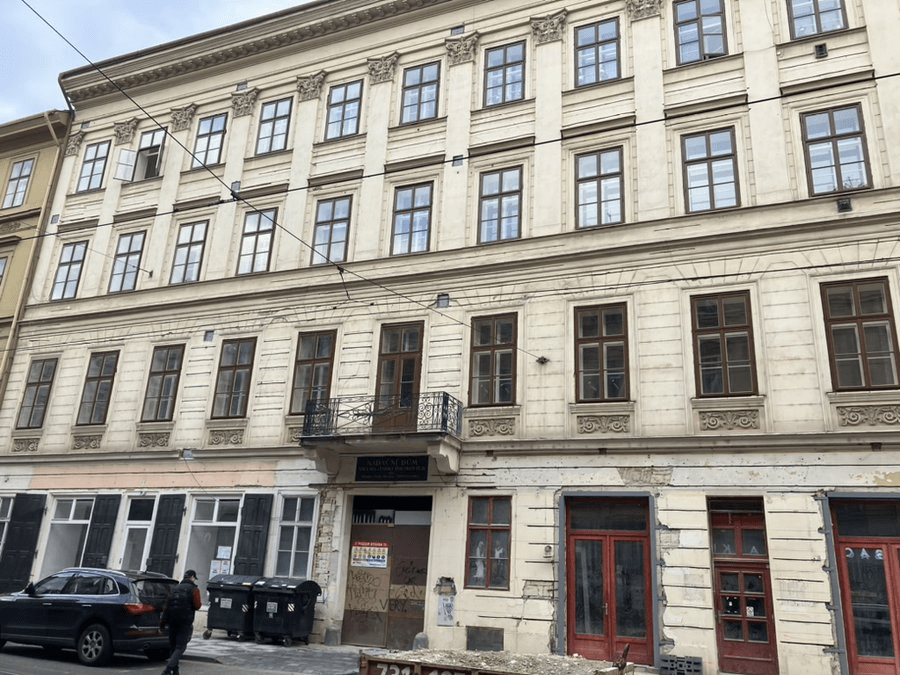
When walking I was along the street recently, I was really struck by this building. So elegant, so unused, so in need of some care which I sincerely hope it’s getting (guys, turn it into affordable housing, please).
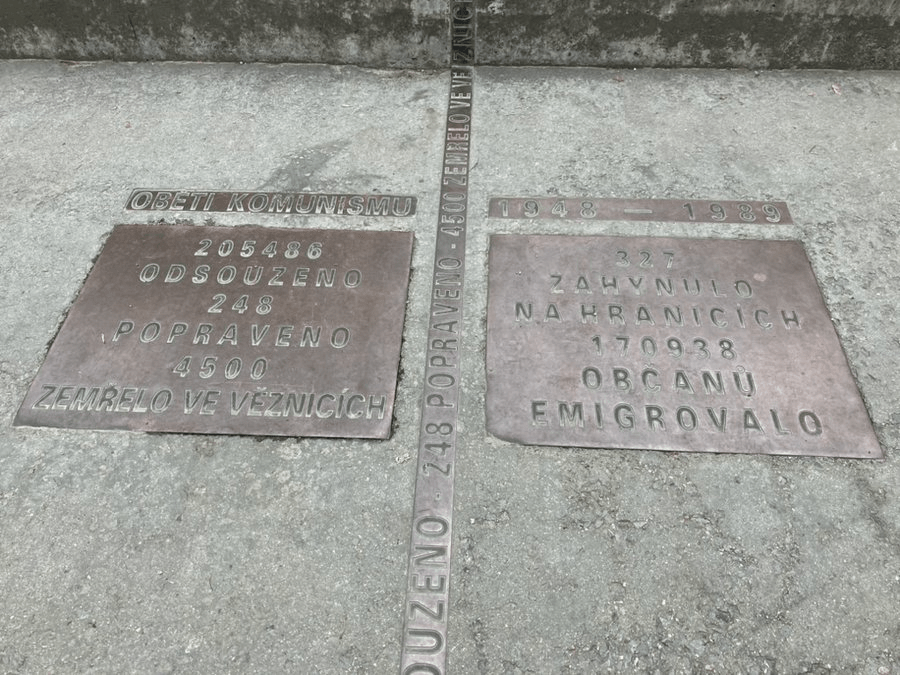
I think the best way to start this one is to take a look at two of the plaques on the ground.
Between 1948 and 1989, 205,486 people were convicted. 248 were executed, and a further 4,500 died in prison.
327 people died trying to cross Czechoslovakia’s borders; 170,938 citizens emigrated.
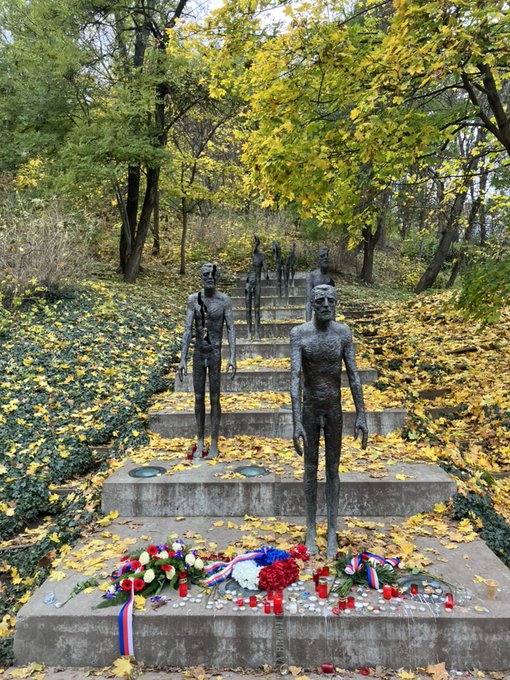
A monument, erected in May 2002, commemorates these people, but also those who aren’t counted above and whose lives were ruined by the regime in this time.
Zoubek worked in partnership with architects Jan Kerel (1944-2022) and Zdeněk Hölzel (born 1947).
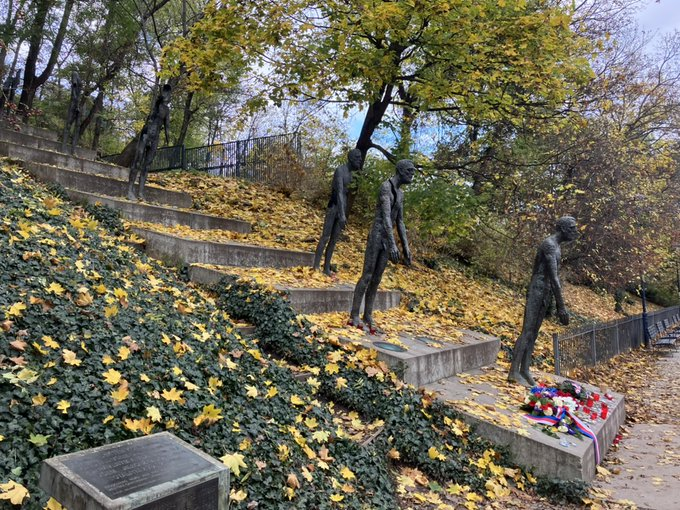
The memorial consists of a staircase with six figures (all male, which I do have feelings about). Going up the staircase, the figures become more mutilated. But they’re still standing despite all the terrible things happening to them.
There was some awkwardness around the unveiling – the then-mayor of Prague 1, representing ODS, didn’t invite then-President Václav Havel until two days before. He declined the invitation and visited the monument the day before instead.
One of the figures had an explosive placed it in November 2003; we still don’t know by whom.
The path at the foot of the moment was given its own name, Alej obětí totality, and a street sign, in 2018.
Interestingly, Petr Janda and Aleš Kubalík, whose proposal wasn’t chosen to be exhibited in Prague (it came third), were able to see their (slightly revised) vision made reality in 2006, when Liberec got its own Memorial to the Victims of Communism.
I don’t use this platform to get into debates, and, frankly, one of my main takeaways from xformerlyknownastwitter since I started using it regularly is that I can quite easily end up with an aversion to people whose side I’m actually on (or whose side I thought I was on).
But, whenever I see statistics about preventable deaths, anywhere, I can’t help but thinking that, for most of those people, there’s usually any number of others whose lives are turned upside down by such an event.
Loved ones, friends, co-workers, people who were financially dependent on the deceased, heck, even pets. And then there are people who didn’t know the deceased well, or at all, but liked what they had seen or heard.
And then there are people whose death is barely noticed. That’s even f**king sadder.
I don’t know where I’m going with this, except that life is short and I should spend more of it checking in with people and less of it working.
And that the only thing about writing these posts that isn’t absolute freaking joy is the gender imbalance of it all.
Time for a quick language lesson: a řeka is a river.
If you want to use ‘river’ as an adjective, though, then říční is your friend – as in říční přístav (river port), říční síť (river system) or říčníkoryto (river bed).
And that map at the start of the thread is probably a bit of a giveaway that we’re next to the Vltava here. In the days when Prague was generally lacking in bridges, the river sloped down to a ferry (approximately here, I guess).
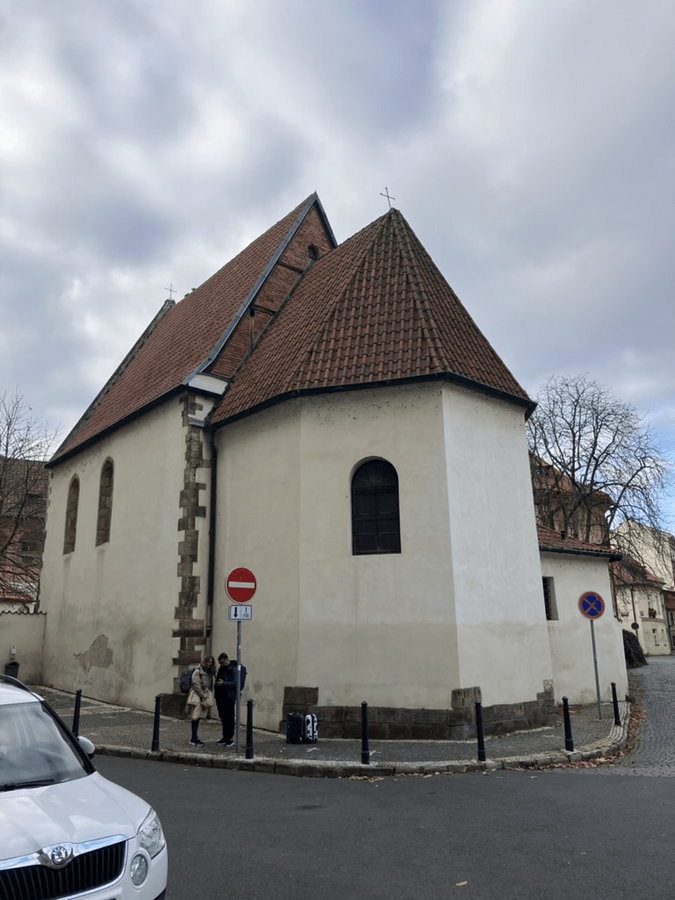
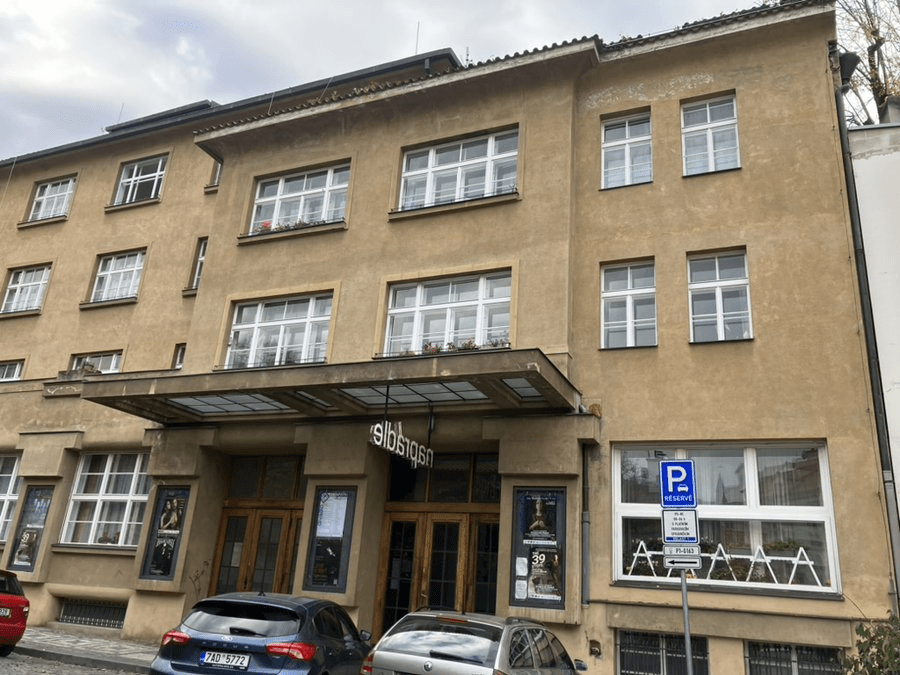
Říční includes one of the oldest churches in Prague – The Church of John the Baptist Na Prádle, built around 1240.
It was one of many churches closed down in 1784, after which the building was used as the premises of a laundry and a carpet-cleaning service (prádlo is laundry).
In the mid-1930s, the Czechoslovak Hussite Church took over the building, and is still using it.
(Yes, some sort of balanced gender representation would have been nice too)
In the 1920s, the Association asked for permission to create a building of its own. This was granted, and, in 1925, the building was opened and the street it’s still on – Besední – was founded.
The building housed an exhibition hall and two concert halls.
Obviously, the Communists didn’t really like an artistic association that they hadn’t created themselves, and, in the 1950s, limited its activities, before closing it down in 1972 (it reopened in 1990).
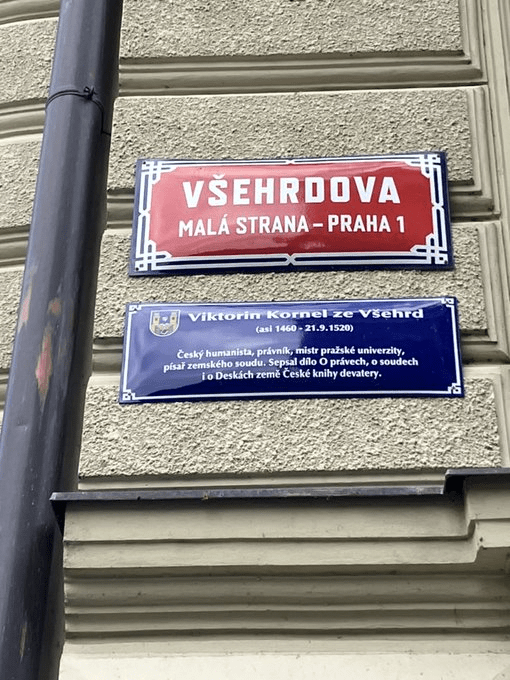
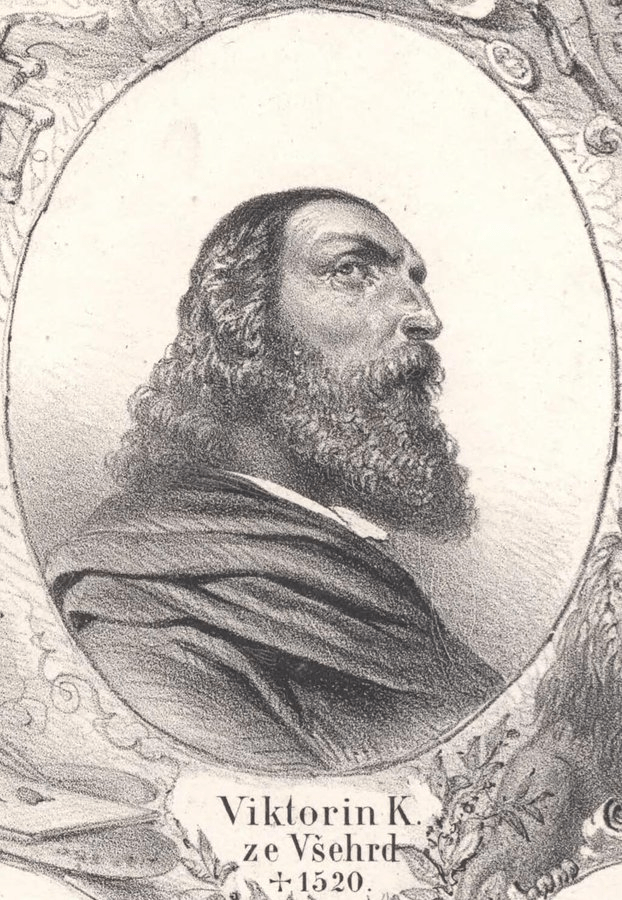
He got a degree from the University of Prague in 1483, after which he started teaching there.
However, he soon left to pursue a legal career – in 1487, he became a clerk at the land registry (Zemské desky), and, in 1493, he became the registry’s deputy scribe.
Quick explanation: the Zemské desky, introduced in Bohemia in 1321, were registers where the nobility had their important legal transactions recorded, especially those concerning property ownership.
They included judgements made by the regional court, and the (many) privileges and (many) rights of individual nobles.
Kornel himself joined the nobility in 1492 (the ‘ze Všehrd’ was added to his name at this time).
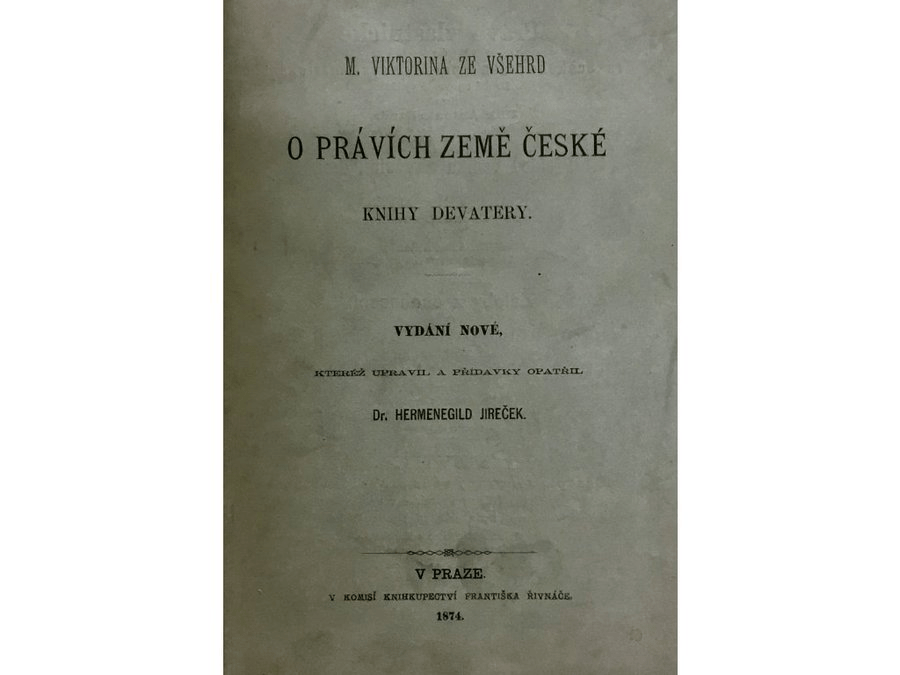
In 1495, he started to write O právech, súdiech i o dskách země české knihy devatery (On the rights, judges and the boards of the Czech Land, 9 books).
This was an attempt to codify Czech law, but, as Kornel was in favour of the cities and the lower nobility, the higher nobility decided the they weren’t in favour of Kornel.
The nobies managed to get King Vladislav II (pictured) to dismiss Kornel from his post, but the latter still managed to finish his 9-volume work in 1499.
However, a nobility-favouring law (Vladislav’s Law) was adopted in 1500, and Kornel’s work would not be published until 1841.
Kornel died of plague in 1520. He’s buried in the Church of St. John the Baptist Na Prádle – which is on this street.
Kornel also owned numbers 12 and 14 on this street, so would probably have been quite happy to be buried just metres from home, if one can ever be happy about such things.
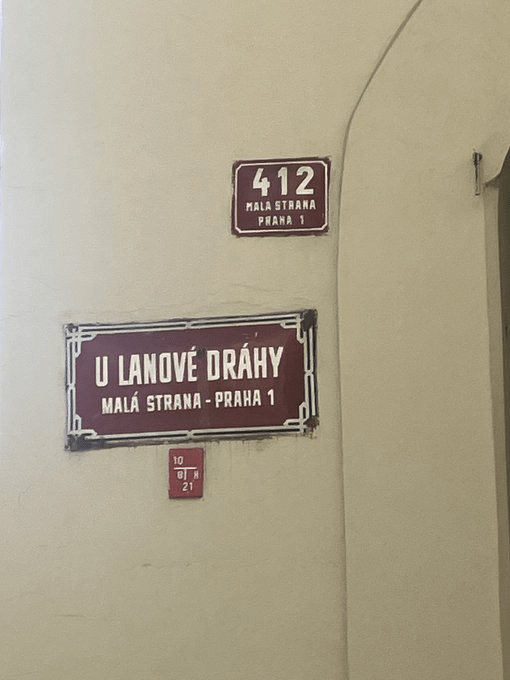
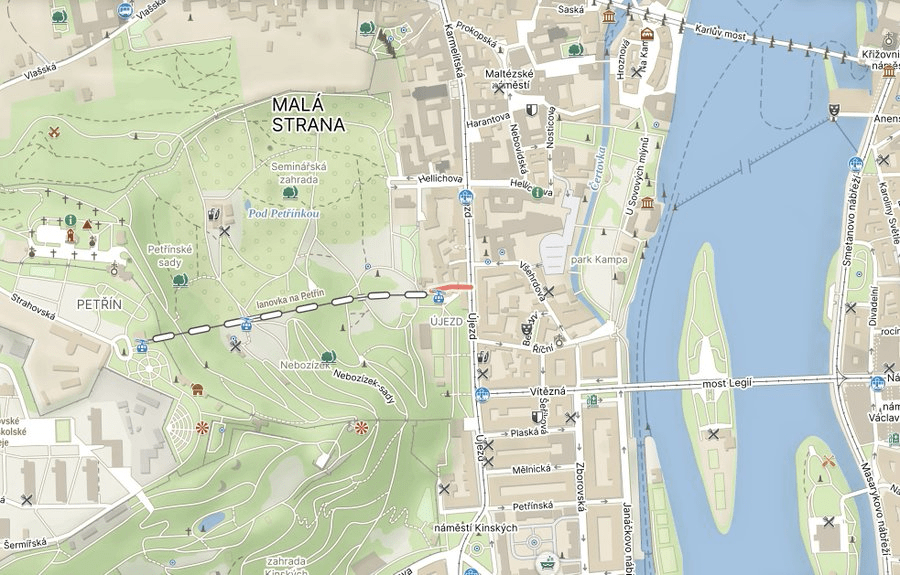
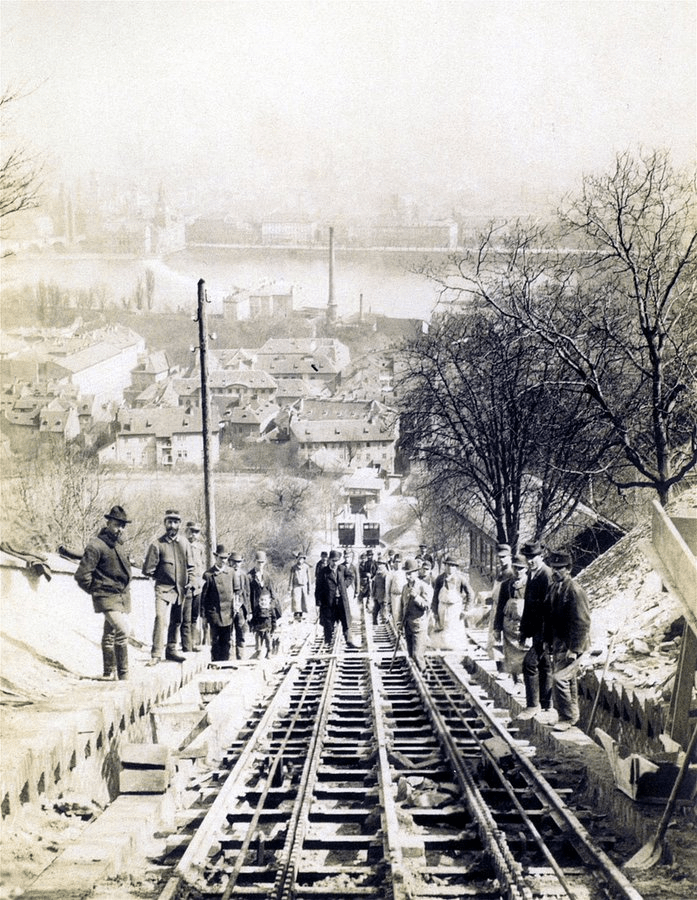
A lanová dráha is a funicular, i.e. a type of cable railway whose track goes along a steep slope. Which could mean that this street name needs no further explanation, but there’s no fun in that, so I’ll continue.
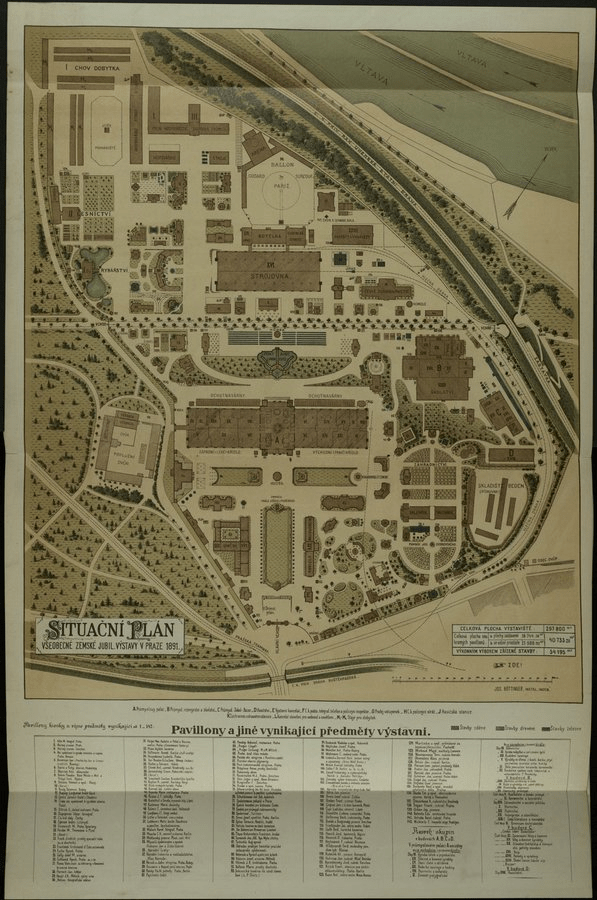
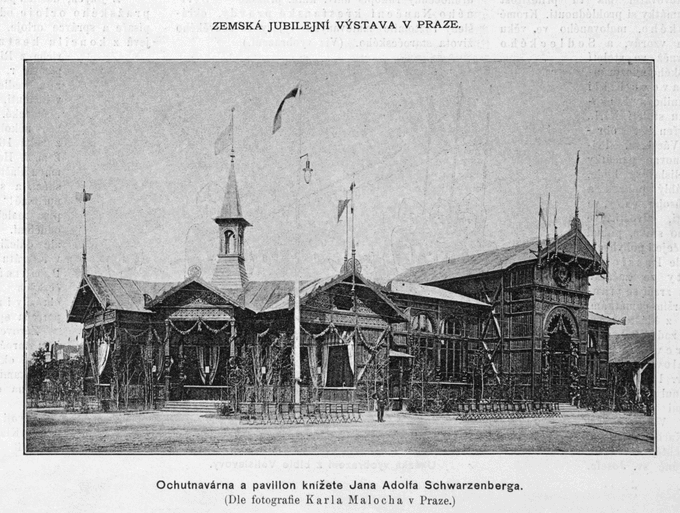
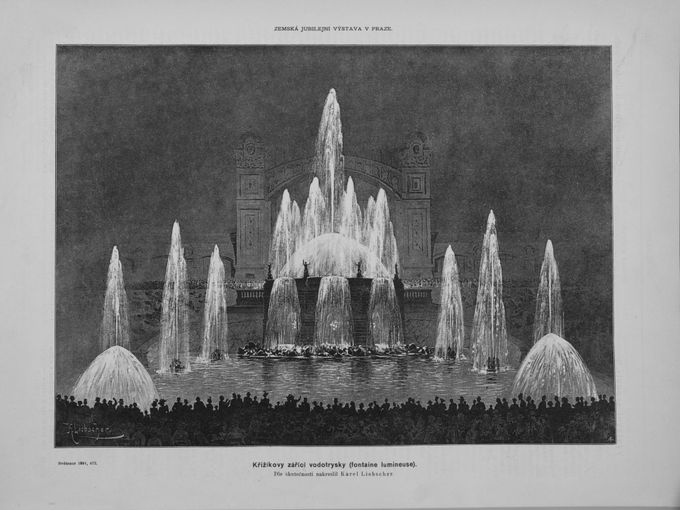
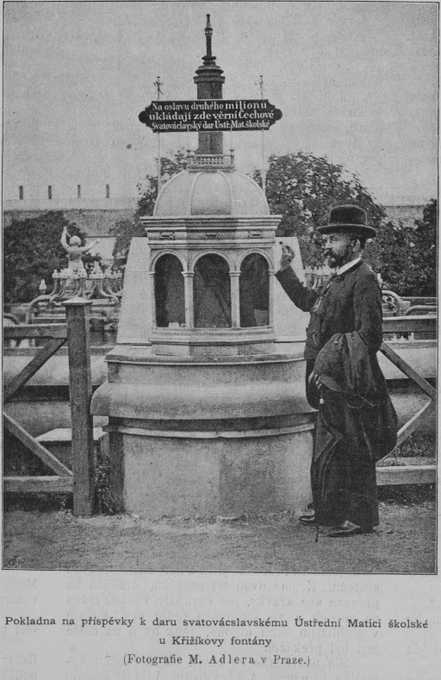
In 1891, Prague held a world’s fair, called the General Land Centennial Exhibition, or the Jubilee Exhibition. It was held to commemorate an industrial fair held in the Clementinum (coming up in… 25-35 posts’ time?) exactly one hundred years earlier.
It became a very good advert for Czech innovation and entrepreneurship, at a time when the Czechs still didn’t have independence; a boycott by Bohemia’s German population really played into the Czechs’ hands.
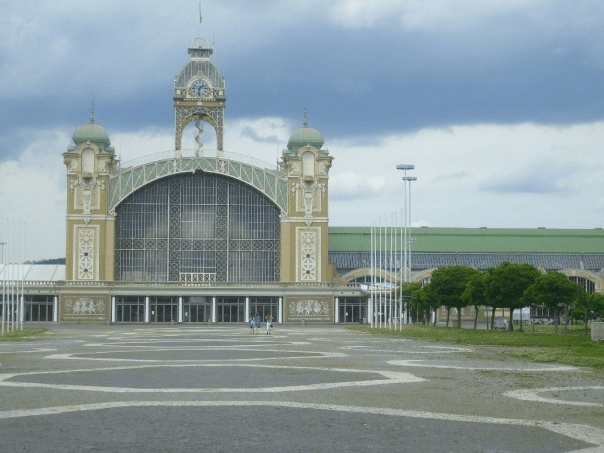
Several buildings and structures built for the Exhibition still survive – the most obvious one is the Výstaviště Praha Exhibition Ground in Holešovice (here it is in 2009).
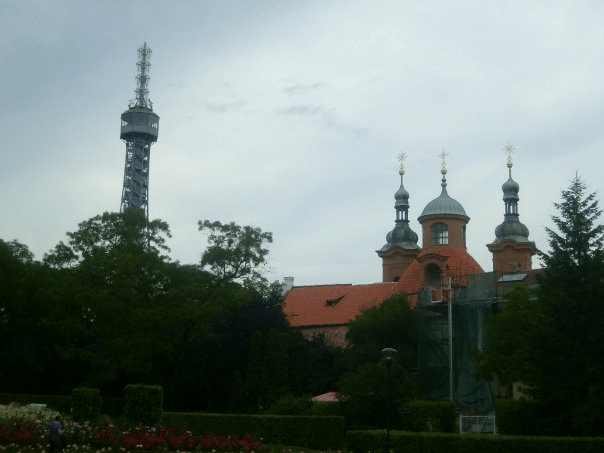
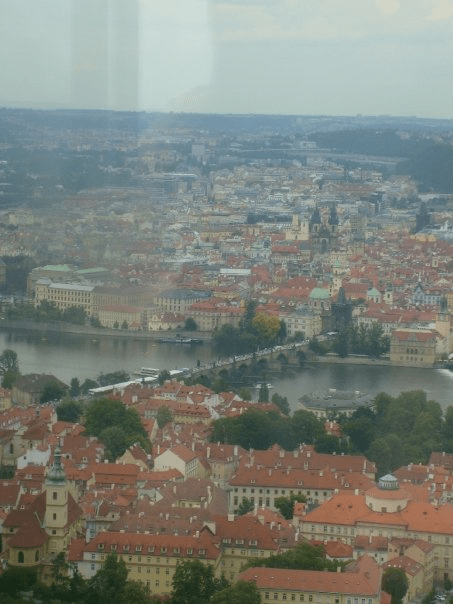
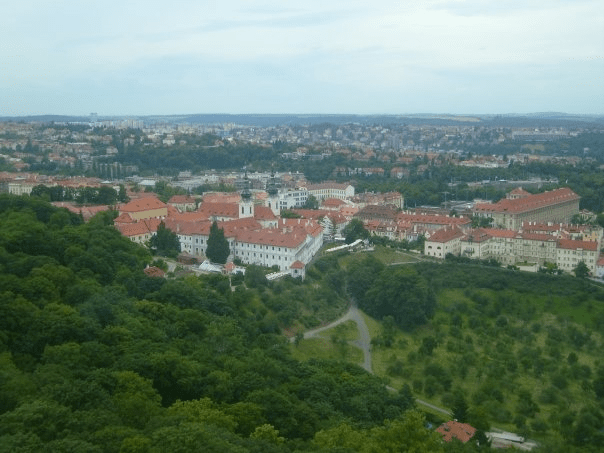
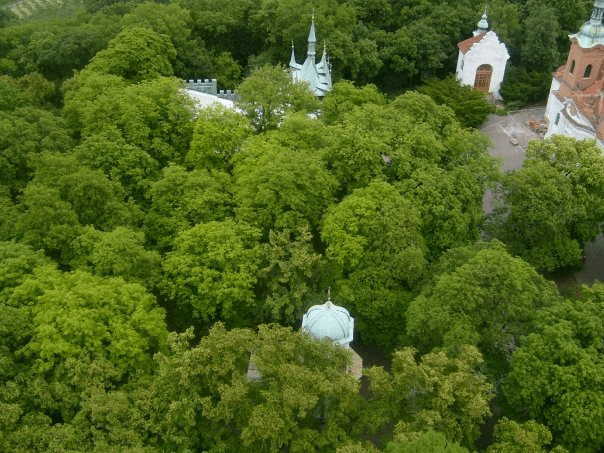
Another creation was the Eiffel Tower-inspired Petřín Lookout Tower / Petřínská rozhledna (photo, again, from 2009, and looks like it).
Lookout towers are very nice and all that, but Petřín is quite high up, so something was needed to enable people to access it. Enter the funicular.
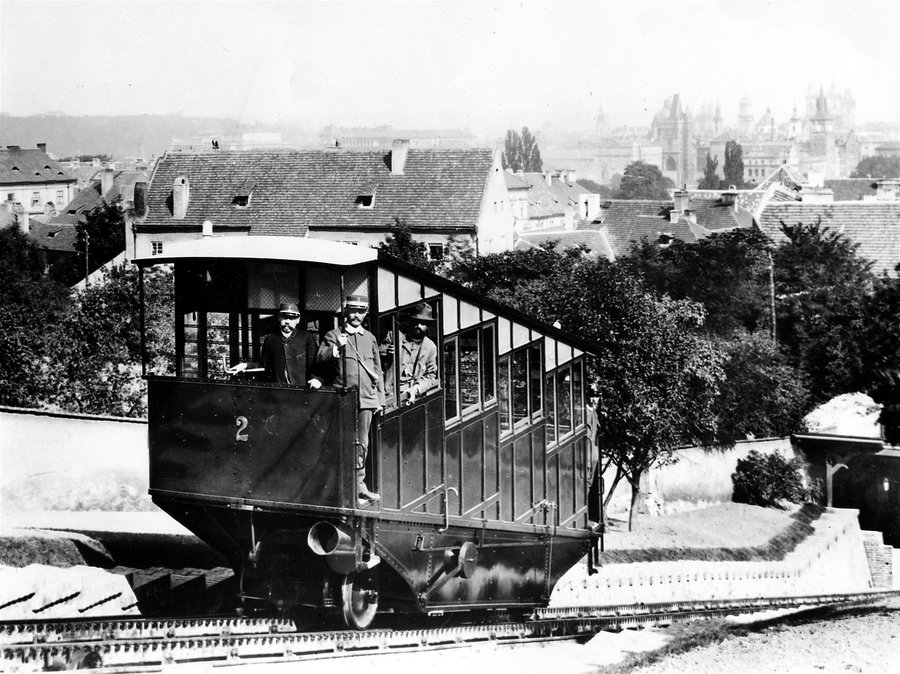
Originally, the funicular was powered by water. The 400-metre ride took six minutes and both stations were in different locations to where they are now. It closed in 1914, and didn’t get started again until 1931.
The 1930s version was considerably different – the stations were moved, the railway was retracked, and a middle station, called Nebozízek, was introduced.
There are two stories about why Nebozízek is so called. As so often, there’s a more realistic story and a more fun one.
The more realistic story is that the winding roads around Petřín look like the spirals on a gimlet (Czech: nebozez).
The more fun story is that the young son of Charles IV couldn’t say ‘ř’ properly (me neither – closest I’ll ever come to royalty), and Charles once asked him if he wanted porridge or schnitzel (kaši nebo řízek) for dinner, to which young Vašek replied ‘nebo zízek’).
Vašek would later become King Václav IV, which is definitely a last laugh of sorts.
If you don’t have a ticket, you have to buy a special one for CZK 60; your regular 30-minute or 90-minute ones won’t work. If you have a Lítačka, though, then you’re still good. Phew.
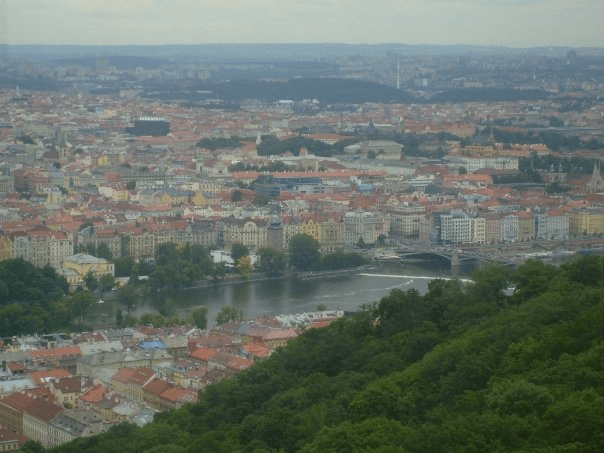
Views from the cablecar are great. I’m about 65% sure these still not very good photos from 2009 are taken from there.
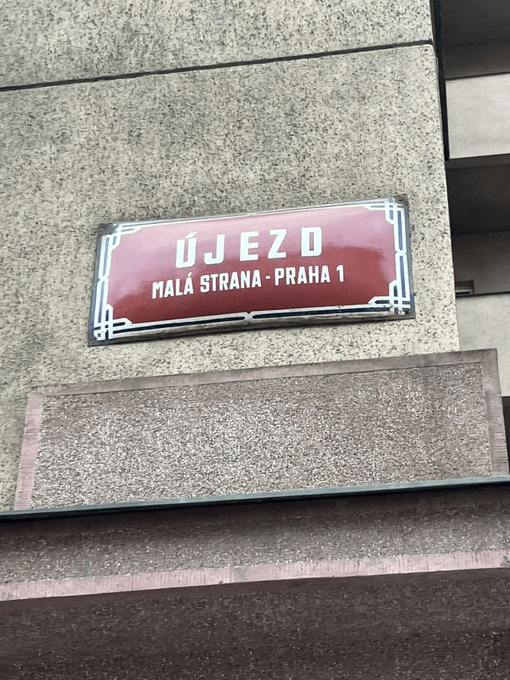
The verb ujezdit means to ride on something until it’s smooth – i.e. to plough (although the more common verbs for ‘to plough’ are orat and kypřit).
An újezd is, therefore, land which can be ploughed or cultivated – and, in the 12th century, it was the name of a village around here.
A text from 1365 refers to a village church, that of John the Evangelist (who is credited with writing the Gospel of John), but we don’t know exactly where this was, and, like another eight million churches I’ve written about, it was destroyed by the Hussites in the 1420s.
It was also in the 1360s that Újezd became part of the ever-expanding Malá Strana.
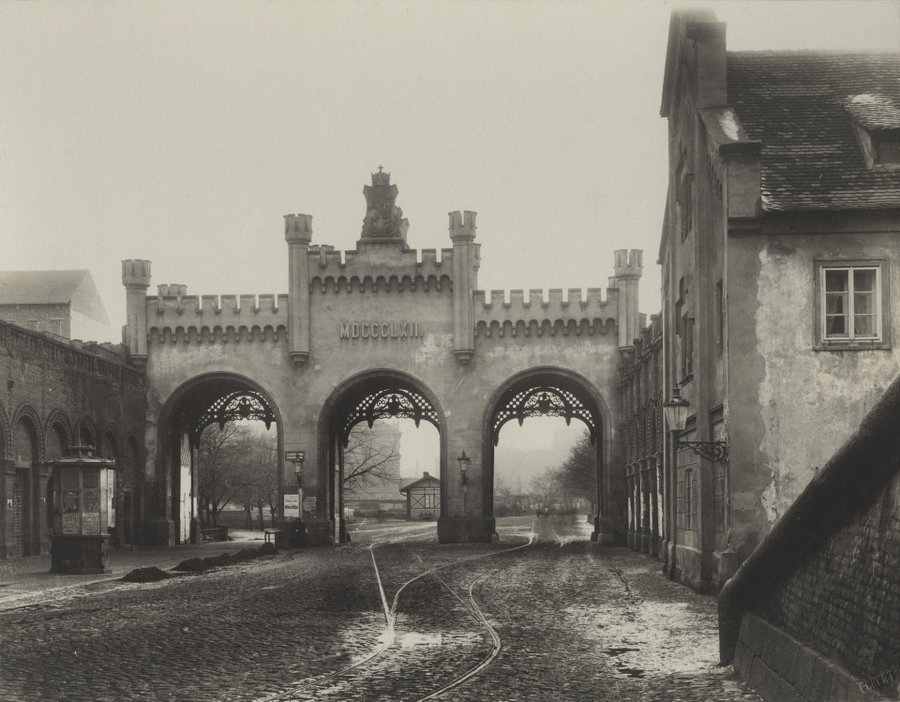
Around this time, a gate was built on the border with Smíchov. It was called the Cartesian Gate after a nearby monastery.
This was replaced twice – first, by the Imperial Gate in 1693, and then in 1862 by the Újezd Gate. However, the latter only lasted for 29 years – when the city walls were destroyed in 1891, the gate was too.
Here it is in 1890.
Újezd (the street), meanwhile, used to have two names from 1800 to 1870: the northern part was called Újezdská, and the southern part was U brány Újezdské, named after the gate.
Also in the ‘not here anymore’ category are the Újezd barracks, built in 1712 and and destroyed in 1932 (replaced by a park – not every loss makes things uglier).
Here they are in 1912, and here’s the replacement looking particularly wonderful in autumn 2023.
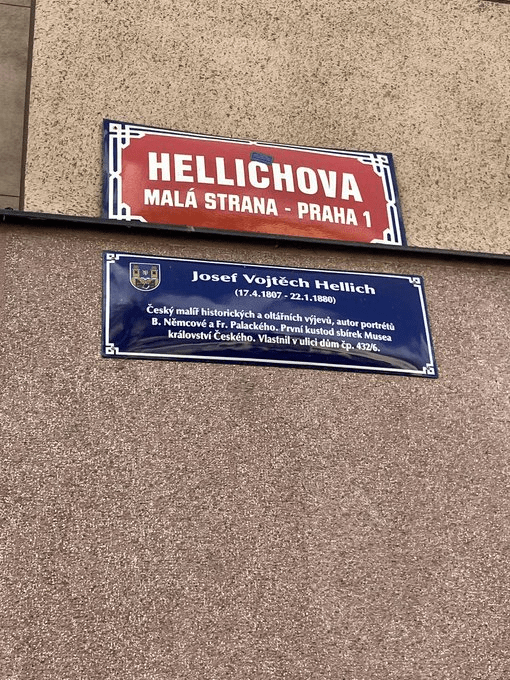
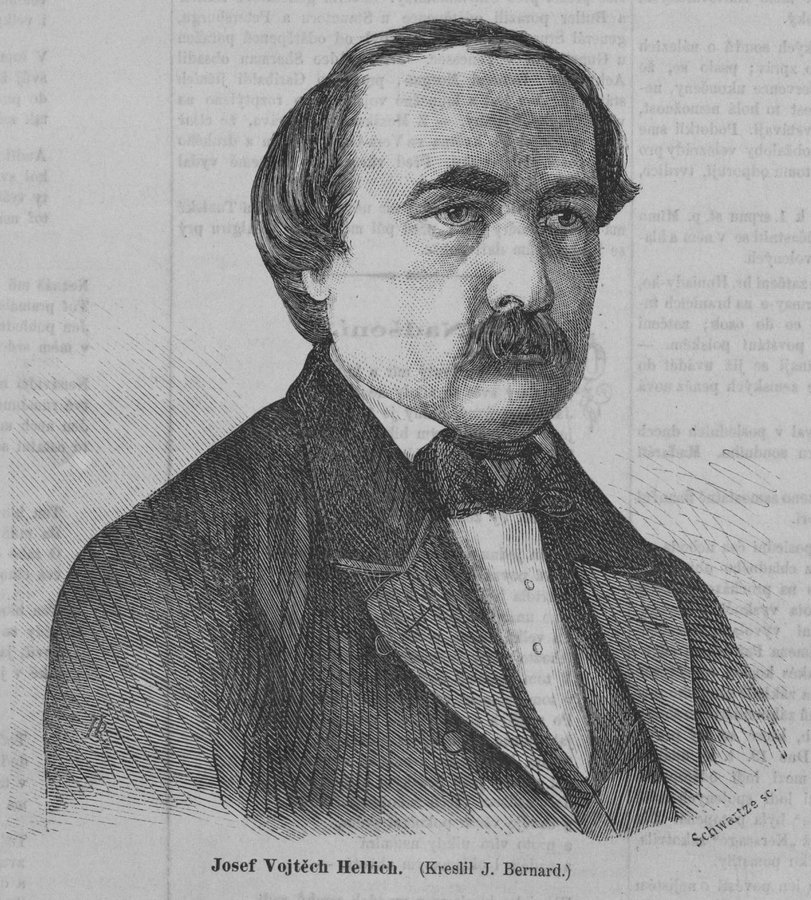
Palacký would help Hellich (who returned to Prague in 1840) to get a job at the National Museum; Hellich worked as the custodian and documenter of the Museum’s archaeological collection.
Although Hellich worked hard to publicise the Museum and the importance of preserving Czech cultural heritage, he was also becoming a renowned painter in his own right, and left the Museum once he was earning sufficient commission to do so.
He painted about 320 paintings his lifetime, about 90% of which were altarpieces for churches.
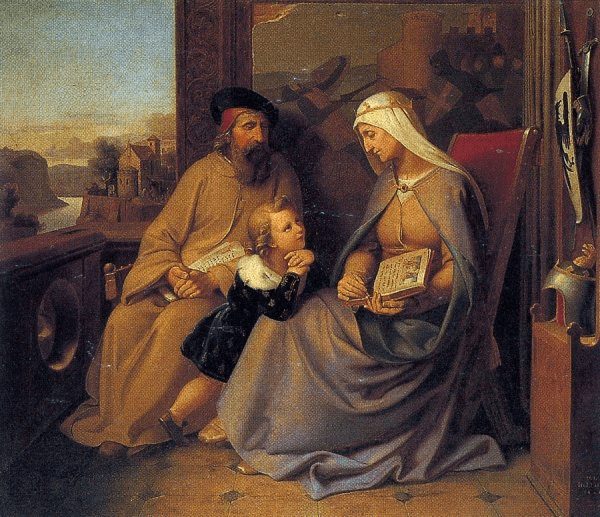
Here, for example, is his painting of Saint Ludmila teaching her grandson, Saint Wenceslas. It’s at the church in Tetín (albeit as a copy).
Hellich died in 1880 after contracting typhoid. He’s buried in the Malá Strana Cemetery.
For anyone wondering why we haven’t got round to discussing the Malá Strana cemetery yet – that’s mainly because it’s in Smíchov, in Prague 5. So there may be a bit of a wait.
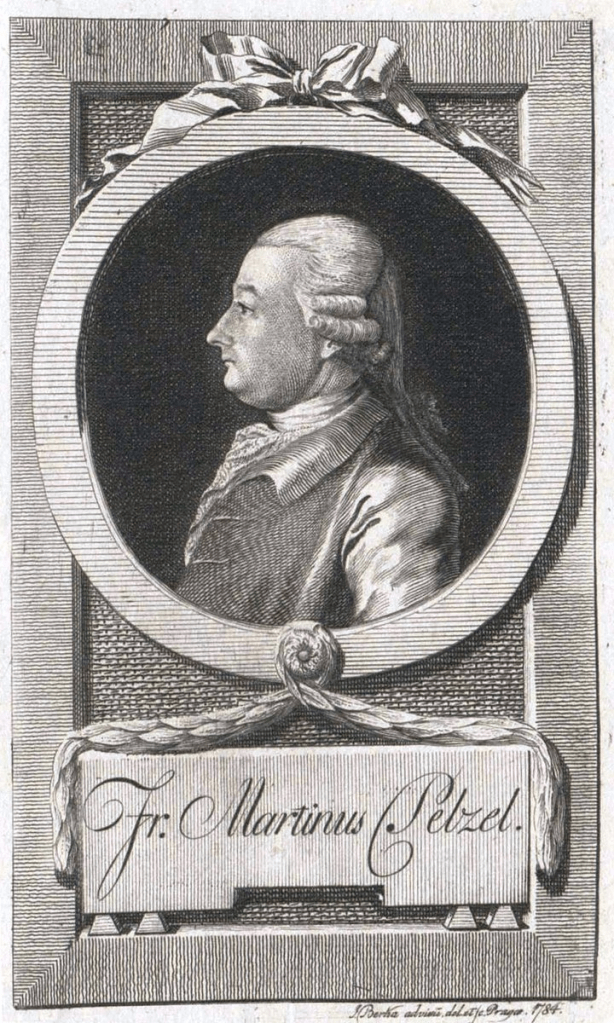
František Martin Pelcl was born in Rychnov nad Kněžnou, in Hradec Králové Region, in 1734.
In 1755, he started studying theology in Prague, soon switching to law. After escaping to Vienna for a few months in 1757, he returned, but his father died and studying was no longer an option, as his siblings needed material support.
Pelcl’s time with noble Czech families gave him access to forbidden Protestant literature that he wouldn’t have seen otherwise, and he became a fervent Czech patriot. The Nostic family would also enable him to meet key figures of the Prague Enlightenment.
He published multiple works, most famously Brief History of the Czechs (1774-1782), as well as monographs on Charles IV and Wenceslas IV. In 1790, was the first to write about the history of the Germans in Bohemia (Geschichte der Deutschen und ihrer Sprache in Böhmen).
In 1793, he became the first Professor of Czech at Charles University. As the course was brand new, Pelcl was charged with creating usable/useful textbooks for learning Czech.
However, ill health meant that Pelcl wasn’t able to devote as much time to his academic career as he wished, and he died in 1801. He’s buried in the Malá Strana Cemetery.
Pelclova is all of 10-20 metres from Nosticova 4, where Pelcl lived when working for the Nostic family (1761-9).
Malá Strana was founded as a royal town in 1257, but the surrounding area had been inhabited for centuries. And that surrounding area had several villages, including, among others, Újezd and Nebovidy, the latter of which was located around where the street is now.
A nebovid would be somebody who can see the sky.
The main building in Nebovidy was a church dedicated to St Laurence; it was first mentioned in 1298. There was also a Premonstratensian convent in the village, and another church, that of Mary Magdalene.
When the Premonstratensians moved to the Old Town in 1316, the convent was passed to the Dominicans. There was also a second Dominican convent in the village, that of St Anne – I haven’t confirmed if these both operated at the same time.
Because, let’s be fair, for a village in the 1300s, two convents for the same religious order seems like a lot.
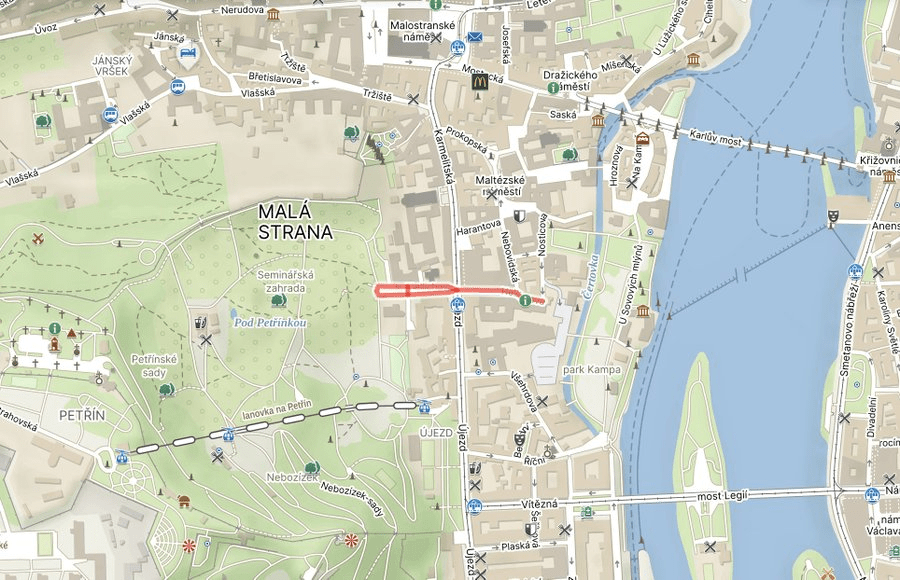
However, this other church – that of St Laurence – still exists; it’s on Hellichova. That said, it’s not been used as a church since 1784, and, in the 1980s, was converted into a concert/exhibition hall.