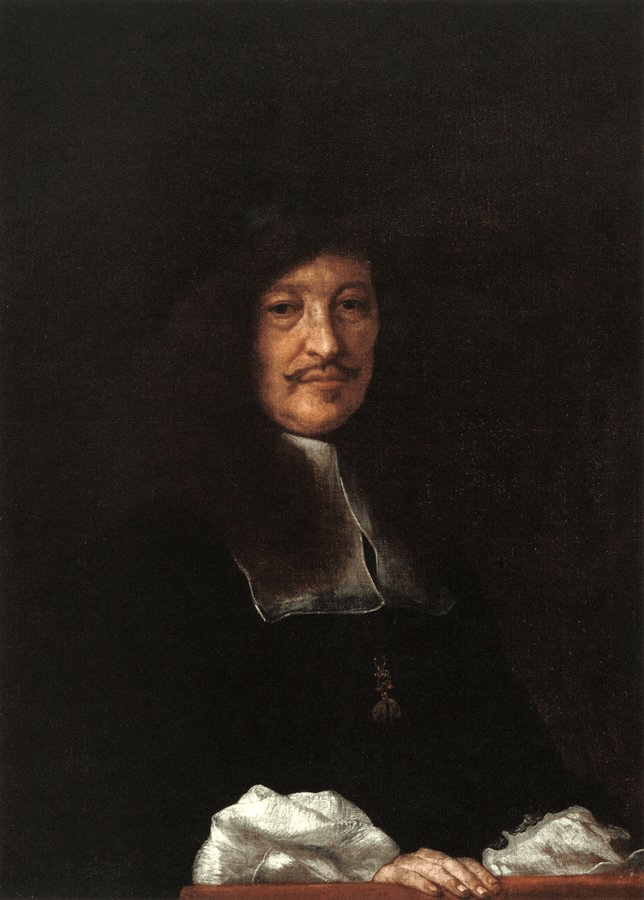
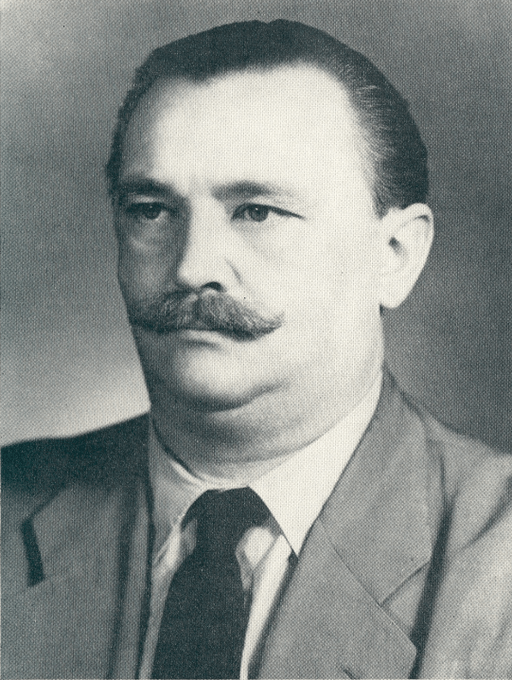
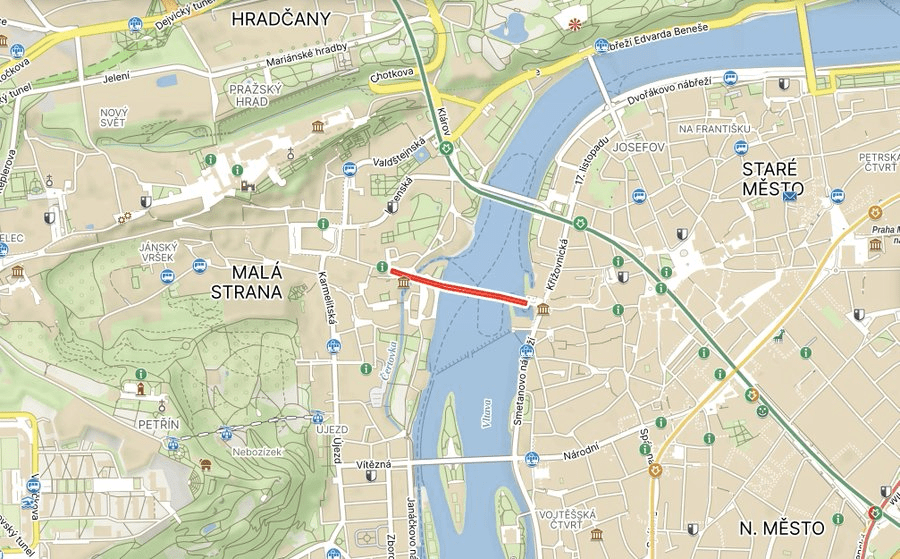
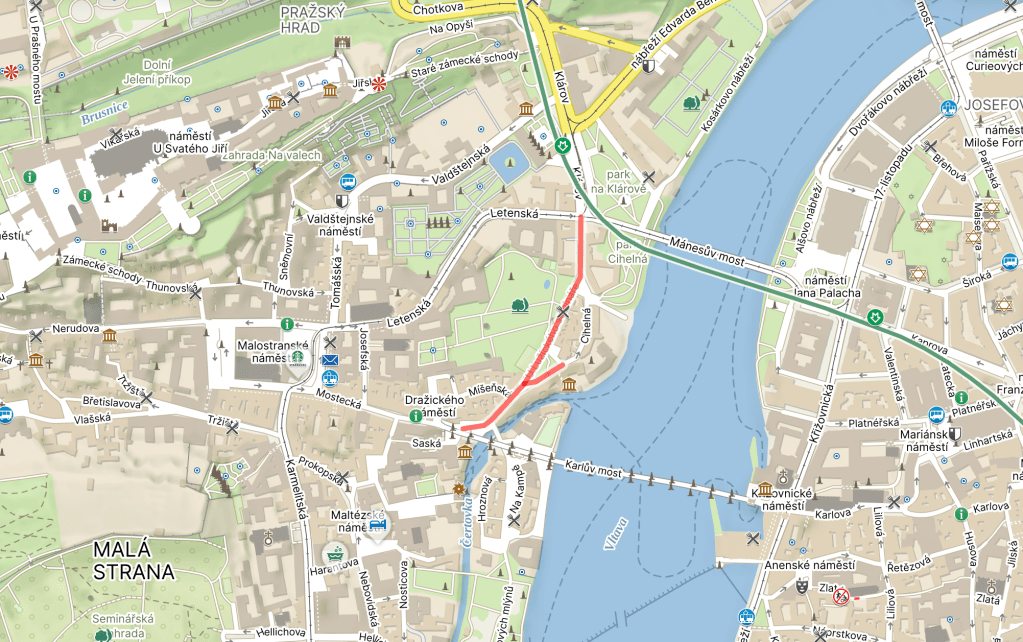
Kryštof Harant z Polžice a Bezdružice was born in Klenová, now in Plzeň Region, in 1564. He grew up in North Tyrol, and worked as a courtier for Ferdinand II, Archduke of Austria.
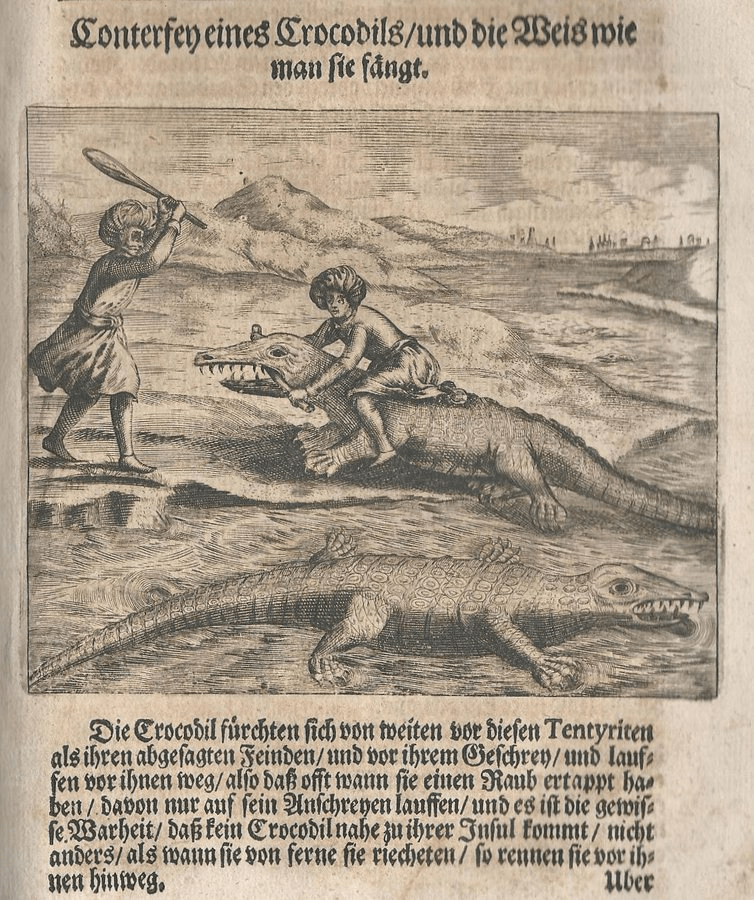
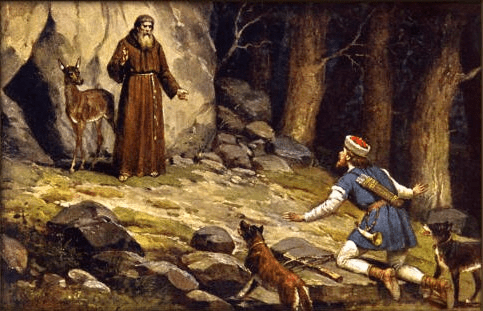
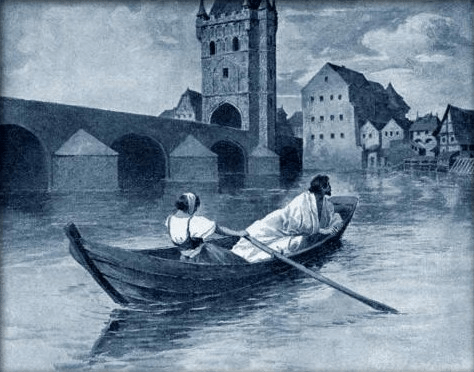
Returning to Bohemia in 1584, he tried to get a job at the court of Rudolf II; he was unsuccessful, and ended up joining the Habsburg army instead (1593-8). This enabled him to visit Palestine, Egypt and Venice (fanciful image of his travels below).
Returning to Prague in 1599, he finally got a job at the court of Rudolph II. He became a lord in 1603, and, by 1605, was Royal Governor of Prague. His travelogue, covering his travels in the 1590s, was published in 1608.
Returning to Prague in 1618, he took part in the anti-Habsburg uprising of the Czech Estates. He was in charge of an ultimately unsuccessful attempt to besiege Vienna.
Frederick V of the Palatinate declared himself King of Bohemia in 1619, and Harant became Privy Council and President of the Czech Chamber. In 1620, though, the Estates were defeated by Habsburg forces at Bílá Hora and Frederick fled, never to return.
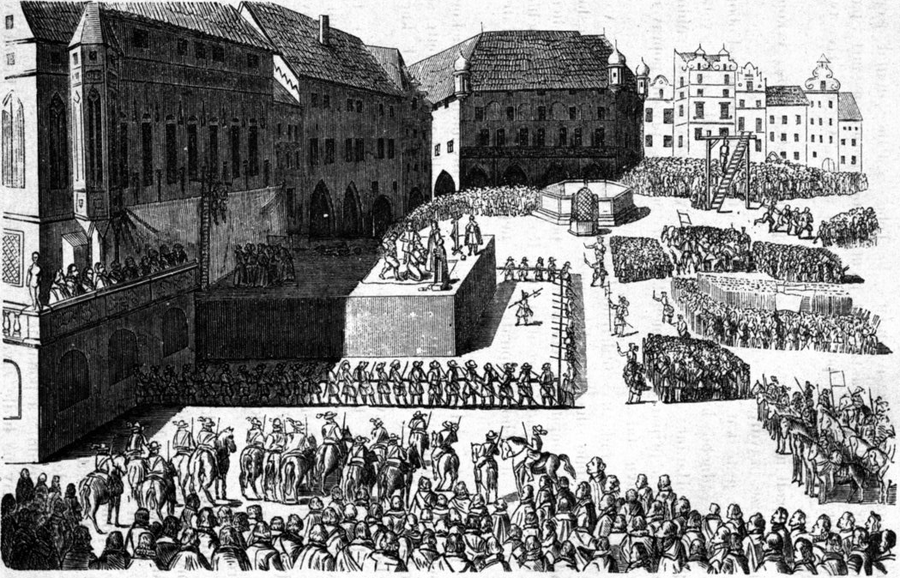
Harant was arrested at his castle in March 1621. On 21 June, he was beheaded on Old Town Square, along with another 26 leaders of the uprising.
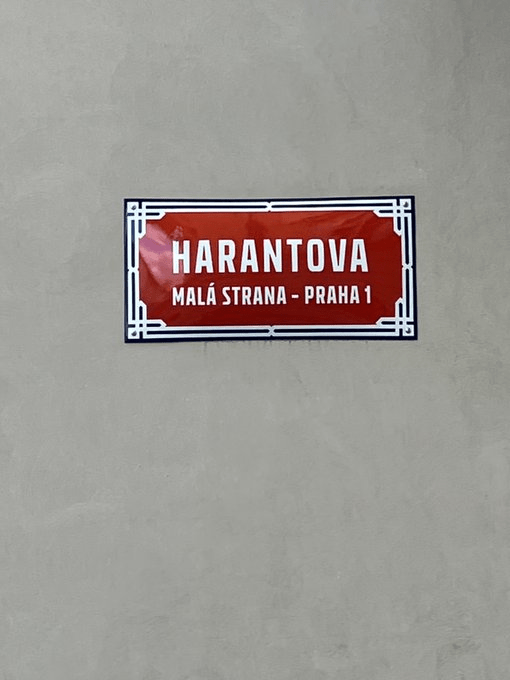
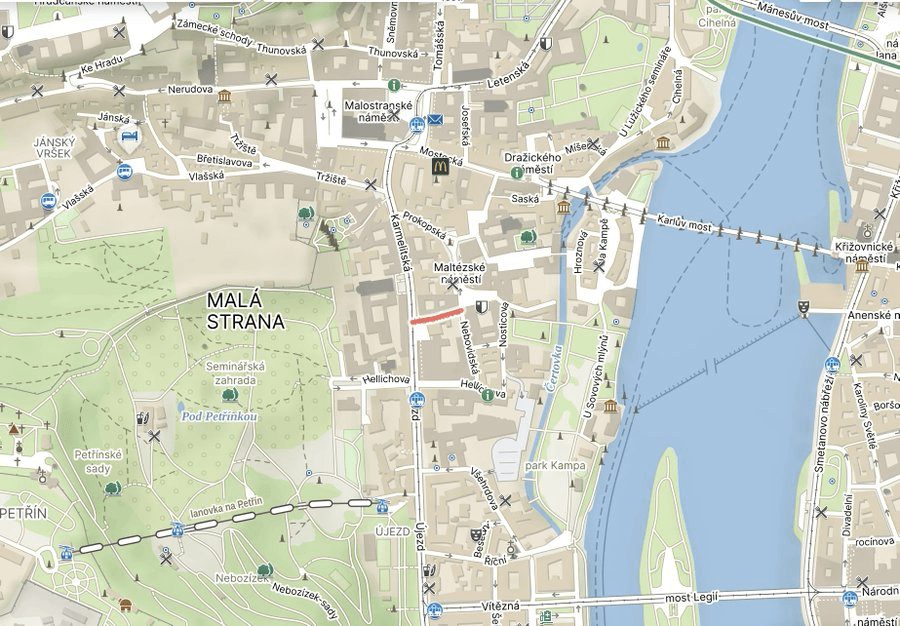
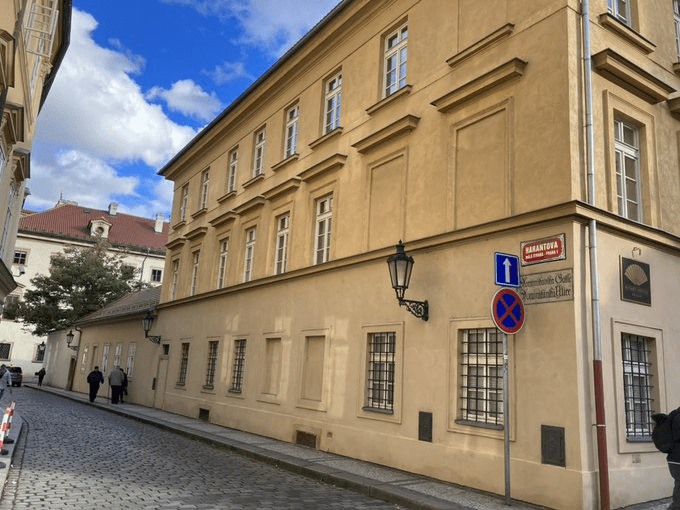
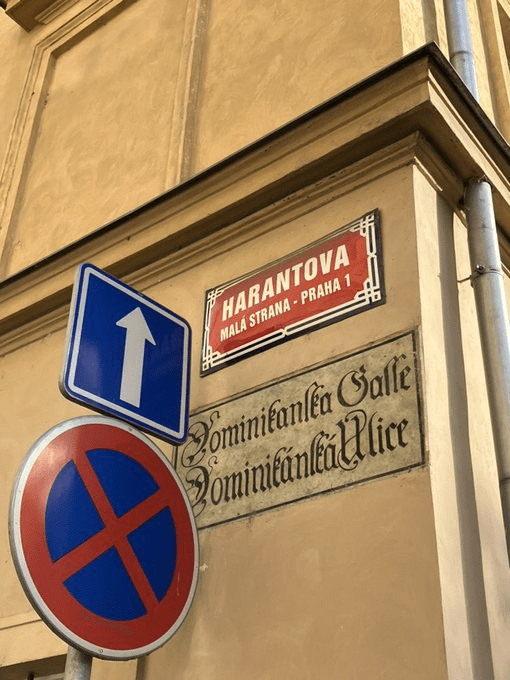
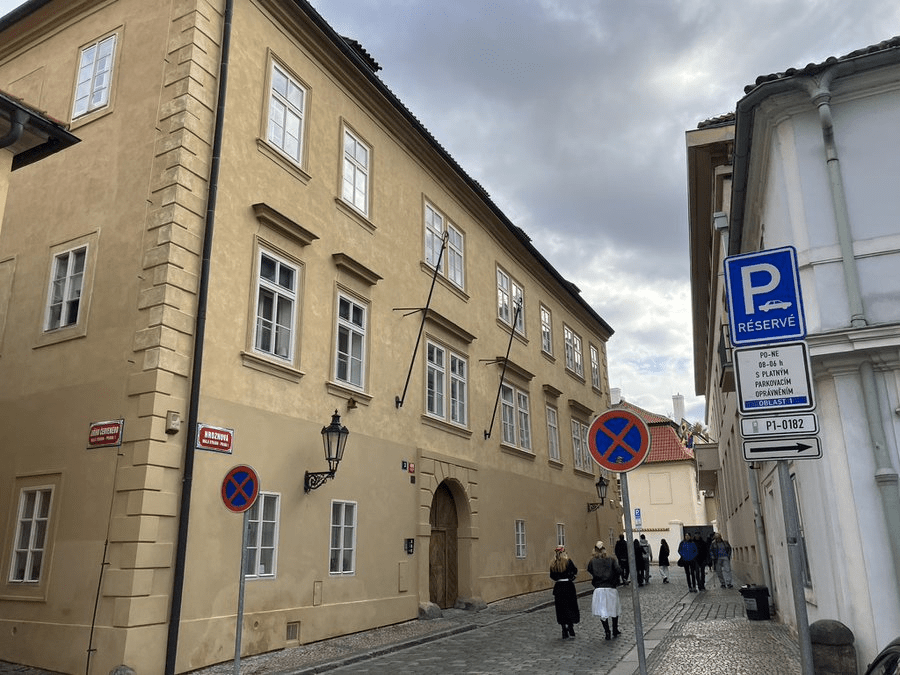
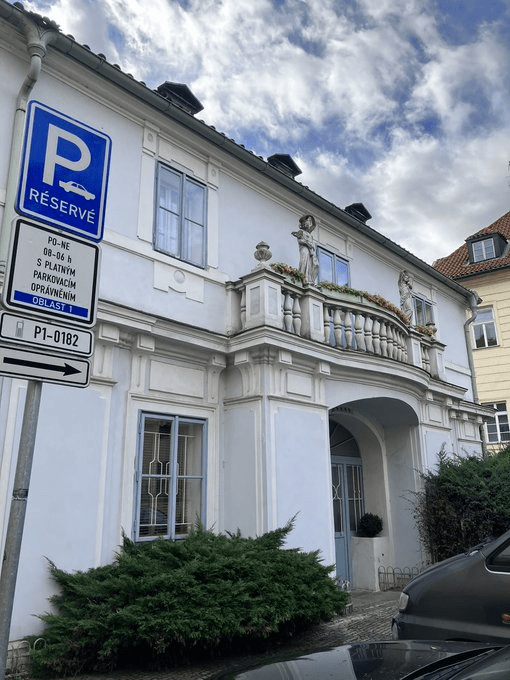
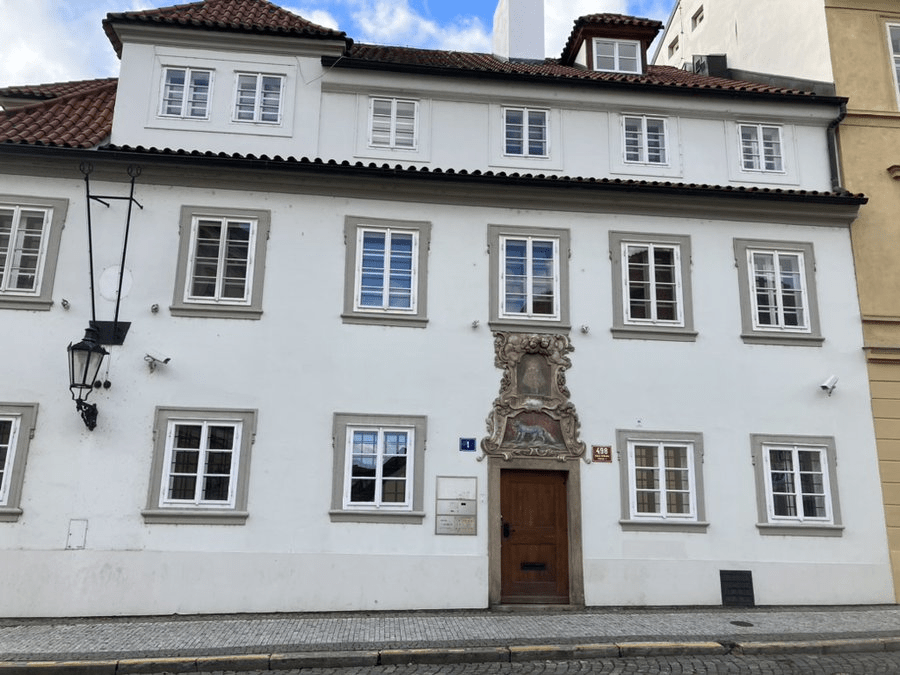
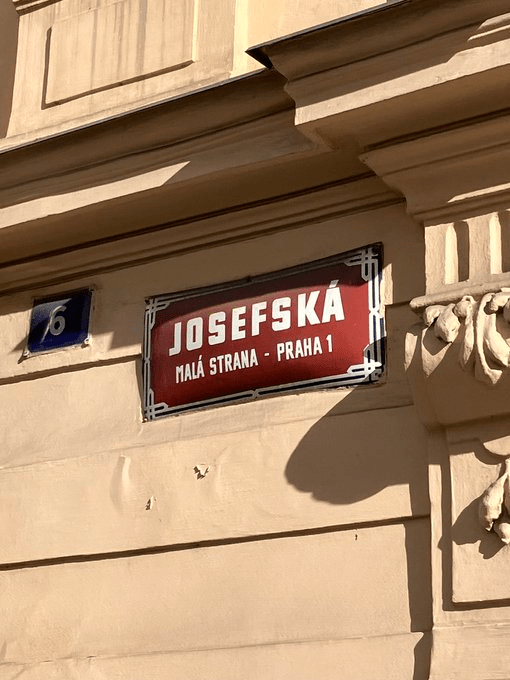
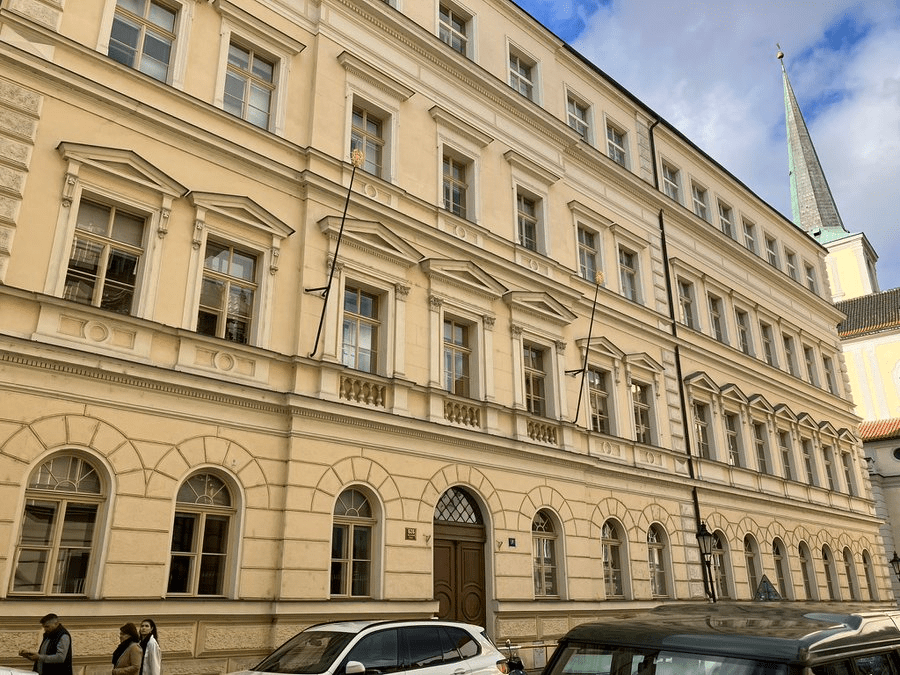
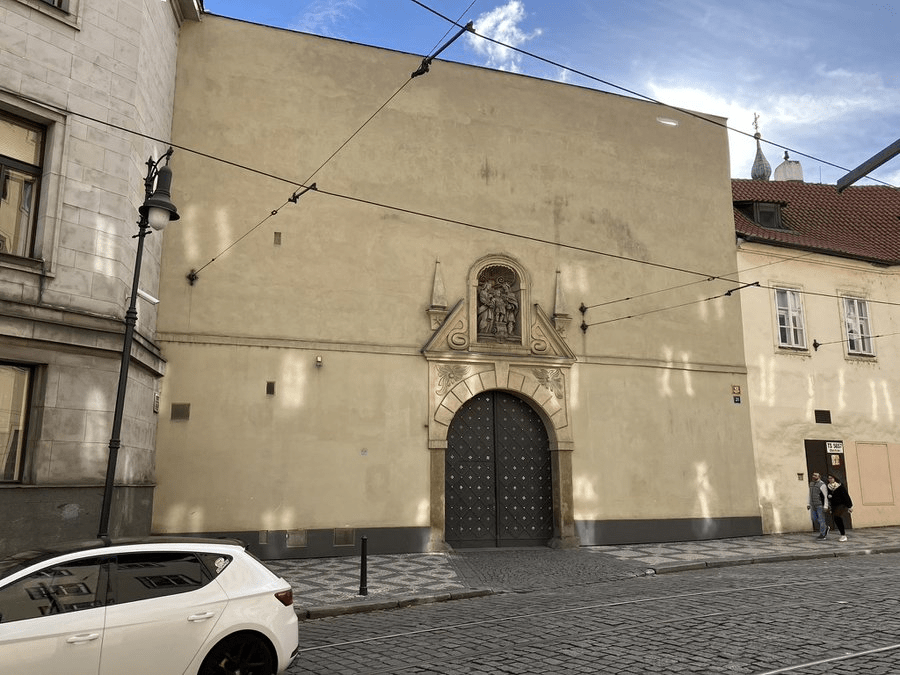
Harantova includes a former Dominican monastery, which now hosts the luxury Mandarin Oriental Prague. It also has a pleasing example of one of ye olde Prague street signs.
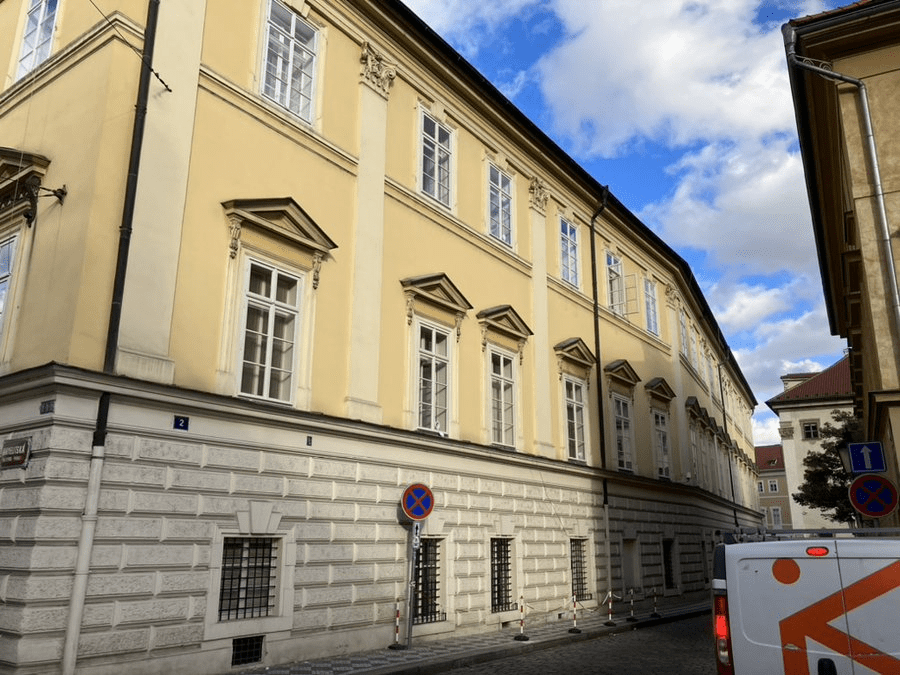
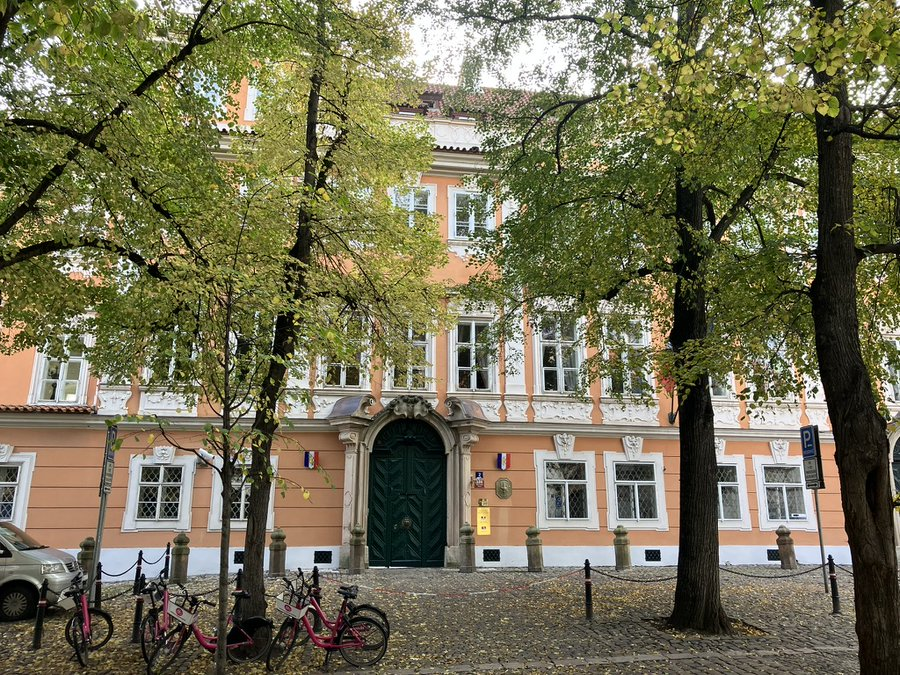
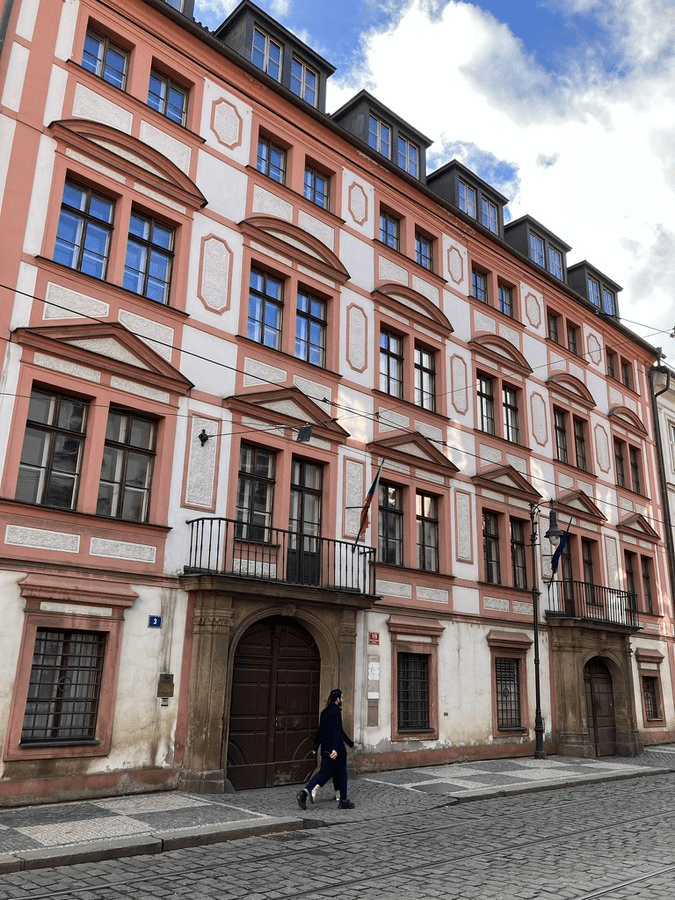
Right across from it is Rohan Palace, which now houses the Ministry of Education, Youth and Sports of the Czech Republic.
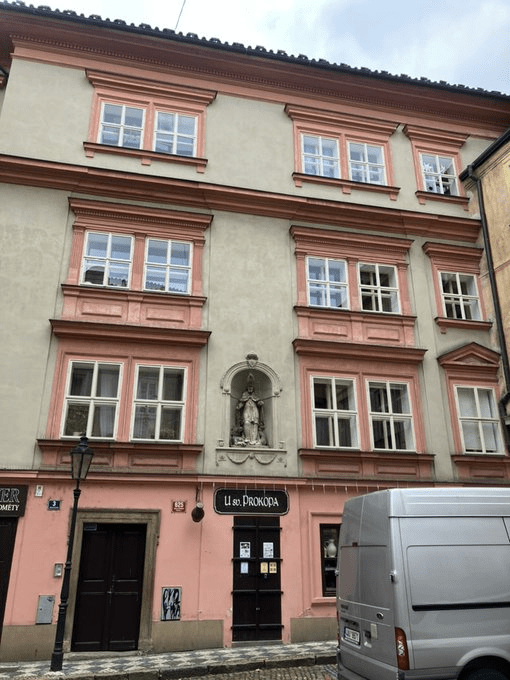
Prokop served as the monastery’s abbott until his death in 1053. He was canonised as a saint in 1204, and later became one of the patron saints of Bohemia.
His remains were transferred to the Church of All Saints in Prague Castle in 1588.
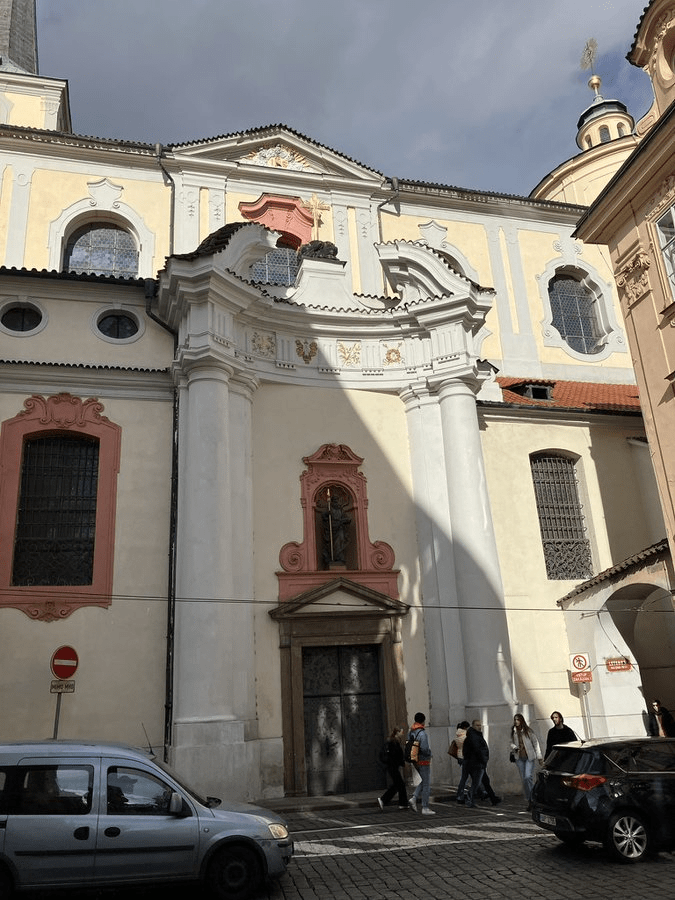
Many churches in Bohemia are devoted to him – and, if you look at number 3 in this street, you’ll see what used to be one of them. It’s been a residential building since 1784.
For a relatively short street, Prokopská certainly packs the excellent house names in: you’ve got the Golden Griffin, the White Pelican, the Golden Ostrich and the Black Horse all within a few doors of each other.
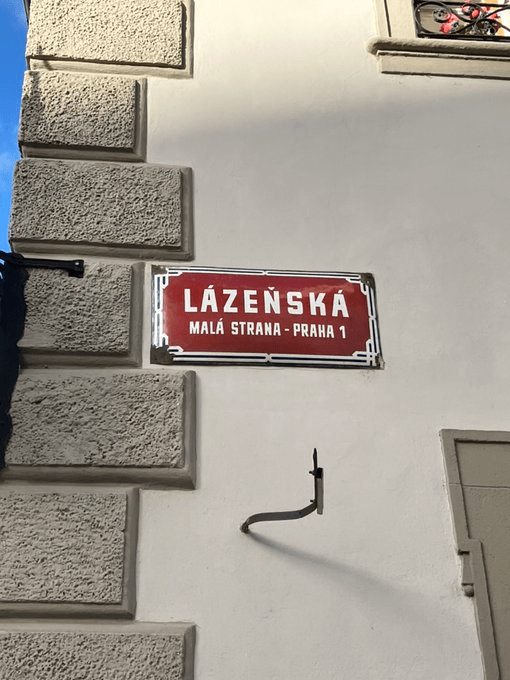
A lázeň is a bath or a spa. You may know of Mariánské Lázně in western Bohemia, or, a bit closer to home, Karlovy Lázně, formerly a spa but now the biggest nightclub in Central Europe.
And, from 1345, there was at least one bath house here. A written document from 1503 refers to local spas in the plural.
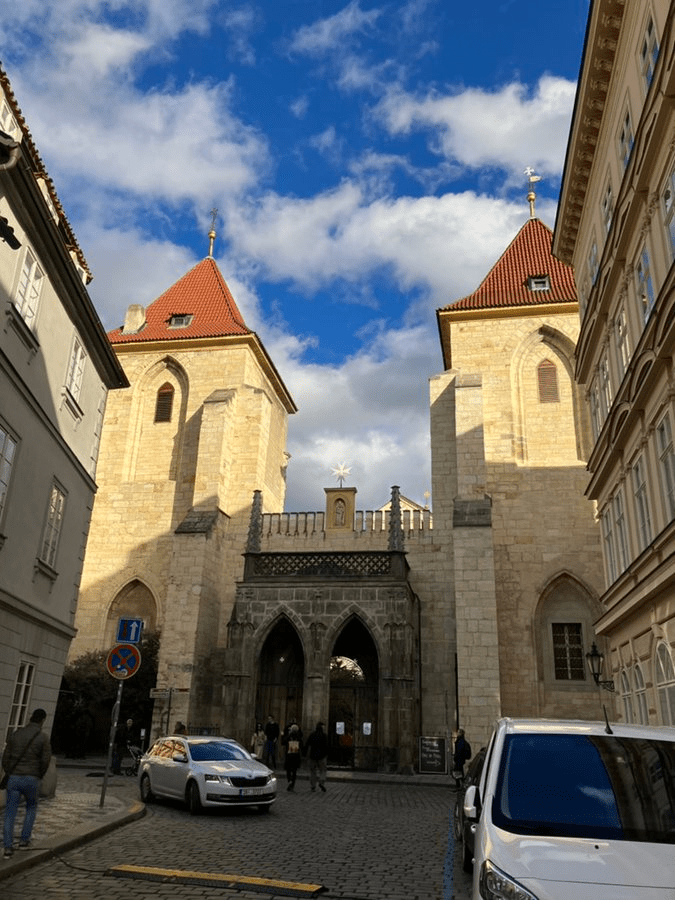
The most popular theory on the church’s name is that there used to be a chain, stretching from Malá Strana across the Vltava in order to collect customs duties from passing ships.
The convent building is right next door.
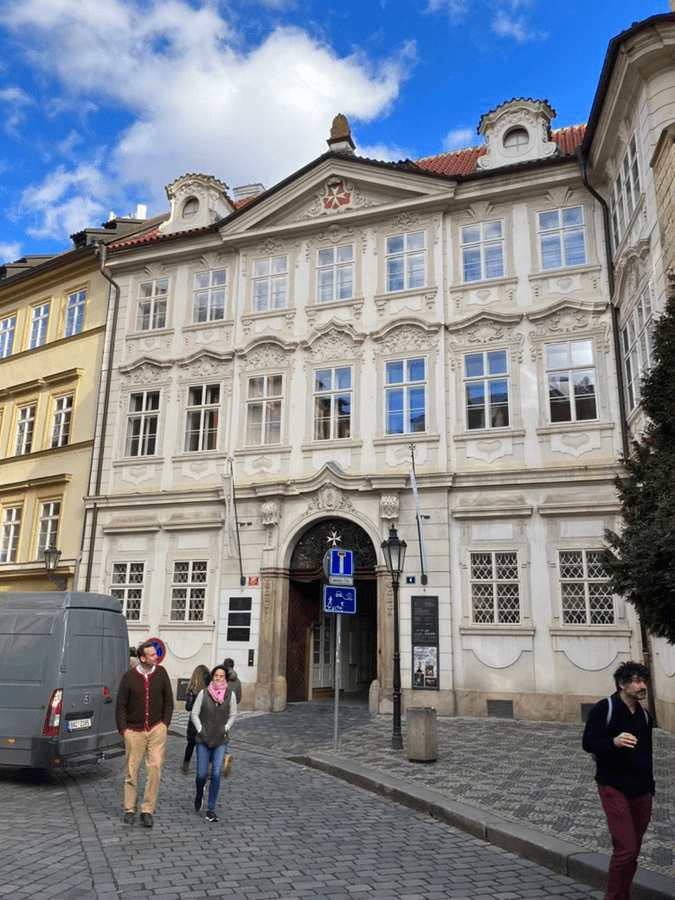
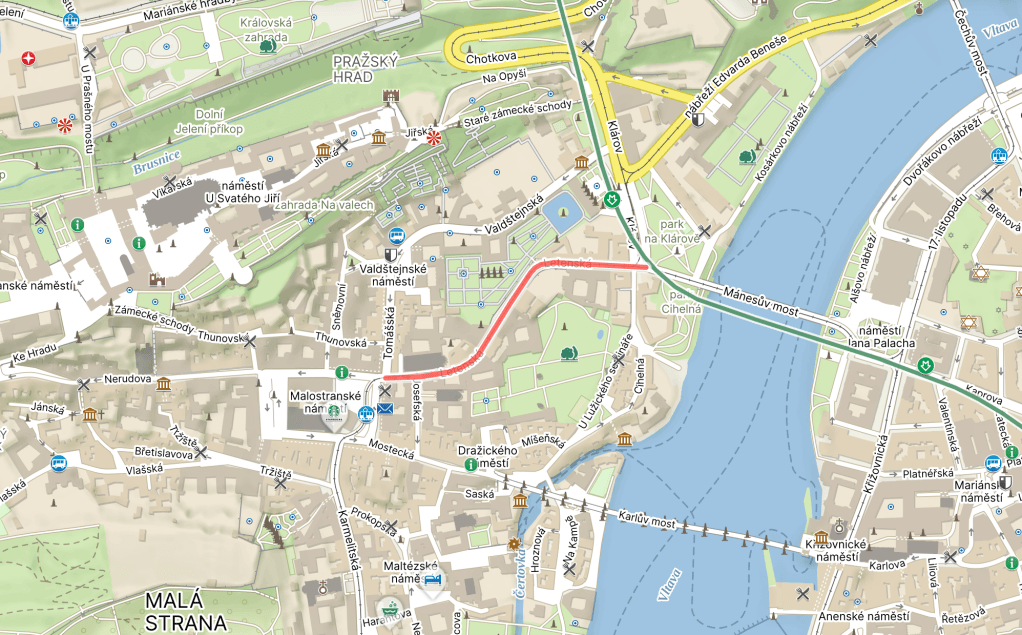
Velkopřevorský palác – see link above – can also be accessed from Lázeňská.
While Dům V Lázních – named after the spa that was once here – used to be a hotel so prestigious that it was stayed in by Peter the Great, François René de Chateaubriand and Otto von Bismarck (not at the same time).
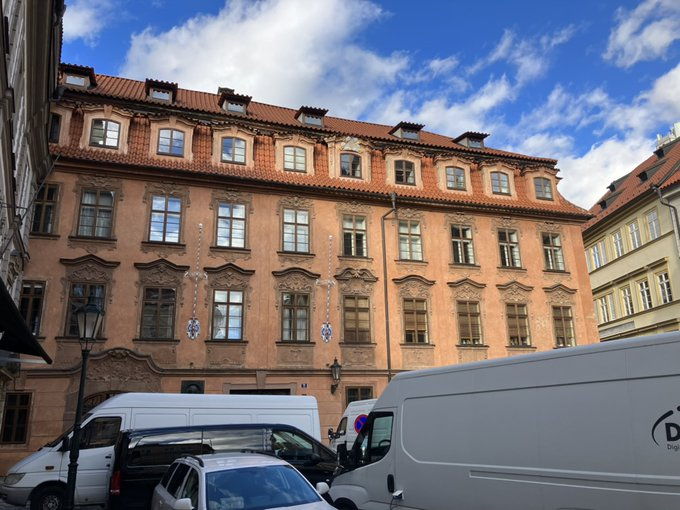
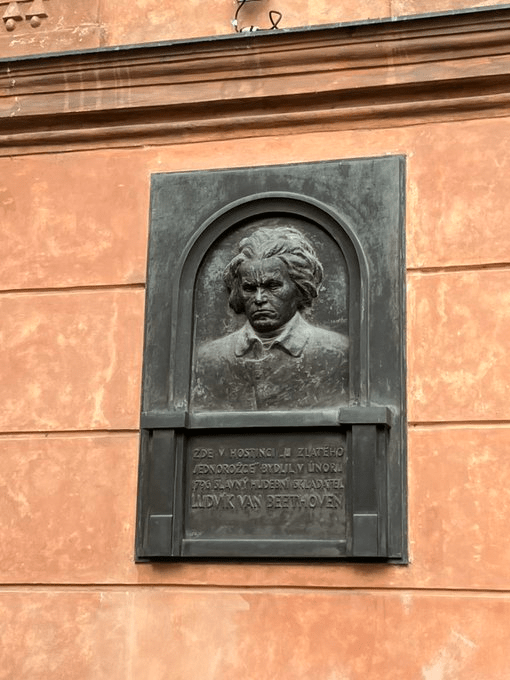
Lázeňská is seriously about the flashy guests, because Dům U zlatého a bílého jednorožce / The Golden-White Unicorn welcomed both Wolfgang Amadeus Mozart (1789) and Ludwig van Beethoven (1796).
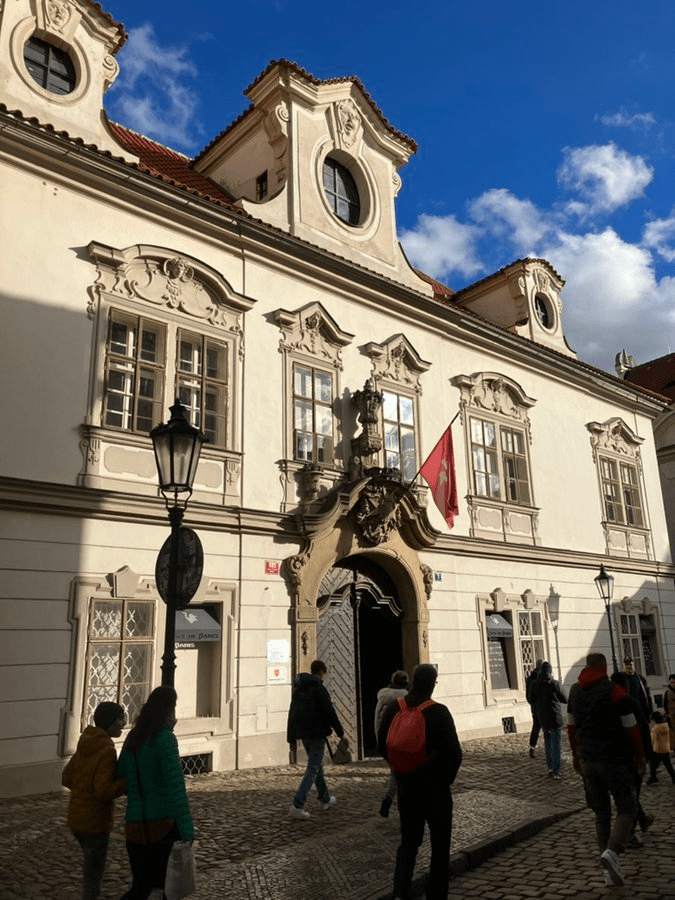
The Knights Hospitaller arrived in Bohemia in the 12th century (when their headquarters were still in Jerusalem). The Grand Priory was created in 1626, and they moved into their palace here in 1694.
During WW2, the Order effectively stopped, not starting again until 1989. From 1948 to 1981, one Karel VI. Schwarzenberg worked from exile in Vienna to revive the Grand Priory’s activities. You will be familiar with his recently-deceased son: https://english.radio.cz/tributes-pour-death-karel-schwarzenberg-8799843
The Straků z Nedabylic Palace – also known as U sedmi čertů (The Seven Devils) or U bílého koníčka (The White Horse) – is now home to the Jan Deyl Conservatory and Secondary School, which focuses on a musical education for the visually impaired: https://jandeylconservatory.cz/index.php/cs/
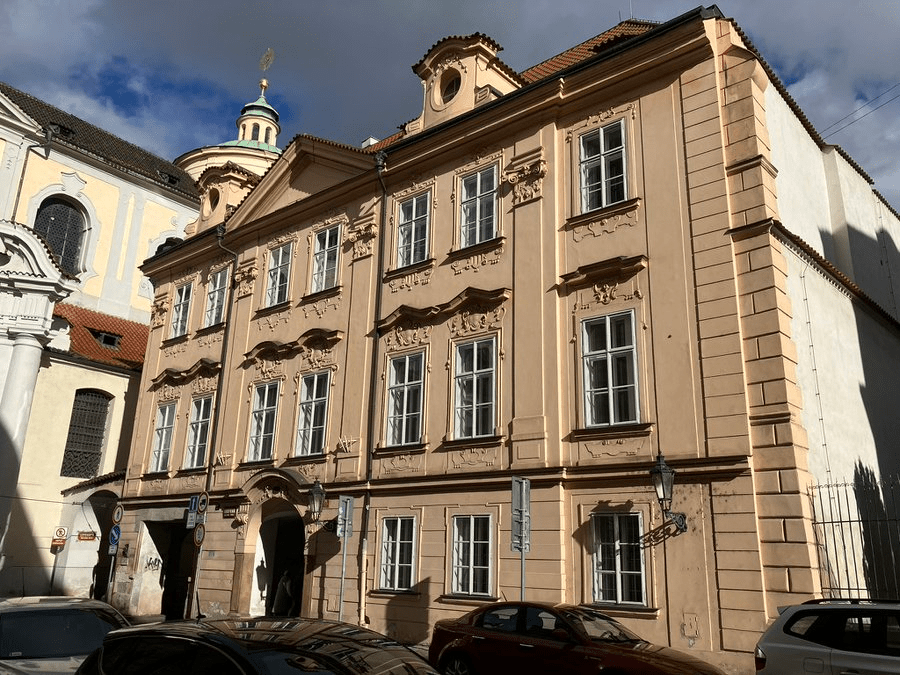
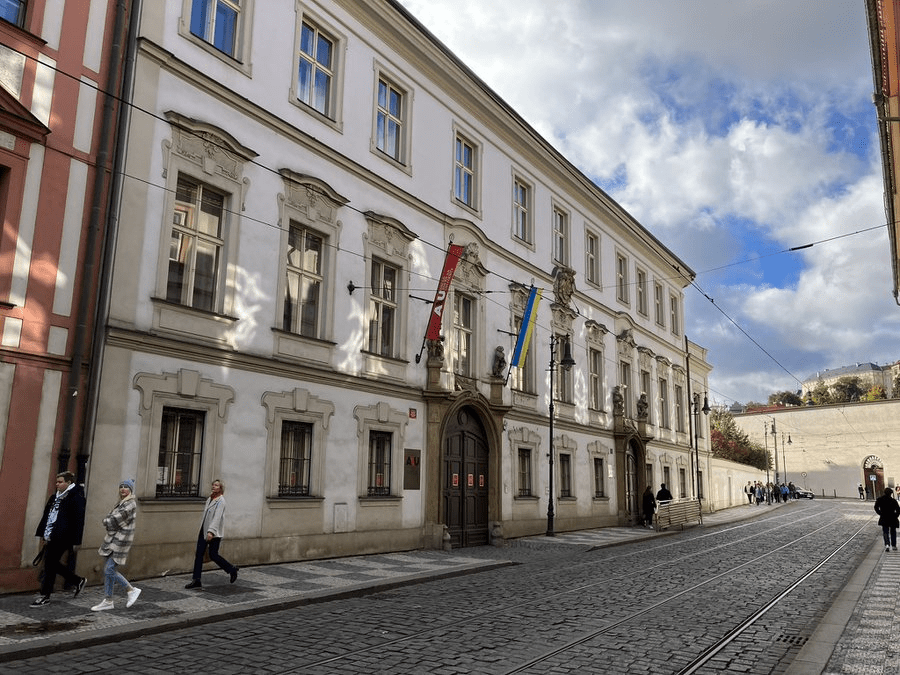
There’s also the Turbů Palace, in Rococo style, which hosts the Japanese Embassy.
Next door, we have the Danish Embassy, apparently one of the very first to be opened in the Czech Republic, as Denmark was one of the first countries to recognise both the Czech and Slovak Republics in 1993. They have quite a likeable Instagram page: https://www.instagram.com/denmarkinczechia/
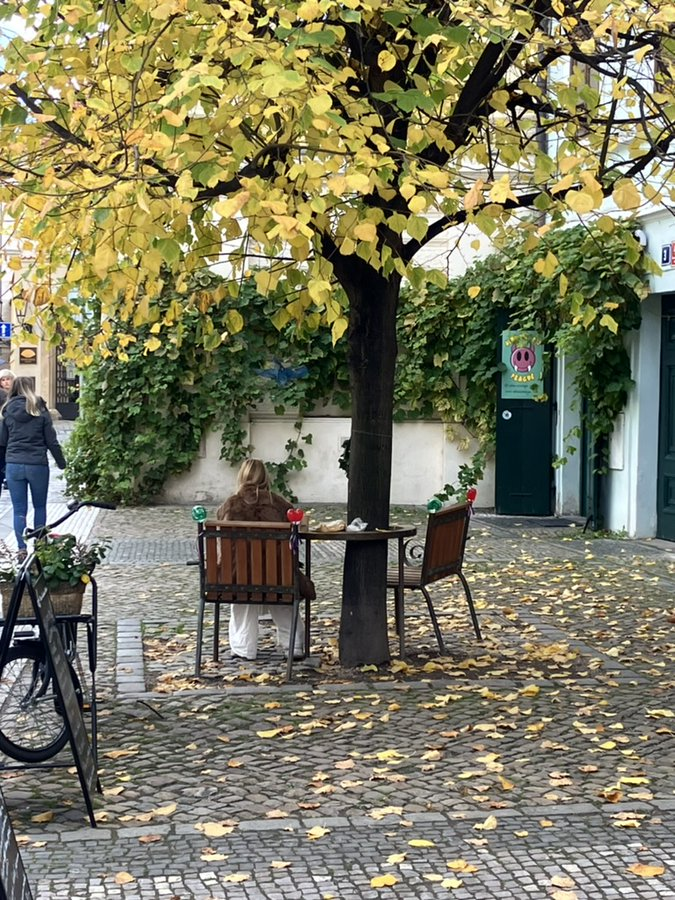
Finally, you might think that this is just a pair of benches, although, if you look closer, the red hearts may make you think of a certain Czech.
These are part of a series of memorials to Václav Havel, all of which have the same style (round table, two chairs, usually a tree in the middle). The project is called Václav Havel’s Place; the idea came from Havel’s long-time friend, Bořek Šípek.
Added on 1 May 2014, this was the fourth such ‘Place’ to exist, after the first three were inaugurated in Washington DC (October 2013), Dublin (December 2013) and Barcelona (February 2014).
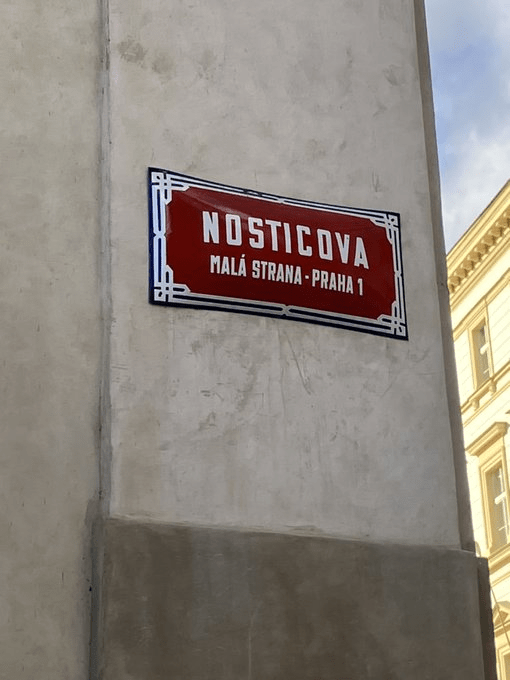
Around 1600, the family started to make a career at the Bohemian court; their conversion to Catholicism would be useful to them, as, after the battle of Bílá Hora in 1620, they acquired a large number of formerly Protestant properties.
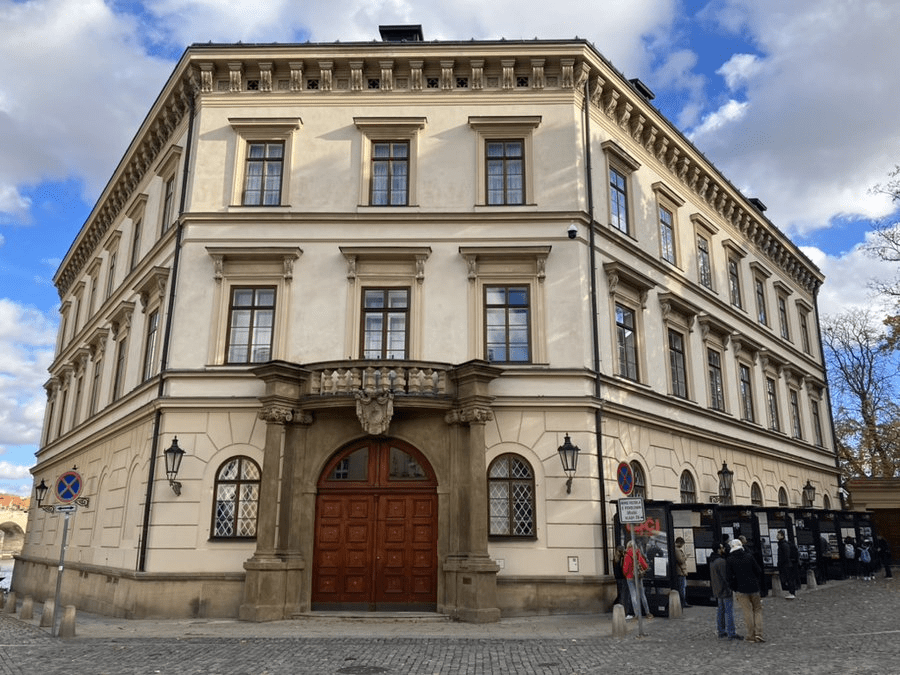
In 1660, Jan Hartvík of Nostic, Supreme Chancellor of Bohemia, had two houses knocked down and replaced by a Baroque palace, which was completed in 1676. The family would own the palace until 1945.
In 1918, when Czechoslovakia was formed, the building was used by the Ministry of Education and Culture. Nowadays, it’s still a Ministry, but without Slovakia and without Education.
The Dutch Embassy also used part of the property until 1996 (the land of ‘how many political parties in Parliament, exactly?’ now has its embassy in Bubeneč).
Much more easily accessible, of course, is the Nostic Garden / Nosticova zahrada, which you’ll pass through when walking from the palace to the busier parts of Kampa.
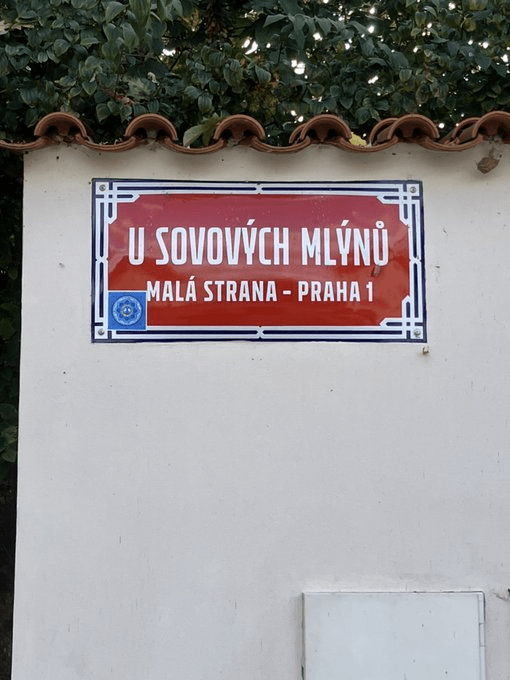
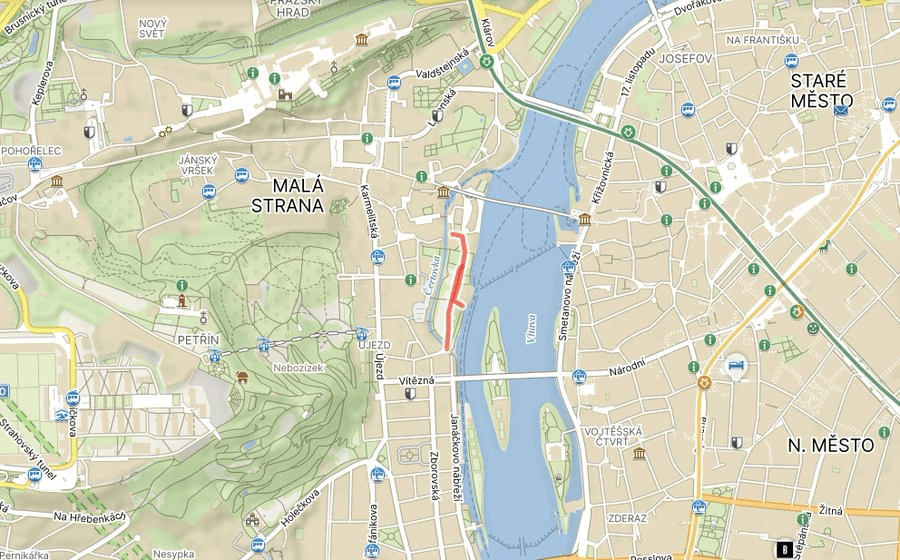
In Renaissance times, there was a miller called Václav Sova of Liboslav. The building which included the mill was built in 1589, getting a Classicist revamp in the 19th century, and then, after a fire in 1867, a Neo-Gothic one.
Turned into a steam mill by its then-owner František Odkolek, it ceased to operate after 1896, as the result of yet another fire.
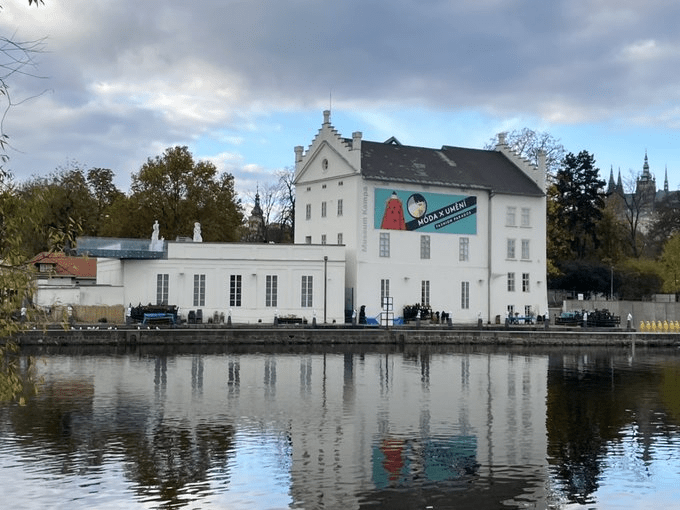
It was to the City of Prague in 1920, and gradually fell into disuse, but, after major renovations, it’s hosted Museum Kampa since 2002.
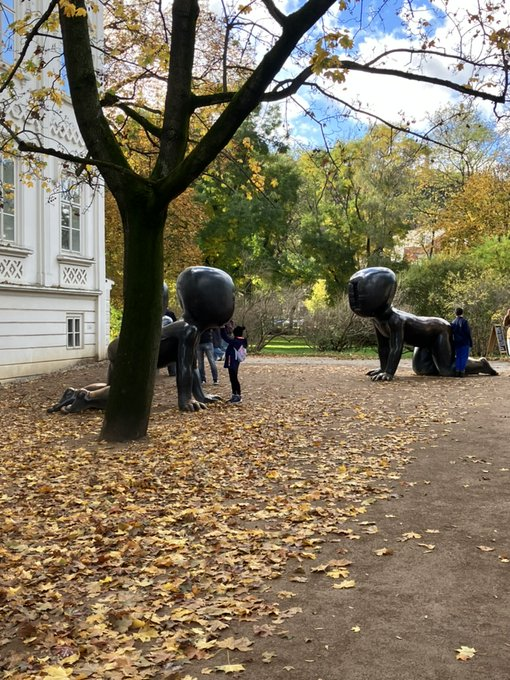
Outside it, you may recognise these babies (literally) by David Černý.
U Sovových mlýnů also includes the Liechtenstein Palace (1697-8).
This is where very important guests spend the night when they’re in Prague – including Liz, Phil and Charlie, top stars of Netflix drama ‘The Crown’, Juan Carlos de España, and, as conveniently left out of all Prague’s official websites right now, Vladimir Putin.
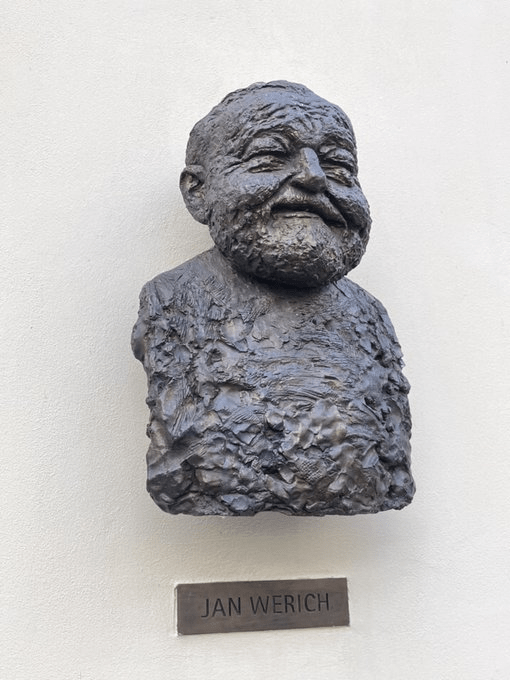
While Werich’s villa, just across the road, has had a good few famous people living in it: historian Josef Dobrovský (1798-1803), actor Jan Werich (1945-1980), and, between 1946 and 1948, his friend and fellow actor Jiří Voskovec.
A převor is a prior – a word whose meaning differs depending on what kind of monastery they’re in.
Among Dominicans, Augustinians, Brothers of Mercy and other Catholic orders, a prior is any monastic superior.
Among Premonstratensians, Benedictines and Cistercians, however, a prior would be directly subordinate to an abbott.
In this case, we’re dealing with what is known as the Maltézský řád in Czech, and most commonly as the Knights Hospitaller in English; they’re mainly associated with Malta because they had their headquarters there from 1530 to 1798.
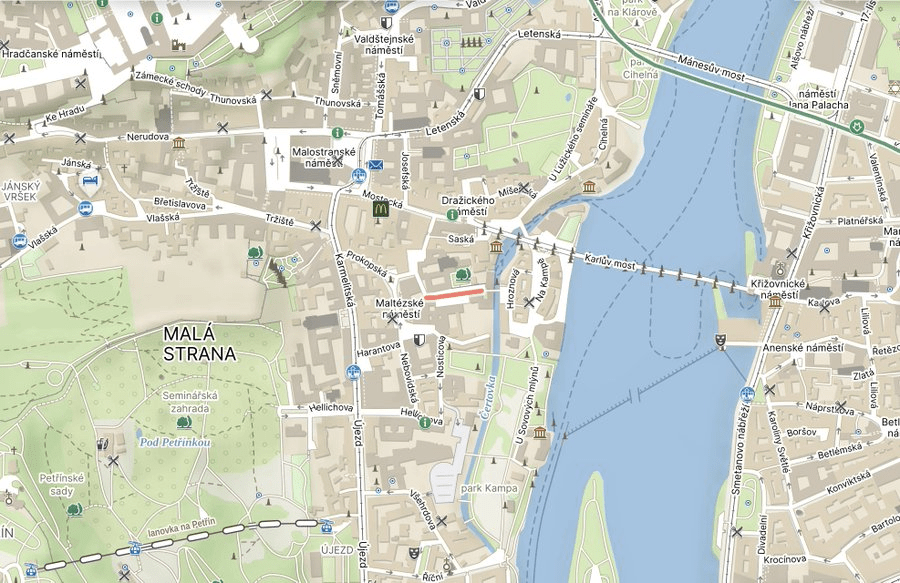
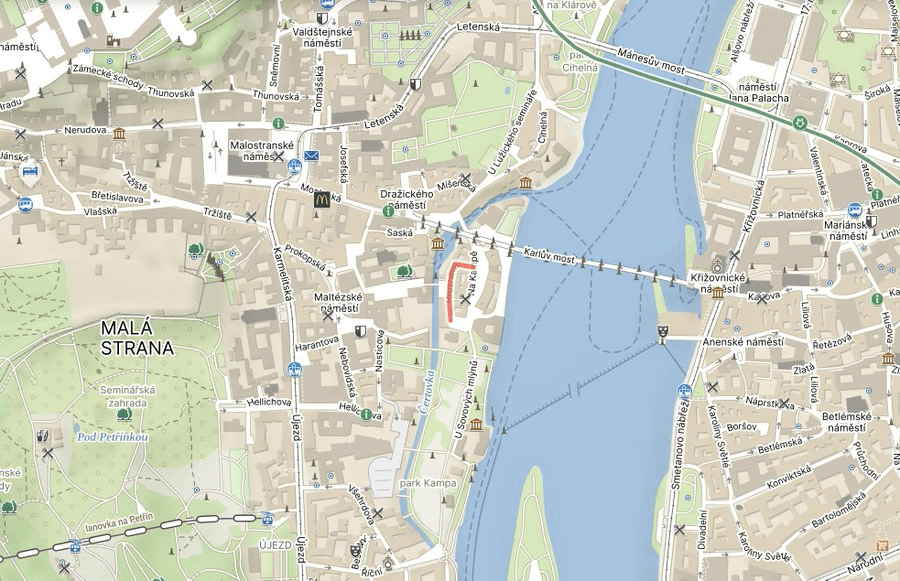
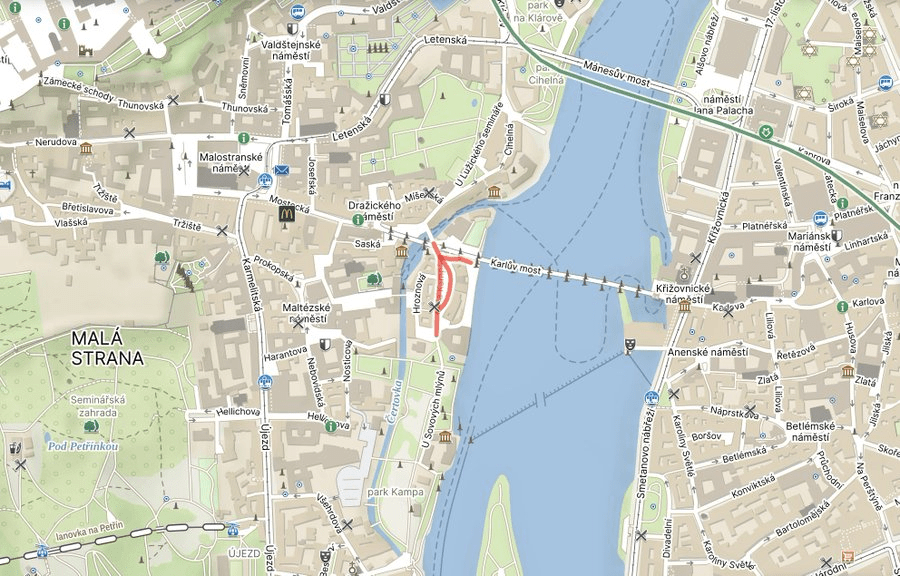
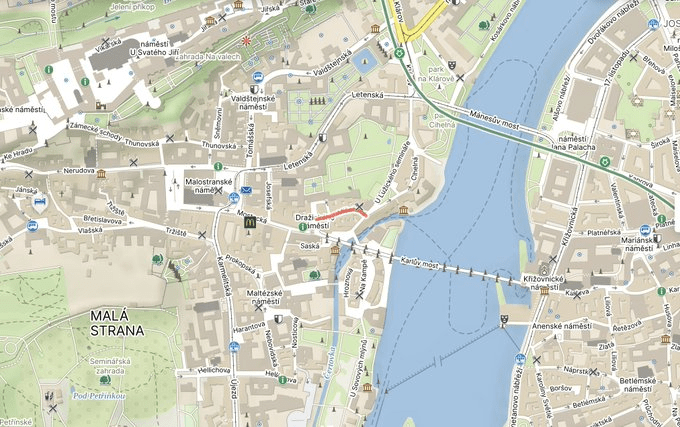
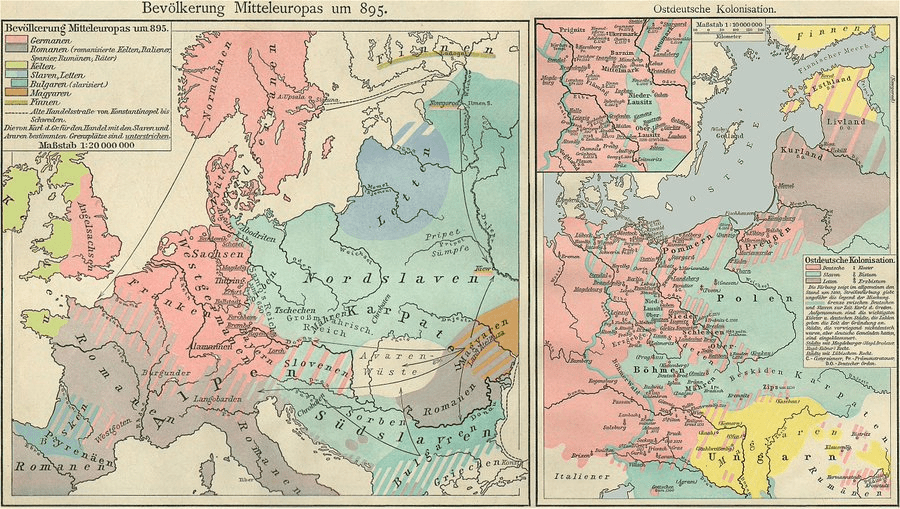
There’ll be more on them in a few days – the map above might have been a giveaway – but, for now, let’s just mention that the order has six Grand Priories – or Velkopřevorství – around the world, including a Czech one.
In the 12th century, King Vladislav I made a building on this square available to the Johannite Order, the Knights’ predecessor organisation.
The palace underwent major Baroque reconstruction from 1725 onwards. After becoming part of the National Museum in 1952, it was given back to the Maltese Knights in 1991.
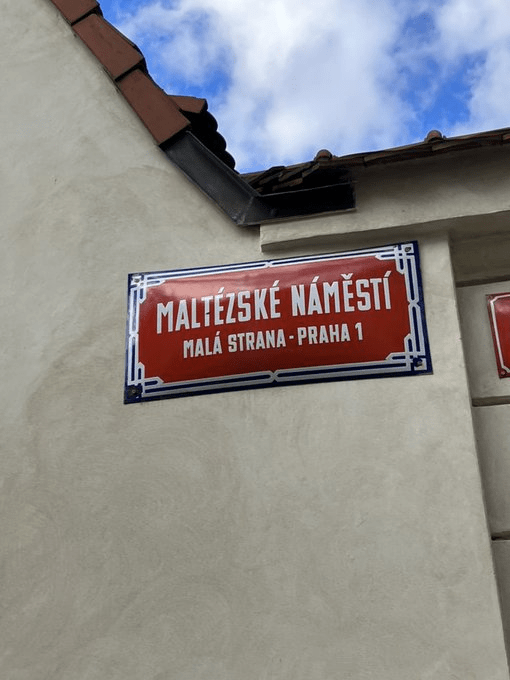
Velkopřevorské náměstí has had its current name sine about 1750.
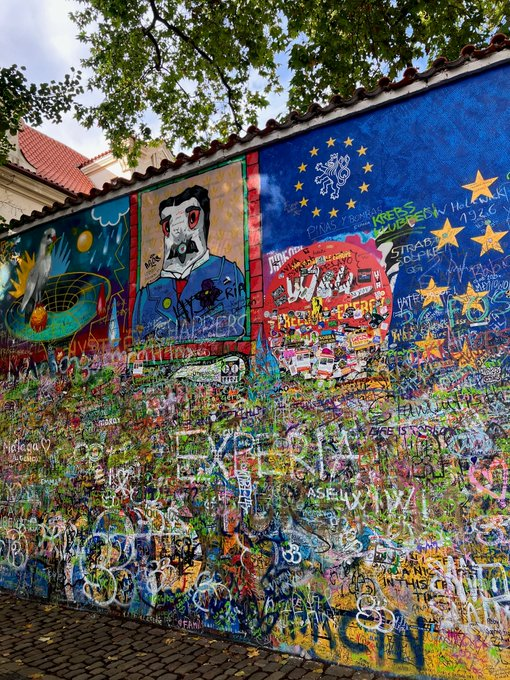
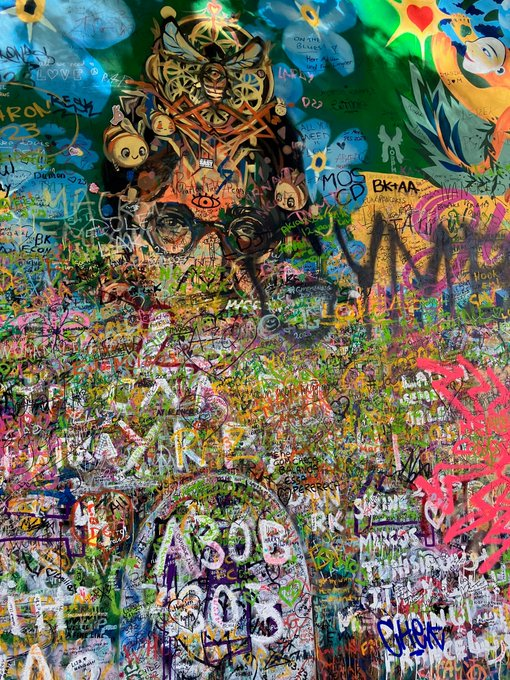
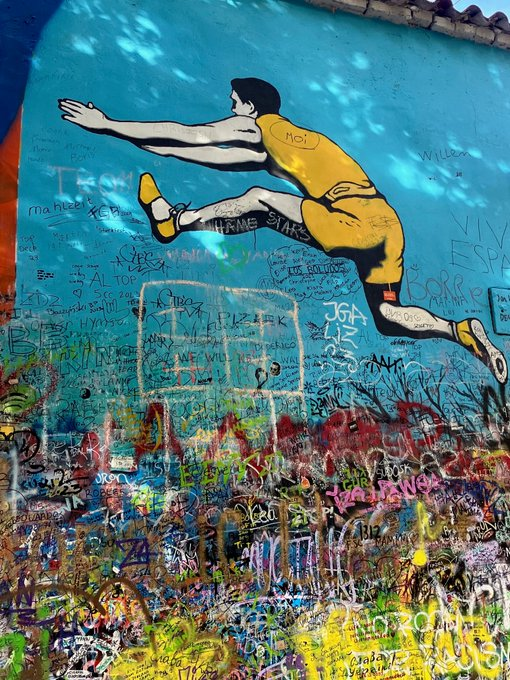
But – and no offence to Malta or France, I promise – if you end up on Velkopřevorské náměstí, it’ll probably be to take a look at the Lennon Wall. (And it’s the Maltese guys who own the wall and allow people to graffiti it).
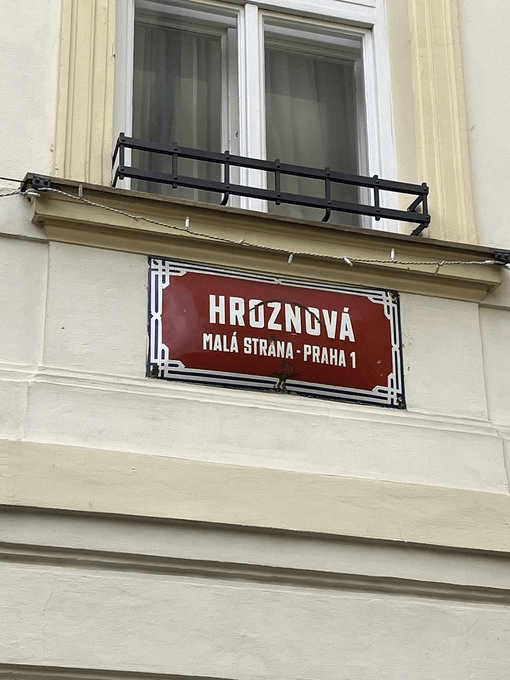
Hrozny are ‘grapes’, not to be confused with hrozný, which means ‘awful’. And hroznová is the feminine adjective from hrozny, meaning that this is Grape Street.
We’re not in a vineyard here – though come to Kampa during one of its French markets and you’d be forgiven for thinking there was one nearby – but Number 2 was originally a Renaissance building called ‘U Zlatého hroznu’ / ‘The Golden Grape’.
Hroznová also includes Humlův dům (Baroque-classicist; built from 1769 to 1774), built by one Matyáš Hummel. It was later owned by Jiří Trnka (1912-1969), a puppet-maker once called ‘the Walt Disney of Eastern Europe’ (insert your rage about ‘Eastern’ here).
Going back to the start, kyselé hrozny are ‘sour grapes’, which is an excuse to post my favourite Simpsons quote of all time.
However, until the 18th century, people would merely refer to the island as ostrov, meaning, yes, ‘island’.
(I can’t judge; I’ll always refer to ‘the pub’ without thinking for a second if it has a name or not)
For such a recent name, people aren’t quite sure what its origins are. Campus is Latin for ‘field’, and, for its first 400 years or so, that is basically all that the island was.
There’s also a story that Spanish soldiers set up campamento here during the Battle of Bílá Hora in 1620 (counterargument: that’s about seven kilometres away).
Then there’s the story that the grandson of astronomer Tycho Brahe, the snappily-named Rudolf Tychon Gansneb Tegnagel z Campu, owned land here.
Continuing to clutch at straws, a kępa in Polish is a ‘meadow’, as in Saska Kępa, a well-to-do suburb of Warsaw, and there may have been a similar word in other Slavic languages.
It also kind of stopped being an island in 1915, although we still refer to it as one – thanks to the construction of Smíchov lock, you can access mainland Malá Strana by dry land.
Kampa didn’t have a great time of it in the 2013 floods:
And here’s some great footage from 1966:
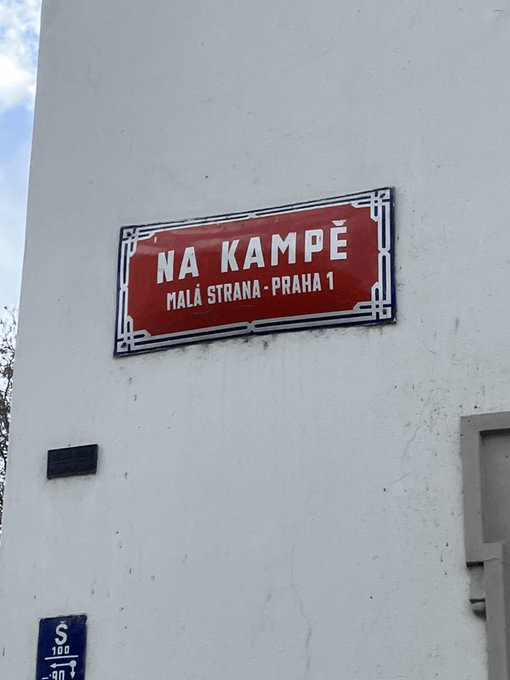
On Na Kampě itself, I recall this being the Estonian Embassy quite recently, but it isn’t now.
Obviously, there’s more to say about Kampa, but much of it isn’t on this street, so Carry on Kampa continues tomorrow.
Originally published on X on 13 and 14 November 2023 (there was quite a lot to get through, as you’ll see).
No street sign, but I could hardly get away with not writing a post about this one.
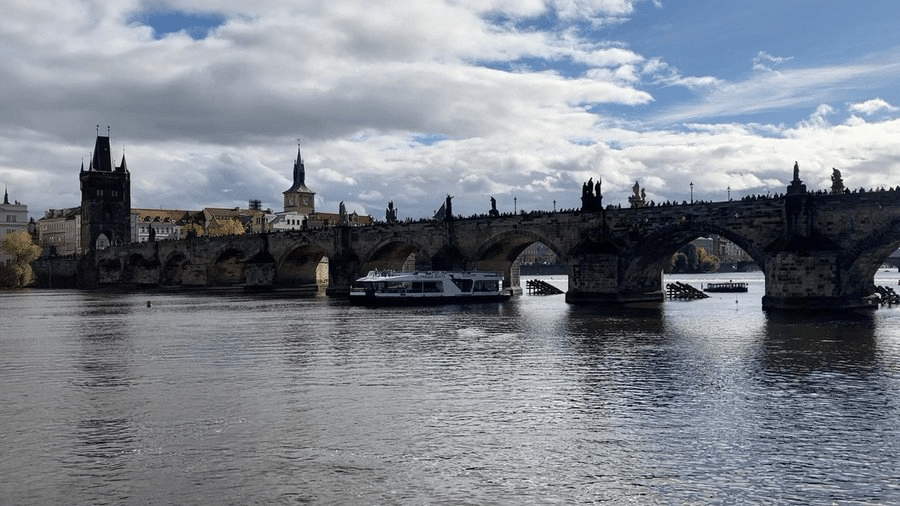
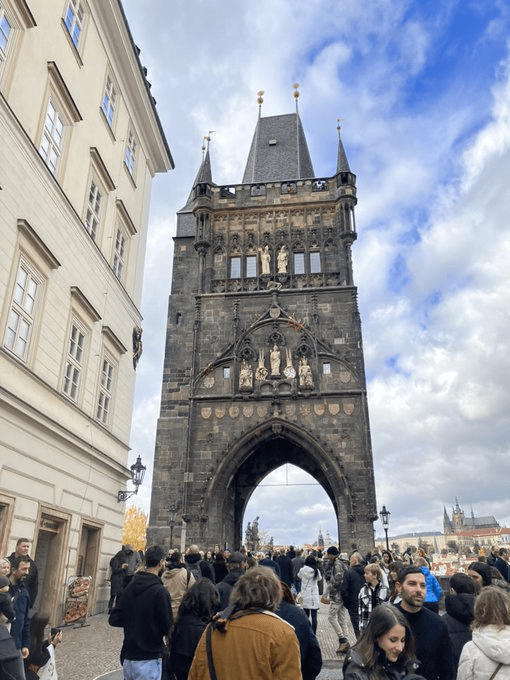
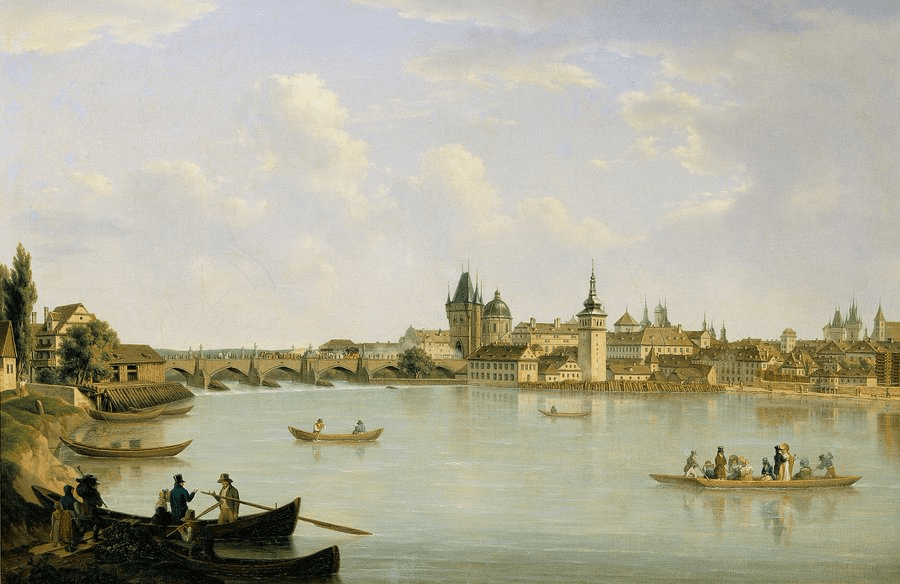
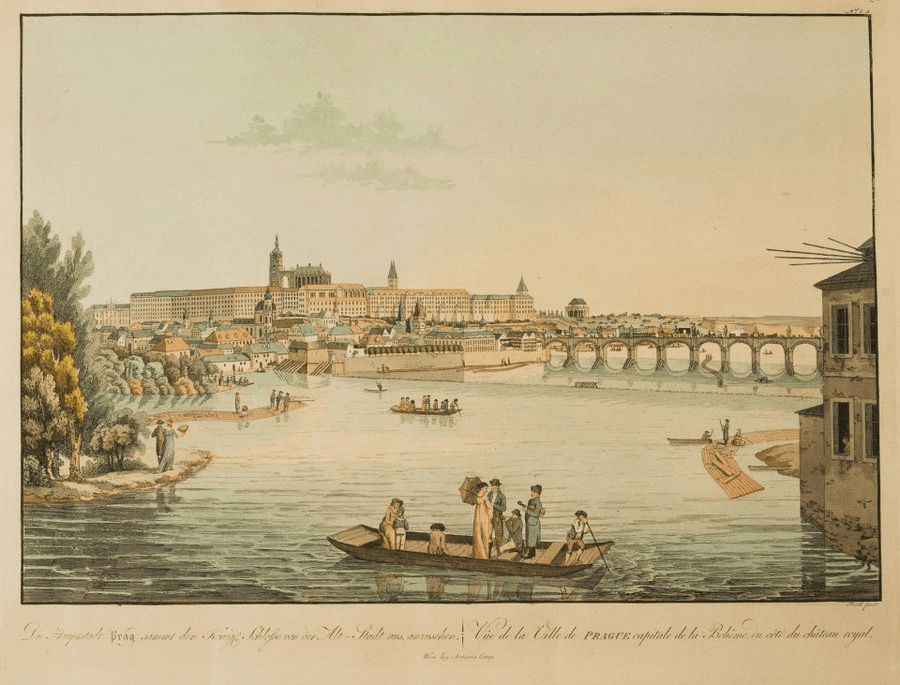
In 1172, Prague got its first stone bridge, built by King Vladislav II and named Juditin Most after his wife, Judith of Thuringia. It survived until a flood in 1342 and was replaced by a wooden bridge until there was a plan (and money) for something a bit more permanent.
Work on the replacement began in 1357 or 8; compared to the Judith Bridge, it had fewer arches, was higher, and had deeper pillars. It was designed by Matthias of Arras, Peter Parler, Bohemian stonemason Oto, or none of the above, depending which source you prefer to believe.
By 1406, the bridge was open and the Kingdom of Bohemia had spent a heck of a lot of money on it. A toll was charged for anybody who wished to cross, and this wouldn’t be abolished for over 400 years.
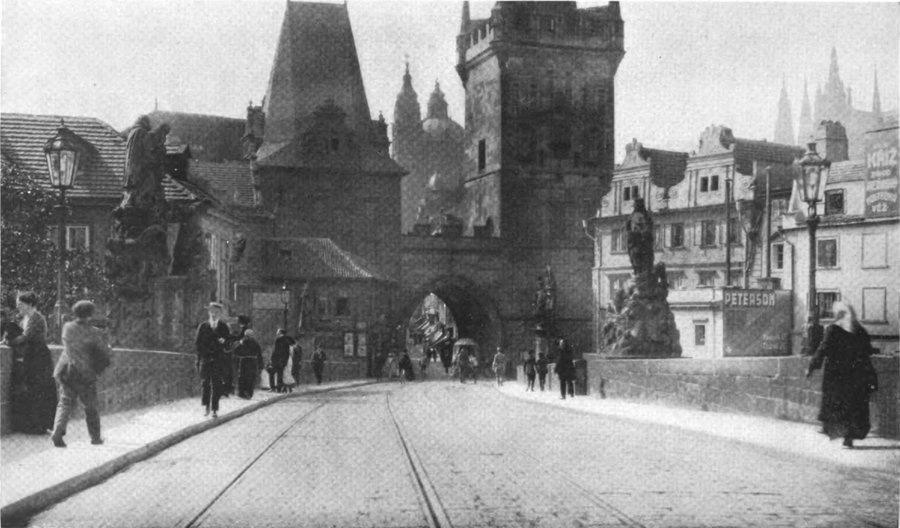
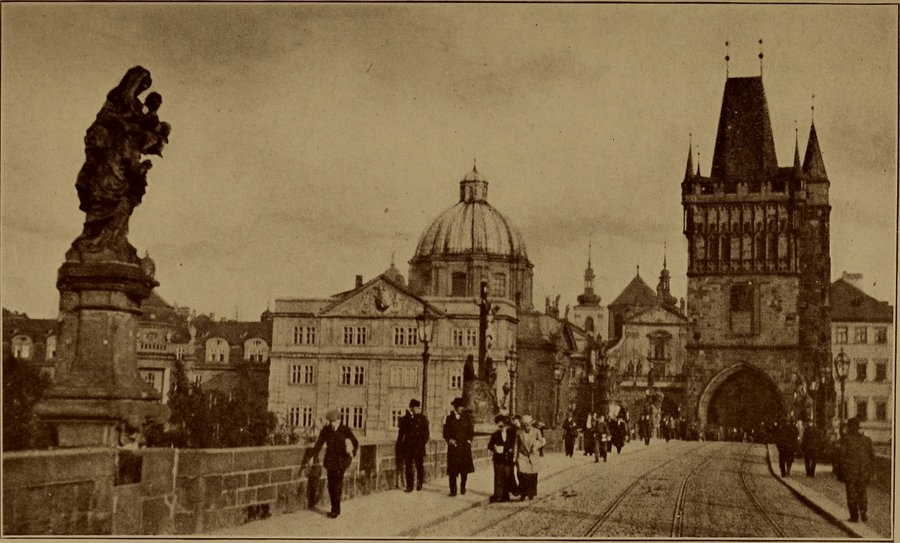
Until 1828, the bridge also welcomed small businesses, usually selling food. The bridge also used to have an electric tram (1905 to 1908), buses (1908-9 and 1932-1946 or so), and, until 1965, cars.
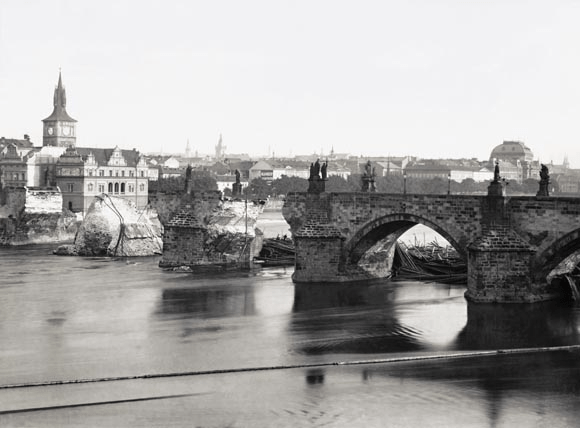
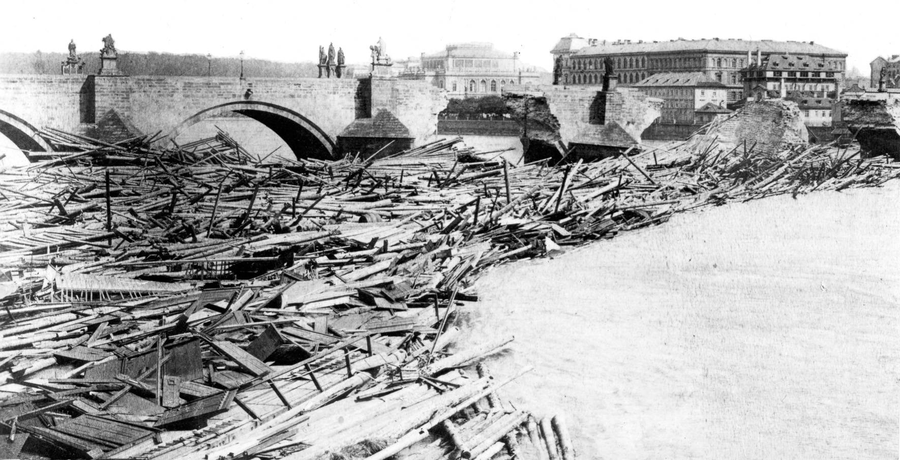
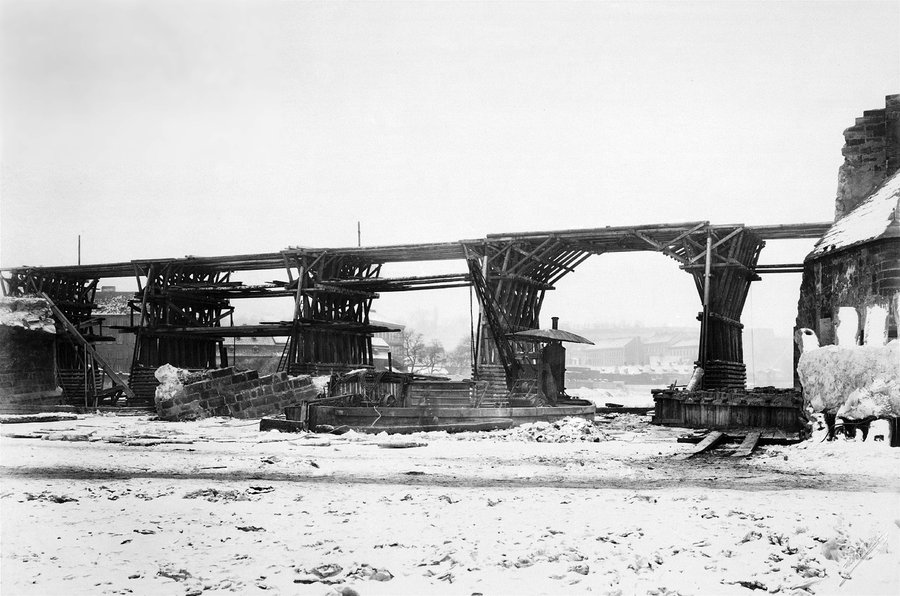
The improved construction didn’t stop the bridge from getting flooded again – after one flood in 1432, the ensuing repairs would last 71 years – but the most famous flood came in 1890. Two pillars collapsed, three arches were washed away, and two statues fell into the Vltava.
Thanks to the work of the architect Josef Hlávka, the collapsed parts were back in place in 1892 and the two fallen statues were rescued from the water.
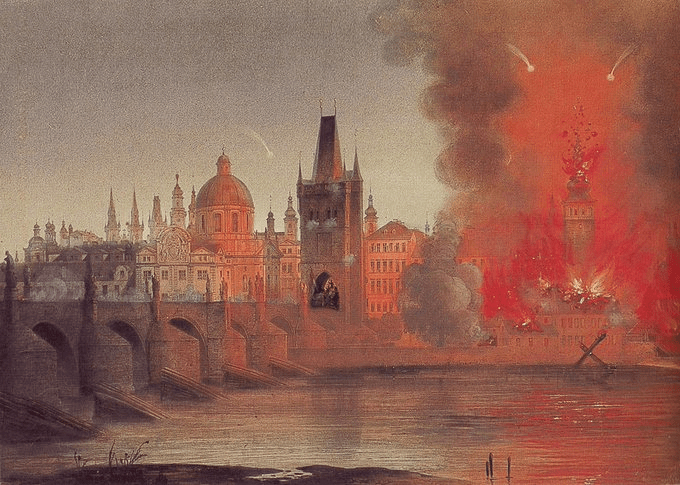
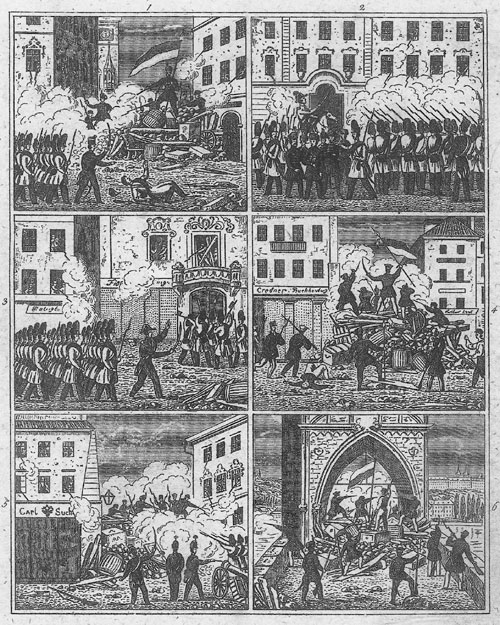
Charles Bridge also escaped major damage during the Prague Uprising of 1848, but, if these artworks are accurate, it was a close shave.
Further reconstruction work (1965-78) solved some problems, but exacerbated others, and yet more reconstruction took place between 2007 and 2010. Unfortunately, this too has resulted in the need for further corrective work.
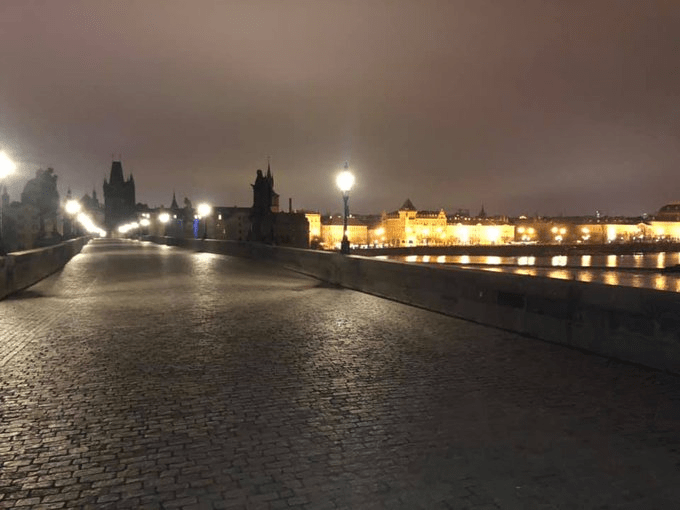
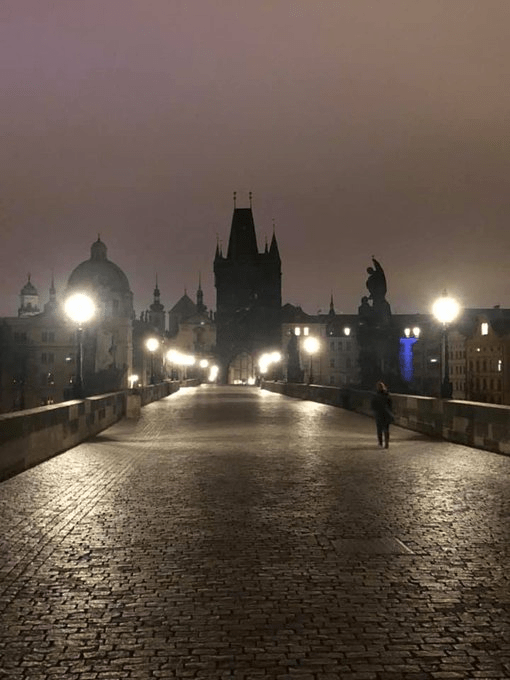
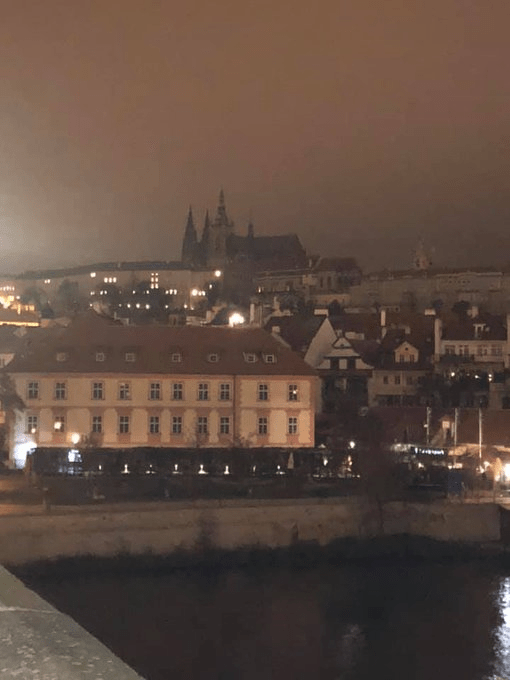
On my birthday in December 2020 (when drinks down the pub were not an option), I got up very early and experienced Charles Bridge when it was (almost) empty.
I wouldn’t recommend December 2020 to anyone, but I would recommend this.
Part 2 begins here
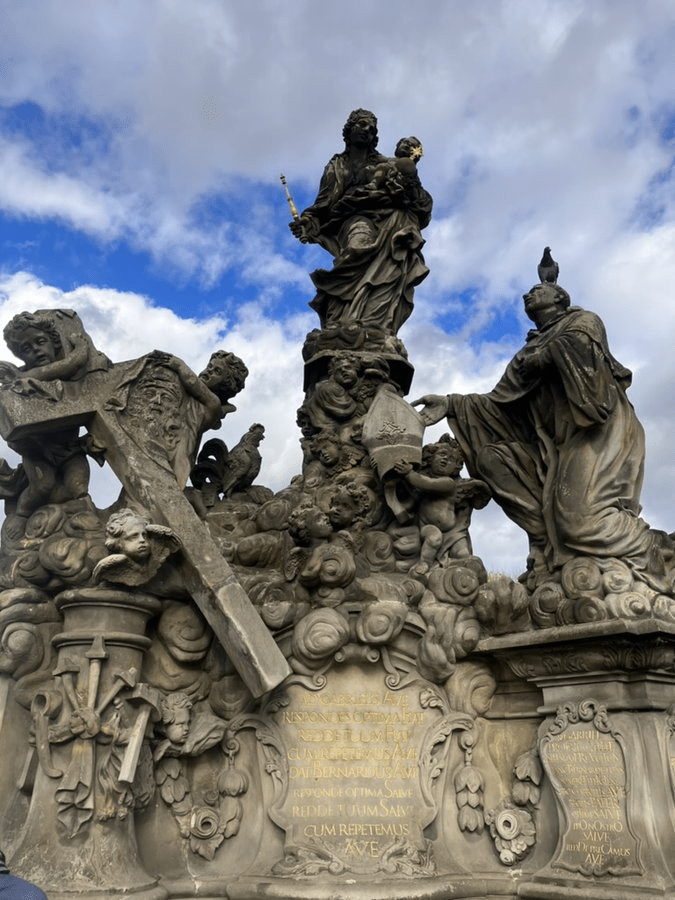
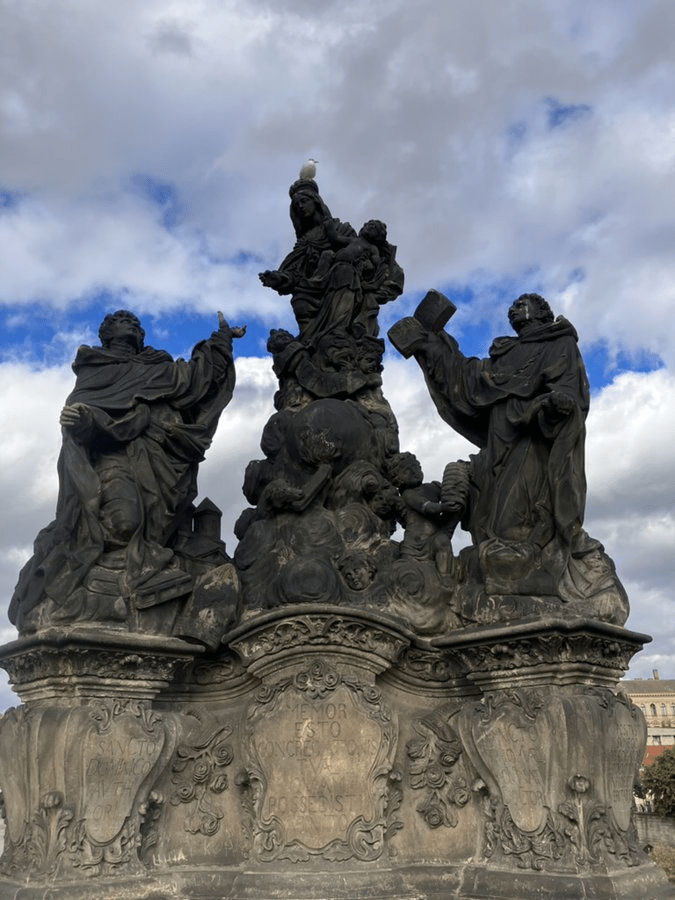
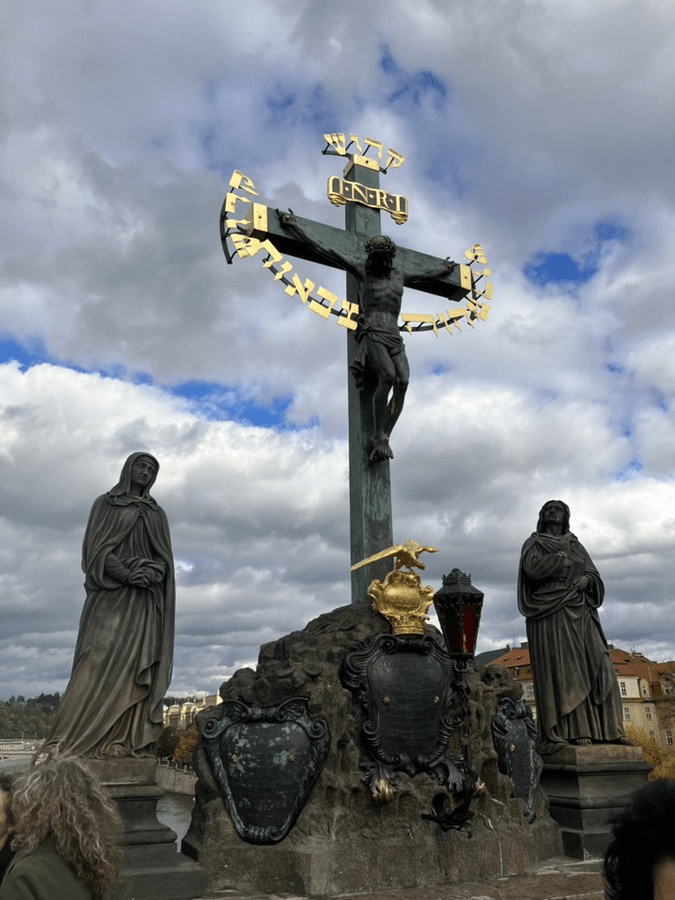
When preparing for this thread, I took pictures of every statue on the bridge. Then, when I wrote a thread, I used none of them. This feels like a shame, so here’s your guide to all thirty statues, one by one.
Obviously, many of are replicas, and not every photo makes the features of the statue itself particularly visible (crowds / patience / etc.).
These are in order of appearance (if you start on the eastern side of the bridge, walk along the northern side, and then walk back, looking south).
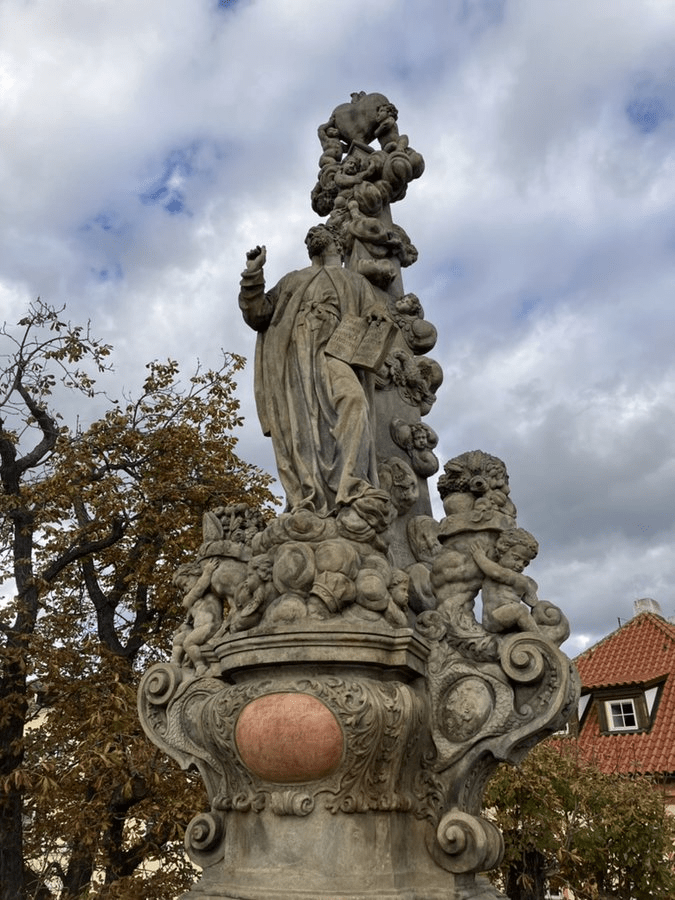
Madonna and St Bernard (originally by Matěj Václav Jäckel – a Sorb – in 1709; remade from 1978 to 1980).
The Madonna, St Dominic and St. Thomas Aquinas (also by Jäckel, 1708; remade from 1958 to 1961).
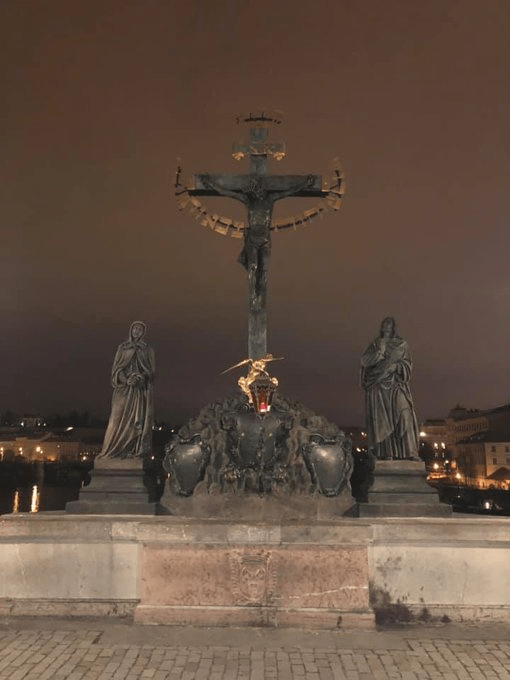
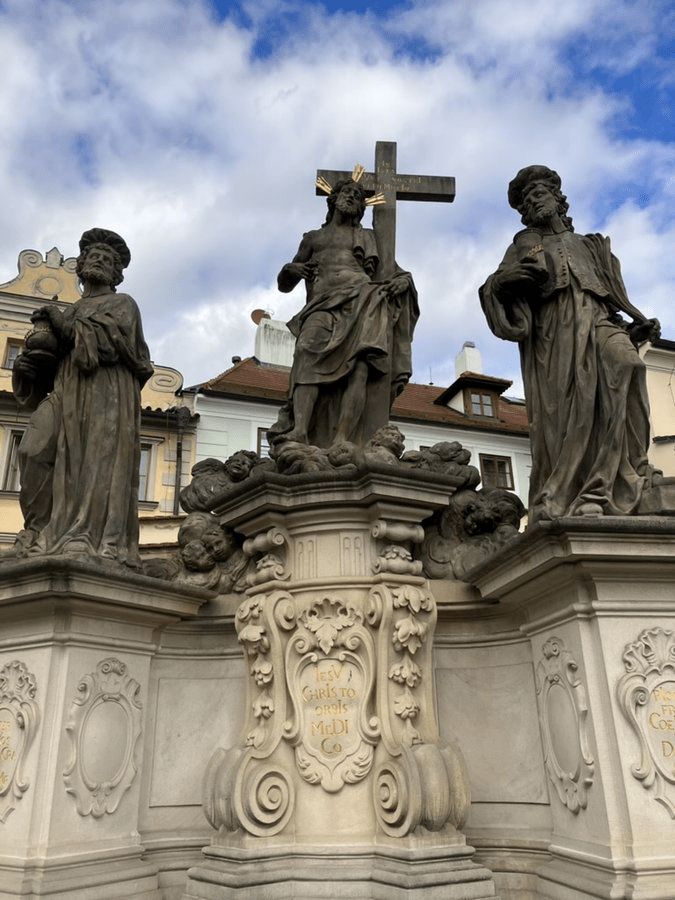
The Calvary – made by Wolf Ernst Brohn around 1628, and brought to the bridge in 1657; it’s rumoured that a crucifix was in this spot from the every early days of Charles Bridge’s existence. This is the oldest statue on the bridge, and has been replaced several times.
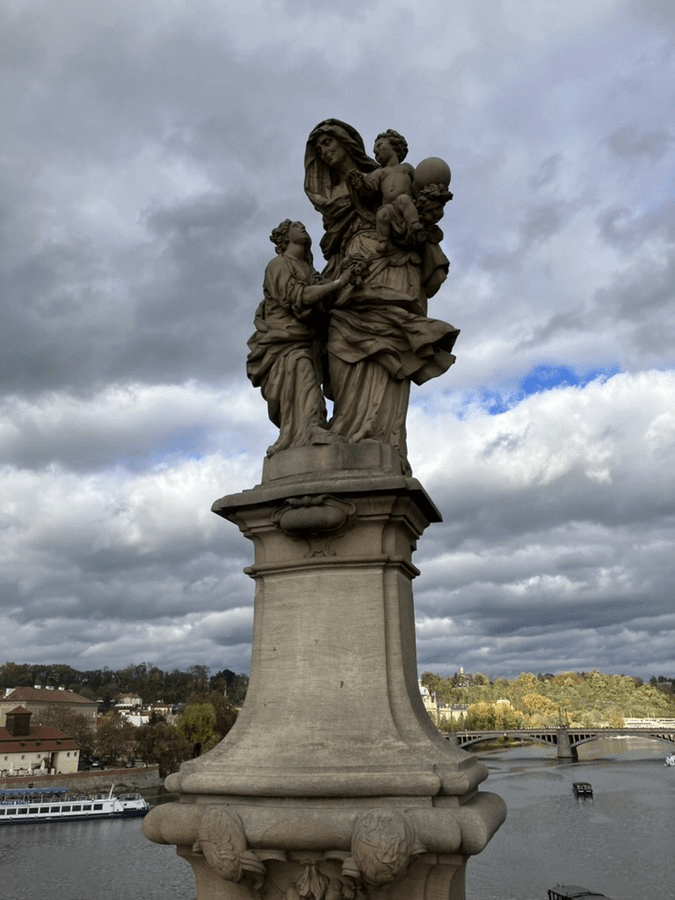
Saint Anne (again, by Jäckel, 1607; replica from 1999).
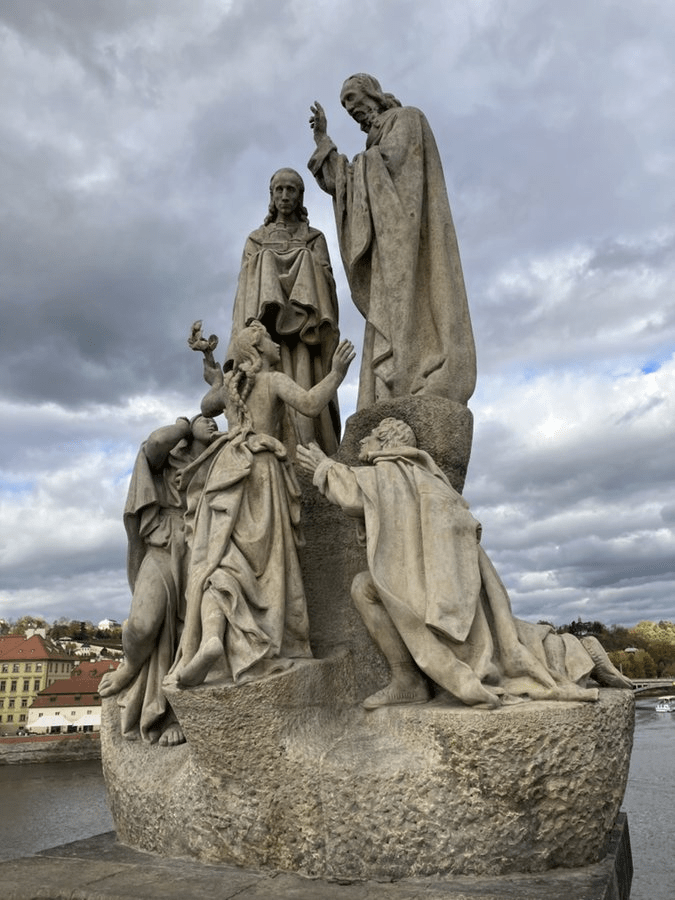
St. Cyril and Methodius (created by Karel Dvořák from 1928 to 1938, having been commissioned to celebrate ten years of Czechoslovak independence).
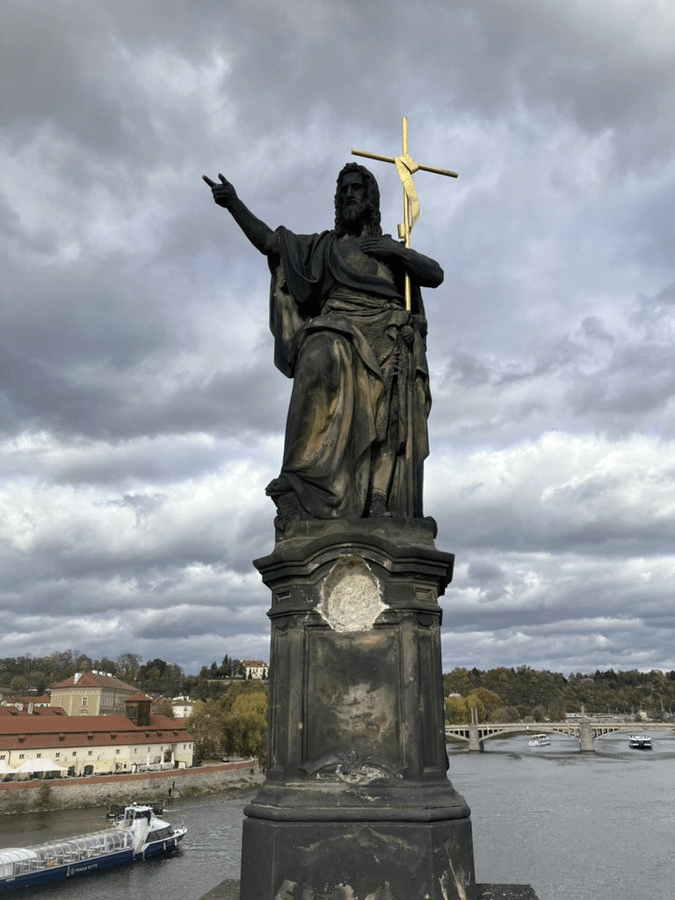
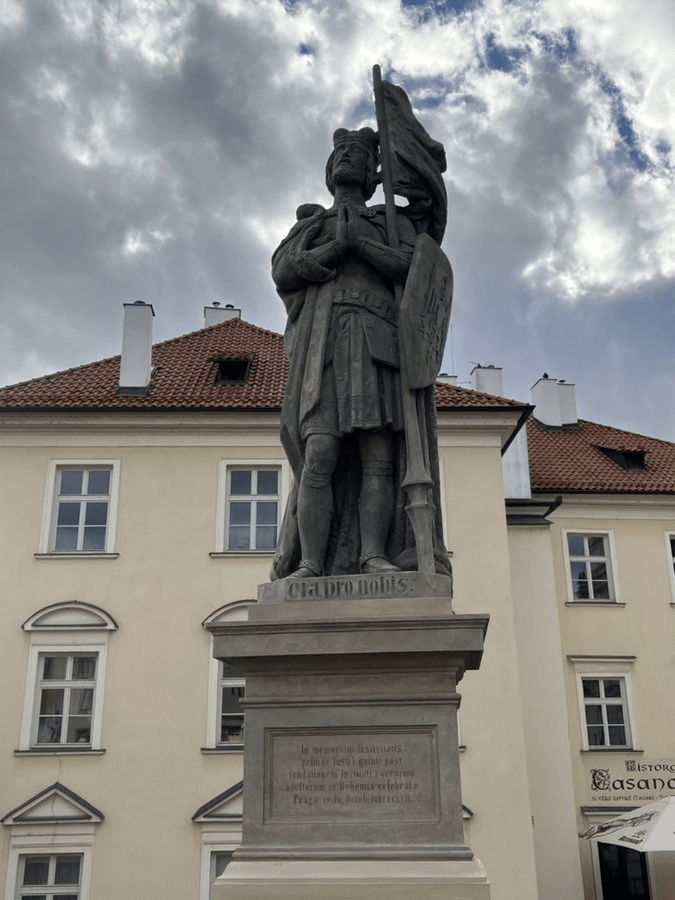
St John the Baptist (by Josef Max, 1855), replacing a larger sculpture showing John baptising Christ, damaged during the Prague Uprising of 1848.
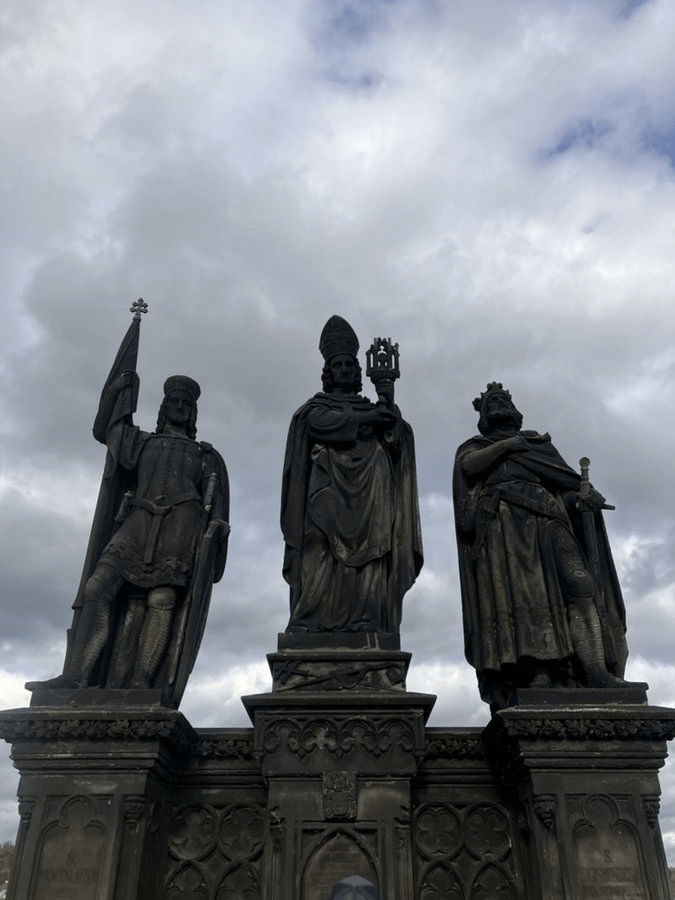
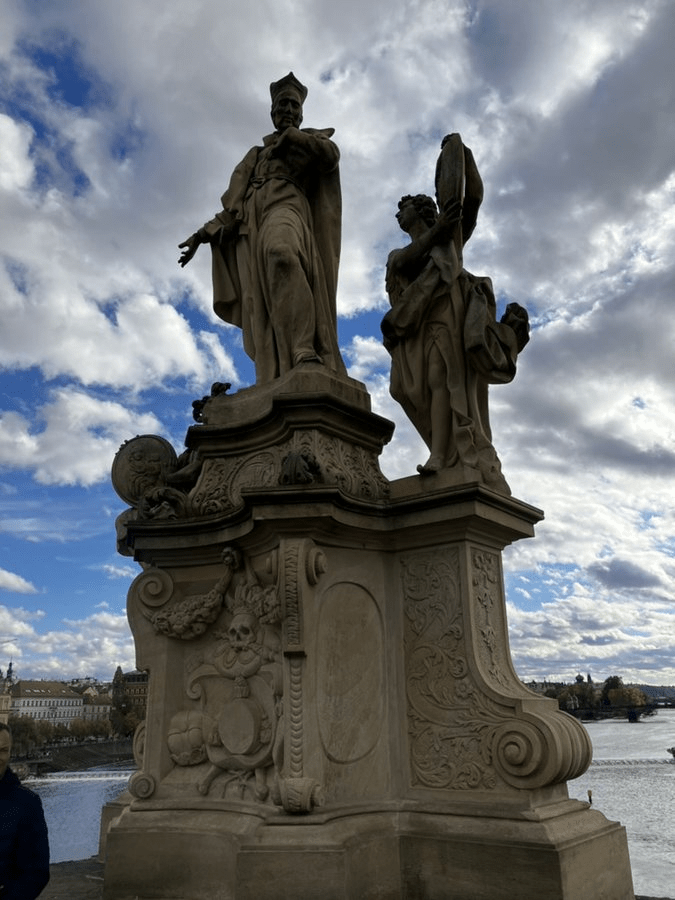
Saints Norbert, Václav and Zikmund (also by Josef Max, 1853, replacing an early statue which had deteriorated due to the low quality of its stone).
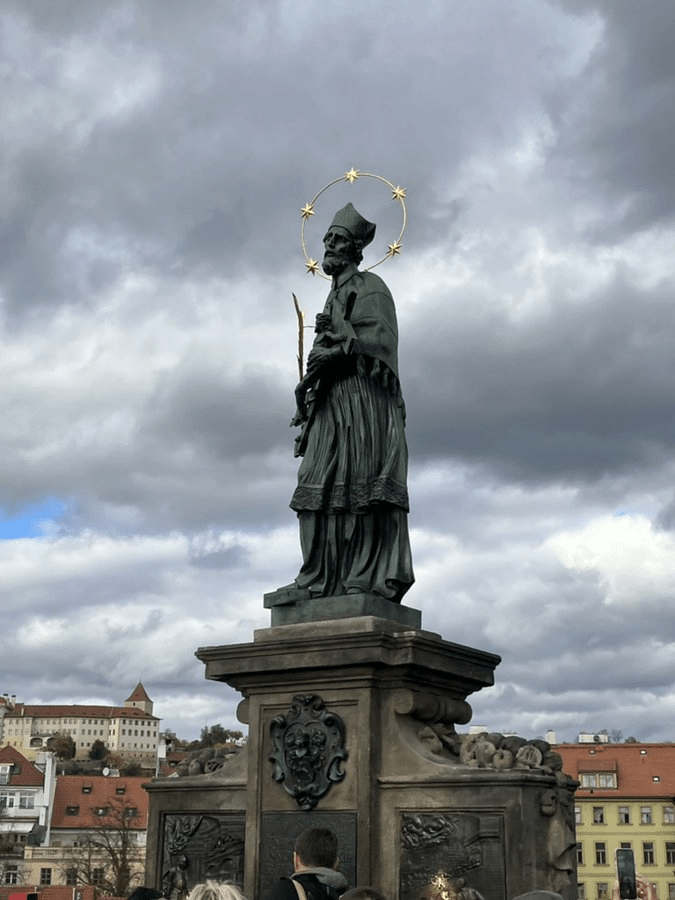
St. John of Nepomuk (cast by J.V. Herold in 1683, based on a 1681 sketch by Matyáš Rauchmüller, and unveiled on what people then thought was the 300th anniversary of John being thrown into the Vltava).
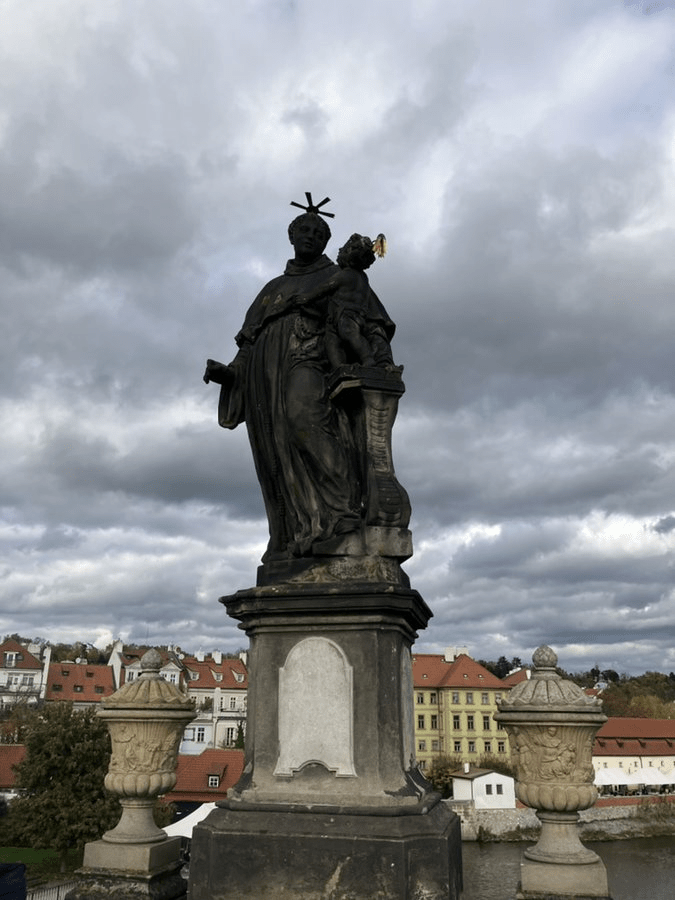
St Anthony of Padua (Jan Oldřich Mayer, 1707; vases on either side restored in 2010).
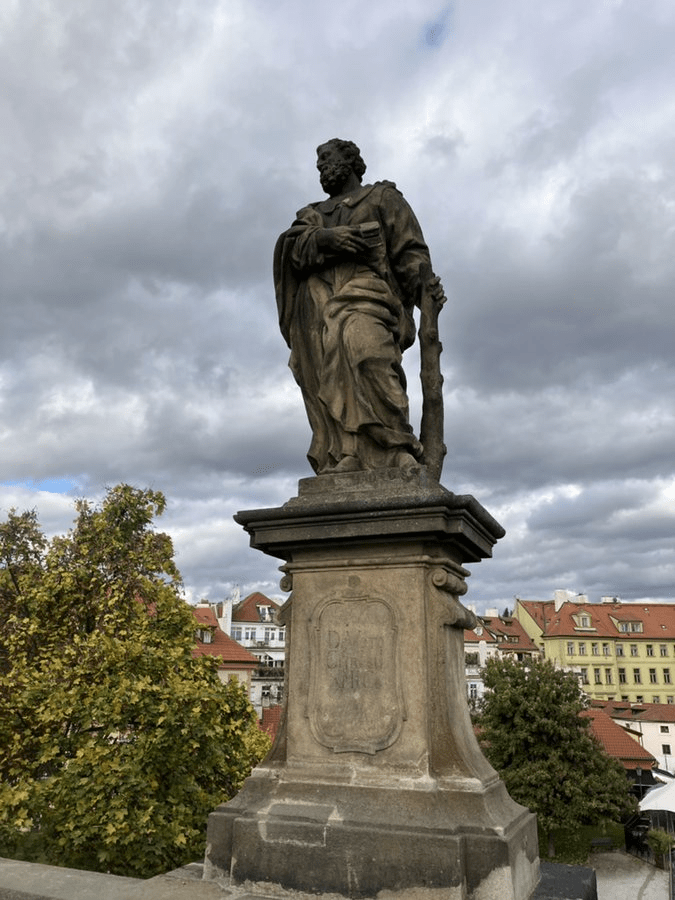
St Jude Thaddeus (also by Mayer, 1708).
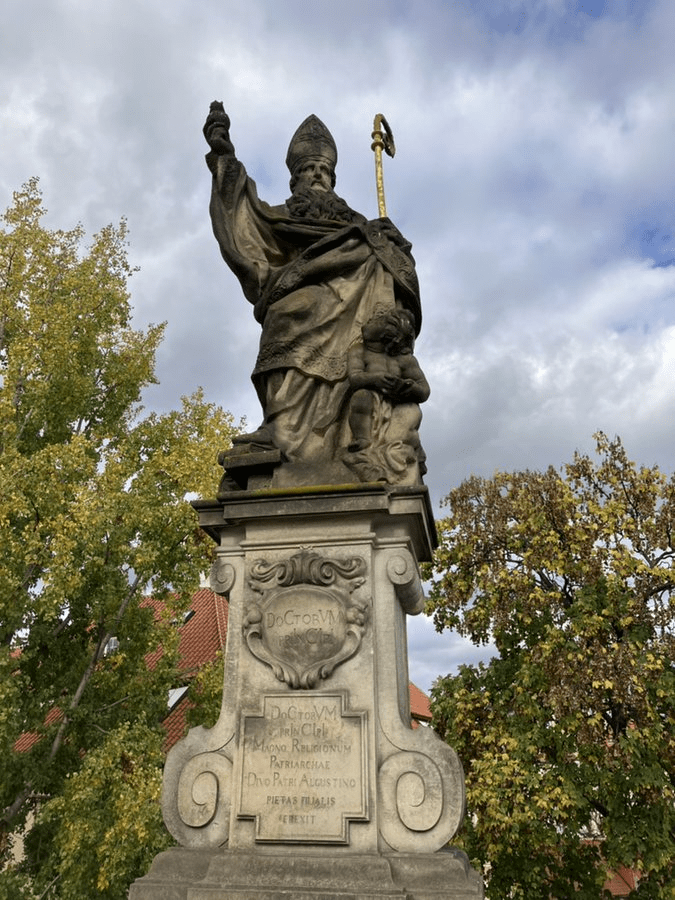
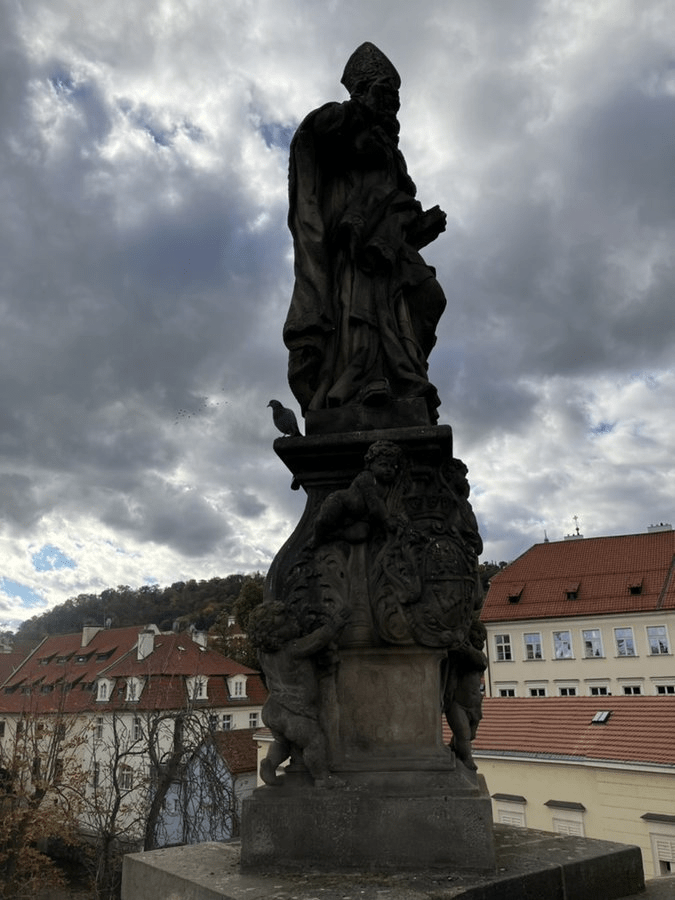
St Augustine (by either Jeroným Kohl or J.B. Kohl, 1708; replica from 1971).
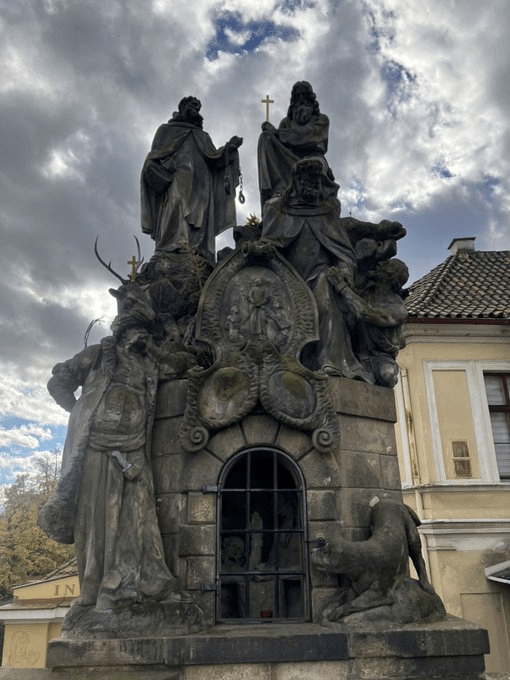
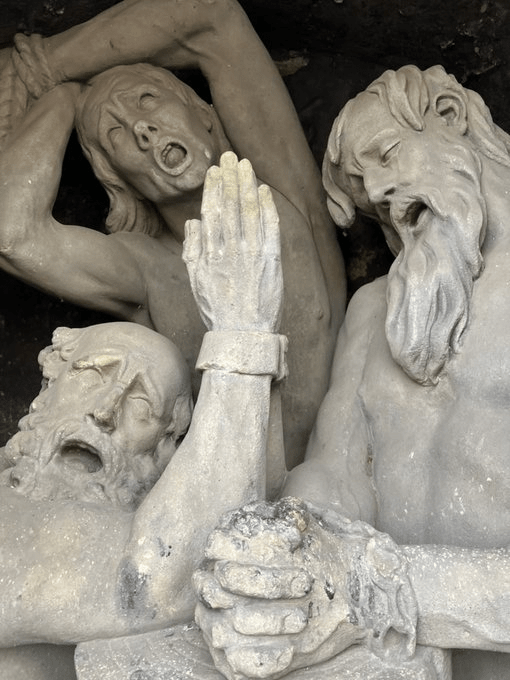
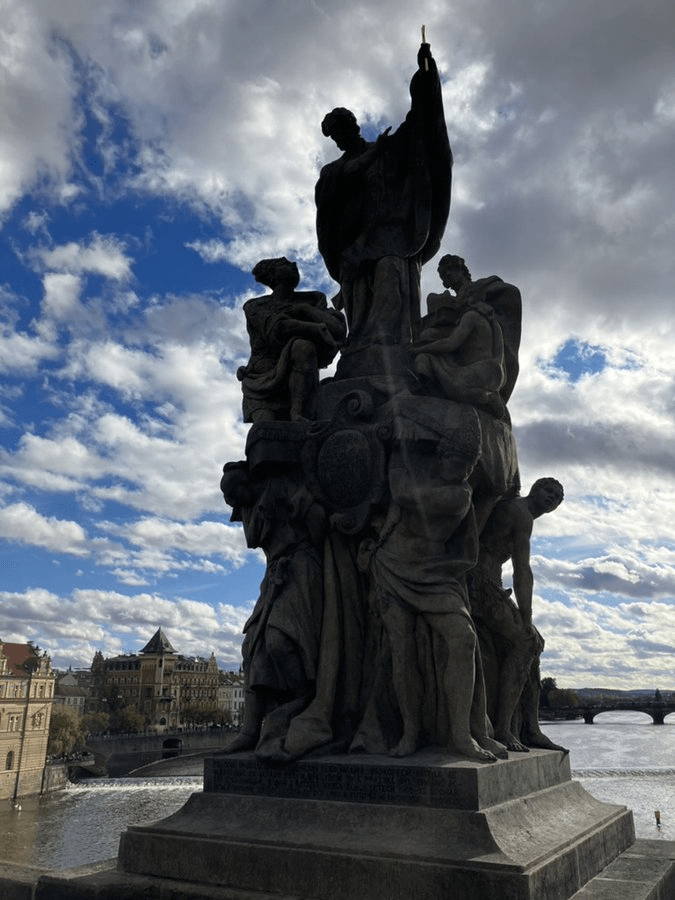
Saints John of Matha, Felix of Valois and Ivan (Ferdinand Maxmilián Brokoff, 1714). With extra peek inside.
St Vojtěch (Ferdinand Maxmilián and Michal Jan Josef Brokoff, 1709; copy from 1973).
St Lugardis (Matyáš Bernard Braun, 1710; copy from 1995; copy not on display since 2020, as the pillar’s being repaired, which it just took me a half hour of scrolling through photos to realise): https://www.ghmp.cz/aktuality-plastika/socha-sv-luitgardy/
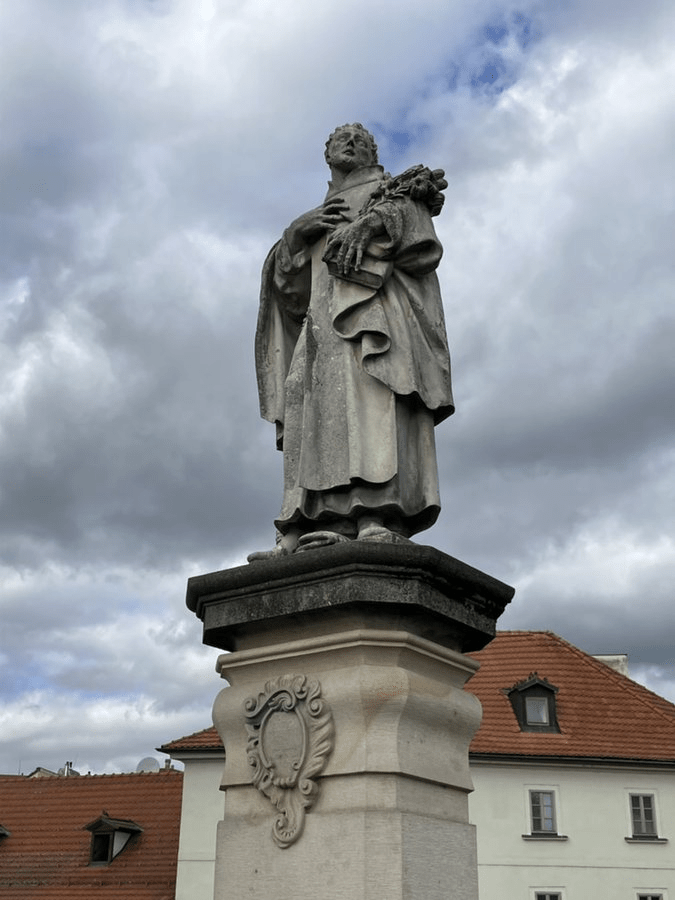
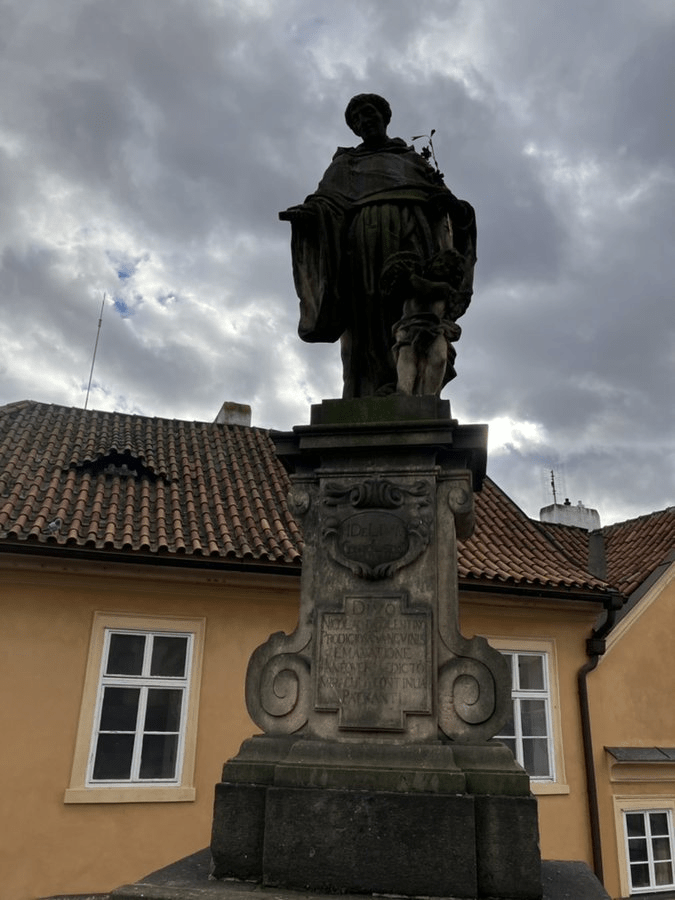
St. Nicholas of Tolentino (Jeroným Kohl or J.B. Kohl, 1708, copy from 1970).
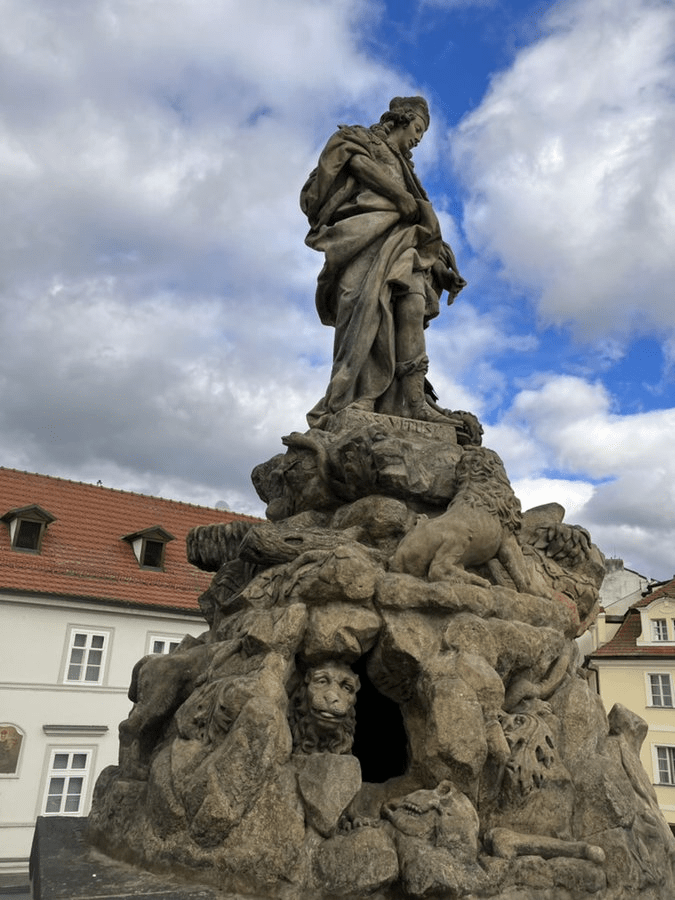
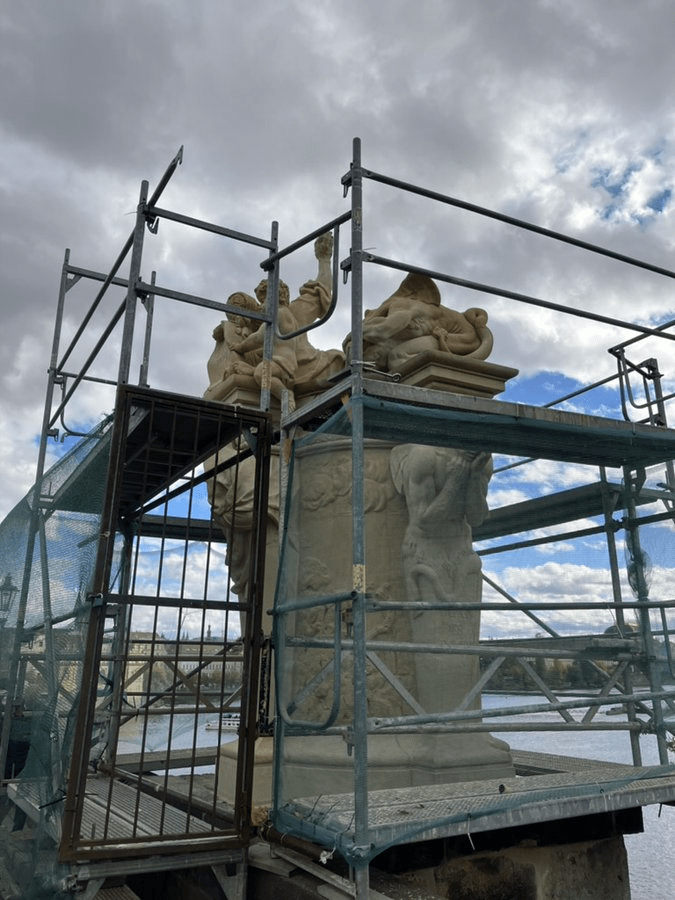
Saints Vincent Ferrer and Procopius (Ferdinand Maxmilián Brokoff, 1712; currently having stuff done to it).
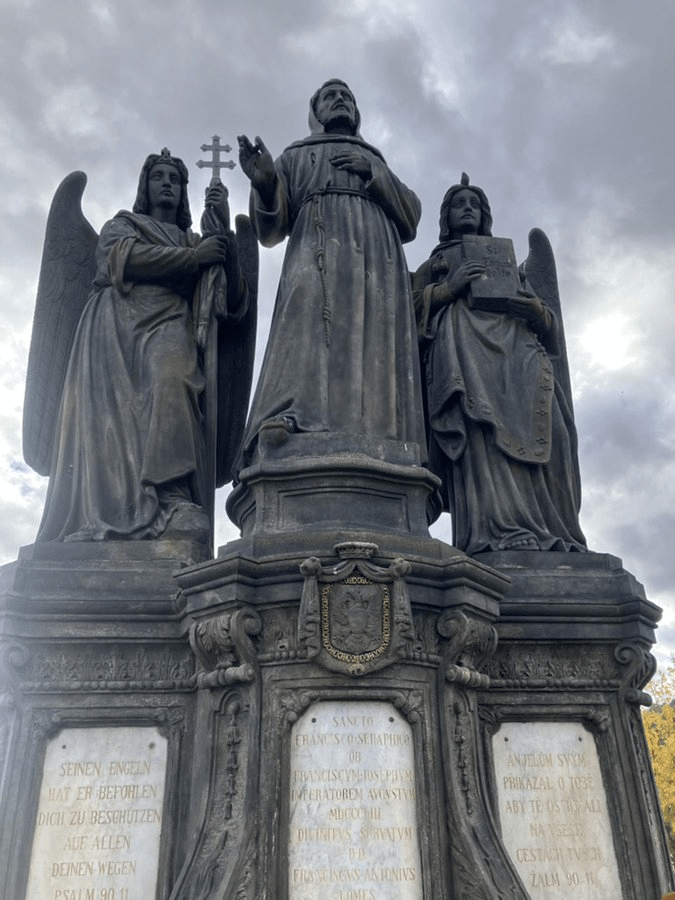
St Francis of Assisi (Emanuel Max, replacing an earlier statue from 1708).
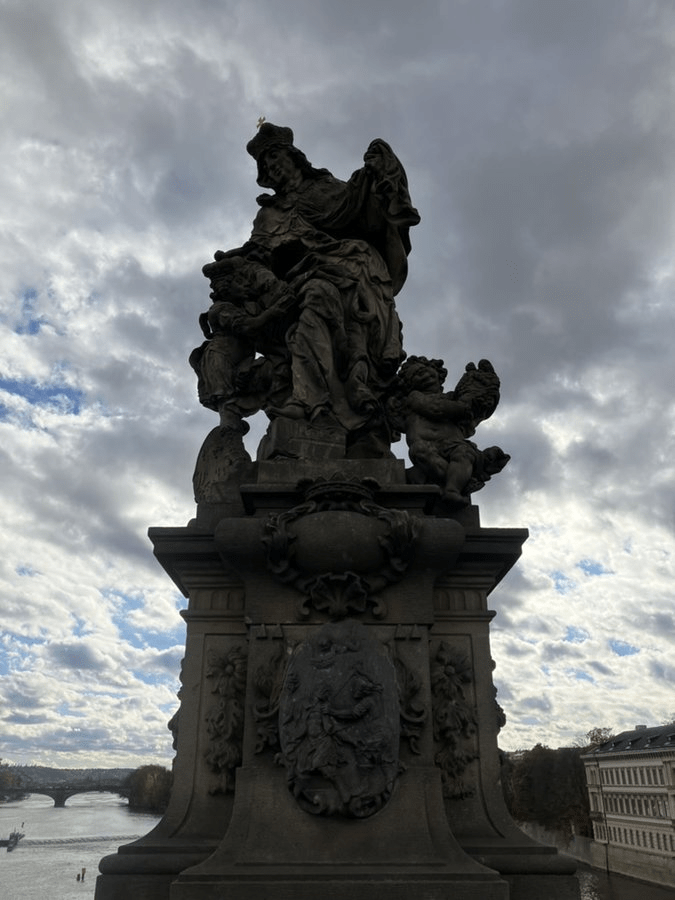
St Ludmila with a young St Wenceslas (Matyáš Bernard Braun, 1702; copy from 1999).
St Francis Borgia (Ferdinand Maxmilián Brokoff, 1710; replacement from 2017).
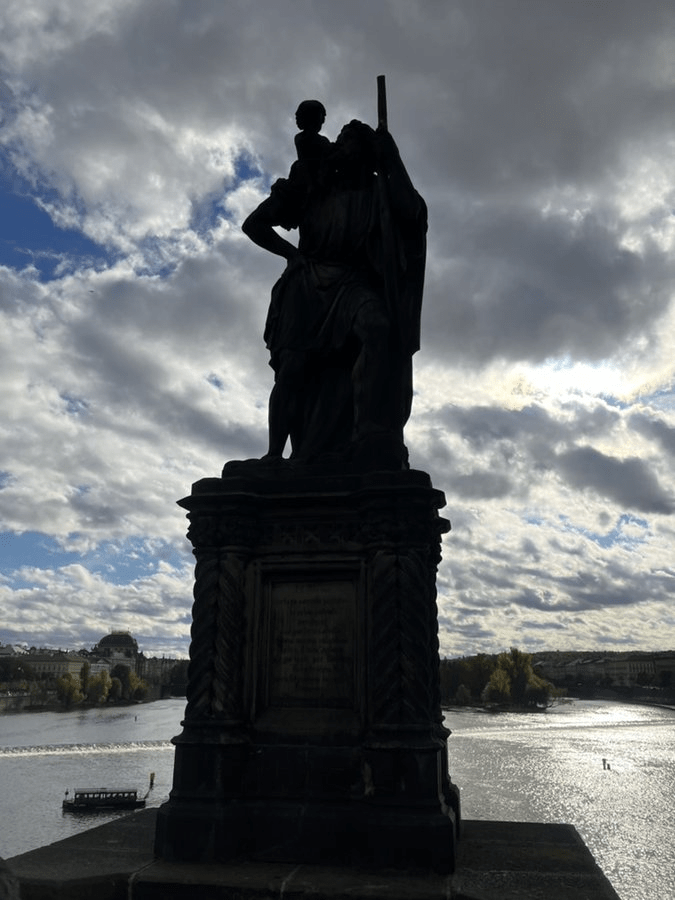
St Christopher (Emanuel Max, 1857).
St Francis Xavier (Ferdinand Maxmilián Brokoff, 1711; one of the ones swept away in the floods of 1890; copy from 1913).
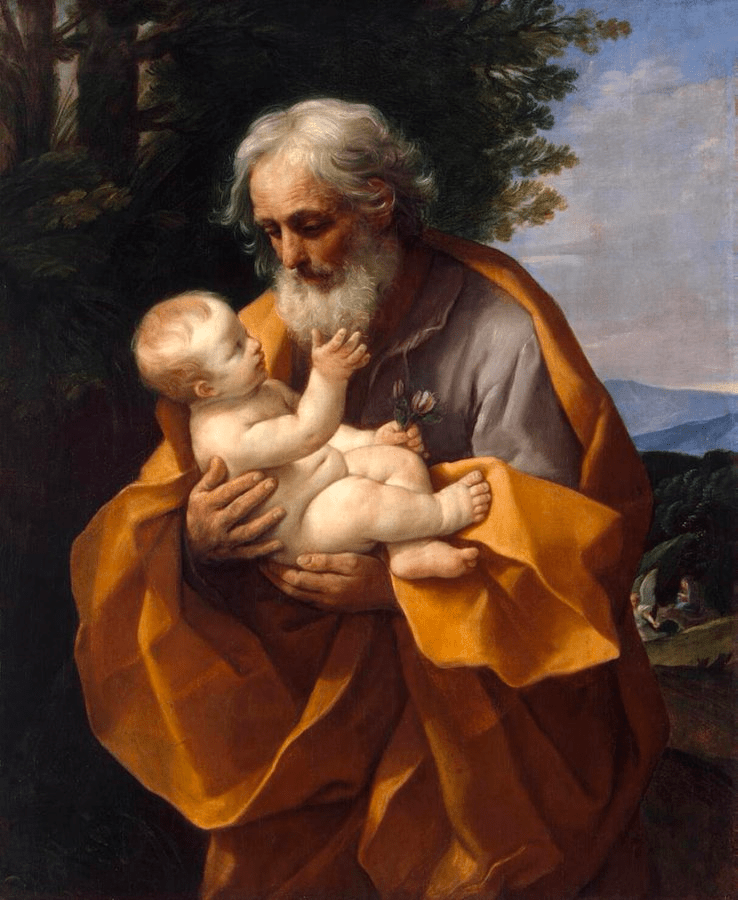
St Joseph with Jesus (Josef Max, 1854, replacing an original by Jan Brokoff from 1706 which was damaged by gunfire in 1848).
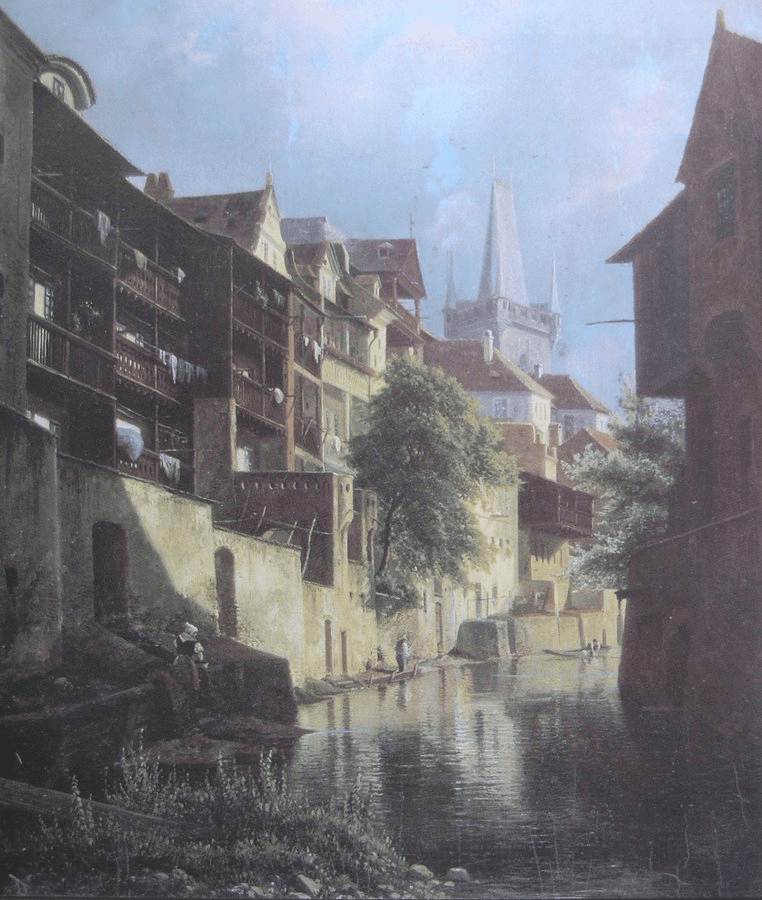
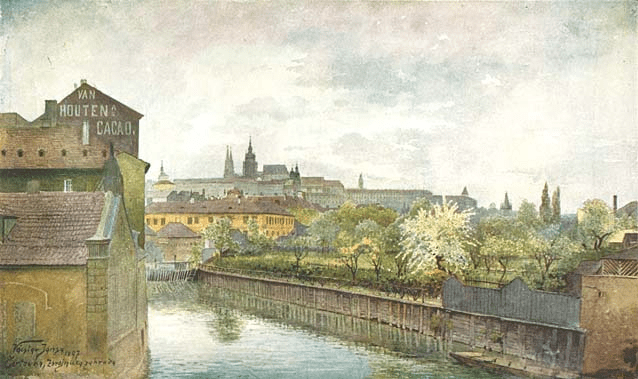
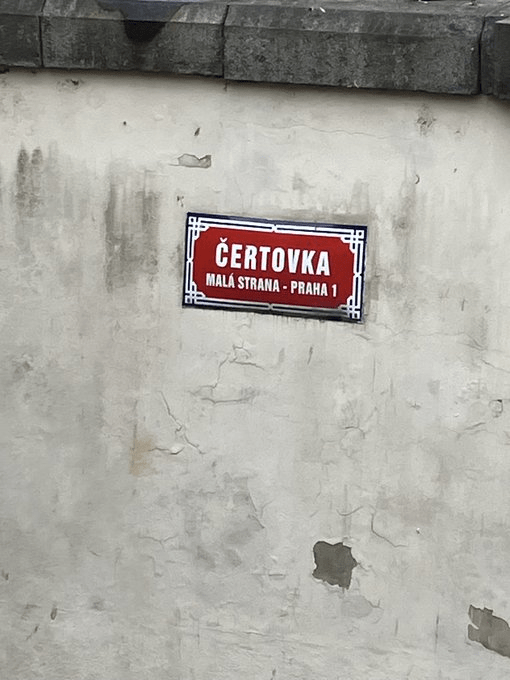
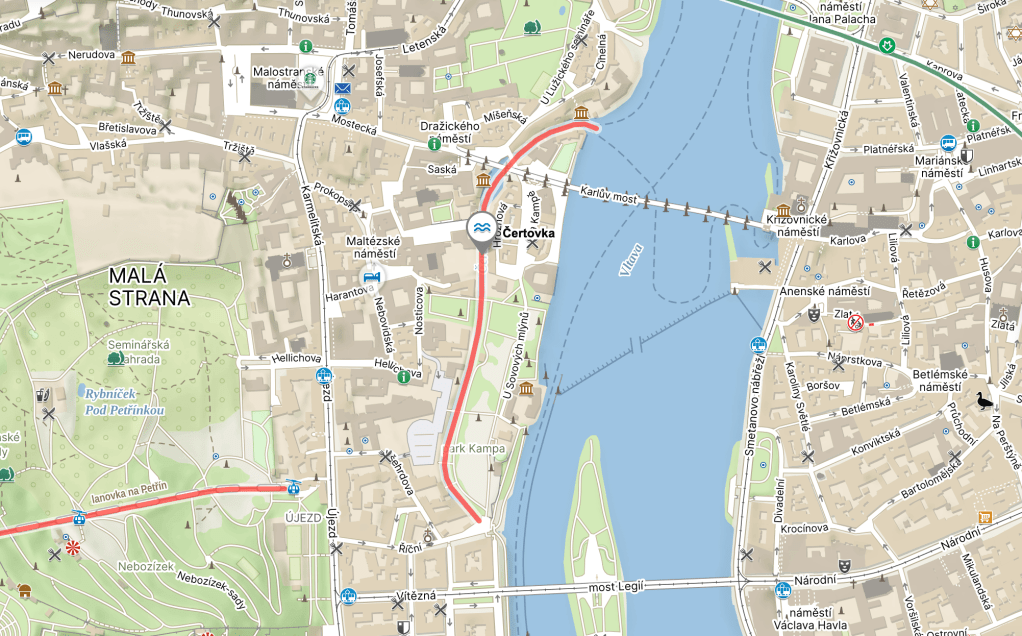
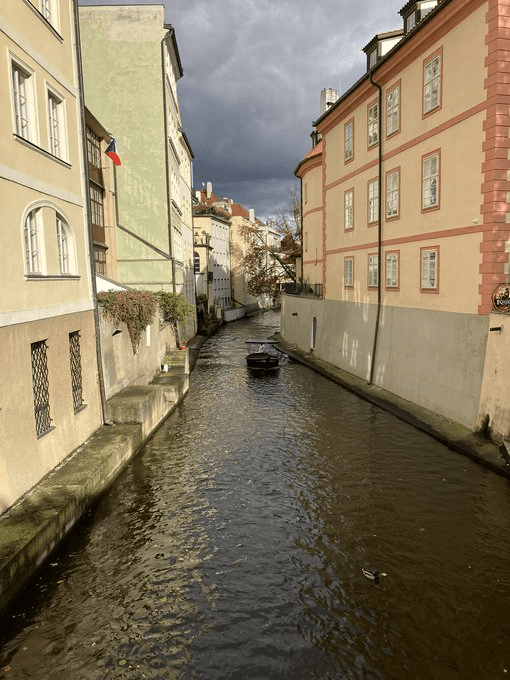
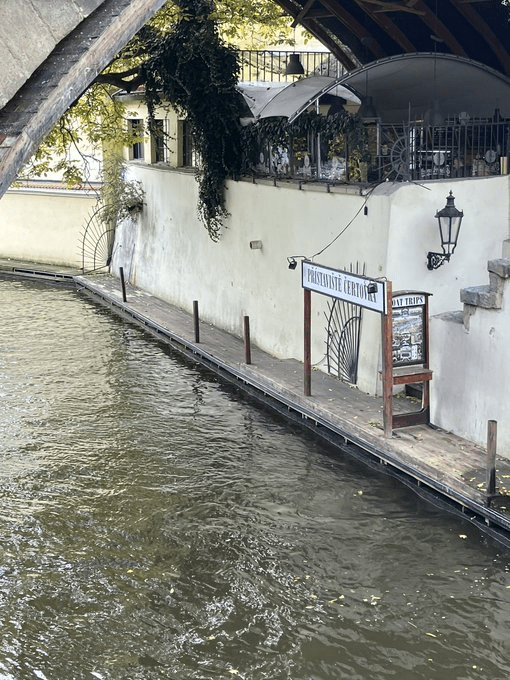
Čertovka may get a street sign – but it’s actually a canal which separates Kampa Island from the rest of Malá Strana.
Kampa (which is getting a post of its own soon) was created in the 12th century, when the Knights of Malta (ditto) ordered the building of the canal so that the mills of Malá Strana would have a water supply.
There were nine mills at the time; three remain.
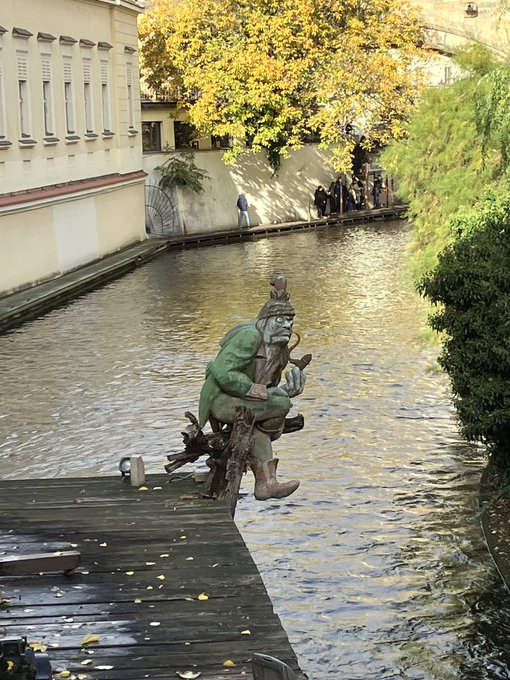
Originally, the canal was known as Strouha, which translates as ‘gutter’ or ’stream’; the name Čertovka dates from 1892. Legend has it that a cantankerous old woman used to wash her laundry here, and shouted at a group of young men who were also there.
They took offence at this, declared her to belong to the devil, and painted seven devils on the front of her house, which then became known as U Sedmi čertů (The Seven Devils). It’s on modern-day Maltézské náměstí.
All of which is presumably much worse than anything the woman could possibly have done, because misogyny.
Čertovka was featured in both Mission: Impossible and Amadeus, as was much of the district, and now I’m going to have to sheepishly admit I’ve never seen either and need to remedy this. With views like this, you can see why it’s a popular location for filming things.
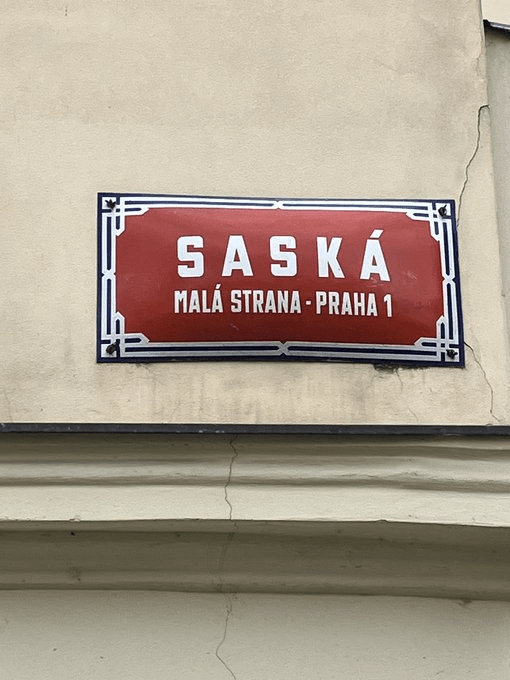
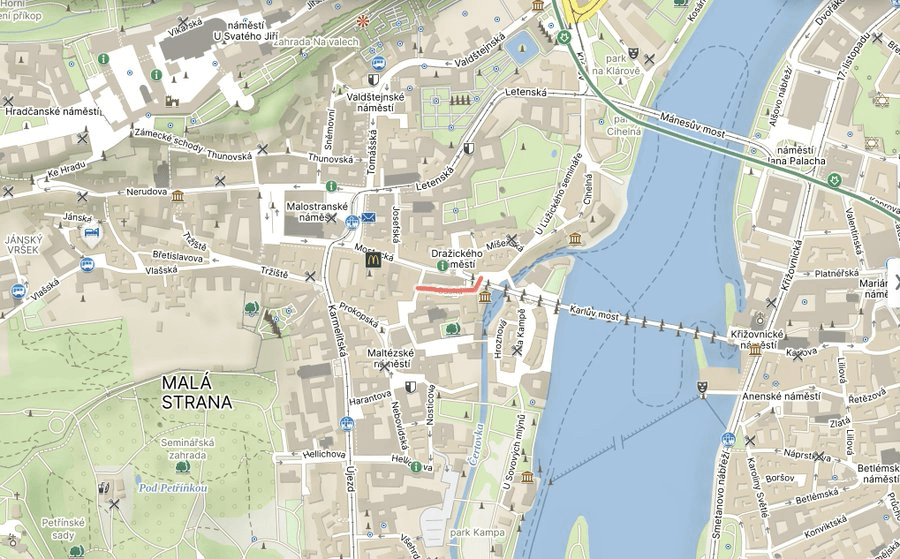
And saská is the adjective from Sasko, AKA Saxony. For those not living nearby, Saxony is the German state on the north-west border of the Czech Republic.
You may have been to its capital, Dresden (very popular with Czechs, at least prior to Prague getting its own branch of Primark in 2021).
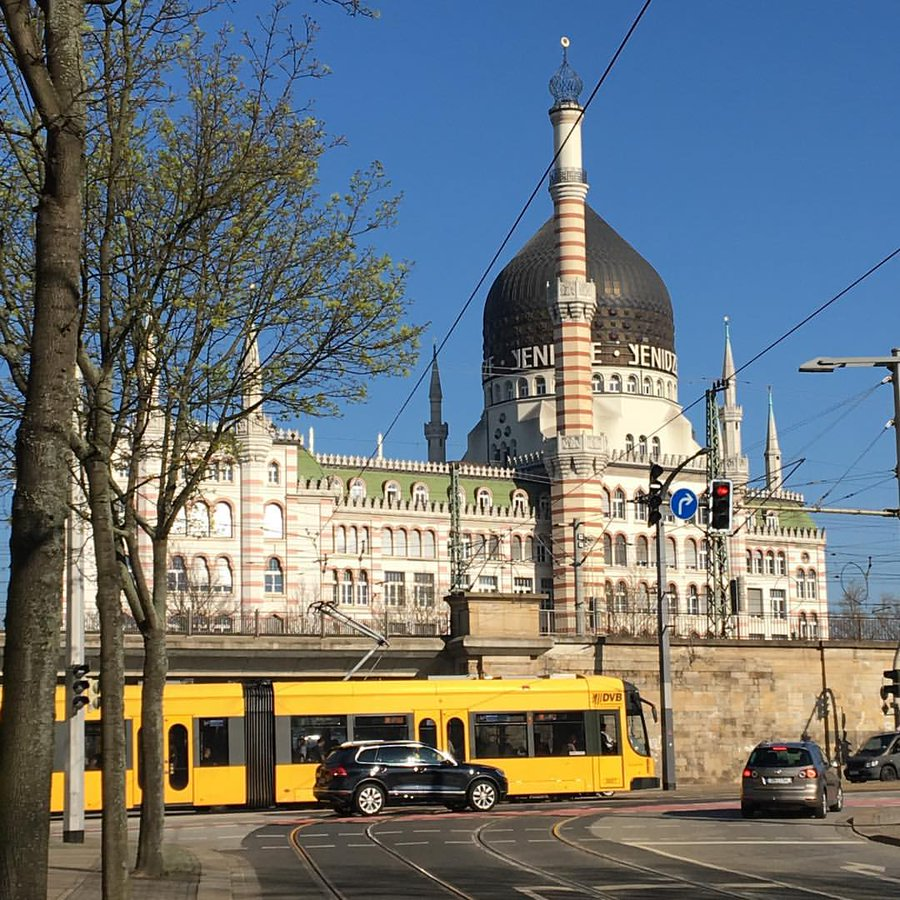
I worked in this fascinating building in Dresden for a few days in 2017. It’s not a mosque and never was.
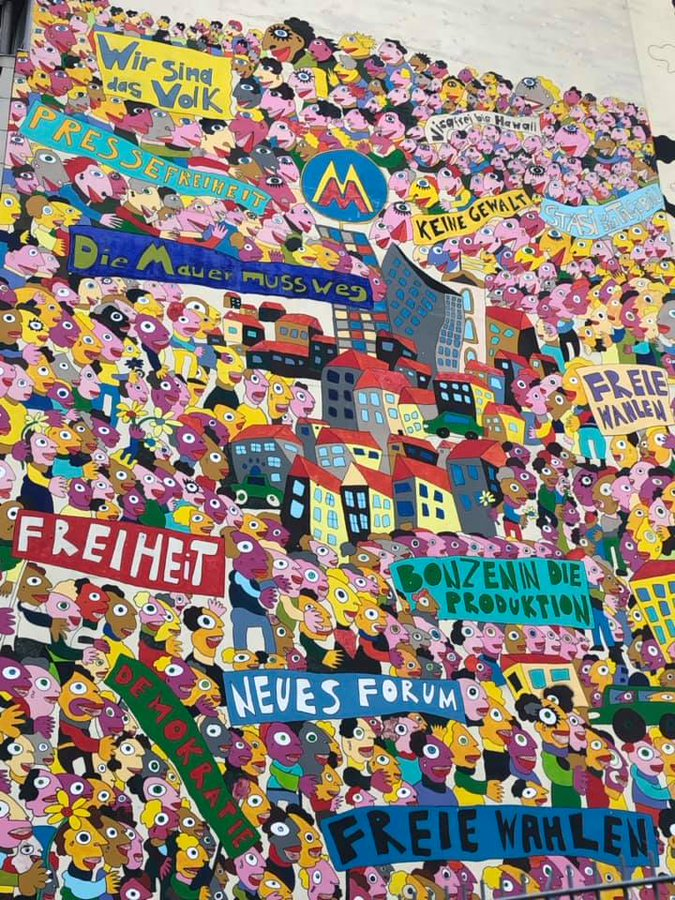
But I have a real soft spot for Saxony’s largest city, Leipzig, scene of supposedly Europe’s best train station, a lot of 1989-specific history, and excellent murals.
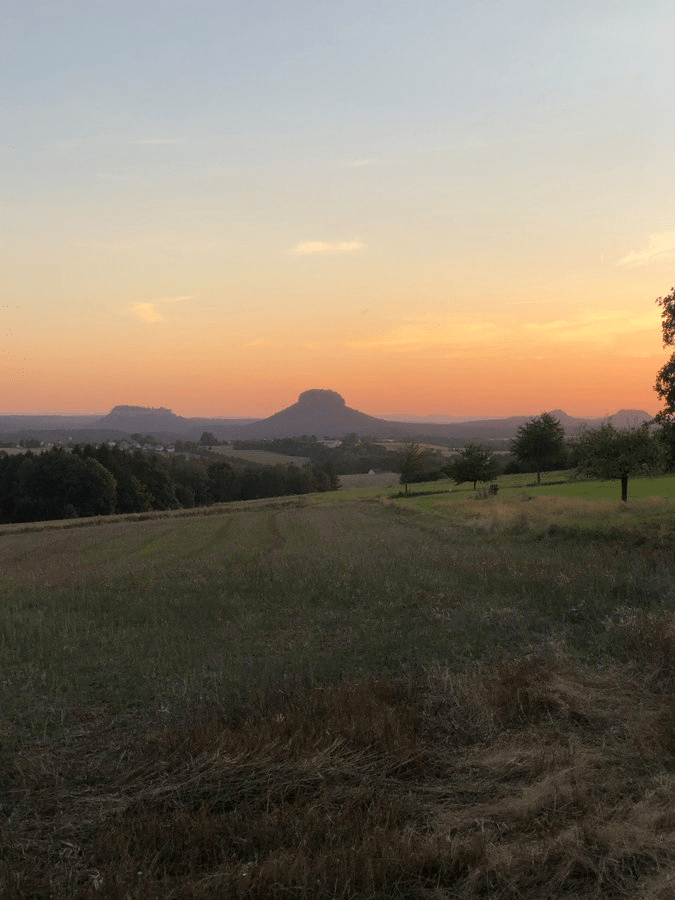
And another soft spot for hiking in Saxon Switzerland, digital detoxing and taking a grand total of one photo in eight days.
Let’s finish this not-actually-an-advert for the Saxon Tourist Board with a nice little Sorbian saying.
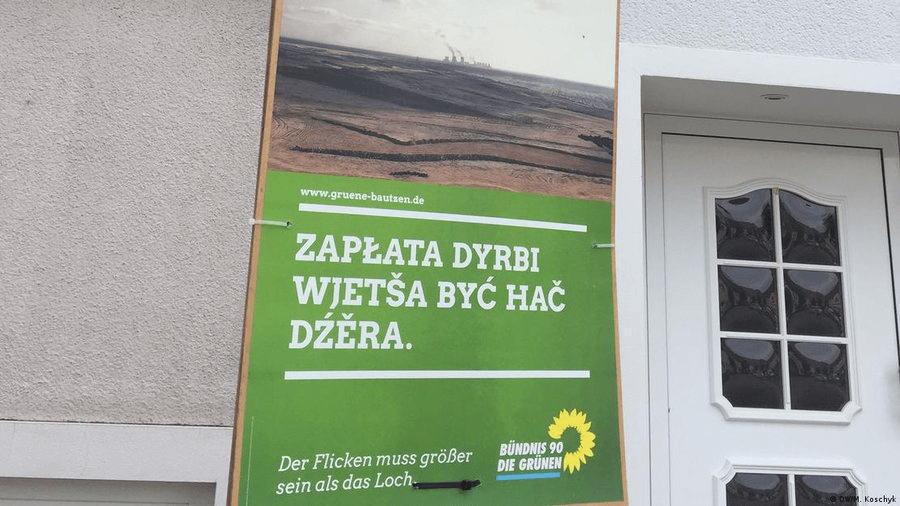
Zapłata dyrbi wjetša być hač dźěra literally translates as ’The patch has to be bigger than the hole’. In other words, for a solution to a problem to work, it can’t just solve a small section of it.
Alliance 90/The Greens made use of this in their election posters in 2019 (photo from DW).
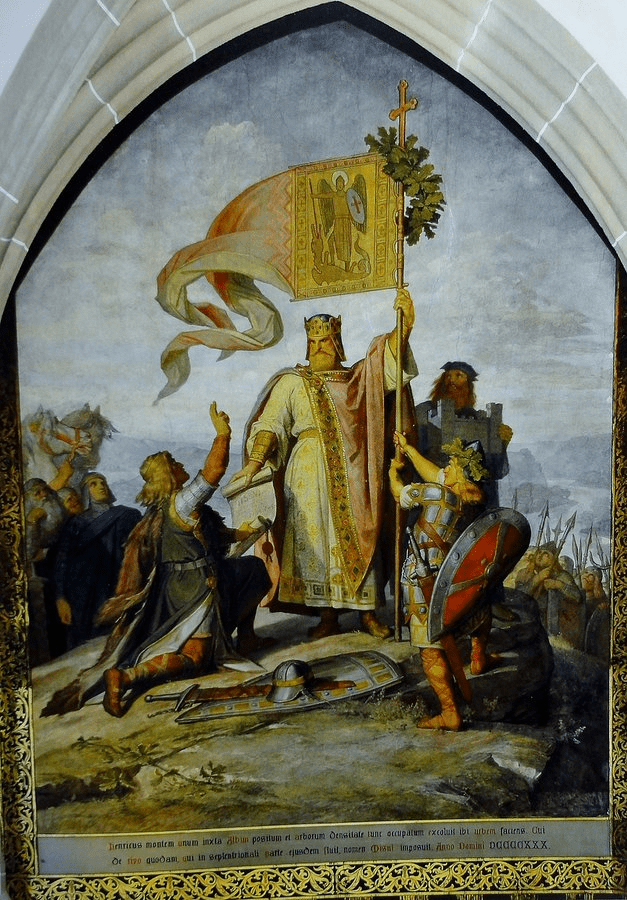
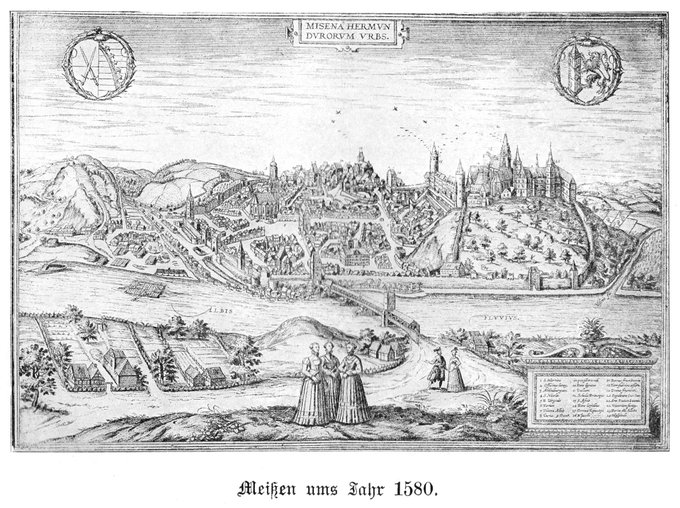
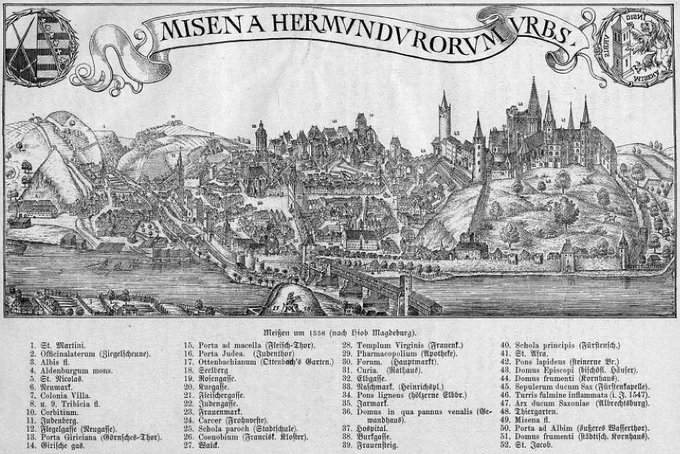
In 928, Henry the Fowler (German: Heinrich der Vogler; Czech: Jindřich I. Ptáčník), Duke of Saxony and King of East Francia, who was fighting the Glomatians, a Slavic tribe, built a fortress to secure Saxony’s border, and called it Misni, after the nearby stream.
In the following year, Henry would invade Bohemia and force Wenceslas I (the good one) to pay him tribute. It was also Henry who presented Wenceslas with the remains of St Vitus (specifically his arm).
By 933, Henry had defeated the Slavs; in 965, his son and successor, Otto I – also Holy Roman Emperor – created the Margravate of Meissen in the region.
Meissen would then be fought over by Poland (including under Boleslav I) and the Holy Roman Emperor, and, in 1241, was invaded by the Mongols under Orda Khan.
Primarily a Slavic-populated area for centuries, German migration to Meissen meant that, from the 1150s onwards, the Slavs would become a minority.
By the 16th century, Meissen was known for its successful cloth industry; however, by 1700, the industry declined as English and Dutch manufacturers started to create better, cheaper goods.
But by 1710, Meissen discovered porcelain – actually the first hard-paste porcelain to be produced in Europe, and the factory founded in 1710 is still considered one of the world’s leading manufacturers, as well as one of Germany’s best-known brands.
Meissen is 25 km from Dresden and seems to be worth a visit, not least for the late Gothic Albrechtsburg. There’s a fairly astounding collection of postcards of it on here: https://commons.wikimedia.org/wiki/Category:Albrechtsburg.
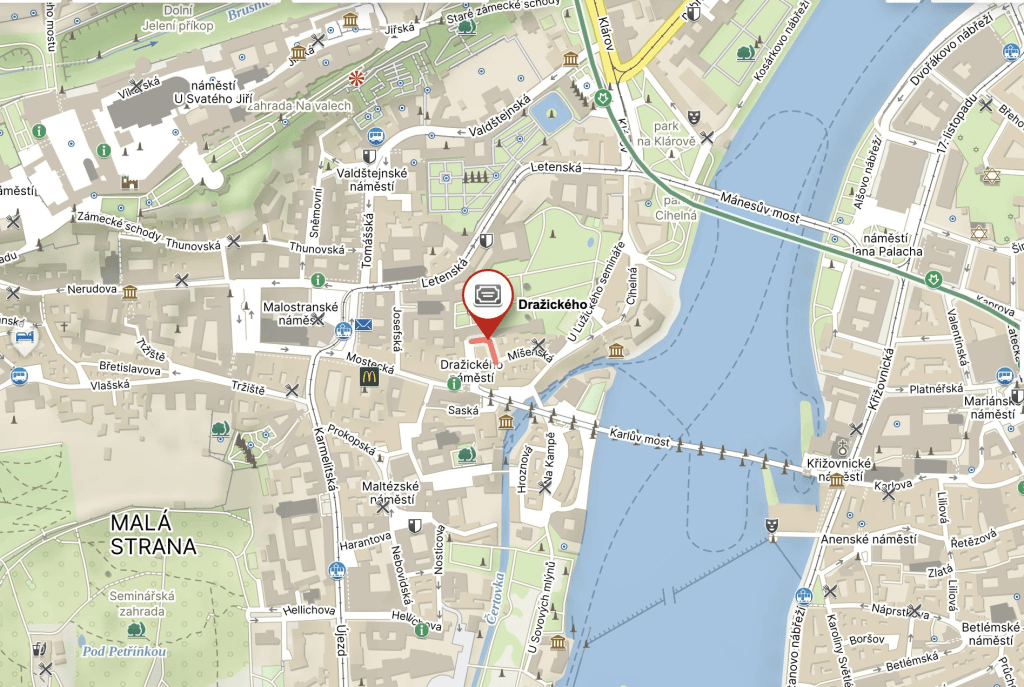
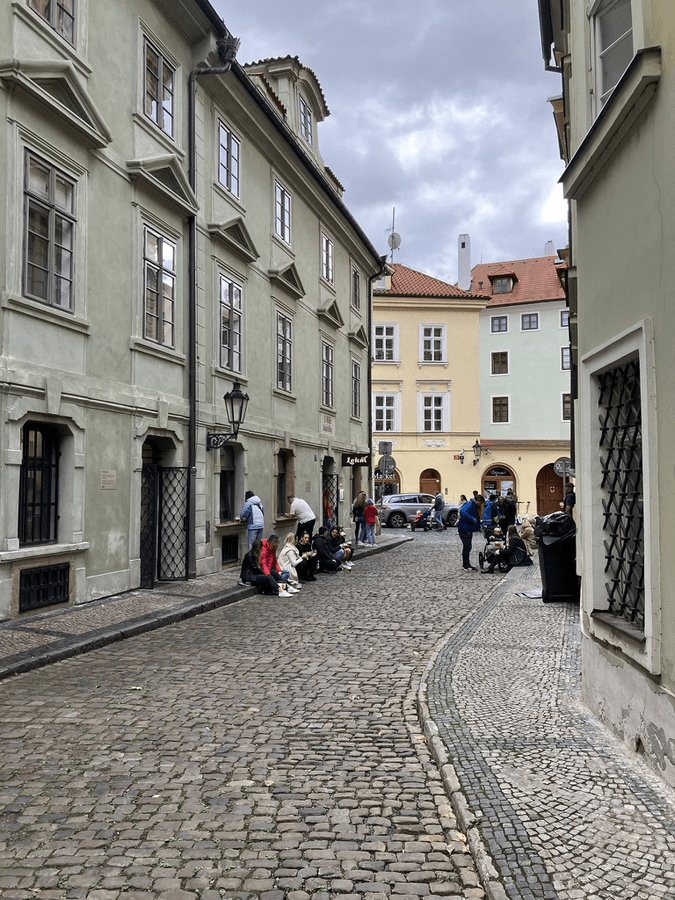
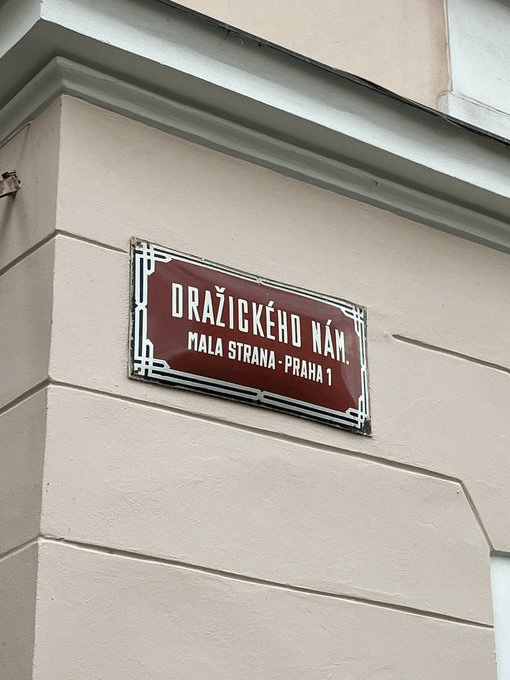
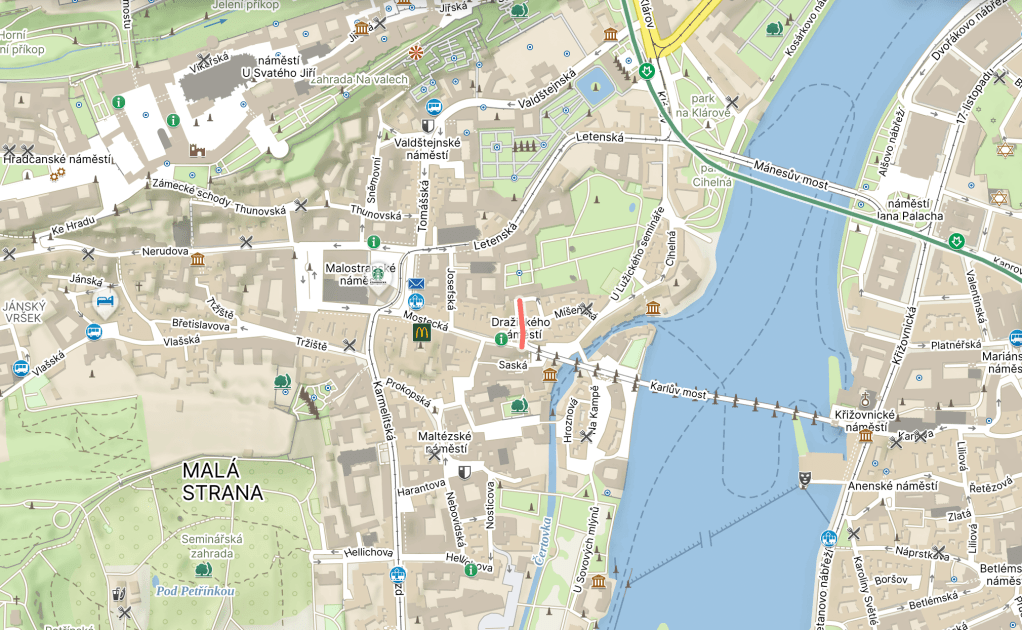
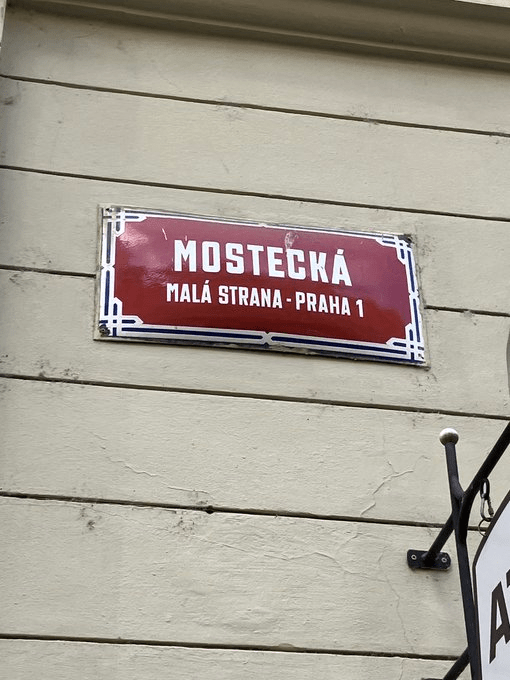
When I went here to take pics, it wasn’t entirely clear where Dražického: The Square ends and Dražického: The Street begins, not helped by the fact that the latter doesn’t even get a street sign (this happens with smaller streets sometimes).
But Dražického: The Street is the kind of place where you can go and drink a beer on the pavement at midday in November and somehow convince yourself that this is both comfortable and fun.
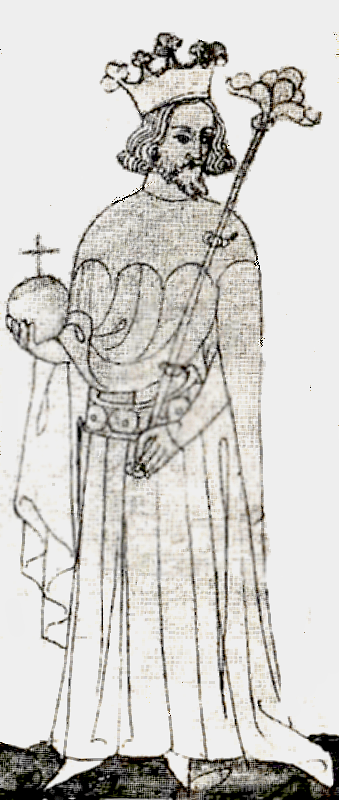
Jan IV. z Dražic was born into a noble family around 1260.
Jan II (died 1236) and Jan III (died 1278) were bishops in Prague, so you might already have guessed what Jan IV ultimately became.
After his investiture by King Wenceslas II, he was ordained as Bishop of Prague on 10 December 1301. The bishop’s court was located where the square is now.
In 1310, Jan supported the election of another Jan/John (namely of Luxembourg) as King of Bohemia.
While the 1310s would involve a lot of close cooperation with the King, they also involved a lot of hostility from the nobility, as he objected to the Inquisition and its treatment of Dominican monks.
One Heinrich von Schönburg, who had been removed by Jan, went blabbing to Pope John XXII, who suspended him in 1318 and forced him to leave Prague.
Having been found innocent in 1326, he wouldn’t return to Bohemia until 1329, when he was about seventy years old.
Once back in Bohemia, he focused on church reform and developing the episcopal city of Roudnice nad Labem.
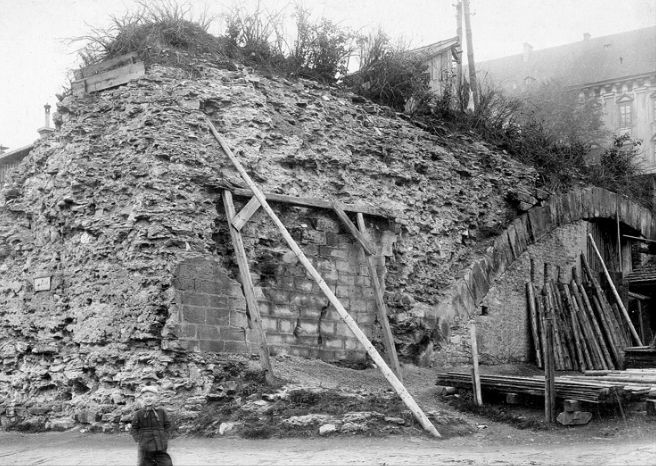
Roudnice also had a bridge named after him, but it was destroyed during the Thirty Years War. Here are its remnants, photographed in 1906.
He also saw to the reconstruction of St. Giles’ Church in Prague’s Old Town (coming up in about fifty posts’ time?).
Jan died in 1343 and was buried at St Vitus’ Cathedral.
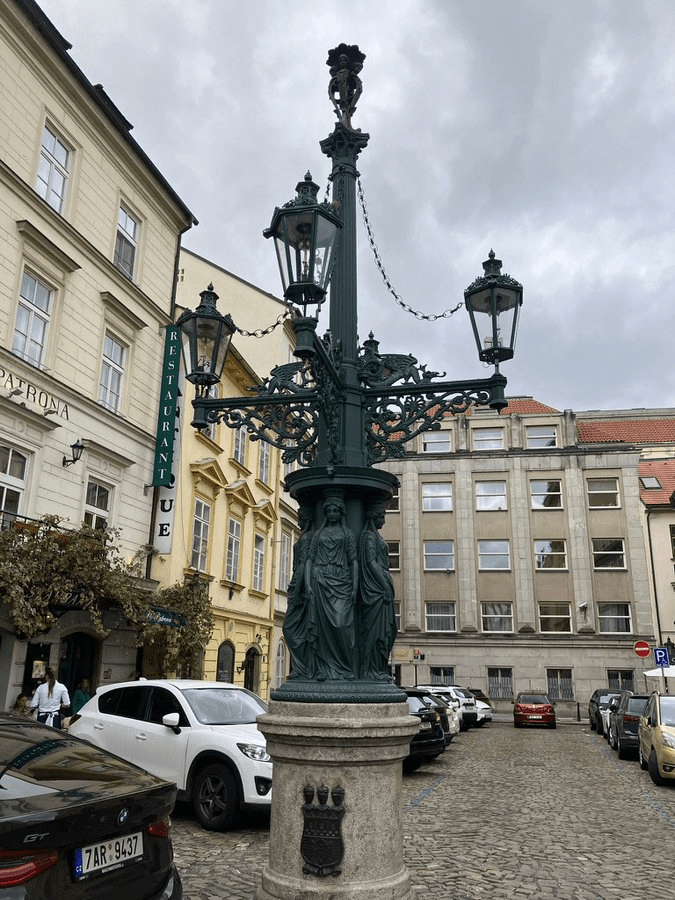
If you like excellent candelabra – and you should – there’s one right here.
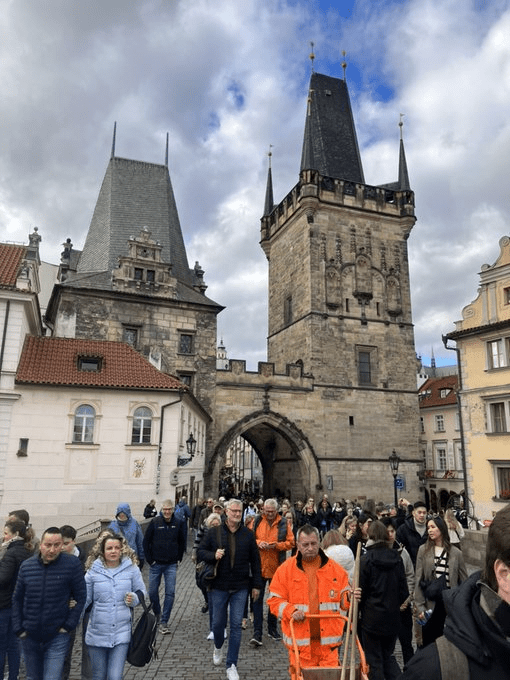
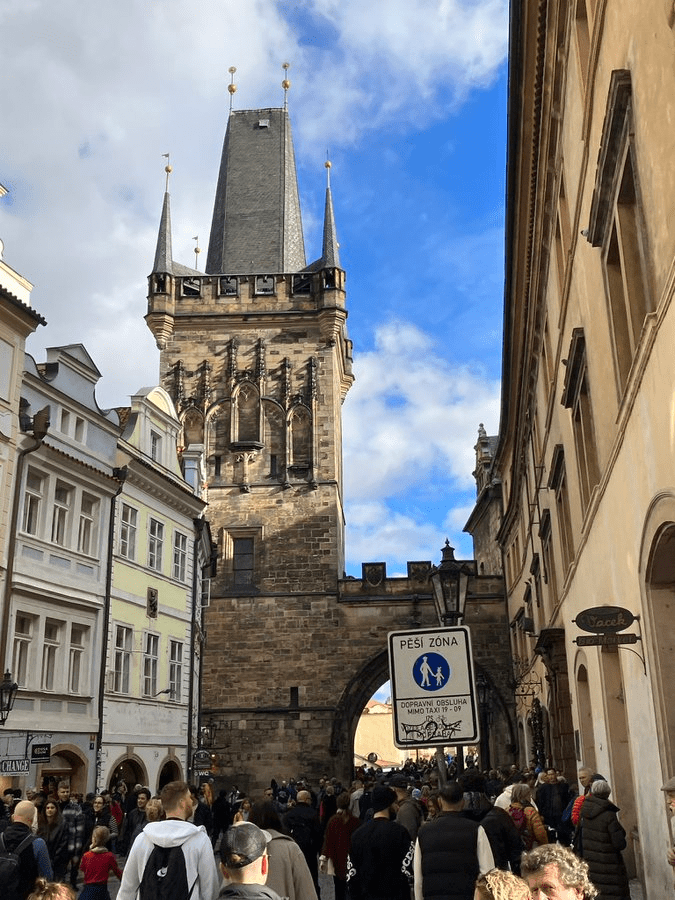
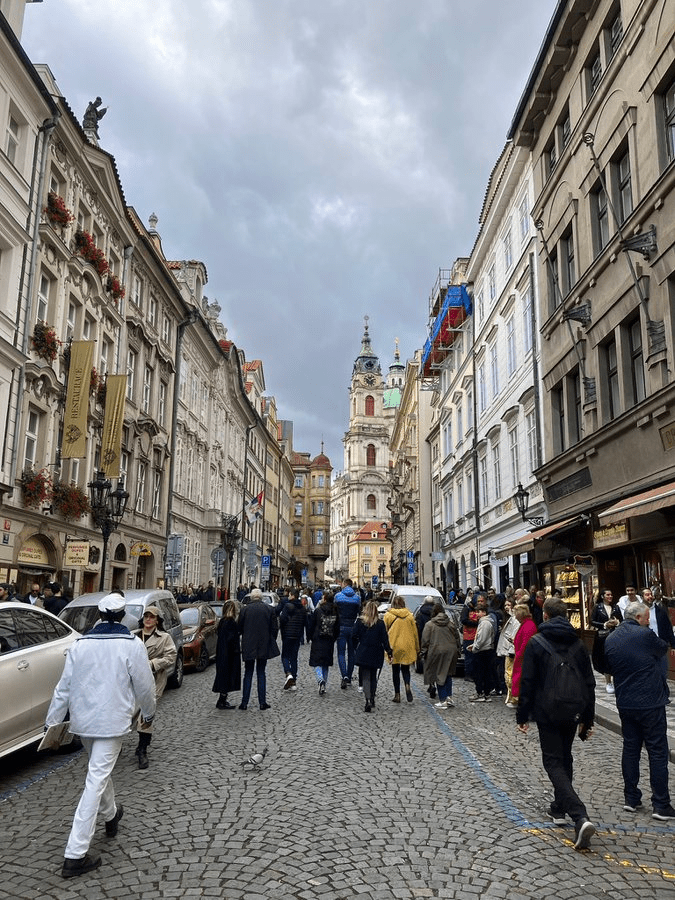
This is the Malá Strana Bridge Tower at the end of the street, although your eye may be drawn more to the huge crowds. Mostecká connects Charles Bridge and Malostranské náměstí, but feels more crowded than either.
However, it doesn’t seem that this was ever a quiet street. Not only was it on the Royal Route since time immemorial, but statistics produced by the city council in 1896 mentioned ‘1,700 to 1,900 light and freight cars’ passing here daily. And trams. TRAMS.
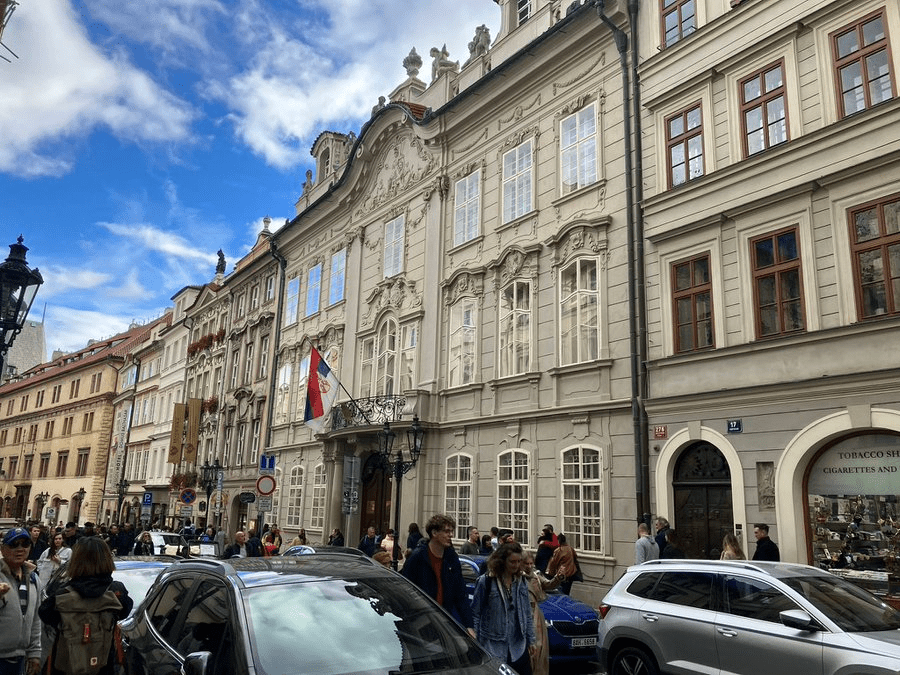
If you have the patience to stop and look, there are interesting things on this street though. The Baroque Kounic Palace has been the Embassy of Yugoslavia, FR Yugoslavia, Serbia and Montenegro, and, now, Serbia.
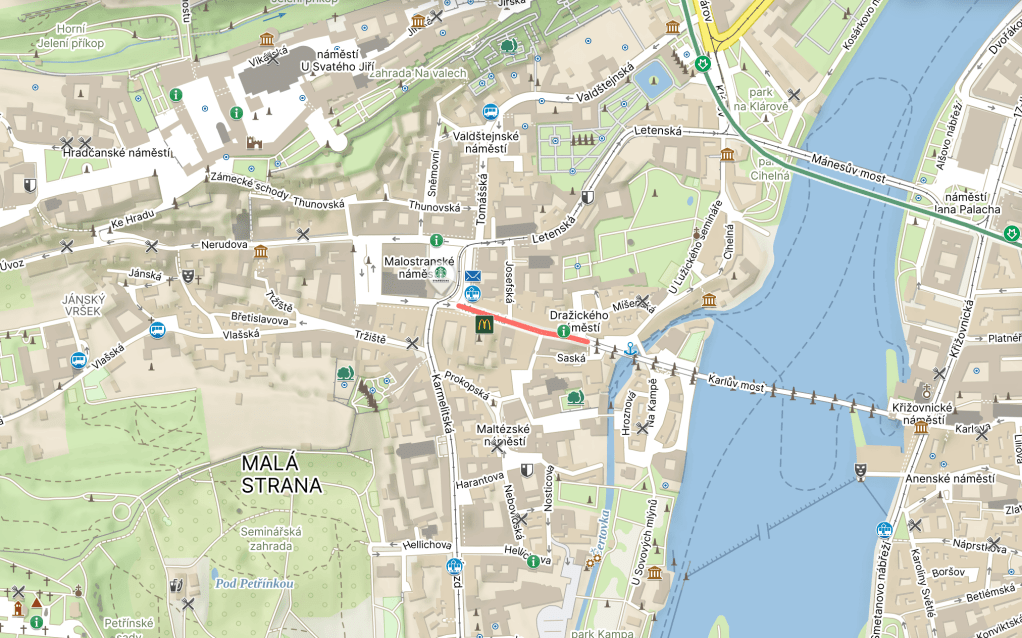
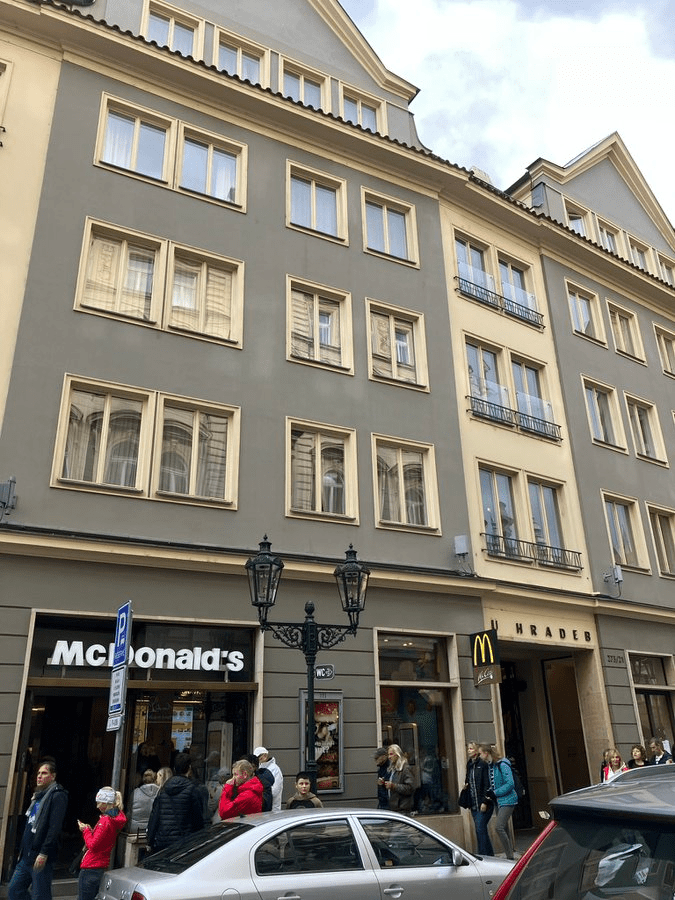
Meanwhile, you might think the fact that I’m posting a picture of McDonald’s on Mostecká means I’ve gone a bit mad. But read on.
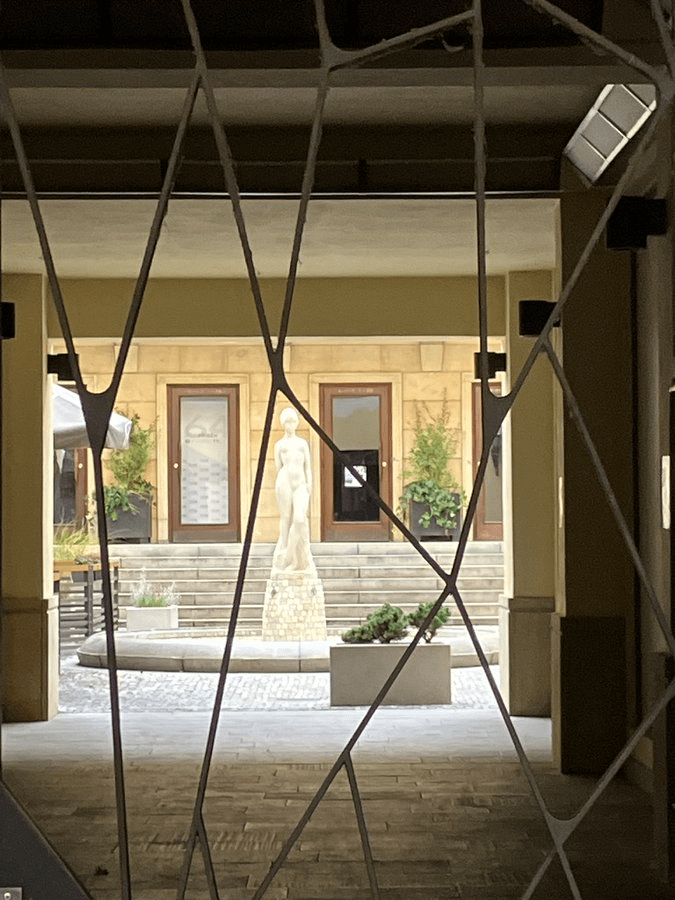
That space on the right leads to Cinema 64 U Hradeb – and, would you believe, after its opening in 1964, this was possibly Prague’s best-equipped cinema.
It closed in 2002 – before the floods, and not because of them, although they certainly made things a whole lot worse. Reconstruction work started in 2015.
Letná, originally called Leteň, or Letná pole (Summer Fields), was originally an area of vineyards and gardens, first mentioned in writing in 1261, when Přemysl Otakar II, who had just been crowned, held a banquet there.
A future king, Sigismund of Luxembourg / Zikmund Lucemburský, would use Letná as the location of a military camp in 1420 during the Hussite Wars, starting a trend which other armies would follow for centuries.
It wasn’t until the late 19th century that Letná started to become settled to any real extent, as Bubeneč and Holešovice both expanded from opposite sides.
Letná was the scene of the first Czech electric railway (in 1891, as part of the Jubilee Exhibition), and of the first Prague cablecar (around the same time). Transport would get easier when the Letná tunnel was opened in 1953 (by which time the railway & cablecar were long gone).
In Communist times, Letná was used to celebrate communism on 1 May; in 1989, it would be used to demonstrate against it (successfully):
And to welcome the Pope to a non-Communist Czechoslovakia in 1990 (yes, that is a nearly three-hour video):
And, in 2019, to protest against the man indirectly responsible for Schillerka’s TikTok account (this was not the subject of the protest): https://www.bbc.com/news/world-europe-48737467
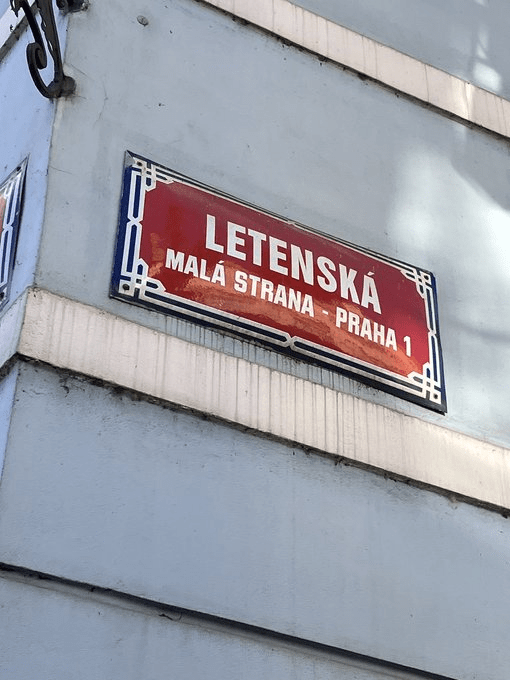
I’ve kept the story of Letná fairly superficial here, as: a) I’m going to have to write posts about Letná at some point; and b) it’s actually in Prague 7, which this street is not.
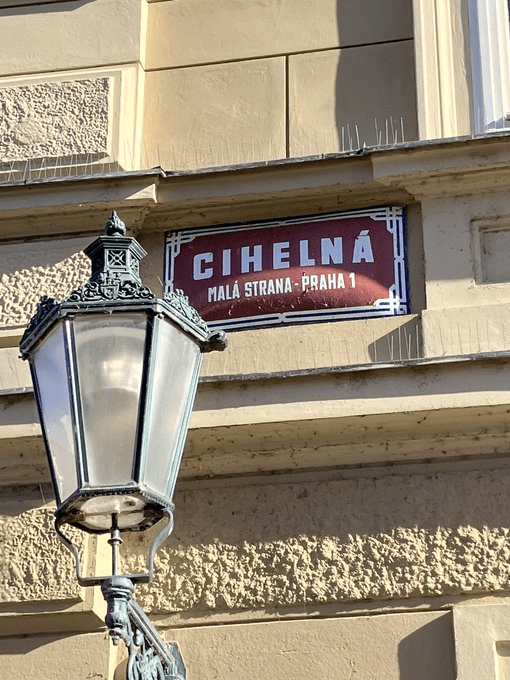
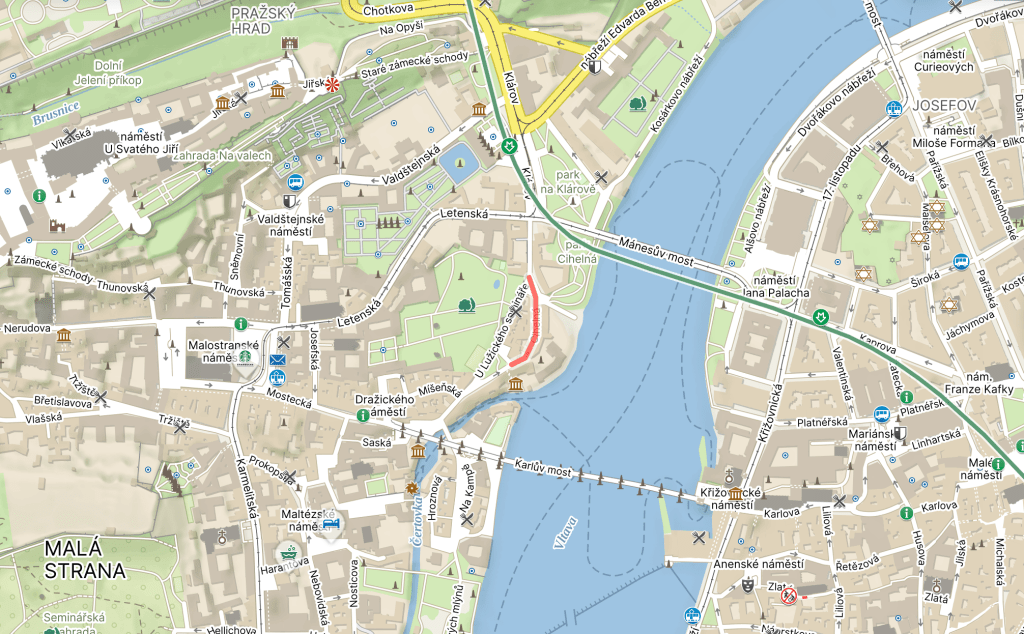
Cihelná with an á is the feminine adjective from cihelna without an á, meaning ‘brickworks’. Once upon a time, there were two tanneries here, but, in 1781, František Antonín Linhart Herget, who had purchased them, had a Baroque brickyard built in their place.
A later owner, Josef Zobel, had it rebuilt in a classicist style in 1796; a further reconstruction occurred in 1857-8. By the 20th century, the brickyard had ceased to be used as one, and was a storage space instead; part of the buildings were demolished in 1936.
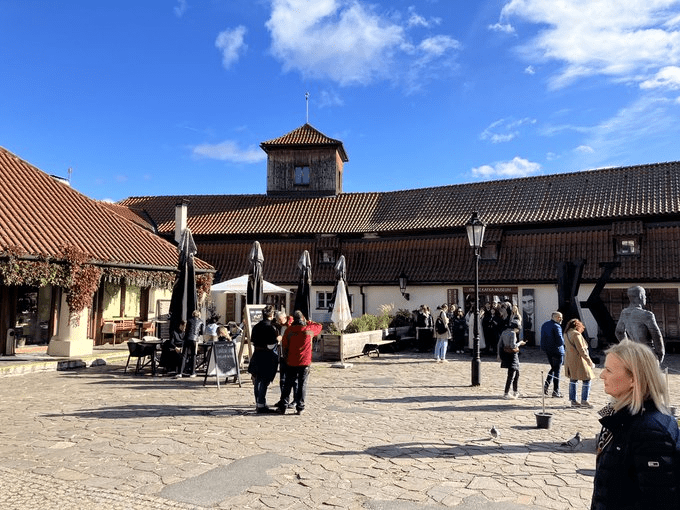
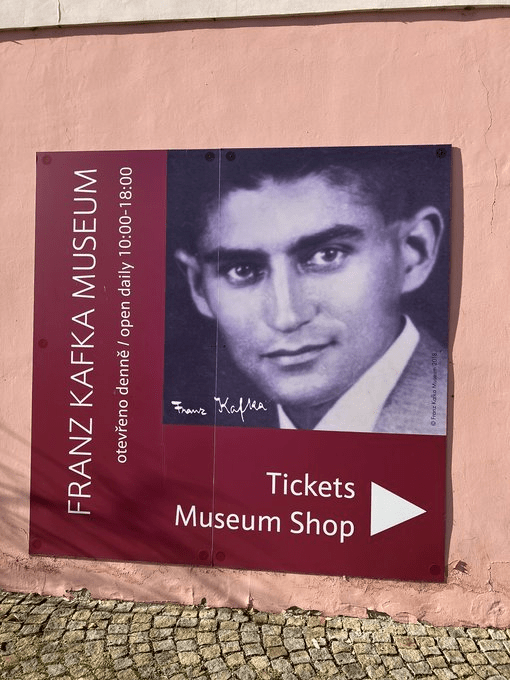
Following delays due to the floods of 2002, reconstruction began in 2003. Two years later, the building would be reopened as what you know it as now – the Franz Kafka Museum.
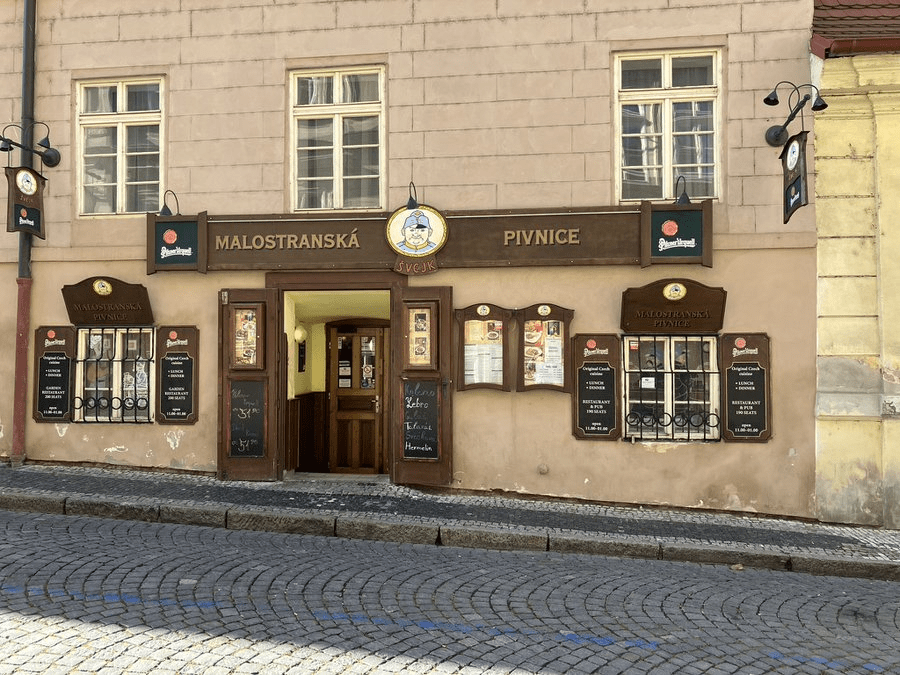
On another note, the pub across the road, Malostranská pivnice, advertises itself as having won a Best Pub In The World prize in 2009. There’s a bit of a discrepancy between this and its online user reviews (though I went in 2020 and quite enjoyed it, so what do I know).
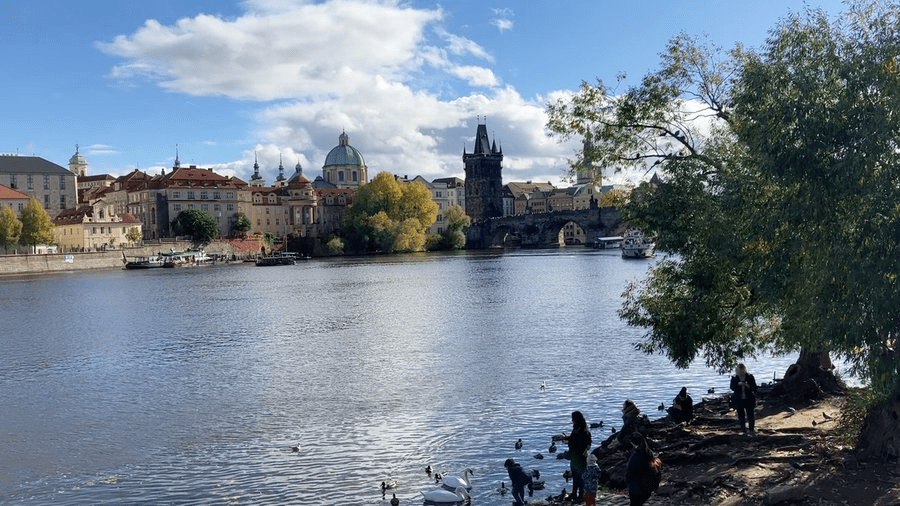
If you don’t feel like spending money, Cihelná is also a lovely place to feed the ducks and enjoy the view.
If you don’t want to read that: Sorbs are a Slavic ethnic group who currently live in Lusatia, which is in Saxony and Brandenburg in Germany. They were previously under Czech rule.
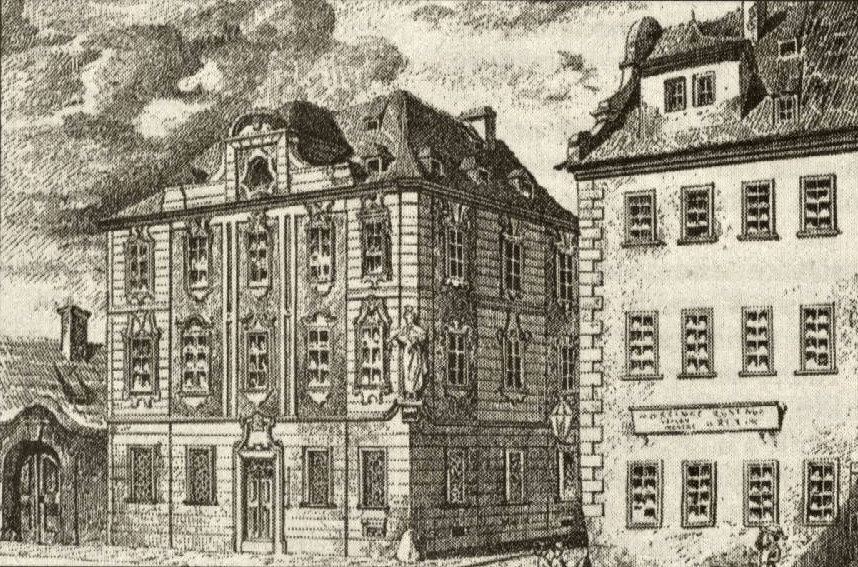
In 1692, two brothers from Upper Lusatia, Martin Norbert and Georg Joseph Schimon, had set up a foundation in Malá Strana, in order to support Lusatian Sorb students.
Deciding that they needed larger premises than the brick house they were using, the Schimons purchased a plot of land in 1706. However, it would take another twenty years before construction work started.
The first students moved in in 1728: two theologians, two philosophers and 15 high school students. Good relations between Saxony and the Habsburgs, and generous donations, meant that the Sorb students in Prague were exempt from tuition fees.
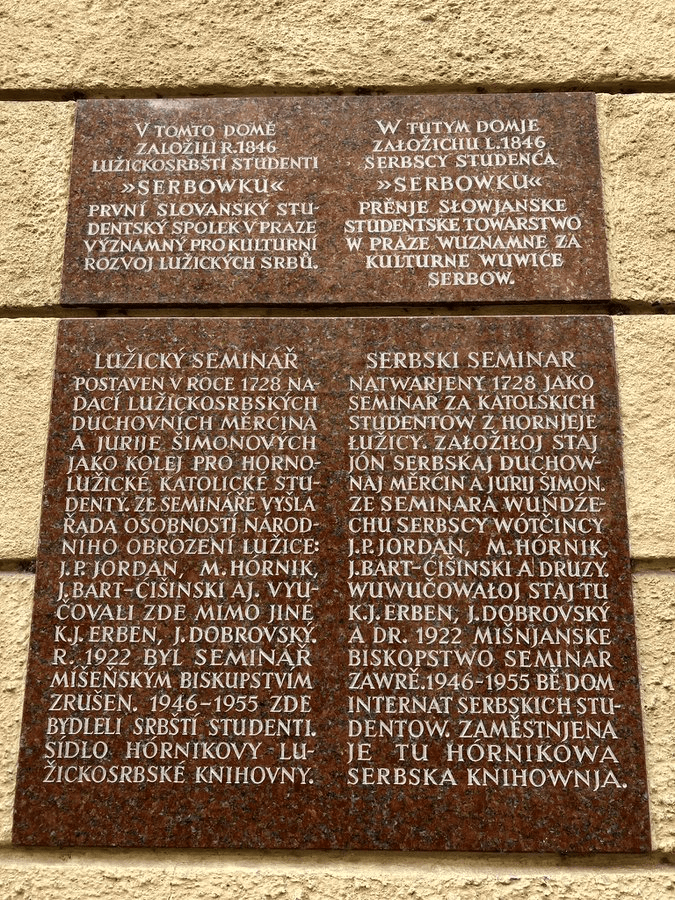
In 1846, a group of pupils, led by Jakob Bus, founded Serbowka, a Sorbian school and student association.
When World War I ended in 1918, and Czechoslovakia became independent, the seminar could no longer rely on donations (the Empire was gone, and Germany was about to enter its hyperinflationary era).
It was dissolved in 1922, after which Sorbian students would have to use alternative facilities in Lusatia itself. It was revived as a centre for Sorbs after WW2 (the Society of Friends of Lusatia), but was closed down in 1955, and handed over to Charles University.
It wouldn’t be until 2009 that the Ministry of Education, Youth and Sports gave the Society of Friends of Lusatia permission to use the premises again.
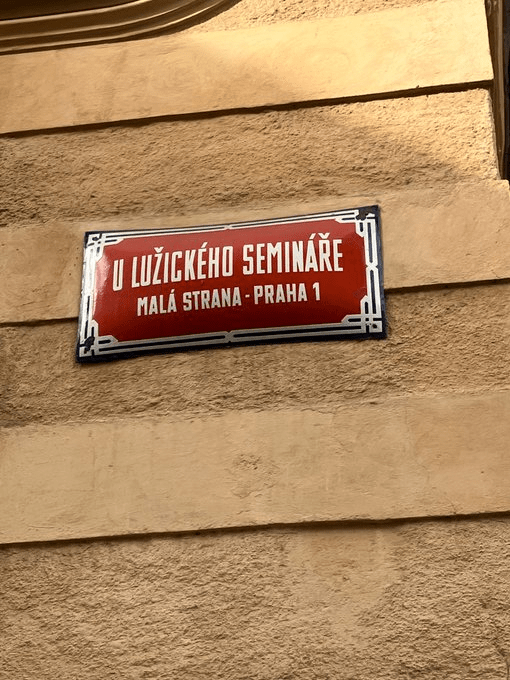
This plaque on the front of the building is a great opportunity to compare and contrast the Czech and Sorbian languages:
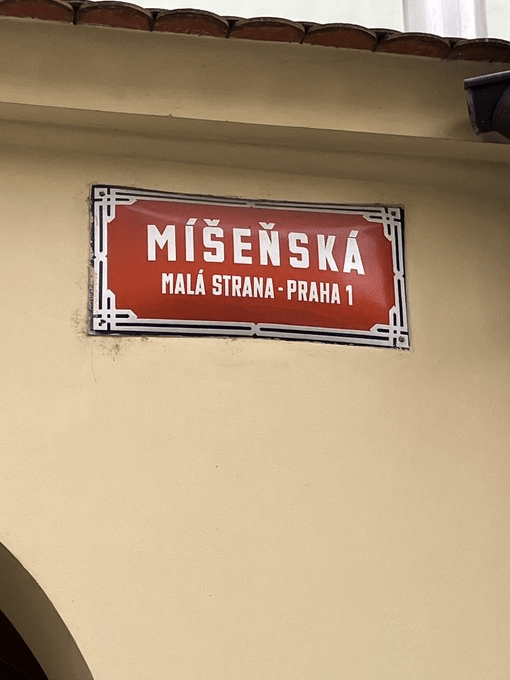
The street also includes the entrance to Vojanovy sady, reputedly Prague’s oldest park, and named after the actor Eduard Vojan, who was born on nearby Míšeňská. For somewhere so close to Charles Bridge, it’s an absolute, crowd-free gem.