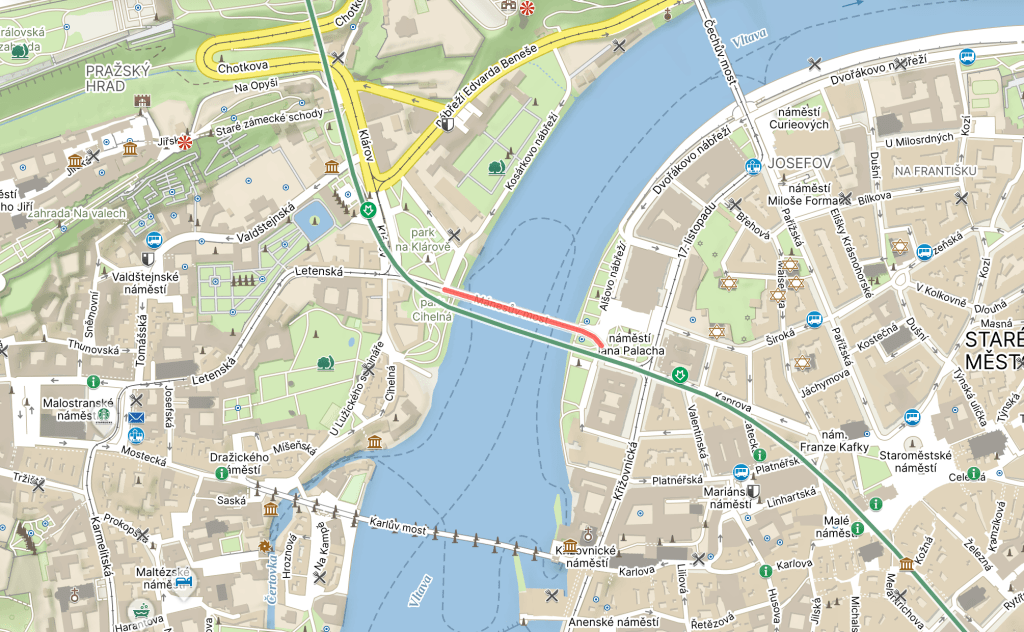
However, when it opened in March 1914, it was called the Archduke Franz Ferdinand Bridge, for all the huge amount of time old Franz would still be alive to appreciate the tribute.
The bridge served to take some of the pressure off Charles Bridge, which was dangerously overloaded with people at the time (yes, even more so than now). By 1920, it would have its current name.
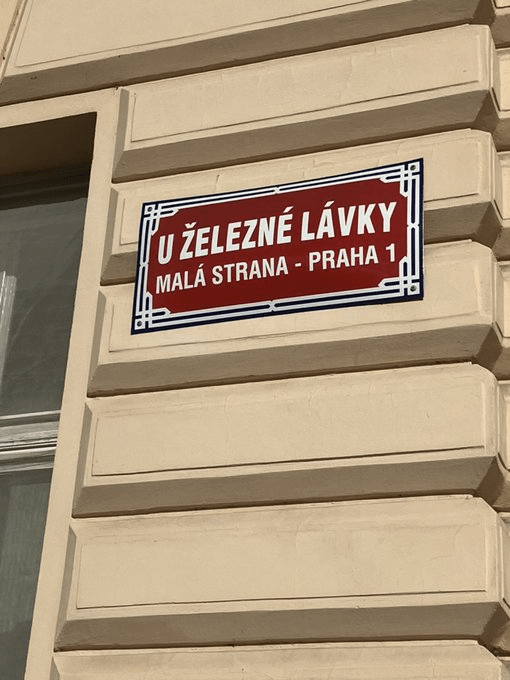
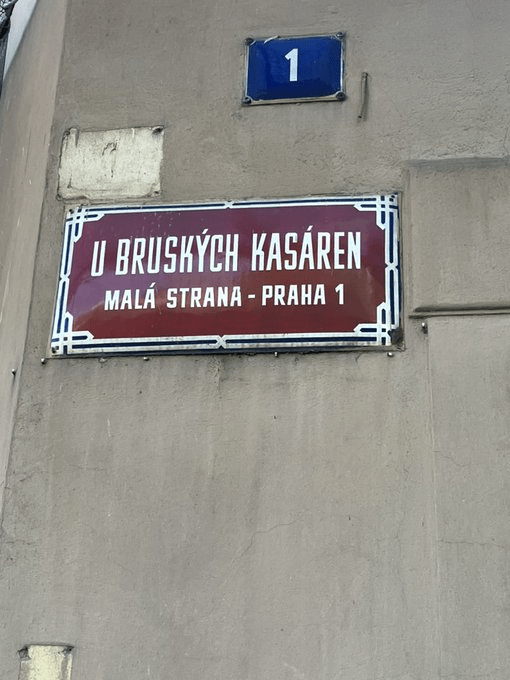
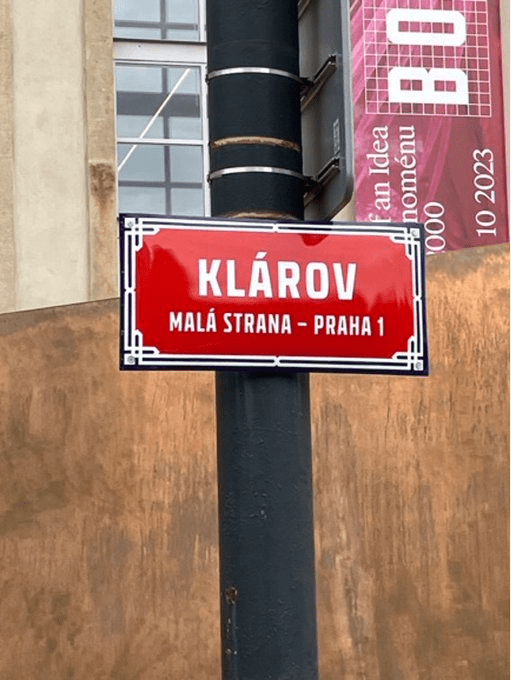
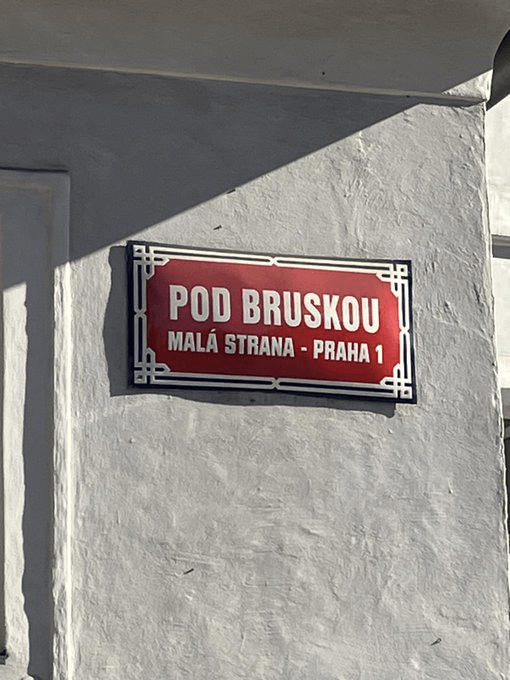
Originally published on X on 1 November 2023. Street name translates as ‘By the Iron Bridge’.
Before 1868, Prague only had two bridges across the Vltava. Other than the very famous one which is still there, there was the Emperor Francis I Bridge, which isn’t. It was built in 1841, and replaced in 1898 (there’ll be a post about its replacement).
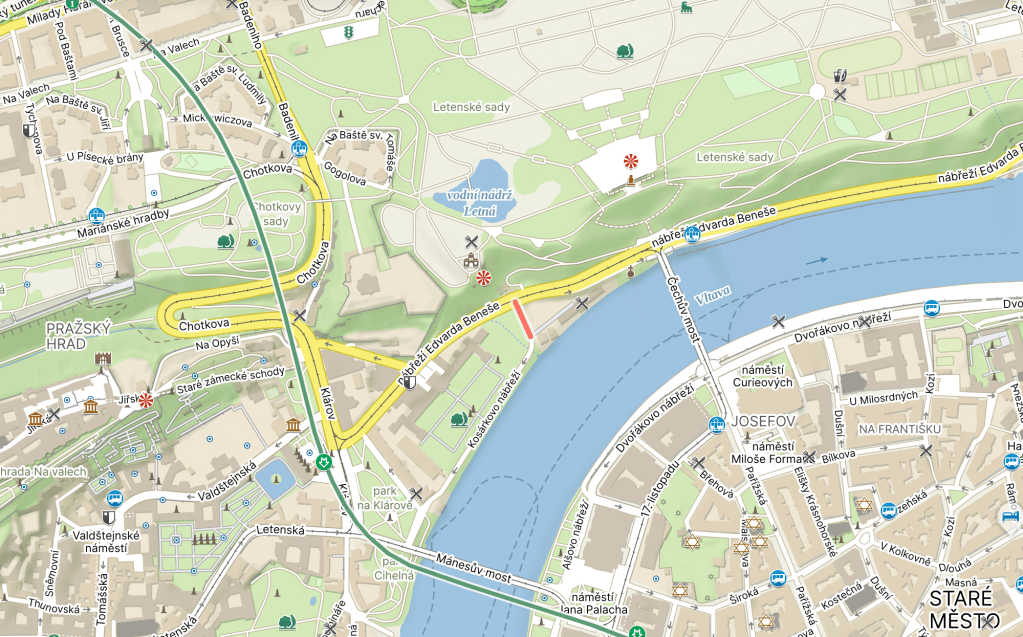
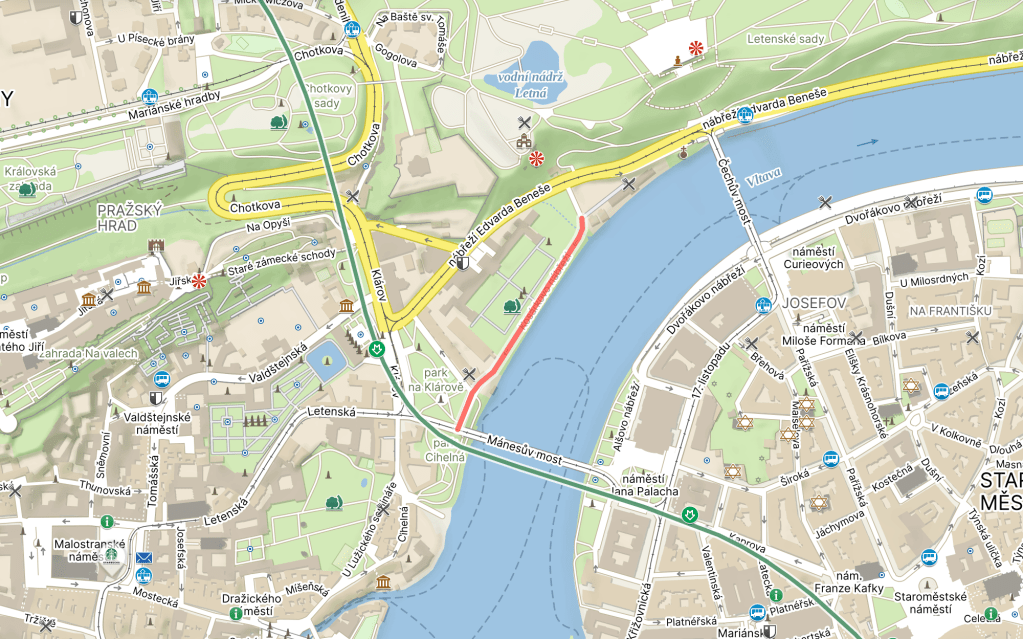
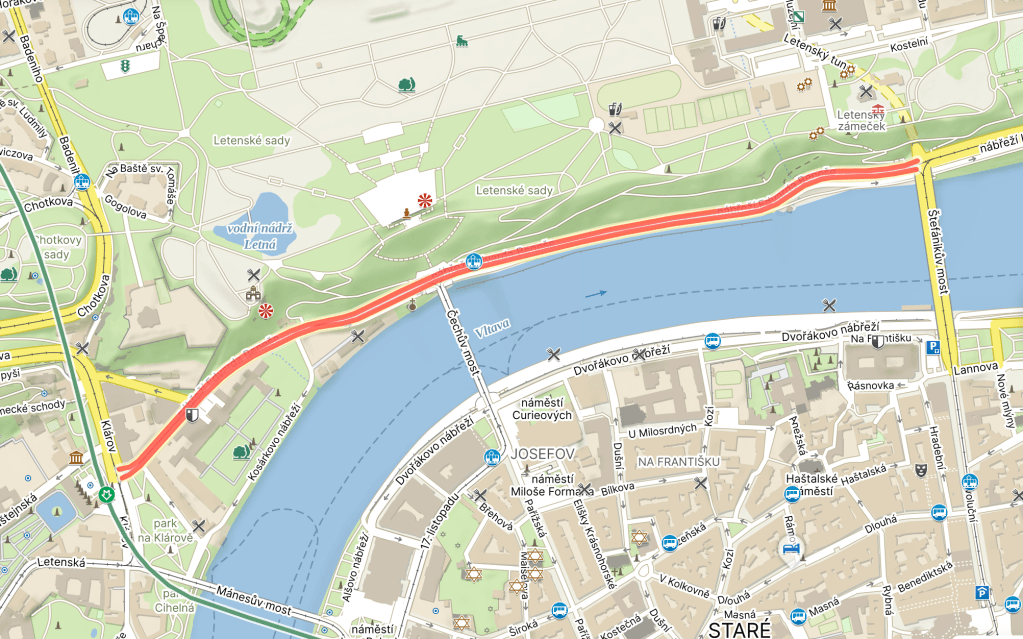
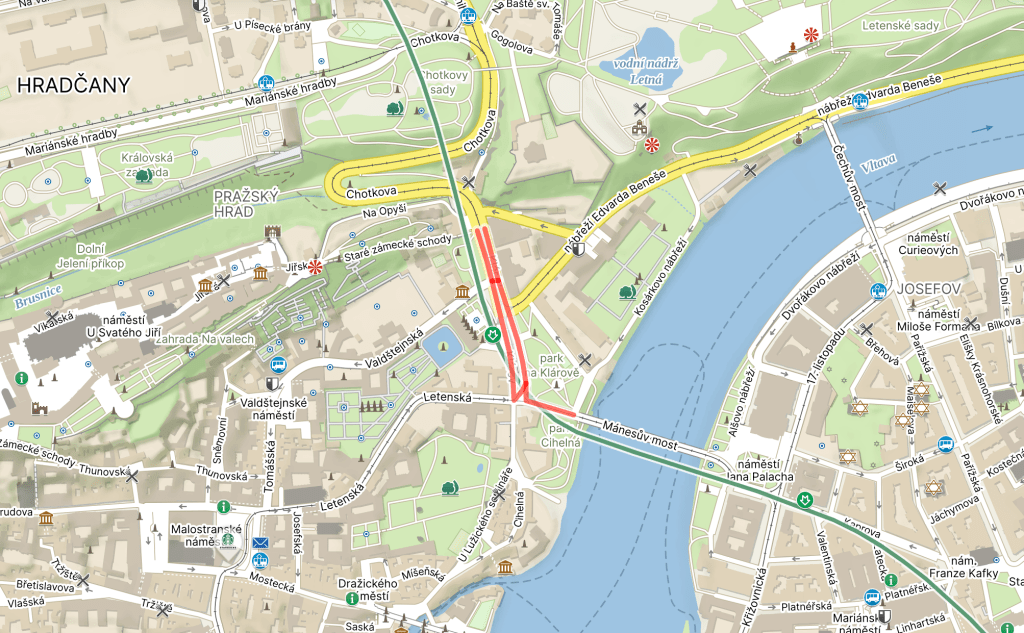
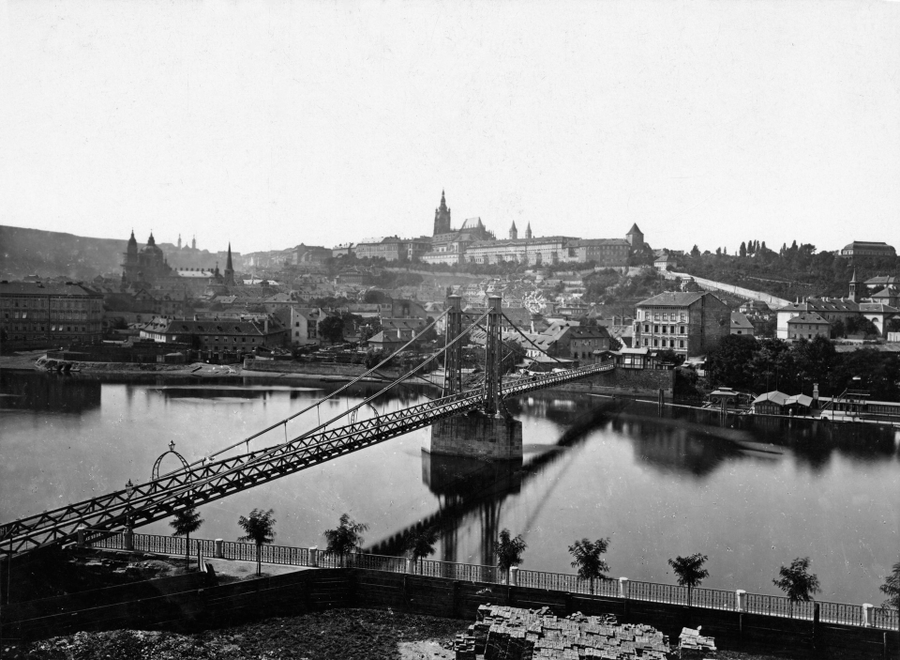
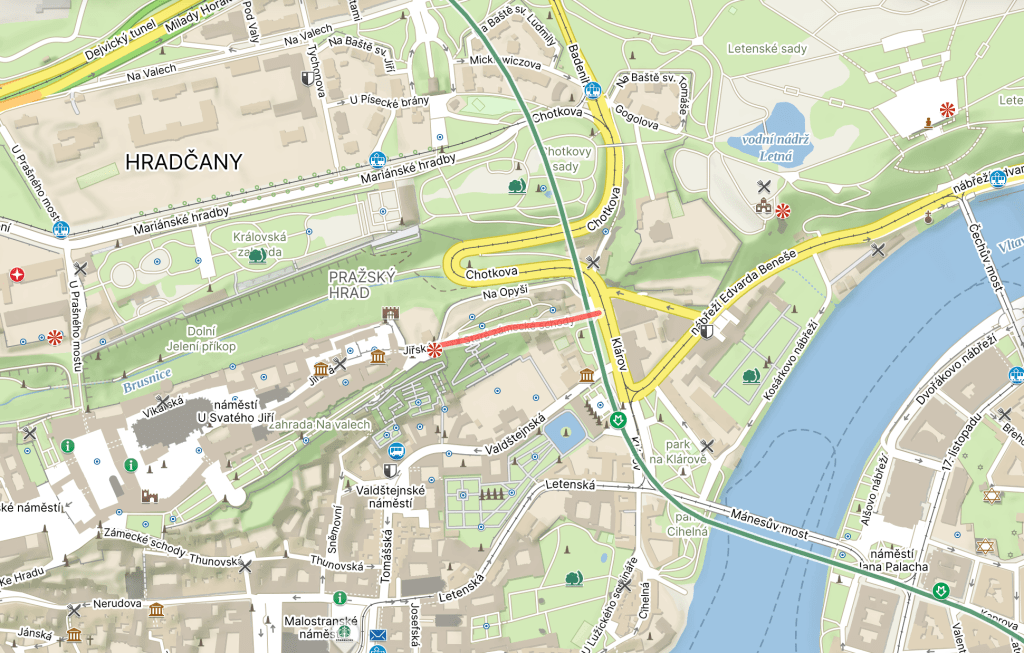
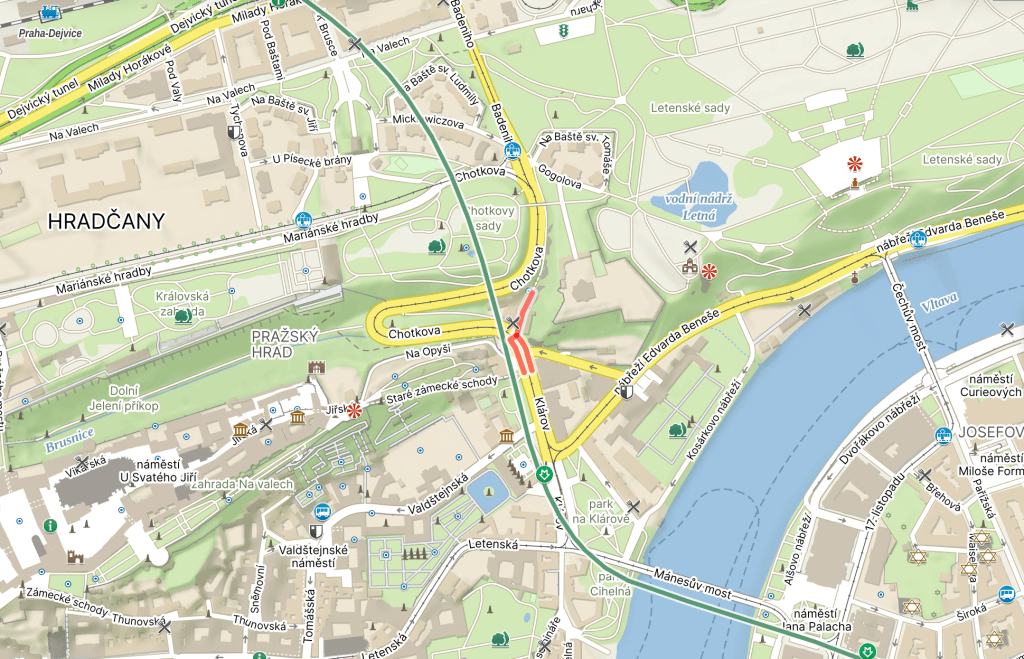
In the late 1860s, two more bridges would join them: Emperor Francis Joseph I Bridge (also gone, and coming up in a later post), and Rudolf’s Footbridge / Rudolfova lávka, which started at Klárov, where this street is now.
The Rudolf in question was Rudolf, Crown Prince of Austria, born in 1858 as the eldest son of Franz Joseph I and the Empress Siri, and, therefore, heir to the Habsburg throne. Appropriately, at the other end of the bridge, the Rudolfinum would open in 1885.
The bridge was in use until 1914, when it was replaced by POST TRUNCATED SO AS TO NOT MAKE TOMORROW’S POST REDUNDANT
Here are two wonderful pictures showing how the bridge looked.
Sadly, Rudolf himself would mainly come to be known for his presumed murder-suicide pact with his mistress, Baroness Mary Vetsera, at the Mayerling hunting lodge in 1889, when he was 30, and she was just 17.
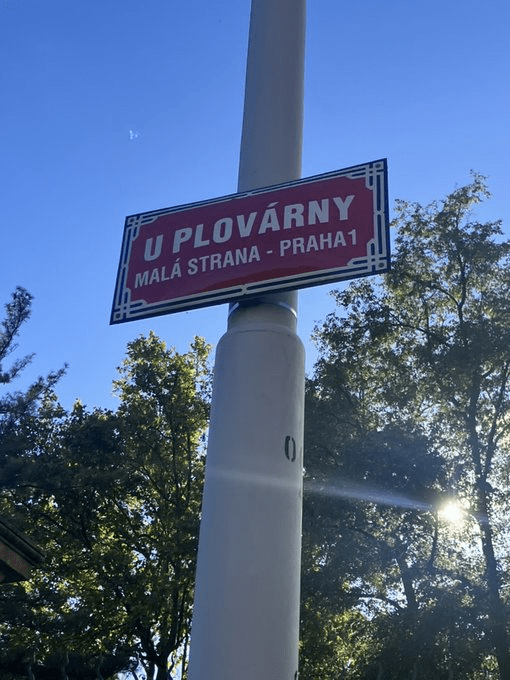
A plovárna is an outdoor swimming pool, or, for Brits of a certain age, a lido.
Until the 1780s, this was the site of a Jesuit church and its garden, inevitably closed down as a result of Josef II’s reforms.
Around 1810, one Arnošt z Pfuolu founded an outdoor swimming pool here. This was probably the first of its kind in the entire Austro-Hungarian Empire (Vienna didn’t get one until 1812).
While it was officially for the military, it was used by the public as well, until 1840, when the civilians got their own pool – the Občanská plovárna. The classicist building was designed by Josef Kranner.
You certainly get better photos from the other side of the Vltava, so expect those to appear on here in due course.
Purchased by the Municipality of Prague in 1906, the pool served its original purpose until the 1950s.
As demonstrated by this picture, the building didn’t do too well out of the 2002 floods: https://extra.cz/fotka/482544
Reconstructed in 2019, Občanská plovárna is now ‘the most beautiful event gallery in Prague’ (and, based on the photos on its site, this may well be true): https://obcanskaplovarna.cz
The summer concerts there definitely have some of the best that Czech music has to offer: https://scenanaplovarne.cz
In 1999, the pool complex gave its name to Na plovárně, a talk show on Česká Televize hosted by Marek Eben, and, while it isn’t filmed there anymore, it definitely gets a certain calibre of guest in: https://www.ceskatelevize.cz/porady/1093836883-na-plovarne/
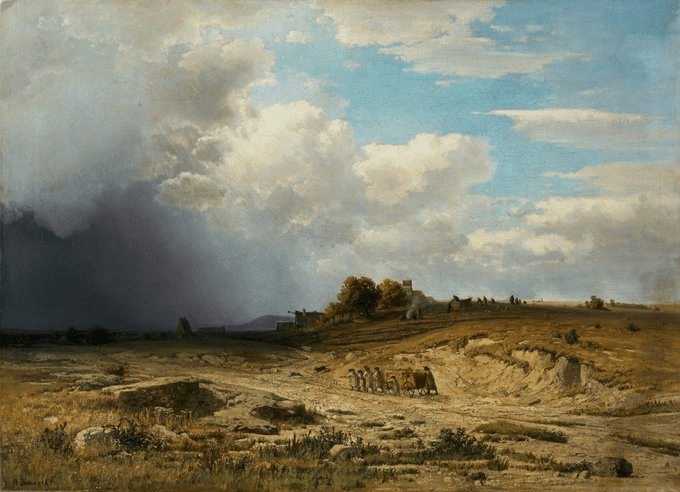
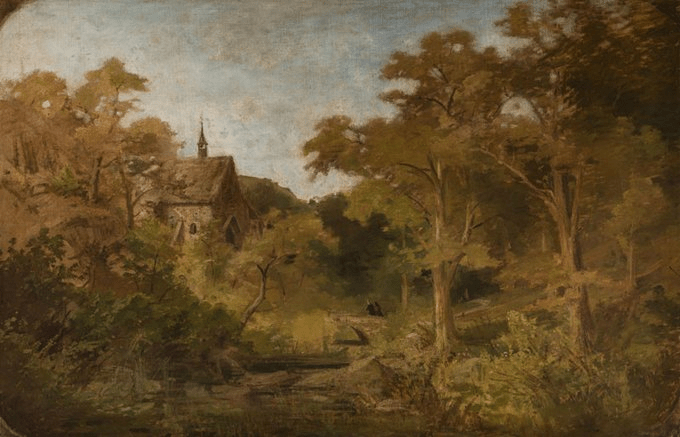
Adolf Kosárek was born in Herálec, near (Havlíčkův) Brod, in 1830, and went to school in Kutná Hora before working as a clerk.
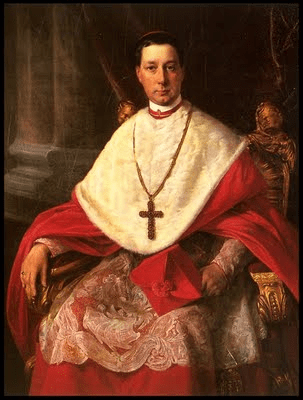
He did drawing and painting in his spare time, eventually attracting the attention of Friedrich Prince zu Schwarzenberg, who had become Archbishop of Prague around the same time (approximately 1850).
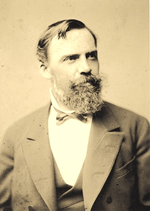
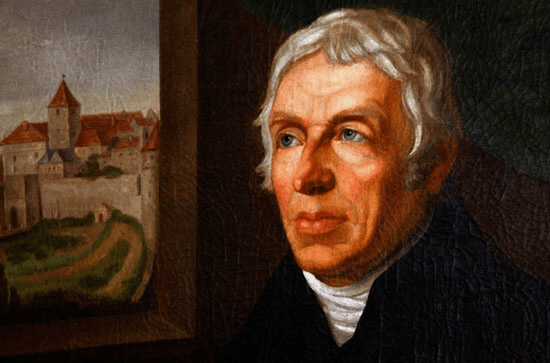
Schwarzenberg provided financial support which helped Kosárek to enrol at the Prague Academy of Fine Arts. Kosárek excelled here, particularly in landscape painting classes taught by Max Haushofer (pictured).
However, he never became rich from his paintings, which tended to get sold for low sums. It seems that his hard work and financial difficulties ultimately took a toll on his health.
In 1859, about a year after getting married, Kosárek died of tuberculosis. He was 29.
It would take until 1924 for an exhibition entirely devoted to his works to be held, but, nowadays, Kosárek is regarded as the father of Czech landscape painting.
Here you have ‘Lonely Landscape (Peasants; Wedding)’, ‘Autumn landscape near Pardubice’, ‘Chapel in the Woods’ and ‘Landscape with a wagon with a white sail’.
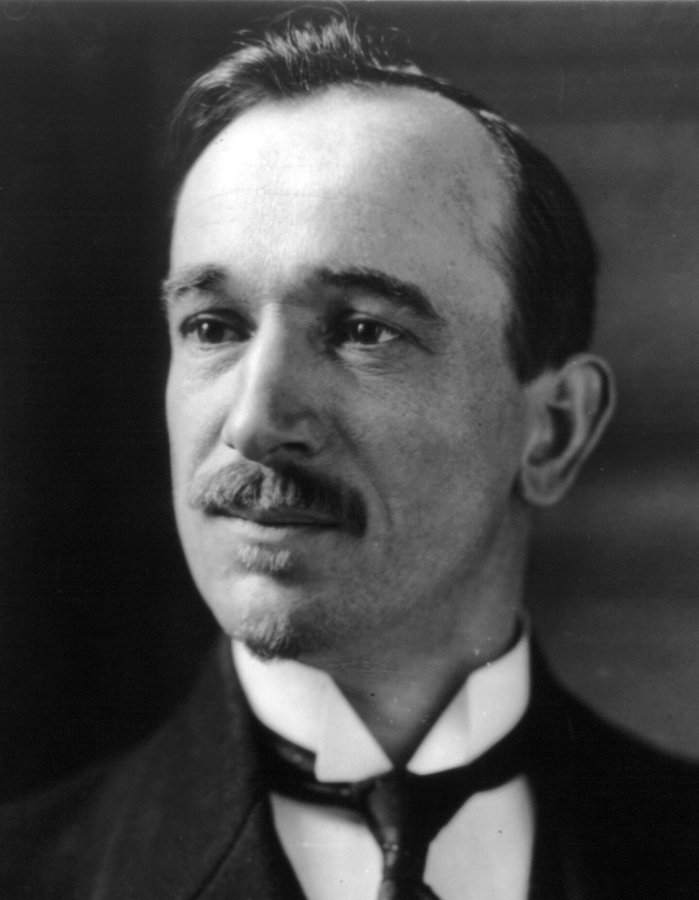
In Paris, he became engaged to Anna (later Hana) Vlčková, and changed his own name to Edvard.
In 1908, Beneš completed his studies in Dijon with a thesis on the problems faced by the Czechs in the Austro-Hungarian Empire; he graduated from Prague University the following year despite the authorities somewhat wishing he’d chosen a different topic to write about.
After graduation, he taught at the business academy, started to study law, and lectured as an associate professor at Prague University’s Faculty of Arts.
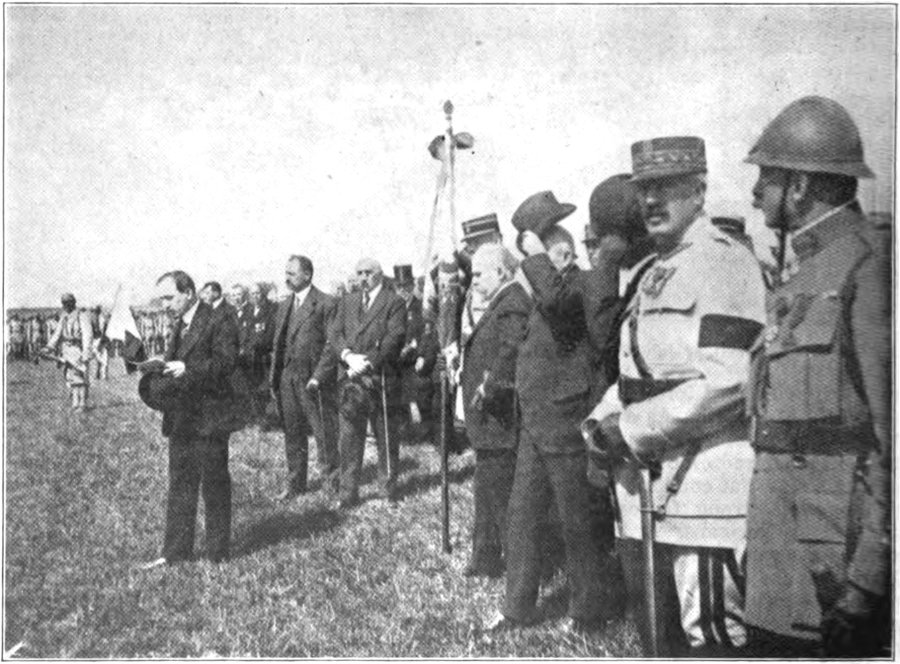
When World War I started, Beneš founded Maffie, a secret organisation aiming to overthrow the Austro-Hungarian Empire. Going into exile in France 1915, he collaborated with both Tomáš Masaryk and Milan Rastislav Štefánik.
Their cooperation would lead to the founding of the Czechoslovak National Council (in 1916) and the Czechoslovak Legion (in 1917).
When Czechoslovakia became independent in 1918, Beneš was appointed Minister of Foreign Affairs, although he didn’t return to the country until almost a year later, having represented Czechoslovakia in the negotiations that would lead to the Treaty of Versailles.
Beneš also helped to found the League of Nations, serving as a member of its council, its Vice-President, and, ultimately (1935-6), its President. He would also continue to hold his role as Minister of Foreign Affairs until 1935, with a brief stint as PM from 1921 to 1922.
In 1935, Masaryk abdicated as President of Czechoslovakia, and Beneš took his place. This was also the year in which two thirds of Sudeten German voters voted for the pro-Nazi Sudetendeutsche Partei.
In 1938, the SdP demanded autonomy for the Sudetenland under the ‘Karlsbad programme’; Beneš’s attempt at a compromise (under the ’Third Plan’: less autonomy than demanded, but still not a bad amount) was rejected, and the British government recommended that Beneš give way.
Beneš’s “Fourth Plan”, presented in September, would’ve created a Federal Czechoslovakia; the SdP rejected this too.
On 30 September, Germany, Italy, France and the UK signed the Munich Agreement, providing for the Sudetenland to be annexed by Germany.
Britain and France told Beneš that they wouldn’t assist militarily if Germany invaded Czechoslovakia – which contradicted a military agreement signed between Czechoslovakia and France in 1925 – and Beneš gave in. He resigned on 5 October and was replaced by Emil Hácha.
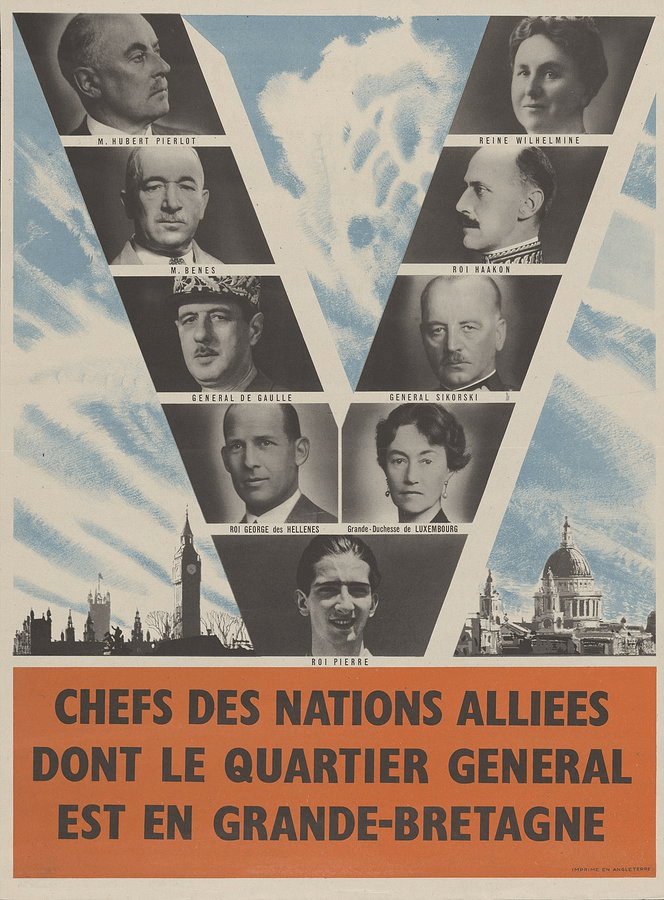
Beneš went into exile, first to Britain, then to the US, where he taught at the University of Chicago. He then went back to London in 1940, forming the Czechoslovak government in exile and becoming its president.
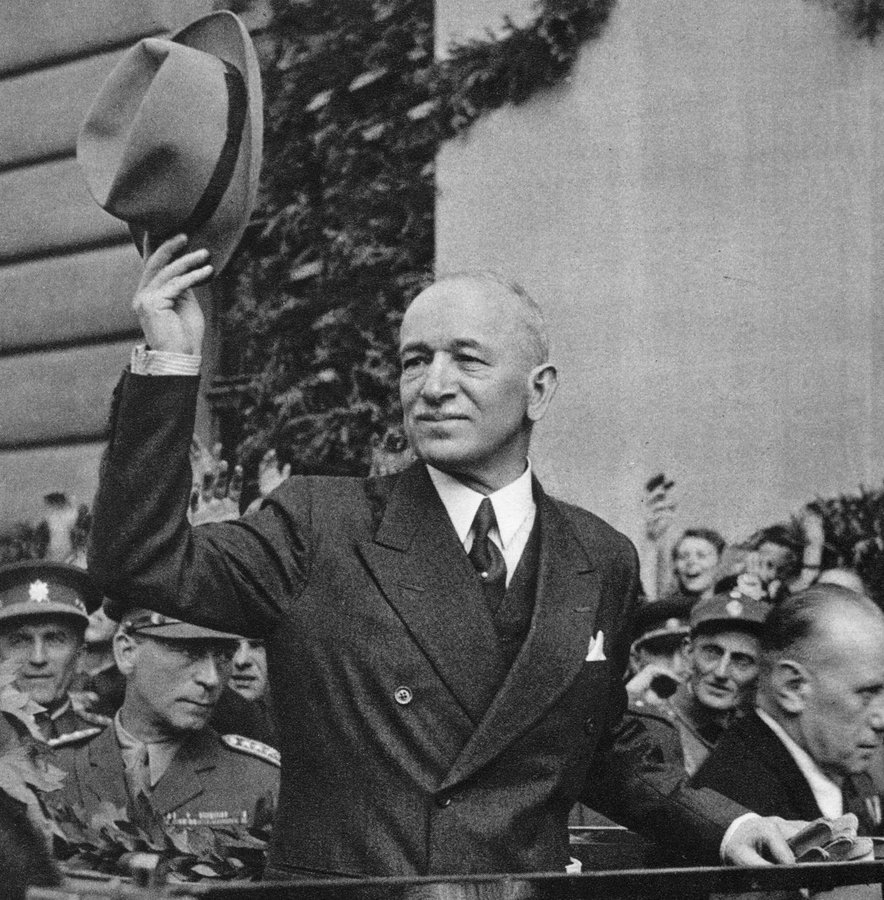
After WWII, when Czechoslovakia was restored, Beneš was, once again, confirmed as President.
He signed the Beneš decrees, the result of which was the expulsion of nearly all Germans and Hungarians on Czechslovakian territory, many of whose families had been here for centuries.
The decrees have never been repealed, and remain a source of tension to this day.
In 1946, the Communists won the elections; Beneš, believing himself to have a good relationship with Stalin, thought Czechoslovakia could remain a multi-party democracy. The February 1948 coup d’état would prove otherwise.
Already in ill health by that time, it would’ve been hard for Beneš to put up a fight. He resigned as president in June 1948, and the media started a hate campaign against him that summer. He would die of natural causes at his villa in Sezimovo Ústí in September, aged 64.
The Embankment includes the Office of the Government of the Czech Republic / Úřad vlády České republiky, housed in the Straka Academy. Its gardens are a very nice place to sit when they’re open.
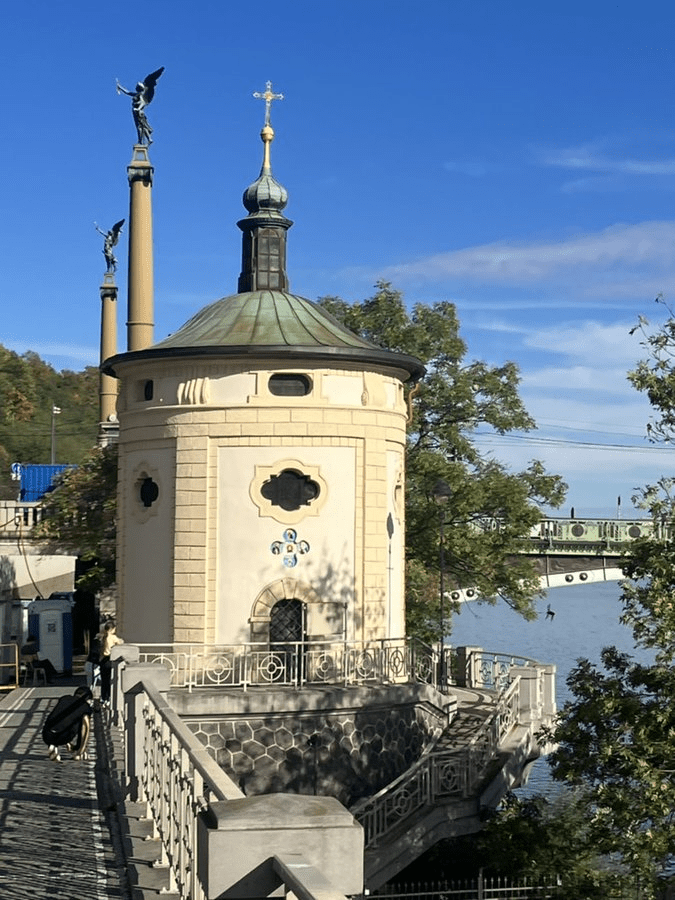
And a bit further on, there’s the Chapel of St. Mary Magdalene, and, if you stand around here, you’re in the tiny part of Holešovice that’s in Prague 1 rather than Prague 7.
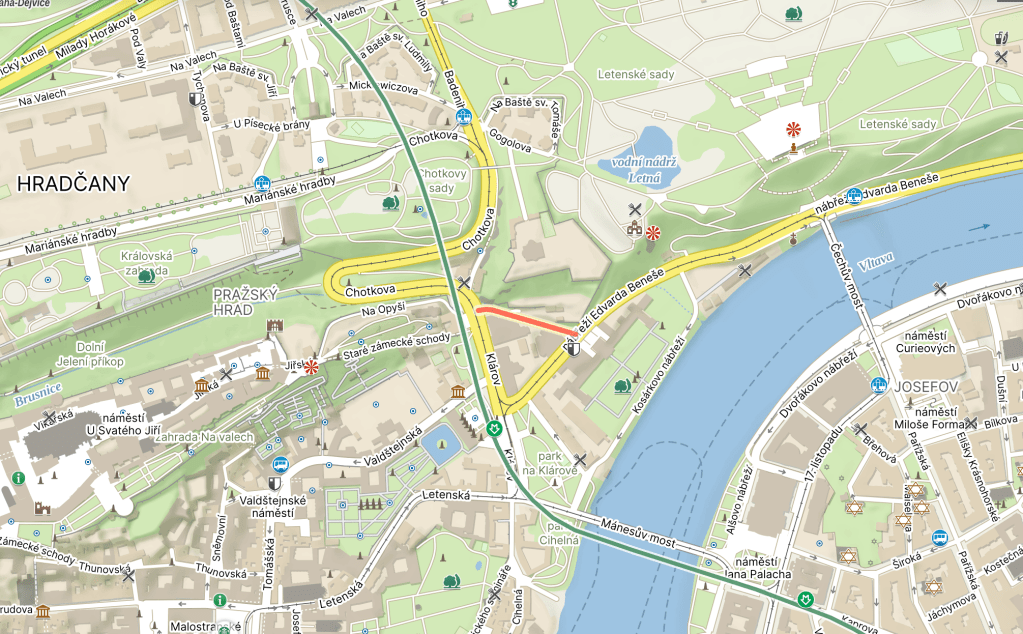
The street itself dates from 1931; the barracks it’s named after closed down a mere 168 years earlier, in 1763, before being converted into military accommodation in 1779.
That housing, in turn, got demolished in 1928.
For a street that’s only 120 metres long, U Bruských kasáren certainly has a fair few things you can say about it.
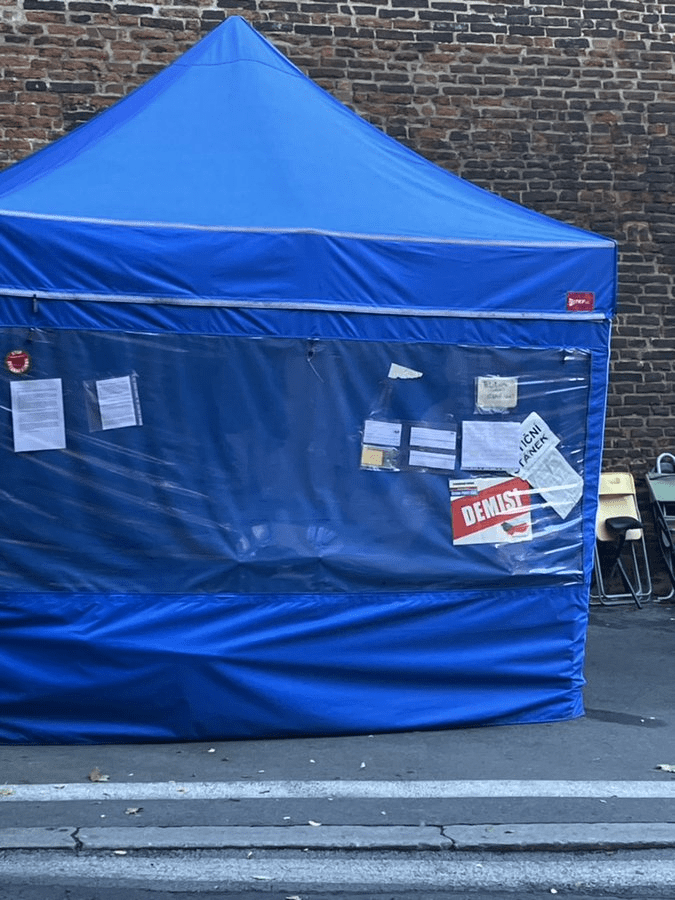
Firstly, as it’s next to the Office of the Government of the Czech Republic, it’s a favourite congregation place for those who want this government to resign. They seem to have permanent residence here.
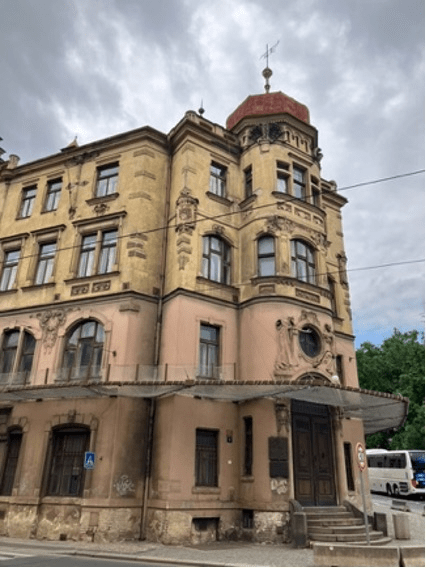
Secondly, the House of Body Culture (Domu kultury těla), opened in 1909, used to house a swimming pool, and also Prague’s first sauna. It’s no longer in use and could do with a bit of love.
Finally, you’ll probably know that Klárov is the location of Malostranská metro station, opened in 1978 – but what’s really interesting is the story of Klárov metro station, which, yes, was meant to be on U Bruských kasáren.
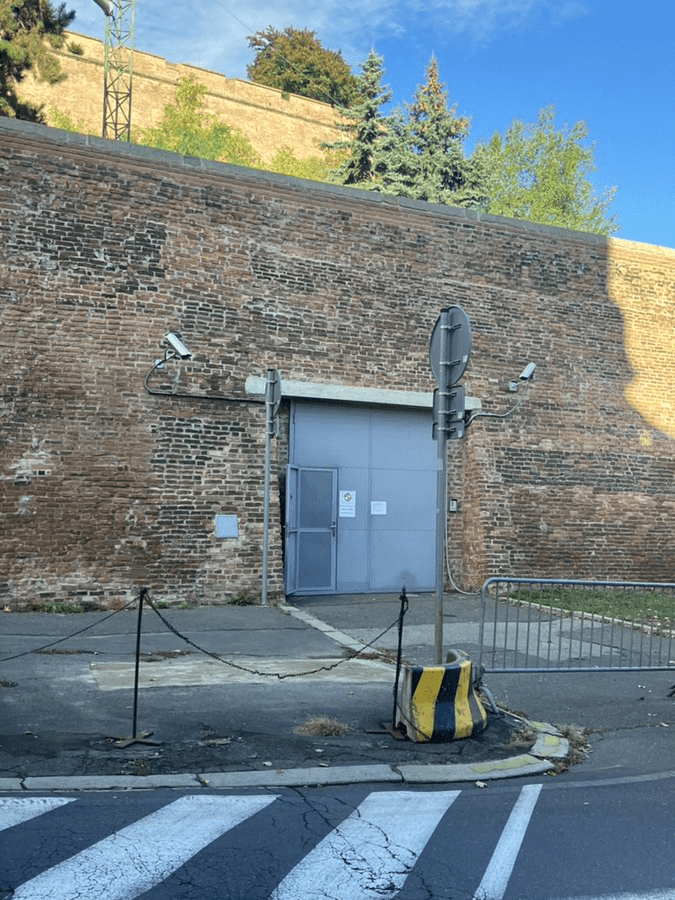
Built between 1952 and 1960 as part of the envisaged metro system, and also serving as a military shelter for politicians, it never formed part of the actual metro when that came in the 1970s, because it was too deep.
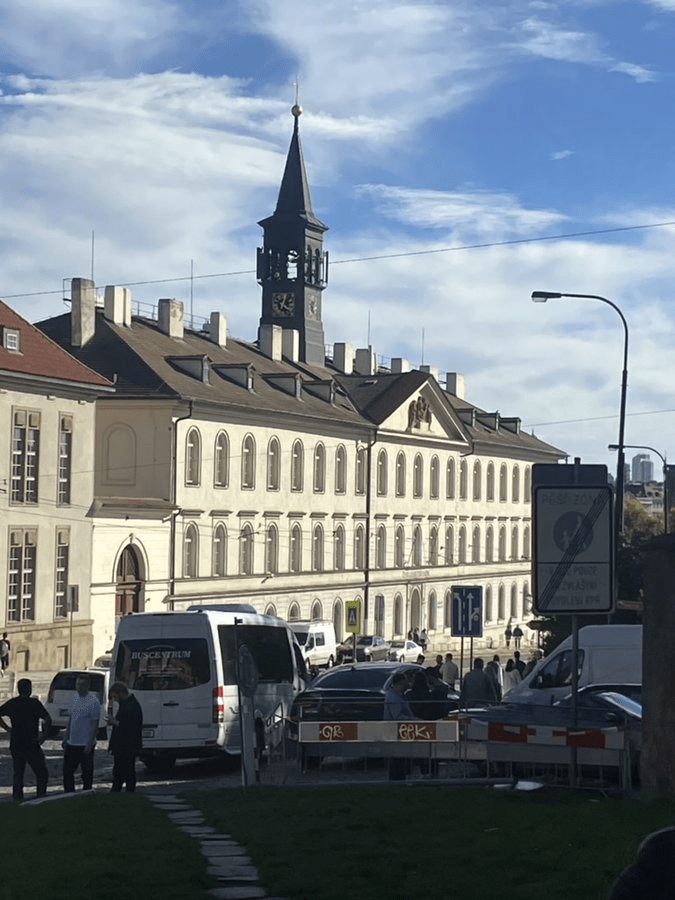
Nowadays, it’s the technical centre for Prague’s municipal transport company (DPP). Who probably have to deal with Team Resign every time they walk through this door.
Quite hard to imagine crowds of tourists storming out of here, isn’t it?
Alois Klar (no á) was born in Úštěk in 1763. He went to school in Litoměřice, and then went to Prague to study languages, graduating in 1782.
Four years after that, he became a professor back in Litoměřice, before returning to Prague University after being appointed professor of Greek and classical literature there.
Klar also established a scholarship scheme for talented visual artists.
In 1807, Klar also set up an educational institute for blind children in Hradčany. He would then be motivated to establish an institute for the care and employment of blind adults.
In the spring of 1832, he received a financial donation from Maria Anna of Savoy, Empress of Austria, and pushed hard for others to make a monetary contribution. Emperor Francis I also donated a plot of land, where Klárov is today.
Sadly, Klar would not live to experience the buildings of the institute for the blind (Klarův ústav slepců) being constructed, as he died shortly afterwards, in 1833.
Fulfilling its original purpose until the mid-20th century, the building is now the home of the Czech Geological Survey.
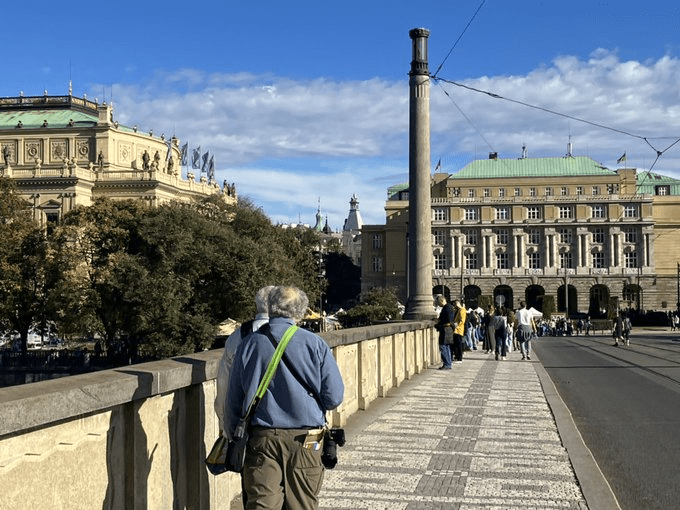
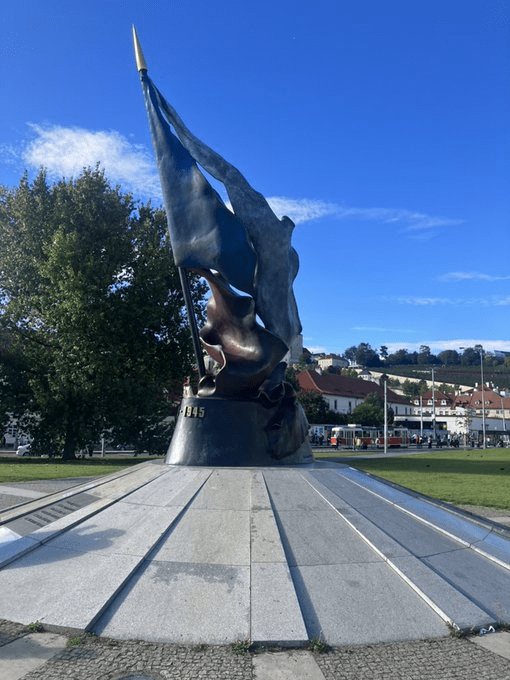
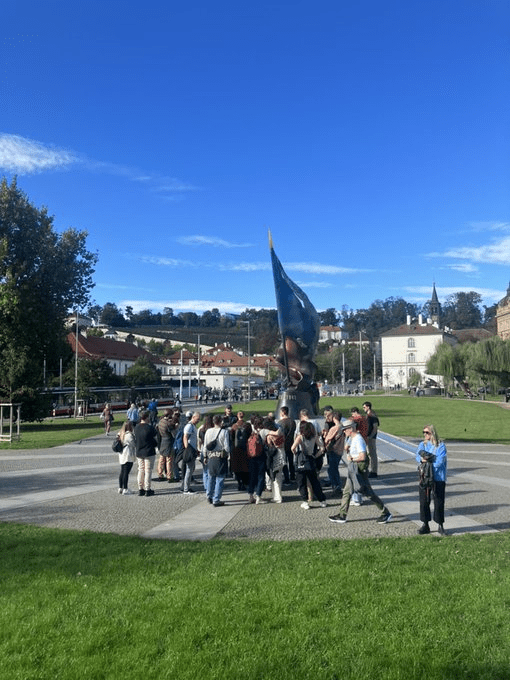
Klárov also includes this seven-metre memorial to the Czech anti-Nazi resistance in WW2, created by sculptor Vladimír Preclík and unveiled in 2008.
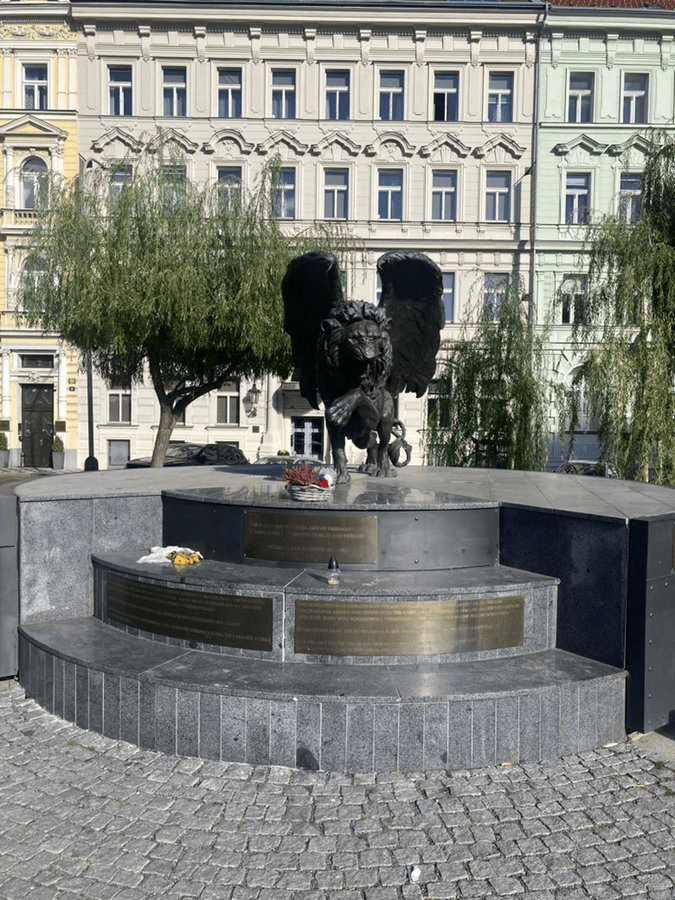
There’s also the Winged Lion Memorial (Památník Okřídleného lva), created by British sculptor Colin Spofforth and unveiled in 2014 by Nicholas Soames, grandson of Winston Churchill, dedicated to those Czechs and Slovaks who served in Britain’s Royal Air Force during the War.
Finally, in the ‘not here anymore’ category, Rudolph’s Footbridge / Rudolfova lávka was here from 1868 to 1914, and was, at the time, the fourth bridge across the Vltava in Prague.
They were given a reconstruction in 1835-7, and have had their current name since then.
They’re also less numerous – 121 versus 220 – but the views are good (there would be better ones if I hadn’t been faced by an onslaught of 3,753,446 tourists at this particular moment).
The steps also have a song dedicated to them, written and sung by the multi-talented Karel Hašler (1879-1941, killed at Mauthausen due to his patriotic songs):
In short, a beautiful maiden walks up the steps every evening, but with a man other than the singer. Sad face.
A statue of Hašler was inaugurated on the steps in 2009:
This 1967 version by Waldemar Matuška is a great opportunity to see some colour footage of Prague:
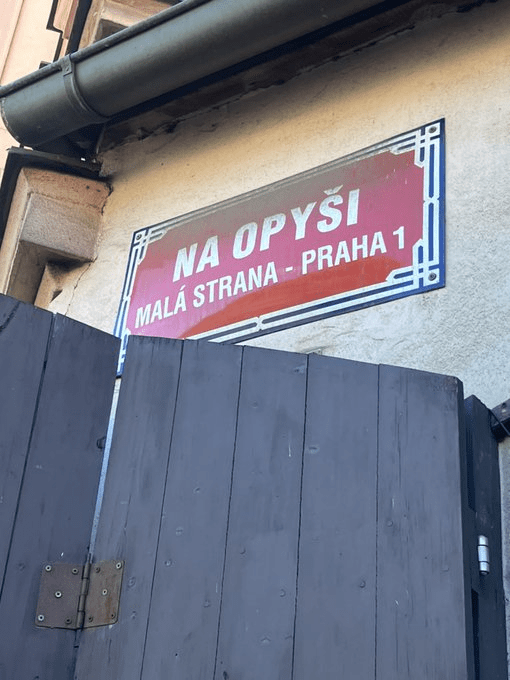
An opyš is ‘a narrow ridge rising from a flat hill into a valley’.
It’s not entirely clear how the word came about; there are those who believe that the word originally meant ‘tail’ (ocas in modern Czech).
Anyway, Opyš has become the name given to the lower part of the hill on which Prague Castle stands.
It also gave its name to a vineyard whose vines were supposedly tended by St Wenceslas / Václav himself.
The vineyard was revived in the early 2000s, and, as a tribute to Wenceslas, is now known as Svatováclavská vinice.
There’s a nice view of it from Klárov.
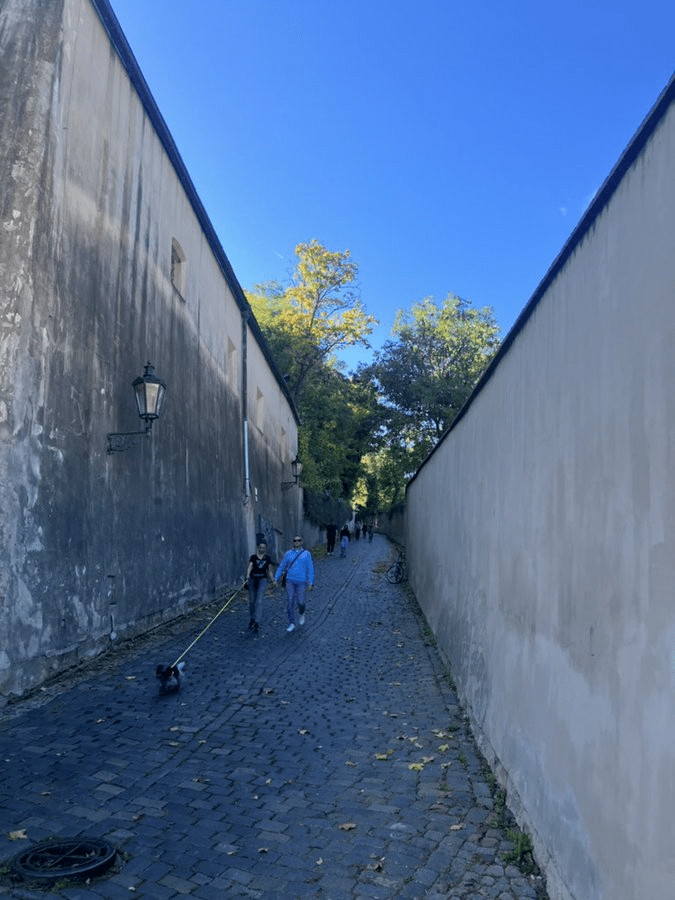
While Na Opyši itself is a nice little alternative for those not wanting to subject themselves to the hordes of tourists coming down the castle steps (more on those tomorrow).
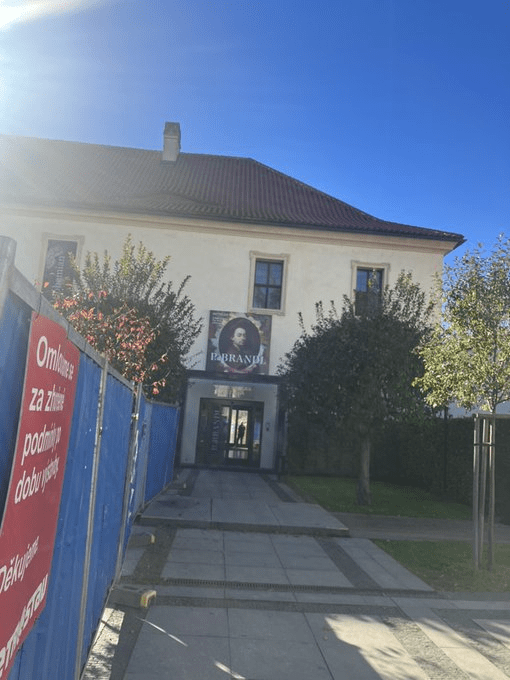
Since February 2022, number 2 in the street has hosted Kunsthalle Praha, a private art gallery that has a pretty great selection of exhibitions: https://www.kunsthallepraha.org/en
Housed in a former transformation station for the city’s electricity works – named the Zenger Transformation Station after Czech meteorologist and physicist Václav Zenger (1830-1908), its reconstruction won the 2022 Czech National Architecture Award.
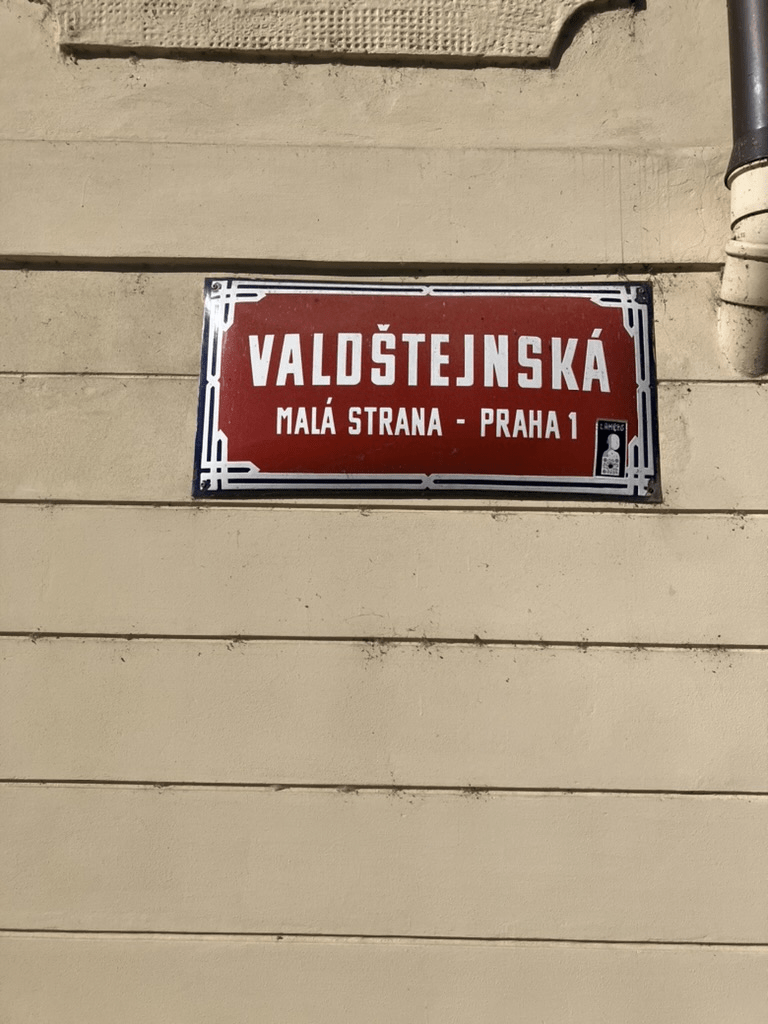
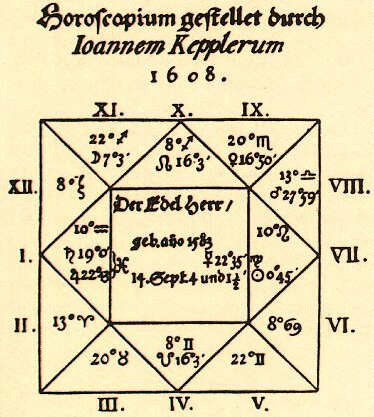
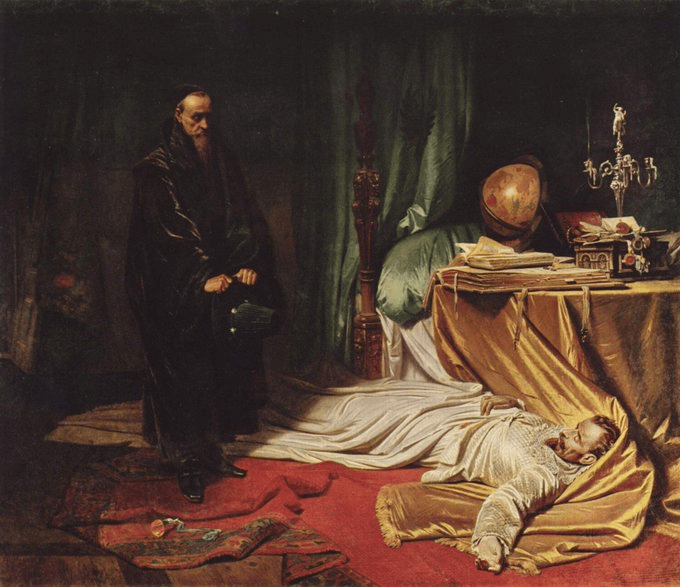
Because, in 1608, a young Valdštejn was in Prague and, as was customary for anyone of importance at the time, got a horoscope from Kepler (although he never met Kepler and sent an intermediary on his behalf).
Kepler was sceptical about astrology, but was even more sceptical about Rudolph II’s ability to pay him (he was the court astrologer and mathematician), so these horoscopes were a nice – and necessary – side-job.
Working with nothing but Valdštejn’s name and date of birth, Kepler’s horoscope was remarkably accurate, describing his subject as intelligent, antisocial, ambitious to the point of being inappropriate, suspicious of others, incapable of love, greedy and cruel.
One wonders if Valdštejn would own a social media network or two if he had been born in the 20th century.
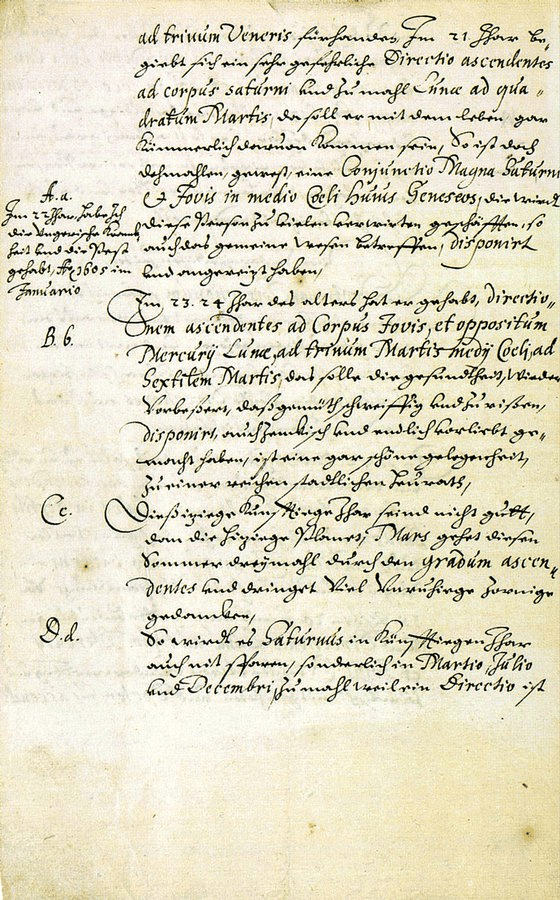
Kepler also predicted that Valdštejn would marry his way into a lot of money, and would become very popular, but also make himself a lot of enemies.
Valdštejn would remain obsessed with horoscopes (i.e. with himself) for the rest of his life. In early 1634, Kepler predicted that Valdštejn was about to enter a period of particularly big disagreements with those around him.
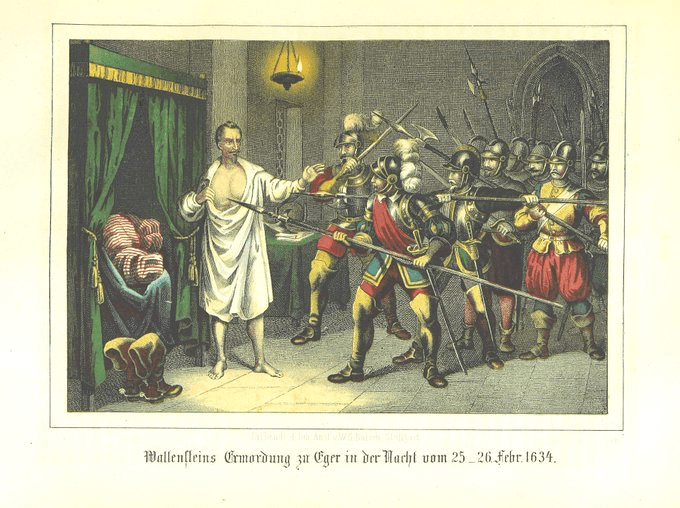
Given he was killed by his own men on 23 February, it’s safe to say Kepler wasn’t wrong about this either.
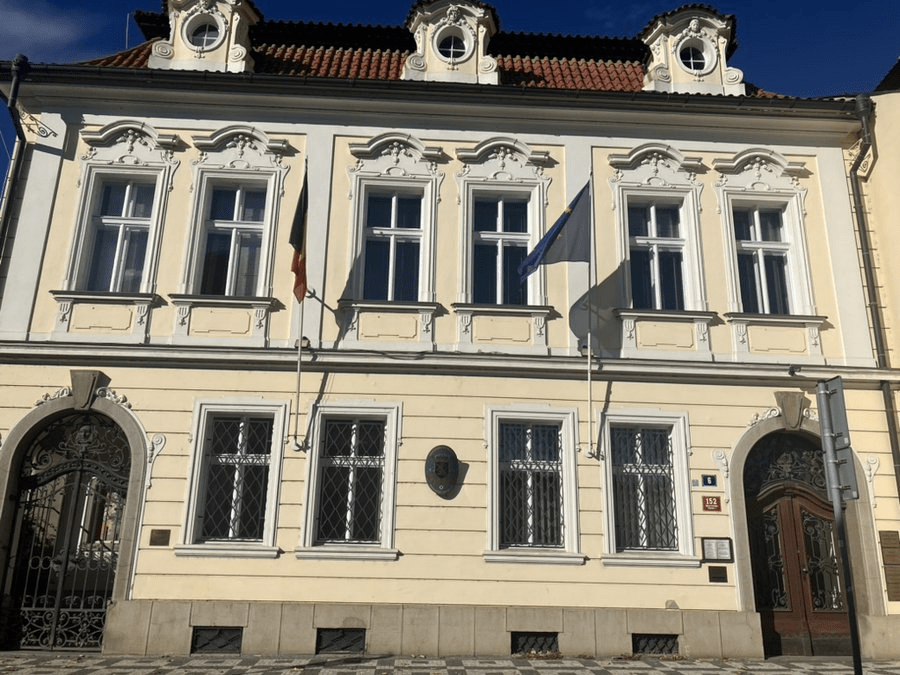
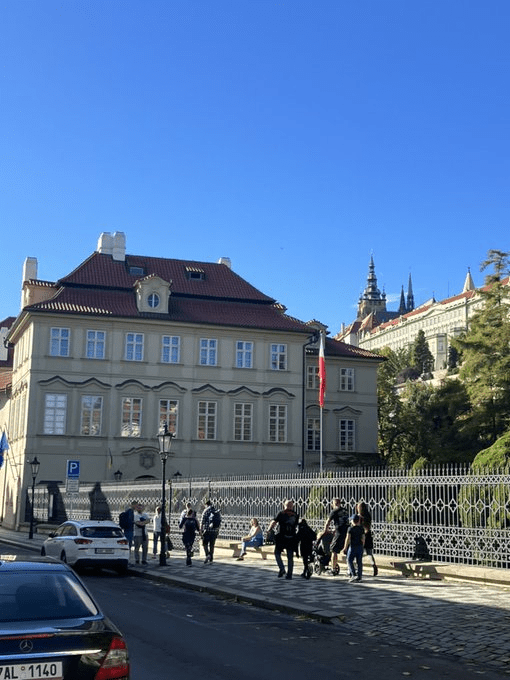
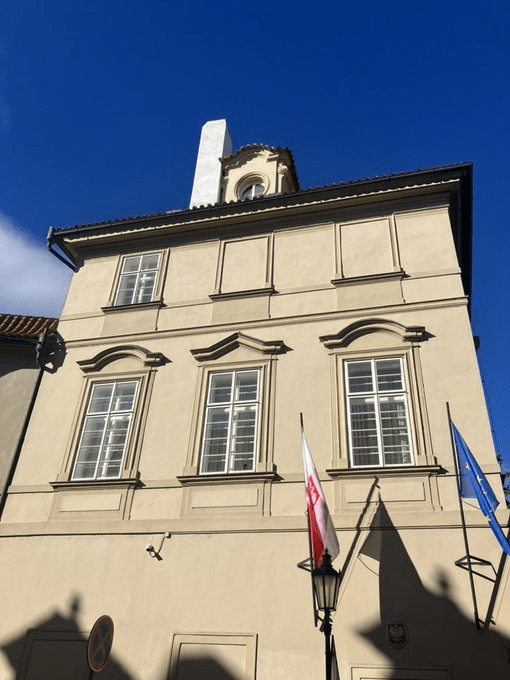
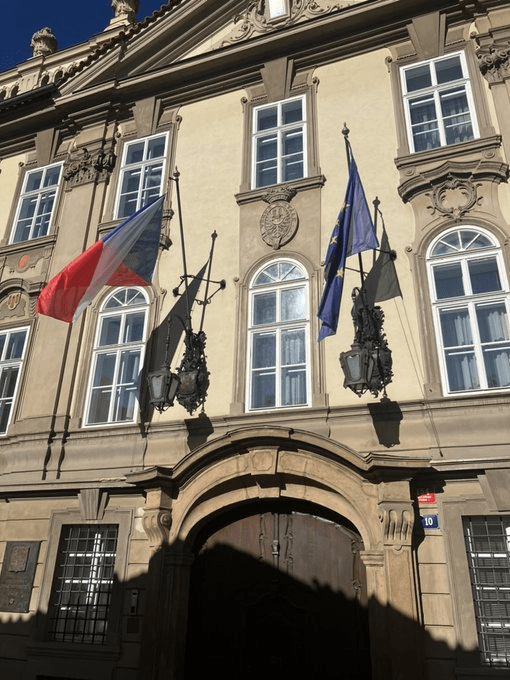
Number 6, U Bílého beránka (The White Ram), is a Neo-Baroque villa built in 1917. It hosts the Belgian Embassy.
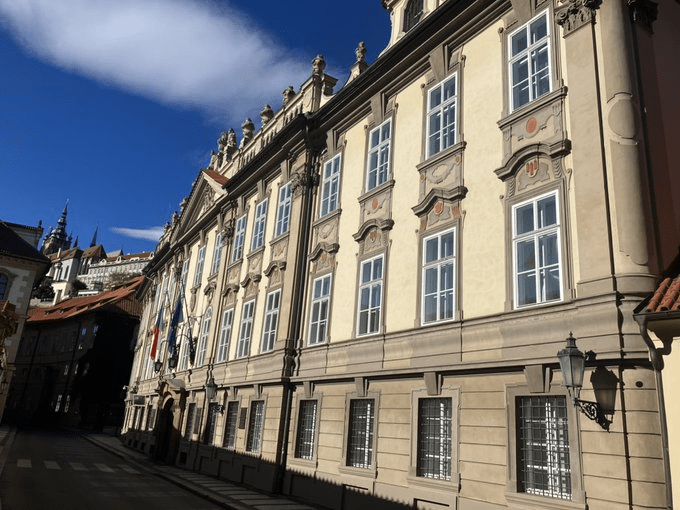
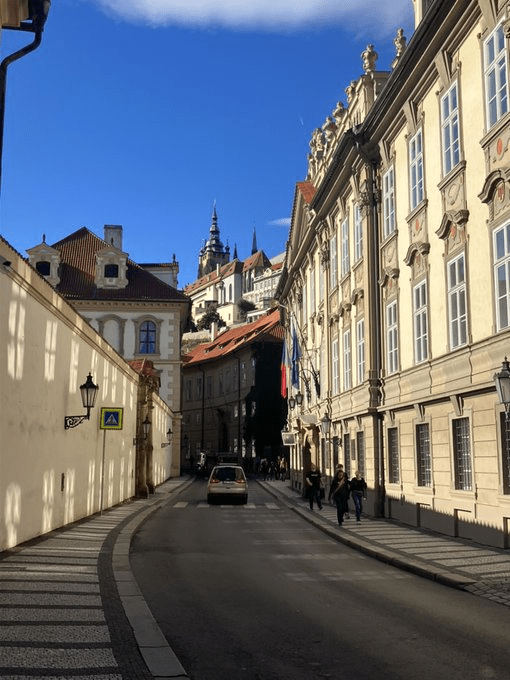
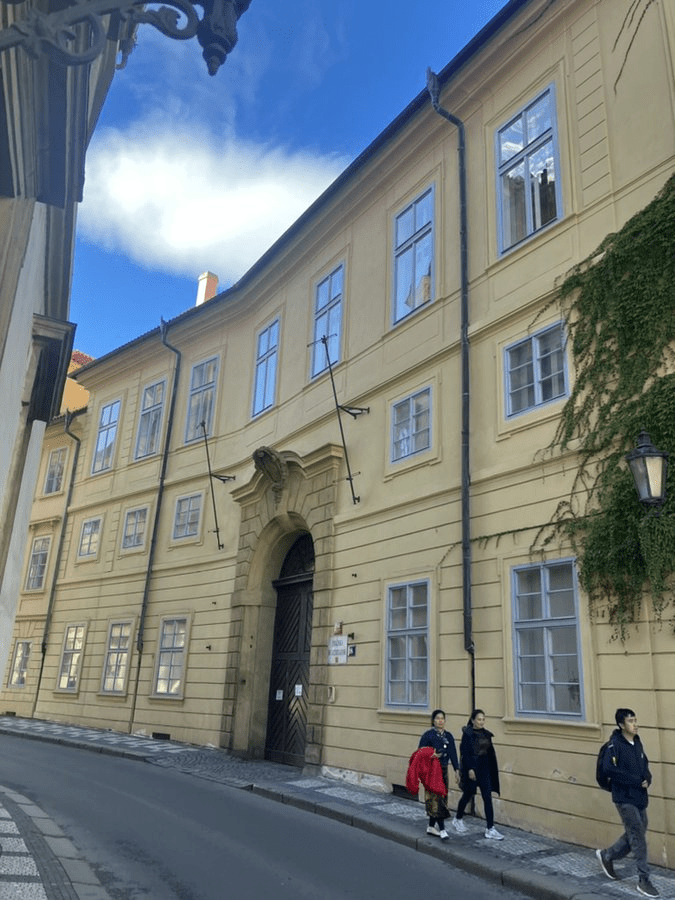
Whereas next door’s Fürstenberg Palace is somewhat older – dating back to 1580 – and has been leased to the Polish government for use as their embassy since 1922. It also has what I imagine to be one of the greatest office views in the world.
Kolovratský Palace, at number 10, is one of the (many) seats of the Czech Parliament.
While number 14, Pálffy Palace, is used by the Prague Conservatory.
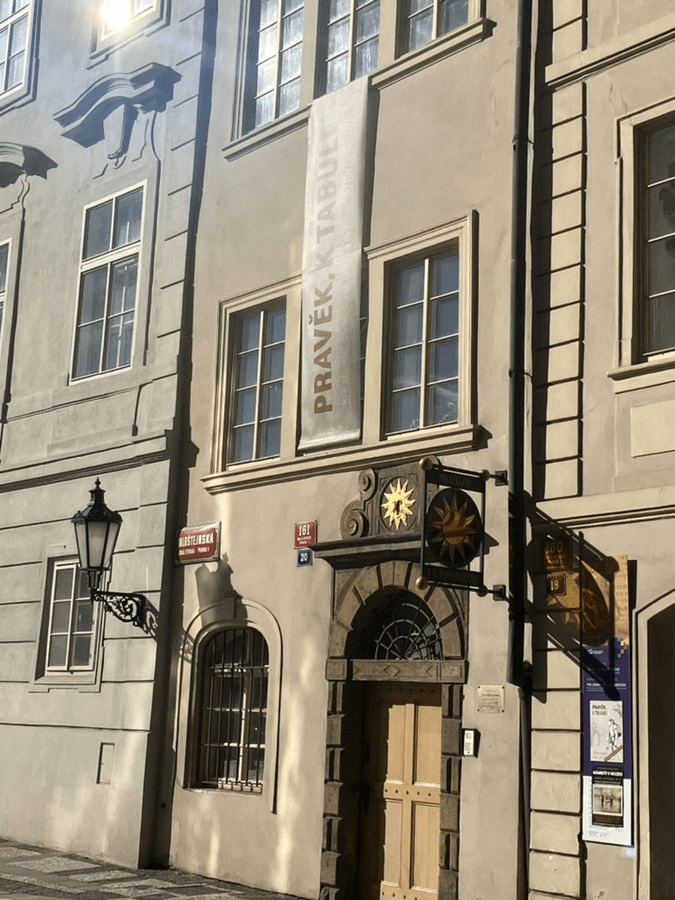
And number 20, U zlatého slunce (The Golden Sun), hosts the National Pedagogical Museum and Library of J.A. Comenius, devoted to the history of Czech education.
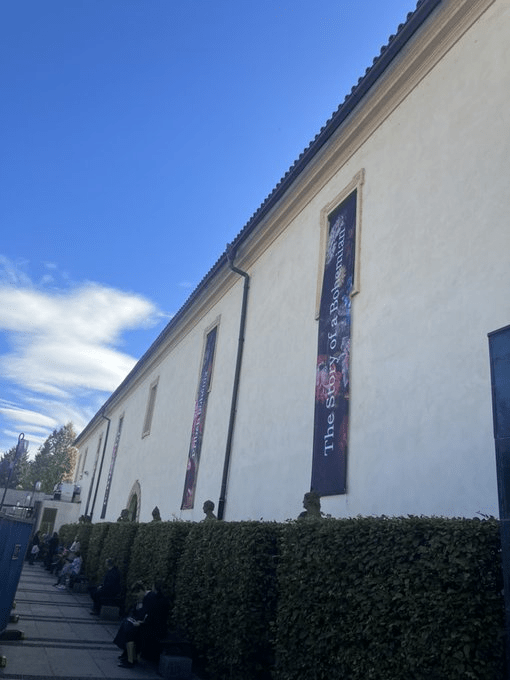
On the other side of the street, there’s Valdštejnská jízdárna, a historical riding school now used by the National Gallery.
There’s a lot of reconstruction right now, hence these photos being terrible.
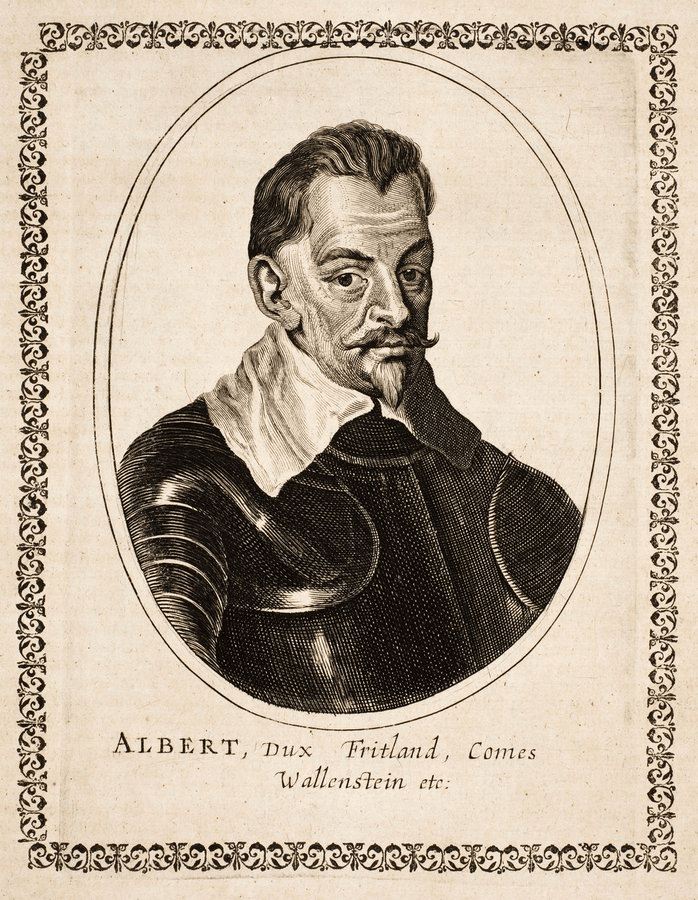
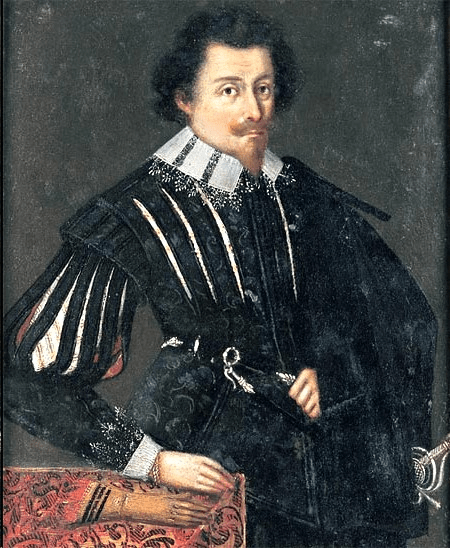
Albrecht Václav Eusebius z Valdštejna – usually called Albrecht von Wallenstein in English texts – was born in the Heřmanice Fortress, near Jaroměř, in 1583.
His father was a nobleman who had fallen on hard times, and, by the age of eleven, Albrecht had become an orphan and had to go and live with his mother’s side of the family.
In 1600, Albrecht quit his studies, with a list of achievements including getting involved in brawls, nearly beating his servant to death, and allowing a local murderer to escape.
He went travelling around Europe and continued his studies in Italy.
Returning to Bohemia, he fought in the army of Emperor Rudolph II, and converted to Catholicism, possibly realising, in these Counter-Reformation times, that being a Catholic would be more useful career-wise than being a Protestant.
In 1609, Valdštejn married a wealthy young widow, Lucretia of Víckov, whose first husband had owned Holešov, Lukov, Rymice and Vsetín – all of which passed to Valdštejn when she died in 1614.
So rich that he was able to employ 200 horsemen, he allowed Ferdinand of Styria – later Ferdinand II – to use these in the Friuli War against Venice in 1617.
The Estates Uprising in Bohemia would break out in the following year; the Estates didn’t want Ferdinand as their king, and elected Frederick V of the Palatinate instead.
In 1619, the rebel Estates seized Valdśtejn’s lands; he would recover these in 1620, as a reward for his faithfulness to Ferdinand, and his contribution to the Battle of Bílá Hora (he didn’t fight himself, but his cuirassiers, hired from the Netherlands, did).
Also gaining properties confiscated from Protestants, Valdštejn inherited the estate of Frýdlant in 1625, and, from 1627, practically ruled this as a separate country, the Duchy of Frýdlant, with its own noblemen and its own coins.
By 1625, Valdštejn’s wealth was so great that he was able to not only make loans to Ferdinand II, but also provide him with an entire army, eventually consisting of about 50,000 men.
While Valdštejn had multiple successes in the Thirty Years’ War (and presumably made himself hugely hated amongst the Poles, Swedes, Danes and Germans in the process), Ferdinand suspected that he wanted to take over the entire Holy Roman Empire, and dismissed him in 1630.
It would be all of two years before Valdštejn’s services were required again, though, but, in 1633, Valdštejn decided to turn against the Habsburgs, and entered into negotiations without them with the enemy (incl. Saxony, Sweden, Brandenburg and France).
In February 1634, Ferdinand signed a patent, ordering that Valdštejn be removed; he was charged with high reason in the same month.
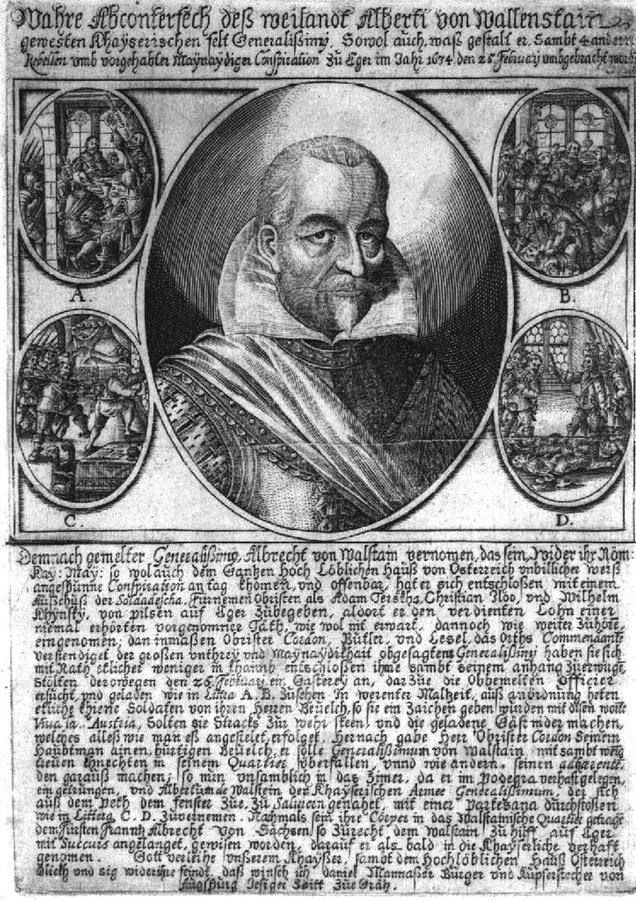
Hoping to meet up with the Swedes, who he had been making overtures to, and thinking he’d be safer the further he was from Prague, Valdštejn escaped from Plzeň to Cheb on 23 February.
However, two days later, he was assassinated by some Scottish and Irish officers in his force (showing just how pan-European the Thirty Years’ War had become).
A trilogy of plays by the German writer Friedrich Schiller (1759-1805) – Wallensteins Lager, Die Piccolomini, and Wallensteins Tod – are commonly known as Wallenstein.
They were on my suggested reading list at university; I never read them. Proof, once again, that we should all do our undergrad degrees twenty years later than we do.
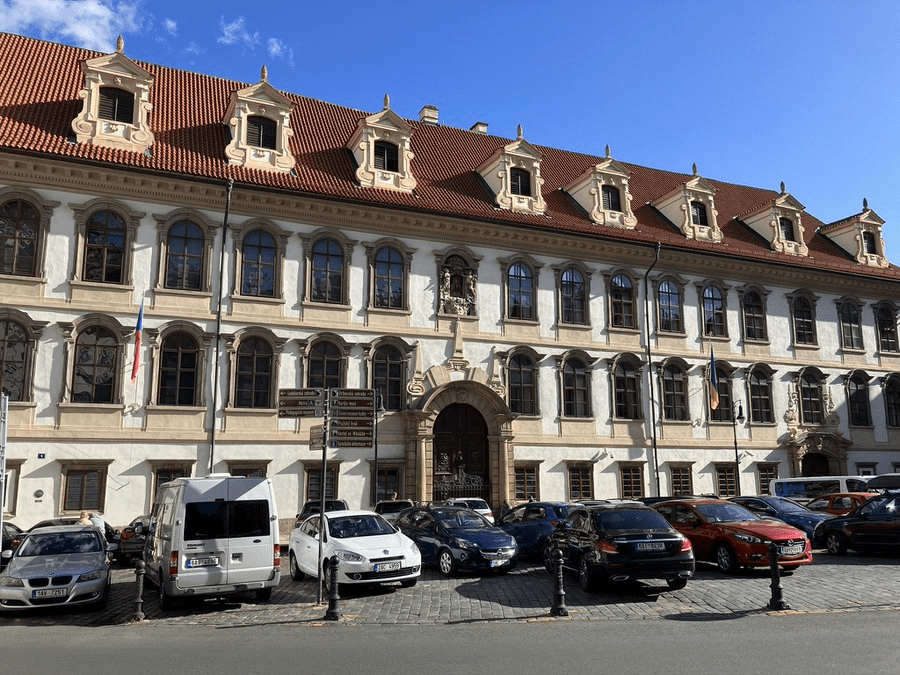
On the square, Wallenstein Palace was commissioned by Valdštejn in the 1620s, and would remain in the family’s hands until 1945. It now hosts the Czech Senate.
The Aueršper Palace, at number 1, was built in the late 17th century. It’s now used by the Czech Parliament, which seems to have access to more buildings than even Valdštejn did.
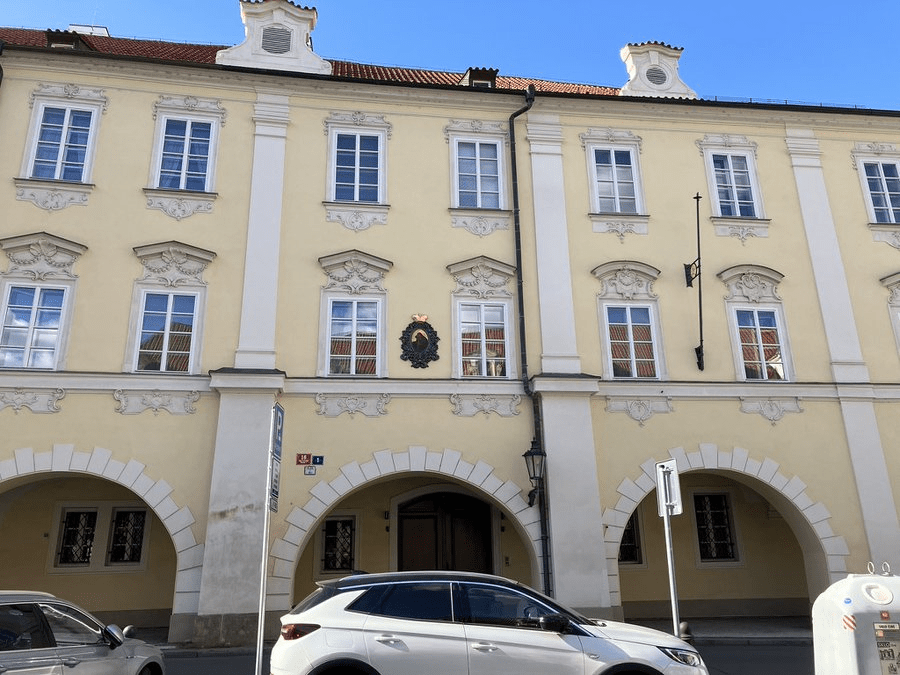
While Ledebour Palace, at number 3, was created in the 1600s after the merger of five individual houses. In communist Czechoslovakia, it hosted the Ministry of Information; it now hosts the National Monument Institute, which aims to preserve monuments across the country.
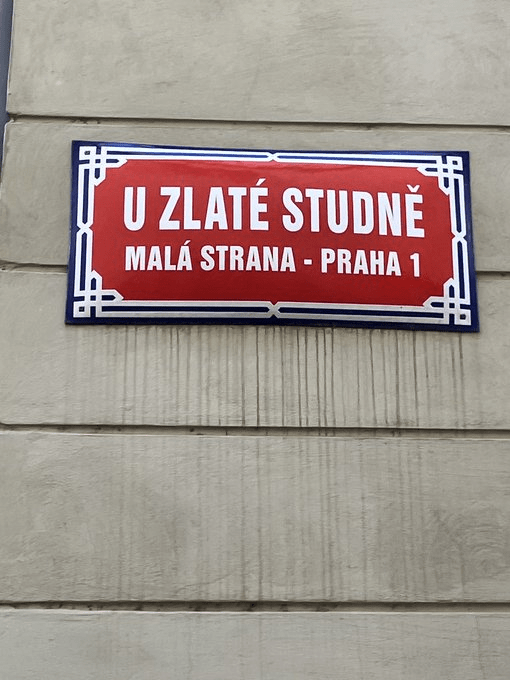
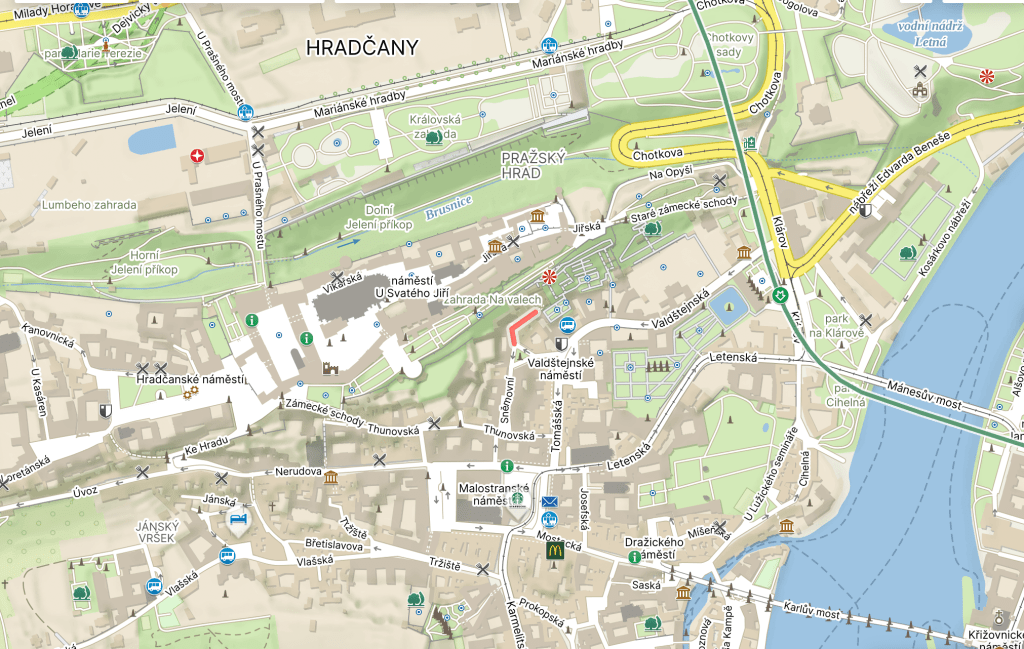
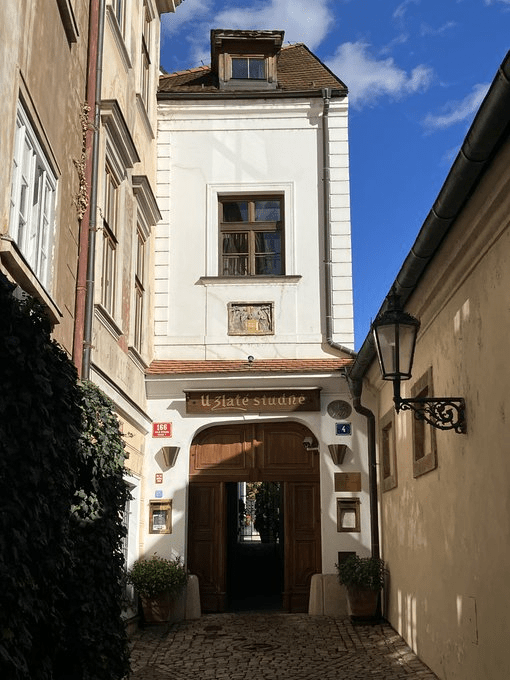
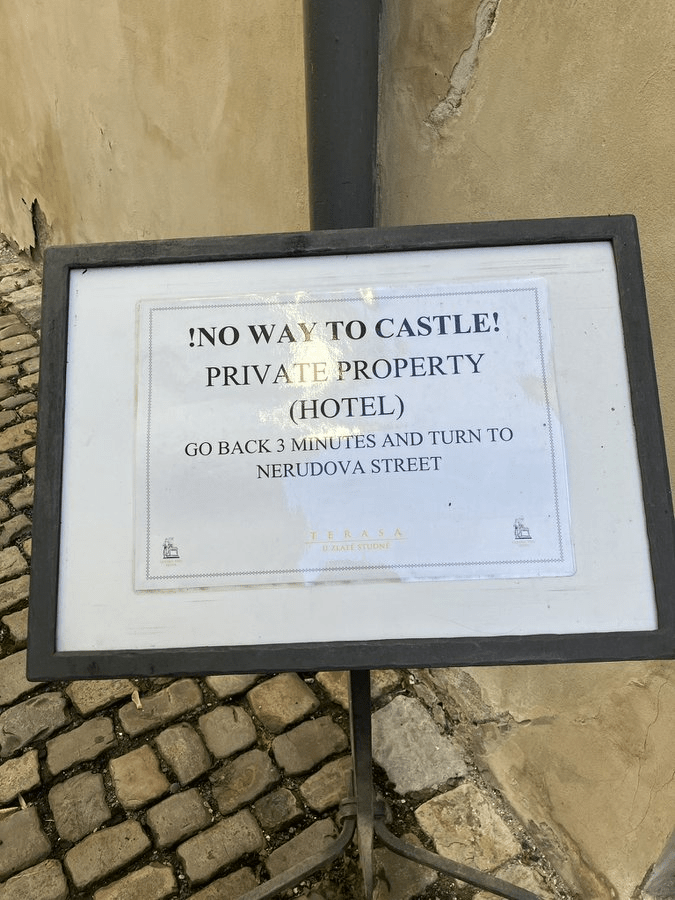
U Zlaté Studně translates as ‘At the Golden Well’.
‘So, where’s the well?’, I heard you ask. And, erm, it isn’t. Or, at least, not anymore, and I don’t know when/if it existed.
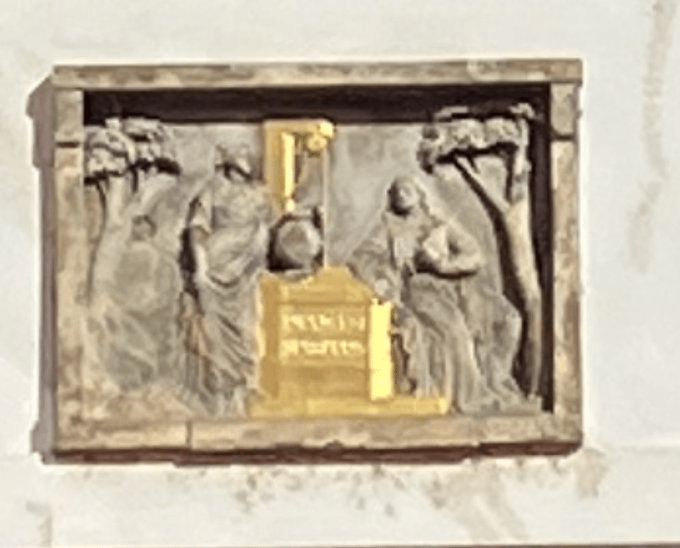
Although an actual well isn’t here, if you zoom in on the façade of this building, also called U Zlaté Studně, you may see something.
(Quality of photo entirely indicative of the fact that I took photos for this thread before I wrote it)
In the Book of John, Jesus, on what is now the Third Sunday in Lent, went to a town called Sychar, and found a well. He was thirsty, so he headed there for water.
A woman from Samaria – i.e. a Samaritan (Samaritánka, if we’re being Czech about it) was there, wanting to draw water.
Their conversation is the topic of this gospel classic, which was also covered by Nick Cave, Bob Dylan and Peter, Paul and Mary:
And there’s even a Czech version of this number, from 1978, although it’s not about a well and the nameless woman is now called Ráchel:
Anyway, said hotel is now supposedly one of the greatest in the world, having been voted as such in 2011 (3rd best in the world, and best in Europe, in 2016, too): https://goldenwell.cz
And you just *know* that somebody wrote this after getting incredibly exasperated with one too many lost tourists:
I have to post the Peter, Paul and Mary version, too, because it’s just great:
The altar was consecrated in 1315, and it would take a mere ninety years until construction of the church was complete. And, for all that hard work, it got burned down by the Hussites in 1420.
It also got burnt down in 1520 and 1541, after which it was rebuilt in Renaissance style. It was reconsecrated in 1593, and then rebuilt again in the early 18th century.
In 2022, the church was the location for the funeral of legendary Czech singer Hana Zagorová:
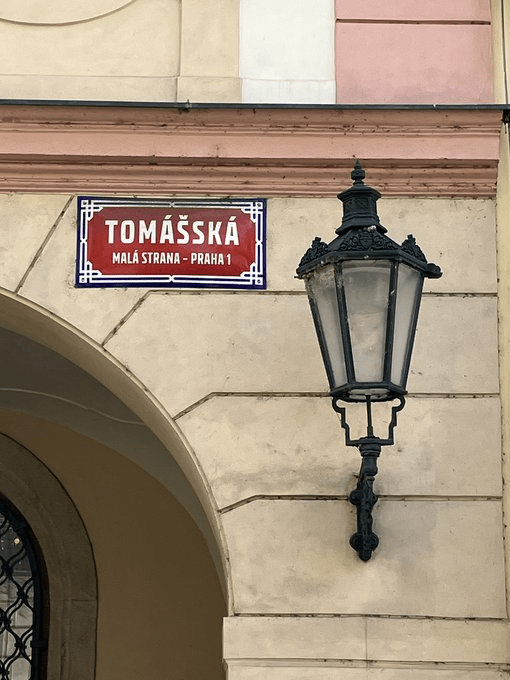
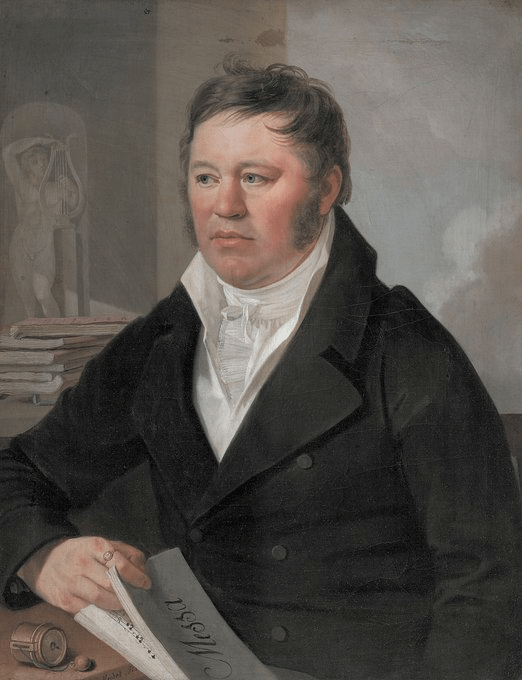
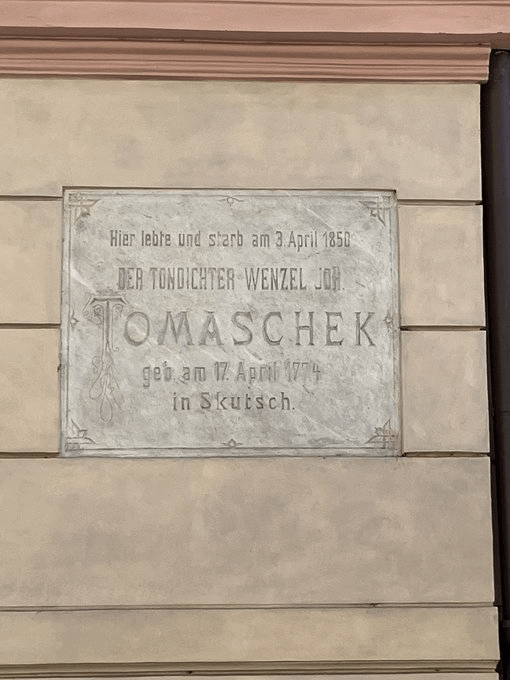
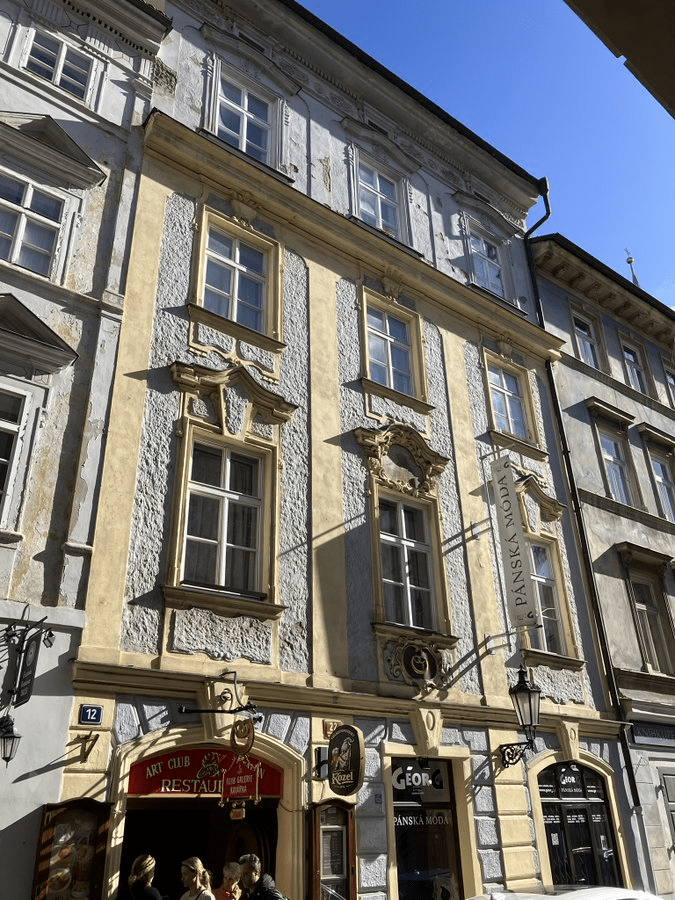
Tomášská was once lived in (and died in) by Austrian-Bohemian composer Václav Tomášek (1774-1850), apparently known as ‘The Musical Pope of Prague’, which, for all I know, could actually be the most savage putdown you’ve heard all year.
I took a photo of this building on Tomášská because I liked it. Sometimes that’s all the reason you need.
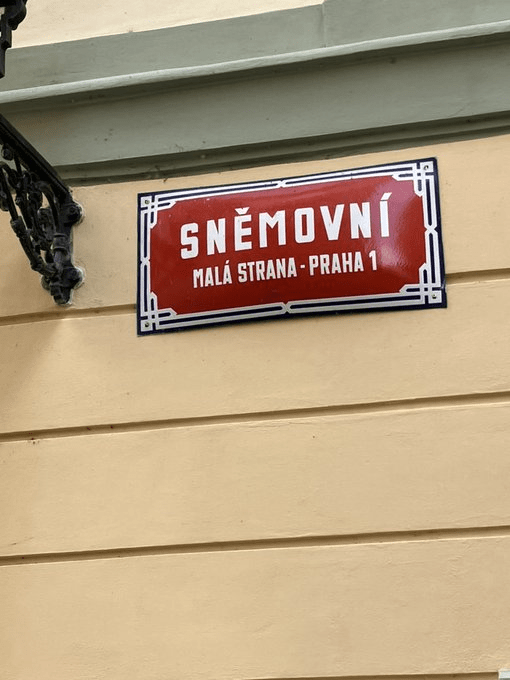
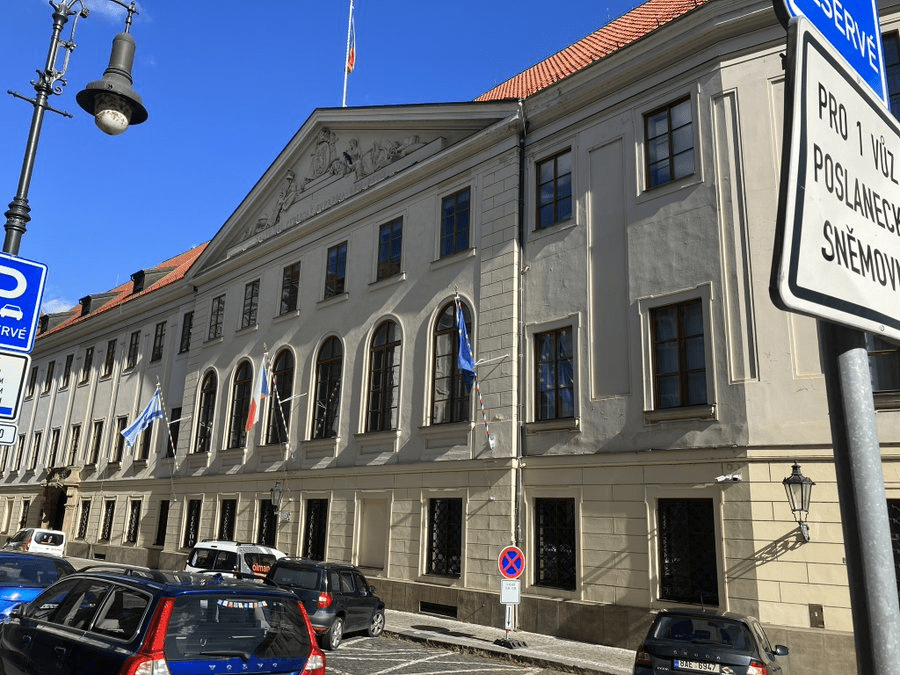
Buckle up, kids, this one probably has a link to many of your least favourite Czechs. Because sněmovna is short for Poslanecká sněmovna, or ‘Chamber of Deputies’.
In 1650, one Countess Markéta Anna Thunová purchased a building here, and the family bought two more in 1662 and 1694.
From 1779 until 1794 (when it was ruined by fire), the palace hosted an opera company.
In 1801, the similarly-named Anna Marie Thunová sold the building to the Czech Estates, who used it as office space for several decades before, in 1861, it became the Chamber of Deputies.
In 1918, it was here that Tomáš Garrigue Masaryk was proclaimed President, and, in the years after that, Thun Palace was the meeting place of the Senate, rather than the Parliament.
Serving as government ministries in the 1950s and 1960s, the building became the seat of the Czech National Council in 1968, and, since 1993, it’s been the Czech Chamber of Deputies.
Across the road at number 3 is Kolowrat Palace, which hosts the Parliamentary Institute, a scientific, information and educational centre for the Chamber of Deputies, some of whose members would, let’s be fair, benefit from a bit more science, information and education.
While number 5, Lažanský Palace, was lived in by writer, artist and director Jiří Brdečka for a couple of decades before his death in 1982.
And number 7 is the Honorary Consulate of Monaco.
(For those wondering – i.e. no-one – the Czech consulate’s address in Monaco is 15, av. de Grande-Bretagne, MC 98000 Monte-Carlo)
Number 13, the Schützen Palace, has an impressive history but is now looking decidedly out of use, and could do with a bit of love (or an investor who is so rich that he/she is no longer familiar with the concept).
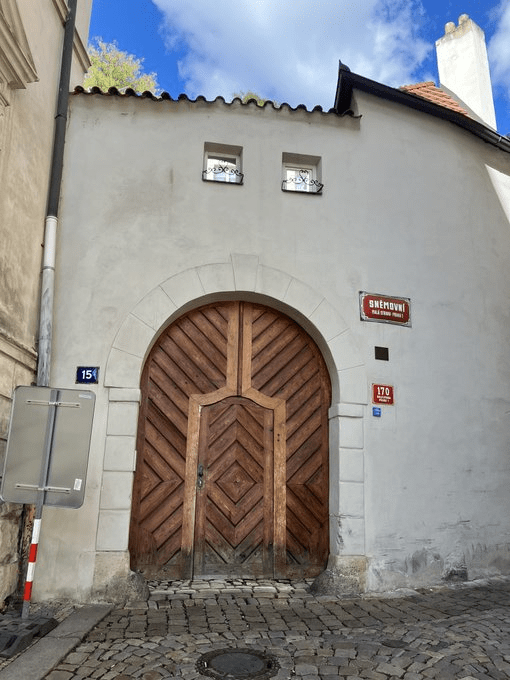
Whereas Fünfkirchen House, at the top of the street, is probably most famous for giving the street its original name, and fans of Ye Olde Prague Street Signs will enjoy seeing another one here.
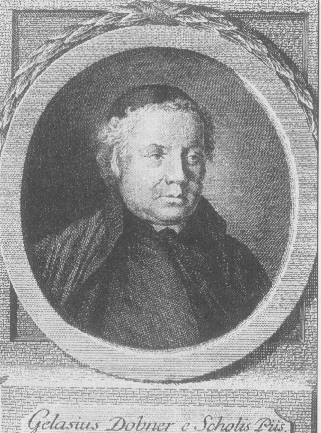
It was also the birthplace of Gelasius Dobner (1719-1790), Enlightenment historian and founder of modern critical Czech historiography.
He has a street too, but don’t expect a thread on that just yet – it’s in Prague 17.
But do take this as your confirmation that I *totally* intend to get on to Prague 17 one day.
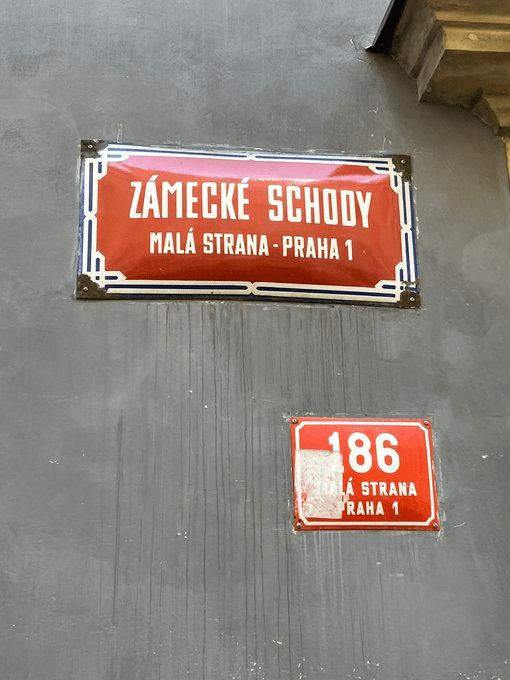
From 1829, it had the same name as the steps did – Nové zámecké schody – or was also named after its location directly under them (Pod Novými zámeckými schody).
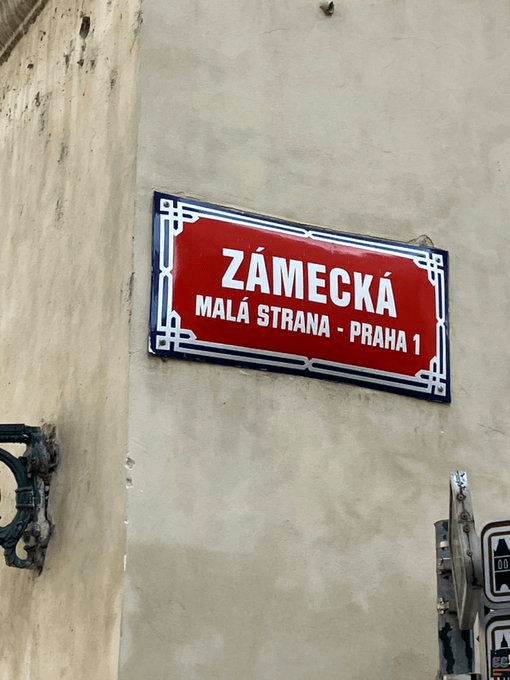
In 1870, the street got its current name. Zámecká is an adjective from zámek – i.e., a castle.
I’m sensing somebody is going to ask in the comments what the difference is between a zámek and a hrad, so:
A hrad is a fortified, fenced-off place, whereas a zámek is also closed off, of course, but it doesn’t serve a military purpose and is generally just a very nice place to live.
Hrady were more of a thing in the Middle Ages, whereas we reached Peak Zámek Era in the 17th and 18th centuries.
Obviously, the difference between these two things can be quite imperceptible – which is probably why this street refers to a zámek and not a hrad.
Another difference is that my Mac doesn’t insist on repeatedly changing zámek to ‘hard’.
But when it changes ‘hrady’ to ‘Hardy’, at least I have an excuse to listen to one of my all-time favourite songs:
At some point, the name ‘Kavčí hora’ also appears, which will be hugely distracting to anyone who has worked with/at Česká televize. I think this translates as ‘Jackdaw hill’ but will gladly accept corrections.
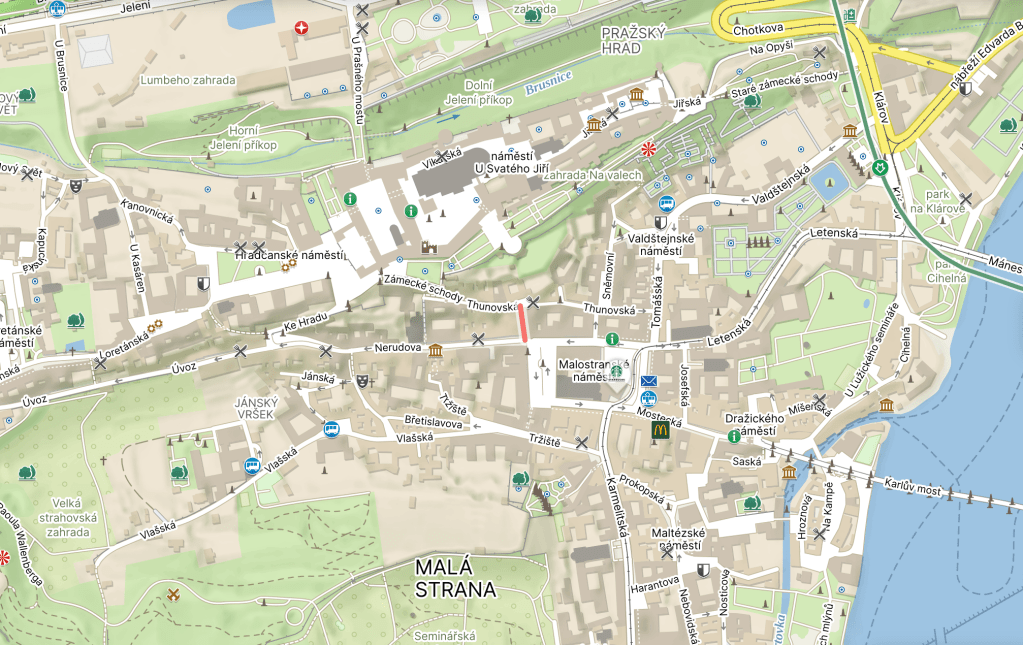
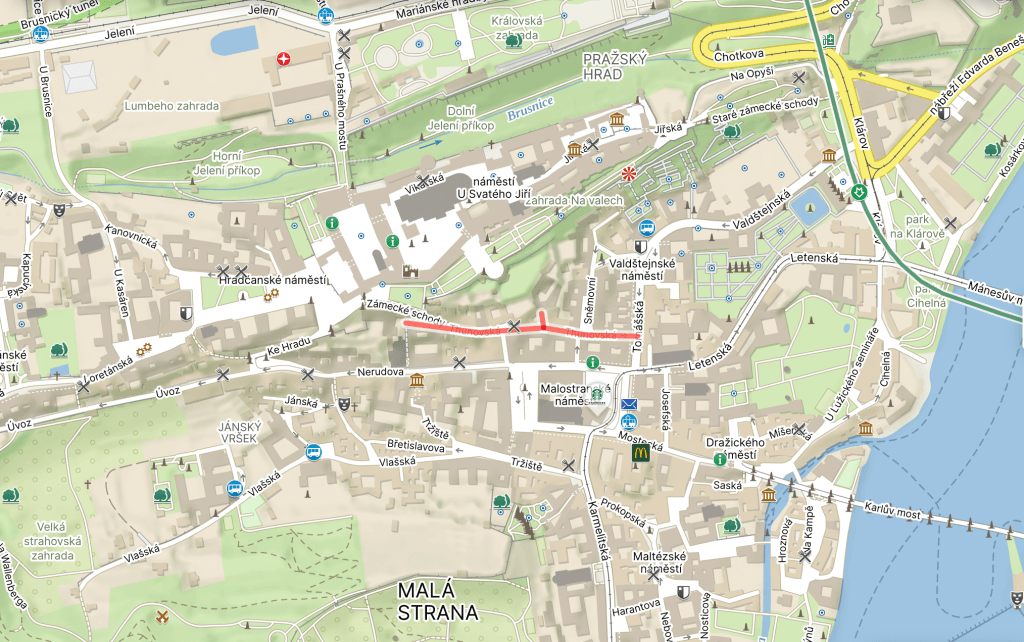
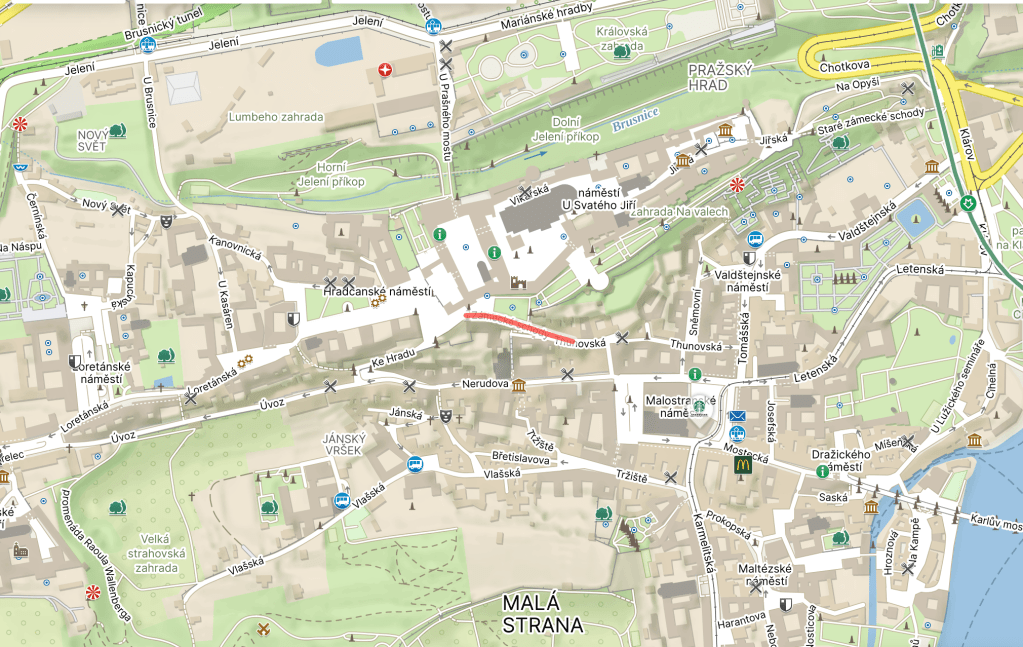
From the 18th century, the lower part of the street was called Sklenářská (Glassmakers’ Street), the middle part was called Farní (Parish), and the upper part was called Thunovská. They’ve all been one street since 1870.
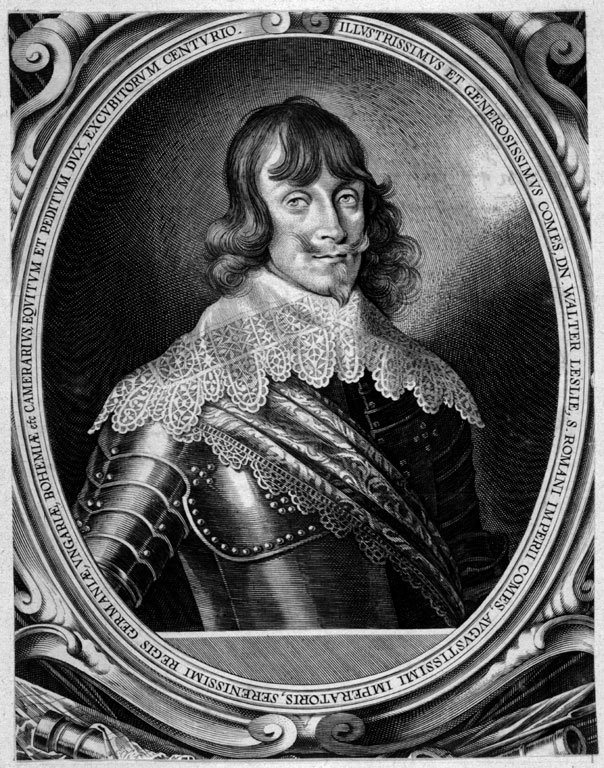
There’s been a building where the present-day Thun Palace is located since at least the 1300s. After the Thirty Years’ War (1618-48), it was acquired by one Walter Leslie, a Scottish soldier and diplomat.
This was a reward from Emperor Ferdinand II for Leslie’s role in killing General Albrecht von Wallenstein, who there will be a lot about in one of this week’s threads.
In 1659, Leslie sold the palace to one Guidobald von Thun und Hohenstein, Prince-Bishop of Salzburg.
It went through many modifications in the decades that followed (in order: baroque / classicist / classicist / classicist / English Gothic).
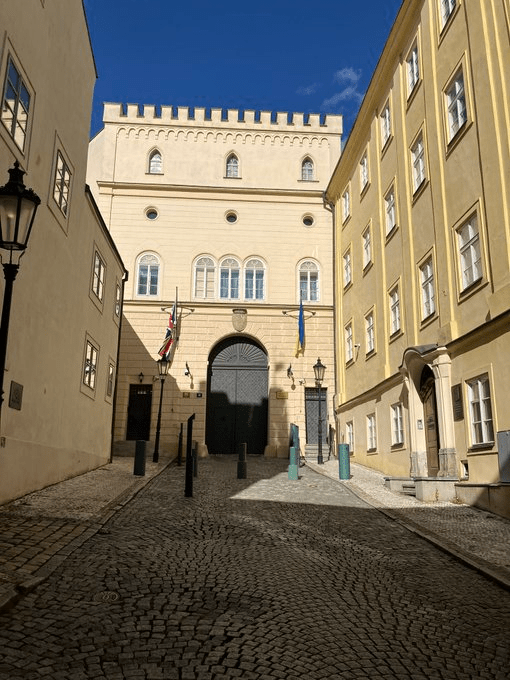
In 1919, the British moved in and made it their Embassy – which it still is.
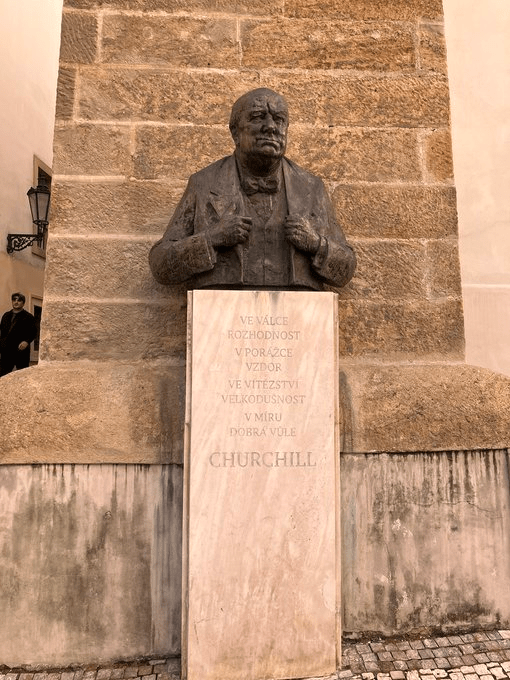
This also explains the sculpture of a certain Mr Churchill outside.
I haven’t been indoors since 2007, back when you still had to renew your passport in person. The lady there told me that my old passport was in a terrible state and that I should be more careful in future. I responded like a ten-year-old but acknowledge she was probably right.
Thunovská also includes Palác Věžníků (the Věžníks were a noble family which died out in the 18th century). In the early days of Czechoslovakia, it was the German Embassy, and also used to host the Czechoslovak Red Cross.
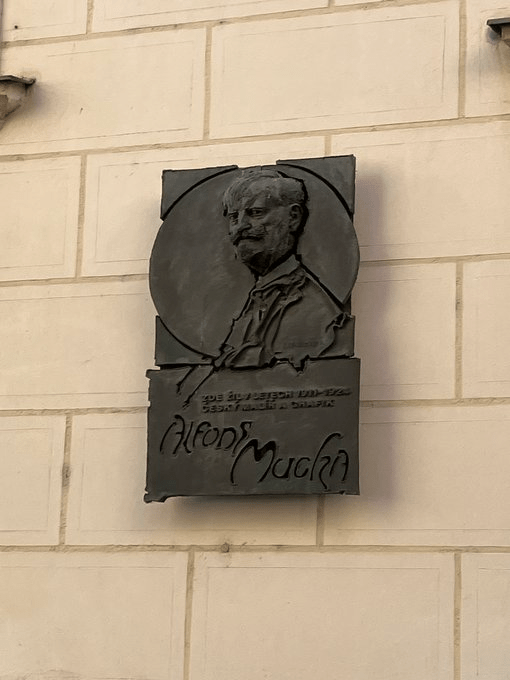
Then there’s the Palace of the Lords of Hradec – also owned by the Thun family at one point – which was once lived in by Alfons Mucha.
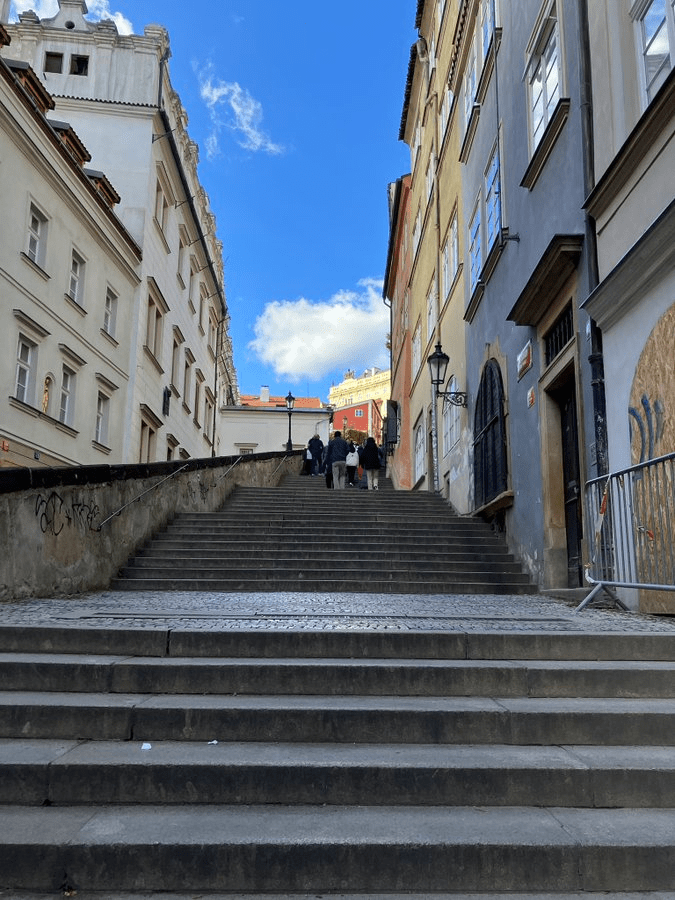
You’ll have been down these (if you planned your sightseeing round Prague sensibly), or up them (if you didn’t).
Back in the Middle Ages, there was a road here, aptly called Strmá cesta (Steep Road).
At some point, these were replaced by the steps (which have basically had the same form since the 1600s).
They’ve had their name for most of this time, except between 1829 and 1870, when they were known as the Nové zámecké schody (New Castle Stairs).
They were given that name to distinguish them from the Staré zámecké schody (Old Castle Stairs), which should be covered in the next 10-20 posts. And which are actually newer than these, because life doesn’t always make sense.
There are 220 of these old-new steps, covering a height of almost 37 metres.
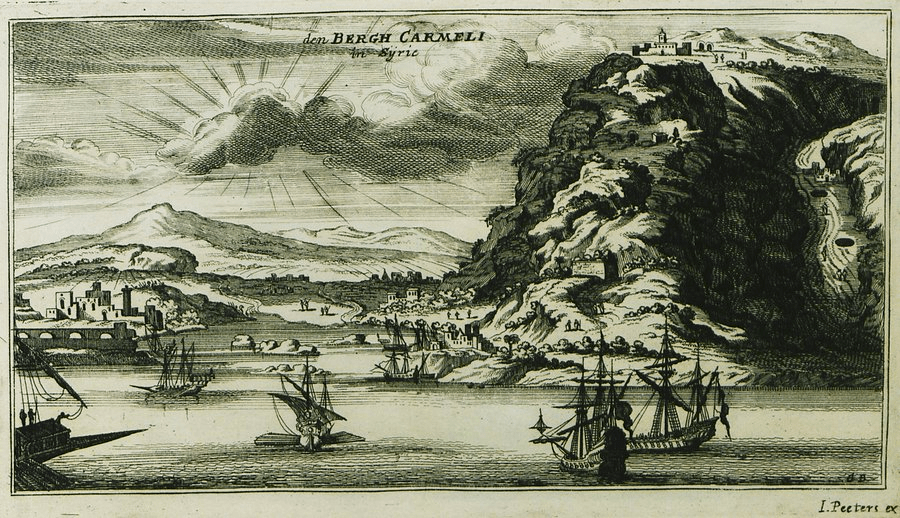
This story starts in Mount Carmel, a mountain range on the northern coast of Israel in which the city of Haifa is located.
In the 13th century, a group of men settled here and founded the Brothers of the Blessed Virgin Mary of Mount Carmel, living in solitude, poverty and prayer.
Forced out by the Saracens in 1238, they moved (back) to Europe, and the order gradually lost importance and prestige.
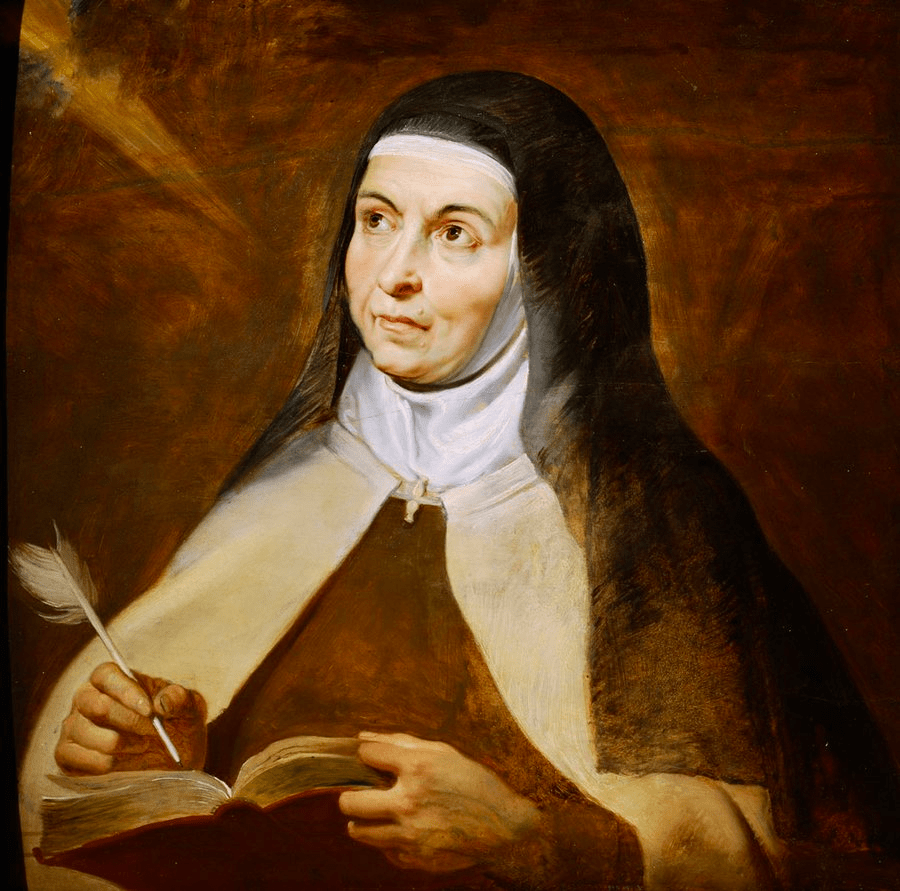
One Teresa Sánchez de Cepeda Dávila y Ahumada, better known as Teresa of Ávila, established the Convento de San José in her home town in 1562, and founded a new order fully dedicated to poverty.
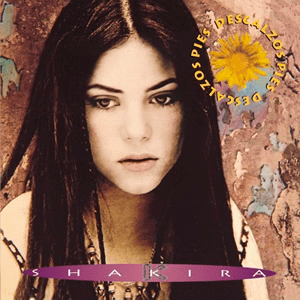
The Discalced Carmelites were established as a separate grouping in 1580, and this seems like a very good time to confess that it was early Shakira who taught me that ‘discalced’ means ‘barefoot’. Gracias, Shak.
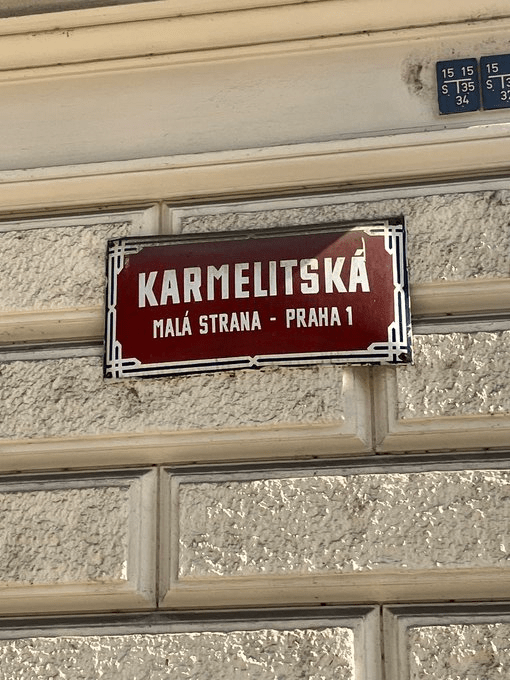
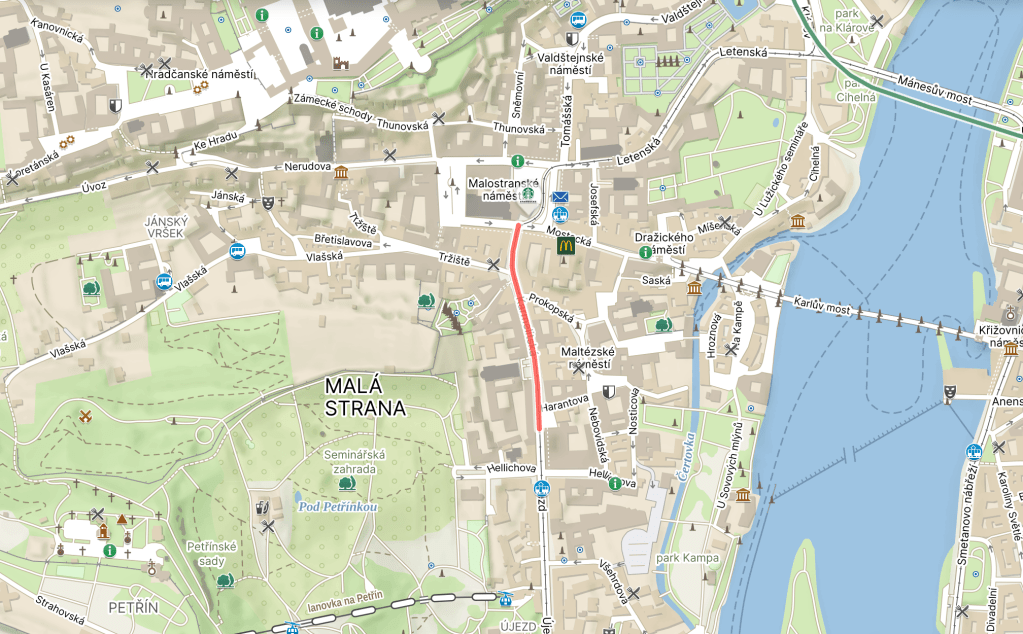
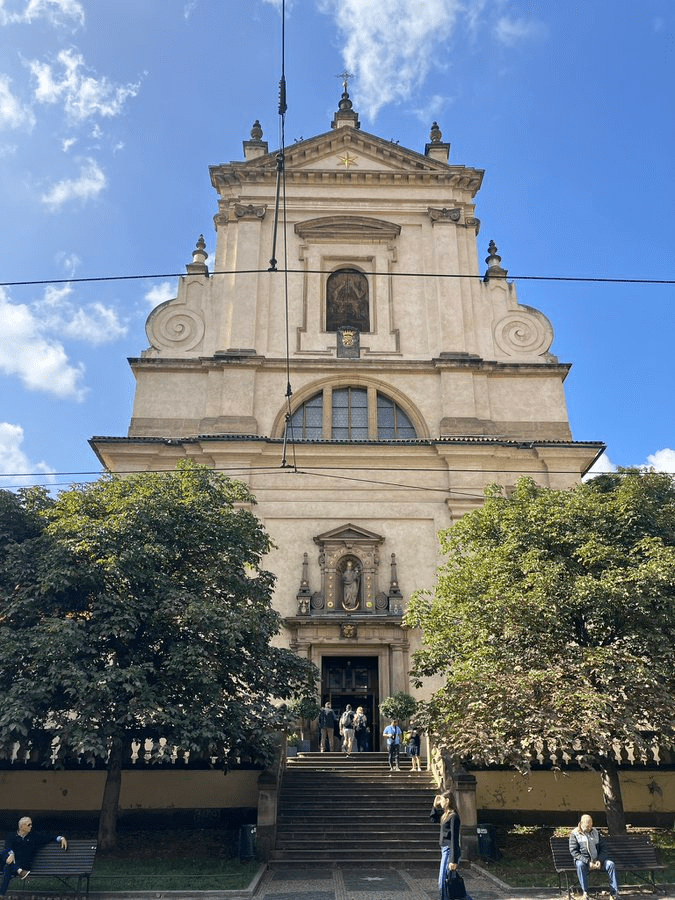
In 1624, the Carmelites arrived at an already-existing monastery in Prague (whose Lutheran inhabitants had obviously been forced out after the Battle of Bílá Hora) and expanded it significantly. It’s on this street, and this is its church (at number 9).
In 1784, the monastery was abolished as part of Joseph II’s reforms (see also: 3,286 other posts in this series). The altar and its poster boy didn’t get repaired until a century later, while the Carmelites moved back in in 1993.
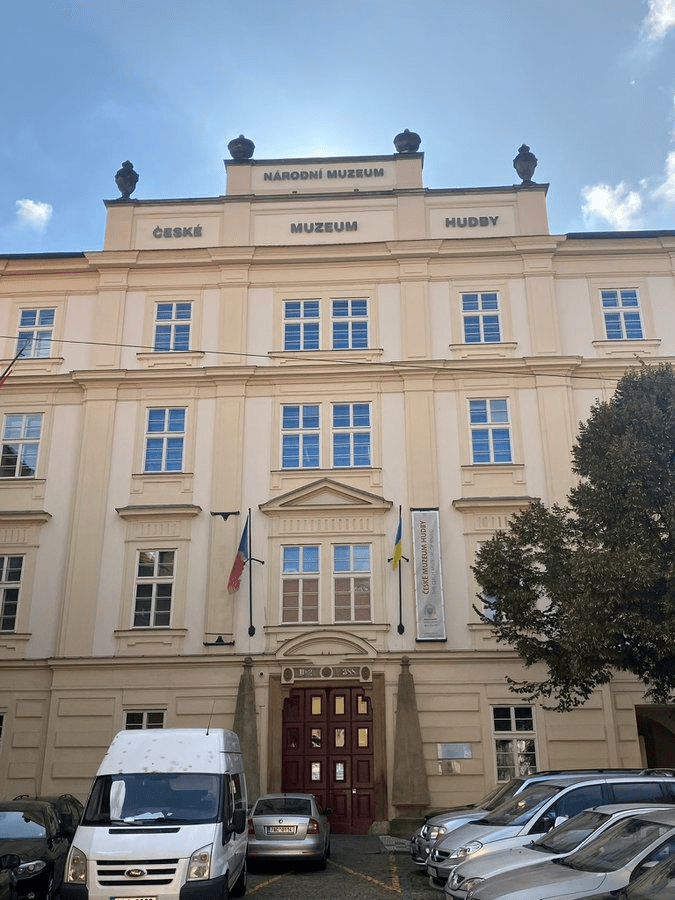
Another church-monastery combo on Karmelitská – that of Mary Magdalene – was also cancelled at the time, but now hosts the Czech Museum of Music.
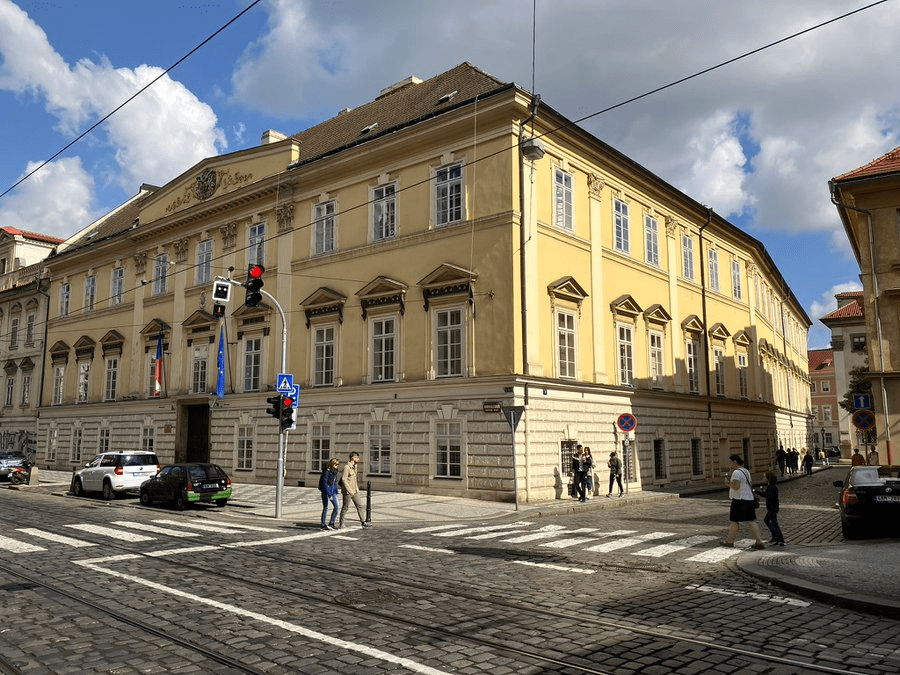
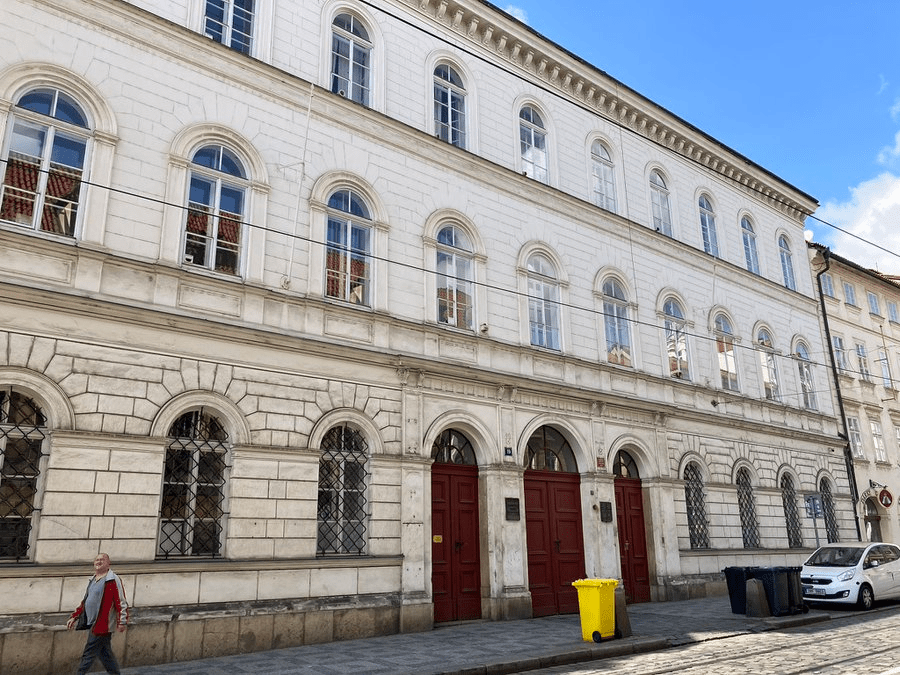
Whereas Rohan Palace, across the road, is resided in by the Ministry of Education, Youth and Sports of the Czech Republic.
Lažanský Palace, not to be confused with the building of the same name which hosts Cafe Slavia, is the District Court for Prague-West. Despite this very much not being Prague-West.
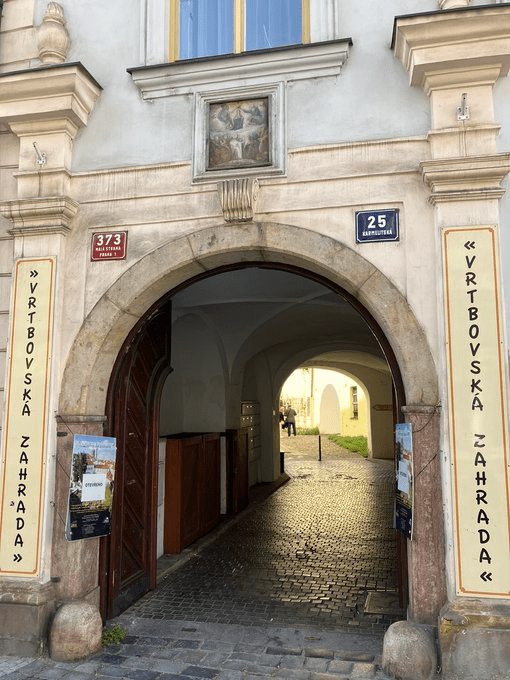
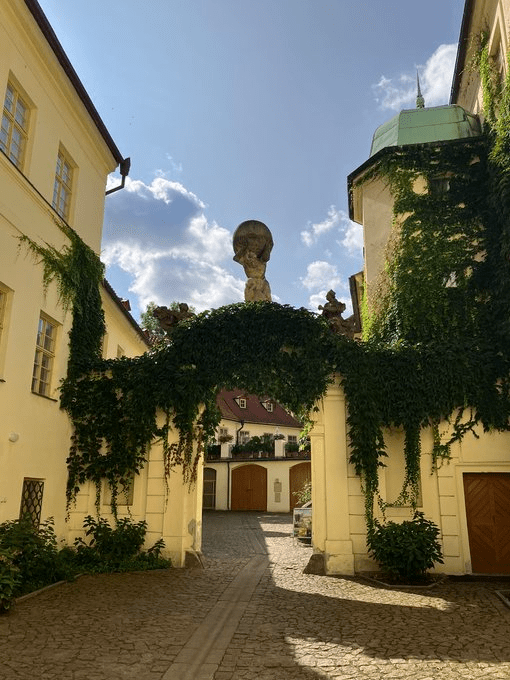
And Vrtbovský Palace hosts a garden which looks like it could be one of Prague 1’s best-kept secrets, but this idiot didn’t have any cash with him and wasn’t able to pay the entry fee to prove this.
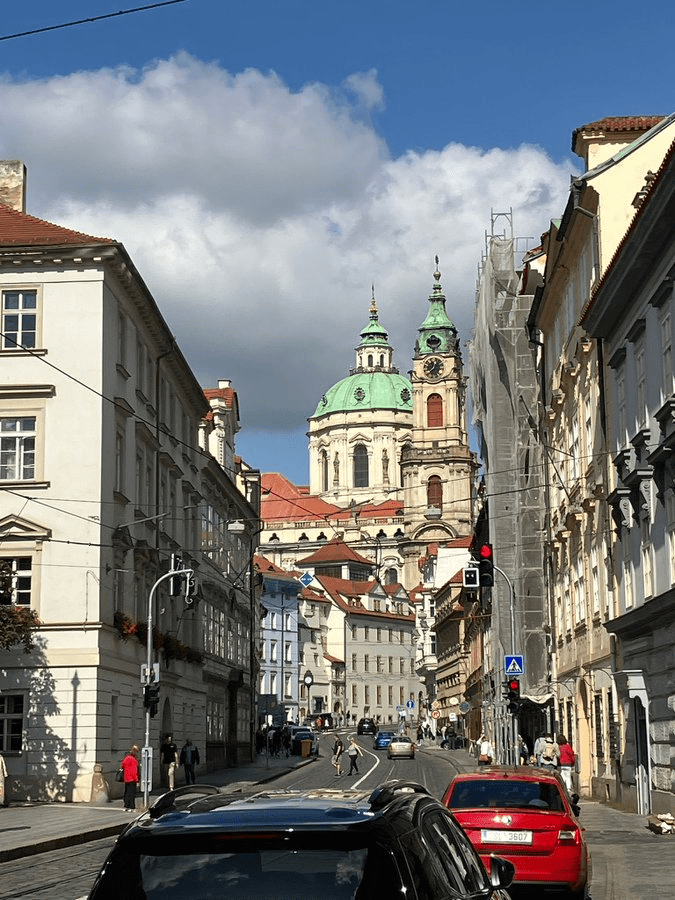
Finishing this thread off with an ‘I get to live in a city which looks like this’ moment.
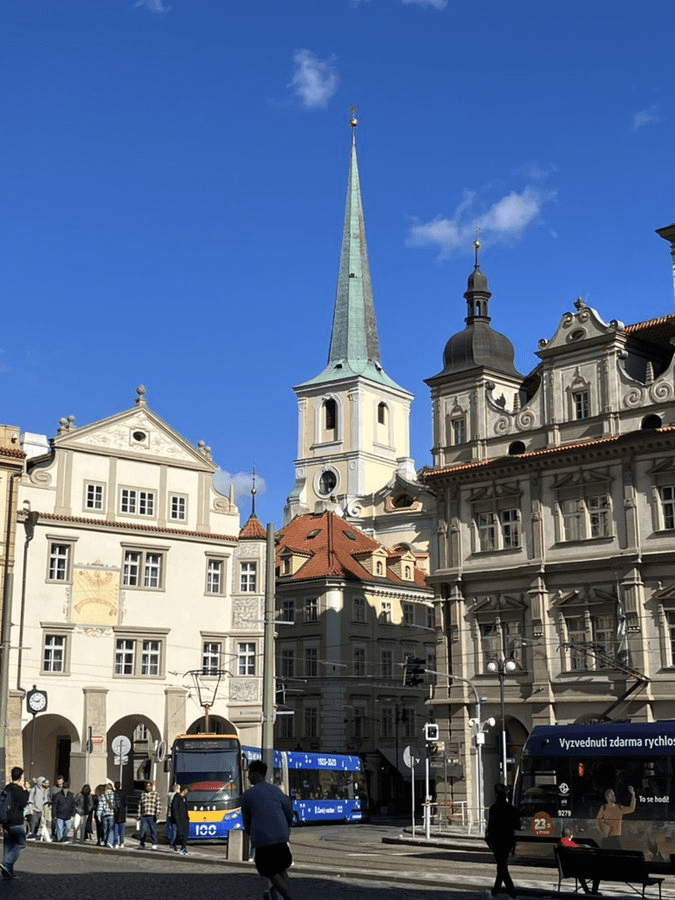
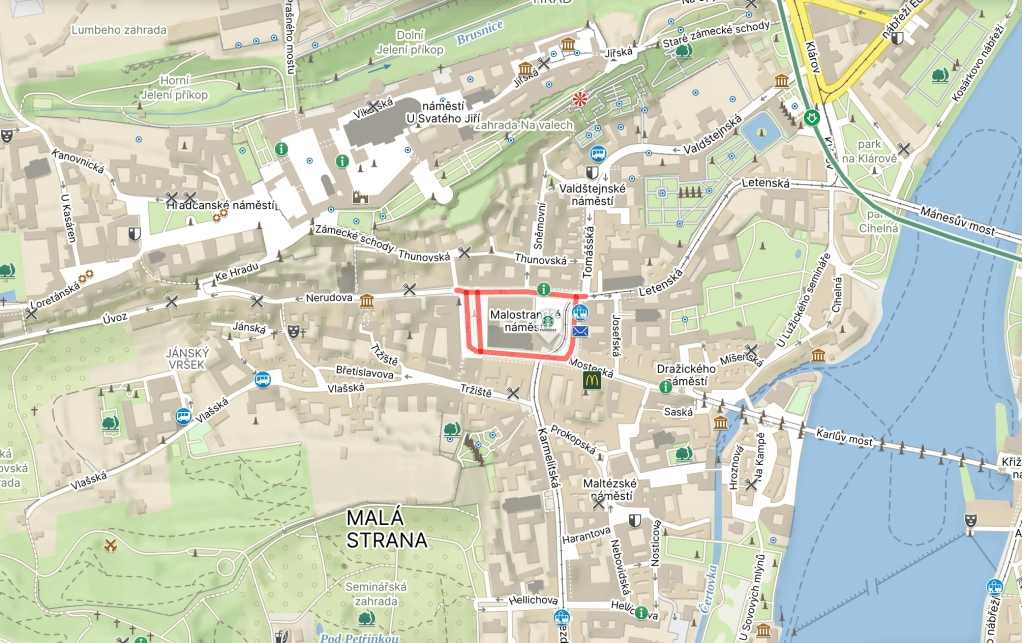
In 1257, Přemysl Otakar II founded a town here, just below the castle, and gave it the Latin name of Nova civitas sub castro Pragensi (New City under Prague Castle), or just Nova civitas, or – and this is where you may get confused if you’re a Praguer – Nové Město.
The district (actually its own town until 1784) was later known as the Menší Město pražské (Lesser Prague Town), before gaining its current name, presumably to avoid confusion with the Nové Město which had sprung up across the river in 1348.
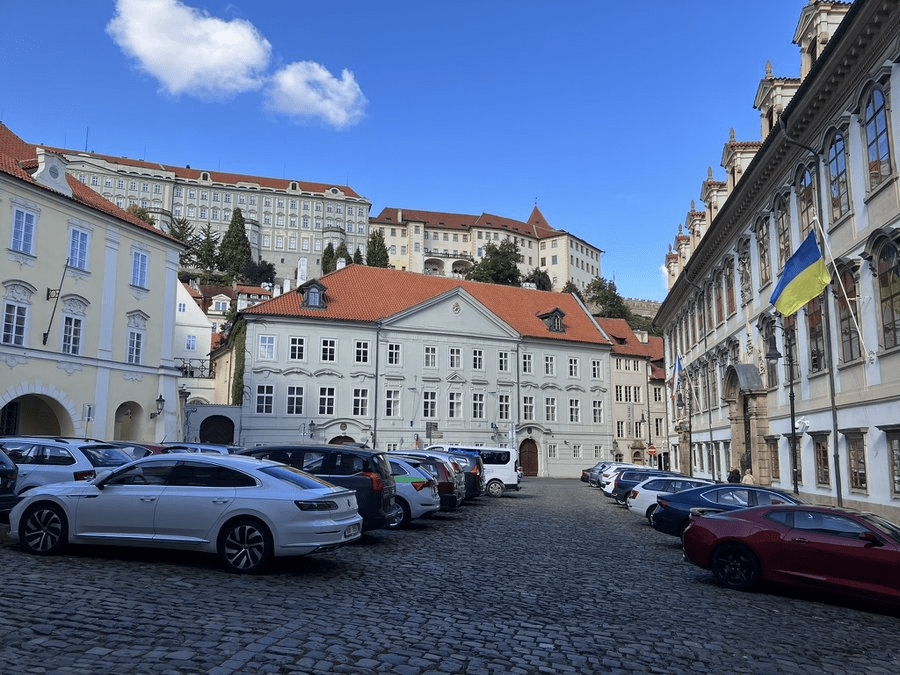
The Square, meanwhile, has upper and lower parts which you’ve be forgiven for thinking were entirely separate streets. And even after all this time in Prague, I still find it mind-blowing how much there is to see here.
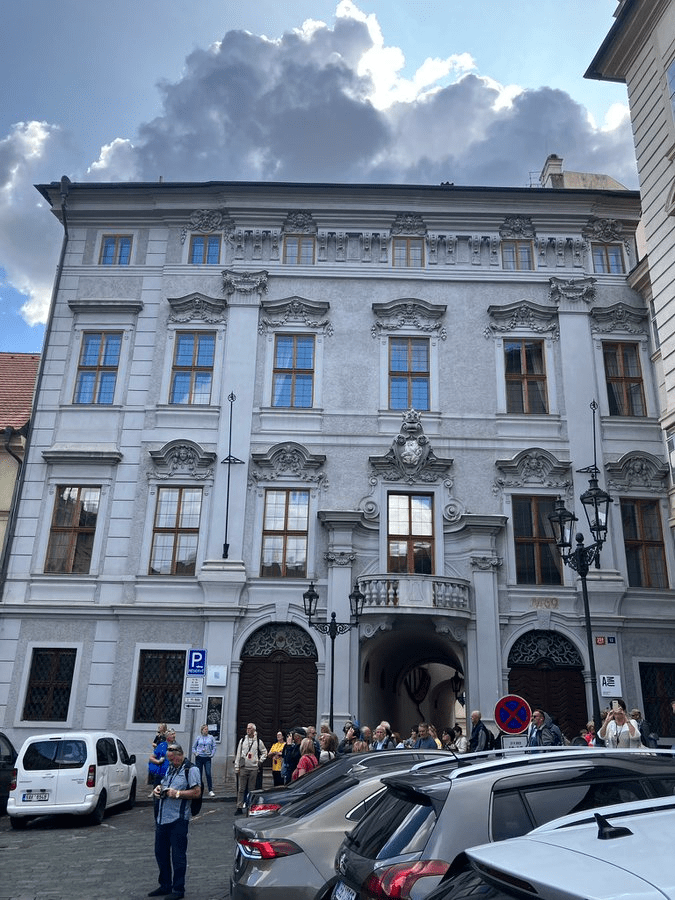
The western front of the square is taken up by the Liechtenstein Palace, the expropriation of which (in 1945) is one of the reasons why Liechtenstein didn’t establish diplomatic relations with the Czech Republic (or Slovakia) until 2009.
Formerly the headquarters of the Political Centre of the Communist Party of the Czech Republic, it’s now the Music and Dance Faculty of the Academy of Performing Arts.
Hartig Palace – which was purchased by one Terezie Hartigová in 1735, seemingly no relation to Josef Hartig of Koněv Gets Kancelled fame – hosts the Academy’s rectorate.
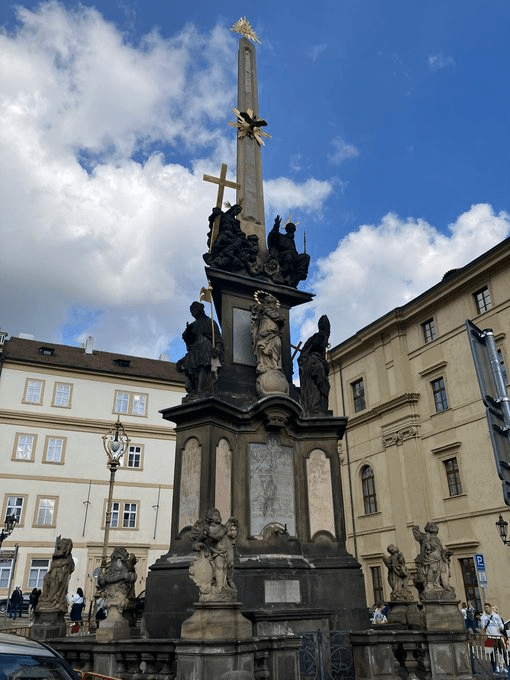
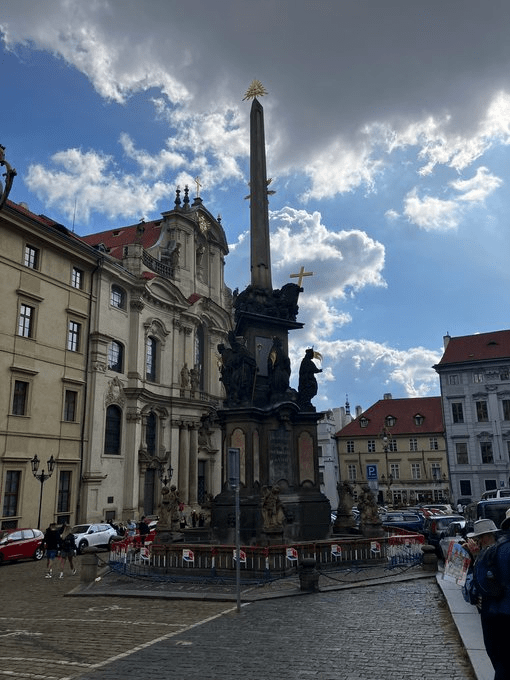
The Holy Trinity Column (Sloup Nejsvětější Trojice) was built out of gratitude to whoever is up there above us for helping to avert the plague in 1713.
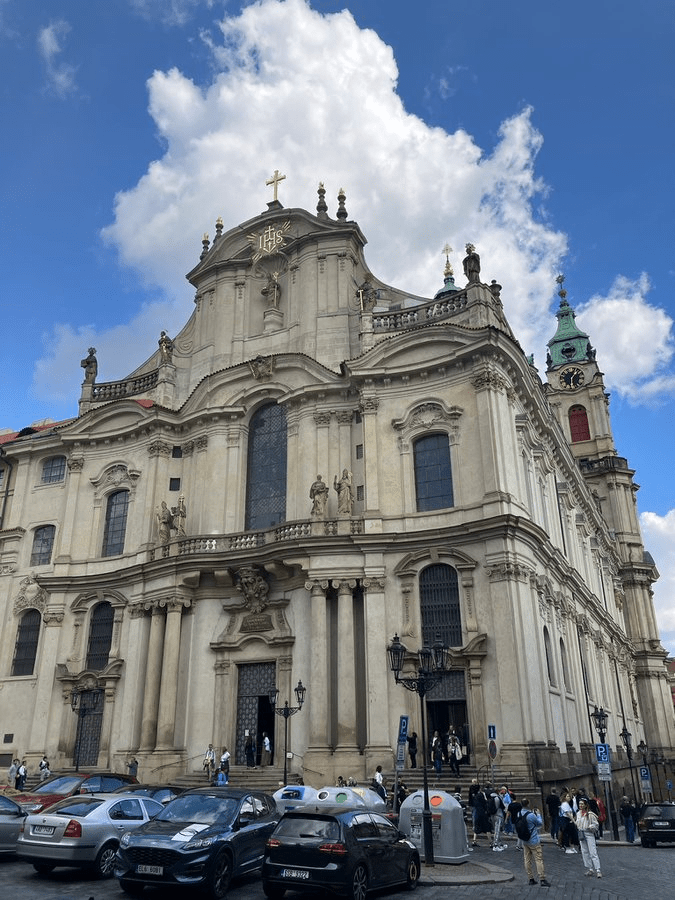
Separating the two parts of the square is St. Nicholas Church (1740-55), built on the decision of the Jesuits on the site of a former Gothic parish church.
Its proximity to the US, West German and Yugoslavian embassies meant that the communists used it as an observatory.
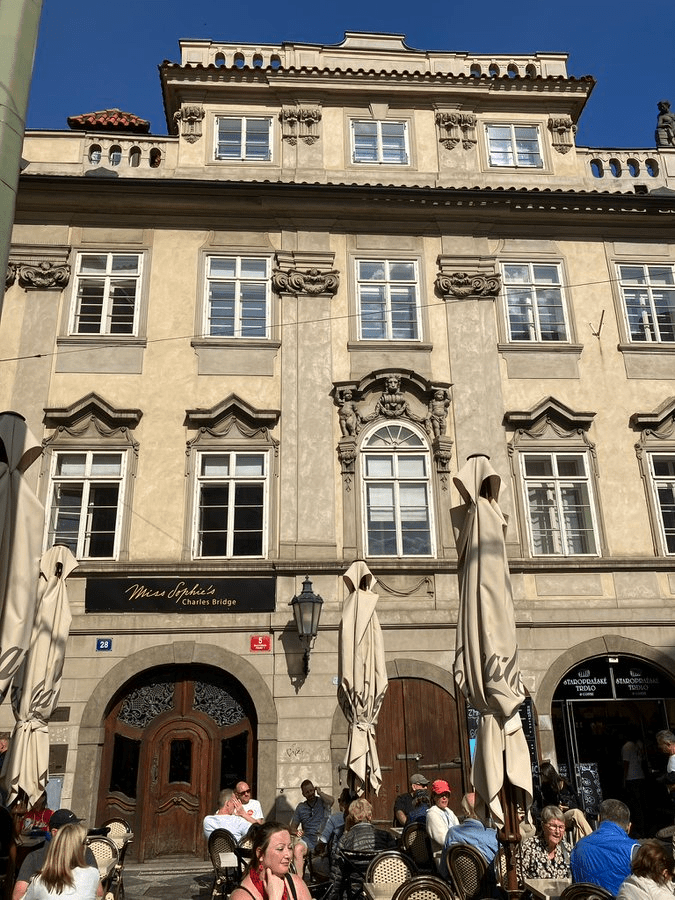
Moving on to the Lower Square, Grömling Palace used to be the site of Cafe Radetzky, a favourite of the intellectuals of Prague (including Jan Neruda). If they were to go there now, they’d be faced with the first ever Czech Starbucks (opened in 2008).
Smiřický Palace is where, in 1618, Albrecht Smiřický convened a secret meeting of anti-Habsburg Czechs (we know how well that went). It’s now part of the Chamber of Deputies. And is a stunner.
Parliament also makes use of Šternberk Palace (which you can see a tiny part of in this picture) and Velikovský House (which you can see much more of).
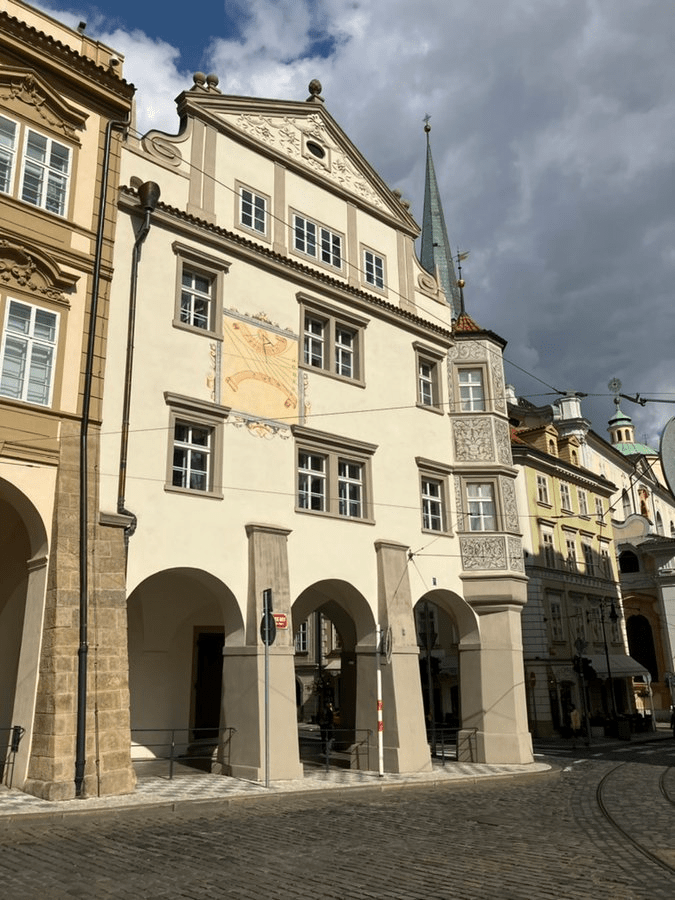
Kaiserštejn Palace, acquired by Česká spořitelna in 1840, became the seat of the Czechoslovak Chamber of Commerce and Industry, and then its Czech-only equivalent, before being reacquired by the bank. It’s used for conferences and weddings and the like.
In the same block is Malostranská beseda, which served as the Town Hall until 1784. One of the cultural centres of Malá Strana, it has a pub, a restaurant and club. It was also where the Jára Cimrman Theatre first operated (in 1867).






































_(crop).jpg)