What's in a Prague street name

Every street in Prague, one by one.

  • Originally published on X on 8 March 2023.

    Vyšehradská was created in 1869 by joining the roads from Karlovo náměstí to Trojická and from Trojická to Botič.

    We’ve covered quite a lot of the history of Vyšehrad already – see https://whatsinapraguestreetname.com/2024/08/23/prague-2-day-93-libusina/, https://whatsinapraguestreetname.com/2024/08/24/prague-2-day-94-k-rotunde/ and https://whatsinapraguestreetname.com/2024/08/24/prague-2-day-95-v-pevnosti/ for the goods.

    And, even though it’s not on this street, poor old Vyšehrad Train Station is appearing a lot in my news alerts lately, so let’s take a look at that.

    In 1872, the Prague connecting railway was opened, linking what we now know as Hlavák (then Franz Josef Station) with Smíchov. Vyšehrad Station was opened at the time too. Vyšehrad and Smíchov, at this time, were both outside of the city limits.

    The building was initially pretty basic, but, in 1904, it was replaced by a more sophisticated version. Despite 1904 not being that far back, we don’t know who the architect was, although Antonín Balšánek has been suggested.

    In 1960, the station was put out of use for passengers and became a passing loop (výhybna), i.e. a place on a single line railway where trains travelling in opposite directions can pass each other.

    Renovation of the building started in the 1980s, but water damage which occurred during these renovations left it in a worse state than ever. You can see some of the insides here.

    In 2000 and 2001, České dráhy engaged in talks with companies that, had they worked out, could’ve seen the building turned into an art house, an antique bookshop, or a full-on cultural centre with a cinema, restaurant, gallery and bookstore.

    These plans fell apart due to disputes about whether the building belonged to České drahy or to the Railway Administration (SŽDC). In 2007, Prague 2 also offered to build a cultural centre here, but, again this (clearly) didn’t happen.

    My main memories of the station from that year – my first stint of living in Prague – were ‘that looks really neglected’ and ‘sh*t, why do I always take this tram by accident after drinking too much’.

    A company called TIP Estate – itself owned by a bank in Oregon – purchased the building in 2007… and, a year later, demolished the waiting room without telling anyone. Despite its being an official cultural monument. https://www.lidovky.cz/domov/nadrazi-vysehrad-celi-zkaze.A080306_084346_ln_praha_mtr

    Prague 2 is interested in purchasing the building so that it can host the Slavic Epic by Alfons Mucha, but it seems that they don’t have the resources to do so without a good bit of help from the City of Prague itself.

    A 2022 petition by the Pirates, Zachráníme nádraží Vyšehrad, doesn’t seem to have led anywhere either: https://zachranimenadrazivysehrad.cz/

    Meanwhile, in February of this year, landslides meant that some of the plaster from the building fell onto the street in front of it: https://nasregion.cz/nadrazi-vysehrad-se-dale-rozpada-reseni-ostudy-prahy-je-v-nedohlednu-320099/

    This is all a bit dispiriting, isn’t it? So let’s look forward to a time when the station can maybe, just maybe, host Mucha’s epic. which… wow.

    YouTube has many well put together pieces about the station, such as this one.

  • Originally published on X on 7 March 2023.

    Na Děkance was built in 1884.

    Until 1909, this was Komenského, as in Comenius, as in https://whatsinapraguestreetname.com/2022/11/26/prague-3-day-82-komenskeho-namesti/.

    The land on this street was owned by the Vyšehrad deanery, i.e. the děkanství. In 1885, a school called Na Děkance was opened here.

    There had been two local schools – Vyšehrad School (Vyšehradská) and the Castle School (Hrádecká), but, in both cases, their buildings were insufficient to give kids a proper education.

    Therefore, the decision was made to close both schools, and send their pupils to a brand new one, nearby and with more space and better facilities.

    Its main entrance in on Botičská, though, and its name has changed accordingly, to Základní Škola Botičská. It’s a primary school, but there’s a Gymnasium on the street too.

    If I’ve read a slightly ambiguous sentence on Wikipedia correctly, the most famous person to have attended the primary school was Jiří Payne, an ODS politician who then moved over to the Svobodní party and has been an advisor to Václav Klaus. Bet they loved him in Brussels.

    For those who wish this series were a bit more Prague 4 (approx start date: 2025; platform: probably not this one the way things are going), Park Na Děkance is also one of the alternative names for the the central park in Pankrác.

  • Originally published on X on 6 March 2023.

    Vinařického was built in 1884.

    Karel Alois Vinařický, despite his surname, was born into a German-speaking family in Slaný in 1803. It wasn’t until his teens that he started to take an active interest in the Czech language and the national movement.

    After studying philosophy in Prague, he entered a seminary and started to write. He also found work a a tutor to the Šlik family, one of the most important noble families in Bohemia.

    In 1828, he co-founded the Journal for the Catholic Clergy (ČKD); a year later, he became master of ceremonies to the Archbishop of Prague, Václav Leopold Chlumčanský.

    In 1833, he became a priest in Kováň, a village about ten kilometres from Mladá Boleslav; in 1848, he would be elected to the Reichstag in Vienna, representing the Mladá Boleslav district.

    It was during his time in Kováň that he wrote his most famous works, including Varito a lyra, a patriotic collection of poems.

    He was also known for his poems aimed at children, as well as school textbooks such as Abeceda česká (1838).

    In 1859, he became canon of the Vyšehrad chapter – hence the location of the street – and, shortly afterwards, co-founded Dědictví sv. Prokop, an association that promoted theological writings in Czech.

    He died in Vyšehrad in 1869.

  • Originally published on X on 5 March 2023.

    Botičská was built (as a path) around the 16th century.

    For a time in the 19th century, until 1850, this was called Špitálská, after St. Bartholomew’s Hospital and Almshouse (Špitál a chudobinec svatého Bartoloměje), which was closed in 1884. The building that’s on this spot now is used by the Ministry of Justice.

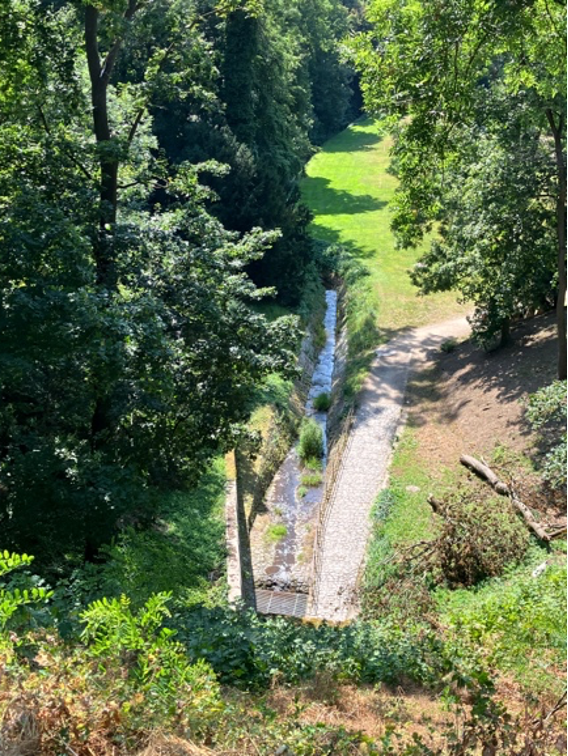
    The Botič, meanwhile, is a tributary of the Vltava which flows along here, along part of its length of 34.5 kilometres. Its name appears to derive from botění, which means ‘gaining volume’, in other words, flooding.

    Places where you’re most likely to have seen the stream before include Průhonice chateau park, Záběhlice and the Hostivař reservoir, where the stream is dammed up. It also flows behind the Bohemians 1905 Prague stadium and around the station at Vršovice.

    The dam at Hostivař was built in 1962, in reaction to bad flooding caused by the Botič four years earlier. Pics of which are on https://commons.wikimedia.org/wiki/Category:1958_Boti%C4%8D_flood

    In the Prague floods of 2002, the Botič had its highest levels in 25 years, which was particularly unappreciated by those in Záběhlice and Hostivař at the time.

    The 2013 floods certainly had an effect too: https://www.horydoly.cz/vodaci/povodnim-na-botici-nezabrani-ani-hostivarska-prehrada.html

    Less remembered, however, is a flood in 1981: https://commons.wikimedia.org/wiki/Category:1981_Boti%C4%8D_flood_in_Hostiva%C5%99

    The Botič is actually the stream rushing through the meadows (voda hučí po lučinách) that forms the second line of Kde domov můj, the Czech national anthem.

    Given that Kde domov můj originates from the play Fidlovačka (https://whatsinapraguestreetname.com/2024/07/01/prague-2-day-53-tylovo-namesti/), it’s rather delightful that the Botič flows past the Na Fidlovačce Theatre in Prague 4.

    It’s also given its name to a small park by the street, Parčík Botičská, and if parčík doesn’t make your Sunday morning a little bit brighter, then I can’t help you.

    One odd quirk is that, while the official pronunciation is ‘Botič’, you will hear quite a few locals go for ‘Botyč’ instead.


  • Originally published on X on 4 March 2023.

    Until 1867, the street was called Horní Hradební, due to its location in the upper part of Novoměstské hradby, i.e. the New Town Walls.

    From 1978 to 1990, the street was called Vítězný únor (Victorious February), after the Communist coup d’état of 21 to 25 February.

    In 1816, Friedrich Ludwig Jahn, a Prussian gymnastics educator, wrote Die deutsche Turnkunst (‘The German Art of Gymnastics’).

    His idea was that, if people participated in gymnastics associations, they would feel more confident, more patriotic and more inclined to fight for their fatherland (which, in his case, was obviously divided into several separate states at the time).

    The idea caught on, including in Bohemia, Moravia and Silesia, as did the nickname of ‘Turnvater Jahn’ (which sounds like it should be followed by ‘and the Smurfs’ to me, but there you go).
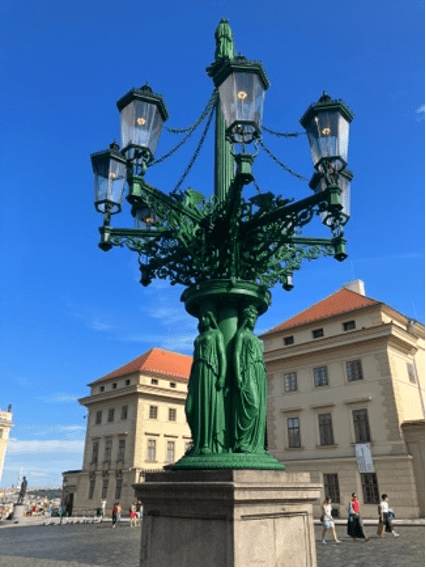
    In 1861, one Miroslav Tyrš, while in discussions about the formation of a German-Czech gymnastics club, got annoyed at a potential backer saying they would only finance it if it were to be a German organisation.

    Therefore, in 1862, the two groups formed their own associations: the Deutscher Prager Turnverein and the Prager Turnverein (auf Deutsch but distinctly tschechisch). It seems that the two groupings continued to maintain good relations, though.
    Two years later, the latter became known as ‘Pražská tělocvičná jednota Sokol’ (Prague Gym Union Sokol), a sokol being a falcon. From 1870, members would also be known as sokolové.

    Tyrš (who we’ll learn more about when we get to his street) became vice-president, while the president was Jindřich Fügner (https://whatsinapraguestreetname.com/2024/07/06/prague-2-day-58-fugnerovo-namesti/).

    Other founders and committee members included influential promoters of the Czech cause such as Count Rudolf Thurn-Taxis, and brothers Julius and Eduard Grégr, co-founders of the Young Czech Party.

    In 1863, Fügner purchased a plot of land on what is now Sokolská; a gymnasium was opened here in December 1863, at number 1437.

    By 1865, Sokol associations had almost 2,000 members; the following year, following the Austro-Prussian War, Tyrš managed to add military training to their activities.

    In 1868, firefighting activities were added to the list of activities, although this was discontinued in 1882.

    In 1873, Tyrš published Základové tělocviku (The Basics of Gymnastics), which set out the Sokol system – and determined Czech names for the exercises practised.

    In 1882, the Sokols held their first slet (mass games – a slet is a flock of birds) on Střelecký ostrov. A further five would be held before the outbreak of WW1 (the pic is from the 1887 edition).

    The decade would also see the Prague Sokol going to Paris to take part in the French Physical Education Festival in 1898, which definitely gained the attention of the Habsburgs – but also of French politicians, with whom the Czechs would start to set up useful alliances.

    Multiple visits to other key locations ensued, including Ljubljana (1888 and 1904), L’viv (1892 and 1903), Wrocław (1894), Hamburg (1898), Nuremberg (1903), Frankfurt (1908) and Leipzig (1913).

    Sokols started to be founded elsewhere: for example in Sofia (1879), Belgrade (1891), Berlin (1893), Tbilisi (1898) and London (1903). The United States also had 13 Sokol associations by 1878.

    The picture below is of a Serbian Sokol unit in Herceg Novi, now Montenegro.

    Meanwhile, slets held in the 1900s would have an increasingly pro-Slavic focus, with the 1912 edition even being named the Všeslovanský (Pan-Slavic) slet.

    (pics not specifically of slets, but included because they’re great pics)

    While the Sokols were officially disbanded in 1915, their members played a key role in the Czechoslovak Legion in World War One, for example forming part of the military group Nazdar, which became part of the French (Moroccan) Foreign Legion.

    After WW1 – and after its members helped to defend the Czechoslovak border with Poland in 1919 – the association became bigger than ever. Sokolovny became proper cultural centres, including restaurants, cinemas and theatres.

    Sokol became a member of the Czechoslovak Olympic Committee in 1919, and the Sokol team participated in the Olympics in Antwerp – the first to include a Czechoslovak team – in 1920. In Paris 1924, they would win nine medals.

    Pics are of Sokol members Bedřich Šupčík (gold medal in rope-climbing, 1924), Ladislav Vácha (bronze medal in rope climbing and rings, 1924; gold medal in parallel bars, 1928) and Robert Pražák (three silver medals in gymnastics, 1924).

    Inevitably, after 1938, the movement was suppressed by the Nazis. Gymnasiums were banned in October 1939, and the movement’s activities were banned entirely in April 1941.

    In October of the same year, Operation Sokol involved the arrest of 1,500 Sokols, many of whom were sent to Terezín and Auschwitz. The Nazis collected all the association’s membership fees and equipment for themselves.

    After the Prague Uprising – in which over 500 of its members died – Sokol was revived (pic is from the 1948 slet), but the Communists ultimately suppressed the free-thinking organisation in favour of the Czechoslovak Union of Physical Education and, of course, Spartakiády.

    The organisation would not be revived again until 1990. There are now about 180,000 members, and the next slet, if you’re interested, will be happening in 2024: https://sokol.eu/projekt/slet

    Such a broad topic, this. So much that I’ve had to miss out before this thread takes up the entire internet. Feel free to add your own thoughts and anecdotes below!

  • Originally published on X on 3 March 2023.

    We don’t know exactly Apolinářská was built, but it could date back as far as the early 1300s.

    Until about 1860, the street was known as Věterná hora, Větrov nebo Na Větrově, after the local hill, Větrov, so called because it was known for getting pretty windy here.

    Apolinář is Saint Apollinaris of Ravenna, patron saint of Emilia-Romagna, Aachen, Düsseldorf, Ravenna (obvs), as well as epilepsy and gout.

    In 1348, Větrov was annexed to Karlov and therefore became part of Prague’s New Town.

    In 1362, Karel IV founded a church dedicated to Apollinaris here. Construction, based on the design of the 6th-century Basilica of Sant’Apollinare Nuovo in Ravenna, was completed by 1390.

    There was also a school next to the church – this is the place where Václav IV spent the last full day of his life in 1419 (he would die while hunting in the woods in Kunratice the next day).

    The church’s chapter left in 1420, apart from one member, who was a Hussite – and this was presumably the one thing that stopped the Hussites from destroying the church. It was used by the Utraquists until 1503.

    After suffering considerable damage in a gale in 1670, the church was repaired in baroque style the following year.

    It suffered yet again in 1757, when the Prussians occupied it and set up an armoury here. By 1768, the church had not only been repaired, but also gained a new organ with a sculpture of St Wenceslas.

    Since 1784, it has been a parish church; in 1785, it gained its altar, which was transported from its previous location, the Monastery of Augustinian Canons, whose closure had been ordered by Josef II (https://whatsinapraguestreetname.com/2024/08/21/prague-2-day-85-pod-karlovem/).

    In 1789, a public maternity hospital was opened in the former canon house; women could give birth here in anonymity, and also leave their babies here if they were unable to raise them themselves.

    The hospital would function until 1867, when U Apolináře – also on this street – took its place: https://apolinar.eu/en/

    Apolinářská is also the former home of Jedová chýše (‘Poison Hut’), a pub which existed all the way from the Middle Ages until 1933.

    Legend has it that Václav IV would pop in here, in disguise, for a drink or twenty, and once recognised two men who had tried to poison him in Vienna.

    Václav just happened to be accompanied by an executioner, who just happened to have poison on him, and put this into both the guys’ wine. They died. And the pub got its name.

    Somehow, the fact that they were drinking wine seems like the most far-fetched part of this story.

    In the 19th century, the pub became a favourite with the Germans of Prague, with their ‘drunken raids and mischief coupled with wild orgies’.

    The pub was a filming location in the 1926 film version of The Good Soldier Švejk. Sadly, only part of the film survives and I couldn’t find any pub scenes when I searched just now.

  • Originally published on 2 March 2023.

    Albertov was built in 1905.

    Eduard Albert was born in Žamberk in 1841, and studied medicine in Vienna, graduating in 1867. Six years later, he became head of the surgical clinic in Innsbruck.

    In 1881, he applied for a similar position in Prague, but was turned down. He had more success later in the year, when he became head of the First Surgical Clinic in Vienna. He stayed in the role until 1900.

    He also ran a private clinic, tending to various Habsburgs but also to F. L. Rieger and Karl Kramář, all while being a pro-Czech member of the Reichstag.

    Among his other pro-Czech activities included patriotic gatherings at his villa in Žamberk, a friendship with Tomáš Garrigue Masaryk, and participation (and, ultimately, side-switching) in the rows about the Zelenohorský Manuscript (https://whatsinapraguestreetname.com/2024/08/22/prague-2-day-91-lumirova/).

    Albert died at his villa in 1900, but is buried in Vienna. The villa now hosts this plaque.

    Meanwhile, Albertov is the location of Charles University’s Science and Medicine Faculties.

    On the afternoon of Friday, 17 November 1989, hundreds and later thousands of people gathered at Albertov for a demonstration commemorating the same day sixty years earlier, when the Nazis closed the Czech universities and murdered student protestor Jan Opletal.

    Footage of the demonstration is here.

    The demonstrators decided to march to nearby Vyšehrad, to the grave of Karel Hynek Mácha.

    While the demo was officially over by early evening, the crowd decided to march to the centre of Prague. Nine days later, Communist rule in Czechoslovakia would be over.

  • Originally published on X on 1 March 2023.

    Ke Karlovu was built a very long time ago.

    Until 1857, it was Karlovská; then, it was U Karlova until 1947, when it gained its current name. All three names point to the fact that the street leads to Karlov, which you can find more out about here: https://whatsinapraguestreetname.com/2024/08/21/prague-2-day-85-pod-karlovem/

    One of the most famous buildings associated with Ke Karlovu is also one that you won’t see if you walk down there today: the Czech Children’s Hospital.

    Opened in 1902, it had originally been commissioned because the capacity of the children’s hospital located nearby on the corner of Viničná and Benátská (and opened in 1888) was insufficient.

    It consisted of six pavilions, and initially had a capacity of 270 beds. It was also quite badly damaged during the Prague Uprising in 1945 (this depiction obviously predates that).

    However, the final death knell for the hospital was the construction of the Nusle Bridge (https://whatsinapraguestreetname.com/2024/08/21/prague-2-day-86-nuselsky-most/). The hospital’s buildings were blown up in 1971, two years before the bridge was opened.

    There’s a great picture on the Facebook page Ošklivá architektura (Ugly architecture), showing a point at which the bridge wasn’t completed, and the hospital wasn’t gone forever.

  • Originally published on X on 28 February 2023.

    Boženy Němcové was built in 1896.

    The most common story is that Božena Němcová was born as Barbara Nowotny in Vienna in 1820, to an unmarried mother called Theresia Nowotná.

    When Barbara was a few months old, Theresia married an Austrian coachman, Johann Pankl, in Malá Skalice. It’s highly possible that Johann was Barbara’s father, but, again, we don’t know for certain.

    The family moved to an estate at Ratibořice, where Johann worked as a porter, and Theresia worked as a laundress; Theresia’s mother (Barbara’s grandmother), Marie Magdalena Novotná, also moved in for a while. She’d be… something of an influence.

    Barbara started school in 1824 – a strong argument that she actually wasn’t born as late as 1820 (1816 and 1818 have been suggested). When she was 17, her parents forced her into an arranged marriage to Josef Němec, a customs officer who was fifteen years her senior.

    They had four children, but the marriage wasn’t the happiest – the family kept having to move because Němec was a Czech patriot, and loud about it, so his employer kept transferring him to keep him out of trouble.

    In 1840, Barbara befriended a doctor, Josef Čejka, who introduced her to Czech writers.

    When the family moved to Prague in 1842, Němcová improved her Czech (she had mainly been educated in German), adopted a seriously Czech first name, and started to write poetry of her own.

    She also wrote fairytales, including Tři oříšky pro Popelku (Three Little Nuts for Cinderella), which got made into a Czechoslovak-East German film in 1973.

    Even Krampus, Mariah Carey, Love Actually and that uncle you don’t talk to for the rest of the year would be jealous of how integral a part of many people’s Christmas that film still is.

    It’s also likely that, around this time, she started a love affair with fellow poet Václav Bolemír Nebeský, and became seriously ill when he left to go to Vienna.

    The Němec family would continue to be shifted around, and, in 1850, Josef went to Hungary. Rather than join him, Barbara and the children (pictured) returned to Prague.

    Life took a turn for the worse around 1853 – Josef lost his job, and their eldest son Hynek died of tuberculosis.

    In 1855, Barbora, living on Ječná and Vinohradská, wrote her most famous work, Babička (Grandmother).

    It presents an idealised version of Němcová’s own childhood. When you consider what her personal life was like at this time, you start to understand what this escapism must have meant to her.

    She became reclusive, but did make a highly publicised appearance at the funeral of Karel Havlíček Borovský (https://whatsinapraguestreetname.com/2022/12/26/prague-3-day-122-havlickovo-namesti/) in 1856.

    The next few years were dominated by an increasingly toxic, on-again, off-again relationship between Barbora and Josef, compounded by their abject poverty.

    On the more positive side, Němcová did perform trips to Slovakia to collect fairytales, at a time when most people were dismissive of the concept of Slovak as a separate language.

    Němcová died of a serious illness in 1862, aged 41, and is buried at Vyšehrad. Her funeral was well-attended by public figures – but one wishes they had helped her out more when she was alive and struggling to make ends meet.

    Němcová was celebrated by artists and researchers throughout the 20th century, especially by the communists, who saw her as a forerunner of socialist ideas.

    Unlike many people feted by the Communists, however, Němcová continued to be acclaimed after 1989. Nowadays, Babička is still compulsory reading in Czech schools, and is the most frequently read Czech book.

    This is a pretty long thread already without going into the other theories about Němcová’s origins – feel free to add your own thoughts.

    In the meantime, there’s a good chance that you’ve seen her in the last week without realising it.

  • Originally published on X on 27 February 2023.

    Studničkova was built in 1906.

    Until 1947, this was Preslova, after Jan Svatopluk Presl (1791-1849), a botanist who taught zoology and mineralogy at Charles University.

    František Karel Studnička was born in Prague in 1870. He graduated from the Faculty of Medicine at Charles University in 1895.

    Four years later, he became an associate professor of medicine at the University, and also started a traineeship at the Public and University Library (which has been called the National Library since 1918).

    However, the 20th century took his career to Brno: in 1901, he became director of the library at Brno University of Technology, which had been founded two years earlier.

    He held this role until 1919, the same year in which he became a professor of histology and embryology at Masaryk University (also in Brno).

    He also published many works, the most famous of which is Úvod do plasmatologie (Introduction to Plasmatology), for which he received a state prize in 1952.

    He was nominated twice for a Nobel Prize, in 1934 and in 1953.

    Studnička died in Prague in 1955.

  • Originally published on X on 26 February 2023.

    Like yesterday’s Hlavova, the area was built up gradually and the street got a name in 1963.

    Emil Votoček was born in Hostinné in 1872. He studied technical engineering at what is now ČVUT, and subsequently studied in both Mulhouse and in Göttingen (where he studied sugar chemistry, his main field of expertise).

    In 1895, he became an assistant at ČVUT. Having become an associate professor in 1895, he became a ‘full’ professor of inorganic and organic chemistry two years later, and, by 1921, was the university’s rector.

    As well as this, he had a deep interest in classical music, and, from the 1930s onwards, wrote about 70 compositions, as well as a dictionary of musical terms from foreign languages.

    One of Votoček’s students was Otto Wichterle (1913-98), inventor of modern soft contact lenses.

    Votoček remained with the university until 1939, when the Nazis took over Bohemia and Moravia. He died in 1950.

  • Originally published on X on 25 February 2023.

    Hlavova, like its surroundings, was built up before and after WW2, but not named until 1963.

    Jaroslav Hlava was born in Dolní Kralovice, near Benešov, in 1855. He graduated in medicine from Charles University in 1879.

    By 1887, he had become a ‘full’ professor of pathological anatomy there, having previously been a substitute professor. He was also the dean of the Faculty of Medicine on several occasions, as well as the rector of the whole University from 1906-7.

    Hlava produced an article called O úplavici (On Dysentery), also in 1887. This got an English translation, but there was a slight problem: it was credited to somebody called O. Uplavici.

    Which is amazing.

    Just as amazingly, this didn’t get corrected until the 1930s.

    Hlava founded the university’s institute of pathology, which ultimately opened on Albertov in 1921 and is known as ‘Ústav Hlavův’.

    It celebrated its centenary in 2021: https://www.zdravezpravy.cz/2021/09/19/hlavuv-ustav-na-albertove-slavi-sto-let-od-sveho-otevreni/

    Hlava also took a keen interest in cultural life, being a co-founder of the National Theatre Society and later becoming its chairman.

    He died in Podolí in 1924 and was cremated at Olšany Crematorium.

  • Originally published on X on 20 February 2023.

    We don’t know when Horská was built, but it’s decidedly old.

    The first documented names for the street are Ztracená (Lost) and Na Ztracené vartě (At the lost guard-post), presumably because, back before multiple roads and public transport were a thing, this was quite a long way from central Prague.

    In the 19th century, the street was called Pod Karlovem (before the street we currently know as Pod Karlovem was built – https://whatsinapraguestreetname.com/2024/08/21/prague-2-day-85-pod-karlovem/), and then it was known as Karlovská.

    It became known as Horská in 1869. That’s an adjective denoting a mountain or – let’s be fair, we’re in Prague – a hill. The street leads upwards from Na Slupi to the Augustinian Monastery at Karlov.

    Horská is also next to Bastion XXXI, U božích muk (‘God’s Torture’) part of Prague’s erstwhile fortifications built in 1348 by Karel IV: https://www.kudyznudy.cz/aktivity/bastion-xxxi-u-bozich-muk-v-praze-na-karlove

  • Originally published on X on 19 February 2023.

    Korčákova was built in 2009.

    Jaromír Korčák was born in Vrážné, near Svitavy, in 1898. After studying natural history and geography in Prague, he became a commissioner at the State Statistical Office.

    In 1948, he qualified as an Associate Professor in demography at the Charles University, becoming a Professor of Geography in 1951. The department split in two in 1953, and Korčák became Head of Economic and Regional Geography until 1960.

    He was vice-president of the Czechoslovak Geographical Society from 1961 to 1962, and then its president from 1962 to 1969.

    He died in 1989, aged 94.

    The Faculty of Natural Sciences, located on nearby Albertov, has an auditorium named after him.

    Also named after him is Korčák’s Distribution, or Korčak’s Law, which is a ‘type of statistical distribution characterised by unidirectional skewness’, and it would probably be very unwise to ask me to explain that any further.

  • Originally published on X on 18 February 2023.

    Františka Lenocha was built in 2009.

    František Lenoch was born in 1898. Graduating from Charles University’s Faculty of Medicine in 1923, he later qualified in physiatry, balneology and internal medicine.

    In the 1930s, he worked in Trenčianske Teplice, a spa town in Slovakia, and stayed in Slovakia during the war.

    Returning to Prague, he became head of the Institute of Physiatry and Balneology at Charles University in 1948, as well as head of rheumatology at Thomayer Hospital (now Thomayer University Hospital) in Prague 4.

    In 1952, he became director of the Research Institute for Rheumatic Diseases, now known as the Institute of Rheumatology – and located on nearby Na Slupi (https://whatsinapraguestreetname.com/2024/08/21/prague-2-day-88-na-slupi/).

    From 1963 to 1965, he was president of the European League against Rheumatism (EULAR), now known as the European Alliance of Associations for Rheumatology.

    He died in 1970 and is buried in Pankrác Cemetery.

    Apparently, he also found the time to become fluent in Hungarian, Amharic and Latin. We’d have got on.

  • Originally published on 17 February 2023.

    Neklanova was built around 1885.

    We’re still on the post-Přemysl, pre-Bořivoj mythical princes. Neklan was number six, and was the father of number seven, Hostivít.

    Again, there are theories as to where his name came from. One is that, due to his love of peace*, Neklan did ‘not tilt’ (thrust weapons).

    * Apologies for the televised presidential debate flashback, I know it’s been too soon.

    Another is based on the same day-of-week theory as the other princes – Neklan would have been Friday, though the link between Friday and his name isn’t obvious.

    Although there’s potential for a really bad joke about ‘pátek’ and not wanting to invoke Article 5, isn’t there.

    According to Kosmas, Neklan hated war so much that he sent a double, Tyro-Čestmír, to fight for him (hello Patroclus, hello Achilles).

    Neklan also adopted the son of a slain prince, Vlastislav, and entrusted his care to a friend, Durynk, who then killed the child in the apparent belief that Neklan would be grateful for this.

    When Durynk went to get his reward for Neklan, Neklan decided that the reward would be that Durynk would get to choose the method of his own death (and then damn well bugger off and die at once).

    Neklan is probably the only one of the seven mythical princes to be the inspiration for a play of the same name, written by Julius Zeyer in 1892 and premiered at the National Theatre four years later.

    Stop press: this seems to be the last Mythical Prince Street in Prague 2, so it’s worth mentioning the other theory about where they got their names.

    Musicologist and folklorist Vladimír Karbusický (1925-2002) claimed the names came from a fragment of a 9th-century text sent by the Czechs to the Franks: Krok’ kazi (Tetha), lubo premyšl, nezamyšl m’nata voj’n u‘ni zla, kr’z my s‘ neklan (am), gosti vit.

    Which translates as something like: ‘Stop your steps, Tetha, and, rather, think, I do not intend war or evil for you, we do not bow to the cross, we welcome guests.’

    In that text, you might recognise Nezamysl (1), Vnislav (4), Neklan (6) and Hostivít (7), as well as Mnata (2), Vojen (3) and Křesomysl (5).

  • Originally published on X on 16 February 2023.

    If you read yesterday’s post, you might have an idea of where we’re heading already: Vnislav was the fourth of the seven legendary princes between Přemysl and Bořivoj.

    While the sequence suggests that Vnislav’s name relates to Wednesday, the context isn’t entirely clear. It’s possible that there was a Slavic god of commerce called Vnislav – and a more famous god of commerce was Mercury (think mercredi, think miércoles).

    We can deduce that Vnislav’s dad was Vojen. Kosmas claims that Vnislav took over after Vojen’s death; however, Dalimil says that Vojen gave Bohemia to Vnislav during his lifetime (and that Vnislav died soon after).

    Dalimil actually calls Vnislav ‘Unislav’, too, which is giving me massive Hugely Successful Yugoslavian Company Whose Main Trade We Still Can’t Work Out Fifty Years Later vibes.

  • Originally published on X on 15 February 2023.

    Hostivítova was built in 1891.

    See https://whatsinapraguestreetname.com/2024/08/20/prague-2-day-83-nezamyslova/ for a discussion of how Kosmas claimed there were seven legendary princes of Bohemia between Přemysl (yesterday’s thread) and Bořivoj (who actually existed).

    Hostivít was number seven, and is therefore assumed to be Bořivoj’s father. If he existed, we can deduce that he must have ruled before 872 or so. We can also assume that his own father was called Neklan.

    However, Kosmas didn’t write all that much about Hostivít, other than that he and Slavibor arranged the marriage between Bořivoj and Ludmila (Slavibor’s daughter) when she was born. There’s also a brief mention of a brother, Děpolt.

    As with Nezamsyl, Hostivít’s name is of interest. One theory is that the dukes were named in relation to days of the week. We saw that Nezamysl, the first in the series, can be linked to Sunday.

    Which logically means that Hostivít, Duke Number Seven, is related to Saturday – and, apparently, Saturday was the day on which you would welcome guests (vítání hostů in modern Czech).

  • Originally published on X on 14 February 2023.

    Přemyslova was built in 1892.

    As told here, Kosmas wrote in his chronicle that Přemysl Oráč (the Ploughman) was discovered by Libuše when a bunch of men threw a tantrum about a woman being in charge: https://whatsinapraguestreetname.com/2024/08/23/prague-2-day-93-libusina/.

    Upon being plucked from obscurity by a horse, Přemysl placed his staff in the ground. Three sprouts grew from this, of which only one survived, supposedly an omen that two of his sons with Libuše would die, but the third (https://whatsinapraguestreetname.com/2024/08/20/prague-2-day-83-nezamyslova/) would continue the dynasty.

    Přemysl’s shoes were made from bast (tree bark, probably from a linden). When he left to marry Libuše, he requested that these be taken with him, as a reminder that a peasant can rise to the highest rank, and for his followers to remain humble.

    The Přemyslid dynasty, named after him, would last until 1306. It’s said that, at coronations, a pair of bast shoes were put on display.

    There is a great sculpture of Libuše and Přemysl at Vyšehrad: https://en.wikipedia.org/wiki/P%C5%99emysl_the_Ploughman#/media/File:Premysl_and_Libuse_Vysehrad_Prague_CZ_815.jpg

    Quite refreshing to tell the story of the husband *after* the story of the wife for once, isn’t it?

  • Originally published on X on 13 February 2023.

    It’s not clear what year Vratislavova was built in.

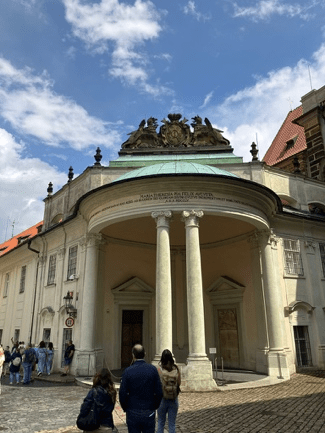
    When Vyšehrad was a separate town from Prague, this was Hlavní, Vyšehrad’s Main Street, and included the town hall. It merged with nearby Vyšehradská in 1870, but broke free again in 1891, with its current name.

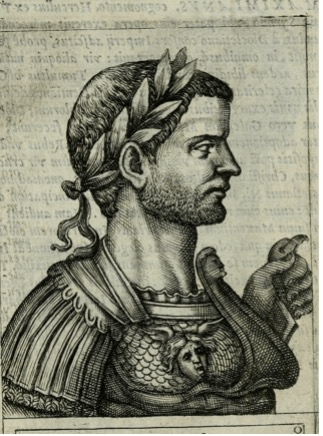
    The future Vratislav II was born around 1032 as the second son of Břetislav I, who would be Duke of Bohemia from 1034 to 1055.

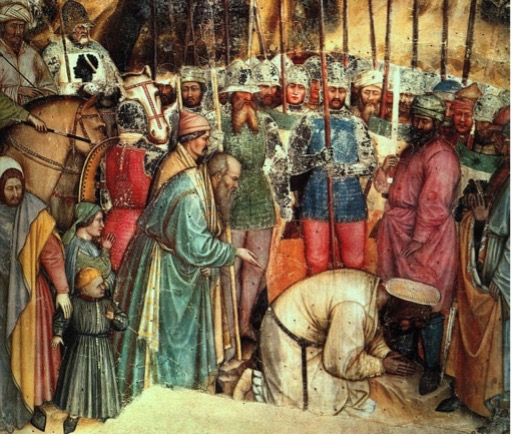
    Břetislav I made the older son, Spytihněv II, Duke of Bohemia, while Vratislav became Duke of Olomouc. Vratislav left for Hungary after, in true Přemyslid style, the two brothers fell out, but they reconciled in 1058, and Vratislav returned.

    When Spytihněv died in 1061, Vratislav also became Duke of Bohemia. In 1068, he appointed another brother, Jaromír, as bishop of Prague.

    However – shock alert – this was another tumultuous fraternal relationship. Vratislav had set up a diocese at Olomouc, and Jaromír, sensing a loss of his own power, used force to steal the relics that had been moved from Prague to Olomouc.

    Vratislav was a major supporter of Henry IV (King of Germany from 1054 to 1105), particularly during the Investiture Controversy, in which Henry fought with Pope Gregory VII over who had the right to select bishops, abbots, and the Pope himself.

    Having given Vratislav permission to wear the same mitre and tunic as his predecessors, Gregory presumably wasn’t all that thrilled about this, but, even when Henry was excommunicated, Vratislav’s relations with the papacy remained decent.

    Vratislav supported Henry in campaigns of Saxony, Swabia and Italy; Henry awarded him for his Schillerová-standard devotion by giving him the right to call himself the first King (not Duke) of Bohemia in 1085. However, the title didn’t pass automatically to his successors.

    Vratislav also created the Vyšehrad Chapter in 1070.

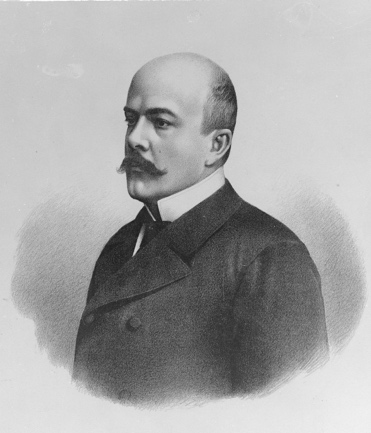
    He died in a hunting accident in 1092, and was buried at St. Peter and Paul’s Church.