What's in a Prague street name

Every street in Prague, one by one.

  • Originally published on X on 23 January 2023.

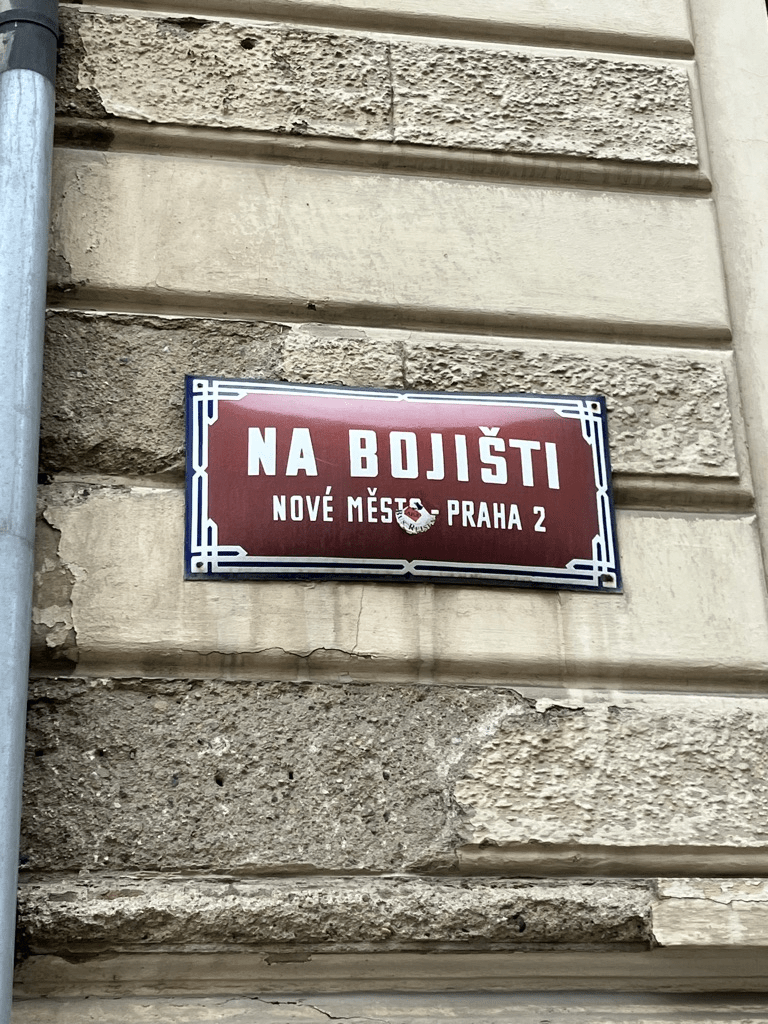
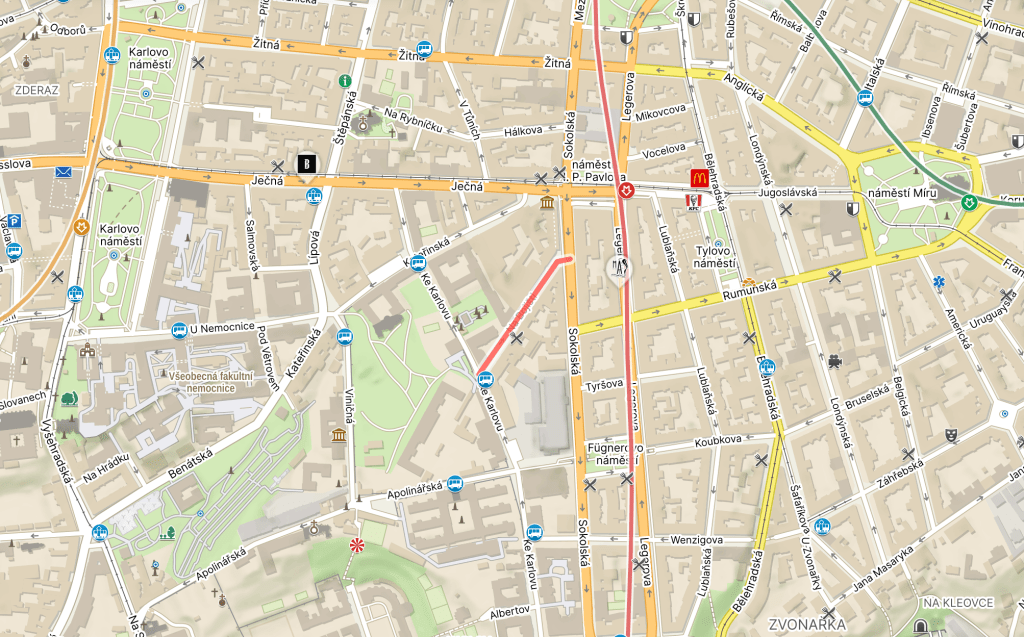
    Spytihněvova was built in 1892.

    Spytihněv I was born around 875.

    People do enjoy railing against nepo babies lately, so knock yourselves out with this one: dad was Bořivoj, the first documented Bohemian ruler (https://whatsinapraguestreetname.com/2023/01/14/prague-3-day-134-borivojova/), while mum was Ludmila, who later became a saint.

    Bořivoj died around 890, and Spytihněv was too young to rule, so the job was passed to Svatopluk I of Moravia until his death in 894, at which point Spytihněv declared himself prince.

    In 895, he travelled to the Reichstag in Regensburg to develop ties with Arnulf of Carinthia, who was then also King of East Francia, to which Bohemia joined in order to shake off Moravian rule.

    Spytihněv created a series of castles in Central Bohemia, including at Mělník, Libušín and Stará Boleslav. He also continued to develop Prague Castle – whose construction had started in 870 – as the Přemyslids’ administrative centre.

    Spytihněv (left) died in either 905 or 915, and, while he left a wife, the marriage was childless – so his brother Vladislav became prince.

    Svatopluk’s death in 894, meanwhile, triggered a power struggle between his sons, and within 15 years, Great Moravia would be no more.

  • Originally published on X on 22 January 2023.

    Na Folimance was built in 1930.

    Folimanka, a vineyard, was first mentioned in writing way back in 1353. It was owned by one Jakub Foliman. An orchard of apricots was added within the following century, and, in the 19th century, a homestead was created here.

    In 1918, the homestead was purchased by an association that intended to create an orthopaedic centre for children, but this never materialised.

    The vineyard was probably converted into a park around 1930, which is also when the street was built; the homestead was demolished when Nusle Bridge (coming up in this series) was constructed in 1969.

    The park was done up in the 1970s, which is also when the Folimanka sports hall was built*: https://prague.eu/cs/objevujte/sportovni-hala-folimanka/

    * (I can see how that one glance at it would make you think ‘yeah, no sh*t’)

    It’s principally used by basketball team USK Praha (http://uskpraha.cz), a 14-time national champion.

    Folimanka also has a communist-era nuclear bunker, which is open on one Saturday in each month. Dates for 2023 are on here: https://krytfolimanka.cz/en/

    While the park has recently undergone some major improvements to make it a more pleasurable place to spend your free time: https://www.novinky.cz/clanek/zena-styl-pod-nuselskym-mostem-vyrostlo-nove-misto-pro-sport-a-setkavani-oceni-ho-nejen-rodiny-s-detmi-40419231

  • Originally published on X on 21 January 2023.

    Rejskova was built in 1896.

    It’s documented that Matěj Rejsek was born around 1445 in Prostějov. What isn’t documented is whether this is the Prostějov that’s near Chrudim or the one that’s in Moravia.

    Graduating in liberal arts from Prague University in 1469, he then became a rector at Týn School in the Old Town. In the 1470s, he also trained as a stonemason.

    Anybody who feels their career isn’t progressing quickly enough should look away now: by 1478, he was entrusted with the design of the Prašná brána / Powder Tower in Prague. You’ll recognise it: https://prague.eu/cs/objevujte/prasna-brana?back=1

    According to the Czech Chronicles, he was also entrusted with this job because he was ‘velmi vtipný a myslivý’. Tldr: never underestimate the power of being a good laugh.

    The road the Powder Gate was on led from Prague to Kutná Hora – which is where Rejsek moved to in 1489, where he had been asked to work on completing St. Barbara’s Church (Chrám svaté Barbory).

    Work on the Church had been interrupted by the Hussite Wars, and, despite half a century or so passing since then, hadn’t resumed.

    This page includes many great photos and a brilliant opportunity to practise your Polish: https://sekulada.com/kosciol-sw-barbary-w-kutnej-horze/

    Rejsek worked on the cathedral until his death in 1506 – and was also buried there.

  • Originally published on X on 20 January 2023.

    Sarajevská was built in 1896.

    Until 1940, and again from 1945 to 1947, this was Vyšehradská.  I won’t explain that one any further for now, as: a) you’ve already guessed; b) there’s a current Prague 2 street called that anyway (spoiler alert).

    During the Nazi occupation, it was Pribinova, after Pribina (died 861), a Slavic prince who was the first Slavic ruler to build a Christian church in the region (in Nitra – https://whatsinapraguestreetname.com/2023/12/23/prague-3-day-185-nitranska/).

    Sarajevo, of course, is the capital of Bosnia and Herzegovina, and deserves to be known for much more than 1914 and 1992-6.   Cue some photos of mine from my visits there.

    And some more.

    And, while I said it deserves to be known for more than 1914 and 1992-6, when you walk around a cemetery like this and see so many graves with ‚1992‘ on them (including people who were younger than you, and you were 10 at the time)… it really, really hits you.

    In terms of Czech(oslovak) connections, I once read that Czechoslovak experts were responsible, or partly responsible, for the city’s urban planning immediately after WW2.

    Also, the current-day Faculty of Islamic Sciences was built by a Czech architect, Karel Pařík, who was from Jičin but died in (occupied) Sarajevo in 1942: https://cs.wikipedia.org/wiki/%C5%A0ar%C3%AD%E2%80%98atsk%C3%A1_soudn%C3%AD_%C5%A1kola

    Regarding Bosnians of Czech origin, Dražen Ričl, first singer of legendary rock band Crvena jabuka (and also a comedian), was born in Sarajevo in 1962, apparently to a Czech father (says English Wikipedia).

    While the band still exists, Ričl died tragically young in a car crash – in 1986, when he was 24 – just six months after their debut album was released.

    And Milan Gorkić, General Secretary of the Yugoslavian Communist Party from 1932 to 1937, was actually born Josef Čižinský in Sarajevo in 1904, to a Czech family.  He was executed by the NKVD in 1937.

    I hope there’s a time when I can write Sarajevo-related stories with happier endings than these.  The place deserves them.

  • Originally published on X on 19 January 2023.

    Fričova was built in 1896.

    Josef Václav Frič was born in 1829 in Prague. His father was Josef František Frič, a patriotic poet and professor at Charles University.

    In 1848, he became head of a radical student association, Slávie, and encouraged students to take to the barricades in the Prague Uprising. He also arranged a ceremony at Ruzyně to commemorate the Battle of Bílá Hora.

    After the uprising failed, he fled to Slovakia to fight against the Hungarians. He returned to Prague in 1849, but was arrested during preparations for a new rebellion. In 1851, he was sentenced to 18 years in prison for treason. He was pardoned in 1854.

    In the 1860s and 1870s, he moved from place to place – London, Paris, Berlin, Budapest, Zagreb, St Petersburg and Rome – but didn’t find sufficient support for his political plans (which were to separate Bohemia from Austria-Hungary entirely).

    He returned to Bohemia in 1879, and focused on literature instead. He and his family lived on what is now Jana Masaryka (https://whatsinapraguestreetname.com/2024/03/17/prague-2-day-46-jana-masaryka/). Frič died in 1890 and is buried at Vyšehrad Cemetery.

    His most important literary work was probably the patriotic poem Upír (The Vampire), written in 1849.

  • Originally published on Twitter on 18 January 2023.

    Pod Zvonařkou was built in 1935.

    Nice and quick this morning: while day 60 (https://whatsinapraguestreetname.com/2024/07/06/prague-2-day-60-u-zvonarky/) was at Zvonařka, today is under it. And Zvonařka is another ex-vineyard.

    However, there’s still something special to say about Pod Zvonařkou: in 1889, number 65 was purchased by one Antonín Chmel, who used it to expand his budding business, exporting Prague ham.

    By the time of his death in 1893 (when he was only 42), there were 28 employees, and the ham was exported as far away as Romania; by 1930, there were 250 employees.

    The company, however, was nationalised in 1948.

    There’s a great advertisement here from 1891, when the General Land Centennial Exhibition was held in Prague: https://upload.wikimedia.org/wikipedia/commons/6/6f/Anton%C3%ADn_Chmel_Pavillon_Prague_Exhibition_1891.jpg

  • Originally published on Twitter on 17 January 2023.

    Pod Nuselskými schody was built around 1895.

    This translates as ‘Under the Nusle steps’. Which are visible in this photo (just), and connect today’s street with Šafaříkova (https://whatsinapraguestreetname.com/2024/07/06/prague-2-day-61-safarikova/).

    Like Žižkov, Vinohrady and many more, Nusle was a separate village, which later became a town, and then became part of Prague in 1922.

    First mentioned in the 11th century, it appeared under various names in the Middle Ages: Neosvětly, Nostuly, Nůsly, Neosvitly and Neovstlí.

    Interestingly, despite the name of the street, the steps themselves don’t have an official name.

    The current set of steps was built in the late 19th century, at the same time as the southern Vinohrady railway tunnels, and the extension of the tram line along Bělehradská.

    In 2011, a driver (who refused to be breathalysed) managed to get his Škoda Octavia down the steps without any major damage: https://www.idnes.cz/zpravy/cerna-kronika/octavia-skoncila-uprostred-nuselskych-schodu-ridil-zrejme-opilec.A110630_113211_praha-zpravy_mav

    I cannot describe the extent to which this thread is not an endorsement of that.

  • Originally published on Twitter on 16 January 2023.

    U Havlíčkových sadů was built in 1908.

    From 1940 to 1945, the street was Grébovky. Which leads us to the fact that the park is known as both Havlíčkovy sady and Grébovka (with Gröbovka also being an option).

    It will surprise precisely nobody that area where the park is now used to consist of vineyards.

    During the 1860s, Moritz Gröbe, a German businessman who worked in Bohemia, bought the land and decided to have a villa built.

    The first villa was knocked down and replaced by another one, which we know as Gröbova vila or Grébovka: https://villagrebovka.cz/

    In 1905, the villa and surrounding land were sold by Gröbe’s heirs to the Municipality of Vinohrady, who renamed the park Havlíčkovy sady, after Karel Havlíček Borovský: https://whatsinapraguestreetname.com/2022/12/26/prague-3-day-122-havlickovo-namesti/

    The park, and especially the villa, were quite badly damaged by Allied bombing in WW2.

    Over the decades, the area fell into disrepair, and it wasn’t until 2013 that reconstruction was completed: https://ct24.ceskatelevize.cz/clanek/regiony/grebovka-je-po-dlouhych-letech-kompletne-opravena-316397

    It’s a lovely place to go and get a glass of wine, not least because it has its own vineyard, which produces 4,000 litres of the stuff each year, and organises a wine festival every September.

    The park also includes a bench in memory of singer Petr Muk, who died far too young in 2010: https://en.mapy.cz/zakladni?source=base&id=2236514&gallery=1&x=14.4437686&y=50.0696276&z=17

  • Originally published on Twitter on 15 January 2023.

    Šmilovského was built in 1900.

    Alois Schmillauer was born in Mladá Boleslav in 1837. I don’t know when he went from Schmillauer to Šmilovský, but I assume the Czech national cause was involved.

    After studying philosophy at Charles University, he became a substitute professor at the gymnasium in Klatovy in 1860, and a full professor in 1868.

    While in Klatovy, he also founded the singing club Šumavan, and wrote plays.

    In 1873, he became a professor in Litomyšl, where, four years later, he became a school inspector. He died in the same town in 1883, aged 46.

    One of his pupils in Klatovy was Jaroslav Vrchlický, as in the sady / park outside the main train station.

  • Originally published on Twitter on 14 January 2023.

    Perucká was built in 1928.

    I covered this one two days ago on https://whatsinapraguestreetname.com/2024/07/08/prague-2-day-67-nad-petruskou/, and some of these threads have been *long* lately, so I’m going to finish this one now and give you time to go out and vote if you haven’t already!

    But not before sharing the zoomed-out version of the street sign photo because things were magnificent that day.

    Normal service will resume tomorrow.

  • Originally published on Twitter on 13 January 2023.

    You know who Niklas Koppernigk was, but probably under the name of Nicolaus Copernicus or (if you’re Czech) Mikuláš Koperník. He was born in Toruń, now in Poland, in 1473. This is the (fairly 1970s, right?) pic of him in the Town Hall there.

    He put forth the theory that the sun is the centre of the solar system, and that the planets orbit around it (first edition of his work on this, from 1543, below).

    Bad news for those of us wondering if our CVs are sufficiently varied: he was also a priest, astrologer, jurist, governor, diplomat, economist and mathematician. Because sometimes creating modern astronomy just isn’t enough.

    There’s no evidence of him ever having made it to Prague, although his ancestral village, Koperniki, is nowadays only 10 km north of the Czech-Polish border.

    He died in Frauenberg (nowadays Frombork, also in Poland), in 1543.

  • Originally published on Twitter on 12 January 2023.

    Nad Petruskou was built in the 19th century but not named until 1947.

    It’s official: defunct vineyards are the new Hussites. I think I’m going to put that in my bio.

    Originally, the homestead which included the vineyard was called Pelikánka; in the late 18th century, it was sold to Josef Wimmer, son of Jakub Wimmer (https://whatsinapraguestreetname.com/2024/06/30/prague-2-day-51-belgicka/).

    In 1865, a villa was built where the vineyard had been, and was owned by one Karel Hausschild, who had also owned Kleovka (https://whatsinapraguestreetname.com/2024/07/07/prague-2-day-66-na-kleovce/). Later in the 19th century, it was purchased by the Perutz brothers (hence ‘Perucka’).

    The villa underwent several reconstructions, and, in the 1970s, was an administrative office for the Supreme Court of Czechoslovakia. It’s uninhabited now.

    And apparently, Petruska is a ‘garbled’ version of Perucka, but that’s the most I can find out about that name. For language nerds, the Czech for ‘to garble’ is zkomolit, and I’m going to try to crowbar this into at least five conversations next week.

  • Originally published on Twitter on 11 January 2023.

    Na Kleovce was built in 1928.

    We’re still in ‘former vineyard’ territory, so please excuse the repetition. Kleovka was one of two vineyards here, the other being Grünwaldka.

    They were owned by one ‘Filip svobodný pán z Elmptů’ – Filip, a free lord from Elmpty (not that I can work out where that is), before being sold to Jakub Wimmer (https://whatsinapraguestreetname.com/2024/03/17/prague-2-day-46-jana-masaryka/).

    Kleovka was demolished at some point in the 19th century, and, on the same spot, a villa with the same name was built in 1878. In the 1880s, it was owned by one Karel Hausschild, who will come up again tomorrow.

  • Originally published on Twitter on 10 January 2023.

    Čermákova was built in 1896.

    Jaroslav Čermák was born in Prague’s Old Town in 1830. Born into a family of doctors, he suffered a major hip injury in his youth, and was confined to bed at times because of this – which may be why he developed an interest in drawing instead.

    In 1849, he moved to Antwerp to study painting; this was followed by stints in Paris and Brussels. He developed a particular interest in historical paintings. This, for example, is his picture of Hussites defending a pass.

    He would develop this further in the 1860s, when he made trips to Dalmatia and Montenegro, and produced works based on that region’s struggle for liberation, particularly from Turkish rule. These are his pictures of a Montenegrin and a Herzegovinian woman respectively.

    He died in Paris in 1878, aged 47, and, while he never seems to have lived in Bohemia during his career, he is buried in Olšany Cemetery.

  • Originally published on Twitter on 9 January 2023.

    Na Kozačce was built around 1896.

    Kozačka was another of the former vineyards around here. It was also known as Šindlerka, after one of its many owners.

    The derivation of the name is unclear, but it could be after one Jan Kozihrb, who owned it in the 16th century. It’s unlikely to have anything to do with the fact that a kozačka is a type of boot.

    In the 19th century, it was purchased by Marie Anna Wimmerová; her heirs sold it to a company that opened a park which was used to carry out research into field foxes. The research centre moved to Troja in 1870.

    In 1871, it was purchased by Jan Stanislav Skrejšovský, a journalist who, given his pro-Czech views, became unpopular with the Habsburg authorities. He was declared bankrupt in 1878.

    In 1900, the Vinohrady Credit Union purchased the land and immediately started to parcel it out.

    During the Nazi occupation, the street was called Hynaisova, after Vojtěch Hynais (1854-1925), a painter who also created the curtain that’s still used at the National Theatre.

  • Originally published on Twitter on 8 January 2023.

    Rybalkova was built before 1884.

    Prior to the Nazi occupation, and again from 1945 to 1946, the street was called Jablonského, after Boleslav Jablonský (1813-81), poet and priest.

    During the Nazi occupation, it was known as Labská, after the river Labe (and as in ‘Ústí nad’), known in English and German as the Elbe.

    Pavlo Semyonovich Rybalko was born in Malyy Vystorop, now in the Sumy Oblast of Ukraine, in 1894. During World War One, he fought in the Russian Army, and joined the Red Army in 1917.

    In World War Two, he was commander of the 3rd Guards Tank Army, which distinguished itself in Kharkiv, Kyiv, Stalingrad and Kursk.

    The 3rd Guards Tank Army entered Prague on 9 May 1945, at which point Prague was virtually liberated from Nazi rule anyway (see https://whatsinapraguestreetname.com/2022/11/18/prague-3-day-1-konevova/).

    Rybalko died in Moscow in 1948. Here’s a Soviet envelope with his portrait, from 1970.

    Rybalkova eventually ate up other streets in the area, which seems quite fitting for a street named after a Soviet general.

    In 1952, Na Borovance, named after Borovanka, a former vineyard, and Půlpánova, named after Karel Půlpán (1885-1914), a Czech writer and socialist, became part of Rybalkova.

    Then, in 1985, some of the Půlpánova part was given to U Vršovického nádraží, another nearby street.

  • Originally published on Twitter on 7 January 2023.

    Máchova was built before 1884.

    Ignác Mácha* was born on Újezd, on Malá Strana, in 1810. In 1830, he started to study at Charles-Ferdinand University, taking philosophy and law.

    *He would later change Ignác to Hynek, and, taken with Czech patriotism, also added the doesn’t-get-much-more-Czech Karel.

    During this time, he also learned Polish (inspired by the Polish Revolution in 1830), and starred in several plays. He started composing poems, first in German, then moving exclusively to Czech.

    He also drew and painted, and wrote plays and prose.

    In 1834, he started writing his masterpiece, Máj. Contemporary critics found it confusing and at odds with patriotic ideas, but it sold out and would be reappraised in the 1850s.

    In 1833, Mácha had started a love affair with one Eleonora Šomková (pictured in 1886). She had a child by him in October 1836, and they were due to get married in November.

    In the same month, after trying to extinguish a fire in Litoměříce, where he had moved to, Mácha became seriously ill, possibly from the water he used to do so. He died in early November of cholera, aged 25.

    His funeral was held on 8 November, which had been supposed to be his wedding day. His son, Ludvík, would only live nine months.

    There’s a famous statue of him on Petřín, and, as somebody whose head never fully got out of the 1990s, whenever I remember that fact, I think of this (not that the statue appears):

  • Originally published on Twitter on 6 January 2023.

    Šafaříkova was built around 1880.

    Pavol Jozef Šafárik was born in Kobeliarovo, near Košice, in 1795. The dramatic landscapes and Slovak folk culture here would impact him significantly.

    By the age of eight, he had allegedly read the entire Bible twice. He then went to school in Rožňava and Dobšiná, mastering German, Hungarian and Latin in addition to his native Slovak.

    Arriving in Kežmarok in 1810, he studied politics, philosophy and theology, and also, in 1814, published his first collection of poems. His graduation enabled him to study at the University of Jena, starting in 1815.

    Just as importantly, it was in Kežmarok that he made friends with Polish, Serbian and Ukrainian students, which deepened his love for all things Slavic.

    Leaving Jena prematurely in 1817, he went to Prague and, through literary circles, got to know Josef Dobrovský, Josef Jungmann and Václav Hanka. Returning to Slovakia, he also befriended not only Ján Kollár, the main ideologist of Pan-Slavism, but also František Palacký.

    Finally gaining his doctor’s degree, he became headmaster of a gymnasium in Novi Sad, Serbia. He stayed there from 1819 to 1833, although he was fired from the school by the Habsburgs in 1824 on account of his Protestant faith.

    He moved to Prague in 1833, and became editor of Světozor; financial constraints meant he also took a job as a censor. It was in Prague that he published his most famous work, Slovanské starožitnosti (Slavic Antiquities).

    From 1841, he was also in charge of the Prague University Library; however, his participation in the Slavic Congress in Prague in 1848 made him a figure of suspicion to the Habsburg authorities.

    Fear of persecution contributed to a deterioration in his mental state in the following decade; he burned much of his correspondence with his friends, and even jumped into the Vltava in 1860. Although he was rescued, he died a year later.

    A university in Košice is named after him, and there are streets bearing his name in both Belgrade and Novi Sad. Tornaľa, near Banská Bystrica, was named Šafárikovo from 1948 to 1992. He’s also featured on this Ukrainian stamp from 1995.

    From 1940 to 1945, the street was called Höflerova, after Karel Adolf Konstantin von Höfler (1811-97), a German nationalist historian who taught at Charles-Ferdinand University.

  • Originally published on Twitter on 5 January 2023.

    U Zvonařky was built in 1889.

    Zvonařka (English: bellfoundery? Or something that’s actually a word) is a homestead that was one located here. There were probably vineyards in this spot as early as the 12th century.
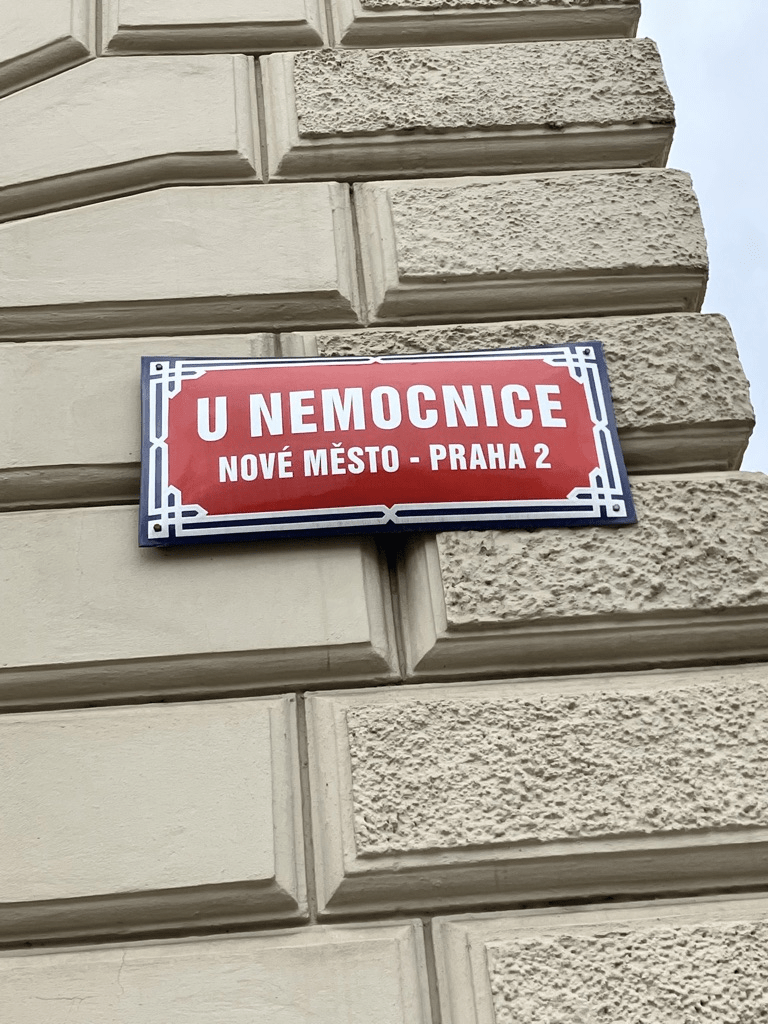
    It’s documented that the vineyard, in the mid-16th century, was owned by one Brikcí z Cinperka – and, during the Nazi occupation, the street was named Cinpergova or Cimpergova after him.

    However, the name Zvonařka didn’t appear until it was owned by one Václav Arnošt Krieger, who had worked as a chamberlain there and was gifted it in 1688 by his master due to his good service. He merged it with a neighbouring vineyard, and it flourished.
    A later owner was Josef Emanuel Canal, who you can read about here: https://whatsinapraguestreetname.com/2024/01/29/prague-2-day-22-u-kanalky/. He then sold it to one Jakub Wimmer. In the late 19th century, the homestead was destroyed so that Vinohrady could be expanded.

  • Originally published on Twitter on 4 January 2023.

    Wenzigova was built in 1893.

    Josef Wenzig was born in Prague in 1807. After working as a private tutor, he became a professor at the Prague German School, staying there from 1833 to 1849, when he set up the První česká reálka (First Czech Secondary School) on Ječná.

    In 1853, he was made director of all such schools in Bohemia (Realschulen), and, unlike the Habsburgs, favoured education in Czech.

    Wenzig also wrote several plays and opera librettos, most famously for Smetana’s operas Dalibor and Libuš. His four-act libretto about the Battle of Vítkov was never put to music.

    Wenzig spent his final years in Trutnov, where he died in 1876, although he’s buried in Olšany Cemetery.