What's in a Prague street name

Every street in Prague, one by one.

  • Originally published on Twitter on 14 December 2022.

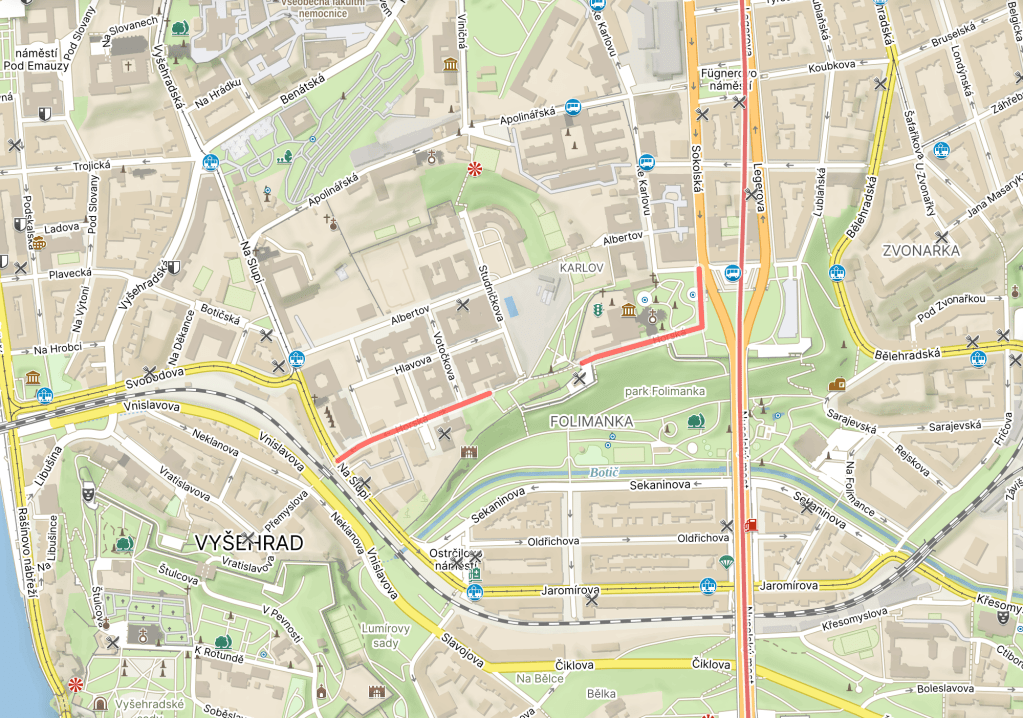
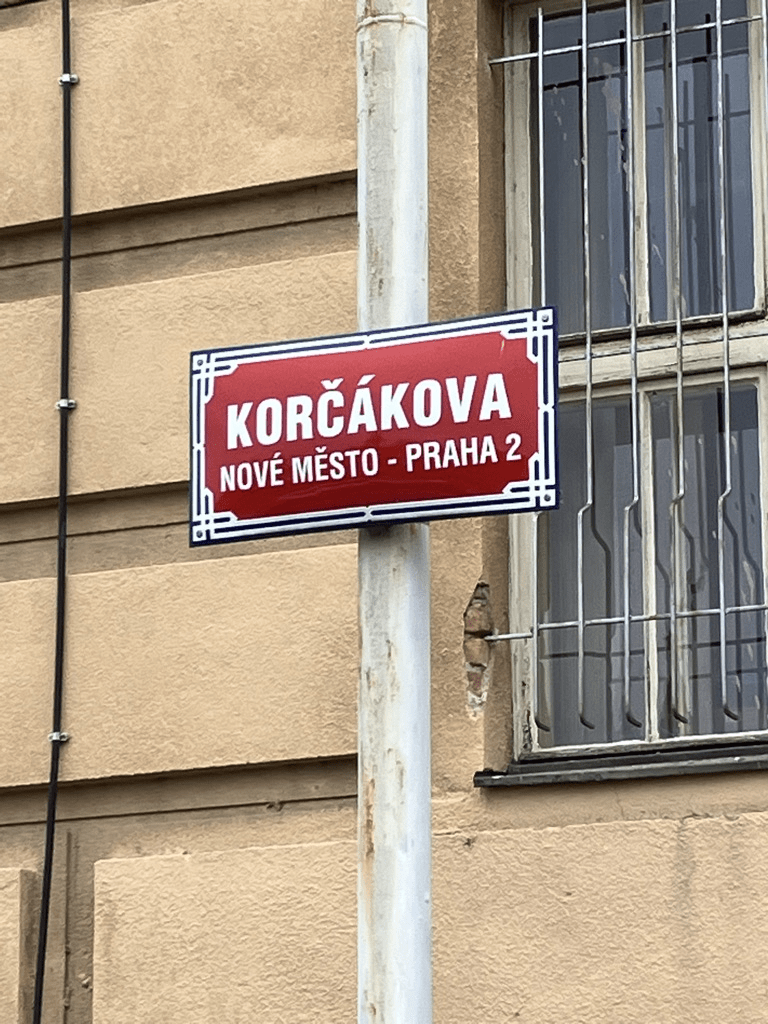
    Vocelova was built in 1884.

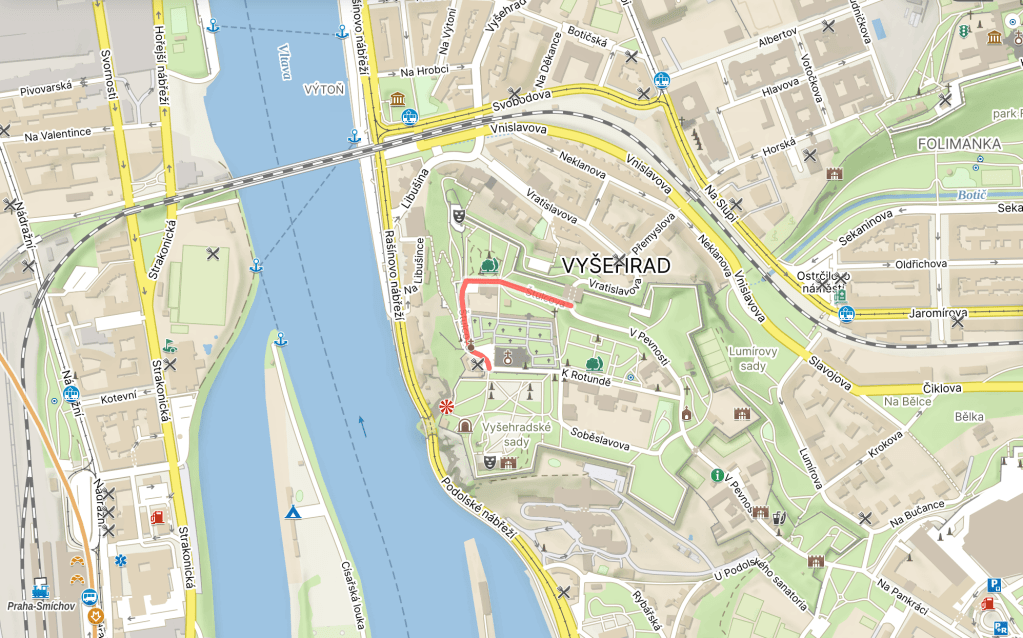
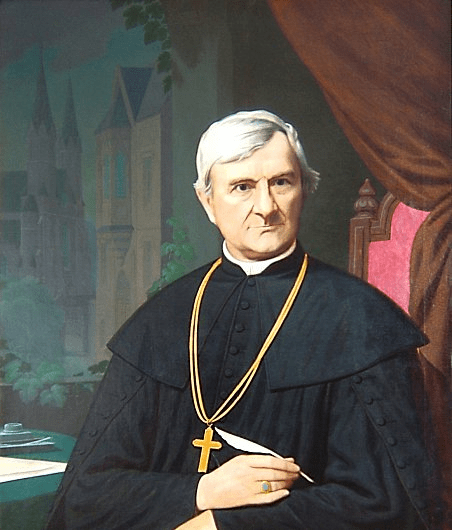
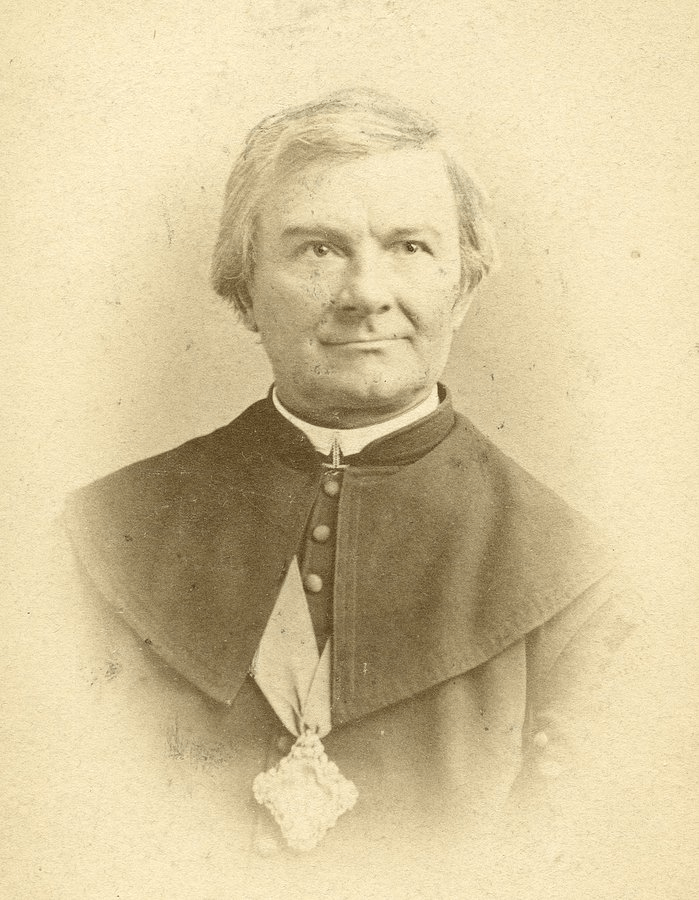
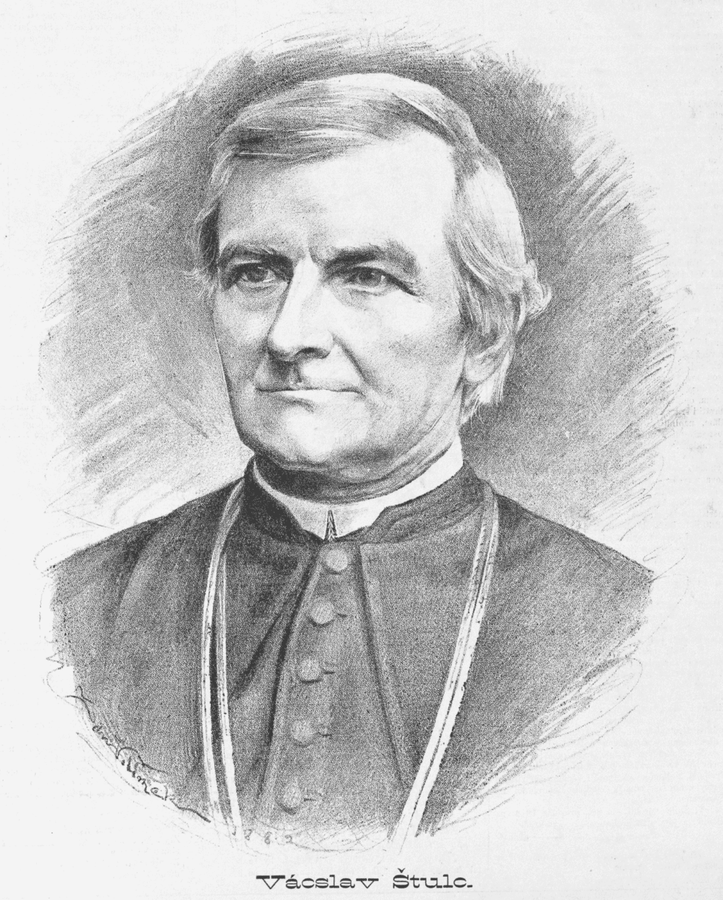
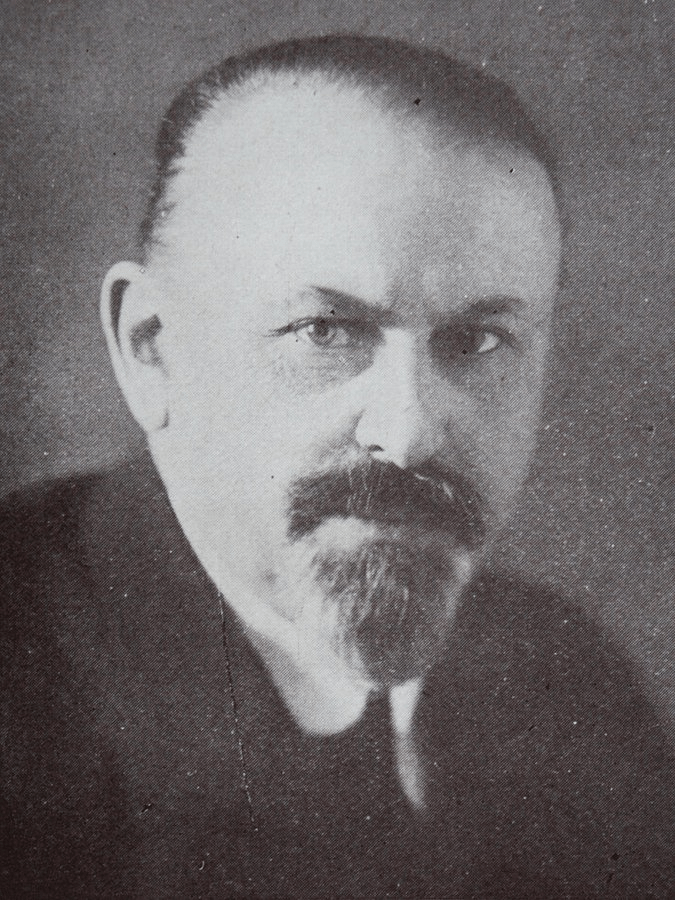
    Jan Erazim Wotzel was born in Kutná Hora in 1802. He studied in both Prague and Vienna, and, at some point in these years, adapted his surname to its Czech form, Vocel.

    In Prague, he also befriended František Palacký.

    Upon graduating, he worked as a tutor, for example to the noble Czernin family (https://whatsinapraguestreetname.com/2022/11/19/prague-3-day-21-cerninova/).

    In the 1840s in Prague, he became friendly with key Czech patriots, including Josef Jungmann.

    This group encouraged him to found the Archaeological Society in 1843, when he also became editor of the magazine of the National Museum (Časopis Národního muzea, or Muzejník).

    In 1848, he briefly entered the Austrian Constituent Assembly as an MP, representing Polička.

    In 1850, he became Associate Professor of Archeology and Art History at Charles University.

    Four years later, he founded Památky archaeologické a místópisné (Archaeological and topographical monuments) along with Karel Václav Zap.

    Perhaps his best known work was Prehistory of the Czech Lands / Pravěk země české,  published in two volumes in 1866 and 1868.

    Vocel died of pneumonia in 1871, and is buried in Olšany Cemetery.

  • Originally published on Twitter on 13 December 2022.

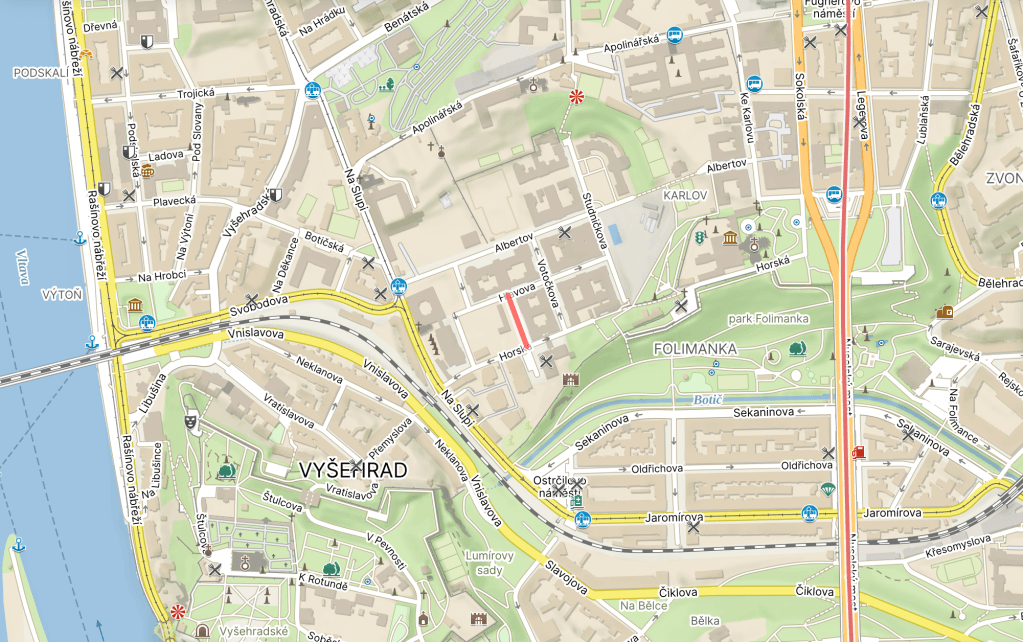
    Mikovcova was built in 1884.

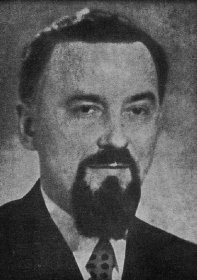
    Ferdinand Mikovetz was born in Sloup v Čechách / Bürgstein (near Česká Lípa) in 1826.

    Despite being born into a German-speaking family, he became fascinated by Czech patriotism during his school years.

    In the early 1840s, he studied history and art history. Around this time, he adopted the doesn’t-get-more-Czech name of Břetislav.

    He joined the Repeal association, which was inspired by Irish nationalists.

    Repeal most famously held a meeting at Svatováclavské lázně on 11 March 1848, where the first Prague Petition, demanding additional rights for Czechs, was written and addressed to Ferdinand V.

    In June of the same year, Mikovec would be one of those standing on the barricades during the Prague Uprising, which was suppressed by the army.

    After this, he fled south to take part in the Serb uprising of 1848–49.

    Returning to Prague, in 1851 he founded Lumír, a weekly magazine aiming to increase the prestige of Czech literature. It was published, with breaks, until 1940.

    He was also involved in the completion of St Vitus’ Cathedral, and founded Arkadia, a literary and artistic association.

    This picture by Vojtěch Bartoněk shows Mikovec and Josef Mánes at Arkadia. I haven’t confirmed whether this meeting happened (the picture is dated over 20 years after the death of both men).

    Mikovec published the first volume of his work on Czech monuments (Starožitnosti a Památky země České) in 1860.

    However, congenital heart problems meant that he was never able to produce the second one.

    In 1861, he was so ill that his mother had to move in with him (on present-day Lublaňská). He died in the following year, aged just 35.

    The second volume of Starožitnosti a Památky země České was published in 1862 by a colleague, Karel Václav Zap.

  • Originally published on Twitter on 12 December 2022.

    Žitná was built between the 15th and 18th centuries, possibly making this one 400 years older than any other street we’ve covered so far.

    Žitná is the feminine form of the adjective stemming from žito, rye. (I guess I’ve never mentioned that these streets are almost all feminine because ulice is too? If not, I’m mentioning it now)

    Prague’s and-yet-we-still-call-it New Town was founded by Karel IV in 1348, and a rye market subsequently existed here.

    What is now Žitná was once two roads – what is now the western half was already called Žitná, whereas the eastern part was called Na Rybničku (now the name of another local street, coming up soon enough).

    They were united as Žitnobranská in the 18th century, becoming just plain Žitná in 1869.

    Žitná brana – the rye gate – was created at the same time as the new city fortifications in the late 17th century.

    In 1827, Karel Chotek, Supreme Burgrave of Bohemia, established a promenade, Na Šancích, that led through this gate (among others). Eventually, a park was opened here, with two concert venues.

    You might have guessed that Chotek would also open Chotkovy sady five years later.

    This photo of the Rye Gate is from about 1875; however, in the same year, the process of demolishing the city walls started, and the gate obviously went with them.

    Žitná is now split between Prague 1 (its northern side) and Prague 2 (its southern side).

    On the Prague 2 side, a memorial was unveiled – just four days ago – to Karel Janšta, who fled Czechoslovakia in 1939 and moved to Britain, where he became an RAF pilot.

    He became a member of the Czechoslovak State Council in London.

    When he returned to Czechoslovakia, Edvard Beneš saw him as a potential Minister of Defence; the Communists, however, banned him from continuing in the Air Force and forced him to become an asphalt worker.
    Janšta lived in this house on Žitná until his death in 1986. A report on his life and the new memorial is on https://ct24.ceskatelevize.cz/domaci/3549553
    I wasn’t aware of this on Friday – I just took a photo of the memorial yesterday (Sunday) because it looked interesting, and then got home and read the rest.

    This is the perfect encapsulation of why it is such a joy to be writing these threads.

  • Originally published on Twitter on 11 December 2022.

    Čelakovského sady was/were (sady – gardens – is plural) built in 1882.

    František Ladislav Čelakovský was born in Strakonice in 1799.

    After graduating from the gymnasium in České Budějovice, he moved to Prague to study philosophy.

    Financial constraints forced him to drop out and continue his studies at the lyceum in České Budějovice, but he was expelled when found reading the works of Jan Hus.

    He then studied in Linz, and returned to Prague to study at Charles University, although he failed one of his final exams and never graduated (although that wouldn’t stop him from becoming a professor at CU in 1835).

    In the following years, he supported himself as a tutor, translator and proofreader.

    Čelakovský also wrote poems under a pseudonym, Žofie Jandová, and collected Slavic folklore and poems, for example in Slovanské národní písně (three volumes published between 1822 and 1827).

    On the non-Slavic side, he also collected Lithuanian songs in Litevské národní písně (1827).

    In 1833, he became editor of Pražské noviny, and transformed one of its supplement, Česká Wčela (Czech Bee), into an independent magazine.

    In 1835, Tsar Nicholas II said that, if the Poles tried to rebel, he would see to it that Warsaw would be destroyed. Čelakovský published an article about this, and pointed out that the Tatar khans had made a similar threat to the Russians in the 15th century.

    The Russian Embassy complained*, and Čelakovský was fired both from the paper and from his professorship.

    * In 2022, complaining remains one of their few talents, along with having too many staff and generally being awful.

    He would eventually regain his professorship in 1849, having taught in Wrocław in the interim.

    Čelakovský died in 1852, aged 53, shortly after the death of his second wife, Antonie.

    Josef František Frič, the couple’s brother-in-law, became guardian of Čelakovský’s children, who included the botanist Ladislav Josef Čelakovský (1834-1902) and the historian and politician Jaromír Čelakovský (1846-1914).

    They… definitely looked related.

    The park was one of several victims of the expansion of the highway that we know as Legerova / Wilsonova, as, in the 1970s, it got split in two.

    When the National Museum was given a major facelift in the later part of the 2010s, Čelakovského sady also benefitted.

    Here’s a video by Prague 1, mid-reconstruction:

    It was finally completed in August of this year: https://www.prazskypatriot.cz/praha-2-dokoncila-revitalizaci-jihovychodni-casti-celakovskeho-sadu / https://www.facebook.com/watch/?v=596031598744290, and has definitely made walking from Prague 2 to Prague 1 a lot more pleasant.

  • Originally published on Twitter on 10 December 2022.

    Škrétova was built around 1875.

    Much like Rubešova (https://whatsinapraguestreetname.com/2024/02/18/prague-2-day-33-rubesova/), and for similar reasons. the street was once longer, but now exists in redux form.

    Karel Škréta Šotnovský ze Závořic (self-portrait below), the youngest of seven children, was born in the house named U černého jelena on Týnská in the Old Town, i.e. Currently Tourist Central, in 1610.

    The family fled into exile after the Battle of Bílá Hora in 1620. In the early years of adulthood, Škréta spent time in Bologna, Florence, Venice and Rome.

    He became a portrait painter, strongly influenced by the Italian style.

    *briefly wonders if it’s a coincidence that this street and Římská (https://whatsinapraguestreetname.com/2024/02/18/prague-2-day-32-rimska/) lead into each other*

    He returned to Prague in 1638 – a return facilitated by his conversion from Protestantism to Catholicism and his willingness to make religious paintings.

    Škréta then became the most important Czech Baroque painter of the 17th century.

    His paintings often placed people in theatrical costumes, or in mythological stories.

    Here we have Paris and Helen, Portrait of a Miniaturist, The Mathematician and His Wife, and Gem-cutter Dionysio Miseroni and his Family.

    Here we have his 1640 representation of the birth of St Wenceslas, as well as his 1660 painting of the same on the throne.

    As well as his portraits, Škréta created altarpieces and other works for cathedrals in Bohemia, including Týnský chrám, and Kostel svatého Prokopa on Sladkovského náměstí (https://whatsinapraguestreetname.com/2023/01/13/prague-3-day-132-sladkovskeho-namesti/).

    Škréta broke one of the cardinal rules of my posts about streets named after artists by not dying particularly young for the time or particularly tragically (he died in 1674 and is buried in the Kostel svatého Havla / Church of St. Gallen in the Old Town).

    He was known to have a hot temper, though, and one fight reputedly ended with his opponent getting killed.

    This story inspired two 19th century pieces, both named Karel Škréta – a comedy by Václav Alois Svoboda (1841) and an opera by Karel Bendl (1883).

    I have a particular fondness for Škréta’s 1648 drawing of the Siege of Prague.

  • Originally published on Twitter on 9 December 2022.

    Rubešova was built before 1884, and the history of the road is slightly complicated.

    Part of the street, while created around the same time, was originally called Resslova, after Josef Ressel, who was briefly mentioned here as he was a native of Chrudim: https://whatsinapraguestreetname.com/2023/06/24/prague-3-day-177-chrudimska/

    While, in 1895, a street called Husova was created to join the two.

    For those who are interested, there are 3,927 separate threads about Jan Hus and his merry men in the Prague 3 series.

    All three streets joined as one in 1928.

    From 1940 to 1945, the street was called Rollerova, after Julius Roller (1862-1946), a Czech-Austrian lawyer who twice served as the Austrian Minister of Justice between 1918 and 1920.

    xcept that, when the nearby highway was built/developed, the Husova part became part of Legerova (https://whatsinapraguestreetname.com/2023/12/24/prague-2-day-8-legerova/), the Resslova part became U divadla (https://whatsinapraguestreetname.com/2024/01/05/prague-2-day-10-u-divadla/) and Rubešova went back to its original form.

    Anyway, František Jaromír Rubeš was born in Čížkov, Vysočina in 1814. His family moved to Kolín upon the death of his father, a brewer.

    He went to Prague to study philosophy, and entered the seminary, then deciding this wasn’t for him, so he became a tutor and also studied law, graduating in 1847.

    n 1841, he became the chief author of Paleček, the first humorous Czech magazine (named after Jiří z Poděbrad’s jester).

    He contributed until 1845; the magazine folded two years later, partly because readers missed his input.

    He also published various novella, most famously Pan Amanuensis na venku, aneb putování za novelou (Mr. Amanuensis on the outside, or wandering for a novella). Not to suggest it was based on his own experiences, but it was about a law graduate who was also a budding writer.

    In 1848, Rubeš hid poet Josef Václav Frič in his apartment in Načeradec, as the latter was wanted by the Habsburg authorities after organising fighting on the barricades during the Prague Uprising of 1848.

    After losing his interest in literature, Rubeš worked in law. He was working as a court clerk in 1853, when he died in Skuteč, near Chrudim, of a hereditary lung condition. He was 39.

    This is a picture of his grave there by Václav Jansa (1859-1913).

  • Originally published on Twitter on 8 December 2022.

    Římská was built in 1884.

    Řím is Rome. And yet I’m writing this from the airport in Athens. I bet there’s a Latin or a Greek word for this.

    Awesome sunrise from where I’m sitting right now, too.

    Until 1926, the street – which was shorter at the time – was called Brandlova, after Petr Jan Brandl (1668-1735), a Czech Baroque painter (self-portrait from 1700 below).

    It took an awful lot of research, but I eventually managed to establish that Rome is the capital of Italy. If you’re wondering what an ‘Italy’ is, then please refer to https://whatsinapraguestreetname.com/2023/12/23/prague-2-day-1-italska/.

    That thread also explains the Great Allied Renaming Frenzy of 1926. And also explains why I’m a bit stumped for new material for this post.

    I’ll try anyway.

    Prague and Rome are twinned.

    And the Vatican News has a Czech version: https://vaticannews.va/cs.html.

    I also started looking for Czech restaurants in Rome, and saw one with really good reviews before realising it was in Turin.

    Finally, this list of false friends between Czech and Italian may result in you never hearing ano* or kozy the same way ever again. Let alone a mountain round with curva after curva on it. https://www.berightback.it/false-friends-falsi-amici-italiano-ceco/

    * As if that word hadn’t already been sullied by AB.

    One more: got a friend in Italy who you need to get a Christmas present for? Here’s the ‘leader italiano nell’importazione di birre ed alcoolici dalla Repubblica Ceca’: https://birraceca.it/

    ‘Il leader’. Crikey.

  • Originally published on Twitter on 7 December 2022.

    Sázavská was built in 1889.

    Sázava is the name both of a river in the Vysočina and Central Bohemian regions, and of a town of 3,700 people on its banks, in the Benešov district.

    The proto-Slavic verb sázeti means something like ‘to depose a lot of sediment’.

    The verb is much more attractive than the phrase, isn’t it?

    The suffix -ava comes from the Indo-European apa or opa, meaning water or sea. Hence Morava, Opava, Otava and Vltava – and, extending this to places located on rivers, Ostrava.

    I’m also going to assume this is how German ended up with the Moldau and the Donau, among others.

    The river originates in the Žďárské vrchy, a mountain range that’s in the Bohemian Massif. It meanders from there through various towns, the largest of which are Žďár nad Sázavou (obviously) and Havlíčkův Brod.

    (Painting by Ludwig Förster, 1798-1863)

    After 226 kilometres, it meets the Vltava, just south of Prague. This part of the river has a distinctive colour due to the clay-based nature of the soil, leading some to call it the Zlatá řeka, or the Golden River.

    It’s very popular with adventure sport enthusiasts, especially around Stvořidla, a stretch of whitewater, although that part is not always navigable.

    The Týnec–Pikovice section also receives a lot of footfall (Canoefall? Or just waterfall?).

    As for the town, it was established on the site of the Sázava Monastery, founded by Břetislav I in 1032, and home to St Prokop’s hermetic community.

    It was very predictably destroyed in the Hussite Wars, before being revived, but was ultimately closed in 1785.

    The monastery is a location in the 2018 video game Kingdom Come: Deliverance, which is set in Bohemia in 1403 and has been praised for being quite historically accurate. And has sold over 5 million copies.

    The town is also known for its glassworks, nowadays known as Kavalierglass, Inc., founded by František Kavalír and now over 180 years old: https://www.kavalier.cz/en/company/history.html.

    Their work is also part of the National Theatre and two stations of the Prague Metro.

    Sázava’s most famous son (who didn’t die in 1053, that is) is Jiří Voskovec (1905-81), a founder of the Osvobozené divadlo (Liberated Theatre) who left for the United States in 1939 along with Jan Werich.

    Swapping Jiří for George, he would star in classic films such as 12 Angry Men (1957), The Spy Who Came In from the Cold (1965) and The Boston Strangler (1968).

    And, of course, the Liberated Theatre was where Voskovec and Werich collaborated with Jaroslav Ježek, subject of one of my favourite streets to write about in the Prague 3 series: https://whatsinapraguestreetname.com/2023/01/14/prague-3-day-136-jezkova/

  • Originally published on Twitter on 6 December 2022.

    Building started around 1903, with the street actually getting its name in 1920.

    Formerly the location for a factory that produced mill machinery, the ‘Vinohrady market hall’ was designed by architect Antonín Turek, and was built between 1901 to 1903.

    Vinohrady has quite a lot to thank Turek for – for one thing, he was responsible for designing the Vinohrady Water Tower two decades earlier (https://whatsinapraguestreetname.com/2023/12/23/prague-3-day-186-u-vodarny/).

    In the 1890s, he designed the Národní dům on Náměstí míru, where he would also play a role in the concept for the Vinohrady Theatre (which opened in 1907). Photos of both are coming in a few streets’ time.

    The hall had over 100 different food stalls; it closed in the 1980s and was apparently burned down in 1986, although I can’t find any footage of this.

    What I can find is proof that, unlike its current bright colours, it used to be green: https://aaheta.cz/pages/main.php?show=projinfo&lng=cz&id_proj=46

    The building was reopened as one of post-communist Prague’s first shopping centres – Pavilon – in 1994.

    Its shops sell ‘things you buy despite not always knowing what they are, and not having the money, because they might look awesome at home, and then you realise they don’t fit in with any of your furniture’ variety.

    Apart from the Albert downstairs. That’s of the, well, Albert variety.

  • Originally published on Twitter on 5 December 2022.

    Slovenská was built around 1900.

    As with Moravia, I don’t want to do a ‘this is the history of […] in 15-20 tweets’ thing. So this seems like a good opportunity to remember that the Velvet Revolution happened in Slovakia too.

    The Slovaks prefer to call it the nežná revolúcia – the gentle revolution.

    In August 1989, five people were arrested because they’d informed the Slovak government that they intended to place flowers where Warsaw Pact soldiers had killed demonstrators in 1968.

    They were Ján Čarnogurský, Miroslav Kusý, Hana Ponická, Anton Selecký and Vladimír Maňák. Čarnogurský would head the Slovak government from 1991-2.

    They became known as the Bratislava Five (Bratislavská päťka). A petition circulated for their release.

    In October, Milan Kňažko, a famous actor – and later a Minister of Culture and of Foreign Affairs in an independent Slovakia – submitted a letter to the government, giving up the title of ‘meritorious artist’ (most Soviet award title ever) in protest against the regime.

    On Wednesday, 16 November, 150-300 students held a protest on Hodžovo námestie (then Mierové námestie). The protest was mainly in favour of academic freedom, but also in favour of the release of Ján Čarnogurský.

    When the security forces arrived, they started a procession to Šafárikovo námestie, where student Danka Košanová had been shot in 1968.

    She was fifteen. Fifteen.

    The security forces ultimately allowed the students to leave; the protesters were probably lucky that the police were more concerned about a certain demonstration due to take place in Prague on the 17th.

    On the 18th, reeling from the events in Prague and the (ultimately fictitious) reports that a student, Martin Šmíd (also fictitious), had been killed, activists met secretly in apartments in Bratislava.

    The Hungarian Independent Initiative, representing Slovakia’s Hungarians, was founded in Šaľa on the same day.

    A further meeting of dissidents took place at Bratislava’s Umelecká beseda slovenská on the 19th. This was the impetus for the formation of the Verejnosť proti násiliu (VPN) – the Public Against Violence – Slovakia’s counterpart to the Civic Forum: https://www.tyzden.sk/spolocnost/78549/bratislavska-umelecka-beseda-den-prvy/

    The first mass demonstrations in Bratislava started on the 20th. On the same day, the students of Comenius University formed a strike committee. Theatres, as well as other universities, followed suit.

    Here’s footage from Námestie SNP on the 22nd:

    The sound system had been provided by Tublatanka, one of Slovakia’s top rock bands.

    And here’s demonstration footage from Bratislava, Košice and Banská Bystrica in that week:

    Slovak state television started showing these demonstrations uncensored; on the 24th, they broadcast the first free discussion between the opposition and the communists that had ever been shown on Czechoslovakian television.

    President Husák granted amnesty to Ján Čarnogurský and Miroslav Kusý, among others, on the following day (the 25th), and Bratislava’s Pravda newspaper joined the opposition ranks on the 26th.

    While all eyes were on Letná in Prague on the 25th, (see the clip below – it has Bratislava footage about seven minutes in), it was also the day that the VPN issued its list of twelve demands.

    This video shows Havel making a speech in Košice in November 1989, but I haven’t been able to establish the exact date.

    I assume it was around the 29th, as he, Marta Kubišová and others had attended a round table of the OF and the VPN at the National Theatre in Bratislava that day.

    Or was it actually in December? I’ve seen plenty mentions of a visit by Havel to Košice then.

    On 6 December, the Vlak nežnej revolúcie (Train of the Gentle Revolution) went from Bratislava to Košice via Źilina. Students, actors and other cultural representatives got out along the route to give presentations about the revolution and its aims.

    Great pics of the train are on https://1989.sng.sk/vlak-neznej-revolucie… – which gives a brilliant and highly detailed day-by-day breakdown of revolution-related events too.

    Husák swore in a government where the majority of members weren’t communists on 10 December, and resigned shortly afterwards; the government had a Slovak, Marián Čalfa, at its head.

    Slovakia itself would get a non-communist government two days later, headed by Milan Čič.

    I don’t know if Slovaks say vďaka, že môžeme. But that doesn’t stop me from saying it.

    So: vďaka, že môžeme. Big time.

    But it would’ve been nice if Danka Košanová had been around to witness it.

  • Originally published on Twitter on 4 December 2022.

    Lužická was built around 1900.

    From 1940 to 1945, this was Rankova, after Leopold von Ranke (1795-1886), a historian and proponent of modern, source-based history.

    But Lužice / Lusatia / Lausitz / Łużyce is a historical territory, nowadays split between Germany, Poland and the Czech Republic.

    Slavic tribes, including the Mlceni / Milčané and the Sorbs (known as the Lužičtí Srbové in Czech to distinguish them from the Serbs of Serbia), are known to have settled here by the end of the 7th century.

    Its location meant it became of interest to the rulers of Germany, Poland and Bohemia. Part of the territory was given to Vratislav II around 1080.

    Here’s a picture of me trying to put all the territorial changes into a coherent order.

    Territories in Lusatia were gradually acquired by the Luxembourg dynasty in the 1300s (https://whatsinapraguestreetname.com/2023/02/26/prague-3-day-153-lucemburska/). By the 1370s, Lusatia was fully incorporated into the Kingdom of Bohemia.

    From 1346 to 1815, six towns in Upper Lusatia formed the Lusatian League (Czech: Lužické Šestiměstí) in order to defend their interests against marauding knights and competition from other cities.

    Here’s a list of them in five languages.

    After the Peace of Prague in 1638, most of Lusatia became part of Saxony.

    In 1722, the town of Herrnhut was founded by religious refugees from Moravia, who founded the Moravian Church there.

    After the 1815 Congress of Vienna, Lusatia was divided between Prussia and Saxony, with the Prussian part being divided between the Provinces of Brandenburg and Silesia.

    The 19th and 20th centuries would lead to a flourishing of the Sorbian languages, until their use was banned by the Nazis.

    After 1945, Lusatia was divided between Germany and Poland along the Oder-Neisse line; Poland expelled its Sorbian population.

    Sorbs living in Czechoslovakia wanted the annexation of Lusatia to their country of residence, but this was rejected.

    60,000 Sorbs live in Germany, and are one of the country’s recognised national minorities, alongside the Danes, the Frisians, the Sinti and the Roma.

    Bautzen is considered the political and cultural capital of the Sorbs: https://www.bautzen.de/en/citizens-town-hall-politics/city-portrait/the-sorbs

    Upper Sorbian (Wikipedia on https://hsb.wikipedia.org) has about 20,000 speakers in Saxony, and Lower Sorbian (Wikipedia on https://dsb.wikipedia.org) has about 7,000 in Brandenburg.

    You can learn both languages free on https://sprachkurs.sorbischlernen.de/#/welcome. I’ve signed up and got automated proof that the languages are similar but not identical.

    There’s also a Sorbian-language newspaper, Serbske Nowiny. It requires you to sign up, but I can see enough to tell you, that, as this is a Germany-based newspaper, there’s currently an article in the sports section about ‘Znowa kónc w skupinskej fazy’.

    Local public broadcaster MDR also has a Sorbian service: https://www.mdr.de/serbski-program/rozhlos/index.html

    Fringe benefits of doing these threads: next time I see Görlitz mentioned, I can think something other than ‘oh, that’s the place the press send someone to before every German election to show how divided Germany is’.

    Finally, say what you want about the GDR, but they made some cracking stamps. Here’s a set from 1982, celebrating Sorbian culture.

    Not going to lie, the second one scares me a little.

  • Originally published on Twitter on 3 December 2022.I know I’m falling behind with reposting these on here, partly because I’m writing a new one every day on that place while it still exists.

    Moravská was built in 1889.

    You know where Moravia is. I know where Moravia is.

    I also don’t want to turn this into a straight ‘history of Moravia’ thread, largely because I’m not brave enough / stupid enough / sommelier enough / Moravian enough.

    So let’s take a look at Moravian independence movements, AKA the Moravské hnutí, since the end of communism.

    The Movement for Autonomous Democracy–Party for Moravia and Silesia (HSD-SMS) was founded in April 1990, and won 9 seats in the Czechoslovak parliament in elections two months later.

    In the purely Czech elections, it came 3rd, earning itself a place in the Czech government.

    When discussions concerning a revised Czechoslovak constitution took place that summer, HSD-SMS reps suggested that the Czech Republic should be renamed the Czech-Moravian Republic.

    One petition to the Czech National Council in favour of autonomy for Moravia and Silesia got 630,000 signatures – a record.

    The HSD-SMS also organised major demonstrations to this end – here’s one in Brno on 2 March 1991:

    Around this time, 13% of respondents in the Czechoslovak national census gave their nationality as ‘Moravian’.

    However, the party soon split into two factions, and its leader, Boleslav Bárta, died suddenly in May 1991.

    The party won a significantly reduced number of seats in the Czech elections – and lost all its seats in both houses in the (final) Czechoslovak ones.

    The Moravian movement became increasingly disparate in the following years.

    In 2005, HSD-SMS merged with the Moravian Democratic Party (MoDS, founded in 1997) to form Moravané – the Moravians. The party aims to change the Czech Republic into the Czech and Moravian Federative Republic.

    It reached its best ever result in the 2021 elections – but ‘best ever result’ in this case means 14,285 votes, or 0.26% of all ballots cast.

    Their 2010 campaign advert is here:

    A more pro-European party, the Moravian Land Movement (Moravské zemské hnutí) was founded in 2018, and wishes to change the country into a federal republic consisting of Bohemia, Moravia, Silesia and Prague. It got 0.03% of the vote in the 2021 elections.

    Here’s a video from its early days:

    Finally, in 2020, a third party, Morava 1918, was formed. It is more conservative and, in the 2021 elections, ran along with Koruna Česká, a party which wants the monarchy back, specifically a Habsburg-Lorraine one.

    Combined, they got 0.16% of the vote in 2021.

    Meanwhile, the 2021 status showed 5% of respondents identifying as Moravian, down from 6.01% in 2011.

    One thing Moravia is pretty good at is providing Prime Ministers – of the last eight, Paroubek, Tolopánek, Nečas, Rusnok, Sobotka and Fiala are were all born in the Moravian-Silesian region.

    Here are Topolánek and Nečas with US presidents, possibly discussing burčák.

    Another competition that Moravia is currently winning? The most streamed track in the country on Spotify, at the time of writing, is Habibi by STEIN27, a Brno-based singer and rapper:

    However, the current most played local song on the radio is from Prague. And it’s by Chinaski. But when wasn’t it?

  • First published on Twitter on 2 December 2022.

    Šumavská was built in 1889.

    Šumava is a mountain range covering the borderlands of the Czech Republic, Germany (Bavaria) and Austria. Many German speakers refer to it as the Böhmerwald – (the Bohemian Forest), although Bavarians, clearly wanting to take full credit, like to call it the Bayerischer Wald.

    The earliest documented name for the forest is a Celtic one, Gabreta; the name ‘Šumava’ is used in Rerum Hungaricum Decades (Ten Volumes of Hungarian Matters) by the Italian writer Antonio Bonfini (1427‒1502).

    ‘Šuma’ is a Proto-Slavic word meaning forest – and is still the standard word for one in Bosnian / Croatian / Serbian, as well as in Macedonian.

    The area was first inhabited in the 14th century BC, although major colonisation didn’t occur until the 12th-14th centuries AD, with German-speakers living side by side with Sorbs (more on them in an upcoming post).

    Borders with Bavaria and Austria, ill-defined (and argued over) for centuries, were set in 1846 and 1862 respectively. Only a small part of the forest became part of Austria after WW1.

    Czech artist Karel Liebscher (1851-1906) did some awesome illustrations of the Šumava.

    The German population was expelled after WWII, and, with the Cold War, the border became heavily guarded and depopulated.

    This has led to unexploded landmines and ammunition even to this day, but also to nature developing with relatively little human influence.

    There were no open border crossings at all with West Germany until 1964.

    This is how the border looked in a very snowy February 1990, immediately post-revolution:

    With the fall of the Iron Curtain, the Šumava became a popular tourist destination, but also (in Železná Ruda, for example) a hotspot for prostitution, although this has subsided to an extent with CZ’s entry into the EU and the Schengen zone.

    The highest point in the forest is Großer Arber / Velký Javor, in Bavaria; the highest point on the Czech side, Plechý, is also the highest point on the Austrian side (where it’s known as Plöckenstein), as it’s on the border.

    Lovely video of the Šumava in the early 1980s here:

  • Originally published on Twitter on 1 December 2022.

    Chodská was built in 1889.

    From 1940 to 1945, this was Grimmova, after Jakob Grimm (1783-1863), co-author of the Deutsches Wörterbuch, co-editor of Grimms’ Fairy Tales, writer of Deutsche Mythologie and the elder of the Brothers Grimm.

    Chodsko is a historical area in the Domažlice region, named after the Chodové, free peasants entrusted with walking along the forested border (chodit means ‘to walk’) and guarding it.

    Chodové are at the front of this picture from Dalimil’s Chronicle, cutting down trees.

    They had to ensure that the border did not change, that those travelling on the trade route to/from Furth im Wald in Bavaria could pass safely, and that enemies trying to enter through the Šumava would be pushed back.

    The usefulness of their role meant that they were granted various privileges: they didn’t become serfs, were subject only to the king, and had their own self-government. The first privileges were granted in 1325, and the final one (there were 24 in all) in 1612.

    However, the fact that these privileges were not written down proved to be to their disadvantage, and they were no longer enforced after Bílá Hora, with the Chodové becoming subject to labour duty like other peasants in the Czech Lands.

    Direct pleas to Vienna didn’t help matters, and after the emperor rejected their demands in both 1692 and 1693, a full-scale uprising broke out.

    This ended with the execution of its leader, Jan Kozina, in Plzeň in 1695.

    In the 19th century, the Chodové became a symbol of national resistance, with Kozina being a figure in the works of both Alois Jirásek and Božena Němcová.

    Here’s a painting by Václav Malý (1894-1935), ‘From a Pilgrimage to Chodsko’).

    Painter Jaroslav Špillar (1869-1917) lived among the Chodové and used them as inspiration for his work. Here’s Chodové Family (1900) and Elderly Couple (1904).

    While the Chod population has declined significantly – they are now present in eleven villages, and in the countryside – they maintain a strong individual culture, as well as their own dialect of Czech.

    Features include an ‘h’ appearing before ‘u’ (už becomes huž), long vowels in possessive adjectives (náše, váších) and infinitives (čekát, zpívát), and k being used instead of g in loan words (telekram, rentken).

    Also, families are referred to as -ouc rather than -ovi (Havlouc, Babišouc, Simpsonouc), and possessive forms don’t decline at all, irrespective of gender/case/number (if we spoke like this in Prague, I’d live in Žižkovo, and avoid ‘Karlovo most’ like the plague on weekends).

    If you need proof that the internet is a wonderful thing when used correctly, these guys have a Teach Yourself Chod channel on YouTube: https://www.youtube.com/c/K%C5%AFC%C3%AD16/videos

    Finally, the Bohemian Shepherd is a Chodský pes in Czech, named after the dogs that the Chods used to help them in their guard duties.

    They are gorgeous: https://commons.wikimedia.org/wiki/Category:Chodsk%C3%BD_pes

  • Originally published on Twitter on 30 November 2022.

    Sady Bratří Čapků was created (sort of) in 2016.

    This was part of a larger park, opened in 1903, and, originally called Městský sad (City Garden) until 1928.

    In 1928, it became Bezručovy sady, after Petr Bezruč, the pseudonym of Vladimír Vašek (1867-1958), a poet most known for Slezské písně (Silesian Songs), a collection of poems about the people of his native Silesia.

    In 2016, the part of the park that’s in Vinohrady / Prague 2 was spun off and renamed Sady Bratří Čapků; the Prague 10 / Strašnice part is still Bezručovy sady.

    The Čapek brothers, meanwhile, were Josef (born 1887) and Karel (born 1890).

    Josef moved to Prague in 1904, attending the Academy of Arts, Architecture and Design (Vysoká škola uměleckoprůmyslová v Praze, VŠUP). He met his wife, Jarmila Pospíšilová (1889-1962), there.

    After graduating, he attended the Académie Colarossi in Paris, returning to Prague in 1911 after less than a year to be with Jarmila.

    Back in Prague, he joined the Mánes Association (https://whatsinapraguestreetname.com/2024/01/18/prague-2-day-11-manesova/) and became co-editor of its magazine, Volné směry.

    From 1912, he started to create Cubist paintings, with an increasingly playful, humorous touch as the years went by. He also dedicated himself to paintings for children.

    Four of his works are below: Harmonikář (Harmonist) from 1913, Piják (Drunkard) from the same year, Letadlo (Aeroplane) from 1929 and Zpívající děvčata (Singing girls) from 1936.

    Regarding journalism: In 1918, he became editor of Národní listy. He was fired in 1921, when that newspaper became increasingly nationalistic, and moved to Lidové noviny, where he would work as an editor and critic until 1939.

    As a children’s writer, he wrote Povídání o pejskovi a kočičce (The Adventures of Puss and Pup) for his daughter, Alenka, in 1929. It’s a classic of Czech literature, and its cover is the dictionary definition of the word ‘charming’.

    There is also a strong argument that Josef Čapek should have been allowed to design all book covers ever.

    In the 1930s, Josef used his work to criticise Nazi Germany, and, on 1 September 1939, the day Germany invaded Poland, he was arrested.

    Here is a 1933 caricature: ‘I solemnly declare before the whole world that I do not know the author of ‘Mein Kampf’’.

    Spending two and half weeks in Dachau, he was then moved to Buchenwald, where he spent two and a half years, and was forced to paint family trees of SS members.

    In 1942, he was transferred to Sachsenhausen, and then, in 1945, to Bergen-Belsen, where he died of typhoid. The exact date of his death is unknown, as is his burial place.

    A symbolic grave exists in Vyšehrad Cemetery.

    Karel, meanwhile, studied philosophy at Charles University. He graduated in 1915 and moved into journalism.

    He wrote for Národní listy, moving on to Lidové noviny, along with his brother, in 1921, in protest at Josef’s dismissal from the former.

    In these years, he became close to both Tomáš Garrigue Masaryk and his son Jan. Talks with TGM would later form the basis for the three-volume Talks with T. G. Masaryk (Hovory s T. G. Masarykem; 1928-1935).

    In 1920, he wrote R.U.R., a science-fiction play which introduced the word ‘robot’ to the world (it was Josef who came up with it). R.U.R. stands for Rossumovi Univerzální Roboti (Rossum’s Universal Robots).

    (Cover designed by Josef)

    Karel’s 1936 novel War with the Newts (Válka s Mloky) was another science-fiction work, dealing with a breed of newts that, after being enslaved, acquire human knowledge and start a rebellion.

    A devoted anti-fascist, Karel became the Nazis’ most public nemesis in the Czech Lands after Beneš abdicated. He started to receive hate mail and malicious telephone calls.

    Never in the best of health, he died of pneumonia on 25 December 1938, aged 48. The Nazi occupiers didn’t release he’d died until they came to his house to arrest him a few months later.

    Karel’s wife, the actress Olga Scheinpflugová, survived the war and died in Prague in 1968. They are both buried in Vyšehrad Cemetery.

    This thread barely touches the surface of Josef and Karel’s work.

    Their most well-known joint work is Pictures from the Insects’ Life / Ze života hmyzu (1921), in which a dream about insects acts as a a commentary on the people of Czechoslovakia in its earliest years.

    There is also a memorial to them on Mirák which I’ll add some photos of when that square comes up in a couple of weeks.

  • Originally published on Twitter on 29 November 2022.

    Kladská was built in 1896.

    Kladsko in Czech is Kłodzko in Polish – a town of just under 27,000 people in Lower Silesia.

    First mentioned in 981, its name derives from the Czech word kláda (log), as its first bridges, houses and fortifications were made of wood.

    In time, this also gave the Polish language its word for footbridge, kładka.

    From the 11th century, the region were fought over by the Piasts and the Premyslids.

    After it was taken over by Soběslav I, a peace treaty in 1137 confirmed that it belonged to Bohemia.

    The city was granted a coat of arms by Přemysl Otakar II in the mid-13th century.

    Emblems don’t get much more Czech than this one (and I feel it’s telling me to stop what I’m doing and reread Gottland).

    As the city became increasingly Germanised, its German name, Glatz, appeared in 1291.

    In 1310, the Knights of St. John opened a school in the city, with its most famous pupil being Arnošt of Pardubice, later Archbishop of Prague.

    George of Poděbrady established the town as the seat of the county in 1458, which gave it a boost; in 1501, it was purchased by one Ulrich von Hardeck, but it remained an outer region (vnější kraj) of Bohemia.

    During the Thirty Years’ War, Kladsko/Glatz – whose population was predominantly Lutheran – was captured by the Austrians in 1622; they destroyed the castle and turned it into a fortress.

    During the First Silesian War, Kłodzko fell under the rule of Prussia with effect from 1742.

    Friedrich the Great saw the city’s military potential and expanded the fortress, which was besieged for the last time in 1807 during the Napoleonic Wars.

    In 1938, the city’s synagogue was destroyed during Kristallnacht.

    The fortress became a prisoner-of-war camp during WW2; however, Kłodzko came out of the war remarkably unscathed save the destruction of its bridges.

    After WW2, the city became part of Poland despite Czechoslovak protests. The Poles initially called it Kładzko before changing the first vowel.

    The most notorious inhabitant of Kłodzko was probably Sophie Charlotte Elisabeth Ursinus (1760-1836), who murdered her husband, aunt and lover with arsenic. Her trial led to the first reliable method for identifying arsenic poisoning.

    Karl Liebknecht (1871-1919), martyr for the German socialist cause, was imprisoned at the city’s fortress from 1907 to 1909.

    Kłodzko’s medieval town is pretty damn cute and includes what looks like a smaller (and older) Charles Bridge. This has led the city to be nicknamed ‘Little Prague’ (Mała Praga).

    Local tourist office RAZEMwPOLSKE has recently put up a nice documentary about the city, with English subtitles:

    A special mention, also, to Minieuroland, a theme park opened here in 2016, showing famous monuments in miniature form. There’s a nice reproduction of Prague’s Old Town Clock in the photo gallery (Galeria zdjęć): https://minieuroland.pl/

    During the September 2024 Central European floods, Kłodzko suffered particularly badly:

  • Originally published on Twitter on 28 November 2022.

    U Kanálky was built in 1905. It was called Kanálská until 1961.

    Kanálka is a garden that used to exist here, between Polská and Vinohradská, built by the Czech gardener Václav Teisinger.

    Czech philanthrope and botanist Josef Emanuel Canal ordered its construction in the 1780s, after purchasing various homesteads and vineyards in the area.

    His not terribly Czech name was Josef Emanuel Malabaila de Canal – with (C/K)anal giving the garden its name.

    The garden was opened in 1800, and was initially open to the public free of charge, but ticketed access came later in a bid to avoid the garden getting damaged.

    In line with Canal’s philanthropic tendencies, Kanálka included a botanical institute, greenhouses, a lecture hall and areas for breeding new or (then) relatively uncommon crops, including potatoes and alfalfa.

    Less philanthropically, Jews were not allowed to enter.

    There was also a farmyard, demonstrations of agricultural machinery and a zoo containing exotic birds and a fish pond. And a monkey.

    In 1811, an ‘experimental sugar factory’ was added.

    The most famous visitor to the garden was Mozart.

    Canal died in 1826; the garden was inherited by his daughter Josefína. It then passed through various owners, including one Moritz Zdekauer, who tried to rename the garden as Zdekauerova zahrada. The locals did not comply.

    Here’s a postcard of an industrial exhibition in the garden in 1869.

    And there are two colourful paintings of the garden on https://www.ctidoma.cz/zajimavosti/2019-05-09-zapomenuta-kanalka-bohata-zahrada-jako-z-pohadky-byla-dilem-italskeho-hrabete.

    Kanálka was closed in 1884 and divided into building plots. Part of the garden is now Riegrovy sady.

    One memento of Kanálka within Riegrák is the Ptačí obelisk / Bird Obelisk, a structure built in 1840 and reconstructed in 2009: https://en.mapy.cz/zakladni?source=base&id=2318119&gallery=1&x=14.4417274&y=50.0815120&z=17

    There’s also still a feeding pond for birds and a building that used to be part of a lookout tower.

  • Originally published on Twitter on 27 November 2022.

    Čerchovská was built in 1896.

    Čerchov, 1,042 metres high, is the highest mountain in Český les (somewhat different English name: Upper Palatine Forest), as well as the 10th-highest in the country. It’s only two kilometres from the German border.

    In German, it’s called Schwarzkopf, and yes, I did just get up and go to the bathroom to check if that’s who makes the stuff I put in my hair most mornings.

    (Update: It is!)

    In 1905, a watchtower was opened on the mountain. It’s called Kurzova rozhledna, after Vilém Kurze, a writer who helped raise funds for it to be built, but sadly died in 1902.

    It was a popular tourist destination until it was taken over by the German army in 1938.

    In 1950, Sbor národní bezpečnosti / National Security Corps set up a training facility here. Radars, a listening tower and other military installations were soon added.

    The facilities were also used by the Soviet Army and the Stasi.

    Just 20 km away, in Hoher Bogen, a NATO surveillance tower, Fernmeldesektor F, existed from 1965 to 2004.

    The tower would remain closed to the general public until after the Velvet Revolution.

    The Club of Czech Tourists regained ownership of the tower in 1999, and, using public funds, arranged for its renovation.

    There’s a great video of Čerchov here from January 2017, when things were *really* snowy round these parts. Proper Winterfell stuff:

  • Originally published on Twitter on 26 November 2022.

    Krkonošská was built in 1908.

    The Krkonoše – Riesengebirge in German, and Giant Mountains in English – are located in north-eastern Bohemia and in Polish Silesia. They’re the tallest mountain range in the Czech Republic.

    They also form part of the Sudetes, a ‘geomorphological subprovince’ shared by Germany, Poland and the Czech Republic, and from which the term ‘Sudetenland’ was derived.

    The Poles call the Sudetes the Sudety, and the Germans call them the Sudeten. All easy enough so far.

    The Czechs, meanwhile, call them the Krkonošsko-jesenická subprovincie, because who needs catchiness?

    The name Krkonoš first appears in writing in 1492 – for grammar nerds, one Krkonoš is feminine – before Krkonošská hory being mentioned in 1517 and, in 1601, the Krkonoše.

    The story of the name is debated, with theories ranging from an old Slavic word for ‘kneeling’ to a Celtic tribe, the Korkontoi.

    It may also be linked to the Gorgany, a mountain range in the Ukrainian Carpathians.

    Points of interest include Sněžka, the highest peak in the country, Luční hora, which comes a close second, and towns which are famous as ski resorts, such as Harrachov, Špindlerův Mlýn and, on the other side of the border, Karpacz.

    Pics below are a postcard of Sněžka by German painter Erwin Spindler (1860-1926) and Blick über Krummhübel auf die Schneekoppe by Albert Hertel (1843-1912), a German landscape painter.

    Predominantly German-speaking for centuries (apparently including lots of Tyrolian lumberjacks from the 16th century onwards), after 1918 there was an influx of Czechs.

    The Czechs were expelled in 1938, but they returned in 1945, when the Germans were banished.

    Another interesting feature is the Polish–Czech Friendship Trail along the border (a distinct improvement on how well these two used to get on – https://whatsinapraguestreetname.com/2024/01/27/prague-2-day-14-polska/).

    There are some great photos on Wikipedia of border protection forces in 1945.

    There’s also the source of the Elbe (Labe) River, Pančavský, the highest waterfall in the country (postcard below), and Černá hora, which should be confused neither with the beer (which is made in Moravia) or Montenegro.

    First New Year’s resolution for 2023: reread this thread in a year and think ‘the pics are awesome, but thank f**k I actually visited this summer and got some photos of my own too’.

    Feel free to share your own photos of / anecdotes about the Krkonoše here too!

  • Originally published on Twitter on 25 November 2022.

    Na Švihance was built in 1908.

    I’m not managing to work out what švihanka translates as, though.

    Švihat is to whip or flick (which leads to průšvih – trouble), and for the sake of people, horses and cream, I hope this isn’t the origin.

    (OK, I may feel less strongly about the suffering of the cream)

    But švih, while translating as ‘swish’ or ‘lash’ (as in ‘with a whip’, not as in ‘eye’ or ‘out on the’) also means flair or elegance.

    Which is nicer.

    And a švihák is a fancy dresser or a fop. While a švihadlo is a skipping rope / jump rope.

    Národní švihadlo’ brings up a crushingly disappointing zero hits on Google, and makes me realise that not everybody does puns in the same way English speakers do.

    A vineyard already stood here in the mid-15th century. We don’t know when the homestead came into existence, but it was no later than 1785.

    The homestead passed through several owners before being purchased by the municipality of Vinohrady, which converted it into the park we all know and love and sometimes drink a bit too much in.

    An inn located here was converted into a restaurant in the 1930s – named Šretrova after its owner. Its outdoor dining area had 1,200 seats and it also hosted concerts.

    After 1945, it became a gym, but reverted to being a restaurant in 1965.

    There are some pretty cool photos of a visit that took place to the building in 2018, at which time it was used by an advertising agency, here: https://archiv.denarchitektury.cz/program/praha-sretrova-restaurace-v-riegrovych-sadech/

    According to this article from 2019, the lease expired and Praha 2 was looking to reconvert the building and gardens into a restaurant: https://www.prazskypatriot.cz/pozemky-a-budovu-byvale-restaurace-v-riegrovych-sadech-chce-ziskat-praha-2/

    But the advertising agency (McCann) still lists Riegrovy sady as its address on its website, and the most recent Google News hit for Šretrova restaurace is from May 2020. Hmm.

    Here’s McCann’s most famous work (obviously not their Czech office):

    I think it’s time for a Mad Men rewatch.