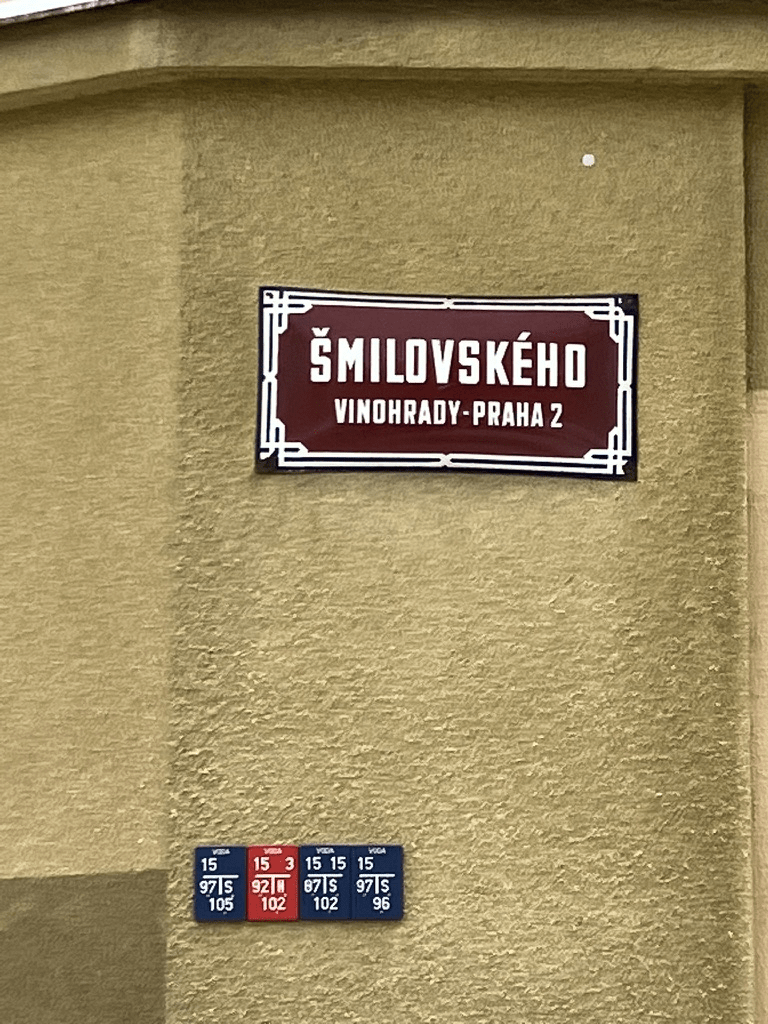
What's in a Prague street name

Every street in Prague, one by one.

  • Originally published on Twitter on 24 November 2022.

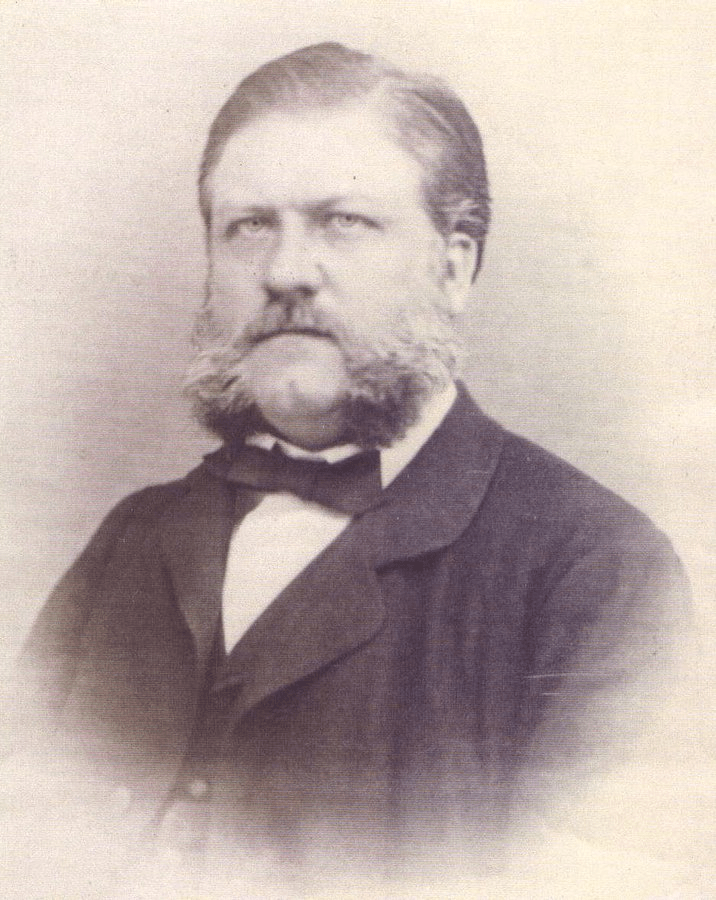
    Chopinova, built in 1910, was called ‘U Riegrových sadů’ (which it is) until 1965.

    In 1965, the Polish Fryderyk Chopin Society asked for a street to be named after their idol; in exchange, the Warsaw district of Mokotów got itself an ‘ulica Bedrzycha Smetany’.

    Fryderyk Franciszek Chopin was born just south of Warsaw to a father from Lorraine, France, and a Polish mother in 1810.

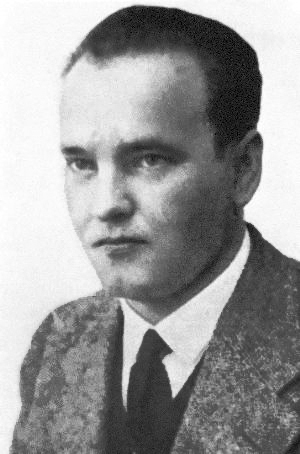
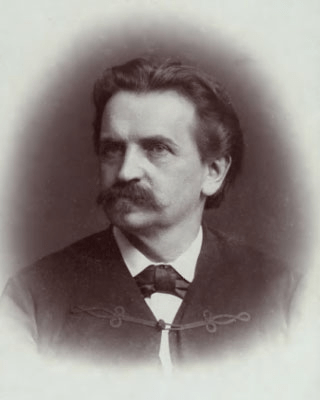
    His first piano teacher, when he was six, was a Czech, Vojtěch Živný (portrait below). As was his second piano teacher, Václav Vilém Würfel.

    In addition, his first performance of a piano concerto, when he was eight, was of a composition by a Czech composer, Vojtěch Jírovec (below).

    Chopin himself started composing before the age of 7, and, at 11, performed at the Sejm in Warsaw, in front of Tsar Alexander I.

    He then studied at the Liceum Warszawskie, before moving on to the city’s Music School (now the Chopin University of Music / Uniwersytet Muzyczny Fryderyka Chopina, or UMFC), where he developed a fascination with folk music.

    One of his teachers there was a Czech composer, Josef Javůrek.

    In November 1830, Chopin left Poland, travelling to Dresden, Vienna and Munich, before settling in Paris. He never returned to Poland.

    The November Uprising, a rebellion against the Russian Empire, began in Warsaw 3.5 weeks later. It ended with the Russians liquidating Polish autonomy and closing the University of Warsaw, which the Conservatory had been part of.

    (Marcin Zaleski, Taking the Arsenal, 1831)

    In Paris, Chopin gave his first concert in 1832. One of the attendees was Ferenc Liszt, with whom Chopin formed a friendship.

    From this point on, Chopin made a living by selling his compositions and giving piano lessons to an illustrious set of clients.

    He had a failed engagement to Maria Wodzińska (1836-7; broken off because her family felt Chopin was too sickly), and then a chaotic relationship with George Sand (real name Aurore Dupin), which lasted until 1848.

    (painting by Eugène Delacroix, as was the previous one)

    Sand stated that the relationship was celibate for at least nine years. As Chopin became increasingly ill from 1842 (having never been in brilliant health), she started to feel like a mother and nurse to him.

    (First known photo of Chopin, 1846, photographer unknown)

    When Sand left him, Chopin fell into a deep depression.

    When revolution broke out in France in 1848, Chopin left for England, where he gave a concert at the Guildhall in London. Returning to Paris, he was too ill to give frequent piano lessons anymore.

    He died in Paris the following year, probably of pericarditis, not helped by his tuberculosis. He was 39.

    (Chopin on his Deathbed, Teofil Kwiatkowski, 1849)

    Despite never returning to Poland after 1830, Chopin did go to Bohemia more than once, starting with a visit to Prague in 1829. He described the city as ‘quite nice’. Cheers, Fred.

    A planned concert in Prague never took place due to stage fright (Chopin wasn’t really a fan of concerts – he only gave 30 public performances in Paris in 18 years).

    In 1835, he saw his parents for the last time in Karlovy Vary, and Mariánské Lázně was where he proposed to Maria Wodzińska in 1836.

    ML now hosts an annual Chopin festival, and the house he stayed in is now named after him: https://www.marianskelazne.cz/vyznamna-mista/pamatnik-fryderyka-chopina/

  • Originally published on Twitter on 23 November 2022.

    Třebízského was built around 1903.

    From 1940 to 1945, this was Krušnohorksá, after Krušné hory / the Erzgebirge / the Ore Mountains, which separate Bohemia and Saxony.

    Václav Beneš was born in Třebíz, near Slaný, in 1849.

    The school he went to there was attended at the same time by the poet Jaroslav Vrchlický, who gave his name to Vrchlického sady, the park in front of the main train station.

    He then attended a German grammar school in Prague’s New Town, followed by the Faculty of Theology, where he also studied Slavic languages.

    Already suffering from tuberculosis as a child, his severe joint problems continued into adulthood.

    He started writing in the early 1870s, adding Třebízský to his surname as there was already a Václav Beneš Šumavský writing at the same time.

    As a novelist, he was interested in the Hussites, but also in Czech history in general.

    One famous novel of his is Královna Dagmar (Queen Dagmar), about the daughter of Přemysl Otakar I.

    Graduating in 1875, he was ordained at St Vitus, and became a priest near Beroun. In the same year, he also developed pneumonia and pleurisy.

    From 1876, he preached at the Church of the Assumption of the Virgin Mary in Klecany, where there is a statue in his memory.

    However, his health conditions accompanied him for the rest of his life, and he died while being treated at Mariánské Lázně in 1884, aged 35.

  • Originally published on Twitter on 22 November 2022.

    Budečská was built in 1889.

    From 1940 to 1945, this was Humboldtova, after Wilhelm von Humboldt (1767-1835), Prussian philosopher, linguist, diplomat and founder of the Humboldt University of Berlin.

    Budeč, the remains of a castle, is a national cultural monument located 17 km north-west of Prague in Kladno district.

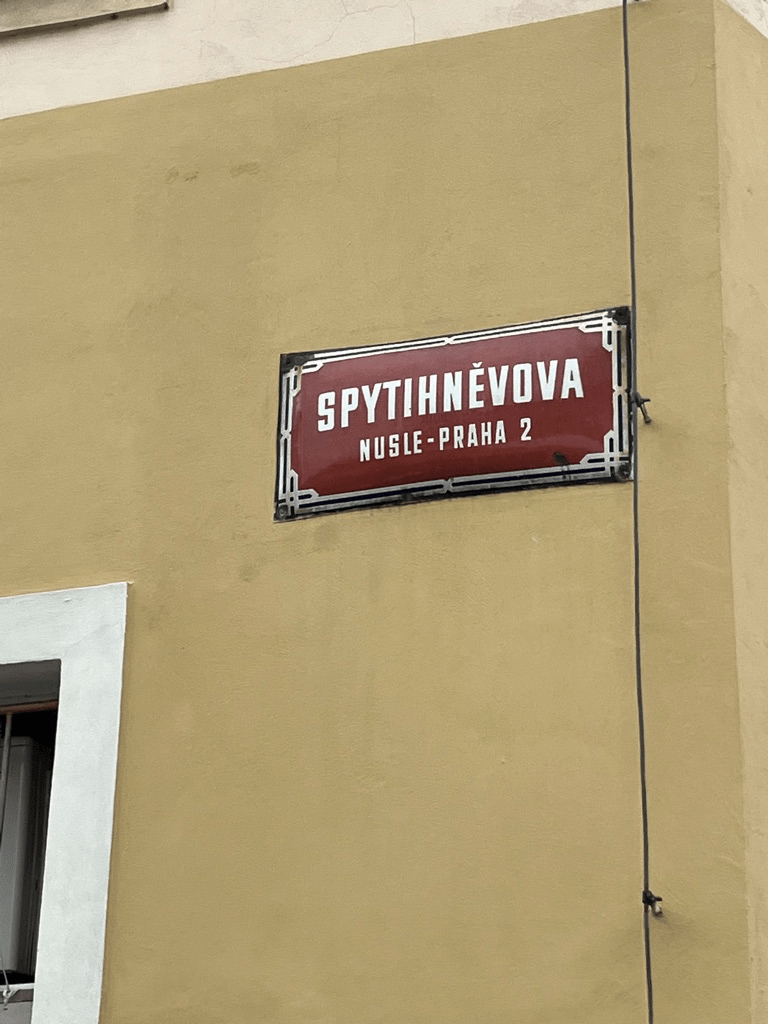
    It was owned by the Přemyslids from the 10th century on – Spytihněv I (https://whatsinapraguestreetname.com/2023/02/26/prague-3-day-152-premyslovska/) founded the Rotunda of St. Peter here, and Václav I stayed here as a child.

    The castle was written about – and its significance exaggerated, for example as a centre of learning – by Václav Hájek in his Czech Chronicle (https://whatsinapraguestreetname.com/2022/11/19/prague-3-day-15-hajkova/).

    Budeč gained fame as a former centre of educational excellence in the 18th century (whether this was true or not) – so much so that, in 1840, famous teacher Karel Slavoj Amerling founded the Budeč Institute in Prague’s New Town.

    It closed in 1848 for financial and (obviously, given the year) political reasons, but influenced many future educational institutions in Bohemia and Moravia.

    In the 20th century, Budeč became a popular pilgrimage site. One such pilgrimage in the summer of 1939 turned into a major demonstration against the Nazi occupation.

    (Photo from the 1996 book Dramatické i všední dny protektorátu by Jan Gebhart and Jan Kuklík).

    The Budeč rotunda, considered to be the oldest surviving stone structure in Bohemia, remains open to visitors: http://www.omk.cz/index.html?url=http://www.omk.cz/dyn/doc/budec

  • Originally published on Twitter on 21 November 2022.

    Horní (Upper) Blanická was built in 1889; Dolní (Lower) Blanická was built in 1896. They became one street in 1948.

    From 1940 to 1945, this was Schlözerova, after the aristocratic von Schlözer family, which included August Ludwig (1735-1809, a historian) and Dorothea (1770-1825, the first woman in Germany to receive a doctor of philosophy degree).

    Velký Blaník (638 metres tall) is a forested mountain near Louňovice pod Blaníkem, in Benešov District, about 60 km south of Prague. There’s also a Malý Blaník (580 metres tall) nearby.

    (Painting from 1891, by Václav Jansa)

    The earliest documented settlement on the hill is a Celtic fort from around 400 BC.

    A Celtic legend stated that there was an army sleeping inside the mountain which would come out to help its people at the appropriate moment.

    By the 15th century, this legend had been adapted so that the head of the army in the mountain was Saint Wenceslas / Svatý Václav.

    Pilgrimages to the church of Mary Magdalene, on Malý Blaník, started in the 16th century.

    A new chapel to Mary was built in 1753, and its ruins are still visible.

    The chapel was closed down in 1783 as part of Joseph II’s reforms, which abolished monasteries and church buildings.

    In the following century, during the Czech National Revival, Blaník received renewed attention.
    This led to pilgrimages to the mountain taking place in 1851 and 1867; Blaník also gave its name to the final movement of Smetana’s Má vlast.

    This 1898 illustration by Vénceslav Černý shows the Blaník knights on their way to save the Czech nation.

    In 1868, a stone was taken from Blaník to help build the National Theatre in Prague (see also: https://whatsinapraguestreetname.com/2023/12/23/prague-3-day-184-ripska/).

    One of the men involved in breaking the stone, Václav Podbrdský, fell 60 metres during the process, and, as he could not be found, was declared dead.

    Which made things a bit awkward when he turned up, entirely alive, in 1886.

    While Podbrdský managed to sue his employer for his unpaid salary, he then got arrested on suspicion of evading military service.

    During his testimony, he said that, after he fell, he woke up in a hall with a beautiful girl, with whom he communicated telepathically.

    He then claimed to have met a range of figures from Czech history, including Cyril, Methodius, Karel IV and Jan Hus.

    Once this was over, the girl, who was the guardian spirit of the Czech nation, said goodbye to him, and the ceiling turned into a blue sky.

    And it was eighteen years later, although Podbrdský thought he was only gone for eighteen hours.

    The court, deciding that Podbrdský was suffering from an idée fixe, acquitted him.

    The LET L-13 Blaník, produced by Let Kunovice, is the most widely-used glider / sailplane in the world: https://www.blanik.aero/flotila

    And Radio Blaník is the most listened-to national commercial radio station in the country, though they’ve missed a trick by being located on nearby Bělěhradská rather than Blanická: https://radioblanik.cz/

    At the exact moment of posting, they’re playing something from the Dirty Dancing soundtrack. Happy Monday.

  • Originally published on Twitter on 20 November 2022.

    Polská was built in 1900.

    Until 1940, it was Nerudova, after Jan Neruda, journalist, writer, poet, art critic and figurehead of Czech Realism. More on him when I get to Prague 1.

    Then, from 1940-5, it was Stifterova, after Adalbert Stifter (1805-68), an Austrian writer known for his vivid descriptions of landscapes.

    It reverted to Nerudova from 1945-7.

    It took Poland until 1947 to get a street – probably something to do with the fact that, after WW1, Czechoslovakia and Poland were like those two friends you never invite to the same party because they’ll have a very public argument and make everyone feel very uncomfortable.

    The reason for this? As so often, borders.

    After WW1, Poland and Czechoslovakia both laid claim to Cieszyn Silesia (Těšínsko).

    While Těšínsko was mainly inhabited by Poles, it had also been part of the Kingdom of Bohemia, although a larger attraction than the history books was the fact that it was industrialised and rich in black coal.

    When the Poles started planning for parliamentary elections in January 1919, the Czechoslovak army entered. The Entente Powers told the Czechoslovaks to damn well stop it, and a new demarcation line was set.

    The final division of the territory between the two states was decided at the Treaty of Spa. Czechoslovakia got the west (and a lot of Polish residents to boot), while Poland got the east.

    Czechoslovakia endeared itself to its (sort-of) new Polish population even less by declaring that they were actually Slovaks. Further exchanges of territory were ordered by the League of Nations, in 1924.

    The border was set in 1925 and hasn’t changed since.

    Inevitably, the number of famous Czech-Poles is quite high.

    Top of the list is probably singer Ewa Farna, who’s been famous since she was a teenager and has managed to turn this into a major career in both CZ and Poland:

    Ewa is from Třinec, as is Albert Černý, the Czech-Polish frontman of Lake Malawi:

    2018 presidential candidate Jiří Drahoš was born in Český Těšín to a Czech father and Polish mother: https://www.bbc.com/news/world-europe-42674309

    Polish is a language that I would gladly listen to forever.

    Also, Poland is ridiculously underrated as a travel destination and has so, so, so much more to offer than Kraków.

    When I first went to Warsaw in 2009, there was a multimedia display in the centre about 1989. The sort of thing that’s so good that you wish they’d kept it here permanently.

    Here are the Prague bits that I took pics of at the time.

    Polská is also the home of the Vinohrady branch of the Sokol gymnastics club. There’s a plaque here in tribute to possibly its most famous member, Alois Eliáš, PM of the Protectorate until he was murdered in 1942 for taking part in the anti-Nazi resistance.

  • Originally published on Twitter on 19 November 2022.

    Anny Letenské was built in 1896.

    Until 1945, this was Ve Pštroce. Pštroska, also spelt Pštrosska, was an estate, including a vineyard called Křížovka, that was located round here. It was purchased by Jan and Babetta Pštross in 1815, and demolished in the late 19th century, partly to create Riegrovy Sady.

    Anna Svobodová was born near Plzeň, into a family of actors, in 1904, and, as a child, took part in a travelling theatre company.

    After a stint at the South Bohemian National Theatre in České Budějovice, she joined the Alferi theatre company, where she met her future husband, Ludvík Hrdlička, who used the pseudonym Letenský. She took this on as her stage name.

    From 1937, she acted in 25 films, playing minor non-speaking roles, and also worked with Czech Radio.

    She also joined the Vinohrady Theatre in 1939, taking several acclaimed roles.

    She divorced in 1940, and remarried the following year, this time to Vladislav Čaloun, an architect.

    On 17 July 1942, Čaloun was arrested for protecting Břetislav Lyčka, who, in turn, had helped Jan Kubiš, one of the killers of Reinhard Heydrich.

    Allowed to make visits to her husband, she was arrested during one such visit on 3 September, and was imprisoned in Pankrác, then transferred first to Terezín, then to Mauthausen.

    She was shot in the head there on 24 October 1942. She was 38.

    Vladislav Čaloun was shot on 26 January 1943. He was 35.

    Anna’s final film, Přijdu hned, directed by Otakar Vávra, was released to cinemas two months after her murder.

    According to Vávra (https://dvojka.rozhlas.cz/ocite-svedectvi-bohemy-autenticke-vzpominky-otakara-vavry-nebo-pribuznych-anny-7464665…): “I would look at her. She would play a comic scene and then go backstage. She sat there and put her head in her hands.”

    This is the only surviving recording of Letenská’s voice:

    A bust of her was unveiled at Vinohrady Theatre in 1948.

    It’s only 48 hours since I got all ‘hug-your-friends-and-get-drinks-with-them-and-all-that’, I know. But my God. Hug your friends and get drinks with them and all that (if they’re huggers and/or drinkers, that is).

    Good people are worth keeping around while you still can.

  • Originally published on Twitter on 18 November 2022.

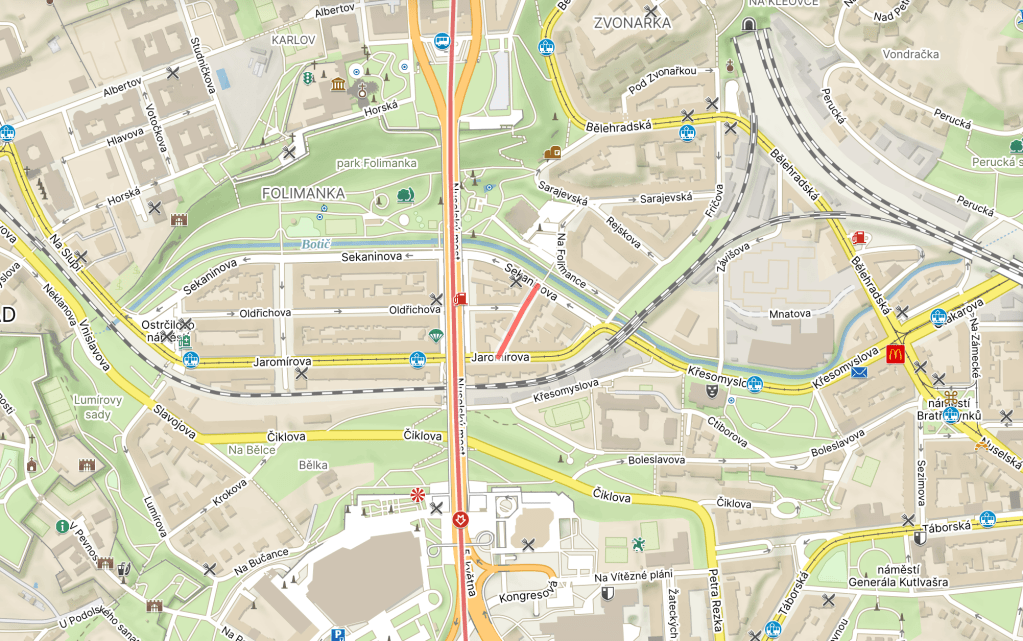
    Balbínova was built in 1880. It was formerly two streets; they were united in 1947. The southern half has been called Balbínova since its inception.

    Until 1940, and again from 1945 to 1947, the northern part was called Sladkovského. Old Karel still has a square not so far away, and you can read about that here: https://whatsinapraguestreetname.com/2023/01/13/prague-3-day-132-sladkovskeho-namesti/

    From 1940 to 1945, the northern part was Seumeho, after Johann Gottfried Seume (1763-1810), a patriotic German author who served in the Prussian army.

    Bohuslav Balbín was born into a Catholic family in Hradec Králové in 1621. He entered the Jesuit college in Jičín at the age of 11, later studying classics, literature and philosophy in Prague, Olomouc, Brno and Kłodzko.

    His studies in Prague, starting in 1639, coincided with the plundering of the city by the Swedish armed forces. The Swedes invaded again in 1642, during his doctorate, and, clearly thinking third time lucky, tried yet again in 1648.

    On that occasion, Balbín joined the academic battalion and defended Charles Bridge. In 1650, he was ordained as a priest and went off to do missionary work, then becoming a teacher, teaching in Prague, Jindřichův Hradec, Brno, Český Krumlov and Jičín.
    In 1661, he was banned from teaching, from Prague, and almost from the Jesuits full stop, for reasons which are not clear (the most likely explanation is that his pro-Czech sentiments unsettled his pro-Germanisation superiors).
    Unable to teach, he turned to writing. In 1672 and 1673, he wrote Dissertatio apologetica pro lingua Slavonica, praecipue Bohemica, which condemned the removal of the Czech language from offices, churches and schools.

    Not surprisingly, it would remain unpublished for a century, and is also his most famous work.

    Balbín was allowed to return to Prague in 1677. In 1680, he published his first volume of Miscellanea historica regni Bohemiae – a history of Bohemia. He intended to write thirty volumes, but ‘only’ completed ten before his death in 1688.

    The most interesting building in the street is probably the Balbín poetic pub (Balbínova Poetická Hospůdka) at number 6.

    The pub hosts concerts and theatre productions pretty much every evening – see http://balbinka.cz/category/utils/program/… – as well as being the HQ for Balbín’s Poetic Party, a self-declared radical political party which got 0.12% of the votes in the 2006 election.

    The party gained attention in that election for its billboards mocking then-leader of the KDU-ČSL, Miroslav Kalousek (here’s one from their website declaring him ‘the most virtuous man in the state’).

    And got more attention for their billboards in 2012, which mocked former PM and then-presidential candidate Jan Fischer’s pre-1989 membership of the Communist Party. He wasn’t too pleased. (Photo from Hospodářské noviny)

  • Originally published on Twitter on 17 November 2022.

    Mánesova was built in 1889.

    From 1934 to 1940, and again from 1945-7, the road was Barthouva, after Louis Barthou, who had served as PM of France in 1913, and became Minister of Foreign Affairs in February 1934, only to be shot and killed while meeting Alexander I of Yugoslavia in Marseille in October.

    Alexander, of course, was also assassinated; the killing was carried out by Velicko Kerin, a far-right Bulgarian terrorist, and had been planned by Ante Pavelić, head of the Croatian Ustaše.

    British Pathé footage of the assassination is here:

    Josef Mánes, meanwhile, was born into a family of artists in Prague’s Old Town in 1820.

    From the age of 15, he studied at the Prague Academy of Arts, moving to Munich to continue his studies in 1844.

    Returning to Prague, he started a relationship with the Mánes family’s maid, Františka Šťovíčková, who became pregnant by him in 1850. Josef’s sister Amálie fired Františka, who was left to raise her daughter, Josefina, by herself.

    Sensing his family had him firmly in the ‘doesn’t really make our lives easier’ category, Josef moved to the castle owned by Count Bedřich Silva-Tarouca in Průhonice, staying there for twenty years. He produced many of his best works there.

    A founding member of artist forum Umělecká beseda in 1863, he designed costumes, banners and diplomas for the Sokol movement: https://cz.pinterest.com/pin/445997169330273785/

    In 1866, he was asked to create paintings of the twelve months for Prague’s Astronomical Clock. You may remember the recent reproduction of this not being a roaring success: https://theguardian.com/world/2022/jun/02/pragues-orloj-clock-centre-row-artist-amateur-restoration

    In the same year, his mental health started to deteriorate. A study trip to Rome only made things worse; Amálie travelled to Rome, finding him collapsed on the steps of the Trevi Fountain.

    He succumbed to his illness in 1871, aged 51. It is believed that his disease was progressive paralysis caused by an advanced form of syphilis which attacked his brain.

    Mánes’s work covered several genres. He did landscapes, portraits and botanical studies. Here are two of his works: the Sisters František and Serafína Kolowrat Krakowská and Švadlenka (Seamstress).

    The National Gallery also has a decent selection of his works: https://sbirky.ngprague.cz/katalog?author=Josef+M%C3%A1nes…

    And the Mánes Association of Fine Artists / Spolek výtvarných umělců Mánes was founded in his honour in 1887. It’s located in the Diamond House on the Vltava.

    Number 20 on Mánesova was the location of the workshop used by painter Otakar Štáfl. On 14 February 1945, an allied bombing raid landed here and killed both him (60) and his wife Vlasta (37), a writer of fairytales and children’s novels.

    Number 20 now hosts cafe which I like very much, Kaaba.

    At the risk of me getting all maudlin, please get coffee (or whatever you drink) with your friends more often, and let them know you appreciate them.

  • Originally published on Twitter on 16 November 2022.

    ‘U Divadla’ translates as ‘By the Theatre’ and was built in 1988.

    The ‘theatre’ in question is, nowadays, the State Opera, which took the place of the Novoměstské divadlo / New Town Theatre (see https://whatsinapraguestreetname.com/2023/12/24/prague-2-day-7-na-smetance/).

    Ever been to this place on a date, wearing a polo neck and jeans, only to realise everyone else is wearing full black tie? I have.

    Anyway.

    The theatre was built on the initiative of the city’s German-speaking population, who lacked a theatre of their own. The design was by the Vienna-based Fellner & Helmer studio.

    These guys designed a heck of a lot of beautiful buildings (check Wikipedia) – here are my not-very-recent pics of the theatres in Zagreb and Bratislava.

    You’ve quite possibly seen a lot of their buildings for yourself.

    Other buildings of theirs in the Czech Republic include the Mahen Theatre in Brno, the market colonnades, Grandhotel Pupp, and the Municipal Theatre in Karlovy Vary, and theatres in both Jablonec and Mladá Boleslav.

    In Ukraine, they built the theatre in Chernivtsi, the Opera Theatre in Odessa, the Noble Casino in L’viv, and Hotel George, also in L’viv.

    I don’t want to nick anybody else’s work, hence the lack of photos, but do give them all a Google.

    They didn’t build anything in Russia, a fact which I currently hope architects the world over take inspiration from for decades to come.

    The German Theatre started operating in 1888, and its façade still has some pretty clear signs of its origins, with Schiller, Goethe and Mozart all represented.

    Perceived as liberal and anti-fascist in the 1930s, the Theatre was sold to the state in 1939.

    Two months later, the Nazis established the Protectorate of Bohemia and Moravia, and the theatre became the German Opera House. It was used for Nazi political gatherings.

    After WW2, the theatre became the location for the Divadlo 5. května / 5th May theatre, an avant-garde venue which, initially intending to rival the more staid National Theatre, became an inconvenience and was ultimately forced to merge with it in 1948.

    The theatre reopened as the National Theatre’s second house in 1949, and was called the Smetana Theatre. Being a high-quality venue, it was frequently used to hold performances by guests from abroad.

    After the Velvet Revolution, plans were made to make the theatre independent again; the Prague State Opera opened in 1992.

    Closing for renovations in 2016, the theatre reopened its doors in January 2020 – but, for obvious reasons, it didn’t play to full houses for very long.

    Post-lockdown, the Theatre’s repertoire is consistently impressive; tomorrow, it hosts Flammen, an opera based on the legend of Don Juan and composed by Austro-Czech Jewish composer Erwin Schulhoff (1894-1942).

    The performance is part of ‘Musica non grata’, a project by the State Opera, the National Theatre and the German Embassy, promoting the legacy of interwar Czechoslovakian composers who were persecuted under Nazism.

  • Originally posted on Twitter on 15 November 2022.

    Wilsonova was built in stages from about 1870 onwards.

    I couldn’t find a street sign to confirm that part of Wilsonova is in Prague 2, and would’ve caused a traffic accident if I’d kept trying. So here’s a sign from a car park instead.

    And on top of that: crikey, there can’t be many streets in the *world* that have undergone more name changes than this one. Zhluboka se nadechněme.

    Around 1875, there was a thoroughfare here called Sadová silnice (‘Orchard road’), named after the nearby orchards (the main remnant of which is everyone’s favourite nighttime hangout, Sherwood).

    It was given a very low-key renaming in 1911, becoming Sadová třída, before a slightly less low-key renaming in 1916, namely to Arcivédovy Karla Františka Josefa, after Charles I of Austria, the last ruler of the Austro-Hungarian Empire, who came to power in the same year.

    The name changed to Císaře a krále Karla (Emperor and King Charles) in 1917, before reverting to Sadová in 1919.

    Charles himself would die of respiratory failure on Madeira in 1922, aged just 34.

    The Sadová name only stuck until 1923, when the street became Hooverova.

    Herbert Hoover, while not yet US President at that point, had helped Czechoslovakia get food supplies after WW2.

    Here he is in Prague with Edvard Beneš in early 1938 (image from https://www.gettyimages.ca/detail/news-photo/the-former-u-s-president-herbert-hoover-hosted-in-prague-in-news-photo/551864177).

    From 1940 to 1945, the Nazi occupiers named the street Richarda Wagnera, after the notoriously anti-Semitic composer (1813-1883) whose music had been gladly appropriated by Adolf Hitler.

    Then things went back to Hoovera until 1947, when the name was changed to Wilsonovo.

    This lasted until 1952, when the street became Vítězného února (‘Victorious February’), after the Communist coup d’état in February 1948.

    Seriously, I’m going to be late for work if this goes on much further.

    Anyway, it became Wilsonova again in 1990.

    Woodrow Wilson (1856-1924) was the US President from 1913 to 1921, and a strong proponent of self-determination as the basis for drawing new borders in Europe – a belief that was obviously advantageous to the Czechoslovak cause.

    He’s commemorated by a plaque within Hlavák.

    And is also commemorated by a statue outside the station, erected in 1928 (and created by Czech-American sculptor Albín Polášek), torn down by the Nazis in 1941, and reinstated (as a replica) in 2011: https://english.radio.cz/woodrow-wilson-statue-returns-prague-after-70-years-8559968

    Confession: I first became aware of Woodrow Wilson in the early 1990s, when Bart Simpson spited his teacher, Edna Krabappel, by responding to her personal ad using Woodrow as an alias, after seeing a portrait of Wilson on the wall at school.

  • Originally published on Twitter on 14 November 2022.

    Legerova was built in 1885 (the other side of the road is in Prague 1, and the street sign pic is from that side).

    It was called Legerova from 1923 to 1940, from 1945 to 1978, and since 1990.

    (also: excellent hat on the other sign)

    Until 1923, it was Táborská – here’s a quick guide to how Tábor was founded: https://whatsinapraguestreetname.com/2023/01/13/prague-3-day-124-taboritska/

    From 1940 to 1945, it was Havlíčkova. Old Karel still has a square in Prague 3, which I covered here: https://whatsinapraguestreetname.com/2022/12/26/prague-3-day-122-havlickovo-namesti/

    And, from 1978 to 1990, it was Třída Lidových milicí – Road of the People’s Militia. They were the militia organisation of the communists from 1948 to and 1949 and, unsurprisingly, do not have a street in Prague these days.

    Louis Léger was born in Toulouse in 1843.

    He became a Slavophile, initially mostly into Polish (whose literature was reaching new heights at the time), but also visiting Prague in 1864 and becoming fluent in Czech.

    In 1885, he became professor of Slavic languages ​​and literature at the Collège de France in Paris, where he had also studied.

    He was made an honorary citizen of Prague in 1913.

    In 1923, just before his 80th birthday (and, indeed, his death), the street was named after him in thanks for his support of the Czech national cause.

    I’m going to assume that nobody pronounces ‘Legerova’ the French way, and that anybody who does gets a lot of eye-rolls at parties.

    Legerova contains several impressive buildings – but the one that always impacts me most is derelict. It’s Borůvkovo Sanatorium, a former medical facility, which, in Communist times, was the Prague State Sanatorium.

    It’s most known for being the location where Jan Palach died of his burns on 19 January 1969, just months after a similar act by the Pole Ryszard Siwiec (https://whatsinapraguestreetname.com/2023/01/13/prague-3-day-127-siwiecova/).

    Also commemorated on the building’s façade is Josef Toufar, a parish priest in the village of Číhošť who was tortured so badly by the secret police that he also died here on 25 February 1950, at the age of 47.

    The reason he was interrogated at all? A cross on the altar moved in an unexplained way during a sermon he gave in 1949, and the Communists wanted to use this apparent miracle to discredit the Church.

    The StB tried to get Toufar to admit that he had orchestrated the incident, which he hadn’t even been told about until a few days after it happened.

    Horrifically, the authorities created a 13-minute film, Běda tomu, skrze něhož přichází pohoršení (‘Woe on he who causes outrage’), to discredit both Toufar and the Church:

    Toufar was meant to appear in the film in a reconstruction, but, already near death, collapsed after one scene was filmed.

    The film was released anyway.

    Toufar was rehabilitated by the Regional Court in Hradec Králové in October 2024: https://english.radio.cz/czech-court-rehabilitates-parish-priest-toufar-tortured-death-stb-8831298.

  • Originally published on Twitter on 13 November 2022.

    Na Smetance was built in 1889.

    Smetanka (translation: ‘Dandelion’) is a homestead and vineyard that used to lie in this spot.

    It’s old enough for it to be unclear when it was built. What we do know is that it housed a pub, and, from 1859, was also the location of the Novoměstské divadlo / New Town Theatre.

    Made of wood, the theatre was the creation of Josef Niklas, a technology professor, who designed it as a replica of the first theatre in Dresden.

    It presented pieces in both Czech and German; as it couldn’t be heated, it generally only operated in the warmer months.

    The theatre was demolished in 1886, and the New German Theatre – now the State Opera – was built in its place. More on that one in a couple of days.

    The photo is taken from the book Divadla a divadelní sály v českých krajích by Alfred Javorin (1949).

    Back to Smetanka, part of the settlement was destroyed in 1871 to make way for Praha hlavní nádraží (the train station).

    The owner, Františka Bachheiblová, started selling the estate off in the 1880s. A few years into the 20th century, Smetanka was no more.

    The most impressive building in the street is probably the kindergarten and elementary school at number 1, built in 1896 as a secondary school.

    A plaque recalls the building’s role in the Battle for Czech Radio (Boj o Český rozhlas) during the Prague Uprising in May 1945, when it was used by the German SS artillery to shell nearby streets.

    Since May 2021, there’s also a plaque to two British soldiers, William Greig and Thomas Vokes.

    They escaped from a prison camp in the Third Reich, hiding in forests in Bohemia and then being helped to get Prague by locals.

    Both joined the battle, fighting in and around Balbínova, keeping patrol near the Czech Radio studios. Grieg also requested Allied assistance on the airwaves.

    On 7 May, Grieg and Vokes, travelling house-to-house via interlinking cellars, managed to reach a house next to the school, where the SS were stationed and causing multiple civilian deaths.

    They pretended to be from a British parachute unit, and told the SS that other British troops were about to arrive in Prague and would liquidate the SS fighters upon their arrival.

    The SS fighters believed this and surrendered, handing their weapons over to the insurgents.

    In May 1945 as in November 2022, then: invading forces are often not that smart and that’s a fact worth taking advantage of.

    Слава Херсону, слава Україні.

  • Originally published on Twitter on 12 November 2022.

    Helénská was built in 1910.

    Until 1937, this was Doudlebská, after Doudleby, a village in České Budějovice District that was the centre of its region until České Budějovice was founded in 1265.

    The Helénové, meanwhile, are the Hellenes – the inhabitants of Ancient Greece.

    ‘Greece’ itself, as a term, comes not from Greek but from Latin; the Greeks call their country Ελλάδα (Hellada), or, more officially, Ελληνική Δημοκρατία (Helliniki Dimokratia), the Greek Republic. The H is silent in both cases.

    The term is derived from Hellen (Έλλην), a mythological figure.

    His father survived a flood created by Zeus with the purpose of wiping out humanity (I don’t Noah bout you, but this sounds familiar), and Hellen’s three sons founded the Greek race between them.

    This is the only Greek Street in Vinohrady (although there’s an Athénská in Prague 15), so let’s see if there are any famous Greek Czechs.

    Politician Jana Michailidu, who finished fourth in the leadership contest for the Pirate Party in early 2022, is of Greek origin: https://www.pirati.cz/lide/janka-michailidu/ (strong suspicion that link won’t work anymore, given she left the party in November 2024, following her disagreement with the results of a further leadership election).

    Martha and Tena Elefteriadu are a singing duo whose Greek parents settled in Czechoslovakia in 1950. Here they are in 1982, giving their all to a Czech version of Making Your Mind Up by Bucks Fizz:

    And Tena is the mother of successful rapper Ektor:

    It seems that Czech-Greek relations have traditionally been quite calm, except when you put the words ‘Zeman’, ‘speaks’ and ‘debt crisis’ together: https://www.reuters.com/article/uk-eurozone-greece-diplomacy-idAFKBN0U51X620151222/

    Fittingly, the Greek Embassy is on the south-east of the street.

    Flags really like not flying just when you’re trying to take a photo of them, don’t they?

    Finally, I hope nobody takes it badly that the first photo that I think of whenever I think of trips to Greece is this one (hotel breakfast, 2019).

  • Originally published on Twitter on 11 November 2022.

    Lichnická was built in 1911.

    It seems we’re not done with the castle ruins just yet – Lichnice is another set, this time located in the Iron Mountains (Železné hory), 15 kilometres south of Chrudim (https://whatsinapraguestreetname.com/2023/06/24/prague-3-day-177-chrudimska/).

    It was founded by Smil ze Žitavy, a Czech nobleman, in 1250. The name of the hill, Světlice (meaning a brightly burning light), gave the castle its German name, Lichtenburg, which also became the name of the dynasty that Smil founded.

    Only in the 16th century would the Czech name, Lihnice, come into use.

    In 1350, Karel IV stated that the castle was crown property; in 1377, it became a dowry for widowed Czech queens (see also how Hradec Králové got its name: https://whatsinapraguestreetname.com/2023/06/24/prague-3-day-176-hradecka/).

    Things then followed a pretty familiar pattern: it was conquered by the Hussites in 1421, and besieged by the East Bohemian Orphans (followers of the late Jan Žižka) in 1428.

    (do I have to mark this as a parody of a previous post? just checking)

    A nearby oak tree, 750 years old, is dedicated to Žižka despite his never having been involved in any Lihnice-specific activity, and is called Žižkův dub (Žižka’s Oak).

    The castle was acquired by the Trčka of Lípa family in 1490, who repaired it in late Gothic style.

    In 1637, Ferdinand II set up a military garrison at the castle, which was besieged by the Swedes in 1646. Ferdinand III issued an order to demolish castles in 1649, and Lichnice fell into disrepair. By 1700, it was already classified as a ruin.

    Here’s a painting of the castle from 1914, by Jindřích Prucha.

    Repairs started in 1989, and an observation tower was opened in the north tower in 2017.

    A pretty hardcore-looking festival called Rockfest Lichnice appears to have been a thing in the mid-00s, but the main thing I can find about it is an article from 2005 about how many of the the attendees didn’t bother using the portaloos.

  • Originally published on Twitter on 10 November 2022.

    Španělská was built in 1895.

    Until 1934, this was Božetěchova, after Božetěch, a Benedictine monk, painter and sculptor who was the last Slavic abbot of the Sázava monastery in the 10th century.

    There’s still a street with this name in Nusle, Prague 4.

    Meanwhile, you might notice that the street was renamed eight years after the other streets of Vinohrady got their Allied country/city-based names.

    Because Spain wasn’t actually an ally – it remained neutral throughout WW1.

    Spain’s neutrality is also why the Spanish flu got its name despite the first case occurring in Kansas.

    The censors in the belligerent countries, feeling there was enough bad news already, banned any reporting about the virus; Spain and its journalists, however, had no such qualms. And inadvertently made it sound like the flu was all Spain’s fault.

    In Spain itself, 1934 was the year of the October 6 events (Fets del sis d’octubre), when Lluis Companys, President of Catalonia, declared Catalonian independence. Cue a military crackdown, arrests and Catalonia losing its autonomy.

    And what of Spaniards of Czech origin?

    Manolo Blahnik, founder of the eponymous (and high-end) shoe brand, was born to a Spanish mother and Czech father in the Canary Islands in 1942. https://manoloblahnik.com/int/

    And Eduardo Propper de Callejon (1895-1972), a diplomat who helped thousands of Jews escape from France during WW2 (and who was the grandfather of Helena Bonham Carter), was the son of a Bohemian Jewish father: https://www.yadvashem.org/righteous/stories/propper-de-callejon.html

    And, other than the inevitable ‘robot’, the Czech language has given Spanish the word ‘obús’, meaning ‘artillery shell’ or ‘howitzer’, but it was quite a process to get there.

    The Czech houfnice (catapult) became Haubitze when it it entered German, then underwent serious reduction when it became ‘obus’ in French, and then found its way into Spanish.

    Proving that several languages have the exact opposite attitude to consonants that Czech does.

    I have about a billion photos that I’ve taken in Spain, and I’m going to go with this one (Seville, August 2015).

    Y los hispanohablantes probablemente disfrutarán este artículo de Radio Praga sobre los falsos amigos: https://espanol.radio.cz/las-palabras-traicioneras-del-checo-y-espanol-8156213

    Views from this street are also superb (though you need to stick your phone through the railings).

  • Originally published on Twitter on 9 November 2022.

    Kunětická was built in 1911.

    Kunětická hora is the name of both a hill near Pardubice and the ruins of a castle standing on it.

    Traces of fortifications indicate that the hill was already inhabited in prehistoric times.

    Václav Hájek of Libočany’s Chronicle (https://whatsinapraguestreetname.com/2022/11/19/prague-3-day-15-hajkova/) – admittedly not seen as a hugely accurate source – states that the hill was named in the 800s by Kunak, a courtier of the mythical Bohemian prince Křesomysl.

    The castle was founded around 1300.

    In 1420, the Hussites gathered a camp here from which they marched to Hradec Králové. Fourteen years later, the castle was given to Diviš Bořek by Emperor Sigismund, following the former’s success at the Battle of Lipany (https://whatsinapraguestreetname.com/2022/12/23/prague-3-day-120-lipanska/).

    It was purchased in 1491 by Vilém of Pernštejn, who started renovating it in a Gothic style. Ownership passed within the Pernštejn family until 1560, when debts forced them to sell the the castle to Maximilian II.

    The Swedes burned the castle in 1645; the ruins continued to fall into disrepair despite plans to salvage them.

    Parts of the castle had to be closed in the 1970s, and it didn’t become accessible to the public again until 1993.

    Reconstruction, overseen by the Pardubice Museum Society, was completed in 1996 – 73 years after it had started. It’s now open as a museum.

    This painting from 1819 is by Joann Venuto.

    And there are some great views from the air on https://www.visitczechia.com/en-us/things-to-do/places/landmarks/castles-and-ruins/c-kuneticka-hora-castle.

  • Originally published on Twitter on 8 November 2022.

    Dudova was built in 2019.

    Josef Duda was born into a military family in Pohořelec in Hradčany in 1905.

    In 1923, he joined the Czechoslovak army, graduating from the Military Academy in Hranice in 1925.

    He then studied at the Military Aviation Academy in Cheb, and at the equivalent institution in Prostějov, where he subsequently worked as a flying instructor and pilot.

    When the Nazis occupied Bohemia and Moravia, Duda escaped to Poland, then to France, where he joined the French Air Force and trained Czech fighters in Chartres.

    Duda left France in 1940, when it became obvious that the Nazis were going to occupy northern and western France; having travelled via Algeria, Morocco and Gibraltar, he arrived in Cardiff in August.

    During his years in the UK, he joined the Royal Air Force, and worked in various locations, most notably the Bristol Flying School for Instructors and the Czechoslovak Inspectorate General.

    He was awarded the CBE for his service in 1947.

    However, he had already returned to Czechoslovakia in 1945, just days after the Prague Uprising.

    When the communists took over in 1948, he was demoted and worked as a manual labourer and driver at the Hanáck Ironworks in Prostějov until the mid-1960s.

    He died in 1977, and was rehabilitated shortly after the Velvet Revolution.

    Since 2020, the 533rd Unmanned Systems Battalion in Prostějov has been named after him, and it’s less than three months since he was reburied there with full ceremony: https://acr.army.cz/informacni-servis/zpravodajstvi/dustojne-misto-posledniho-odpocinku–general-duda-nove-pochovan-na-prostejovskem-mestskem-hrbitove-237870/

    The Battle of Britain London Monument has a page in Duda’s honour: https://bbm.org.uk/airmen/Duda.htm

    (Duda, on the right, in Britain in 1940)

    If you live in Prague 2 or Prague 3, Dudova can be used to exit the main train station without having to go into it or through the park outside it.

    That park is referred to as Sherwood by some locals, and… I’m certainly grateful that this street was built, let’s just say that.

    Cracking views, too.

  • Originally published on Twitter on 7 November 2022.

    Italská was created (though not built) in 1926.

    Italská was formed by joining parts of two other streets – Žižkova (built in 1889 – see multiple Prague 3 posts if you want to learn about Jan Žižka), and Divišova, built in 1884.

    Prokop Diviš (1698-1765) was a canon and scientist who invented one of the first lightning rods.

    Italy, meanwhile, is a Mediterranean country that dresses better than you and can’t believe you have the nerve to cook pasta like that and then go out into society as if you deserve to be part of it.

    (Photo taken by me in Venice in 2015)

    You’re probably already familiar with the fact that many streets round here are named after countries and cities.

    They obtained their names in 1926, four years after Vinohrady (then Královské Vinohrady) had become part of Prague.

    All the countries and cities involved had either fought on the Allied side until the end of WW1, or were / were in places that had come into existence as independent states as a result of said war.

    Interestingly, these streets maintained (or reverted to) these names after WW2, even if the countries in question had become part of The Evil West, or if they’d been on the wrong side during WW2 itself.

    Italská would have been a candidate for renaming on both counts (albeit with the largest communist party in post-war Western Europe).

    The Allied States of WW1 get a much snappier name in Czech – they’re the Státy Dohody (literally ‘states of the Entente’).

    Taking this to the modern day, who are the most famous Czech Italians or Italian Czechs?

    Well, Wonderbra model and, erm, ‘face’ of one of the most iconic images of the 1990s, Eva Herzigová, was born in Litvínov, but is now an Italian citizen.

    Five-time Italian national champion in figure-skating Karel Zelenka was born in Louny, but moved to Italy at the age of six.

    And, in football, there’s Patrizio Stronati, Czech but with an Italian father, who currently plays for Puskás Akadémia and was on the bench in CZ’s game against Wales in March 2021.

    One of the most famous buildings on Italská is the AGEL Polyclinic at number 37, originally called the Železniční nemocnice as it was first established in the 1920s by Czechoslovak State Railways to take care of its employees.

    (pic from http://Firmy.cz)

    It turns out that part of Italská is in Prague 3 and could therefore have been covered in my previous series. But it’s a better thematic fit for this new one.

    I mentioned earlier that Vinohrady became part of Prague in the 1920s, specifically on 1 January 1922.

    As did Břevnov, Dejvice, Karlín, Košíŕe, Liboc, Nusle, Smíchov, Vokovice and Žižkov.

    Quite a day.

    Pic from https://prahapress.cz/praha/velka-praha-1922-1939.html

  • Originally published on Twitter on 2 October 2023, one day after the street, formerly Koněvova (https://whatsinapraguestreetname.com/2022/11/18/prague-3-day-1-konevova/) , was officially renamed.

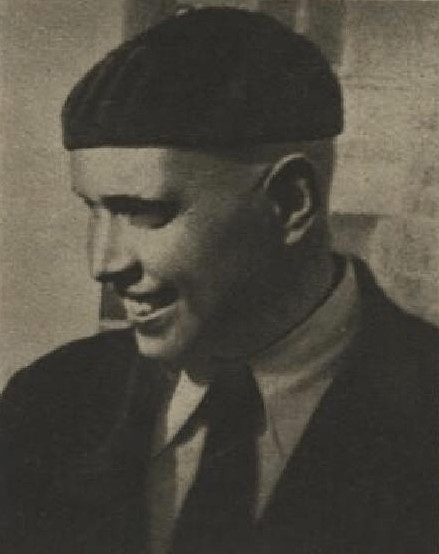
    Karel Hartig was born in Sedlčany, near Příbram, in 1833, and trained as a bricklayer, working, amongst other places, on the George of Poděbrady / Jiří z Poděbrad barracks, which we now know better as the Palladium shopping centre.

    In 1865, he married one Amálie Stomeová, whose parents owned a good bit of land, including the farmstead described here: https://whatsinapraguestreetname.com/2022/11/19/prague-3-day-13-prazacka/.

    Hartig bought these up, as well as neighbouring land, building houses on what was then the Vienna Road (Vídeňská cesta). This is considered to be the moment at which Žižkov was founded.

    In 1869 – 500 years after the birth of Jan Hus – Hartig had a flagpole placed on Vítkov Hill – a deed which got him a ten-day prison sentence, ultimately quashed on appeal.

    In 1875, Royal Vinohrady (Královské Vinohrady) split into two – Královské Vinohrady I (today’s Žižkov) and II (today’s Vinohrady). Hartig became the first mayor of the former in 1876 (it officially became known as Žižkov a year later).

    In 1878, the Civic Credit Union, which Hartig had founded, went bankrupt, an event which would ultimately force Hartig to resign his position (and move to Vinohrady).

    However, in 1882, he was responsible for the creation of a monument to Jan Žižka on Vítkov Hill (https://whatsinapraguestreetname.com/2022/12/04/prague-3-day-106-u-pamatniku/).

    And, if you haven’t already guessed, it was Hartig who was behind the naming of so many of the streets round here after Hussites (insert any number of links to previous posts here).

    But what’s really interesting is that Hartig was the first to decide that street signs should be in the national colours, red and white. An idea which eventually spread to the whole of Prague.

    As of yesterday, my gym, favourite barista, nearest tram stop and potraviny that I always have to go to to pick up packages are no longer in a street named after a Soviet general who didn’t give a toss about the Czechs. This is a good thing.

  • Originally published on Twitter on 17 May 2023.

    Dagmar Burešové was definitely built in 2022 but only given a street sign in the last month in the spring of 2023.

    Dagmar Kubištová was born in Prague in 1929. Her father was a lawyer, and the entire family was strongly anti-communist.

    In 1950, she married a paediatrician, Radim Bureš, and moved to his family’s villa in Střešovice. Two years later, she graduated from Charles University’s Faculty of Law.

    Specialising in labour law, she represented people who had been prosecuted by the communists, including Milan Kundera and, most famously, Libuše Palachová, mother of Jan Palach: https://ct24.ceskatelevize.cz/clanek/domaci/palachovu-matku-jsem-hodiny-ubezpecovala-o-vyznamu-janova-cinu-rikala-dagmar-buresova-71265

    This went down somewhat predictably with the authorities, who confiscated Burešová’s passport and hindered her daughter’s education.

    After the Velvet Revolution, Burešová became Minister of Justice, holding the role until the first free elections in June 1990.

    If you scroll to 5:57, you can see her explaining the meaning of Havel’s general amnesty to the nation on New Year’s Day 1990:

    During her tenure, she advocated for the presidents of the nine regional courts, initiated the release of private letters written by Milada Horáková, and tried to push for the publication of names of those who had served in the StB.

    From 1990 to 1992, she was chair of the Czech National Council; she also ran in the senate elections in 1996 (in Prague 4), ultimately losing to the ODS candidate.

    From 1998 to 2003, she was the chairwoman of the Czech-German Fund for the Future (Česko-německý fond budoucnosti), whose projects aim to build links between the two countries: https://www.fondbudoucnosti.cz/

    Bedridden after a fall in 2010, Burešová died in 2018, aged 88 and still living in the same Střešovice villa that she had moved into in 1950: https://www.irozhlas.cz/zpravy-domov/dagmar-buresova-smrt-jan-palach_1807021059_sam

    Meanwhile, the law practice that she ran until 1989 continues to be run by her daughter, Zuzana Špitálská: https://www.akspitalska.cz/

    Hořící keř (Burning Bush), a three-part HBO mini-series directed by legendary Polish filmmaker Agnieszka Holland, was produced in 2013 and is based on Burešova’s defence of Libuše Palachová.

    It’s still available to stream on HBO.