What's in a Prague street name

Every street in Prague, one by one.

  • Originally published on Twitter on 12 October 2022.

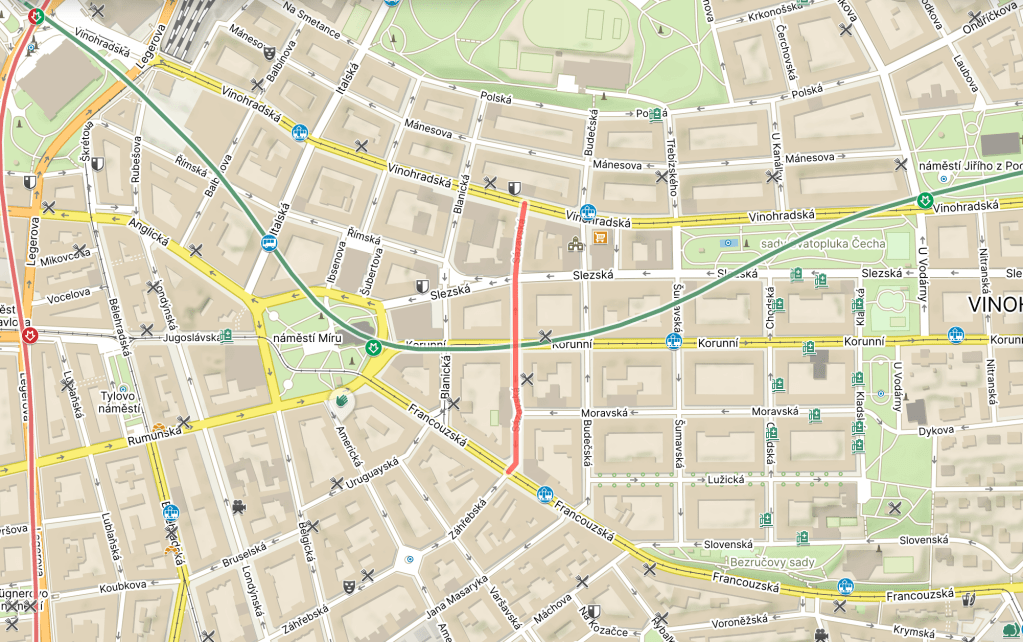
    Horní Stromka was built in 1925. There’s no street sign (more on that later).

    For the story of Horní Stromka, please go back 24 hours to https://whatsinapraguestreetname.com/2023/03/08/prague-3-day-171-v-horni-stromce/.

    One thing I’ve learned in the last 172 days (don’t worry, there aren’t that many to go) is that whoever erects street signs in Prague has decided to keep them to a minimum.

    So, whereas in some countries, you’d have street names on both sides of the road, at the top of the road, at the bottom of the road, etc., a smaller Prague 3 street will typically only have one sign.

    On the plus side, this has meant that I’ve walked quite a lot of steps to take all these pictures.

    On the minus side, it means that some streets that are only partially in Prague 3 don’t have a single street sign to document this fact (one example is Pernerova: https://whatsinapraguestreetname.com/2022/11/30/prague-3-day-103-pernerova/.

    But Horní Stromka and V Horní Stromce take the economical approach to street signs to a whole new level.

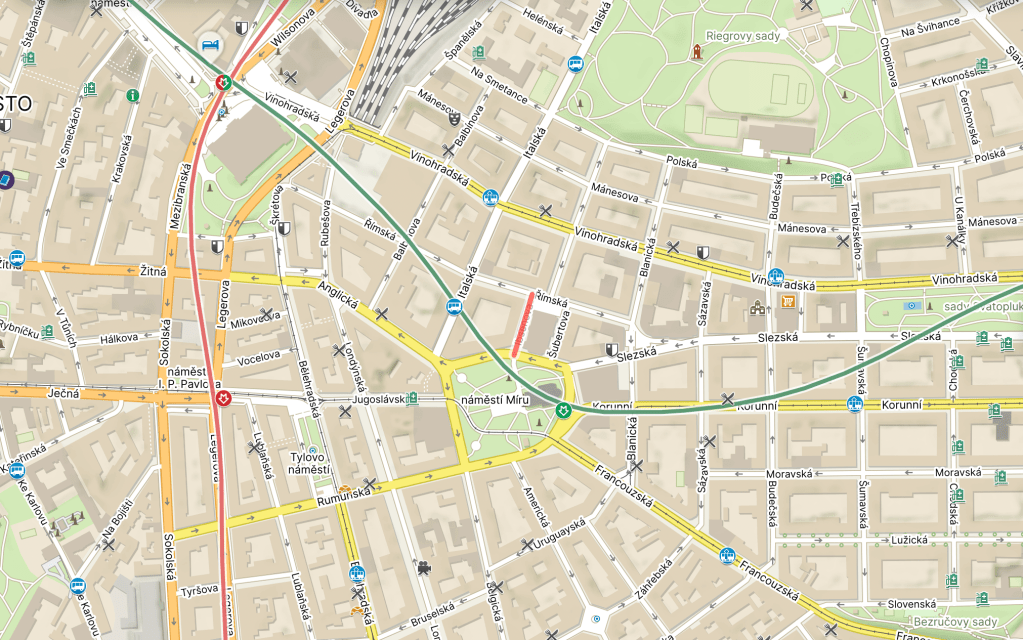
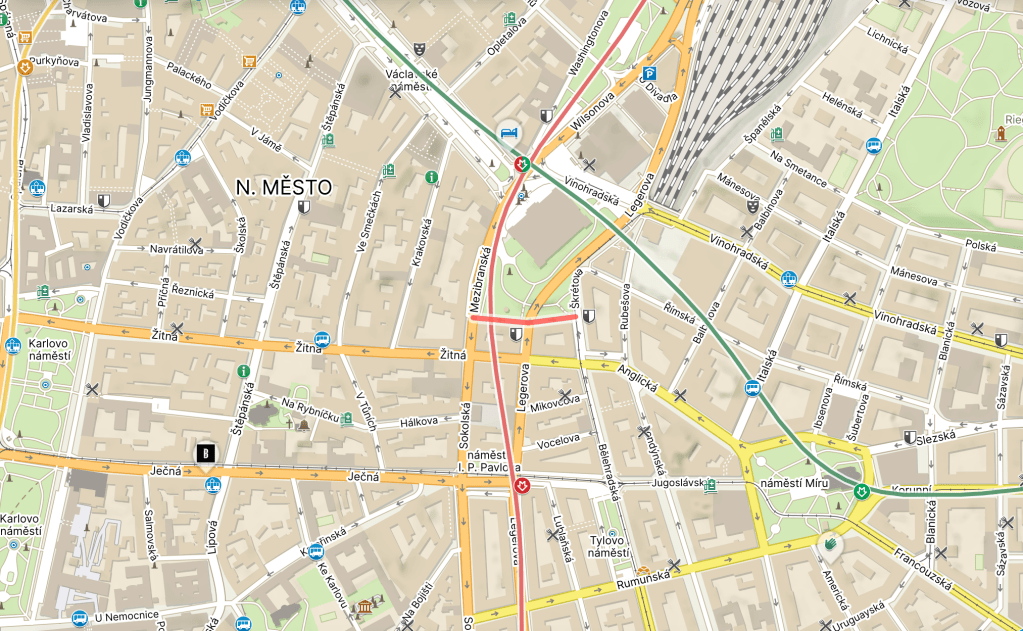
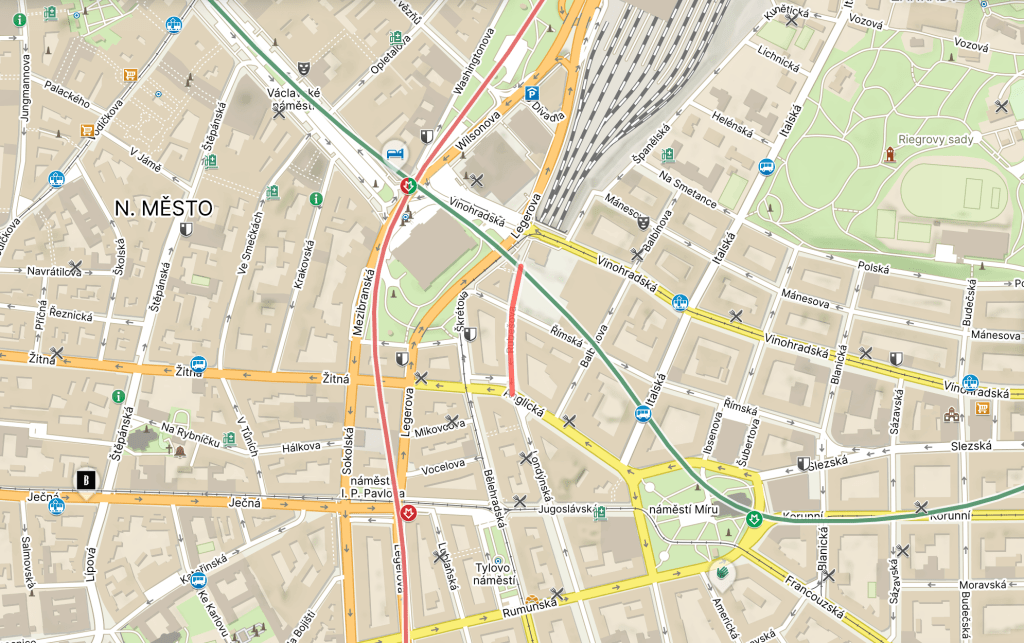
    Google Maps states that Horní Stromka and V Horní Stromce are located as follows, as does my atlas.

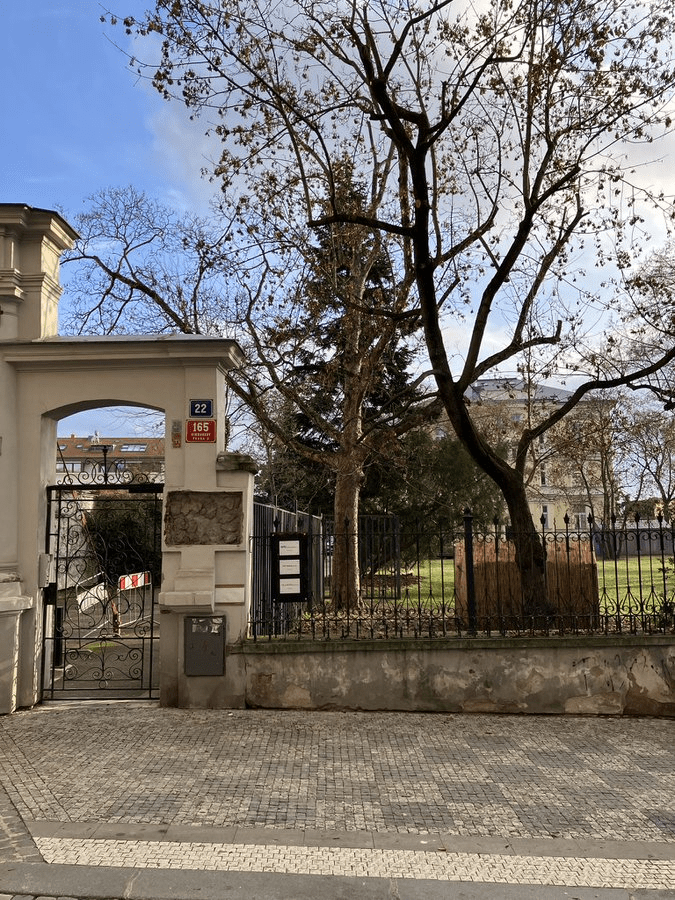
    But there is no street sign for ‘Horní Stromka’ (that I saw – feel free to correct me).

    *And* the sign for V Horní Stromce… seems to be located on Horní Stromka.

    I guess GPS has made all this less of an issue, but I can imagine some *really* aggressive ‘Kde sakra jsi’-type text messages occurring before we all had smartphones.

    And I assume this is also still the source of some of the lower ratings on Uber.

  • Originally published on Twitter on 11 October 2022.

    V Horní Stromce was built in 1935.

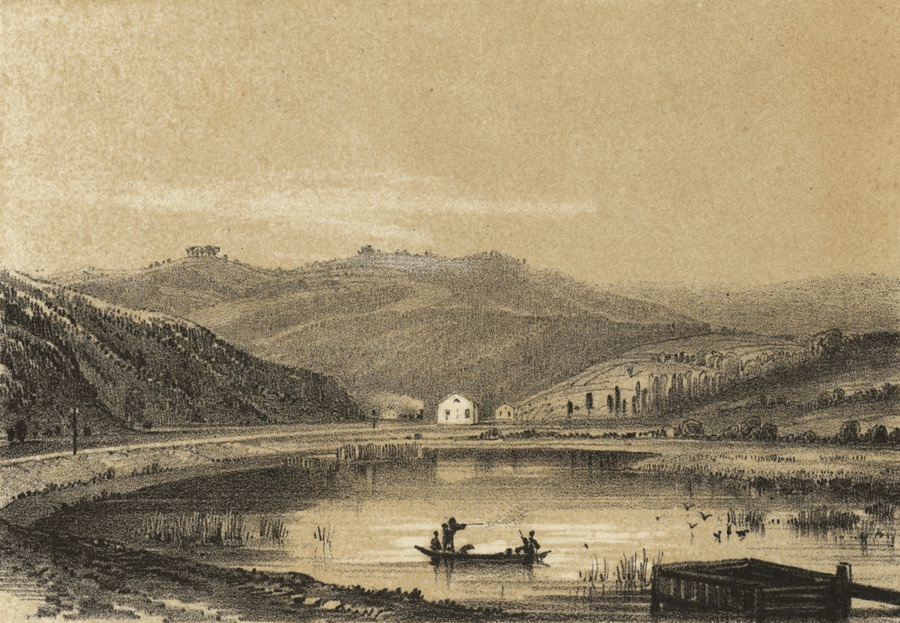
    Horní Stromka (‘Upper Tree’) was an estate that appeared in this location around the 16th century. In 1723, it was purchased by a married couple called the Svobodas.

    In 1757, during the Seven Years’ War, the homestead was devastated during the Prussian siege of Prague. It was restored and improved on in the early 19th century.

    In 1833, two businessmen, Josef Eduard Krug and Josef Bärenreuter, set up a sugar factory and offices here.

    In 1895, the estate was purchased by the Vinohrady Credit Union, which sold parts of the land to expand Olšany Cemetery and start building Vinohrady Hospital (https://whatsinapraguestreetname.com/2023/03/02/prague-3-day-165-u-vinohradske-nemocnice/).

    The farm was fully demolished some time after 1945. A picture of it in 1928 can be found on https://pamatky.praha.eu/public/78/1a/c6/1008582_140342_Horni_Stromka_1928.jpg.

  • Originally published on Twitter on 10 October 2022.

    Kouřimská was built in 1925.

    Kouřim is *another* small town (1,900 people) in the Kolín district.

    The name is one accent mark away from being ‘kouřím’ (meaning ‘I smoke’), and, according to legend, Bohemian prince Lech (died 805) lit a fire here to let his ancestor Čech know that he had founded the settlement.

    Stará Kouřim (Old Kouřim) was established in the 7th century, disappearing in the 10th.

    It’s likely that modern-day Kouřim was founded by Václav I or by Přemysl Otakar II.

    Around 1500, the town had 2,000 inhabitants (i.e. more than today) and significant prosperity; this declined with the Habsburg takeover, with the town being virtually destroyed in the Thirty Years’ War.

    Kouřim didn’t really benefit from industrialisation, and wasn’t connected to anywhere else by rail until 1882.

    However, its resulting time-wrap nature makes it a popular location for filming ads, TV series and films.

    Here, meanwhile, is a documentary about the town, made in 1954:

  • Originally published on Twitter on 9 October 2022.

    Zásmucká was built in 1935.

    Zásmuky is a town of 2,100 people, 16 km to the south-west of Kolín, first mentioned in 1285.

    Originally owned by the Zásmucký family (originally enough), it was acquired by the Šternberk clan, one of the oldest Bohemian noble families, in the 17th century.

    Adolf Vratislav ze Šternberka founded a Franciscan monastery here in 1694.

    In 1948, the Šternberks were deprived of their property, and the town’s castle was used by the army. The Šternberks got their property back in 1992.

    Not to suggest that my muted enthusiasm for this batch of named-after-towns streets is justified or anything, but, if you search for news articles about Zásmuky on Google, one of the first ten hits is from 2009.

    But, on the corner of Zásmucká, you’ll find one of Prague 3’s most modern buildings, The Crystal.

    Designed by Czech studio ra15, it’s got 14 floors and certainly stands out (or doesn’t fit in with the surroundings – your vote).

    https://www.archdaily.com/895431/the-crystal-ra15

    Searching Google for ‘crystal Praha’ has turned out to be utterly useless, given I’m not a tourist* and have zero interest in meth.

    * When I’m in Prague, that is – this is actually being posted from an Amtrak train to Santa Barbara, where I will very much be a tourist.

  • Originally published on Twitter on 8 October 2022.

    Votička was built in 1925.

    Votice is a town of 4,500 people in the Benešov District, about 60 km from Prague. It’s within a mountainous region known as ‘Česká Sibiř’ / ‘Czech Siberia’.

    It was first mentioned in writing in 1359, but had probably existed for over two centuries before that.

    In the 1530s, a Jewish community set itself up in the city, which became a major trading centre, especially in salt.

    In March 1942, Jews from Benešov were evicted to Votice. On 1 September, the Jews of Votice were deported to Terezín.

    The majority were murdered at Malé Trostinec on 10 September 1942. Less than one in ten survived.

    The Votice Synagogue was destroyed in 1949.

    The Jewish Central Library has a nice, if heartbreaking, one-paragraph summary of Votice’s Jewish community: https://jewishvirtuallibrary.org/votice

    And there are some pictures of the synagogue and the Jewish quarter here: http://zanikleobce.cz/index.php?obec=9943

  • Originally posted on Twitter on 7 October 2022. There is no day 166, because day 166 on the Twitter version was a spoof post which… well, I don’t feel it particularly landed at the time, and you *really* had to be there for it to even start landing. Anyway, moving on.

    Šrobárova was built in 1889.

    It was part of Korunní (coming soon enough) until 1947.

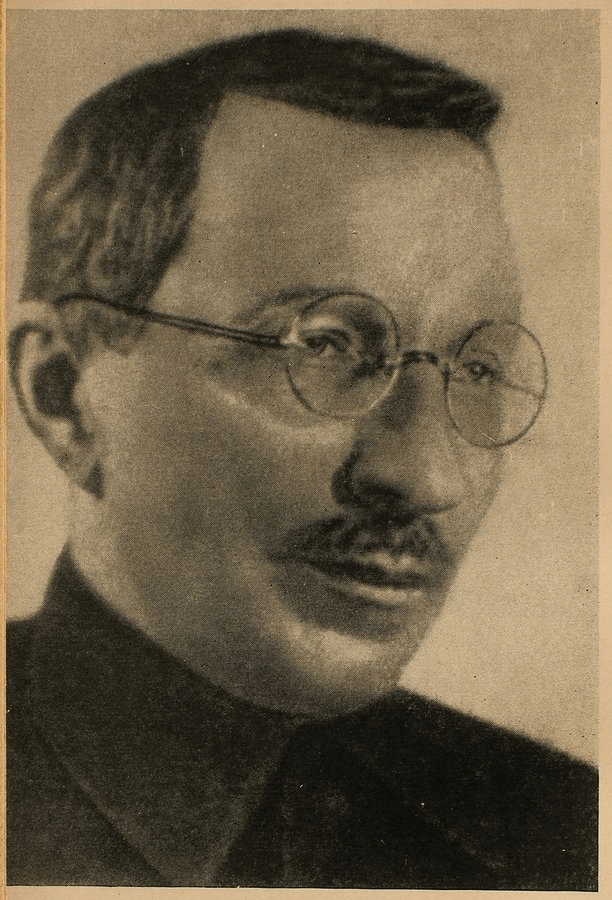
    Vavro Šrobár was born in 1867 in Lisková (now in north-central Slovakia), one of twelve children.

    After graduating from the gymnasium in Přerov in 1888, he moved to Prague to study medicine at Charles University.

    When in Prague, he chaired the student organisation Detvan and became a follower of Tomáš Garrigue Masaryk.

    From 1898, he started publishing the magazine Hlas (Voice), which was highly critical of Hungarian rule.

    After running for a seat in the Hungarian Parliament in 1906 (along with Andrej Hlinka), he was imprisoned for a year in Szeged for provocations against the Hungarian nation.

    During WW1, Šrobár became involved in the Czechoslovak National Council, which had been set up to liberate the Czechs and Slovaks from Austria-Hungary.

    When the Czechoslovak proclamation of independence was read out in Prague on 28 October 1918, he was the only Slovak signatory.

    He then became Minister of Health for Czechoslovakia, and was also responsible for the administration of Slovakia as a whole.

    From 1921-2, he was Minister of Education and National Enlightenment; after this, he took a post lecturing at the Medical Faculty of Charles University.

    During WW2 and the establishment of the pro-Nazi Slovak State, Šrobár took part in the anti-fascist resistance, albeit not as one of its leading figures.

    He became co-chair of the Slovak National Council in 1944, and, when the war ended, was appointed Czechoslovak Minister of Finance (until 1947).

    He then became minister for the unification of laws, even after the Communist coup d’état in 1948.

    He died in Olomouc in 1950 and is buried in Bratislava.

    It makes sense that Vinohrady Hospital is located in this street, given Šrobár’s connection to medicine and Charles University.

    His contribution to the creation of Czechoslovakia cannot be denied either.

    On the other hand, it’s somewhat surprising to see a street named after somebody who clearly didn’t stand up to the Communists, and who, based on this quote from Slovak Wikipedia, was pretty damn anti-Semitic.

  • Originally published on Twitter on 5 October 2022.

    U Vinohradské nemocnice was built in 1925 and translates as ‘By Vinohrady Hospital’.

    What is now known as the University Hospital of Královské Vinohrady (Fakultní nemocnice Královské Vinohrady) was opened in 1902, and, a year later, was named ‘Všeobecná veřejná nemocnice císaře a krále Františka Josefa’. Catchy.

    I obviously couldn’t fit an English translation of that into the previous tweet, so here you go now: General Public Hospital of Emperor and King Franz Joseph I, Vinohrady and Žižkov District.

    After Charles University set up its Faculty of Medicine in 1953, the hospital became a place to teach students.

    Not particularly up-to-date data suggest 2,500 employees, almost 1,300 beds and about 50,000 patients per year.

    The most famous recent name associated with the hospital is probably Petr Arenberger, who was the hospital’s director from October 2019 until January 2022, but was also one of the 3,297,536 health ministers that the Czech Republic had in 2020 and 2021.

    In his less than two months in office, Arenberger had to announce he hadn’t been an StB agent, appeared to be a Sputnik fan, and came under fire for dissolving the Covid advisory group which had been critical of the government’s policies.

    A tabloid dream, but nobody else’s.

    And then, alleged irregularities concerning property declarations came up. After 49 days, it was announced that it was time for Adam Vojtěch: The Return (now with added vaccinations).

    This all happened about 18 months ago and it feels like a different lifetime.

    Arenberger claims he was dismissed from his position as director of the hospital by current Health Minister Vlastimil Válek in January 2022 *after* (and because) he gave in his resignation.

    Válek does not: https://www.seznamzpravy.cz/clanek/domaci-politika-exministr-arenberger-konci-jako-reditel-vinohradske-nemocnice-186422

  • Originally published on Twitter on 4 October 2022.

    Soběslavská was built in 1925.

    Soběslav is a town of 6,800 inhabitants, 18 kilometres south of Tábor in South Bohemia. It was first mentioned in 1293, when its castle and surroundings belonged to the wealthy Rosenberg family.

    Key historical events include Václav IV (https://whatsinapraguestreetname.com/2023/02/26/prague-3-day-153-lucemburska/) being imprisoned in the castle in 1394, just four years after Soběslav gained city rights.

    During the Hussite Wars, Soběslav was burned down in both 1431 and 1435.

    In the 16th century, it was owned by Peter Vok of Rožmberk and became the economic centre of South Bohemia.

    After Czechoslovakia was created, the Lada sewing machine company was set up here; the town also hosted various companies during communism, including the furniture company Jitona.

    Soběslav has a slightly early-00s-looking website, but with some nice pics: https://musobeslav.cz

    And what claims to be a webcam but is actually the most recent shot from that webcam. Also, either their clock is four minutes fast or mine is four minutes slow. https://musobeslav.cz/infocentrum/o-sobeslavi/webova-kamera/

    While a residential building in Soběslavská (the street) was recently the scene of an explosion caused by ‘accumulated vapours after the installation of mounting foam’: https://www.blesk.cz/clanek/regiony-praha-praha-zpravy/715928/pary-z-montazni-peny-zkrat-a-v-rana-v-dome-na-vinohradech-to-bouchlo-dva-muzi-se-popalili.html.

  • Originally published on Twitter on 3 October 2022.

    Hollarovo náměstí was built around 1925, remaining nameless until 1955.

    Václav Hollar was born to a wealthy family in Prague in 1607. An artist from a young age, he was introduced to the practice of engraving when he was 18.

    In 1627, he left Bohemia and moved to Germany, though, unlike many of those who fled at the time (i.e. only seven years after Bílá Hora), it seems this was more because of employment opportunities than religious persecution.

    In 1636, he caught the attention of Lord Thomas Howard of Arundel, and moved to London shortly after, working as an artist for Arundel, but also for various authors and publishers.

    In 1641, Hollar married chamberlain Margaret Tracy, and met Jan Amos Comenius (https://whatsinapraguestreetname.com/2022/11/26/prague-3-day-82-komenskeho-namesti/), who was also living in England at the time.

    The English Civil War broke out a year later, and Hollar entered the service of the Royal Family. Captured by parliamentary forces in 1645, he managed to escape to Antwerp.

    Here’s one of his etchings of Grand-Place in Brussels.

    He returned to London in 1652 and lied near Temple Bar. Despite being so prolific, he died in desperate circumstances in 1677.

    He’s buried at St Margaret’s Church in Westminster.

    The art school on the square bears his name. It’s colloquially known as ‘Hollarka’, because Czechs do this (as they should): https://hollarka.cz

    The University of Toronto has an online collection of Hollar’s works: https://hollar.library.utoronto.ca/

  • Originally published on Twitter on 2 October 2022.

    U Vinohradského hřbitova, built in 1925, translates as ’By the Vinohrady Cemetery’.

    Vinohrady Cemetery was built in 1885, and was mainly used for the burial of upper-class Prague citizens.

    It was expanded over the next forty years, and is now the second-largest cemetery in Prague in terms of burials (after Olšany).

    The Cemetery also hosts Strašnice Crematorium, the largest in Europe by area.

    While it’s a cultural monument these days, both the Nazi and Communist regimes used the Crematorium to burn the victims of show trials, police torture and executions.

    The director of the crematorium, František Suchý, kept a list of all those who were cremated – which, in 1952, would lead to the communists sentencing him to 25 years in prison.

    A park in Strašnice is now named after him.

    Victims of the Nazis who were cremated here include Bishop Gorazd (Matěj Pavlík), writer Vladislav Vančura and general Josef Mašín.

    Victims of the communists who were cremated here include Emil Hácha, president of Czechoslovakia at the time the Protectorate was set up, and Milada Horáková.

    The Havel family has a family vault here. Václav Havel’s ashes are buried there, as is his first wife Olga.

    The City of Prague put some footage of the grave here, shortly after Havel’s death:

  • Originally published on Twitter on 1 October 2022.

    Vinohradská was built long enough ago for people to not know the exact year.

    Caution: multiple name changes coming.

    It was originally called Říčanská, as it led to Říčany in modern-day Prague-East (reputedly the best place to live in the country, or so says the Quality of Life Index: https://obcevdatech.cz/en/ricany).

    Around 1873, it became Černokostelecká silnice, as it also led to what is now known as Kostelec nad Černými lesy (‘Fortified Church upon the Black Forests’, because this country is awesome), also now in in the Prague-East district.

    From 1884 to 1920, it was Jungmannova, after Josef Jungmann  (1773-1847), poet, leader of the Czech National Revival and the man often credited with creating the Czech language as we know it today.

    Then, from 1920-40, and 1945-6, it was Fochova, after Ferdinand Foch, French Supreme Allied Commander during WW1, who was present at the Armistice and complained that the Treaty of Versailles was too lenient on Germany.

    Which leads to the very unsurprising news that the Nazi occupiers changed the name (to Schwerinova, after Kurt Christoph von Schwerin (1684-1757), a Prussian Generalfeldmarschall who was killed in the Battle of Prague (Štěrboholy) during the Seven Years’ War).

    From 1946 to 1962, it was Stalinova. I’m not going to give a potted biography but am going to say this: what a c**t.

    Vinohradská is obviously named after Vinohrady, which itself is named after the many vineyards the district used to contain.

    The most well-known building is probably Český rozhlas / Czech Radio at number 12 (do subscribe to #Vinohradska12 if you’re a Czech speaker, and https://english.radio.cz/newsletter/subscribe… / @RadioPrague if you’re not).

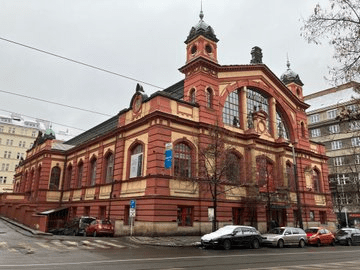
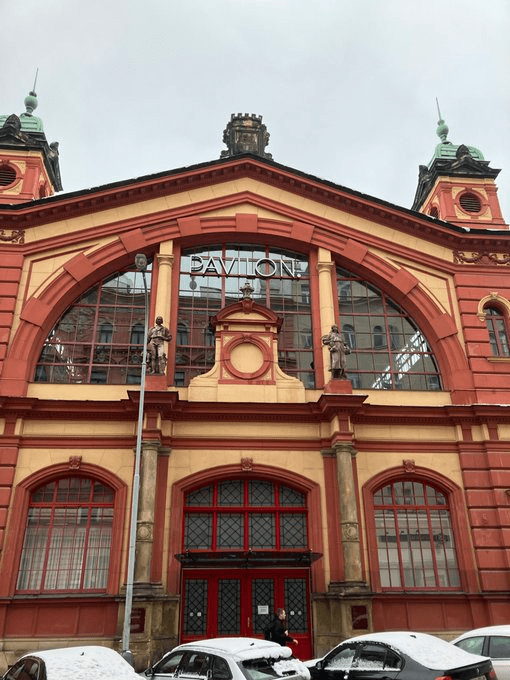
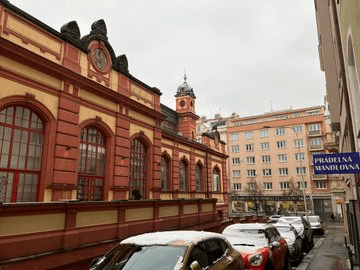
    Whereas the most useful but definitely not the nicest is often Atrium Flora, and I have a real soft spot for Vinohradská tržnice (AKA ‘the really stylish Albert’) at number 50.

  • Originally published on Twitter on 30 September 2022.

    Pod židovskými hřbitovy was built in 1981 (like me).

    Another belated ‘oh, that’s Prague 3’ moment – the only street sign says otherwise, but the northernmost part of the short street is actually in the district.

    The street name translates as ‘Under the Jewish Cemeteries’, and that’s exactly where we are – here’s the previous thread about Izraelská: https://whatsinapraguestreetname.com/2022/11/28/prague-3-day-99-izraelska/.

    Though there’s been a significant and overdue event involving Prague’s Jewish cemeteries since that thread: https://www.theguardian.com/world/2022/sep/07/broken-jewish-tombstones-used-to-pave-czech-square-made-into-memorial.

    Although that monument is actually located at Prague’s *old* Jewish cemetery, which is now the location of the Žižkov Television Tower.

  • Originally published on Twitter on 29 September 2022.

    Novovysočanská was built in 1906.

    We’re at the ‘streets I didn’t realise were partially in Prague 3 / Žižkov’ stage of things.

    In my defence, there isn’t actually a single street sign in the Prague 3 part of Novovysočanská, and this pic is the nearest I can get to one.

    Until 1931, the street was called Žižkova; in 1940, it took over a street called Trocnovská (not https://whatsinapraguestreetname.com/2022/11/30/prague-3-day-102-trocnovska/).

    The street was also called 5. května (5 May), a reference to the start of the Prague Uprising, for a brief time after WW2.

    Nové Vysočany is the south-western part of Vysočany, a separate town between 1902 and 1921, before it was incorporated into Prague. It’s directly north of Na Balkáně (https://whatsinapraguestreetname.com/2022/11/19/prague-3-day-39-na-balkane/).

    Vysočany has traditionally been an industrial area. On 25 March 1945, it was hit by an Allied air raid, which killed 400 people and damaged several factories and the historic fortress: https://www.vhu.cz/exhibit/nasledky-americkeho-naletu-na-prahu-z-25-brezna-1945/ and https://ct24.ceskatelevize.cz/veda/3066916-lidem-hruzou-sedively-vlasy-a-umirali-v-polich-nalet-na-prahu-pred-75-lety-zanechal.

    Nové Vysočany is also the name of a building development, aiming to improve the fairly empty areas that are still around here despite the nearby presence of the O2 and the Harfa shopping centre: https://www.blesk.cz/clanek/regiony-praha-praha-zpravy/693365/nove-centrum-vysocan-namesti-emila-kolbena-vznikne-u-o2-areny-obklopi-ho-byty-i-skoly.html

    For Czech speakers, here’s a more interesting story about a new street name than anything I’ve managed to write above: https://www.forum24.cz/dalsi-hrdinove-heydrichiady-maji-v-prazskych-vysocanech-svoji-ulici/.

  • Originally published on Twitter on 28 September 2022.

    Jičínská was built in 1910.

    Jičín is a town of 16,000 people in the Hradec Králové Region. Initially a royal town, Jan Lucemburský sold it to the Vartenberk family in 1337.

    It really started to expand in 1621, when it was purchased by the military leader Albrecht von Wallenstein (who fought on the victorious Catholic side at Bílá Hora the year before).

    Wallenstein / Valdštejn chose Jičín as the capital of his de facto sovereign Duchy of Friedland (Frýdlantské vévodství). He called in Italian architects to make improvements to the city.

    After his death, the city was looted by the Swedes and forcibly re-Catholicised.

    The 19th century saw the city become one of the centres of the Czech National Revival (František Ladislav Rieger taught at the gymnasium here), and also saw a key battle of the Austro-Prussian War in 1866.

    During the 1968 invasion, a drunk Polish soldier shot dead a man and a woman in the centre of town: https://zpravy.aktualne.cz/zahranici/jicinsky-masakr-je-hanbou-okupantu-polak-v-roce-1968-zavrazd/r~191b3b9e68a411e89b0fac1f6b220ee8/.

    Afterwards, Soviet troops used the city’s Jesuit college as a base until 1991, and didn’t exactly care about its upkeep.

    The city has a very nice website which makes me quite want to spent a weekend there next time the weather’s good: https://www.jicin.org/en/discover-jicin.

  • Originally published on Twitter on 27 September 2022.

    Olšanské náměstí was built in 1910.

    For the story of Olšany, the village that was once located here, I’m going to take you to https://whatsinapraguestreetname.com/2022/11/22/prague-3-day-73-olsanska/.

    Until 1930, the square was called Radešínovo náměstí, after Vilém z Radešína, who owned Olšany from 1546.

    For the story of why it looks so damn 1970s round here, I’m going to take you to https://twitter.com/ed__ley/status/1571098077066567680… (not technically part of this series, and so not on the website).

    I don’t want to accuse this square of being uninteresting or anything, but Czech Wikipedia, trying to list important landmarks, mentions two addresses, and one of them is a branch of Tipsport.

    But it looks like the area might be about to get a bit of a kick up the ass: https://cc.cz/zanedbane-olsanske-namesti-ma-chytit-novy-dech-s-opravou-dvou-panelaku-pruchod-jednoho-doplni-obchody/.

  • Originally published on Twitter on 26 September 2022.

    Sudoměřská was built in 1898.

    It was originally called Sudoměřická until 1958, when it was changed on the grounds that Sudoměřská is the grammatically correct adjective for something from Sudoměř, and Sudoměřická… is not.

    These days, Sudoměř is a village which is part of the municipality of Čejetice in Southern Bohemia.

    On 25 March 1420, it was the site of a battle between Catholics (Royalists) and Hussites, the first major battle of the Hussite Wars.

    The latter, led by Jan Žižka, were outnumbered five to one, and less well equipped.

    However, the Catholic side got caught in the marshland and the Hussites were able to finish them off. The Hussite forces escaped later that day.

    Sudoměř is now the site of a pretty awesome statue, made in 1925 by Emanuel Kodet, to commemorate the battle: https://cs.m.wikipedia.org/wiki/Bitva_u_Sudom%C4%9B%C5%99e#/media/Soubor%3APam%C3%A1tn%C3%ADk_Jana_%C5%BDi%C5%BEky_u_Sudom%C4%9B%C5%99e_(2).JPG.

    Fans of military reenactments will enjoy the last few seconds of this piece, filmed at the statue on the battle’s anniversary earlier this year: https://taborsky.denik.cz/zpravy_region/video-u-sudomere-opet-valcili-husite-stejne-jako-pred-602-lety-20220326.html

    And here’s how the battle was filmed in 1955 as part of Otakar Vávra’s Hussite trilogy:

  • Originally published on Twitter on 25 September 2022.

    Baranova was built in 1885.

    It was named Vratislavova until 1940 and again from 1945 to 1947, after Vratislav II, who is in this bumper here’s-all-the-Přemyslids-thread from a few days back: https://whatsinapraguestreetname.com/2023/02/26/prague-3-day-152-premyslovska/.

    It was then called Habánská from 1940 to 1945, after the Habaners, the Hutterites (that’s a branch of Anabaptists) who moved to Slovakia in the 16th century.

    These days, almost all Hutterites live in Western Canada and the Great Plains.

    Kurt Baran was born in 1899 to a Jewish, German-speaking family in Brno. He met his wife-to-be, Marie Baranová, during a strike against Sunday work.

    In 1921, Baran became a paid functionary of the Communist party. He married Marie in 1925, and the couple moved to current-day Radhošťská (https://whatsinapraguestreetname.com/2023/02/26/prague-3-day-149-radhostska/).

    After the communist party was banned, Baran went to work for an advertising agency which was actually a front for communist activity.

    The Nazi occupiers arrested the illegal communist leadership in February 1940. Kurt and Marie were among those betrayed to the authorities.

    Baran was sent to Terezín, then Dachau, then Mauthausen, where he died, supposedly of heart failure, on 28 October 1941. He was 42.

    His daughter Vlasta suffered a similar fate in Bergen-Belsen in 1945, succumbing to meningitis at the age of 19.

    Marie survived WW2, and worked for the communist party afterwards before being expelled from it in the 1970s.

    Kurt Baran is the most obscure person I’ve written about so far. This doesn’t feel entirely right.

    This post is based on the recollections of Elly Jouzová, the Barans’ other daughter, who is still resident in Žižkov today. A great read: https://www.pametnaroda.cz/cs/magazin/pribehy/naciste-ji-vzali-nejblizsi-po-otci-pojmenovali-ulici-pribeh-elly-jouzove.

    The main picture in that link is a photo of the family on what was presumably their last holiday together in 1939.

  • Originally published on Twitter on 24 September 2022.

    Jagellonská was built in 1896.

    Continuing (and ending) this trilogy of streets, the Jagiellonian dynasty was founded by Jogaila, Grand Duke of Lithuania, in 1386.

    In their time, they ruled Poland, Lithuania, Hungary and Bohemia.

    The dynasty is known as the Jagiellonowie, the Jogailaičiai, the Jagelló and the Jagellonci in the respective languages.

    They lasted longest in Poland (186 years), compared to 40 years (over two stints) in Hungary and 55 years in Bohemia.

    So here goes with both the Jagiellonian kings of Bohemia. The first reign is far too eventful to fit into one tweet, but oh well.

    Vladislav Jagellonský (1471-1516): clashed with Pope and Hungarian claimant to throne, Matthias Corvinus. Liked peace and consensus, which made him look weak because nobody else did. Reign included much Hussite-vs-Catholic and towns-vs-nobility squabbling.

    Ludvík Jagellonský (1506-26): mainly lived in Hungary (like dad). Visited Bohemia once, cf that expat acquaintance we all have who claims to live here but has been once since 2020 to ‘sort things out’.

    Died in Battle of Mohács against Ottomans in 1526. Aged 20. Childless.

    Enter the Habsburgs. Who don’t have a street named after them here, despite, or perhaps because of the fact that these three were built during the reign (they presumably weren’t ready to be historical figures or a past dynasty yet).

    In Poland, the Uniwersytet Jagielloński (UJ) in Kraków is Poland’s oldest and most prestigious university, and Jagiellonia Białystok  is a premier league football team.

  • Originally published on Twitter on 23 September 2022.

    Lucemburská was built in 1896.

    The Lucemburkové, or the House of Luxembourg, or D’Lëtzebuerger Haus if you really want to be like that about it, ruled as Kings of Germany, Holy Roman Emperors, and Kings of Bohemia (and Hungary, and Croatia).

    Luckily, it’s a much shorter list than yesterday.

    Jan Lucemburský / John the Blind / Jang de Blannen (1310-46): clashed with the nobles, to their advantage, and got bored of Bohemia and its intrigues as a result. Died in battle at Crécy, aged 50 and already blind for a decade.

    Karel IV (1346-78): son of Jan. Smart. Important. Got the nobles on side. Got Prague bishopric elevated to archbishopric. Became Holy Roman Emperor. Founded Prague Old Town. Karlštejn / Karlovy Vary / Charles Bridge / Charles University / many Charles Squares.

    Václav IV (1378-1419): son of Karel, who spoiled him. Fence-sitter in papal schism. Dethroned as German king in 1400. Squabbled with the nobility, his brothers, and the chancellor. Probable alcoholic. Apparently died of shock at Hussites (https://whatsinapraguestreetname.com/2022/11/19/prague-3-day-23-jana-zelivskeho/).

    Zikmund Lucemburský (1419-37): except all the Hussite wars and stuff meant he couldn’t really rule until 1436. And had to reluctantly bow to Hussite demands (but got a few mutineers killed too).

    Left no sons. End of the line.

  • Originally published on Twitter on 22 September 2022.

    Přemyslovská was built in 1896.

    The Přemyslid dynasty ruled Bohemia from the mid-9th century until 1306.

    So here’s a very abbreviated and yet really quite long guide to all the ones who ruled.

    Years of rule are often best guesses in the early days.

    Bořivoj I (872-89): Baptised. Banished. Returned. Married to Ludmila.

    Strojmír (883-5): replacement. Brief. Obscure. No pic.

    Spytihněv I (894-915): son of Bořivoj. Castle-lover, Hungary-hater.

    Vratislav I (915-21): brother of Spytihněv. Founded Wrocław. Died fighting Hungarians. Married Drahomíra, who got Ludmila killed.

    Václav I (921-35): son of Vratislav. Last looked out. Saintly. Don’t forget 28 September is a holiday.

    Boleslav I (935-72): The Cruel. Brother/possible murderer of Václav. Founded Plzeň.

    Boleslav II (972-99): Son of Boleslav II. The Pious. Founded Diocese of Prague.

    Boleslav III (999-1002, 1003): had his own brother (Jaromír) castrated *and* couldn’t rule for sh*t.

    Jaromír (1003, 1004-12, 1033-4): castrated by one brother, blinded by another (Oldřich). Poor sod.

    Oldřich (1012-33, 1034): Regained Moravia. Knob (see above).

    Břetislav I (1034-55): son of Oldřich. Regained Wrocław. Banned polygamy. Died when about to invade Hungary.

    Spytihněv II (1055-61): son of Břetislav. Expelled the Germans. Even his mum.

    Vratislav II (1061-92): brother of Spytihněv. Named first King of Bohemia (1085). Which may be why he’s in colour.

    Konrád I (1092): brother of Vratislav. Died 8 months in.

    Břetislav II (1092-1100): son of Vratislav. Hated pagans. Assassinated in the woods. Smirky pic.

    Bořivoj II (1100-07, 1117-20): half-brother of Břetislav. Sulked off to Hungary.

    Vladislav I (1109-17, 1120-5): brother of Bořívoj. Stopped Poland from interfering too much.

    Soběslav I (1125-40): son of Vratislav. Defeated Germans at Chlumec.

    Vladislav II (1140-72): son of Vladislav I. Earned title of King. Did crusades. Abdicated. No selfies available.

    Bedřich (1172-3, 1178-89): son of Vladislav. Barbarossa didn’t want him.

    Soběslav II (1173-8): son of Soběslav I. Barbarossa did want him. Got excommunicated.

    Konrád II. Ota (1189-91): son of none of the above. Died of plague while on a Crusade.

    Václav II {1191): son/brother of The Soběslavs. Deposed after three months. Hard to find pics of.

    Přemysl Otakar I (1192-3, 1200-30): King no 3 as per Golden Bull of Sicily. Son of Vladislav.

    Václav I (1230-53): son of Otakar. Repelled Mongols. Into jousting. First king to allow privileges to Jews (for a fee).

    Přemysl Otakar II (1253-78): son of Václav. In charge of much of present-day Austria. Then not. Founded Kaliningrad. Tried to become Holy Roman Emperor. Failed. Died in battle.

    Václav II (1287-1305): son of Otakar I. Initially too young to rule, later also King of Poland *and* Hungary. Died at 33.

    Václav III (1305-6): son of Václav II. Murdered in Olomouc at the age of 16. Killers never identified. End of the Přemyslids.

    Phew.

    Any Přemyslid rulers who I’ve left out or who feel misrepresented are welcome to DM me. Also feel free to comment on which one was the hottest (spoiler: it’s obviously Břetislav II).