What's in a Prague street name

Every street in Prague, one by one.

  • Originally published on Twitter on 21 September 2022.

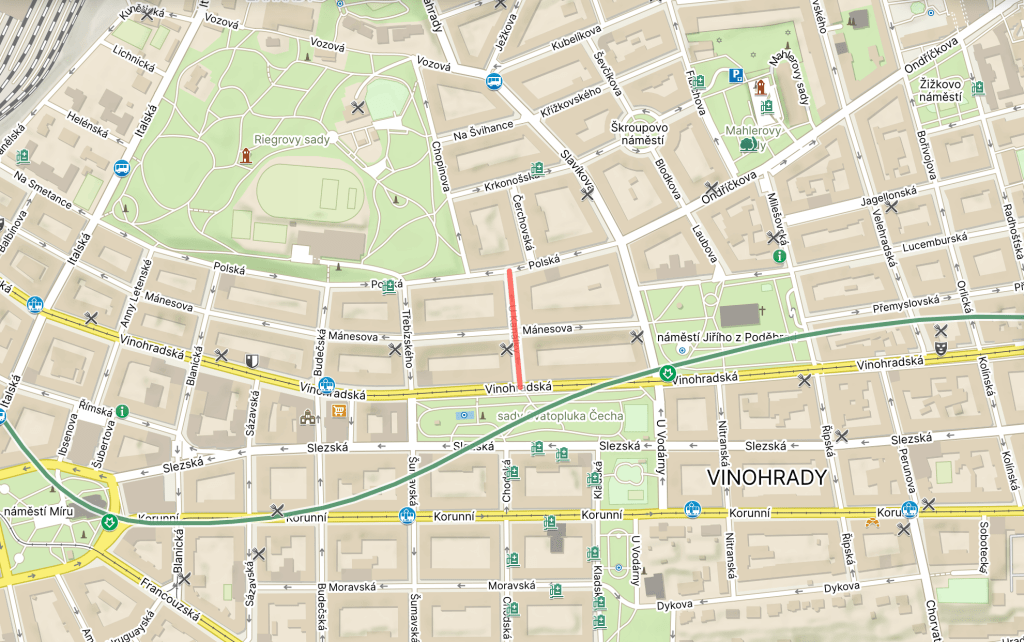
    Křišťanova was built in 1904.

    Křišťan z Prachatic was born in the late 1360s, started studying at Charles University in 1386, and then became a maths lecturer there while also being a parish priest in the Old Town.

    *And* also becoming the University’s dean and chancellor.

    He was a supporter of Jan Hus, whom he visited when Hus was imprisoned in Constance.

    His views became somewhat less radical upon his return, which made him popular with the nobility but not with the Želivský crowd, who raided his parish & forced him to flee Prague in 1427.

    Returning to Prague two years later, he reconverted to Catholicism in 1434, but died of in the plague epidemic in 1439.

    So yes, social media would’ve had a field day trying to draw connections between those two events.

    He was also a prolific writer, mainly known for two volumes about the astrolabe. Here’s an excerpt in his own hand as shown on http://astronomia.zcu.cz/astronomove/kristan/2497-kristan-z-prachatic.

    He also wrote about treatment of the plague (for all the good that did him), bloodletting, arithmetic, astrology, botany and more.

    I get the impression that he would’ve tweeted every 15 seconds and been on 93% of all panel shows if these things had existed back then.

  • Originally published on Twitter on 20 September 2022.

    Žižkovo náměstí was built in 1904, and I’m now wondering how I spin this one out.

    Oh, OK: until 1947, it was Kollárovo náměstí, after Ján Kollár (1793-1852), Slovak poet, pastor, writer and promoter of Pan-Slavism.

    From 1947 to 1958, it was Chelčického náměstí, and you can find out about Petr Chelčický here: https://whatsinapraguestreetname.com/2022/11/24/prague-3-day-78-chelcickeho/.

    This town ain’t big enough for the both of us, so the original Žižkovo náměstí had to be renamed to Tachovské náměstí in 1958: https://whatsinapraguestreetname.com/2022/11/19/prague-3-day-17-tachovske-namesti/.

    Jan Žižka is, at this moment in time but probably not at any other moment, most famous for not being a massive hit in US movie theatres.

    (I haven’t seen the film yet and don’t like to base my impressions on box office results or sales – any feedback from people who have?)

    The square is the home of the Higher Vocational School of Applied Arts and Secondary School of Applied Arts: https://commons.wikimedia.org/wiki/Category:Um%C4%9Bleckopr%C5%AFmyslov%C3%A1_%C5%A1kola_%C5%BDi%C5%BEkov#/media/File:130912_VOSUP_SUPS_Praha_01b.jpg

    I’m comfortable with Czech, but seeing the words ‘Vyšší odborná škola uměleckoprůmyslová a Střední uměleckoprůmyslová škola’ just did something to me and I’m not sure I enjoyed it.

    And the square is another place that will be looking nicer and greener in a couple of years, if all goes well: https://prahain.cz/zivot-ve-meste/zizkovo-namesti-upravi-firma-enviromental-building-4801.html

  • Originally published on Twitter on 19 September 2022.

    Radhošťská was built in 1904.

    Part of Radhošťská used to be a separate street, called Rostislavova from 1920 to 1947, after Rostislav, the second known ruler of Moravia from 846 to 870.

    Before becoming a victim of cancel culture, 1952-street-planning-style, Rostislavova was renamed Tayerlova, after Rudolf Tayerle (1877-1942), a trade unionist and politician for the ČSSD.

    Tayerle was arrested in Akce Albrecht I, a preventive arrest operation by the Gestapo in September 1939, and died in Mauthausen three years later.

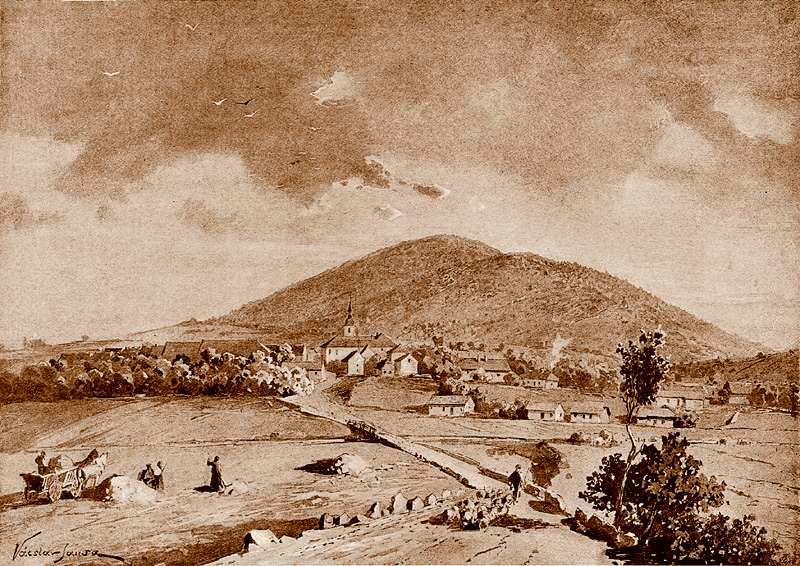
    Radhošť, meanwhile, is a mountain in the Beskydy range, and, according to legend, the seat of the Slavic god Radegast/Radogost.

    However, it’s generally believed that Radegast wasn’t a separate god at all, but was the local name for Svarozhits, the Slavic god of fire.

    Legend has it that Cyril and Methodius (who were obviously in Moravia to tell people to start worshipping Actual God instead of Radegast or Svarozhits or whoever) erected a cross here and banished Radegast forever.

    This is why the peak of the mountain now hosts a cross, a chapel (built in 1898) and a sculpture of Cyril and Methodius (from 1931).

    https://www.turistika.cz/mista/radhost-socha-radegast/detail

    In 1968, Radhošť hosted a camp for Soviet army soldiers. Screw them and their military interventions.

    It’s too early for one of these, isn’t it?

  • Originally published on Twitter on 18 September 2022.

    Ondříčkova was built in 1885.

    Until 1937, this was Břetislavova, presumably after Břetislav I (1005-1055), II (1060-1100) III (died 1197), all Dukes of Bohemia.

    František Ondříček was born on Nový Svět in Hradčany in 1857, and played violin in taverns and cafes as part of his father’s band.

    He graduated from Prague Conservatory in 1876, continuing his studies in Paris. Later, he moved to London, performing at St James’s Hall on Piccadilly.

    In the late 1880s, he settled in Vienna (where he would lead the Neue Wiener Konservatorium from 1910 to 1915); in the 1880s and 1890s, he embarked on numerous tours of Europe, Asia and North America.

    Such was his popularity in Bohemia that, in 1901, attendees of one of his concerts at the Rudolfinum unharnessed a horse from a carriage and led it to Václavák, where Ondříček was staying.

    Proof that fans doing stupid things is hardly a phenomenon created by the internet.

    He moved back to Prague when Czechoslovakia was founded, and taught at the Conversatory.

    He died in 1922 of a heart attack in a carriage at Milan train station, just four days after giving a concert in Geneva.

  • Originally published on Twitter on 17 September 2022.

    Blodkova was built in 1905.

    Vilém Blodek was born into a poor family in Prague in 1834.

    He graduated from the Prague Conservatory at the age of 19, subsequently becoming a piano teacher in Lubycza Królewska (then Galicia, now in south-eastern Poland on the Ukrainian border).

    He returned to Prague in 1855 and continued teaching, ultimately taking up a position as a flute teacher at the Academy.

    He was also active as a composer, most famous for his opera V studni (In the Well), which was premiered in 1867.

    The overture of the opera can be listened to here:

    At the age of 35, Blodek suffered a psychological breakdown and was hospitalised at Kateřinky, an institution in Prague. He died there at the age of 39.

  • Originally published on Twitter on 16 September 2022.

    Zvonařova was built in 1904.

    Josef Leopold Zvonař was born near in Kublov near Beroun in 1824.

    At the age of 18, he moved to Prague to train to study pedagogy, but, as he was already proficient in several instruments, music was a greater attraction.

    Therefore, he enrolled at an organ school (does ‘organ school’ look odd to you? It does to me). While there, he realised his talents lay more in music theory and composition.

    Therefore, in 1844, he took a teaching position at the school, which he would hold for 16 years.

    In 1860, he wrote the first history of Czech music, Dějiny české hudby, and also wrote pioneering papers on the study of Czech folk music.

    He mainly composed music to accompany German, and, later, Czech poetry, with his most famous piece being his adaptation of Vlastenské hory by Karel František Pitsch.

    He co-founded Umělecká beseda and the Hlahol choir association, and was a member of the National Theatre’s commission. He also wrote music reviews for papers including the Prager Zeitung.

    He died of tuberculosis in 1865 at the age of 41, partially as a consequence of overworking.

    A music professor, Mirko Očadlík, once said that, if Smetana was the Messiah of Czech music, then Zvonař was its John the Baptist, thanks to his contribution to music theory and popularising music among the Czech people.
  • Originally published on Twitter on 15 September 2022.

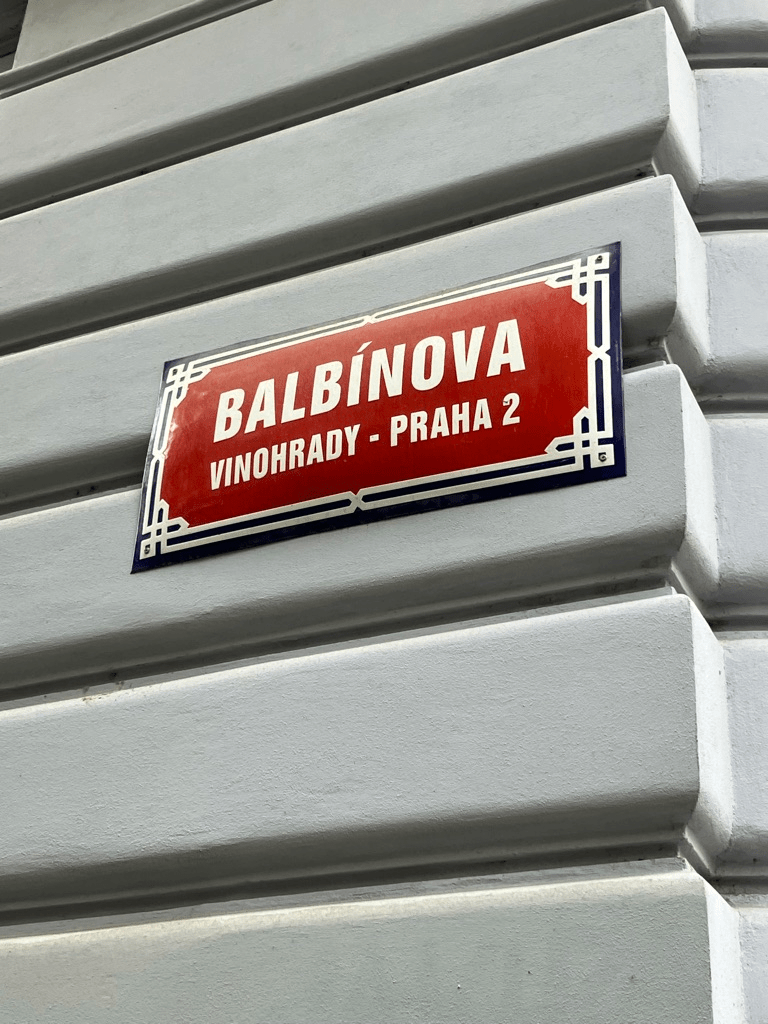
    Škroupovo náměstí was built in 1910.

    Until 1940, and again from 1945-7, this was Smetanovo náměstí, after Bedřich Smetana (1824-84), composer of Má vlast, and often called the father of Czech music.

    From 1940-5, it was Sukovo náměstí, after Josef Suk (1874-1935), composer and son-in-law of Antonín Dvořák.

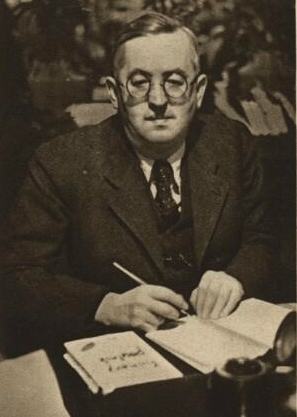
    František Škroup was born near Hradec Králové in 1801. Music was in the family – father Dominik and brothers Jan and Ignác were also composers.

    By the age of 12, František was already performing in the Loreta and in Týn Church in Prague. He moved to the city in 1818 to study philosophy.
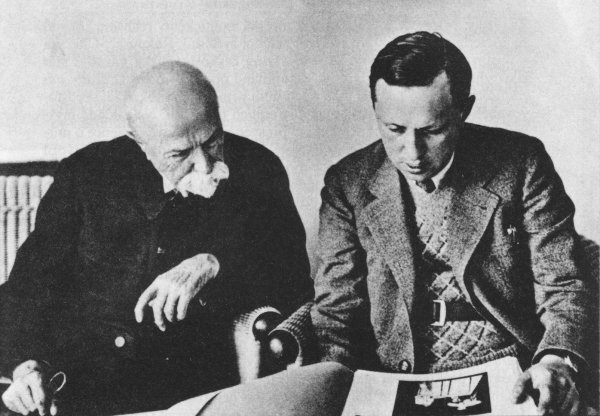
    Music took priority over studies, though, and in 1823 he founded the first Czech opera society.

    Škroup would write the first Czech opera, Dráteník, first performed in 1826.

    In 1827, he became a bandmaster at the Stavovský Theatre. One of his compositions for Josef Kajetán Tyl’s farce Fidlovačka was first performed there in 1834.
    Its name was Kde domov můj.

    In 1857, due to the lesser success of some recent operas and disagreements with the Theatre’s director, Škroup left to open a singing school. In 1860, he became bandleader at the German Opera in Rotterdam.

    He died there two years later.

    The first verse of Kde domov můj became half of the Czechoslovakian national anthem in 1918; the other half was the first verse of Nad Tatrou sa blýska.

    In 1993, it became the Czech national anthem; while the Slovaks added a second verse to to theirs, the Czechs decided not to, even though the second verse does exist.

    Fidlovačka was adapted for the silver screen in 1930; here’s the full version of Kde domov můj from that:

    In December 1988, Škroupovo náměstí was the scene of the first officially permitted opposition demonstration of the normalisation period. This is a story that deserves its own thread, but the footage here (including Havel) is amazing:

    Marta Kubišová leads a singalong of Kde domov můj around six minutes in, and again about 90 seconds before the end.

    Also incredible is this picture from https://babylonrevue.cz/na-skroupove-namesti-10-prosince-1988/….

  • Originally published on Twitter on 14 September 2022.

    Pospíšilova was built in 1904.

    It was called Dvořákova until 1930. Explanation probably not needed.

    Karel Pospíšil was born near Chotěboř in 1867, and was taught music by both his grandfather, Josef Pospíšil, and his uncle, the famous pianist Karel Slavkovský.

    He became a teacher in a school in Žižkov, as well as master of the local Vítkov choir, but also accompanied various musicians (including Jan Kubelík – https://whatsinapraguestreetname.com/2023/01/14/prague-3-day-138-kubelikova/) and opera singers of the day as a pianist.

    From the start of the 20th century, he dedicated himself to composing music for the purposes of the Sokol movement and physical education performances.

    Here’s the most famous example of one of these compositions: https://youtube.com/watch?v=vWz9VN40nCA…

    (This may not be fully accurate)

    In 1928, he published Základy rytmického tělocviku sokolského / Basics of Sokol Rhythmic Gymnastics.

    He died in Prague a year later.

  • Originally published on Twitter on 13 September 2022.

    Fibichova was built in 1904.

    From 1940 to 1945, this was Ševčíkova. Fibichova is to the right of Ševčíkova (https://whatsinapraguestreetname.com/2023/01/14/prague-3-day-142-sevcikova/). Except Current Ševčíkova wasn’t called Ševčíkova until 1947.

    Blimey.

    Zdeněk Fibich was born in Všebořice near Benešov in 1850. Encouraged by his music-loving (and Austrian) mother, he attended school in Vienna and in Malá Strana.

    By the age of 15, he had composed over 64 pieces. At that same age, he contacted Karel Sabina (https://whatsinapraguestreetname.com/2022/11/24/prague-3-day-79-sabinova/), later putting his libretto Bukovina to music.

    He became choirmaster and second conductor at the Provisional Theatre in 1876, and operatic dramaturg at the National Theatre in 1899.

    Fibich had three wives. The first, Růžena Hanušová, died after two and a half years of marriage, and Fibich married her sister Betty, an opera singer.

    He dedicated three of his operatic characters to her, but also left her in 1895 for his third wife.

    Said third wife was Anežka Schulzová, who wrote the libretto for his opera Šárka.

    However, Fibich died in 1900, and it’s Betty with whom he’s buried in Vyšehrad Cemetery.

  • Originally published on Twitter on 12 September 2022.

    Ševčíkova was built in 1904.

    Until 1947, this was Bendlova, after Karel Bendl (1838-97), composer, organiser of the Umělecká beseda’s music department, second conductor of the Deutsche Oper and later of Prague’s National Theatre.

    Otakar Ševčík was born in Horažďovice in 1852. He started learning the violin at the age of seven, and was admitted to the Prague Conservatory in 1866.

    After graduating, he became concertmaster at the Mozarteum in Salzburg (https://moz.ac.at/en/index.php) in 1870.

    In 1875, he took up a position at the Russian Music Society in Kyiv, staying there until 1892.

    This seems like a good juncture at which to point how admirable it is that, in September 2022, the Kyiv Conservatory is giving concerts: https://concert.ua/en/venue/nacionalnaja-muzykalnaja-akademija-ukrainy-im-pi-chaikovskogo…. Слава Україні.

    He returned to Prague to take a position as a violin teacher at the Prague Conservatory, becoming head of department in 1901 (when Antonín Dvořák was the Conservatory’s director).

    One of his pupils was a young Jan Kubelík (https://whatsinapraguestreetname.com/2023/01/14/prague-3-day-138-kubelikova/).

    Ševčík also set up a summer school for talented violinists, initially in Prachatice, but as the German-speaking authorities didn’t approve of his work with the Czech minority, he moved it to Písek.

    He moved to the Viennese Music Academy in 1909, returning to the Prague Academy – as its director – when Czechoslovakia became independent.

    He travelled to the US for teaching purposes on several occasions, and even taught in England at the age of 81. He died in 1934 and is buried in Písek.

    His teachings works, such as The Little Ševčík and The School of Violin Technics, are still in use today.

  • Originally published on Twitter on 11 September 2022.

    Křížkovského was built in 1910.

    Karel Křížkovský was born to a single mother in Holasovice (not a typo) in 1820, and was brought up by his uncles in Neplachovice near Opava.

    In his youth, he became a chorister at the Church of St. Ducha in Opava, later studying at the Faculty of Philosophy at the University of Olomouc.

    In 1845, he entered the Augustine Monastery in Brno, where he took the name Pavel. He was ordained three years later, and became director of the Monastery’s Choir.

    One of the singers who sang under his direction was a young Leoš Janáček.

    As well as his choir work, he learned multiple instruments and founded two choral societies (Mužský pěvecký sbor v Brně and Brno Beseda).

    As a composer, he wrote songs inspired by Moravian folk music; in 1861, his choral work Utonulá was performed in Prague.

    In 1863, his cantata written in honour of the arrival of Cyril and Methodius in Moravia 1,000 years earlier was performed at the Velehrad Festival by a 940-member choir.

    Taking place during the Czech National Revival, this was the largest church celebration in Bohemia until that point.

    However, secular success didn’t sit well with the Church, which ordered Křížkovský to stick to church music just when he’d been invited to write an opera.

    Křížkovský became director of the Moravian Metropolitan Cathedral Choir in 1872.

    He retired in 1877, dying of a stroke eight years later.

  • Originally published on Twitter on 10 September 2022.

    Slavíkova was built in 1910.

    Until 1961, this was Grégrova, after Julius Grégr (1831-96), co-founder of the Young Czechs and of Národní listy.

    Josef Slavík was born in Jince (near Příbram) in 1806. A prodigy on the violin, he was, by the age of nine, the lead in a quartet that played for Count Rudolf Jan Bruntálský z Vrbna.

    The Count arranged for him to be taught at Prague Conservatory, where he also developed his composition skills. Upon graduation, Slavík became concertmaster at the Estates Theatre (Stavovské divadlo).

    In 1825, he moved to Vienna to join the imperial band and develop his solo work, garnering the acclaim of Paganini, Chopin and Schubert, with the last of these composing two sonatas for him.

    In 1833, Slavík went on tour. Despite having the flu, he travelled to Hungary for a concert, but, shortly after his arrival in Pest, the flu killed him. He was only 27.

    Initially buried in Budapest, his remains were transferred to Vyšehrad exactly a century later.

  • Originally published on Twitter on 9 September 2022.

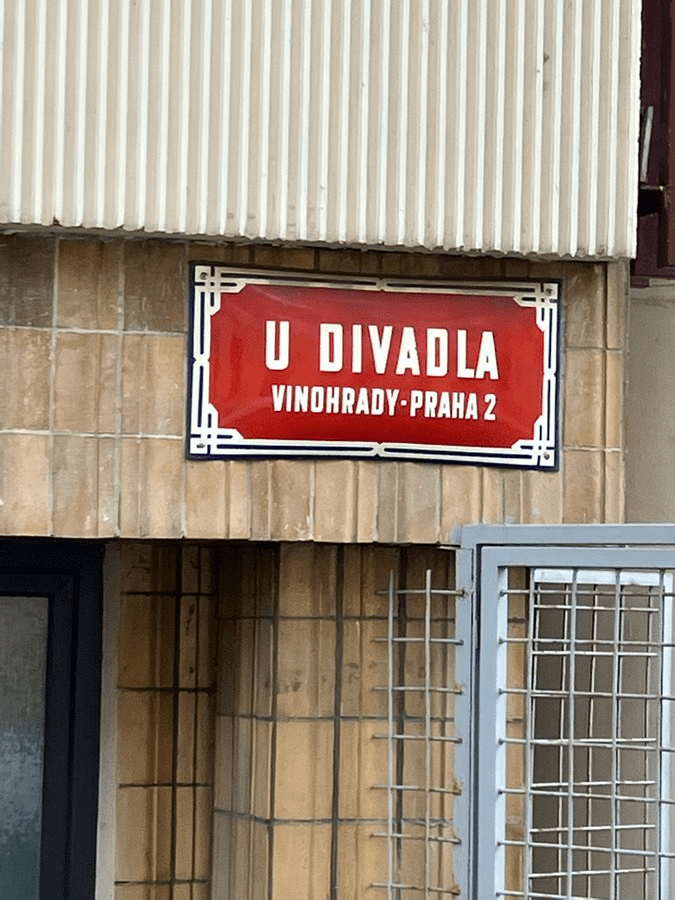
    Vozová was built in 1875. Nice old-school street sign too.

    Vozová was first mentioned in 1843, as a ‘garden with a residential building’, located in the Křížovka vineyard, which had already existed for over 400 years.

    In 1854, Count Karl of Lessonitz-Reichenbach purchased it and built a modern, one-storey villa, a garden and stables. Upon his death in 1861, it was inherited by his wife Clementine.

    In 1896, Clementine (by then Countess Belfort) sold it on to a local firm, before it was purchased by the municipality of Vinohrady in 1902 – who turned it into Riegrovy sady.

    The famous ‘Gloriet’, a late classicist building in the park, has been converted into a restaurant: https://cs.m.wikipedia.org/wiki/Soubor:Vozov%C3%A1_-_gloriet_04.jpg

    Originally known as ‘Mlíkárna’, because it sold milk products, it fell into disrepair after WW2, but was reopened in 2009.

    The villa, meanwhile, now hosts a primary school.

  • Originally published on Twitter on 8 September 2022.

    Kubelíkova was built in 1885.

    Until 1930, this was Libušina, after Libuše, ancestor of the Přemyslid dynasty and of the Czechs.

    So the number of streets named after women in Prague 3 has actually gone *down* over the years. Gah.

    From 1930 to 1947, it was Dvořákova, after Antonín Dvořák, (1841-1904), the most performed Czech composer worldwide.

    Jan Kubelík was born in Michle (now in Prague 4) in 1880. At the age of twelve, he was already studying violin at Prague Conservatory, despite officially being too young to do so.

    His tutor there was Otakar Ševčík (coming soon to this series). Kubelík graduated in 1898 with a performance of Paganini’s violin concerto in D major.

    In 1901, he performed 78 concerts in the USA. A year later, he brought the Czech Philharmonic Orchestra to London at his own expense.

    Obviously not short of money, he lived in a castle in Orlová in Slovakia, then in a villa in Opatija on the (now-)Croatian Adriatic, and then in Rotenturm Castle in Burgenland, Austria, before returning to Czechoslovakia in 1938.

    During the occupation, he played concerts with the Czech Philharmonic, with the last one being in May 1940. He died of cancer in Prague in December of the same year.

    Here’s a caricature of Kubelík from a 1903 edition of Vanity Fair.

    And a compilation of his earliest recordings: https://open.spotify.com/album/49D52ataDOLT4h6RbPwd3P?si=sHOa0RJSQt-I78u5aVZCG

    With his wife, Countess Marianne Czáky-Széllová, niece of Kálmán Széll (Prime Minister of Hungary from 1899 to 1903), he had eight children, including Rafael Kubelík (1914-96), who himself became a conductor and composer.

  • Originally published on Twitter on 7 September 2022.

    Chvalova was built in 1910.

    Known as Závišova until 1947, after Záviš of Falkenstein (1250-ish to 1290), a noble from the Vitkovci clan and foe of Otokar II.

    Chval z Machovic (first mentioned in 1419, last mentioned in 1433) was one of the first governors of Tábor alongside Jan Žižka and Jan Roháč (https://whatsinapraguestreetname.com/2022/11/25/prague-3-day-81-rohacova/).

    He and Žižka unsuccessfully besieged Stříbro in 1421, and he became regional governor of a set of towns in South-Western Bohemia (Písek, Klatovy, Sušice, Domažlice and Prachatice) in 1426.

    This is about as far from being a revelation about myself as is humanly possible, but I significantly prefer telling mildly gut-wrenching stories about composers to telling partial stories about 15th-century fighters.

  • Originally published on Twitter on 6 September 2022.

    Ježkova was built in 1896.

    Until 1940, and again from 1945 to 1947, this was Nerudova, after Jan Neruda (1834-91), journalist, author, poet, and main figure of the Májovci, a group of Czech novelists and poets inspired by the works of Mácha, Havlíček and Erben.

    From 1940 to 1945, the street was Voříškova, after Jan Václav Voříšek (1791-1825), a composer and pianist whose career took place in Vienna.

    Jaroslav Ježek was born in 1906 and grew up on nearby-ish Všehrdova, now part of Rokycanova (https://whatsinapraguestreetname.com/2022/11/19/prague-3-day-19-rokycanova/).

    Suffering from cataracts as an infant, he attended a school for the blind. In 1923, he was accepted to Prague Conservatory, where he studied composition.

    This enabled him to get in touch with Jiří Voskovec and Jan Werich, with whom he found a winning formula: his music, combined with Voskovec and Werich’s witty lyrics, was a huge success.

    As part of this trio, Ježek became the composer and conductor of the Osvobozené divadlo (Prague Free Theatre), specialising in jazz.

    The Theatre was closed down in 1938 after a series of anti-Nazi plays. Incredibly, we have footage of Werich and Voskovec on stage in that year, from the 1939 film Crisis: A Film of the Nazi Way (some parts have English subtitles):

    With the Nazi occupation, all three artists fled to New York City. Ježek died there of chronic kidney disease on New Year’s Day 1942. He was 35.

    In 1947, his remains were transferred to Czechoslovakia; he’s buried in the Olšany Cemetery.

    The Jaroslav Ježek Conservatory, specialising in contemporary music, is in Prague 4: https://kjj.cz.

    One of the trio’s most famous songs is Tmavomodrý svět (Dark-blue world), written in 1929 and used to great effect in Jan Svěřák’s film of the same name in 2001:

    Tak, kam se poděl můj doposud dokonalý zrak?
    Na všem leží neproniknutelně modrý mrak, tmavomodrý mrak.
    Sám nevím ani, kudy jíti mám a kam,
    A to, že na hlavě tmavomodrý klobouk mám, to je právě klam.

    So, where did my hitherto perfect eyesight go?
    Over everything lies an impenetrable blue cloud, a dark blue cloud.
    I don’t even know where to go and where,
    And the fact that I have a dark blue hat on my head is just an illusion.

    A complete retrospective of the trio’s work is available: https://www.supraphonline.cz/album/227369-osvobozene-divadlo-i-vii-1929-1938.

    And, for completists, how lovely that these two are next to each other in Hlubočepy (Prague 5).

  • Originally published on Twitter on 5 September 2022.

    Čajkovského was built in 1885.

    Known as Tomkova until 1952, after Václav Vladivoj Tomek (1818-1905), a historian, conservative politician and archivist, best known for his twelve-volume Dějepis města Prahy (History of the City of Prague).

    Pyotr Ilyich Tchaikovsky (1840-93), meanwhile, as composer of Swan Lake, the Nutcracker and the 1812 Overture, probably needs little introduction. So let’s focus on his links to this part of the world.

    In early 1888, the Umělecká beseda invited Tchaikovsky to Prague, where he conducted his own compositions at the Rudolfinum and the National Theatre. During the trip, he struck up a friendship with Antonín Dvořák.

    Tchaikovsky made a second visit to Prague in the same year, with Dvořák performing a tour of Russia in 1890.

    Tchaikovsky’s final visit to Prague was in October 1892, for a performance of his opera, The Queen of Spades. Dvořák, by this time, was living in New York; Tchaikovsky would die, officially of cholera, a year later, aged only 53.

    It is generally agreed that Tchaikovsky was homosexual. The Soviet and Russian governments have persisted in censoring those parts of his correspondence which refer to this.

    In 2013, Vladimir Medinsky, then Russian Minister of Culture, denied that this was the case, while P***n played the ‘yeah, that’s gross, but he was really talented, so it’s kinda OK to exploit him for culture purposes’ card (https://www.theguardian.com/music/2013/sep/18/tchaikovsky-not-gay-russian-minister).

    Imagine thinking your compatriots wouldn’t accept your sexuality even 120 years after your death (but would still gladly use you as a national treasure).

    I have mixed feelings about having just written three tweets about the private life of someone who wasn’t ‘out’, but my point is this: fuck homophobia and anyone who’s cool with it, seriously.

  • Originally published on Twitter on 4 September 2022.

    Bořivojova was built in 1875.

    In 1947, this street joined with Riegrova (also built in 1875).

    Riegrova was named after František Ladislav Rieger (1818-1903), early leader of the Czech Nationalist Movement.

    Old Franta still gets a park in Vinohrady with – life goals alert – a beer garden (which I need go back to soon), though, so don’t feel too bad for him.

    Bořivoj I (no earlier than 852-no later than 890), meanwhile, was the first historically documented Duke of Bohemia.

    He was said to be descended from Libuše (who prophesied the city of Prague) and Přemysl, ancestor of the Přemyslid dynasty.

    Around 870, he became ruler of Bohemia, which was then part of Great Moravia (not the cheese). He was first mentioned in writing in 872, as a participant in the war against Louis the German, grandson of Charlemagne.

    In the 880s, Bořivoj and his wife Ludmila (later St Ludmila of Bohemia) were baptised by Methodius. Bořivoj began to encourage the spread of Christianity, building Bohemia’s first church in Levý Hradec.

    Bořivoj was deposed around 883, being restored to power by Svatopluk of Moravia in 885.

    He died in 889, leaving two sons, Spytihněv (Duke of Bohemia from 894-ish until 915) and Vratislaus (Duke from 915 to 921). The latter was the father of Wenceslas I, the Good One.

  • Originally published on Twitter on 3 September 2022.

    Vlkova was built in 1878.

    Jakub Vlk was a radical Hussite priest. After Jan Želivský died in 1422, he took over as preacher at Our Lady of the Snows (Panny Marie Sněžné, on Jungmannovo náměstí).

    He was expelled in 1434 and took refuge in Hradec Králové with Ambrož of Hradec (https://whatsinapraguestreetname.com/2022/11/21/prague-3-day-68-ambrozova/).

    Briefly imprisoned in 1437, he moved to Kolín upon his release and died there in 1439.

    That wasn’t too deep a story, so let’s take a look at the street’s previous names.

    From 1878 to 1940, and again from 1945 to 1948, this was Palackého, after František Palacký (1798-1876), the key figure of the Czech National Revival.

    From 1940 to 1945, the street was Vojtěcha Raňkova, after Vojtěch Raňkův z Ježova / Adalbertus Ranconis de Ericinio (1320-ish to 1388), a theologian who helped introduce the ideas of John Wycliffe to the Czech Lands (https://whatsinapraguestreetname.com/2022/11/19/prague-3-day-26-viklefova/).

    From 1948 to 1961, it was Dobrovolců. The Dobrovolci (volunteers) were the volunteers of the Prague 28th regiment.

    In November 1918, they were given the task of guarding Czechoslovakia’s borders, a task they took on until August 1919, when Slovakia was liberated and by which time a regular army had been formed.

  • Originally published on Twitter on 2 September 2022.

    Sladkovského náměstí was built in 1890.

    Karel Sladkovský was born in Malá Strana in 1823, and studied law in Vienna. He returned to Prague in 1848, becoming a leader of the student movement.

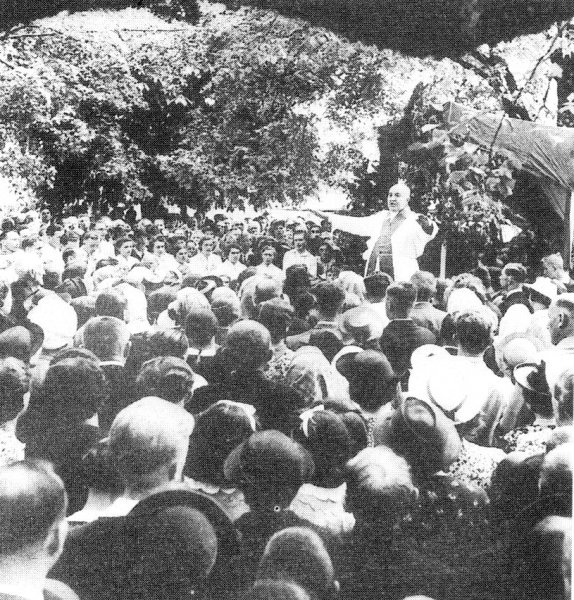
    He became famous after a speech at Svatováclavské Lázně (which no longer exists, having been destroyed in 1908 – this is where Dittrichova now is in the Old Town), in which he condemned the rules for election to the Czech Land Assembly.

    He took part in the fighting in the Prague June Uprising; following the city’s surrender, he was regarded as a mutineer and a warrant was issued for his arrest.

    In 1849, he was arrested for his role in planning a second uprising (the May Conspiracy). Sentenced to death in 1851, this was later commuted to twenty years’ imprisonment.

    Amnestied in 1857, he joined the editorial staff of Čas (the first Czech newspaper authorised by the Habsburg authorities) in 1860, and then, in 1862, of Hlas, a radical democratic magazine. The publications merged in 1865.

    From 1862 to 1880, he was a member of the Czech Regional Assembly, supporting universal suffrage and democratic rights. In 1867, he was elected to the Imperial Council in Vienna.

    In 1874, he co-founded the Young Czech Party (Mladočeši) and acted as its first chairman. The party claimed to be the heirs of Karel Havlíček Borovský (https://whatsinapraguestreetname.com/2022/12/26/prague-3-day-122-havlickovo-namesti/).

    After eight years of boycotting the Imperial Council in Vienna, the party agreed to enter it in 1879. However, Sladkovský was unable to play a key role due to ill health, and died the following year.

    Looking at Twitter right now, it’s a shame certain other people get to go to parliaments and assemblies and the like.