Originally published on X on 15 November 2023.
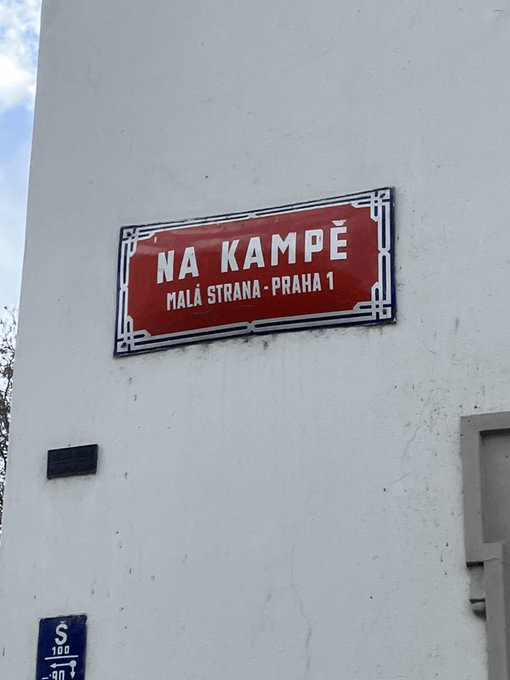
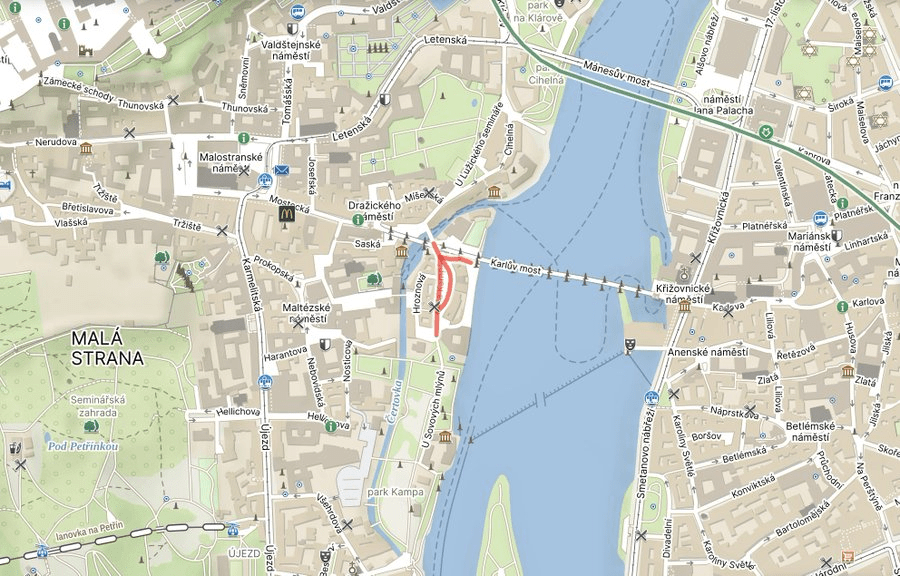
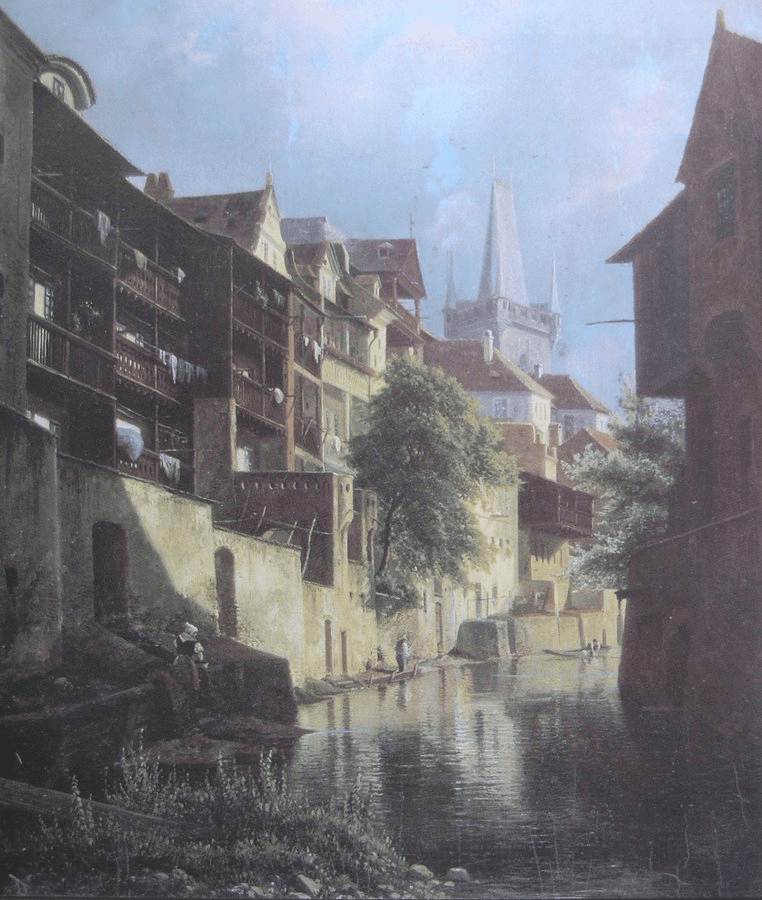
he island now known as Kampa was first mentioned in writing in 1169, and it became an island as a result of the creation of this canal: https://whatsinapraguestreetname.com/2024/09/09/prague-1-day-67-certovka/
However, until the 18th century, people would merely refer to the island as ostrov, meaning, yes, ‘island’.
(I can’t judge; I’ll always refer to ‘the pub’ without thinking for a second if it has a name or not)
For such a recent name, people aren’t quite sure what its origins are. Campus is Latin for ‘field’, and, for its first 400 years or so, that is basically all that the island was.
There’s also a story that Spanish soldiers set up campamento here during the Battle of Bílá Hora in 1620 (counterargument: that’s about seven kilometres away).
Then there’s the story that the grandson of astronomer Tycho Brahe, the snappily-named Rudolf Tychon Gansneb Tegnagel z Campu, owned land here.
Continuing to clutch at straws, a kępa in Polish is a ‘meadow’, as in Saska Kępa, a well-to-do suburb of Warsaw, and there may have been a similar word in other Slavic languages.
Kampa became accessible without transport in 1844, thanks to a staircase from Charles Bridge: https://commons.wikimedia.org/wiki/Category:Staircase_Karl%C5%AFv_most_-_Na_Kamp%C4%9B#/media/File:2010-12-26_Kampa_022.JPG
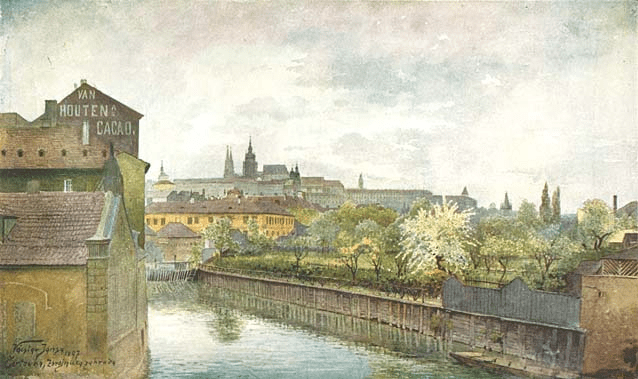
It also kind of stopped being an island in 1915, although we still refer to it as one – thanks to the construction of Smíchov lock, you can access mainland Malá Strana by dry land.
Kampa didn’t have a great time of it in the 2013 floods:
And here’s some great footage from 1966:
On Na Kampě itself, I recall this being the Estonian Embassy quite recently, but it isn’t now.
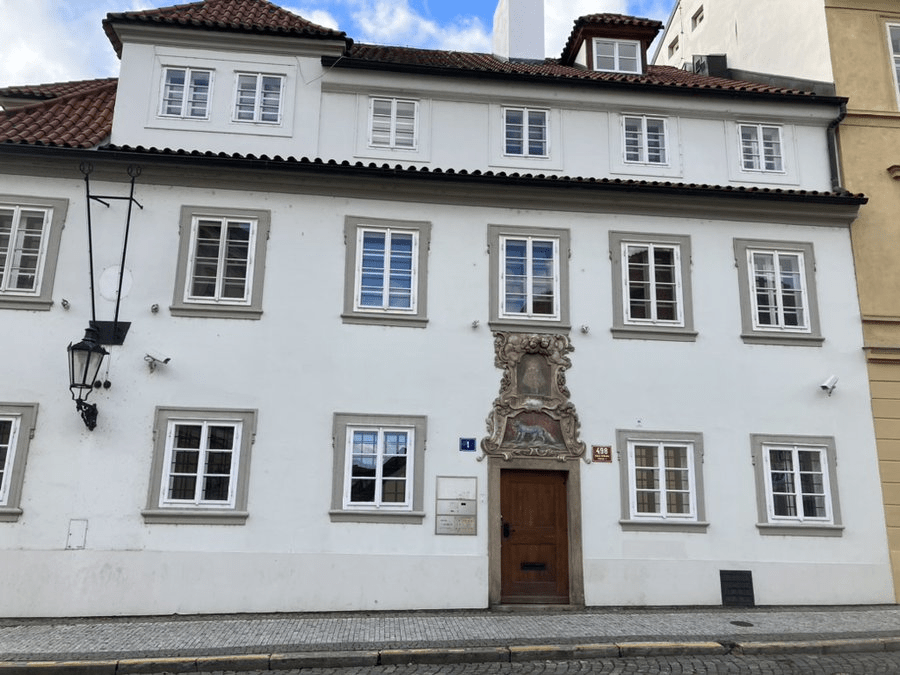
Obviously, there’s more to say about Kampa, but much of it isn’t on this street, so Carry on Kampa continues tomorrow.
 What's in a Prague street name

Leave a comment