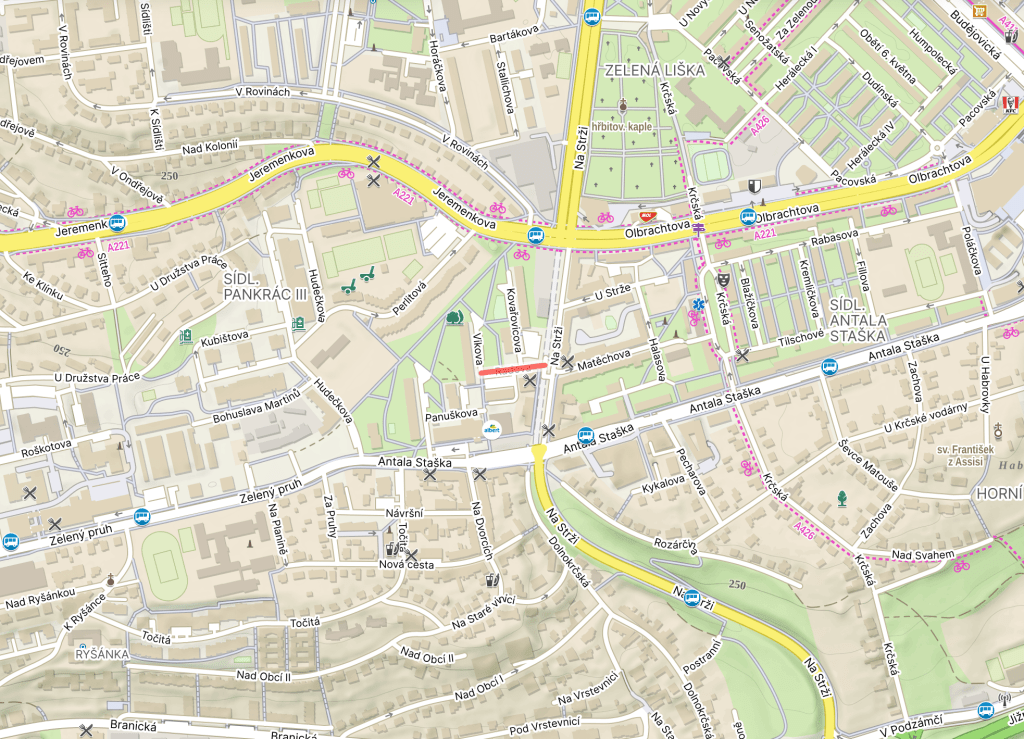
Radova was built in 1965.
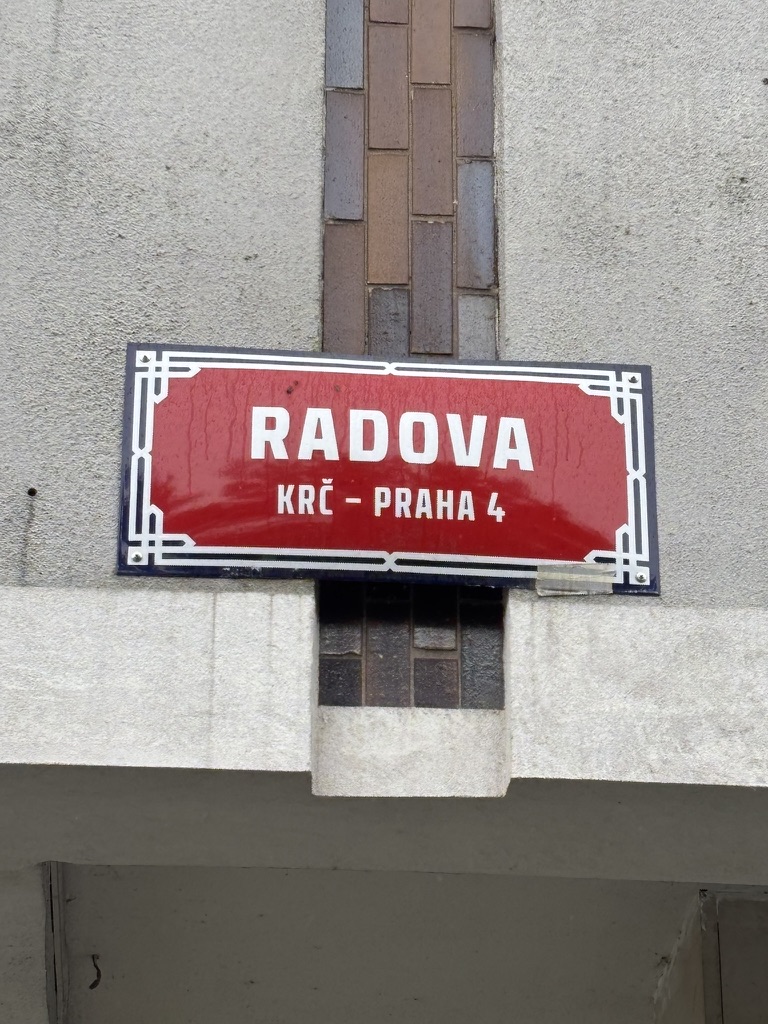
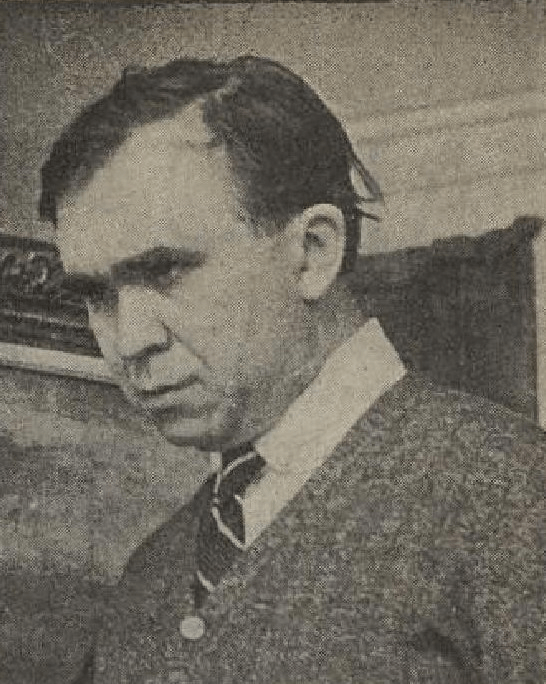
Vlastimil Rada was born in České Budějovice (recently covered on https://whatsinapraguestreetname.com/2026/04/26/prague-4-day-368-budejovicka/) in 1895, but lived in Prague from 1904.
From 1908 to 1912, as well as going to regular school, he attended landscape painting classes given by Václav Jansa, and then studied painting at the Academy of Fine Arts, graduating in 1919.
During a study trip to Paris in 1913, he got to know Václav Rabas (https://whatsinapraguestreetname.com/2026/04/28/prague-4-day-370-rabasova/).
After a couple of years of being a member of the Mánes Foundation, Rada exhibited his work with Umělecká beseda from 1920 onwards. He lived in Železný Brod from 1920 to 1925, and maintained a deep relationship with the town even after moving back to Prague.
In the 1930s, Rada’s works were a regular feature at international exhibitions (taking in, for example, Brussels, Florence, Moscow, Paris, Pittsburgh, Venice and Vienna). He has been referred to as the natural successor to Mikoláš Aleš (https://whatsinapraguestreetname.com/2024/10/22/prague-1-day-210-alsovo-nabrezi-ales-embankment/).
He was famed for his landscape paintings, typically using dark colours. These often featured horse-drawn carriages and sleighs, conveying the atmosphere of winter, or covered social themes. Rada also provided book covers for a range of Czech classics (as well as novels by Charles Dickens).
Named a national artist in 1958, Rada died in 1962. There is a permanent exhibition of his work in Železný Brod; his works are also on permanent display at the National Gallery in Prague and the Pompidou Centre in Paris.
 What's in a Prague street name
Leave a comment