Originally published on X on 26 March 2024.
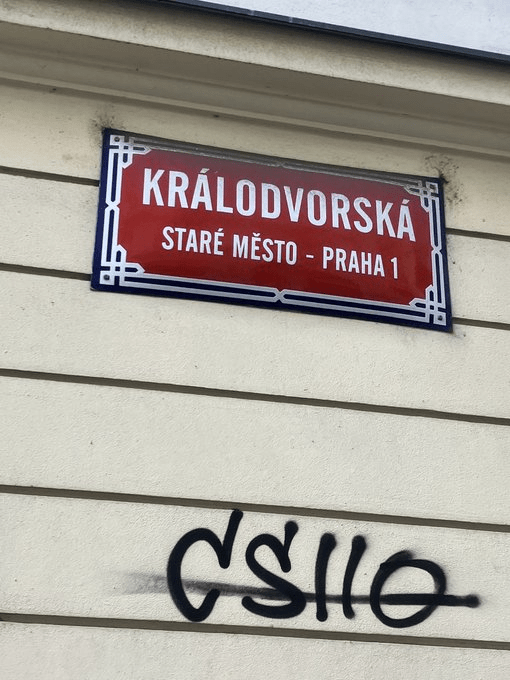
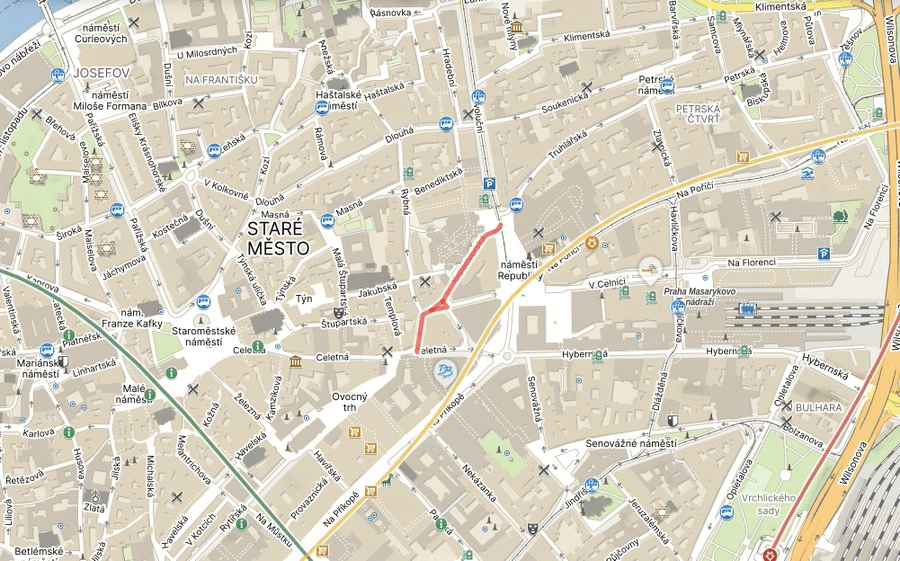
Wenceslas/Václav IV became King of Bohemia in 1378, and, like his father, Charles/Karel IV, originally lived at Prague Castle.
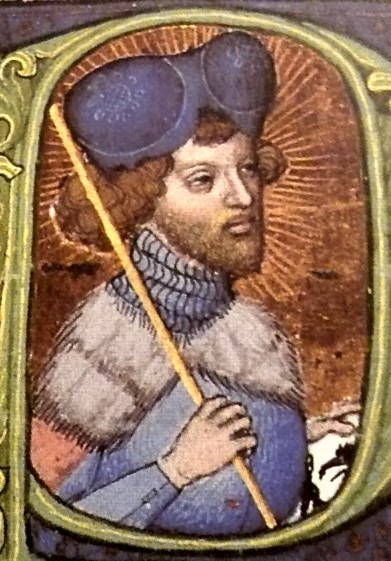
Václav’s talents included favouritism, being less popular than his father, and not getting on well with his relatives.
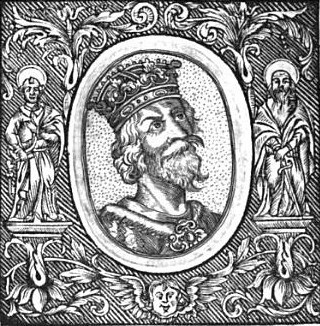
Such a relative was Charles’s widow, Elizabeth of Pomerania, who not only supported her own sons (including Sigismund, later Václav’s successor), but also lived at the Castle.
Which may be why Václav wanted a change of scene and headed to the Old Town.
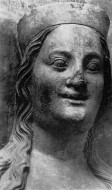
And so he moved to the King’s Court / Králův dvůr, which was located where Municipal House (https://whatsinapraguestreetname.com/2024/10/10/prague-1-day-182-u-obecniho-domu/) is now.
The court would be the official residence of the Czech Kings (when they spent time in Bohemia) until 1485, when Vladislav II, probably feeling that the other side of the river would be less riot- and defenestration-heavy than the Old Town had become, moved back to the castle.
The most committed monarch to the King’s Court was George of Poděbrady (https://whatsinapraguestreetname.com/2023/12/23/prague-3-day-189-namesti-jiriho-z-podebrad/), who had it as his main residence for 13 years, and whose coronation and funeral processions both departed from here (making their way to the Castle).
It was in the court, for example, that George created his “Treaty for the establishment of peace in all Christendom”. This kind of preempted the EU: he proposed a treaty of all Christian powers, whereby all these countries would settle their differences peacefully.
After the move, the court served various purposes: it was a seminary for archbishops for a time (from 1636), was the location of a church devoted to St Vojtěch (from 1705, pictured below before its destruction in 1902), and, from 1869 to 1900, was a school for cadets.
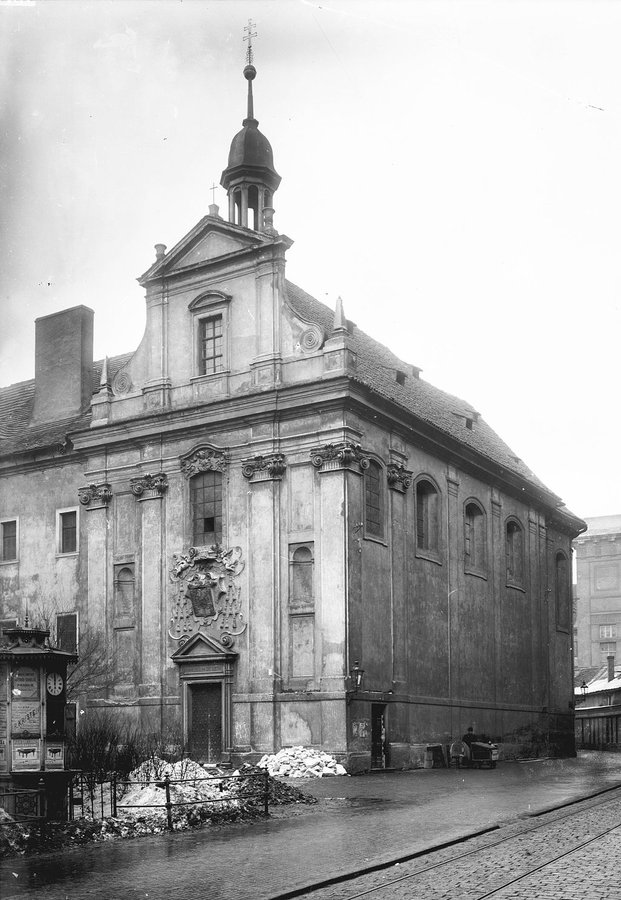
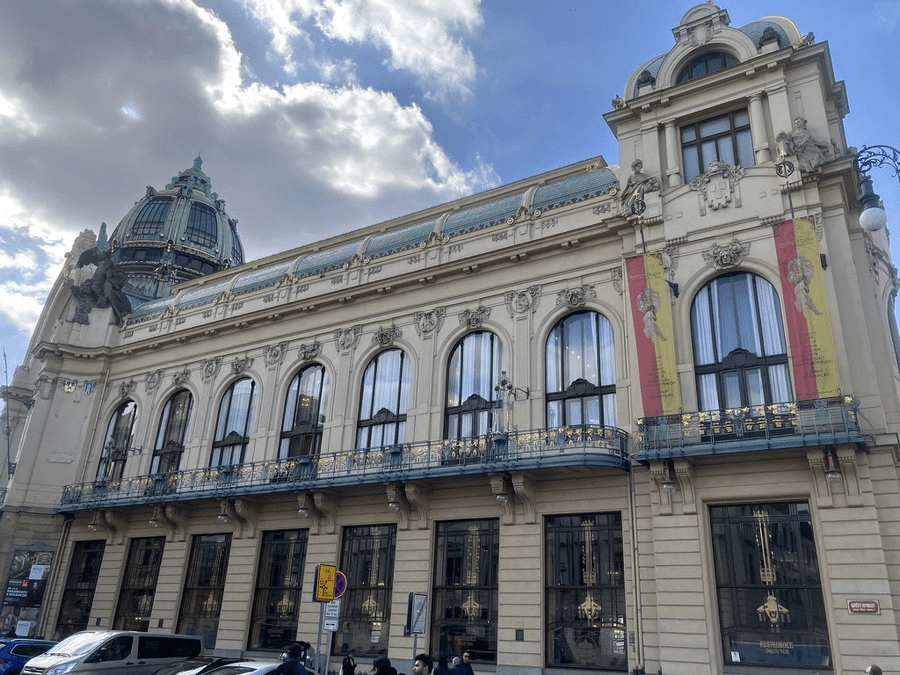
It was demolished in 1902/3, and its replacement, Municipal House, would appear about a decade later.
I can’t tell you what the Royal Court looked like, but I can feel safe in assuming that it didn’t get as many haters as the Kotva shopping centre, which was built between 1969 and 1975 (as if these pictures didn’t already tell you it was a child of the 1970s).
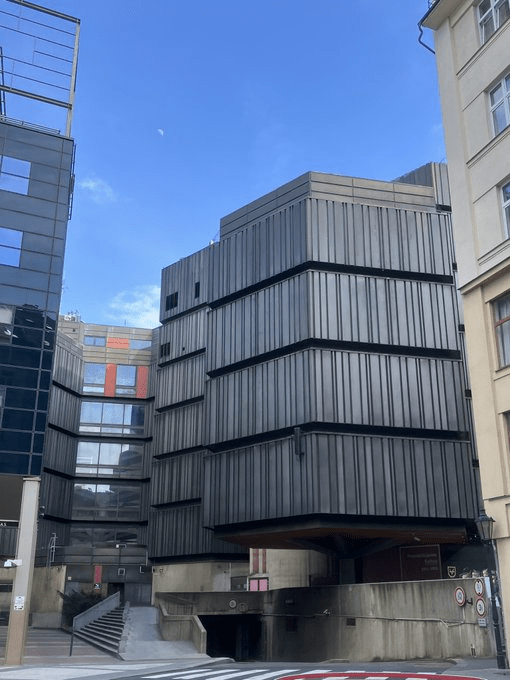
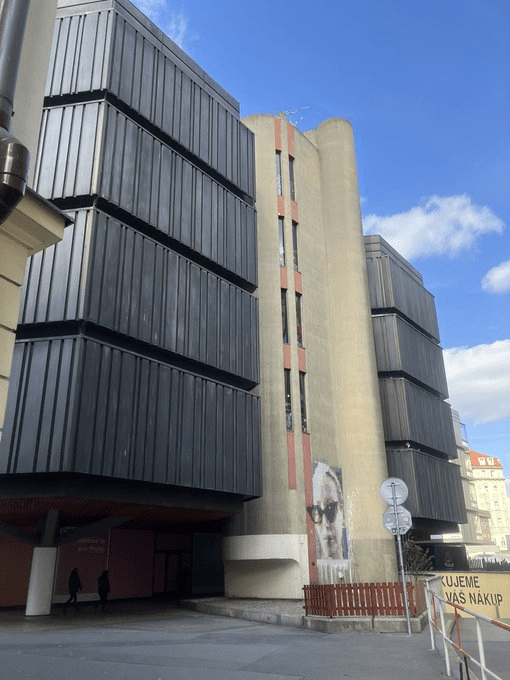
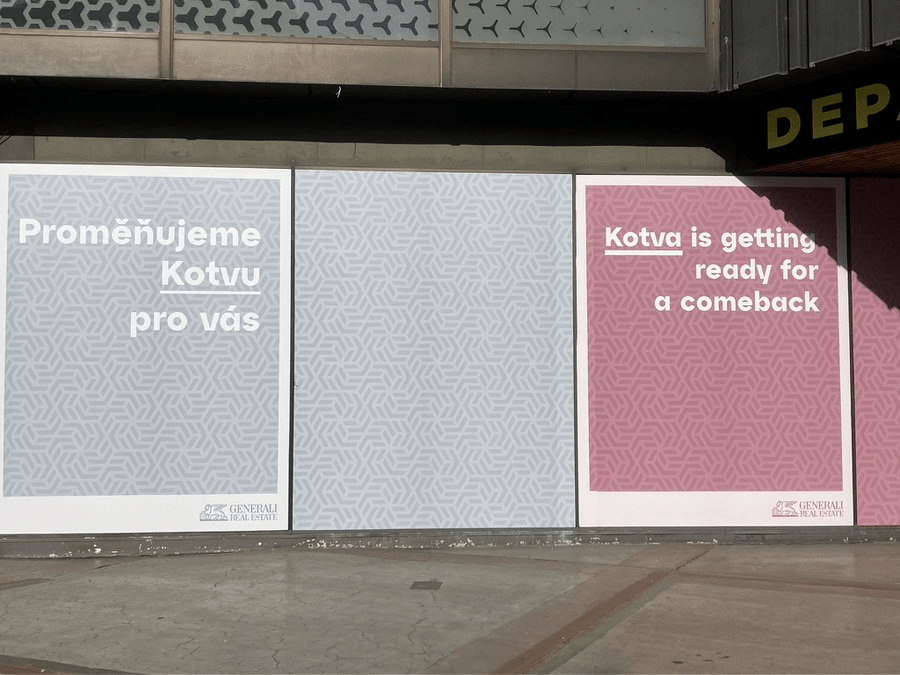
Once Czechoslovakia’s biggest shopping centre, it’s getting a revamp.
Brilliant vintage footage of its insides back in the day here:
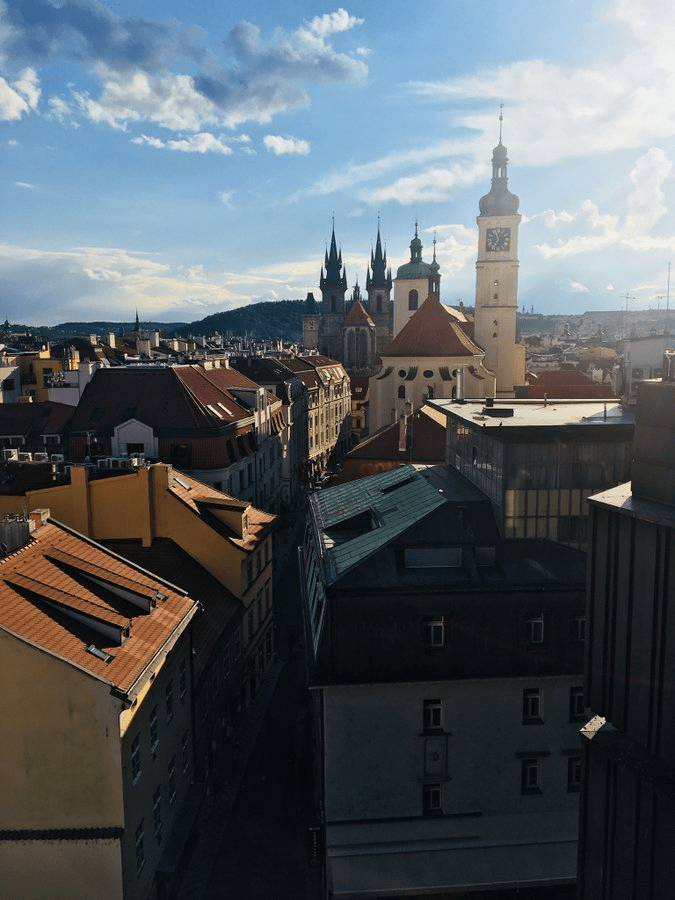
And, credit where it’s due, I once got a drink on its terrace and this was the view I got.
(Also, as I forgot to mention it before, ‘kotva’ means ‘anchor’)
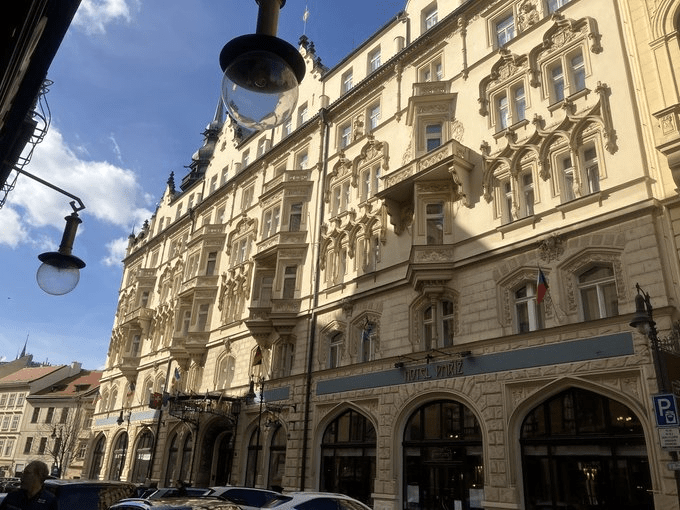
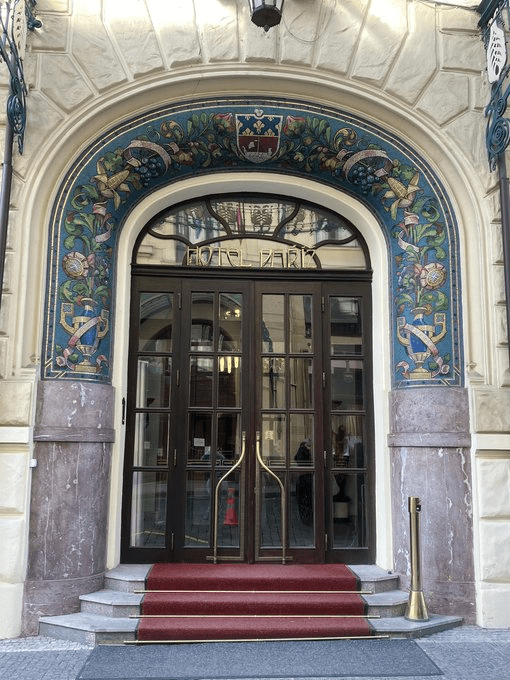
Králodvorská also features Hotel Paříž, which you may know best from Bohumil Hrabal’s I Served the King of England.
Finally, Králův Dvůr is not to be confused with, erm, Králův Dvůr, a town of 10,000 in Beroun District, named after a medieval court which was probably founded by Václav I.
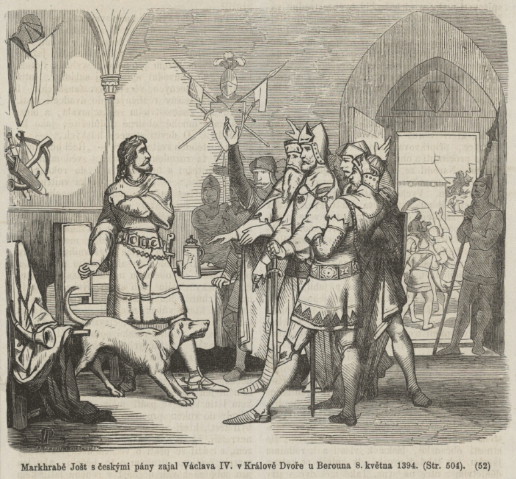
Confusingly, Václav IV – who founded the Králův Dvůr in Prague – was captured by his cousin, Jobst of Moravia, at the other Králův Dvůr in 1394.
 What's in a Prague street name
Leave a comment