Budějovická was given its named in 1925, having formerly been part of the road from Prague to… well, read on.
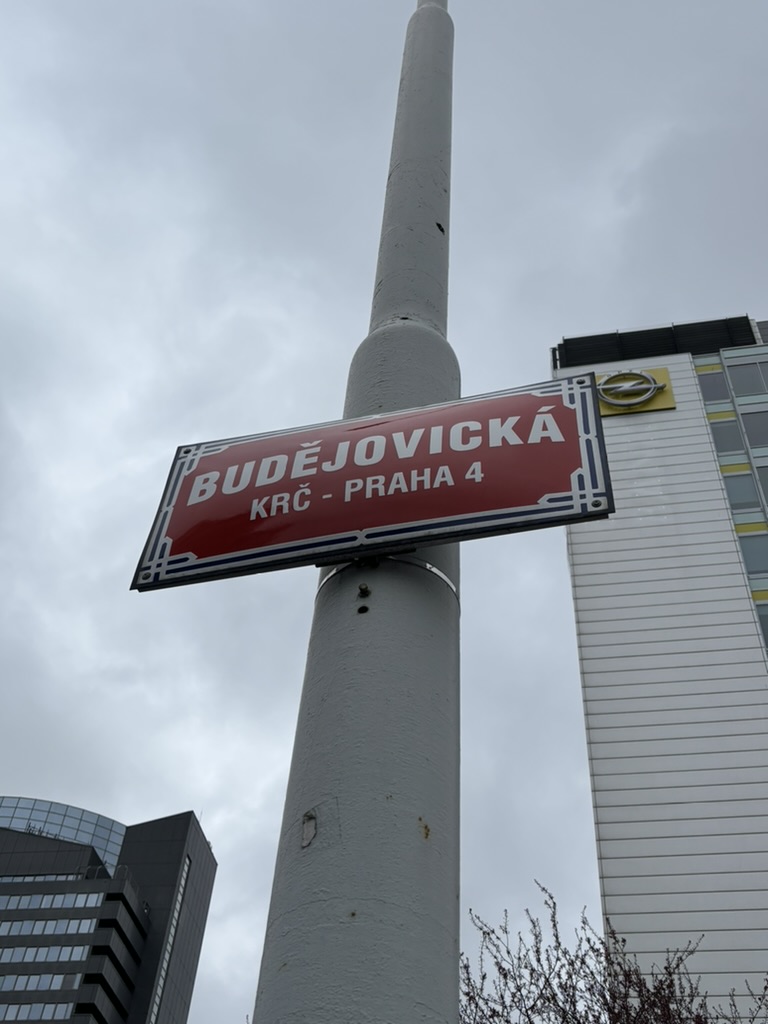
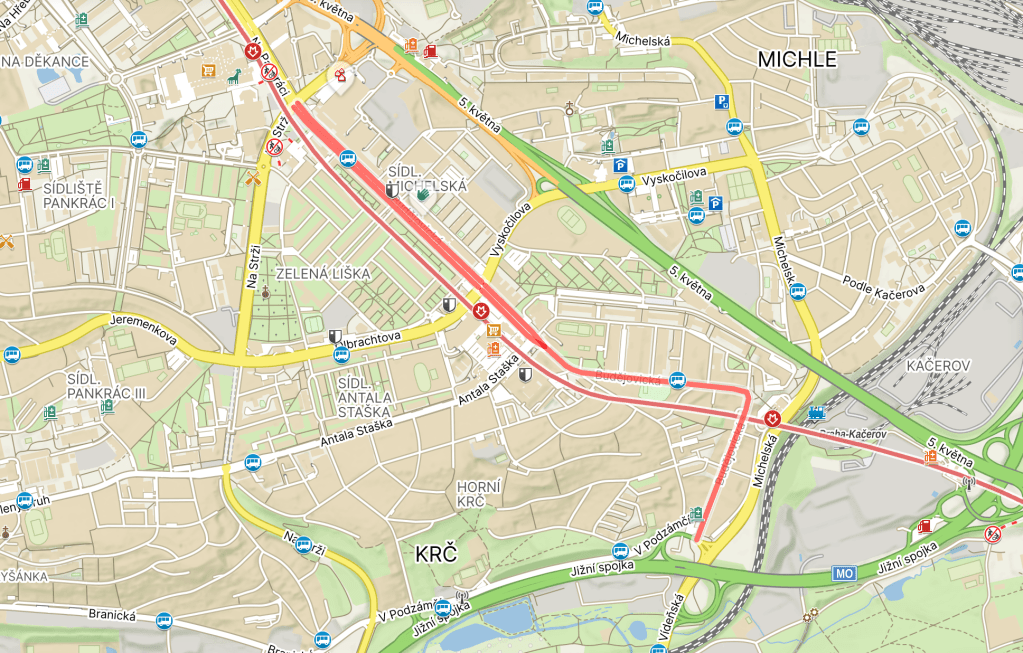
In the early 1200s, a settlement was founded in South Bohemia, and was named Budivojovice, named after Budivoje ze Železnice, a courtier of King Přemysl Otakar I, and the most important judge in Bohemia.
The area was important due to its location on the trade route from Prague to Linz. The Vítkovci, owners of one of the local settlements, Stradonice, wanted to found a proper town in the region, which set off alarm bells with the Czech royals, who sensed a threat to their power.
Therefore, in March 1265, Přemysl Otakar II (https://whatsinapraguestreetname.com/2025/01/06/prague-4-day-6-otakarova/) founded České Budějovice. Budivoje’s son was obliged to exchange the settlement with Otakar, but he got some other territories in return, and the new town maintained his father’s name.
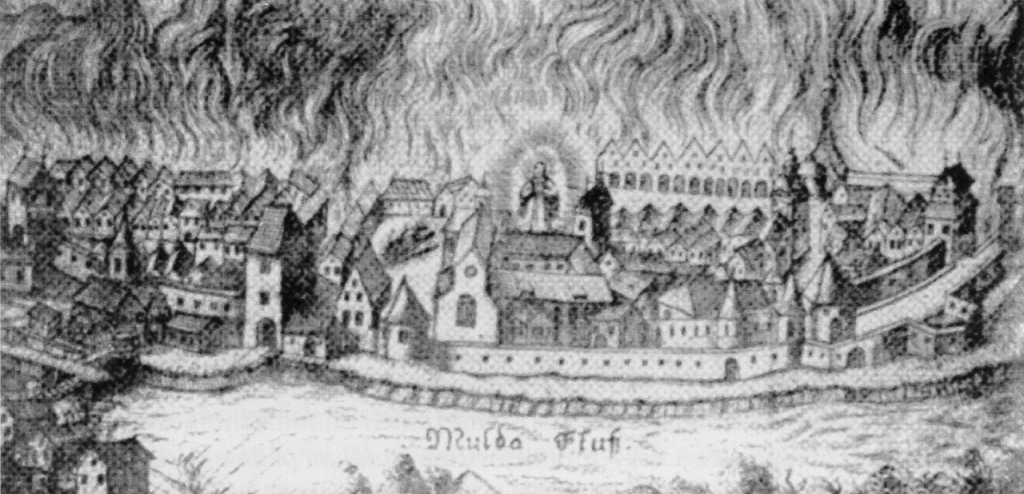
The Vítkovci didn’t react well to the founding of the town, or the thwarting of their plans to increase their power – in 1278, they burned it down.
Then, in 1279 (Otakar II having been killed in battle with the Habsburgs in the interim), one of their members, Záviš (https://whatsinapraguestreetname.com/2025/01/01/prague-4-day-1-zavisova/) invaded it.
King Wenceslas II managed to reduce the tensions by giving the town its first regent, Klaric; the regency would pass down through the Klaric family until the 15th century.
In 1310, the Luxembourg dynasty (https://whatsinapraguestreetname.com/2023/02/26/prague-3-day-153-lucemburska/) ascended the Czech throne, after several centuries of Přemyslid rule. They were very fond of České Budějovice.
Most notably, Charles IV (https://whatsinapraguestreetname.com/2024/10/15/prague-1-day-196-karlova/) held diplomatic meetings there, had six stays lasting up to a month, and granted the town significant privileges.
Budějovice’s leading position as a centre of trade was severely tested during the Hussite Wars in the 1420s and 1430s; notably, it also remained Catholic and was never invaded. Similarly, when the Bohemian Revolt, against the Catholic Habsburgs, took place in 1619, Budějovice didn’t join in.
Budějovice acted as capital of Bohemia for almost two years in the 1630s, due to the effect on Prague of the Thirty Years’ War, but also endured a huge fire in 1641. The glory days were effectively over.
That said, in the 1700s, the town gained some of its most distinctive features, including the Water Tower (1724), the Samson Fountain (1727) and the Town Hall (1727-30).
(Side note: I spent a lovely long weekend in ČB in 2018, and took pictures of all of these, but they seem to be lost to me after my first Instagram account disappeared with no trace or explanation in 2021. Back your data up, people)
ČB also became a place of pilgrimage – an image of Virgin Mary of Budějovice, located in the Church of the Sacrifice of the Blessed Virgin Mary, was attributed with miraculous powers, and copies of it were placed all over the city.
The 1700s also saw occupation by Bavarian troops during the First Silesian War, nearby battles between Austrian and Prussian troops during the Second Silesian War, and increased significance for the city when it became the seat of the region (1751) and then a diocese (1785).
ČB was occupied yet again in the early 1800s – by the French (1805) and the Bavarians (1805-6). It was still pretty small at this time, with about 5,000 inhabitants, but a little invention called the railway would eventually change this state of affairs.
In 1827, a horse-drawn railway to Linz was inaugurated – the first in mainland Europe. By 1871, the connection would go all the way to Vienna, and, in 1874, ČB was connected to Prague (the horses were obviously not in use by this point).
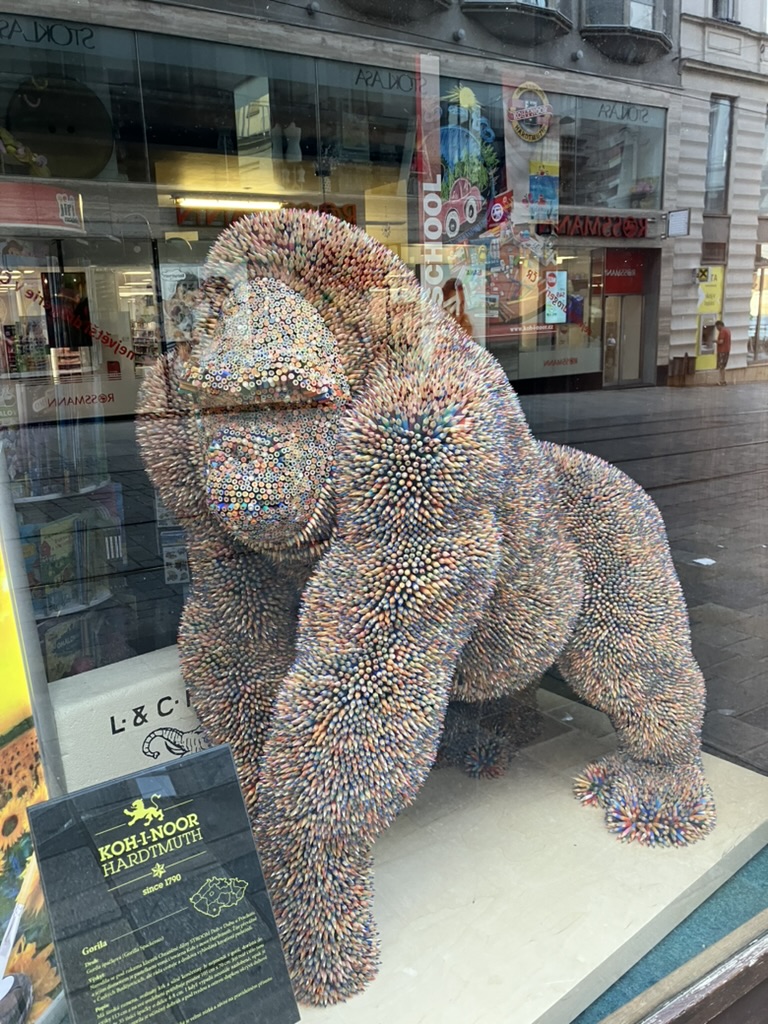
The city benefited from industrial development, too; production by Koh-i-Noor Hardtmuth, one of the world’s oldest stationery companies, was moved there in 1848.
A quick note that you might have been past some of Koh-i-Noor’s stores. This picture is from Brno, and ‘one of the most incredible things I’ve ever seen’ doesn’t do it justice.
Another company you might have heard of – Český akciový pivovar, later Budweiser Budvar Brewery – was founded in 1895.
Industrialisation also attracted Czech-speakers from the rest of Bohemia – and, in 1890, meant that, for the first time, Czech speakers outnumbered the German speakers, who had long enjoyed a privileged position.
On 28 October 1918, Czechoslovakia was established (https://whatsinapraguestreetname.com/2024/09/25/prague-1-day-144-28-rijna/); its president, Tomáš Garrigue Masaryk (https://whatsinapraguestreetname.com/2024/09/25/prague-1-day-144-28-rijna/), didn’t get back to his country until the night of 20 December. He spent the night at ČB’s train station on the way to Prague.
By this time, the city’s population was definitively dominated by Czech speakers, who occupied all key positions until the Nazis occupied Bohemia and Moravia from 1939 to 1945.
At the end of WW2, the city also suffered the effects of US air raids. It was then liberated by the Soviets on 9 May 1945; its remaining German population (of about 7,500) was forcibly removed shortly afterwards.
Soviet troops would be much less welcome when they arrived again on 21 August 1968, occupying the city (where the locals put a sign saying ‘Kindergarten’ on the Czech Radio station, knowing this would make the troops struggle to find and occupy it), and shooting dead one resident, 24-year-old Václav Baloun.
In 1968, Czech Radio operators broadcast illegally from the South Bohemian Theatre; in 1989, the actors and students of the same theatre would kick-start the local events of the Velvet Revolution.
One of the organisers, Vladimír Špidla, would be Prime Minister from 2002 to 2004.
In 1991, Budějovice gained its own university (having previously hosted branches of Prague’s Charles University).
There is so, so much more to say about České Budějovice, even after all of the above. I can’t show you my photos, as previously mentioned, but I can guarantee that it’s a lovely place with a great main square. With 97,000 inhabitants, it is the country’s seventh-largest city, and very deserving of your time.
But, to end, I need to bring up the well-known slogan, ‘V Českých Budějovicích by chtěl žít každý’ (‘Everyone would like to live in České Budějovice’). This comes from Záskok (‘Substitute’; 1994), a play by Žižkov’s Jára Cimrman Theatre (Jára Cimrman surely needs his own post or twenty ASAP).
It sometimes gets forgotten that that phrase, in the play, is followed by ‘kromě mě teda’ / ‘except for me, then’, which playwright and general legend Zdeněk Svěrák wants you to know is not in any way a disparaging comment about the city, and nor should it be.


Leave a Reply