U michelského mlýna was named in 1900.
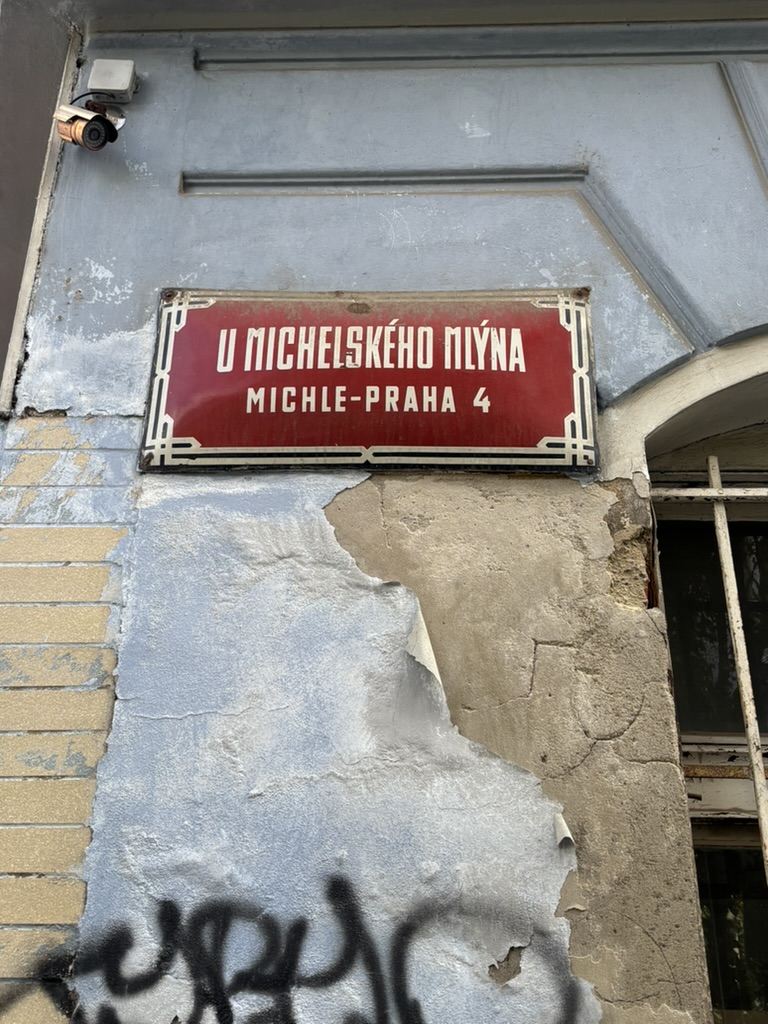
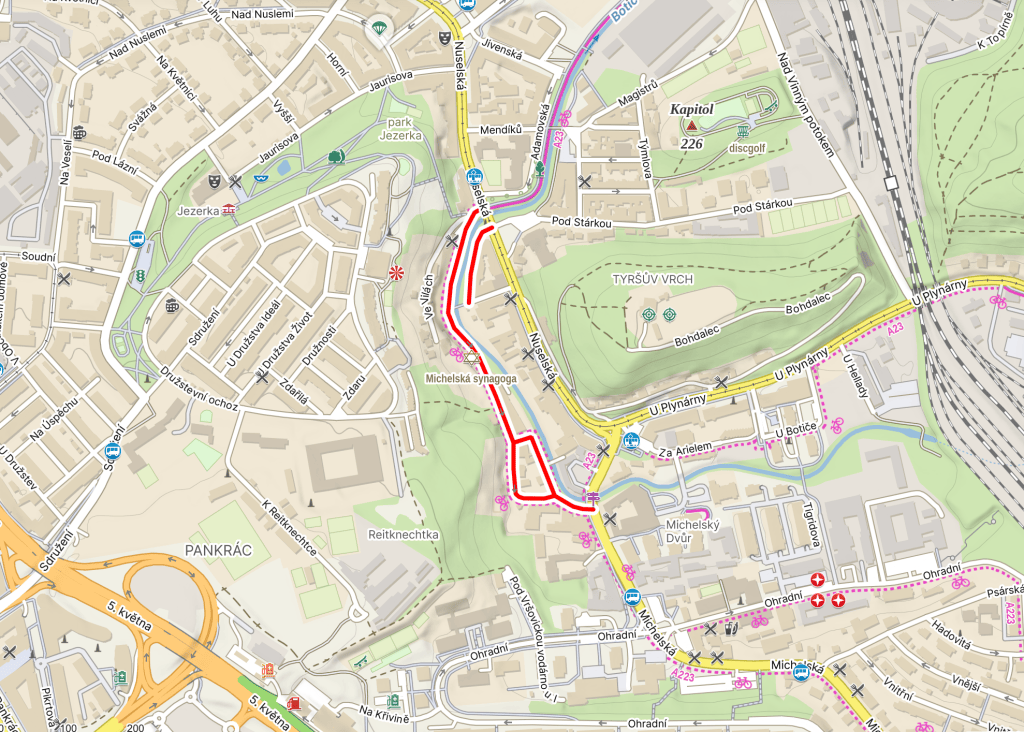
Although it was called Libušina until 1947 – see https://whatsinapraguestreetname.com/2024/08/23/prague-2-day-93-libusina/.
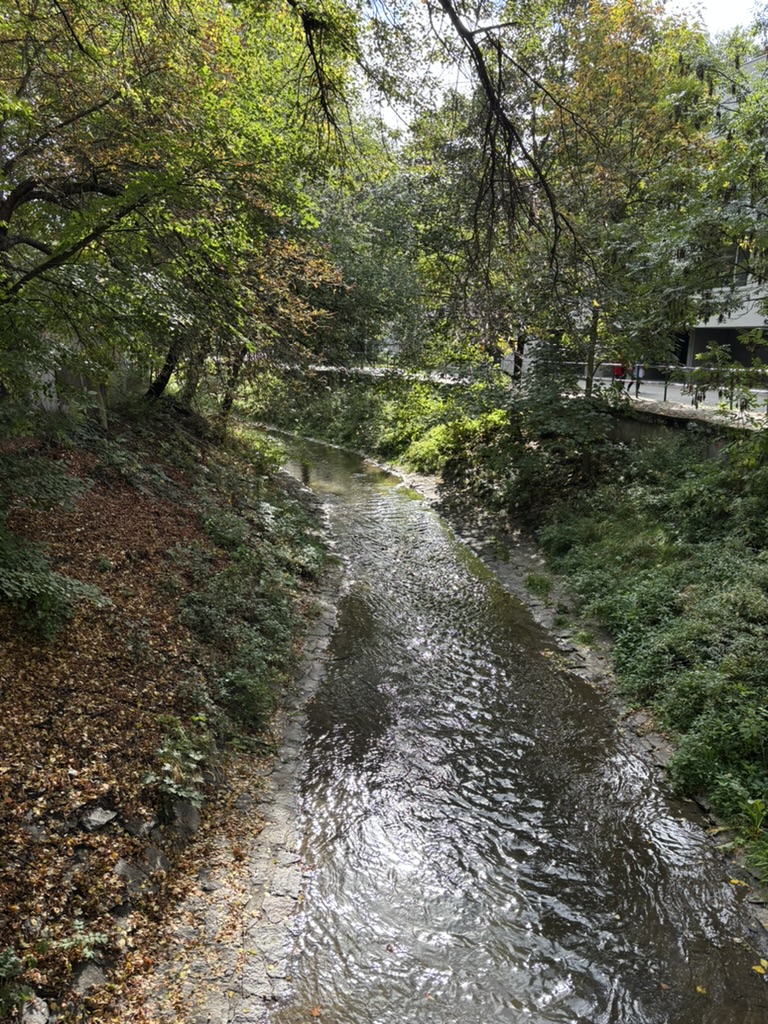
The earliest mention we have of the village of Michle is from 1185; then, in 1222, a document mentioned a local mill (mlýn), located on the Botič stream.
A long time later – around 1650 – it was purchased by Jan Marek Marci z Kronlandu, a man of many talents (physician, physiologist, mathematician, physicist, astronomer); he used it as a summer residence.
I’m now very conscious of what a jump it is to automatically assume this was the same mill.
Anyway, by the 2010s, all that was left was the residential building and the farmyard, both severely neglected (pictures on https://www.vodnimlyny.cz/fr/mlyny/estates/detail/1321-michelsky-mlyn).
The remants were knocked down and replaced by a residential building in 2015. Hmph.
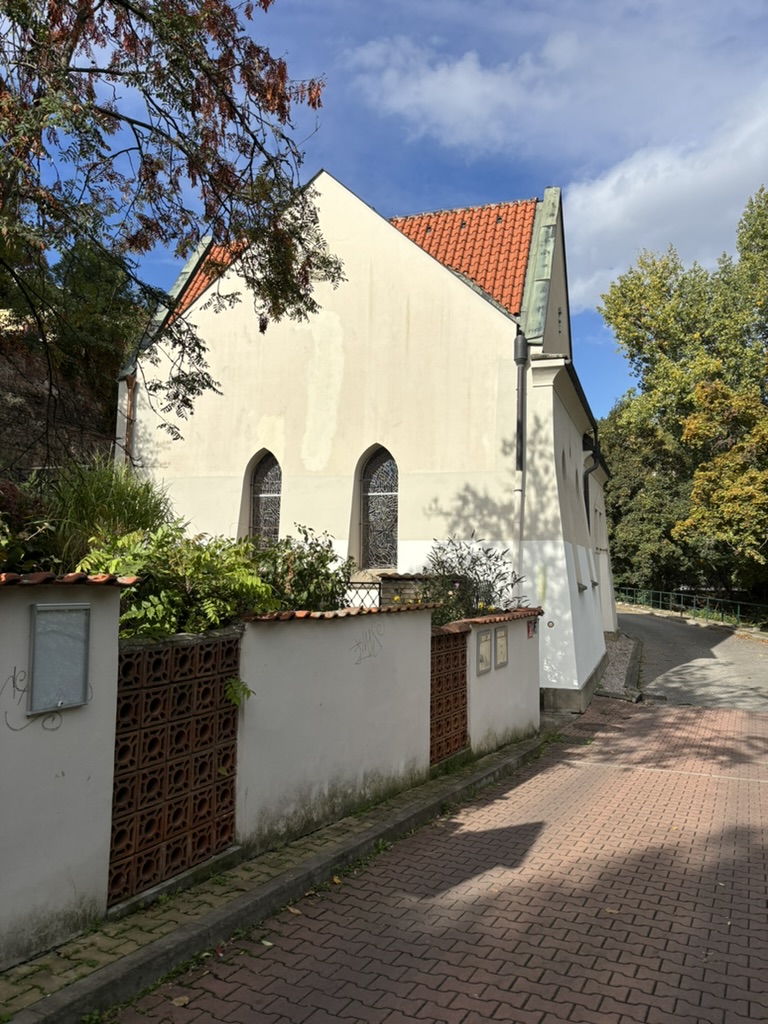
The Michle Synagogue, also located in this street, has been luckier. We don’t know when it was built – all we can really say is that it existed in the 19th century, in whose latter half it was embellished in Romantic Neo-Gothic style.
It served the Jewish population of Michle, Nusle, Vršovice, and Podolí, but after all these places became part of Prague in 1922, the synagogue was too small to fulfil demand.
The local Jewish population raised funds for its reconstruction and expansion, but World War II and its unspeakable treatment of Europe’s Jews started before this could begin. Somehow, the synagogue survived the Nazi occupation.
After World War II, the synagogue became part of the Jewish Museum; in the 1950s, it housed Torah scrolls that the Nazis had stolen from other synagogues in Bohemia and Moravia.
Most of these were transferred to the Westminster Synagogue in London in 1964 (https://memorialscrollstrust.org/). The Michle Synagogue, meanwhile, fell into disrepair.
In 1975, it was purchased by the Czechoslovak Hussite Church – meaning that, these days, it’s a Christian place of worship rather than a Jewish one.


Leave a Reply