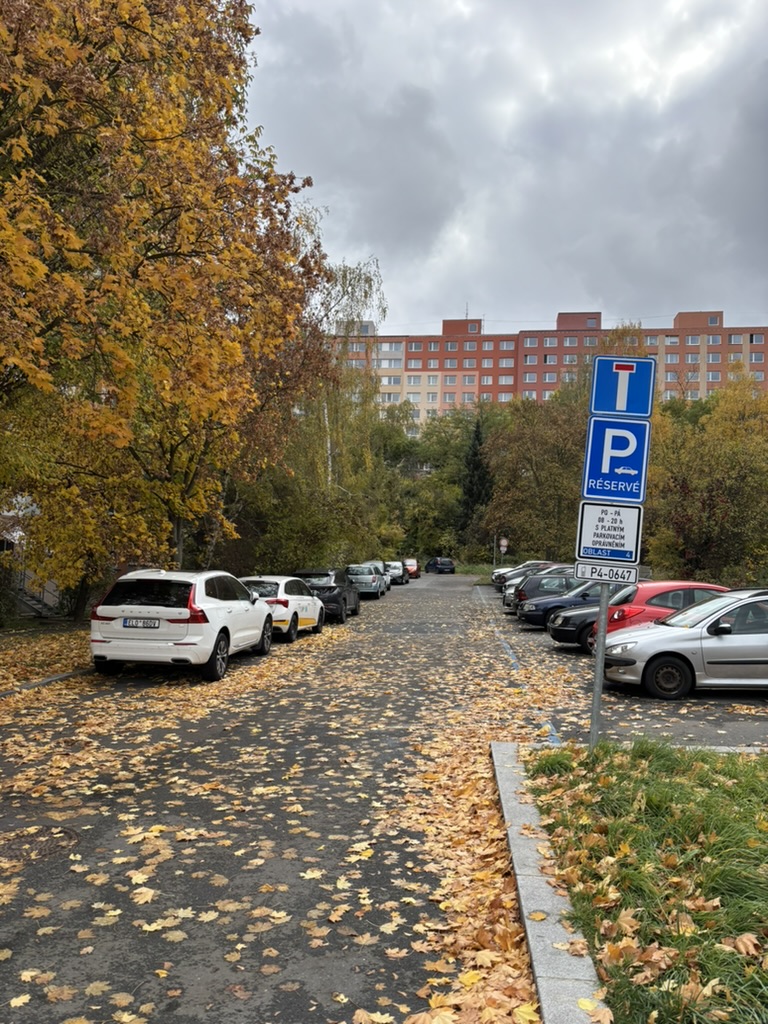
Pod vršovickou vodárnou I was named in the late 1940s. My attempts to find a street sign were unsuccessful.
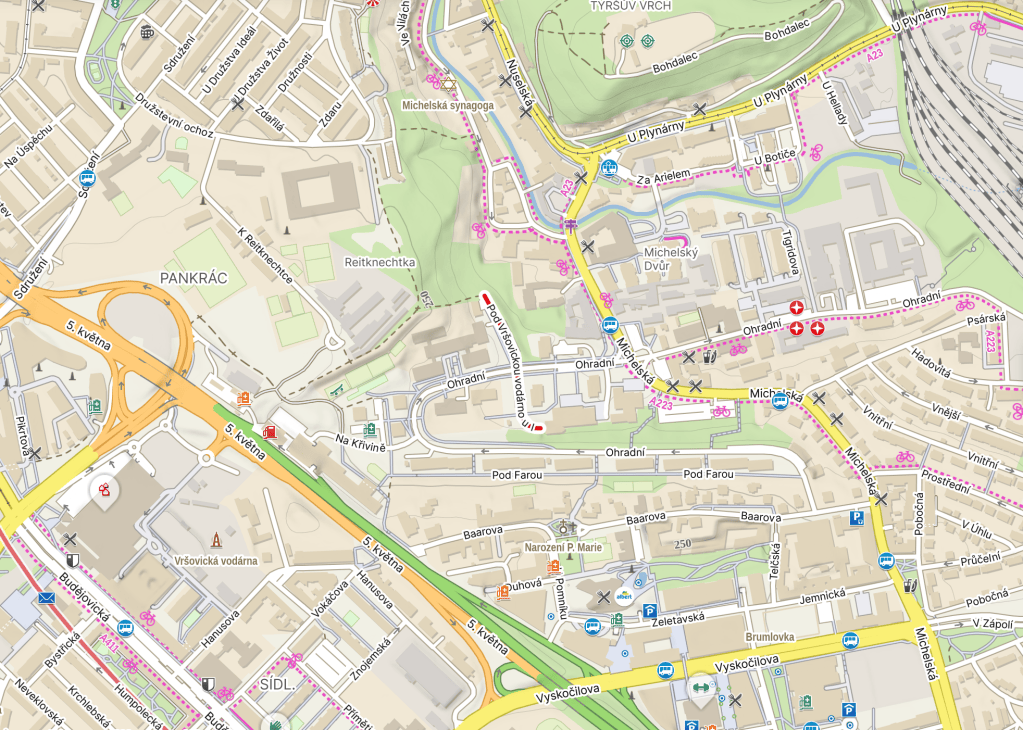
Between 1906 and 1907, the town of Vršovice built a waterworks (vodárna), with a water tower, an underground reservoir, a pumping station and a residential building.
It was designed by Jan Kotěra, who also designed, among many other places, Peterkův dům on Václavák (https://whatsinapraguestreetname.com/2024/09/17/prague-1-day-123-vaclavske-namesti/).
And the Academy of Arts, Architecture and Design in Prague (https://whatsinapraguestreetname.com/2024/10/22/prague-1-day-211-namesti-jana-palacha/).
And a heck of a lot more besides: https://cs.wikipedia.org/wiki/Seznam_d%C4%9Bl_Jana_Kot%C4%9Bry.
The Michle water tower stands out due to its height (42 metres), its exposed bricks and its copper roof.
The waterworks originally provided drinking water not only to Vršovice (which we haven’t covered in this series yet), but to Braník and Krč (which we have), and to Michle (which we’re on right now).
In the late 1920s, it probably became the first waterworks to apply chlorination. The waterworks was used until the 1960s as a source of drinking water for civil defence purposes (meaning it outlived several of its counterparts).
Until 1975, the waterworks served to convey water from the Podolí Waterworks (https://whatsinapraguestreetname.com/2025/07/12/prague-4-day-142-vodarenska/) to Vinohrady and Vršovice.
There are excellent photos of the waterworks – both inside and out – on https://commons.wikimedia.org/wiki/Category:Vr%C5%A1ovice_waterworks_in_Michle.


Leave a Reply