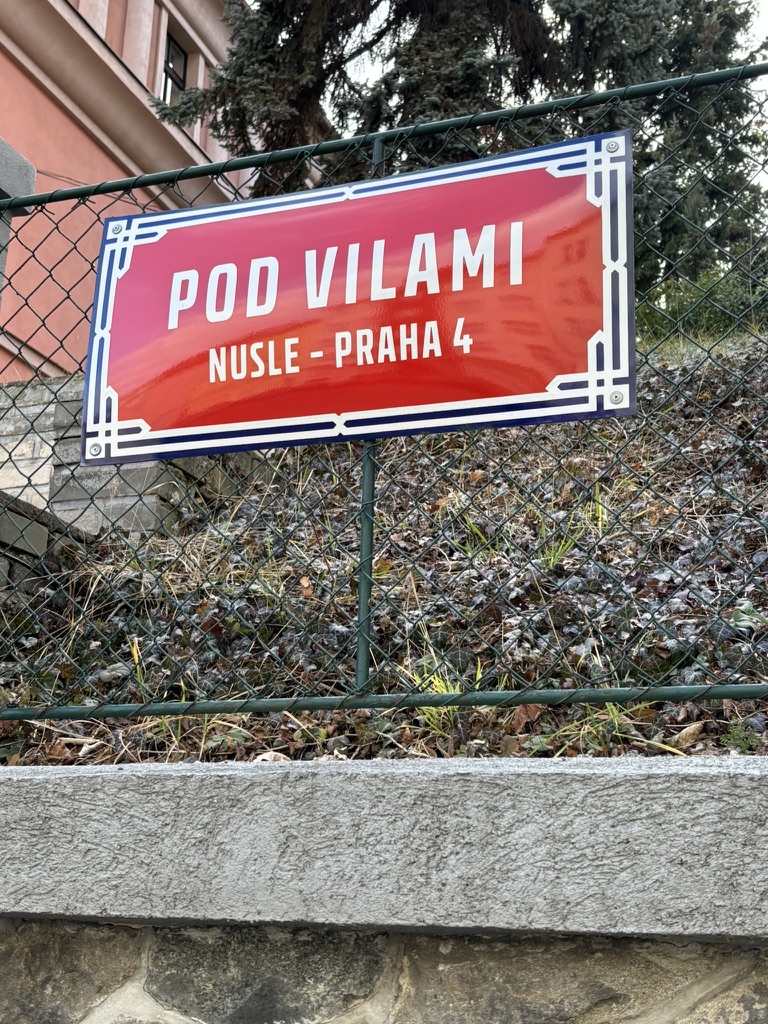
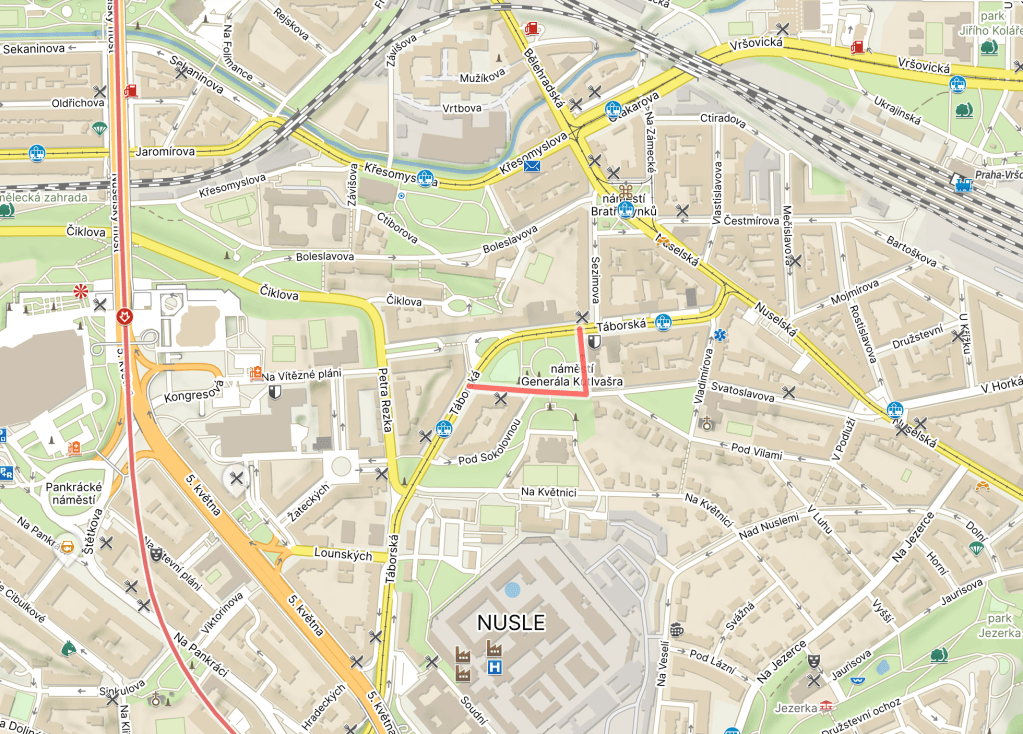
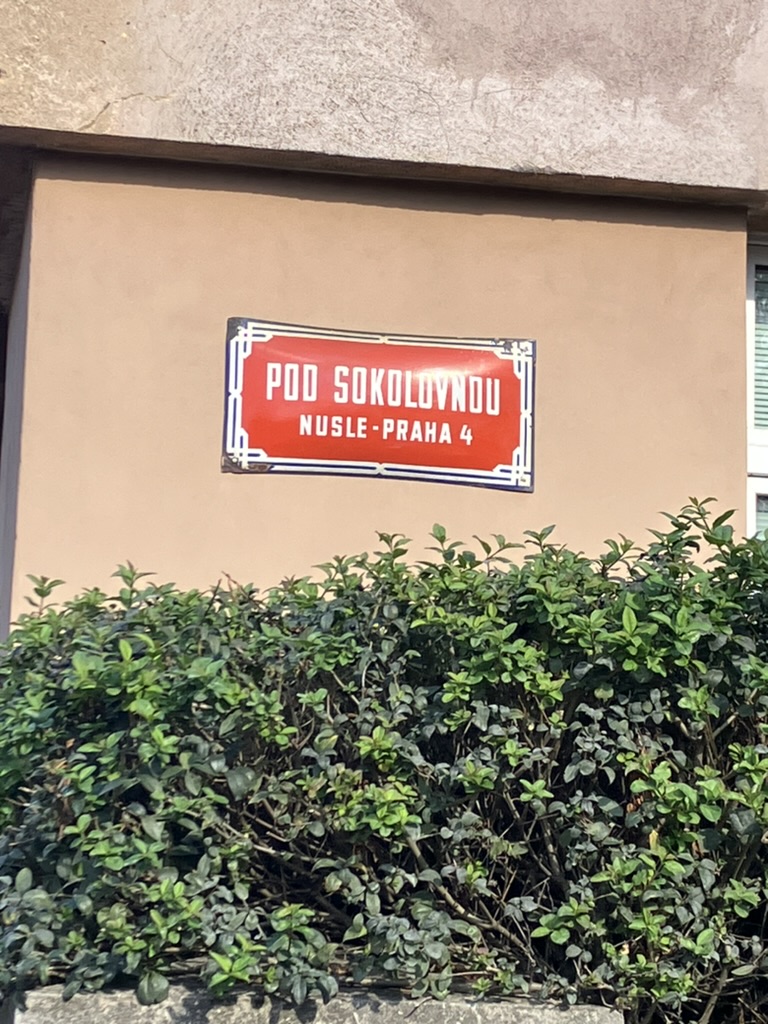
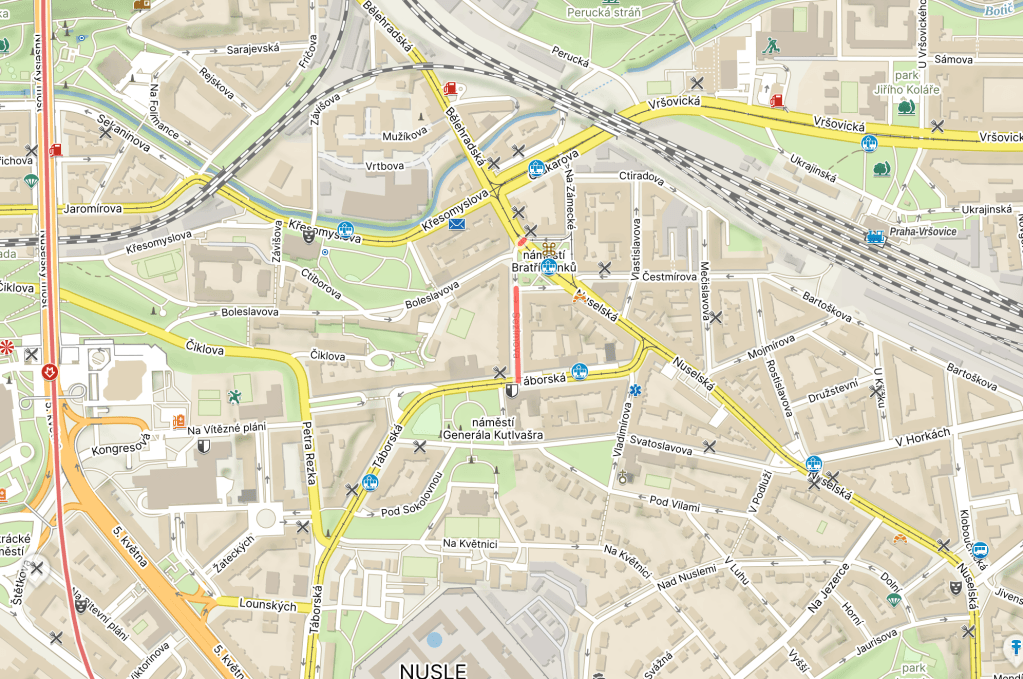
The street name translates as ‘below the villas’, and, well, that’s pretty self-explanatory.
The corner of Pod vilami and Vladimírova features St Wenceslas Church (Kostel svatého Václava), built in 1898, the year in which Nusle, not yet part of Prague, was elevated to the status of royal town.
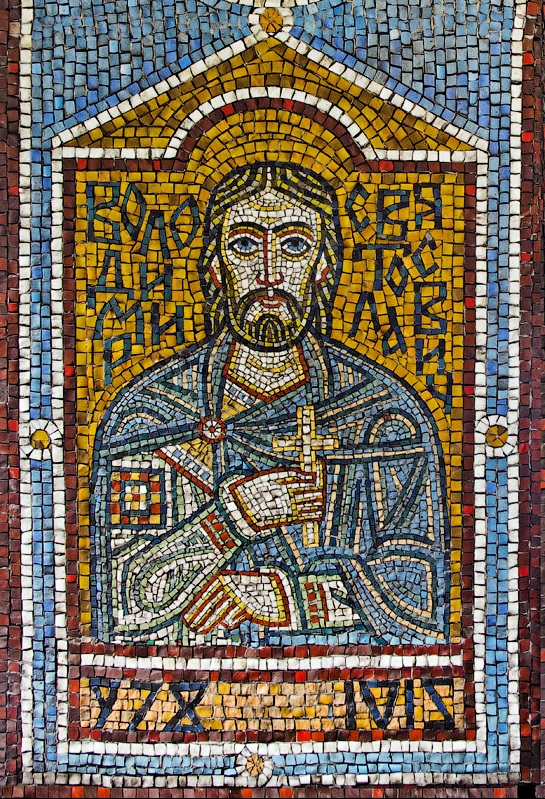
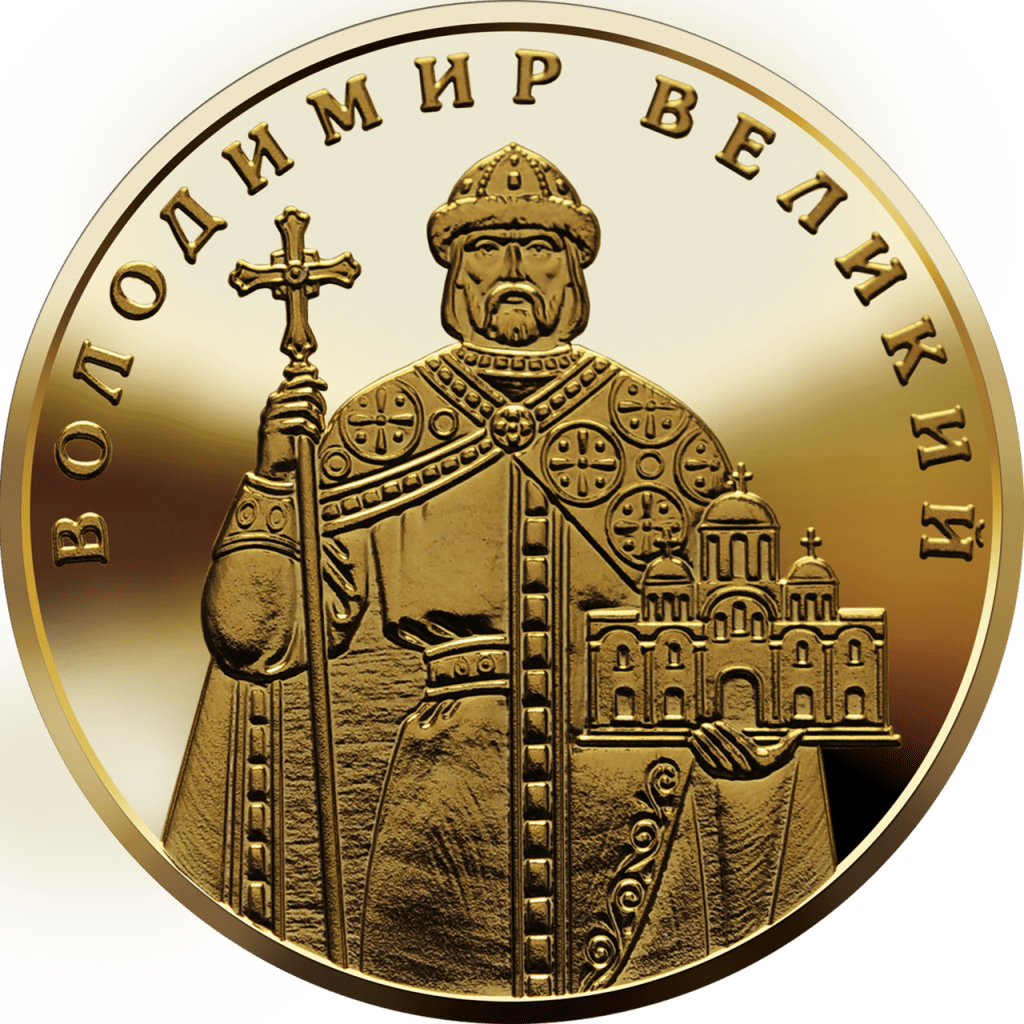
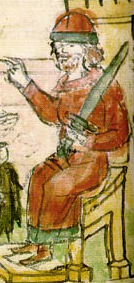
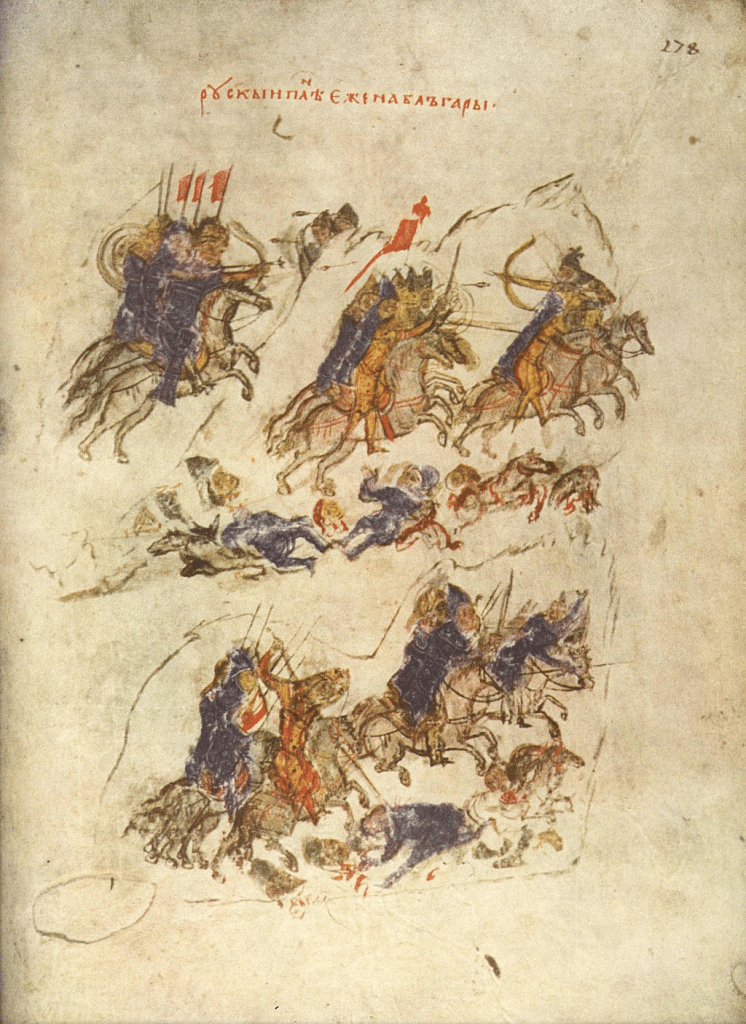
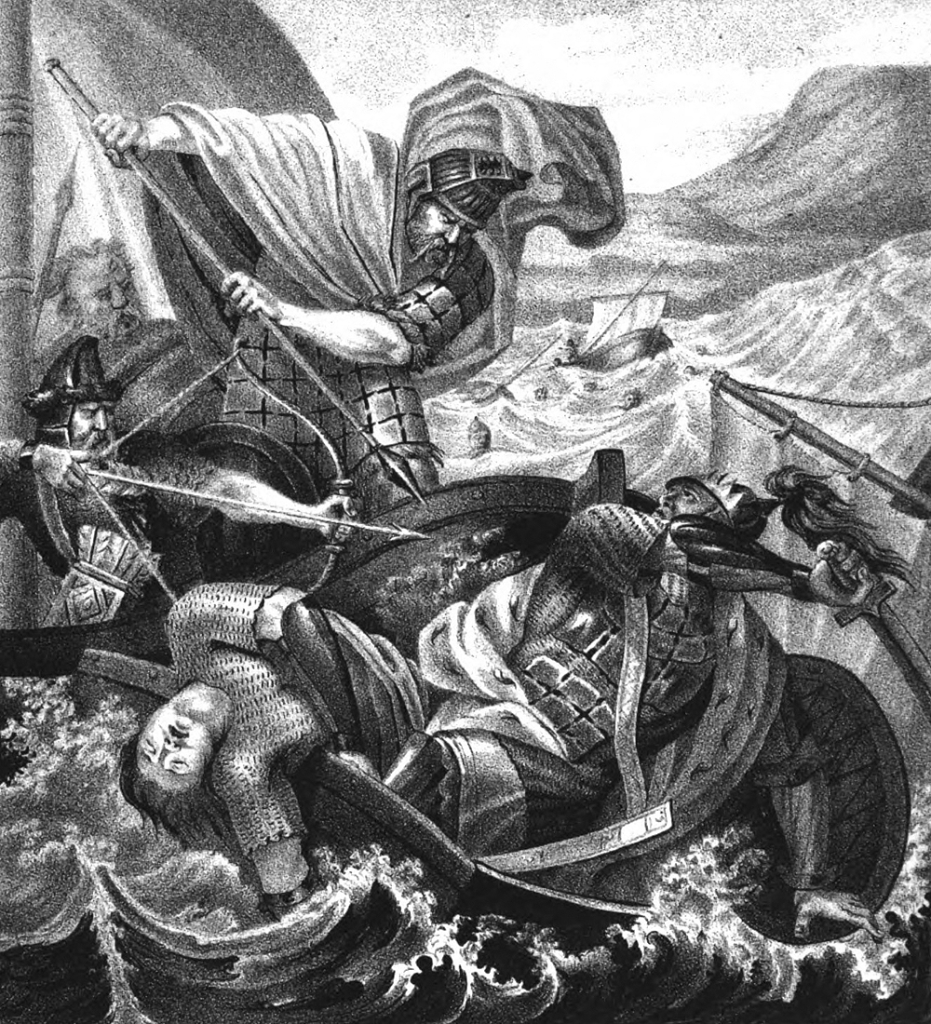
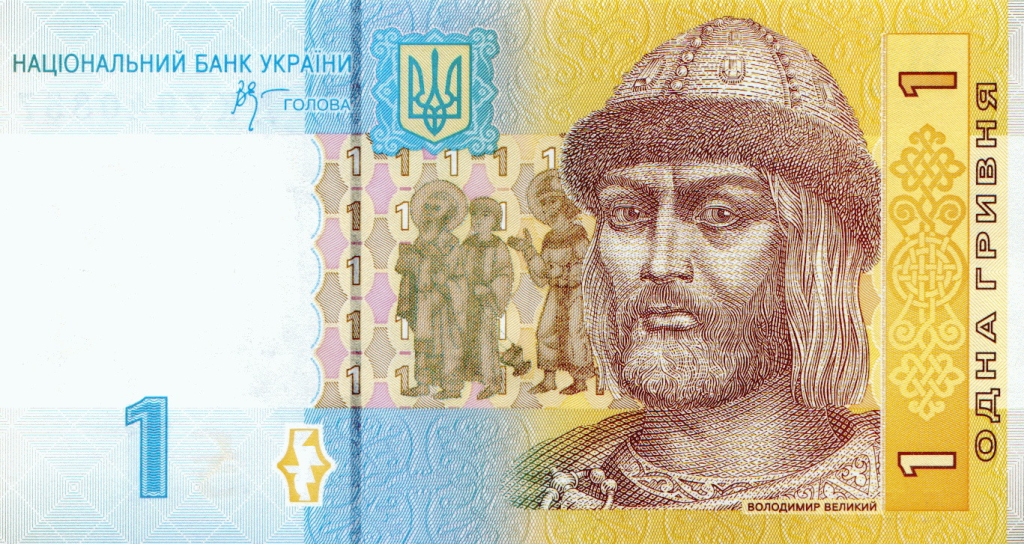
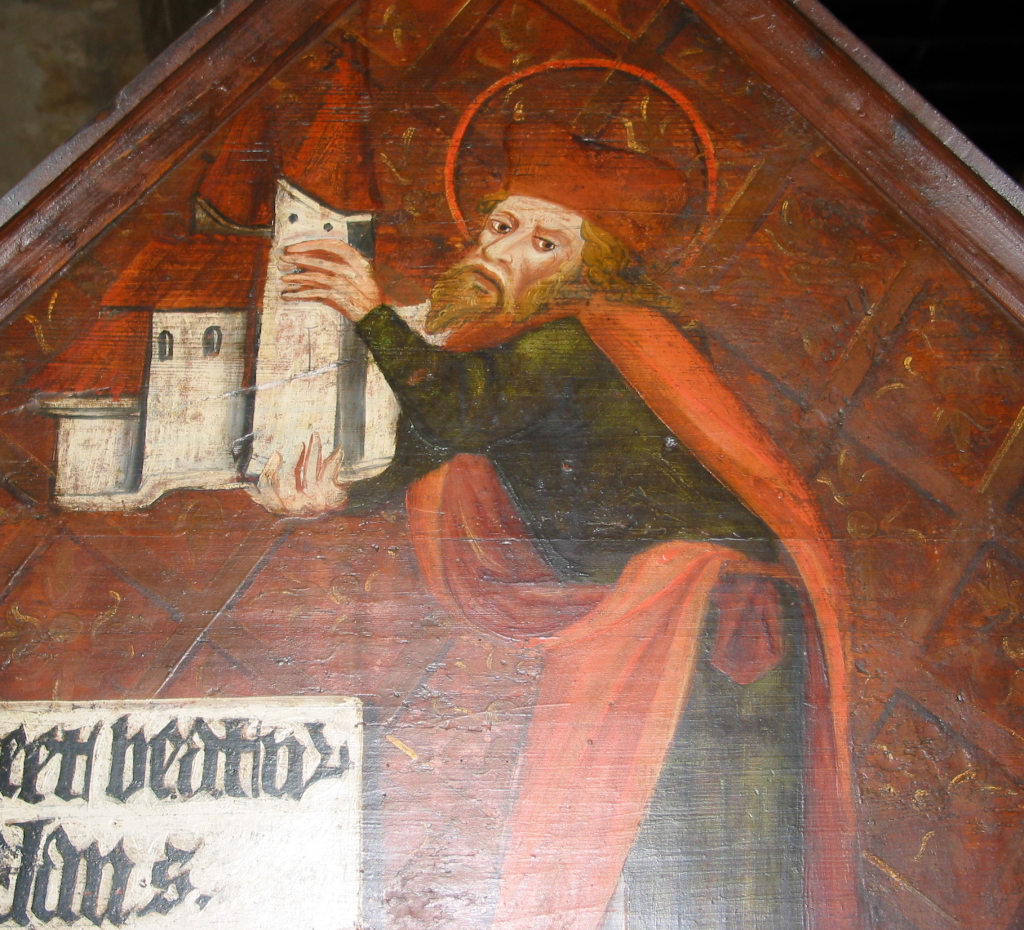
In 970, Sviatoslav made his legitimate son, Yaropolk (pictured), ruler of Kyiv; Vladimir was put in charge of Novgorod.
Sviatoslav was murdered two years later, and war broke out between Yaropolk and the third brother, Oleg (who Vladimir supported).
Vladimir took Polotsk by force – largely because its prince had refused to allow him to marry his daughter, Rogneda, and so Vladimir decided that he would have to take her by force.
He also captured Smolensk, and, in 978, he killed Yaropolk and became Prince (knyaz) of Kyiv.
During his reign, Vladimir extended his territories beyond what his father had ruled; he also maintained his father’s pagan beliefs, at least at first.
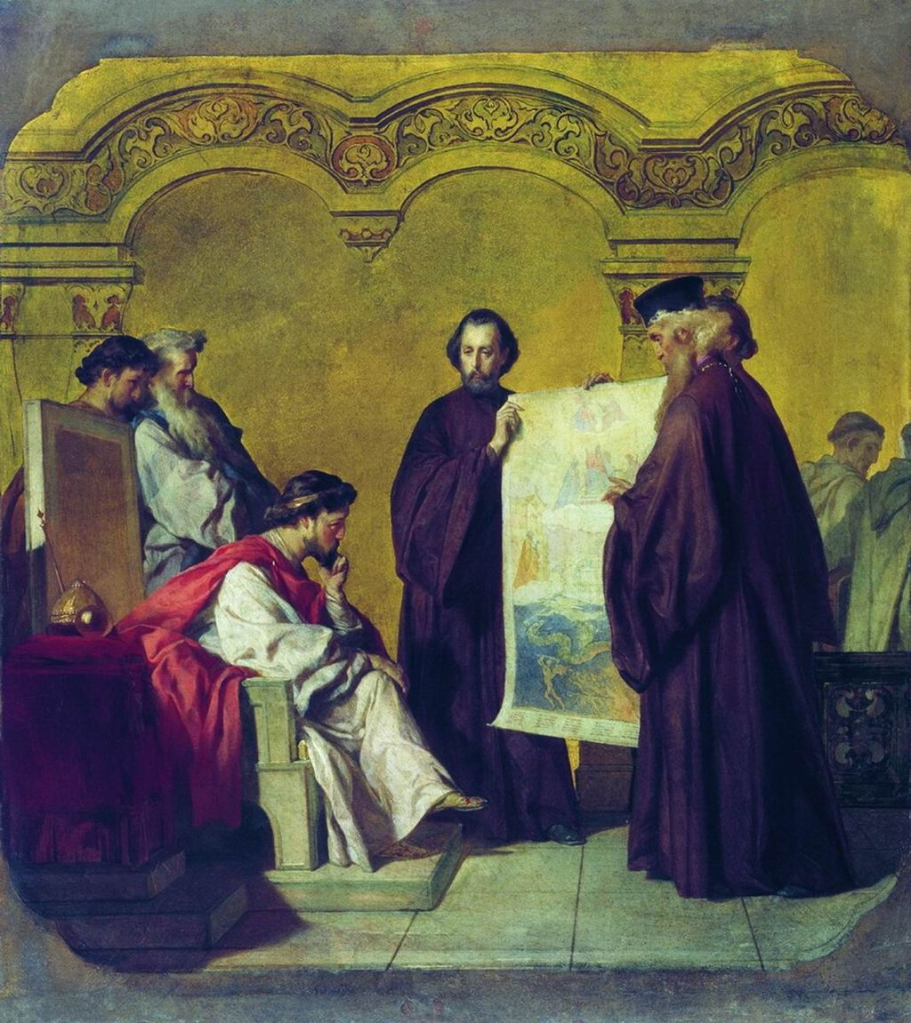
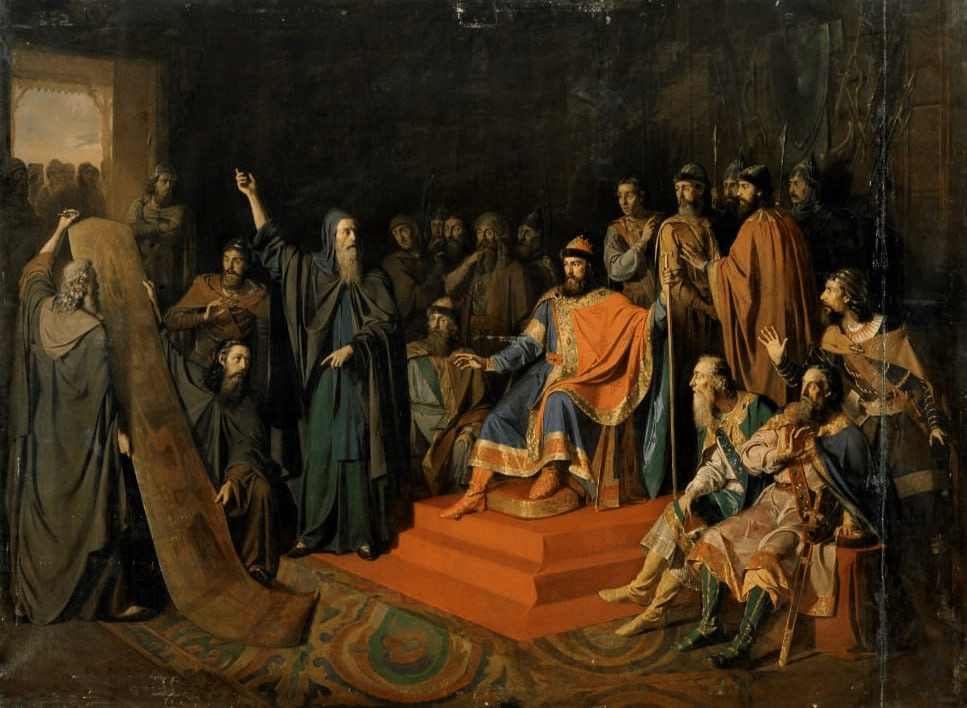
Stories of Vladimir’s conversion to Christianity vary (don’t they always?). One has it that, in 988, Vladimir besieged Chersonesus (located where Sevastopol is now), and requested the hand of Anna, daughter of the Byzantine Emperor, Basil II. In order to get her as his wife, he agreed to be baptised.
Returning to Kyiv, Vladimir destroyed pagan monuments and had churches built. He also founded the city of Belgorod in 991.
Despite his taste for war and conquering, Vladimir lived in relative peace with his neighbours for the last years of his life. He died, probably of natural causes, in 1015.
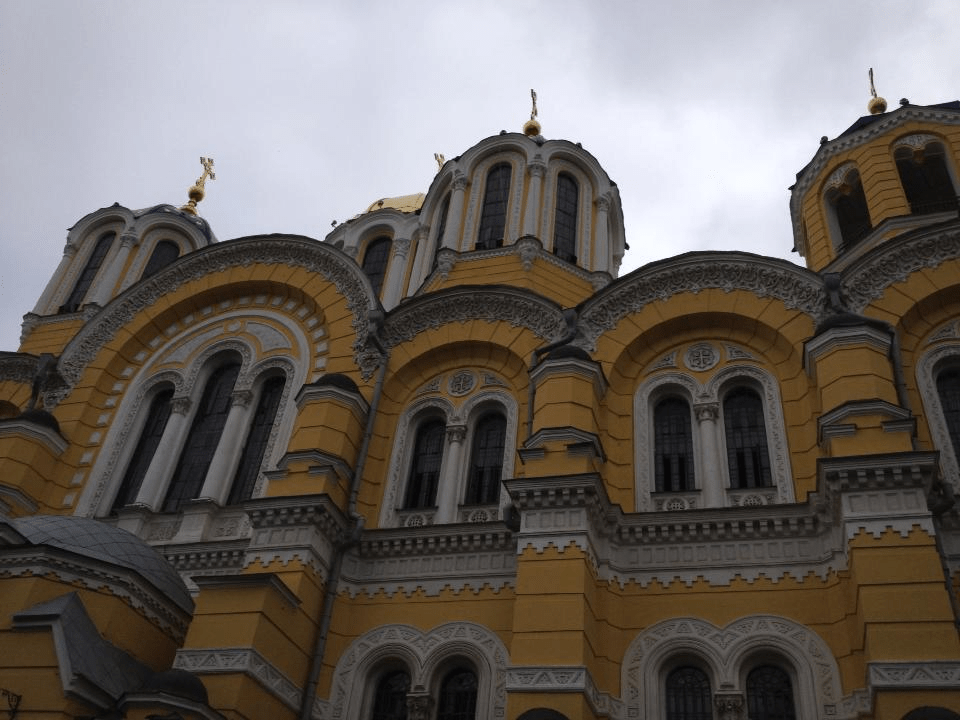
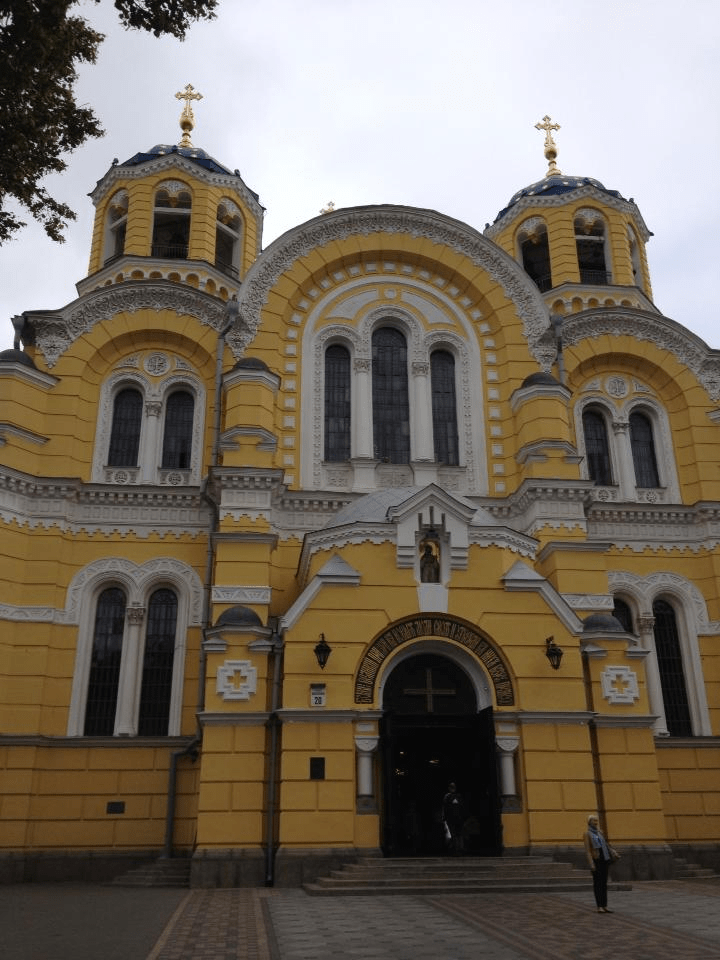
St Volodymyr’s Cathedral, in Kyiv, is dedicated to him (pictures taken in 2013. I love that city).
I can’t say with certainty when Svatoslavova was built, but it’s had its name since 1900.
There are Svatoslavs that the street could be named after. I’ll get the more Czech – but less interesting – one out of the way, and then I’ll move on to option two.
Option 1
Svatoslav was an alleged Bohemian duke who, according to the Fulda Annals (an East Frankish chronicle covering a period from about 840 to 900), took part in a battle against the Franks on the Vltava in 872, along with five or six other dukes (including Bořivoj: https://whatsinapraguestreetname.com/2023/01/14/prague-3-day-134-borivojova/).
The Bohemians lost; it’s not known if Svatoslav survived, but he’s not mentioned in any other texts.
Option 2
Sviatoslav was born around 943, the son of Igor, Prince of Kyiv since 922, and his wife, Olga.
Igor was killed in 945 by the Drevlians, an East Slavic tribe, after which Olga ruled as regent until Sviatoslav was old enough to do so himself (we believe he ruled from 963).
However, before Igor died, he formed a close military alliance with the Byzantine Empire; this will be relevant later on.
Olga converted to Orthodox Christianity in 957 (and is venerated as a saint nowadays), but Sviatoslav would remain a pagan for his entire life. For example, in a treaty signed with the Emperor of Byzantium in 971, he swore by two gods, one of whom was Perun – who you can learn a bit about on https://whatsinapraguestreetname.com/2023/12/23/prague-3-day-183-perunova/.
Once Sviatoslav was able to rule in his own right, he really got down to business. In 964-5, he and his Rus troops defeated a neighbouring tribe, the Vyatichi, and also put an end to the Khazar Khaganate, one of the strongest states in the region.
In 965, he destroyed the Khazar city of Sarkel, establishing a Rus’ settlement called Belaya Vyezha (White Tower) in its place. He also destroyed the Khazar capital, Atil.
Around 967, the Byzantine Emperor, Nikephoros II Phokas, asked Sviatoslav for help in a war against Bulgaria; Sviatoslav provided 60,000 men. He was victorious, and ended up occupying northern Bulgaria.
Meanwhile, the Byzantines bribed the Pechenegs, a nomadic Turkic people, into besieging Kyiv. Sviatoslav therefore returned, but refused to give up his Bulgarian gains to the Byzantines.
Sviatoslav decided to move his capital to Pereyaslavets (exact location unknown, but located in present-day Bulgaria or Romania). In 969, he left Rus’, which he had divided between his three sons.
He devastated Thrace, captured Philippopolis (current-day Plovdiv), and laid siege to Adrianople (current-day Edirne) in 970. Byzantium – now ruled by John Tzimiskes – launched a counter-offensive, defeating Sviatoslav’s forces at the Battle of Arcadiopolis.
John proclaimed himself the liberator of Bulgaria; Sviatoslav retreated to Silistra (modern-day Silistra, Bulgaria), where the Byzantines besieged him and his men for sixty-five days until he agreed to give up on the Balkans.
The Byzantines were scared that Sviatoslav wouldn’t keep his word, so John asked Kurya, the Pecheneg khan, to kill him before he got back to Kyiv. This happened near Khortytsia, the largest island on the Dnieper River, in 972.
After Sviatoslav’s death, tensions broke out between his three sons; ultimately, two would be killed, and the third, Vladimir I Sviatoslavich, or Volodymyr the Great, would rule Kyiv from 978 to 1015, and would convert to Christianity in 988.
Initially, I thought that the street was much more likely to have been named after option 1. Then I started writing tomorrow’s post, and realised I was wrong.
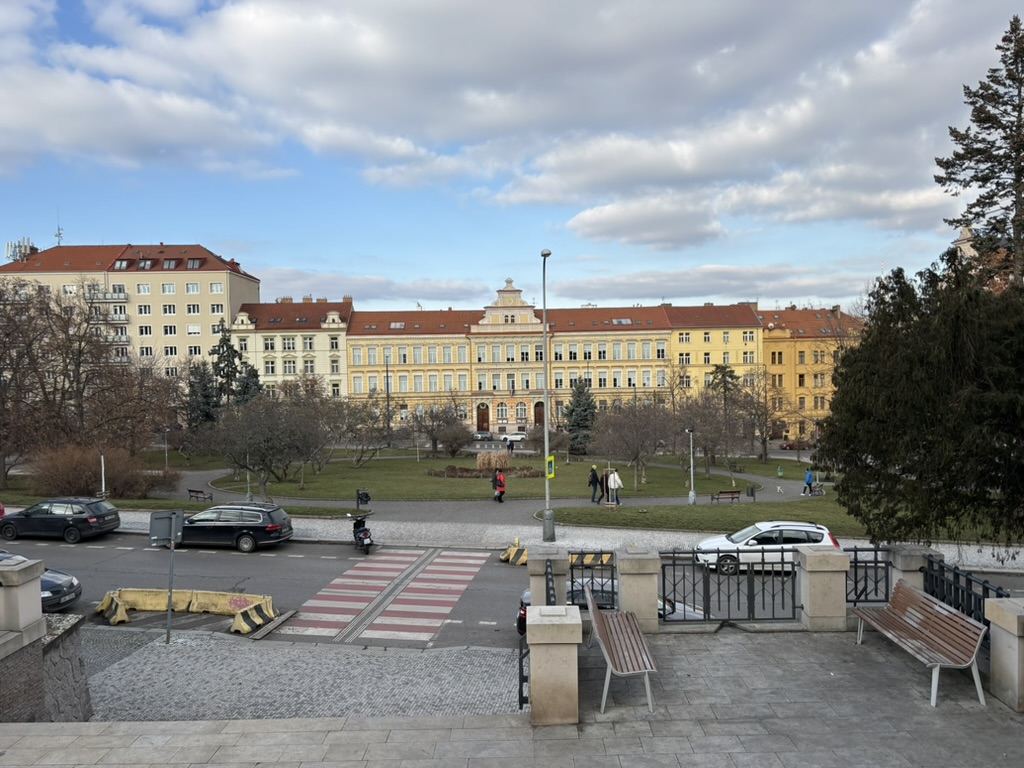
Náměstí Generála Kutlvašra (General Kutlvašr Square) was built in 1911.
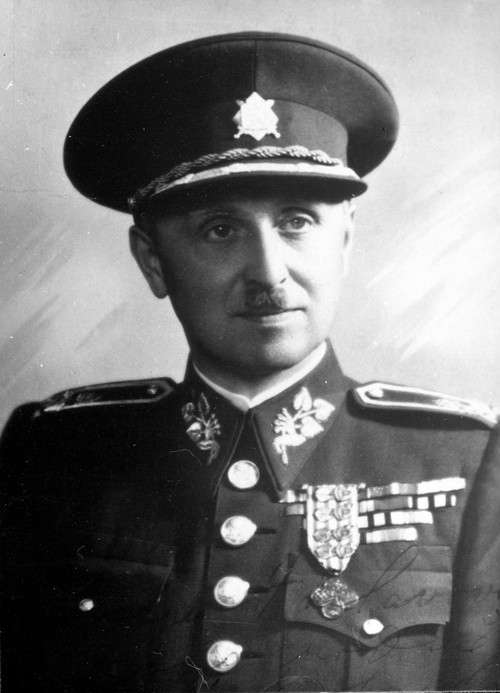
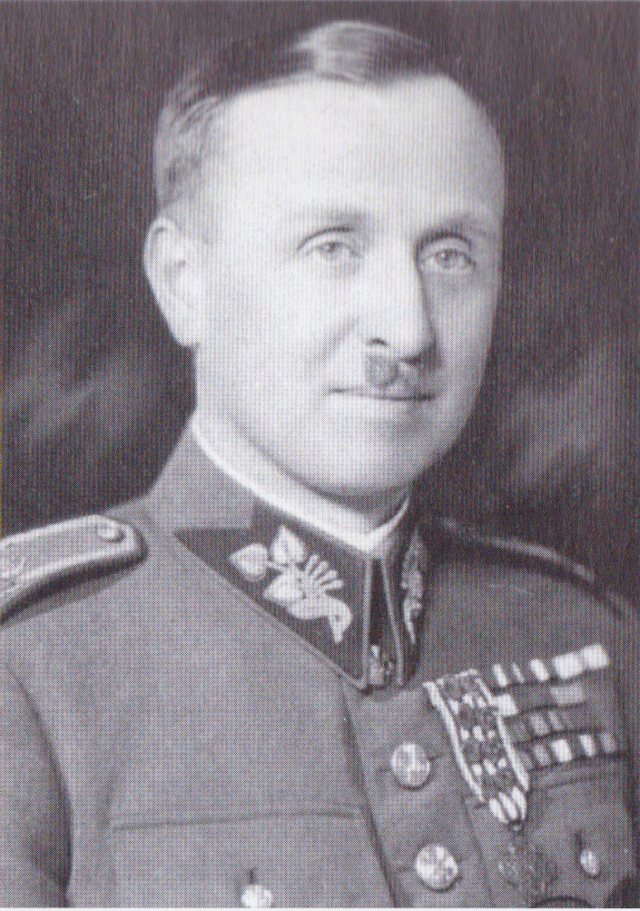
Karel Kutlvašr was born in Michalovice, near Havlíčkův Brod, in 1896. Graduating from business school in 1911, he first worked in Humpolec, then in Kyiv.
However, when World War One started, he joined the Czech Company, a volunteer unit consisting of Czechs living in the Russian Empire.
In 1918, he participated in the capture of Kazan; in 1919, he became the Regiment’s commander. Then, in 1920, he finally returned to Czechoslovakia.
In the 1920s, he served as a commander in České Budějovice, then in Chomutov, eventually becoming one of the country’s youngest generals.
He then served in Hradec Králové. By the time World War Two came, he was in charge of Border Region 35 in Vamberk (also in the Hradec Králové region).
During World War II, he was a member of Obrana národa (Defence of the Nation), a resistance organisation fighting against the Nazi occupation.
In April 1945 – during the planning phase for the Prague Uprising – he was named commander of the Bartoš Command, which was supposed to oversee the fighting in central Prague.
It was Kutlvašr who, on 5 May, ordered that the insurgents occupy the Radio Prague building.
Three days later, he was one of those who negotiated the Nazi surrender in Prague in exchange for the free passage of German soldiers through the city before they were captured by Allied forces.
Kutlvašr was military commander of Prague until 28 May, then went to Brno to serve the same role. However, he was dismissed by the Czechoslovak government just two days later, as requested by the Soviet Ambassador.
This was because of his role in the negotiations with the Nazis. Barely three weeks after commanding the Prague Uprising, Kutlvašr seemed to be out of a job.
President Beneš intervened, and Kutlvašr served again from 1946 to 1948. However, when the Communists took power as a result of their coup in February 1948, he was put on leave again.
In December, he was arrested for his alleged membership in an alleged resistance group, ‘Pravda vítěží” (Truth will prevail). He was sentenced to life imprisonment in 1949, and was amnestied in 1960, by which point he was in very poor health.
However, he died during a medical examination in 1961. Charges against him were dropped posthumously in 1968, but he wasn’t fully rehabilitated until 1989. Nine years later, this square was named after him.
Nusle’s town hall – one side of which is on the square, although the picture below is from Táborská – has a bust commemorating Kutlvašr.
Then, in 1948, it was renamed náměstí Československých legionářů (Square of the Czech Legionnaires – again, you may want to click on the Prague 1, day 90 link I posted above).
The Legionnaires were clearly not quite communist enough, because in 1962, the square was renamed again, this time to náměstí Pařížské komuny (Square of the Paris Commune). For those not so versed in non-local history (full disclosure: this includes me): the Paris Commune was a revolutionary government that seized power in March 1871, but only ever controlled parts of the city, and only until the end of May of that year.
If we’re talking about France, Kutlvašr’s titles include both the Legion of Honour and the Croix de Guerre.
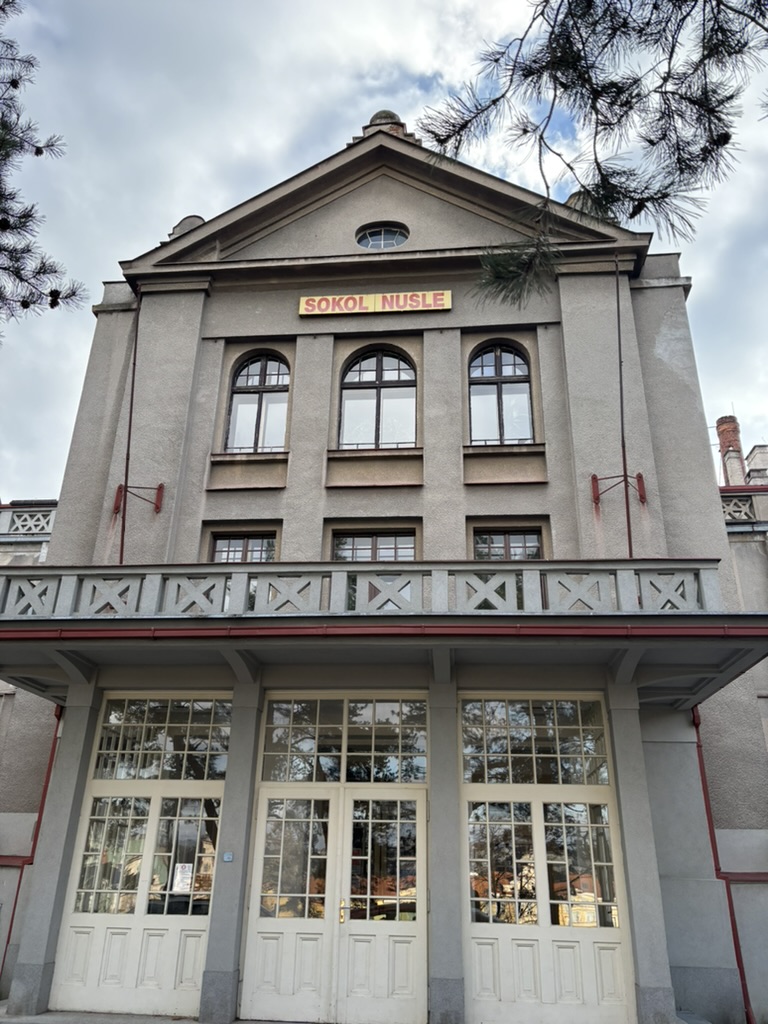
In communist times, the powers-that-be decided that the Sokols should be replaced with the joyful-and-spontaneous-as-they-sound Czechoslovak Union of Physical Education.
From 1948 until the end of the communist regime (when the Sokols were revived), the former Nusle branch was used by Slovan Orbis Praha, a basketball club.
SOP did well in their time, though: the men’s team won the Czechoslovak championship twice, whereas the ladies won nine times between the 1953-4 and 1964-5 seasons, i.e. 75% of the seasons that took place in that timeframe.
They (the women’s team) also reached the final of the European Cup (nowadays EuroLeague Women) on three occasions.
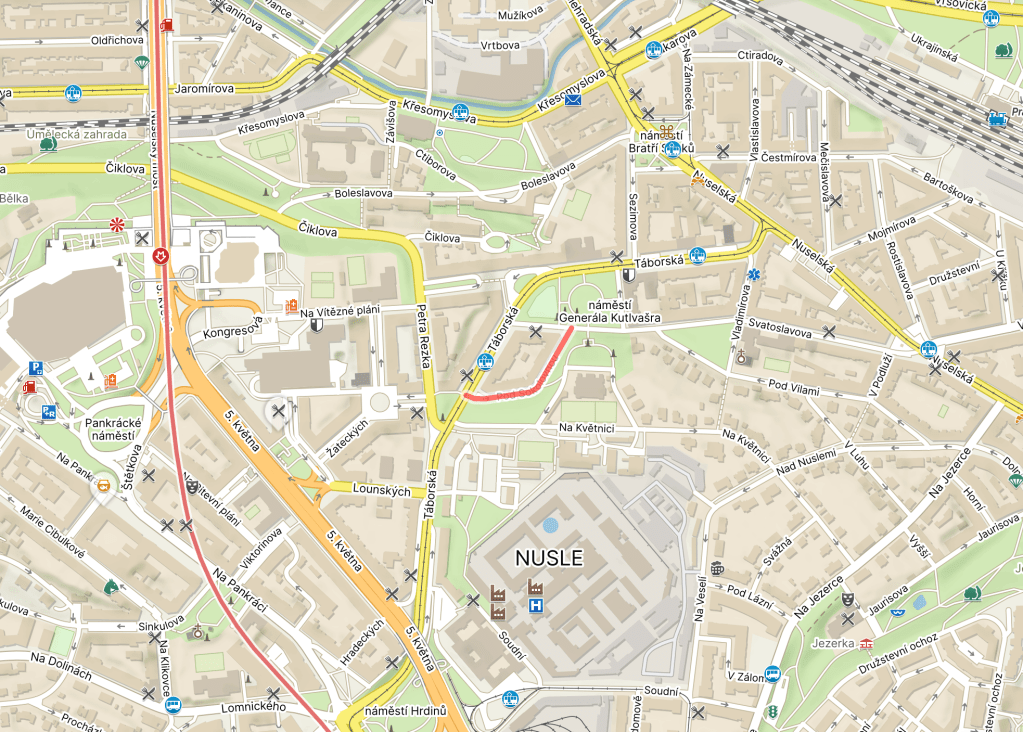
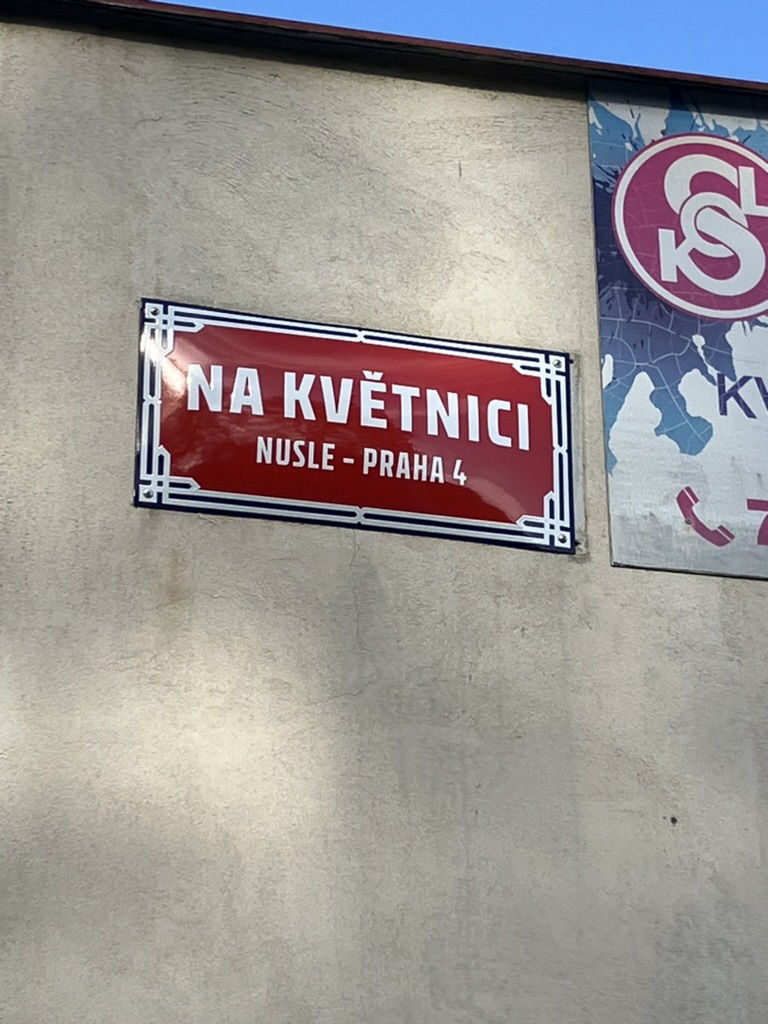
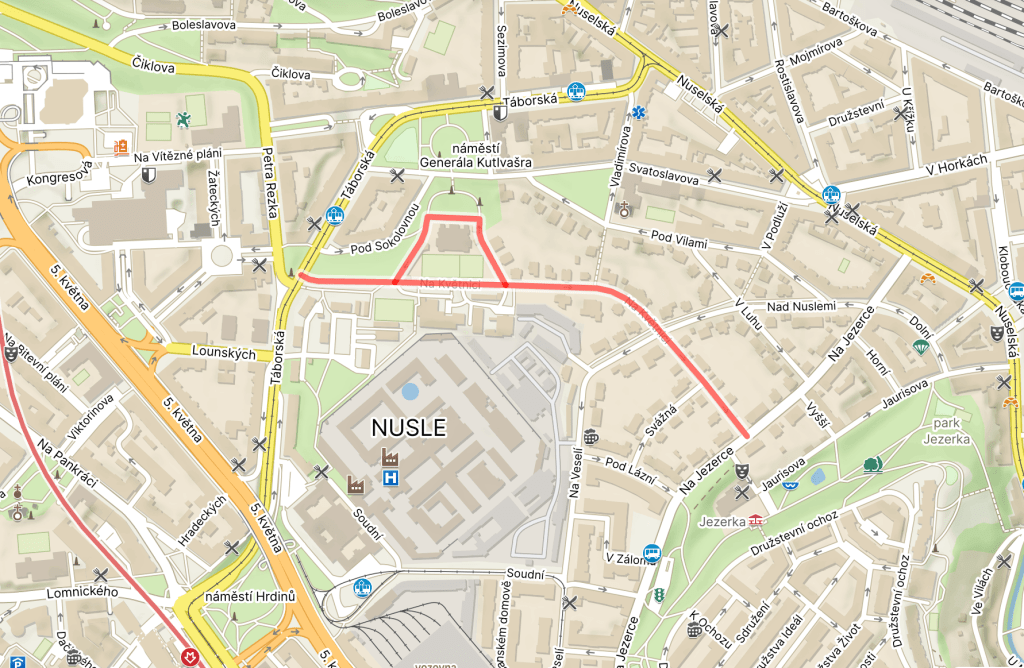
‘Květnice’ is a now-obsolete word used to denote a flower garden. There’s a settlement in Prague East called this, complete with a castle with the same name.
It also seems that there was a local settlement with the name here in Nusle.
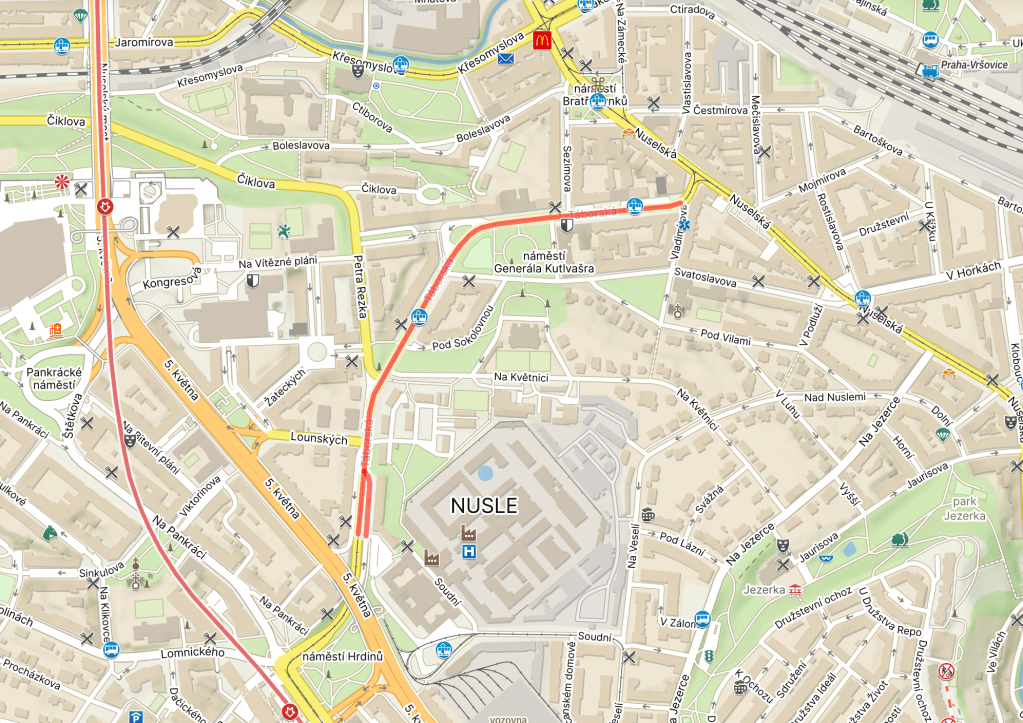
Originally, this was part of the road from Prague to České Budějovice and then on to Linz, and was therefore known as Linecká, Budějovická, or, reflecting its direct surroundings, Nuselská.
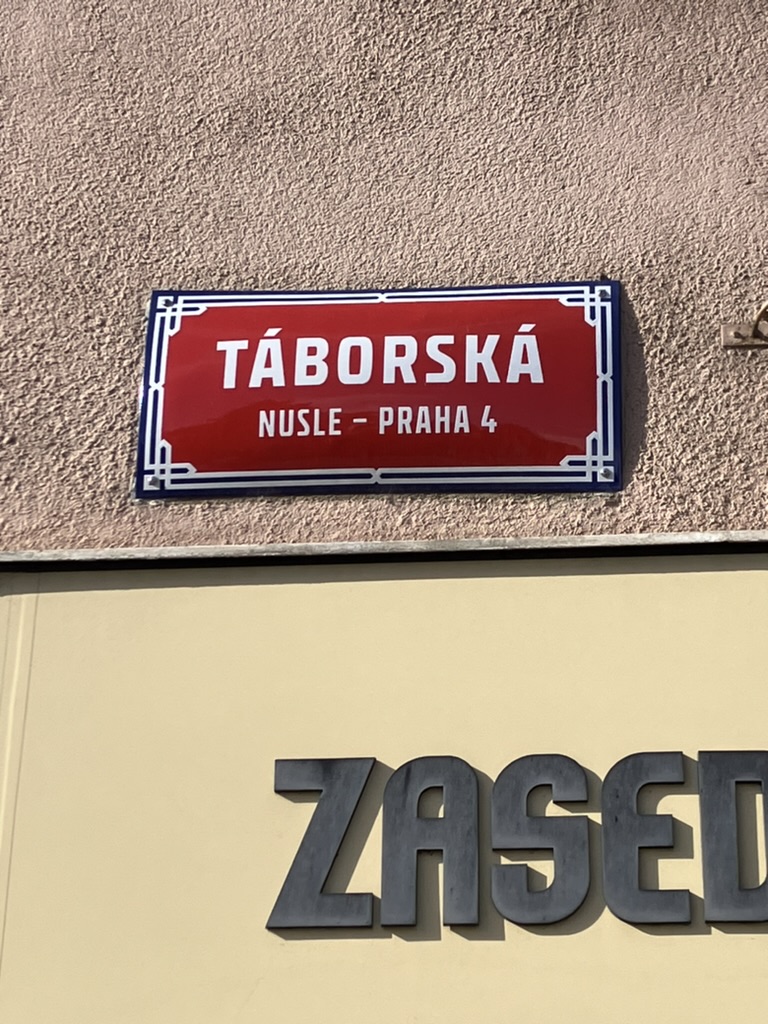
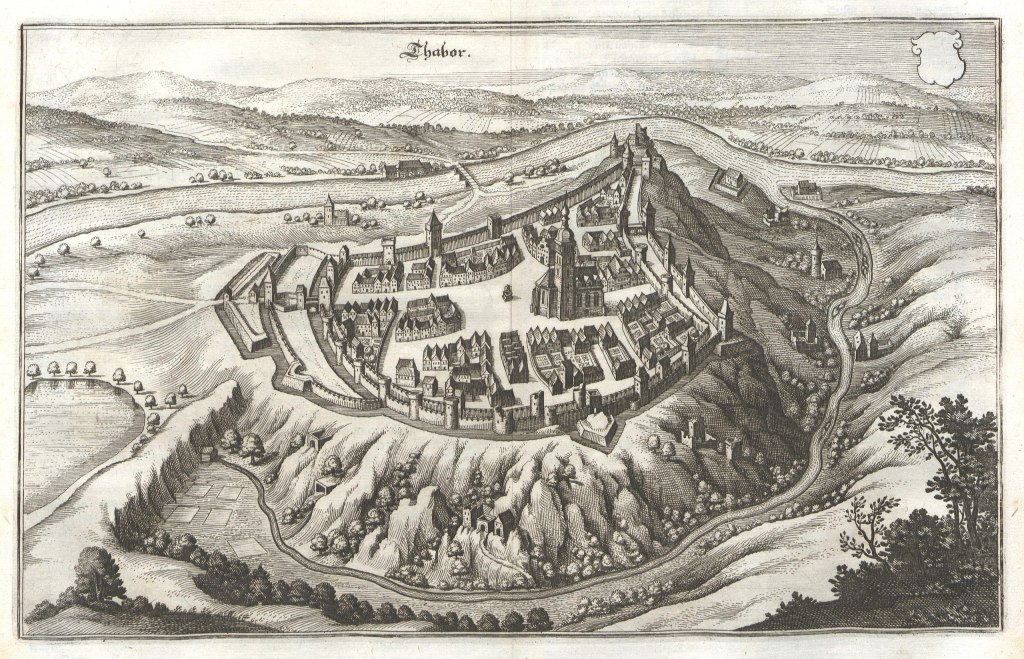
Tábor, population 34,000, is the second-largest town in South Bohemia.
There’s also a Mount Tabor in North Galilee; three out of the four Gospels state that this is where Jesus was transfigured and began to shine with rays of light (interpretation by Raphael).
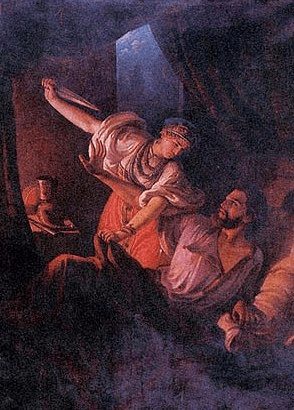
Later on, in the Book of Judges, a battle took place at Mount Tabor between the Israelites and the Canaanites after a prophetess, Deborah, had summoned Barak, a military commander, to take ten thousand soldiers there.
Back in South Bohemia, archaeologists have proved that there was a settlement here in the 13th century, even though this isn’t backed up by contemporaneous written sources.
Moving forward to the early 1400s, the Bohemian Reformation was underway. In the briefest terms, the Hussites – named after Jan Hus – wanted to reverse the moral decay of the Catholic Church and make it return to the Christian principles of poverty and modesty.
Hus was executed for heresy at the Council of Constance in 1415; wars between Hussites and Catholics would then take place on a regular basis from 1420 to 1434.
In the spring of 1420, many Hussites – already fans of mountain pilgrimages – decided to create a new ‘community of the righteous’, governed only by God’s law.
New arrivals were instructed to leave their belongings in the main square; these would then be distributed among the population, who were known as Taborites. However, this communism-before-communism was abandoned within a few months.
The army looted property from nearby places to gain income, burned down churches and monasteries, and destroyed anything they believed to represent the evils of Catholicism.
In 1437, after years of war – which largely taught the Catholics that the Hussites couldn’t be defeated on the battlefield – Sigismund of Luxembourg, who had been crowned King of Bohemia in 1419 but whom the Hussites refused to recognise, recognised Tábor as a Hussite town.
However, Sigismund died in the same year, and, in early 1438, the Taborites rejected his successor, Albert II of Germany, who sent his troops to besiege the city. They lost.
Fourteen years later, the city would finally accept a King of Bohemia, specifically Jiří z Poděbrad; 1452 is considered the end of Tábor’s era as a place of Hussite rebellion.
Tábor would later be hit by bad luck – such as huge fires in 1532 and 1599 – and by punishment from Catholic overlords – and after it rose in rebellion against Ferdinand I, he proceeded to deprive it of all the land it owned.
However, once rebellious, always rebellious, and there was a gap of almost a year between the Habsburg victory over the Hussites at Bílá Hora (December 1620) and the moment Tábor surrendered (November 1621). Again, there were punishments, and inhabitants were forced to convert to Catholicism.
In the 17th century, Tábor became a major location for the crafts industry; it was elevated to a ‘regional city’ by Maria Theresa in 1750.
Here are two early photos of the city.
In 1862, the first Realgymnasium (secondary school) in Bohemia in which the main language of instruction was Czech was opened in Tábor.
It was also in Tábor that Tomáš Garrigue Masaryk, entering a newly independent Czechoslovakia – as its president – stopped on his way to Prague. He made a speech stating that ‘Tábor je náš program’ – ‘Tábor is our programme’.
This was particularly symbolic given that Masaryk was not a Catholic, and Czechoslovakia had finally thrown off the shackles of the Austrian regime which had forced recatholicisation of Bohemia in the 1620s.
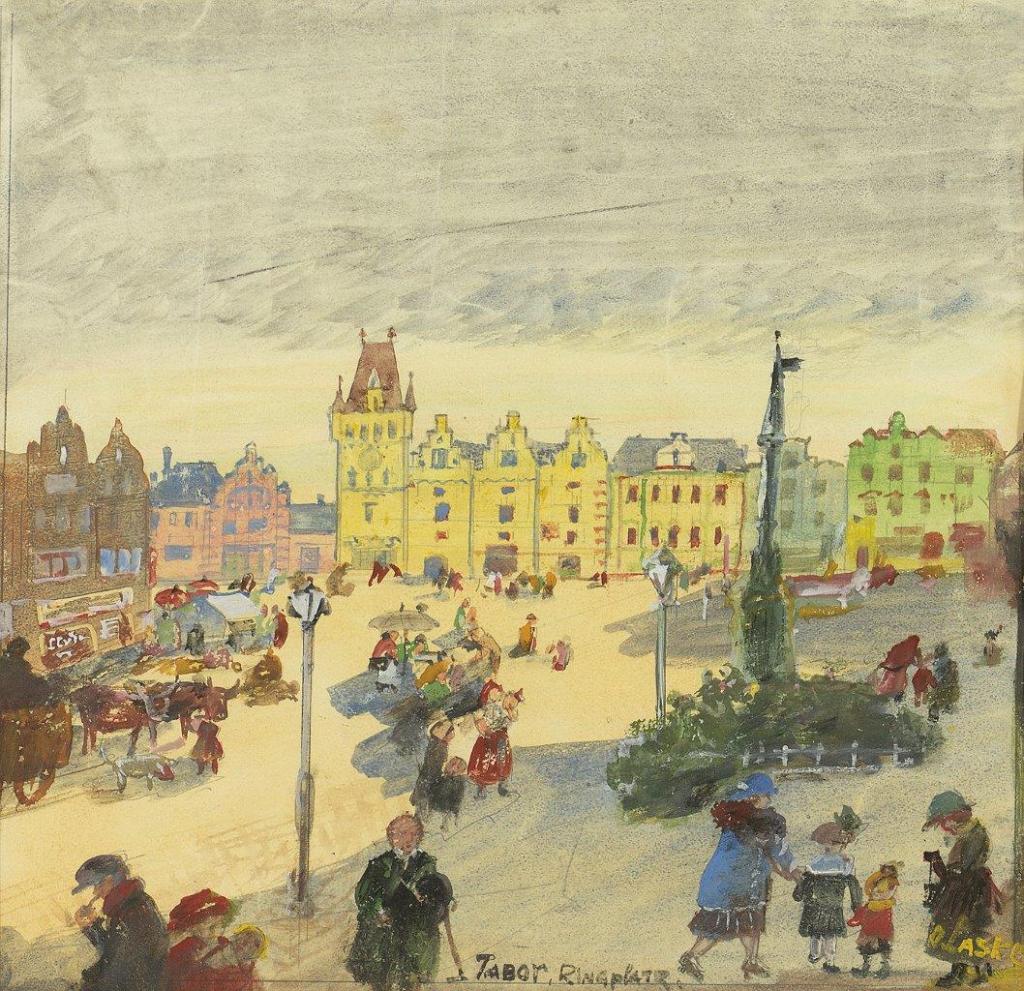
Unsurprisingly, Tábor remains a popular tourist attraction. Painting by Oskar Lake.
By May 1945, Bohemia and Moravia had been occupied by Nazi Germany for over six years. However, both Soviet and American soldiers had entered Czech territory in the spring.
On 24 April, Stalin announced that the Soviets would liberate Prague and the surrounding area. There were well-founded fears from, among others, Winston Churchill and Edvard Beneš, that this would subject the Czechs to long-term Soviet influence.
The Americans were more focused on taking military action in Germany and Austria – and were counting on Soviet support in Japan – so, on 1 May, President Truman announced that the US wouldn’t take part in the liberation.
Two days after Stalin’s announcement, the Soviets liberated Brno; six days later, on 2 May, they entered Berlin. Between these two events – on 30 April – Hitler had died and American troops had entered Munich.
The Soviets intended to enter Prague on 7 May; however, the domestic resistance had been planning their uprising for several months, despite a lack of soldiers and weapons.
It may also be useful to mention two earlier events in 1945: former Czechoslovak army officers had set up the Bartoš Command, which was supposed to oversee fighting in Prague, and the Alex Command, which was to direct insurgents in the suburbs.
Meanwhile, the Czech National Council – a union of domestic resistance organisations – had a military commission which was also preparing for an uprising (the Commands were unaware of the Military Commission, and vice versa).
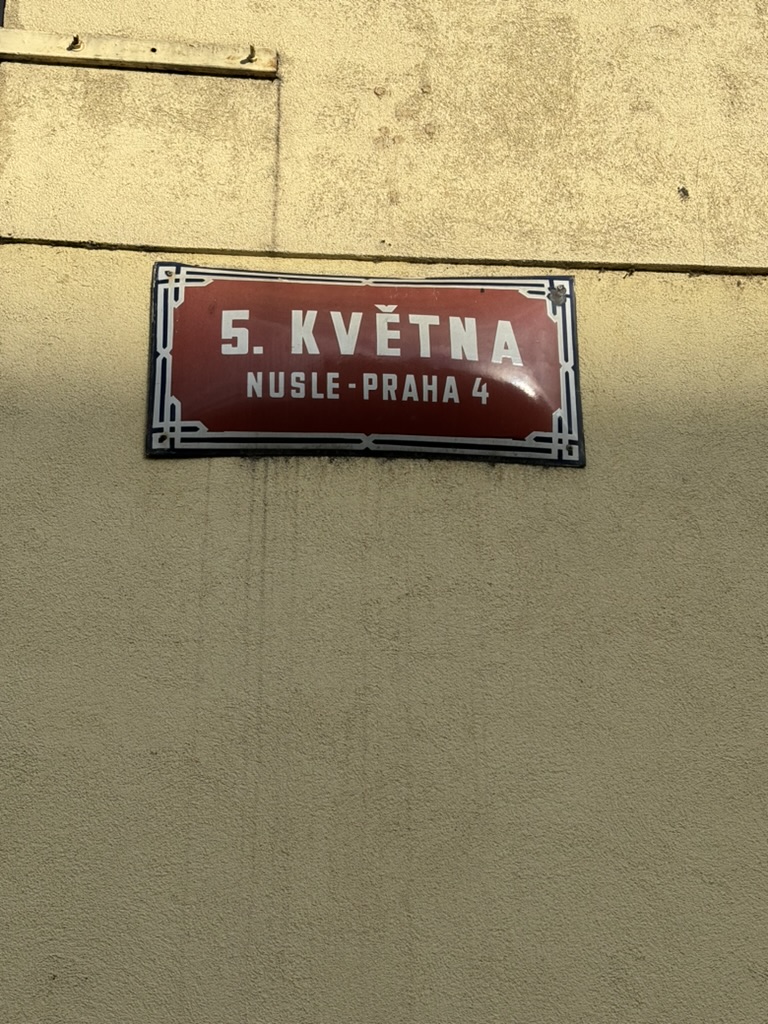
Now, on to the 5th.
At 06:00, a voice on Czech Radio – that of Zdeněk Mančal – announced that ‘Je právě sechs hodin’ – ‘It’s exactly six o’clock’, in a mixture of Czech and German. Broadcasting in Czech had been forbidden for years.
At 08:00, an announcer was stopped from reading the news in German, and the content of the broadcast after that – the language and the music – was decidedly Czech.
That morning, the National Committee of Greater Prague was founded; at 10:30, it announced, via street radio, that the Third Reich was no more, and ordered those who were working for it to stop.
Czechs started taking German flags and signage down, replacing them with Czechoslovak flags and Czech signage. They also began arresting Germans; German soldiers retaliated with shooting.
They received a copy of an alleged order from the Third Reich, decreeing that the Wehrmacht should hand Prague over to Czech forces. Fifty minutes later, it was announced that all Czech officers had to report to their garrisons.
Half an hour later, Czech radio staff broadcast a call for the police, the army, and all good Czechs to help. Or, in other words, to participate in the Prague Uprising.
Locals, both armed and unarmed, didn’t hesitate to obey the call, and street fighting broke out around the radio building. The Germans in the radio building surrendered around six o’clock.
Fighting took place elsewhere in Prague too, especially at the main train stations and in both of central Prague’s town halls. The rebels managed to gain control of the City Telephone Exchange, Pankrác Prison, and almost all of Prague’s bridges.
By the end of the day, the rebels controlled most of Prague on the eastern bank of the Vltava, although the Germans still controlled much of the western side, including the airport.
While this street is only named after the first day of the uprising – and that’s all that I’m covering here, as other stories will surely come up in future posts – it lasted until 9 May, when Soviet troops entered the newly liberated city.
In those five short days, about 2,000 Czech civilians lost their lives, and you will see plaques dedicated to them all over the city, especially in Vinohrady.
Meanwhile, the failure of the Western states to liberate Prague reinforced what many had already felt when the Munich Agreement was reached in 1938: namely, that Western concern for Czechoslovakia was extremely limited. The Soviets wouldn’t take long to use this to their advantage.
The rest of the story is very similar to yesterday’s – there was a rumour in Hussite times that five Bohemian cities would escape destruction when the world ended. Žatec was one; Louny was another.
In the late 1410s, many Hussites thought that the end of the world was approaching, but also predicted that five Bohemian cities would escape destruction at this point. One of these was Žatec.
The city was a major centre of Hussitism, and important Hussites priests worked there.
It’s therefore no surprise that, when the Battle of Vyšehrad occurred on 1 November 1420, forces from Žatec – žatečtí, or in the genitive form, žateckých – were key in the victorious Hussite forces.
Less than a year later, the Second Anti-Hussite Crusade would occur, and, in September 1421, Žatec would undergo a month-long siege, but came out victorious.
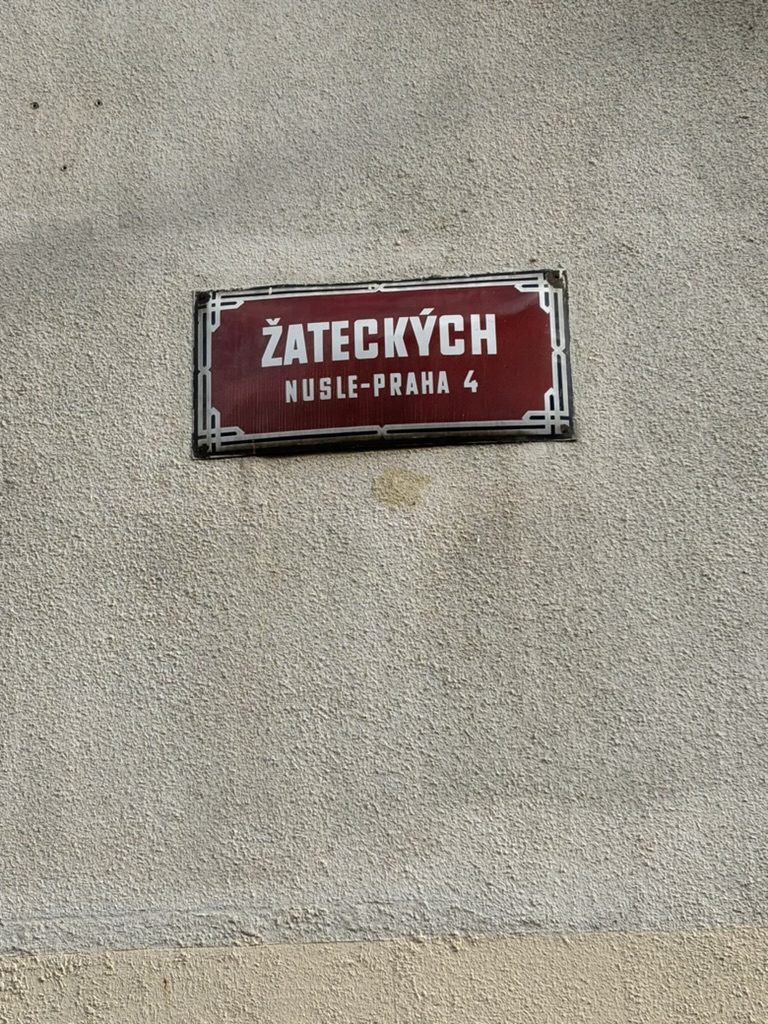
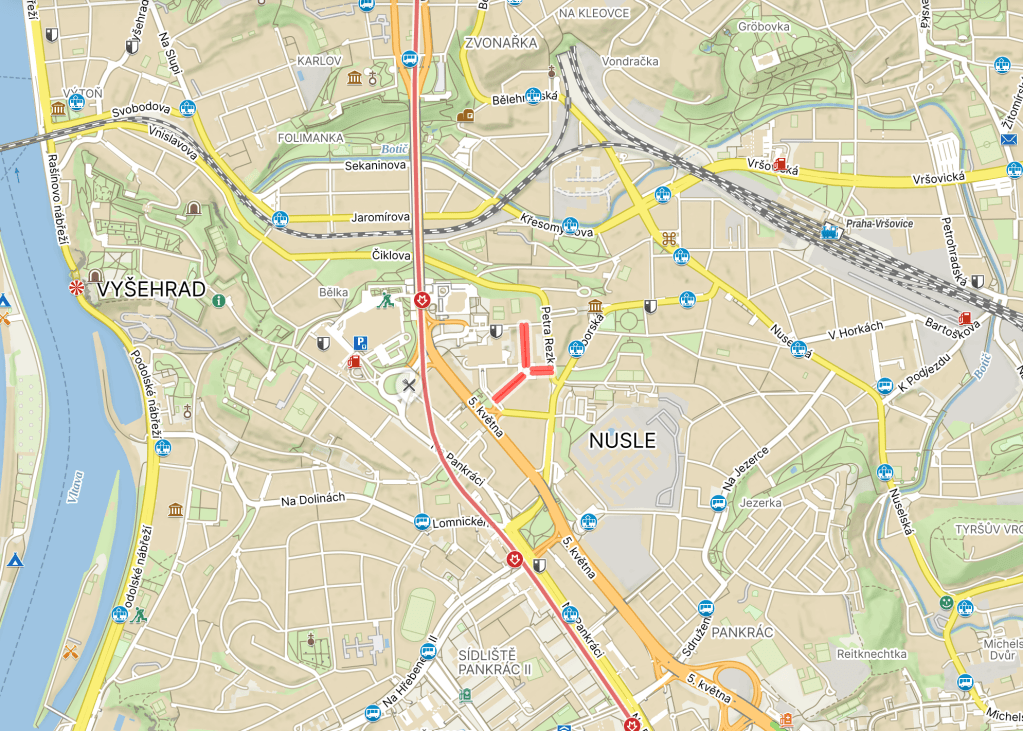
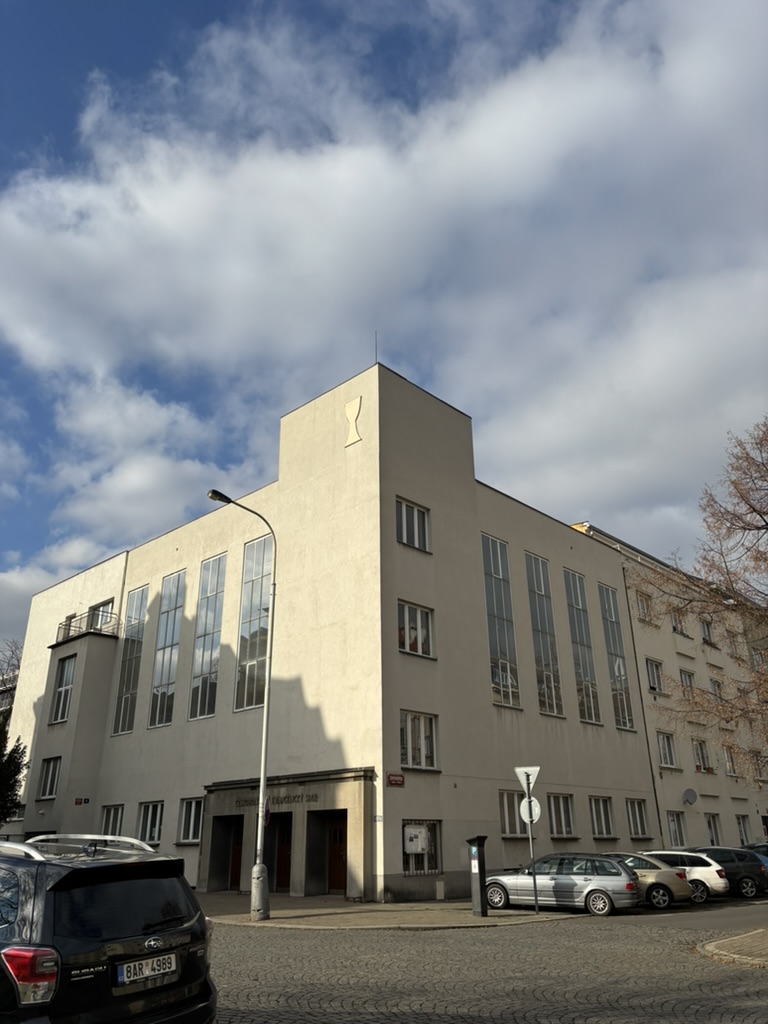
Modern-day Žateckých – which is really three streets leading into a central square – is the location of the Parish Church of the Evangelical Church of Czech Brethren in Prague 4 – Nusle (Farní sbor Českobratrské církve evangelické v Praze 4 – Nuslích).
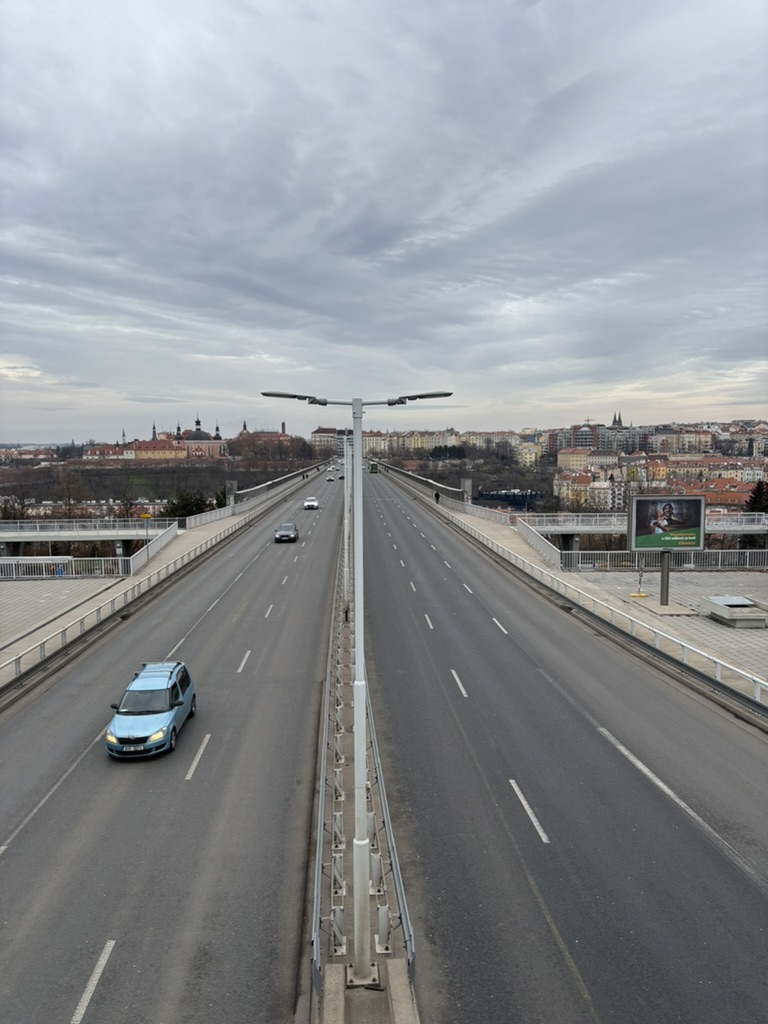
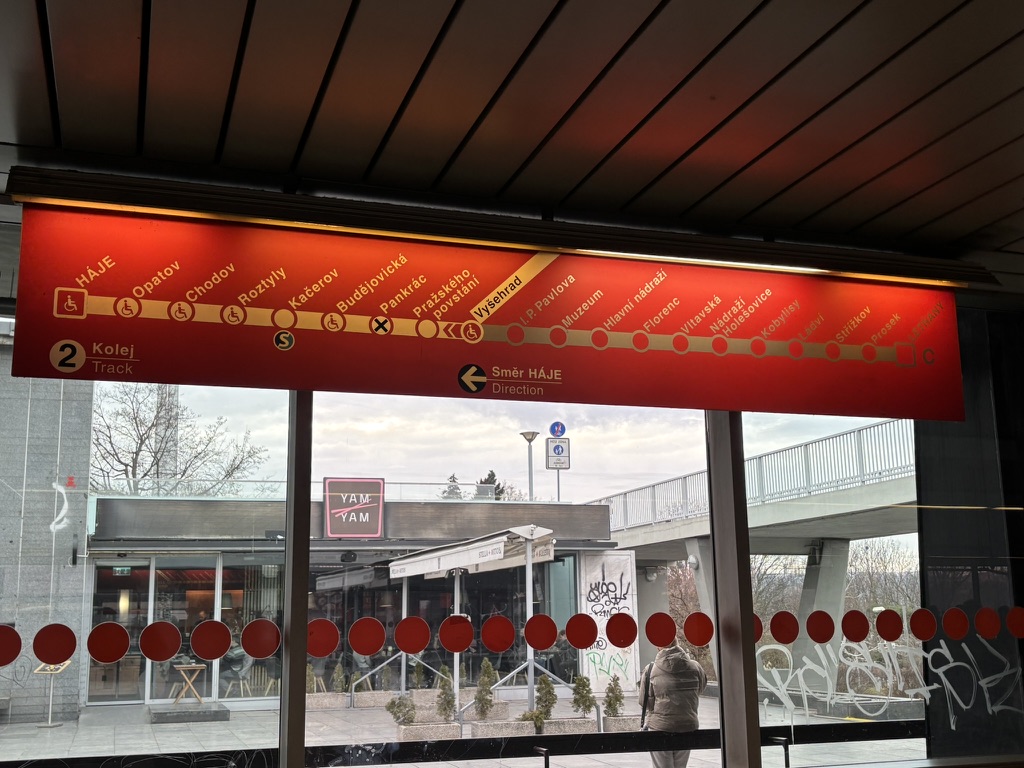
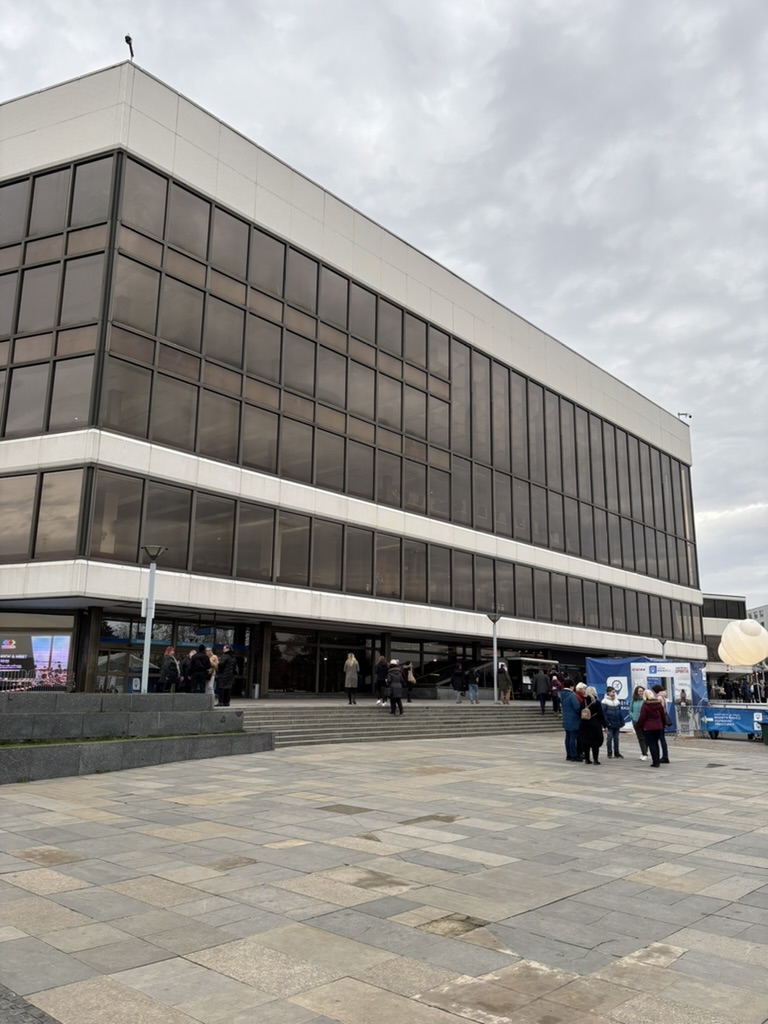
In 1971, a spatial plan determined that some sort of ‘service centre’ should be built in this location, which was also the site of improved transport links – Nusle Bridge (https://whatsinapraguestreetname.com/2024/08/21/prague-2-day-86-nuselsky-most/) would be opened in 1973, and Prague’s first metro line would follow in 1974.
After a drawn-out selection procedure – largely due to overly ambitious plans and insufficient budgets – the government of Czechoslovakia agreed to go ahead with a project led by architects Jaroslav Mayer and Antonín Vaněk in 1975.
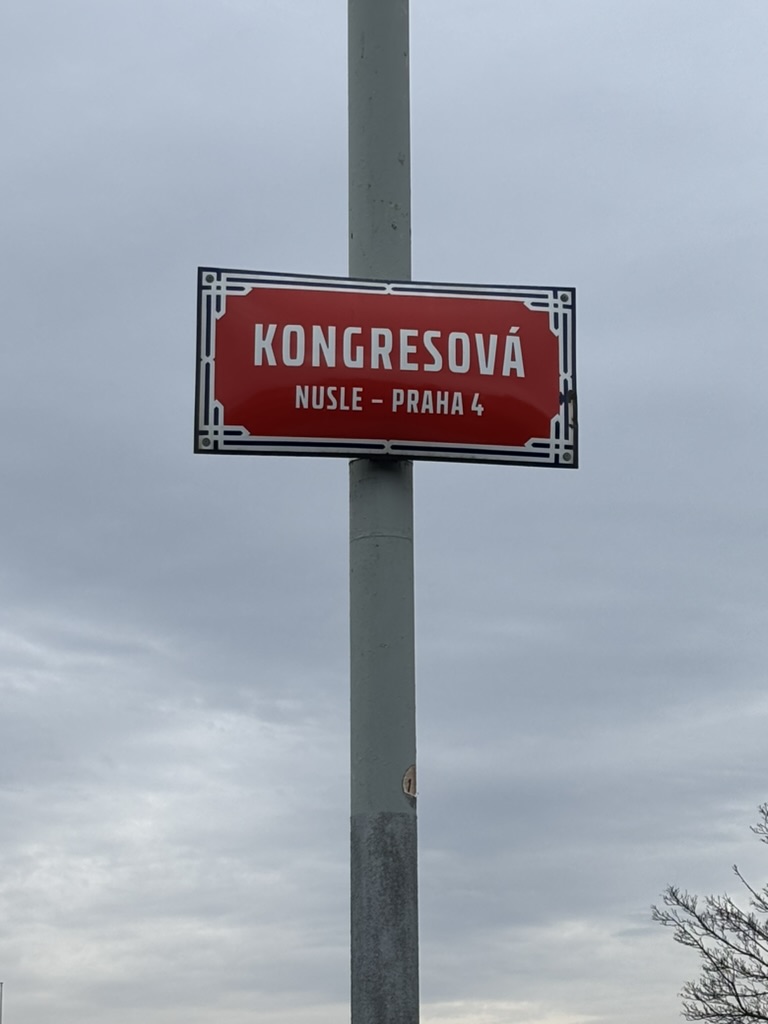
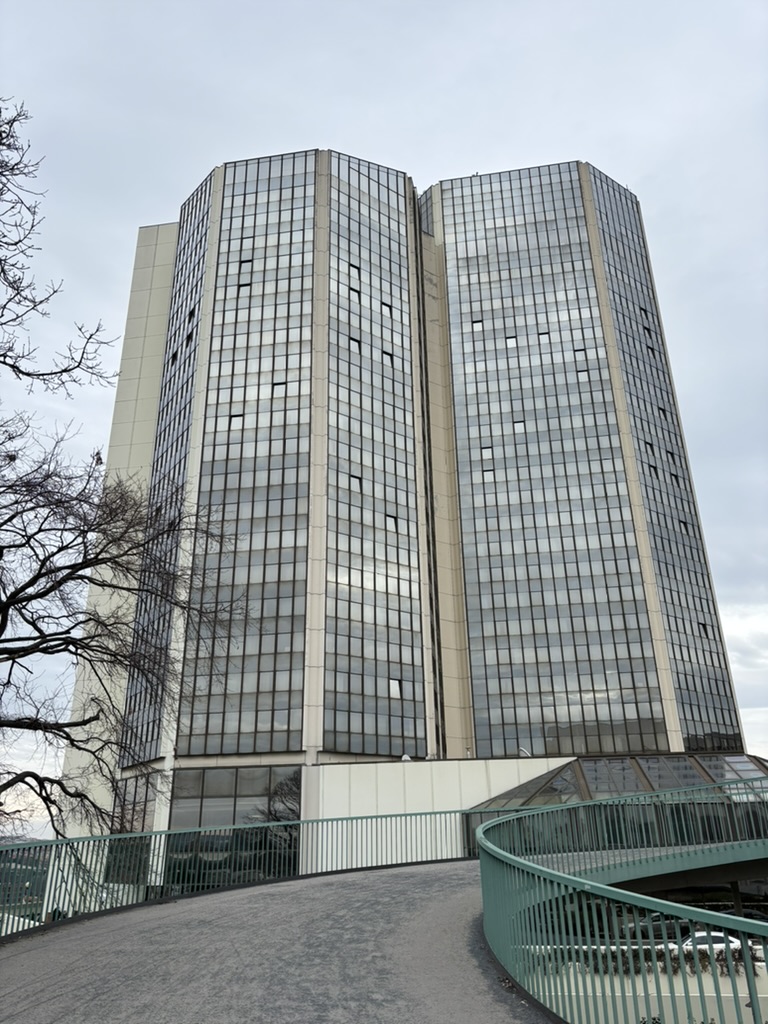
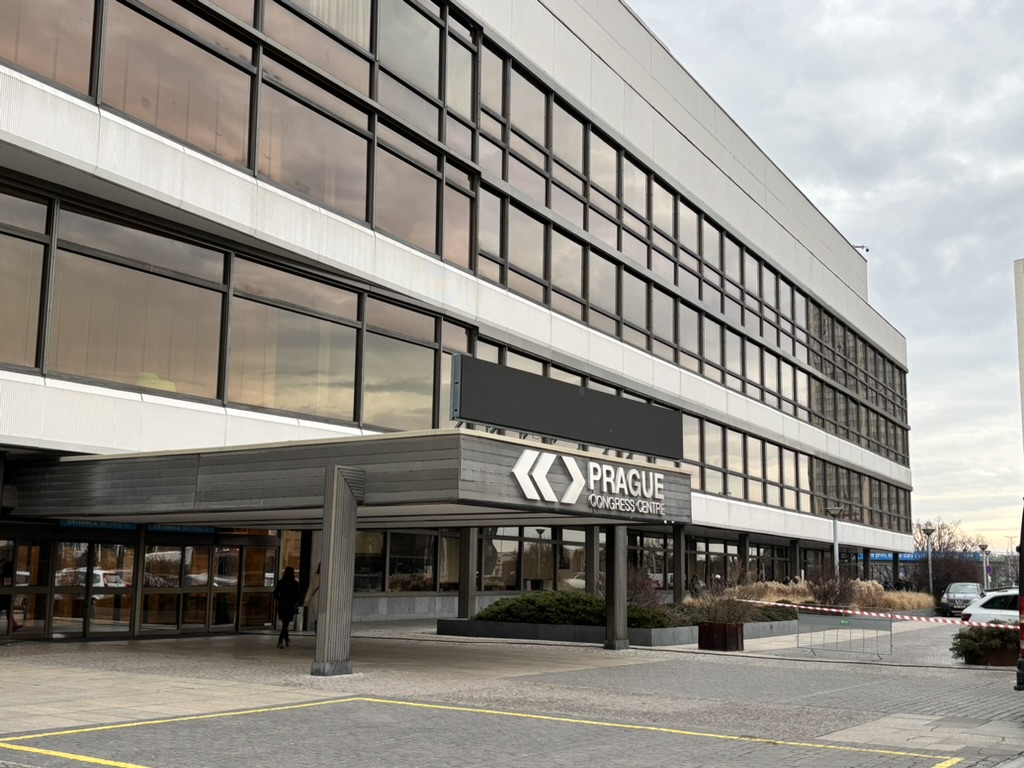
Construction began in 1976, when the building was referred to as the Sjezdový palác (Congress Palace), because it was intended to be the venue for the Communist Party to hold its conferences.
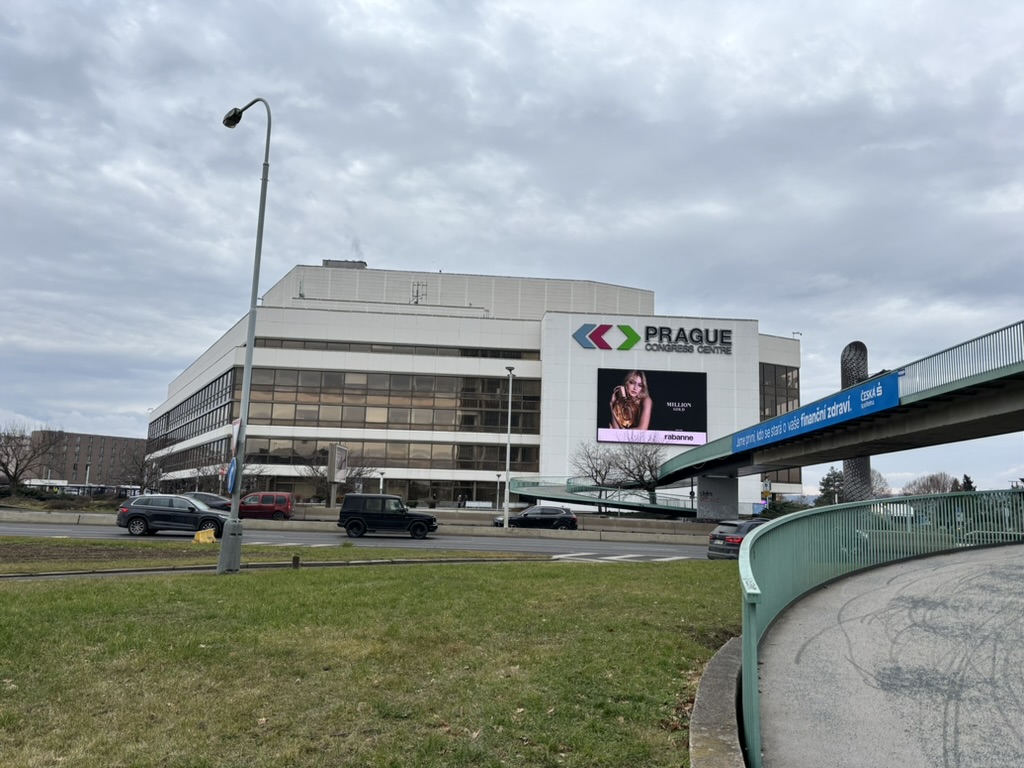
After a trial opening in 1980, the building was completed in 1981, by which time it was known as the Palác kultury (Palace of Culture). It had cost 2.5 billion crowns to make, and was officially opened on 2 April 1981.
Hilariously, the Communists said there were few buildings like it anywhere in the world (Hamburg would like a word), and even compared it to Prague Castle.
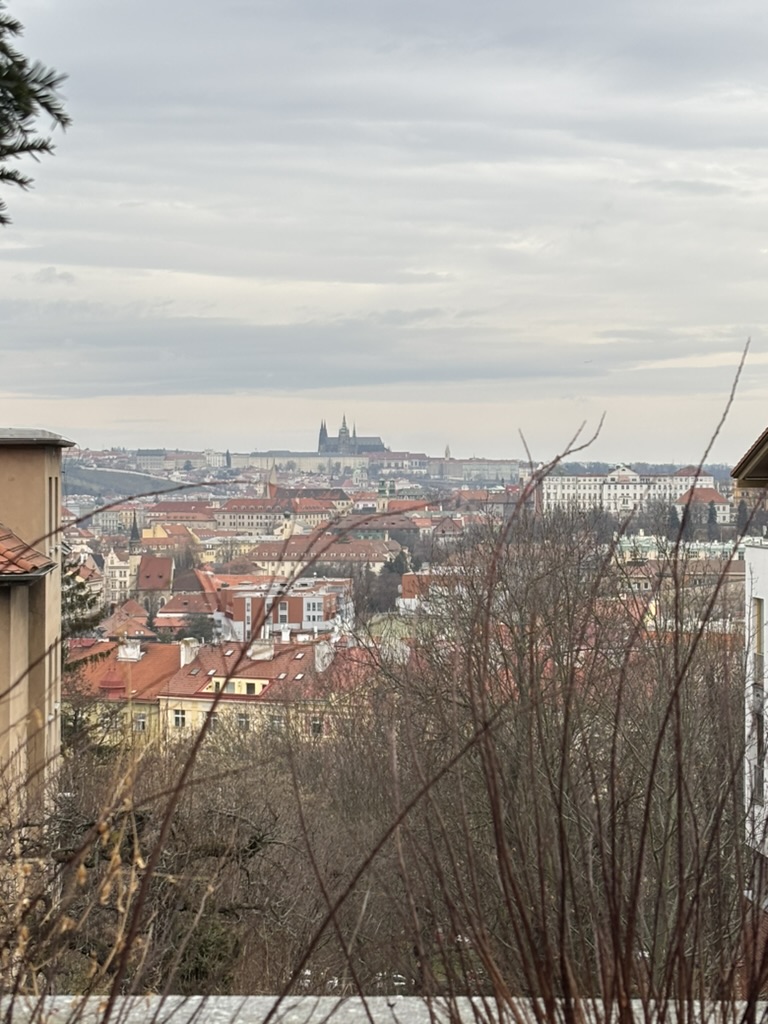
You can’t complain about the views, though.
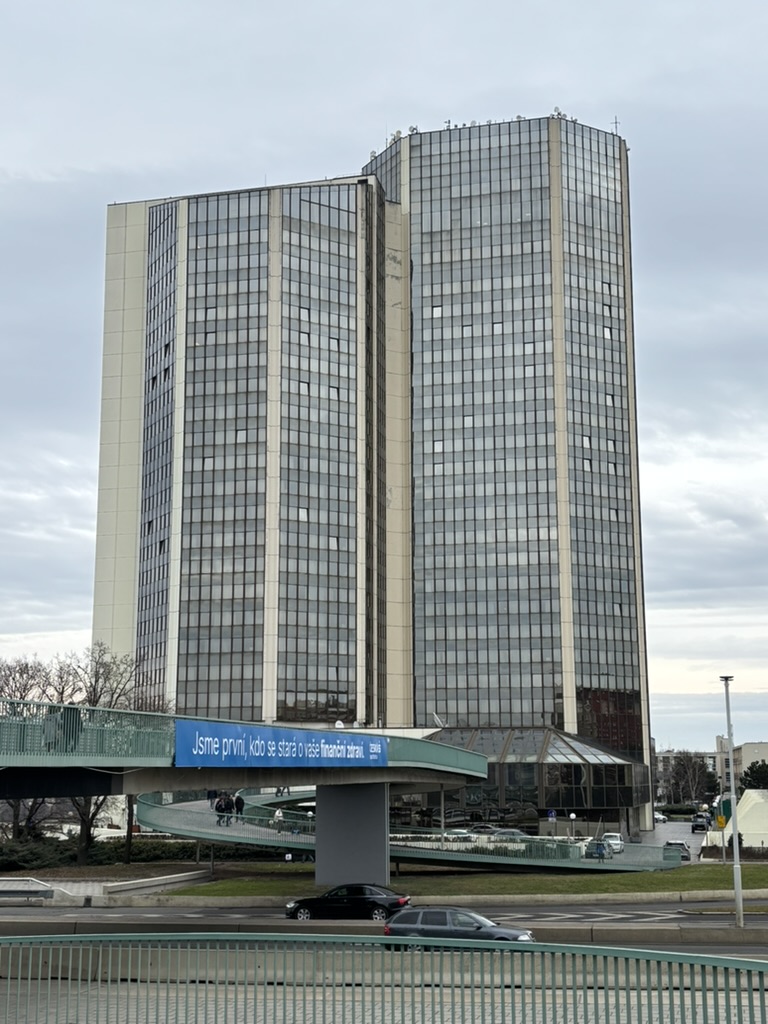
In 1984, construction started on a hotel to accompany the Centre, Hotel Forum. It was opened in 1988.
After the Velvet Revolution, the new political parties didn’t really want to use the Centre, and nobody quite knew what to do with it; there were even calls for it to be demolished.
It was renamed the Kongresové centrum (Congress Centre) in 1995, and underwent reconstruction from 1998 to 2000. Here’s Bob Dylan playing there in 1995.
In September 2000, it hosted the 55th meeting of the International Monetary Fund and the World Bank in September 2000.
That sounds like it was quite staid, but it really, really wasn’t – Prague became the scene of anti-capitalist riots, the likes of which haven’t been seen here since. Think barricades, tear gas, water cannons and Molotov cocktails.
It’s kind of incredible to think that this is what our city looked like at that point.
When the NATO summit occurred in 2002, there were real fears of a repeat performance, but this didn’t materialise.
The Centre has been through various renovations this century, and, for a building that was threatened with destruction in the 1990s, it’s doing quite well, being one of the most popular congress centres in the world.
And, for those who like trivia, it was at the Congress Centre, in 2006, that it was decided that Pluto was no longer a planet.
Meanwhile, the hotel, known as Corinthia Towers for many years, was renamed in Grand Hotel Prague Towers in 2024. It appears to be way nicer inside.
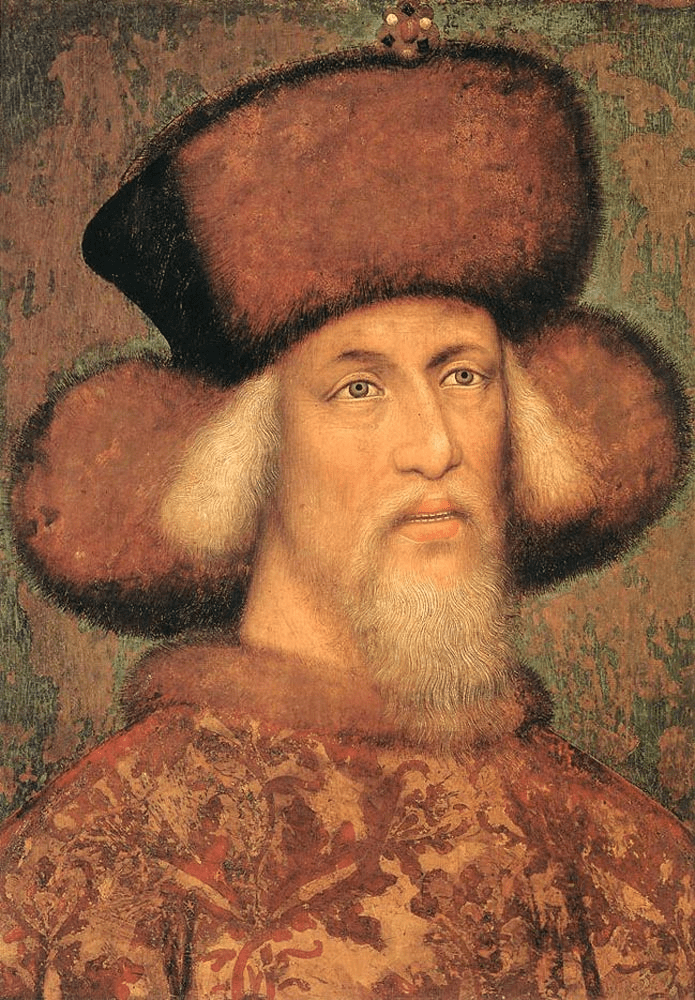
Led by Sigismund – King of Bohemia, but categorically not a Czech or a Hussite – crusading troops had entered Bohemia by the end of April. Around the same time, Hussites forces founded the town of Tábor in South Bohemia.
Sigismund, sensing things weren’t going according to plan, was hastily crowned King of Bohemia at Prague Castle on the 28th, and, two days later, announced that the crusade was cancelled for now.
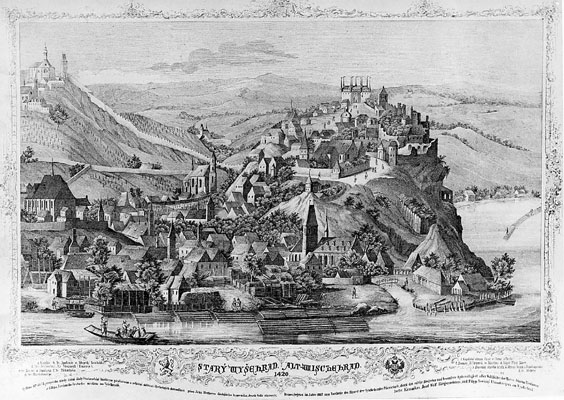
In September, the citizens of Prague decided to besiege Vyšehrad, an operation that could be particularly beneficial, given that the fortress was on the route from Prague to Tábor. Thanks to reinforcements from the countryside, it was soon surrounded.
The Hussites set up their main camp at Pankrác, and Sigismund had clearly underestimated their strength, as he wasn’t in Prague at all when word reached him that his men at Vyšehrad were running out of water and food, and having to eat their own horses.
Sigismund started to make his way back to Prague on 28 October, having apparently recruited another 20,000 men. On the same day, the Vyšehrad garrison agreed to surrender to the Hussites on the morning of 1 November if Sigismund hadn’t delivered sorely-needed food supplies on 31 October. And, as it turns out, Sigismund didn’t begin to set out for Vyšehrad until the morning of the 1st.
When he arrived around three o’clock, he ordered his forces to attack around the Church of St Pancras, as well as from Podolí. The Hussites initially retreated, but, later, the tide turned: 1,500 of the crusading cavalry started to retreat, followed by other units.
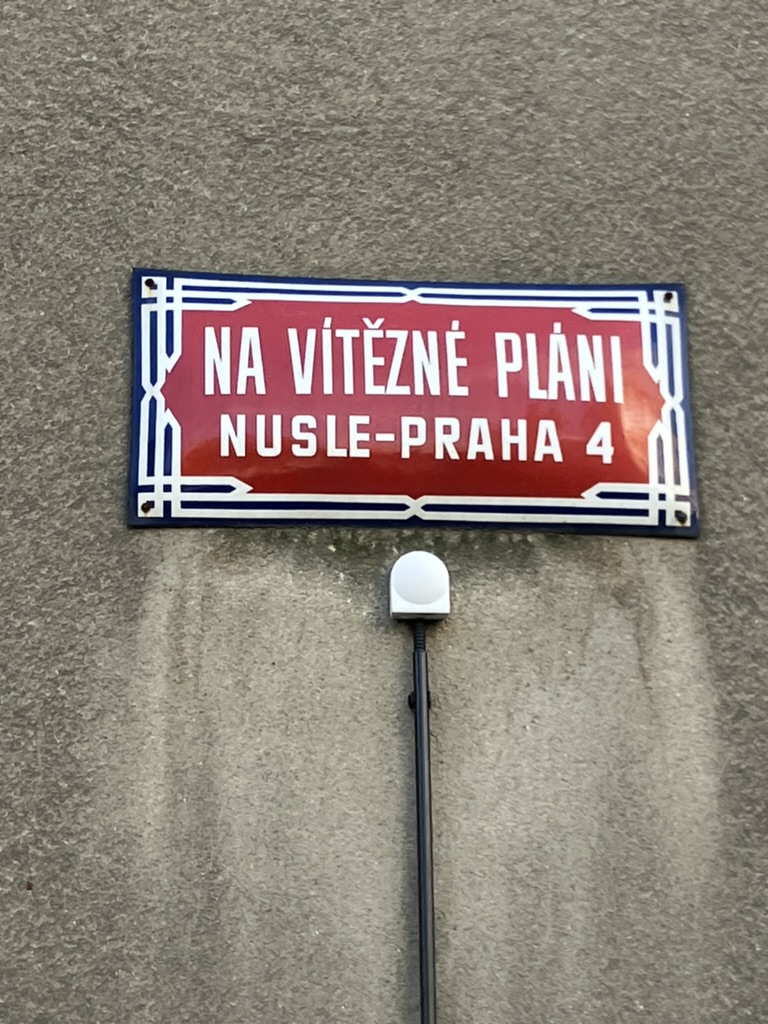
Soon enough, Pankrác plain was covered with the bodies of Sigismund’s men, and, given that Sigismund hadn’t turned up until three in the afternoon – in November – it was a pretty short battle before the sun set. Thus ended the Battle of Vyšehrad on ‘Victory Plain’ (or Vítězná pláň – hence the name of the street).
The garrison at Vyšehrad surrendered; the Hussites looted the churches there, but spared the inhabitants. Meanwhile, news of Sigismund’s defeat soon made its way around Europe, and the first anti-Hussite crusade was over. That said, it would only be six months or so until the second one.
There’s a secondary school on the street, sharing a name with it.
Once upon a time, this area was either a vineyard or just a regular field, but, in 1841, a homestead was built here.
Later in the century, it was purchased by Rudolf Tereba (1851-1904), an architect who had travelled around Italy, later settling in Prague and building a villa. He also had a house build on Karlovo náměstí (https://whatsinapraguestreetname.com/2024/09/01/prague-2-day-164-karlovo-namesti/ – also relevant to yesterday’s street) in 1894.
The homestead and the villa are both long gone, having been demolished in 1940. We’ll get to the street where the homestead was actually located tomorrow.
Until 1948, the street was named Leflova, after Jindřich Lefl z Lažan, a Polish-Czech nobleman who initially supported Jan Hus, and gave him a place to hide, but later changed sides and was killed by the Hussites at the Battle of Vyšehrad (more on that in two days’ time).
Then, from 1948 to 1952, it was named Mašínova, after Josef Mašín, an army officer and member of the Czech anti-Nazi resistance. He was shot in 1942, a retaliatory measure following the assassination of Reinhard Heydrich. More on Mašín when we get to Prague 8.
Doing something of a 180 now, there’s a Czech singer called Petr Rezek. Here he is giving his all to a Czech cover version of Y.M.C.A.
And Everybody’s Talkin’.
And Centerfold.
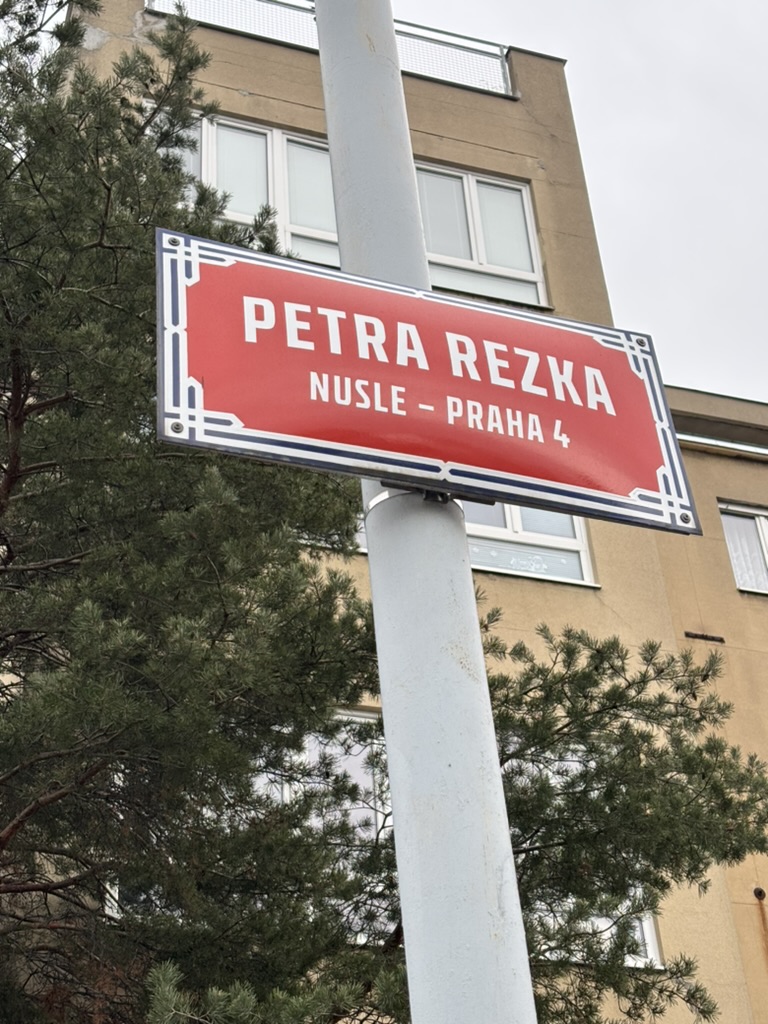
Sadly (and predictably), this street isn’t named after him, and we have to go back to the early 1400s to learn about The Other Petr Rezek.
Želivský fought in these wars until 1421, when he was removed from his position, and, a year later, he was arrested by Prague’s town council and was beheaded.
The relevance of this? The authorities also executed some of Želivský’s followers, one of whom was this Petr Rezek guy, although we don’t know that much about him otherwise.
Back to the street, I was struck by this plaque on one its houses, and wanted to know more.
It translates as ‘I liked being here. Tomáš Holý, 17.03.1968-08.03.1990’.
In 1976, director Oldřich Lipský had a problem – he was filming a comedy called Marečku, podejte mi pero! (Marecek, Pass Me the Pen!), and a child actor he was using had fallen ill. A man working in the prop department suggested his seven-year-old nephew, Tomáš, as a replacement.
So much so that Lipský cast him again in a children’s film, 1977’s Ať žijí duchové! (Long Live Ghosts!). In the same year, he starred in Jak vytrhnout velrybě stoličku (How to pull a whale’s stool out), directed by Marie Poledňáková.
He became famous outside of Czechoslovakia in 1981, when he starred in the Austrian-West German-Swiss-Czechoslovakian science fiction television series Unterwegs nach Atlantis (On the Way to Atlantis).
However, Tomáš decided around that time that acting wasn’t for him. The reasons aren’t entirely clear, but, in one interview around 1980, he said that he didn’t like the idea of becoming a failed actor.
After finishing school, Tomáš began to study law, and entered into a relationship with an up-and-coming singer, Lucie Bílá. Tragically, however, he was killed in a car accident in Kytlice in 1990, aged just 21.
The plaque was unveiled in 2021, on the front of the house where he had spent most of his life.
Křesomysl was the fifth of these seven alleged dukes.
The verb ‘křesat’ means ‘to strike’ – as in making two hard materials collide so that they produce sparks. Meanwhile, ‘mysl’ means ‘mind’ or ‘spirit’. So, Křesomysl would be someone who is bright and/or makes you think.
The ‘days of the week’ theory – also mentioned on Day 2 – has it that Křesomysl, as duke number five, was linked to thunder (think German Donnerstag) and, therefore, Jupiter (think jeudi, jueves, giovedì and joi), who was also identified with the Norse God Thor (think, yes, Thursday).
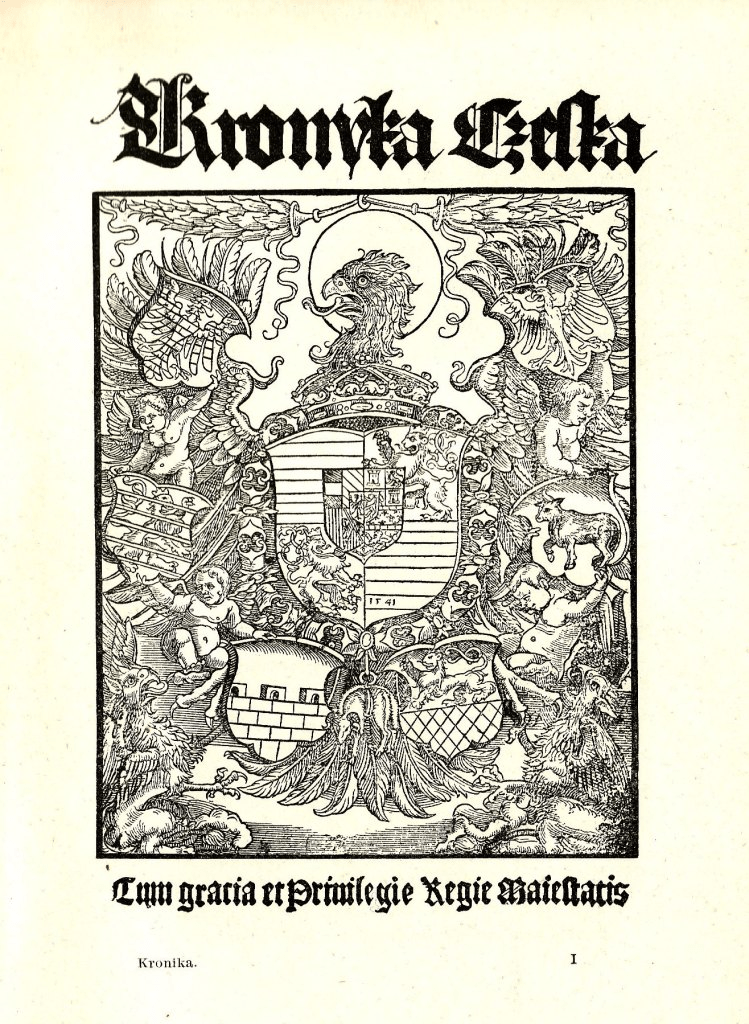
Cosmas doesn’t say much about Křesomysl, other than that he ruled Bohemia for a time. However, Václav Hájek z Libočan, who lived in the early 1500s and wrote his own chronicle – Kronika česká (this one was in Czech) – said a bit more.
According to Hájek, when Křesomysl was duke, he had to deal with a nobleman called Horymír, who took a liking for destroying mines and their facilities. This really got to Křesomysl, who was dismissive of agriculture and thought mining for metals was the way for the country to move forward.
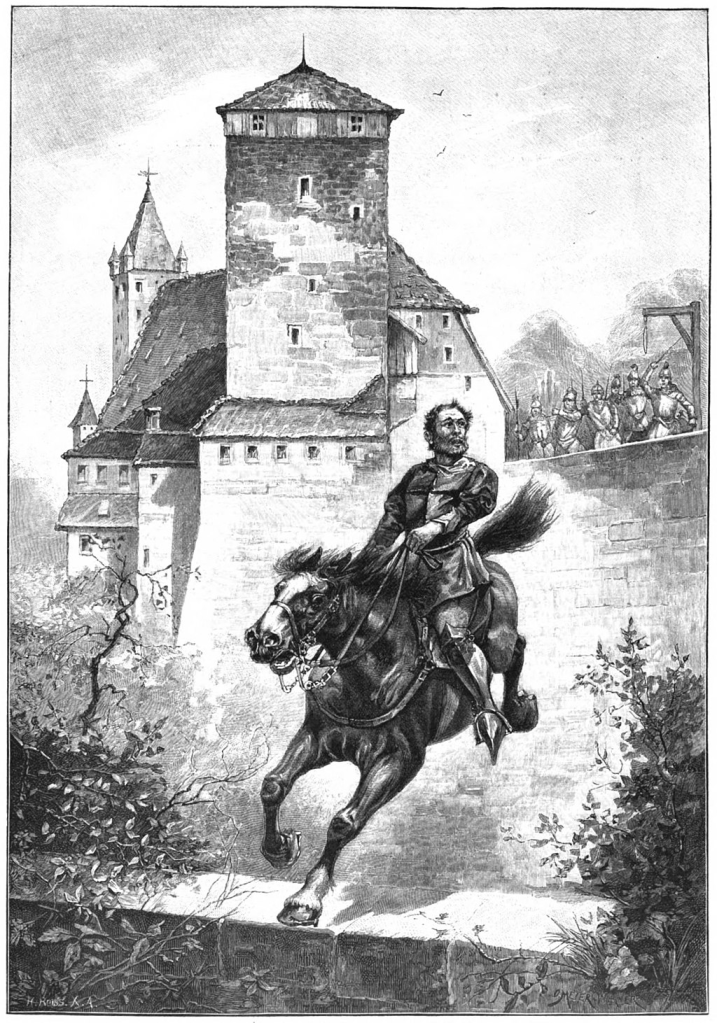
On execution day, Horymír said his last wish was to go for a ride on his favourite horse, Šemík. Křesomysl granted this wish.
Once he was outside and on horseback, Horymír told Šemík to jump over the ramparts, swim across the Vltava, and bring them both home (I’m now picturing Horymír knocking about Nový Smíchov on a Saturday afternoon).
Unfortunately, Šemík died after getting injured during the jump, but Horymír was free. He buried Šemík at Neumětely, in Beroun District; the horse’s supposed resting place can still be visited today.
Kronika česká states that this all took place around 846-7, but historians generally concede that Hájek invented the entire story himself.
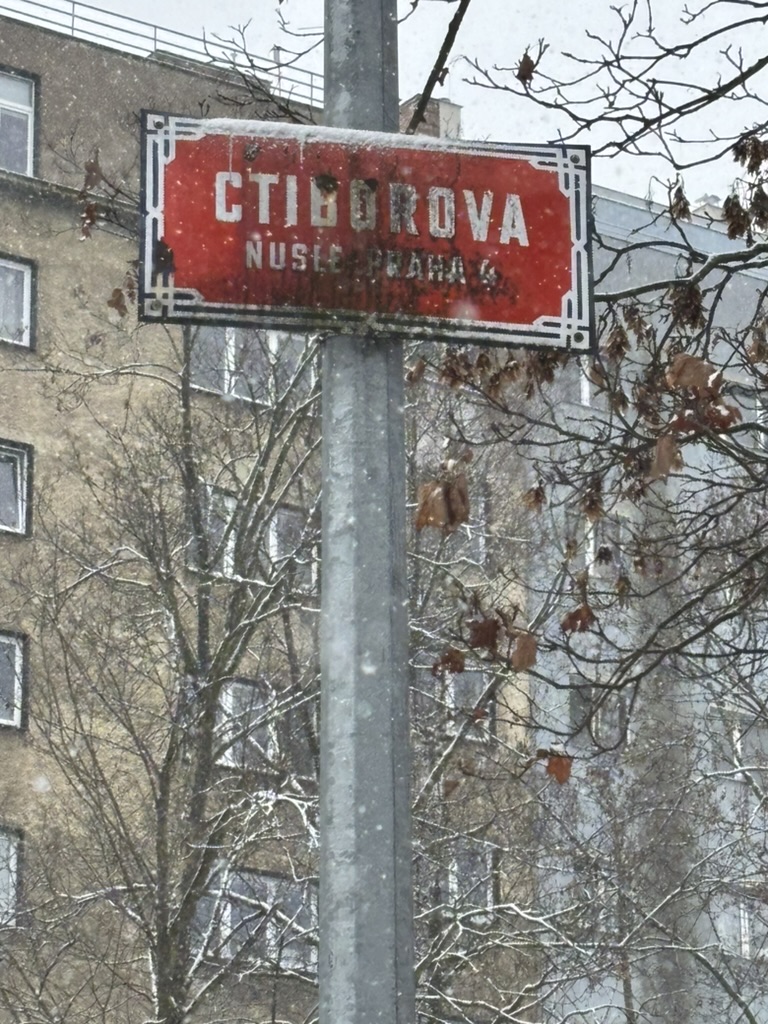
Ctiborova was built in 1892. Which is possibly also when somebody last bothered to clean that street sign.
Ctibor was supposedly a nobleman who worked as a judge during the reign of Václav I (who ruled from 1230 to 1253, and founded what are now the country’s second and sixth-largest cities (Brno and Olomouc)).
Ctibor was respected enough in his profession to be nicknamed Moudrá Hlava (‘Wise Head’).
Ctibor and the lords in the Bohemian court declared that Václav’s eldest surviving son, Otakar, should be King instead.
The rebellion was defeated in 1249, and Ctibor fled to Germany with his son, Jaroš. However, he was found by a group of Germans (we don’t know their identities) and was promptly handed back to a vengeful Václav.
Václav had actually pardoned the rebels – but Ctibor and Jaroš hadn’t been present at the peace negotiations, which meant that they (clearly) didn’t benefit from this.
Božetěch may have been educated there, and became its abbot – the fourth – in 1091. He was supposedly a favourite of the then King of Bohemia, Vratislav II.
Božetěch is one of the first Czech artists to be mentioned by name; according to a chronicle depicting the history of the Sázava Monastery, he knew how to paint, work with precious stones, carve wood and turn bone. It’s said that he also oversaw reconstruction of the monastery in 1096.
However, Božetěch would be expelled from the monastery in the same year, along with others, for practising the Slavic liturgy.
He had also courted controversy a few years earlier – in 1091 – when he decided to hold a ceremony to crown Vratislav II. This, however, was only allowed to be done by the Bishop of Prague, who, at this time, was Kosmas.
As a punishment, Kosmas forced Božetěch to create a life-size sculpture of the crucifixion of Jesus, and carry it to Rome. The sculpture has not been preserved.
While the original source material is a bit unclear, 19th-century Czech patriots celebrated Božetěch as the first great Czech artist. However, it’s been impossible to link him to any specific extant works.
At this festival – which started in the late 1780s, and took place on the first Wednesday after Easter – cobblers would decorate a birch tree with flowers, ribbons and Easter eggs, and then placed, yes, a fidlovačka on top.
In the briefest terms: two young people are in love, but one lives with her pro-German aunt, while the other lives with his father, who is decidedly pro-Czech. And a cobbler. All kinds of inconveniences happen, but they end up together.
One scene in the play happens at a fidlovačka, where a blind violinist called Mareš sings a song called Kde domov műj (Where my home is). This is how the scene appears in the 1930 film version of the play.
And as for the song? It’s fair to say it’s the part of the play that’s had the most enduring impact, as it’s the Czech national anthem.
In 1902, when Nusle was developing fast, a public park – Nusle’s first – was created, and, in 1921, a theatre was added. It was named after Tyl, with locals frequently referring to it as Tyláček.
In 1944, the theatre was renamed Divadlo pod Vyšehradem – the Theatre under Vyšehrad – but reverting to its original name when the war ended. It operated as Hudební divadlo v Nuslích – Musical Theatre in Nusle – from 1963 to 1978, before falling into disrepair.
In 1995, reconstruction started, directed by the aptly-named Fidlovačka Foundation – and it was reopened, now called Divadlo na Fidlovačce, on 28 October 1998 (seventy years to the day since Czechoslovak independence). No prizes for guessing what play was shown on that day.
The theatre’s production of Fiddler on the Roof would run for over sixteen years, ending in 2015.
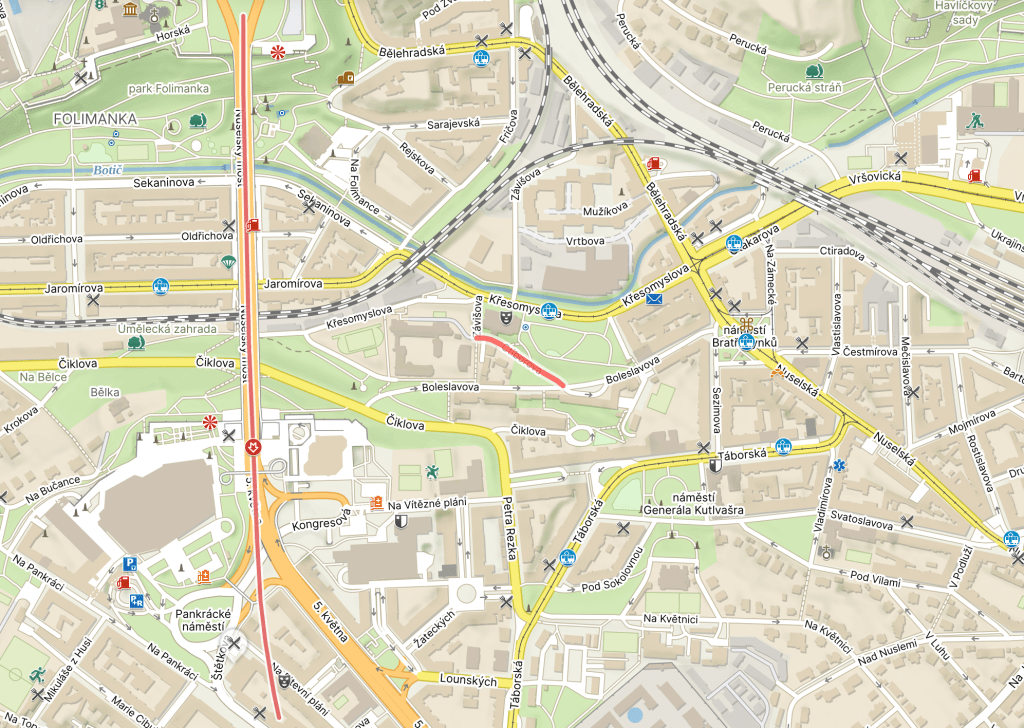
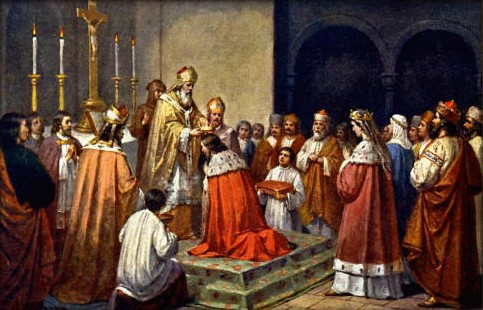
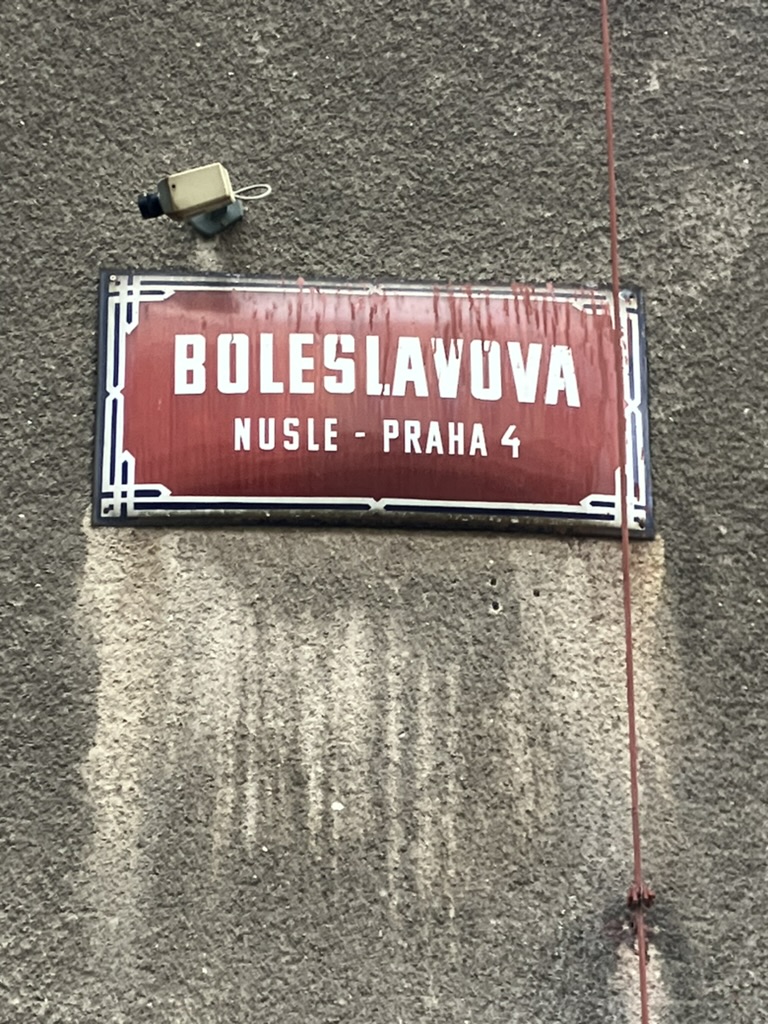
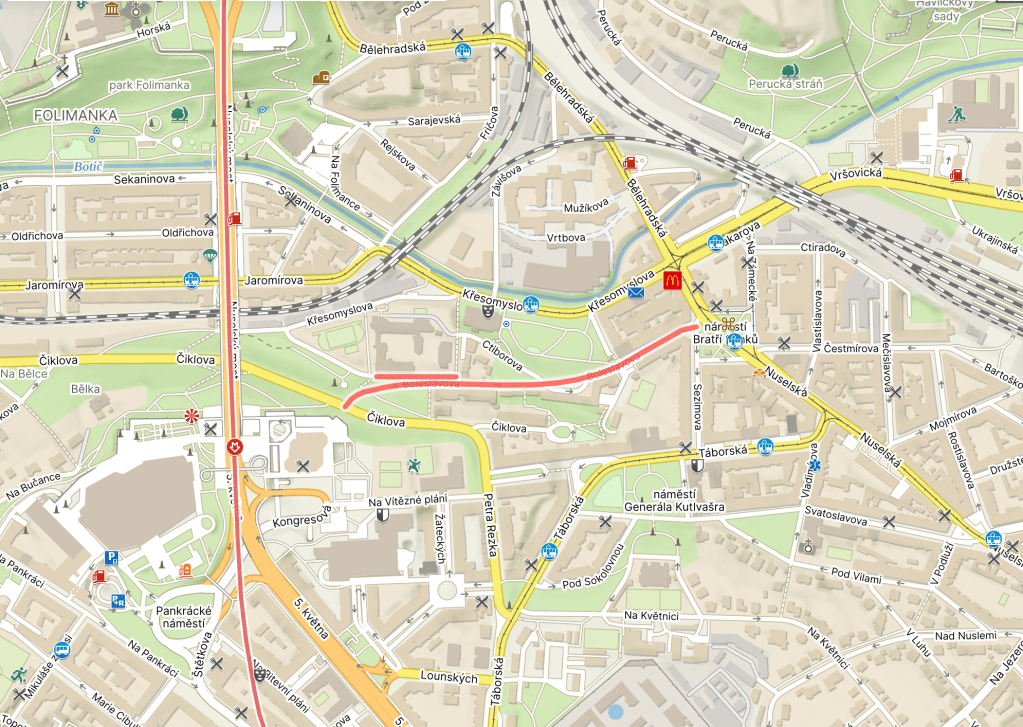
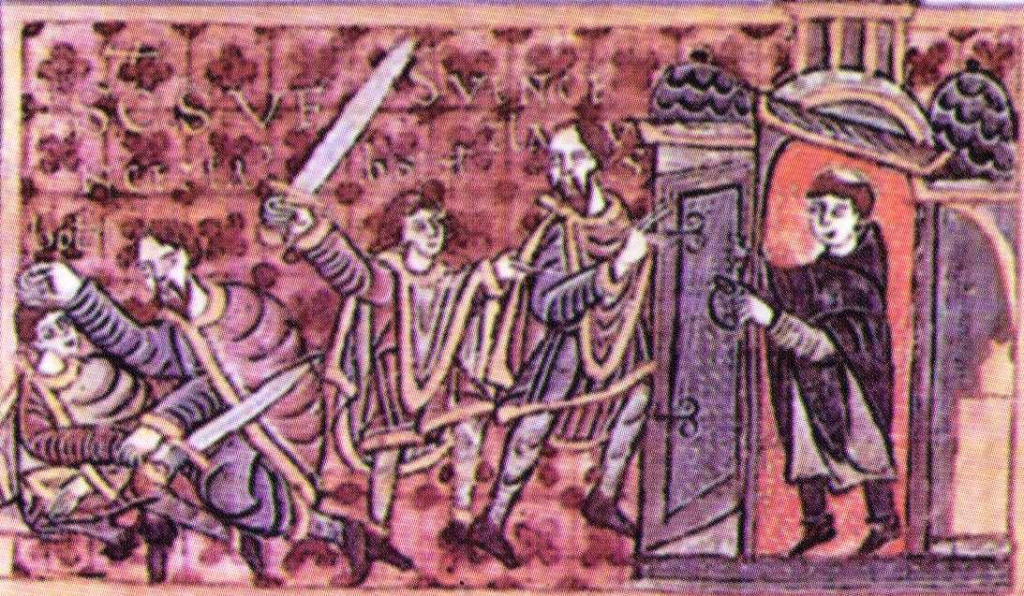
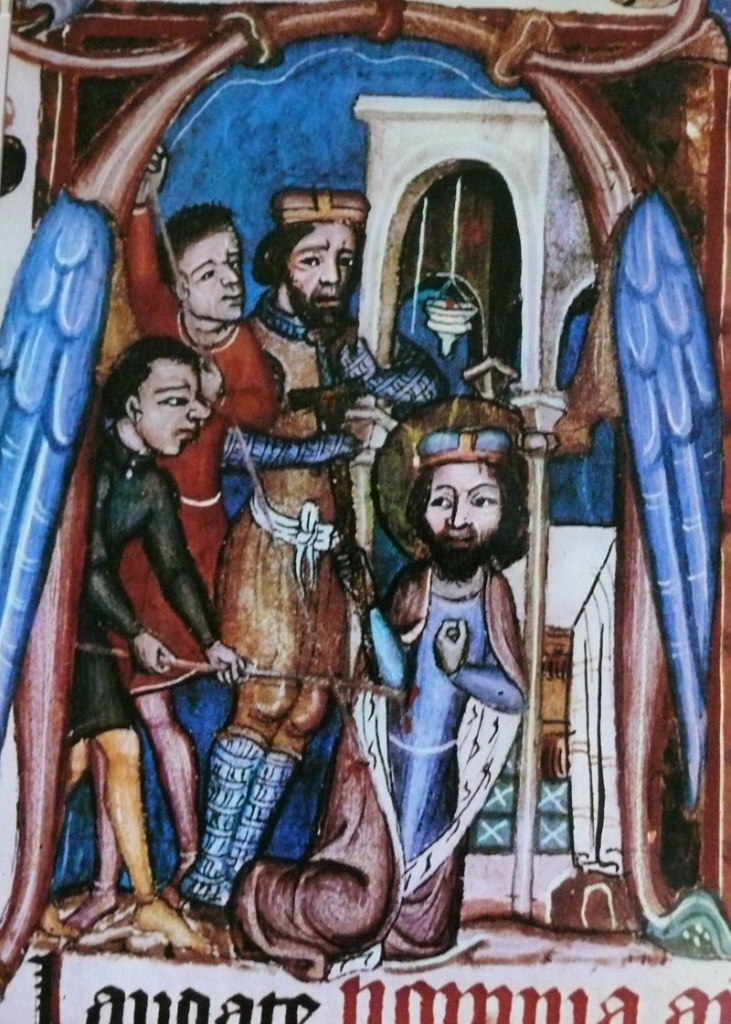
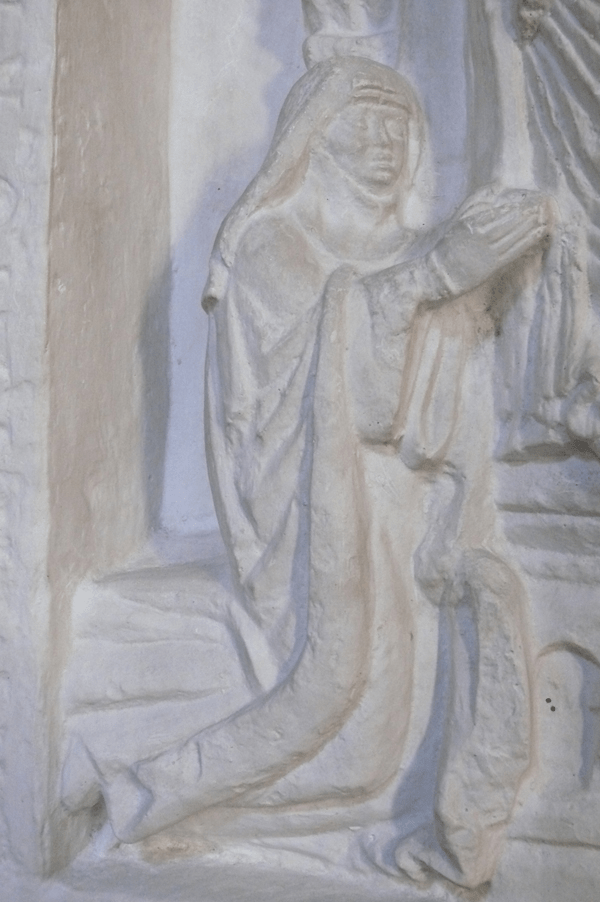
Boleslav was born in or around 915, the son of Vratislav I, Duke of Bohemia (pictured as seen at St George’s Convent – more on that one later), and his wife, Drahomíra.
Accounts of the first few years of his life vary – and, for all we know, they could all be untrue – but we do know that Vratislav died in 921 and was succeeded by Václav (Wenceslas), Boleslav’s older brother.
It’s traditionally been believed that this was due to differences of opinion between the two brothers about the need for the rulers of Bohemia to pay tribute to Henry the Fowler, King of East Francia (and Duke of Saxony) in order to ensure their state’s independence. Again, though, opinions vary, with some stating that Boleslav wasn’t involved in the murder at all.
In any case, Boleslav was now Duke of Bohemia, and, three years later, would have Václav’s body returned to the St Vitus Rotunda at Prague Castle.
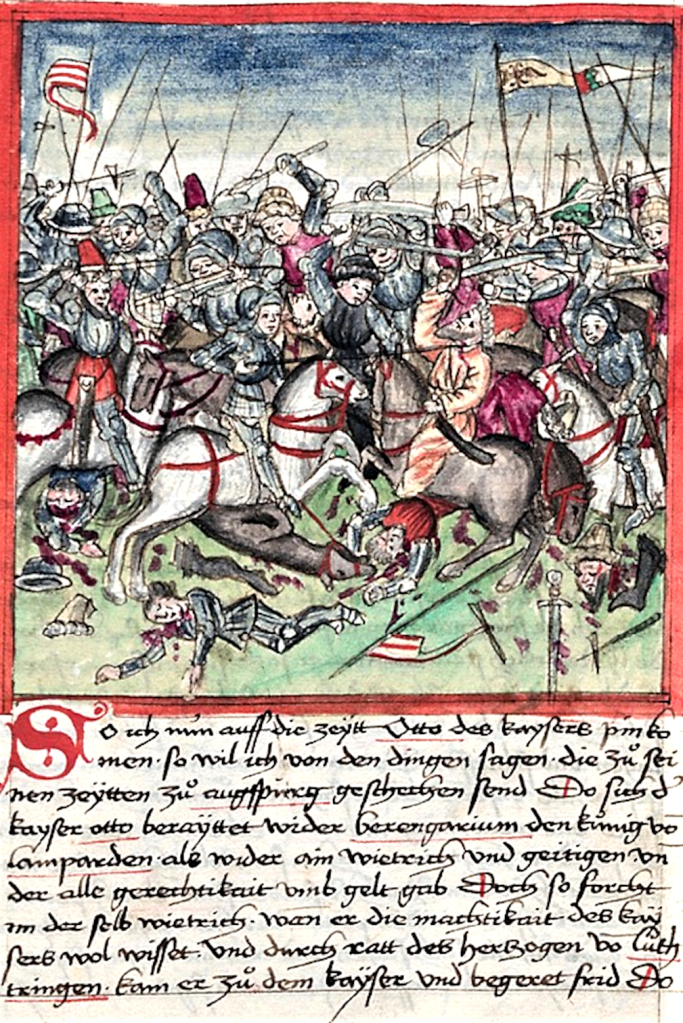
Henry the Fowler would die in 936, and was succeeded by Otto the Great. Boleslav decided it was time to stop paying tribute to the monarchs of East Francia, leading to a low-scale war which lasted for fourteen years until Otto besieged a castle belonging to Boleslav’s son; Boleslav gave in, and was forced to resume payments to Otto.
For those wanting specifics, good luck: we don’t know which castle was besieged in 950, nor do we know which son it belonged to.
Boleslav’s problems with his western neighbour seemed to be resolved, so, inevitably, an eastern neighbour – the Hungarians – started to create trouble instead. Despite only having crossed into Europe about sixty years earlier, they had developed quite a thing for plundering and pillaging, making it as far as Spain, northern Germany and southern Italy.
Otto and Boleslav joined forces against the Hungarian threat, and, in August 955, crushed the Hungarian forces at the Battle of Lechfeld (near Augsburg), putting an end to the Hungarians’ raiding era.
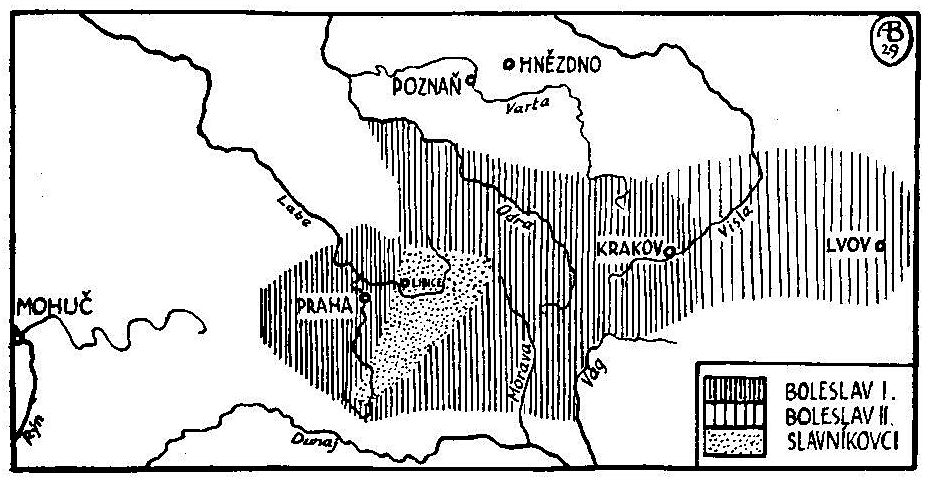
Boleslav certainly benefited from this defeat: he gradually got his hands on Moravia, Silesia, western Slovakia and Kraków.
During Boleslav’s reign, the Bohemian state was strengthened in other ways, too: silver mining was introduced, the first coins were produced, and the first convent in the country was founded at Prague Castle. It got its own post at a very early stage of the Prague 1 series: https://whatsinapraguestreetname.com/2024/09/02/prague-1-day-1-u-svateho-jiri-st-georges-square/. Boleslav’s daughter, Mlada, became its first abbess.
It was also during Boleslav’s reign that the earliest written mention of Prague that we still have was made, and it wasn’t by a Czech – see the start of https://whatsinapraguestreetname.com/2024/10/12/prague-1-day-189-tynska/ (which is also an indication of how much Boleslav strengthened Bohemia’s position as a trade centre).
Boleslav died in 967 or 972 – never let it be said that ‘certainty’ was a word that came to my mind while writing all this – and was succeeded by his son, who was called, erm, Boleslav. Actually, the street could have been named after the other Boleslav – we don’t know. But I’ve gone with the earlier of the two.
Sezima z Vrtby was born into the noble Vrtba family in 1578. Starting his career in the service of the Rožmberks, another major noble family of the time, he served as hetman of the Vltava region on three occasions between 1606 and 1611.
Sensing the way the tide was turning – and what needed to be done to gain favour with the Habsburgs – he converted to Catholicism in 1615. This clearly had the desired effect, as, in the same year, he became an imperial councillor in Prague’s New Town.
The advantages would continue after the Battle of Bílá Hora in 1620; a large number of the properties confiscated from the Hussite insurgents ended up in his hands. He was also promoted to the status of count, and ended up in various positions of power, including President of the Bohemian Chamber (1624-5), chief provincial judge (from 1638) and supreme provincial chamberlain (1644-8).
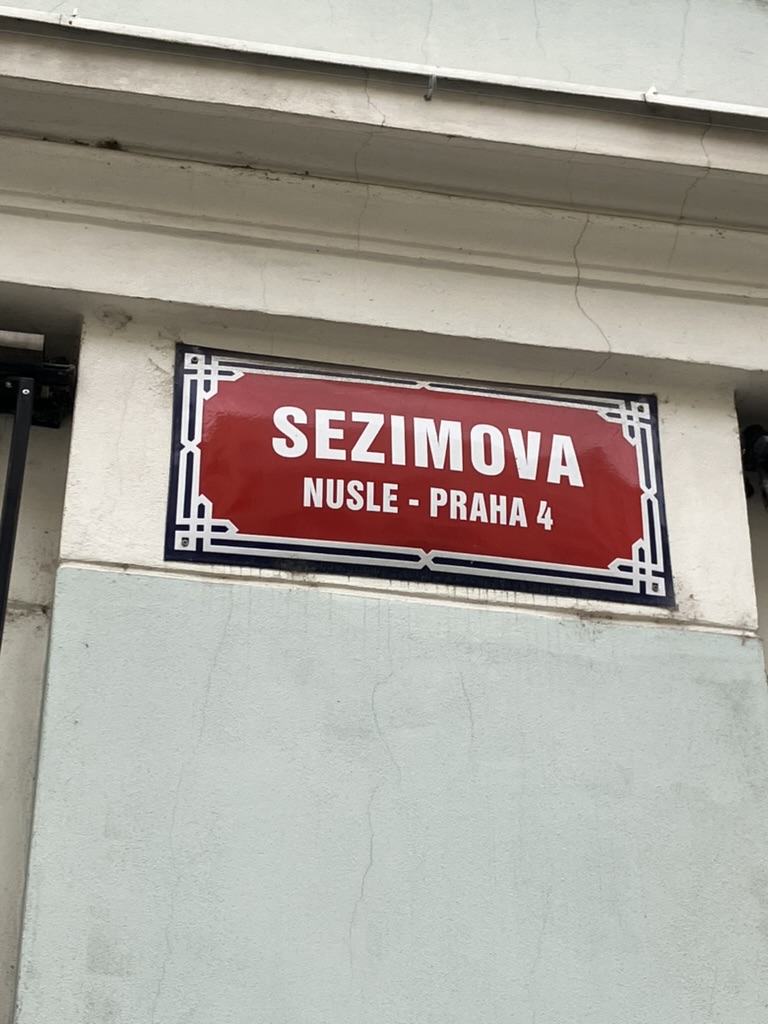
Throughout his life, Count Sezima z Vrtby acquired and purchased so much land across Bohemia that a full list of places reads like an atlas of the region. For our purposes, the most significant purchase is the one he made in 1648 – of a farmstead called Nusle.