Originally published on X on 25 June 2024.
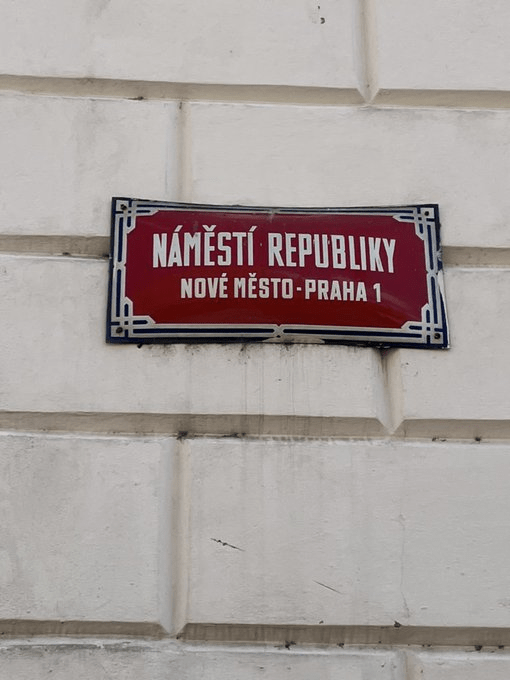
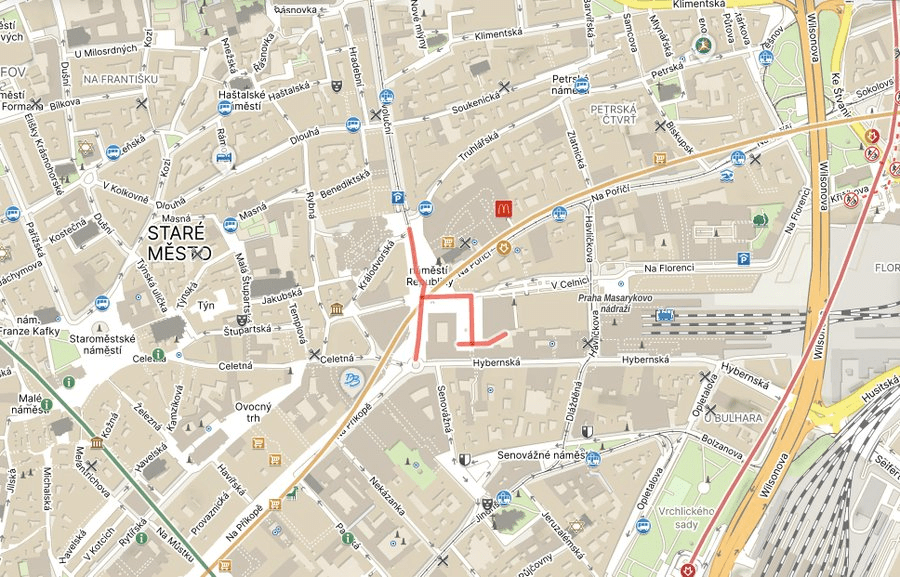
This was an important area for centuries – see https://whatsinapraguestreetname.com/2024/10/10/prague-1-day-183-kralodvorska/, for example – but, as the border between the Old Town and the New Town, it was long dominated by a moat, then by the city walls.
The square was constructed in the 1860s, at the same time as the city walls were demolished. It was initially called Josefské náměstí after St Joseph’s Church, which is still there, and used to have a monastery attached to it.

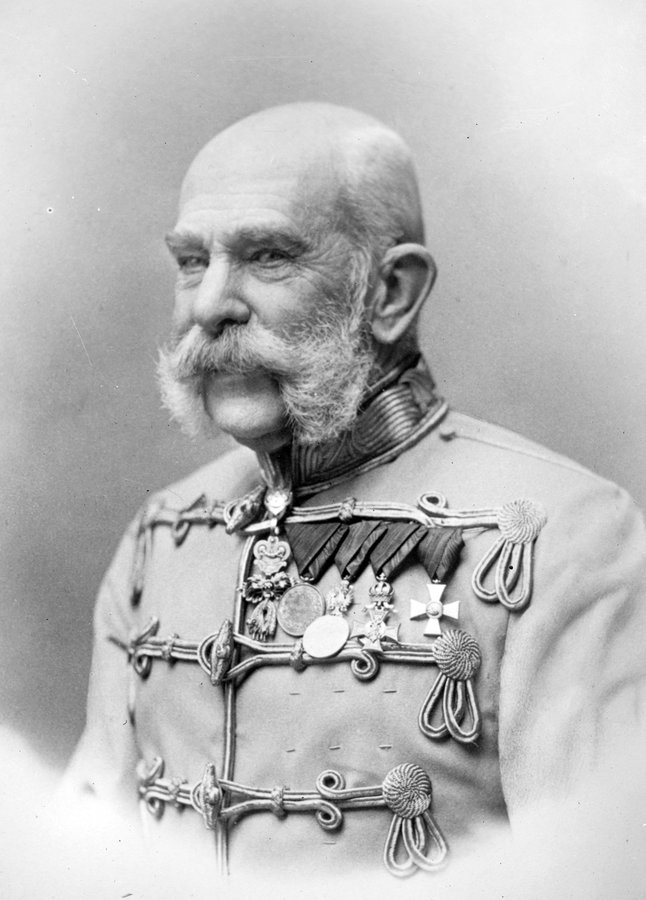
This name was in place until 1916, when the square was renamed náměstí Františka Josefa I, after Emperor Franz Joseph I, who died in the same year.
The Austro-Hungarian Empire only managed to outlive old Franz by two years, and, in 1919, the square was renamed to commemorate the brand-new state of Czechoslovakia.
On the Old Town side of the square, you’re most likely to be interested in Obecní dům: https://whatsinapraguestreetname.com/2024/10/10/prague-1-day-182-u-obecniho-domu/.

And the Powder Gate: https://whatsinapraguestreetname.com/2024/10/10/prague-1-day-181-u-prasne-brany/.

Before getting your fill of Peak 1970s with the Kotva Department Store (I must admit that I’m quite excited to see what its current renovations do to it, given that it’s not scheduled to open again until 2027).

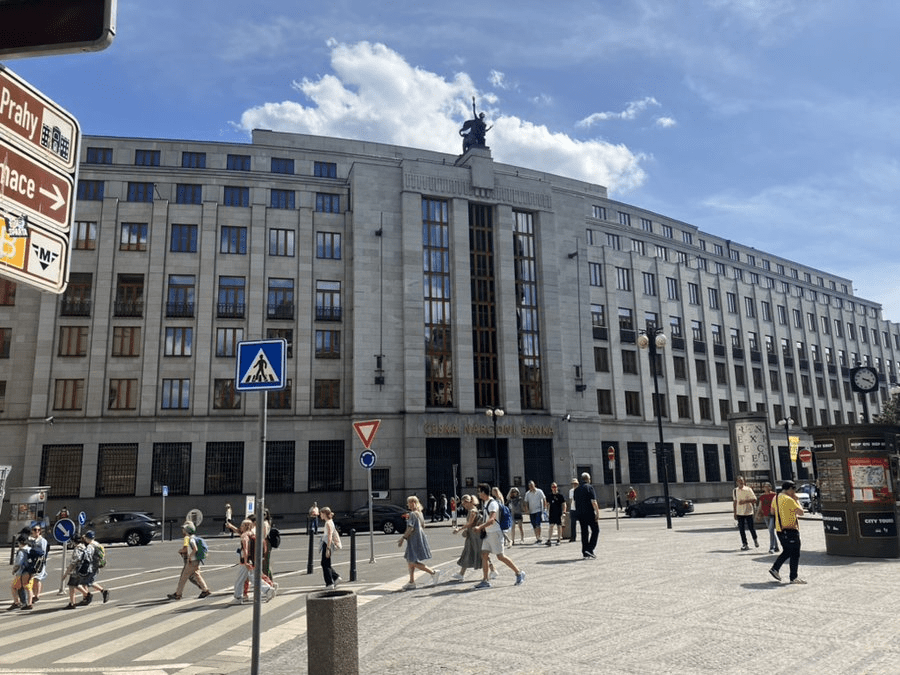
On the New Town side, we can start with the Czech National Bank, built based on a design by František Roith between 1935 and 1942.
And then to Dům U Hybernů (more information on https://whatsinapraguestreetname.com/2024/09/20/prague-1-day-134-hybernska/), formerly used by Irish monks, now used by musicals.

Next door, you have the Hybernians’ former monastery. Look behind the tour buses, and you’ll see a combination of words that you never, ever seem to hear on the news these days.
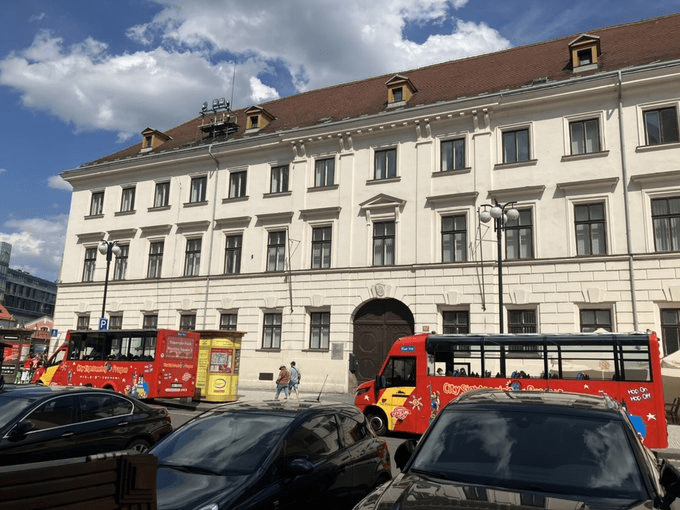

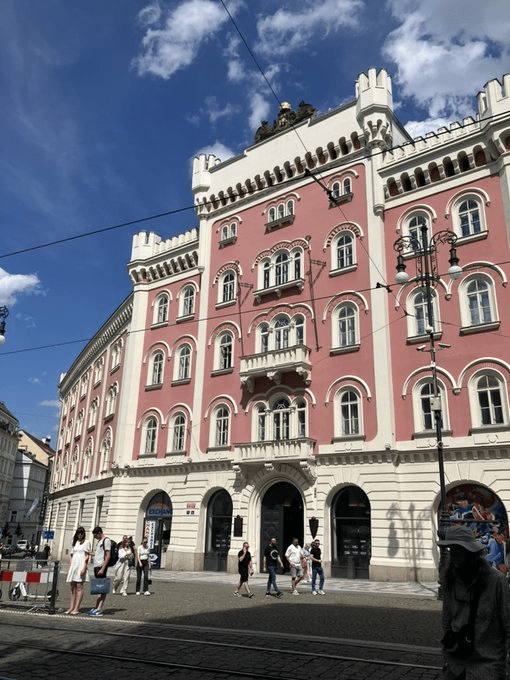
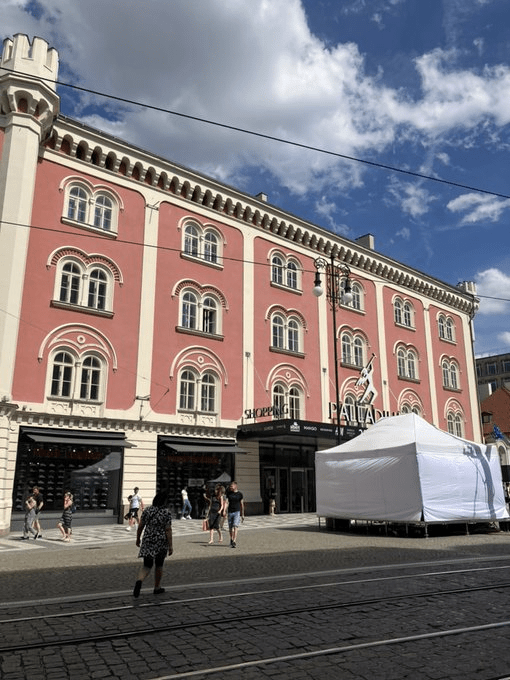
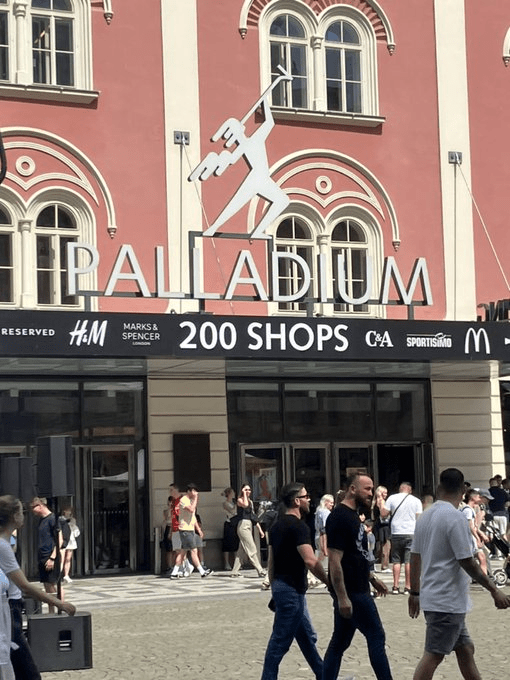
Across the road, the St Joseph Barracks (Kasárna Josefská) were built in 1799; from 1919, they were known as the Jiří z Poděbrad barracks, in line with the patriotic fervour of the time. They lasted until 1993.
There’s a strong chance that you’re familiar with what took their place in 2007, whether you’d want to be or not. The façade of the barracks, at least, has been maintained.
For those wanting to do the full independence trail, you start here, on the other side of the Vltava: https://whatsinapraguestreetname.com/2024/09/12/prague-1-day-87-vitezna/, cross here: https://whatsinapraguestreetname.com/2024/09/12/prague-1-day-90-most-legii-legion-bridge/, walk along here, taking in all the fine buildings: https://whatsinapraguestreetname.com/2024/09/14/prague-1-day-106-narodni-national/, have a slightly shorter walk along here: https://whatsinapraguestreetname.com/2024/09/25/prague-1-day-144-28-rijna/, get a bit annoyed that this one wasn’t given an independence-related name, but acknowledge that it’s worth a stroll anyway: https://whatsinapraguestreetname.com/2024/09/22/prague-1-day-137-na-prikope/, re-read today’s post, and then head up here: https://whatsinapraguestreetname.com/2024/11/10/prague-1-day-255-revolucni/.

 What's in a Prague street name
Leave a comment