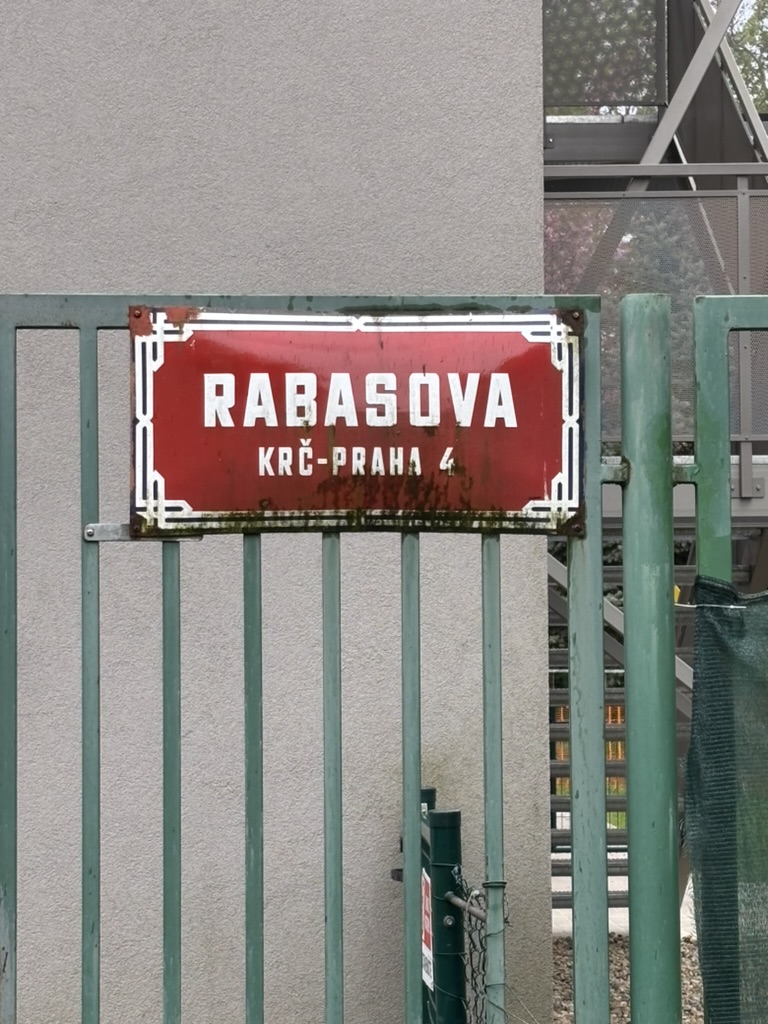
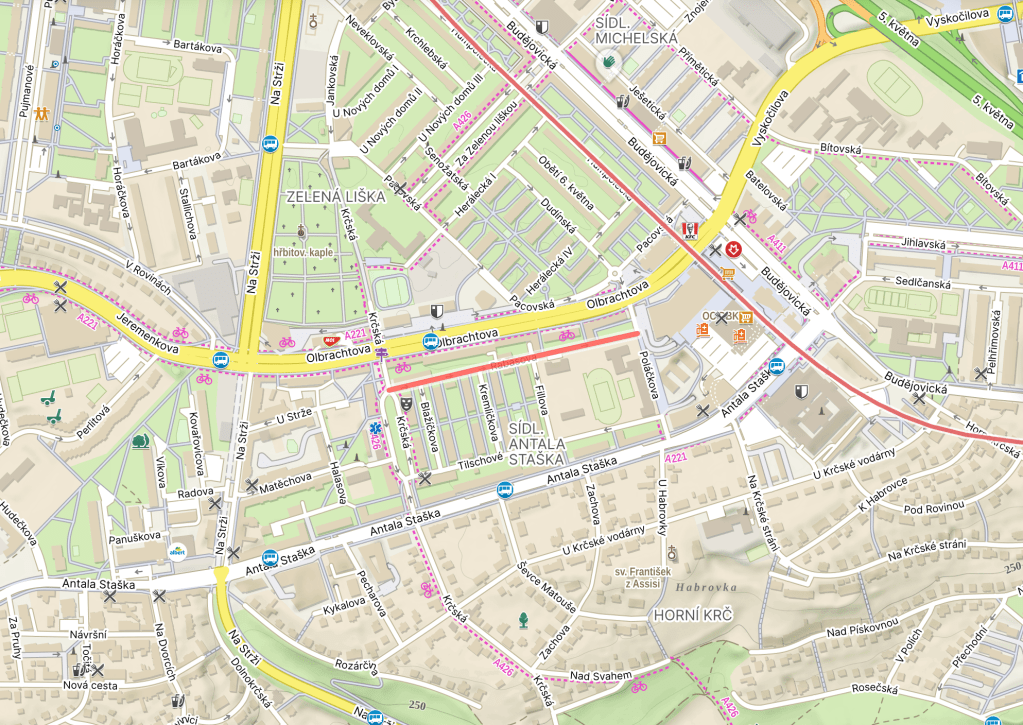
Rabasova was built in 1962.
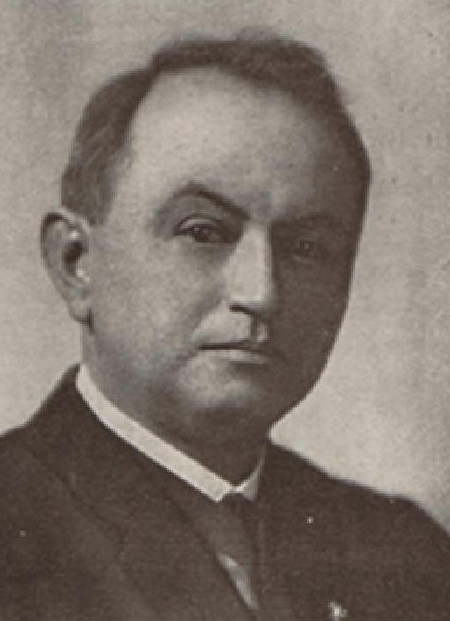
Václav Rabas was born in Krušovice (near Rakovník, and as in the beer) in 1885. After completing his military service, he started studying at Prague’s Academy of Fine Arts.
This all went well enough until 1909, when a critical article he wrote about the Academy was published. Rabas’s studies were put on hold as a result.
However, in the same year, he joined the Umělecká beseda (an artists’ forum founded in 1863, with some very well-known former members, e.g. https://whatsinapraguestreetname.com/2024/09/30/prague-1-day-156-smetanovo-nabrezi-smetana-embankment/ and https://whatsinapraguestreetname.com/2024/01/18/prague-2-day-11-manesova/).
From 1911 to 1913, he was tutored by Max Švabinský. He was called up to fight in WWI in mid-1914, but was injured on the Eastern Front in September of the same year and never fought again.
After 1918, Rabas worked for magazines including the satirical Nebojsa (which was also a workplace for the subject of yesterday’s post: https://whatsinapraguestreetname.com/2026/04/27/prague-4-day-369-polackova/).
Also like Poláček, he got to know the Čapek brothers (https://whatsinapraguestreetname.com/2024/01/30/prague-2-day-24-sady-bratri-capku/), as well as the future president of Czechoslovakia, Edvard Beneš.
Rabas rose up the ranks of Umělecká beseda, becoming the chairman of its art department in 1923, and later mayor of the entire organisation.
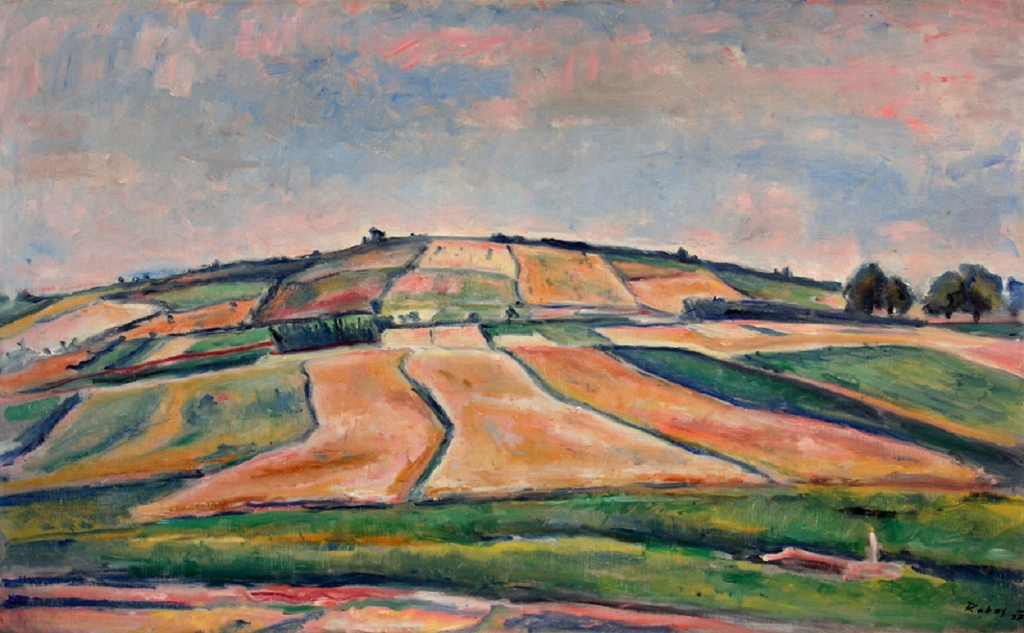
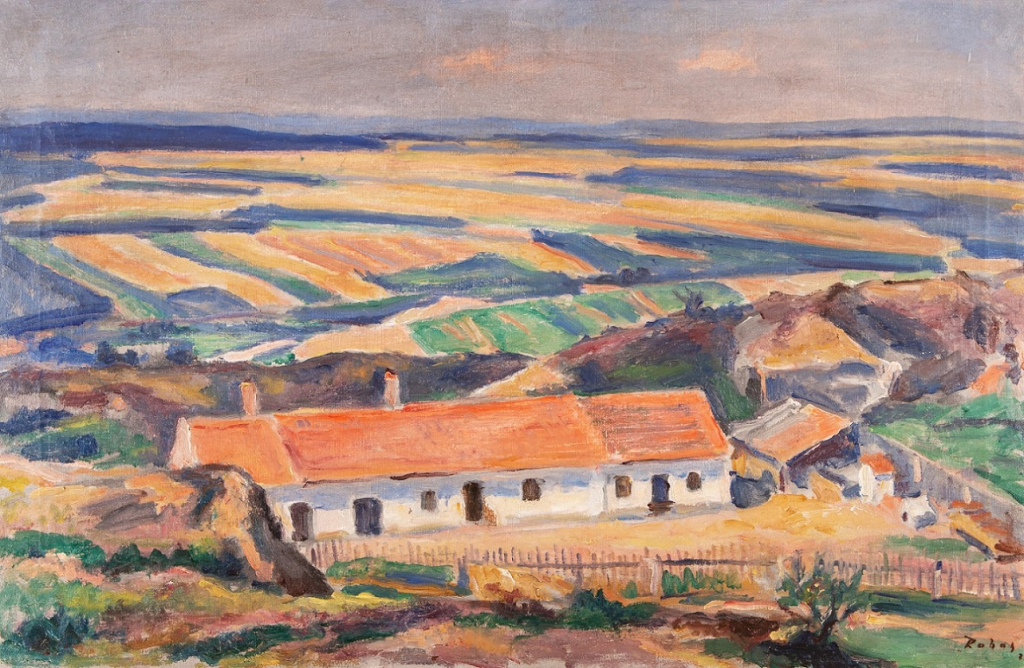
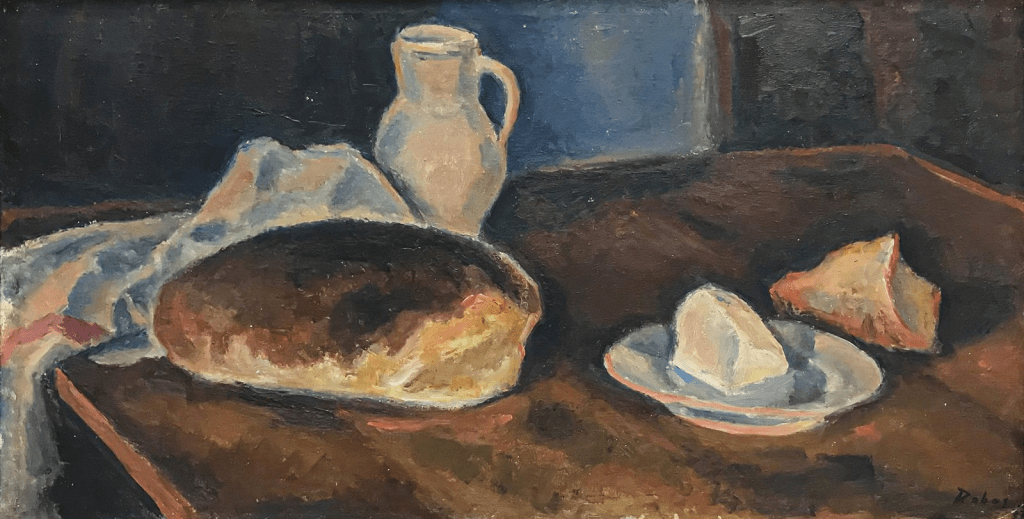
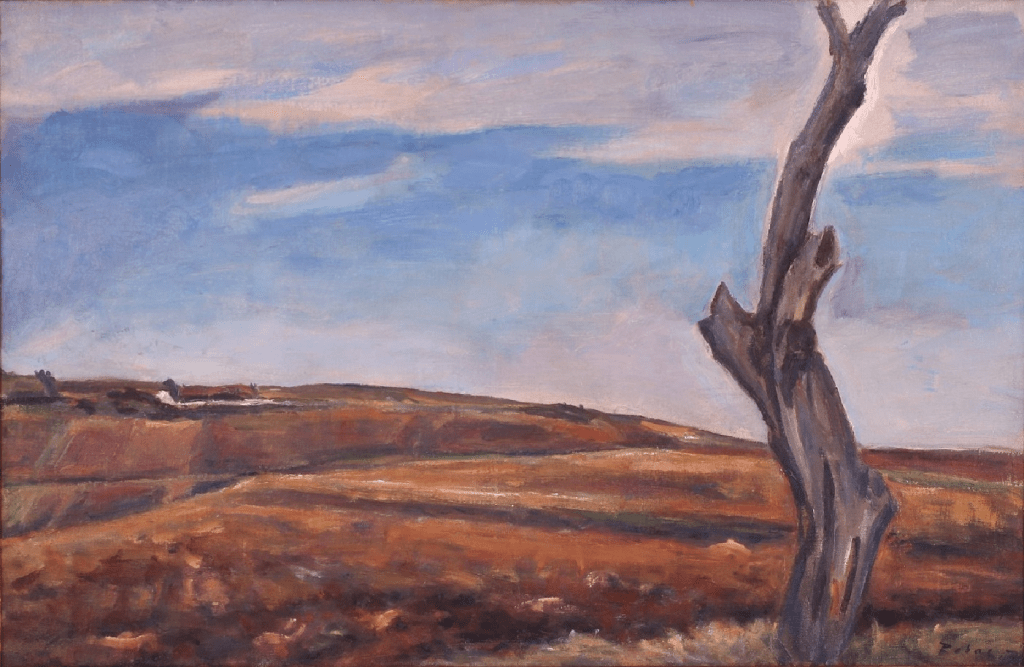
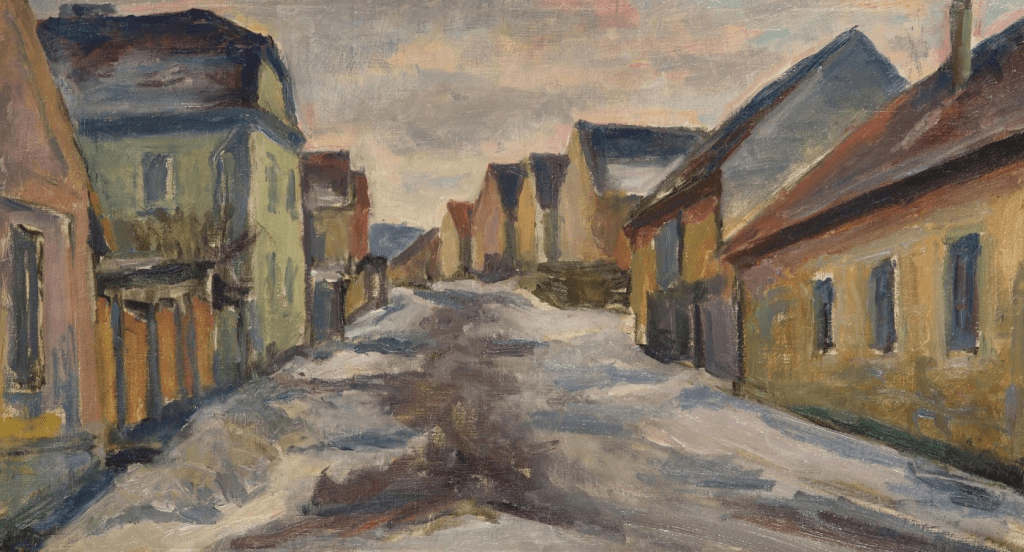
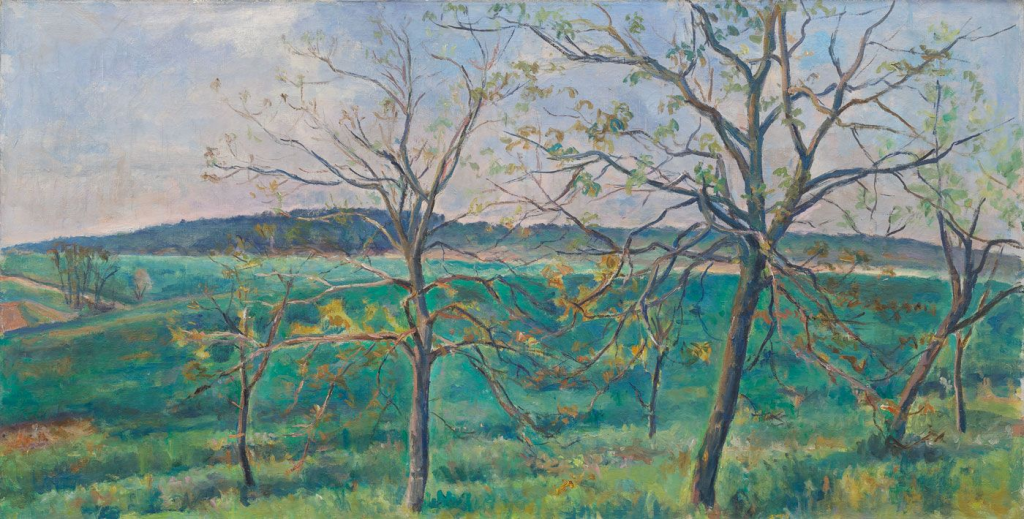
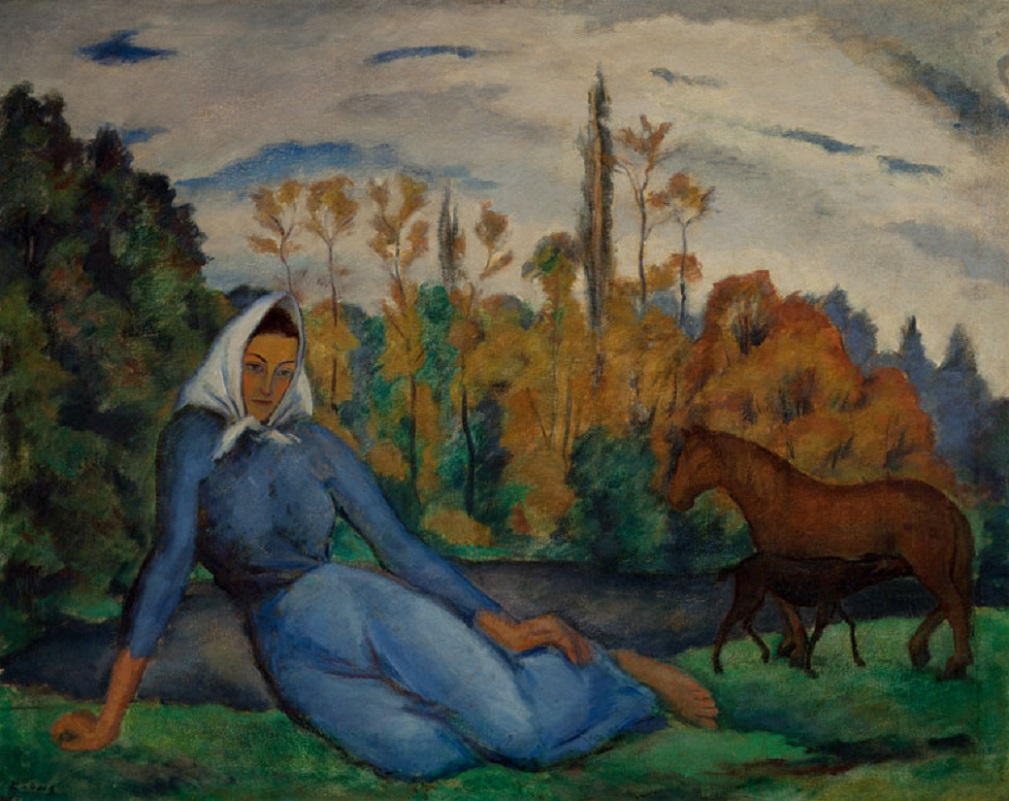
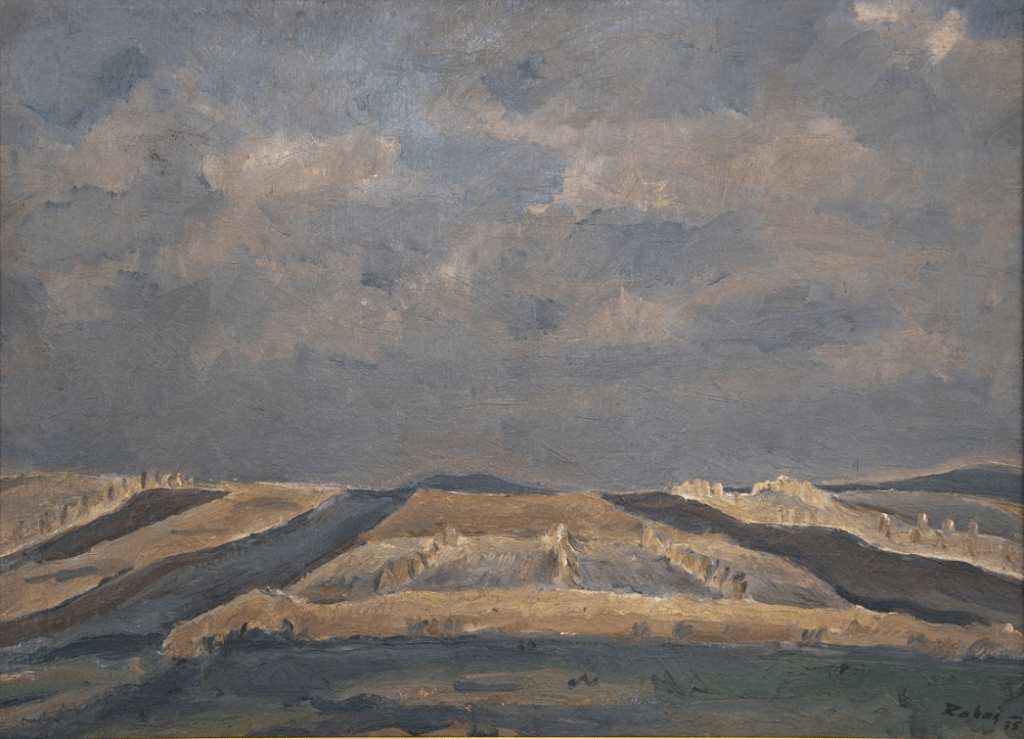
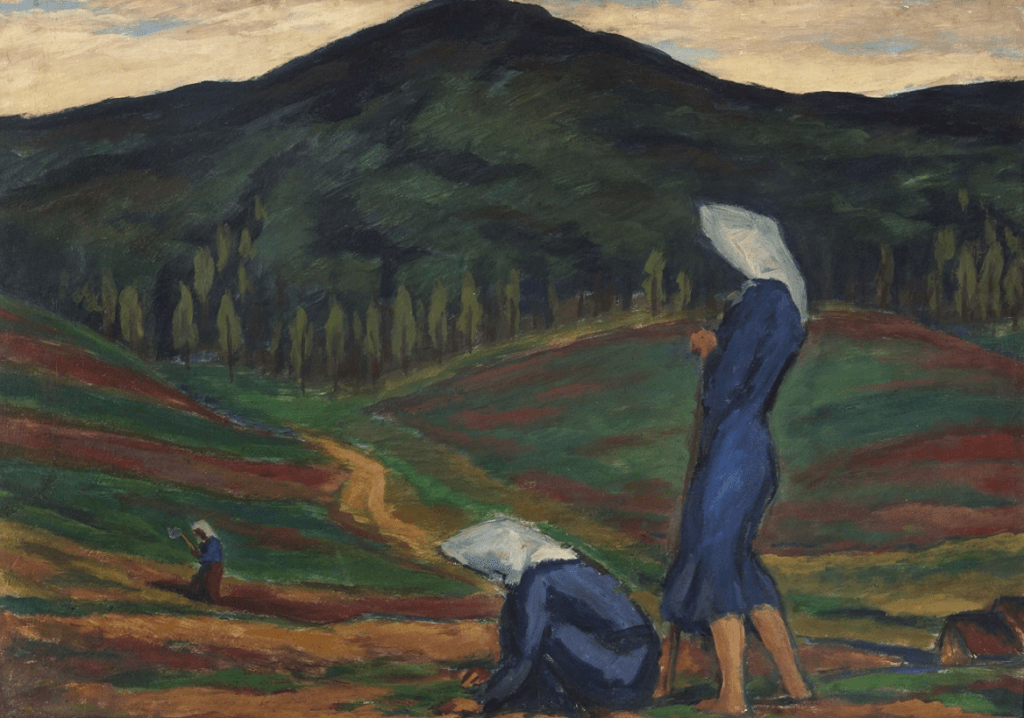
His paintings – mainly depicting the surroundings of his native Krušovice and Rakovník – were exhibited across the world. In 1935 – on the occasion of his 50th birthday – he was the subject of an exhibition at Prague’s Municipal House (https://whatsinapraguestreetname.com/2024/10/10/prague-1-day-182-u-obecniho-domu/).
In 1946, Rabas signed the ‘May Message of Cultural Workers to the Czech People!’, a pro-Communist manifesto. He also signed ‘Forward, not a step back!’, which supported the Communist coup of February 1948, and became a favourite of the regime.
Rabas died of a heart attack in 1954, having received the Klement Gottwald State Prize a year earlier, and is buried in Krušovice, where there is also a gallery dedicated to his work.
 What's in a Prague street name
Leave a comment