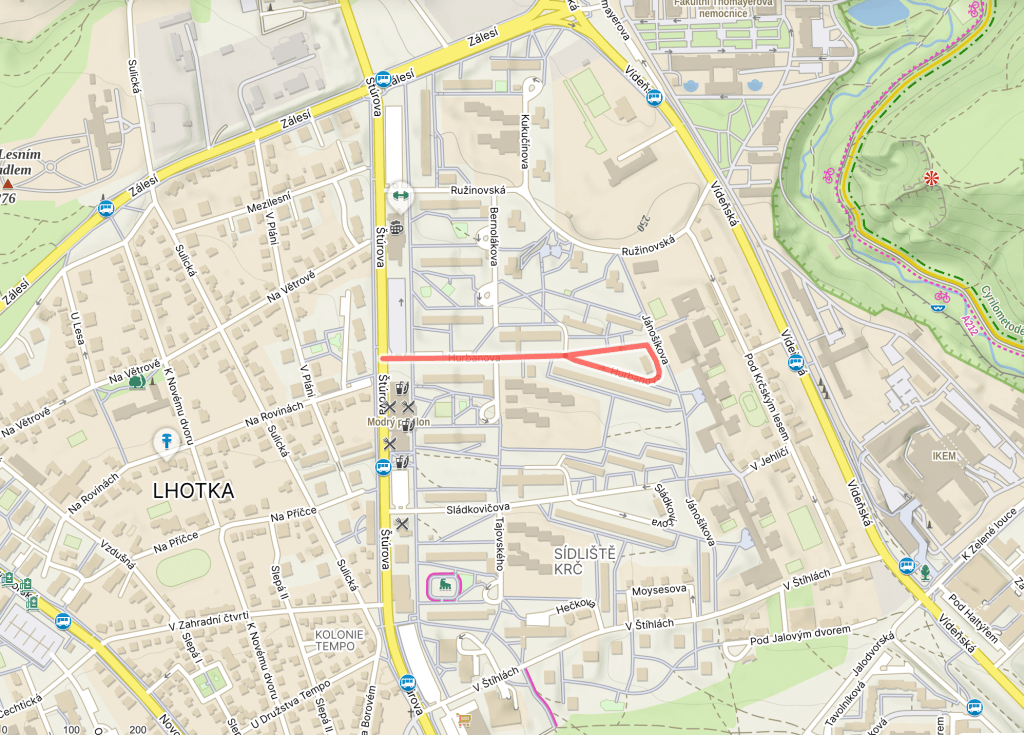
Hurbanova was built in 1969.
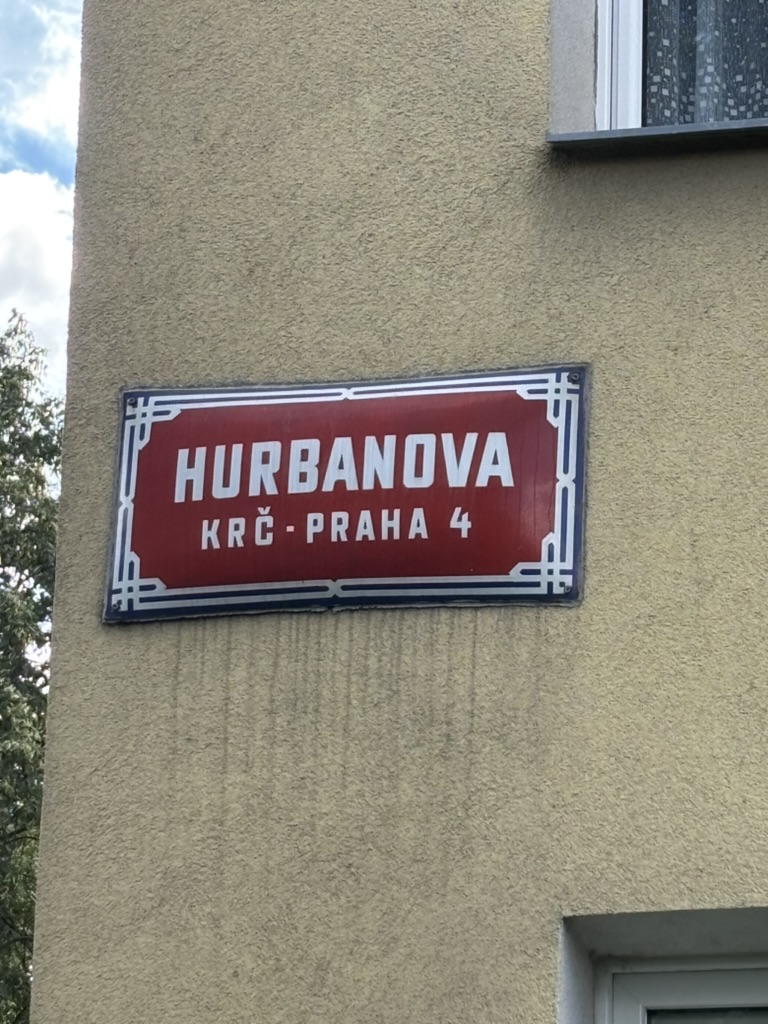
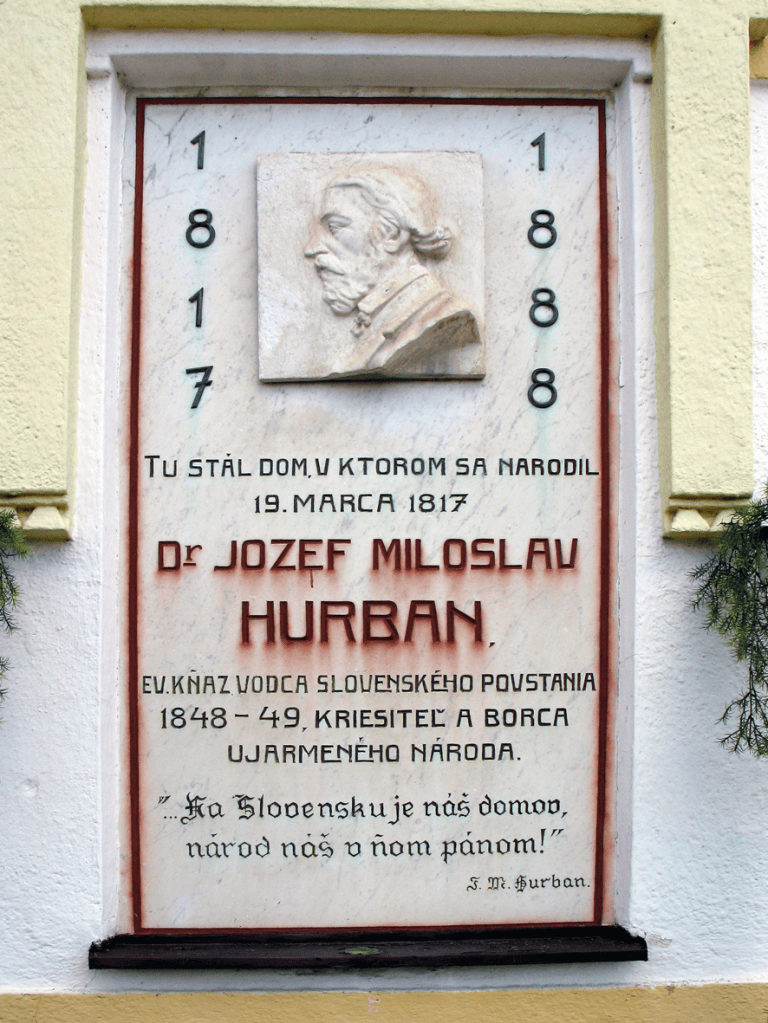
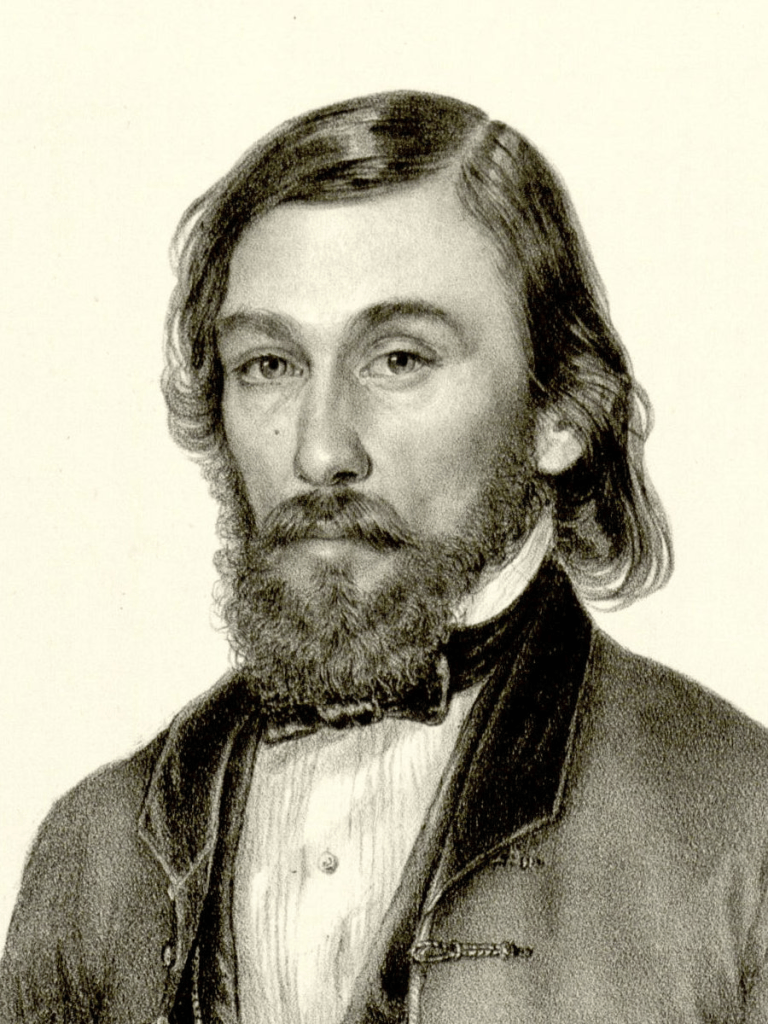
Jozef Ľudovít Hurban was born in Beckov, now in the Trenčín region of Slovakia, in 1817, the son of a Lutheran priest (photo taken from Wikimedia Commons, credit to Peter Zelizňák).
Initially home-schooled, he attended school in Trenčín, followed by the Lutheran Lyceum in Bratislava, where he spent ten years (1830-40) and got to know one Ľudovít Štúr (https://whatsinapraguestreetname.com/2026/03/05/prague-4-day-325-sturova/), who awakened his love of the Slovak nation.
In 1836, he attended a gathering of Štúr’s followers at Devín, and added the decidedly Slavic ‘Miloslav’ to his name. A year later, he joined Vzájomnosť (‘Reciprocity’), a secret society.
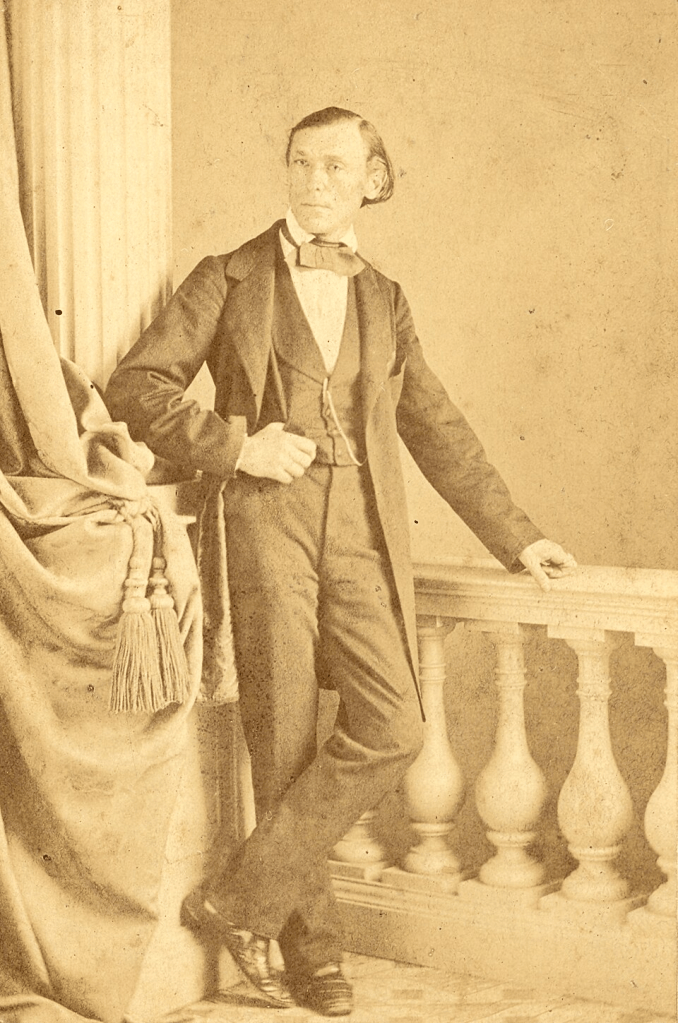
Hurban was ordained as a priest in 1840, and, despite wanting to continue his studies in Germany, had to work instead, first as a chaplain in Brezová pod Bradlom, then (from 1843) as a pastor in Hlboké. The region (Podjavorina) became a hotbed of Slovak activity against Hungarian dominance.
Hurban spread national consciousness among the local population by organising reading groups, Sunday schools, theatre performances and temperance societies.
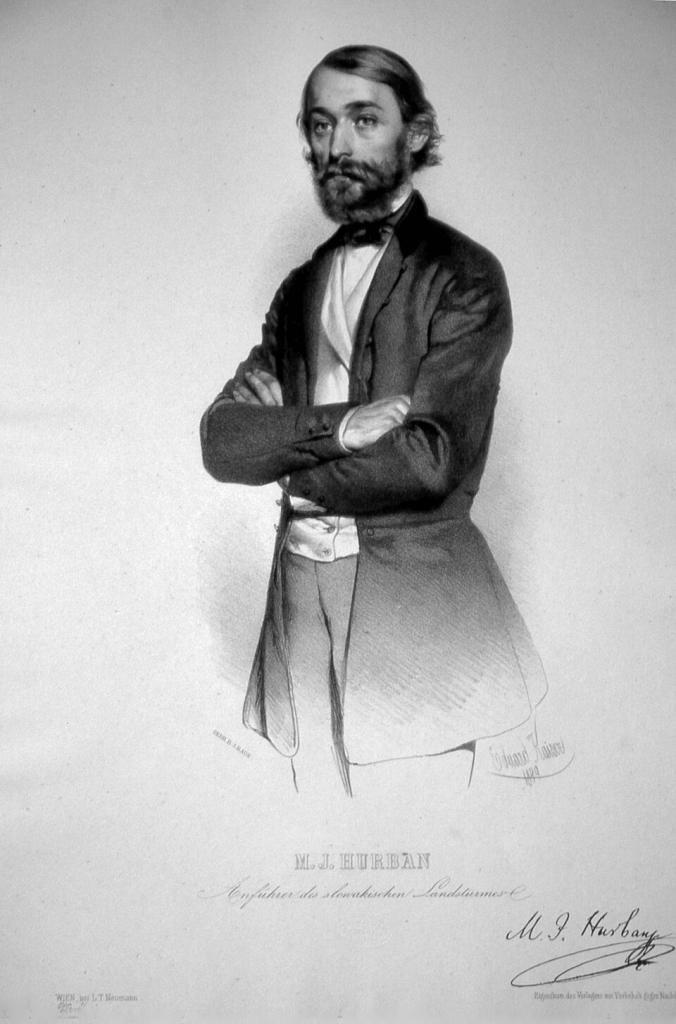
It was at his parsonage in Hlboké, in 1843, that he, Štúr and Michal Miloslav Hodža (not covered by me yet, but a sure-fire candidate for day 1 of What’s In a Bratislava Street Name) decided that standard Slovak should be based on the Central Slovak dialect.
There was a further important meeting at his parsonage on 18 March 1848. The participants decided that it was time to draft a Slovak revolutionary programme.
On 28 April, this was presented at a rally at Brezová pod Bradlom; the programme became known as the Nitrianske žiadosti (Nitra Demands). In the following month, a more ‘national’ version, Žiadosti slovenského národa (Demands of the Slovak Nation) was presented.
Authorities in Buda took a very dim view of all this activity, and issued an arrest warrant for Hurban (who would, later in 1848, become a member of the newly-founded Slovak National Council).
After participating in the failed Prague Uprising (and the failed Slavic Conference), he and Štúr moved again, first supporting the Slovak national movement from Croatia, then from Serbia.
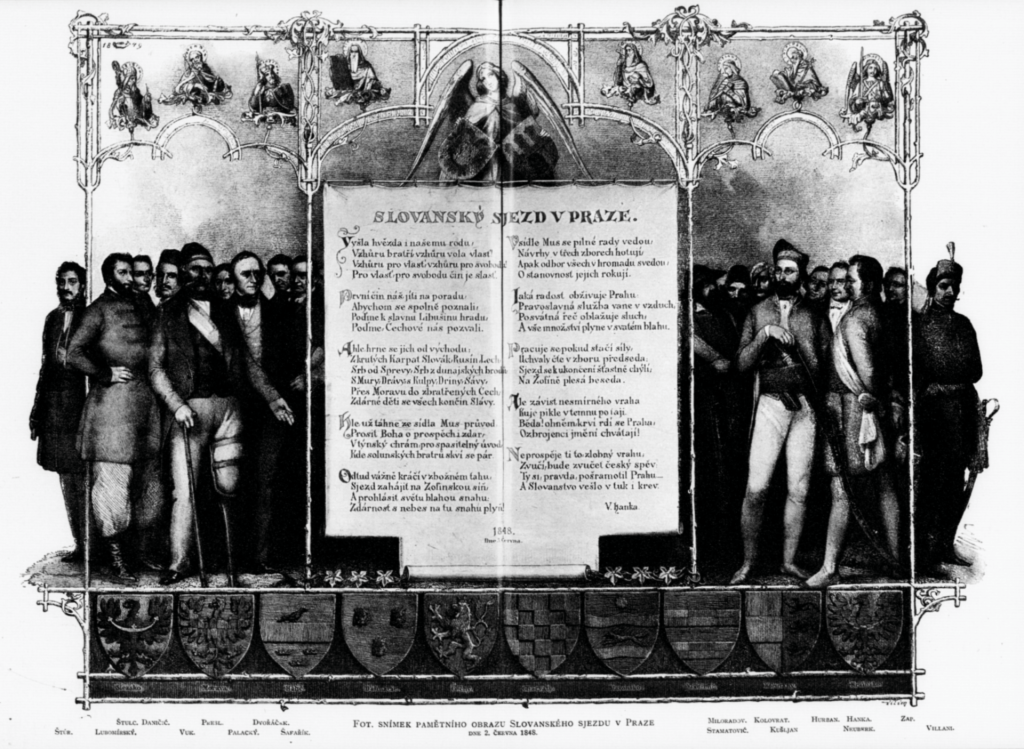
Following the counterrevolution in Austria, Hurban was placed under police surveillance and was banned from political activity or publishing. His situation improved somewhat in the early 1850s, when Bach’s absolutism collapsed.
In 1861, he contributed to the Memorandum of the Slovak Nation, which demanded a constitutional-legal resolution to the Slovak question, and even went to the Ministry of the Interior in Vienna to hand it in. Vienna reacted about as positively to this as you might expect, and Hurban turned to more church-oriented matters.
From 1866, he served as superintendent of the Slovak Evangelical “Patent” churches.
When he turned back to politics, it didn’t go that well for him – his articles criticising the Hungarian Nationalities Law of 1868 got him six months in prison, and a further article in 1875 got him another three.
In 1875, Matica slovenská, the first Slovak cultural organisation (which Hurban had been involved in the founding of in 1863) was forced to close. Hurban’s articles about this aimed to demonstrate the long-standing tradition of Czechoslovak literary unity.
However, they were also written in Czech – which Slovak patriots, even those who were Hurban’s biggest fans, found to be a major step back. Hurban stuck to writing a biography of Štúr, and an account of the events of 1848. He died in 1888.
A monument to him, financed by public donations, was opened in 1892; the authorities banned anyone from accessing it – including his immediate family.
In 1948, a small town called Stará Ďala was renamed Hurbanovo in his honour.
These Slovak-based street posts seem to be very long, yet only touch the surface. Maybe it’s time for a quick What’s In a Bratislava Street Name series after all.


Leave a Reply