What's in a Prague street name

Every street in Prague, one by one.

  • Kongresová was built in 1986.

    In 1971, a spatial plan determined that some sort of ‘service centre’ should be built in this location, which was also the site of improved transport links – Nusle Bridge (https://whatsinapraguestreetname.com/2024/08/21/prague-2-day-86-nuselsky-most/) would be opened in 1973, and Prague’s first metro line would follow in 1974.

    After a drawn-out selection procedure – largely due to overly ambitious plans and insufficient budgets – the government of Czechoslovakia agreed to go ahead with a project led by architects Jaroslav Mayer and Antonín Vaněk in 1975.

    The centre took significant… inspiration from Congress Centrum Hamburg, which had been opened in 1973. See for yourself: https://en.wikipedia.org/wiki/Congress_Center_Hamburg#/media/File:Bundesarchiv_B_145_Bild-F039666-0016,_Hamburg,_Kongresszentrum.jpg.

    Construction began in 1976, when the building was referred to as the Sjezdový palác (Congress Palace), because it was intended to be the venue for the Communist Party to hold its conferences.

    After a trial opening in 1980, the building was completed in 1981, by which time it was known as the Palác kultury (Palace of Culture). It had cost 2.5 billion crowns to make, and was officially opened on 2 April 1981.

    Hilariously, the Communists said there were few buildings like it anywhere in the world (Hamburg would like a word), and even compared it to Prague Castle.

    You can’t complain about the views, though.

    In 1984, construction started on a hotel to accompany the Centre, Hotel Forum. It was opened in 1988.

    After the Velvet Revolution, the new political parties didn’t really want to use the Centre, and nobody quite knew what to do with it; there were even calls for it to be demolished.

    It was renamed the Kongresové centrum (Congress Centre) in 1995, and underwent reconstruction from 1998 to 2000. Here’s Bob Dylan playing there in 1995.

    In September 2000, it hosted the 55th meeting of the International Monetary Fund and the World Bank in September 2000.

    That sounds like it was quite staid, but it really, really wasn’t – Prague became the scene of anti-capitalist riots, the likes of which haven’t been seen here since. Think barricades, tear gas, water cannons and Molotov cocktails.

    It’s kind of incredible to think that this is what our city looked like at that point.

    When the NATO summit occurred in 2002, there were real fears of a repeat performance, but this didn’t materialise.

    The Centre has been through various renovations this century, and, for a building that was threatened with destruction in the 1990s, it’s doing quite well, being one of the most popular congress centres in the world.

    And, for those who like trivia, it was at the Congress Centre, in 2006, that it was decided that Pluto was no longer a planet.

    Meanwhile, the hotel, known as Corinthia Towers for many years, was renamed in Grand Hotel Prague Towers in 2024. It appears to be way nicer inside.

  • Na Vítězné pláni (On the Victory Plain) already existed in the first half of the 20th century, but wasn’t given its name until 1993.

    If you were ever a Czech schoolkid, you’ll be familiar with the Hussite Wars; if you weren’t, let’s take a trip back to 1420.

    In March, Pope Martin V issued a Papal Bull, inviting all Christians to launch a crusade against the Hussites (take a look at https://whatsinapraguestreetname.com/2024/10/05/prague-1-day-169-husova/ for their origins).

    Led by Sigismund – King of Bohemia, but categorically not a Czech or a Hussite – crusading troops had entered Bohemia by the end of April. Around the same time, Hussites forces founded the town of Tábor in South Bohemia.

    After getting their hands on Hradec Králové, Team Catholic made their way to Prague, which was harder to conquer, especially after the decisive Hussite victory at Vítkov Hill in mid-July (https://whatsinapraguestreetname.com/2022/12/04/prague-3-day-111-pod-vitkovem/).

    Sigismund, sensing things weren’t going according to plan, was hastily crowned King of Bohemia at Prague Castle on the 28th, and, two days later, announced that the crusade was cancelled for now.

    However, his troops still held the castles at Hradčany (https://whatsinapraguestreetname.com/2024/09/02/prague-1-day-1-u-svateho-jiri-st-georges-square/) and Vyšehrad (https://whatsinapraguestreetname.com/2024/08/26/prague-2-day-118-vysehradska/), meaning that a Hussite city had non-Hussite fortresses on either side.

    In September, the citizens of Prague decided to besiege Vyšehrad, an operation that could be particularly beneficial, given that the fortress was on the route from Prague to Tábor. Thanks to reinforcements from the countryside, it was soon surrounded.

    The Hussites set up their main camp at Pankrác, and Sigismund had clearly underestimated their strength, as he wasn’t in Prague at all when word reached him that his men at Vyšehrad were running out of water and food, and having to eat their own horses.

    Sigismund started to make his way back to Prague on 28 October, having apparently recruited another 20,000 men. On the same day, the Vyšehrad garrison agreed to surrender to the Hussites on the morning of 1 November if Sigismund hadn’t delivered sorely-needed food supplies on 31 October. And, as it turns out, Sigismund didn’t begin to set out for Vyšehrad until the morning of the 1st.

    When he arrived around three o’clock, he ordered his forces to attack around the Church of St Pancras, as well as from Podolí. The Hussites initially retreated, but, later, the tide turned: 1,500 of the crusading cavalry started to retreat, followed by other units.

    Soon enough, Pankrác plain was covered with the bodies of Sigismund’s men, and, given that Sigismund hadn’t turned up until three in the afternoon – in November – it was a pretty short battle before the sun set. Thus ended the Battle of Vyšehrad on ‘Victory Plain’ (or Vítězná pláň – hence the name of the street).

    The garrison at Vyšehrad surrendered; the Hussites looted the churches there, but spared the inhabitants. Meanwhile, news of Sigismund’s defeat soon made its way around Europe, and the first anti-Hussite crusade was over. That said, it would only be six months or so until the second one.

    There’s a secondary school on the street, sharing a name with it.

  • Pod Terebkou (‘Under Terebka’) was built in 1935.

    Once upon a time, this area was either a vineyard or just a regular field, but, in 1841, a homestead was built here.

    Later in the century, it was purchased by Rudolf Tereba (1851-1904), an architect who had travelled around Italy, later settling in Prague and building a villa. He also had a house build on Karlovo náměstí (https://whatsinapraguestreetname.com/2024/09/01/prague-2-day-164-karlovo-namesti/ – also relevant to yesterday’s street) in 1894.

    The homestead and the villa are both long gone, having been demolished in 1940. We’ll get to the street where the homestead was actually located tomorrow.

  • Petra Rezka was built in 1931.

    Until 1948, the street was named Leflova, after Jindřich Lefl z Lažan, a Polish-Czech nobleman who initially supported Jan Hus, and gave him a place to hide, but later changed sides and was killed by the Hussites at the Battle of Vyšehrad (more on that in two days’ time).

    Then, from 1948 to 1952, it was named Mašínova, after Josef Mašín, an army officer and member of the Czech anti-Nazi resistance. He was shot in 1942, a retaliatory measure following the assassination of Reinhard Heydrich. More on Mašín when we get to Prague 8.

    Doing something of a 180 now, there’s a Czech singer called Petr Rezek. Here he is giving his all to a Czech cover version of Y.M.C.A.

    And Everybody’s Talkin’.

    And Centerfold.

    Sadly (and predictably), this street isn’t named after him, and we have to go back to the early 1400s to learn about The Other Petr Rezek.

    It’ll help if we recall Jan Želivský (https://whatsinapraguestreetname.com/2022/11/19/prague-3-day-23-jana-zelivskeho/), a Hussite priest who, in 1419, stormed the Town Hall in Prague’s New Town, indirectly causing the death of the King and directly kicking off the Hussite Wars.

    Želivský fought in these wars until 1421, when he was removed from his position, and, a year later, he was arrested by Prague’s town council and was beheaded.

    The relevance of this? The authorities also executed some of Želivský’s followers, one of whom was this Petr Rezek guy, although we don’t know that much about him otherwise.

    Back to the street, I was struck by this plaque on one its houses, and wanted to know more.

    It translates as ‘I liked being here. Tomáš Holý, 17.03.1968-08.03.1990’.

    In 1976, director Oldřich Lipský had a problem – he was filming a comedy called Marečku, podejte mi pero! (Marecek, Pass Me the Pen!), and a child actor he was using had fallen ill. A man working in the prop department suggested his seven-year-old nephew, Tomáš, as a replacement.

    Young Tomáš turned out to be a natural: https://www.youtube.com/watch?v=OE4xjEkdi88.

    So much so that Lipský cast him again in a children’s film, 1977’s Ať žijí duchové! (Long Live Ghosts!). In the same year, he starred in Jak vytrhnout velrybě stoličku (How to pull a whale’s stool out), directed by Marie Poledňáková.

    He became famous outside of Czechoslovakia in 1981, when he starred in the Austrian-West German-Swiss-Czechoslovakian science fiction television series Unterwegs nach Atlantis (On the Way to Atlantis).

    However, Tomáš decided around that time that acting wasn’t for him. The reasons aren’t entirely clear, but, in one interview around 1980, he said that he didn’t like the idea of becoming a failed actor.

    After finishing school, Tomáš began to study law, and entered into a relationship with an up-and-coming singer, Lucie Bílá. Tragically, however, he was killed in a car accident in Kytlice in 1990, aged just 21.

    The plaque was unveiled in 2021, on the front of the house where he had spent most of his life.

  • Křesomyslova was built in 1892.

    We’re not even a month into the Prague 4 series, but the story of the seven mythological dukes of Bohemia has already come up before: https://whatsinapraguestreetname.com/2025/01/03/prague-4-day-3-mnatova/.

    Křesomysl was the fifth of these seven alleged dukes.

    The verb ‘křesat’ means ‘to strike’ – as in making two hard materials collide so that they produce sparks. Meanwhile, ‘mysl’ means ‘mind’ or ‘spirit’. So, Křesomysl would be someone who is bright and/or makes you think.

    The ‘days of the week’ theory – also mentioned on Day 2 – has it that Křesomysl, as duke number five, was linked to thunder (think German Donnerstag) and, therefore, Jupiter (think jeudi, jueves, giovedì and joi), who was also identified with the Norse God Thor (think, yes, Thursday).

    Cosmas doesn’t say much about Křesomysl, other than that he ruled Bohemia for a time. However, Václav Hájek z Libočan, who lived in the early 1500s and wrote his own chronicle – Kronika česká (this one was in Czech) – said a bit more.

    According to Hájek, when Křesomysl was duke, he had to deal with a nobleman called Horymír, who took a liking for destroying mines and their facilities. This really got to Křesomysl, who was dismissive of agriculture and thought mining for metals was the way for the country to move forward.

    Křesomysl responded by imprisoning Horymír at Vyšehrad (https://whatsinapraguestreetname.com/2024/08/26/prague-2-day-118-vysehradska/) and sentencing him to death.

    On execution day, Horymír said his last wish was to go for a ride on his favourite horse, Šemík. Křesomysl granted this wish.

    Once he was outside and on horseback, Horymír told Šemík to jump over the ramparts, swim across the Vltava, and bring them both home (I’m now picturing Horymír knocking about Nový Smíchov on a Saturday afternoon).

    Unfortunately, Šemík died after getting injured during the jump, but Horymír was free. He buried Šemík at Neumětely, in Beroun District; the horse’s supposed resting place can still be visited today.

    Kronika česká states that this all took place around 846-7, but historians generally concede that Hájek invented the entire story himself.

    More on Hájek and his accuracy-be-damned masterpiece on https://whatsinapraguestreetname.com/2022/11/19/prague-3-day-15-hajkova/.

  • Ctiborova was built in 1892. Which is possibly also when somebody last bothered to clean that street sign.

    Ctibor was supposedly a nobleman who worked as a judge during the reign of Václav I (who ruled from 1230 to 1253, and founded what are now the country’s second and sixth-largest cities (Brno and Olomouc)).

    Ctibor was respected enough in his profession to be nicknamed Moudrá Hlava (‘Wise Head’).

    By about 1248, many people in Bohemia had decided that Václav was no longer fit to rule (see https://whatsinapraguestreetname.com/2025/01/06/prague-4-day-6-otakarova/, or, if you’re too busy for that: Václav’s eldest son died and he largely withdrew from public life).

    Ctibor and the lords in the Bohemian court declared that Václav’s eldest surviving son, Otakar, should be King instead.

    The rebellion was defeated in 1249, and Ctibor fled to Germany with his son, Jaroš. However, he was found by a group of Germans (we don’t know their identities) and was promptly handed back to a vengeful Václav.

    On 29 December 1250, Ctibor was beheaded at Petřín (https://whatsinapraguestreetname.com/2024/09/11/prague-1-day-82-u-lanove-drahy/), while Jaroš was impaled on the city walls.

    Václav had actually pardoned the rebels – but Ctibor and Jaroš hadn’t been present at the peace negotiations, which meant that they (clearly) didn’t benefit from this.

  • Božetěchova was built in 1892.

    To start this one off, we have to take a look at the Sázava Monastery, located about 30 km south of Prague (https://whatsinapraguestreetname.com/2024/02/18/prague-2-day-31-sazavska/). It was founded in 1032 by Duke Břetislav I.

    Božetěch may have been educated there, and became its abbot – the fourth – in 1091. He was supposedly a favourite of the then King of Bohemia, Vratislav II.

    Božetěch is one of the first Czech artists to be mentioned by name; according to a chronicle depicting the history of the Sázava Monastery, he knew how to paint, work with precious stones, carve wood and turn bone. It’s said that he also oversaw reconstruction of the monastery in 1096.

    However, Božetěch would be expelled from the monastery in the same year, along with others, for practising the Slavic liturgy.

    He had also courted controversy a few years earlier – in 1091 – when he decided to hold a ceremony to crown Vratislav II. This, however, was only allowed to be done by the Bishop of Prague, who, at this time, was Kosmas.

    As a punishment, Kosmas forced Božetěch to create a life-size sculpture of the crucifixion of Jesus, and carry it to Rome. The sculpture has not been preserved.

    While the original source material is a bit unclear, 19th-century Czech patriots celebrated Božetěch as the first great Czech artist. However, it’s been impossible to link him to any specific extant works.

  • Na Fidlovačce was built in 1906.

    A fidlovačka is a tool that a cobbler – i.e. a person who makes or repairs shoes – uses to smooth leather.

    The tool then gave its name to a spring festival which took place in the Nusle valley, by the Botič stream (https://whatsinapraguestreetname.com/2024/08/26/prague-2-day-115-boticska/).

    At this festival – which started in the late 1780s, and took place on the first Wednesday after Easter – cobblers would decorate a birch tree with flowers, ribbons and Easter eggs, and then placed, yes, a fidlovačka on top.

    The writer Josef Kajetán Tyl was inspired to name one of his works after the tool and the festival (https://whatsinapraguestreetname.com/2024/07/01/prague-2-day-53-tylovo-namesti/) – Fidlovaċka premiered at the Estates Theatre (https://whatsinapraguestreetname.com/2024/10/09/prague-1-day-179-ovocny-trh/) on 21 December 1834.

    In the briefest terms: two young people are in love, but one lives with her pro-German aunt, while the other lives with his father, who is decidedly pro-Czech. And a cobbler. All kinds of inconveniences happen, but they end up together.

    One scene in the play happens at a fidlovačka, where a blind violinist called Mareš sings a song called Kde domov műj (Where my home is). This is how the scene appears in the 1930 film version of the play.

    And as for the song? It’s fair to say it’s the part of the play that’s had the most enduring impact, as it’s the Czech national anthem.

    And it was composed not by Tyl, but by František Škroup, whose square in Žižkov has some excellent stories behind it: https://whatsinapraguestreetname.com/2023/02/26/prague-3-day-145-skroupovo-namesti/.

    In 1902, when Nusle was developing fast, a public park – Nusle’s first – was created, and, in 1921, a theatre was added. It was named after Tyl, with locals frequently referring to it as Tyláček.

    In 1944, the theatre was renamed Divadlo pod Vyšehradem – the Theatre under Vyšehrad – but reverting to its original name when the war ended. It operated as Hudební divadlo v Nuslích – Musical Theatre in Nusle – from 1963 to 1978, before falling into disrepair.

    In 1995, reconstruction started, directed by the aptly-named Fidlovačka Foundation – and it was reopened, now called Divadlo na Fidlovačce, on 28 October 1998 (seventy years to the day since Czechoslovak independence). No prizes for guessing what play was shown on that day.

    The theatre’s production of Fiddler on the Roof would run for over sixteen years, ending in 2015.

    If you want to try and relive some of the Fidlovačka-related partying, the park is the home of the Nusle Beer Festival each September: https://www.facebook.com/NuselskePivniSlavnosti/.

  • Boleslavova was built in 1892.

    Boleslav was born in or around 915, the son of Vratislav I, Duke of Bohemia (pictured as seen at St George’s Convent – more on that one later), and his wife, Drahomíra.

    Accounts of the first few years of his life vary – and, for all we know, they could all be untrue – but we do know that Vratislav died in 921 and was succeeded by Václav (Wenceslas), Boleslav’s older brother.

    On 28 September – possibly in 929, possibly in 935 – Václav arrived in Stará Boleslav (https://whatsinapraguestreetname.com/2023/12/23/prague-3-day-180-boleslavska/) to attend a mass and a feast. However, he was murdered by members of Boleslav’s retinue.

    It’s traditionally been believed that this was due to differences of opinion between the two brothers about the need for the rulers of Bohemia to pay tribute to Henry the Fowler, King of East Francia (and Duke of Saxony) in order to ensure their state’s independence. Again, though, opinions vary, with some stating that Boleslav wasn’t involved in the murder at all.

    In any case, Boleslav was now Duke of Bohemia, and, three years later, would have Václav’s body returned to the St Vitus Rotunda at Prague Castle.

    Henry the Fowler would die in 936, and was succeeded by Otto the Great. Boleslav decided it was time to stop paying tribute to the monarchs of East Francia, leading to a low-scale war which lasted for fourteen years until Otto besieged a castle belonging to Boleslav’s son; Boleslav gave in, and was forced to resume payments to Otto.

    For those wanting specifics, good luck: we don’t know which castle was besieged in 950, nor do we know which son it belonged to.

    Boleslav’s problems with his western neighbour seemed to be resolved, so, inevitably, an eastern neighbour – the Hungarians – started to create trouble instead. Despite only having crossed into Europe about sixty years earlier, they had developed quite a thing for plundering and pillaging, making it as far as Spain, northern Germany and southern Italy.

    Otto and Boleslav joined forces against the Hungarian threat, and, in August 955, crushed the Hungarian forces at the Battle of Lechfeld (near Augsburg), putting an end to the Hungarians’ raiding era.

    Boleslav certainly benefited from this defeat: he gradually got his hands on Moravia, Silesia, western Slovakia and Kraków.

    During Boleslav’s reign, the Bohemian state was strengthened in other ways, too: silver mining was introduced, the first coins were produced, and the first convent in the country was founded at Prague Castle. It got its own post at a very early stage of the Prague 1 series: https://whatsinapraguestreetname.com/2024/09/02/prague-1-day-1-u-svateho-jiri-st-georges-square/. Boleslav’s daughter, Mlada, became its first abbess.

    It was also during Boleslav’s reign that the earliest written mention of Prague that we still have was made, and it wasn’t by a Czech – see the start of https://whatsinapraguestreetname.com/2024/10/12/prague-1-day-189-tynska/ (which is also an indication of how much Boleslav strengthened Bohemia’s position as a trade centre).

    Boleslav died in 967 or 972 – never let it be said that ‘certainty’ was a word that came to my mind while writing all this – and was succeeded by his son, who was called, erm, Boleslav. Actually, the street could have been named after the other Boleslav – we don’t know. But I’ve gone with the earlier of the two.
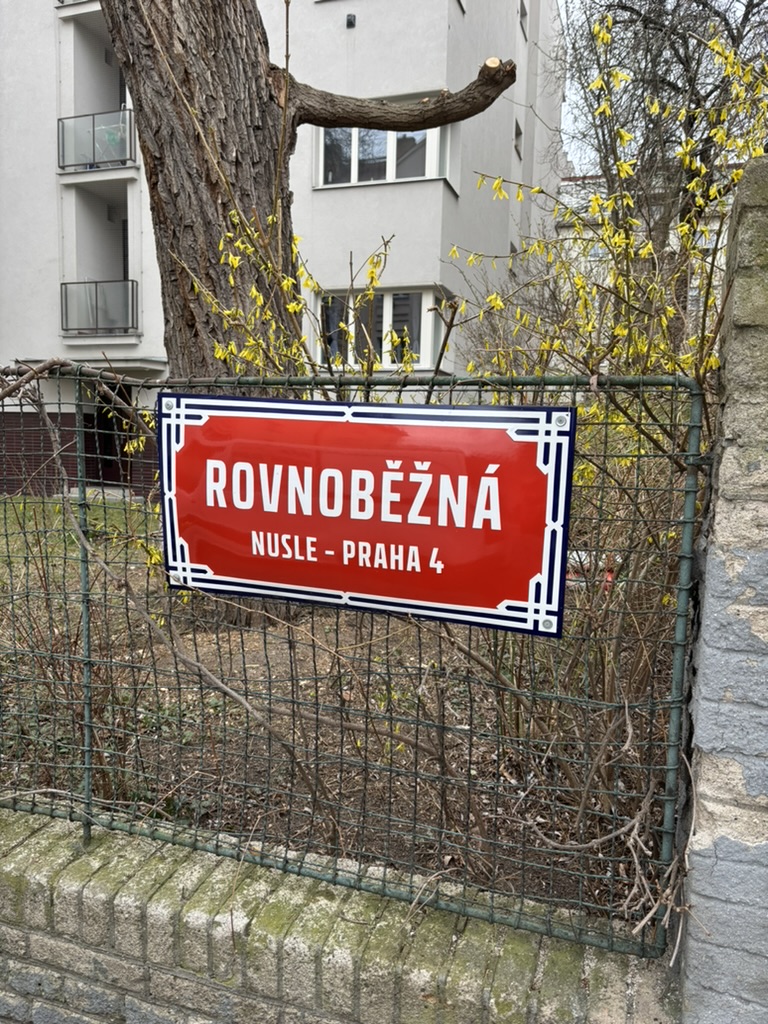
  • Sezimova was built in 1900.

    Sezima z Vrtby was born into the noble Vrtba family in 1578. Starting his career in the service of the Rožmberks, another major noble family of the time, he served as hetman of the Vltava region on three occasions between 1606 and 1611.

    Sensing the way the tide was turning – and what needed to be done to gain favour with the Habsburgs – he converted to Catholicism in 1615. This clearly had the desired effect, as, in the same year, he became an imperial councillor in Prague’s New Town.

    The advantages would continue after the Battle of Bílá Hora in 1620; a large number of the properties confiscated from the Hussite insurgents ended up in his hands. He was also promoted to the status of count, and ended up in various positions of power, including President of the Bohemian Chamber (1624-5), chief provincial judge (from 1638) and supreme provincial chamberlain (1644-8).

    Throughout his life, Count Sezima z Vrtby acquired and purchased so much land across Bohemia that a full list of places reads like an atlas of the region. For our purposes, the most significant purchase is the one he made in 1648 – of a farmstead called Nusle.

    See https://whatsinapraguestreetname.com/2025/01/02/prague-4-day-2-vrtbova/ for a descendant who would leave a major mark on the surrounding area.

    Count Sezima died in 1648, and was buried at the Franciscan monastery in Votice – which he himself had founded a few years earlier (https://whatsinapraguestreetname.com/2023/03/03/prague-3-day-168-voticka/).

    Meanwhile, a palace he had built in Malá Strana now houses one of central Prague’s best-kept secrets: https://whatsinapraguestreetname.com/2024/09/08/prague-1-day-39-karmelitska/.

  • Náměstí Bratří Synků, colloquially known as Synkáč, was built in 1903; the street name translates as ‘Synek Brothers’ Square’.

    Otto Synek was born to a Jewish family in Prague in 1900; his brother Viktor would be born three years later.

    Working as a bank clerk after university, Otto was fired in 1921 after participating in a strike, and became active in trade unionism, as did Viktor, who didn’t complete his studies.

    Otto joined the Communist Party two years later, becoming Central Secretary of the Communist Youth Association in 1929 – a position which it seems Viktor had held in 1928, despite not actually joining the party and being an employee instead.

    Around this time, Otto was a member of the sounds-a-lot-cooler-than-the-reality Karlínští kluci / Karlin Boys, basically Klement Gottwald’s gang – Gottwald became party leader in 1929, and gave it decidedly Stalinist leanings.

    Viktor, meanwhile, moved to Ostrava, where he helped publish communist periodicals – a role in which he fell foul of press law, leading to a seven-month stint in prison.

    After studying in Moscow, Otto returned to Czechoslovakia and first became secretary of the party’s Prague committee (1933-5), then occupying the same role in Plzeň from 1936 to 1938. He also sat in parliament from 1935 until 1938, when the party was banned and went underground.

    Otto and Viktor both became members of the now-underground party’s Central Committee; Viktor managed to travel illegally to the USSR, where he received several months of training in how to run the resistance.

    On 10 February 1941, Otto was arrested by the Nazi authorities; two days later, the same happened to Viktor.

    Otto was executed on 29 September of the same year at Kobylisy.

    Viktor, meanwhile, was sent to Mauthausen concentration camp, where he was executed on 1 June 1942.

    Obviously, the street wasn’t named after the brothers when it was first built in 1903 – back then, it was Riegrovo, after František Ladislav Rieger, the politician who had been an early leader of the Czech nationalist movement, and had died earlier that year.

    The Nazis renamed the square Metodějovo, after Methodius of ‘Cyril and Methodius’ fame, and it reverted to Riegrovo after the end of WW2, until 1948, when it got its current name.

    According to Wikipedia (i.e. I haven’t verified this to anything else), there was a poll to decide on a new name for the square in 1989, but the winner was Václav Havel, and that didn’t fly because he will still alive at the time. I have a feeling this isn’t true, or isn’t the full story.

    It’s not just the castle that’s disappeared here – in the 1960s, two commemorative stones denoting the time that Tomáš Garrigue Masaryk (https://whatsinapraguestreetname.com/2024/09/01/prague-2-day-156-masarykovo-nabrezi/) visited Nusle disappeared, as did a market in the middle of the square.

    While the sights of Nusle tend to be near this square rather than on it, we do have the Poesiomat (Poetry Jukebox). There are about fifty of these in the country (including the original one on Náměstí Míru; https://whatsinapraguestreetname.com/2024/03/03/prague-2-day-42-namesti-miru/), and you can use it to listen to twenty different poems.

    Finally, if you’re reading this a long, long way in the future, the D Line of the metro will have a station here. Construction on this part of the line is expected to start in summer 2025, with the station being up and running in 2029.

  • Čestmírova was built in 1892.

    Čestmír is about as Slavic a man’s name as you can find; it means ‘peaceful’ (although, to say ‘peaceful’ in modern Czech, you’d say ‘mírový’.

    About 2,500 men in Czechia currently have the name; for people of a certain generation, the first Čestmír that will come to mind is Čestmír Trnka, the lead character of the 1983 children’s TV series Létající Čestmír (Flying Čestmír), in which he travelled to the ‘planet of flowers’ and developed superpowers as a result.

    Meanwhile, the Čestmír who this street is named after seems to have existed about as much as the 1980s interplanetary schoolboy one did.

    To tell this story properly, we have to mention the Lučans, supposedly a Bohemian tribe which inhabited a territory called Lucko, with Žatec as its centre of power (https://whatsinapraguestreetname.com/2024/10/20/prague-1-day-207-zatecka/).

    Their leader, who I’m obnoxiously going to pretend was called Lord Lučan, but was actually called Vlastislav (https://whatsinapraguestreetname.com/2025/01/10/prague-4-day-10-vlastislavova/), broke the peace with Prince Neklan (https://whatsinapraguestreetname.com/2024/08/25/prague-2-day-103-neklanova/), so Neklan prepared for war.

    Neklan, however, was peace-loving and didn’t want to fight, so he sent a warrior to lead the army on his behalf. According to Komas and his Chronicle, this warrior was called Tyr.

    Tyr led his army to success, but was killed in the process. For the record, all this supposedly took place around Tursko, nowadays a district in Prague West. It’s generally accepted that the battle did actually occur – but the location, scale and names of those involved are all questionable.

    Kosmas wrote about this tale in his Chronicle in the 12th century, probably based on an ancient Czech song which hasn’t survived. Dalimil – whoever Dalimil was – also wrote about it in his own Chronicle in the early 1300s, and, by that time, ‘Tyr’ had changed to ‘Styr’.

    Six centuries later, the tale would reappear in the Rukopis královédvorský – see https://whatsinapraguestreetname.com/2024/08/22/prague-2-day-91-lumirova/ for the reasonably mind-blowing story of that one. In this version, Tyr/Styr was now called Čestmír.

    Alois Jirásek then took the name, and used it when relating the tale in his Ancient Bohemian Legends / Staré pověsti české, and this is version of the legend that people are most likely to know. Full text here: https://cs.wikisource.org/wiki/Star%C3%A9_pov%C4%9Bsti_%C4%8Desk%C3%A9_(1959)/Luck%C3%A1_v%C3%A1lka.

  • Vlastislavova was built in 1892.

    We’re back onto the mythological figures today.

    The story of the seven mythical dukes of Bohemia was last told on https://whatsinapraguestreetname.com/2025/01/03/prague-4-day-3-mnatova/.

    However, of more relevance is the story of Duke Number Four, Vnislav (https://whatsinapraguestreetname.com/2024/08/25/prague-2-day-102-vnislavova/), because he supposedly had a brother called Vlastislav. Their father was Vojen who, somehow, has missed out on getting a street round here (although, to be fair, Mnata had to wait until 2024).

    The chroniclers don’t agree on events: Kosmas says that Vnislav became Duke after Vojen died; Dalimil says that, during his lifetime, Vojen divided his land between his sons. Vnislav got Bohemia. Vnislav would later be succeeded by Křesomysl, whose street we’re getting onto soon.

    Vlastislav got an area known as Lucko, which was centered around modern-day Žatec (see https://whatsinapraguestreetname.com/2024/10/20/prague-1-day-207-zatecka/ for the history of that city). This made him Duke of the local tribe, the Lučans.

    Unfortunately (I probably mean ‘predictably’), the Lučans and the Bohemians didn’t get on.

    Křesomysl’s successor – and therefore Mythical Duke Six of Seven – was Neklan (https://whatsinapraguestreetname.com/2024/08/25/prague-2-day-103-neklanova/). He tried to maintain peace with Vlastislav, who broke this peace by invading Neklan’s villages.

    Neklan went back down the ‘let’s make peace’ route; Vlastislav went back down the ‘let’s start a war’ route. If I explain how that war went in too much detail, that’ll ruin tomorrow’s post, but, for now, I’ll just say that Vlastislav was killed.

    Vlastislav left a son, Zbyslav, who Seemingly All-Round Nice Bloke Neklan took in, entrusting him to his friend, Durynk. Durynk was not a Seemingly All-Round Nice Bloke, because he did the exact opposite of the task entrusted to him and killed Zbyslav.

    Somehow – seriously, don’t ask me how – Durynk took Zbyslav’s head to Neklan, thinking this would impress him. It didn’t. Neklan sentenced Durynk to death, but told him he could choose how he would die.

    In the end, Durynk hanged himself from a tree outside of Prague; it became known as ‘Durynkova olše’ (Durynk’s alder tree).

  • Mečislavova was built in 1892.

    Mečislav is more commonly known as Měšek in Czech; in English, we use his Polish name, Mieszko. That was long thought to be a diminutive form of Mieczysław – still a common name in Poland – but many modern historians disagree.
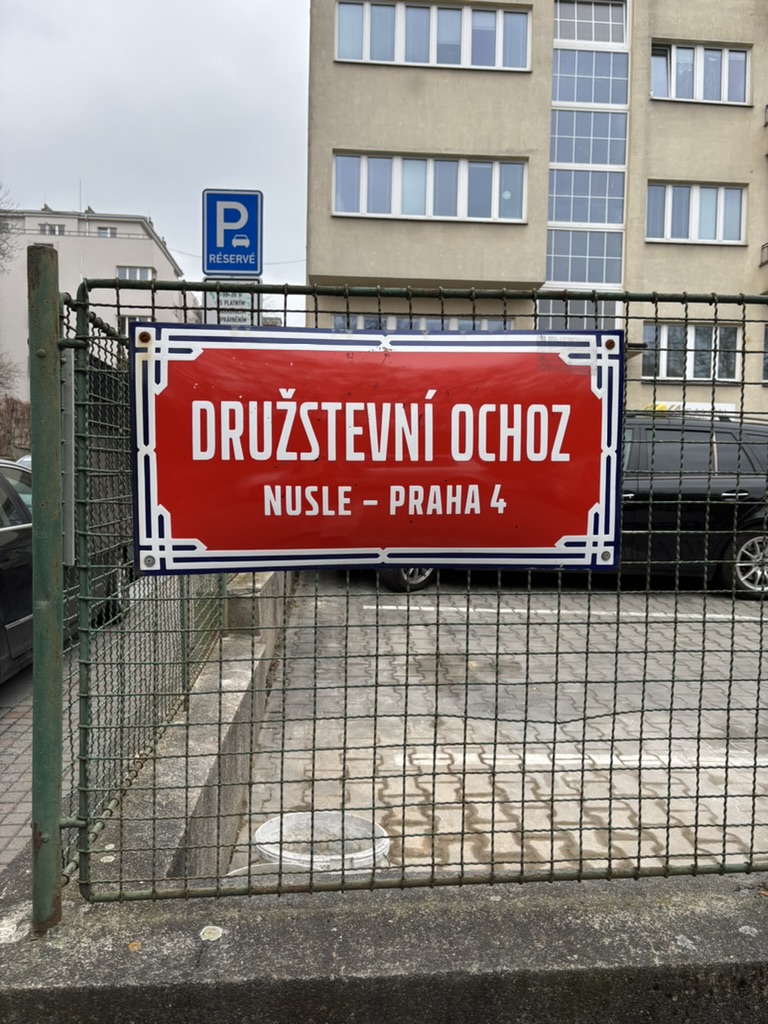
    Mieszko was born… at some point (take your pick of any year between 922 and 945, with the later chunk of this time period being seen as more likely). Legend has it that he was blind for the first seven years of his life, gaining sight when he went for his first haircut.

    His father was supposedly Siemomysł, Duke of the Polans, but there is no concrete proof of his existence.

    When he died – probably in the late 950s – Mieszko took over, although we can’t be sure exactly what the extent of the territory he ruled was. What we can be sure of is that Mieszko had quite a task ahead of him, as those he ruled over were fiercely loyal to their own tribes above all else.

    Mieszko is first mentioned in writing in 965, when a Jewish traveller from Spain, Ibrahim ibn Yaqub, referred to him as the ‘king of the north’. Ibrahim ibn Yaqub is certainly important from a Czech viewpoint, too – he was the first person to ever mention Prague in writing: https://whatsinapraguestreetname.com/2024/10/12/prague-1-day-189-tynska/.

    Upon taking power, Mieszko either conquered or consolidated his ancestors’ gains in Mazovia (think the mid-north-west of present-day Poland, approximately between Łódź and Białystok), and probably conquered Pomerania (think the lands on the Baltic Sea which, nowadays, are shared between Poland and Germany).

    However, Mieszko’s expansionist desires were threatened, to the west, by German rulers (who also had their eye on Pomerania), and, to the south, by the Czechs. They held Silesia (including the part of Silesia that’s now in Poland), and, in 955, Boleslav I had got his hands on Lesser Poland, including Kraków.

    Realising that, if you can’t beat them, join them, Mieszko entered into negotiations with Boleslav in 964 or 965, and, as a result, married Boleslav’s daughter, Doubravka.

    Mieszko also decided to accept Christianity – possibly for political reasons (major efforts to convert Bohemia had started much earlier). He was most likely baptised in 966.

    This explains why so much Polish church vocabulary – e.g. kościół (church), chrzest (baptism), kazanie (sermon) and biskup (bishop) is derived from Czech.

    It also meant that no other people – especially the Germans – could attack Mieszko’s lands on the grounds that they needed to be Christianised.

    A missionary bishopric, subordinate to Rome, was established in Poznań in 968.

    Now that he could count on Czech support, Mieszko set about consolidating and strengthening his position in Pomerania, which was neither an easy process nor a short one.

    Doubravka died in 977, and Mieszko married Oda of Haldensleben, daughter of Dietrich of Haldensleben, Margrave of the Nordmark (roughly equivalent to present-day Brandenburg). Relations with Bohemia inevitably deteriorated.

    In 990, Mieszko and Boleslav’s successor – also Boleslav (II) – ended up at war, with the Polish ruler gaining control over Silesia.

    Mieszko died in 992, and was succeeded by his son, Bolesław I  (the Brave) – meaning that, until 999, Bohemia was ruled by a Boleslav, and Poland by a Bolesław. And, in 999, the latter would also become Duke of Bohemia, known as Boleslav III (the Red). That’s a lot of Boleslavery to process.

    Mieszko’s legacy is significant – the territory that he ruled over is the first land that we can call Poland, he brought Catholicism to the country (we can confidently say it has, erm, ‘persisted’ there), and left his son with territories twice the size of those he had had when he came to power.

    If you’ve been to Poland and didn’t pay for everything by card, you might have seen him.

    That’s only about € 2.30 these days, though, so maybe he won’t be around much longer, and this street, which, let us remind ourselves, hasn’t actually got his name right, will survive longer.

  • Ctiradova was built in 1900. It was called U nádraží until 1928, due to its location near the train station – we’ll get onto that soon-ish.

    We’re back in mythology territory today, and it’ll help if you take a look at the story of Libuše: https://whatsinapraguestreetname.com/2024/08/23/prague-2-day-93-libusina/. If you’re pressed for time: Libuše ruled over her tribe as queen, predicted the future existence of Prague, and married Přemysl Oráč; their descendants would rule Bohemia until 1306.

    After Libuše died, the women of Bohemia set up a fortress at Děvín, and rebelled against the men of Bohemia, who ruled from Vyšehrad (https://whatsinapraguestreetname.com/2024/08/26/prague-2-day-118-vysehradska/). Predictably, the men thought this was something of a joke.

    Realising that men often don’t think with their brains, the leader of the rebellion, Vlasta, would send her most beautiful girls out to grab the men’s attention. The entranced men would then head towards Děvín, after which the women would attack them – and win.

    Vlasta (pictured) particularly disliked one of Přemysl’s friends, who was called Ctirad.

    In the forest, she tied one of her most beautiful girls, Šárka, to a tree, and told her to cry out for help. Ctirad heard her, and came to her aid. He untied her and promised that he’d take her home.

    Šárka had a horn round her neck, and told Ctirad to blow on it. What Ctirad didn’t know was that this horn was basically saying ‘hey ladies, he fell for it’.

    Vlasta’s warriors tortured and killed Ctirad at Děvín Castle, but their days were numbered once news of what they’d done made it back to Vyšehrad.

    In the ensuing fighting, Vlasta was killed, and Děvín was burnt to the ground. Only men ruled from that point on, and, for crying out loud, it’s 2025 and the country still hasn’t had a female Prime Minister or President.

    Šárka, meanwhile, killed herself by jumping off a cliff; it’s not clear why, but it’s possible that she had fallen in love with Ctirad and couldn’t handle the guilt of what had happened, or that she felt that this form of death was preferable to surrendering.

    In any case, you’re likely to know the area where her death took place – it’s called Divoká Šárka (i.e. wild Šárka). If you’re a visitor to Prague, it’s very likely to be one of the first things you see when you make your way from the airport into the city; if you’re a local, you’ll know it as Prague’s post popular hiking location.

    There’s a wonderful statue of Ctirad and Šárka at Vyšehrad, by Josef Václav Myslbek (who’s most famous for the status of Wenceslas and his horse on Václavské náměstí: https://whatsinapraguestreetname.com/2024/09/17/prague-1-day-123-vaclavske-namesti/).

    It can be seen on https://en.wikipedia.org/wiki/Ctirad_and_%C5%A0%C3%A1rka (reminds self to go and get his own photo of it ASAP).

  • Na Zámecké was built in 1900.

    ‘Zámecký’ is the adjective deriving from ‘zámek’ – a castle.

    In 1627, Sezima z Vrtby, a nobleman, purchased the then-village of Horní (Upper) Nusle. Around 1649, he had a manor house built where náměstí Bratří Synků is now.

    His grandson, Jan Josef z Vrtby (1669-1734), not only united Horní Nusle and Dolní (Lower) Nusle into one village, but had the manor house converted into a castle. Of course, none of this will be news to you if you were here on day 2: https://whatsinapraguestreetname.com/2025/01/02/prague-4-day-2-vrtbova/.

    It had three floors, eighteen rooms, a dancehall, a chapel, a warehouse and a stable. Clearly wanting to make sure he had all bases covered, JJzV had a brewery built nearby in 1694.

    In the mid-1700s, the Vrtby family sold the castle to Jindřich František II. z Mansfeldu, from another well-known line of nobles. It was prestigious enough for Maria Theresa to pay a visit.

    Ultimately, the castle was a victim of industrial progress: when the Prague-Tábor railway line (which would later go all the way to Vienna) was constructed, the castle and its gardens were divided into two parts, and, in 1882, Nusle Railway Station (more on that later in this series) was established, taking up a large proportion of the grounds.

    Meanwhile, Nusle itself was expanding, and further homes were needed. By 1903, the entire castle – which had arguably become more of a farmyard by that stage – had been demolished, and, by in 1905, the castle’s yard was gone too.

    This is the castle as it looked in 1899.

    And here is its wall in 1903.

    Really, the name of this street is the only reminder that we have (there was a wine bar called Na Zámecké until about 2000, but then it became a bank, which is the exact opposite of what happened in the UK around the same time, when banks would turn into trendy wine bars, leaving a lot of locals slightly miffed).

  • Otakarova was built in 1900.

    Přemysl Otakar II was born in or around 1233, the son of Václav I, who had been King of Bohemia since 1230, and his wife, Kunigunde of Hohenstaufen.

    His older brother, Vladislav, became Margrave of Moravia and Duke of Austria in 1246, but died suddenly in 1247, probably of natural causes despite only being about twenty.

    This meant that Otakar was now heir to the Bohemian throne, and was given Moravia; as a result, he moved to Brno.

    Václav, meanwhile, had started to withdraw from public life and surround himself with yes-men. This displeased many of the nobles, who elected Otakar ‘the younger King’ and banished Václav from Prague Castle. However, after the Pope excommunicated Otakar, Václav was able to defeat the rebels.

    In 1251, Otakar became Duke of Austria and Styria, a position strengthened by his marriage to Margaret of Austria in the following year (pictured below, looking quite cheerful).

    He promptly ended up in conflict with Béla IV, King of Hungary and Croatia, who claimed Styria. Otakar maintained his rule over Austria, but, in 1254, the Pope forced him to hand Styria over to his rival.

    In the meantime (specifically 1253), Václav died, and Otakar became King of Bohemia. A year later, he set off on a crusade to Christianise the Old Prussians, who were still following pagan beliefs. He not only managed to increase his own influence in Poland and Silesia, and, on the Baltic, the town of Königsberg/Královec/Kaliningrad was named after him.

    Meanwhile, Béla IV hadn’t gone anywhere, and he and Otakar ended up fighting over Styria once more. In 1260, Otakar defeated Béla at the Battle of Kressenbrunn (nowadays in Lower Austria). A peace treaty ensued, with Otakar getting his marriage to Margaret annulled, and marrying Béla’s granddaughter, Kunigunda of Halych (in Czech: Kunhuta Uherská or Kunhuta Haličská).

    Otakar also got Styria back, a claim which was endorsed by Richard of Cornwall, King of Germany. Clearly developing a bit of a taste for gaining additional lands, Otakar gained the Egerland (the Cheb region, nowadays in Western Bohemia) in 1266, Carinthia (now shared between Austria and Slovenia), Carniola (now in Slovenia) and the Windic March (ditto) in 1268, and Friuli (nowadays in north-east Italy) in 1272.

    Things took a turn in 1272, when Richard of Cornwall died, and the throne of the Holy Roman Empire became vacant. Otakar decided that he should make a claim to it, but the prince-electors – the electoral college responsible for choosing the Emperor – went for Rudolph, a relatively unknown count from what was, at that point, a relatively unknown family – the Habsburgs.

    Otakar complained to the Pope, but to no avail; Rudolph, meanwhile, didn’t waste any time, and declared that all the lands that Otakar obtained (or got back) since 1260 were now his.

    Otakar refused (to be fair, we all would), while Rudolph made overtures to noble families in Bohemia who didn’t like Otakar much either, such as the Vitkovci and the Rožmberks.

    Clearly wanting to kick Otakar when he was down, Rudolph placed him under an Imperial ban in 1275 (meaning he lost all his possessions). Facing internal rebellions, Otakar was forced to make peace with Rudolph. Having possessed lands stretching all the way down to Italy and Slovenia only a few years earlier, he was now left with just Bohemia and Moravia.

    In 1278, once Otakar had managed to suppress dissenters within Bohemia itself, he decided it was time to declare war on Rudolph and get some of his possessions back. Having found himself allies from Brandenburg and Poland, his forces met Rudolph’s at the Battle of the Marchenfeld on 26 August 1278.

    This ended disastrously for the Czech state, as Otakar was defeated and killed.

    For the next stages of the story, please see https://whatsinapraguestreetname.com/2025/01/01/prague-4-day-1-zavisova/.

    During his reign, Otakar founded over 30 cities – including in present-day Austria – built many fortresses, including Křivoklát, and issued a general privilege which facilitated the integration of Bohemia’s Jewish population into society.

    Non-Czechophiles might still know of him from Dante’s Divine Comedy, where he and Rudolph can be seen outside the gates of Purgatory.

    The most interesting feature of Otakarova – a main road, but a short one – is this mural by ChemiS, a local artist with Kazakh roots who we’ll be seeing again in this series. It was unveiled in May 2024.

    Created for AstraZeneca, the mural aims to raise awareness of asthma, and was unveiled on 7 May, which is World Asthma Day. Showing a pair of lungs as part of a landscape scene, it celebrates the ability to breathe freely.

    Do give ChemiS a follow on https://www.instagram.com/chemisgraffiti/?hl=en and http://chemisland.com/ – his work is marvellous.

  • Na Ostrůvku was built in 1906.

    An ‘ostrůvek’ is an island, but a small one – so you might wish to call it an islet (relatedly, a ‘dopravní ostrůvek’ is a traffic island).

    As you can see from the map above, we’re nowhere near the Vltava. However, we are very close to (as in ‘right next to’) the Botič stream, which is one of the longest streams in Prague (a primer on https://whatsinapraguestreetname.com/2024/08/26/prague-2-day-115-boticska/).

    The Botič also gets an indirect mention in Kde domov můj, the Czech national anthem.

    And, once upon a time, there was an islet, or ostrůvek, here. It must have been pretty tiny.

    One of the houses on the street – number 4 – is a cultural monument. It’s a Neo-Renaissance building, built in 1902 based on a design by one Antonín Fric.

  • Another super-new street, only this time with an adequate picture of the street sign. Progress.

    Jaroslav Mužík was born in Nové Strašecí, near Rakovník, in 1858, but moved to Nusle shortly after. At school, one of his teachers was Petr Mužák, husband of the writer Karolina Světlá (https://whatsinapraguestreetname.com/2024/09/28/prague-1-day-153-karoliny-svetle/). He then went to university in Vienna.

    In 1887, Mužík became a member of Nusle’s town council; a year later, he founded the local Sokol branch (https://whatsinapraguestreetname.com/2024/08/26/prague-2-day-114-sokolska/; that Nusle Sokol will appear in at least two future posts). He also founded a local bank.

    In 1892, he was elected Mayor, a position that he would hold until 1899. During this time, Nusle was promoted from town to city status, and construction progressed in a big way.

    You may have noticed how many streets in this series (and in the brief-ish Nusle section when we were talking about Prague 2) were built in 1892, and that they were named after ancient Czech figures – it turns out that Mužík was a keen historian, so presumably this was his decision.

    However, with construction often comes destruction, and some older structures – such as the walls stretching from Vyšehrad (https://whatsinapraguestreetname.com/2024/08/26/prague-2-day-118-vysehradska/) to Folimanka (https://whatsinapraguestreetname.com/2024/08/19/prague-2-day-77-na-folimance/) – were demolished.

    Mužík would be called back into the role of Mayor in 1914, and held it throughout World War One.

    He died in 1924 – two years after Nusle had become part of Prague – and is buried at Vinohrady Cemetery.

  • No street sign today, as this still seems to be a construction site, and I’m too British to ask if I’m allowed in.

    The first historically documented Duke of Bohemia was Bořivoj I, who ruled from about 867 until about 889 – more about him in Prague 3: https://whatsinapraguestreetname.com/2023/01/14/prague-3-day-134-borivojova/.

    Mythology tells us that there were seven Dukes of Bohemia before him, all descended from Přemysl, the founder of the Přemyslid dynasty, which would rule Bohemia until 1306.

    Mnata was the second of these seven alleged dukes.

    His name was first recorded in the Chronica Boemorum, by Cosmas of Prague – written between 1119 and 1125, this was a Latin-language chronicle which was the first such work to describe the history of Bohemia (and Moravia).

    As ‘mníti’ is an old verb meaning ‘to remember’, it’s possible that Mnata was so-called because he had an excellent memory.

    Another theory, put forward by the historian Záviš Kalandra (1902 to 1950; executed along with Milada Horáková), is that the seven princes were named after the days of the week, and Mnata, as number two, was linked to Mano, a god to whom Monday was dedicated (see also: German Montag and, of course, Monday itself).

    On the other hand, chroniclers and historians failed to find anything to say (*cough* make up *cough*) about Mnata other than his name. Those who are a bit disappointed with this – I’m one of them – will be relieved there’s a much better mythological prince story coming up on day seven.