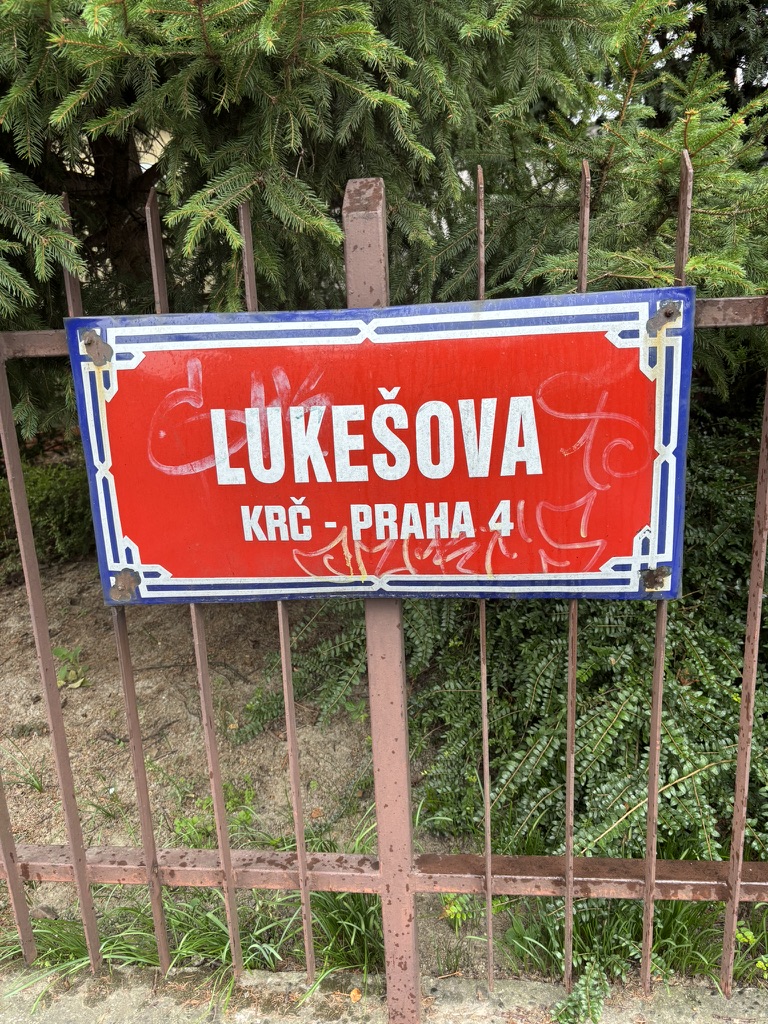
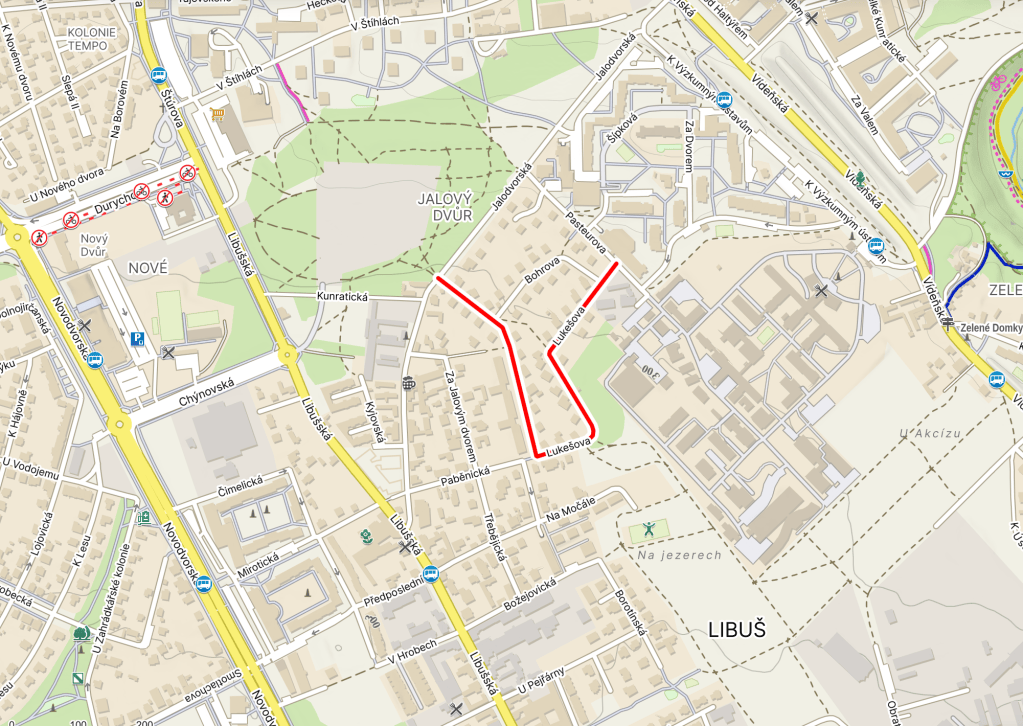
Lukešova was named in 1981.
Rudolf Lukeš was born in Kralupy nad Vltavou in 1897. His family moved to Prague in 1906, and Rudolf eventually went to secondary school in Karlín, where he excelled in natural sciences.
After graduating in 1914, he started studying at the Department of Technical Chemistry at the Technical University in Prague – but, 1914 being 1914, he was soon called up to serve in World War I.
He was sent to Italy, where he made the best of a bad situation, learning Italian and studying organic chemistry in his free time.
Graduating from university with honours in 1922, Lukeš would become a lecturer at the Technical University, and was also appointed associate professor at the Faculty of Science of Charles University in 1933.
However, the Nazis forced the closure of Czech universities in 1939. Lukeš survived the war, writing a textbook on chemistry and working at the Association for Chemical and Metallurgical Production in Vysočany.
Once Czech academia was allowed again, Lukeš worked at the Institute of Organic Chemistry and Biochemistry of the Academy of Sciences; in 1946, he was appointed an academician, and, in 1952, a special laboratory was opened up for his experiments.
However, those in power continued to affect his work – in 1958, several of his colleagues were fired due to a witch hunt against those working in universities. Lukeš remained, but his health deteriorated.
He was seen as a popular, engaging lecturer, and the two textbooks that he got published (the third didn’t make it that far) were acclaimed.
Lukeš died in Prague in 1960.


Leave a Reply