What's in a Prague street name

Every street in Prague, one by one.

  • Originally published on X on 30 March 2024.

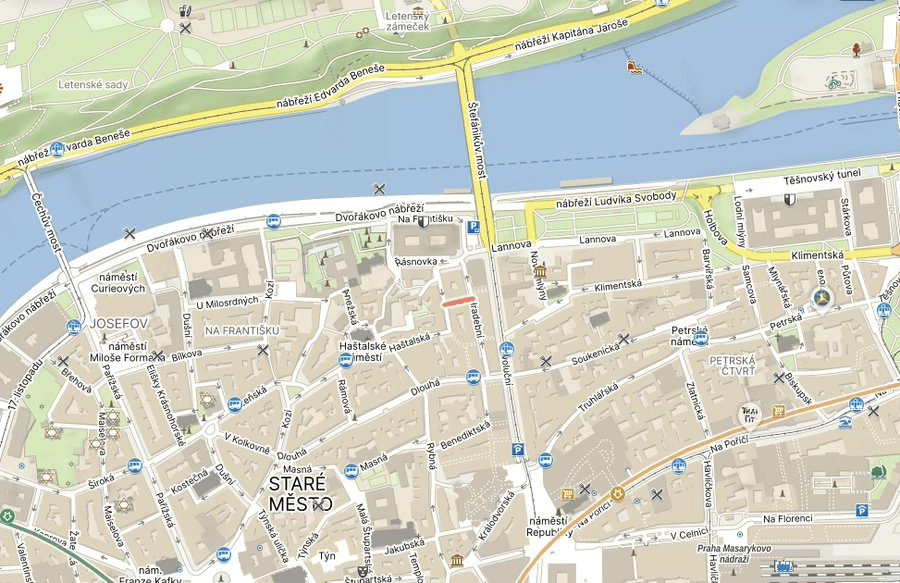
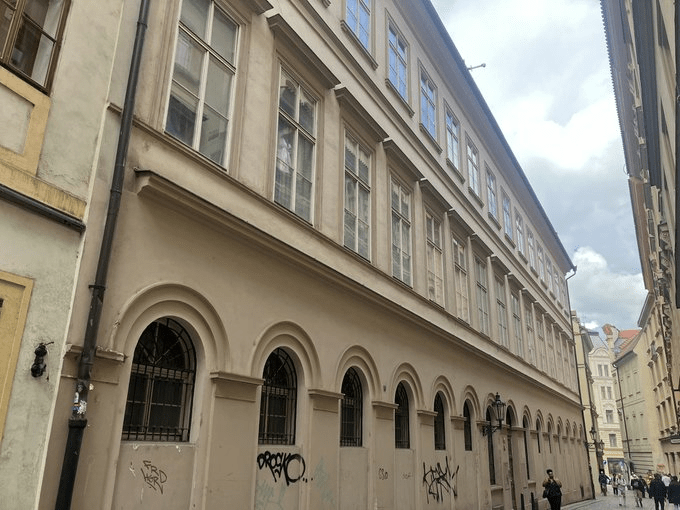
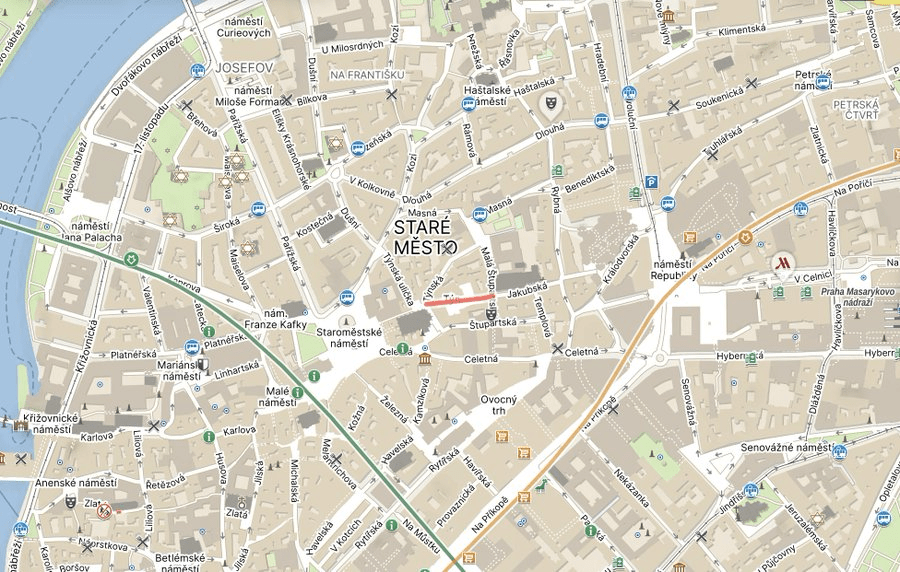
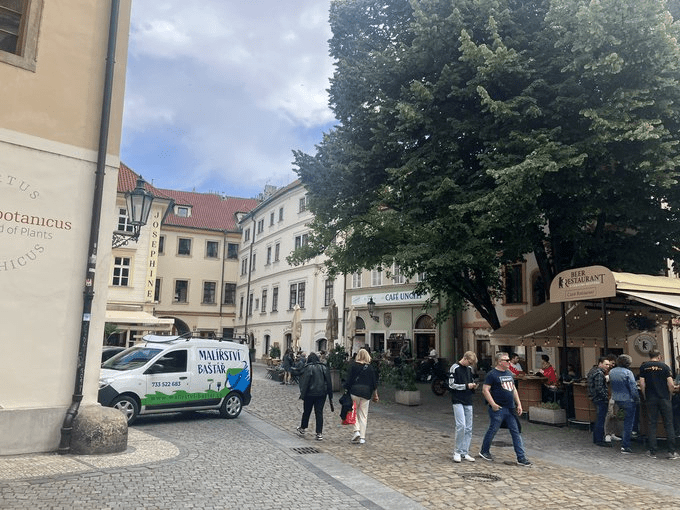
    According to one source, Petr Štupart z Löwenthal was a hetman (i.e. a military commander) in the imperial army for fifteen years, after which he moved to Prague and worked in the Royal Chamber for three decades.

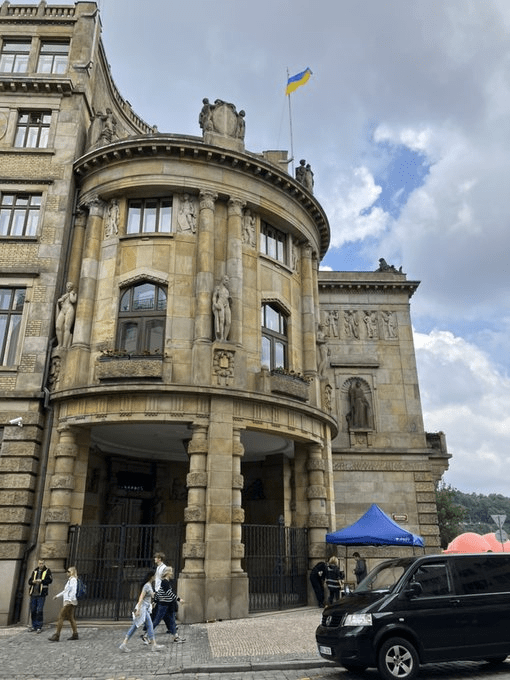
    In 1664, Štupart purchased a house in the vicinity, and I’ll write about that tomorrow as it’s not actually on this street.

    Things that are on Štupartská, and which I’ll therefore write about instead today, include Dům U Hřebene, which you may recognise from its other side on Celetná (https://whatsinapraguestreetname.com/2024/10/09/prague-1-day-180-celetna/).

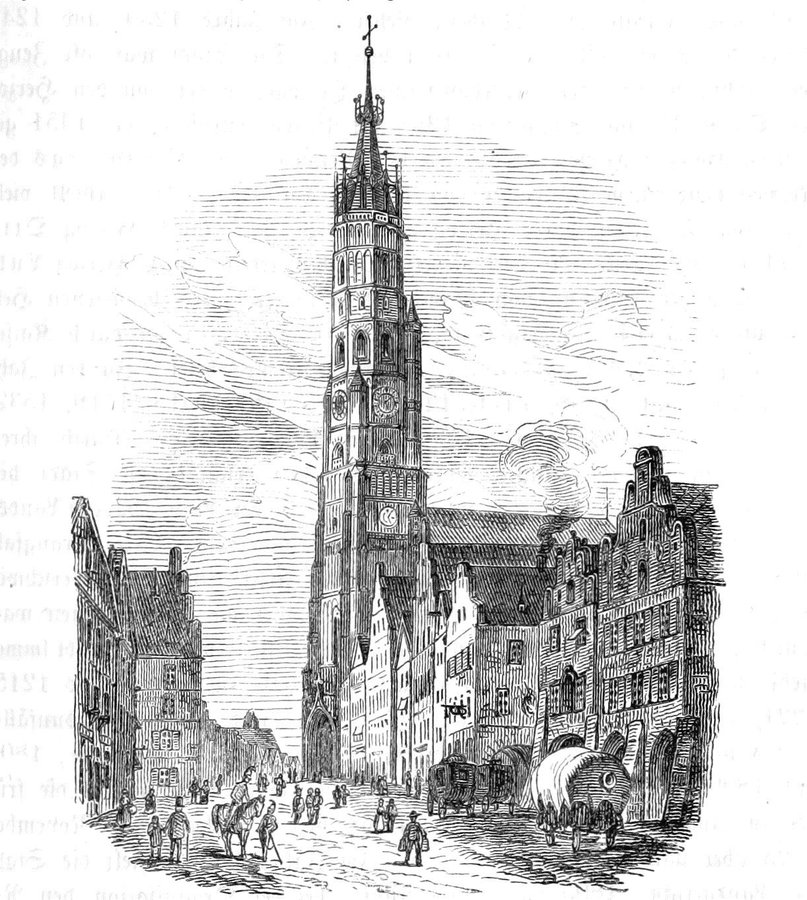
    Built in 1883, this was the building it replaced.

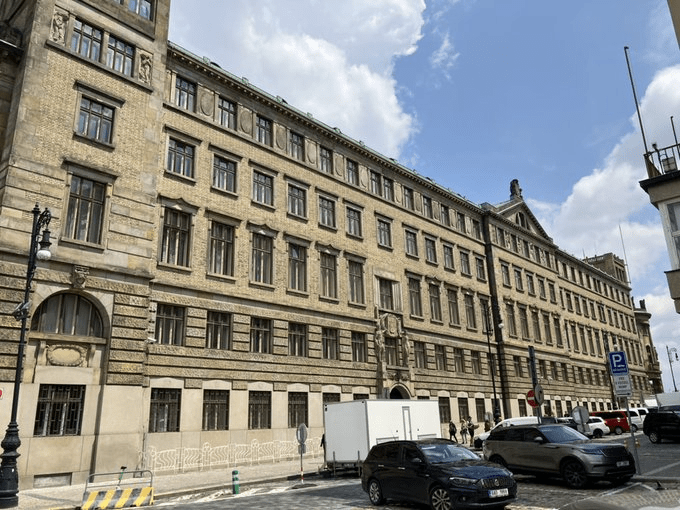
    Number 12, meanwhile, is another entrance to Menhartovský palác (covered in the Celetná thread).

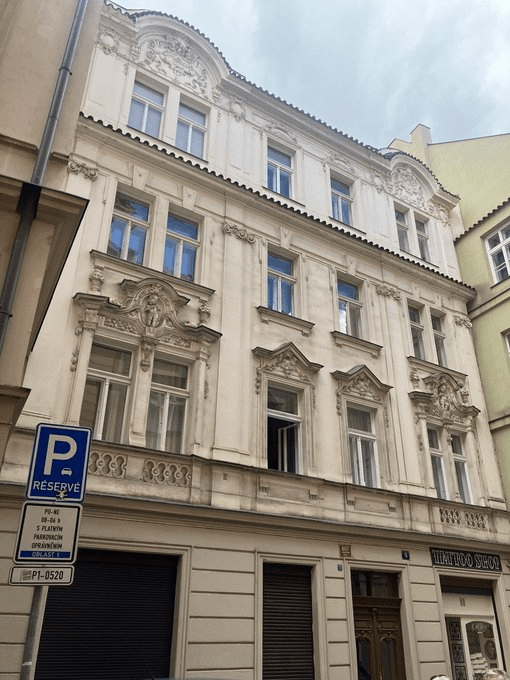
    These fine buildings deserve to be photographed too.

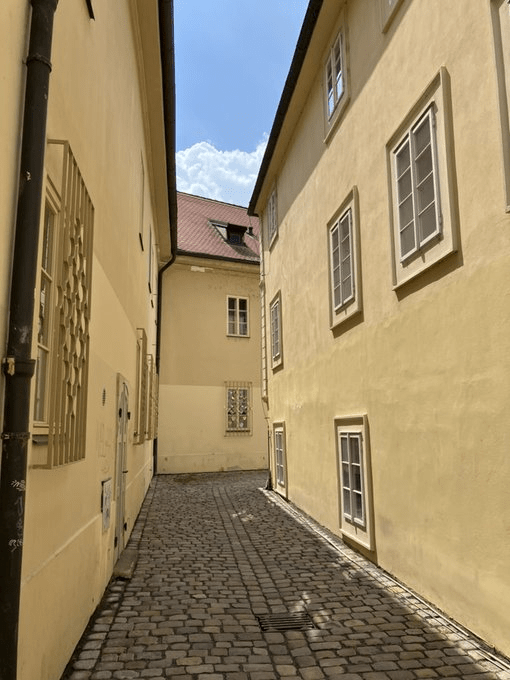
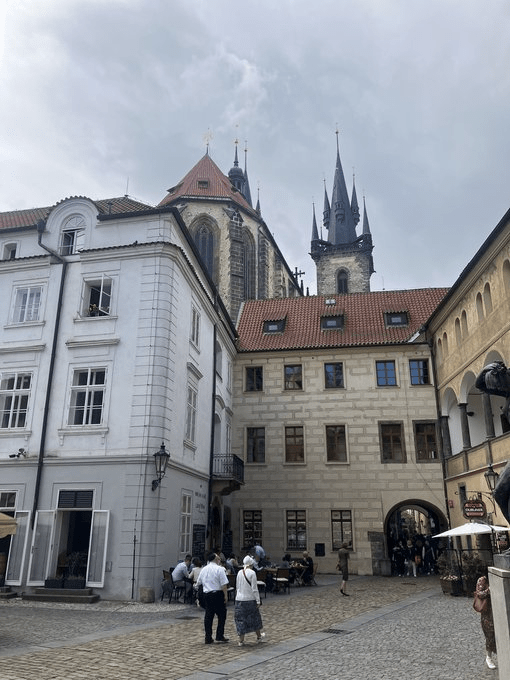
    As does one of Prague’s greatest views (to me, at least). If this view isn’t a book cover already, it should be.

    Here’s my (sightly filtered, but it was still a glorious day) photo of the same view from April 2016, at which point I’d already decided I was moving back to Prague but hadn’t yet told anyone.

  • Originally published on X on 29 March 2024.

    Shirley Tem…, no, wait, it’s not 1 April just yet, is it.

    For the briefest of lessons about the Knights Templar and their time in Prague, take a look at https://whatsinapraguestreetname.com/2024/10/03/prague-1-day-163-anenske-namesti/.

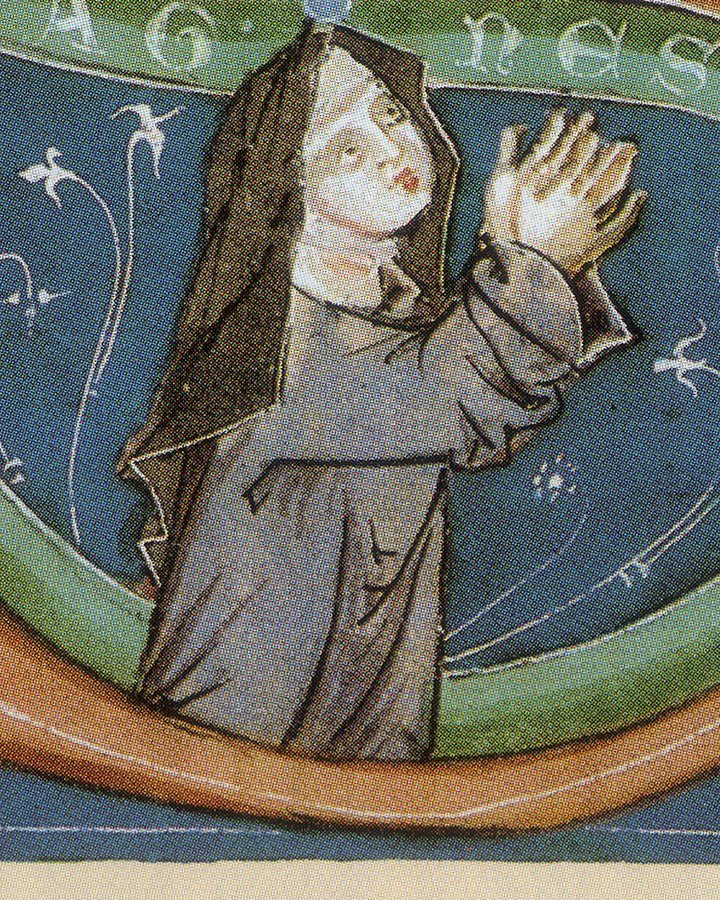
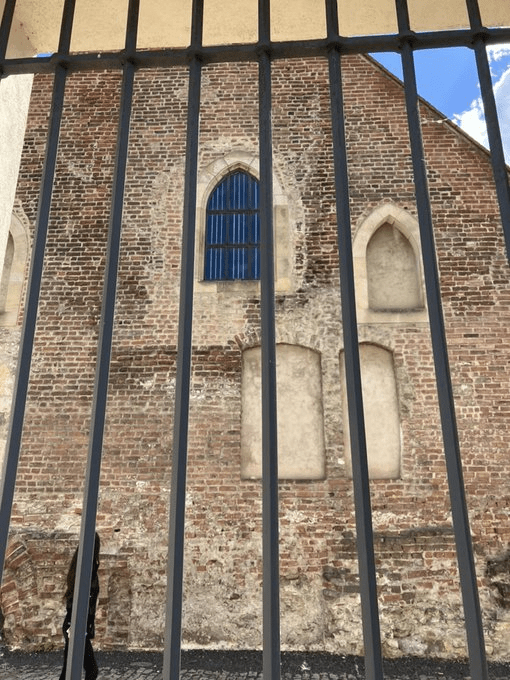
    While their main stomping ground was on Anenské náměstí, it seems that they also owned a house at number 1, which was known as In Templo (Czech: V Templu).

    Their time in Bohemia is not brilliantly documented, so I’m unsure if they moved here before or after they were cancelled by the Pope in 1312.

    I read that the building was later occupied by nuns, who ran a hospital for poor women, but then the different pages I was looking at started giving slightly different information, so I’ll stop now.

    Anyway, have a Good Friday, and I look forward to giving you something a bit more concrete tomorrow.

  • Originally published on X on 28 March 2024.

    Wenceslas/Václav I – the ‘One-Eyed’ – became King of Bohemia in 1230. The one eye thing was the result of a childhood hunting trip gone wrong. Which isn’t directly relevant to the story, but somebody was going to ask if I didn’t mention it.

    Anyway, events in 1230 and the years around it were dominated by the Crusades, one of the less deadly consequences of which was that Christianity became increasingly mainstream in Europe. And church orders became a feature of cities, not just the countryside.

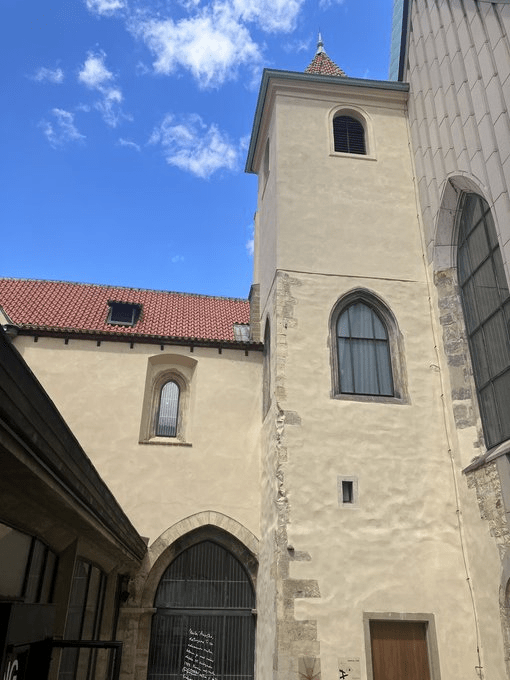
    On that note, in 1232, Václav decreed that a church be built for the Franciscan order, who had been founded in 1209. The foundation stone was set in 1232, and the monastery was complete by 1244. The church was dedicated to St Jacob.

    Devastated by a fire in 1316, the monastery was clearly still a priority for the leaders of Bohemia, as John of Luxembourg (not yet ‘The Blind’ – that would happen at the Battle of Crécy in 1346) paid for its renovation *and* left it much grander than it had been before.

    When Charles IV died in 1378, his body was displayed in the church (though also in other locations).

    The church survived the Hussite Wars and the Thirty Years’ War – but a fire, probably started by French arsonists, and probably something to do with the the rivalry between Louis XIV and the Spanish royals (who were Habsburgs, of course), damaged it considerably in 1683.

    Renovated within twelve years of that (credit to the Prague builder Jan Šimon Pánek), it was ultimately closed down in 1784, had yet another fire in 1841, and, in 1869, became the location of Bohemia’s first kindergarten.

    Also, its outside are spectacular and I should probably start exploring the insides of some of these places too.

    Pope Paul VI declared the church a basilica minor in 1974.

    Jakubská also features Kapounovský dům – also rebuilt after that fire in 1689, and presumably the only place in Prague that used to be both a crematorium (in 1713) and an illegal ‘wine and beer tavern and soup house’ (in 1720).

    It was rebuilt yet *again* after another how-many-of-these-fires-seriously in 1754.

    The house was owned in the late 19th century by Karl David Becher, who worked as a doctor in the spas of Karlovy Vary, and also set up a museum here dedicated to the town.

    I’m assuming that Karl David was a relative of Josef Vitus Becher (1769-1840), who invented a drink you might have heard-of-slash-regretted.

    Another spa doctor from KV, Leopold Fleckles, had had an office in the house in the 19th century, where he received regular visits from a patient, Karl Marx. Hence the first ever Karl Marx Museum being set up here in 1960. It existed until – you guessed correctly – 1990.

  • Originally published on X on 27 March 2024.

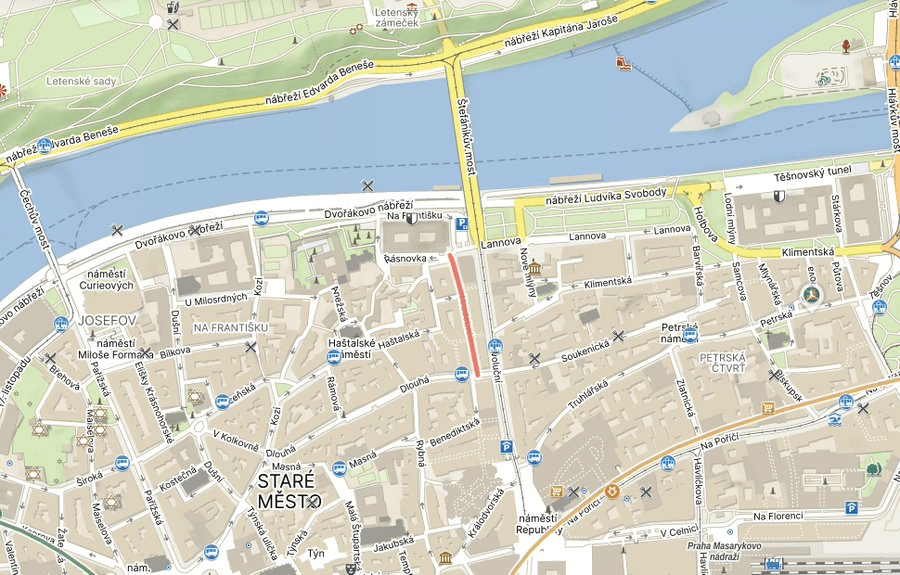
    While ‘rybná’ is an adjective relating to ‘ryba’, i.e. fish, this area was, around 1200, a popular place for butchers, which led to the street being called ‘Za masnými krámy’ (Behind the Butcher Shops) until the 18th century.

    In the 18th century, the name changed to ‘Za svatým Jakubem’ for reasons which I’ll be going into more detail on tomorrow.

    However, in the same century, fishmongers started to operate around here, after laws stating that fish could only be sold on Old Town Square, and later also on Charles Square, were abolished.

    The name Rybná has been used since 1870.

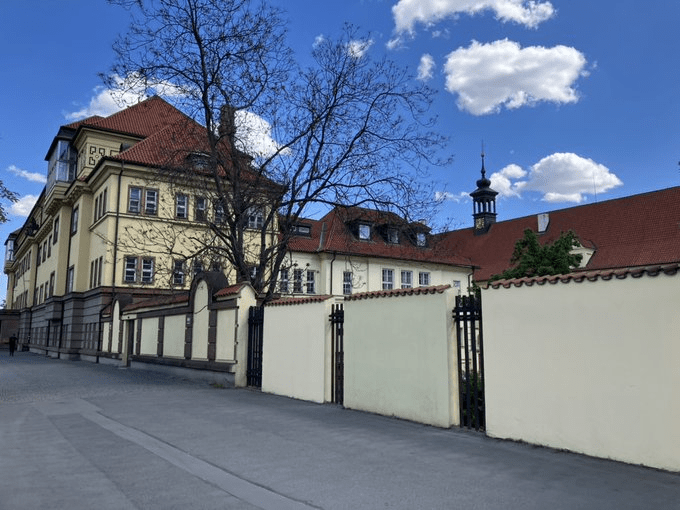
    The most distinctive building on Rybná is probably the modern Burzovní palác, the Stock Exchange Palace, which, yes, hosts the Czech Stock Exchange.

    I was going to say this has been a slightly short/dull one, but Staroměstské náměstí is up on day 190 and I’ll probably be there taking pics over Easter and wondering if I can have a few more dull ones.

  • Originally published on X on 26 March 2024.

    Wenceslas/Václav IV became King of Bohemia in 1378, and, like his father, Charles/Karel IV, originally lived at Prague Castle.

    Václav’s talents included favouritism, being less popular than his father, and not getting on well with his relatives.

    Such a relative was Charles’s widow, Elizabeth of Pomerania, who not only supported her own sons (including Sigismund, later Václav’s successor), but also lived at the Castle.

    Which may be why Václav wanted a change of scene and headed to the Old Town.

    And so he moved to the King’s Court / Králův dvůr, which was located where Municipal House (https://whatsinapraguestreetname.com/2024/10/10/prague-1-day-182-u-obecniho-domu/) is now.

    The court would be the official residence of the Czech Kings (when they spent time in Bohemia) until 1485, when Vladislav II, probably feeling that the other side of the river would be less riot- and defenestration-heavy than the Old Town had become, moved back to the castle.

    The most committed monarch to the King’s Court was George of Poděbrady (https://whatsinapraguestreetname.com/2023/12/23/prague-3-day-189-namesti-jiriho-z-podebrad/), who had it as his main residence for 13 years, and whose coronation and funeral processions both departed from here (making their way to the Castle).

    It was in the court, for example, that George created his “Treaty for the establishment of peace in all Christendom”. This kind of preempted the EU: he proposed a treaty of all Christian powers, whereby all these countries would settle their differences peacefully.

    After the move, the court served various purposes: it was a seminary for archbishops for a time (from 1636), was the location of a church devoted to St Vojtěch (from 1705, pictured below before its destruction in 1902), and, from 1869 to 1900, was a school for cadets.

    It was demolished in 1902/3, and its replacement, Municipal House, would appear about a decade later.

    I can’t tell you what the Royal Court looked like, but I can feel safe in assuming that it didn’t get as many haters as the Kotva shopping centre, which was built between 1969 and 1975 (as if these pictures didn’t already tell you it was a child of the 1970s).

    Once Czechoslovakia’s biggest shopping centre, it’s getting a revamp.

    Brilliant vintage footage of its insides back in the day here:

    And, credit where it’s due, I once got a drink on its terrace and this was the view I got.

    (Also, as I forgot to mention it before, ‘kotva’ means ‘anchor’)

    Králodvorská also features Hotel Paříž, which you may know best from Bohumil Hrabal’s I Served the King of England.

    Finally, Králův Dvůr is not to be confused with, erm, Králův Dvůr, a town of 10,000 in Beroun District, named after a medieval court which was probably founded by Václav I.

    Confusingly, Václav IV – who founded the Králův Dvůr in Prague – was captured by his cousin, Jobst of Moravia, at the other Králův Dvůr in 1394.

  • Originally published on X on 25 March 2024.

    From 1383 onwards, the Royal Court, which stood here, was the residence of all Czech kings. This state of affairs lasted for a century, until Vladislav II decided that Prague Castle was a nicer location (see https://whatsinapraguestreetname.com/2024/10/10/prague-1-day-181-u-prasne-brany/).

    The buildings were used for various purposes after that*, at least until 1902, when they were demolished; three years later, construction started on their replacement, led by Osvald Polívka and Antonín Balšánek.

    * More details tomorrow.

    After significant overruns – both in terms of time and cost – Obecní dům, AKA Municipal House, opened on 16 December 1912.

    There are some incredible pictures of the interior as it looked about a year before this on https://www.digitalniknihovna.cz/mzk/view/uuid:ddb420c0-722a-11e4-85f4-5ef3fc9ae867?page=uuid:e3f1d6d0-7243-11e4-85f4-5ef3fc9ae867.

    Just under six years later, on 28 October 1918, an independent Czechoslovakia would be declared here (https://whatsinapraguestreetname.com/2024/09/25/prague-1-day-144-28-rijna/).

    Then, on 26 November 1989, Ladislav Adamec, the final communist Prime Minister of Czechoslovakia, had his first meeting with Václav Havel here. Communist rule would officially end two days later.

    Once he was in power himself, Havel attached major importance to the renovation of Obecní dum – the works, taking place between 1994 and 1997, ultimately cost CZK 2 billion.

    The most famous part of the building’s interior is the Smetana Hall (Smetanova síň), the main concert hall of Prague’s Symphony Orchestra. This is how it looked during the opening of the Prague Spring festival of 1990:

    That was before the renovation work, of course, so here’s the equivalent concert from 2021:

    While you can see the cafe inside the building in this video by Radio Prague:

    I only got as far as the entrance and assumed I wasn’t able to get any further than that, so here you go:

    Whereas, in 1987, INXS got a lot further than I did, and we can be very grateful for that:

  • Originally published on X on 24 March 2024.

    When the Old Town was still surrounded by fortifications, there was a gate here named after St Ambrose, as was a church on nearby Hybernská (see https://whatsinapraguestreetname.com/2024/09/20/prague-1-day-134-hybernska/).

    The gate was then renamed Horská, because what is now Hybernská ultimately led to Kutná Hora.

    Once the Old Town fortifications lost their importance, the gate became seriously dilapidated, which wasn’t what you wanted people to see at the start of the Royal Way.

    Construction on a replacement started in 1475. The original architect, called Václav, was deemed not up to the job, and was replaced by Matyáš Rejsek (https://whatsinapraguestreetname.com/2024/08/19/prague-2-day-76-rejskova/).

    However, construction was suspended after 1483, largely because King Vladislav II had moved his court from round here to Prague Castle.

    From the 1700s onwards, the gate was used to store gunpowder, which is why it’s known as the Prašná brána.

    It suffered significant damage when the Prussians besieged Prague in May and June 1757.

    It got its current appearance – which we would describe as pseudo-Gothic – between 1878 and 1886. Its façade features statues of Czech monarchs and symbols of the countries they ruled over.

    This photo shows how the tower looked in 1868, before its revamp.

    The street – which has a grand total of three addresses – was named Petrohradská in 1905, after St Petersburg, before changing to Lvovská in 1916, after L’viv. It’s had its current name since 1927.

    Re: Lvovská, I went to L’viv in May 2017 and couldn’t help but fall madly in love with the place.

    For the most well-known of the buildings on U Prašné brány, see tomorrow’s thread.

  • Originally published on X on 23 March 2024.

    A ‘calta’ is a a type of medieval Bohemian pastry.

    They had some sort of ‘braided’ design on them, which means I’m currently picturing a hot cross bun, but probably more intricate.

    Google results for this pastry reveal more hits over in Slovakia than here, where it was apparently once traditional to bake calty for weddings, christenings, Easter, Christmas, and well, any excuse.

    Anyway, a baker of calty would be known as a caltnéř or a caletník – and around 1300 or so, they used to sell their goods here. Hence Celetná.

    Celetná was the first part of the Královská cesta, or the Royal Way, which connected the Old Town with Prague Castle.

    Nowadays, it connects Staroměstské náměstí and Náměstí Republiky, so it’s understandably filled with people all the time (there were trams until 1959, and it is pedestrianised these days).

    But there are several good reasons to stop and stare. So let’s do that.

    Sixtův dům, at number 2, is due to be converted into a Ritz-Carlton hotel; this plan, mooted for a long time, was approved in 2020 despite protests from preservationists. It also looks pretty rubbish right now.

    Number 3, U tří králů (The Three Kings), was lived in by Franz Kafka from 1896 to 1907.

    While number 5, Týnská fara / the Týn Rectory, is first mentioned in writing in 1135 and was founded by Soběslav I as a hospital for sick merchants and the poor.

    It now hosts the local parish office and a restaurant (more on Týn when we get to Old Town Square, of course).

    Number 10, U Bílého páva (The White Peacock), was burned down during the Prague Uprising in May 1945, so what you see now is a reconstruction from 1949 (the chocolate museum obviously arrived later).

    Number 12, Hrzánský Palace, is another Kafka connection – from 1906 to 1912, Hermann and Julie Kafka (parents of Franz) ran a textile wholesale business from here.

    Millesimovský Palác, at number 13, was once the Institute of Marxism-Leninism, is now used by Charles University, and is mainly being written about by me right now because I just think it’s a great building.

    While Menhart Palace – number 17 – hosts the Celetná Theatre and the Institute of Arts – Theater Institute, founded by the Ministry of Culture in 1959 and aiming to acquaint both Czechs and foreigners with the country’s theatres and their work.

    Buquoy Palace, at number 20, is part of the Karolinum complex (see https://whatsinapraguestreetname.com/2024/10/09/prague-1-day-179-ovocny-trh/).

    And, going back a bit, number 18 is basically paradise and I sometimes fantasise about getting locked in here overnight. https://karolinum.cz/en/

    Number 25, U Čtyř sloupů (The Four Columns), was purchased by an Italian merchant, Bernard Pompeius Bolzano, in 1786. His famous son would spend much of this life here (https://whatsinapraguestreetname.com/2024/09/19/prague-1-day-133-bolzanova/).

    Number 29, U Zlatého anděla (The Golden Angel), attracted several royals in the late 19th and early 20th centuries – the monarchs of Denmark, Greece, Hannover and Saxony are all listed as guests.

    Number 30, U České orlice (The Czech Eagle), stands out thanks to its Neo-Gothic style. It was commissioned in 1896 by a physician, Čeněk Klika, who would later co-found the Czech Scouting Association.

    There are also two buildings on Celetná known as Palác Pachtů z Rájova, or Pachtovský palác – numbers 31 and 36. The picture is of number 36.

    In June 1848, street fights were taking place between students and radicals on one side, and the forces of the commanding general in Bohemia, Alfred Windischgrätz, on the other. His wife, Marie Eleonora zu Schwarzenberg, was watching from one of this building’s windows.

    While watching, she was hit by a stray bullet and was killed. The full circumstances remain unknown.

    Then, at 38, you’ve got the other end of Palác Broadway, discussed, along with much else, on https://whatsinapraguestreetname.com/2024/09/22/prague-1-day-137-na-prikope/.

    And then we’re at the Powder Tower… which gets a full thread to itself tomorrow.

  • Originally published on X on 22 March 2024.

    ‘Ovocný trh’ translates as ‘fruit market’. You’ve already worked out where this one is going.

    From the early 1200s, a market selling fruit and vegetables stood here. You were still able to shop at the market in the early 20th century, as evidenced by this postcard from 1907.

    And this photo from 1927.

    The street has a lot of impressive buildings on it, of which the most noticeable is Stavovské divadlo / the Estates Theatre.

    Built between 1781 and 1783, it was one of the first Classicist buildings in Prague. Four years after its opening, Wolfgang Amadeus Mozart would conduct his Marriage of Figaro here, where it got a much better reception than it had in Vienna.

    This gave him the motivation to compose Don Giovanni, which would also get its premiere here in 1787 (this is the set design for an early Prague production).

    From the 1820s, the theatre moved towards a Czech-language repertoire, although this switched back to German when the Czech-speaking theatre industry moved to the Provisional Theatre in 1862 (see the early parts of https://whatsinapraguestreetname.com/2024/09/14/prague-1-day-105-divadelni/).

    Affiliated to the National Theatre after Czechoslovakia became independent, the theatre was known as Tylovo divadlo (https://whatsinapraguestreetname.com/2024/07/01/prague-2-day-53-tylovo-namesti/), reverting to its initial name in 1990.

    Also famous is the Karolinum, the historic seat of Charles University, created in 1383-6 by converting a stone palace.

    It’s the seat of the University’s rector, as well as where graduations and matriculation ceremonies take place.

    But my favourite building on Ovocný trh – and one of the buildings in Prague that had a particularly big impact on me when I first visited in 2005 – is Dům U Černé Matky Boží / the House of the Black Madonna.

    Built in 1912 on the site of a Baroque house with the same name, it’s a Cubist marvel (this is the building it replaced).

    You can see the Black Madonna that the building is named after in the last of the photos that I took (and, indeed, in the pic from 1911 above).

    It was the Czech Museum of Fine Arts from 1994 to 2002 – and has been the Czech Museum of Cubism since 2003: https://www.upm.cz/czech-cubism/.

    Fans of backsides of buildings will appreciate these pics, but may also wish to take a peek at https://whatsinapraguestreetname.com/2024/09/22/prague-1-day-137-na-prikope/ to learn about the frontsides (and many others).

    Meanwhile, fans of being in central Prague but not having to endure huge crowds should know that Ovocný trh might be right up their, well, street.

  • Originally published on X on 21 March 2024.

    The New Market / Nové tržiště was founded round here in 1232, and, for a time, all the streets covered in the last few days were named after it (see https://whatsinapraguestreetname.com/2024/10/08/prague-1-day-175-havelska/ for the start of the story).

    The street then underwent market-related name changes: in the early 1800s, the western part was called Vaječný trh (Egg Market), and the eastern part was Husí trh (Goose Market).

    The current name has been in place since about 1850 – but, for its origins, we need to go back about five centuries, specifically to 1347.

    This is the year in which Charles/Karel IV – he of the University, the Bridge, the Square, Karlštejn, Karlovy Vary, and much of Prague Castle as we currently know it fame – was crowned King of Bohemia.

    As part of the festivities, knightly tournaments were carried out in the area where the street is now, and guests were served by knights (rytíři) on horseback.

    The tournaments would continue to be carried out until the 1700s; sadly, the knight-waiter concept was not.

    Kind of amazingly, the historians of Charles University carried out a reenactment of Charles’s coronation in 2016 (no knights fighting, though):

    Things on Rytířská include number 12, originally a complex comprised of Stará rychta (The Old Bailiff’s House) and the Havel gate – part of the Old Town fortifications.

    Now existing in classicist style, it’s the headquarters of the Health Station of the City of Prague.

    While Wimmer Palace (number 18) got royally screwed over by unauthorised modifications in 2004/5, and hasn’t been used since.

    To put even more of a downer on your morning (it’s certainly put one on mine), the same is true of its neighbour, Palác Hrobčických (on the left).

    Also closed to the public is the Old Town Market building, built in the mid-1890s.

    Its proposed reconstruction is going about as well as you might expect: https://www.expats.cz/czech-news/article/prague-s-old-town-market-renovation-put-on-hold-due-to-cost.
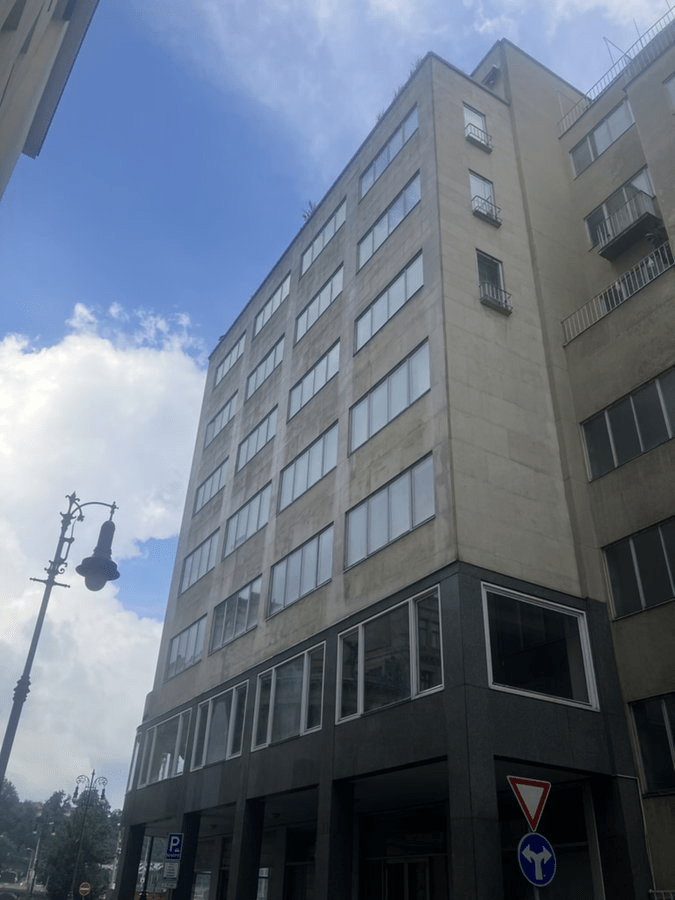
    Except – and this is exceptionally timely, as this article was published yesterday, we may be getting somewhere thanks to the possibility of a ‘competitive dialogue’: https://www.prazskypatriot.cz/praha-planuje-vypsat-soutez-k-budoucimu-vyuziti-staromestske-trznice/.

    Finally, across the road, you’ve got the Hungarian Cultural Centre, and, if you look a bit more closely, they’re currently celebrating the most Hungarian anniversary ever.

  • Originally published on X on 20 March 2024.

    For the name, we can go back 48 hours and learn about St Gall and a town-within-a town: https://whatsinapraguestreetname.com/2024/10/08/prague-1-day-175-havelska/.

    Until the 1700s, Havelská ulička was nameless, and was part of the surrounding market. There was also quite a gap between people using the current name and its becoming official (that happened in 1906).

    There’s one building on either wide of the street, and they’re joined by a walkway (shoutout to https://whatsinapraguestreetname.com/2024/09/23/prague-1-day-138-nekazanka/). It dates from 1931.

    One of these buildings is the former Carmelite monastery. The other – the Municipal Savings Bank – was built in Neo-Renaissance style between 1892 and 1894 by, like so much other great buildings in Prague, Antonín Wiehl and Osvald Polívka.

    From 1954 to 1989, the building hosted the Klement Gottwald Museum, presumably a worse place to take your child, or anyone, than that Willy Wonka Experience thing that was half of my feed a few weeks back.

    If you’re not watching this and thinking ‘1979? Seriously?’ every three seconds, we need to have a word.

  • Originally published on X on 19 March 2024.

    In modern Czech, a ‘kotec’ is a hutch, as in a cage for keeping a rabbit or another small animal.

    In modern Serbian/Croatian/Bosnian, a ‘katec’ is a pigsty – literally or figuratively – and, in Albanian, ‘katec’ can mean both these things, but also a grain basket.

    Back in the Middle Ages, and back in Prague, though, ‘kotce’ meant the market stalls which were round here (see yesterday’s https://whatsinapraguestreetname.com/2024/10/08/prague-1-day-175-havelska/).

    The ‘kotce’ were located in a 200-metre long corridor in the middle of the market.

    In 1739, the Municipality of Prague inaugurated a theatre in the corridor and called it Divadlo v Kotcích, or, in German (the main language of its repertoire), Theater an der Kotzen.

    Which is mildly amusing if you know that ‘kotzen’ is also German for ‘to puke’.

    The theatre was the first stone theatre in Prague (which was just as well, given the wooden ones had a habit of burning down).

    As well as its German repertoire, many Italian-language operas were also performed.

    The number of Czech pieces ever performed here? One.

    The theatre existed until 1793, when the grander Stavovské divadlo / Estates Theatre was opened nearby (so nearby that it’s coming up in three posts’ time).

    There are some wonderful pictures of Divadlo v Kotcích – including this one, published in a 1992 book about the theatre by František Černý – on https://www.theatre-architecture.eu/cs/internetove-muzeum/?theatreId=970.

    The ‘corridor’ which the theatre had been housed in was demolished shortly afterwards, in 1795, and the street would come into being early in the next century.

  • Originally published on X on 18 March 2024.

    Nothing to do with the Havel you’re probably all thinking of – Svatý Havel is St Gall.

    According to his biographers, Gall was born in Ireland around 550, and studied at the abbey in Bangor (County Down, Northern Ireland, not Wales), becoming a disciple of St Columban.

    In 610, Columban, Gall and others went to Alamannia, a kingdom entered around Lake Constance, on a mission. Columban moved on to Switzerland, but, due to illness, Gall stayed, and lived as a hermit.

    In 625, Gall founded a monastery in what is now called St Gallen.

    He died around 645, when almost a hundred years old.

    He’s the patron saint of birds, geese, poultry, and – yes – Switzerland. You may also recognise his name from Via San Gallo and Porto San Gallo in Florence.

    In 1230, Václav I / Wenceslas I (the ‘One-Eyed’ / Jednooký) was crowned King of Bohemia.

    Shortly after this, Havelské město (German: Gallusstadt) was founded, and construction started on a church devoted to St Gall (it would be completed in 1263).

    Havelské město was mainly populated by migrants from German cities – especially Regensburg, and, while it was located within Prague’s Old Town, it had a separate legal and administrative system.

    Its centre was the Nové tržiště / New Marketplace, which is still there.

    Originally built in the Romanesque style, the church was done over in Gothic style in the 1300s.

    In 1353, Charles IV managed to get the Benedictine monks of St Gallen to hand over St Gall’s (supposed) skull.

    Over the centuries, as more and more buildings were created, Havelské město was incorporated into the Old Town. Meanwhile, the church – another one which Jan Hus had preached in at one point – was given to the Carmelites (https://whatsinapraguestreetname.com/2024/09/08/prague-1-day-39-karmelitska/) in 1627.

    In the 1660s, they built a monastery, and later had the church reconstructed. The monastery was dissolved in 1786, but the church kept going.

    The monastery, meanwhile, having been a lace factory, the Institute of History of the Communist Party of Czechoslovakia, and a not-entirely-welcome Soviet cultural centre, is now partially a theatre and partially used by UNICEF.

    Among the people who were buried in the church are the painter Karel Škréta (https://whatsinapraguestreetname.com/2024/02/18/prague-2-day-34-skretova/).

  • Originally posted on X on 17 March 2024.

    Jan Hlavsa was born at some point in the 1400s. I have no idea when, but I’m going to estimate that it wasn’t later than 1470, and not earlier than 1440, because we do know that he was a scribe of the land registers from 1497 to 1499.

    In 1506, he, along with two other citizens, published the Bible benátská / Venice Bible, the first Czech-language version of the Bible to be published abroad, and the third overall.

    In 1515, he gained a coat of arms and became known as Jan Hlavsa z Liboslavi. He also became a member of the Old Town council (various websites say he was mayor, but I don’t think the Old Town had any mayors until 1537, which was three years after Hlavsa died).

    Hlavsa also owned a local house, U železných dveří (The Iron Doors), number 19 on Michalská.

    It’s interesting that Hlavsova has street status, or a name, at all (this happened in 1918) – it’s really just a passage way through this building, connecting Michalská with Jilská.

    Along with nearby Zlatá (https://whatsinapraguestreetname.com/2024/10/03/prague-1-day-165-zlata/), this is one of two streets to which your access is severely limited if you’re not a resident, or have a key for some other reason.

  • Originally published on X on 16 March 2024.

    In the latter part of the 12th century, a Romanesque church was built round these parts.

    In the 1360s, the church was given a Gothic makeover (which was not so much a makeover as a virtual replacement of the entire building).

    The church became known for being progressive, and a place for debate – one attendee of these debates, and then a preacher at the church, was Jan Hus (https://whatsinapraguestreetname.com/2024/10/05/prague-1-day-169-husova/).

    In 1406, Křišťan z Prachatic – a key supporter of Hus – became the church’s priest (https://whatsinapraguestreetname.com/2023/02/26/prague-3-day-151-kristanova/). Křišťan would even visit Hus in Constance in 1415, despite the inevitable prison sentence that followed.

    Radical Hussites – who Křišťan opposed – raided the church in 1419, led by Jan Želivský (https://whatsinapraguestreetname.com/2022/11/19/prague-3-day-23-jana-zelivskeho/), and Křišťan fled into exile. The church would be reconsecrated in 1436, post-Hussite wars.

    After the Battle of Bílá Hora, the church ended up in Catholic hands, and gained a monastery.

    However, both would be closed down in 1786, and the church was turned into a factory (the pic is from 1933, when it was a warehouse for a paper company).

    It’s been all kinds – a warehouse for merchants, a depository of the State Library of Czechoslovakia, apartments, and a nightclub: https://prazsky.denik.cz/zpravy_region/diskoteka-u-sv-michaela-konci-majitel-pamatky-se-rozhodl-pro-lepsi-vyuziti-20150.html.

    I just had a very, very vague déjà vu of winding up here around 03:00 on a night out in… 2009? 2010? and wondering if I was so drunk that I was imagining that I was in a nightclub that looked like a church.

    I’d completely forgotten about that until writing this thread.

    Also, in the 1990s, the church hosted ‘St Michael’s Mystery’, a frankly terrifying-sounding ‘Las Vegas-style show which tried to bring tourists closer to the main moments of Czech history’.

    I can’t find any footage of this, which is probably a good thing.

    The former monastery building now hosts a Banksy exhibition.

    And there are amazing photos of the interior of the church in 1991 – a year after a fire which may or may not have been intentional – here: https://commons.wikimedia.org/wiki/Category:Church_of_Saint_Michael_Archangel_in_Prague_1991.

    Other buildings on Michalská include U Zlatého melounu (The Golden Melon), supposedly performed in Tchaikovsky, Rachmaninoff and Grieg in the 1860s.

    In case you’re wondering what the flag is, the building now hosts the not-an-embassy-but-you-get-what-I-mean of Bavaria.

    Meanwhile, U Zlatého půlkola – The Golden Semicircle – was once the home of the first Czech bookstore, and of the publishing house Česká expedice.

    While number 11, U Tří tykví (The Three Gourdes), was where poet and folklorist Karel Jaromír Erben (he of Kytice fame) died in 1870.

    Excellent decorations too.

  • Originally published on X on 15 March 2024.

    Jan Václav Vejvoda was born around 1677. I’m not sure about his early life, but, by 1701, he was already working in the Old Town’s municipal administration.

    After various roles (including a scribe, a supreme warden, a member of the city council, and, erm, ‘director of the fish office’), he was ultimately appointed as the mayor of the Old Town in 1745.

    A year later, Maria Theresa, presumably wanting to do something that wasn’t the War of the Austrian Succession, ennobled Vejvoda, who called himself Jan Václav Vejvoda ze Stromberka after that.

    Vejvoda would be mayor until his death in 1757.

    He also owned an impressive house on this street (number 2; it’s also number 4 on Jilská (https://whatsinapraguestreetname.com/2024/10/06/prague-1-day-171-jilska/)). It’s now a restaurant, quite stylish-looking on the outside, but the reviews online are not the greatest.
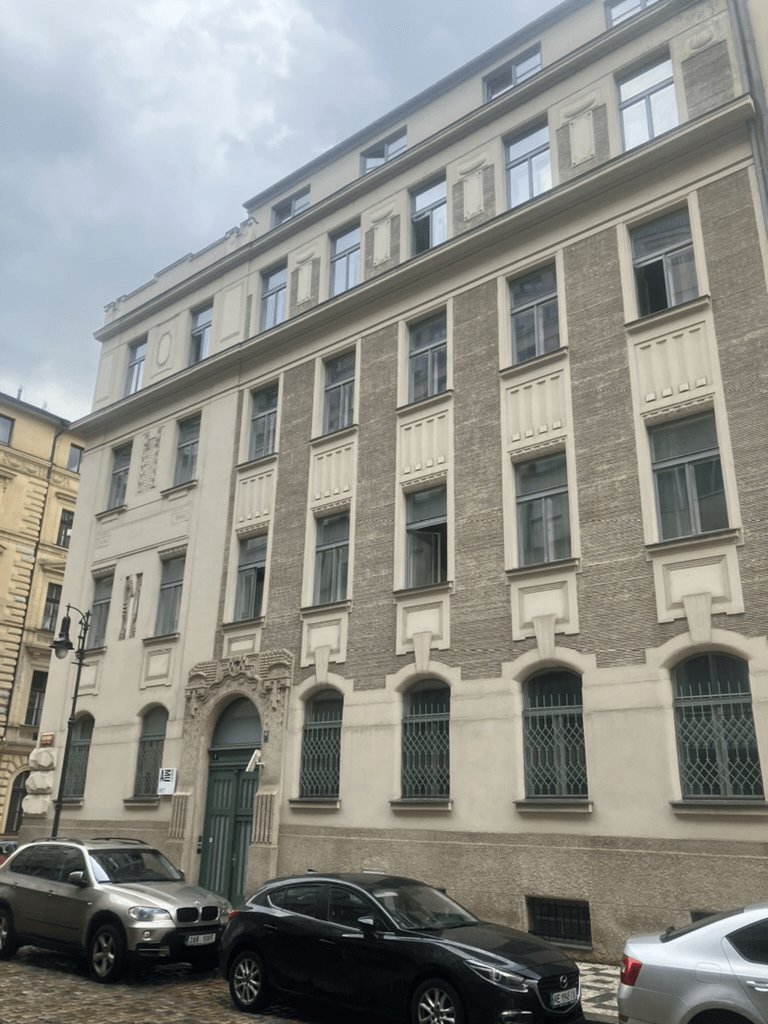
    Vejvoda was the 35th mayor of the Old Town – and there would only be one after him, because, in 1784, it, the New Town, Hradčany and Malá Strana would be merged into one municipality, with one mayor.

    Number 36, however, would certainly make the most of the role – Jan Václav Blažej Friedrich z Friedenberka was mayor for 26 years.

    This week, more than ever, Bohuslav Svoboda should not be taking this as a hint.

    The old other Old Town mayor who’s come up in these posts to date was number 17: https://whatsinapraguestreetname.com/2024/09/29/prague-1-day-155-krocinova/.

    I know I’m Kating, sorry, stating the obvious when I say that it’s foolish to get people on Twitter into conspiracy theory mode, but it’s interesting that Googling Jan Václav Vejvoda brings up not a single image of the man.

  • Originally published on X on 14 March 2024.

    ‘Jiljí’ is the Czech version of ‘Aegidius’. This is a name that’s changed more than many others when entering other languages – in English, we know it as ‘Giles’.

    Saint Giles, meanwhile, was born in Athens and is said to have founded the Abbey of Saint-Gilles in the south of France in the 7th century.

    He’s the patron saint of people with disabilities, as well as Edinburgh, Graz and Nuremberg.

    Back in Prague, a Romanesque church in this area existed at least as far back as 1238.

    It underwent reconstruction in the 14th century, and was consecrated in 1371, in the presence of then-current monarch Charles IV, and the future Wenceslas IV.

    A particularly renowned preacher in the church was Jan Milíč (https://whatsinapraguestreetname.com/2022/12/26/prague-3-day-121-milicova/), who also founded the women’s refuge described on https://whatsinapraguestreetname.com/2024/09/28/prague-1-day-150-bartolomejska/.

    In 1432, lightning caused a fire which destroyed the church’s roof and melted the church bells. They were reconstructed in 1437 – one of them, also called Jiljí, is the oldest church bell in Prague.

    In the decidedly post-Hussite times of 1625, the church was handed over to the Dominicans, who had a monastery built where there had once been a graveyard.

    You may have seen the inside of the church without realising it:

    Other highlights of Jilská include Dům U Mladých Goliášů, built by Antonín Wiehl and with distinctive sgraffito designs by Mikoláš Aleš.

    While Dům U Kočků has the preserved torso of a Romanesque house, but is named after a Mr and Mrs Koček, who bought it in 1927.

    And Vratislavský dům hosted the Slovak Institute until 2016, when it moved to Hybernská (https://whatsinapraguestreetname.com/2024/09/20/prague-1-day-134-hybernska/).

  • Originally published on X on 13 March 2024.

    A ‘jalovec’ is a juniper. Junipers are quite popular in the Czech Republic as ornamental trees.

    Number 3 on the street (pictured) is called U Jalovcového stromu (The Juniper Tree). The street then got its name from that; the photo also makes it clear that Jalovcová is pretty short, and unlike its neighbours, not crowded.

    Things the street is not named after include Jalovec, the sixth-highest mountain in Slovenia, Jalovec, a village in Slovakia, and Jalovec, an… other village in Slovakia.

    Juniper berries are ‘jalovcové bobule’ or ‘jalovčinky’, whereas ‘jalovcová’, the feminine adjective, can also refer to juniper brandy.

  • Originally published on X on 12 March 2024.

    Jan Hus was born around 1370, most likely in Husinec (https://whatsinapraguestreetname.com/2022/12/22/prague-3-day-115-husinecka/), and probably studied at the monastery in Prachatice until he was sixteen, when he moved to Prague.

    He later studied at Charles University, graduating in 1393, although he was much more interested in being a teacher and preacher than a student.

    A particular influence on his thinking in this period was the influential English theologian John Wycliffe, who questioned the privileges and power of the clergy (https://whatsinapraguestreetname.com/2022/11/19/prague-3-day-26-viklefova/).
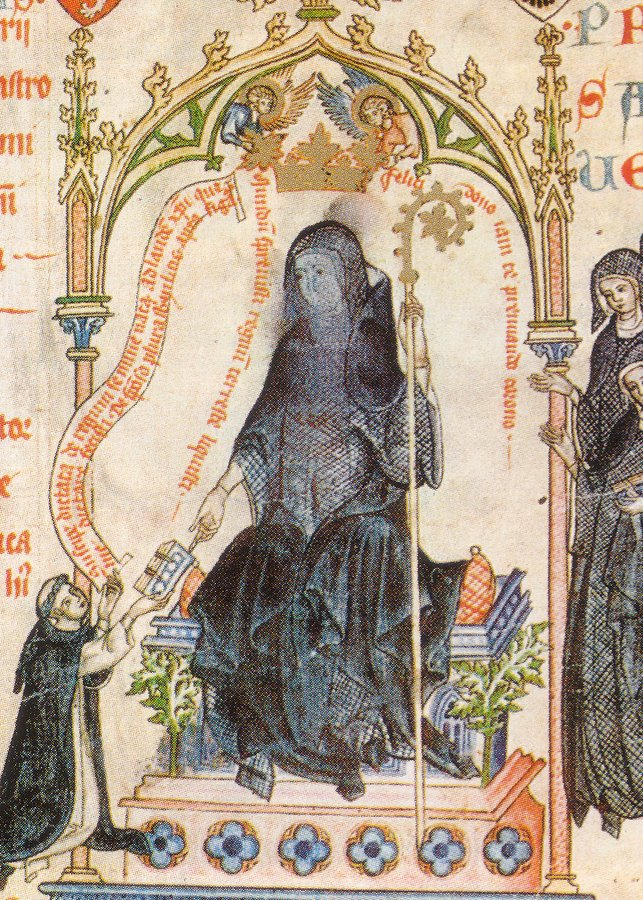
    By 1398, Hus was teaching at the University, and also started studying at the Theological Faculty in the same year. In 1401, he was elected dean of the Faculty of Arts for a semester.

    In the meantime (in 1400), Hus had been ordained as a priest, and started preaching at St Michael’s Church (coming up in four days).

    His popularity then led him to preach at the Bethlehem Chapel (https://whatsinapraguestreetname.com/2024/10/01/prague-1-day-160-betlemske-namesti/), of which he was also the administrator.

    Advocating reform of the clergy, which he saw as immoral, sacrilegious, and rich when it was supposed to be poor, Hus initially had the support of the Archbishop of Prague, Zbyněk Zajíc z Hazmburka.

    Since its inception, Charles University assigned all students to one of four ‘student nations’: Bohemian, Bavarian, Saxon and Polish.

    Each ‘nation’ had one vote on the University Council. Unsurprisingly, the Bohemian nation was pro-Wycliffe, and the others were not.

    In 1407, Pope Gregory XII ordered Archbishop Zajíc to declare Wycliffe’s teachings as heretical. In 1408, Hus tried to compromise – he publicly rejected Wycliffe’s writings, but also said they were not entirely heretical. This didn’t go down well with the Archbishop.

    In January 1409, King Václav IV issued the Decree of Kutná Hora, which declared that, from now on, the Bohemian nation would have three votes at Charles University; the remaining three nations would have to make do with a single vote between them.

    In October 1409, Hus was appointed rector of the University; by this time, many of the German staff had left to found a new university in Leipzig. Charles University became a very Czech affair – but lost a lot of its international prestige as a result.

    In December of the same year, a papal bull declared that all Wycliffe’s writings circulating in Prague were to be surrendered. Hus and his followers would soon be excommunicated, though this was never properly enforced.

    After Archbishop Zajíc’s death in 1411, Hus would start to come into conflict with Václav IV, who had authorised papal envoys to sell indulgences in order to finance a crusade against the King of Naples.

    On 24 June 1412, a group of Hus followers burned the papal bull. Three men who were trying to stop a priest from preaching the purchase of indulgences were executed. Hus fled to Kozí Hrádek in southern Bohemia.

    In November 1414, Antipope John XXIII called the Council of Constance; Hus was invited to present his views before the Council. He arrived in the same month, but was imprisoned in December and, in 1415, would undergo a trial.

    On 27 June 1415, the Council declared that his writing were heretical. The Council asked Hus to disavow parts of his writings; he refused despite knowing this was the difference between imprisonment and a death sentence.

    Therefore, on 6 July 1415, Jan Hus was burned at the stake; 6 July is now a national holiday known as Jan Hus Day, and the Catholic Church has never rehabilitated him.

    A consequence of his execution would be the Hussite Wars, which ran from 1419 to about 1434. A consequence of *those* could be what seems like every other street in Prague 3 (https://whatsinapraguestreetname.com/category/hussites/).

    Bohemia would remain largely Hussite until the 1620s, when Habsburg domination would also involve intensive and forced conversion to Catholicism. Distrust of religious institutions remains a noticeable feature of the Czech population to this day.

    Number 20 on Husova is the Clam-Gallas Palace, once the scene of concerts by Mozart and Beethoven. It’s also hosted the first Ministry of Finance of Czechoslovakia and the municipal archives, and is now owned by the City of Prague.

    Also, if you look very closely at this picture of the other end of Husova (specifically the sky between the two buildings), you’ll see an example of David Černý doing what David Černý does.

    Viselec – the Hanging Man – was created in 1996, and the man in question is actually Sigmund Freud: https://www.atlasobscura.com/places/man-hanging-out.

  • Originally published on X on 11 March 2024.

    In the Middle Ages, the street was called Kožešnická, after the tradesmen who lived here (a ‘kožešník’ is a furrier).

    Řetězová has been used as the street’s name since the 1600s.

    Number 9 in the street is called U Tří zlatých řetězů (the Three Golden Chains), which was originally used by, yes, furriers, and is now a hotel.

    As for the chains in question, they might have been placed around here to fill a defensive function, e.g. to protect the nearby convent (https://whatsinapraguestreetname.com/2024/10/03/prague-1-day-163-anenske-namesti/).

    They might also have been the endpoint of a chain leading across the Vltava, erected to force ships and rafts to stop until they had paid their customs duties for crossing from one end to the other.

    For the other endpoint, take a look at https://whatsinapraguestreetname.com/2024/09/11/prague-1-day-75-lazenska/, where there’s still a church (that’s probably) named after the chain.

    The westernmost side of Řetězová doesn’t look like it’s changed much in the centuries since.

    Number 3 is the entrance to Palác pánů z Kunštátu a Poděbrad, discussed yesterday (https://whatsinapraguestreetname.com/2024/10/05/prague-1-day-167-liliova/).

    While number 5, Palác Kokořovských, is the home of the Theatre Faculty of the Academy of Performing Arts in Prague (DAMU).

    And neighbouring U Tří divých mužů (the Three Wild Men) had its best days in the 1910s and 1920s, when it was Montmartre, a cabaret and cafe frequented by, among others, Jaroslav Hašek.