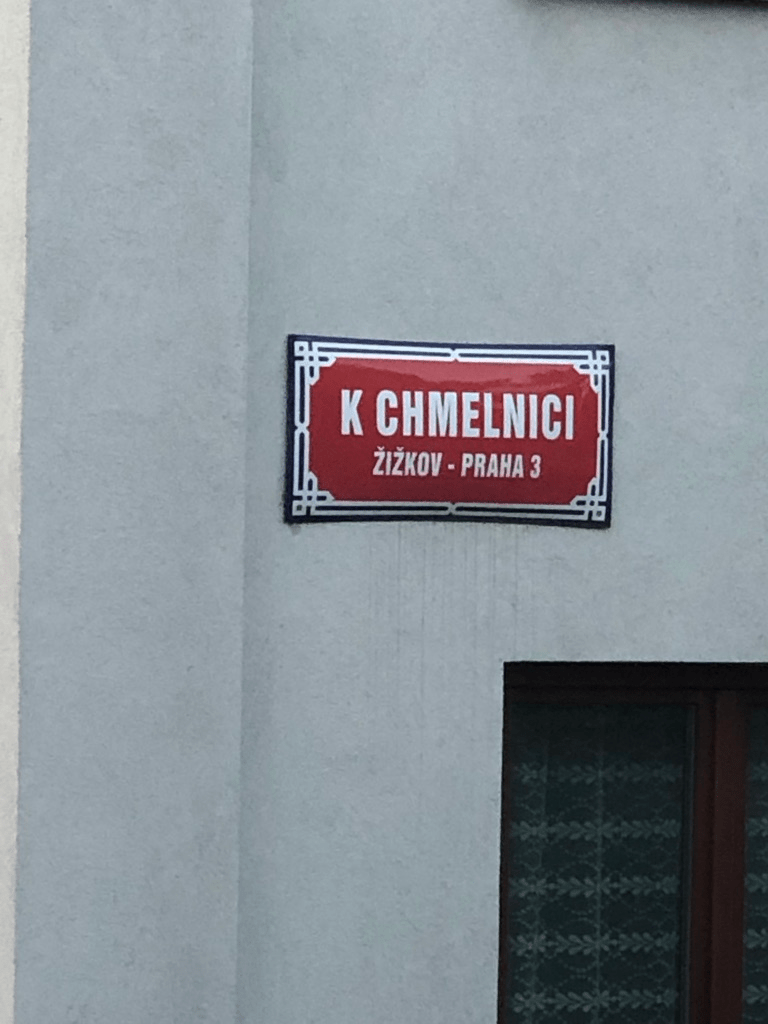
A chmelnice is a ‘hop garden’ (as in ‘beer’, not ‘skip and jump’, because Czech Republic). Chmel is the common hop, or humulus lupulus.
Hop gardens are quite expensive to maintain, as hops are a climbing plant, so they need to be equipped with wooden poles so that they can grow. And the poles need to be replaced about once every twenty years.
They’re most frequently found in north-west Bohemia; most were built in the 1930s.
The Czech Republic has the fourth-highest number of hop gardens in the world, though the number is in decline.
Na Balkáně was built in 1925, and translates as ‘In the Balkans’.
‘Balkán’ is indeed the name of this part of Prague, which is located mainly in Vysočany but also partially in Žižkov.
Na Balkáně is home to a gardening settlement, founded in 1938, and one of the oldest in Prague. It’s a lovely place to go for a walk.
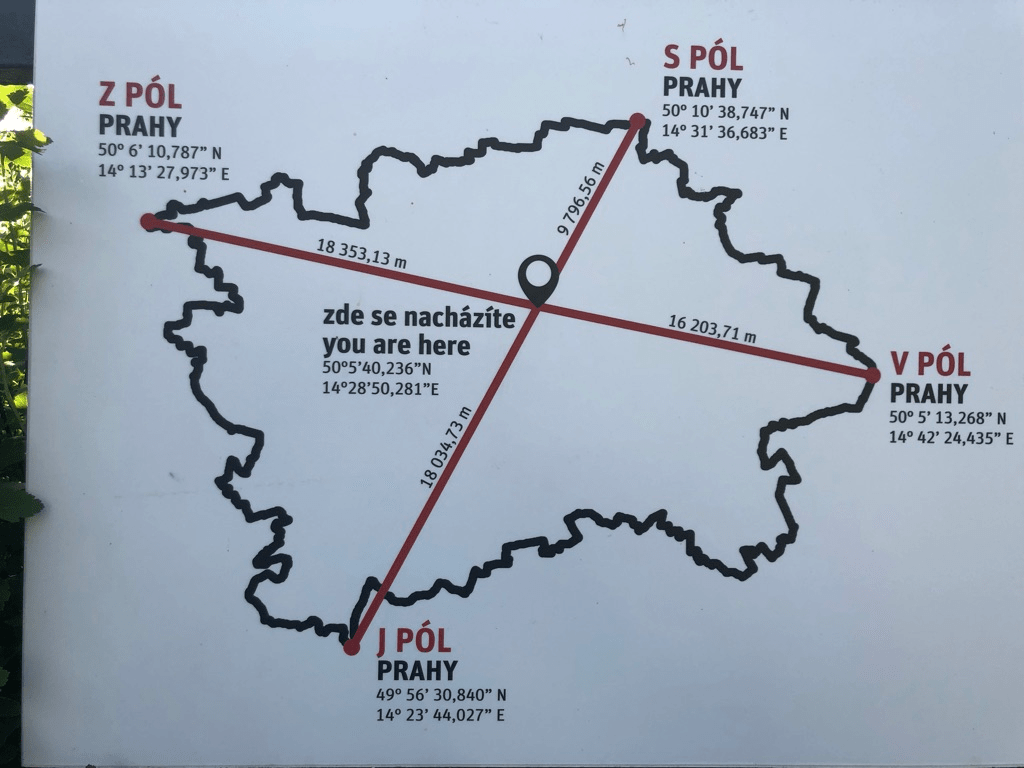
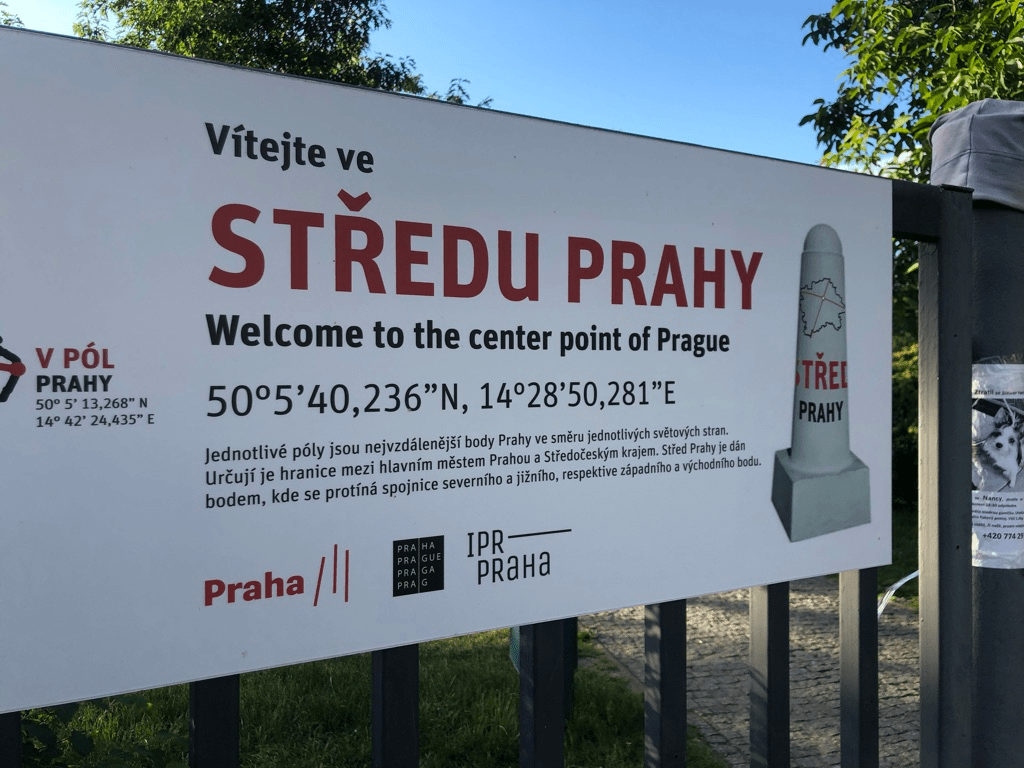
This is the actual centre of Prague. Possibly. Since 2021, there’s been an… erm, ‘object’ (insert your own comment on what it looks like here) in a children’s playground on Na Balkáně, marking the intersection of the northernmost, etc. points of the city.
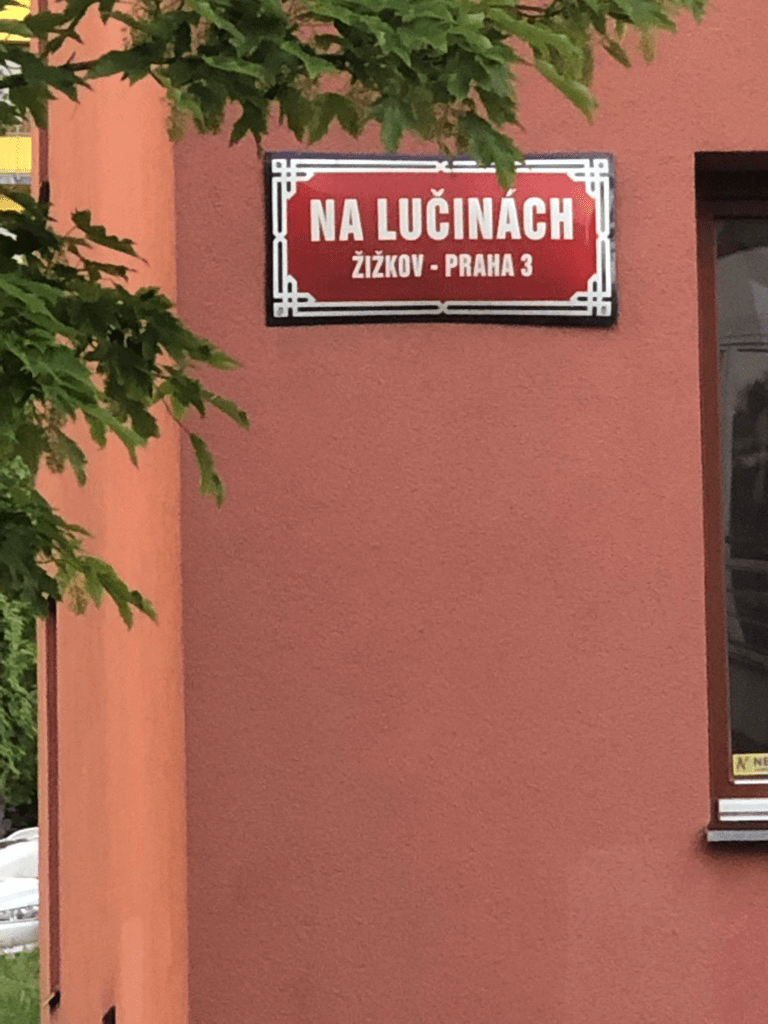
I probably didn’t write these in a logical order. And, whatever this meadow was when it still existed, it seems to have gone by the names louka, luka or lučina. Some might call this an identity crisis.
Does anybody like bad translations? Because the internet is giving me ‘in a ruff’. Which, if you replace the ‘r’ with an ‘h’, describes me as I try to make sense of this.
Thankfully, my Lingea dictionary gives me the much more helpful ‘halo’.
That said, a halo is typically a svatozář, a gloriola, or an aureola (if you’re seeing it around a saint’s head).
And it’s a světelný kruh, or, yes, a halo if it’s around the sun.
Realising all these streets are named after their shapes is making me understand a little better why I got so lost walking around here looking for street signs to take pictures of.
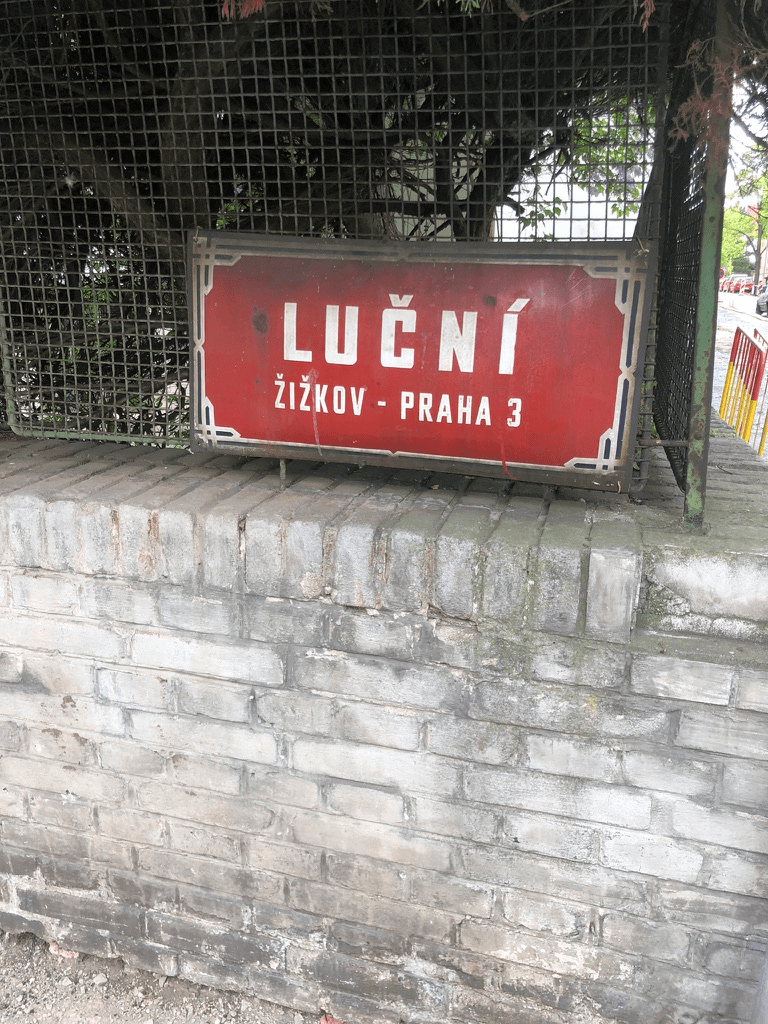
From 1931 to 1990, this was called Luční I. A nearby street was built in the same year, called, yes, Luční II.
Clearly wanting to get a bit of that post-Berlin Wall vibe (or because Luční II got fed up with being reminded that sequels are often a bit rubbish compared to the originals), the two streets became one in 1990.
Luční is an adjective derived from louka, meaning ‘meadow’ or ‘grassland’.
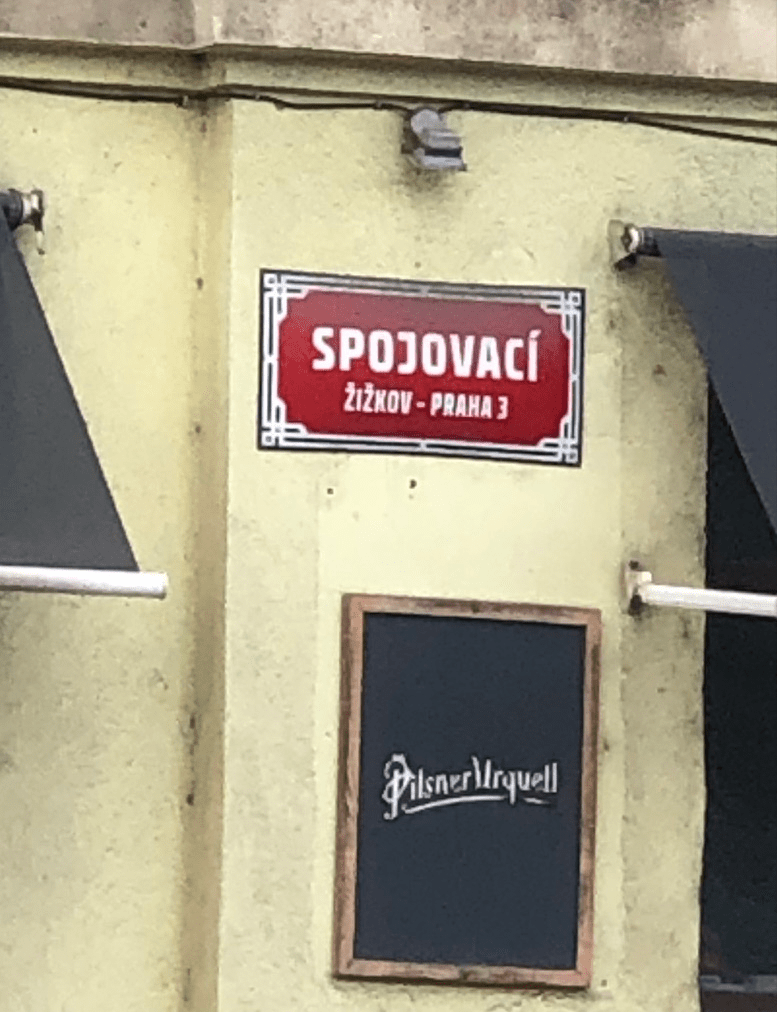
The literal translation would be ‘connecting’, although Google Translate seriously wants me to consider ‘syndetic’.
Which is awesome.
Spojovací was created by literally joining two other roads: Lipanská (there is another Lipanská in Žižkov, of course) and Husova.
Not That Lipanská was, until 1900, called K Hrdlořezům, because it led to Hrdlořezy (which is the district that the eastern side of the road is located in).
Spojovací does what is says on the tin, linking roads that lead out of Prague to Brandýs nad Labem, Poděbrady and Český Brod (I think).
Vocabulary for people who are more technically minded than I am (i.e. everyone): spojovací materiál would be fasteners, such as screws (a spojovací šroub is an assembling bolt); a spojovací zákop is a communication trench, and a spojovací tyč is a connecting rod.
This officially means I’ve now been all the way down Koněvova and back (not a metaphor). So, tomorrow, it’s time to head deeper into the north of Prague 3.
Sometimes it’s easy to forget that Prague didn’t become the capital of an independent country until 1918, and that the civil service had previously been based in Vienna.
As Prague gained in importance, its population grew rapidly too. In 1920, it was just under 730,000; by 1930, it would be over 950,000.
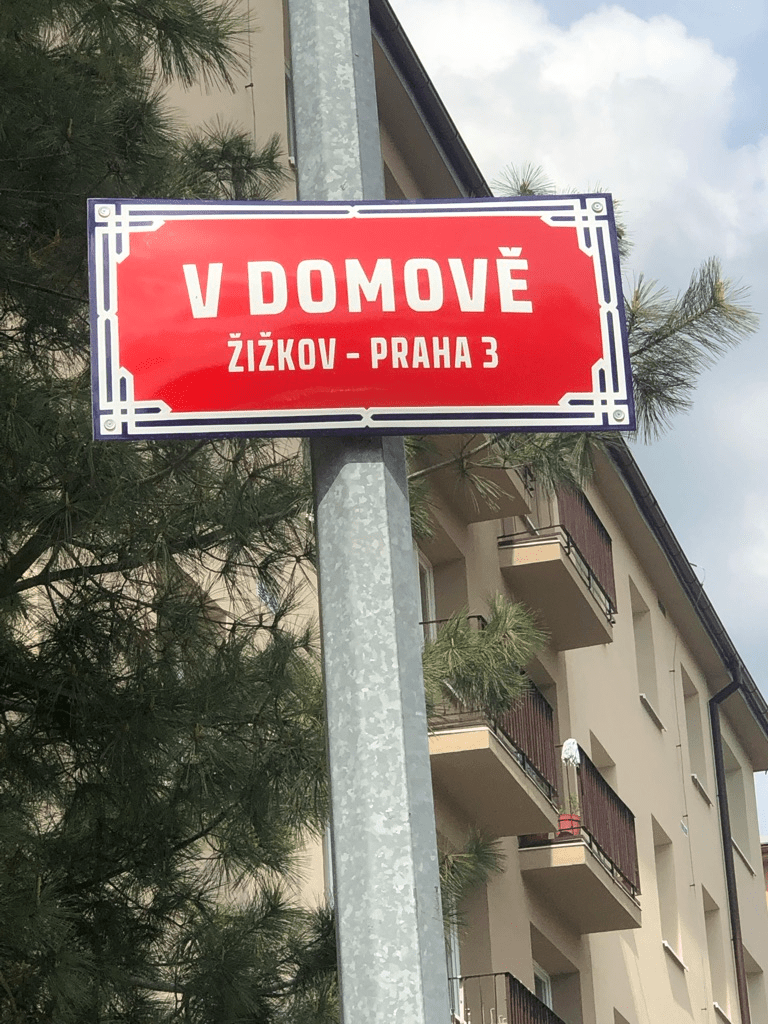
This created an acute need for housing for civil servants. One of the construction cooperatives that came to the rescue was called Domov (Home).
Domov built up a large chunk of this area between 1921 and 1925, with architect Ladislav Machoň (1888-1973) being responsible for the design.
Machoň was also responsible for the interior of the Koruna building on Václavák, which, in the 1930s, housed a fast-food canteen – one that was so successful that he apparently ended up designing the interior of another canteen in 1938 – this time on Regent Street in London.
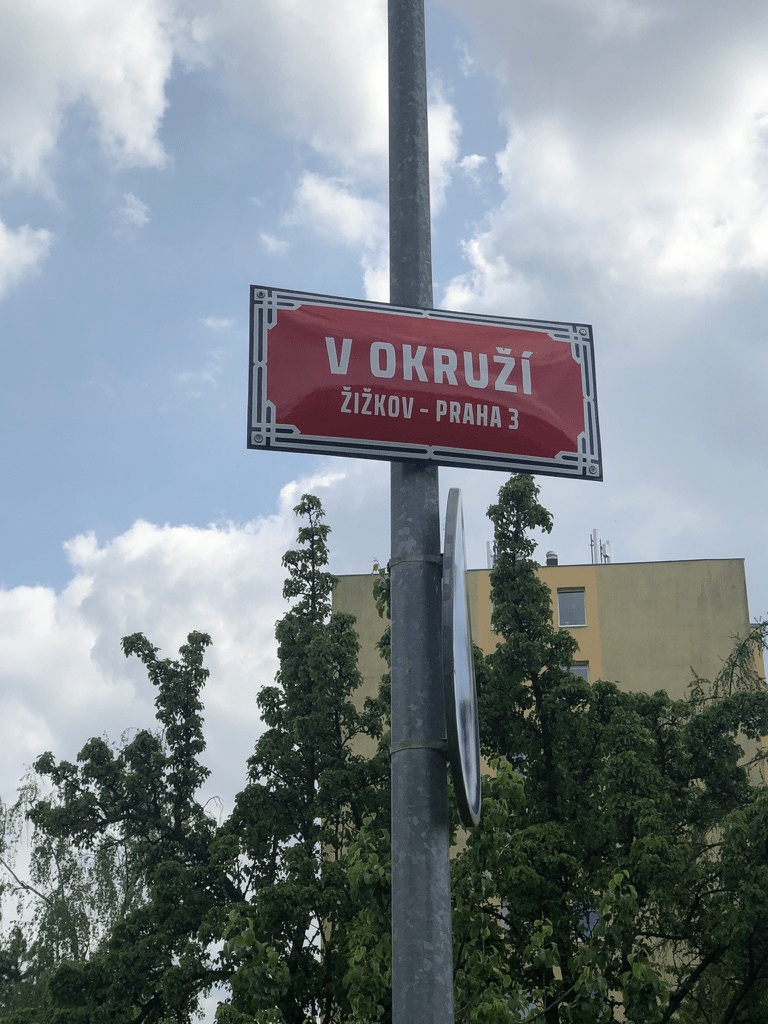
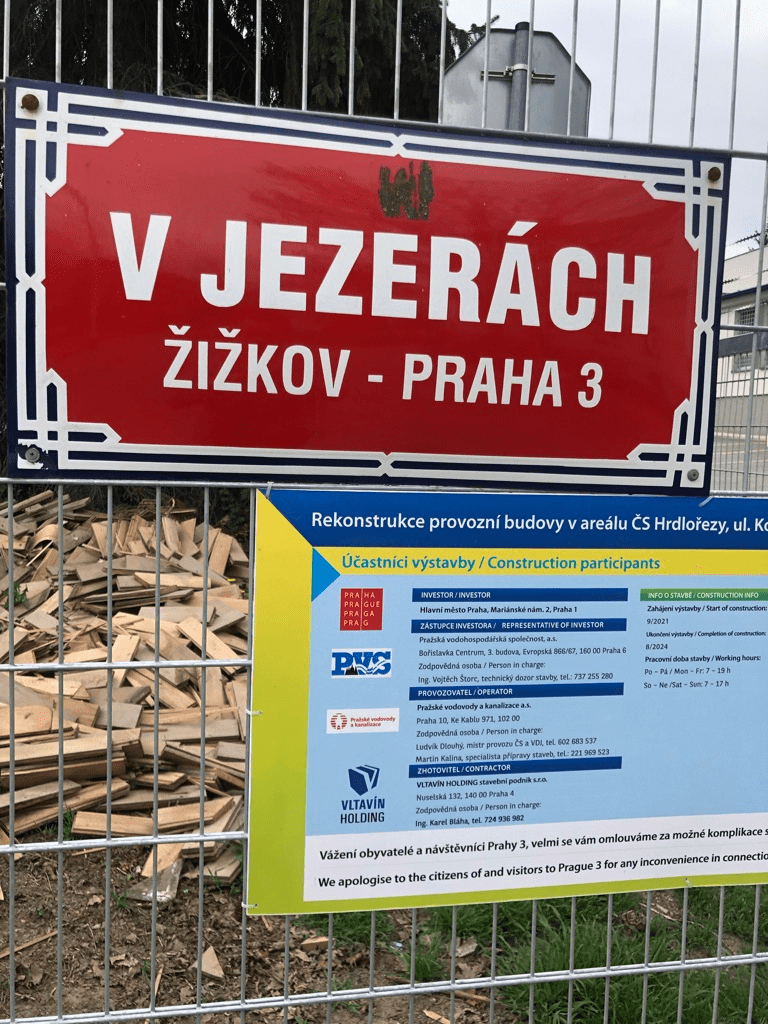
I was going to say that this means ‘In the lakes’ and move on, but that would be v jezerech with a second e and not an á.
One lake is a jezero, two lakes are jezera, and a small lake or pond or lakelet (or ‘tarn’, apparently) would be a jezírko.
But a jezera (singular, and presumably feminine, whereas jezero is neuter) is something I can’t find a reference to. So either this does mean ‘in the lakes’, or jezera (singular) is an archaic term.
In any case, it appears that the land was wet round here at some point.
Jarov was the name of a construction collective which, in 1914, started building family houses around this area.
From 1959 to 1963, a housing estate (sídliště) was built round here. It includes the local student dormitories on V Zahrádkách.
Most readers will see the word ‘Jarov’ and wonder if it’s time to get their car serviced, and maybe pop into Kaufland afterwards.
* Hrdlořezy is Prague 9; ‘What’s in a Prague 9 street name’ will be starting on whatever has replaced the thing that replaced the thing that replaced the thing that replaced Twitter in approximately 2055 (I wrote that in May 2022, not realising it would already sound prescient before the end of the year).
Road leading off Koněvova in ‘not named after a Hussite’ shocker.
V Zahrádkách translates as as ‘in the gardens’. But a zahrádka is smaller than a zahrada (the standard term for ‘garden’). So it’s a small garden, a back garden, or, if you’re feeling British, perhaps an allotment.
As someone who has to walk up this road to get to the local tram stop, I can promise that it has many nice-looking family houses. The gardens belonging to these houses gave the street its name.
I’m incredibly hungover after a wedding yesterday, and the fact that today’s posts are so short is a happy coincidence.
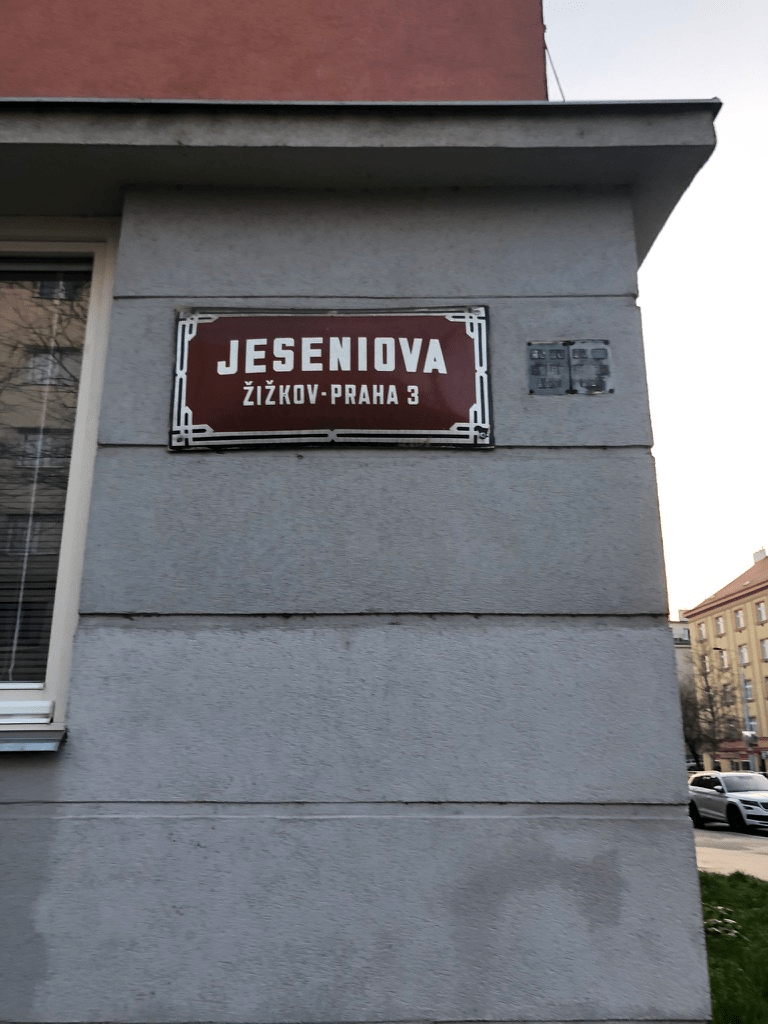
As one of the leaders of the Bohemian Revolt, Jesenius was arrested after the Battle of Bílá Hora. He suffered a particularly gruesome execution on 21 June 1621 on Old Town Square.
First, his tongue was cut out, and then he was beheaded. After the execution, his body was quartered and then woven into a wheel. His head was displayed on Old Town Square as a warning for ten years.
EuroCity train EC 280/281 (which goes from Prague to Budapest via Bratislava) is named after him, reflecting his Slovak and Hungarian roots.
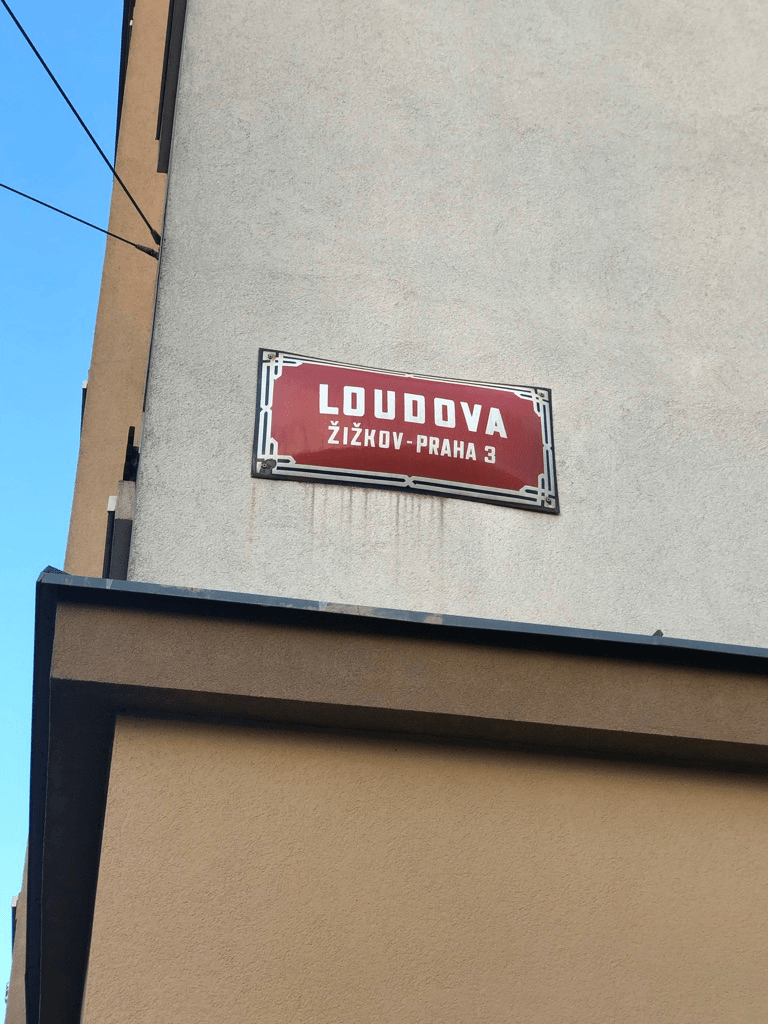
Matěj Louda z Chlumčan (died 1460) was commander of Písek, a Hussite warrior and diplomat, and owner of a farm in Chlumčany near Louny.
He studied at Charles University. He didn’t complete his studies, but he did became aware of Jan Hus’s teachings while there.
For his bravery in the Battle of Vítkov Hill (1420), he was given a house on Řetězová (in the Old Town), but instead moved to Písek.
After being captured at the Battle of Lipany (1434), he moved to the more moderate side of the Hussite spectrum and became a diplomatic negotiator in Basel.
This won him the approval of Sigismund, who named him Hofrichter of the royal cities. He then became a burgher in the Old Town, founding a dormitory (kolej sv. apoštolů) for poor students.
It’s named after John Wycliffe (1320-1384-ish), an English theologian, and one of the first to translate the Bible into Middle English, though historians say he may not have done much of the translation himself.
Wycliffe also wrote that papal claims of temporal power had no foundation in the Bible, and that the Bible, not the Pope, set the standard for Christian belief and practice.
He believed that anyone who wanted to read the Bible should be able to, hence the translation. He was also of the opinion that the Church should be poor and not flaunt its wealth so much.
In 1407, England’s parliament banned English-language Bibles, and Wycliffe’s followers were imprisoned. Pope Alexander V issued an edict against Bible’s that weren’t in Latin, and Wycliffe’s works were burned.
This served to inspire a rector at Charles University, who was dissatisfied with the privileges of the clergy, and who wanted the Bible to be translated into Czech. This rector was one Jan Hus.
In the same year that Jan Hus was executed (1415), Wycliffe was declared a heretic and all his writings were banned.
Secret shame: it wasn’t until writing this that I realised ‘Wycliffe’ isn’t pronounced ‘why-cliff’.
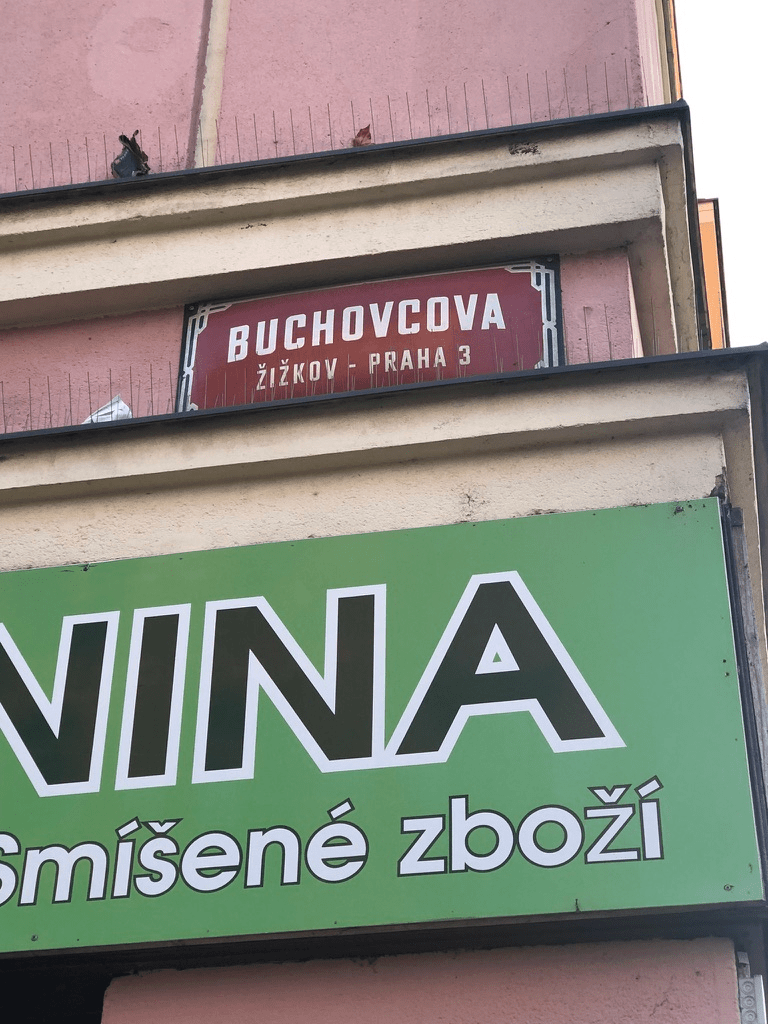
Zbyněk Buchovec z Buchova (died 1436?) was a Hussite warrior and commander (hejtman).
Coming from a peasant family, he was elected one of the four governors of the newly founded town of Tábor in 1420 (one of the other three being Jan Žižka).
In December, he led a camp expedition against Příběnice Castle, which the Hussites managed to conquer. Buchovec subsequently manned it with his garrison.
In February 1422, he represented Jan Želivský in arbitration procedures to settle the political and religious situation in Prague. Their side acknowledged the Lithuanian duke Sigismund Korybut (Zikmund Korybutovič) as governor of Prague and Bohemia.
(Sigismund, however, was recalled by the Pope and left again in 1423).
The last mention of Buchovec as a governor of Tábor dates from 1425.
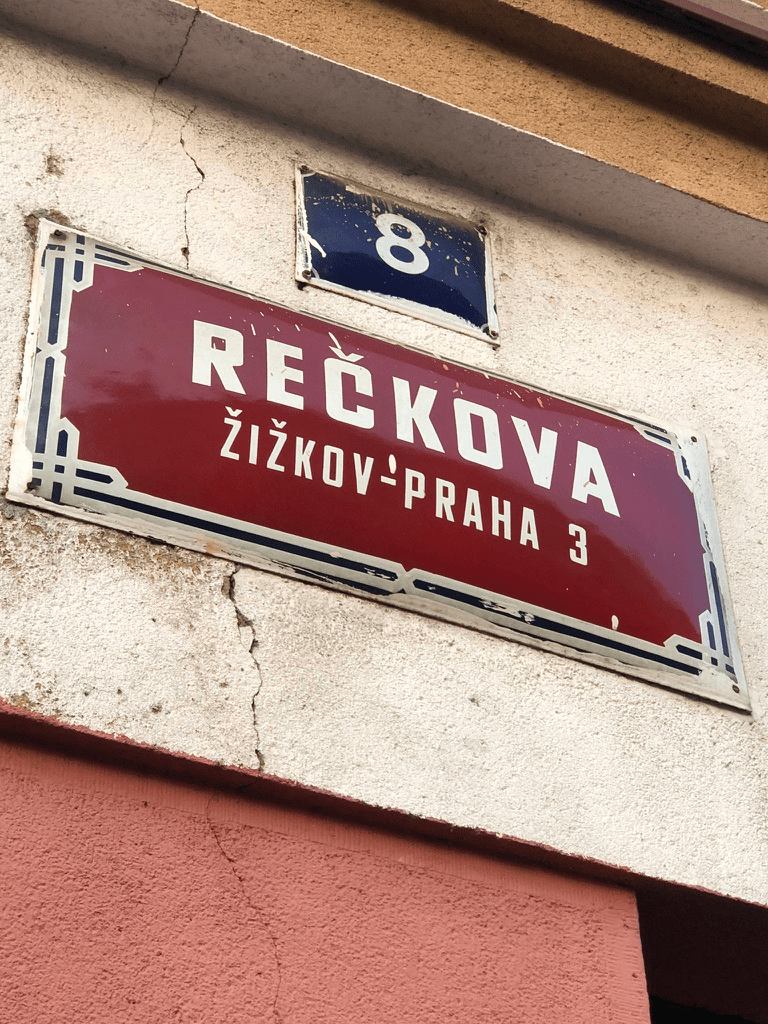
Until 1952, the street was called Kostkova, named after the Kosteks of Postupice, a Czech ruling family founded in the 14th century. The name change presumably arose because they were filthy rich and, you know, communism.
The name has nothing to do with Greece, which is Řecko in Czech (sometimes when I’m whizzing past here on the tram, I mistakenly think it’s called Řeckova, and yes, that name would make no grammatical sense).
Jan Reček z Ledče was a maltster and a well-to-do citizen of Prague’s Old Town in the 15th century. In 1438, he founded Collegium sanctissimae virginis Mariae domus nationis Bohemicae, one of the most respected colleges within Charles University.
Later, it became more common to simply refer to it as Collegium Reček. It hosted twelve carefully selected (Hussite) students from the Kingdom of Bohemia; they studied Liberal Arts and Theology. It was located on Karolíny Světlé.
Addendum: I can categorically state that the trams round here do anything but ‘whizz’. But my Lítačka is still an absolute steal (for now), so I’ll take it.
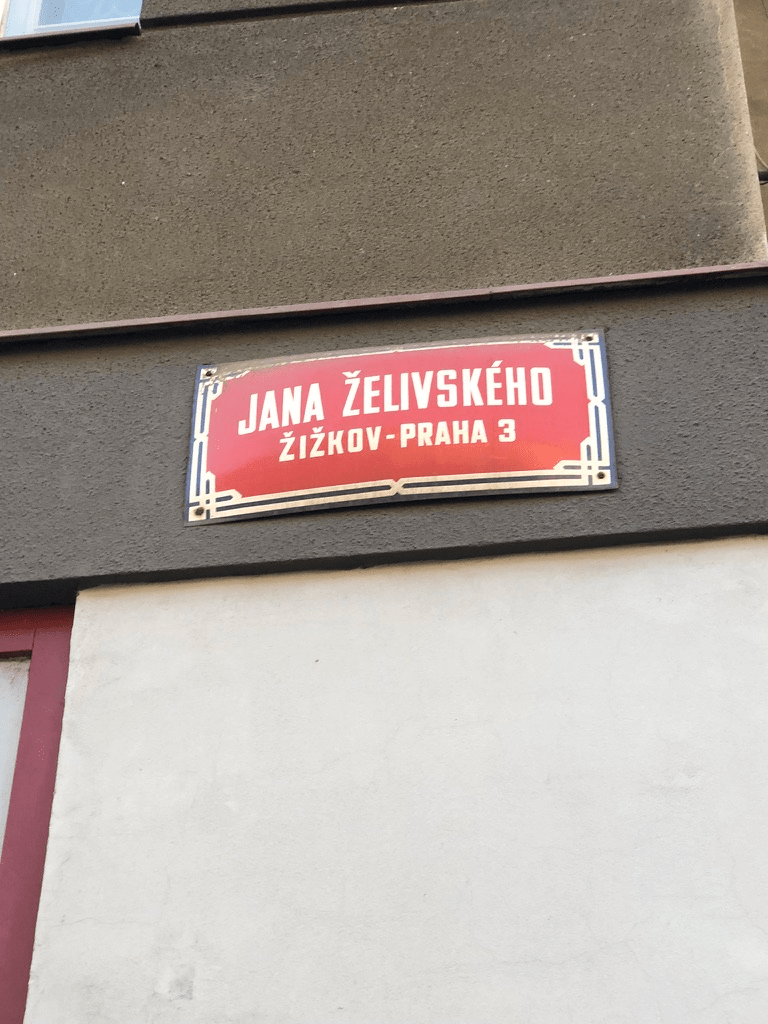
Jan Želivský (1380-1422) was a priest during the Hussite Reformation, with a taste for somewhat apocalyptic sermons.
On 30 July 1419, he led a Hussite procession through Prague. Someone in the New Town Hall on Karlovo náměstí (Charles Square) threw a stone at the procession, possibly hitting Želivský himself.
The Hussites stormed the town hall and defenestrated seven members of the city council, including the judge and the chief magistrate.
Rumour has it that all this then made King Wenceslaus IV die of shock eighteen days later.
What is less debatable is that the defenestration kicked off the Hussite Wars, which lasted until 1436 and in which Želivský fought.
After a defeat at the hands of Frederick I of Saxony at the Battle of Brüx in 1421, Želivský was removed from command.
In 1422, he was arrested by the Prague town council and was beheaded.
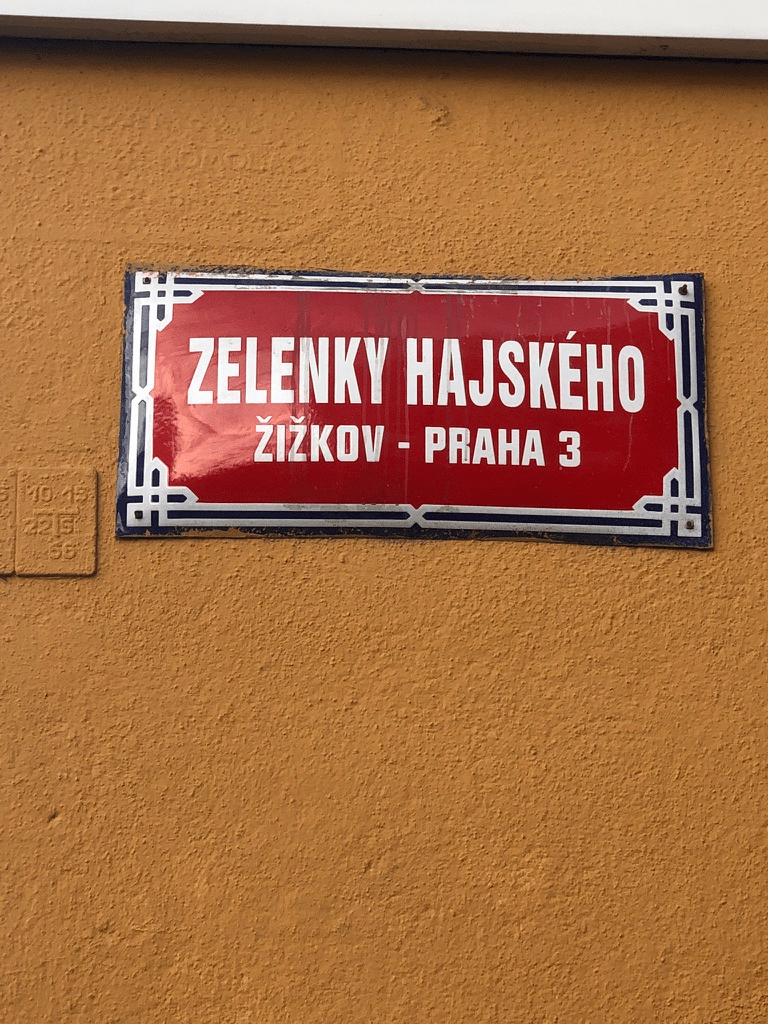
Zelenky Hajského was built, with a different name (see later), in 1908.
Jan Zelenka (1895-1942), born in Kamenný Újezd, but spending most of his life in Prague, was a primary school teacher, and, later, member of the Czech resistance in WW2.
From 1925, he worked in a newly-built school in Háj u Duchcova, where he was also actively involved in the local Sokol organisation.
When Háj, along with the rest of the Sudetenland, was annexed by Germany in 1938 as a result of the Munich Agreement, he returned to Prague.
From January 1939, he lived with his family in a flat on Biskupcova, where they were neighbours with the Moravec family (Marie, Alois, Miroslav and Vlastimil).
In 1941, Zelenka helped form Jindra, a Sokol-based resistance organisation, and then formed the Říjen (October) strike group. Around this time, he started using the pseudonym Hajský.
From spring 1942, Říjen worked closely with paratroopers Gabčík and Kubiš from Operation Anthropoid. Zelenka gave them shelter and contact with a former pupil who had detailed records of Reinhard Heydrich’s daily movements.
After Heydrich’s assassination, Zelenka was betrayed and, when the Gestapo tried to arrest him (17 June 1942), he committed suicide by swallowing cyanide.
His son Jan did the same; his wife Františka did not. She was arrested and executed at Mauthausen on 24 October.
The Moravec family also helped the paratroopers, and met a similar/identical fate to the Zelenkas: Marie also committed suicide by poison to avoid arrest on 17 June, whereas her husband Alois and son Vlastimil were executed at Mauthausen on the same day as Františka.
One of the organisational units of the Czech Sokol Community now bears Zelenka’s name.
Before 1948, this street was called Svatoplukova, presumably after Svatopluk of Bohemia, ruler from 1107 to 1109. Or possibly Svatopluk of Moravia, Prince of Great Moravia from approximately 870 to 894.